“Coast Guard offloads over $517.5 million in illicit drugs interdicted in Eastern Pacific Ocean” –D7

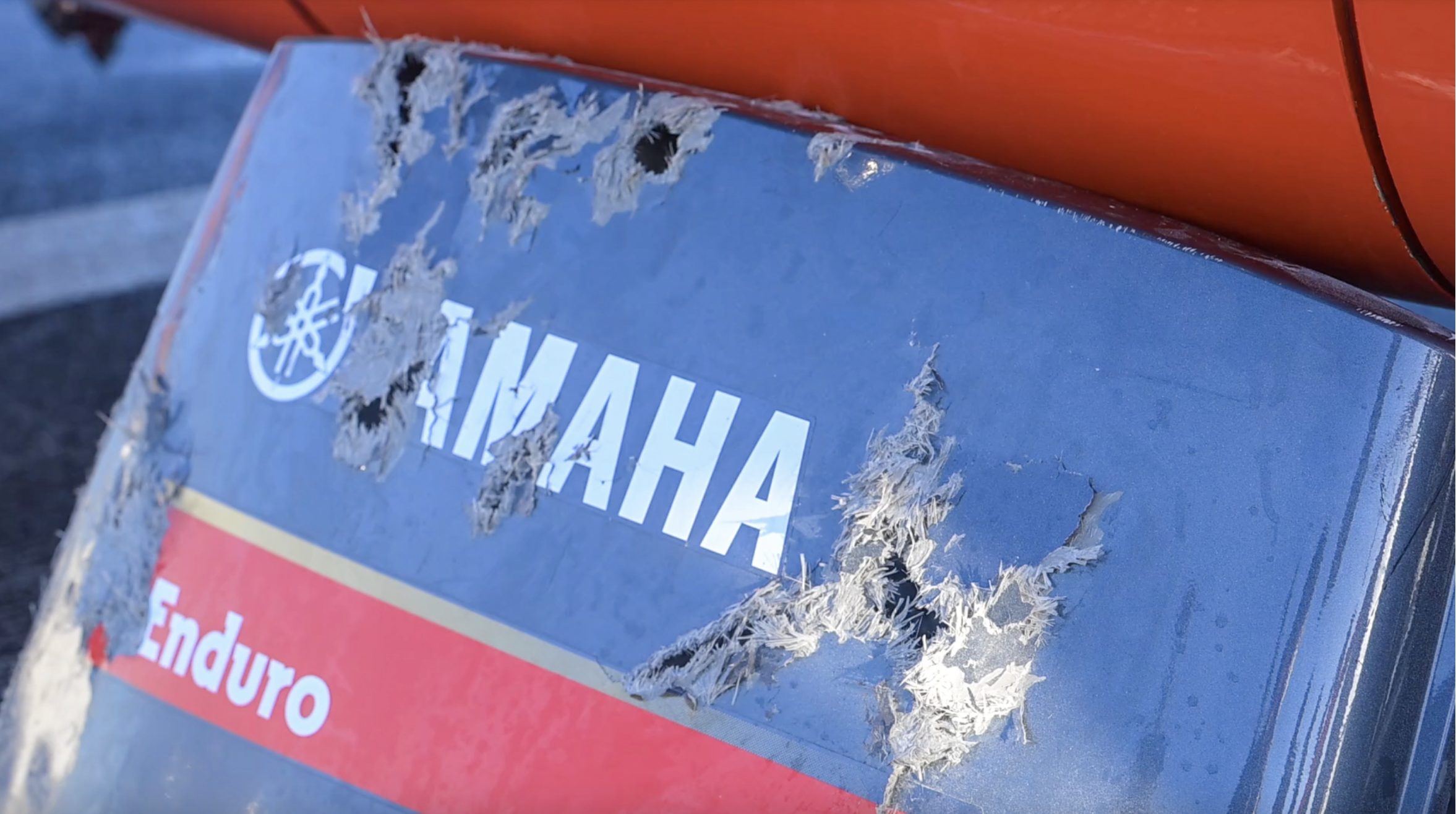
An engine cowling rests against an MH-65 dolphin helicopter at Port Everglades, on March 20, 2025. After attempts to stop a non-complaint vessel failed, the Coast Guard’s Helicopter Interdiction Tactical Squadron was authorized to use force, including disabling fire. (Coast Guard photo by Petty Officer 3rd Class Nicholas Strasburg)

Below is a news release from District Seven. I don’t pass along every ship’s off load of  drugs because they have gotten to be routine, but this patrol was anything but routine.

  • For one ship to interdict 12 drug smugglers in a single patrol is unusual.
  • This interdiction of four go-fast vessels operating in company moving almost as if in formation was unusual.

“On Feb. 19, Stone’s embarked UAS crew detected multiple suspicious vessels approximately 110 miles south of the Galapagos Islands, Ecuador. Stone’s embarked HITRON aircrew employed airborne use of force tactics to compel the non-compliant vessels to stop, and their boarding teams interdicted four go-fast vessels, apprehending eight suspected smugglers and seizing approximately 10,885 pounds of cocaine.”

  • Success of the UAS was notable.
  • The location of that interdiction is unusual in that it is probably at least 500 nautical miles west of Ecuador and well South of Colombia, the country we normally think of as the source for cocaine.

(Could the four vessels intercepted Feb. 19 have been on the way to meet a larger vessel offshore? –either to transfer the load or to refuel?)

The photo above, at the head of this post, was the first thing that really got my attention, but apparently, that cowling was not unique.
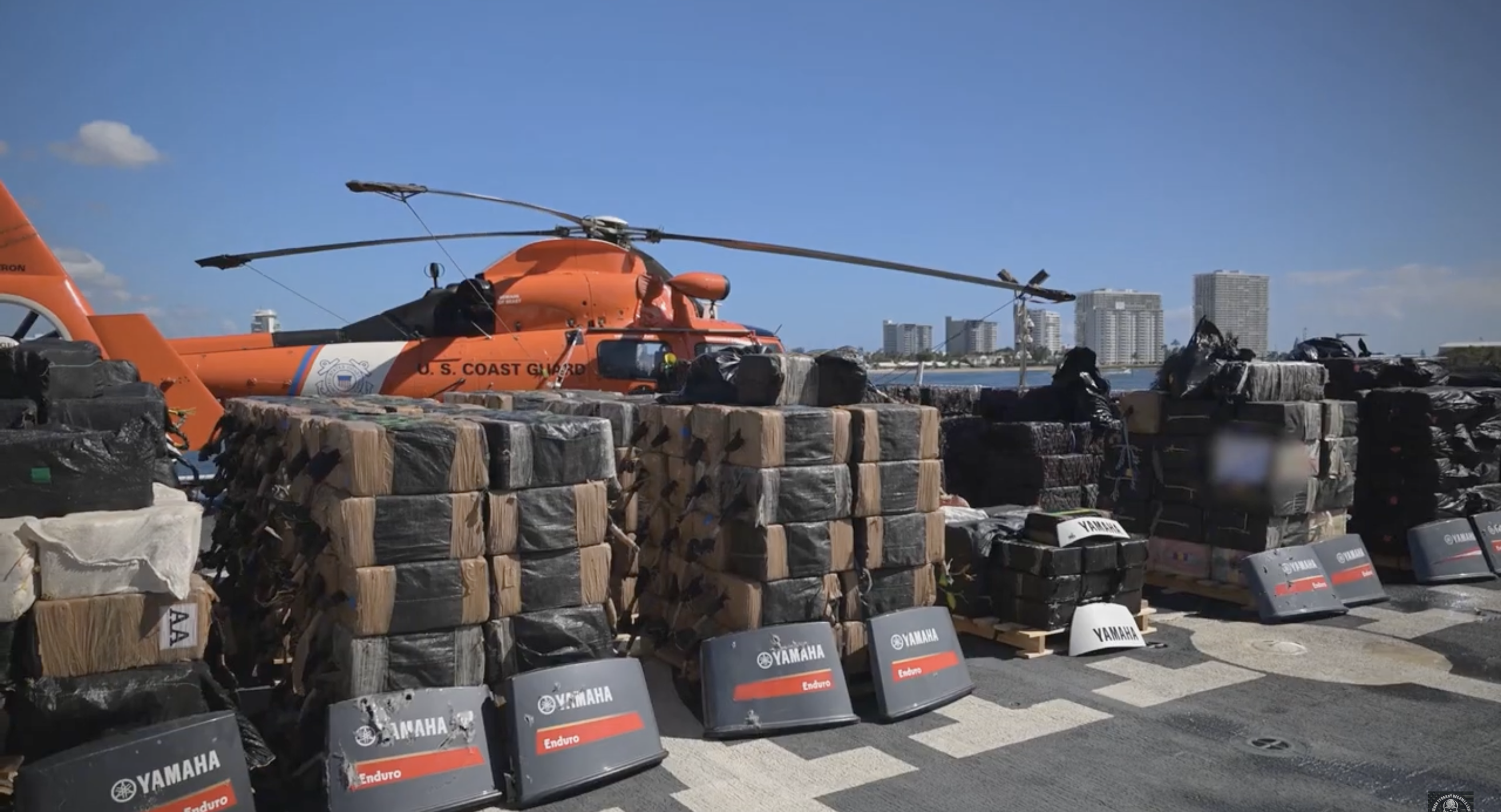
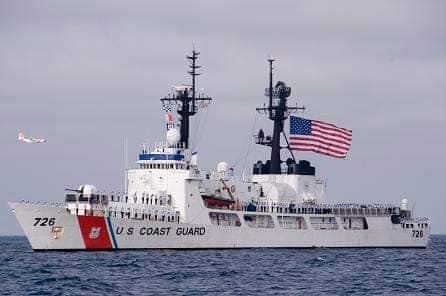
USCGC Stone (WMSL-758) delivers $517.5 million in illicit drugs interdicted in Eastern Pacific Ocean. Along side are displayed cowlings of outboard motor disabled by the Airborne Use of Force crew from the Coast Guard’s Helicopter Interdiction Tactical Squadron (HITRON) based in Jacksonville, FL.


March 20, 2025

Coast Guard offloads over $517.5 million in illicit drugs interdicted in Eastern Pacific Ocean

MIAMI – The crew of U.S. Coast Guard Cutter Stone offloaded approximately 45,600 pounds of illicit narcotics worth more than $517.5 million at Port Everglades, Thursday.

The seized contraband was the result of 14 interdictions in international waters of the Eastern Pacific Ocean, and 35 suspected smugglers were transferred ashore to face federal prosecution in U.S. courts.

“You heard it said before that the Coast Guard’s national security cutters are game changers in the counter-drug mission, but they still require a crew of men and women willing to serve on or over the sea, and place themselves in harm’s way,” said Capt. Jonathan Carter, commanding officer of Stone. “I’m incredibly proud of our crew’s performance and their efforts to combat narco-terrorism this deployment. In one exceptional case, the crew interdicted four go-fast vessels in 15 minutes, seizing nearly 11,000 pounds of cocaine that will never be mixed with deadly fentanyl to threaten American lives here at home.”

On Dec. 21, Stone’s embarked aircrew from Coast Guard Helicopter Interdiction Tactical Squadron detected a suspicious vessel in international waters approximately 321 miles west of Ecuador. Stone’s boarding team interdicted the go-fast vessel, apprehended three suspected smugglers and seized over 1,630 pounds of cocaine.

On Dec. 22, a maritime patrol Dash-8 aircrew detected a suspicious vessel in international waters approximately 180 miles southeast of the Galapagos Islands, Ecuador. Stone’s embarked HITRON aircrew and boarding team interdicted the low-profile go-fast vessel, apprehended three suspected smugglers and seized approximately 12,220 pounds of cocaine.

On Jan. 9, a maritime patrol Dash-8 aircrew detected a suspicious vessel in international waters approximately 148 miles west of Salinas, Ecuador. Stone’s embarked HITRON aircrew and boarding team interdicted the go-fast vessel, apprehended three suspected smugglers and seized approximately 2,370 pounds of cocaine.

On Jan. 28, Stone’s embarked unmanned aircraft system (drone) crew detected a suspicious vessel in international waters approximately 459 miles south of Manzanillo, Mexico. Stone’s boarding team interdicted the vessel, apprehended five suspected smugglers and seized approximately 3,885 pounds of cocaine.

On Jan. 30, Stone’s embarked UAS crew detected a suspicious vessel in international waters approximately 715 miles off Mexico. Stone’s boarding team interdicted the vessel, apprehended two suspected smugglers and seized approximately 3,800 pounds of cocaine.

On Jan. 31, Stone’s embarked UAS crew detected a suspicious vessel in international waters approximately 630 miles off Mexico. Stone’s embarked HITRON aircrew employed airborne use of force tactics to compel the non-compliant vessel to stop, and the boarding team apprehended three suspected smugglers and seized more than 2,565 pounds of cocaine.

On Feb. 12, Stone’s embarked UAS crew detected a suspicious vessel in international waters approximately 655 miles south of Mexico. Stone’s embarked HITRON aircrew employed airborne use of force tactics to compel the non-compliant vessel to stop, and the boarding team apprehended three suspected smugglers and seized more than 3,640 pounds of cocaine.

On Feb. 18, Coast Guard Cutter Mohawk’s crew detected and boarded a sailing vessel approximately 70 miles northwest of Isla Malpelo, Colombia. Mohawk’s boarding team apprehended three suspected smugglers and seized approximately 635 pounds of cocaine.

On Feb. 19, Stone’s embarked UAS crew detected multiple suspicious vessels approximately 110 miles south of the Galapagos Islands, Ecuador. Stone’s embarked HITRON aircrew employed airborne use of force tactics to compel the non-compliant vessels to stop, and their boarding teams interdicted four go-fast vessels, apprehending eight suspected smugglers and seizing approximately 10,885 pounds of cocaine.

On Feb. 25, Mohawk’s crew detected and interdicted a suspicious vessel approximately 230 miles south of Costa Rica. Mohawk’s boarding team apprehended three suspected smugglers and seized approximately 1,600 pounds of cocaine and 330 pounds of marijuana. Costa Rican authorities took custody of the fishing vessel, suspects and bulk contraband for prosecution.

On March 10, Stone’s embarked HITRON aircrew detected a suspicious vessel in international waters approximately 270 miles southeast of the Galapagos Islands, Ecuador. The HITRON aircrew employed airborne use of force tactics to compel the vessel to stop, and Stone’s boarding team interdicted the go-fast vessel, apprehending two suspected smugglers and seizing approximately 3,980 pounds of cocaine. The transfer of custody from this case will occur at a later date.

“The fight against drug trafficking and transnational criminal organizations doesn’t begin at our U.S. maritime borders,” said Cmdr. David Ratner, commanding officer of Mohawk. “Our efforts to defend Americans at home begins with denying drug traffickers access to maritime routes and disrupting the flow far out at sea where we operate alongside interagency and strategic regional partners like Costa Rica.”

The following assets and crews were involved in the interdiction operations:

Detecting and interdicting illicit drug traffickers on the high seas involves significant interagency and international coordination. Joint Interagency Task Force-South, in Key West, conducts the detection and monitoring of aerial and maritime transit of illegal drugs. Once an interdiction becomes imminent, the law enforcement phase of the operation begins, and control of the operation shifts to the U.S. Coast Guard for the interdiction and apprehension phases. Interdictions in the Eastern Pacific Ocean are performed by members of the U.S. Coast Guard under the authority and control of the Eleventh Coast Guard District, headquartered in Alameda, California.

The Coast Guard continues increased operations to interdict, seize and disrupt transshipments of cocaine and other bulk illicit drugs by sea. These drugs fuel and enable cartels and transnational criminal organizations to produce and traffic illegal fentanyl, threatening the United States.

Each of these interdictions initiate criminal investigations by federal law enforcement partners. Several were tied to the transnational criminal organizations responsible. Drug evidence from these cases is linked to cartels recently designated as foreign terrorist organizations by the U.S. government, including Sinaloa and Cartel Jalisco Nueva Generaciόn. These interdictions denied those criminal organizations more than half a billion dollars and provide critical evidence for their total elimination.

USCGC Stone is one of four 418-foot Legend-class national security cutters homeported in Charleston, South Carolina under U.S. Coast Guard Atlantic Area Command. The U.S. Coast Guard Maritime Law Enforcement Academy where Coast Guard boarding officers train to conduct these missions, in Charleston, celebrated its 20th anniversary on March 14.

For breaking news, follow us on X (formerly Twitter). For additional information, find us on Facebook and follow us on Instagram.

Make a difference on land, at sea or in the air with the Coast Guard. Visit GoCoastGuard.com to learn more about active duty and reserve, officer and enlisted opportunities. Information on how to apply to the U.S. Coast Guard Academy can be found here.

This Day in Coast Guard History, March 21

Based on the Coast Guard Historian’s timeline, https://www.history.uscg.mil/research/chronology/
With inspiration from Mike Kelso

March 21

1791  Hopley Yeaton of New Hampshire was commissioned as “Master of a Cutter in the Service of the United States for the Protection of the Revenue.”  He is often listed as the first commissioned seagoing officer of the United States.  His commission was signed by George Washington and attested to by Thomas Jefferson.  However, seven other commissions for officers of the Revenue Cutter Service were signed on the same date.  Yeaton’s claim to being first is tied to the fact that he is at the top of the list of officers.  He commanded the Revenue cutter Scammel, stationed in Portsmouth, New Hampshire and the list is based on the cutters’ homeports from north to south.  Thus, Yeaton was first on the list, having command of the cutter in the northernmost port.

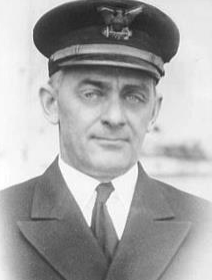
Elmer Stone, Coast Guard Aviator #1

1916  On this date Third Lieutenant Elmer Stone, USCG became the first Coast Guard officer ordered to flight training.  He reported on April 1, 1916 to Pensacola Naval Aviation Training School.

2013  CGC Midgett, returned to its homeport of Seattle, Washington, after its 75-day counter-narcotics patrol in the eastern Pacific Ocean.  While on patrol in the eastern Pacific in late February, the crew successfully interdicted a 30-foot fishing vessel that was carrying 1,100 pounds of cocaine hidden inside the vessel.  Midgett’s boarding team confiscated the drugs and detained the suspected smugglers.  Midgett’s crew also visited Bahia Malaga, Colombia, for a partnership exercise with the Colombian Navy. The ship hosted the Colombian Navy’s chief of staff, pacific operations commander, and several other senior personnel for a tour of the ship.  After departing Seattle in early January 2013, Midgett and its 170-member crew first underwent a three-week drill in San Diego that included more than 300 training exercises in navigation, medical response, damage control, engineering, combat systems, seamanship, and anti-terrorism force protection.  The crew’s successful performance earned them several battle readiness awards as well as certification by shipboard training teams.

U.S. Coast Guard Cutter Polar Star (WAGB 10) sits moored at the U.S. Antarctic Program’s NSF McMurdo Station in Antarctica during Operation Deep Freeze, Feb. 16, 2025. Operation Deep Freeze is one of many operations in the Indo-Pacific in which the U.S. military promotes security and stability across the region. (U.S. Coast Guard photo by Petty Officer 2nd Class Briana Carter)

2014  CGC Polar Star returned to its homeport of Seattle, Washington, following a 108-day deployment in support of Operation Deep Freeze 2014.  Polar Star originally departed Seattle on December 3, 2013 and made port calls in Honolulu, Sydney, Australia, McMurdo Station, Antarctica, and Tahiti, French Polynesia.  Having completed a reactivation that began four years ago, this deployment marked the first time in six years that a U.S. icebreaker provided support to Operation Deep Freeze. In January 2014, Polar Star departed Sydney to assist in the rescue effort of two ships, the Russian vessel Akademik Shokalsiky and the Chinese vessel Xue Lon.  Both of these vessels were beset in 15 feet of sea ice near Commonwealth Bay, Antarctica.  While Polar Star was en route to assist, the shifting ice conditions allowed the two ships to break free from the ice prior to the Coast Guard icebreaker’s arrival.  In Antarctica, Polar Star broke a navigable shipping lane through 12 miles of ice in McMurdo Sound, encountering ice up to 10 feet in thickness.  The shipping channel was used by the tanker ship Maersk Peary to deliver approximately three-and-a-half million gallons of fuel to McMurdo.  The channel was also used by the cargo ship Maersk Illinois to deliver more than 500 containers of supplies to operate McMurdo and South Pole stations for the next 12 months.  The crew of the Polar Star also delivered and deployed nearly one mile of fuel hose to Marble Point, an air station 20 miles west of McMurdo. In February 2014, prior to departing Antarctica, Polar Star hosted Coast Guard VADM Peter Neffenger, then-Deputy Commandant for Operations, who visited Antarctica to observe the operations of the U.S. Antarctic Program.

USCGC Naushon (WPB-1311) to be Decommissioned March 21, 2025

USCGC Naushon (WPB-1311)

Got the announcement below from a former crew member, Mark Herrick. 

He wondered if this was the last WPB110 to be in commission with the CG–we know some are in service with other navies and coast guards including the Ukrainian Navy. Two others might still be in Coast Guard service, Mustang (WPB-1310) home-ported in Seward and Liberty (WPB-1334) home-ported in Valdez. I googled both but found no mention of decommissioning.


The Homer-based USCG Cutter NAUSHON will be decommissioned on Friday. If you want to take a tour of the vessel before it leaves Homer, public tours are available starting TODAY!
Tours of the Naushon will take place:
March 19-21 4-6pm
March 22nd 10am-12pm and 2-6pm
Tours of the ship will be available on a first come, first served basis.
All are invited to attend the decommissioning ceremony on Friday the 21st, which will start at 1200 noon (following the sounding of the ship’s bells) and will be held at the Homer Spit near the cutter’s homeport mooring at 4373 Freight Dock Rd, Homer, AK, 99603.

“Canada’s HMCS Margaret Brooke embarks on historic Antarctic mission” –The Watch

2022. HMCS Margaret Brooke finished warm weather trials on the ships cooling systems. HMCS Harry DeWolf conducted an Op Caribbe with the USCG.

NORTHCOM’s online magazine, “The Watch” reports,

For the first time, a Royal Canadian Navy (RCN) vessel will circumnavigate South America and visit Antarctica, as the HMCS Margaret Brooke marks the debut of Operation Projection 2025. The Harry DeWolf-class vessel left Halifax, Nova Scotia, on January 10, 2025, on the historic four-month mission.

So presumably she is in or near the Antarctic now.

“…National Research Council scientists will join the ship in Punta Arenas, Chile, for a two-week tour south of the Antarctic circle…”

The US Coast Guard would consider HMCS Margaret Brooke a light icebreaker because her 12,000 HP, same as the old Wind Class, falls below their 20,000HP lower limit for a “medium icebreaker.” As an Arctic Offshore Patrol Vessel, this is not a type the US Coast Guard has identified a requirement for.

In addition to a helicopter she reportedly is equipped with a vertical take-off and landing drone. 

This Day in Coast Guard History, March 20

Based on the Coast Guard Historian’s timeline, https://www.history.uscg.mil/research/chronology/
With inspiration from Mike Kelso

March 20

Schooner I’m Alone

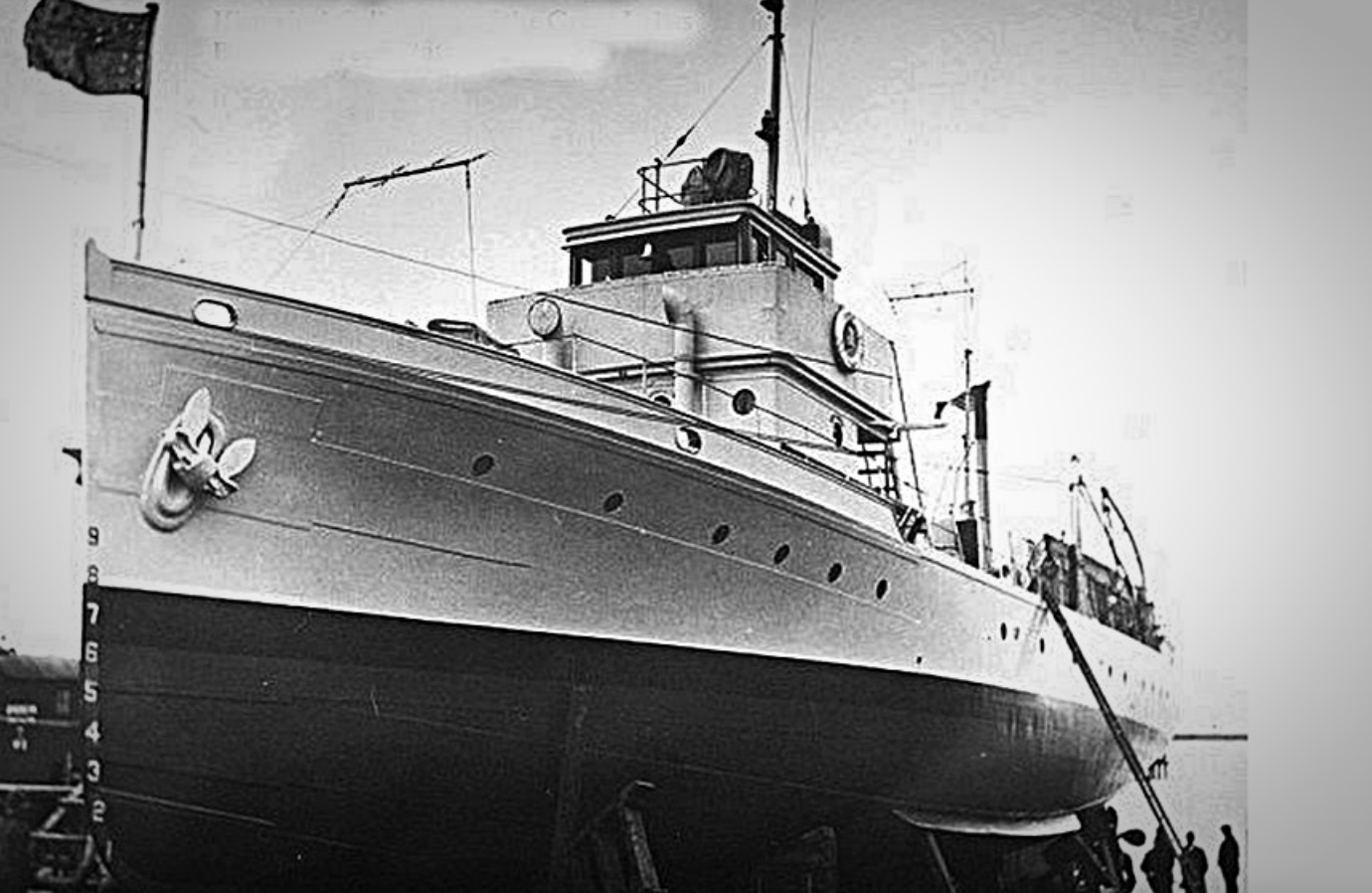
1929  The most notable incident from which international complications resulted during the Prohibition era was that of the schooner I’m Alone of Nova Scotia, a vessel built for the rum trade.  She had successfully plied this trade for over four years when she appeared off the Texas coast and was picketed by the cutter Wolcott in the spring of 1929.  Boatswain Frank Paul marked her at 10.8 miles from shore and signaled her to heave to.  Several blanks were fired and this brought the vessel to a stop.  Captain Randall of the schooner allowed the Boatswain on board, there was a discussion, but when he returned, I’m Alone continued on her way.  The chase resumed and shots were fired into her rigging.  On the second morning, some two hundred miles south of the U.S., the cutter Dexter came up to assist and proceeded to fire into the runner, sinking the vessel.  One of her crew was drowned.  Repercussions were heard immediately from Canada, Britain, and France, as the drowned seaman was French.  The initial complaint was that of the position of the schooner at the point of contact.  Her captain maintained she was only a 7-knot vessel and she was anchored about 15 miles out in safe waters.  The second infraction was that the pursuit was not a continuous one; the intervention of Dexter muddied this question.  Since the speed of the suspect vessel is a consideration in determining how far out it might be seized, it should be noted that I’m Alone managed to stay ahead of Wolcott, a nearly new cutter capable of at least 11 knots, for over 24 hours.  As I’m Alone was sunk, the captain’s statement that her engines were in need of repair also could not be proven.  In any case, the international round of diplomatic niceties did not cease until 1935 when the United States backed off and compensation was paid to the crew of the schooner.

USCGC Wolcott, Type: 100-foot
LOA: 99’8” / 30.38m – LOD: 99’8” / 30.38m – Beam: 23’0” / 7.01m – Draft: 10’9” / 3.28m – Displacement: Gross 173 Net Tons 105, Speed: 12 knots maximum (original spec) – Built by: Defoe Boat & Motor Works of Bay City, Michigan. – Year Launched: July 1926

USCGC Dexter

USCGC Dexter 3″/23 gunnery practice. This was the Weapon Dexter used to sink the I’m Alone.

1941  Sabotage was discovered on an Italian vessel at Wilmington, North Carolina.  The Coast Guard investigated all Italian and German vessels in American ports and took into “protective custody” 28 Italian vessels, two German and 35 Danish vessels.  Coast Guard boarding teams discovered that their crews had damaged 27 of the Italian ships and one of the German ships.  The Coast Guard also took into custody a total of 850 Italian and 63 German officers and crew.  Two months later these vessels were requisitioned for service with the United States by order of Congress for the Latin American trade.

This Day in Coast Guard History, March 19

Based on the Coast Guard Historian’s timeline, https://www.history.uscg.mil/research/chronology/
With inspiration from Mike Kelso

March 19

1943  British Steamer Svend Foyne was a victim of an iceberg collision off the southern tip of Greenland.  One hundred forty-five persons were rescued by the Coast Guard and others.  The International Ice Patrol was suspended during this period (1942-1945) of World War II.

Coast Guard manned Destroyer Escort USS Menges, after hit by  a German Acoustic Homing Torpedo, May, 1944

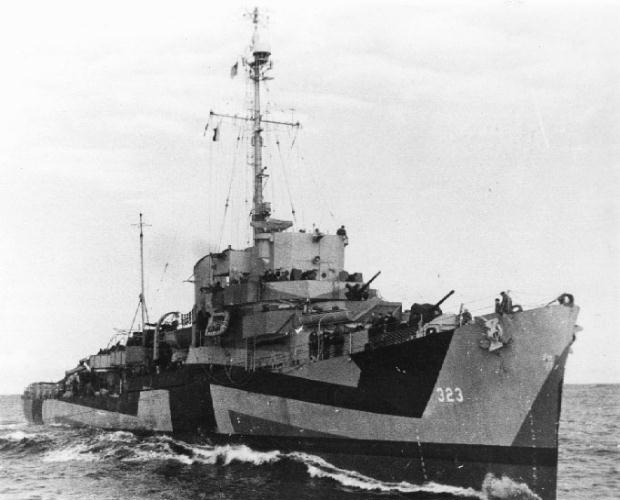
1945  The first all-Coast Guard hunter-killer group ever established during the war searched for a reported German U-boat near Sable Island.  The group was made up of the Coast Guard-manned destroyer escorts USS Lowe, Menges, Mosley, and Pride, and was under the overall command of CDR R. H. French, USCG.  He flew his pennant from Pride.  Off Sable Island the warships located, attacked, and sank the U-866 with the loss of all hands.  Interestingly, the Menges had been a victim of a German acoustic torpedo during escort-of-convoy operations in the Mediterranean in 1944.  The torpedo had detonated directly under her stern, causing major damage and casualties, but she remained afloat.  She was later towed to port and the stern of another destroyer escort, one that had been damaged well forward, was welded onto the Menges.  She then returned to action.

USS Pride (DE-323), Coast Guard manned destroyer escort

Appearing very different from its last Greenland visit in 1884, the USS Bear returned in 1944. Unlike in 1884, the Bear relied on a Coast Guard crew during World War II. As part of the Greenland Patrol, it cruised Greenland’s waters and, in October 1941, brought home the German trawler Buskø, the first enemy vessel captured by the U.S. in WWII. (Coast Guard photo)

1963  The famous cutter Bear sank off the coast of Nova Scotia on this date while under tow from Halifax to Philadelphia were she as slated to be “put out to pasture” as a floating museum-restaurant.  The two men who were aboard the old cutter were rescued after a Coast Guard aircraft dropped a raft to the accompanying tug.

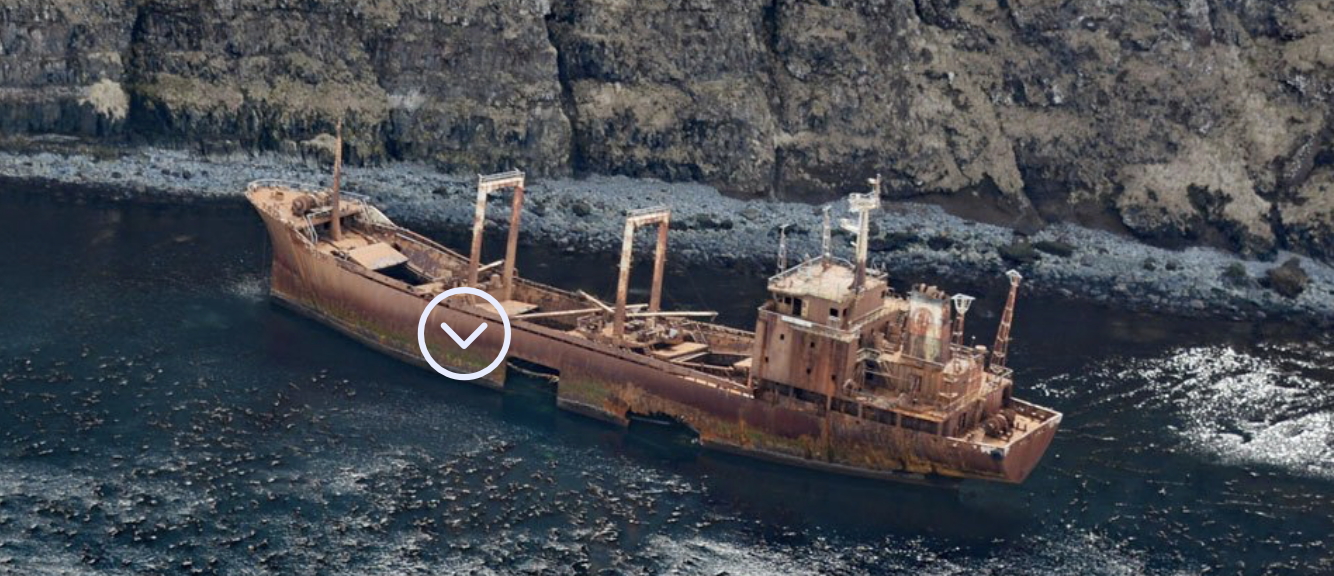
1989  M/V Aoyagi Maru ran aground on a reef in Lost Harbor, Alaska.  USCGC Rush rescued the crew of 19. She was declared a total loss after being gutted by fire when 1,200 pounds of explosives were ignited to burn off the 100,000 gallons of fuel left aboard and her cargo of 74,000 pounds of rotting cod.

This Day in Coast Guard History, March 18

Based on the Coast Guard Historian’s timeline, https://www.history.uscg.mil/research/chronology/
With inspiration from Mike Kelso

March 18

1909  Stations Holly Beach and Hereford Inlet, New Jersey: the schooner C.B. parted its chain while weighing anchor.  She set a distress signal which was discovered by the lookouts at both stations.  The surfboats proceeded to the scene and surfmen swept for the chain and assisted in securing it on board.

USCGC Ingham (WPG-35) underway in heavy seas, circa 1941-1944, location unknown.
US Coast Guard photo # 2000225945

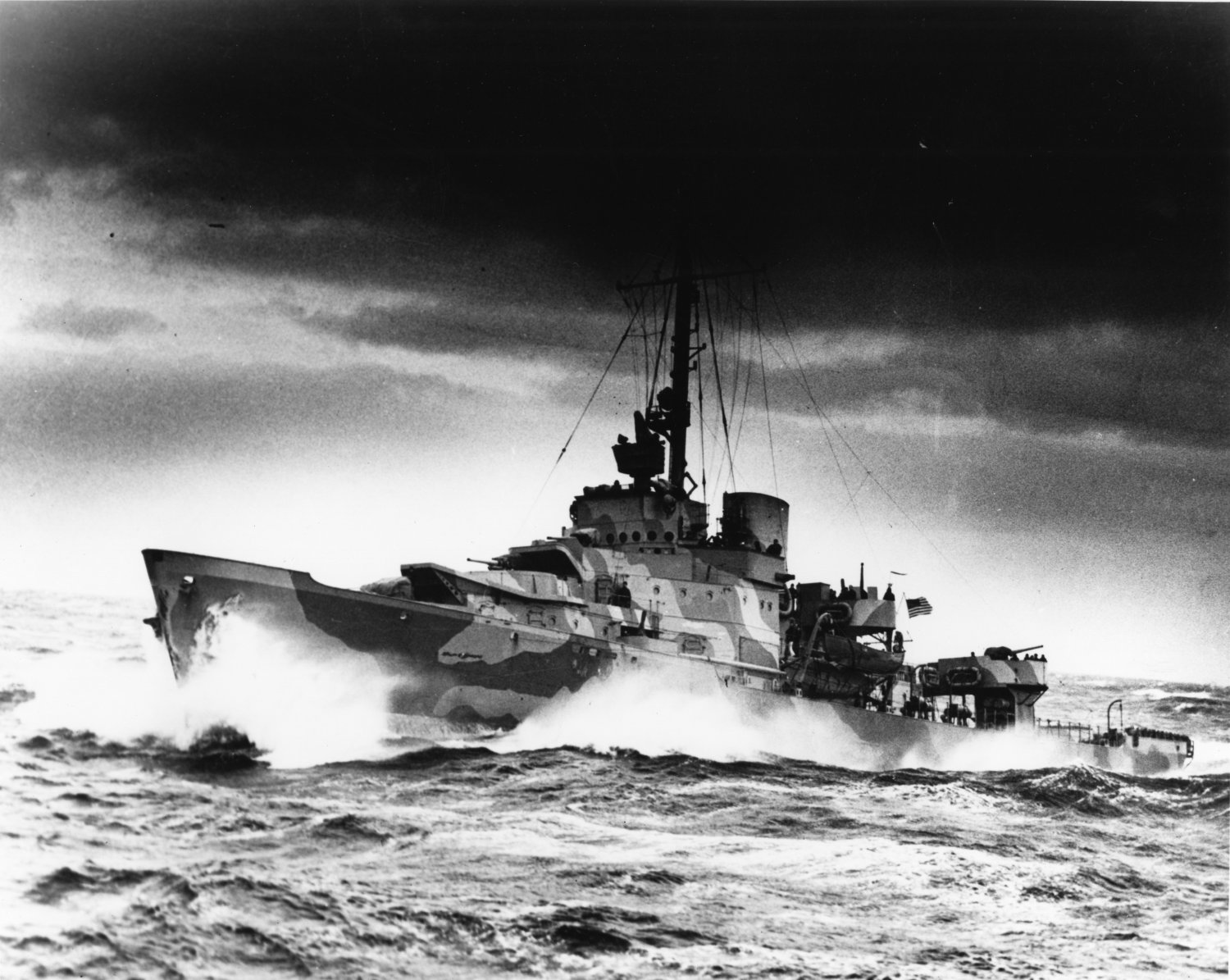
1943  USCGC Ingham rescued all hands from the torpedoed SS Matthew Luckenbach. (Ingham was the most decorated vessel in the Coast Guard fleet and was the only cutter to ever be awarded two Presidential Unit Citations.)

131107-N-WX059-125 PEARL HARBOR (Nov. 7, 2013) The Bangladesh Navy Ship (BNS) Somudra Joy (F-28) arrives at Joint Base Pearl Harbor-Hickam for a scheduled port visit. From 1972 to 2012 the ship was known as the U.S. Coast Guard Hamilton-class high endurance Cutter USCGC Jarvis (WHEC-725). (U.S. Navy photo by Mass Communication Specialist 2nd Class Sean Furey/Released)

1967  The 378-foot high endurance cutter Hamilton, first in her class, was commissioned.  This was the first class of major vessels in the U.S. government’s inventory that were powered by jet turbines. (By then the first five WMEC210s, all CODAG powered, had already been commissioned. The turbines on the 378s were literal Jet engines, being the same engines used on the Boeing 707s)

95 foot Cape Class WPB

1991  CGC Cape Hatteras (WPB 95305) was decommissioned.  She was the last 95-foot patrol boat in the Coast Guard.  She was then transferred to Mexico.

1996  The single-hulled barge San Gabriel buckled and split open in rough seas, rupturing two tanks and spilling 210,000 gallons of oil in the Houston Ship Channel near Galveston, Texas.  Coast Guard Marine Safety Unit (MSU) Galveston established a joint command structure with local agencies and private contractors to isolate and then clean up the spill.  Personnel from the Gulf Strike Team, MSO Houston, MSO New Orleans, Aviation Training Center Mobile, and the 8th District supplemented MSU Galveston.  The majority of the spill was cleaned up in three days.

U.S. Coast Guard Cutter THETIS (WMEC-910) , US Navy photo ID:J3103SPT95001725 / DNST9800595

2000  CGC Thetis seized F/V Viviana II which was grossly overloaded with 234 Ecuadorean migrants.  The vessel and the migrants were turned over to the Ecuadorean Navy.

Panamanian motor vessel Gatun during the largest drug bust in United States Coast Guard history (20 tons of cocaine) off the Coast of Panama. Exhibit 10 (2 of 3) from the U.S. Government’s Memorandum of Law in Support of Pretrial Detention in the case of Joaquin “Chapo” Guzman, described as 19,000 kilograms of cocaine aboard a maritime vessel en route from Colombia to Mexico seized March 18, 200

2007  The Coast Guard made the largest cocaine seizure in its history to date when CGCs Hamilton and Sherman seized 42,845 pound of cocaine aboard the Panamanian-flagged M/V Gatun off the coast of Panama.  Gatun was first located by a HC-130 on March 17.

USRC/USS/USCGC Manning –Story from laststandonzombieIisland

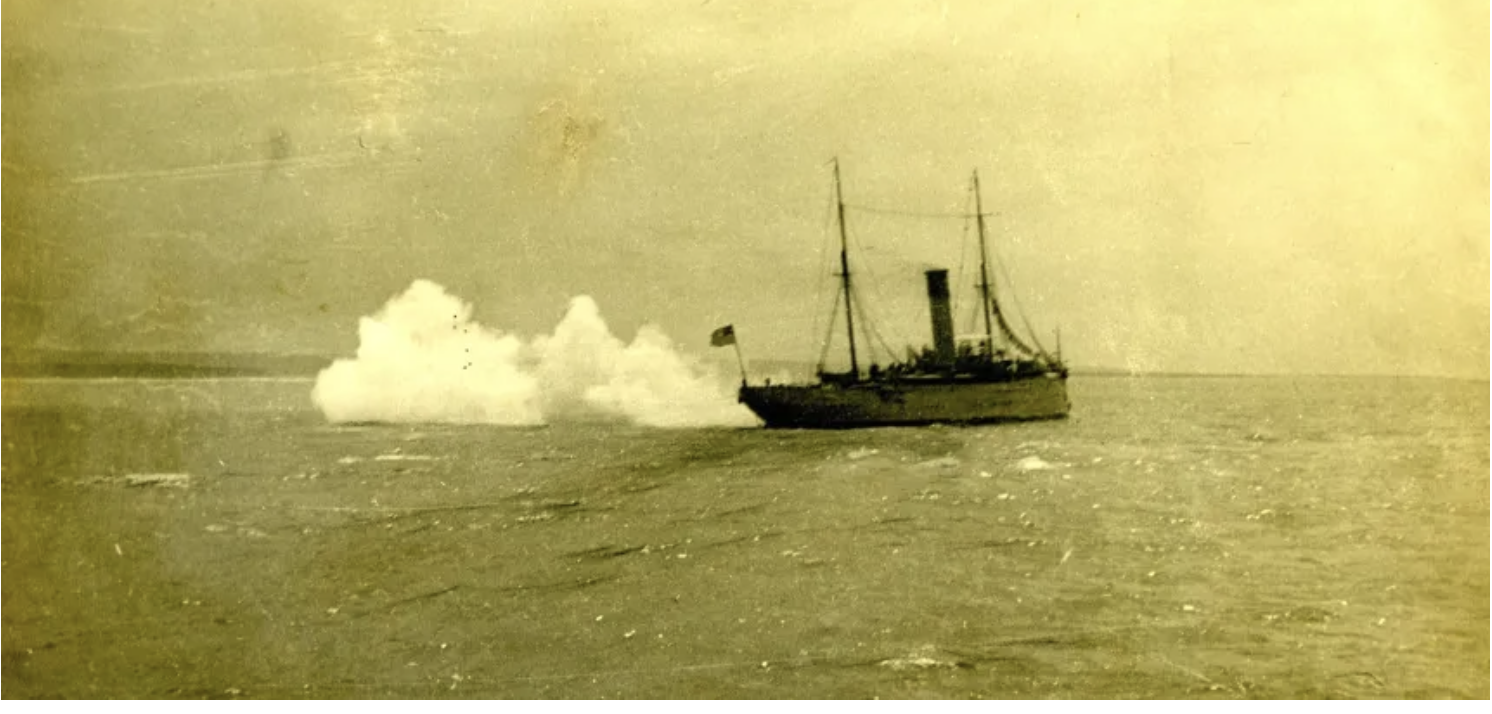
May 12, 1898, USS Manning in engaged off Cabanas, Cuba By Lieut. G. L. Carden, R.C.S. This is the only known photo of a Revenue Cutter in action during the Spanish-American War. (At the time, upon transfer to Navy control, apparently it was common for the USS designation to be substituted.)

Ran across an excellent history of the Cutter Manning and its career from 1898 to 1930 on a site with the unlikely name of laststandonzombieisland. It seems the site looks at a different vintage warship every Wednesday, and there are other cutters featured as well. I will try to cover them as well. The articles are relatively long and well illustrated with photos.

The post talks about the entire generation of cutters, SRC Gresham, USRC McCulloch, USRC Algonquin, and USRC Onondaga as well as USRC Manning.

The Propeller class was emblematic of the Revenue Cutter Service– the forerunner of the USCG– at the cusp of the 20th Century. The USRCS decided in the 1890s to build five near-sisterships that would be classified in peacetime as cutters but would be capable modern naval auxiliary gunboats.

These vessels, to the same overall concept but each slightly different in design, were built to carry a bow-mounted torpedo tube for 15-inch Bliss-Whitehead type torpedoes (although they appeared to have not been fitted with the weapons) and as many as four modern quick-firing 3-inch guns (though they typically used just two 6-pounder, 57mm popguns in peacetime). They would be the first modern cutters equipped with electric generators, triple-expansion steam engines (with auxiliary sail rigs), steel (well, mostly steel) hulls with a navy-style plow bow, and able to cut the very fast (for the time) speed of 18-ish knots.

It talks about how Coast Guard forces were deployed for the Spanish American War and how the vessels were armed.

It reproduces reports from Manning regarding her actions during the war. The ship did a lot of naval gun fire support.

After the Spanish American War she was assigned to the West coast and performed Bering Sea Patrol.

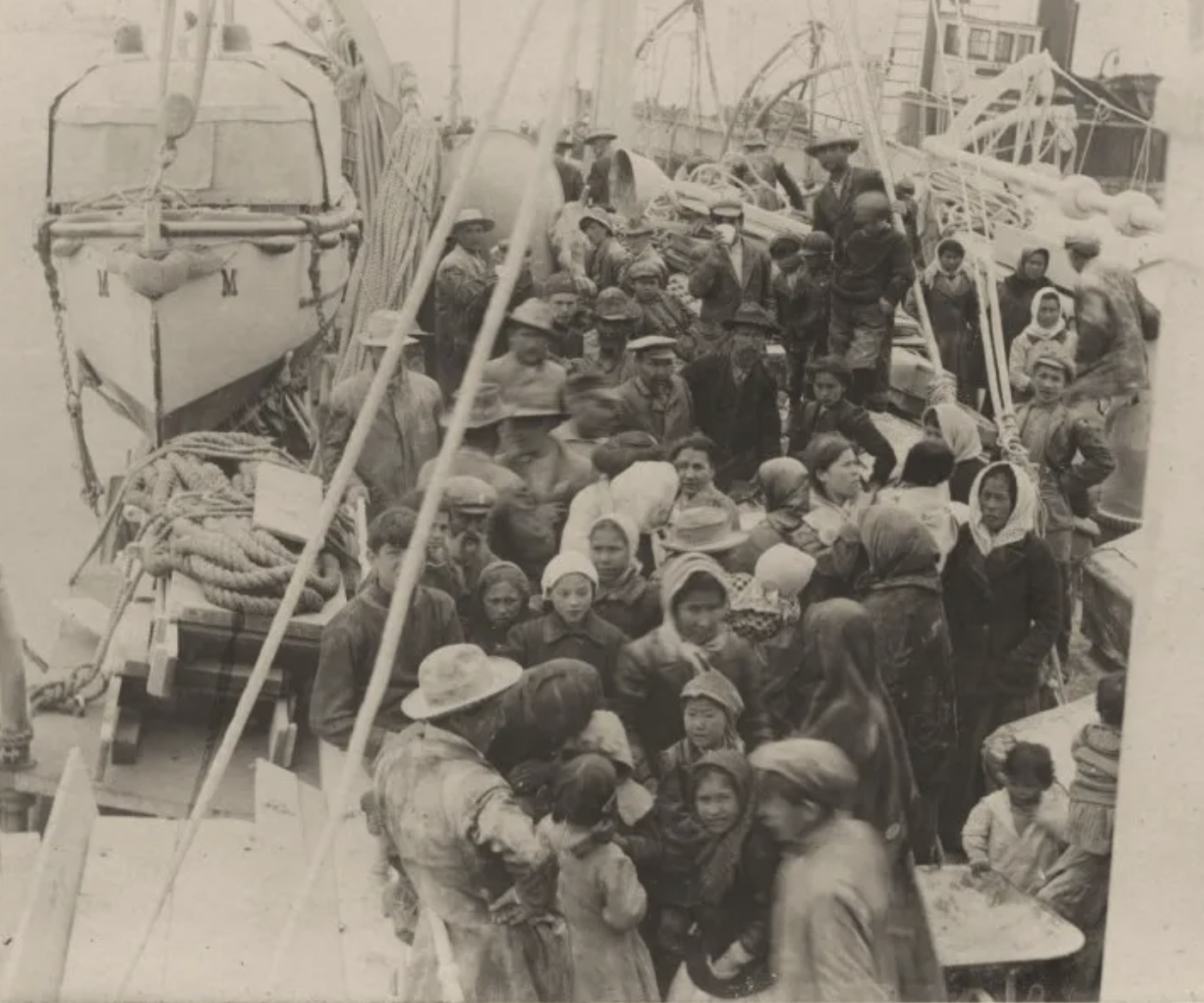
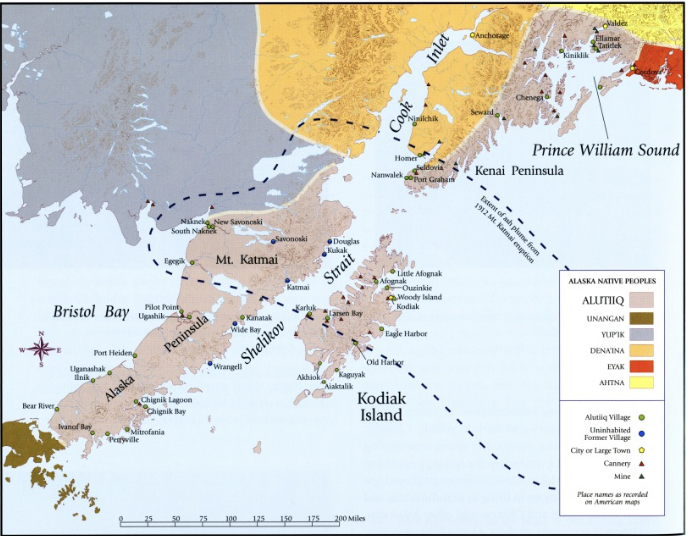
In 1912 she was in port in when the largest volcanic eruption of the 20th century happened on Alaska peninsula to the NW. Manning sheltered over 400 people and provided fresh water from her evaporators (an innovation at the time).

U.S. Revenue Service cutter Manning, crowded with Kodiak residents seeking safety during the 1912 eruption of Novarupta, which resulted in about a foot of ashfall on Kodiak over nearly three days. The photograph was published in Griggs, 1922, and was taken by J.F. Hahn, U.S.R.S.

“Valley of Ten Thousand Smokes and the 1912 Novarupta-Katmai Eruption,” National Park Service:

At Kodiak, 100 miles (160 km) southeast of the eruption center, the air became thick with ash and, for 60 hours, darkness was so complete that a lantern held at arm’s length could scarcely be seen. The terrified townspeople, some temporarily blinded by the sulfurous gas, crowded onto the U.S. Revenue Cutter Manning docked in Kodiak harbor, while one foot of ash (30 cm) smothered their town with three closely spaced periods of ash fall. The weight of the ash collapsed roofs in Kodiak; buildings were wrecked by ash avalanches that rushed down from nearby hill slopes; other structures burned after being struck by lightning from the ash cloud; and water became undrinkable.

In World War I she was one of six cutters assigned to Gibraltar (Tampa, Algonquin, Seneca, Manning, Ossipee, and Yamacraw) tasked with escorting convoys between there and the British Isles.

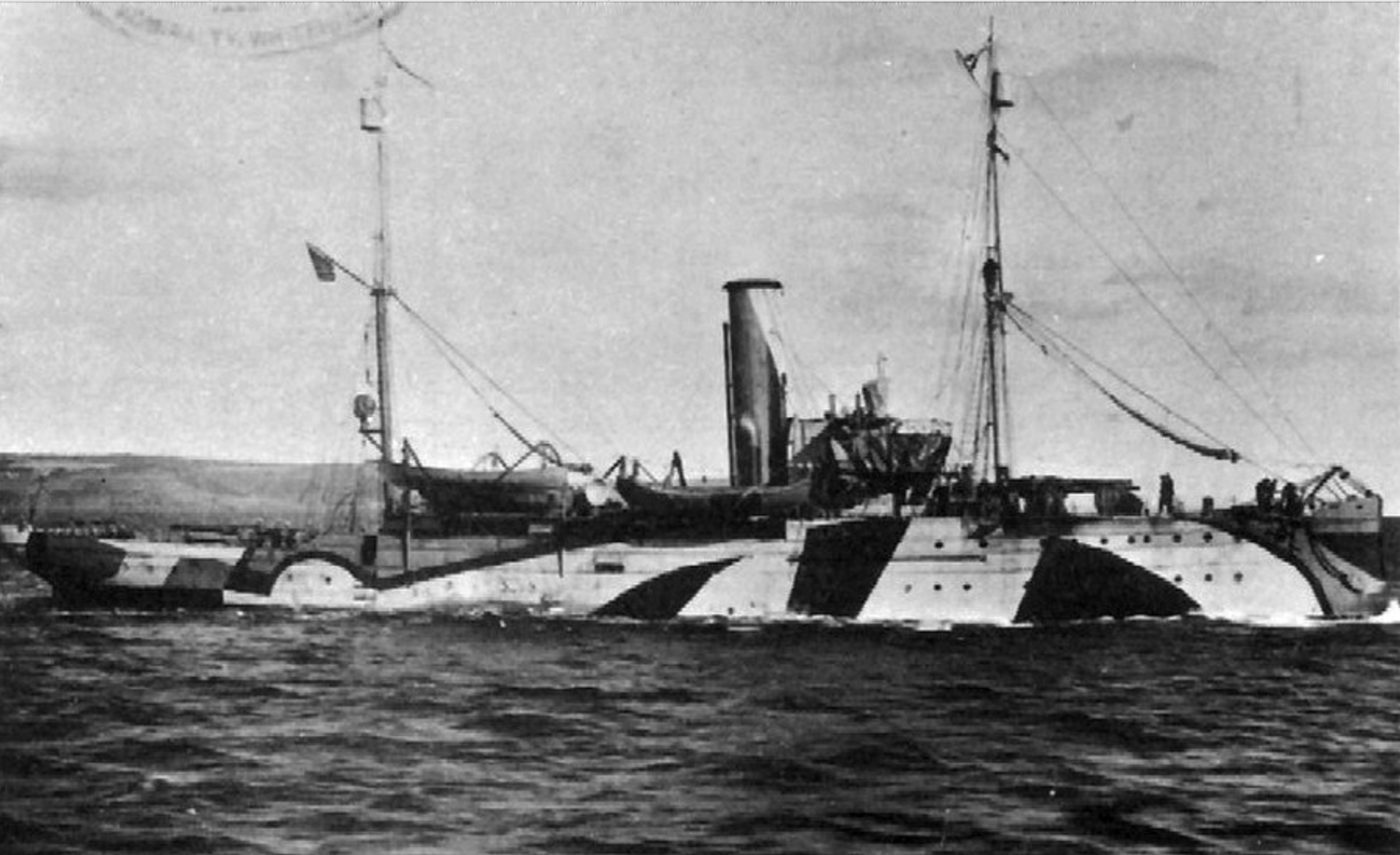
Then USS Manning, probably 1918, as outfitted for convoy duty. She and sister Algonquin were armed with four 4-inch guns with 1,500 shells stored in two magazines fore and aft, two racks capable of carrying 16 300-pound depth charges, and four 30.06 Colt “potato digger” machine guns. A small arms locker would be filled with a pair of .30-06 Lewis guns, 18 .45 caliber Colt pistols, and 15 Springfield rifles. Photo from U.S. Warships of World War I, by P.H. Silverstone

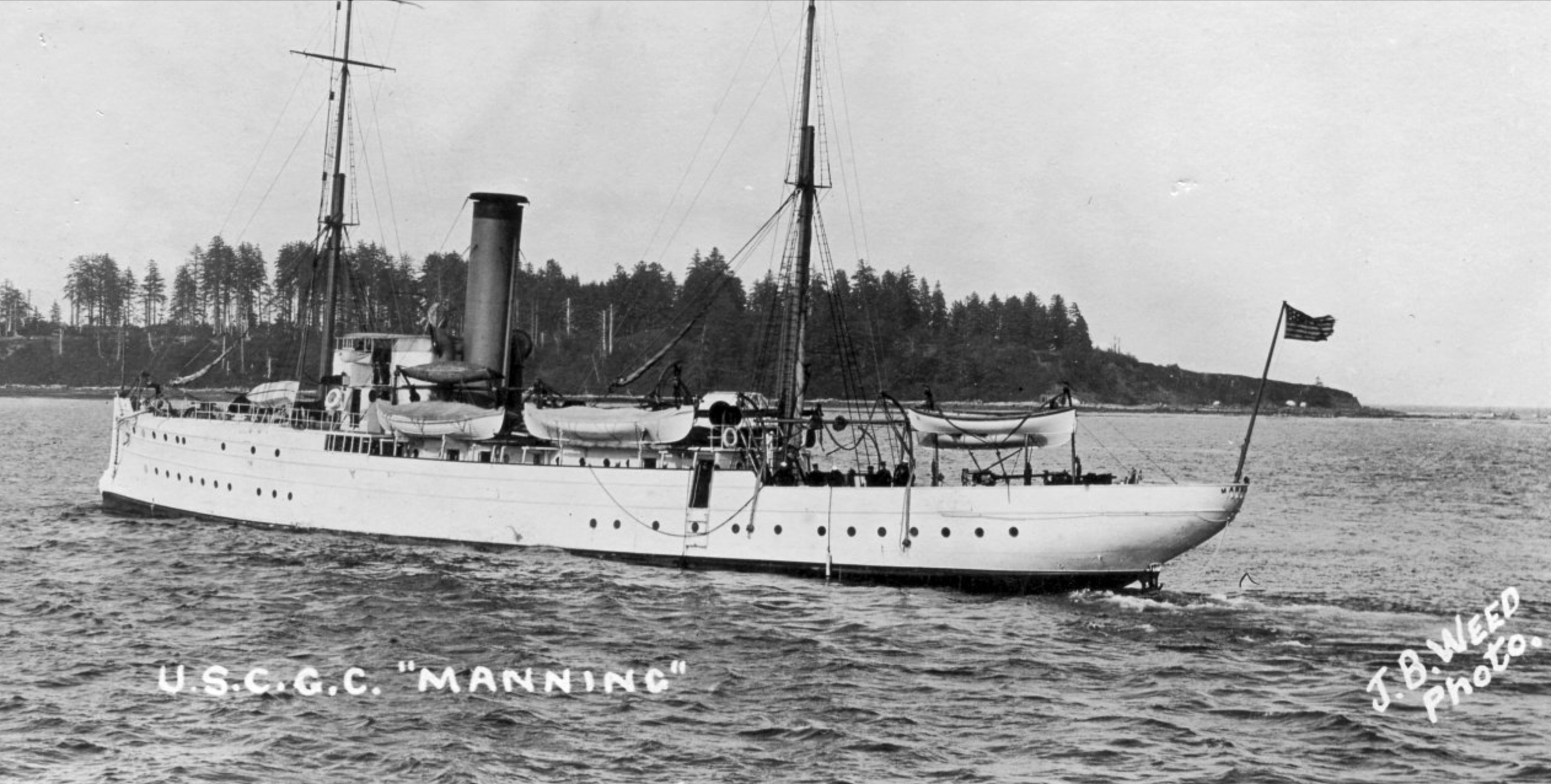
Reverting back to the Treasury Department on 28 August 1919, Manning would remain on the East Coast, spending the next 11 years operating out of Norfolk with her traditional white hull. During this period, she would participate in the reestablished International Ice Patrol, and take part in the “Rum War” against bootleggers, and other traditional USCG taskings.

Photo by J. B. Weed from the collection of Arthur Heinickle

Important dates from NavSource:

  • The first Manning was built in 1898 by the Atlantic Works, East Boston, MA
  • Commissioned USRC Manning 8 January 1898
  • Acquired by the Navy 24 March 1898
  • Returned to the Revenue Cutter Service 17 August 1898
  • Acquired by the Navy again 6 April 1917
  • Returned to the Coast Guard 28 August 1919
  • Decommissioned 22 May 1930
  • Sold in December 1930 to Charles L. Jording of Baltimore, MD

This Day in Coast Guard History, March 17

Based on the Coast Guard Historian’s timeline, https://www.history.uscg.mil/research/chronology/
With inspiration from Mike Kelso

March 17

1863  Revenue cutter Agassiz helped defend the Union-held Fort Anderson at New Bern, North Carolina, from a Confederate attack.

1902  All but one of the members of the crew of the Monomoy Life-Saving Station perished during the attempted rescue of the crew of the wrecked coal barge Wadena during a terrible winter gale.  The dead included the keeper of the station, Marshall N. Eldridge, and six of his surfmen.  Eldridge told his crew before they departed on the rescue that: “We must go, there is a distress flag in the rigging.”  The crew of five from the barge also perished.  The sole survivor, Seth L. Ellis, was the number one surfman of the Monomoy station.  He was awarded the Gold Lifesaving Medal as was the man who rescued him, Captain Elmer Mayo of the barge Fitzpatrick.

USCGC Cayuga, circa 1936. USCG photo.

1941  CGC Cayuga left Boston with the South Greenland Survey Expedition on board to locate airfields, seaplane bases, radio and meteorological stations, and aids to navigation in Greenland.  This was the beginning of the Coast Guard’s preeminent role in Greenland during World War II.

1962  After requesting the evacuation of a seriously injured crewman, the Russian merchant vessel Dbitelny transferred the patient to the Coast Guard LORAN station on St. Paul Island in the Bering Sea.  Meanwhile, a Coast Guard aircraft flew a U.S. Navy doctor and a hospital corpsman there to perform an emergency operation.  Afterwards, the injured man was flown to Elmendorf Air Force Base, where he was admitted to the U.S. Air Force hospital.

John Lehman, former Secretary of the Navy. (He came to Naval War College when I was there. Very impressive.)

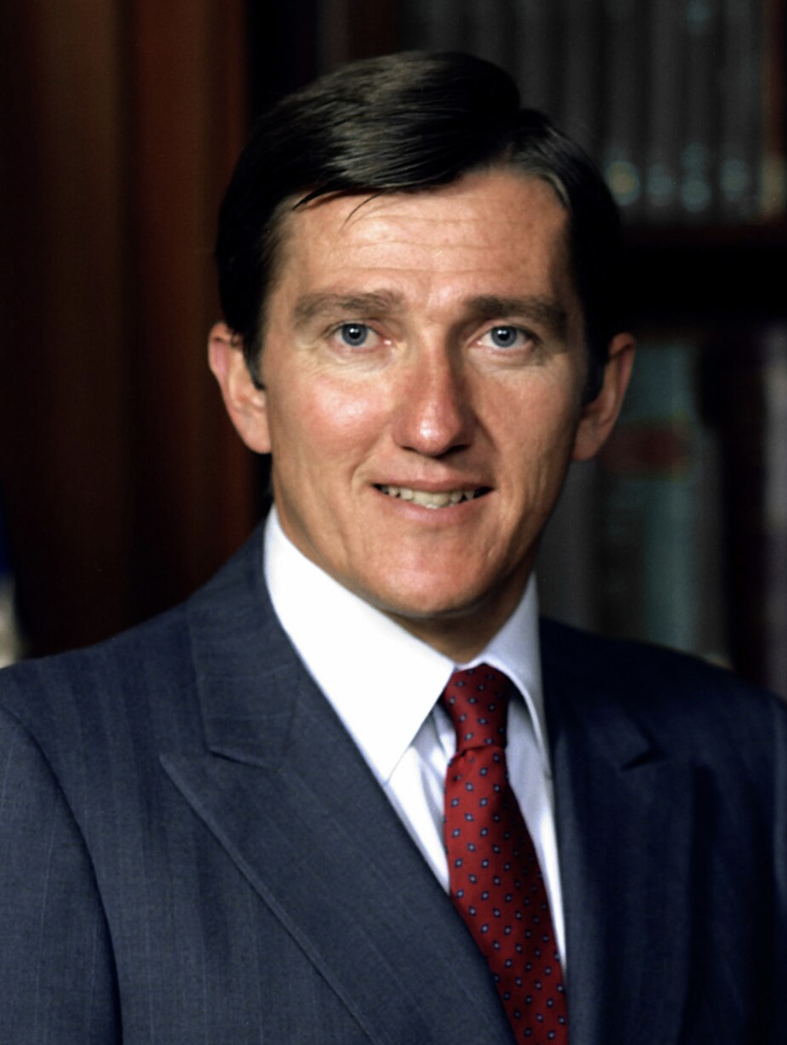
1982  Navy Secretary John Lehman testified before Congress on behalf of the Coast Guard.   He characterized the relationship between the Navy and the Coast Guard as being “close and warm.”  He also praised the new NAVGARD Board, created in November 1980, to formalize the relationship between the two services.

USCGC Thunder Bay (WTGB-108)

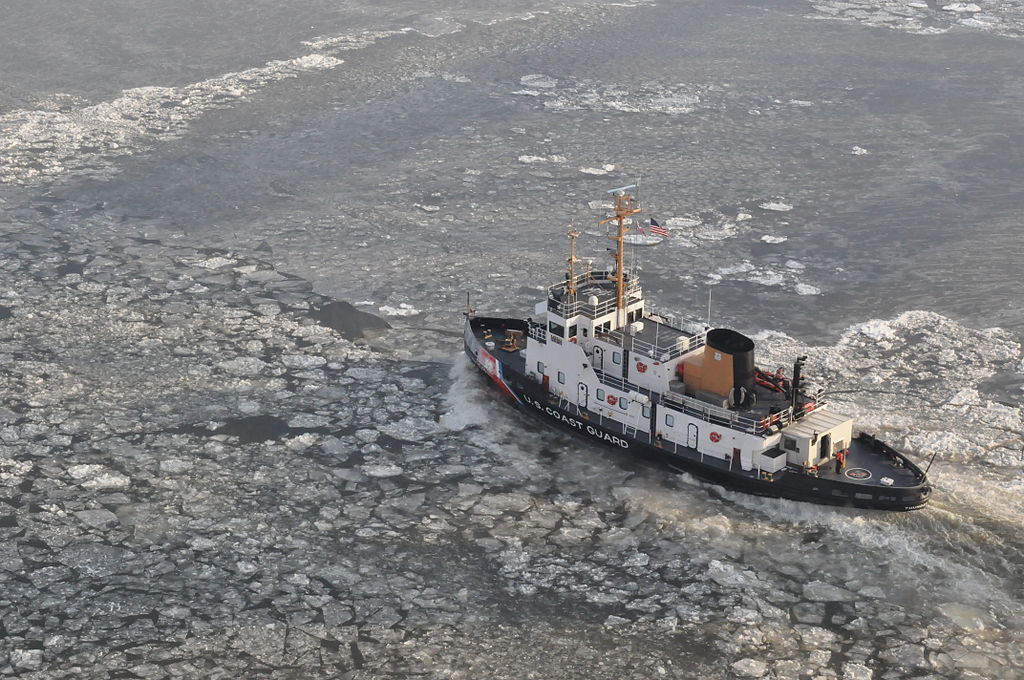
2015  Following a 61-day deployment on the Hudson River, CGC Thunder Bay returned to its homeport of Rockland, Maine after conducting icebreaking operations in support of Operation Reliable Energy for Northeast Winters.  Thunder Bay deployed mid-January 2015 to coordinate daily ice breaking operations with CGCs Sturgeon Bay, Willow, Elm, and Wire on the Hudson River.  In order to keep the channel open to commercial shipping traffic, Thunder Bay conducted operations seven days a week, with only occasional days off.  The cutter navigated more than 100 river miles daily and by the end of the season Thunder Bay had sailed nearly 3000 nautical miles, conducted 554 hours of icebreaking, and made 70 vessel and facility break outs, requiring them to operate an additional 13 days beyond their original assignment.

This Day in Coast Guard History, March 16

Based on the Coast Guard Historian’s timeline, https://www.history.uscg.mil/research/chronology/
With inspiration from Mike Kelso

March 16

Assateague Island life-saving station

1909  At Assateague Beach, Virginia, the schooner Charley C. Weaver began taking on water.  One of the crew notified the keeper that the schooner was leaking.  The life-saving station’s surfboat proceeded to the scene, 1-5/8 miles south of the station.  The schooner’s crew was nearly exhausted from a long spell at the pump.  Surfmen shifted her cargo of oysters.  They also tried to locate the leak, but were unsuccessful.  They then went ashore and returned with the power lifeboat which towed the schooner safely over the bar.