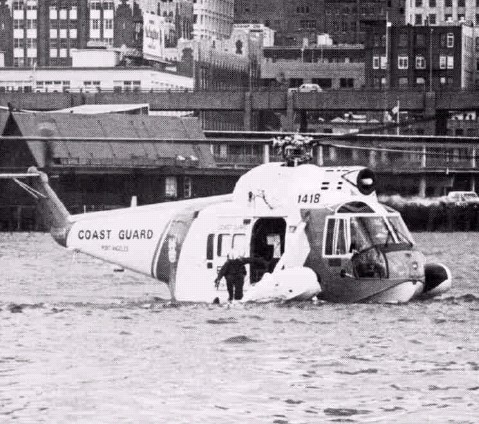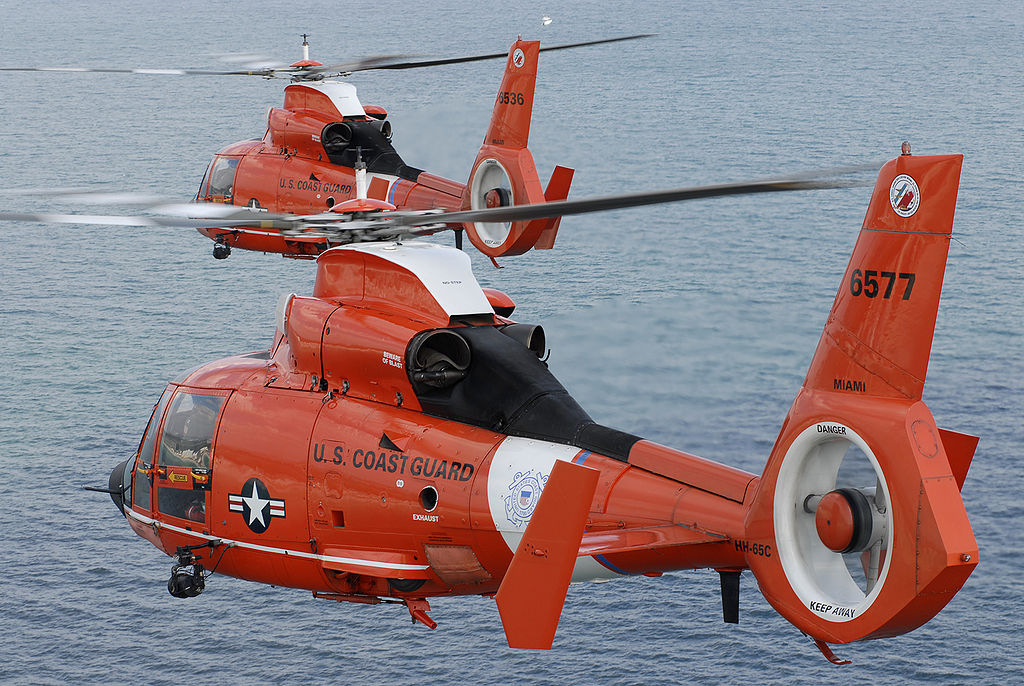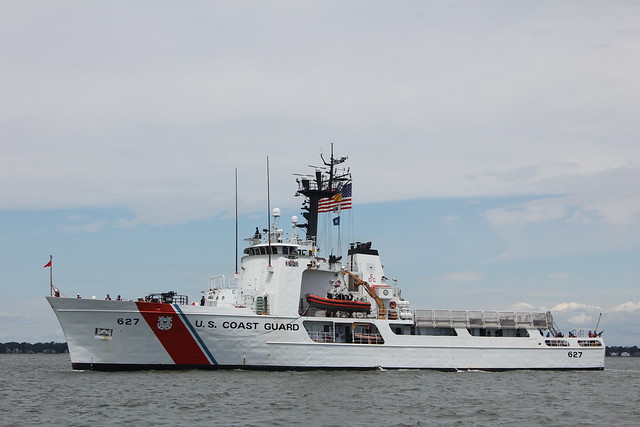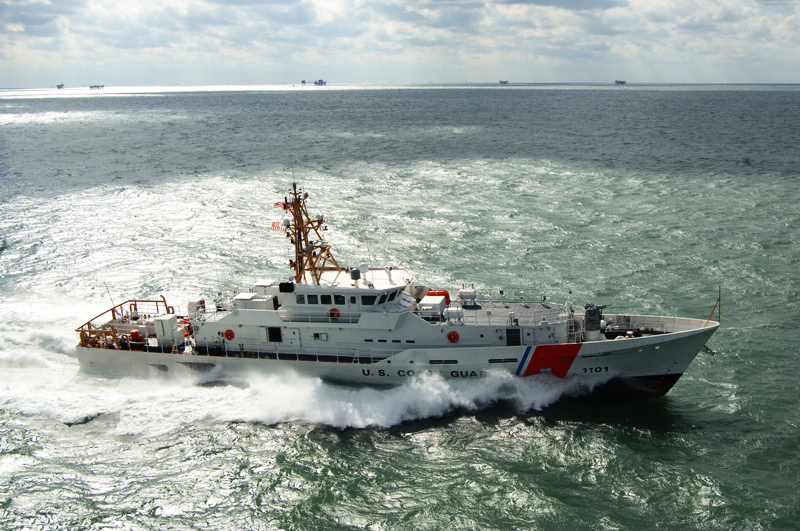
Patrol Cutter Comparison 2000, 2008, Now, and Future

Coast Guard Cutters Venturous (WMEC 625) and Hamilton (WMSL 753) rendezvous at sea, Nov. 21, 2024, in the Eastern Pacific Ocean. Venturous’ crew conducted a 40-day counter drug patrol within the Coast Guard Eleventh District area of responsibility in support of Joint Interagency Task Force – South. (U.S. Coast Guard photo)

A friend posted the following in response to a post I made on facebook.

The CG placed 20+ vessels into a special status: they are no longer operating nor are they crewed. The personnel and operational funds were redirected to other current and future needs. Current and future budgets should look to downsize shoreside administrative functions by simplifying business processes so that resources can be redirected to operational needs.

Current fleet compared to the fleet in 2000:

So, I decided to look at the current active fleet, first in comparison to the fleet in 2020. At that time, we had 12 WHECs, 32 WMECs, and 49 WPB110s, a total of 93 ships. Currently we have as best I can tell 10 NSCs, 23 WMECs, 58 WPC158s, and 3 WPB110s for a total of 94.

In terms of manpower, the fleet in 2000 required crews totaling 5703 while the current fleet requires a complement of 4785.

The full load tonnage of the fleet in 2000 was 92,168 tons; for the current fleet 102,596 tons. 

Decline before Renewal:

The first National Security Cutter was not commissioned until 2008 and the first Fast Response Cutter not until 2012.

Between 2000 and 2008 the Coast Guard decommissioned three WMECs and eight WPB110s. The 110s as a result of the failed attempt to lengthen them, for a total of 11 ships bring the total down to 82. That would have reduced the manpower requirement to 5347.

The future fleet: 

The currently projected fleet will include 11 NSCs, 25 OPCs, and 67 FRCs for a total of 103. Estimated manning (OPC unknown but I assumed 100, NSC assumed 126, that may be low) would be 5494, and a total tonnage of 185,651 tons full load.

We are moving toward a fleet with fewer large ships, but they will be significantly larger and a fleet of significantly more small ships each significantly larger.

The way the NSCs have been pushed and Webber class WPCs’ better seakeeping and greater number of programmed days underway probably translates into considerably more ship days underway.

In view of the deteriorating world situation, I would like to see some of the out-year OPCs replace by a more capable warship, perhaps smaller and in greater numbers.

I see a need to replace at least some of the WPB87 footers with high-speed craft capable both of speeding to a SAR case of shore and countering a terrorist attack–a true Fast Response Cutter.

“Ministers Joint Statement by the Quad Foreign Ministers” –State Department

A Japan Coast Guard helicopter approaches an Indian Coast Guard patrol vessel during a joint exercise off Chennai, India, January 2018 (Photo: The Asahi Shimbun via Getty) “It’s time for a “Quad” of coast guards,” David Brewster–This modest proposal could help bring stability and security to the Indo-Pacific, without the military fanfare.

Below is a State Department release of a joint statement by the US Secretary of State and foreign ministers of Australia, India, and Japan.

This article from the “The Strategist” suggests that this statement reflects the new administration’s position, and that it moves the Quad closer to a security agreement.

The fact that the Quad foreign ministers meeting was virtually Secretary of State Marco Rubio’s first official activity will be read as a sign of President Trump’s willingness to back the quartet, which after all was revived in 2017 during his first term in office.


Joint Statement by the Quad Foreign Ministers, Media Note, Office of the Spokesperson, January 21, 2025

We, the Secretary of State of the United States and the Foreign Ministers of Australia, India, and Japan, met today in Washington D.C. to reaffirm our shared commitment to strengthening a Free and Open Indo-Pacific where the rule of law, democratic values, sovereignty, and territorial integrity are upheld and defended. Our four nations maintain our conviction that international law, economic opportunity, peace, stability, and security in all domains including the maritime domain underpin the development and prosperity of the peoples of the Indo-Pacific. We also strongly oppose any unilateral actions that seek to change the status quo by force or coercion.

We are committed to strengthening regional maritime, economic, and technology security in the face of increasing threats, as well as promoting reliable and resilient supply chains. We look forward to advancing the work of the Quad in the coming months and will meet together on a regular basis as we prepare for the next Quad Leaders’ Summit hosted by India.

“Hellenic Navy names four (former USCG) Island-class patrol vessels (Video)” –Naval Today

Credit: Ministry of National Defense (Greece)

Naval Today reports on the commissioning of four former US Coast Guard Island class cutters into the Greek Navy.

Lots of friendly nations are benefitting from receipt of previously well-maintained US Coast Guard vessels through Foreign Military Sales. Their availability helps our friends in the maintenance of a global rules based maritime environment. Ships that are no longer economical to support in the US, may be maintainable in other countries where labor costs are lower.

This movement of retiring ships should be part of regular Coast Guard planning. We should set a reasonable life, say 30 years for large ships and 25 for smaller, and produce a 30 year ship building plan. Yes, it may change, and it should, but it would establish expectations for future budgets. We should produce a new projection every year.

Lt. John F. String, Jr., USCGR, CO USS PC-545, Silver Star Recipient

PC545
Photo: USS PC-545, Commanded by Lt. String, At sea during World War II. Probably photographed in 1942-43, while wearing rather weathered pattern camouflage. Donation of Phil Wagner, 2001. U.S. Naval Historical Center Photograph.

The “This Day in Coast Guard History” for January 22 included this simple statement,

1944  Coast Guardsmen participated in Operation Shingle – the landings at Anzio-Nettuno, Italy.  Coast Guard units involved were USS PC-545 and LSTs 16, 326, 327, and 381.

The Coast Guard manned only four of these PCs during WWII. I remembered one had performed extremely well. This is the story.

STRING, John F. Jr., LT, USCGR, WWII, Anzio invasion, Silver Star, for conspicuous gallantry in action while serving as commanding officer of the USS PC 545 off Anzio, Italy on March 18, 1944. When an enemy motor torpedo boat was sighted at night. Lt. String immediately ordered the attack. With an expert display of seaman ship, he so skillfully maneuvered the ship that the first shots scored hits on the enemy craft before it was able to maneuver into position to effectively use its torpedoes and the resulting fire caused it to disintegrate in an explosion. This successful action against the enemy contributed materially to the protection of shipping in the Anzio area and to the successful maintenance of forces ashore.

This is a brief summary of USS PC-545 career while Coast Guard manned from NAVSOURCE.

  • Laid down 31 March 1942 by the Defoe Shipbuilding Corp., Bay City, MI
  • Launched 8 May 1942
  • Commissioned USS PC-545, 27 June 1942 with a Coast Guard crew
  • PC-545 participated in the following campaigns: Sicilian occupation, 9 – 15 July, 28 July – 17 August 1943 Salerno landings, 9 – 12 September 1943 Anzio Netturno advanced landings, 28 January – February 1944 and the Invasion of Southern France, 15 August – September 1944
  • Sank a German E-boat 19 March 1944 west of Anzio, Italy
  • Decommissioned 17 October 1944, transferred to France at Toulon, France and named Goumier (W 91). Her Coast Guard crew was removed the same day.

Typical E-Boat. The German Schnellboot (“E-boat”) S 204 flying a white flag of surrender at the coastal forces base HMS Beehive, Felixstowe, Suffolk (UK), on 13 May 1945. The two German E-Boats S 204 and S 205 from the 4th Schnellboot-Flotilla were escorted in by ten British MTBs. On board of S 205 was Rear Admiral Erich Breuning, who had been in charge of E-Boat operations and who signed the instrument of surrender. Note the black panther painted on the side of S 204 which had on board KKpt Kurt Fimmen (CO 4th Schnellboot-Flotilla) and KptLt Bernd Rebensburg (Ia Op/Operations-Officer of the Staff of Führer der Schnellboote/FdS). Lt. J.E. Russell, Royal Navy official photographer

This Day in Coast Guard History, January 22/23

Based on the Coast Guard Historian’s timeline, https://www.history.uscg.mil/research/chronology/
With inspiration from Mike Kelso

January 22

USS PC-545

1944  Coast Guardsmen participated in Operation Shingle – the landings at Anzio-Nettuno, Italy.  Coast Guard units involved were USS PC-545 and LSTs 16, 326, 327, and 381.

1987  The Coast Guard established the Air Interdiction Facility at Norfolk Naval Air Station.  The aircrews flew two loaned Navy E-2C Hawkeye aircraft on narcotics interdiction patrols.

January 23

1909  The schooner Roderick Dhu was discovered in distress on the bar by a Life-Saving Service patrol from the Point Bonita, California station. The schooner had been in tow by a tug, but parted hawsers when 5-1/2 miles SW of a LSS station.  She hoisted a signal, and the keeper reported her condition to the Merchant’s Exchange.  A tug was sent out and the schooner was towed to sea.  The next day she was towed into port, leaking badly, and convoyed by the USRC McCulloch.

Revenue Cutter USCGC McCulloch

“Coast Guard announces immediate action in support of Presidential Executive Orders” –News Release/What Will the CG Do Differently?

A good Samaritan notified Sector Miami watchstanders of a migrant vessel about 10 miles east of Sunny Isles, Florida, Jan. 8, 2023. The people were repatriated to Cuba on Jan. 16, 2023. (U.S. Coast Guard photo)

Below is a CG news release.

The Coast Guard is a military organization. It does as it is told. That is the way it is supposed to be. But these are not new missions. Units are already positioned to carry out these missions. If we devote more assets to these missions, until, if or when, the Coast Guard gets more assets, they will have to come from other missions.

Frankly it seemed Immigration interdiction on the water routes was going well, doing much better than we are doing on the land borders. The New York Post, apparently reporting on this news release was headlined, “After Trump’s orders, US Coast Guard surges near Haiti, Cuba to block ‘mass migration’, but there have been no reports I’ve seen of a large increase in immigration attempts. The New York Post article also includes a video that indicates an avenue of legal immigration, that has been used as an incentive to not attempt illegal immigration, is being closed off.

So, what will be done differently?

NE fisheries might get less attention. Generally, the East coast has had a disproportionate percentage of the fleet, considering that something like 84% of the US EEZ is under PACAREA. It appeared new construction FRCs were already programmed to go to the Pacific and that there might be a new base in American Samoa.

It had appeared that another WMEC270 transfer to the Pacific was in the works, but they could probably use more than one more.

Will Coast Guard Aircraft be moved from the NE to the SE or the Pacific?

The President might choose to stop fisheries patrols with the Compact of Free Association States, but that would leave a vacuum the Chinese might exploit.

I would really love to see the Coast Guard start a program to provide a ship class around 2-3000 tons, with better potential as a warship, to build in greater numbers, in lieu of the as yet uncontracted last 10 OPCs. But that could provide no near-term help.

I would love to see cutters better prepared for a terrorist attack, which would also provide them better potential for use as a naval auxiliary. We could start doing that relatively quickly, but it would not have any effect on immigration.

There is no indication what the Coast Guard will do to interdict fentanyl which was one of the criticisms of Admiral Fagan’s term as Commandant. I don’t see what the Coast Guard could do since, I believe, it primarily comes across the land border or in containers.

If the President wants more assets to interdict drugs in the Eastern Pacific Drug Transit Zone, he could task the Navy to provide more ships to 4th Fleet. The Coast Guard could probably provide more law enforcement detachments relatively quickly if needed.

{I wonder if Customs and Border Protection are doing anything differently?)

Will the Coast Guard get additional billets it would need to operate now very old deactivated WMEC210s and WPB87s?

Or will the Coast Guard once again try to do more with less?


Jan. 22, 2025

Coast Guard announces immediate action in support of Presidential Executive Orders

By Press Release

The Coast Guard announced immediate action on executive orders issued by the White House Tuesday, Jan 21, 2025.

“The U.S. Coast Guard is the world’s premiere maritime law enforcement agency, vital to protecting America’s maritime borders, territorial integrity and sovereignty,” said Adm. Kevin Lunday, the Coast Guard’s acting commandant. “Per the President’s Executive Orders, I have directed my operational commanders to immediately surge assets — cutters, aircraft, boats and deployable specialized forces — to increase Coast Guard presence and focus starting with the following key areas:

  • The southeast U.S. border approaching Florida to deter and prevent a maritime mass migration from Haiti and/or Cuba;
  • The maritime border around Alaska, Hawai’i, the U.S. territories of Guam, the Commonwealth of the Northern Mariana Islands, American Samoa, Puerto Rico and the U.S. Virgin Islands;
  • The maritime border between the Bahamas and south Florida;
  • The southwest maritime border between the U.S. and Mexico in the Pacific;
  • The maritime border between Texas and Mexico in the Gulf of America; and
  • Support to Customs and Border Protection on maritime portions of the southwest U.S. border.

Together, in coordination with our Department of Homeland Security and Department of Defense teammates, we will detect, deter and interdict illegal migration, drug smuggling and other terrorist or hostile activity before it reaches our border.”

Acting Commandant, ADM Kevin E. Lunday

ADM Kevin E. Lunday, August 19, 2024, US Coast Guard Official Photo

So, who is the Acting Commandant now? Wikipedia tells me Admiral Kevin Eugene Lunday (born October 12, 1965) is a native of South Carolina and 1987 Coast Guard Academy graduate. He has an interesting background.

His background in Cyber, Law, D14, DOD, and Engineering and numerous notable educational experiences appear promising. I have no information on early command experience before achieving flag rank. Will be interesting to see if he will remain on as Commandant.

This is his official Bio: Admiral Kevin E. Lunday, Vice Commandant, U.S. Coast Guard, U.S. Coast Guard

“Coast Guard commandant removed from post”–Politico

Admiral Linda L. Fagan

Politico reports,

Homeland Security officials have removed Adm. Linda Fagan from her role as the Coast Guard’s commandant, according to a note sent to service members — the first firing of a top military officer under the Trump administration.

I have reproduced the linked ALCOAST below.

DHS Secretary did not give a reason for the dismissal but apparently someone gave the reasons to Fox, “Coast Guard commandant terminated over border lapses, recruitment, DEI focus: official.”

I have not always agreed with Admiral Fagan’s positions, but she has had some notable successes. As Pacific Area Commander she pushed out the operating envelop of the Fast Response Cutters to include distant operations in the Eastern Pacific Drug Transit Zone and the Western Pacific. Alien migrant interdiction seems to be working well.

Admiral Fagan seems to have solved our long running recruitment problem. In 2024,

For the first time since 2007, the Coast Guard has achieved all its recruiting missions for enlisted active duty, the Reserve, and Non-Academy Officer Candidate School (OCS) accessions.

Fox sites, “mismanagement in acquiring key acquisitions such as icebreakers and helicopters.” Admiral Fagan has only been Commandant since June 2022. Contracts for icebreakers and helicopters predate her selection as Commandant.The “Fouled Anchor” report was mentioned. It came in January 2020, a year and a half before she became commandant and reported on events that occurred 2006 or earlier.

A parts procurement problem for our now 40 year old H-65s helicopters, was identified in 2021 and the Coast Guard made the decision to go to a uniform fleet of H-60s, but it is a long-term program. (meanwhile, “Customs and Border Protection Air and Marine Gets 16 New Helicopters“) The program hit a bump when there was a reduction in pre-SLEP operational life of H-60s from 20,000 to 19,000 hours, but it seems manageable.

As for the difficulties with the Polar Security Cutter, the choice of the shipyard and the decision to accept an unproven design, rather than that of an already operational icebreaker, as was required in the initial request for proposal, happened during the first Trump administration.

On April 23, 2019, the Coast Guard-Navy Integrated Program Office for the PSC program awarded a $745.9 million fixed-price, incentive-firm contract for the detail design and construction (DD&C) of the first PSC to Halter Marine Inc. of Pascagoula, MS, a shipyard that as owned by Singapore Technologies (ST) Engineering.

Admiral Fagan has been pointing out shortfalls in support for the Coast Guard.

My own evaluation is that Admiral Fagan has been one of the more effective Coast Guard Commandants we have had in this century. I am sorry to see her go.

I expect the Chief of Naval Operations will be next.


ALCOAST 021/25 – JAN 2025 LEADERSHIP NOTIFICATION TO USCG WORKFORCE

O 210536Z JAN 25   MID180001563582U
FM COMDT COGARD WASHINGTON DC
TO ALCOAST
BT
UNCLAS
ALCOAST 021/25
SSIC 1000
SUBJ: LEADERSHIP NOTIFICATION TO USCG WORKFORCE
1.To All Hands:
The following message is forwarded on behalf of Acting Secretary of
Homeland Security Huffman.
Under my statutory authority as the Acting Secretary of the
Department of Homeland Security I have relieved Admiral Linda L. Fagan
of her duties as Commandant of the United States Coast Guard.
She served a long and illustrious career, and I thank her for her
service to our nation. Admiral Kevin E. Lunday, by operation of law,
is now the Acting Commandant of the United States Coast Guard and
assumes all the authority and responsibilities of the office.
2. Benjamine C. Huffman, Acting DHS Secretary, sends.
3. Internet release is authorized.

This Day in Coast Guard History, January 21

Based on the Coast Guard Historian’s timeline, https://www.history.uscg.mil/research/chronology/
With inspiration from Mike Kelso

January 21

Chase as Lincoln’s Secretary of the Treasury. Library of Congress

1863 Appended to Circular to Collectors, January 21, 1863: “Sir: The question submitted by you [J. Lawrence Boggs, Collector at Perth Amboy, N.J.], whether free colored men are citizens of the United States, and competent therefore to command vessels engaged in our coasting trade, has been submitted to the Attorney General for his opinion, of which the concluding sentence is as follows: ‘And now, upon the whole matter, I give it as my opinion, that the free man of color mentioned in your letter, if born in the United States, is a citizen of the United States, and, if otherwise qualified, is competent, according to acts of Congress, to be a master of a vessel engaged in the coasting trade.’ You will advise the Commander of the Revenue Cutter ‘Tiger’ of this decision of the Attorney General, and direct him to conform to it in all future examinations of vessels engaged in the coasting trade. With great respect, Salmon P. Chase, Secretary.”

Tillamook Rock Lighthouse. An abandoned lighthouse near Tillamook Rock, Oregon, USA.

1881 The light was first shown at Tillamook Lighthouse, located 19 miles south of the Columbia River entrance.

USCGC Point Banks 14 foot Boston Whaler.

1969 CGC Point Banks, while on patrol south of Cam Rahn Bay, received a call for assistance from a nine-man South Vietnamese (ARVN) detachment trapped by two Vietcong platoons.  Petty Officers Willis Goff and Larry Villareal took a 14-foot Boston whaler ashore to rescue the ARVN troops.  In the face of heavy automatic weapons fire all nine men were evacuated in two trips. For their actions Goff and Villareal were each awarded the Silver Star. The citation stated, “The nine men would have met almost certain death or capture without the assistance of the two Coast Guardsmen.”

1982 “Streamlining” plans were put into place when the Commandant, ADM John B. Hayes, announced in ALCOAST 002/82 his plans to consolidate some operations and streamline others to comply with President Ronald Reagan’s goals of “greater efficiency in federal spending” and in accordance with Congressional appropriation levels.  The service eliminated 35 units, including the West Coast Training Center at Alameda, and consolidated all recruit training to TRACEN Cape May.

1984 The tanker Cepheus ran aground near Anchorage, Alaska, on the morning of January 21, 1984, spilling 180,000 gallons of jet fuel into Cook Inlet.  MSO Anchorage and the Pacific Strike Team responded to the incident and monitored the offloading of the damaged tanker and cleared its passage out of Alaska.  The light jet fuel evaporated with little environmental impact.

This Day in Coast Guard History, January 20

Based on the Coast Guard Historian’s timeline, https://www.history.uscg.mil/research/chronology/
With inspiration from Mike Kelso

The USCGC Champlain on the International Ice Patrol, circa mid-1930s. USCG photo.

1914  The International Ice Patrol Convention was signed.

Library of Congress description: Death on economy. U.S. “I suppose I must spend a little on life-saving service, life-boat stations, life-boats, surf-boats, etc.; but it is too bad to be obliged to waste so much money” / Th. Nast. Harper’s Weekly, 1877 Dec. 29, p. 1024.

1915  Congress passed the “Act to Create the Coast Guard” on this date in 1915 (38 Stat. L., 800).  The act combined the Life-Saving Service and Revenue Cutter Service to form the Coast Guard.  President Woodrow Wilson signed the act on January 28, 1915.

1961  During his inaugural parade, President John F. Kennedy noticed that there were no African-Americans in the Coast Guard Academy cadet unit marching in the parade.  He told his speechwriter, Richard Goodwin, “That’s not acceptable. Something ought to be done about it.  Goodwin called Secretary of the Treasury C. Douglas Dillon the next day and Dillon ordered the Academy “to scrutinize the Academy’s recruitment policy to make sure it did not discriminate against blacks.”

1984  Coast Guard units responded to a six-alarm fire along Boston’s waterfront.  The fire began early on the morning of January 20th on the Boston and Maine Railroad Bridge directly behind Boston Garden and North Station.  The Boston Fire Department requested Coast Guard assistance and MSO Boston coordinated the response.  Small boats from Station Boston responded while personnel from ATON Team Boston, Support Center Boston, Point Allerton Station, and CGCs PendantChaseWhite HeathNantucket I, and Nantucket II also assisted.