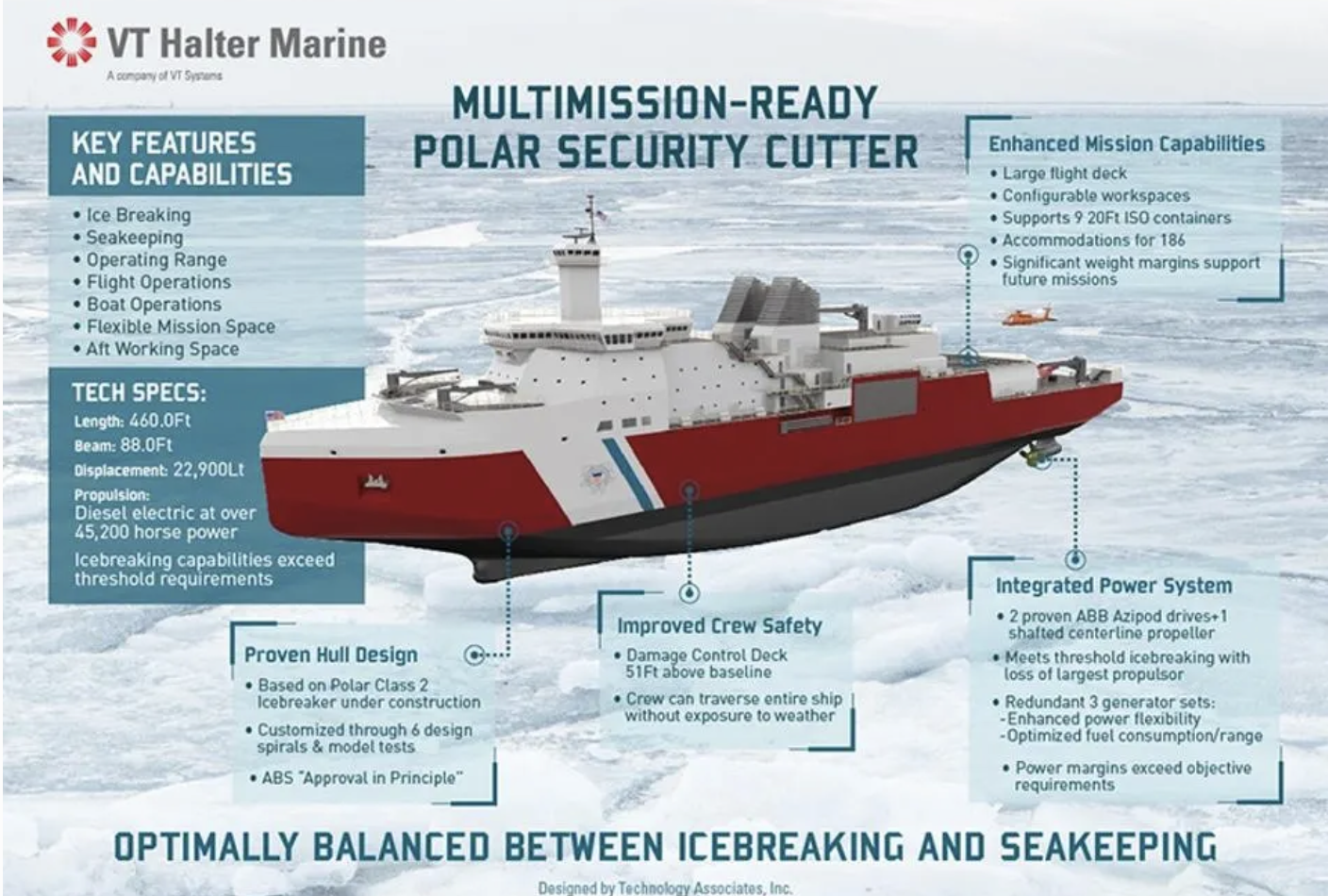
“The U.S. Coast Guard’s troubled Polar Security Cutter program faces further delays with a new government watchdog report projecting delivery of the first heavy icebreaker in March 2033, almost a decade later than originally planned.
“The recent Government Accountability Office (GAO) report also raises fresh doubts that even the revised schedule can be met, citing unresolved construction risks, a planned 40% expansion of the shipyard workforce, and the lack of a fully validated production schedule.”
The good news,
“While the heavy icebreaker program continues to slip, the Coast Guard has made faster progress on its separate Arctic Security Cutter program. The first four medium icebreakers will be built in Finland, with deliveries scheduled to begin in late 2028. Those vessels are expected to provide a significant boost to U.S. polar capabilities several years before the first Polar Security Cutter is now expected to enter service.”
The Douglas A. Munro Coast Guard Headquarters Building located in southeast Washington is shown from the aerial perspective of a Coast Guard MH-65 helicopter Aug. 21, 2015. A ribbon cutting ceremony was held July 29, 2013, which completed the first stage of the Department of Homeland Security consolidation project on the St. Elizabeths west campus.
A trio of Republican senators have introduced a bill to create Secretary of the Coast Guard and Undersecretary positions as the civilian head of the 43,000-member service, USNI News has learned.
According to the draft ‘‘Coast Guard Leadership Modernization Act’’ obtained by USNI News, the new Secretary of the Coast Guard position would report to the Secretary of Homeland Security and takeover many of the interactions the service had with the Pentagon, according to the bill text.
“…create Secretary of the Coast Guard and Undersecretary positions.” Unfortunately I do not think adding two more layers of expensive civilian bureaucracy is going to be helpful.
My observation, suggests that while the Coast Guard has bipartisan support in Congress other agencies in DHS frequently do not. Congress keeps asking what we need, but it appears the Department has held up reports Congress asked for. There has been strong pressure from GAO to keep the budget nearly constant with only small increases. The Department seems to have reacted by more strongly supporting other agencies in the Department assuming the Coast Guard would continue to be supported as it always has been. Evidence of this is the fact that almost every year Congress has added to the administrations’ Coast Guard budget requests.
The Coast Guard needs to be an independent agency. The Coast Guard’s eleven missions do not fit in any existing department. Six of eleven missions including SAR are not considered DHS missions.
There are at least 39 Independent Executive Agencies include NASA, the CIA, GSA, the postal service (UPS), the Social Security Administration. Many have budgets larger than that of the Coast Guard while many have much smaller budgets, so the size is right.
The Coast Guard can and does represent itself well before Congress. We don’t need to have our needs translated to Congress through a third party who has to be schooled on what the Coast Guard does.
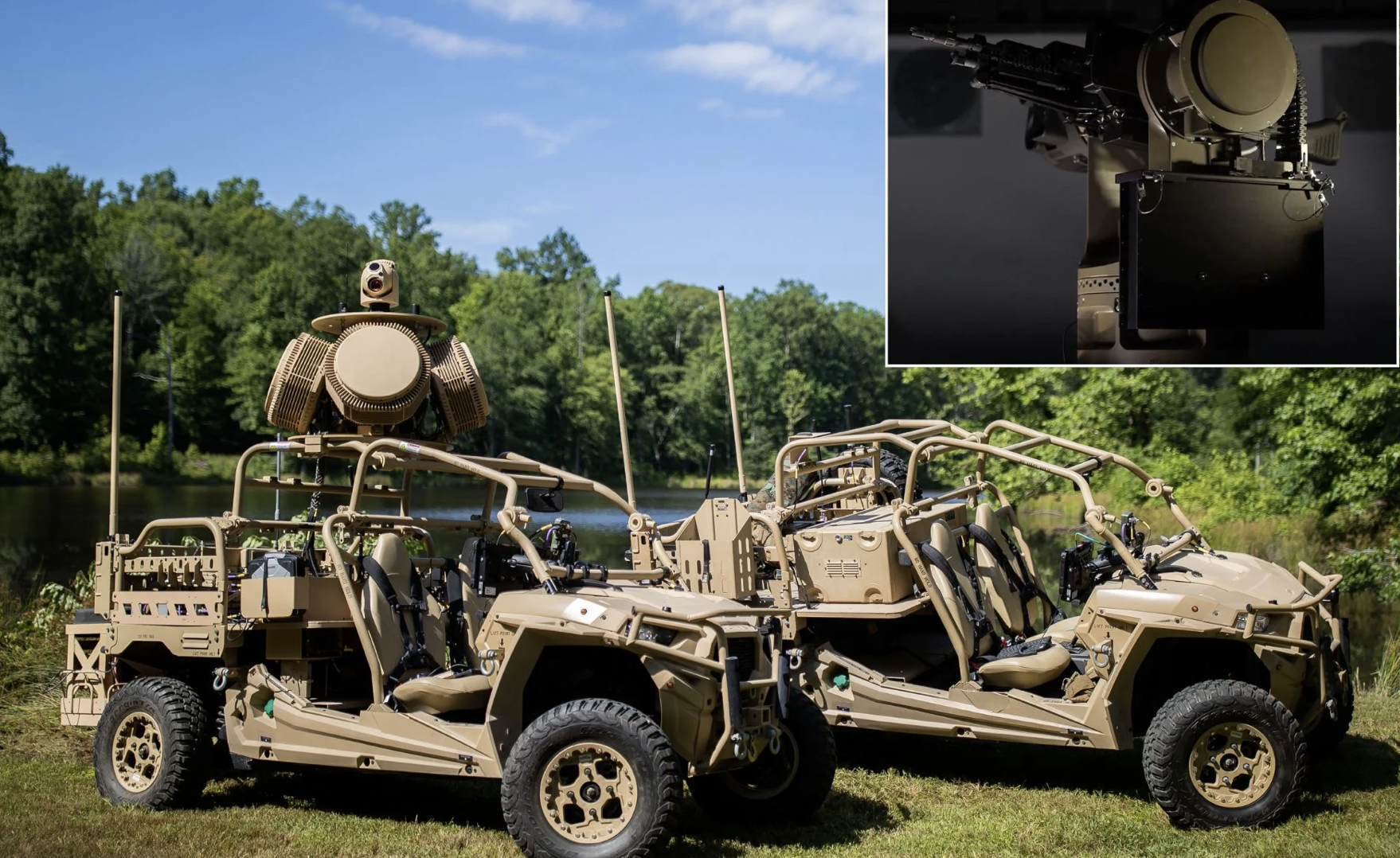
The U.S. Marine Corps is introducing an automated weapon station into its Light Marine Air Defense Integrated System (L-MADIS) to expand its ability to defeat hostile drones in expeditionary operations. The upgrade strengthens the Corps’ layered air defense network by adding a low-cost kinetic option alongside electronic warfare systems.
The new capability is designed to complement L-MADIS’ existing electronic attack tools, providing Marines with an additional means of engaging unmanned aerial systems when jamming alone is ineffective or unsuitable. The integration supports the Corps’ broader Ground-Based Air Defense modernization strategy, improving force protection while preserving more expensive missile interceptors for higher priority aerial threats.
This is the junior (light) version of MADIS. There is also a more capable version.
Since kamikaze drones are a threat that can emerge virtually anywhere, anytime, the Coast Guard needs to be prepared to counter them, both for self defense and for the protection of other assets.
U.S. Marines are adding an automated weapon station to LMADIS, expanding expeditionary counter-drone defenses with a new kinetic capability (Picture source: US DoD/ACS)
Certainly there are other alternatives, but since the Navy is buying this remote weapon station (RWS), it might be a good choice, in conjunction with the other elements of the Marine Air Defense Integrated System (MADIS). They could replace most of the crew-served .50 caliber mounts.
Frankly, I would think the 30mm M230 gun, which can use an air burst round would be better than a 7.62mm. Apparently this remote weapon station can also use the M230 or the .50 caliber. The 30mm has a longer range and higher first round kill probability. It is also more effective against other types of threats.
An air-burst round also means that misses to not continue on to who-knows-where and cause collateral damage. Since we might be using these inside a harbor that is an important consideration.
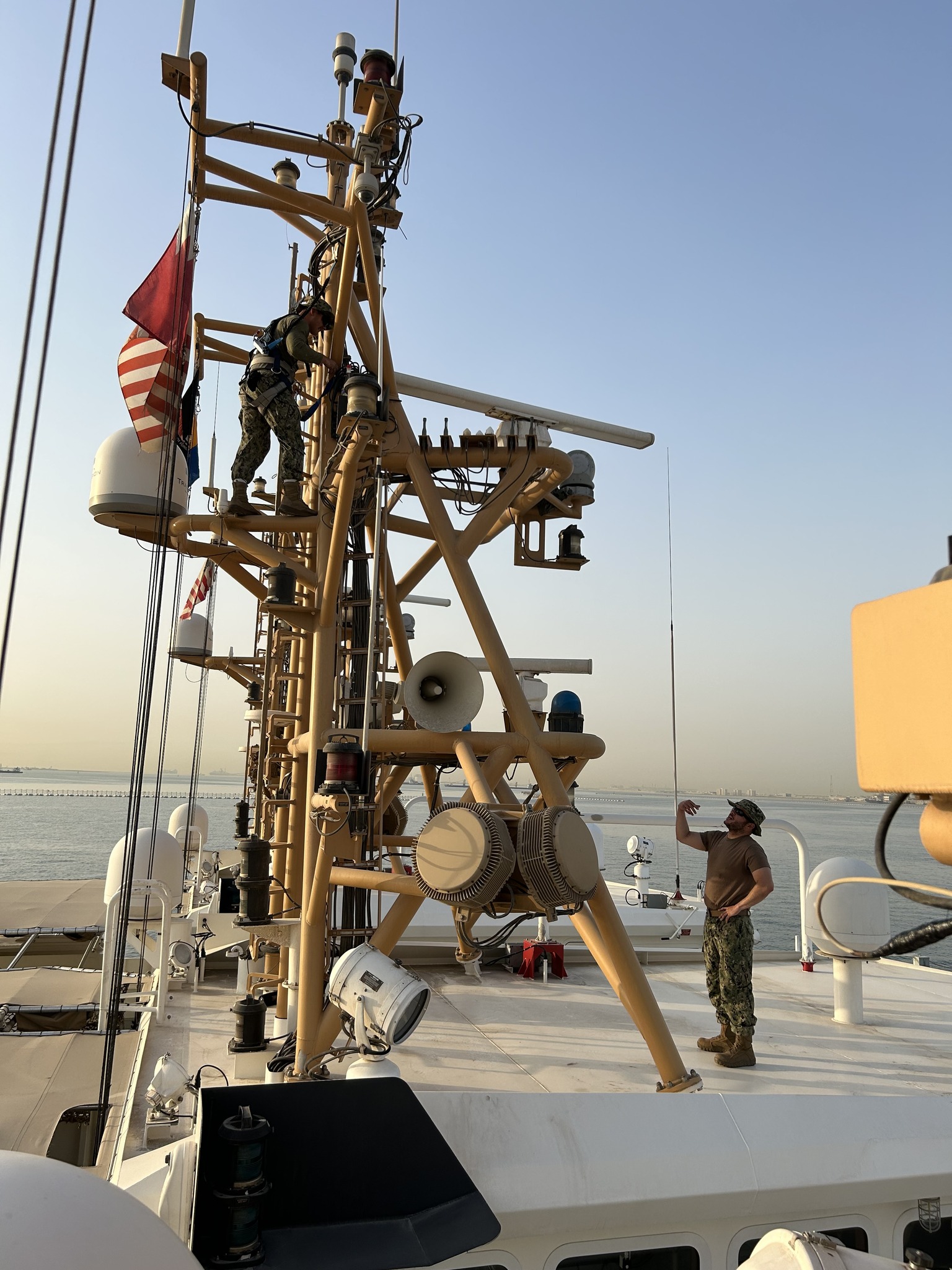
I would think every cutter WPC and larger should have the MADIS radars, EW, and two remote weapon stations. Every cutter should have at least one remote weapon station. The electro-optic that are included in the RWS provide other advantages as well including for man-over-board, navigation, and SAR.
Logically drug runners should not try this because it could encourage the Coast Guard to shoot first. Still, you can’t always expect rational behavior.
It should be obvious if someone on the smuggler’s boat is operating a transmitter. The drone itself might be easier to miss. At least maybe something to look out for.
“The new organization that will oversee surface shipbuilding for the U.S. Navy and one Coast Guard program has reached its initial operational capability overseeing major surface ship and aircraft carrier construction, according to a July 16 memo obtained by USNI News.”
There are five Deputy Portfolio Acquisition Executives, one of which, Auxiliaries, “Led in an acting capacity by Capt. Cedric McNeal covers oilers, dry cargo ships, special mission ships and the U.S. Coast Guard Polar Security Cutter program.”
As you may know, both the Coast Guard and the Navy have had problems with ship building lately, frequently the blame has been placed on NAVSEA. This is an attempt to fix the problems by placing decision makers closer to the program managers.
WASHINGTON — The United States Coast Guard transitioned its Expeditionary Cutter Squadron (ECS), historically called Patrol Forces Southwest Asia (PATFORSWA), to operate in the Western Pacific conducting maritime security operations and cooperative maritime activities with allies and partner nations in the region, in response to national security requirements.
The Expeditionary Cutter Squadron will be capable of performing missions as part of the U.S. Joint Force. The squadron is currently operating in the U.S. Pacific Command area of operations to protect the homeland and maritime approaches including Guam and the Pacific Islands.
For more than 20 years, the Coast Guard has provided forward-deployed capabilities to support U.S. Central Command and U.S. Naval Forces Central Command from Bahrain. The unit has successfully executed maritime security, maritime interdiction, and maritime domain awareness missions throughout the Middle East.
“Coast Guard forces have always adapted to meet urgent national needs,” said Adm. Kevin Lunday, Commandant of the Coast Guard. “The Expeditionary Cutter Squadron enhances the Coast Guard’s ability to deploy our forces in support of Combatant Commanders and national security objectives. Our expeditionary cutter forces provide Combatant Commands with uniquely capable maritime assets, leveraging the Coast Guard’s military and law enforcement authorities to advance U.S. national security objectives in the Western Pacific and Western Hemisphere.”
Expeditionary Cutter Squadron forces will integrate with U.S. Combatant Commands to conduct exercises and maritime cooperative activities that enhance interoperability, strengthen strategic partnerships and advance shared security objectives throughout the region. The transition of the Expeditionary Cutter Squadron reflects the Coast Guard’s intent to provide agile, capable, and responsive maritime forces. These forces will rapidly support national security objectives across a range of operational theaters while leveraging the Service’s unique authorities.
The crew of the Coast Guard Cutter Juniper (WLB 201) return to Honolulu after completing a 45-day patrol in Oceania in support of Operation ‘Aiga, Oct. 1, 2021. The Juniper is a 225-foot Juniper-Class seagoing buoy tender home-ported in Honolulu, the crew is responsible for maintaining aids to navigation, performing maritime law enforcement, port, and coastal security, search and rescue and environmental protection. (U.S. Coast Guard photo courtesy of Coast Guard Cutter Juniper)
Today I realized there was not a convenient listing of buoy tenders including their geographic distribution. Buoy Tenders, particularly the 2000 ton 225 foot WLBs, really are major units. They frequently do more than tend buoys. WLBs break ice in the NE, Great Lake, and Arctic districts. They have escorted WPCs on long voyages in PACAREA. WLMs can do just about anything WLBs can do and may stand in for WLBs when they are doing other types of work.
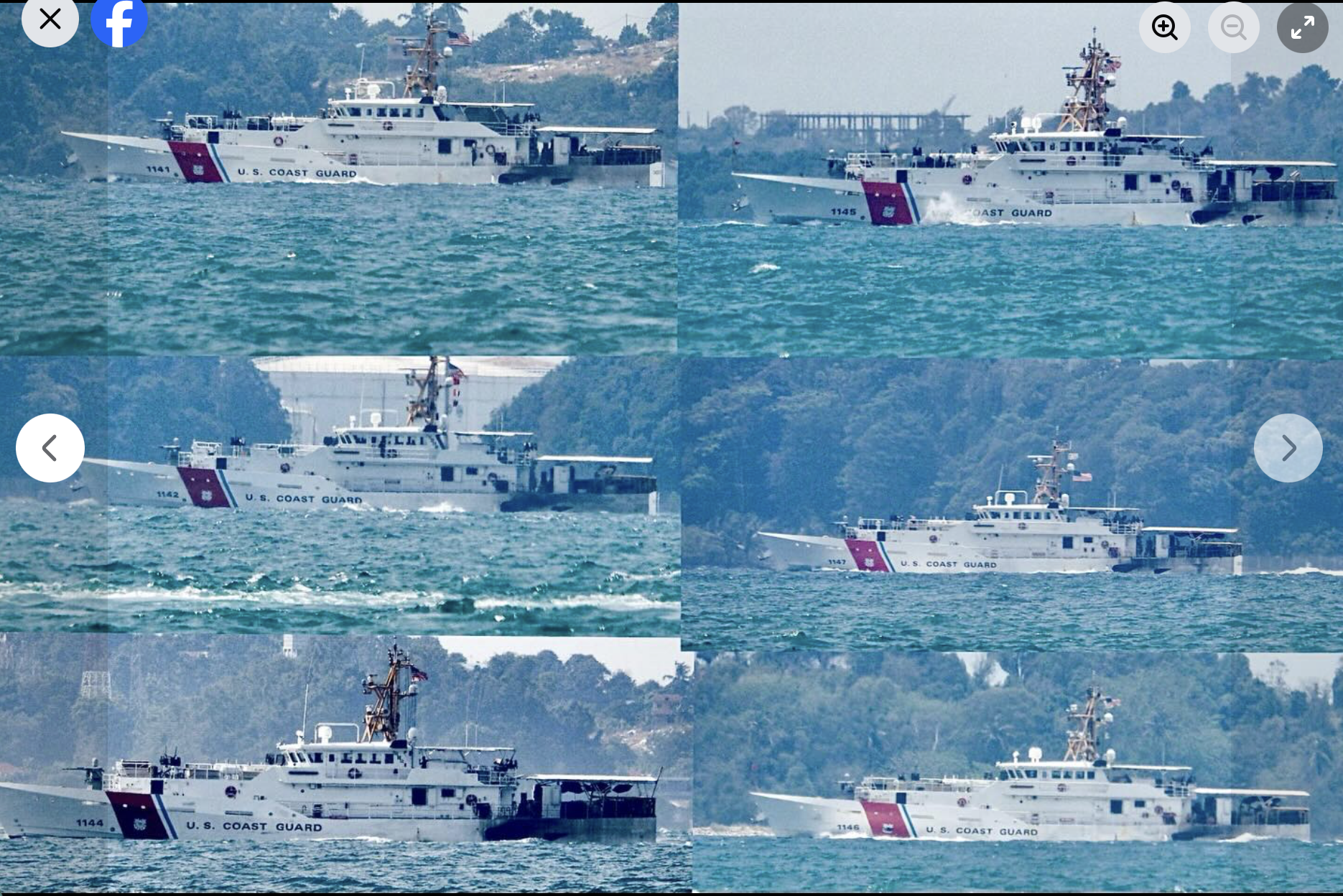
WarshipCam -Official, March 29 at 4:49 PM · All six Bahrain-based USCG Sentinel-class cutters eastbound in the Singapore Straits – USCGC Charles Moulthrope (WPC-1141),USCGC Robert Goldman (WPC-1142), USCGC Glen Harris (WPC-1144), USCGC Emlen Tunnell (WPC-1145), USCGC John Scheuerman (WPC-1146) & USCGC Clarence Sutphin Jr. (WPC-1147) – March 2026 SRC: X-@StraitsSights
“U.S. Coast Guard ships previously deployed in the Middle East are now operating out of Singapore and the Philippines to help challenge China’s assertion of power in the Pacific.
“The six 154-foot fast-response cutters are part of the Coast Guard’s reimagined ‘expeditionary cutter squadron,’ which can be sent anywhere in the world.”
I did not read the rest of the article which is behind the pay wall, but this tells us a lot. Apparently the squadron is now operating out of Singapore and has been rebranded as the “expeditionary cutter squadron.”
We had previously seen reports that they were conducting exercises with the Thai Navy and with the Philippine Navy and Coast Guard, this is the first indication they are now operating out of Singapore and that they are no longer PATFORSWA if that is actually the case.
Still a lot of questions. Will they go back to Bahrain? PATFORSWA was an Atlantic Area asset. Will that change? What has happened to their dependents, I think some lived in Bahrain?
Really I thought the WPCs might have been useful close escorts to protect tankers from attacks by unmanned surface and aircraft, particularly if their armament had been augmented with Hellfire or APKWS. There is really no end in sight for this conflict, at least not today, maybe we can rethink this.
Click on the map for full size. “The Coast Guard has an international presence, including three permanent international units. Patrol Forces Southwest Asia (PATFORSWA) is the Coast Guard’s largest unit outside of the United States. PATFORSWA is currently supporting the U.S. Navy’s Fifth Fleet in Operation Freedom’s Sentinel. The Coast Guard has two commands (Activities Europe and Activities Far East) that support the Coast Guard’s Maritime Safety and Security mission, conducting marine inspection, marine investigation, and international port security operations to ensure the integrity of the Marine Transportation System. The Coast Guard also has personnel assigned to nine DoD Combatant Commands and often has a presence on all seven continents and all of the world’s oceans, projecting national sovereignty with our icebreakers, National Security Cutters, aviation assets, and deployable specialized forces.” -original caption recovered July 15, 2026
Thought some might find this interesting. I have to caution, this may be out of date and incomplete. The caption quoted above includes the statement, “PATFORSWA is currently supporting the U.S. Navy’s Fifth Fleet in Operation Freedom’s Sentinel.” Operation Freedom’s Sentinel which began in 2015, ended in August 2021. Since they do not use the name USINDOPACOM for the Pacific Command and that name change happened in 2018, it probably has not been changed for at least eight years. Even so, it may be surprising how many international positions the Coast Guard occupies.
There is also a Domestic Force Laydown on the same web page, but it does not look very useful. It does not include all air stations or WLB and WPC homeports and what is at each geographic location is not labeled. It also does not use the current district names.





 Chuck Hill's CG Blog