“Chinese Warships, Cutters Harass Philippine Patrol Near Scarborough Shoal, Say Officials” –USNI

US Naval Institute’s news service reports on the latest incident between China and the Philippines.

Units involved were:

China Coast Cutter 3304 in the Philippine EEZ. Philippine Coast Guard Photo

  • Four China Coast Guard cutters hull numbers 5303, 3302, 3104, 3304
  • Two Chinese Navy Type 054A frigates Xianning (500) and Yuncheng (571)  

Type 054A FFG Hengshui (Source: Seaforces.org)

The Chinese have typically had their navy backing up their coast guard in these confrontations, but it appears a frigate was more directly involved than in previous similar confrontations. Still, it was the China Coast Guard that played bumper-boats and water cannoned the Philippine ships.

Generally, the Philippine Navy has not been present during these confrontations. The Philippines seems to want to make sure it is clear, who is the bully here. None of the Philippine ships involved even have deck guns.

The Philippine ships were there to protect Philippine fishermen who are being deprived of their livelihood by the Chinese.

With more direct involvement of PLAN frigates, the Philippine Navy may start making an appearance, perhaps over the horizon, but within ASCM range.


This Day in Coast Guard History, December 3/4

Based on the Coast Guard Historian’s timeline, https://www.history.uscg.mil/research/chronology/
With inspiration from Mike Kelso

December 3

Joseph Francis Life-Car. Image credit: Smithsonian National Museum of American History.

1852  The merchant ship Georgia grounded in a gale off Bonds, New Jersey with 290 persons on board.  The life car was used to affect their rescue and all survived.

Old Harbor U.S. Life Saving Station is a historic maritime rescue station and museum, located at Race Point Beach in Provincetown, Massachusetts. It was originally located at Nauset Beach near the entrance to Chatham Harbor in Chatham, Massachusetts.

1883  The schooner Pallas with a crew of three men encountered strong head winds and heavy seas off Cape Cod, Massachusetts.  About half past 5 in the morning, abreast of Nausett lights, she sprung a leak and became unmanageable.  Being close to the breakers, the crew was fearful they would be washed overboard as soon as she struck and took to their boat.  Fortunately, they were discovered by the Nausett Station keeper, pulling vigorously to keep away from the surf.  The surfboat was launched and the three men rescued.  They were brought ashore by the life-saving crew, though not without a thorough drenching because the station boat was nearly swamped on the bar.  The schooner meanwhile drifted into the surf, three quarters of a mile north of the station and soon broke up.

1982  MSO St. Louis took charge of the response when the Mississippi, Missouri, and Illinois rivers flooded their banks.  In all over 100 Coast Guardsmen took part in the relief efforts that covered an eight-state area.

GULF OF MEXICO – Petty Officer 3rd Class Suren Chandrasena, a boatswain’s mate, watches as Coast Guard Cutter Bertholf’s Over-The-Horizon small boat departs to receive personnel from Coast Guard Cutter Chandeleur, June 18, 2008. U.S. Coast Guard photo by Petty Officer 3rd Class Michael Anderson

2001  Coast Guard forces, including the cutters Chandeleur (WPB-1319) and Farallon (WPB-1301), as well as aircraft from Air Station Miami and boat crews from Station Miami Beach rescued 185 Haitian migrants from the grossly overloaded 31-foot sailboat Simapvivsetz off Old Rhodes Key, Florida.

USCGC Polar Star. USCGC photo.

2013  CGC Polar Star departed Coast Guard Base Seattle for Antarctica in support of Operation Deep Freeze for the first time since 2006 with the task of resupplying the National Science Foundation Scientific Research Station in McMurdo, Antarctica.  During the summer of 2013, Polar Star conducted sea trials in the Arctic to test all of the ship’s equipment and train the crew prior to embarking to Antarctica.  During the summer trip, Polar Star spent weeks in the Beaufort Sea north of Barrow, Alaska, testing propulsion machinery, conducting emergency drills, and qualifying crewmembers in individual watch-stations.  The cutter was recently out of a three-year, $90 million overhaul, part of the Coast Guard’s plan to reactivate the heavy icebreaker.

December 4

Mesquite aground on her final voyage

1989  USCGC Mesquite ran aground near Keweenaw Point in Lake Superior.  She was deemed damaged beyond repair and was sunk as an artificial reef.  There was no loss of life.

This Day in Coast Guard History, December 2

Based on the Coast Guard Historian’s timeline, https://www.history.uscg.mil/research/chronology/
With inspiration from Mike Kelso

Gurnet Point Station. Plymouth Lighthouse, Plymouth, Massachusetts, USA showing the one remaining tower built 1842 in the earthworks of Civil War Fort Andrew.

1883  The schooner Champion with a crew of two men stranded on Dick’s Flat, Plymouth Harbor, near Duxbury Pier lighthouse, at about 6 am. The shoal where she struck was about three miles west-southwest of the Gurnet Point Station (Second District), and the crew of the station were not sure she was aground until about 10 o’clock.  The life-saving crew therefore arrived on board a little before 2 o’clock in the afternoon.  They found one of the men, the captain, at the pumps and the other bailing from the hatch.  The vessel was leaking badly.  The two men on board were wet, cold, and very glad of the assistance of the life-saving crew.  The keeper, at the captain’s request, took charge.  The pumps were manned while another gang went to work bailing.  When she began to right with the incoming tide, they shifted the booms over and canted her the other way, so as to bring the leaky seams out of the water to chinse them with oakum and nail canvas over all to stop the leaks.  After doing this and getting most of the water out, they carried out an anchor into the channel, set all sail and by heaving hard on the hawser, they brought her on an even keel.  She was hauled off the shoal at about 4 o’clock and got safely under way.  As the weather looked bad, the captain concluded to remain in port for the night and accordingly anchored.

2012  BMCS Terrell Horne, III, CGC Halibut’s Executive Petty Officer and Boarding Officer, was killed in action while carrying out law enforcement operations near Santa Cruz, California. The Coast Guard posthumously awarded BMCS Horne the Coast Guard Medal for his heroism that night.  His citation read, in part: “…Shortly after midnight, Senior Chief Petty Officer Horne deployed in HALIBUT’s cutter boat with three other crew members to investigate a vessel loitering in the area without navigation lights.  Upon approaching the unlit vessel and identifying themselves as law enforcement officers, the vessel ignored commands to stop and instead rapidly accelerated directly toward them.  The boarding team immediately maneuvered to avoid the oncoming vessel and fired side arms in self-defense.  When impact with the oncoming vessel became unavoidable, Senior Chief Petty Officer HORNE, disregarding his own safety in order to protect a fellow crewmember, forcibly pushed the coxswain from the helm, directly exposing himself to the oncoming vessel.  The violence of the subsequent collision forcibly ejected him from the boat, and despite immediate recovery from the water and application of first aid by his shipmates, he succumbed to the severe injuries received during the incident.  Senior Chief Petty Officer HORNE demonstrated remarkable initiative, exceptional fortitude and daring in spite of imminent personal danger.  His courage and devotion to duty are in keeping with the highest traditions of the United States Coast Guard.”

PERU, 10.06.2023, Courtesy Photo, USCG District 11
The crew of the U.S. Coast Guard Cutter Terrell Horne conducts a patrol in the Eastern Pacific Ocean in support of Operation Southern Shield 2023, October 2023. The Coast Guard recently completed the first high-seas boardings and inspections off the coast of Peru under a newly adopted multi-lateral agreement to monitor fishing and transshipment operations within the South Pacific Regional Fisheries Management Organization (SPRFMO) Convention Area. (U.S. Coast Guard photo)

This Day in Coast Guard History, December 1

Based on the Coast Guard Historian’s timeline, https://www.history.uscg.mil/research/chronology/
With inspiration from Mike Kelso


Revenue Cutter Spencer before conversion to Lightship R

1844  Captain Alexander Fraser, head of the Revenue Marine Bureau, reported to Congress on the failure of the service’s first steam cutters Spencer and Legare.

Admiral Russell R. Waesche, Sr., USCG

1916  Second Lieutenant Russell R. Waesche was designated as the first Communications Officer for the Coast Guard, an office established at Coast Guard Headquarters.  The office was renamed Chief, Communications Division, soon thereafter. Waesche went on to serve as Commandant 14 June 1936 to 31 December 1945. He was the longest serving Commandant in Coast Guard history.

SB-29 “Super Dumbo”, a variant of the B-29 Superfortress, with an air-droppable EDO A-3 lifeboat rigged underneath. Fifteen B-29s and one B-29A were adapted for air rescue duty after World War II. Nicknamed “Super Dumbo” and designated SB-29. When a downed aircrew was spotted in the water, the lifeboat was released from the aircraft. The lifeboat, which descended by parachute, was equipped with watertight compartments, self-righting floatation bladders, an inboard engine, food and water.  The SB-29 remained in service throughout the Korean Conflict and into the mid-1950s. Photo: US Air Force

1944  The Office of Air-Sea Rescue was set up in the Coast Guard. The Secretary of the Navy, at the request of the Joint Chiefs of Staff early in 1944, established the Air-Sea Rescue Agency, an inter-department and inter-agency body, for study and improvement of rescue work with the Commandant of Coast Guard as its head.

“Coast Guard awards contract for commercially available polar icebreaker” –CG-9

Icebreaking Anchor Handling Vessel Aiviq

Below is a news release from the Acquisitions Directorate, CG-9. For background see my earlier post, The Icebreaker Aiviq Saga.

Late addition: 

‘Aiviq’ at Tampa Ship’s Graving Dock #4 on November 28, 2024. (Source: GCaptain via tabasco44)


Coast Guard awards contract for commercially available polar icebreaker

The Coast Guard awarded a contract on Nov. 20 to Offshore Service Vessels, LLC, of Cut Off, Louisiana, to acquire a commercially available polar icebreaker to supplement mission readiness and capability in the polar regions. The firm fixed-price contract, with a total value of $125.0 million, includes delivery and reactivation of the M/V Aiviq, a 360-foot U.S.-built polar class 3-equivalent icebreaker. The contract also includes provisions for technical data, spares, necessary modifications, certifications, crew training, and operational readiness activities.

The Coast Guard is procuring a commercially available polar icebreaker to increase operational presence in the Arctic while the service awaits delivery of the polar security cutter (PSC) class. Coast Guard polar icebreakers are highly specialized vessels that possess the endurance, resilience and capability to execute a wide range of maritime safety and security missions.

The contract action is the product of a disciplined effort to identify a domestically produced commercially available polar icebreaker through industry outreach and engagement. This approach was made possible through direction and statutory relief provided in the Don Young Coast Guard Authorization Act of 2022 and funding appropriated in fiscal year 2024.

With minimal modifications, the commercially available polar icebreaker will be capable of projecting U.S. sovereignty in the Arctic and conducting select Coast Guard missions. The service will evaluate the vessel’s current condition and capability and identify requirements to attain full operational capability.

The Coast Guard intends to permanently homeport the vessel in Juneau, Alaska, and is planning infrastructure improvements to support future operations. In the interim, the service is evaluating options to temporarily homeport the commercially available polar icebreaker.

Acquisition of a commercially available polar icebreaker does not affect the acquisition of the PSCs, and the vessel will not be included in the PSC program of record. The Coast Guard needs a mix of eight to nine polar icebreakers to meet operational needs in the polar regions. The commercially available polar icebreaker will supplement these operational capabilities and provide much-needed operational presence in the near term as a bridging strategy to address maritime interests in support of national security until the full complement of PSCs is available.

For more information on the PSC class: Polar Security Cutter Program page

This Day in Coast Guard History, November 30

Based on the Coast Guard Historian’s timeline, https://www.history.uscg.mil/research/chronology/
With inspiration from Mike Kelso

1837  Two early complainants on the efficiency of the American lighthouses, E. and G.W. Blunt, publishers of the famous Blunt’s “Coast Pilot,” submitted a statement to the Secretary of the Treasury. They argued that the whole lighthouse system “needs revision, a strict superintendence and an entirely different plan of operation.”

U.S.R.C. “Richard Rush,” on her departure Jan. 2d, 1886, in search of the “Amethyst.” Photo credit: Isaiah West Taber (1830–1912)

1886  USRC Rush made the service’s first drug seizure at sea, confiscating 350 lbs of opium from SS City of Rio De Janeiro near the entrance to San Francisco Bay. Only the opium was seized, as no connections to the ship’s owners, captain, or officers could be established. [The Nautical Beginnings of America’s War on Drugs, American History, November 17, 2019. https://www.historynet.com/online-exclusive-the-nautical-beginnings-of-americas-war-on-drugs/]

4 May 1943
Mare Island, CA
Starboard bow view during inclining experiment
U.S. Navy photo 2558-43. Source: Jon Burdett

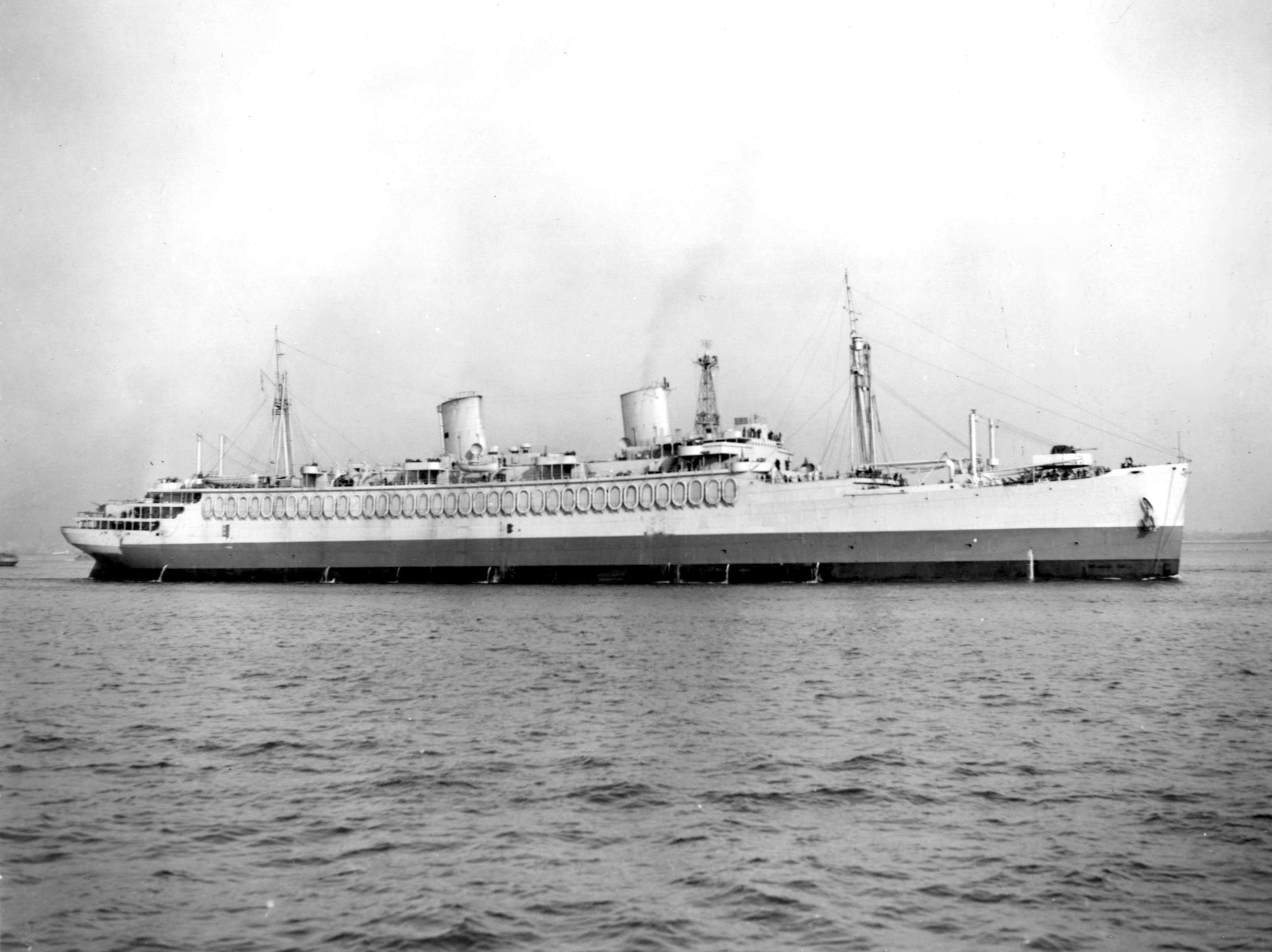
1920  The Navy minesweeper USS Swan (AM-34, later AVP-7) ran aground on Duxbury Beach, Massachusetts.  Coast Guardsmen from three nearby stations rescued the minesweeper’s crew with a breeches buoy.  CGC Androscoggin assisted in the rescue.  USS Swan was refloated 22 Feb. 1921 and went on to assist in the search for Amelia Earhart and was present during the Attack on Pearl Harbor Dec. 7, 1941 and claimed to have shot down a enemy aircraft. She was decommissioned 1946 but was still in existence in 1988. Fate unknown. 

This Day in Coast Guard History, November 29

Based on the Coast Guard Historian’s timeline, https://www.history.uscg.mil/research/chronology/
With inspiration from Mike Kelso

1808  Secretary of the Treasury Albert Gallatin requested 12 new cutters at a cost of $120,000 to enforce “laws which prohibit exportation and restrain importations” to support the embargo ordered by President Thomas Jefferson.  President Jefferson had ordered an embargo against most European imports and exports to protest the harassment of U.S. sailors by warring European powers.  The embargo did not work.  The United States went to war with England in 1812 but the Revenue Marine got the new cutters.

1877  The first annual report of the U.S. Lifesaving Service was submitted in published form to the Secretary of the Treasury.

Courtesy Photo The German freighter Nordmeer, which ran aground on Nov. 19, 1966, is seen in this 1967 photo provided by the Thunder Bay National Marine Sanctuary.

1969  The German freighter Nordmeer ran aground on the Thunder Bay Shoal in Lake Huron. Most of her crew safely evacuated to a nearby ship but eight crewmen remained on board to attempt to save their vessel.  The weather quickly deteriorated, however, and they radioed for assistance.  A Coast Guard helicopter and the icebreaker Mackinaw responded and safely evacuated the eight men while the freighter broke up.

SAN FRANCISCO. The Coast Guard Cutter Waesche transits through the San Francisco Bay for the first time en route to its homeport of Alameda, Calif., Feb. 28, 2010. (U.S. Coast Guard photo by Petty Officer 3rd Class Kevin Metcalf)

2013  CGC Waesche returned from a 109-day deployment in the Gulf of Alaska, Bering Sea and Arctic Ocean to its homeport at Coast Guard Island in Alameda, California on November 29, 2013.  While on patrol Waesche’s crew conducted a broad range of operations including maritime law enforcement, search and rescue, maritime surveillance and community outreach.  While underway, the crew was on scene for the opening of the red king crab fishing season to help ensure the safety and security of fishermen conducting operations in the Bering Sea.  The crew also enforced fisheries laws and regulations to ensure sustainable fishing is practiced in the Gulf of Alaska and Bering Sea.  The crew responded to five search and rescue cases including a removal of 14 mariners from a disabled fishing vessel, Alaska Mist, some 160 nautical miles northeast of Dutch Harbor in mid-November.  In Unalaska, Alaska, the crew participated in helping with maintenance and upkeep at a high school and several other community relation projects.

This Day in Coast Guard History, November 27/28

Based on the Coast Guard Historian’s timeline, https://www.history.uscg.mil/research/chronology/
With inspiration from Mike Kelso

November 27

Crumple Island Station

1883  The schooner Maggie W. Willard with a crew of five men struck on Sea Horse Rock about two miles west of the Crumple Island Station (First District) on the coast of Maine at 1 o’clock in the afternoon.  She was discovered by the station crew, who offered assistance.  Finding the vessel in a very dangerous position and leaking the crew’s effects were saved and they were taken to the station.  All efforts to get the vessel off failed.  That night the schooner drove over the reef and sunk in deep water, becoming a total loss.

November 28

1894 photograph of Keeper Lawson surrounded by his NWU student surfmen. (Courtesy of NWU Deering Library)

1889  The crew of the Evanston, IL, Life-Saving Station earned the Gold Lifesaving Medal for the rescue of the crew of the steamer Calumet.   Most of the crew consisted of students from Northwestern University.

1942  Petty Officer Clifford Johnson was on liberty at the Coconut Grove Lounge in Boston on the night of November 28, 1942 when the lounge caught fire.  Over 490 persons perished in what was one of the worst fires in the nation’s history.  Petty Officer Johnson repeatedly risked his life by entering the fire on four occasions to pull victims from the flames, receiving severe burns over his body.  He spent over two years in the hospital recovering from his injuries.

USCGC Stratton

2014  CGC Stratton returned to its homeport at Coast Guard Island in Alameda, California, after a 140-day deployment to the Arctic and Central America.  Since departing in July 2014, Stratton’s crew completed a 24,000-mile deployment in support of the nation’s interests in the Arctic and joint counter-drug operations off the coast of California and Central America.  During this operational patrol, Stratton’s law enforcement crews seized and disrupted 6.6 tons of illegal narcotics valued in excess of $27.5 Million.  Stratton Coast Guardsmen assisted mariners in four separate search and rescue cases.  Furthering national strategic goals, the cutter’s crew patrolled the Arctic and conducted interoperability tests with new equipment.  Stratton Coast Guardsmen worked closely with the communities in isolated locations of Point Lay, Gamble and Barrow, Alaska.  The crew went ashore to schools and civic centers to teach water safety and provide life jackets to community members.

This Day in Coast Guard History, November 26

Based on the Coast Guard Historian’s timeline, https://www.history.uscg.mil/research/chronology/
With inspiration from Mike Kelso

The aftermath of the collision shows the floating wreckage of the Stolt Dagali. U.S. Coast Guard photo.

1964  The Israeli passenger liner Shalom and the Norwegian tanker Stolt Dagali collided off Point Pleasant, New Jersey in a dense fog.  Nineteen tanker crewmen were killed in the collision which sliced the tanker into two pieces.  CGC Point Arden was the first on scene.  Five other cutters and “a fleet” of Coast Guard and Navy helicopters soon joined in the rescue and salvage operations, resulting in the rescue of 24 of the tanker’s crew.  One injured Shalom crewman was airlifted by a Coast Guard helicopter for medical treatment and survived.  No one else from the liner was injured.

“…the accident instantly put into motion one of the largest search-and-rescue operations of the time, combining 11 Coast Guard and Navy helicopters, six cutters, and even the crews of three passing Merchant Marine vessels acting as Good Samaritans. The operation was coordinated by Lt. Junior Grade Joseph DiBella, who was officer in charge at the Rescue Coordination Center in lower Manhattan. Functionally, the 24-year-old was fairly low-ranking for what was shaping up to be a massive effort. When his superior appeared and asked whether DiBella should be relieved, the message from top brass was: No, let him stay in control.” –Miami New Times, February 7, 2017


WPB 95311, Cape class cutter similar to USCGC  Cape Providence. 

1968  While en route from Apia, Western Samoa to Pago Pago, Polynesian Airlines Flight 5WFAA sighted the wreckage of an overturned vessel and reported it to the Federal Aviation Agency Flight Service at Tafuna, American Samoa.  CGC Cape Providence (WPB 95335), a 95 foot Cape class patrol boat, moored at Pago Pago on search and rescue standby, was notified of the sighting.  With an assist from the Polynesian airliner, the cutter located the disabled fishing vessel named Main Sun No.2 and found 17 survivors clinging to the overturned hull.  Despite the rough seas breaking over the hull, the Cape Providence rescued 13 of the survivors, while 4 more were retrieved from the water by the fishing vessel Chie Hong No.20, which had arrived on scene to assist.  Two members of the 19-man crew, however, had been trapped in the engine room on the capsized vessel and had perished.

1995  Coast Guardsman Michael E. Earley rescued a 12-year-old boy who had fallen from the Astoria-Megler Bridge into the frigid, swiftly flowing waters of the Columbia River.  Petty Officer Earley was on liberty and driving along the highway towards the bridge when he noticed several people on the bridge waving their arms.  When he stopped to offer assistance, he saw a young boy struggling to stay afloat in the strong flooding tide of the river.  Without hesitation, Petty Officer Earley hurried to the shoreline, tied a rope to his belt, and disregarding his own safety, plunged into the churning 52-degree water and rescued the young boy.  He was awarded a Gold Life-Saving Medal for his heroic action.

1996  A Coast Guard HC-130 located a grossly overloaded Haitian freighter off the coast of Haiti.  Crewmen from the cutters DauntlessChandelierMonhegan, and Nantucket helped to transfer the largest group of Haitians ever found on a vessel to CGC Northland.  One Haitian died of severe dehydration, the other 581 were repatriated.

The 370-foot freighter M/V Kuroshima, ran aground in a heavy storm in Summer Bay, Alaska, in 1997. Image credit: USCG

1997  Two crewmen died when the Japanese freighter Kuroshima ran aground in a storm near Dutch Harbor. Bitter weather, with 90-m.p.h. winds and seas at 20 feet, made any air rescue impossible. Eighteen other crewmen were rescued by Coast Guardsmen who used a tow rope to haul a life raft to safety.  The Coast Guardsmen were from CGC Midgett that was fortuitously in Dutch Harbor for a mid-patrol break.  The freighter was later refloated.

2002  President George W. Bush signed into law a bill that created the Department of Homeland Security, the largest reorganization of the federal government in fifty years.  The Coast Guard was one of a number of agencies that transferred to the new Department; the transfer was scheduled to go into effect on March 1, 2003.

This Day in Coast Guard History, November 25

Based on the Coast Guard Historian’s timeline, https://www.history.uscg.mil/research/chronology/
With inspiration from Mike Kelso

November 25

1968  M/V Triple Crown foundered off the coast of Southern California with a loss of nine lives while retrieving the anchor and chain of a large offshore drilling rig. The Coast Guard investigated.

Elián González with his father and family members that was taken a few hours after their reunion at Andrews Air Force Base on April 22nd, 2000. It is described as “released by the government” on the website of the Public Broadcasting Station from where it is sourced. The Los Angeles Times reported second-hand that the photo was “taken by one of two federal agents who accompanied Elian from Miami and who were invited into the family’s quarters at Andrews Air Force Base.” CNN reported that the photo was released by the US Government. 22 April 2000

1999  Elian Gonzalez, a five-year old Cuban boy, was found on Thanksgiving morning clinging to an inner tube three miles off the coast of Fort Lauderdale, Florida.  He was among three survivors of a boating accident which killed 11 migrants fleeing Cuba.  The Coast Guard searched from Islamorada to Boca Raton, using a HU-25 and a HH-65 from Air Station Miami, a HC-130 from Air Station Clearwater, CGC Maui, and a 41-foot UTB from Station Fort Lauderdale.  The child later gained international notoriety when his father, a Cuban citizen, attempted to have him returned to Cuba, a desire that Elian’s relatives in the U.S. fought through the U.S. court system all the way to the Supreme Court.  The Court ruled in his father’s favor and the child was returned to Cuba.