Japan is to Build World’s Largest Coast Guard Vessel

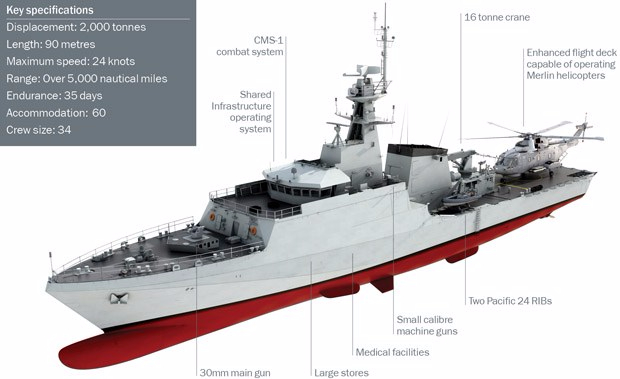
Conceptual rendering of an MMPV in JCG colors. Japan Coast Guard image.

Naval News reports, “Japan Coast Guard will build the biggest patrol vessel in its history.”

To call this ship a “patrol ship” is misleading. It is unarmed. I don’t expect it to do much patrolling. At 199 meters (673′) in length and displacing 30,000 gross tons, it would be very uneconomical.

It will be more like a mobile base for response to high profile incidents including war, natural disaster, or major public events.

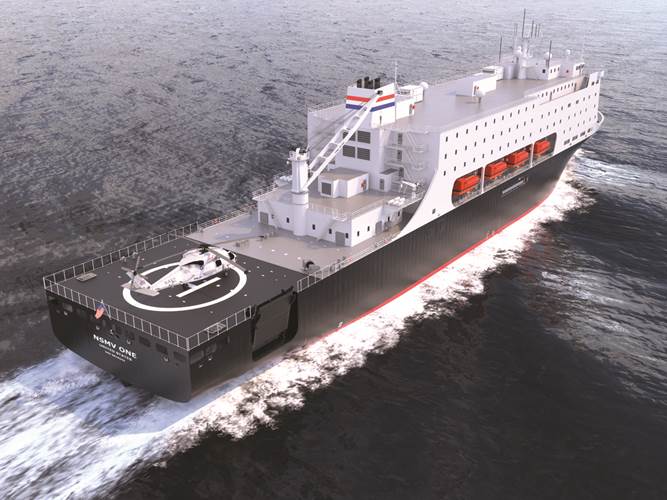
National Security Multi-Mission Vessel (NSMMV)

The US has no direct counterpart, but there are parallels in the National Security Multi-Mission Vessels (NSMMV) which will serve as training ships for the five State Maritime Academies (SMA) but are also expected to be available to respond to Natural Disasters. There are also similarities to the Expeditionary Sea Base program.

Does the US Coast Guard need a comparable capability? If so, we might look at adapting the NSMMV, small crew, part time training ship for the CG academy, part time mother ship for distant operations, ready for disaster response.

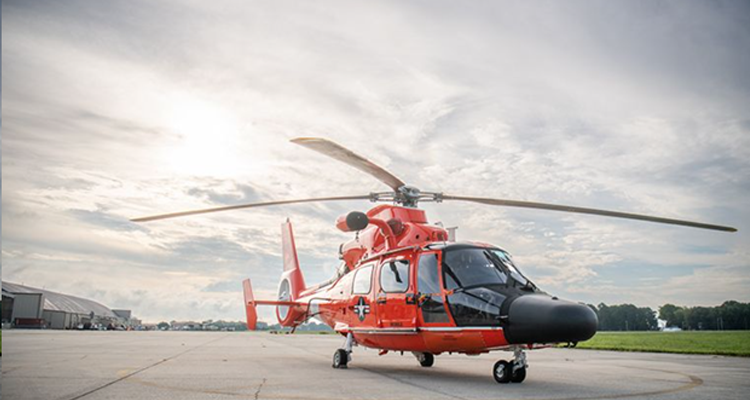
“Coast Guard completes final delivery of MH-65E helicopter” –CG-9

CGNR 6577 is readied for departure from the Aviation Logistics Center on Aug. 19. Its delivery to the Aviation Training Center in Mobile, Alabama, marks the 90th and final MH-65 helicopter to complete the service life extension program and upgrades resulting in the Echo configuration. U.S. Coast Guard photo

Below is a story from the Acquisitions Directorate (CG-9). This comes only days after they also reported that they had completed upgrades to the Fleet of 18 HC-144s.

Despite completion of these two programs, Aviation Logistics Center, Elizabeth City still has plenty of work to do. There is an on-going program to upgrade the C-27J fleet and newly acquired C-130Js with Minotaur Mission Systems and a Service Life Extension Program and additional procurement/remanufacture of MH-60Ts to ultimately allow conversion of eight air stations from MH-65 to MH-60T.


The H-65 Conversion/Sustainment Program reached an important milestone Aug. 19, sending off the 90th and final MH-65E to its operational unit at Aviation Training Center (ATC) in Mobile, Alabama. The transition from the MH-65D to the MH-65E (commonly referred to as the “Delta” and “Echo” configurations, respectively) has been in development for over a decade.

The Short Range Recovery (SRR) production line at the Aviation Logistics Center has been executing the Echo conversion since 2018 when the very first Echo was delivered to ATC Mobile to prepare for pilot training and course development in the new model. By happenstance, the final Echo was also delivered to ATC, an altogether fitting accomplishment as the program came full circle and achieved full operating capability.

A highlight of the program was SRR’s consistency and adherence to the delivery schedule as they produced an Echo aircraft every 22 days and achieved an 80% on-time delivery rate, a testament to the product line after factoring in the pace of early production activities and the negative impacts of COVID-19.

The avionics upgrade to the MH-65E configuration provides enhanced search and rescue capabilities including modern “glass cockpit” technology that increases pilot and aircrew situational awareness and provides commonality with the service’s MH-60T Jayhawk fleet. The upgrades also include reliability and capability improvements for the automatic flight control system, enhanced digital weather and surface radar, and multifunctional displays with more accurate fuel calculations.

The upgrades bring the fleet into compliance with the Federal Aviation Administration’s Next Generation Airspace Transportation System requirements and extend the aircraft service life through the Coast Guard’s transition to an all-MH-60T rotary wing fleet.

Since the first Echo delivery, the aircraft has surpassed 100,000 flight hours and has been involved in more than 8,000 search and rescue cases. The model is responsible for saving and assisting more than 1,200 lives, making a substantial contribution to the 26,000 lives rescued throughout the 40 years the Coast Guard has flown different variants of the H-65.

The MH-65E is a multi-mission helicopter, responsible for over 100 ship deployments across the world and participated in more than 15 hurricane response efforts. Air Station Atlantic City commenced its transition in October 2022 and has executed over 100 land-based deployments conducting rotary wing air intercept missions as part of national defense. The Helicopter Interdiction Squadron in Jacksonville, Florida, which commenced its transition to the MH-65E in July 2021, has conducted 62 deployments in the MH-65E, with 133 interdictions and seizing nearly 300,000 pounds of cocaine and over 60,000 pounds of marijuana totaling nearly $4 billion in illegal narcotics.

“U.S. Coast Guard encounters Russian naval vessels near Point Hope, Alaska” — CG News

“The crew of U.S. Coast Guard Cutter Stratton (WMSL 752) encountered and shadowed four Russian Federation Navy (RFN) vessels 57 miles northwest of Point Hope, Alaska, Sept. 15, 2024. The Russian Surface Action Group consisted of a Severodvinsk-class submarine, a Dolgorukiy-class submarine, a Steregushchiy– class Frigate, and a Seliva-class tug. Stratton patrolled under Operation Frontier Sentinel, a Coast Guard operation designed to meet presence with presence when strategic competitors operate in and around U.S. waters. (U.S. Coast Guard courtesy photo)”

Below is a news release from Coast Guard news.

Point Hope, Alaska is well North of the Bering Strait and the Arctic Circle, bordering the Chukchi Sea, 312 miles SW of Utqiagvik (formerly Pt. Barrow) and almost a thousand miles North of Dutch Harbor. None of my Alaska Patrols ever got that far North.

Russian Yasen class SSGN

The Severodvinsk or Yasen class submarine is a nuclear submarine equipped with eight missile silos for up to 32 cruise missiles and ten torpedo tubes.

Russian Borei class SSBN

The Dolgorukiy or Borei class submarine is a SSBN with 16 silos for ballistic missiles.

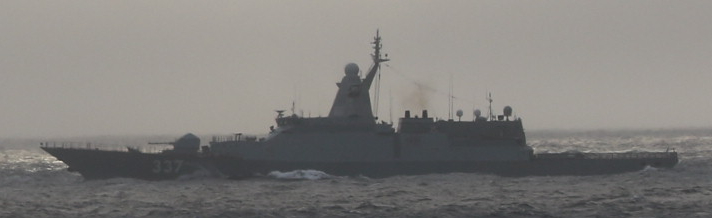
The surface combatant seems to have been miss identified. It is Gremyashchiy (337) lead ship of her class of 2,500 ton Project 20385 corvettes (NATO considers them frigates).

Note, USCGC Stratton is not an ice strengthened vessel.

This may have been a transfer of the SSGN and SSBN to the Russian Pacific Fleet.

The post story seems to indicate Stratton stumbled across this group. Shouldn’t we have known they were there?


Sept. 16, 2024

JUNEAU, Alaska — The U.S. Coast Guard located four Russian Federation Navy (RFN) vessels Sunday, 57 miles northwest of Point Hope, Alaska.

While on a routine patrol in the Chukchi Sea, the crew of U.S. Coast Guard Cutter Stratton (WMSL 752) observed the RFN vessels transiting southeast along the Russian side of the Maritime Boundary Line (MBL).

The crew of the Stratton witnessed the RFN vessels cross the MBL into the U.S. Arctic and moved to observe the vessels. The Russian vessels were assessed to be avoiding sea ice on the Russian side of the MBL and operated in accordance with international rules and customs as they transited approximately 30 miles into the U.S. Exclusive Economic Zone.

“We are actively patrolling our maritime border in the Bering Sea, Bering Strait, and Chukchi Sea, with our largest and most capable cutters and aircraft, to protect U.S. sovereign interests, U.S. fish stocks, and to promote international maritime norms,” said Rear Adm. Megan Dean, Commander of Coast Guard District Seventeen. “Coast Guard Cutter Stratton ensured there were no disruptions to U.S. interests.”

The Russian Surface Action Group consisted of a Severodvinsk-class submarine, Dolgorukiy-class submarine, Steregushchiy– class Frigate, and Seliva-class tug.

The Stratton is patrolling under Operation Frontier Sentinel, an operation designed to meet presence with presence when strategic competitors operate in and around U.S. waters. The Coast Guard’s presence strengthens the international rules-based order and promotes the conduct of operations in a manner that follows international law and norms.

Coast Guard Cutter Stratton is a 418-foot legend class national security cutter homeported in Alameda, Calif.

60 Minutes Report From the South China Sea

Reporters from CBS’s 60 Minutes got to see up close what the Philippines is dealing with in the South China Sea.

This is at least the second time a Philippine Coast Guard cutter has been intentionally rammed by the China Coast Guard.

The story also includes discussion with Philippine Military leaders and discussion of potential US involvement.

“Coast Guard completes upgrade of its HC-144 fleet” –CG-9

Below is news from the Acquisitions Directorate, (CG-9)


Coast Guard completes upgrade of its HC-144 fleet

The crew of CGNR 2313 prepares the aircraft for takeoff from the Coast Guard Aviation Logistics Center (ALC) in Elizabeth City, North Carolina, and delivery to Coast Guard Air Station Miami. This is the 18th and final HC-144 to be outfitted with the Ocean Sentry Refresh and Minotaur mission system architecture. U.S. Coast Guard photo by the Aviation Logistics Center.


The Coast Guard completed the upgrade of its HC-144 Ocean Sentry medium range surveillance aircraft fleet with the delivery of the 18th and final plane to undergo the Ocean Sentry Refresh (OSR) and integration of Minotaur mission system architecture.  On Aug. 6, a crew flew CGNR 2313 from the Aviation Logistics Center (ALC), the site of the upgrade work, to Air Station Miami, where the plane is now based.

The delivery marks the end of the decade-long modification effort, restoring full fleet complement and providing advance situational awareness and mission system capabilities necessary to carry out missions around the clock.
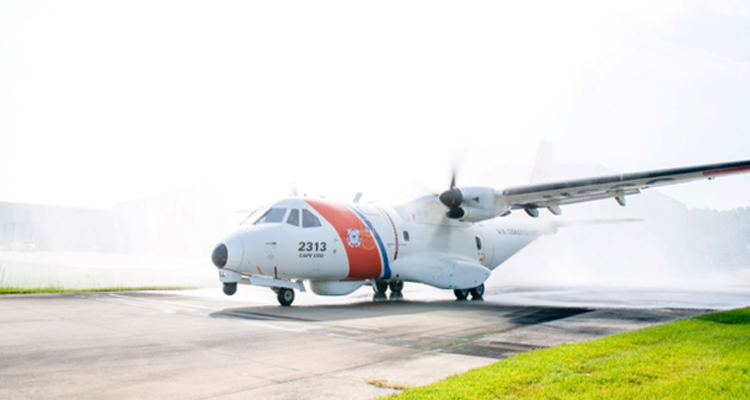
CGNR 2313 receives the traditional “water salute” as it prepares to depart ALC for delivery to Air Station Miami. U.S. Coast Guard photo.


Upon completion of the upgrade, the aircraft have been redesignated as HC-144Bs. The Bravo iteration merged two significant upgrade projects, OSR and Minotaur missionization.

OSR upgrades the aircraft with a new flight management system, which serves as the primary avionics computer for communication control, navigation and equipment monitoring.

Minotaur missionization integrates installed sensors and radar and provides dramatically improved data fusion as well as information processing capabilities.

The modifications to the HC-144B have made missions faster and more effective, according to Pesebra Cartwright, program manager for the Medium Range Surveillance Aircraft Program. “It enables crews to fly with lower cloud ceilings, allowing on-scene coverage.”

Cartwright added, “Feedback from the fleet on the HC-144B aircraft is overwhelmingly positive.”

He quoted a pilot as saying, “I’d rather fly an HC-144B with one operational Minotaur mission system workstation than to fly an HC-144A with a full function legacy mission system pallet.”

On search and rescue missions, the operator can locate vessels matching the search profile faster using the improved radar software. The high-definition forward-looking infrared (FLIR) sensor provides better pictures to quickly identify vessel type, name and people onboard. Also, the improved direction-finding equipment provides location information based on the signal from a 406 MHz Emergency Position Indicating Radio Beacon, allowing crews to fly directly to position, a significant advancement over the Alpha configuration’s limits of following a line of bearing. “This undoubtedly leads to more lives assisted and/or saved,” Cartwright said.

Faster and more effective applies to law enforcement missions as well. The improved radar allows for quicker location of vessels suspected of transporting illegal drugs or undocumented migrants or fishing in prohibited areas. The high-definition FLIR then provides better pictures to properly document the vessel while providing a compass location to a Coast Guard intercept vessel. With this upgrade, HC-144B mission system operators are now able to share Minotaur data with other Minotaur-equipped aircraft, ultimately improving mission effectiveness.

For more information: Medium Range Surveillance Program page and Minotaur Program page

“Coast Guard, Royal Canadian Navy offload $44.2 million worth of drugs in San Diego” –D11 / Canada’s Kingston Class

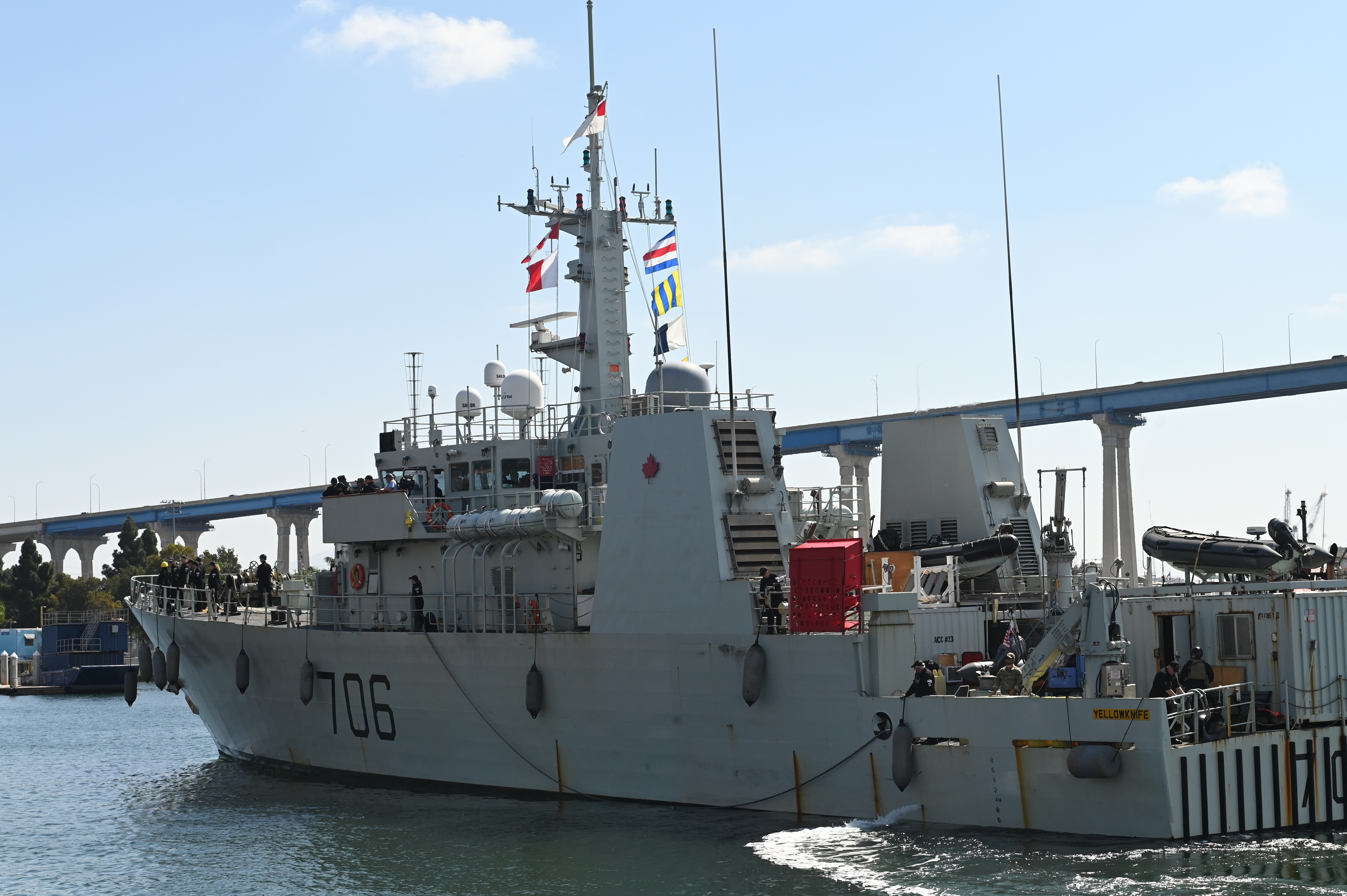
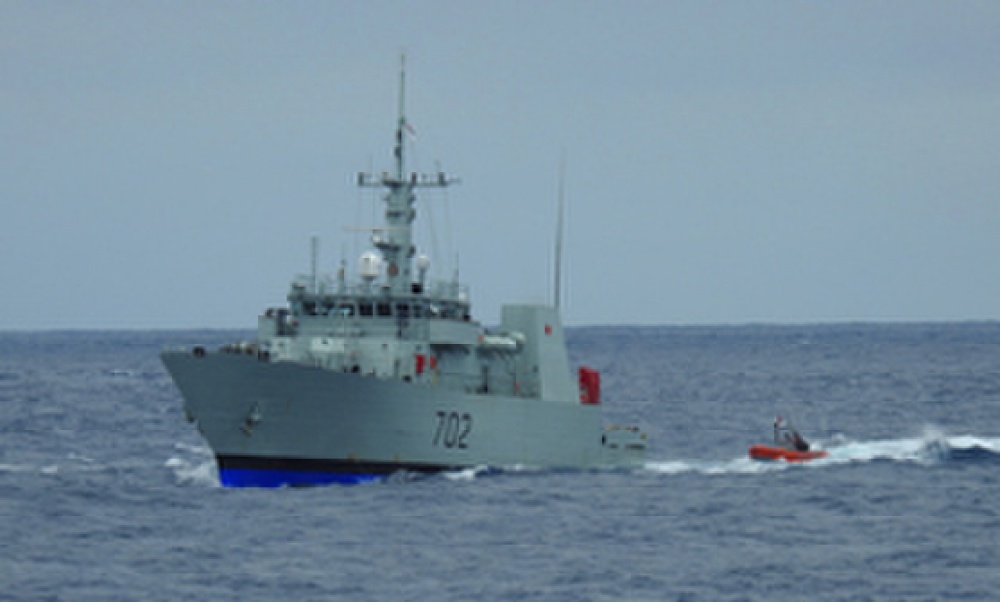
His Majesty’s Canadian Ship Yellowknife (HMCS-706) pulls into the Port of San Diego to offload $44.2 million worth of cocaine, Sept. 12, 2024. The Yellowknife’s crew interdicted a panga-style boat 430 miles southwest of Acapulco, Mexico, September 5 during an Eastern Pacific counter-narcotics patrol under the direction of U.S. Coast Guard District 11 and Joint Inter-Agency Task Force South. (U.S. Coast Guard photo by Chief Petty Officer Levi Read/Released)

Below is an Eleventh District news release.

The Canadians have been helping with drug interdiction since at least 2006.

HMCS Nanaimo, a Royal Canadian Navy maritime coastal defense vessel operating in support of Operation Martillo

The twelve 970 ton, 55.31 m (181 ft 6 in), Kingston class ships like Yellowknife are smaller and slower (15 knots) than the WMEC210s and has a smaller crew but are about 30 years younger, all having been commissioned 1996-99.

Courtesy Photo | USCGC Escanaba (WMEC 907) and USCGC Richard Snyder (WPC 1127) practice maneuvering with the Royal Canadian Navy’s HMCS Goose Bay (MM 707) in the Davis Strait on Aug. 13, 2021. In Operation Nanook, the U.S. Coast Guard seeks to work collaboratively with other international partners to enhance collective abilities to respond to safety and security issues in the High North through the air and maritime presence activities, maritime domain defense, and security exercises. (Photo courtesy Royal Canadian Navy)

A larger, but still relatively small Offshore Patrol Vessel, has been proposed as a replacement for the class, the Vigilance project. No decision has been made as yet.


Sept. 12, 2024

Photo Release: Coast Guard, Royal Canadian Navy offload $44.2 million worth of drugs in San Diego

U.S. Coast Guard District 11

SAN DIEGO — The Coast Guard and the Royal Canadian Navy offloaded $44.2 million worth of cocaine in San Diego, Thursday morning.

The crew aboard His Majesty’s Canadian Ship Yellowknife (HMCS-706) and a U.S. Coast Guard Law Enforcement Detachment team interdicted more than 3,100 lbs. of cocaine approximately 430 miles southwest of Acapulco, Mexico, September 5.

“I congratulate the entire crew of the Yellowknife for their successful patrol in the Eastern Pacific, and I thank them for their dedicated service,” said Capt. Tim Lavier, Eleventh Coast Guard District chief of response. “Deploying a Coast Guard law enforcement team aboard a Canadian Navy ship in the Eastern Pacific is a significant showcase of the strong relationship we have built with our Canadian partners.”

Multiple U.S. agencies, including the Departments of Defense, Justice, and Homeland Security, collaborate in the effort to combat transnational organized crime. The Coast Guard, Navy, Customs and Border Protection, FBI, Drug Enforcement Administration, and Immigration and Customs Enforcement, along with allied and international partner agencies, all play a role in counter-narcotic operations.

“I would like to thank our crew onboard HMCS Yellowknife and our partners with the U.S. Coast Guard Law Enforcement Detachment team, who worked together to support the interdiction of 3,100 lbs. of cocaine,” said Lt. Cmdr. Tyson Babcock, commanding officer HMCS Yellowknife. “We are proud to contribute to the multinational efforts to address illegal trafficking through Operation CARIBBE, Canada’s contribution to U.S.-led enhanced counternarcotics operations under Joint Interagency Task Force South, to impede the flow of illicit drugs and improve the safety and security of North America, the Caribbean and South America.

The fight against drug cartels in the Eastern Pacific Ocean requires unity of effort in all phases, from detection, monitoring and interdictions to criminal prosecutions by international partners and U.S. Attorneys’ Offices in districts across the nation. The law enforcement phase of counter-smuggling operations in the Eastern Pacific Ocean is conducted under the authority of the Eleventh Coast Guard District, headquartered in Alameda, Calif. The interdictions, including the actual boardings, are led and conducted by members of the U.S. Coast Guard.

These interdictions relate to Organized Crime Drug Enforcement Task Forces (OCDETF) designated investigations. OCDETF identifies, disrupts, and dismantles the highest-level criminal organizations that threaten the United States using a prosecutor-led, intelligence-driven, multi-agency approach. Additional information about the OCDETF program can be found at https://www.justice.gov/OCDETF.

The HMCS Yellowknife (706) is a Kingston-class Coastal Defence Vessel and is one of 12 maritime coastal defence vessels, and is homeported in Esquimalt, British Columbia. It was accepted into the Royal Canadian Navy in 1997 and commissioned, January 30, 1998.

Large Missile Hit, Mobility Does Not Seem Impaired

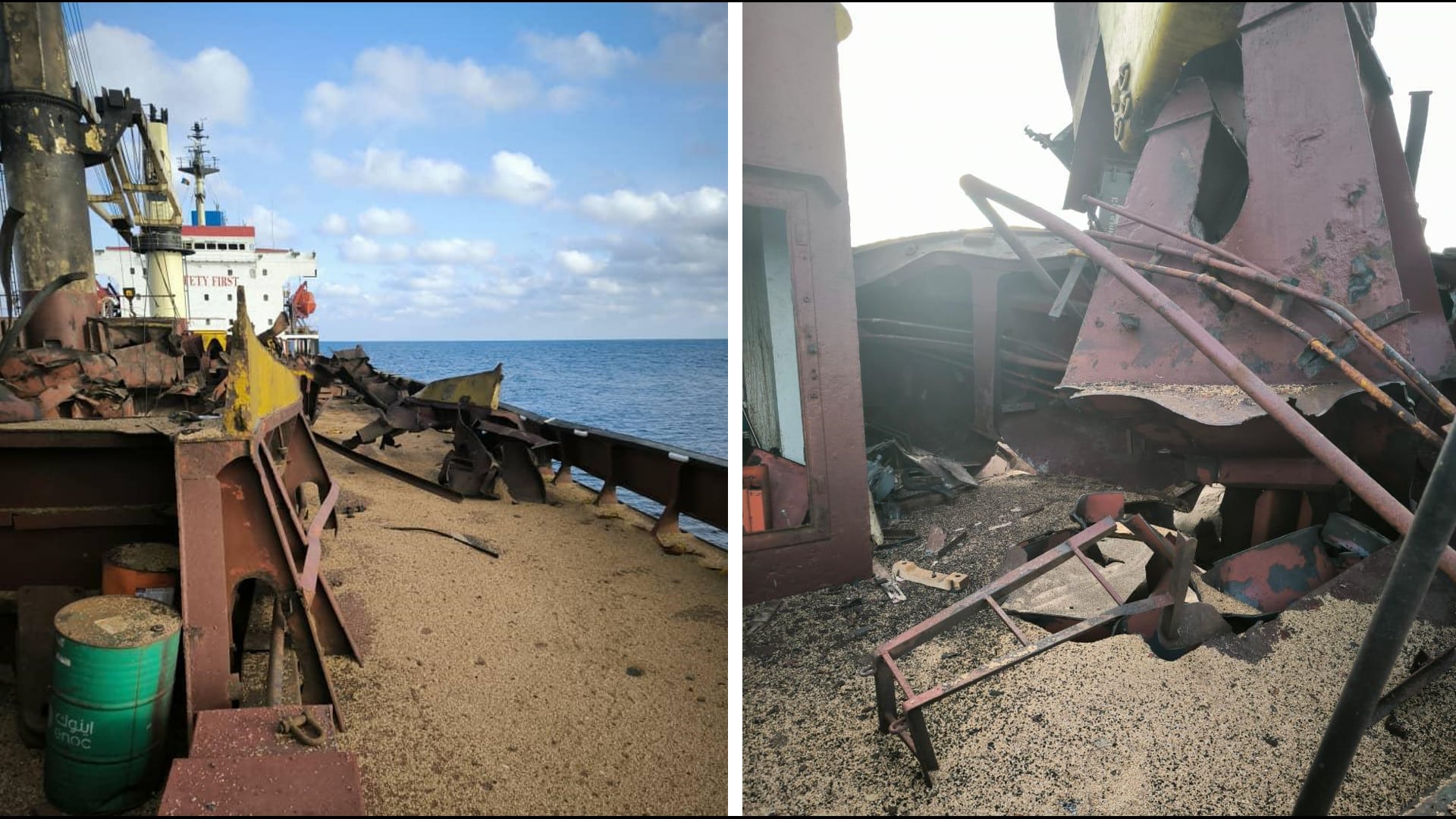
The MV Aya was hit by a Russian Kh-22 (AS-4 Kitchen) missile.

Naval News reports,

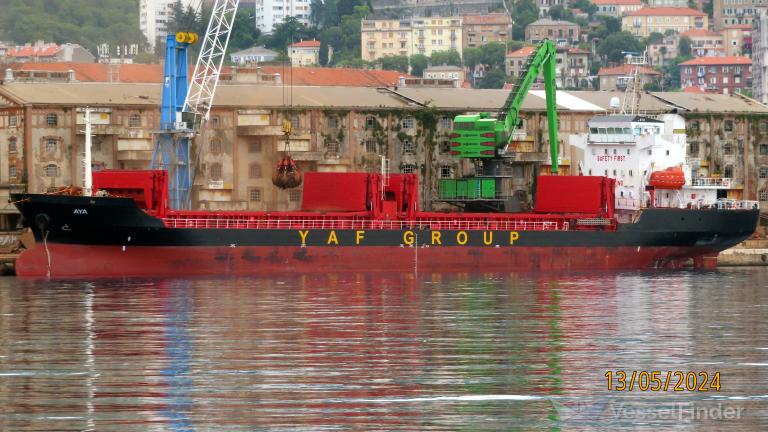
A Turkish operated merchant vessel, the MV Aya, has been hit by a supersonic anti-ship missile in the Black Sea. The Kh-22 missile was launched from a Russian Tu-22M Backfire bomber. The ship was carrying 26,550 tons of grain for Egypt.

M/V Aya, source: vesselfinder.com

What I find interesting here is that while this relatively small ship was hit by a large, hypersonic missile, the Kh-22, NATO designation AS-4 “Kitchen” with a 1,000 kg (2,205-pound warhead) designed to be used against aircraft carriers, the ship apparently continued its voyage.

As Naval News notes,

“Modern merchant ships have proven very resilient to missiles, although the risk to the vessel and crew remains high. Context is everything. This is demonstrated by the Houthi Movement who have struck a number of vessels with ballistic missiles in the Red Sea, resulting in broadly similar damage.”

The resilience of modern merchant ships should raise a red flag for the Coast Guard, in that the service no longer has the facility to meet the implicit mission requirement of being able to forcibly stop merchant ships regardless of size.

“Royal Navy makes first ‘narco-sub’ drugs seizure” –BBC

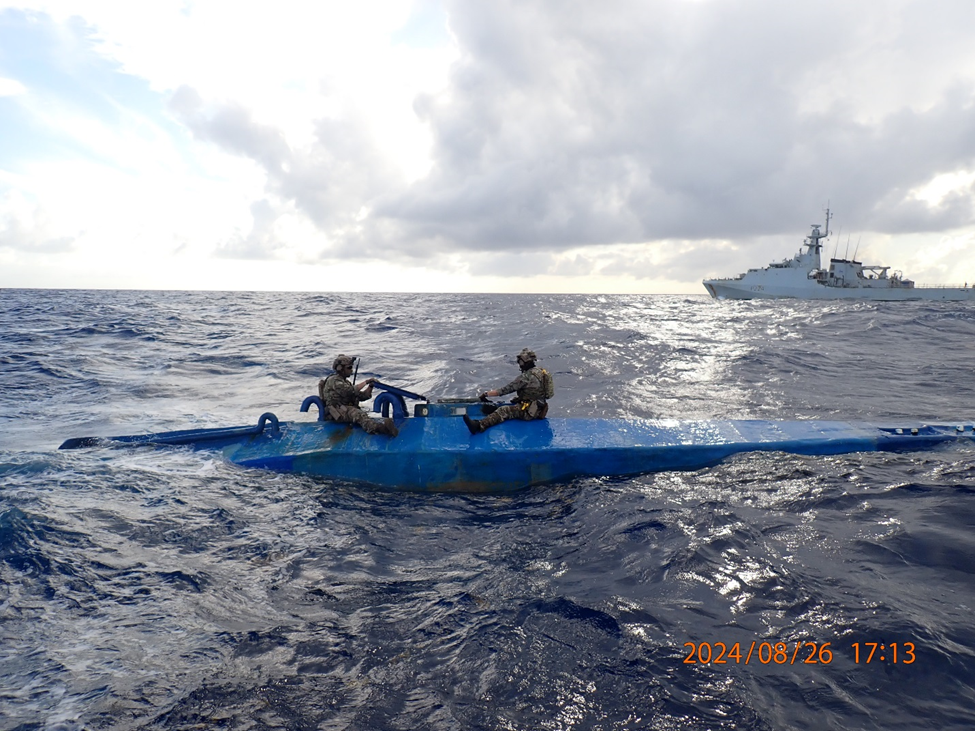
Crew members form U.S. Coast Guard Tactical Law Enforcement Detachment (LEDET) 111 and British Royal Navy team embarked aboard HMS Trent (P244) interdicts a semi-submersible drug smuggling vessel in the international waters of the Caribbean Sea, Aug. 26, 2024. Three suspected smugglers and 1,239 pounds of illegal narcotics from this interdiction were transferred to federal custody for prosecution by the U.S. Department of Justice. (Courtesy image from United Kingdom Royal Navy)

BBC reports,

“HMS Trent has made eight drug seizures since deploying to the Caribbean in December 2023, setting a new record, the Royal Navy added.

“It said the patrol ship had seized more than 9,400kg (20,000lb) of drugs, making it the best hunter of smugglers in the Royal Navy this century.”

Below is the Coast Guard news release regarding the offload.


Sept. 10, 2024

Coast Guard offloads more than $54 million in illegal narcotics interdicted in Caribbean Sea

Coast Guard Seventh District – (305) 415-6683

MIAMI – The crew of Coast Guard Cutter Diligence offloaded more than 4,125 pounds of cocaine with an assessed street value of approximately $54 million in Port Everglades, Monday.

Coast Guard crews, working alongside interagency and international partners, seized the illegal drugs in the international waters of the Caribbean Sea during three separate interdictions.

The following assets and crews were involved in the interdictions:

  • Royal Navy ship HMS Trent (P 244)
  • U.S. Coast Guard Tactical Law Enforcement Team Pacific (PAC-TACLET)
  • U.S. Coast Guard Cutter Joseph Napier (WPC 1115)
  • U.S. Customs and Border Protection Air and Marine Operations (CBP-AMO)
  • Joint Interagency Task Force South (JIATF-South)

Along with the illicit narcotics, 11 suspected smugglers were apprehended and will face prosecution in federal courts by the U.S. Department of Justice.

“I am extremely proud of our crew’s tenacity and professionalism, coupled with outstanding coordination with Coast Guard aircrews, during this complex counter-drug mission,” said Lt. Matthew Carmine, Coast Guard Cutter Joseph Napier commanding officer. “Their steadfast efforts, along with those of foreign allies and partner agencies, continue to prove vital to countering drug trafficking organizations and safeguarding the people of Puerto Rico and the U.S. Virgin Islands.”

Detecting and interdicting illicit drug traffickers on the high seas involves significant interagency and international coordination. The Joint Interagency Task Force South in Key West, Florida conducts the detection and monitoring of aerial and maritime transit of illegal drugs. Once interdiction becomes imminent, the law enforcement phase of the operation begins, and control of the operation shifts to the U.S. Coast Guard throughout the interdiction and apprehension. Interdictions in the Caribbean Sea are performed by members of the U.S. Coast Guard under the authority and control of the Coast Guard’s Seventh District, headquartered in Miami.

These interdictions relate to Organized Crime Drug Enforcement Task Forces’ (OCDETF) Strike Force Initiatives and designated investigations. OCDETF identifies, disrupts, and dismantles the highest-level criminal organizations that threaten the United States using a prosecutor-led, intelligence-driven, multi-agency approach. Additional information about the OCDETF program can be found at https://www.justice.gov/OCDETF.

For breaking news, follow us on “X” (formerly Twitter). For additional information, find us on Facebook and Instagram.

Visit GoCoastGuard.com to learn about active duty and reserve, officer and enlisted opportunities in the U.S. Coast Guard. Information on how to apply to the U.S. Coast Guard Academy can be found here.

UNITAS 2024 Photos

Guest author Andres Tavolari sent me a link to the Armada de Chile Flickr account which currently has a reported 14,813 photos.

The most recent photos are from UNITAS 2024. There are some really excellent photographs. Presumably as additional photos are added, page numbers will change, but currently, at least the first seven pages, more than 600 photos, are all devoted to UNITAS 2024 and more may be added.

An earlier post provided identification of participants.