This Day in Coast Guard History, September 25

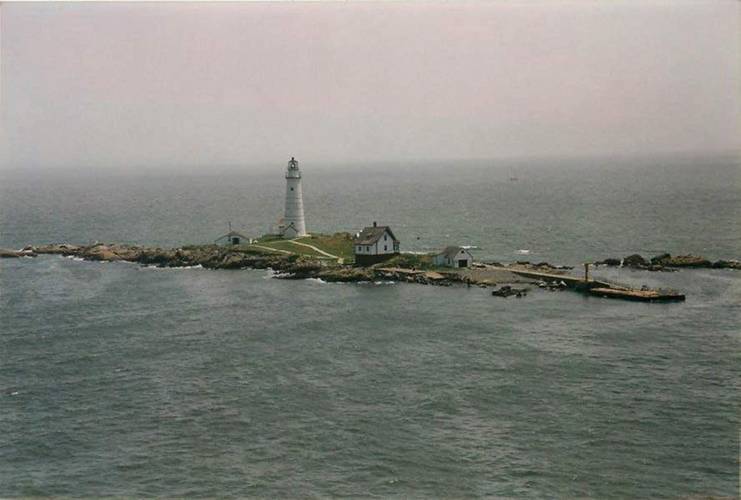
Boston Light, America’s First Aid to Navigation, now over 300 years old.

1916 The beginning of lighthouse work in the United States was commemorated, when a bronze tablet was unveiled at the Boston Light Station on the 200th anniversary of its establishment.

Cutter Yocona towing environmental bouy (EB-16) off of San Diego underway for deployment. May 19,1975.

1959 A U.S. Navy P5M seaplane that had ditched off the Oregon coast was located through radio contact by a Coast Guard UF-1G Albatross aircraft.  After sighting 10 survivors in two rafts 110 miles offshore, the Albatross crew directed CGC  Yacona to the scene, where a successful night rescue was affected.

“Coast Guard Cutter Forward and Coast Guard Cutter Bear, homeported in Portsmouth, Virginia, finish an at-sea transfer while underway on a two-month patrol. Coast Guard Cutter Forward returned to homeport on April 10, 2021.” (U.S. Coast Guard photo)

1980 CGC Bear was launched at Tacoma Boatbuilding Company, Inc., in Tacoma, Washington.  Bear was the first in its class of new 270-foot medium endurance cutters.  It was sponsored by Mrs. John B. Hayes, the wife of the Commandant. All thirteen ships of the class are still in Coast Guard service.

2014 The Commandant, ADM Paul Zukunft, signed the U.S. Coast Guard Western Hemisphere Strategy.  The Strategy emphasized that although the Coast Guard performs “diverse maritime missions over vast geographic areas” the Coast Guard’s primary operating area “will remain in the Western hemisphere.”

2016 The U.S. Coast Guard found an overturned boat following a boating incident on Government Cut that left three deceased, including Miami Marlins’ baseball pitcher José Fernández.  A boat crew from Coast Guard Station Miami was heading out on a law enforcement patrol at approximately 0330 when they passed a jetty along Government Cut and discovered an overturned 33-foot center console boat on the jetty with three deceased aboard.

“European navies chase the white whale of torpedo-busting torpedoes” –Defense News

Defense News reports on the progress, or lack of progress, on the European SeaSpider anti-torpedo torpedo.

I think my post “What Does It Take to Sink a Ship” may have been quoted,

“Torpedoes have historically been one of the main threats to surface vessels, with the weapon involved in more than half of sinkings of U.S. Navy ships during World War II, according to U.S. Coast Guard data cited by Dutch researchers at TNO, a government-linked research organization.”

My summary data on 92 sinkings of major US Navy surface warships during WWII was,

  • 38 by torpedoes alone (41.3%)
  • 16 by suicide planes (17.4%)
  • 12 Bombs alone (13%)
  • 11 by gunfire alone (12%)
  • 6 by torpedoes and gunfire (6.5%)
  • 5 by mines (5.4%)
  • 4 by torpedoes and bombs (4.3%)
  • 1 by bombs finished off by gunfire (1.1%)

As can be seen, torpedoes were involved in 48 of the 92 sinkings (52%).

With so little apparent progress on the European system I wonder if they are waiting to see if the Very Light Weight Torpedo, also called the Compact Rapid Attack Weapon (CRAW), will be successful as an anti-torpedo torpedo.

Unfortunately, I have not heard anything about the CRAW since early 2023 when Raytheon was awarded a contract to build 18 prototypes for use on submarines.

This Day in Coast Guard History, September 24

The ship’s sponsor, “Mrs. Harry J. Trainor, christening LST-167 prior to the ship’s launching, 25 February 1943, at Missouri Valley Bridge and Iron Company, Shipbuilding Division, Evansville, IN. Evansville Vanderburgh Public Library.

1943 The Coast Guard-manned USS LST-167 (Commissioned 27 April 1943, LT Edward C. Simons, USCG commanding) and the USS LST-334, with a partial Coast Guard crew, landed troops during the invasion and liberation of Vella Lavella in the central Solomons despite fierce resistance from the Japanese defenders. September 25, Japanese aircraft attacked the invasion fleet, hitting LST-167 with two bombs. The ship was refloated but found uneconomical to repair, struck from the Naval Register, 6 December 1943. Purple Hearts (KIA-8, WIA-2, MIA-5). KIA – ENS. Miller, Robert W.; ENS Wells , Harry F.; F1/c Anderson, Roy; Cox Bubeck, Sheldon T.; WT1/c Hammond, Gerald G.; EM3/c Poi, Giovanni; Y2/c Rieckert, Frederick; S1/c Sexton, Donald A. (1 additional enlisted man was killed in action. 1 enlisted man died of wounds. 5 enlisted men were missing in action.

1947 The Coast Guard announced that it had virtually completed the return of United States buoys, lights, and other aids to navigation to a peacetime basis.

Antenna of USCG Rescue 21 system at Cape Hatteras National Seashore.

2002 The Coast Guard announced the award of a $611 million contract for the production, deployment and support of “Rescue 21,” a modernization of the National Distress and Response System.  “Rescue 21” was planned to be the nation’s primary maritime “911” system for coastal waters of the continental United States, Alaska, Hawaii, Guam, Puerto Rico, and navigable rivers and lakes within the United States.

Pseudo-color IRF image of Rita from NASA GOES-12; processing by University of Wisconsin, Cooperative Institute for Meteorological Satellite Studies; used by implicit permission.

2005 Hurricane Rita made landfall just east of Sabine Pass, on the Texas-Louisiana line, as a Category 3 hurricane with top sustained winds of 120 mph.  Coast Guard units, some still in the area from Hurricane Katrina rescue and relief efforts, responded.  They saved 138 lives and evacuated 53 people.

A crewmember aboard a 26-foot over-the-horizon boat prepares to come alongside Coast Guard Cutter Alex Haley (WMEC 30) while underway in the Bering Sea in this 2019 photo. U.S. Coast Guard / Ensign Richard Zogby

2014 CGC Alex Haley returned to Kodiak following a successful 68-day deployment patrolling more than 12,000 miles throughout the Bering Sea and Aleutian Islands.  Alex Haley, known as the “Bulldog of the Bering,” departed Kodiak in July 2014 and spent two months conducting operations in the Bering Sea and the Aleutian Islands.  During the deployment, Alex Haley’s crew performed more than 40 at sea domestic fisheries enforcement boardings, four search and rescue cases, and one rescue and assistance operation.

“Indonesia Launches Two Domestically Built 98-metre OPV” –Naval News

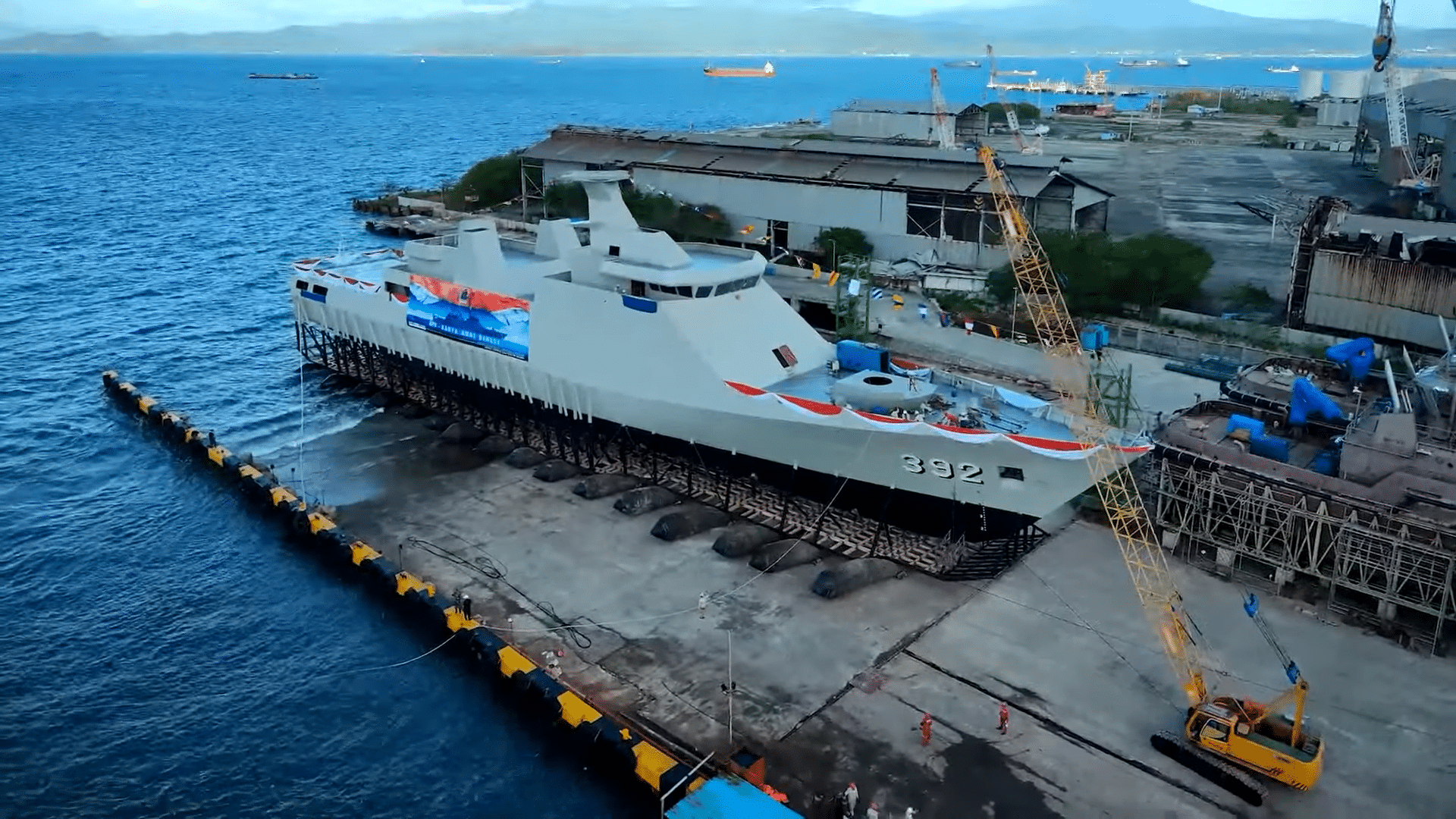
Indonesian Navy 98-metre OPV, KRI Lukas Rumkorem (392). Indonesian MoD picture.

Naval News reports Indonesia is completing two new 321 foot Offshore Patrol Vessels that are equipped like light frigates,

The Indonesian Navy (TNI AL) witnessed the launch of two of its future offshore patrol vessels (OPVs)…The first vessel, KRI Raja Haji Fisabilillah (391), was launched on September 18, while the second ship, KRI Lukas Rumkorem (392), followed on September 20….the two identical OPVs have a length of 98 metres and a width of 13.5 metres. The ships are capable of reaching a maximum speed of 28 knots, with a cruising speed of 20 knots.

“TNI AL revealed that both OPVs would be armed with Leonardo 76mm and 40mm guns, Escribano 20mm guns, Roketsan 2×4 Surface to Surface Missile Launcher System, and torpedo launchers.” (I added link found in this quote–Chuck)

These ships look like a Damen design, but there is no indication that is the case, and it doesn’t correspond to any of Damen’s designs. Indonesia has two classes of Damen designed warships, four corvettes and two light frigates, that may have influenced the design.

Wikipedia reports the ships are powered by four diesel engines. These are the same type of 7,280 kW (9,760 hp) MTU/Fairbanks Morse 16V28/33D STC diesel engines used in the Offshore Patrol Cutter (OPC). The Indonesian OPVs use four engines while the OPC uses only two.

Significantly the anti-ship cruise missiles are from Turkey rather than China, a previous supplier.

Indonesian 45.5 meter Patrol Vessels KRI Butana and KRI Selar. TNI AL picture.

The Naval News report also indicates that Indonesia has also recently acquired two 149 foot vessels similar to the Fast Response Cutters (pictured above).

“…on September 5, the service welcomed two new PC-40-class patrol boats, KRI Butana (878) and KRI Selar (879) …Armed with MSI-DS Seahawk LW30M guns (the 30mm Mk38 Mod4 in US service–Chuck), the two PC-40 vessels…are 45.5 metres long and 7.9 metres wide. They can achieve a maximum speed of 24 knots and a cruising speed of 17 knots…each with a crew of 35…”

This Day in Coast Guard History, September 23

September 23

1967 Coho Salmon Fishing Disaster: On this date a severe squall carried through the Frankfort River Platte area of northern Lake Michigan. Twenty-five-foot waves generated by the squall caught off guard an estimated 1,000 small boats fishing for Coho salmon.  Between 150 and 200 boats were beached and many more were either capsized or otherwise in distress.  During the next four days Coast Guard aircraft flew 33 sorties for a total of 55 hours.  State and Local police provided beach patrols and private individuals also aided in the operation.  One of the greatest problems faced by the Coast Guard was the confusion created by the hundreds of people unaccounted for after the storm, most of whom were not in trouble but had just not contacted their friends or family.  Each report of a missing person was carefully followed through so that within four days it was determined that seven had been recovered and only one person remained unaccounted for.  The Coho salmon which attracted the large number of boats to the area remained in season for another three weeks and during this time the Coast Guard maintained daily aircraft and small boat patrols of the area.

2014 CGC Key Largo collided with the 42-foot commercial fishing vessel Sea Shepherd, sinking the fishing vessel approximately nine nautical miles east northeast of Vieques, Puerto Rico. Key Largo was on a routine patrol when the collision happened. Sea Shepherd’s two crewmembers were safely recovered by the crew of Key Largo.


Russian and Chinese Coast Guards Exercise Together and Form Combined Task Force / The CCG Cutters

Recently the China Coast Guard and the Russian Coast Guard held joint exercises in the Peter the Great Gulf near Vladivostok. After the exercise, they formed a joint task force. 

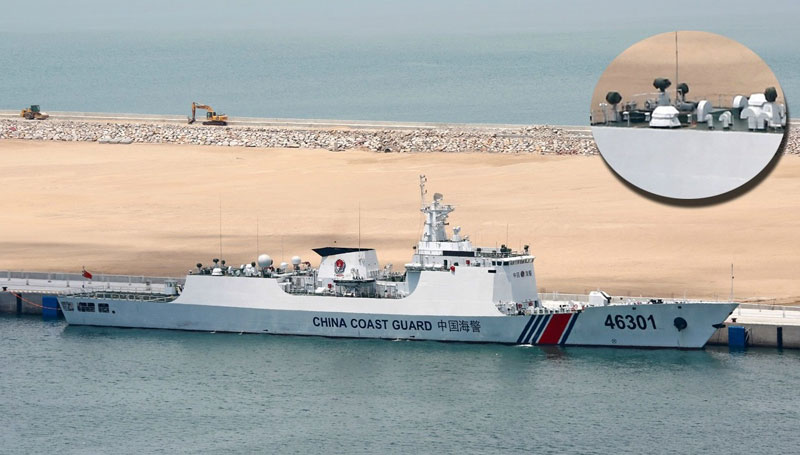
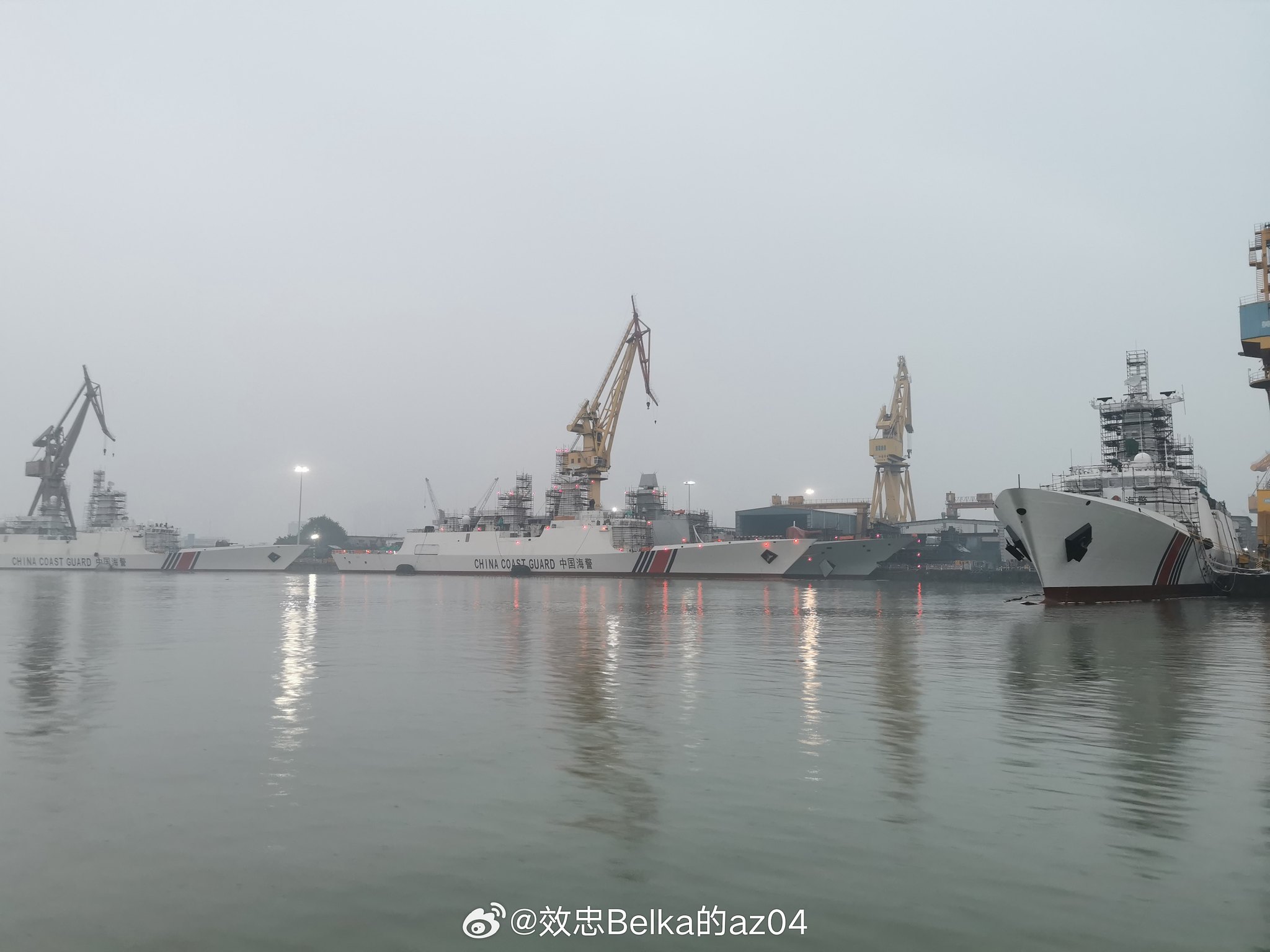
Also wanted to identify the China Coast Guard Cutters seen in the video.

They are Zhaoduan class Type 818, derived from the PLAN Type 054A frigates. According to the Office of Naval Intelligence, (lots of information at the link. The China Coast Guard has the largest coast guard fleet in the world) there are at least six of the class. They are almost as large as National Security Cutters (NSC), reportedly 4,000 tons full load, 134 meters (440′) in length, 16 meters (52.5′) of beam, speed 27 knots, range 8,000 miles.

In addition to the 76mm gun, they have a pair of 30mm Gatling guns. It is not clear if they have a fire control system that would make the 30mm guns effective as CIWS, but they could certainly do serious damage to surface targets at close range in a very short time.

This Day in Coast Guard History, September 22

September 22

1943 Coast Guardsmen participated in the invasion and liberation of Finschafen, New Guinea.  An Allied invasion fleet, including Coast Guard-manned landing ships, landed Australian troops.  Coast Guard-manned ships in the invasion fleet included USS LST-18, LST-67, LST-168, and LST-204.  There were no casualties among the Coast Guard vessels.

A United States Coast Guard (USCG) Port Security Unit (PSU) boat crew pictured while undergoing a tactical training exercise.

1990 PSU 301 became the second reserve Coast Guard port security unit deployed in support of Operation Desert Shield.  PSU 301 was staffed by reservists from Buffalo, New York.  They were stationed in Al-Jubayl, Saudi Arabia

This Day in Coast Guard History, September 21

Facebook Friend Mike Kelso has been posting information like you see below, from the Coast Guard Historian on Facebook on a daily basis. Mike helped me prepare this post. If I get positive feedback, I will try to make this a regular feature. 
I would note that Tahoma’s patrol in the Eastern Pacific, which was a novelty in 2015 subsequently became routine. 

September 21

1791 Secretary of the Treasury Alexander Hamilton authorized an allowance of nine cents for every ration that Revenue officers did not draw.
1922 Congress authorized officers of the Customs and of the Coast Guard to board and examine vessels, reaffirming their authority to seize and secure vessels for security of the revenue under the Act of March 2, 1799.
1938 A hurricane hit the northeast coast, wreaking havoc among the lighthouses and the light keepers there. First assistant keeper Walter B. Eberle of the Whale Rock light was killed when his lighthouse was swept into the sea. The wife of head keeper Arthur A. Small was killed when she was swept away from the Palmer Island Light Station. The keeper of the Prudence Island Light Station’s wife and son were drowned when that light station was swept into the sea. Many more stations and depots were severely damaged as well.

USCGC ABSECON 1965

1957 The German training barque Pamir with 90 persons on board, including 54 German naval cadets, foundered and sank in extremely rough seas 500 miles west of the Azores. The CGC Absecon, manning Ocean Station Delta, intercepted the SOS message and immediately proceeded to the scene. Three days later, the cutter and assisting vessels rescued six survivors, but the remaining 84 remained missing. The search continued for seven days, with Absecon directing on-scene operations of 60 merchant vessels from 13 nations, as well as American and Portuguese aircraft.
1977 CGC Acushnet (WAGO 167) deployed environmental buoy EB-07 at 39N 70W to assume part of the meteorological data collection duties of Ocean Station Hotel, which was decommissioned on September 30, 1977 when CGC Taney departed the ocean station for the final time. EB-07 was one of 10 environmental buoys in the Atlantic, six of which were north of Cape Hatteras. Coast Guard cutters provided continuing support of these buoys in accordance with an interagency agreement with NOAA.

USCGC CONIFER (WLB-301)

1987 Coast Guard units responded when two freighters, Pacbaroness and Atlantic Wing, collided in a dense fog off the coast of Santa Barbara. The Pacbaroness sank, causing a large oil spill. Coast Guard units that responded included:
CGCs Conifer & Point Judith; AIRSTAs Los Angeles, Sacramento, & San Francisco; MSO Los Angeles/Long Beach; Pacific Strike Team; MSD Santa Barbara; 11th District (m) and (dpa); Public Affairs Liaison Office; and the Public Information Assist Team from Headquarters.
1989 Coast Guard units from New York rescued 61 survivors of U.S. Air Flight 5050 after it skidded off a runway of LaGuardia Airport and into the Rikers Island Channel. Two persons were killed.
1989 Hurricane Hugo made landfall on the continental United States at Charleston, South Carolina. The Coast Guard’s emergency command post had to be abandoned when the roof almost blew off. Base Charleston suffered severe damage, as well. Coast Guard units immediately began relief operations. Aircraft were airborne at first light that morning. They conducted SAR, performed medical evacuations, provided emergency communications with stricken areas, and transported relief personnel and equipment. More aircraft were flown in from AIRSTAs Traverse City and Mobile. From their staging area at AIRSTA Savannah, they delivered food and water to hard-hit areas such as McClellanville, South Carolina, where 200 people were isolated and the entire town destroyed.

USCGC Tahoma (WMEC-908)

2015 CGC Tahoma returned to homeport at Portsmouth Naval Shipyard in Kittery, Maine, after a 66-day patrol in the Eastern Pacific Ocean and Caribbean Sea. During the patrol, on September 9, 2015, the Tahoma’s crew pursued a “Go-Fast Vessel” to verify the vessel’s nationality. With the assistance of a maritime patrol aircraft, the Tahoma’s pursuit team closed in on the Go-Fast and attempted to initiate radio contact. The vessel jettisoned bales of contraband into the ocean and refused to comply with instructions. Warning shots were used to signal the vessel to prepare for a boarding. The noncompliant Go-Fast then came to an abrupt halt and was boarded. Boarding team members recovered 27 bales of cocaine from the water, totaling 540 kilograms (worth an estimated $10.8 million) and detained the three suspected drug smugglers. The Tahoma’s crew participated in the transfer and custody of 50 detainees and 1,893 kilograms of contraband with several other Coast Guard cutters in both the Eastern Pacific and the Caribbean Sea. This patrol was particularly unique as it deployed the 270-foot medium endurance cutter from its homeport in Kittery, Maine down to the waters of Central America, requiring the cutter to make transit both ways through the Panama Canal. Not only did the Tahoma’s crew return home as Order of the Ditch recipients, but they also were afforded the opportunity to cross the equator while in the Eastern Pacific Ocean.

“2024 Military Pay Charts” –Military.com

Photo By Petty Officer 3rd Class Kate Kilroy | U.S. Coast Guard Chief Petty Officer Jenarius St. Louis, a crew member assigned to USCGC Legare (WMEC 912), holds his son at the unit’s return to home port, July 13, 2023, at Coast Guard Base Portsmouth. While underway, Legare’s crew conducted maritime safety and security missions while working to detect, deter and intercept unsafe and illegal maritime migration ventures bound for the United States. (U.S. Coast Guard photo by Petty Officer 3rd Class Kate Kilroy)

Military.com has published a post that includes pay charts along with supplemental information. You can find it here.