Large Missile Hit, Mobility Does Not Seem Impaired

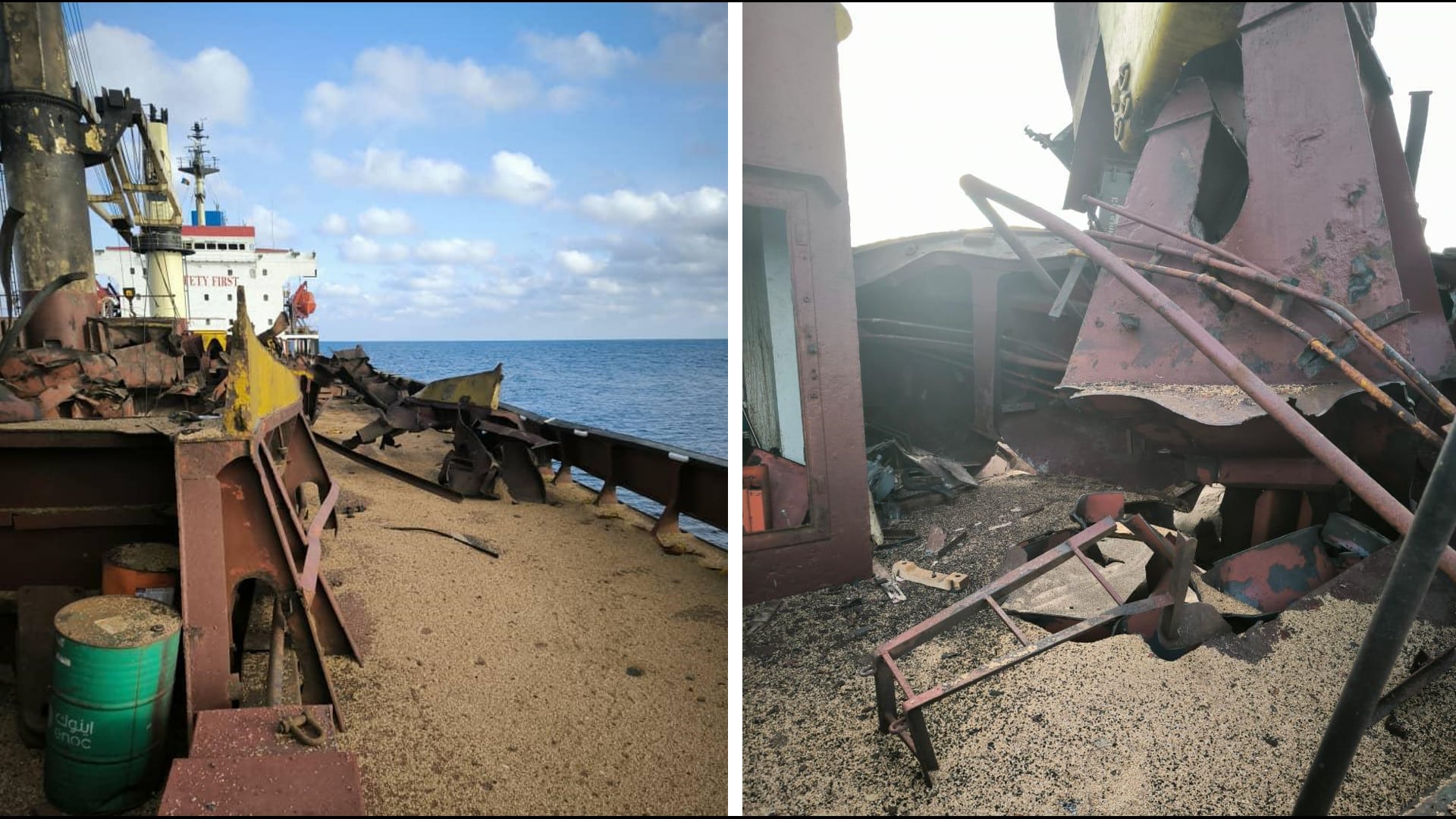
The MV Aya was hit by a Russian Kh-22 (AS-4 Kitchen) missile.

Naval News reports,

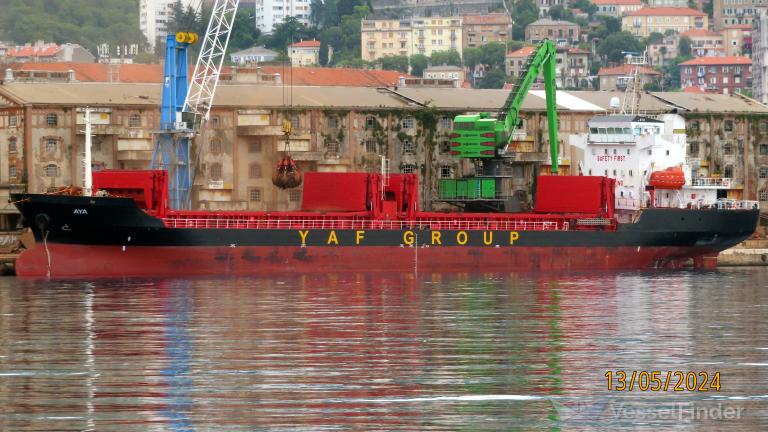
A Turkish operated merchant vessel, the MV Aya, has been hit by a supersonic anti-ship missile in the Black Sea. The Kh-22 missile was launched from a Russian Tu-22M Backfire bomber. The ship was carrying 26,550 tons of grain for Egypt.

M/V Aya, source: vesselfinder.com

What I find interesting here is that while this relatively small ship was hit by a large, hypersonic missile, the Kh-22, NATO designation AS-4 “Kitchen” with a 1,000 kg (2,205-pound warhead) designed to be used against aircraft carriers, the ship apparently continued its voyage.

As Naval News notes,

“Modern merchant ships have proven very resilient to missiles, although the risk to the vessel and crew remains high. Context is everything. This is demonstrated by the Houthi Movement who have struck a number of vessels with ballistic missiles in the Red Sea, resulting in broadly similar damage.”

The resilience of modern merchant ships should raise a red flag for the Coast Guard, in that the service no longer has the facility to meet the implicit mission requirement of being able to forcibly stop merchant ships regardless of size.

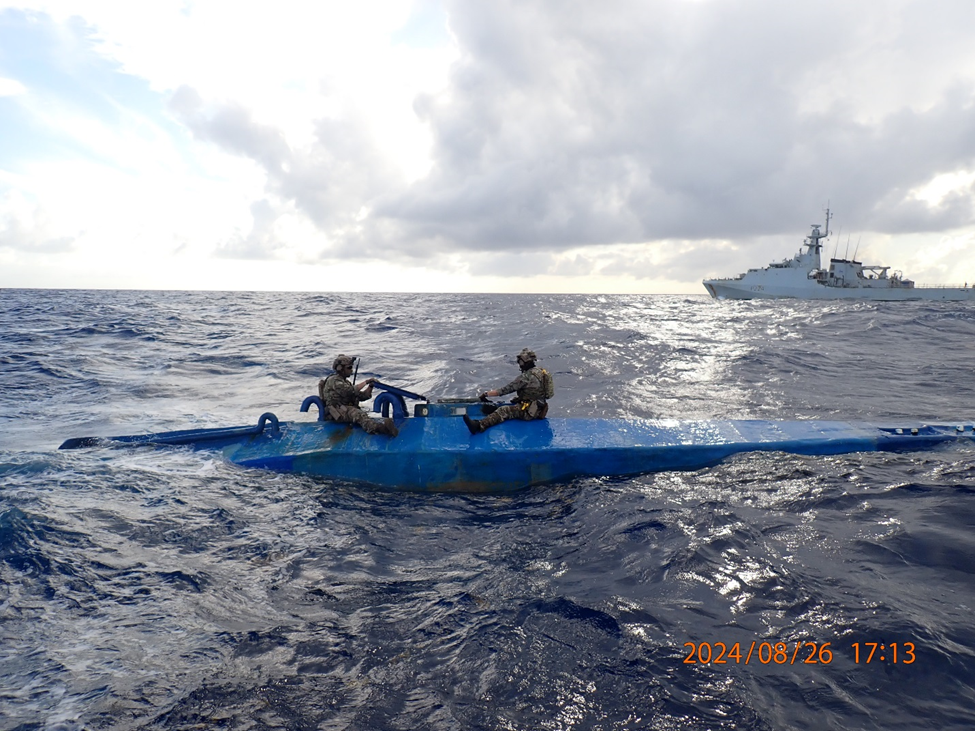
“Royal Navy makes first ‘narco-sub’ drugs seizure” –BBC

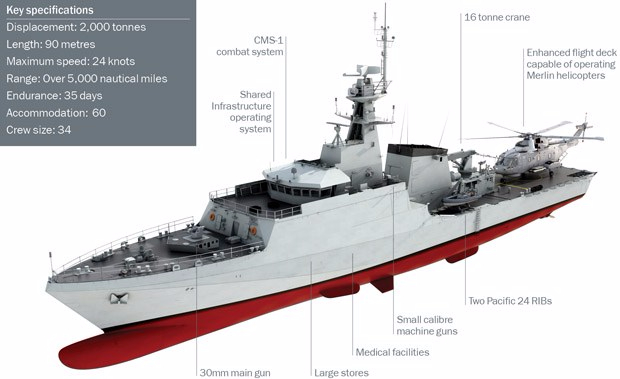
Crew members form U.S. Coast Guard Tactical Law Enforcement Detachment (LEDET) 111 and British Royal Navy team embarked aboard HMS Trent (P244) interdicts a semi-submersible drug smuggling vessel in the international waters of the Caribbean Sea, Aug. 26, 2024. Three suspected smugglers and 1,239 pounds of illegal narcotics from this interdiction were transferred to federal custody for prosecution by the U.S. Department of Justice. (Courtesy image from United Kingdom Royal Navy)

BBC reports,

“HMS Trent has made eight drug seizures since deploying to the Caribbean in December 2023, setting a new record, the Royal Navy added.

“It said the patrol ship had seized more than 9,400kg (20,000lb) of drugs, making it the best hunter of smugglers in the Royal Navy this century.”

Below is the Coast Guard news release regarding the offload.


Sept. 10, 2024

Coast Guard offloads more than $54 million in illegal narcotics interdicted in Caribbean Sea

Coast Guard Seventh District – (305) 415-6683

MIAMI – The crew of Coast Guard Cutter Diligence offloaded more than 4,125 pounds of cocaine with an assessed street value of approximately $54 million in Port Everglades, Monday.

Coast Guard crews, working alongside interagency and international partners, seized the illegal drugs in the international waters of the Caribbean Sea during three separate interdictions.

The following assets and crews were involved in the interdictions:

  • Royal Navy ship HMS Trent (P 244)
  • U.S. Coast Guard Tactical Law Enforcement Team Pacific (PAC-TACLET)
  • U.S. Coast Guard Cutter Joseph Napier (WPC 1115)
  • U.S. Customs and Border Protection Air and Marine Operations (CBP-AMO)
  • Joint Interagency Task Force South (JIATF-South)

Along with the illicit narcotics, 11 suspected smugglers were apprehended and will face prosecution in federal courts by the U.S. Department of Justice.

“I am extremely proud of our crew’s tenacity and professionalism, coupled with outstanding coordination with Coast Guard aircrews, during this complex counter-drug mission,” said Lt. Matthew Carmine, Coast Guard Cutter Joseph Napier commanding officer. “Their steadfast efforts, along with those of foreign allies and partner agencies, continue to prove vital to countering drug trafficking organizations and safeguarding the people of Puerto Rico and the U.S. Virgin Islands.”

Detecting and interdicting illicit drug traffickers on the high seas involves significant interagency and international coordination. The Joint Interagency Task Force South in Key West, Florida conducts the detection and monitoring of aerial and maritime transit of illegal drugs. Once interdiction becomes imminent, the law enforcement phase of the operation begins, and control of the operation shifts to the U.S. Coast Guard throughout the interdiction and apprehension. Interdictions in the Caribbean Sea are performed by members of the U.S. Coast Guard under the authority and control of the Coast Guard’s Seventh District, headquartered in Miami.

These interdictions relate to Organized Crime Drug Enforcement Task Forces’ (OCDETF) Strike Force Initiatives and designated investigations. OCDETF identifies, disrupts, and dismantles the highest-level criminal organizations that threaten the United States using a prosecutor-led, intelligence-driven, multi-agency approach. Additional information about the OCDETF program can be found at https://www.justice.gov/OCDETF.

For breaking news, follow us on “X” (formerly Twitter). For additional information, find us on Facebook and Instagram.

Visit GoCoastGuard.com to learn about active duty and reserve, officer and enlisted opportunities in the U.S. Coast Guard. Information on how to apply to the U.S. Coast Guard Academy can be found here.

UNITAS 2024 Photos

Guest author Andres Tavolari sent me a link to the Armada de Chile Flickr account which currently has a reported 14,813 photos.

The most recent photos are from UNITAS 2024. There are some really excellent photographs. Presumably as additional photos are added, page numbers will change, but currently, at least the first seven pages, more than 600 photos, are all devoted to UNITAS 2024 and more may be added.

An earlier post provided identification of participants.

“NATO Selects Three Companies For Next-Generation Rotorcraft Concept Study” –The War Zone

Lockheed Martin Sikorsky’s concept will be based on X2 technology. Lockheed Martin rendering

The War Zone Reports,

“NATO, seeking to replace its aging fleet of helicopters, awarded three contracts on Friday to provide parallel concept studies for a new medium-lift, multirole rotorcraft. The alliance hopes to field that aircraft beginning in 2035

“Dubbed “Concept Study #5, the goal is to “provide a broad range of potential concepts” to help participating nations choose what kind of vertical lift platform they want in the future. The NGRC program initiative began in 2022 and includes France, Germany, Greece, Italy, the Netherlands, the United Kingdom, and Canada. It was initially created with €26.7 million ($28.98 million) dedicated to defining the future of their helicopter fleets. The United States and Spain are currently acting as observers.”

Given that the Future Vertical Lift program is not producing an aircraft the Coast Guard can operate from cutters, this program may be of interest.

It is intended to replace AW101s, H-60s, Super Pumas, and NH90s.

The three contracts were awarded to Airbus Helicopters, Leonardo (partnered with Bell), and Lockheed Martin Sikorsky.

“At this stage in the process, NATO is agnostic when it comes to the choice of a traditional helicopter or non-traditional rotary aircraft. The alliance does, however, have many “required attributes” that the ultimate winning design must have, according to procurement documents.”

Among those attributes,

“Able to be deployed for medium-long periods (6-9 months) and fully operate from Frigate (FF)/Destroyer (DD) class of vessel, i.e. not larger than the footprint or dimension of either NH-90 (NFH), or AW-101, including the optional capability of folding main rotor/tail to be moved onto ship’s elevator/hangar for maritime operations.”

UNITAS 2024 Participants

Since the announcement of the start of UNITAS 2024, I have been looking for a more detailed list of participating units.

We already knew about US participants, including US Coast Guard Tactical Law Enforcement Team (TACLET) Pacific Law Enforcement Detachment (LEDET); and USCG Maritime Security Response Team East (MSRTE) Direct Action Section, but had little information about non-US ships and aircraft involved.

Got a pleasant surprise in the form of an email from my Chilean connection, Andres Tavolari, providing a link to the information.

Andres was the author of one of the most widely read posts ever on this blog,

Three Nations Share German OPV Design             

That post was about an 80 meter Fassmer OPV design that was planned to be built in Argentina, Chile and Colombia. Chile built four. Colombia built three. Argentina dropped out of the program and instead bought four Bouchard (formerly L’Adroit) class OPVs. Germany subsequently built three 86 meter versions for their federal police force and Singapore has ordered four similar vessels.

Three of these 80-meter OPVs are participating in UNITAS 2024

The Chilean website provides a small side view graphic or silhouette for each ship and aircraft type along with the country the asset is from and a link to a photograph. In the case of the Chilean assets, there is additional descriptive information.

The website is in Spanish, but my browser provided an understandable translation.

Aircraft came from Chile, the US, Ecuador, and Uruguay.

19 ships and submarines were identified.

Chilean Navy participants include eight floating units: three frigates, two OPVs, an 42,000 ton oiler, a 12,000 ton French built LSD(H) that they have apparently used to resupply their Antarctic Station (video above), a small Landing Ship Tank (LST), and a submarine.

The US Navy has sent USS Germantown (LSD-42), USS St. Louis (LCS 19), and USS Hampton (SSN 767).

Argentina, Brazil, and Peru sent frigates. Ecuador sent a corvette. Mexico sent ARM Benito Juarez, classed as a long range ocean patrol ship, but really much more, being equipped with a CAPTAS-2 towed array active/passive sonar and armed with US sourced anti-ship Harpoon missiles and anti-air Evolved Sea Sparrow Missiles (ESSM) and Rolling Airframe Missiles (RAM). The UK sent a 5.000 ton ice capable patrol, survey, and support ship, HMS Protector.

The Chilean Navy has done a great job of providing accompanying video as well.

This year’s exercise will include cyber, and Fourth Fleet is also bringing some unmanned systems. There will also be a SINKEX.

Really, this is some of the best coverage of an exercise I have ever seen, and the underway portion hasn’t even started.

Andres also told me,

“At the same time, other American gear visited us: at least, a C-17 which brought an UH-60 and a HIMARS launcher with what appears to be a reloading truck.”

“GAO says Coast Guard needs better ‘performance measures’ in Arctic” –Workboat

The USCGC Sycamore (WLB 209) crew participates in a navigation exercise with a HDMS Knud Rasmussen (P570), a Royal Danish Navy Knud Rasmussen-class patrol vessel and the FNS Fulmar (P740), a French Navy patrol vessel, off the coast of Southern Greenland, June 13, 2023. Deployed forces demonstrated U.S. Coast Guard capabilities to build partner capacity and expertise in search and rescue, navigation, and damage control. These efforts solidify key strategic relationships while achieving mutual Danish, Greenlandic, and U.S. goals in the North American Atlantic Arctic and Northwest Atlantic Ocean. (U.S. Coast Guard photo by Lt. Cmdr. Katherine Blue)

Workboat reports,

“The Coast Guard hasn’t fully tracked the time spent on its Arctic activities,” according to the GAO, which is the non-partisan auditing and accounting arm of Congress. “Complete information would help the Coast Guard better allocate its constrained resources and assess its progress toward achieving its Arctic strategic goals.”

It seems GAO is always critical, but that is sort of their job. Reports are a pain in the ass, but it does seem that the Coast Guard has been lax in both making reports and in using them to justify additional resources, and this does not just apply to the Arctic.

For instance, I have not seen reports like this in a very long time.

To compete for budget dollars, an agency should be able to show return on investment. Money spent on the Coast Guard is a good investment. We need to be able to document that.

Thanks to Paul for bringing this to my attention. 

“California to Deploy Surplus C-130 Aircraft from Coast Guard to Fight Wildfires” –Military.Com

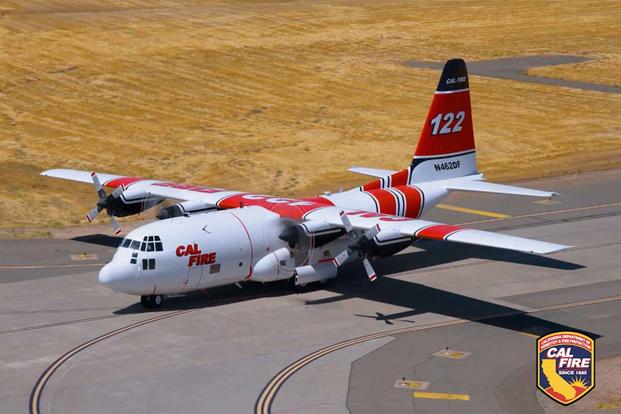
California officials have added a C-130 Hercules cargo plane to the firefighting fleet of the California Department of Forestry and Fire Protection, the state’s primary firefighting agency. (Courtesy Cal Fire/TNS)

It has taken a long time to make it happen, but Military.com reports, CalFire is finally getting the first of seven former USCG C-130H aircraft that will join their fire flighting fleet. I’ve been told that necessary changes were actually made by the Coast Guard at CGAS Elizabeth City.

“UNITAS LXV Begins in Valparaiso, Chile” –SOUTHCOM

UNITAS LXV commenced today in Valparaiso, Chile, with 17 ships, two submarines, and 23 aircraft operated and supported by more than 4,300 Sailors and Marines from 24 nations. UNITAS is the world’s longest-running multinational maritime exercise, conceived in 1959 and executed without fail since 1960.

Below is a U.S. Naval Forces Southern Command / U.S. 4th Fleet Public Affairs news release. 

Notably there are no Coast Guard floating units or aircraft participating this year but U.S. Coast Guard (USCG) Tactical Law Enforcement Team (TACLET) Pacific Law Enforcement Detachment (LEDET); and USCG Maritime Security Response Team East (MSRTE) Direct Action Section are providing their special expertise.

This exercise is about disaster response and law enforcement as much as war fighting.

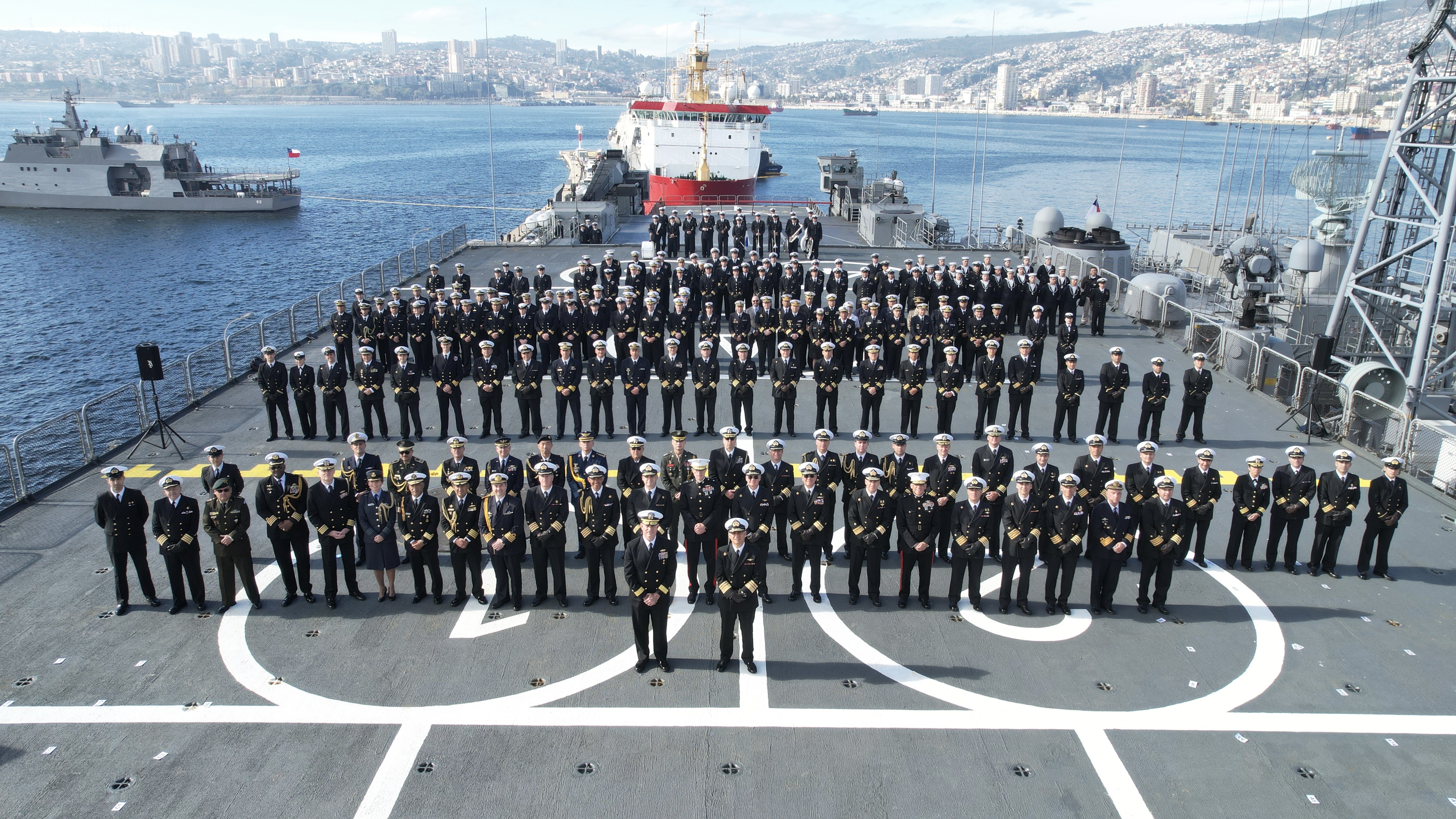
The ship visible in the upper left hand of the photo is a Fassmer designed 80-meter Offshore Patrol Vessel (OPV). It is the Chilean Navy’s Comandante Policarpo Toro (OPV-82). Chile has four ships and Colombia three ships built to this design.

The ship immediately astern (red hull and white superstructure) appears to be an icebreaker, but I don’t recognize it.


Sept. 2, 2024

UNITAS LXV Begins in Valparaiso, Chile

VALPARAISO, Chile – Navy and Marine forces arrived in Valparaiso in support of UNITAS LXV (65), the world’s longest-running multinational maritime exercise in the world, which officially commenced September 2, 2024. 

The Chilean navy is hosting this year’s UNITAS, which will feature 17 warships/vessels, two submarines, 20 aircraft (fixed wing/helicopter), and more than 4,300 personnel from 24 partner nations. Forces will conduct operations off the coast of Valparaiso, Chile, and ashore in the vicinity of Puerto Aldea, Chile, through September 12.

Rear Adm. Rich Lofgren provided opening remarks as U.S. Naval Forces Southern Command/U.S. 4th Fleet Deputy Commander, addressing the opportunities to build relationships ashore, including subject matter exchanges, operations briefs, and a Women, Peace, and Security symposium. Creating these spaces to build relationships on shore will pay dividends at during the at-sea phase of the exercise and beyond.

“Sailors go to sea,” Lofgren added. “I look forward with great excitement to joining you at sea, as we conduct combined and joint operations. We will enhance our capabilities and improve our interoperability in these maritime events – together. Make no mistake, all of us will work hard the next 12 days. But we will communicate effectively – together. We will operate effectively – together. And we will overcome obstacles – together.”

UNITAS, which is Latin for unity, united, or oneness, was conceived in 1959 when representatives at the first Inter-American Naval Conference in Panama agreed to conduct an annual maritime exercise with one another. Prior to UNITAS I in 1960, U.S. Chief of Naval Operations Adm. Arleigh Burke reviewed preparations for the multinational exercise. He commended planners for their progress, especially in building compatible communication systems among navies, and predicted that UNITAS would build strong relationships among Sailors of the Western Hemisphere.

UNITAS I took place in 1960 with forces from Argentina, Brazil, Chile, Colombia, Ecuador, Peru, Uruguay, the United States, and Venezuela. This year marks the 65th iteration of the world’s longest-running annual multinational maritime exercise.

Including the United States, UNITAS LXV will bring together 24 nations from all over the world to train forces in joint maritime operations that enhance tactical proficiency and increase interoperability. Participating nations include Argentina, Brazil, Canada, Chile, Colombia, Dominican Republic, Ecuador, France, Germany, Guatemala, Honduras, Italy, Jamaica, Japan, Mexico, Paraguay, Peru, Portugal, South Korea, Spain, Trinidad and Tobago, United Kingdom, United States, and Uruguay.

Following the UNITAS LXV Opening Ceremony on September 2, the in-port phase of the exercise will feature subject matter expert exchanges, professional symposia, ship rider exchanges, and operations meetings. During this time, Marines and Sailors will conduct training events in Valparaiso to include medical, cyber defense, and diving and salvage operations.

During the UNITAS LXV Underway Phase, forces will participate in events testing all warfare operations, to include live-fire exercises such as a SINKEX and an amphibious ship-to-shore landing and force withdrawal.

Unmanned and hybrid fleet systems will return for a second year to UNITAS with the presence of unmanned undersea vehicles. As part of the U.S. Navy’s future hybrid fleet, the Chief of Naval Operations has tasked U.S. 4th Fleet to scale unmanned platforms to the fleet level.

There are many U.S. forces participating in UNITAS LXV, including USS Germantown (LSD 42), USS St Louis (LCS 19), and USS Hampton (SSN 767). Other U.S. participants include Patrol Squadron Five (VP 5); Mobile Diving and Salvage Unit (MDSU) 2; Explosive Ordnance Disposal Mobile Unit (EOD) 2; Mine Countermeasures Group 2 (MCMGRU TWO); Helicopter Maritime Strike Squadron 50 Detachment 4 (HSM 50 Det 4); 2nd Battalion, 7th Marines (2/7); 1st Battalion, 24th Marine Regiment (1/24); 4th Light Armored Reconnaissance Battalion (4th LAR); 4th Reconnaissance Battalion (4th Recon); Combat Logistic Regiment 4 (CLR 4); 2nd Battalion, 14th Marines (2/14); Marine Aerial Refueler Transport Squadron 234 (VMGR-234); Marine Wing Communications Squadron 48 (MWCS-48); Marine Aircraft Control Group – 48 (MACG-48); Marine Fighter Attack Squadron 112 (VMFA-112); U.S. Coast Guard (USCG) Tactical Law Enforcement Team (TACLET) Pacific Law Enforcement Detachment (LEDET); and USCG Maritime Security Response Team East (MSRTE) Direct Action Section. Operational and tactical level leadership will be provided by Commander, Destroyer Squadron 40, (COMDESRON 40); Commander, Amphibious Squadron Seven (COMPHIBRON SEVEN); U.S Marine Corps Forces South (MARFORSOUTH); USNAVSOUTH/FOURTHFLT; and U.S. Southern Command (USSOUTHCOM).

U.S. Naval Forces Southern Command/U.S. 4th Fleet supports U.S. Southern Command’s joint and combined military operations by employing maritime forces in cooperative maritime security operations to maintain access, enhance interoperability, and build enduring partnerships in order to enhance regional security and promote peace, stability and prosperity in the Caribbean, Central and South American region.

U.S. Marine Corps Forces, South is the Marine Corps component to U.S. Southern Command, is responsible for planning exercises, operations, and overall Marine Corps support for the SOUTHCOM assigned area of responsibility.

“Increased focus on combat capabilities for new Danish patrol ships” –Naval News

Flexible patrol ship scale model on Danske Patruljeskibe booth at DALO Industry Days 2024.

Naval News reports that the Danish Navy is now planning to increase the armament of a proposed class of up to six ice strengthened patrol vessels. The design has not been finalized, but they have decided the security situation demands additional installed weapon systems.

We talked about these ships earlier, Arctic Patrol Cutter, State of the Art–Revisited. Basically, they were expected to perform Coast Guard type missions around Greenland and into the Arctic, replacing the Thetis class patrol frigates.

The additions include Vertical Launch (missile) Systems (VLS).

“USCG Pacific Comments Latest Chinese Ramming of Philippine Coast Guard Vessel” –Naval News

USCGC Waesche accompanies the PCG’s Melchora Aquino (sister ship of BRP Teresa Magbanua (MRRV-9701) during a search-and-rescue exercise in the South China Sea in July 2024. (USCG)

Naval News reports on the comments of Rear Admiral Andrew M. Sugimoto, Deputy Pacific Area Commander, about the US Coast Guard’s position regarding Chinese attempts to intimidate the Philippine Coast Guard. Read it. It is excellent reporting.

I will just note a couple of things.

What is this? I think it is a can opener, meaning this tactic was premeditated in the construction of this class.

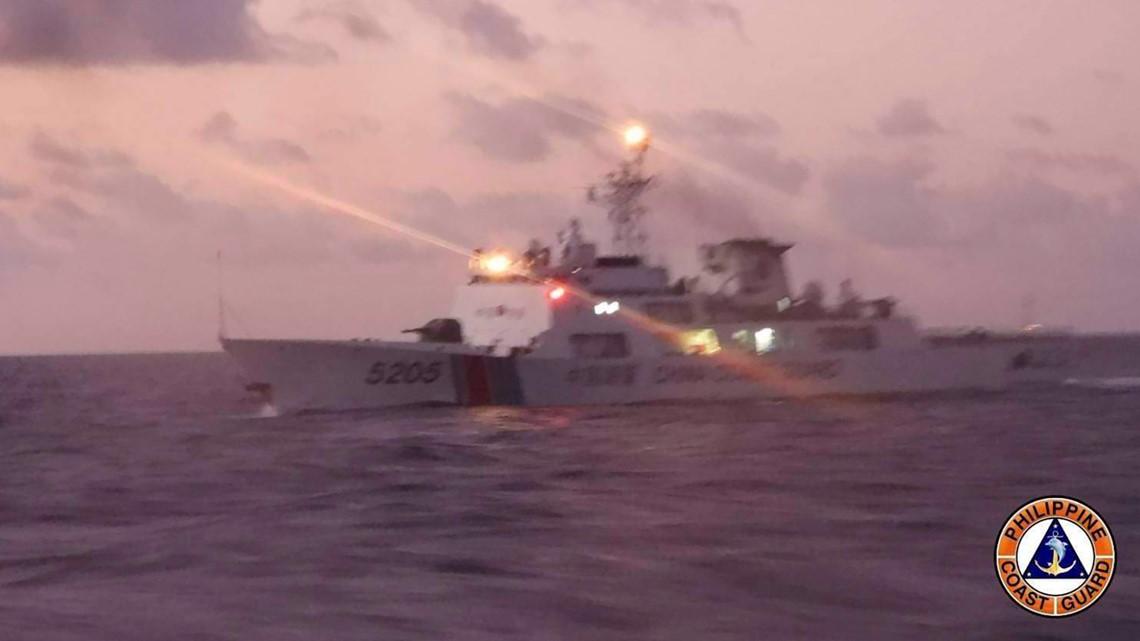
China Coast Guard cutter 5205 was the same ship that used a laser against the Philippine Coast Guard in February 2023.

I would also note that while the Chinese cutter involved has both a 76mm gun and 30mm auto cannon, the 97-meter (317′) Japanese built Philippine cutter is armed with nothing larger than .50 caliber machine guns, so the China Coast Guard cutter could be confident, the Philippine cutter would not respond to the attack with gun fire.

The Philippine Cutter may have been marginally faster than the Chinese cutter, but she may have also been boxed in by other Chinese vessels on scene.