“May 2, 2024 Joint Program Office uses the MQ-9 aircraft to save four souls off the coast of Texas” –MyCG

An MQ-9 Sea Guardian unmanned maritime surveillance aircraft system flies over the Pacific Ocean during U.S. Pacific Fleet’s Unmanned Systems Integrated Battle Problem (UxS IBP) 21, April 21. UxS IBP 21 integrates manned and unmanned capabilities into challenging operational scenarios to generate warfighting advantages. US Navy Photo

Below are two a news releases about a SAR mission, here and here. This is significant in that it demonstrates some of the potential of land based medium altitude long endurance uncrewed air systems. Unfortunately, it seems the Coast Guard has not yet chosen to invest in this technology. We continue to ride the coat tails of Customs and Border Protection. Meanwhile the capabilities of the systems continue to improve with the latest generation, like the one pictured above, incorporating sense and avoid systems that allow them to operate in the National Airspace.

It is time for the Coast Guard to ask for land based long endurance UAS of their own. If they operate in cooperation with Customs and Border Protection, that would not necessarily be a bad thing, but the Coast Guard needs to fund their own so that the Coast Guard can prioritize their employment.


May 2, 2024

Joint Program Office uses the MQ-9 aircraft to save four souls off the coast of Texas

By Jason Allred MyCG Web Editor

Military units are intended for collaboration. The concept is also true for various branches of federal services. Customs & Border Protection (CBP) and the U.S. Coast Guard (USCG) are two partners who mutually benefit from collaboration. Specifically, at the Joint Program Office in San Angelo, Texas, where USCG and CBP MQ-9 pilots, sensor operators, and radar operators support various functions within the maritime and land border domains.

On Friday, Nov. 17, 2023, the Joint Program Office received a call from Sector Corpus Christi to help support a SAR mission to find an overdue vessel with four souls aboard. Sector Corpus Christi called in support from the Joint Program Office in San Angelo following an uneventful search of the area by Coast Guard helicopters, aircraft and vessels. Lt. Cmdr. Luke Grant, an MQ-9 Pilot attached to the Joint Program Office, explained how the call to support the SAR case came in. “We’ve been working with Sector Corpus Christi on how they could use us and activate us in case they need us. It just happened that later that week they had a report of an overdue vessel. We already had a plane that was getting ready to launch, so we changed their mission set to go to that area and search for the overdue boaters.”

Historically, the Coast Guard has supported similar missions with helicopter and aircraft crews as well as various maritime assets to locate missing vessels. However, with recent capability advancements the Coast Guard is leveraging new ways to support legacy missions. With flight times of up to 24 hours, CBP’s MQ-9 offers a wide array of advantages over traditional manned assets. Lt. Cmdr. Grant says the platform has worked well in his experience. “It’s pretty good at finding the type of targets that we’re typically looking for in the Coast Guard. We’ve had good luck with finding go fast vessels.”

An additional advantage was Sector Corpus Christi’s ability to view the video feed from the MQ-9 during the SAR case. “They were pretty excited about being able to see what we were seeing and that definitely helps us reduce the number of communications with sector because they see exactly what’s happening.”

The impact the Joint Programs Office can make is literally the difference between a family member making it home or not. Petty Officer 1st Class David Garman, an avionics electrical technician (AET), explained his perspective after supporting this case. “I’m trained to operate this radar and assist in getting the vessel the assistance it required. It wasn’t until later when driving home at the end of the workday where I was like, I helped save lives today, I assisted in what I joined the Coast Guard to do 15 years ago. So, while it’s not the same as physically pulling them from a bad situation at night in a helicopter hovering 35-feet above the water, I was still elated and proud of the job the crew and I did to get them home safe.”

Lt. Cmdr. Grant was also pleased he was able to help bring a citizen to safety. “I know how important it is to people to get their family members back home, so there’s definitely a lot of job satisfaction when we can do a case like this and bring people back home.”

The mission and responsibility at the Joint Program Office at San Angelo is growing and the team couldn’t be more excited to share the possibility to recruit other aviators to their small community. Garman had a glowing review when asked about his current assignment. “This mission, skillset, and future opportunities available as an MQ-9 operator are well worth the time. Our mission is different than what most fellow AET’s experience in their time at normal Coast Guard air stations.”

For more information on the rescue or to watch the feed from the MQ-9 read here.
Resources:

Recommended Reading from Coast Guard News

USCGC James. USCG photo.

Of course, United States Coast Guard News is on my list of recommended blogs. I frequently publish their news releases, but they seem to have been particularly busy lately. Lots of good stuff here that is out of the ordinary.

Graphene-based Propeller Coatings Reduce Fuel Consumption

Photo: Pacific Basin Shipping

Marine Log reports,

“One of the world’s largest bulker operators, Hong Kong headquartered Pacific Basin Shipping Limited, is to apply a sustainable graphene-based propeller coating, XGIT-PROP, across its entire (40 ship–Chuck) fleet…In a fuel efficiency study conducted by Stolt Tankers in 2022, it was demonstrated that XGIT-PROP has the potential to reduce fuel consumption by up to 4%.”

Might be worth a look. Could extend range and would also probably be quieter.

This makes me wonder if we are tapping into the knowledge base of our Marine Inspectors to ask what innovations they are seeing on the commercial side that might be applicable to our cutters.

“Long-standing shiprider agreements boost Free and Open Indo-Pacific, protect EEZs” –Indo-Pacific Defense Forum

U.S. Coast Guard Cutter Harriet Lane returns to home port after 79-day patrol, April 9, 2024. (U.S. Coast Guard photo by Senior Chief Petty Officer Charly Tautfest)

The Indo-Pacific Defense Forum, the on-line magazine of US Indo-Pacific Command, provides a review of the history and current status of the shiprider program that is part of the U.S. Indo-Pacific Command’s Theater Security Cooperation initiative, which seeks to enhance regional stability and security.

The Cook Islands and the U.S. established the first shiprider effort in the Indo-Pacific in 2008. The U.S. Coast Guard now has bilateral fisheries law enforcement agreements with 12 Indo-Pacific nations. The pacts enable each nation’s military and/or maritime law enforcement officers to ride aboard the other’s vessels and enforce laws within their respective waters, including exclusive economic zones (EEZ). They are permitted to stop, inspect and detain vessels suspected of illicit maritime activity, particularly illegal, unreported and unregulated fishing.

This seems to be in response to recent Chinese push back. Both China and the US may be looking toward the possibility of such an agreement being made between the US and the Philippines or Viet Nam. The piece concludes,

“The PRC is increasingly concerned the shiprider program will extend to the Philippines or Vietnam, which are among the nations that reject the PRC’s arbitrary and expansive territorial claims in the South China Sea…”

Such an Agreement might see a US Coast Guard cutter with Philippine shipriders attempting to board and possibly detain Chinese fishing vessels in the Philippines’ Exclusive Economic Zone within the South China Sea in areas also claimed by China.

“Coast Guard ready to bolster homeland defense role in Arctic” –The Watch

Below is a report from the USNORTHCOM website “The Watch.” I have reproduced the text in full. I don’t think they will mind.

If “…eight to nine icebreakers is what we think we need to build,” then we really need to publish the new Fleet Mix Study to build a consensus.

Perhaps the new icebreakers should be armed, at least for self-defense, as the important naval auxiliaries that they are.

Related: “Embracing opportunities for resilient logistical infrastructure in the Arctic” –The Watch


THE WATCH STAFF, April 24, 2024

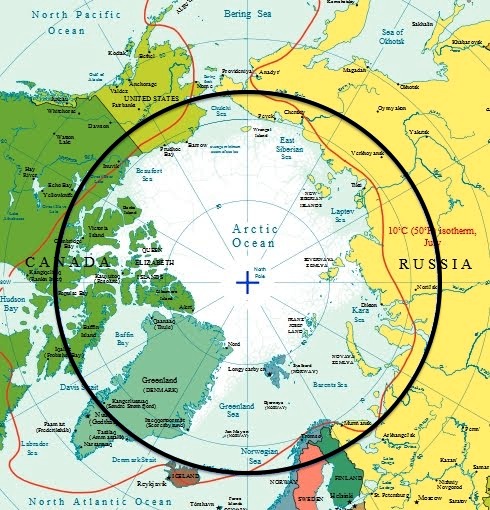
A U.S. Coast Guard vice admiral said his branch’s long history in the Arctic is entering a new phase as a changing climate and emerging threats have increased the emphasis on polar security in the region. Vice Adm. Peter W. Gautier, the Coast Guard’s deputy commandant for operations, is responsible for the development of operational strategy, policy, guidance and resources that address national priorities. He spoke March 5, 2024, at an event titled “Understanding U.S. Armed Forces Operating Capabilities in the Arctic,” an online and in-person event hosted by Rand Corp., a U.S. public policy research organization.

Gautier noted that the Coast Guard has been present in the Arctic since the U.S. acquired Alaska from Russia in 1867. Its traditional role of conducting search and rescue operations and scientific voyages in the region has broadened into maintaining a strong U.S presence in the Arctic and collaborating with allies and partner nations.

At its height during the Cold War, the Coast Guard had eight or nine icebreakers, Gautier said. Currently, it has two, with one assigned to Antarctica. The U.S. Coast Guard Cutter Healy, based in Seattle, is a medium icebreaker and is the only vessel that has made recent Arctic voyages. But up to six new icebreakers — three heavy and three medium — have been authorized. When those come online, Gautier said, the U.S. will be able to support the international rules-based order more efficiently as icebreakers will allow for more navigation in the region. “It will give us an enduring capability to have presence in the U.S. Arctic up around Alaska and to the north, and then to the Arctic in and around Greenland and Canada to the eastern side. … So eight to nine icebreakers is what we think we need to build,” Gautier said.

Recent international tensions, including the 2022 Russian invasion of Ukraine, have changed the risk calculus in the Arctic, Gautier said, but the Coast Guard has already adapted. Gautier spoke glowingly about Starlink satellite technology that has given the branch high-quality communications in the Arctic for the first time. And the service is undertaking a major infrastructure effort in Kodiak, Alaska, and Seattle to prepare for a larger Arctic presence, he said. “We’re building out Kodiak, Alaska, in terms of the air station there, in terms of home-porting offshore patrol cutters. They’re fast-response cutters,” he said. The service is also “building out Seattle as the preeminent home port for our polar fleet, so that costs a lot of money. And that also requires a mindset to enduring sustainment: everything like childcare centers to making sure we have housing in these locations to the ability to maintain the piers and infrastructure to keep our fleet actually operational,” Gautier said.

Gautier welcomed private investment, especially in ports, as critical for the Coast Guard completing its Arctic mission. He spoke positively of a possible deep-water port being built in Nome, Alaska, as a potential benefit for defending the U.S. homeland.

A November 2023 Rand report on U.S. military capabilities in the Arctic recommended a deep-water port at Nome. “This will emplace a more capable key maritime logistics node in the U.S. Arctic, more than 700 miles north of the one at Dutch Harbor in southern Alaska. The vast distances in the Arctic make it difficult to respond within a few days in many locations without port infrastructure to host ships and support operations,” stated the report, which was commissioned by the U.S. government.

The report said the most urgent needs for the U.S. Armed Forces in the Arctic are infrastructure, assets, domain awareness and communications, and enough Soldiers trained to operate in the harsh weather. “The Arctic has its unique challenges and is growing in strategic importance,” Gautier said.

New Engine for the H-60?

Defense News has a new report, “US Army’s next-gen helicopter engine could fly in Black Hawk next year.

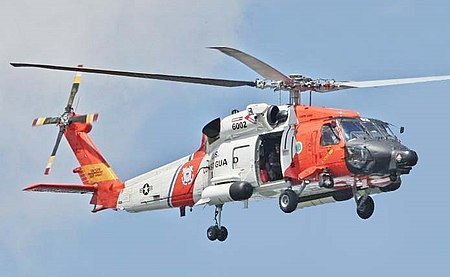
As we know, the Black Hawk is an H-60, and the Coast Guard will continue to have H-60s for a very long time. That means a new engine with improved performance and greater reliability is good news.

The T901 engine will replace the 1970s-era T700 and provide aircraft with a 50% power increase to restore performance. It’s 25% improved fuel consumption reduces energy usage and carbon emissions. The engine is also expected to have more durable components, which will lower life-cycle costs.

25% improved fuel consumption could mean another couple of hundred miles of range or another hour on station. It would also mean lower fuel costs. It might also mean the ability to maintain max speed rather than having to use a more economical cruise speed. Not that we are likely to see it soon, but the potential is there.

Remembering DC3 Bruckenthal, “USS Firebolt Heroes Remembered, 20 Years On”

240424-A-RM303-1053 MANAMA, Bahrain (April 24, 2024) Vice Adm. George Wikoff, commander of U.S. Naval Forces Central Command, U.S. 5th Fleet and Combined Maritime Forces, speaks during the USS Firebolt (PC10) memorial ceremony onboard Naval Support Activity Bahrain, April 24. The ceremony honors the three crew members who died while conducting maritime security operations in the Arabian Gulf on April 24, 2004. Firebolt, a Cyclone-class patrol coastal boat, which was decommissioned in February 2022, was forward deployed to Bahrain. (Official U.S. Army photo)

Below is a news release by U.S. Naval Forces Central Command Public Affairs. Hard to believe it’s been 20 years. Notice the podium the Admiral Wikoff is standing behind bears the crest of Coast Guard PATFORSWA.

The Coast Guard has honored DC3 Bruckenthal in its own way.

The crew of the Coast Guard Cutter Bruckenthal participates in a fueling exercise with the Coast Guard Cutter Campbell on the Chesapeake Bay, April 11, 2020. The Coast Guard acquired the first Sentinel Class cutter in 2012, with the namesake of each cutter being one of the service’s many enlisted heroes. (U.S. Coast Guard photo by Petty Officer 3rd Class Isaac Cross)


USS Firebolt Heroes Remembered, 20 Years On

MANAMA, Bahrain — U.S. Naval Forces Central Command Public Affair

Sailors, Coast Guardsmen, and others gathered at Naval Support Activity Bahrain April 24 to observe the 20th anniversary of the lives lost when three USS Firebolt crewmembers thwarted an attack on critical Iraqi oil platforms during Operation Iraqi Freedom.

The ceremony honors the lives of U.S. Navy Sailors Boatswain’s Mate 1st Class Michael J. Pernaselli and Signalman 2nd Class Christopher E. Watts, and U.S. Coast Guard Damage Controlman 3rd Class Nathan B. Bruckenthal, who died while conducting maritime security operations in the Arabian Gulf on April 24, 2004. The three were stationed aboard the Cyclone-class patrol coastal boat USS Firebolt (PC 10).

The three were killed while intercepting a suspicious dhow headed for the Khawr Al Amaya Oil Terminal in the Northern Arabian Gulf. As their rigid-hull inflatable boat neared the dhow, the vessel exploded in an apparent suicide attack. This action prevented the dhow from hitting its intended target, but caused the RHIB to capsize, leading to the three service members losing their lives in the process.

“Their heroism in the waters of the North Arabian Gulf 20 years ago today inspires us still,” said Vice Adm. George Wikoff, commander of U.S. 5th Fleet, who spoke at the ceremony. “Even as we speak, Sailors not unlike these three young men are facing down anti-ship ballistic missiles and one-way attack drones in the Red Sea. Like these heroes from Firebolt, they sail unflinchingly into harm’s way, understanding theirs is no ‘routine mission.’”

Wikoff also noted that today, Sailors and Coastguardsmen in the Arabian Gulf and the Northern Arabian Sea provide assistance to mariners when needed, and board suspect vessels to ensure regional maritime security, interdicting illicit drug trafficking, and seizing weapons intended for malign actors.

“They, too, know it’s no ‘routine mission,’” he said.

The ceremony also included recapping the lives and accomplishments of the three service members as well as the playing of Taps and tolling a bell 11 times, symbolic of church bells which rang on the eleventh hour on the eleventh day of the eleventh month in 1918 to signal the end of the First World War.

Firebolt, which was decommissioned in February 2022, was commissioned in June 1995. It began conducting coastal patrol operations in the U.S. 5th Fleet in 2003. Prior to operating from Bahrain, the ship helped secure New York City’s harbor immediately following the September 11th terrorist attacks. Months later, Firebolt conducted coastal patrols in the Arabian Gulf during Operation Iraqi Freedom.

U.S. 5th Fleet area of operations encompasses about 2.5 million square miles of water area and includes the Arabian Gulf, Gulf of Oman, Red Sea and parts of the Indian Ocean. The expanse comprises of 20 countries and includes three critical choke points at the Strait of Hormuz, the Suez Canal and the Strait of Bab al Mandeb at the southern tip of Yemen.

“Coast Guard MH-65 Dolphin helicopters retired after 36 years of service in Alaska” –News Release


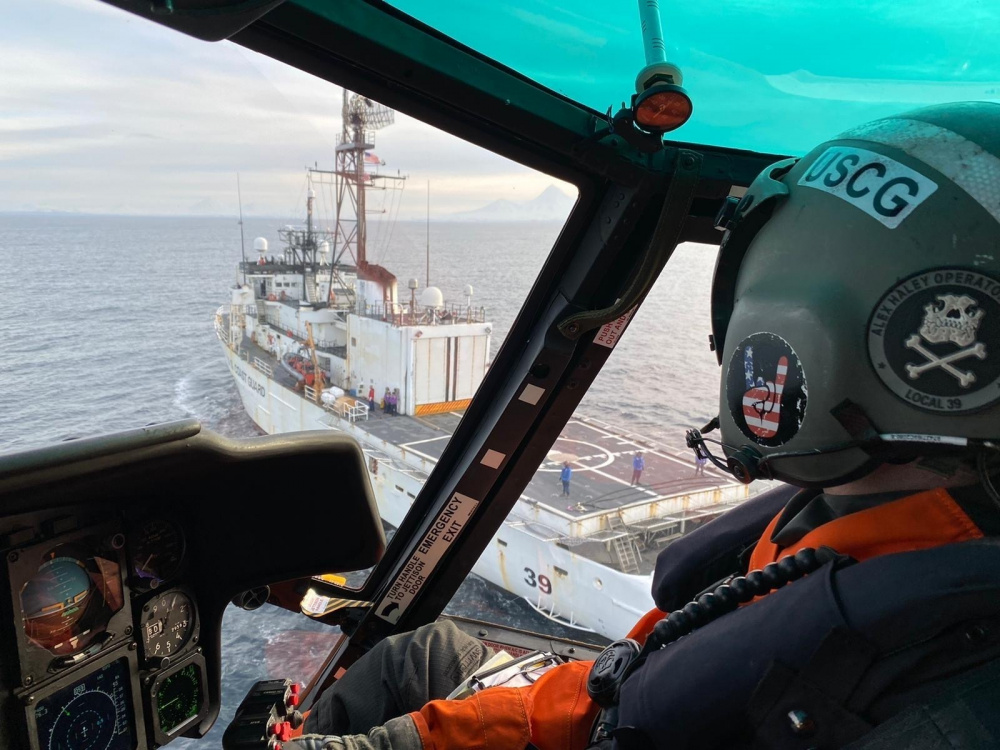
An MH-65 Dolphin helicopter crew based out of Air Station Kodiak and
deployed aboard Cutter Alex Haley, prepares for a helicopter in-flight refueling at sea evolution with the cutter crew during a search and rescue case near Dutch Harbor, Alaska, Wednesday, Dec. 30, 2020. The crew hoisted an injured fisherman from the vessel Magnus Martens and placed him in the care of awaiting Guardian Flight Alaska personnel for further transport to Anchorage. (U.S. Coast Guard photo by Lt. Benjamin DeGroot)

Below is a District 17 news release. This marks an important step in the move to an all H-60 rotary wing fleet and it also means that ships on ALPAT will be moving to operating MH-60s rather than H-65s.

I have to wonder, since recently upgraded MH-65Es will be with us for a very long time, if perhaps we might be able to open a new Coast Guard air station in Guam or the Northern Marianas (probably Tinian where the USAF is refurbishing an air base) and perhaps in American Samoa using H-65s. (I notice, when USCGC Harriet Lane recently deployed to the Western Pacific, she apparently did so without a helicopter, which would have made the ship more effective.) Certainly, the people of these American territories would welcome the additional SAR resources. That additional Western Pacific air stations might also, at least temporarily, operate Coast Guard fixed wing aircraft would also help to counter Illegal, Unreported, Unregulated (IUU) fishing.


 April 24, 2024

KODIAK, Alaska – The Coast Guard retired the Air Station Kodiak MH-65 Dolphin helicopter fleet during a ceremony, Tuesday.

Capt. Timothy Williams, commanding officer of Air Station Kodiak, presided over the ceremony honoring the 36 years of service the MH-65 Dolphin airframe and its crews provided to the Arctic region.

Air Station Kodiak currently has a rotary-wing fleet of six MH-60 Jayhawk helicopters. The unit will shift to a rotary-wing ship-and-shore based fleet of nine MH-60 Jayhawks in 2025.

Air Station Kodiak will be the fourth Coast Guard Air Station to transition to a single rotary wing fleet of MH-60 Jayhawk helicopters. Air Stations Borinquen, Traverse City, and New Orleans all recently completed similar transitions.

“For decades, the cutter and helicopter team were the core of the ALPAT mission,” said Cmdr. James Kenshalo, MH-65 Dolphin pilot. “Together they projected force and protection to the most extreme remote regions of our nation’s territories, operating beyond where help could reach. Countless lives have been saved because of these dedicated crews.”

Commissioned in January of 1988, the Alaksa Patrol (ALPAT) mission executed solely by MH-65 Dolphin aircrews provided Coast Guard Cutters with a reliable airborne asset during Alaska Patrols.

To read more about the Coast Guard MH-65 Dolphin and MH-60 Jayhawk helicopters click the following links:

SRR – MH-65 (uscg.mil)

MH-60T Service Life Extension Program (uscg.mil)

“US Coast Guard Cutter Dauntless returns home to Florida after 61-day Operation Vigilant Sentry patrol” –News Release

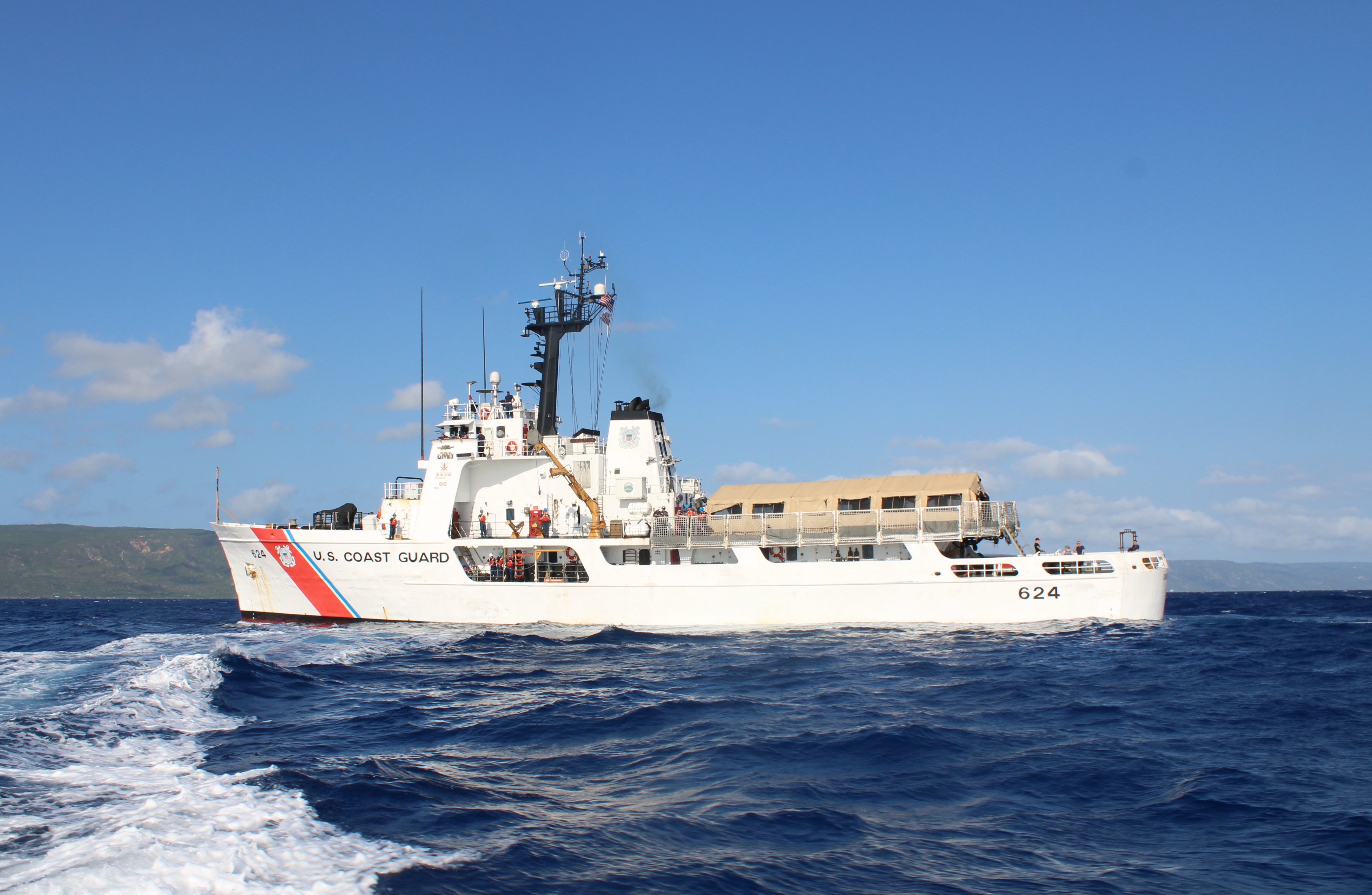
U.S. Coast Guard Cutter Dauntless (WMEC 624) and crew patrol, March 4, 2024, off the coast of Haiti. Dauntless deployed for two months to support Operation Vigilant Sentry while conducting maritime safety and security missions. (U.S. Coast Guard photo by Lt.j.g. Olivia Gonzalez) Note the shelter on the flight deck.

Below is a news release from Coast Guard News. Dauntless’s migrant interdiction patrol was fairly typical, but I wanted to call attention to the shelter, visible on her flight deck, in the photo above. Sheltering large numbers of migrants, 65 in this case, is always a challenge, and this is the first time I have seen this solution.

Of course, this shelter would preclude helicopter operations, but these operations are conducted in areas where fixed wing support is readily available.


 April 24, 2024

US Coast Guard Cutter Dauntless returns home to Florida after 61-day Operation Vigilant Sentry patrol

PENSACOLA, Fla. —  The crew of U.S. Coast Guard Cutter Dauntless (WMEC 624) returned to their home port in Pensacola, Wednesday, following a 61-day patrol in the Windward Passage and Florida Straits. While underway, crew members conducted maritime safety and security missions to protect life at sea and deter illegal migrant voyages bound for the United States.

Dauntless deployed in support of Homeland Security Task Force – Southeast (HSTF-SE) and Operation Vigilant Sentry (OVS) while patrolling in the Coast Guard Seventh District’s area of responsibility. While underway, Dauntless worked alongside other Coast Guard assets and units to dissuade unsafe maritime migration and enforce U.S. law on the high seas.

During the patrol, a good Samaritan on a sailboat reported a disabled vessel using VHF-FM channel 16. Dauntless’ crew received notification and conducted a search and rescue mission over several hours on a moonless night while searching for the unlit boat. Eventually, the crew located the overloaded and disabled sail freighter with 65 Haitian migrants aboard, including several children. All 65 migrants were safely evacuated and transferred aboard Dauntless, where they received food, water and basic medical care. Dauntless worked with multiple surface and air assets to successfully carryout the search, rescue and repatriation of the migrants.

Migrants attempting to reach the United States through nonlegal channels, or who land on U.S. shores without authorization, are subject to removal and repatriation to their country of origin or departure. Consistent with U.S. policy, those who bypass or attempt to circumvent lawful immigration pathways face consequences including the potential of being barred from future lawful entry in addition to risking their lives unnecessarily.

“This case was a prime example of the humanitarian lifesaving mission we remain always ready for,” said Cmdr. Aaron Kowalczk, commanding officer of Dauntless. “The crew’s ability to find the vessel and then safely complete the rescue in the dark of night is just another example of the utmost professionalism and skill they show every day and is indicative of 56 years of exemplary service by cutter Dauntless and her crews.”

Established in 2003, HSTF-SE is the Department of Homeland Security-led interagency task force charged with directing operational and tactical planning, command and control, and functions as a standing organization to deter, mitigate, and respond to maritime mass migration in the Caribbean Sea and Florida Straits.

OVS is the 2004 DHS plan that provides the structure for deploying joint air and surface assets and personnel to respond to irregular maritime migration in the Caribbean corridor of the United States. Its primary objectives are to protect life at sea while deterring and dissuading mass maritime migration alongside our federal, state, and local partners.

Dauntless is a 210-foot, Reliance-class medium endurance cutter originally built in 1967 and commissioned in 1968. The cutter’s primary missions are counter narcotics operations, migrant interdiction, living marine resources protection, and search and rescue in support of U.S. Coast Guard operations throughout the Western Hemisphere.

For information on how to join the U.S. Coast Guard, visit GoCoastGuard.com to learn about active duty, reserve, officer and enlisted opportunities. Information on how to apply to the U.S. Coast Guard Academy can be found here.

For more, follow us on Facebook, Instagram and Twitter.

Status: Island Class WPB 110 Foot Cutters / USCGC Orcas Decommissioned

Coos Bay, OR–The Coast Guard Cutter Orcas (WPB 1327) on patrol. U.S. COAST GUARD PHOTO

Below is a news release reporting the decommissioning of USCGC Orcas. That caused me to wonder, how many WPB110s are left? The Acquisitions Directorate poster on their web page, dated June 2023, showed nine out of the original 49 still in commission.

I attempted to determine which are still in commission and which have been decommissioned, noting the results of the research below. I just searched the ship name on my browser and then clicked on the result that came up for vesselfinder.com. Their reports are based on Automatic Identification System (AIS) data.

  • Mustang (WPB-1310) Seward, AK
  • Naushon (WPB-1311) decommissioned, last reported in Curtis Bay 443 days ago.
  • Sanibel (WPB-1312) decommissioned, last reported in Curtis Bay 318 days ago.
  • Key Largo (WPB-1324) decommissioned, last report 1334 days ago.
  • Orcas (WPB-1327) decommissioned, April 23, 2024
  • Sitkanak Island (WPB-1329) decommissioned, last reported in Curtis Bay 331 days ago.
  • Tybee (WPB-1330) decommissioned, last reported in Curtis Bay, 2023-03-25
  • Liberty (WPB-1334) Valdez, AK
  • Anacapa (WPB-1335) Port Angles, WA

The Webber Class Fast Response Cutters (FRCs) are nominally a direct replacement for these. The Coast Guard has already accepted 56 FRCs with Bollinger typically delivering four or five a year, so its only surprising that any of the 110s are still in commission. That seems to be because District 13 (Oregon and Washington) and District 17 (Alaska) have not gotten their full allowance of FRCs yet.

The next three FRCs are expected to go to D13 (1) and D17 (2) so all the Island class may be decommissioned by the end of the calendar year.


April 23, 2024

Coast Guard Cutter Orcas decommissioned after 35 years of service in Coos Bay, Oregon

COOS BAY, Ore. – The Coast Guard decommissioned the U.S. Coast Guard Cutter Orcas (WPB1327) during a ceremony, Tuesday.

Rear Adm. Charles Fosse, the commander of the Thirteenth Coast Guard District, presided over the ceremony honoring the 35 years of service Orcas and its crews provided to the nation.

Commissioned on April 14, 1989, Orcas was the twenty-seventh Island-Class cutter to join the fleet.

Orcas has been stationed in Coos Bay, Oregon, since 1989 and is the sixth Coast Guard cutter to be stationed in Coos Bay since 1935.

The Orcas was a multi-mission platform that conducted operations to support search and rescue response, marine environmental protection, and national defense.

“From training allied nation maritime forces, conducting the largest-ever cocaine seizure in the history of the Pacific Northwest, and saving countless lives and hundreds of millions of dollars’ worth of property on the Pacific Ocean – Orcas has done it all,” said Lt. Brendan O’Farrell, the commanding officer of the Orcas. “This ship, one of the last of its kind, is an old American-made workhorse built to endure the harsh Pacific waves. I’m extremely proud and blessed to have served with the finest crew in the fleet.”