It is a small step, but NavyRecognition is reporting that the Coast Guard has contracted with Insitu to provide one Bertholf class National Security Cutter with Scan Eagle UAS.
The Coast Guard procured the necessary services through a pre-existing multiple award contract executed by Naval Air Systems Command. The initial $4.5-million task order includes operation, integration, maintenance and sparing of a contractor-owned sUAS on one NSC for one year. The task order has a total potential value of $12.3 million that includes options for deployment of and data from prototype sUAS capability for up to three additional years beyond the base year. The Coast Guard will have full ownership of the surveillance data obtained.
This is a system suggested here five years ago. Additional details on the system were included in my earlier post. There are also comments regarding our experience with the system in the intervening years.
110225-N-RC734-011 PACIFIC OCEAN (Feb. 25, 2011) Guy Mcallister, from Insitu Group, performs maintenance on the Scan Eagle unmanned aerial vehicle (UAV) aboard the amphibious dock landing ship USS Comstock (LSD 45). Scan Eagle is a runway independent, long-endurance, UAV system designed to provide multiple surveillance, reconnaissance data, and battlefield damage assessment missions. Comstock is part of the Boxer Amphibious Ready Group, which is underway in the U.S. 7th Fleet area of responsibility during a western Pacific deployment. (U.S. Navy photo by Mass Communication Specialist 2nd Class Joseph M. Buliavac/Released)
This is an expanded version of an earlier piece that was posted here. I rewrote it for the CIMSEC blog in hopes it would find a larger audience. Hopefully it is a clearer than the original.
The Coast Guard has a problem. It is not currently equipped to perform one of its missions, and it appears no other agency is prepared to cover the deficiency. The Long Range Anti-Ship Missile (LRASM) may be a possible solution.
“The PWCS mission entails the protection of the U.S. Maritime Domain and the U.S. Marine Transportation System (MTS)…prevention and disruption of terrorist attacks… Conducting PWCS deters terrorists from using or exploiting the MTS as a means for attacks on U.S. territory, population centers, vessels, critical infrastructure, and key resources.”
The Shortfall
Implicit in this mission is that the service should have the capability to forcibly stop a non-compliant ship, any ship, of any size. If a crew is motivated by simple greed, a .50 caliber machine gun is probably enough to convince them to take their chances in court rather than resist, but if the crew is motivated by a fanatical, or even suicidal belief in a cause, they become much harder to stop.
Terrorist targets are limited only by their imagination. They might include something like the Mumbai attack, an assault on a bridge, an LNG tanker or facility, a nuclear power plant, a passenger ship, an SSBN departing on patrol, or they might use a vessel to bring in a nuclear weapon.
The Coast Guard is an armed force at all times, but it is certainly not heavily armed. In fact, in terms of stopping a recalcitrant merchant ship, the Coast Guard seems relatively less capable now than they were eighty years ago.
This is because of the rapid growth in the size of merchant ships. Even the largest cutters with their 57 mm and 76 mm guns are far less capable of stopping today’s over 100,000 ton merchant vessels than the cutters of the 1930s, with their 5″ guns were against ships that were typically well under 10,000 tons.
Worse yet, the units that would actually be on scene to attempt to stop and board a ship suspected of being under the control of terrorists is unlikely to include any of the larger cutters because they seldom remain near harbor entrance. Rather, they are frequently sent well off shore.
The Coast Guard simply does not have the capability to deal with a terrorist attack using a medium to large sized merchant ship, and it currently appears that there is no other organization capable of answering this threat in the 30 or more port complexes terrorists might find worthwhile targets.
Our Friends
Navy surface forces, in U.S. waters, are too geographically concentrated. Navy ships tend to be either in homeport, working up in specific geographic areas, deployed, or in transit to deploy. There are no Navy surface warships homeported in the Gulf of Mexico, on the East Coast north of the New Port News/Norfolk complex, in Alaska, or on the West coast between San Diego and Puget Sound with weapons equal to or better than those on cutters. For many ports, the nearest Navy surface vessel is hundreds of miles away.
Air Force, Navy, Marine, and Army Air are not on standby around the U.S. armed with anti-ship weapons. Of the Air Force, only some strategic aircraft are training for the anti-shipping mission. Fighters and attack aircraft do not. The author suspects the U.S. would not get a timely response from the Air Force to a no notice requirement to stop a maritime target. Units that are not trained for an anti-shipping role cannot be easily pressed into that mission.
A Possible Solution
LRASM, with an over 200 nautical mile range and the ability to strike selected locations on a target ship, could possibly provide an answer. If the U.S. fielded LRASM on all nine National Security Cutters (NSC) and 25 Offshore Patrol Cutters (OPC) currently planned, its over 200 mile range could cover virtually all of these ports, and likely have a weapon on target within 20 minutes of launch.
When the maritime domain awareness system detects the approach of a suspicious vessel, a small patrol vessel (WPB or WPC) is assigned to intercept it and conduct a boarding to determine the vessel’s nature and intent.
When the patrol vessel is assigned the intercept, a larger cutter that may be at some distance, but within range, would be directed to provide support in the form of a LRASM launch if necessary.
The patrol craft will transmit video, position, course, and speed during its approach which will allow the start of mission planning for an LRASM launch should it become necessary. The results of the patrol craft’s attempt to board will allow determination of hostile intent.
Once a determination of hostile intent has been made, and deadly force authorized, the supporting cutter can launch its weapon. The patrol craft will continually update the supporting cutter before and during the flight of the LRASM. Navy, Joint, and/or Allied procedures would be used to call for a strike, and should also work with other service’s assets if they are available.
It is likely cutters could be equipped to carry eight missiles, but for peacetime purposes, two per ship would almost certainly meet the Coast Guard’s needs. Since some ships will always be in maintenance with ammunition removed, and others may be deployed where carrying the weapons would be counterproductive. The Coast Guard is unlikely to ever require more than about 50 missiles to meet its peacetime needs. A very rough estimate of LRASM unit cost would be something on the order of $2M to $5M each. That means the total cost of the missiles is likely between $100M and $250M. Adding launchers, control systems, and installations to cost would almost certainly be less than $500M. These costs would be spread over several years. This gives only an order of magnitude estimate, but it is several orders of magnitude less than the cost of other systems being deployed to protect the U.S. from attack.
Since the missiles, their launchers, and control systems are Navy type/Navy Owned equipment, the Navy would be responsible for paying for them. The cost of adding another four missiles per year for the Coast Guard to the Navy’s buy for LRASM could be lost in the rounding errors in the Navy budget.
For the Coast Guard, the program would probably require no more than 150 additional billets ashore and afloat. Not insignificant, but doable.
Conclusion
If the LRASM performs as advertised, its combination of range, warhead, and intelligent targeting may allow the Coast Guard’s small, but widely distributed force to effectively cover virtually the entire U.S. coast.
Late addition, LRASM deck mount launcher successful test.
We send our only Heavy Icebreaker almost 20,000 miles, to the end of the earth with no back-up.
Take a look at this news release regarding an upcoming award ceremony where the Commandant will recognize Petty Officer 1st Class Kevin Oakes, Petty Officer 3rd Class Augustin Foguet, and Seaman Manon Mullen.
They had to repair a thrust bearing bracket. This is a really strong fitting designed to absorb the push of 25,000 HP and it broke.
EM1 Oakes fixed a generator, apparently a main propulsion generator, that had developed a short that resulted in loss of with a surfboard repair kit.
They had ” three fires and one major lube oil leak, which can quickly ignite into fire.”
We are blessed with excellent enlisted people, who do extraordinary things, but we cannot keep doing this. It is only a matter of time until one of our two icebreakers suffers a catastrophic failure far from any assistance.
We are still close to ten years from a new heavy icebreaker, but while it will hopefully give us a more reliable replacement for the Polar Star, it will not fix the problem.
We have a acknowledged need for medium icebreakers. The Congress seems to recognize our lack of icebreakers as a problem, and there are relatively near term alternatives available in the shape of an icebreaker now excess to Shell’s requirements and another begun and well advanced in construction, which is now stopped.
We don’t hear about it often, but the Coast Guard also needs to recapitalize its inland fleet, WLI, WLIC, and WLRs. There are 35 of these. One entered service in 1944, another in 1945. The two newest entered service in 1990, but all the rest are much older. Two entered service in the ’50s. 23 in the ’60s, and six in the 70s. .
Whenever we belatedly get around to replacing these, there is an innovation we might want to look at, high-lift flap rudders. These were recently used on a Jones Act Articulated Tug Barge (ATB). Reportedly it provides much improved maneuverability.
NPR has some photos of the launching of Russia’s as yet uncompleted, 568 foot long nuclear powered icebreaker. which will be the largest and most powerful icebreaker in the world. The NPR story provided a link to a Sputniknews story.
“The Project 22220 vessel is 189.5 yards long (568.5 ft–Chuck) and 37.1 yards wide (111.3 ft). The ship displaces 33,540 metric tons.”
That is almost three times as large as the Polar Star.
A second ship of the class is also expected to be completed before 2020.
Interestingly, while Russian navy projects are frequently subject to delays, this icebreaker is being launched more than a year earlier than originally planned.
Thanks to David for bringing this to my attention.
Photo: USCGC Stratton. Image, Department of Defense ID 111031-D-0193C-002
DefenseNews has published the list of participating vessels in this year’s RIMPAC exercise. USCGC Stratton, a 418 foot Waesche class cutter will be sailing for the exercise from San Diego on June 22 in company with the US cruiser Princeton, destroyer Pinckney, littoral combat ship Coronado and the Canadian frigate Calgary.
Once again there will be a significant Chinese contingent. During the last RIMPAC, in 2014, the Coast Guard had a significant role with USCGC Waesche heading up a Maritime Interdiction exercise that included three Chinese vessels as well as five other vessels. Will be interesting to see what they have Stratton doing this year.
There is concern that the kind of people smuggling seen in the Mediterranean may soon come to the English Channel, and according to Chief Inspector of Immigration and Borders David Bolt,
“’It isn’t just a question of people-smuggling. This is also a question of firearms, a question of drugs, we have been woefully unprepared.’
According to the post,
“Many European nations have significant coast guards with dozens, or even hundreds of craft working to protect human life at sea and the integrity of borders. Britain instead has a variety of agencies including the Maritime and Coastguard Agency, which has a small number of craft, the Border agency, which presently has two of their five customs cutters deployed to the Mediterranean rather than in home waters, and charities including the Royal National Lifeboat Institution which has no border defence role.
“Of the United Kingdom’s approximately 1,000 ports and harbours, only 500 are large enough to warrant the security features such as fences and restricted areas as mandated by the International Ship and Port Facility Security code, leaving half totally open to smugglers. At many UK ports, police and border force visits can be rare.”
I have no idea how serious this problem really is, or how serious it may become, but it does remind me of one advantage of having a relatively large, agile, multi-mission force as opposed to several smaller, narrowly focused organizations. When the US is suddenly faced with a crisis, be it a humanitarian crisis like the Mariel Boat Lift, weather related like Hurricane Katrina, a man made pollution incident like the Deepwater Horizon, or a natural disaster like the Earthquake in Haiti, the Coast Guard has the organization, the authority, the resources, and the culture that allows it to refocus and respond.
UK independents (Brexit) vs the EU favorable (Remains)
The upcoming Referendum on Britain’s withdrawal from the EU has resulted in an interesting bit of theater on the water. Sound’s like the authorities have their hands full.
Fisheries is at the heart of this Brexit demonstration. Spain in particular has been fishing in what they view as their waters. For the EU it is all a common resource.
CIMSEC has a post that suggests the Coast Guard should use live streaming video of on-going boardings, as a way to keep the chain of command informed in real time.
It does seem inevitable we will be going in that direction. The hope is that it will make it possible to provide the guys on scene with greater support. My fear is that it will facilitate micro-management. There is also the possibility this could become a huge time sink for the upper echelons.
This is a DOD initiative, but it will likely effect the Coast Guard as well. According to this report from GlobalSecurity, Secretary of Defense Carter is looking to increase flexibility in the DOD’s personnel promotion and acquisition system for both military and civilians under what he calls the “Future Force Initiative.”
I would add that (based on some admittedly old observations) a lot of the federal government’s hiring problems are related to how long it takes to complete mandatory background checks. The best people will simply will not wait months for a job offer.

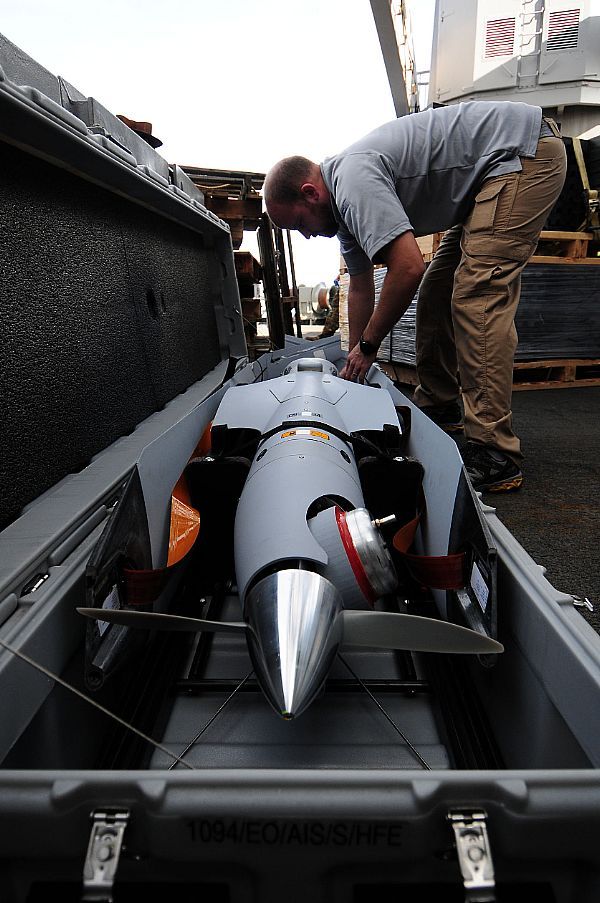





 Photo: BAE systems


 Chuck Hill's CG Blog