Ran across a site some of you might find interesting. It provides a way to find museums, light houses and tall ships throughout the US and at least in some cases in Canada. The particular page I linked also has a couple of USCGC Eagle videos and the schedule for the twelve ports the Eagle will visit in conjunction with “Operation Sail.”
Author Archives: Chuck Hill
Navy Partner being Disestablished
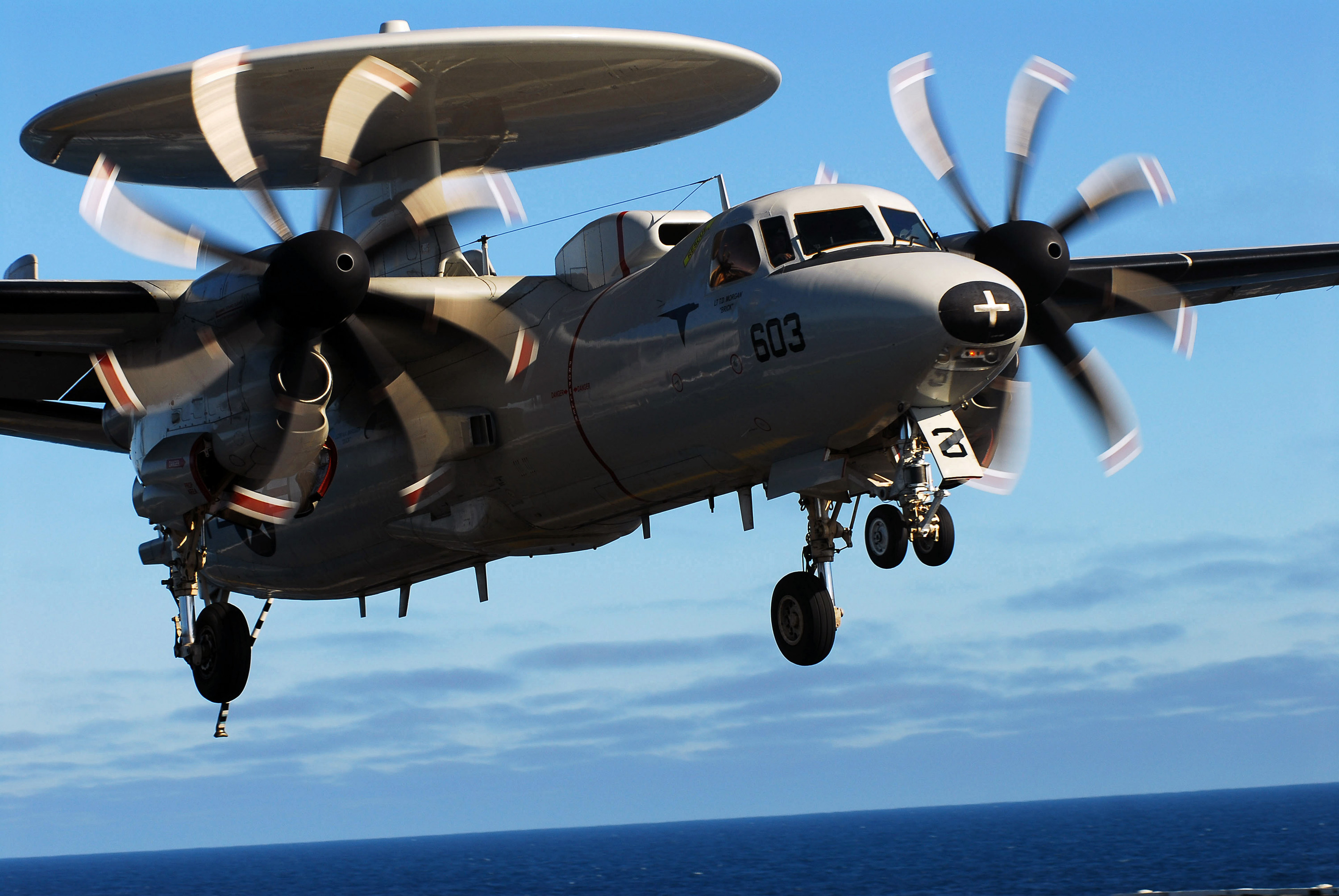
Interesting little note that proves again actions speak louder than words. An asset that supported the drug interdiction effort and helped in the Hurricane Katrina disaster relief is going away.
“…the Navy proposes to decommission a squadron at the air station in Belle Chasse, a move that would eliminate the only naval aviation unit dedicated to stemming the flow of illegal narcotics into the United States. Under the 2013 spending plan released Monday, the Navy Reserve’s Carrier Airborne Early Warning Squadron 77 would cease to exist Sept. 30…. the Navy ‘remains committed’ to countering narcotics trafficking.”
“VAW-77…played an instrumental role in the massive rescue operation following Hurricane Katrina. With their electronics and radar…the aircrews helped control airspace crowded with rescue helicopters. The squadron takes credit for rescuing 1,840 people in the New Orleans area.”
I suppose the surface surveillance capability may be replace by the BAMS program, still too frequently, it seems, a capability is removed with the promise that it will be replaced by a wonderful new system, only to see the new system become unaffordable and never come to fruition.
DoD photo by: MC3 (SW) JOHN HYDE, USN Date Shot: 13 Jul 2006
(Thanks to Lee for the info)
New Budget Cancels Plan for Last Two NSCs
U.S. Coast Guard photo ID: 100228-G-2129M-004, by Petty Officer 3rd Class Kevin Metcalf
Defensedaily.com is reporting that while the FY 2013 budget request would fund the sixth National Security Cutter, additional purchases would be delayed while the Department reevaluates its needs.
Homeland Security Secretary Janet Napolitano said yesterday that the reason for proposing a pause in the NSC program is due to budget constraints as well as examining how it fits with the Navy’s plans.
“We will look at [NSC’s] seven and eight in light of what the Navy is doing,” Napolitano told the House Appropriations Homeland Security Subcommittee during a hearing to examine her department’s budget request. “So we need to look at what the DoD is doing with respect to their own force lay down to see what we need to be putting in the acquisition pipeline.”
Presumably this ties in with the Navy’s review of their own programs.
It has been recognized for a long time that current plans would require a substantial increase in AC&I funding. The GAO has called the program of record “unachievable.”
While I certainly applaud coordination with DOD, this could mean a lot of different things.
Will the Navy try to move the Littoral Combat Ship program to the CG as replacement for the OPC?
Will the Navy try to avoid cutting their building programs further by suggesting that the CG does not need large ships for drug enforcement because they will supply platforms for CG boarding teams? or
This might not be so bad. When Under Secretary of the Navy Robert O. Work discusses American Sea Power, he almost never fails to mention the contribution of the Coast Guard. Perhaps some additional thought will go into how possible military roles should be reflected in the requirements for Offshore Patrol Cutters (OPC), Icebreakers, and other assets.
An OPC that reflects military requirements would almost certainly be larger and more capable than one designed only to meet peacetime requirements that might otherwise have been forced on the CG in an austere budget climate. Those greater capabilities probably would also make it a more capable CG asset in peacetime.
The differences might include a larger hull, more speed, better aviation facilities, and better communications and sensors, possibly including a towed array that would be useful for detecting drug subs (both true subs and self propelled semi-submersibles).
Its not clear yet, if this is a disaster or an opportunity. Perhaps a new way of justifying CG assets will come out of this, and the government will see that putting money in the CG is a sound investment.
Less Lethal Weapons on USVs
News of the melding of two emerging technologies of interest to the Coast Guard.The Navy’s US Fleet Forces command is experimenting with putting “non-lethal” weapons on unmanned surface vehicles.
“Operating in autonomous and semi-autonomous modes, the small militarized boats are equipped to employ a directional acoustic hailer, eye dazzling laser and flash-bang munitions; each non-lethal weapon was carefully-orchestrated to respond to a set of threatening behaviors from intruder vessels.”

Lessons from a fishing boat?
gCaptain is reporting the design of a new 184 foot long, long line fishing vessel, one of the largest in the world, intended for operation in Alaskan waters. It bears more than a little resemblance to a buoy tender. The thing I found interesting is that it uses diesel electric propulsion.
“In addition to the vessels impressive fishing capabilities, the Northern Leader will be designed to be fully diesel-electric with emphasis on minimal environmental impact and lightest carbon footprint. The vessel’s propulsion will be powered by two Schottel Z-Drive rudder propellers and a Schottel tunnel thruster. The diesel generating system, provided by NC Power Systems of Seattle, will consist of four Caterpillar C32 gensets rated at 715 kW each, two Caterpillar C18′s rated at 425 kW each, and one Caterpillar C9 rated at 238 kW.”
The four largest generators total 2,860 kW or 3,834 HP. Total generating capacity is 3,948 kW or 5,292 HP. If diesel electric propulsion is used for a fishing boat, it is a likely its an economically viable solution.
What Might Coast Guard Cutters do in Wartime? Part 2, Coast Guard Roles

This is the second of two parts. The first part focusing on what I believe are the current shortfalls in the US Navy force structure is here.
Since part one, additional cuts to the Navy’s plans have been announce. Attack submarines which have an important ASW role are now expected to decline from a current 55 to 40 in 2030 and all SSGNs will be removed from service. Additionally the Navy will prematurely retire seven cruisers and two amphibious warfare ships. The planned five year building program is going from 57 ships to 41.
Now we will look more closely at what Coast Guard Cutters may be called upon to do in future conflicts, what changes to our existing force might be prudent, and desirable characteristics for future cutters. Continue reading
Piracy Update, Feb. 8, 2012
British Royal Marines from Fort Victoria taking down a Pirate mother ship as reported in the last update–looks a lot like a Caribbean drug bust. Helicopter firing warning shots across the bow of a small vessel. Two RHIBs conduct an armed boarding. (I would have thought they would have wanted at least one asset keeping a lookout on the disengaged side of the vessel.)
Somalia and the Indian Ocean:
There is a good breakdown of the expenses incurred in dealing with the threat of piracy, estimated at $7B to $12B. Perhaps surprisingly, it is not the pirates who profit most from piracy, but the insurance and private security companies.
Since our last piracy update on January 13, the waters off Somalia have been relatively quiet. NATO reports only two unsuccessful attack and a hand full of possibly pirate related activity reports. The period has actually been pretty hard on the pirates.
Seals rescued an American and a European being held in Somalia, killing nine of their captors.
Potential adversaries are cooperating. Reportedly India, China, and Japan have started to coordinate their convoying efforts to allow more regular and consistent protection. (more here)
Meanwhile the Dutch have again deployed a submarine to the area as an intelligence, surveillance, and recon asset.
Actually prosecuting suspected pirates is still a challenge. gCaptain looks at the record here. More here. The Seychelles, mindful of the effect pirates have had on their economy, is accepting some of these cases, including those recently captured by the British Royal Fleet Auxiliary Fort Victoria.
We keep hearing that the solution to the piracy problem is on land. Looks like Somalia may have rich oil reserves. If that is true, there may be sufficient motivation to bring civilization to Somalia at last.
Gulf of Guinea (West Africa):
Nigeria is outsourcing at least part of its Maritime Security to private contractors. Sounds like there may be reason to question the motivation of the contract.
South East Asia:
Much more on the fresh water piracy incident that left 13 dead on the Mekong River in October.
Armed Security Teams:
Rather than allowing private security firms to protect their flag vessels, the Dutch assign teams of marines and they successfully drove off an attack, possibly with causalities among the pirates.
Canadian Icebreaker Design Contract Awarded
Tim Colton’s “Maritime Memos” reports STX Canada Marine has been awarded a $9.5M contract to design Canada’s new icebreaker and goes on to make a suggestion:
“Say, Dave, could you please design it so that it meets the US Coast Guard’s requirements as well? Then maybe Vancouver Shipyards could build four of them, one for you and three for us? Why is Canada only building one, anyway, when you obviously need at least three?”
Lots of other good stuff there as well including: new Navy AGOR, Congress on harbor maintenance, changes in the Navy’s ship building programs.
Why “I choose the gun”
There is a great 17 minute video here. Presentation the leading Dutch military officer.
C-27Js as MPA?–DOD Declares 38 New Aircraft Surplus
Recent DOD statements indicate they intended to “divest” themselves of 38 C-27J. These are all essentially new twin engine aircraft using the engines and glass cockpit of the C-130J. The USAF just released their Air Force Priorities for a New Strategy with Constrained Budgets. Among the “more than 280 aircraft have been identified in the current budget submission for elimination across all Air Force components over the next five years” are 21 C‐27s. (I believe the remaining 17 aircraft are owned by the Army.)
If the Coast Guard could “missionize” these aircraft as they are doing the HC-144A and use them as Maritime Patrol Aircraft (MPA) instead of buying more HC-144As, the service might save close to a billion dollars and get an aircraft that is more capable in almost every respect, and have them sooner. My understanding is that the Coast Guard originally wanted the CASA C-295 which is very close in specification to the C-27J. In many respects, its capabilities approach those of the C-130H. I think it might be worth a look.
The total “revised baseline” for the MPA program is $2.4B for 36 aircraft. The Coast Guard has accepted or contracted for 15 HC-144s. The fifteenth HC-144A cost $41M. If we assume the CG obtains 21 C-27Js instead of 21 HC-144As and assuming a savings of $40M each, that would be $840M. Enough to buy a new polar icebreaker, or two or three ice strengthened cutters, or perhaps three or four OPCs.
This was originally an Army program, handed over to the Air Force. These aircraft were purchased for infra-theater supply using airfields that were too small for the C-130. That need never really surfaced, C-130s, that they had in abundance, could perform all the supply missions and was more efficient in the cargo transport role. The first C-27J was delivered in 2008. Most were delivered in the last two years.
General characteristics
- Crew: Minimum two: pilot, co-pilot, (plus loadmaster when needed)
- Capacity: 60 troops or 46 paratroops or 36 litters with 6 medical personnel
- Payload: 11,500 kg (25,353 lb)
- Length: 22.7 m (74 ft 6 in)
- Wingspan: 28.7 m (94 ft 2 in)
- Height: 9.64 m (31 ft 8 in)
- Wing area: 82 m2 (880 sq ft)
- Empty weight: 17,000 kg (37,479 lb)
- Max takeoff weight: 30,500 kg (67,241 lb)
- Powerplant: 2 × Rolls-Royce AE2100-D2A turboprop, 3,460 kW (4,640 hp) each
- Propellers: 6-bladed Dowty Propeller 391/6-132-F/10, 4.15 m (13 ft 7 in) diameter
Performance
- Maximum speed: 602 km/h (374 mph; 325 kn)
- Cruising speed: 583 km/h (362 mph; 315 kn)
- Minimum control speed: 194 km/h; 121 mph (105 kn)
- Range: 1,852 km (1,151 mi; 1,000 nmi) with 10,000 kilograms (22,000 lb) payload
- Range at 6,000 kg payload: 4,260 km (2,650 mi; 2,300 nmi)
- Ferry range: 5,926 km (3,682 mi; 3,200 nmi)
- Service ceiling: 9,144 m (30,000 ft)
Here are the characteristics of the HC-144A for comparison.
- Airframe Manufacturer: EADS/CASA, Spain
- Wing Span: 84ft. 8in.
- Wing Area: 636sq.ft.
- Height: 26ft. 10in.
- Length: 70ft. 3in.
- Max Gross Weight: 36,380 lbs
- Empty Weight: 21,605 lbs
- Propulsion: Two General Electric CT7-93C Turboprop
- Speed: 236 kts
- Range: 1,565 nm
- Endurance: 8.7 h
- Minumum Crew: Two