Law of the Sea–Why not?

Ratification of the Law of the Sea Treaty always seemed like a good thing. Both the Commandant and the CNO support it.

I can’t claim to have a full understanding of the treaty, but I have begun to get inklings of why others have reservations about it. As in all things legal, it is subject to interpretation, and the interpretation of others do not necessarily match our own.

In the interest of having a balance view, you might want to spend a few minutes reading what Peter Brookes, a former deputy assistant secretary of defense, has to say about why its not a good idea.

The right of innocent passage seems to be one of the things that is subject to interpretation, and it is not just China and developing countries that see things differently. So do the Canadians. (More here, here, and here.)

Chinese General Calls for Creation of a Chinese Coast Guard

As we have noted, the Chinese have a number of agencies that have duties that are assigned to the Coast Guard in the US. There have been calls for reorganization before. Now “The Global Times,” reports that Luo Yuan (Luo), a CPPCC member and major general of the PLA Academy of Military Sciences, has also proposed establishment of a national coast guard. He is interviewed here.

He also has some strong words for Vietnam and the Philippines, and of course accuses the US of meddling.

Informationdissemination took a comprehensive look at their vessels here.

Panama Canal Expansion May Impact Port Development

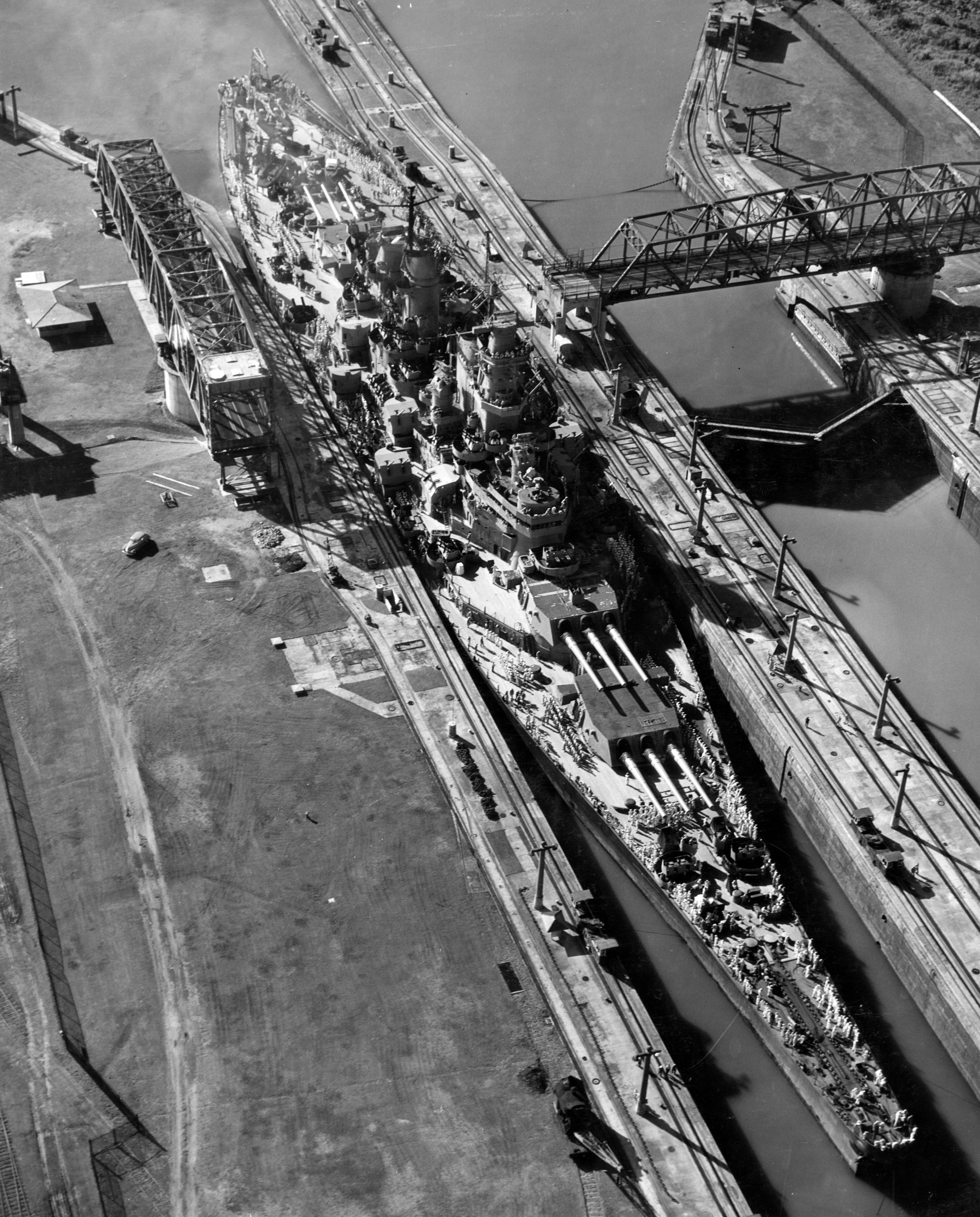
File:Missouri panama canal.jpgPanama has begun expansion of the Panama Canal, (described here) with the intention passing ships three times as large as those currently able to use the canal.

Meanwhile Panama is hoping US ports will be expanded to accept the larger ships,

“By WALTER C. JONES – Morris News Service – ATLANTA — The administrator of the Panama Canal chastised U.S. and Canadian officials Tuesday for not preparing their ports to take advantage of the expansion his country is undertaking. Alberto Aleman Zubieta, CEO of the Panama Canal Authority, stressed that Panama is doubling the canal’s capacity by widening its system of locks and waterways to accommodate ships three times the current maximum. But Panama won’t realize the full benefits if East Coast ports aren’t also enhanced to accept those ships. “What concerns me is how long it takes to do these types of projects and that they are not now being done in the U.S.,” Aleman was quoted as saying by Modern Materials Handling magazine.

“He made his comments to the logistics managers attending the inaugural trade show of MODEX, sponsored by the Material Handling Industry of America. In two years, the canal will celebrate its 100th anniversary with the completion of its expansion project. East Coast ports like Savannah, Jacksonville and Charleston hope to attract that added traffic. However, none are deep enough for the larger ships to enter fully loaded except at high tide. Only ports in New York and Virginia can now.”

This is likely to have a long term impact of the relative importance of ports in the US with ports that can accommodate these larger ships doing relatively better than ports unable to accept them.

(Photo credit: Photo #: 80-G-701369, Official U.S. Navy Photograph, now in the collections of the National Archives.)

Development in Propulsion

gCaptain reports on development of a new propulsion system that is purported to offer better fuel economy and towing capability without penalties at high speeds, all characteristics important in Coast Guard cutters.

“The Voith Linear Jet drive, however, is a hybrid of the ducted propeller and the water jet drive, having a highly skewed propeller, similar to a jet drive’s impeller, within a shroud containing stators, also similar to a water jet.  According to Voith, “It consists of a specially shaped jet, a rotor and a stator. The prototype has a rotor diameter of two meters, a jet length of three meters and an input power of 6.0 MW.”  This gives their drive the thrust characteristics of a ducted propeller, with the speed characteristics of a water jet drive.”

“Typical VLJ applications will be any ship with a mixed operating profile between low speed cruising and sprint speeds like Navy and Coastguard vessels…”

The comparison charts are particularly interesting. Promising if it works as advertised.

Submarines for Counter-Drug Ops?

File:Sbsribs.jpg

There has been a report that the Colombians are purchasing two subs from Germany, and that “The U206s are critical to Colombia’s fight against the drug gangs’ semi-submersible vessels.”

I also see a need for ASW assets to deal with the problem, but the Type 206A subs are tiny, slow, and old enough to be Coast Guard Cutters (They have crossed the Atlantic for exercises). The newest entered service in 1975. Their systems have been updated, they do have passive detection systems, but there have got to be easier and cheaper ways to detect drug subs and self propelled semi-submersibles.

It will be interesting to see how they are actually used. If this does work, will the Coast Guard get their own subs?

(Photo credit Zatoichi1564 (talk) via Wikimedia Commons)

Texas Coast Guard?

Perhaps motivated by events on Falcon Lake and the general boarder lawlessness, Texas seems to be taking on a job that looks like it should be handled by the Coast Guard, DEA, and DHS. They are buying six machinegun equipped Riverine Gunboats (defensetech.org/2012/03/01/texas-preparing-its-own-riverine-navy/) that would look right at home with the Navy’s Expeditionary Combat Command.

(Thanks to Lee for the heads up)

Canada’s Arctic Offshore Patrol Ship (AOPS)

Ran across an interesting presentation of the design of Canada’s projected Arctic Offshore Patrol ship (pdf). This apparently dates back to 2008, but it is the most detailed presentation I have seen on their concept.

While probably not as capable as the Healey, which is more than twice as large, something similar might be able to fill the Coast Guard’s stated requirement for two additional medium icebreakers.

The design has several interesting features

  • It is designed to IACS Polar Class 5, “Year-round operation in medium first-year ice which may include old ice inclusions” with a double acting hull form.
  • It includes three RHIBs and a landing craft, in addition to two 70 man covered lifeboats.
  • Flight Deck and hanger sized to support a helicopter larger than the H-60 (the CH-148).
  • Propulsion is diesel electric using Azipods. Power is provided by four generators  (Can’t say I’m comfortable with how they achieved redundancy by using a centerline bulkhead to split two main machinery spaces into four).
  • It incorporates provision for carrying five containers, and has a 10 ton crane on the main deck aft.
  • Requires a relatively small crew (45) but includes provision for an additional 40.

Compared to the Wind Class Icebreakers that once made up most to the Coast Guard fleet, they are slightly larger (6,940 tons vs 6,500), much longer (359.5 ft vs 269), narrower (59.7 ft vs 63.5), much more powerful (20,100 HP vs 12,000), and faster (20 knots vs 16.8).

Compared to the Norwegian Coast Guard vessel Svalbard on which it is based it is 50% more powerful.

We can’t be sure at this point, that this is the ship the Canadian’s will build, but it’s probably pretty close.



Wolf in Sheep’s Clothing

I got these images second hand (perhaps third, forth, or fifth hand), so I can’t say where they came from or the date taken, but I think they are instructive for how they show how a vessel can be much more than it appears. Reportedly, this is a Russian trawler that was stationed off the Fleet Ballistic Missile Submarine base at Holy Lock, Scotland. That they were not there to fish was general knowledge, but I think the extent of modifications to the underwater body, particularly the apparent addition of torpedo tubes, may be a bit of a surprise.

Looking a bit closer:


 (Thanks to Robert Stoner and Tim Wind)

State of the Coast Guard Address/New Standing Orders (Pub 3)

The Commandant issued his State of the Coast Guard address today. You can access it here. I had trouble with the video, but the text is also there (Remarks from ADM Robert Papp (14 pages – 178.93KB)). It is a good speech, as you might expect. He spoke from Alameda, recognizing the increasing importance of the Pacific and the Arctic that together constitutes approximately 84% of the US EEZ.

It is worth the read. There weren’t too many operational specifics but there was reference one specific planned future operation, seasonal deployment of the Bertholf and buoy tenders to the Arctic.

The same page has a pdf download for what the Commandant likened to standing order, Coast Guard Publication 3-0 (Pub 3), Operations (56 pages – 5.55 MB).