This Day in Coast Guard History, February 13

Based on the Coast Guard Historian’s timeline, https://www.history.uscg.mil/research/chronology/
With inspiration from Mike Kelso

February 13

Douglas R5D-3; “OFF TO HEAT AN ICEBERG: A 1,000-pound thermite bomb enclosing a cluster of small bomblets, each capable of burning at a temperature of 4,300 degrees Fahrenheit, rides under the wing of a Coast Guard UF-2G amphibian plane toward an iceberg target in the foggy Grand Banks region of Newfoundland. The temperature of one bomblet equals half the sun’s surface temperature. This bomb was one of twenty cluster bomb of thermite and petroleum types air-dropped on selected icebergs during heat destruction tests made by the International Ice Patrol force in June, at the height of the 1959 heavy ice season. Above the bomb carrier is a large passenger type Coast Guard R5D plane, one of three used on regular ice observation flights out of Argentia, Nfld. The more modern R5Ds this year replaced old World War II B-17 bomber type planer with plexiglass noses where ice observation instruments and carries a crew of about seven. Ice is observed from many windows. Averaging 6 to 8 hour ice observation flights, the R5D patrols an area of about 14,000 square miles in the Grand Banks region. The R5D plane here wears one of the new paint schemes currently being tested for easy air visibility by the U.S. Coast Guard on its various planes. In place of the dull silver gray and orange trim formerly used, the new dress is made of glowing fluorescent colors–orange nose, wing tips, tail and body strip with black edgings, and main body in brilliant white.”; Photo No. 5854; 17 July 1959; photographer unknown.

1960  A Coast Guard R5D aircraft from Honolulu dropped a pump to the Japanese training vessel Toyama Maru, which had radioed that it was taking on water and was in danger of sinking off Palmyra Island.  The pump controlled flooding until the arrival of CGC Bering Strait, whose crew made repairs to the Japanese vessel, using 2,500 pounds of sand and cement parachuted by a Honolulu-based SC-130B plane.

1963  The Bureau of Customs requested Coast Guard assistance to search the M/V Holland Diepe in Tacoma, Washington, for narcotics.  Narcotics agents had previously apprehended three Chinese crew members of the vessel in a Seattle hotel.  COTP Seattle provided a search party of two officers and eight enlisted men, who were joined by 10 Customs agents.  Two-man teams searched assigned areas of the vessel.  A first search of seven hours uncovered a considerable quantity of raw opium.  The search party then departed, as if the search were ended, but 45 minutes later they boarded the vessel once more, lined up the crew in the mess hall, and searched them and the ship again.  This search, lasting three hours, uncovered more opium, both raw and prepared for smoking, a small quantity of heroin, and several opium pipes.  A total of six pounds of opium was seized.  WPB 82336 conducted waterside surveillance during the search.

1969  The National Transportation Safety Board issued its “Study of Recreational Boat Accidents, Boating Safety Programs, and Preventive Recommendations”.
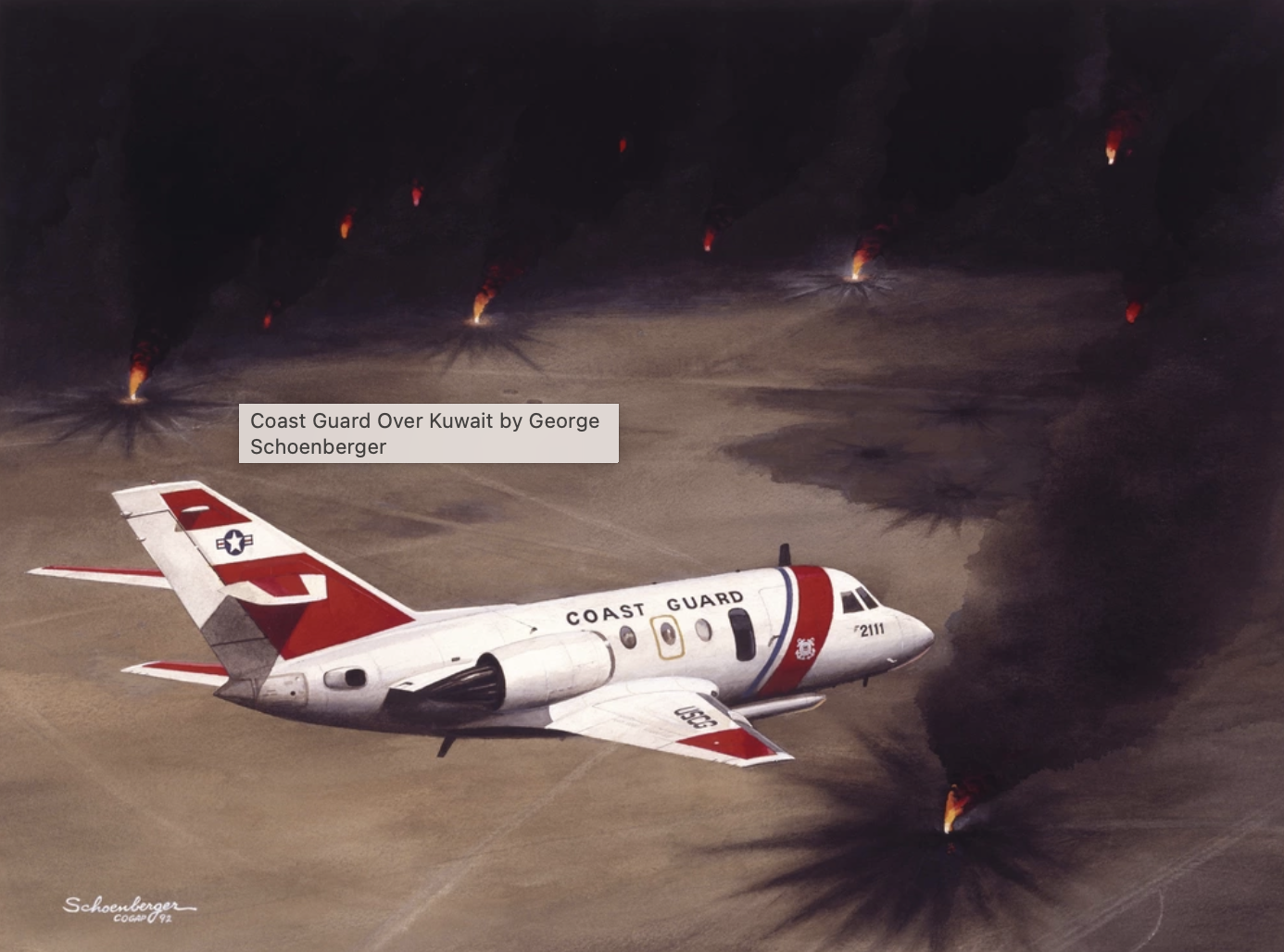
In response to the Iraqi action of firing oil wells and pumping stations in Kuwait, two HU-25A Falcon jets from Air Station Cape Cod, equipped with Aireye technology, which precisely locates and records oil as it floats on water], departed for Saudi Arabia. The Falcons mapped over 40,000 square miles in theatre and located every drop of oil on the water. This was used to produce a daily updated surface analysis of the location, condition and drift projections of the oil. The Aviation Detachment was deployed for 84 days, flew 427 flight hours and maintained an aircraft readiness rate of over 96 percent.

1991  During Operation Desert Storm, two HU-25A Falcon jets from Air Station Cape Cod, equipped with AIREYE technology, departed for Saudi Arabia for service with the Inter-agency oil spill assessment team. They were accompanied in flight by two C-130 aircraft from Air Station Clearwater carrying spare parts and deployment packages.

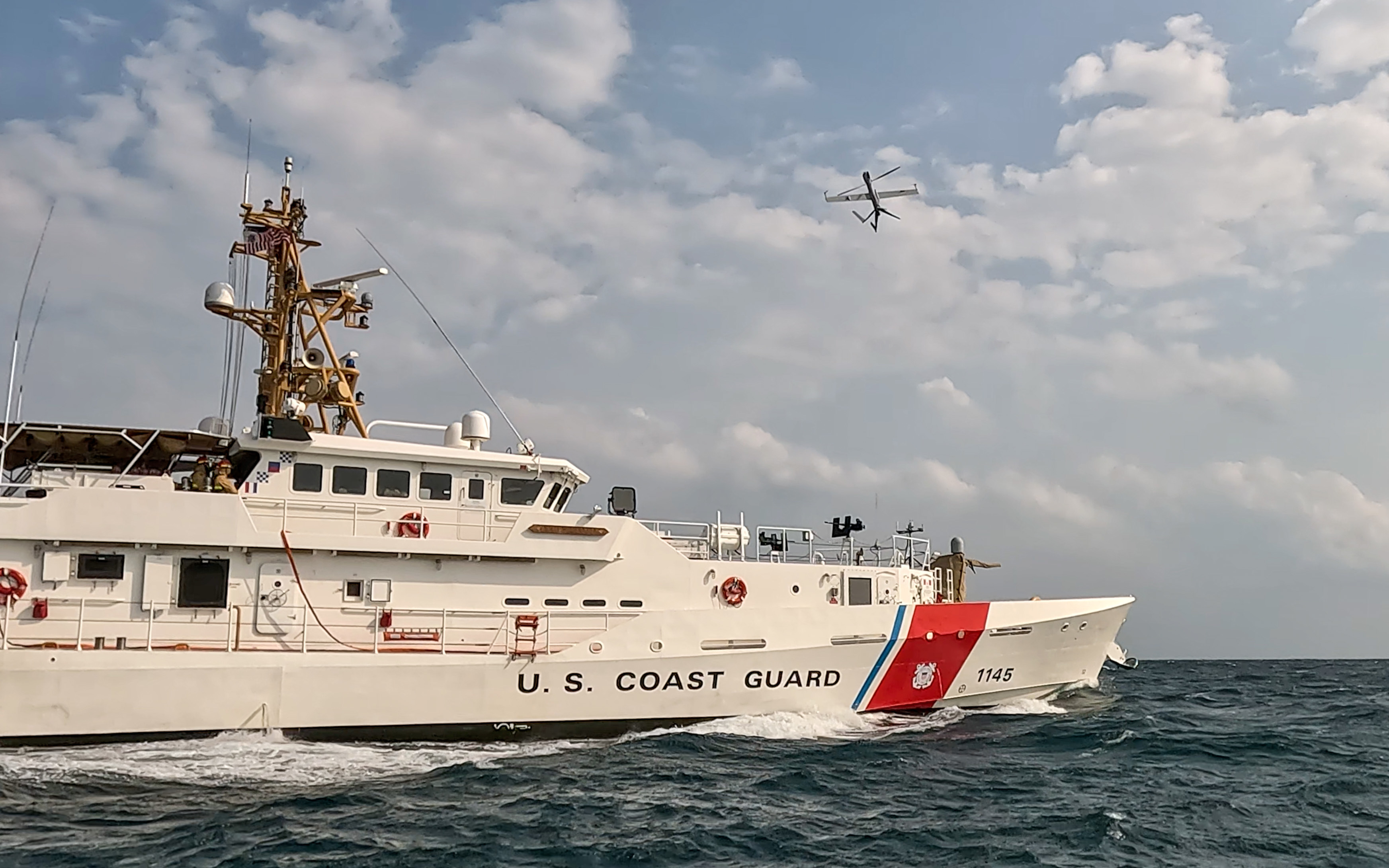
USCGC Emlen Tunnell (WPC-1145) / “CMF’s Combined Task Force 150 Carries Out First Drug Interdiction with New Zealand In Command” –NAVCENT

(February 7, 2025) Coast Guardsmen from the U.S. Coast Guard Sentinel-class fast response cutter USCGC Emlen Tunnell (WPC 1145) seize illegal narcotics from a stateless vessel in the Arabian Sea. (Photo by U.S. Coast Guard)

Below is a news release from Commander U.S. Naval Forces Central Command Public Affairs.

221207-N-NO146-1001 ARABIAN GULF (Dec. 7, 2022) An Aerovel Flexrotor unmanned aerial vehicle (UAV) takes off from U.S. Coast Guard fast response cutter USCGC Emlen Tunnell (WPC 1145) transiting the Arabian Gulf, Dec. 7. U.S. 5th Fleet’s Task Force 59 launched the UAV during Digital Horizon, a three-week event focused on integrating new unmanned and artificial intelligence platforms, including 10 that are in the region for the first time. (U.S. Navy photo)


ANAMA, Bahrain —

A U.S. Coast Guard fast-response cutter, working in direct support of New Zealand-led Combined Task Force (CTF) 150 of Combined Maritime Forces, seized nearly 2,400 kilograms of illegal drugs from a vessel in the Arabian Sea, Feb. 7.

The interdiction by the Sentinel-class fast-response cutter USCGC Emlen Tunnell (WPC-1145) represents CTF 150’s first drug seizure since New Zealand assumed command Jan. 15.

The cutter’s boarding team discovered and seized 2,357kg of hashish from the vessel. After weighing and documenting the haul, the crew properly disposed of the narcotics.

Commodore Rodger Ward, commander of CTF 150, said he’s proud of the team effort that went into making this interdiction a reality after only a few weeks in command.

“Our command is a small cog in a system focused on interdicting illicit trafficking on the high seas,” Ward said. “This is a team effort and this bust would not have been possible without the support of the 46 nations who make up the Combined Maritime Forces.”

Ward noted that every bust we make reduces the flow of finances to terrorist organizations. “This is why we’re here, to contribute to maritime security and protect the rules-based international order,” he said.

Emlen Tunnell is forward deployed to Bahrain. The fast response cutter is part of a contingent of U.S. Coast Guard ships operating in the region under Patrol Forces Southwest Asia (PATFORSWA). PATFORSWA deploys Coast Guard personnel and ships alongside U.S. and regional naval forces throughout the Middle East.

CTF 150 is one of five task forces under Combined Maritime Forces, the world’s largest international naval partnership. CTF 150’s mission is to deter and disrupt the ability of non-state actors to move weapons, drugs and other illicit substances in the Indian Ocean, the Arabian Sea and the Gulf of Oman.

Combined Maritime Forces is a 46-nation naval partnership upholding the international rules-based order by promoting security and stability across 3.2 million square miles of water encompassing some of the world’s most important shipping lanes.

This Day in Coast Guard History, February 12

Based on the Coast Guard Historian’s timeline, https://www.history.uscg.mil/research/chronology/
With inspiration from Mike Kelso

February 12

1802  Revenue Marine had a total of 38 commissioned officers in service: 9 captains, 10 first mates, 9 second mates and 10 third mates.

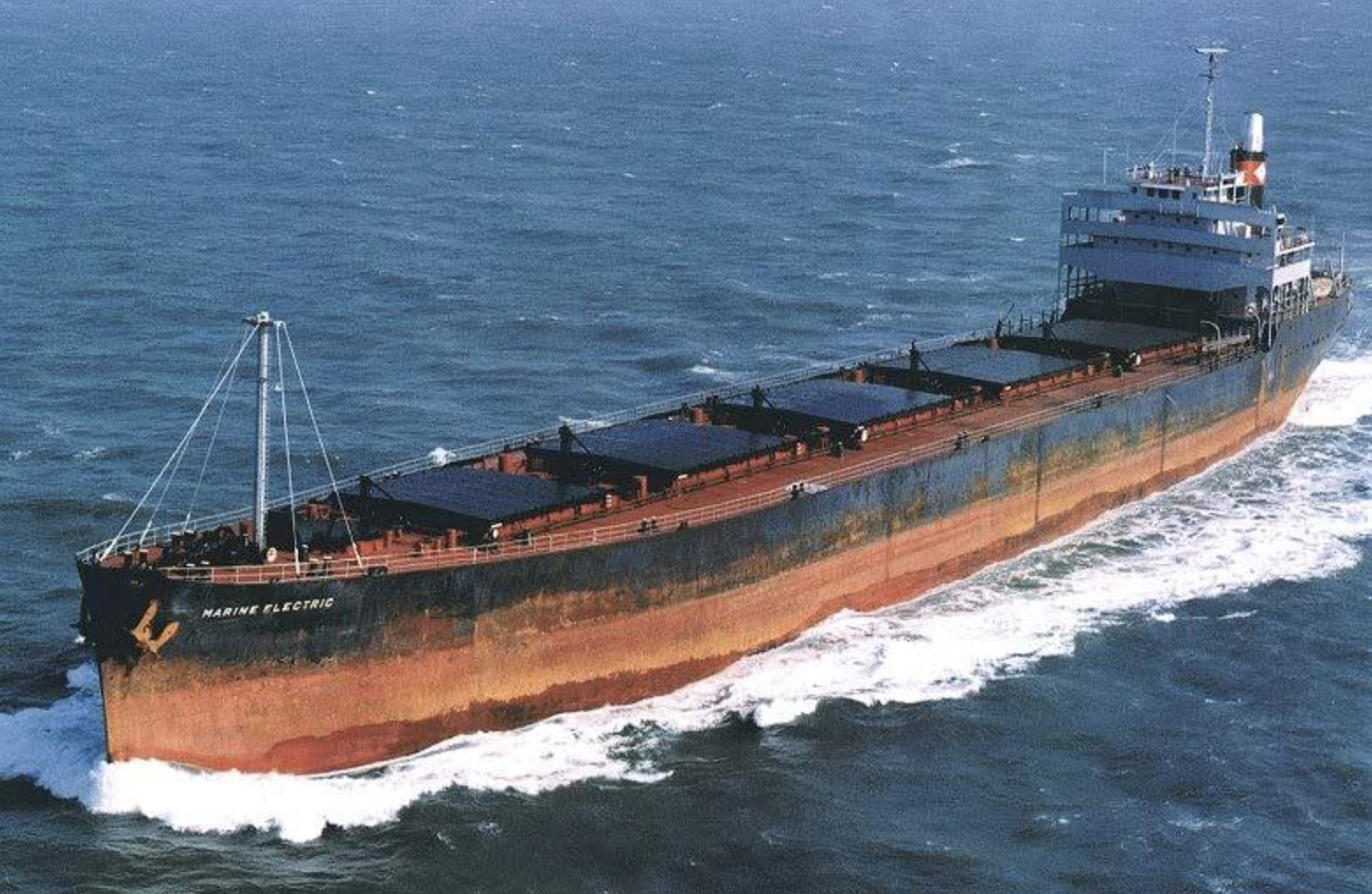
The Marine Electric, a 605-foot cargo ship, as seen underway before its capsizing and sinking on Feb. 12, 1983. The converted WWII-era ship foundered 30 miles off the coast of Virginia and capsized, throwing most of its 34 crew into 37-degree water, where 31 of them drowned or succumbed to hypothermia.

1983  The 605-foot bulk carrier Marine Electric, completed as a tanker in 1944, capsized and sank off Virginia during a gale.  Three of the 34 crewmen on board were rescued by Coast Guard and Navy assets.

“Investigations by the Coast Guard, led by Captain Dominic Calicchio and independent examinations of the wreck discovered that the Marine Electric had left port in an un-seaworthy condition, with gaping holes in its deck plating and hatch covers. These had been noted at multiple points by surviving Chief Mate Bob Cusick, who testified that no effort had been made by MTL to rectify the issues.[6] The hatch covers, in particular, posed a problem, since without them the cargo hold could fill with water in the storm and drag the ship under.

Investigators discovered that much of the paperwork supporting MTL’s declarations that the Marine Electric′s seaworthiness was faked. Inspection records showed inspections of the hatch covers during periods when they had in fact been removed from the ship for maintenance; inspections were recorded during periods of time when the ship was not in port. A representative of the hatch covers’ manufacturer warned MTL in 1982 that their condition posed a threat to the ship’s seaworthiness, but inspectors never tested them. Yet the Marine Electric was repeatedly certified as seaworthy.

Part of the problem was that the Coast Guard delegated some of its inspection authority to the American Bureau of Shipping. The ABS is a private, non-profit agency that developed rules, standards and guidelines for ship’s hulls. In the wake of the Marine Electric tragedy, questions were raised about how successfully the ABS was exercising the inspection authority delegated to it, as well as about whether the Coast Guard even had the authority to delegate that role. Also there was a conflict of interest in that the inspection fees paid to the ABS were paid by the ship owners.

In the wake of the Marine Electric sinking, The Philadelphia Inquirer assigned two reporters, Tim Dwyer and Robert Frump, to look into old ship catastrophes. In the series, the writers concluded that government programs designed to strengthen the merchant marine had actually kept unsafe ships afloat. Frump later wrote a book, Until the Sea Shall Free Them, about the sinking.

In the wake of the Marine Board report, and the newspaper’s investigation, the Coast Guard dramatically changed its inspection and oversight procedures. The Coast Guard report noted that the ABS, in particular, “cannot be considered impartial”, and described its failure to notice the critical problems with the ship as negligent. At the same time, the report noted that “the inexperience of the inspectors who went aboard the Marine Electric, and their failure to recognize the safety hazards…raises doubt about the capabilities of the Coast Guard inspectors to enforce the laws and regulations in a satisfactory manner.”

While the Coast Guard commandant did not accept all of the recommendations of the Marine Board report, inspections tightened and 90 old World War II relics still functioning 40 years after the war were sent to scrap yards.(“Disasters at Sea” S01E02 Deadly Neglect 2019). In 2003, Coast Guard Captain Dominic Calicchio was posthumously awarded The Plimsoll Award by Professional Mariner magazine in part because of his role as a member of the Marine Board of Investigation.

Additionally, the Coast Guard required that survival suits be required on all winter North Atlantic runs. Later, as a direct result of the casualties on the Marine Electric, Congress pushed for and the Coast Guard eventually established the now famous Coast Guard Rescue Swimmer program.

1986  Rains began in northern California that lasted for a week, causing severe flooding.  Coast Guard units participated in rescue and relief operations.

CG 44363 in its final resting place on James Island. U.S. Coast Guard photo

1997  Three of the four crewmembers of MLB-44363 out of the Quillayute River Motor Lifeboat Station were lost in the line of duty when they responded to a distress call from the sailing vessel Gale Runner.  They were BM2 David A. Bosley, MK3 Matthew E. Schlimme, and SN Clinton P. Miniken. Staffing levels and high personnel turnover contributed to the incident. A summary of findings is here. Two items stand out.

No member of the boat crew was wearing helmets. Additionally, only SA Wingo and SN Miniken definitively wore their heavy weather belts. SA Wingo assumed that MK3 Schlimme wore his and was clipped in as well, but he was unsure if BM2 Bosley wore his belt.

The autopsy reports for BM2 Bosley, MK3 Schlimme, and SN Miniken all stated that the cause of death was blunt force injuries to the head.

This Day in Coast Guard History, February 11

Based on the Coast Guard Historian’s timeline, https://www.history.uscg.mil/research/chronology/
With inspiration from Mike Kelso

February 11

1973  Due to the draw-down of U.S. forces in South Vietnam the post of Senior Coast Guard Officer, Vietnam, was discontinued.

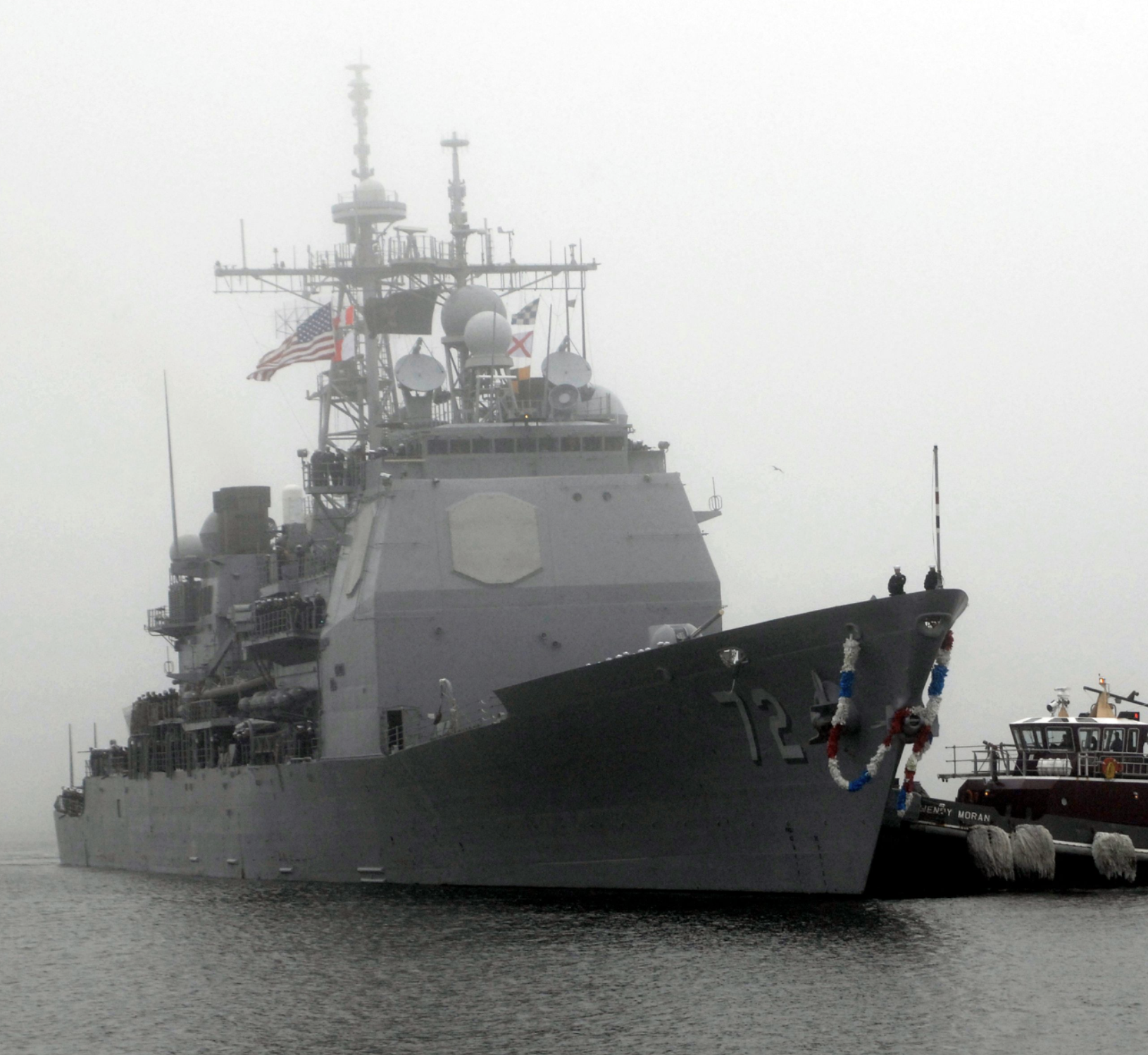
Norfolk, VA, 27 March 2009 – The guided-missile cruiser USS Vella Gulf (CG 72) returns to Naval Station Norfolk after a seven-month deployment. Vella Gulf deployed as part of the Iwo Jima Amphibious Ready Group supporting maritime security operations and theater security cooperation efforts in the U.S. 5th and 6th Fleet areas of responsibility.
U.S. Navy photo #090327-N-3595W-045 by Mass Communication Specialist 2nd Class Gina K. Wollman/Released

2009  Miami-based LEDET 405, operating as part of Combined Task Force (CTF) 151 and conducting counter-piracy operations aboard USS Vella Gulf (CG-72) and USS Mahan (DDG-72) in the Gulf of Aden, assisted in the apprehension of 16 suspected pirates in a 24-hour period.

Brigands attacked Marshall Islands-flagged motor vessel Polaris in the Gulf of Aden, and she issued a distress call at 1500 on 11 February 2009. Vella Gulf came about, made speed for the area, and captured seven pirates. At 1600 the following day, additional pirates in a skiff fired at Indian-flagged Prem Divya and attempted to board the merchantman. A Seahawk flying from Vella Gulf raced to the area and signaled for the skiff to stop. The pirates continued and the helo fired a warning shot, which the pirates also ignored. The Seahawk then fired a second warning shot and the skiff stopped. VBSS teams from Vella Gulf and Mason boarded the boat and apprehended nine more pirates, together with their weapons, including a rocket propelled grenade launcher. The cruiser transferred the 16 pirates to a temporary holding facility on board the dry cargo ship Lewis and Clark (T AKE 1).

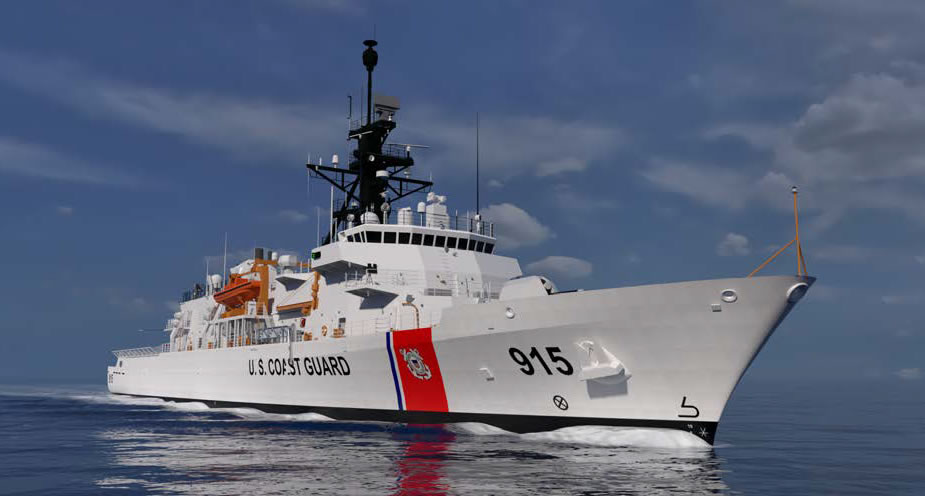
Artists rendering from Eastern Shipbuilding Group

2014  The Coast Guard awarded three firm fixed-price contracts for preliminary and contract design for the Offshore Patrol Cutter (OPC) acquisition project.  The contracts were awarded to Bollinger Shipyards Lockport LLC (Lockport, Louisiana), Eastern Shipbuilding Group Inc. (Panama City, Florida), and General Dynamics, Bath Iron Works (Bath, Maine).  The OPC would fill Coast Guard and DHS offshore mission requirements and provide capabilities between the Coast Guard’s Fast Response Cutter and National Security Cutter, while replacing the aging 210-foot and 270-foot medium endurance cutters. (And now, 11 years later, we still do not have our first OPC.)

The Reliance Class Cutter USCGC Valiant (WMEC-621) underway on a routine fisheries patrol in the Gulf of Mexico.

2015  CGC Valiant returned home to Naval Station Mayport Wednesday, after completing a six-week deployment in the Florida Straits and Eastern Caribbean Sea in support of operations Southeast Watch and Unified Resolve.  Valiant responded to a surge of illegal migration attempts in the Florida Straits following the U.S. government announcement to normalize relations with Cuba.  The cutter humanely processed and cared for 160 Cuban migrants in a one-week period.  Valiant also boarded and towed a coastal freighter following its failed attempt to deliver more than 1,000 kilograms of cocaine into Puerto Rico.  Valiant’s crewmembers conducted a search of the vessel, took custody of its crew, and towed the freighter over 120 miles to Ponce, Puerto Rico, where it was transferred to Homeland Security Investigations and Border Patrol authorities.  The freighter’s crew was turned over for prosecution in federal court.  During the cutter’s logistics stop in San Juan, Puerto Rico, the crew took time to visit two orphanages that care for infants and primary school children.  The crew distributed more than 200 new toys they brought with them from Mayport and spent two afternoons playing with the children.

Caleb Brewster, Revolutionary War Soldier, Spy and War of 1812 Revenue Cutter CO

Caleb Brewster was a secondary character in the TV series “Turn, Washington’s Spies,” but he was a main character in the formation of George Washington’s Culper spy ring and in Coast Guard history.

Brewster initiated the Culpepper spy ring,

“Again in the dark for critical intelligence, Washington, to his great relief, received an unsolicited letter written on August 7, 1778 – a day that could be considered the start of the Culper Spy Ring.  It was written by Caleb Brewster in Norwalk, offering to gather intelligence on Long Island Washington instructed Brewster to “not spare any reasonable expense to come at early and true information.” Brewster wrote his first intelligence report on August 27, 1778. He warned Washington that Sir Henry Clinton was planning to attack the Continental Army strong point in Newport, Rhode Island, allowing Washington to take precautions to avert an attack.”

He was wounded in a “spy boat fight”  the British in 1782.

Caleb Brewster was injured on December 7, 1782 during a naval exchange with British troops on Long Island Sound.  He was hit by a musket ball through his shoulder, or “breast,” as he described in his letter to President George Washington.

He commanded the Revenue Cutter Active 1812 to 1816.

During the War of 1812, the cutters Active and Eagle kept very busy escorting merchantmen between New England and the mid-Atlantic states.

Of the war’s revenue-cutter masters, Captain Caleb Brewster of the Active proved the most experienced intelligence-gatherer, having been part of an effective spy ring supplying information to General George Washington during the Revolutionary War. On 26 May 1813, a New York newspaper reported that the Active braved a “strong south gale” near Montauk Point, Long Island, to maintain surveillance of three British men-of-war about ten miles out to sea. Employing local small craft, Captain Brewster sped the information to U.S. Navy Commodore Stephen Decatur, whose squadron was trapped in Long Island Sound. Brewster continued providing military intelligence to New York officials regarding enemy naval operations until the war’s end.

During the summer of 1813, the cutter Active sailed through the British squadron blockading Commodore Decatur’s flotilla near New London, Connecticut. The Active provided force protection for Decatur’s warships and delivered reports, messages, and naval intelligence between the commoedore’s flotilla and authorities in New York.

22 January 1814 near Sandy Hook, New Jersey, when a boarding party from the Active inspected the merchant ship Fair American, which had special papers to sail for Liverpool, England. In what became a rather sensational story at the time, Caleb Brewster’s crew found 11 men without passports concealed in the ship’s hold and several men of wealth disguised as seamen. They caught others among the crew trying to destroy illegal documents. The Active’s boarding party found bills, orders, and drafts for supplying the Royal Navy and the British military in Canada and the West Indies and arrested a number of passengers, including two smuggled British prisoners of war. A New York newspaper described the incident as demonstrating “the development of a most nefarious and long continued system of smuggling, [and] victualing the British and contravening the most imperious laws and highest interests of the country.”

Why haven’t we named a cutter after this man?

This Day in Coast Guard History, February 10

Based on the Coast Guard Historian’s timeline, https://www.history.uscg.mil/research/chronology/
With inspiration from Mike Kelso

February 10

1840  A House resolution was introduced to inquire into transferring the Revenue Marine to the Navy.

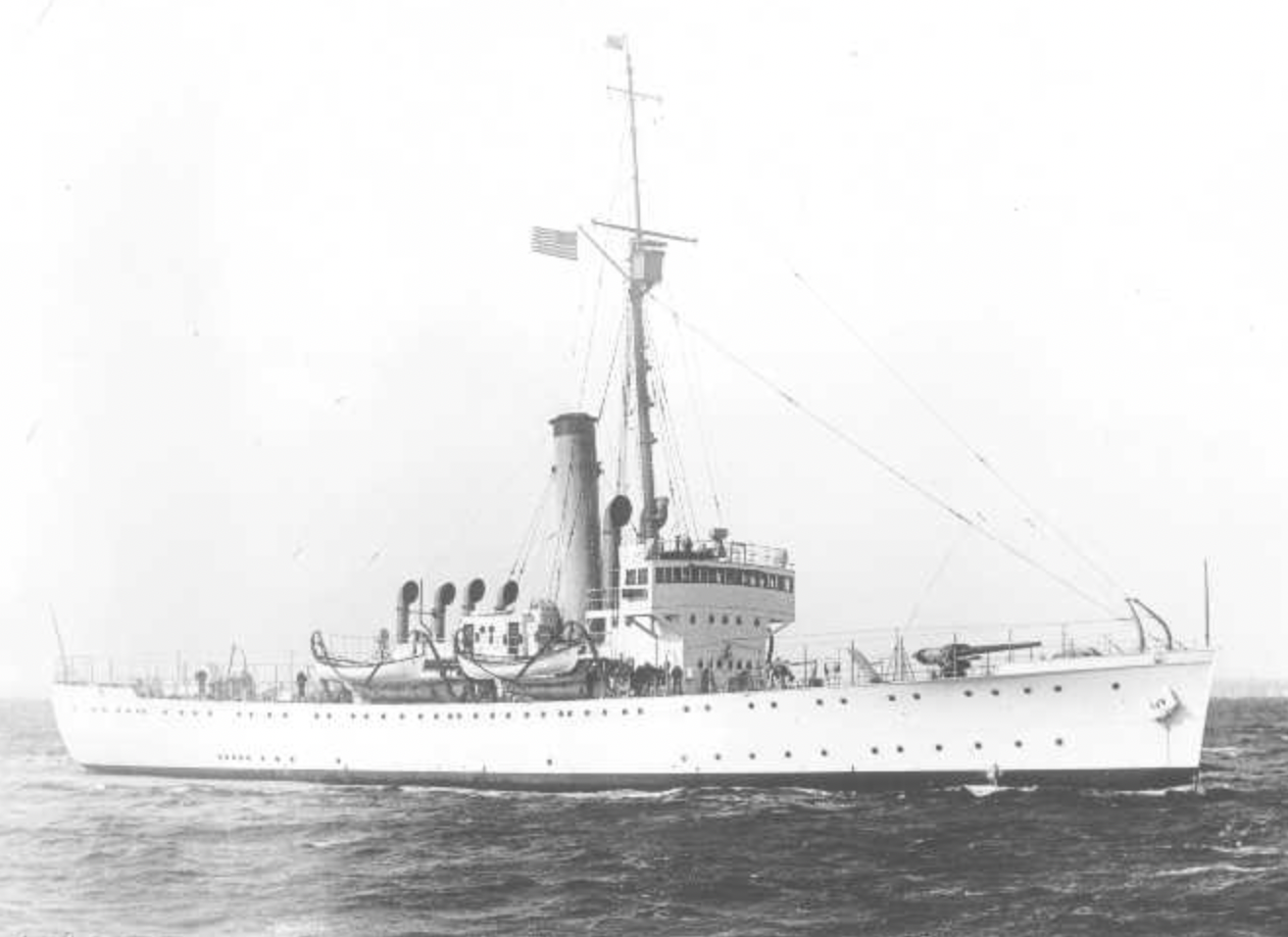
USCGC Tahoe; underway, pre-World War II.

1938  CGC Tahoe departed New Bedford, Massachusetts, to inaugurate the 1938 “International Ice Observation Service” (now referred to as the International Ice Patrol).

As part of the Lend-Lease Act she was transferred to the Royal Navywhere she was renamed HMS Fishguard (Y59) and commissioned on 12 May 1941. In May 1944, the crew of Fishguard boarded U-852 and captured her crew after she was damaged by British aircraft.

USCGC Bibb relieving on Ocean Station. This was photo is post-World War II. 

1940  CGCs Bibb and Duane inaugurated the Coast Guard’s participation in the nation’s manned ocean station program when they took their positions on Ocean Stations No. 1 and 2 in the North Atlantic on this date.  They also became the first vessels to make radio transmissions as “weather stations.”

Alex Haley, USCG photo

1992  Retired Coast Guard Chief Journalist Alex Haley, internationally noted author, crossed the bar.

1995  The 689-foot tank ship Mormac Star, carrying more than 4.7 million gallons of Jet A fuel and nearly 5.7 million gallons of number 2 diesel fuel, ran aground in Sandy Hook Channel, two miles off the beaches of Sandy Hook, New Jersey, spilling 33,600 gallons.  COTP New York responded.  Other responding units included Stations New York and Sandy Hook, VTS New York, and the Atlantic Area Strike Team.  The spill was successfully contained and the vessel salvaged.

At approximately 1930 on February 10, 1995, the USCG Group New York received a call from the Vessel Traffic Service informing them that the inbound T/V Mormac Star was hard aground next to Sandy Hook Channel between buoys 4 and 6 with her port side extending into the channel. The vessel was carrying 112,000 barrels of Jet A fuel and 135,000 barrels of #2 fuel oil.
Weather on-scene was 35°F, 10 knot west-southwest winds, and three-foot seas.
USCG Marine Inspection Office (MIO) and COTP personnel responded on-scene. The FOSC requested assistance from the USCG Atlantic Strike Team (AST) and two AST members responded by aircraft that had FLIR capabilities. The vessel owner took immediate responsibility and contracted services for booming and open-water recovery. Tank #6 Center (C) (22,000-barrel capacity) was sounded and found to be leaking #2 fuel oil at a rate of approximately 100 barrels per hour. Skimmers operated in the immediate vicinity of the vessel to recover what little product there was on open water. A 90,000-barrel barge was deployed to lighter the tanker enough so that the vessel would refloat naturally. Once tanks #2C and #6C were sufficiently emptied, the vessel refloated and was towed to general anchorage about three miles off Sandy Hook to complete lightering before going to the harbor for repairs. Although hampered by strong currents, divers discovered a two-inch hole in the #6C tank that they patched temporarily. Weather postponed further lightering and the vessel was towed to its original destination in the Arthur Kill to complete lightering.
Federal trustees from the Department of Commerce (DOC), NOAA, and the Department of the Interior (DOI) were briefed on the situation but only the NOAA SSC responded on-scene. Boom was deployed as a precaution at some sensitive areas identified in the Area Contingency Plan, but no shoreline or wildlife impacts were reported.

“Canadian shipyard in talks to buy US shipbuilder amid trade war talk” –Defense News

Canada’s Polar Icebreaker

After the continued frustration of the Polar Security Cutter program, the ICE Pact agreement between Finland, Canada, and the US seems promising, but we have heard little about how it will work or what it will produce. Forbes discusses the possibilities here.

We may be seeing the first steps of implementation as Canada’s Davie shipyard, which has already purchased a shipyard with a long history of building icebreakers in Finland, seeks to buy a shipyard in the US. There aren’t many possibilities, I would guess either the old Navy yard in Vallejo that has been doing the five year rolling service life extension on Polar Star or the Philly Shipyard currently building “National Security Multi-Mission Vessels” for the merchant marine academies.

Defense News reports.

Davie, a Quebec shipbuilder set to play a key role in a joint icebreaker production agreement between Canada, the United States and Finland, is moving forward with plans to expand its operations south of the border despite a looming trade war threatening the continent.

As part of the expansion, the Canada-based multinational shipbuilder has set out to acquire an American shipyard, which would secure an initial and important footprint in the U.S. for the company.

Davie is expected to build Canada’s second in class large Polar Icebreaker and six “Program” Icebreakers.

Davie is very clearly specializing in icebreakers while continuing to produce ice strengthened commercial ships.

The first of Canada’s Polar Icebreakers (pictured above) is being built by Seaspan, with the second of class being built by Davie. These will be heavy icebreakers, even by US Coast Guard standards, bigger and more powerful than the Polar Security Cutters.

  • Length Overall 158.2m (519 ft)
  • Beam: 28m (91 ft 10 in)
  • Draft: 10.5m (34 ft 5 in)
  • Classificaton: LLoyd’s Polar Class PC2
  • Installed Power: 46 MW (61,687 HP)
  • Top Speed: 18 knots
  • Icebreaking 2.5m @ 3 knots continuous
  • Design Displacement: 26,000 tons
  • Complement: 100 Persons

Canada’s “Program Icebreaker.” Six are planned.

The design for the six “Program Icebreakers” might provide a basis for both the Coast Guard’s Arctic Security Cutter (medium icebreaker program) and the new Great Lakes icebreaker. (It would be a substantial improvement of USCGC Mackinaw and  we really need some medium icebreakers.) Their specifications are:

  • Length: 100-110 m (328 to 360 ft)
  • Beam: under 23.8 m (78 ft) for Great Lakes;
  • Draft: 6-8 m (20 to 26 ft)
  • Icebreaking: Capable of maintaining 3 knots in 1.4 m (4.6 ft) of ice
  • Accommodations: more than 30 crew and program teams of 34
  • Range: 20,000 nautical miles at 12 knots
  • Able to operate and maintain one medium helicopter
  • Significant general and containerized cargo capacity

“The Homeland Fight in the 2026 U.S.-China Scenario” –USNI

U.S. Coast Guard Petty Officer 2nd Class Wesley Armstrong, a boarding team member assigned to the USCGC Stone (WMSL 758), fires flashbang warning rounds during vessel on vessel use of force training in the Atlantic Ocean, Jan. 18, 2023. Stone is the ninth Legend-class national security cutter in the Coast Guard fleet and currently homeports in Charleston, South Carolina. (U.S. Coast Guard photo by Petty Officer 3rd Class Riley Perkofski)

A US Naval Institute Proceedings essay in the September 2024 edition, by Captain Craig Allen Jr., U.S. Coast Guard contends that, “The Coast Guard would lead in countering China’s efforts to degrade the United States’ ability to sustain the war at home.”

A mass conflag should be front of mind when considering the challenges posed in the American Sea Power Project 2026 U.S.-China contingency scenario.1 In the scenario, there is an absence of detail on how such a conflict could affect the U.S. homeland, and it could be seen as a Department of Defense problem in which the Coast Guard plays only a niche role. Indeed, the warfighting challenges inside and near the first island chain with which many excellent authors have grappled are not, for the most part, Coast Guard mission areas. However, believing the conflict would be contained to a fight “over there” underestimates the havoc China could and almost certainly would unleash to prevail in a protracted war.

As a U.S. homeland-centric corollary to the American Sea Power Project scenario, consider one in which China might directly or indirectly degrade the United States’ ability to sustain the war effort logistically and economically, foment chaos and erode social cohesion, and overwhelm domestic-response capacity. Like the original scenario, this one is neither predictive nor comprehensive. Rather, it highlights another important dimension to consider when evaluating U.S. seapower readiness for a major conflict with China.

“UH-60 Black Hawk Begins Ground Tests With Far More Powerful T901 Engines”

The first MH-60T medium range recovery helicopter to operate out of new Air Station Ventura lands on the station’s ramp on June 8, 2024. U.S. Coast Guard photo.

A new more powerful engine is being developed for the H-60. The War Zone reports,

“Compared to the previous engine, the T901 offers 50 percent more power — which translates to a maximum of roughly 3,000 shaft horsepower — bringing a considerable advantage in terms of hot-and-high performance, which is otherwise a significant limiting factor for rotorcraft. The new engine is also intended to bring improved fuel efficiency. On top of this, more powerful engines should ensure that the Black Hawk and Apache can carry heavier loads over greater distances…

“Meanwhile, a simpler design and fewer parts should translate into reduced life-cycle costs. As well as traditionally manufactured components, the T901 also makes use of more exotic production techniques, including additive manufacturing and ceramic matrix composites.

This could mean a significant improvement in range both because of better fuel efficiency and greater max takeoff weight.

“Once installed in the UH-60 and AH-64, the T901 promises to provide these aircraft with increased range, longer loiter time, and reduced maintenance and sustainment costs.”

This Day in Coast Guard History, February 9

Based on the Coast Guard Historian’s timeline, https://www.history.uscg.mil/research/chronology/
With inspiration from Mike Kelso

February 9

John Allen Midgett was recognized by the UK government for saving UK seamen in 1918. The Coast Guard later named the USCGC Midgett (WHEC-726) and USCGC Midgett (WMSL-757) after him.

1938  Chief Boatswain (L) John Allen Midgett, Commanding Officer of Station Chicamacomico, died in the U.S. Marine Hospital in Norfolk, VA, from injuries he sustained in an automobile accident on January 23, 1938.  Chief Midgett was the hero of the 1918 Mirlo rescue for which he was awarded a Gold Lifesaving Medal.

DC-7

1965  Eastern Air Lines, flight 663 DC-7B with 84 persons on board exploded in midair off Jones Beach, Long Island.  Despite an extensive search by seven Coast Guard cutters, six Coast Guard aircraft, and a U.S. Navy tug, no survivors were located.  Only nine bodies and various pieces of debris were located and recovered.

The 28-man crew from the abandoned fishing vessel Hou Chun 11 cling to life rafts 900 miles south of Honolulu, Feb. 9, 2010. Coast Guard crews from Hawaii and Alaska responded to the 28-member crew and provided medical assistance. U.S. Coast Guard video by Coast Guard Air Station Barbers Point.

2010  CGC Alex Haley rescued a 28-member crew from the disabled fishing vessel Hou Chun 11 900 miles southwest of Honolulu.  Corpsmen aboard the cutter treated two of the crewmembers who suffered severe burns.  The crew of the cutter Alex Haley sailed to Christmas Island, Kiribati, where the two burn victims were medevaced by a Coast Guard HC-130 Hercules based out of AIRSTA Barbers Point.  The remaining 26 were transported ashore for transport to a vessel that returned them to Taiwan.