SOUTHCOM to host change-of-command ceremony Nov. 07 –News Release

VADM Alvin Holsey

Below is a SOUTHCOM news release. Thought this might be of interest since just about all the ships in his fleet as well as much of his staff will be Coast Guard.


Oct. 15, 2024, MIAMI – U.S. Navy Vice Adm. Alvin Holsey is scheduled to assume duties as commander of U.S. Southern Command (SOUTHCOM) from U.S. Army Gen. Laura J. Richardson during a change-of command ceremony 1 p.m. Nov. 7, 2024, at the command’s headquarters.
Holsey, who previously served as the Military Deputy commander at SOUTHCOM, will be promoted to the rank of admiral before the ceremony.

Richardson will retire after more than four decades of military service as a decorated Army officer and distinguished aviator that included leadership roles in various assignments from the Company to the Theater level, as well as deployments to Iraq in support of Operation Iraqi Freedom and Afghanistan in support of Operation Enduring Freedom. Richardson’s career also included assignments as Military Aide to the Vice President at the White House, Chief of Army Legislative Liaison to the U.S. Congress in Washington, D.C., and as a U.S. Army campaign planner at the Pentagon.

Richardson assumed command of SOUTHCOM Oct. 29, 2021, during a history-making ceremony in which she became the first woman general to lead the U.S. combatant command. Under her leadership, SOUTHCOM conducted numerous operations directly supporting regional security, increased security cooperation with regional defense and security partners, and optimized its multinational exercise program to strengthen the region’s collective security capacity and bolster interoperability.

Richardson also led the command’s critical support to partner nation efforts aimed at disrupting the activities of transnational criminal organizations and malign state actors; including illicit trafficking; human smuggling; illegal, unregulated, and underreported fishing; and cyberattacks. SOUTHCOM is currently supporting the Multinational Security Support mission assisting Haitian-led efforts in and near Port-au-Prince to restore security in communities impacted by widespread gang violence.

Holsey will also make history when he assumes command duties November 7, becoming the first African American to lead SOUTHCOM since the organization assumed its mission more than six decades ago. The U.S. Senate confirmed Holsey’s presidential nomination September 24.

A Georgia native, Holsey was commissioned through the Naval Reserve Officers Training Corps (NROTC) program at Morehouse College in 1988, where he received a degree in Computer Science.  In 1995, he earned a Master of Science in management from Troy State University, and in 2010, he attended the Joint Forces Staff college.

Holsey’s career includes numerous deployments aboard U.S. Navy frigates and cruisers, as well as missions flying the SH-2F Seasprite and SH-60B Seahawk helicopters. He commanded a helicopter anti-submarine squadron; the U.S. Navy’s first hybrid electric propulsion warship, USS Makin Island (LHD 8); and Carrier Strike Group One aboard the aircraft carrier USS Carl Vinson, (CVN 70).

Holsey previously made history as the inaugural commander of the International Maritime Security Construct / Coalition Task Force Sentinel, tasked with ensuring freedom of navigation, adherence to international law, free flow of commerce, and the stability of maritime commons in the Middle East. His career assignments include tours as deputy director for operations at the National Military Command Center for the Joint Chiefs of Staff, and deputy chief of naval personnel at Navy Personnel Command.

SOUTHCOM is one of the nation’s six geographically focused unified commands.  The command is responsible for U.S. defense and security cooperation with partner nations in the Caribbean, Central America and South America, as well as U.S. military operations sin the region.
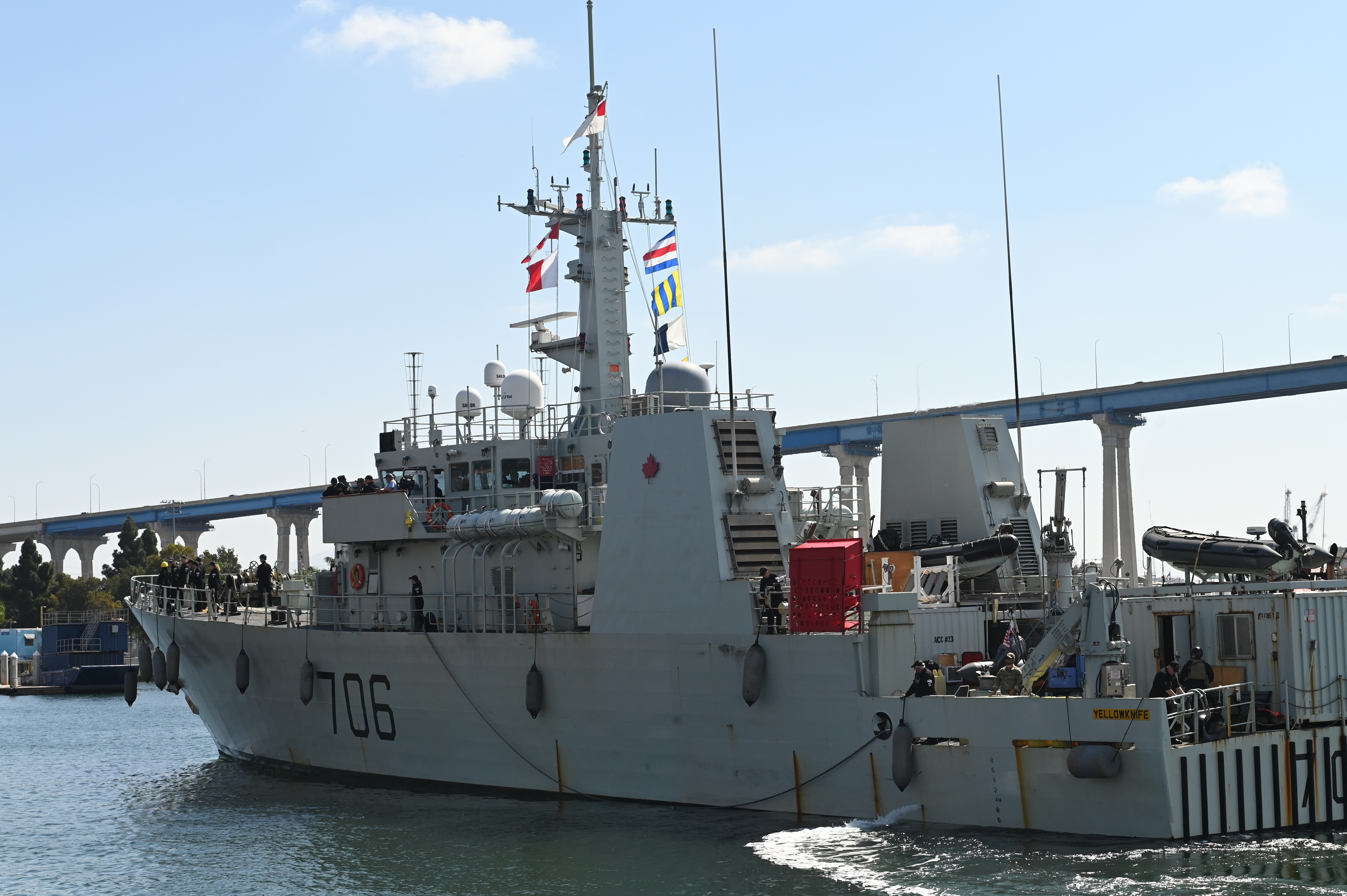
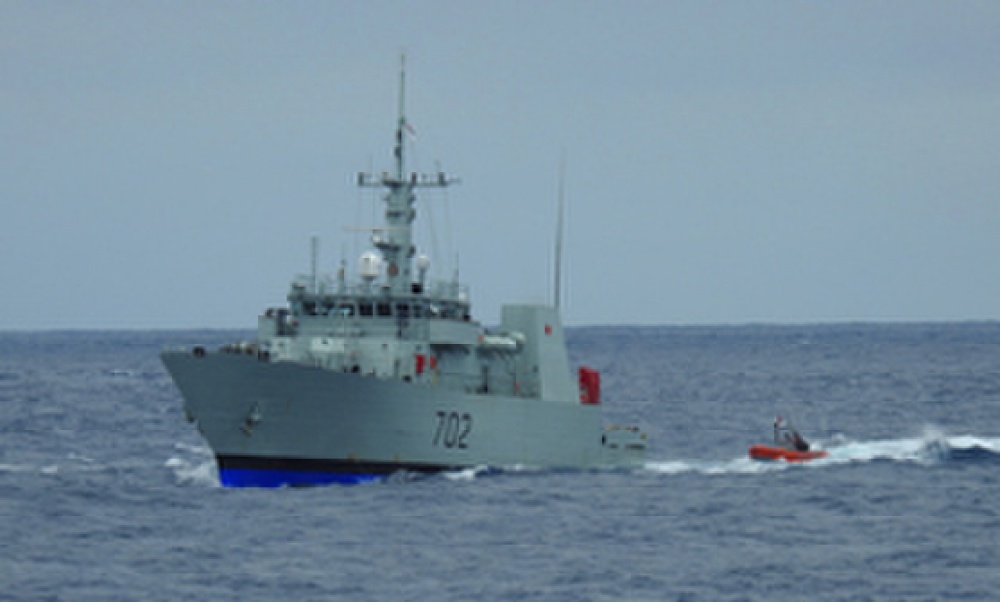
“Coast Guard, Royal Canadian Navy offload $44.2 million worth of drugs in San Diego” –D11 / Canada’s Kingston Class

His Majesty’s Canadian Ship Yellowknife (HMCS-706) pulls into the Port of San Diego to offload $44.2 million worth of cocaine, Sept. 12, 2024. The Yellowknife’s crew interdicted a panga-style boat 430 miles southwest of Acapulco, Mexico, September 5 during an Eastern Pacific counter-narcotics patrol under the direction of U.S. Coast Guard District 11 and Joint Inter-Agency Task Force South. (U.S. Coast Guard photo by Chief Petty Officer Levi Read/Released)

Below is an Eleventh District news release.

The Canadians have been helping with drug interdiction since at least 2006.

HMCS Nanaimo, a Royal Canadian Navy maritime coastal defense vessel operating in support of Operation Martillo

The twelve 970 ton, 55.31 m (181 ft 6 in), Kingston class ships like Yellowknife are smaller and slower (15 knots) than the WMEC210s and has a smaller crew but are about 30 years younger, all having been commissioned 1996-99.

Courtesy Photo | USCGC Escanaba (WMEC 907) and USCGC Richard Snyder (WPC 1127) practice maneuvering with the Royal Canadian Navy’s HMCS Goose Bay (MM 707) in the Davis Strait on Aug. 13, 2021. In Operation Nanook, the U.S. Coast Guard seeks to work collaboratively with other international partners to enhance collective abilities to respond to safety and security issues in the High North through the air and maritime presence activities, maritime domain defense, and security exercises. (Photo courtesy Royal Canadian Navy)

A larger, but still relatively small Offshore Patrol Vessel, has been proposed as a replacement for the class, the Vigilance project. No decision has been made as yet.


Sept. 12, 2024

Photo Release: Coast Guard, Royal Canadian Navy offload $44.2 million worth of drugs in San Diego

U.S. Coast Guard District 11

SAN DIEGO — The Coast Guard and the Royal Canadian Navy offloaded $44.2 million worth of cocaine in San Diego, Thursday morning.

The crew aboard His Majesty’s Canadian Ship Yellowknife (HMCS-706) and a U.S. Coast Guard Law Enforcement Detachment team interdicted more than 3,100 lbs. of cocaine approximately 430 miles southwest of Acapulco, Mexico, September 5.

“I congratulate the entire crew of the Yellowknife for their successful patrol in the Eastern Pacific, and I thank them for their dedicated service,” said Capt. Tim Lavier, Eleventh Coast Guard District chief of response. “Deploying a Coast Guard law enforcement team aboard a Canadian Navy ship in the Eastern Pacific is a significant showcase of the strong relationship we have built with our Canadian partners.”

Multiple U.S. agencies, including the Departments of Defense, Justice, and Homeland Security, collaborate in the effort to combat transnational organized crime. The Coast Guard, Navy, Customs and Border Protection, FBI, Drug Enforcement Administration, and Immigration and Customs Enforcement, along with allied and international partner agencies, all play a role in counter-narcotic operations.

“I would like to thank our crew onboard HMCS Yellowknife and our partners with the U.S. Coast Guard Law Enforcement Detachment team, who worked together to support the interdiction of 3,100 lbs. of cocaine,” said Lt. Cmdr. Tyson Babcock, commanding officer HMCS Yellowknife. “We are proud to contribute to the multinational efforts to address illegal trafficking through Operation CARIBBE, Canada’s contribution to U.S.-led enhanced counternarcotics operations under Joint Interagency Task Force South, to impede the flow of illicit drugs and improve the safety and security of North America, the Caribbean and South America.

The fight against drug cartels in the Eastern Pacific Ocean requires unity of effort in all phases, from detection, monitoring and interdictions to criminal prosecutions by international partners and U.S. Attorneys’ Offices in districts across the nation. The law enforcement phase of counter-smuggling operations in the Eastern Pacific Ocean is conducted under the authority of the Eleventh Coast Guard District, headquartered in Alameda, Calif. The interdictions, including the actual boardings, are led and conducted by members of the U.S. Coast Guard.

These interdictions relate to Organized Crime Drug Enforcement Task Forces (OCDETF) designated investigations. OCDETF identifies, disrupts, and dismantles the highest-level criminal organizations that threaten the United States using a prosecutor-led, intelligence-driven, multi-agency approach. Additional information about the OCDETF program can be found at https://www.justice.gov/OCDETF.

The HMCS Yellowknife (706) is a Kingston-class Coastal Defence Vessel and is one of 12 maritime coastal defence vessels, and is homeported in Esquimalt, British Columbia. It was accepted into the Royal Canadian Navy in 1997 and commissioned, January 30, 1998.

“Royal Navy makes first ‘narco-sub’ drugs seizure” –BBC

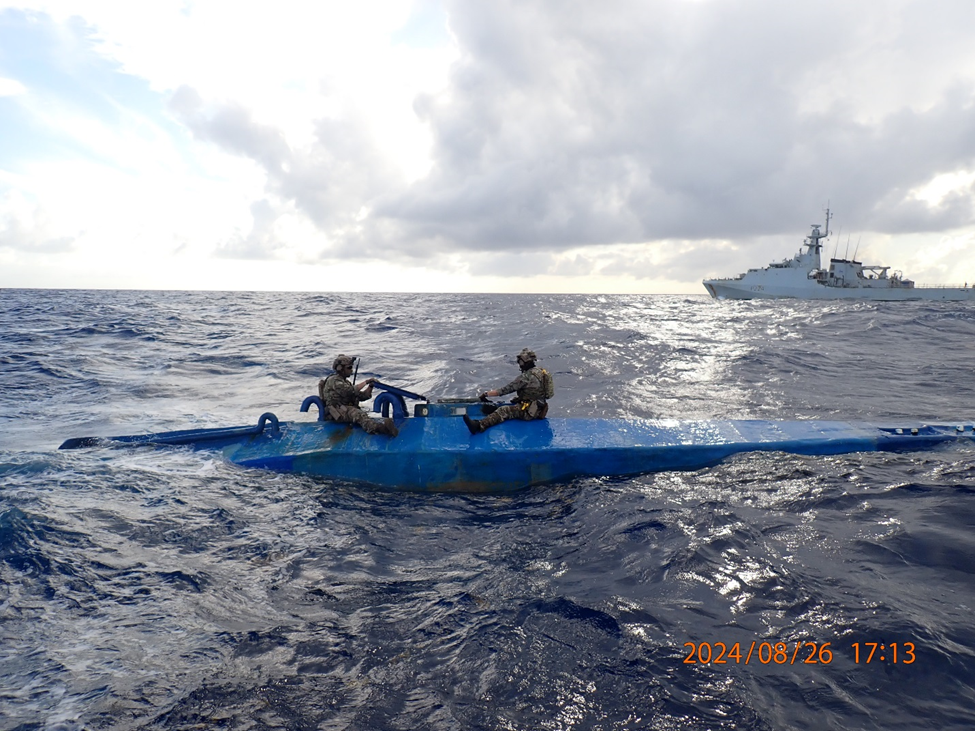
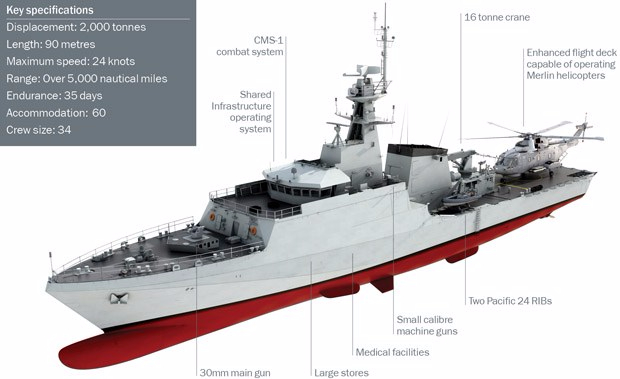
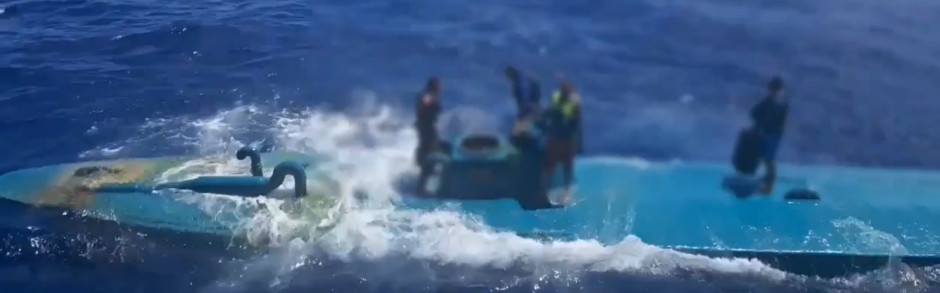
Crew members form U.S. Coast Guard Tactical Law Enforcement Detachment (LEDET) 111 and British Royal Navy team embarked aboard HMS Trent (P244) interdicts a semi-submersible drug smuggling vessel in the international waters of the Caribbean Sea, Aug. 26, 2024. Three suspected smugglers and 1,239 pounds of illegal narcotics from this interdiction were transferred to federal custody for prosecution by the U.S. Department of Justice. (Courtesy image from United Kingdom Royal Navy)

BBC reports,

“HMS Trent has made eight drug seizures since deploying to the Caribbean in December 2023, setting a new record, the Royal Navy added.

“It said the patrol ship had seized more than 9,400kg (20,000lb) of drugs, making it the best hunter of smugglers in the Royal Navy this century.”

Below is the Coast Guard news release regarding the offload.


Sept. 10, 2024

Coast Guard offloads more than $54 million in illegal narcotics interdicted in Caribbean Sea

Coast Guard Seventh District – (305) 415-6683

MIAMI – The crew of Coast Guard Cutter Diligence offloaded more than 4,125 pounds of cocaine with an assessed street value of approximately $54 million in Port Everglades, Monday.

Coast Guard crews, working alongside interagency and international partners, seized the illegal drugs in the international waters of the Caribbean Sea during three separate interdictions.

The following assets and crews were involved in the interdictions:

  • Royal Navy ship HMS Trent (P 244)
  • U.S. Coast Guard Tactical Law Enforcement Team Pacific (PAC-TACLET)
  • U.S. Coast Guard Cutter Joseph Napier (WPC 1115)
  • U.S. Customs and Border Protection Air and Marine Operations (CBP-AMO)
  • Joint Interagency Task Force South (JIATF-South)

Along with the illicit narcotics, 11 suspected smugglers were apprehended and will face prosecution in federal courts by the U.S. Department of Justice.

“I am extremely proud of our crew’s tenacity and professionalism, coupled with outstanding coordination with Coast Guard aircrews, during this complex counter-drug mission,” said Lt. Matthew Carmine, Coast Guard Cutter Joseph Napier commanding officer. “Their steadfast efforts, along with those of foreign allies and partner agencies, continue to prove vital to countering drug trafficking organizations and safeguarding the people of Puerto Rico and the U.S. Virgin Islands.”

Detecting and interdicting illicit drug traffickers on the high seas involves significant interagency and international coordination. The Joint Interagency Task Force South in Key West, Florida conducts the detection and monitoring of aerial and maritime transit of illegal drugs. Once interdiction becomes imminent, the law enforcement phase of the operation begins, and control of the operation shifts to the U.S. Coast Guard throughout the interdiction and apprehension. Interdictions in the Caribbean Sea are performed by members of the U.S. Coast Guard under the authority and control of the Coast Guard’s Seventh District, headquartered in Miami.

These interdictions relate to Organized Crime Drug Enforcement Task Forces’ (OCDETF) Strike Force Initiatives and designated investigations. OCDETF identifies, disrupts, and dismantles the highest-level criminal organizations that threaten the United States using a prosecutor-led, intelligence-driven, multi-agency approach. Additional information about the OCDETF program can be found at https://www.justice.gov/OCDETF.

For breaking news, follow us on “X” (formerly Twitter). For additional information, find us on Facebook and Instagram.

Visit GoCoastGuard.com to learn about active duty and reserve, officer and enlisted opportunities in the U.S. Coast Guard. Information on how to apply to the U.S. Coast Guard Academy can be found here.

UNITAS 2024 Photos

Guest author Andres Tavolari sent me a link to the Armada de Chile Flickr account which currently has a reported 14,813 photos.

The most recent photos are from UNITAS 2024. There are some really excellent photographs. Presumably as additional photos are added, page numbers will change, but currently, at least the first seven pages, more than 600 photos, are all devoted to UNITAS 2024 and more may be added.

An earlier post provided identification of participants.

UNITAS 2024 Participants

Since the announcement of the start of UNITAS 2024, I have been looking for a more detailed list of participating units.

We already knew about US participants, including US Coast Guard Tactical Law Enforcement Team (TACLET) Pacific Law Enforcement Detachment (LEDET); and USCG Maritime Security Response Team East (MSRTE) Direct Action Section, but had little information about non-US ships and aircraft involved.

Got a pleasant surprise in the form of an email from my Chilean connection, Andres Tavolari, providing a link to the information.

Andres was the author of one of the most widely read posts ever on this blog,

Three Nations Share German OPV Design             

That post was about an 80 meter Fassmer OPV design that was planned to be built in Argentina, Chile and Colombia. Chile built four. Colombia built three. Argentina dropped out of the program and instead bought four Bouchard (formerly L’Adroit) class OPVs. Germany subsequently built three 86 meter versions for their federal police force and Singapore has ordered four similar vessels.

Three of these 80-meter OPVs are participating in UNITAS 2024

The Chilean website provides a small side view graphic or silhouette for each ship and aircraft type along with the country the asset is from and a link to a photograph. In the case of the Chilean assets, there is additional descriptive information.

The website is in Spanish, but my browser provided an understandable translation.

Aircraft came from Chile, the US, Ecuador, and Uruguay.

19 ships and submarines were identified.

Chilean Navy participants include eight floating units: three frigates, two OPVs, an 42,000 ton oiler, a 12,000 ton French built LSD(H) that they have apparently used to resupply their Antarctic Station (video above), a small Landing Ship Tank (LST), and a submarine.

The US Navy has sent USS Germantown (LSD-42), USS St. Louis (LCS 19), and USS Hampton (SSN 767).

Argentina, Brazil, and Peru sent frigates. Ecuador sent a corvette. Mexico sent ARM Benito Juarez, classed as a long range ocean patrol ship, but really much more, being equipped with a CAPTAS-2 towed array active/passive sonar and armed with US sourced anti-ship Harpoon missiles and anti-air Evolved Sea Sparrow Missiles (ESSM) and Rolling Airframe Missiles (RAM). The UK sent a 5.000 ton ice capable patrol, survey, and support ship, HMS Protector.

The Chilean Navy has done a great job of providing accompanying video as well.

This year’s exercise will include cyber, and Fourth Fleet is also bringing some unmanned systems. There will also be a SINKEX.

Really, this is some of the best coverage of an exercise I have ever seen, and the underway portion hasn’t even started.

Andres also told me,

“At the same time, other American gear visited us: at least, a C-17 which brought an UH-60 and a HIMARS launcher with what appears to be a reloading truck.”

“UNITAS LXV Begins in Valparaiso, Chile” –SOUTHCOM

UNITAS LXV commenced today in Valparaiso, Chile, with 17 ships, two submarines, and 23 aircraft operated and supported by more than 4,300 Sailors and Marines from 24 nations. UNITAS is the world’s longest-running multinational maritime exercise, conceived in 1959 and executed without fail since 1960.

Below is a U.S. Naval Forces Southern Command / U.S. 4th Fleet Public Affairs news release. 

Notably there are no Coast Guard floating units or aircraft participating this year but U.S. Coast Guard (USCG) Tactical Law Enforcement Team (TACLET) Pacific Law Enforcement Detachment (LEDET); and USCG Maritime Security Response Team East (MSRTE) Direct Action Section are providing their special expertise.

This exercise is about disaster response and law enforcement as much as war fighting.

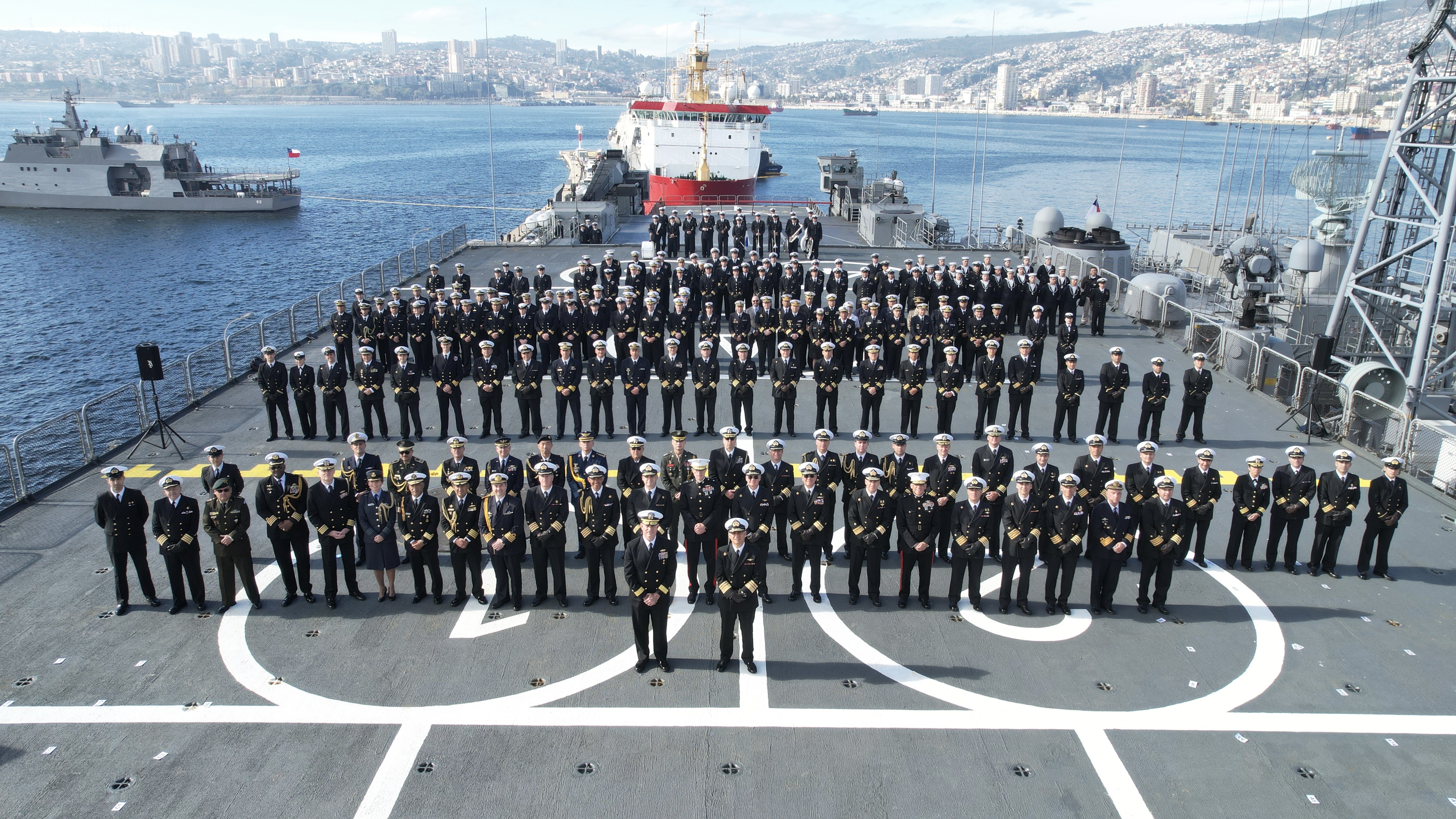
The ship visible in the upper left hand of the photo is a Fassmer designed 80-meter Offshore Patrol Vessel (OPV). It is the Chilean Navy’s Comandante Policarpo Toro (OPV-82). Chile has four ships and Colombia three ships built to this design.

The ship immediately astern (red hull and white superstructure) appears to be an icebreaker, but I don’t recognize it.


Sept. 2, 2024

UNITAS LXV Begins in Valparaiso, Chile

VALPARAISO, Chile – Navy and Marine forces arrived in Valparaiso in support of UNITAS LXV (65), the world’s longest-running multinational maritime exercise in the world, which officially commenced September 2, 2024. 

The Chilean navy is hosting this year’s UNITAS, which will feature 17 warships/vessels, two submarines, 20 aircraft (fixed wing/helicopter), and more than 4,300 personnel from 24 partner nations. Forces will conduct operations off the coast of Valparaiso, Chile, and ashore in the vicinity of Puerto Aldea, Chile, through September 12.

Rear Adm. Rich Lofgren provided opening remarks as U.S. Naval Forces Southern Command/U.S. 4th Fleet Deputy Commander, addressing the opportunities to build relationships ashore, including subject matter exchanges, operations briefs, and a Women, Peace, and Security symposium. Creating these spaces to build relationships on shore will pay dividends at during the at-sea phase of the exercise and beyond.

“Sailors go to sea,” Lofgren added. “I look forward with great excitement to joining you at sea, as we conduct combined and joint operations. We will enhance our capabilities and improve our interoperability in these maritime events – together. Make no mistake, all of us will work hard the next 12 days. But we will communicate effectively – together. We will operate effectively – together. And we will overcome obstacles – together.”

UNITAS, which is Latin for unity, united, or oneness, was conceived in 1959 when representatives at the first Inter-American Naval Conference in Panama agreed to conduct an annual maritime exercise with one another. Prior to UNITAS I in 1960, U.S. Chief of Naval Operations Adm. Arleigh Burke reviewed preparations for the multinational exercise. He commended planners for their progress, especially in building compatible communication systems among navies, and predicted that UNITAS would build strong relationships among Sailors of the Western Hemisphere.

UNITAS I took place in 1960 with forces from Argentina, Brazil, Chile, Colombia, Ecuador, Peru, Uruguay, the United States, and Venezuela. This year marks the 65th iteration of the world’s longest-running annual multinational maritime exercise.

Including the United States, UNITAS LXV will bring together 24 nations from all over the world to train forces in joint maritime operations that enhance tactical proficiency and increase interoperability. Participating nations include Argentina, Brazil, Canada, Chile, Colombia, Dominican Republic, Ecuador, France, Germany, Guatemala, Honduras, Italy, Jamaica, Japan, Mexico, Paraguay, Peru, Portugal, South Korea, Spain, Trinidad and Tobago, United Kingdom, United States, and Uruguay.

Following the UNITAS LXV Opening Ceremony on September 2, the in-port phase of the exercise will feature subject matter expert exchanges, professional symposia, ship rider exchanges, and operations meetings. During this time, Marines and Sailors will conduct training events in Valparaiso to include medical, cyber defense, and diving and salvage operations.

During the UNITAS LXV Underway Phase, forces will participate in events testing all warfare operations, to include live-fire exercises such as a SINKEX and an amphibious ship-to-shore landing and force withdrawal.

Unmanned and hybrid fleet systems will return for a second year to UNITAS with the presence of unmanned undersea vehicles. As part of the U.S. Navy’s future hybrid fleet, the Chief of Naval Operations has tasked U.S. 4th Fleet to scale unmanned platforms to the fleet level.

There are many U.S. forces participating in UNITAS LXV, including USS Germantown (LSD 42), USS St Louis (LCS 19), and USS Hampton (SSN 767). Other U.S. participants include Patrol Squadron Five (VP 5); Mobile Diving and Salvage Unit (MDSU) 2; Explosive Ordnance Disposal Mobile Unit (EOD) 2; Mine Countermeasures Group 2 (MCMGRU TWO); Helicopter Maritime Strike Squadron 50 Detachment 4 (HSM 50 Det 4); 2nd Battalion, 7th Marines (2/7); 1st Battalion, 24th Marine Regiment (1/24); 4th Light Armored Reconnaissance Battalion (4th LAR); 4th Reconnaissance Battalion (4th Recon); Combat Logistic Regiment 4 (CLR 4); 2nd Battalion, 14th Marines (2/14); Marine Aerial Refueler Transport Squadron 234 (VMGR-234); Marine Wing Communications Squadron 48 (MWCS-48); Marine Aircraft Control Group – 48 (MACG-48); Marine Fighter Attack Squadron 112 (VMFA-112); U.S. Coast Guard (USCG) Tactical Law Enforcement Team (TACLET) Pacific Law Enforcement Detachment (LEDET); and USCG Maritime Security Response Team East (MSRTE) Direct Action Section. Operational and tactical level leadership will be provided by Commander, Destroyer Squadron 40, (COMDESRON 40); Commander, Amphibious Squadron Seven (COMPHIBRON SEVEN); U.S Marine Corps Forces South (MARFORSOUTH); USNAVSOUTH/FOURTHFLT; and U.S. Southern Command (USSOUTHCOM).

U.S. Naval Forces Southern Command/U.S. 4th Fleet supports U.S. Southern Command’s joint and combined military operations by employing maritime forces in cooperative maritime security operations to maintain access, enhance interoperability, and build enduring partnerships in order to enhance regional security and promote peace, stability and prosperity in the Caribbean, Central and South American region.

U.S. Marine Corps Forces, South is the Marine Corps component to U.S. Southern Command, is responsible for planning exercises, operations, and overall Marine Corps support for the SOUTHCOM assigned area of responsibility.

Atlantic Area Cutter Back in the Eastern Pacific Drug Transit Zone

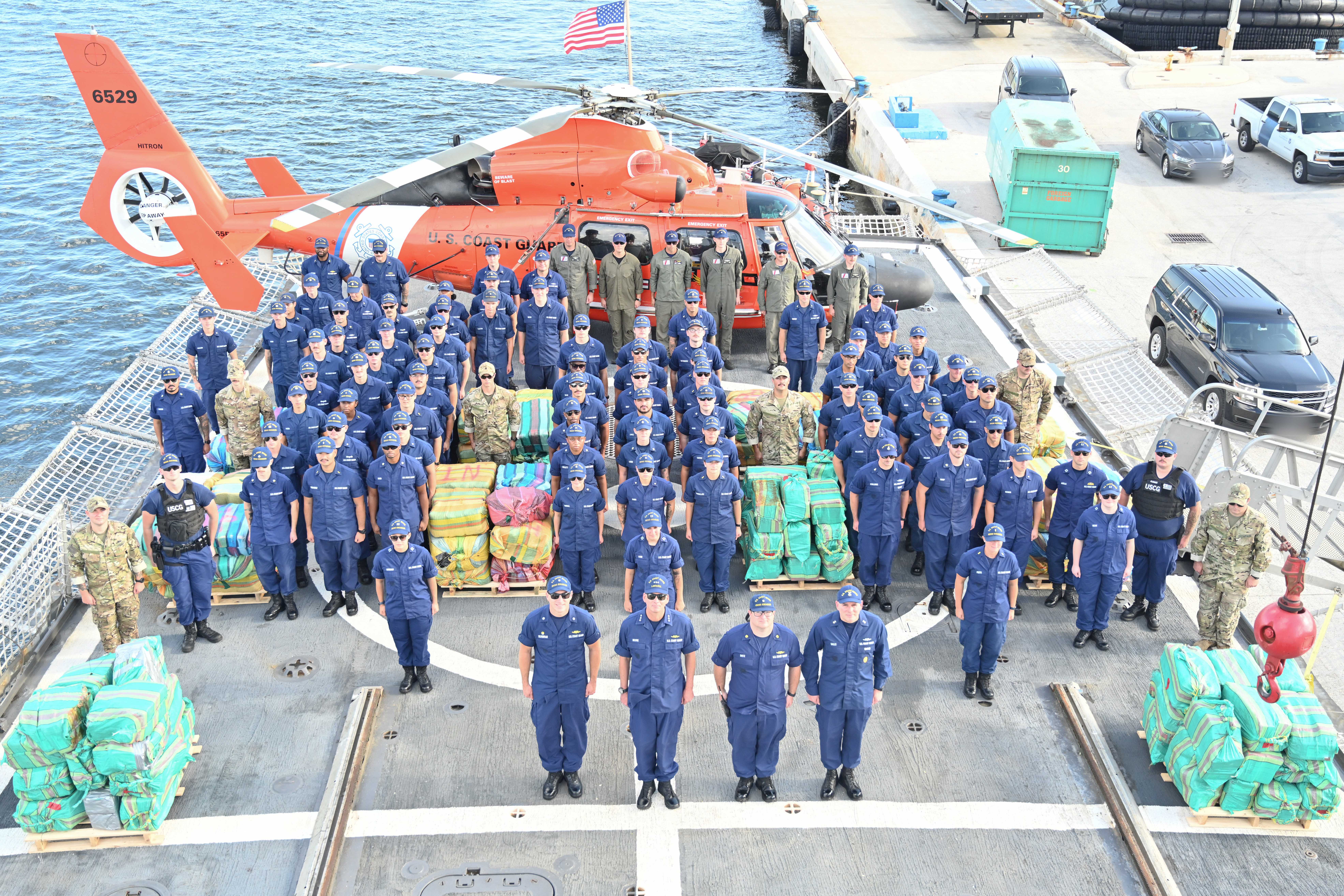
The crew of Coast Guard Cutter Escanaba (WMEC 907) poses for a group photo on the cutter’s flight deck during a contraband offload, Aug. 23, 2024, alongside select personnel from Coast Guard Cutters Spencer (WMEC 905), Legare (WMEC 912), Coast Guard Helicopter Interdiction Tactical Squadron, Pacific Area Tactical Law Enforcement Team, and Coast Guard Atlantic Area Command while moored to the pier in Fort Lauderdale, Florida. Escanaba conducted a 46-day counter-drug patrol in the Eastern Pacific Ocean. (U.S. Coast Guard photo by Petty Officer 2nd Class Brandon Hillard)

Below is a news release from Coast Guard News.

Two things of note in what would normally be a routine report:

First, despite the fact that most Atlantic Area cutters are closer to the Eastern Pacific drug transit zone than those based on the West coast, recently they have been too busy with migrant interdiction to do drug enforcement in the Pacific. This patrol marks a return to previous practice of having LANTAREA cutters, as well as those from the Pacific Area, working the drug problem in the Pacific.

Second, reading the caption of the photo above, you may note that the crew included “...select personnel from Coast Guard Cutters Spencer (WMEC 905), Legare (WMEC 912)…” Spencer and Legare are at the Coast Guard yard as the first and second of six Bear class WMEC270s that will receive full Service Life Extension Program (SLEP) upgrades.  The crews are reassigned after the ships enter SLEP, so it appears some were temporarily assigned to Escanaba to make up for shortfalls in the crew. The shortfalls may have been exacerbated because the patrol was over the summer transfer season.


 Aug. 29, 2024

Coast Guard Cutter Escanaba completes 46-day counter-drug patrol in Eastern Pacific Ocean

PORTSMOUTH, Va. — The crew of the Coast Guard Cutter Escanaba (WMEC 907) returned home to Portsmouth, Wednesday, following a 46-day counter-drug patrol in the Eastern Pacific Ocean.

While deployed, crew members supported the Coast Guard Eleventh District, headquartered in Alameda, California, and Joint Interagency Task Force – South, headquartered in Key West, Florida.

During the patrol, Escanaba’s crew disrupted illegal narcotics smuggling, interdicting 3,408 pounds of cocaine and 4,418 pounds of marijuana valued at nearly $50 million during two separate interdictions. The drugs were offloaded in Port Everglades, Florida on Aug. 23. Additional information about Escanaba’s drug offload, including photos and video, can be found here.

Escanaba’s drug seizures contributed directly to furthering Coast Guard objectives to combat transnational criminal organizations and enhance regional stability and security.

While at sea, Escanaba’s crew was assisted by members of Helicopter Interdiction Tactical Squadron (HITRON), based in Jacksonville, Florida and members of Tactical Law Enforcement Team (TACLET) Pacific – Law Enforcement Detachment (LEDET) 107, based in San Diego, California.

HITRON crew members delivered air support for the use of force and enhanced long-range detection capabilities while deployed aboard Escanaba. The TACLET Pacific LEDET supplied skilled boarding personnel critical for mission execution and served as a force multiplier for other law enforcement activities.

“The crew of Escanaba and our shipmates from HITRON and TACLET are to be commended for executing a demanding mission with professionalism and precision,” said Cmdr. Jared Silverman, commanding officer of Escanaba. “In concert with the Coast Guard’s partner agencies and with support from Joint Interagency Task Force – South, the accomplishments of Escanaba serve as a reminder of how vital this mission is.”

Escanaba is a 270-foot, Famous-class medium-endurance cutter homeported in Portsmouth, Virginia. The cutter’s primary duties are counter-narcotics operations, migrant interdiction, living marine resources protection, and search and rescue in support of U.S. Coast Guard operations throughout the Western Hemisphere.

For information on how to join the U.S. Coast Guard, visit GoCoastGuard.com to learn about active duty, reserve, officer, and enlisted opportunities. Information on how to apply to the U.S. Coast Guard Academy can be found here.

For more, follow us on Facebook, Instagram and X.

Cutter Size Ships Building in Latin America

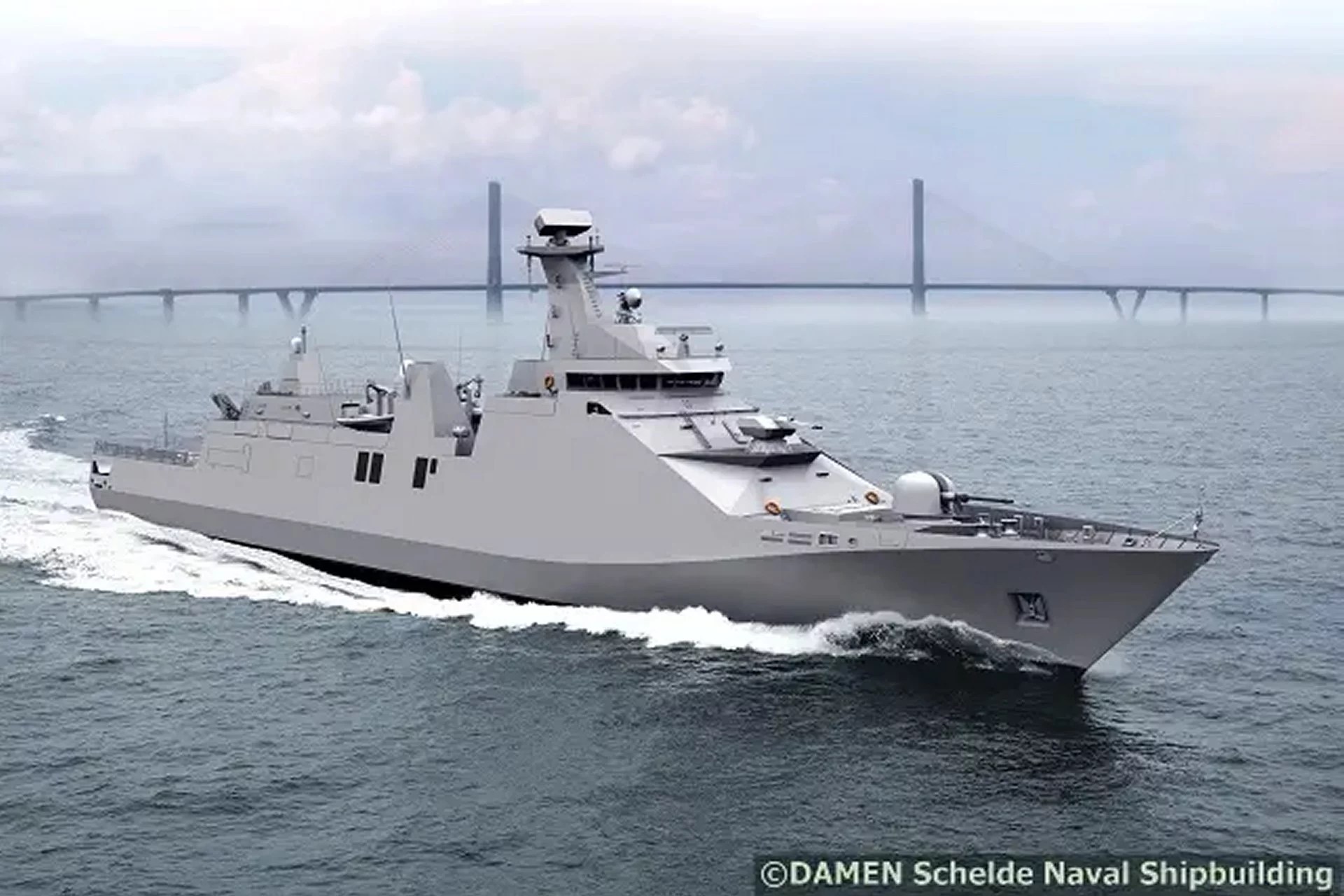
Damen SIGMA 10714 for Colombia

Always interesting to see what other countries are doing in terms of ships that will perform coast guard style missions. In some countries, these are their largest warships.

Two recent reports from Latin America.

In both cases they have chosen to build ships with the assistance of experienced European shipbuilders. Both are smaller than either the National Security Cutter or the Offshore Patrol Cutter.

Brazil has launched the first of a planned eight Tamandaré-Class Frigates, pictured above, designed by ThyssenKrupp Marine Systems of Germany. It is evolved from earlier MEKO designs that include the German K130 Braunschweig class corvettes and the Israeli Sa’ar 6.

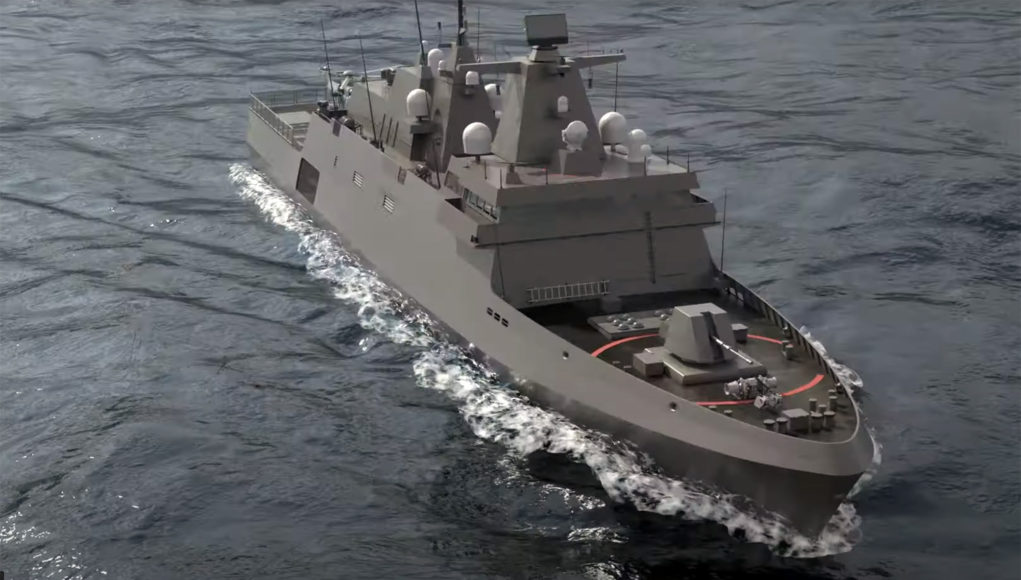
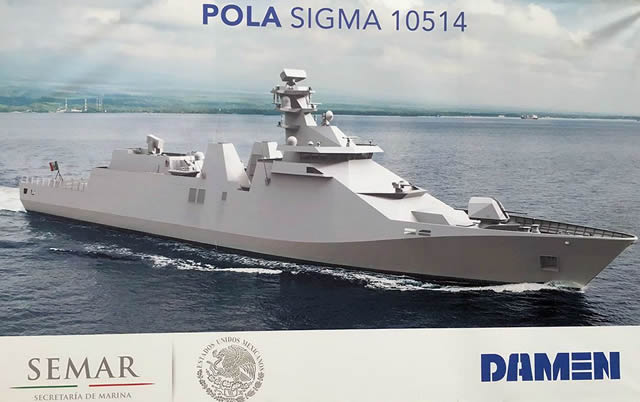
Colombia has contracted with Damen, designers of the USCG Fast Response Cutters, to help locally build the first of five planned light frigates that will replace four somewhat smaller sized Admirante Padilla class ships commissioned 1983/4. The design is a Damen SIGMA 10714 design, meaning it is 107 meters (353′) in length with a beam of 14 meters (46′). The design is closely related to ships built in Mexico (pictured below) and in Indonesia.

Mexico’s Damen SIGMA 10514, ARM Benito Juárez (POLA-101)

Chile’s New Icebreaker

Chilian Icebreaker “Almirante Viel”.

Andrés Tavolari, a lawyer and Chilean Marine Reserve Officer, who wrote one of our most popular posts, Three Nations Share German OPV Design has stayed in touch and tells me, on July 3rd the Chilean Navy commissioned their new Icebreaker/Antarctic supply ship, “Almirante Viel”. This is how he described it.

The ship is a PC-5 icebreaker equipped with a flight deck and has a hangar for two medium helicopters of the Super Puma or Cougar type. The crew is 86 people + 32 scientists. It can transport 19 containers of 20 feet, 2,202 m³ of fuel, 153 m³ of fresh water, and 86 m³ of aviation fuel for the helicopters. Its maximum speed is 15 knots and 3 knots in ice 1 meter thick. Its range is 14,000 miles and it has an autonomy of 60 days. Its length is 111 meters, it has a beam of 21 meters, and a draft of 7.2 meters. Its propulsion plant is composed of 2 main engines of 6,303 hp and a bow thruster of 670 hp.
–
With Andrés’ help we did a 2016 post on the ship when it was in the planning stages that, with the attached comments, has a lot of discussion about the ship’s mission, Chile’s coast guard counterpart, the Chilean Navy and Marines.
–
Andrés sent along a link to the YouTube video of the commissioning ceremony I have posted below. It is off course in Spanish. He suggested that “…it is most interesting from minute 31 to minute 34 and from minute 57 up to the end.”
–
We see the crew board the ship beginning about 31:30. Something I have not seen at a USCG commissioning, the entire crew was singing beginning about 37:00 to 39:30. They sing again 57:50 to 1:00:00 during which the video shows some drone footage of the ship’s exterior and photos of interior compartments.
–
The Chilean Navy has a long association with the British Royal Navy. I think you can see it in their uniforms.

“New Trend: Transatlantic Narco Submarines” –Covert Shores

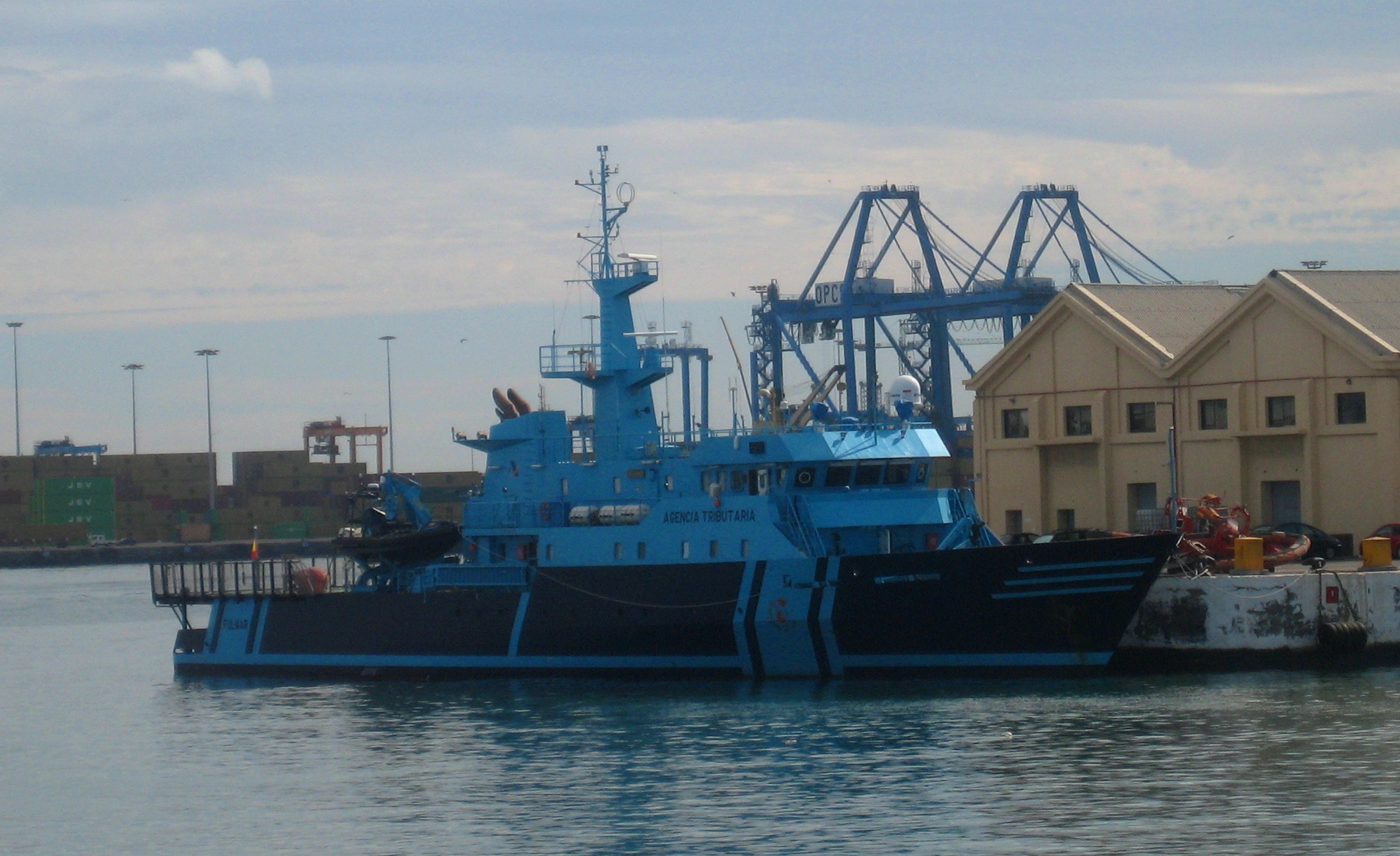
On June 26, 2024 Spanish police aboard SVA Fulmar interdicted a narco submarine 200 miles from the Canary Islands. The vessel was carrying 900kg of cocaine. The 4 crew scuttled the vessel before being rescued and arrested.–Covert Shores.

Covert Shores reports what appears to be a trend that self-propelled semi-submersibles are being used to transport cocaine directly from Latin America to Europe based on three interceptions beginning, one in March and two in June.

The use of internal diesel engines rather than outboards should not be surprising, considering they are much more fuel efficient that outboards, for the long distances involved.

Spanish Tax Agency vessel SVA Fulmar. 20 Nov. 2007. Photo credit: Outisnn via Wikipedia