“Canadian-led Combined Task Force 150 seizes 770 kg of methamphetamine in the Arabian Sea” (USCGC Glen Harris) –NAVCENT

240305-N-NO146-1001 ARABIAN SEA (March 5, 2024) Bags of illegal narcotics seized from a vessel are stacked on the deck of the U.S. Coast Guard Sentinel-class fast response cutter USCGC Glen Harris (WPC 1144) in the Arabian Sea, March 5.

Below is a news release from US Naval Forces Central Command / Combined Maritime Forces Public Affairs dated March 9, 2024.

USCGC Glen Harris (WPC-1144). Bollinger Shipyards photo.


Canadian-led Combined Task Force 150 seizes 770 kg of methamphetamine in the Arabian Sea

MANAMA, Bahrain —

A U.S. Coast Guard cutter operating under the Canadian-led Combined Task Force(CTF) 150 of Combined Maritime Forces seized 770 kg of methamphetamine from a dhow in the Arabian Sea, March 5.

Based on intelligence provided by CTF 150, the Sentinel-class fast response cutter USCGC Glen Harris (WPC 1144) seized the methamphetamines and, after documenting and weighing the illicit haul, properly disposed of it.

“I am extremely proud of the work of the Combined Task Force 150 team and USCGC Glen Harris in preventing these drugs from reaching their final destination. This interdiction demonstrates the value of multinational efforts within the Combined Maritime Forces to prevent and disrupt criminal and terrorist organizations at sea,” said Canadian Navy Capt. Colin Matthews, Commander CTF 150.

Glen Harris is forward deployed to Bahrain. The fast response cutter is part of a contingent of U.S. Coast Guard ships operating in the region under Patrol Forces Southwest Asia (PATFORSWA). PATFORSWA deploys Coast Guard personnel and ships alongside U.S. and regional naval forces throughout the Middle East.

CTF 150’s mission is to deter and disrupt the ability of non-state actors to move weapons, drugs and other illicit substances in the Indian Ocean, the Arabian Sea and the Gulf of Oman.

CTF 150 is one of five task forces under CMF, the world’s largest multinational naval partnership, and focuses on maritime security operations in the region. CTF 150 supports other CMF Task Forces and their member nations, with support and intelligence further enabling weapons and drug interdictions in the region. The 41-nation naval partnership upholds the international rules-based order by promoting security and stability across 3.2 million square miles of water encompassing some of the world’s most important shipping lanes.

USCGC Clarence Sutphin Jr. May Have Intercepted Kamikaze Underwater Drone Parts Bound for Houthi

“US Coast Guard / CENTCOM released photo of weapons seized aboard an Iranian dhow…The seizure included UUV and USV components. The annotations, highlighting possible UUV parts, have been added.”

As reported earlier, on January 28,2023, USCGC Clarence Sutphin Jr. intercepted an arms shipment bound for Houthi controlled areas of Yemen. Somehow, I skipped over an aspect of the report.

 The boarding team discovered over 200 packages that contained medium-range ballistic missile components, explosives, unmanned underwater/surface vehicle (UUV/USV) components, military-grade communication and network equipment, anti-tank guided missile launcher assemblies, and other military components. (emphasis added–Chuck

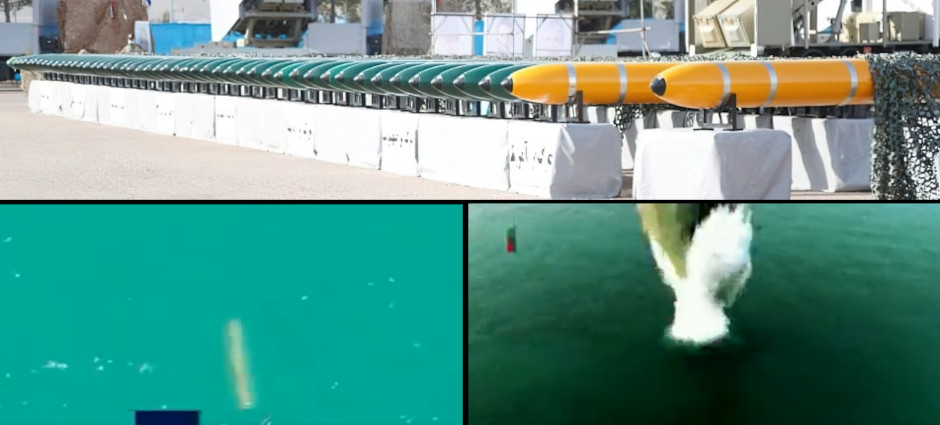
H. I Sutton at “Covert Shores” amplifies on the story, identifying the likely UUV as a one-way attack system. An earlier post provides a bit more detail about the likely weapon.

It appears this weapon is slow, so it is more likely to be used against vessels that are anchored or moored. It might also be used against port infrastructure. It could be launched and/or controlled from any number of innocuous looking craft. Because the effects of an underwater explosion are amplified by the non-compressible nature of water, this weapon could cause very serious damage.

In addition to the Houthi, Iran and any of its client organizations may use this weapon.

The Navy is Looking for Counter Drone Systems

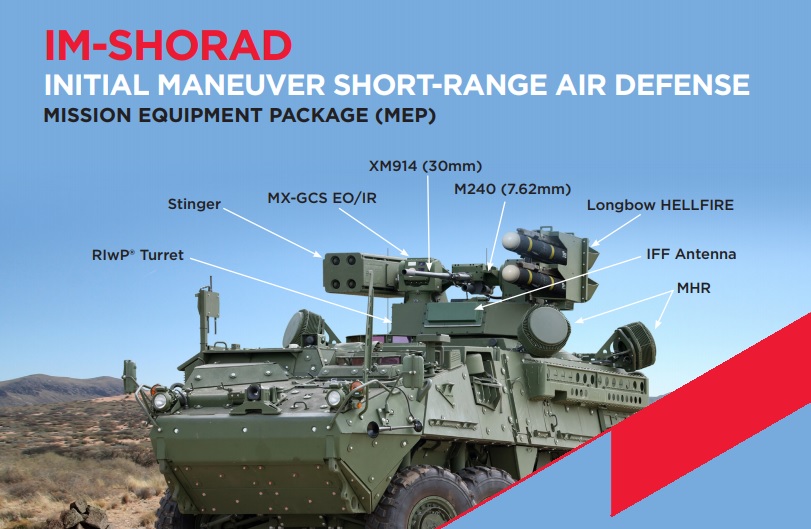
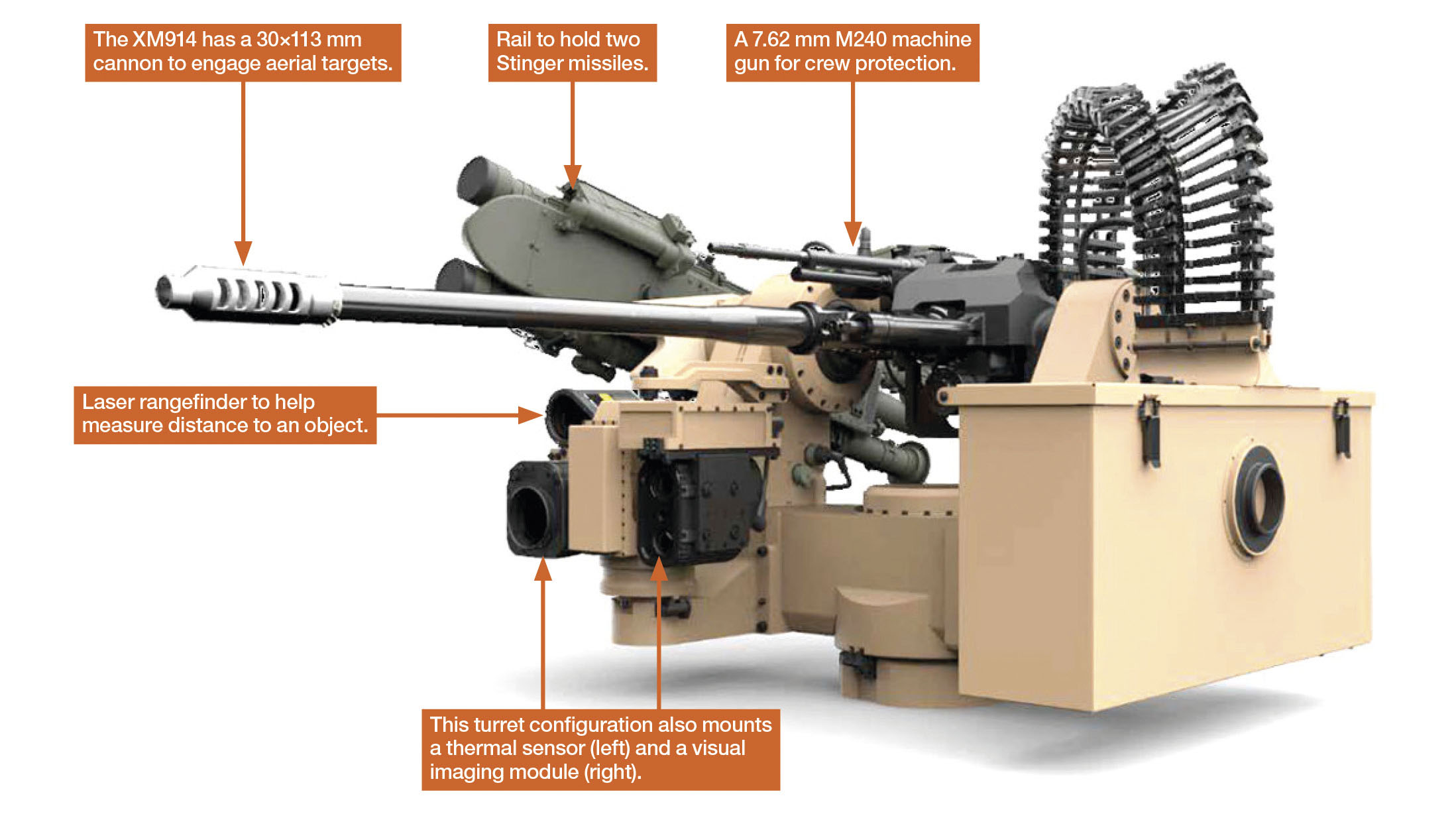
Interim Maneuver Short-Range Air Defense (IM-SHORAD). The sensors and remote weapon system used here looks like it might be a contender.

The Navy is looking for mature counter Unmanned Air Systems (c-UAS) that can be rapidly deployed. They have issued a Request For Information (FRI). Responses are due today, so we are talking near term if it happens. 

Looks like it might be something the Coast Guard could use,

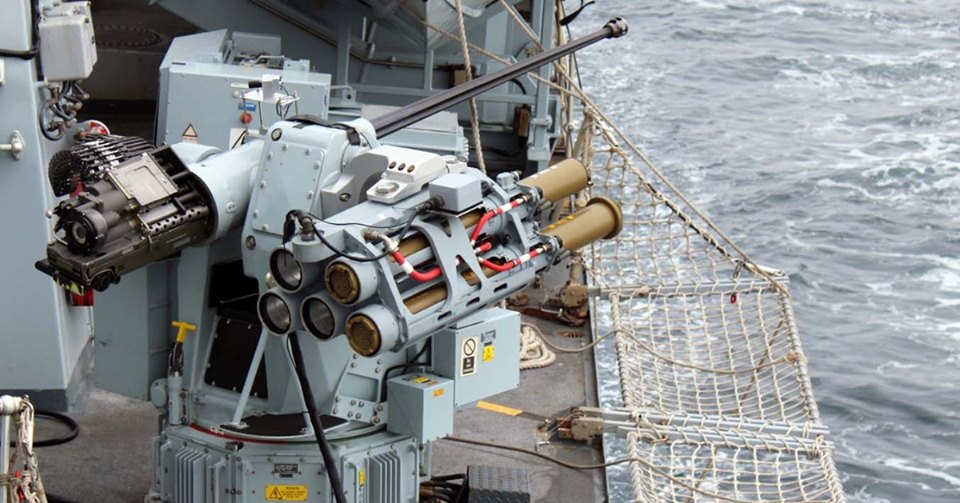
Marine Air Defense Remote Weapon Station. Use of this Remote Weapons Station would require an interface with cueing sensors.

Below is SECTION 3: [Requirements Overview]


PEO IWS 11.0 is looking for respondents to submit feasibility and capability information on innovative, mature solutions to counter Group 3-5 UAS from surface ships.  System requirements include:

  1. Mature systems that are in production and can be deployed in 1-6 months (preferred), or 6-12 months at the latest.
  2. Demonstrated performance against Groups 3 to 5 UAS, with demonstrated capability against other classes of UAS’s being of interest.
  3. Minimal integration requirements with Naval combat systems; with independent, self-contained capability highly desirable.

If the system is capable against Group 5 UAS (the largest UASs, over 1320 pounds (600 kg) and with no limit on their maximum speed) it’s likely the system will also have a capability against at least subsonic cruise missiles and manned aircraft and perhaps against winged smart bombs. After all, a Naval Strike missile fits the definition of a Group 4 UAS. Surface launched Harpoon or Tomahawk would be Group 5 UAS.

The War Zone has a fairly long post about this including discussion of alternatives. They seem to think these systems are destined for DDGs, but I think the need to equip other types, that do not have robust AAW capabilities, may be more urgent. If a C-UAS has an anti-surface capability, I could see such a system replacing Mk38 mounts. Alternately a 30mm Mk38 Mod4 mount that also mounts AAW missiles (like Stinger) might meet the requirement.

Martlet Light Multirole Missile launchers mounted on MSI 30mm gun mount that will be used in US Navy service as the 30mm Mk38 Mod4.

Mine Countermeasures Ships and MSC ships are currently essentially unarmed. They might be recipients.

Minimal integration requirements with Naval combat systems; with independent, self-contained capability highly desirable” would certainly mean it should not be too difficult to add to a cutter.

“Ukraine Sinks Russian Navy Missile Corvette In Drone Boat Attack” –The War Zone

The War Zone reports,

“A dramatic new view released by the Ukrainian Defense Intelligence Directorate (GUR) shows several of its uncrewed surface vessels (USVs) strike and sink the Russian Tarantul-III class missile corvette Ivanovets. The attack took place Wednesday night local time on the Black Sea near Lake Donuzlav in western Crimea, the GUR said on its Telegram channel.

“A 128-second video posted on Twitter shows what appears to be a complex attack on the Ivanovets by what Lt. Gen. Kyrylo Budanov, commander of GUR, told us were Maritime Autonomous Guard Unmanned Robotic Apparatus (MAGURA V5) USVs operated by the GUR’s Group 13 drone unit.”

Tarantul-class corvette

The vessel in the video is a Tarantul class missile corvette. These vessels are powered by four engines totaling 32,000 HP making them very fast (42 knots). The hot gas turbine exhausts on either side of the transom glow brightly early in the video.

They have a pair of 30mm gatling guns on the aft superstructure with a clear field of fire aft.

This ship appears well equipped to defeat an unmanned surface vessel (USV) attack.

The Drive post analyses the attack, but I would point out that I don’t see as many splashes as I would have expected, if the 30mm guns were functioning. I don’t see muzzle flashes. What I did see appeared to be from heavy machine guns (12.7 or 14.5mm) rather than 30mm.

Many USVs were involved in this attack. The Ukrainians claimed six USVs hit the little corvette. Still other USVs filmed the ultimate explosion and sinking.

Perhaps the 30mm guns had run out of ammunition engaging other USVs by the time the drone in the first video recorded attack gets as close as seen in the video.

The report included this statement,

““The Ivanovets MRK sank while repelling a night attack by the Ukrainian Armed Forces on Sevastopol,” the Russian VoenkorKotenok Telegram channel wrote.”

The Russians have historically stationed a “guard ship” off their ports to prevent surprise attack. Ivanovets may have been stationed off Sevastopol specifically as a counter to a drone attack.

“A Houthi missile got so close to a US destroyer the warship had to turn to a last resort gun system to shoot it down: report” –Business insider

A Phalanx Close-In Weapons system on the US destroyer Gravely downed an incoming Houthi cruise missile on Tuesday. This image shows the CIWS during a live-fire practice by a guided-missile cruiser in November 2023. MC2 Malachi Lakey/US Navy

Business Insider reports,

“A Houthi anti-ship cruise missile fired into the Red Sea came within a mile of a US Navy destroyer (USS Gravely. DDG-107) on Tuesday, close enough that the American warship had to turn to its Close-In Weapon System (Phalanx)— a last line of defense.”

Nice to know it worked but bet the pucker factor was high. Gravely is not one of those Burke class destroyers that traded one of its Phalanx for SeaRAM.

“Indian Navy Repels 3 Somali Pirate Hijackings” –USNI

INS Sumitra during her trials, 27 August 2014, Indian Navy photo.

The US Naval Institute News Service reports.

The Indian Navy thwarted three hijackings by Somalian pirates in a two-day period from Sunday to Monday, with one warship rescuing separately two hijacked ships off the east coast of Somalia, while a second ship participated in a multinational operation with Sri Lanka and the Seychelles to rescue a hijacked ship, according to releases by the service.

So, what was this hero warship? — An Indian Navy counterpart of a USCG medium endurance cutter, like a WMEC 270 but a little larger, faster. and a lot newer.

INS Sumitra (P-60) is one of six Saryu class offshore patrol vessel, four for the Indian Navy and two for the Sri Lanka Navy.

(It is not the Indian Navy OPV pictured in the X report included in the USNI report. That is INS Sharda (P-55) commissioned in 1991, which participated in the third rescue. Also much like a WMEC270, only slightly larger, faster, and newer.)

Ships of the Saryu class displace 2,230 tons full load, are 344′ (105 m) in length, with a beam of 42′ (12.9 m), a draft of 16′ (4.9 m). They have two engines producing 21,428 HP (15,979 kW) (1,908 HP more than the OPC) for a speed of 25 knots. They have an endurance of 6,000 nmi at 16 knots, with a crew of 118. They are armed with a 76mm gun and two 30mm guns.

We seem to be seeing a reemergence of Somali pirates. When Somali piracy was at its height, the US Navy was using Burke class destroyers, about four times larger, to do the same sort of thing INS Sumitra did. Even the National Security Cutters and OPCs are twice as large.

I suspect that the new Fleet Mix Study, which has not been made public (why?) would show that the Coast Guard needs more patrol cutters with aviation facilities and more endurance than the FRCs. Currently, we have 38 large patrol cutters, 1000 tons and larger. The program of record will leave the Coast Guard with 36, all 4,500 tons or larger.

This is, I believe, the smallest number of large patrol cutters the Coast Guard has had since at least 1948. Yes, we might build more than 25 OPCs, but we might do well to trade off some of the out year OPC construction for more numerous smaller vessels about the size of INS Sumitra. It would be especially useful if we could start getting them ASAP, at least before 2038 when the last OPC is due. We might be able to build one OPC and two MECs annually for about the same cost as two OPCs. Of course, total operating costs would probably be higher.

Naval Deployments, 29 January, 2024

The chart above and the comments below are from Schizointel on X (Twitter). Note proliferation of Iranian drone carriers, and as noted earlier, the strength of the Indian Navy deployment.


29JAN2024 Updated map of warships operating in Red Sea, Gulf of Oman, Gulf of Aden, Persian Gulf, Arabian Sea.

Updates:

IKE CSG and HMS Diamond (D-34)

IRIS Alborz (72) and MV Behshad spotted on imagery ~70km E of Djibouti.

FS Languedoc (D-653) relieved by FS Alsace (D-656)

PLAN 45th Naval Escort Taskforce continues to conduct naval escorts. China is now considering joining Operation Prosperity Guardian with the 45th Naval Escort Task Force this comes following recent indications from Chinese defense officials in Djibouti that they are Increasingly nervous about “spillover” from this Houthi Attacks.

New Zealand has Joined Operation Prosperity Guardian and will deploy 6 Defense Officials/Staff Officers.

INS Visakhapatnam (D-66) FS Alsace (D-656) USS Carney (DDG-64) Responded to a distress call of M/V Marlin Luanda in the Gulf of Aden, after being struck by ASBM and critical damage control, firefighting material and assistance to the civilian crew, who had depleted their organic firefighting capability. Thanks to this rapid response by the U.S., Indian and French navies, the fire is now extinguished. There were no casualties in the attack, the ship remains seaworthy, and has returned to its previous course.

INS Kochi (D-64) has returned to port.

IRIN 97th Flotilla is preparing for deployment to the Gulf of Aden to relieve the IRIN 94th Flotilla which composed of the Alborz (72) which has been deployed for 80 days. (Unknown which ships are part of 97th Flotilla at this time.

Unnamed IRIN Flotilla Composed of IRIS Bushehr (422) IRIS Tonb (513) another Iranian Drone Carrier Deployed 8 days ago have not been able to locate accurate position yet since it left Bandar Abbas 20JAN2024. Iranian Media listed this deployment as “new combat and training flotilla” and “deployed on a heavy and multidimensional mission and would be trained in the mission to prepare them to take on delicate tasks in the future, detailing that Iranian forces maintained a presence on the high seas and oceans despite the plans of their enemies.”

IRGCN Shahid Mahdavi (110-3) one of Irans Drone carriers is underway in the Gulf of Oman.

Former IRIN 86th Flotilla composed of IRIS Dena (75) IRIS Makran (441) IRIN forward base ship Currently in Bandar Abbas

Does not include all ships under Combined Maritime Force such as CTF 150, CTF 151, CTF 152, CTF 153,


Thanks to Tom Wade for bringing this to my attention. 

“Colombia Joins Combined Maritime Forces in Middle East as 41st Member” –CMF / Another Small Step Toward International Law

MANAMA, Bahrain – Graphic illustration of the flag of Colombia and the Combined Maritime Forces logo. CMF welcomed Colombia, Jan. 21th, as the 41th member of the world’s largest maritime security partnership. 240127-N-NO146-1001.JPG, Photo By: NAVCENT Public Affairs

Below is a news release from Combined Maritime Forces / US 5th Fleet.

I would not normally make a separate post about this, but recently I saw someone remark that International Law has no enforcement mechanism.

Combined Maritime Forces (CMF) is an international law enforcement mechanism.

It is, after all, not a military alliance, it is a law enforcement alliance, and while its police powers are limited, they are nevertheless real. Its power extends beyond national territorial seas and is derived from the concurrence of its members that certain behaviors are unacceptable.

It is not yet effective against nation states, but it does operate against the gray zone agents of nation states.

This is a remarkable development and overtime, hopefully, it will be extended to other geographic areas and broadened in scope.


Colombia Joins Combined Maritime Forces in Middle East as 41st Member

By Combined Maritime Forces Public Affairs | January 27, 2024

MANAMA, Bahrain —Combined Maritime Forces welcomed Colombia as the 41st member of the world’s largest maritime security partnership, Jan 21.

“It is a privilege to have Colombia as an official part of CMF,” said Vice Adm. Brad Cooper, CMF commander. “We welcome the Colombians in the largest international naval coalition, dedicated to maritime security and stability in the Middle East, and protecting some of the world’s most important waterways. I look forward to sharing our experiences and being ‘Ready Together’ with our new partners.”

CMF is comprised of a headquarters staff and five combined task forces focusing on defeating terrorism, preventing piracy, encouraging regional cooperation, and promoting a safe maritime environment. The naval partnership upholds the international rules-based order by supporting security and stability across 3.2 million square miles of water encompassing some of the world’s most important shipping lanes.

“US approves possible sale of Swiftships patrol boats to Egypt” –Defense Web

Defense Web reports,

“A DSCA statement on 10 January reported the proposed sale of an undisclosed number of 28 metre patrol craft kits and related equipment was approved, at an estimated cost of $129 million.”

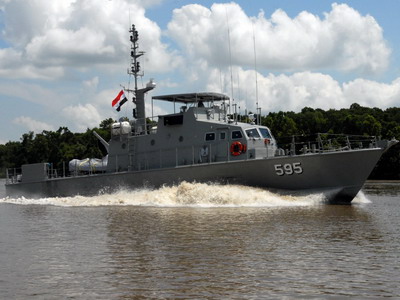
This would be the latest in an ongoing program of coproduction of Swiftship patrol boats assembled in Egypt.

I would question the claim that 49 vessels would make this “The World’s Most Serial Produced Vessel” since there are already 54 Webber class FRCs and there were 73 Coast Guard 87 footers.

Presumably these are going to the Egyptian Coast Guard which is a branch of the Egyptian Army.

A previous contract for 6 of these cost $22.1M or about $4M each. That would suggest that this $129M contract would buy 32 boats. The contract may include some additional equipment to backfit boats already completed or under contract, but still, this should at least bring their entire fleet up to about the 50 boats which is their reported requirement.

“Egypt and Swiftships have started co-market the 28-meter CPC to North African allied partners to the US.”

So, it is possible some of these vessels may go to other North African nations.

Technical specifications are here.

“Illegal Drugs Seized by CMF French-led Combined Task Force 150 in Arabian Sea” / “Canada Assumes Command of Combined Maritime Forces’ Combined Task Force 150” –Combined Maritime Forces

ARABIAN SEA – ARABIAN SEA (Jan. 16, 2024) Illegal narcotics seized by the U.S. Coast Guard Sentinel-class fast response cutter USCGC Emlen Tunnell (WPC 1145) sit on the deck of a vessel in the Arabian Sea, Jan. 16. Emlen Tunnell was operating under Combined Task Force 150, one of five task forces under Combined Maritime Forces, the largest multinational naval partnership in the world. CTF 150 focuses on maritime security operations outside the Arabian Gulf.

Below is a Combined Maritime Forces – U.S. 5th Fleet news release.

Below that is a second news release reporting a transfer of command of CTF 150 but also providing information about the organization.


Illegal Drugs Seized by CMF French-led Combined Task Force 150 in Arabian Sea

MANAMA, Bahrain —

A U.S. Coast Guard cutter operating under the French-led Combined Task Force 150 of the Combined Maritime Forces seized about $8.1 million worth of illegal drugs from a vessel in the Arabian Sea, Jan. 16.

The Sentinel-class fast response cutter USCGC Emlen Tunnell (WPC 1145) seized 173 kilograms of methamphetamines following a search. The Coast Guardsmen properly disposed of the drugs and released the vessel.

This is the second interdiction by CTF 150 of the year and marks the 14th time they have seized illegal narcotics at sea since France took command in July 2023. During their tenure, more than 16 tons of illegal narcotics with a street value of over $600 million were seized and disposed of, preventing criminal and terrorist organizations generating income from drug smuggling. The seizure came one day before France turned over command of the task force to the Royal Canadian Navy.

The mission of Combined Task Force 150 is to disrupt the ability of non-state actors to move weapons or drugs, or engage in other illicit activities, in the Gulf of Oman, Arabian Sea and Indian Ocean.

CTF 150 is one of five task forces under Combined Maritime Forces, the world’s largest multinational naval partnership, and focuses on maritime security operations in the Gulf of Oman, Arabian Sea and Indian Ocean.

The 39-nation naval partnership upholds the international rules-based order by promoting security and stability across 3.2 million square miles of water encompassing some of the world’s most important shipping lanes.


Canada Assumes Command of Combined Maritime Forces’ Combined Task Force 150

MANAMA, Bahrain —

The Royal Canadian Navy assumed command of a multinational maritime task force during a change-of-command ceremony Jan. 17.

French Navy Capt. Yannick Bossu turned over command of Combined Task Force 150 to Royal Canadian Navy Capt. Colin Matthews. CTF 150 was established in February 2002, and is one of five operational task forces under Combined Maritime Forces. CTF 150 conducts maritime security operations outside the Arabian Gulf against threats from non-state actors. The core staff of CTF 150 consisted of French, British, New Zealanders, Australians, and Bahrainis.

Since France took command of CTF 150 in July 2023, ships working in support of the task force carried out 14 successful boardings, in which more than 16 tons of illegal narcotics with a street value of over $600 million were seized. These seizures prevent criminal and terrorist organizations generating income from drug-smuggling.

While Commander of CTF 150, Bossu also spread CMF’s message through key partner engagements with countries including Seychelles, Mozambique and India. These engagements help strengthen ties between CMF nations and provides an opportunity to discuss the work of CMF with countries not yet members.

“Today marks the end of the French Navy’s successful 12th command of CTF 150. I would like to express my thanks to all those who have continually supported us during our tenure, including Vice Admiral Cooper, Commodore Anderson, Commodore Dennis and Rear Admiral Al bin Ali,” Bossu said. “Integral to CTF 150’s achievements over the past six months are, of course, the French, British, American, Indian, and Pakistani ships that have been working in support and my team made up of staff from a range of nations. We are pleased to welcome the Royal Canadian Navy to Combined Task Force 150; it has been a pleasure to meet your team. To everyone, keep on enjoying and serving in Combined Maritime Forces.”

Matthews joins CTF 150 following a tour as Director of Naval Information Warfare. Over the years, he has participated in numerous overseas deployments to the Arabian Gulf and Arabian Sea regions in support of counterterrorism operations.

“It is an honor to take command of Combined Task Force 150 and a privilege to lead this team of dedicated personnel from Canada, Bahrain, Australia, and New Zealand for the next six months,” Matthews said. “We are eager to build on the achievements of Capt. Bossu and his team. The success of this operation lies with our ability to work with like-minded nations toward the same goals, ensuring that legitimate commercial shipping can transit the region free from non-state threats and we are ready to face this task.”

Combined Maritime Forces, headquartered in Bahrain with U.S. Naval Forces Central Command and U.S. 5th Fleet, is the largest multinational naval partnership in the world, with 39 nations committed to upholding the international rules-based order at sea. It promotes security, stability and prosperity across approximately 3.2 million square miles of international waters, encompassing some of the world’s most important shipping lanes.

CMF’s other task forces include CTF 151, which leads regional counter-piracy efforts; CTF 152, dedicated to maritime security in the Arabian Gulf; CTF 153, providing maritime security in the Red Sea; and CTF 154, which delivers maritime training.