“USCG Report: Small Cutters Prove They Can Patrol a Big Ocean” –Marine Link

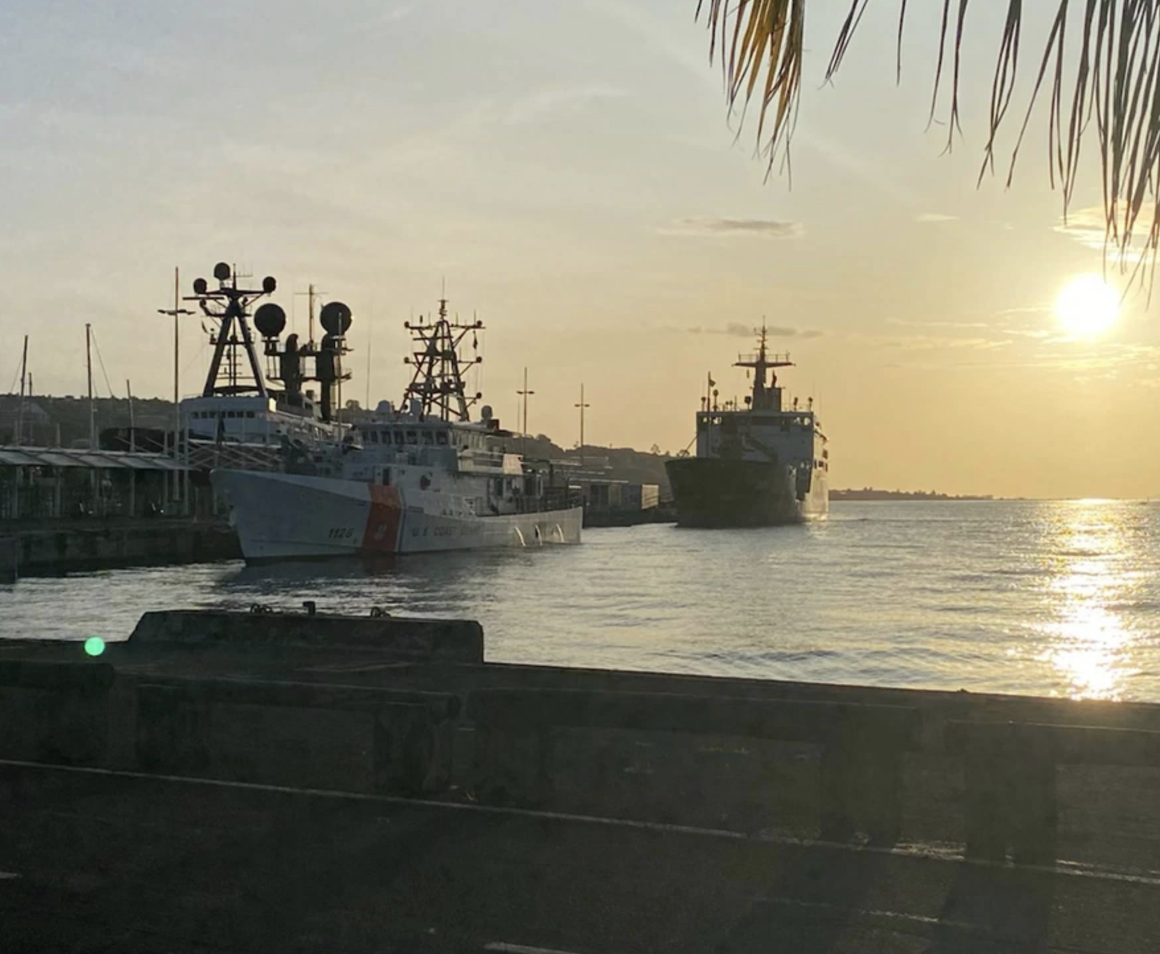
Cutters Joseph Gerczak and Juniper refuel in Papeete, Tahiti, while underway during Operation Aiga, February 6, 2022. The two cutters were in the region combating illegal, unreported, and unregulated fishing and other maritime threats on the high seas throughout the Pacific. (U.S. Coast Guard photo courtesy of the USCGC Juniper)(cropped)

Marine Link has an interesting article that recounts the methods that allow the 154 foot Webber “Sentinel” class WPCs “Fast Response Cutters, FRCs”with a nominal endurance of only five days and a range of 2500 nautical miles at 14 knots to deploy well beyond that distance.

Issues that must be dealt with other than limited storage and fuel include lack of an independent duty corpsman and carbon build-up in the engines due to operating at lower than design RPM.

When we go to Tahiti or American Samoa, there’s nothing in between. We’ll usually travel with a ‘black hull’ buoy tender in case we need to take on fuel at sea. But we have to be very careful with our fuel, and how we run our engines, and balance the need to have enough provisions for the trip and arrive safety with at least 20 percent fuel on board with the need to get down there so we can get to work.”

Sea State can also make it difficult to do a Replenishment at Sea (RAS).

The article does not reflect the current number of FRCs planned–77 rather than the 64 indicated in the article. It appears likely that the number of FRCs in Guam will increase from three to six and that additional FRCs (probably three) will be based in American Samoa.)

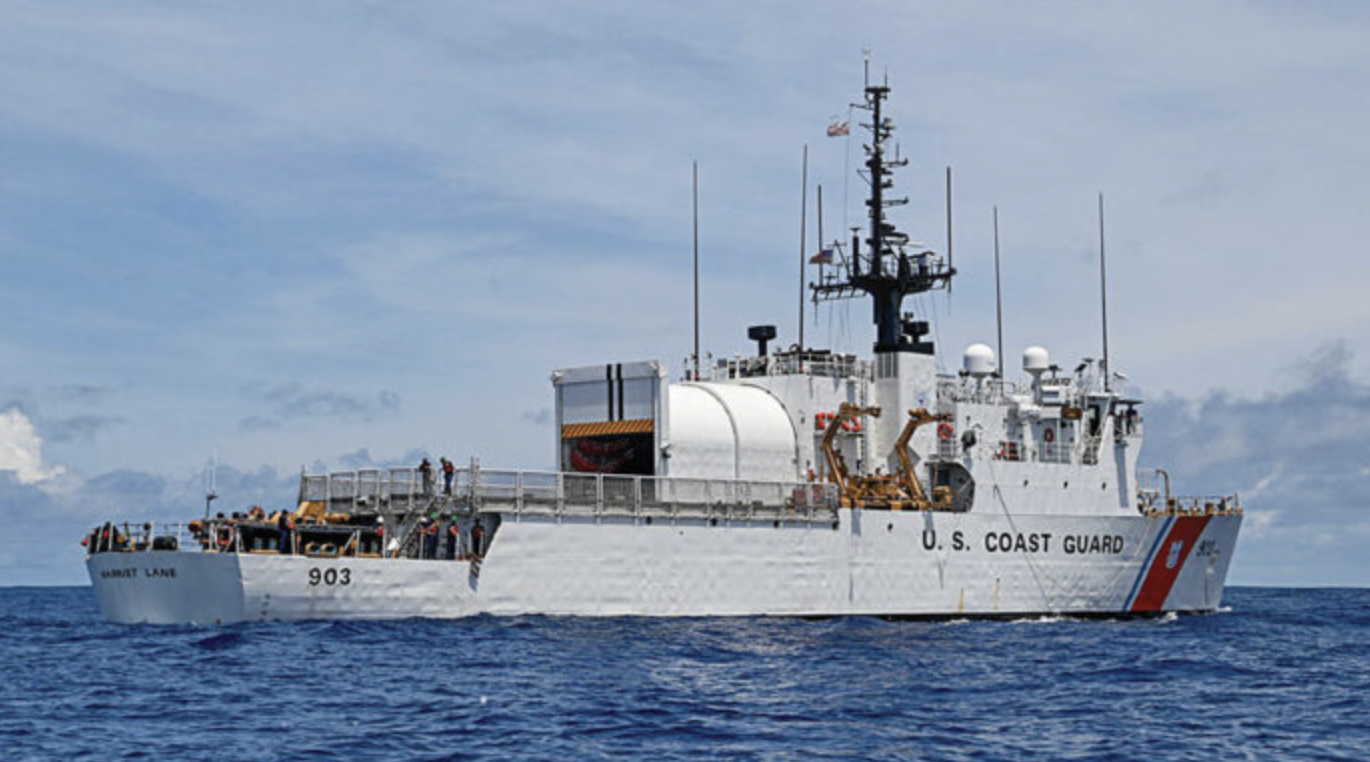
The article talks about future OPCs allowing National Security Cutters to spend more time in the Western Pacific but makes no mention of USCGC Harriet Lane, currently based in Oahu, or other WMECs that might be based in the Pacific in the Future.

“…in the absence of the perfect asset, the FRCs are the right asset for the job right now. “We’re making it work.”

Offshore Patrol Vessels for the Japanese Maritime Self Defense Force Launched

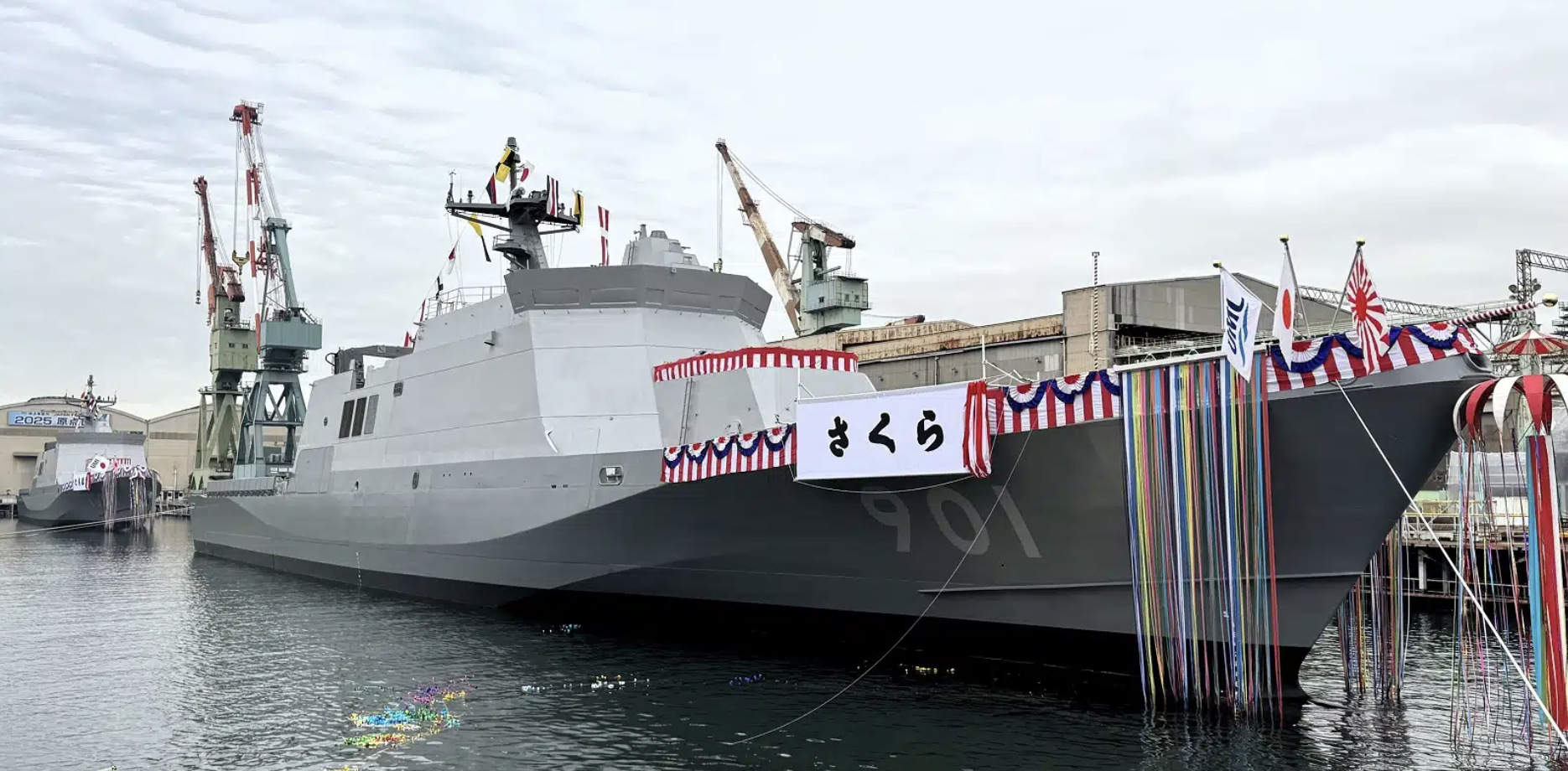
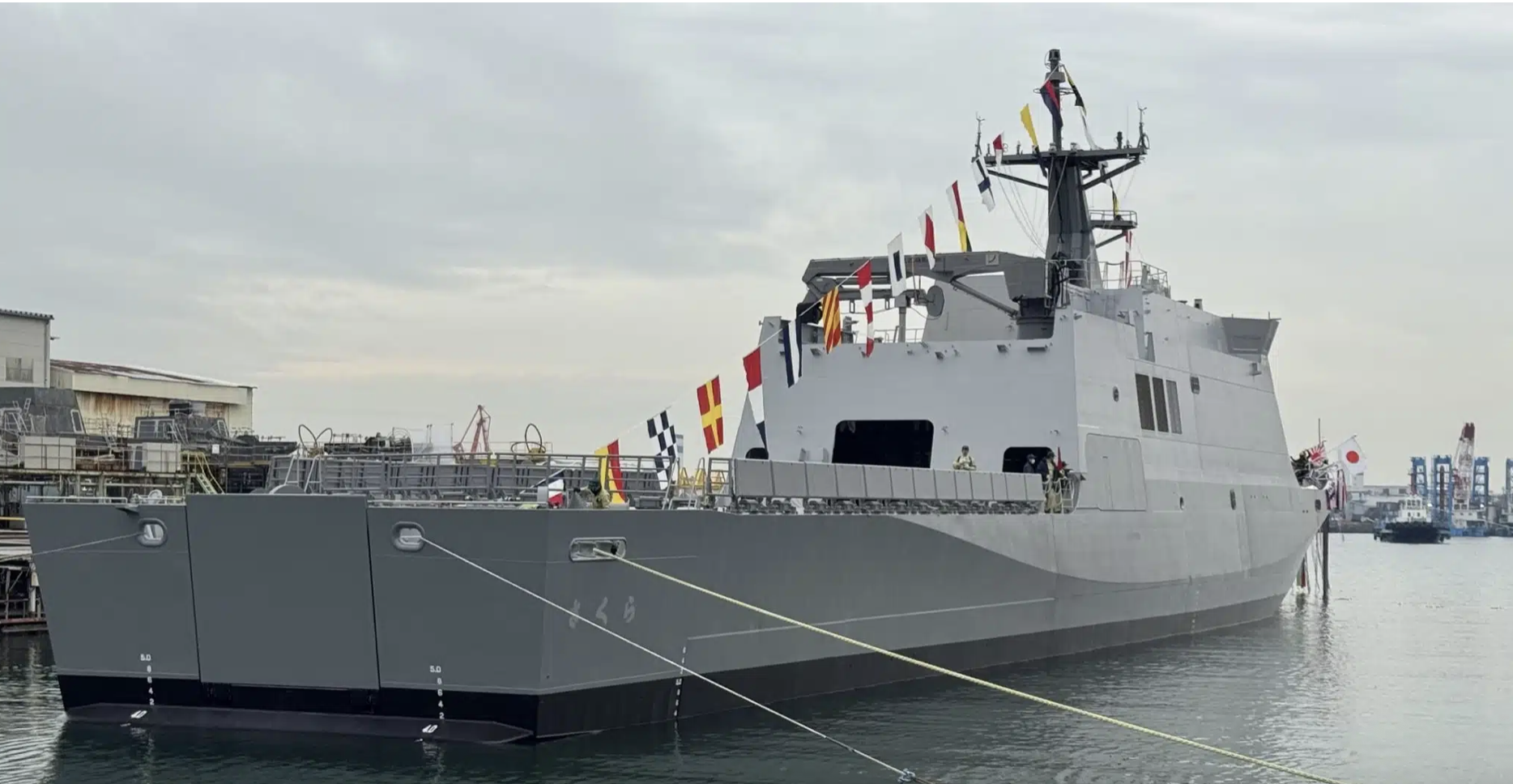
The first and second ships of the Japan Maritime Self-Defense Force’s new patrol vessel class, Sakura and Tachibana, were launched by Japan Marine United (JMU) on November 13, 2025 (photo by Kosuke Takahashi).

Naval News reports the launch of the first two of twelve Offshore Patrol Vessels (OPV) for the Japanese Navy.

“The new patrol vessels measure 95 meters (312 ft) in length, with a standard displacement of 1,900 tons (about 2300 tons full load–Chuck), a depth of 7.7 meters, a draft of 4.2 meters, and a top speed of 25 knots (28.8 mph)…automation technologies have been implemented to reduce crew requirements, limiting the necessary personnel to just 30.”

These ships are particularly interesting because they will operate a relatively large ship with a small crew.

This low crew count is achieved through high levels of automation, including systems like the “Automatic Berthing and Unberthing Function” and an “Integrated Monitoring and Control System” that allows for remote firefighting.

To keep costs down, the ships are relatively simple but include Combined Diesel-eLectric And Diesel (CODLAD) propulsion. The design incorporates space for containerized mission modules below the flight deck.

We have been following this program since its inception.

Over the course of its development, the gun has gotten smaller; the length seems to have been reduced from 100 meters to 95; and the boat and unmanned systems handling facilities have been enclosed as the flight deck was extended to the stern.

Sakura class OPV Japanese Maritime Self Defense Force, at launch. (photo by Kosuke Takahashi).

Two features I was not aware of is that they will use the V-Bat UAS, also used by the USCG and a Mine Counter Measures role has been proposed.

Construction has been very rapid. These two ships were laid down on February 14, 2025. The first four ships are expected to be delivered in 2027.

These will be the first OPVs in Japanese Navy. It is not unusual for navies to include OPVs if they do not have a sea-going Coast Guard, as is the case with the UK, France, and the Netherlands, but Japan has one of the largest Coast Guards in the world, with more large patrol cutters than the USCG. India also has a large Coast Guard and operates OPVs in both its Navy and Coast Guard.

“Japan Coast Guard to acquire four additional unmanned aircraft” –Naval News

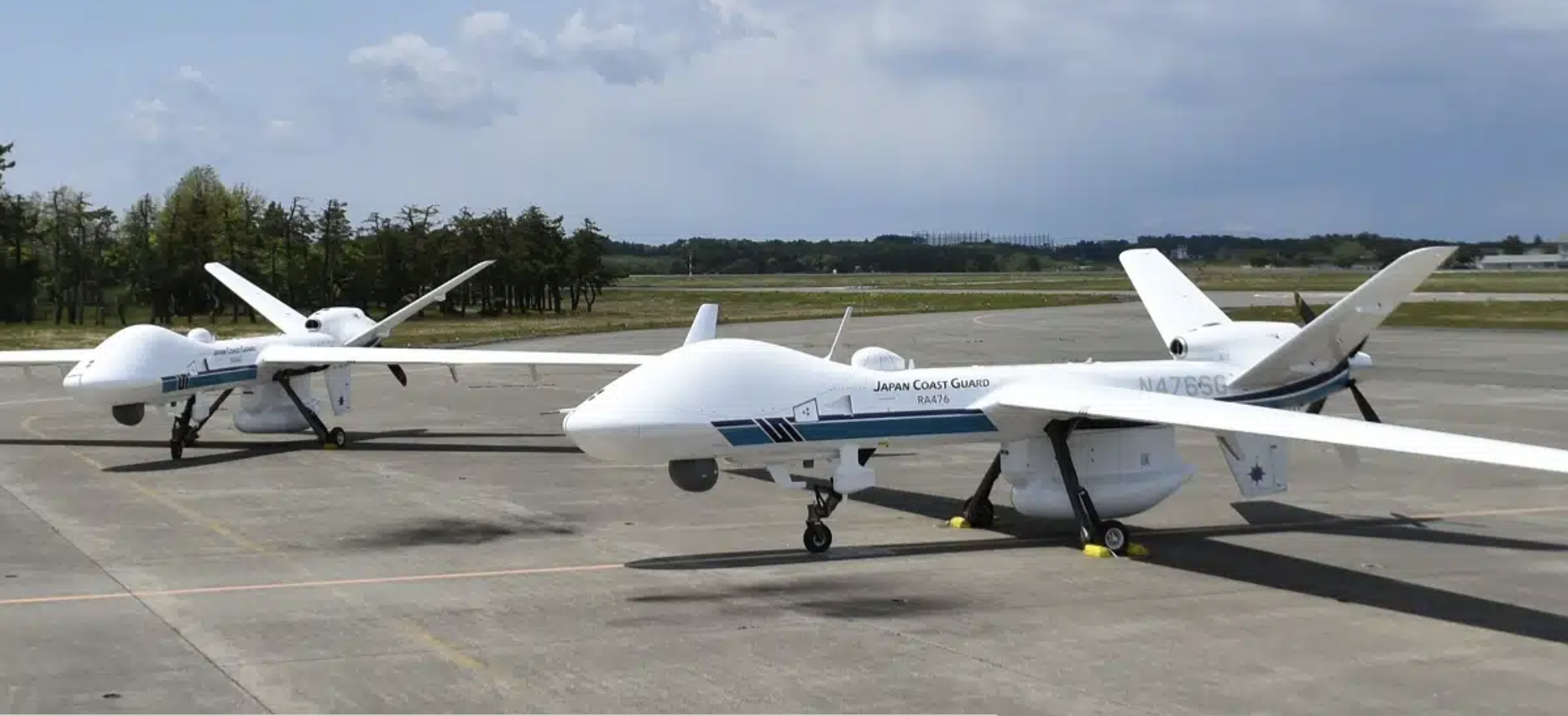
Two MQ-9B SeaGuardians of the Japan Coast Guard. JCG picture.

Naval News reports,

At the end of August 2025, the Japan Coast Guard (JCG) released its preliminary budget request for fiscal 2026. The request revealed plans to procure four additional unmanned aircraft for maritime surveillance of Japan’s surrounding waters.

The budget documents do not specify a model name, but based on past developments this is believed to refer to the MQ-9B SeaGuardian.

The Japan Coast Guard first looked at the SeaGuardian in 2020. They leased three in 2022. The three were subsequently purchased.

Two additional MQ-9Bs are scheduled to be deployed by March 2026. Including the aircraft requested in the current preliminary budget, the JCG will hold a total of nine MQ-9Bs by fiscal 2028. All of these airframes are planned to be acquisitions (purchases), not leases.

The US Exclusive Economic Zone is about 2.5 times as large as that of Japan, so we would need about 23 aircraft to have about the same coverage as the Japanese are planning.

Only a little over two weeks ago we got the word that the Coast Guard would be spending $266M to buy its own shore based Medium Altitude Long Endurance (MALE) Unmanned Air Systems (UAS).

At the time I asked why the Coast Guard would be buying the MQ-9A rather than the MQ-9B that is optimized for maritime operation and has been selected by several navies and coast guards. Still have not seen any rationale. Maybe it was just a misunderstanding.

The first USCG shore based UAS are likely to look for drug smugglers and migrants, but they would also be very useful in the broad reaches of the Pacific, far from any existing Coast Guard air station.

“ASW Should Be a Coast Guard Mission­–Again” –USNI

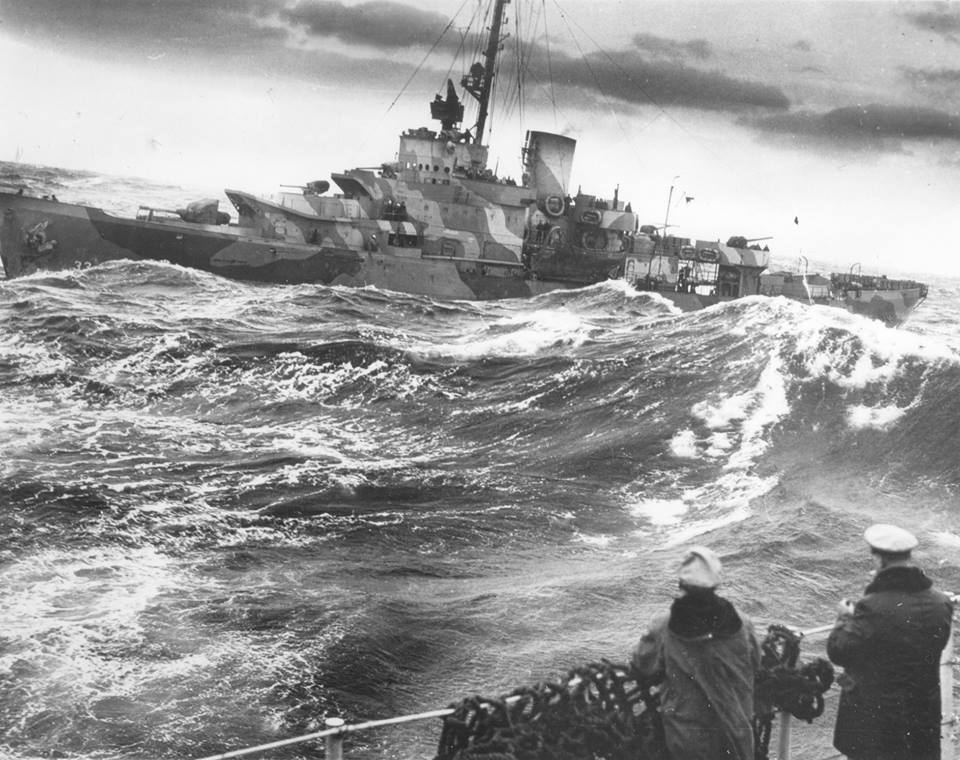
USCGC Duane on North Atlantic Convoy Duty. AS seen from USCGC Spencer.

The US Naval Institute September Proceedings includes an argument that major cutters need to be prepared to take on anti-submarine equipment. In an long war the author envisions the Coast Guard will ultimately have their own ASW equipment but recognizes that initially the helicopters, towed array sonar, and crews could be Navy..

The author, a submariner, also believes the equipment could help with peace time missions.

Important, ASW investment would offer immediate peacetime benefits. Enhancing the Coast Guard’s underwater surveillance capabilities would directly strengthen its border security and counternarcotics missions, improve boarding team safety, and extend interdiction range in the maritime domain. Many of the technologies necessary for submarine detection would be valuable in locating low-profile drug smuggling vessels, including go-fast boats and semisubmersibles. (See “Interdicting Narcotics at Sea,” pp. 10–11, August 2025.) These crafts’ minimal radar and visual signatures pose detection challenges similar to those of modern diesel-electric submarines.

There were good reasons ASW equipment was removed from the 378s in 1991 as the Soviet Union fell apart, but things have changed. I would expect the Chinese to use their conventional submarines to lie in wait for US submarines and aircraft carriers in the Western Pacific. They are unlikely to engage American subs with their own SSNs. I think they are more likely to engage US logistics with their SSNs. The US Navy does not want to divert highly capable AAW assets to convoy escort but currently those are the only type of escorts the Navy has.

“Charting a Course U.S., Partners increasing engagements throughout Pacific” –Indo-Pacific Defense Forum

The U.S. Coast Guard cutter Harriet Lane conducts a February 2024 patrol for Operation Blue Pacific, which included combating illegal fishing with local partners. SENIOR CHIEF PETTY OFFICER CHARLY TAUTFEST/U.S. COAST GUARD

The Indo-Pacific Defense Forum has a nice overview of Coast Guard cooperative operations in the Western Pacific.

The significance, for me, is that the article is published by the Indo-Pacific Combatant Commander, and is intended for an international audience. This is affirmation of the importance of the effort.

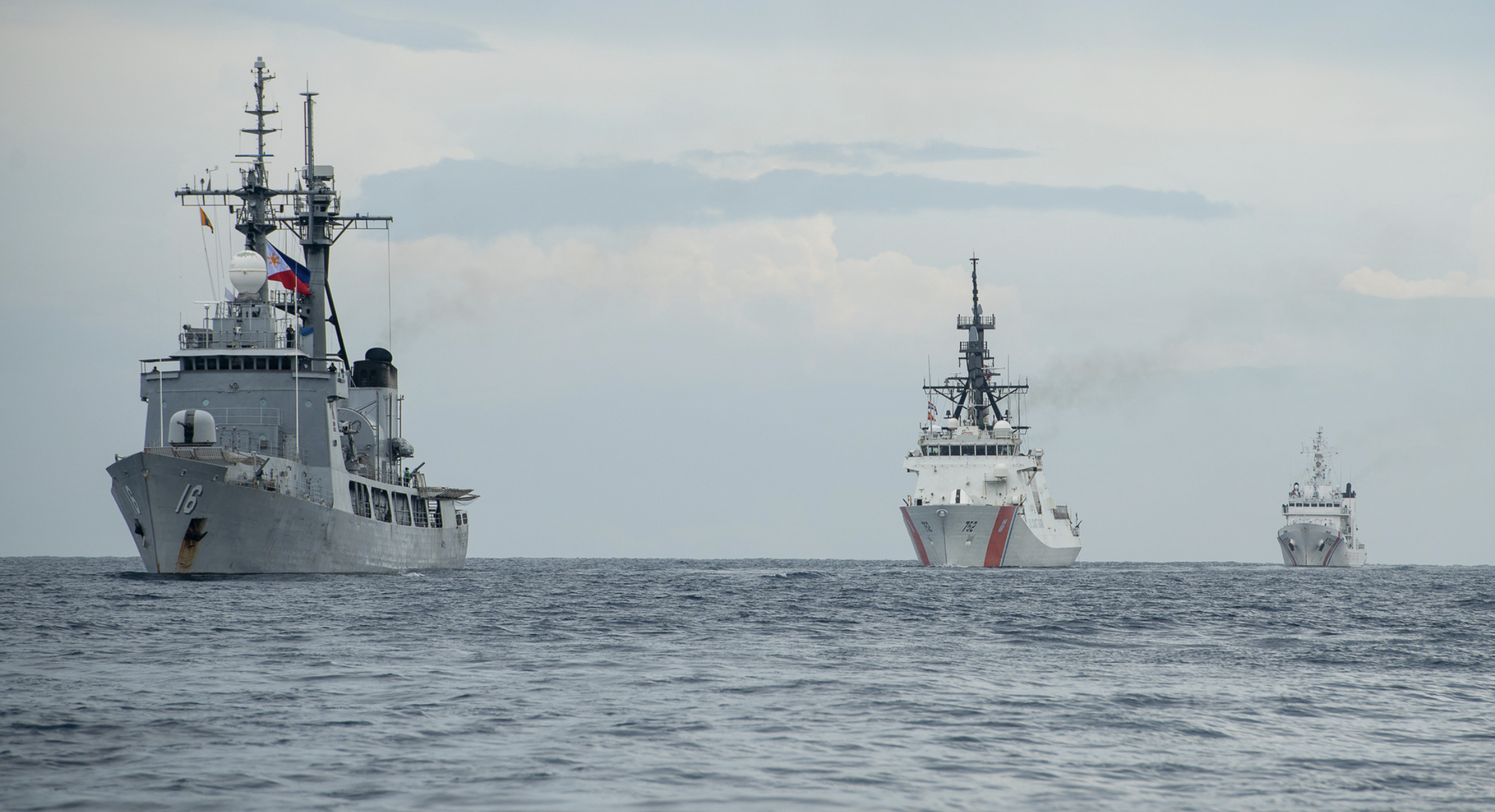
USCGC Stratton in the Philippines

The Legend-class USCGC Stratton (WMSL 752) sails with Philippine Navy’s Gregorio del Pilar-class patrol ship BRP Ramon Alcaraz (PS-16) (former USCGC Dallas) and Philippine Coast Guard Vessel BRP Melchora Aquino (MRRV-9702) as part of a division tactics exercise in the Sulu Sea, May 20, 2025. Stratton is deployed and assigned to Destroyer Squadron (DESRON) 15, the Navy’s largest DESRON and the U.S. 7th Fleet’s principal surface force. The U.S. Coast Guard has operated in the Indo-Pacific for more than 150 years, and the service is increasing efforts through targeted bilateral patrols with our national security cutters, fast response cutters, and other activities conducted in support of maritime missions to enhance our regional partnerships. (U.S. Coast Guard photo by Petty Officer 3rd class William Kirk)

Below the line is a report of Alameda based USCGC Stratton’s visit to the Philippines at the start of a Western Pacific deployment. The report mentions exercising “with the Armed Forces of the Philippines and the PCG.”

“Following their departure, Stratton’s crew conducted a bilateral Maritime Cooperative Activity (MCA) …The MCA included exercises in maritime domain awareness, division tactics, maneuvering, and visit, board, search and seizure procedures.”

Following the link above we learn,

Participating units included the Legend-class cutter USCGC Stratton (WMSL-752) and a P-8A Poseidon maritime patrol and reconnaissance aircraft from the U.S. Navy, as well as the Philippine Navy’s Gregorio del Pilar-class patrol ship BRP Ramon Alcaraz (PS16); Acero-class patrol gunboats BRP Gener Tinangag (PG903) and BRP Domingo Deluana (PG905); an AW109 naval helicopter; the Philippine Air Force’s Super Tucano and Sokol helicopters; and the Philippine Coast Guard’s Teresa Magbanua-class patrol vessel BRP Melchora Aquino (MRRV 9702).

That is a pretty substantial exercise, US Navy, Philippine Navy, and Philippine Air Force in addition to US and Philippine Coast Guards.

While the Philippine Coast Guard has many of the trappings of a military service, they are not nearly as well armed as their Chinese, US, and Japanese counterparts. Their most powerful weapon seems to be .50 caliber machine guns. If they get into an armed confrontation with the Chinese, they cannot go it alone. Notably this was not a SAR exercise. Perhaps the idea was to practice coordination of support for the Philippine Coast Guard in their interactions with the Chinese, making sure the Philippine CG can communicate with the Philippine Navy and Air Force and with US assets in the area.

Army Recognition’s Naval News also has a report on the exercise which mentioned that Japanese built Philipine WPC BRP Malapascua (MRRV 4403) also participated in the exercise. “Philippine and US Naval Forces Conduct First Joint Maritime Exercise to Strengthen Indo-Pacific Maritime Security


May 24, 2025

U.S. Coast Guard Cutter Stratton departs Philippines, commences months-long Indo-Pacific patrol

PUERTO PRINCESA, Philippines — The U.S. Coast Guard Cutter Stratton (WMSL 752) and its crew departed Puerto Princesa, Philippines, Monday, after in-port engagements and visits with the Philippine Coast Guard (PCG), the U.S. Ambassador to the Republic of the Philippines MaryKay Carlson, U.S. embassy staff, and PCG District Palawan senior leadership.

Stratton’s visit to Puerto Princesa marked the first international port call of their months-long deployment to the Indo-Pacific region.

Following their departure, Stratton’s crew conducted a bilateral Maritime Cooperative Activity (MCA) with the Armed Forces of the Philippines and the PCG within the Philippines’ exclusive economic zone. The MCA included exercises in maritime domain awareness, division tactics, maneuvering, and visit, board, search and seizure procedures.

These engagements demonstrate the U.S. commitment to maritime governance that supports security, freedom and prosperity in the region.

The U.S. Coast Guard serves as a unique instrument of national power, bridging defense, diplomacy and law enforcement to further national objectives and mutual interests with allies and partners like the Philippine Coast Guard.

During the visit, Stratton’s commanding officer, Capt. Brian Krautler, welcomed Amb. Carlson, PCG Commandant Adm. Ronnie Gil Gavan, and senior PCG leaders aboard Stratton, highlighting U.S. Coast Guard interoperability with allies.

“Our alliance with the Philippine Coast Guard has cultivated a close, collaborative maritime partnership—this is Stratton’s second deployment to the Philippines during my two years aboard as commanding officer,” Krautler said. “Our enduring partnership enables combined effects and cooperation across a broad spectrum of engagements and operations. Stratton’s deployment to the Indo-Pacific will further strengthen our relationships with allied coast guards and services throughout the region.”

The U.S. Coast Guard works closely with regional allies to deliver a broad range of capabilities in support of a prosperous and secure Indo-Pacific. Multilateral operations like the at-sea MCA and in-port engagements enhance cooperation, improve interoperability and strengthen readiness.

While moored, Krautler and Stratton’s leaders also met with the WESTCOM Commander PCG District Palawan for a pre-sail planning meeting to discuss bilateral search and rescue exercises (SAREX) to enhance cooperation. At-sea operations and exercises with the Philippine Coast Guard will strengthen the ability to execute coordinated maritime operations and enhance overall mission readiness.|

The U.S. Coast Guard’s commitment to a prosperous and secure Indo-Pacific requires working closely with regional allies, allowing the service to improve its logistics flexibility to better deliver a broad range of capabilities.

During the patrol, Stratton is scheduled to engage with regional partners and participate in joint operations aimed at enhancing maritime safety and security. Throughout its Indo-Pacific deployment, Stratton is assigned to Destroyer Squadron (DESRON) 15, the Navy’s largest DESRON and the U.S. 7th Fleet’s principal surface force. DESRON 15 regularly assumes tactical control of surface units operating in the area.

Stratton’s port call to the Philippines marks the cutter’s third visit following stops in 2019 and 2023. Consistent U.S. Coast Guard national security cutter deployments to the region demonstrate the U.S. commitment to strong maritime governance that supports security, freedom and prosperity in the Western Pacific.

Commissioned in 2012, Stratton is one of ten Legend-class national security cutters and one of four homeported in Alameda, California. National security cutters are 418 feet long, 54 feet wide and have a 4,600 long-ton displacement with a top speed of 28 knots, a range of 12,000 nautical miles and can hold a crew of up to 170. National security cutters routinely conduct operations throughout the Pacific, where their combination of range, speed and ability to operate in extreme weather provides mission flexibility.

The namesake of U.S. Coast Guard Cutter Stratton is Capt. Dorothy Stratton, who led the service’s all-female reserve force during World War II. Dorothy Stratton was the first female commissioned officer in the Coast Guard and commanded more than 10,000 personnel. The ship’s motto is “We can’t afford not to.”

NAS Adak Reopening?

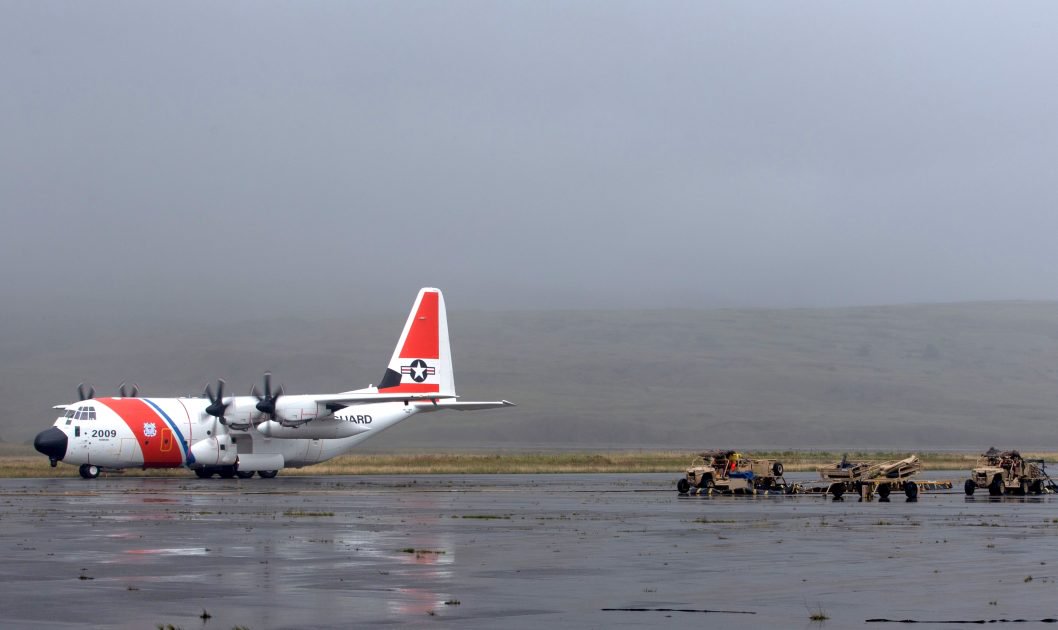
A U.S. Coast Guard C-130 participates in forward arming and refueling point (FARP) operations during Arctic Expeditionary Capabilities Exercise (AECE) in Adak, Alaska on Sept. 18, 2019. US Marine Corps Photo

I am seeing strong indications that DOD may reopen the former US Naval Air Station Adak.

First there was this from Task and Purpose, “The Navy may revive this forgotten Alaskan base that sits halfway to Russia,” published April 17, 2025.

The this, “Shuttered Aleutian naval air base straddling Arctic and Pacific oceans may reopen,” from a more official source, The Watch, NORTHCOM’s on line magazine. 

There is more discussion here.

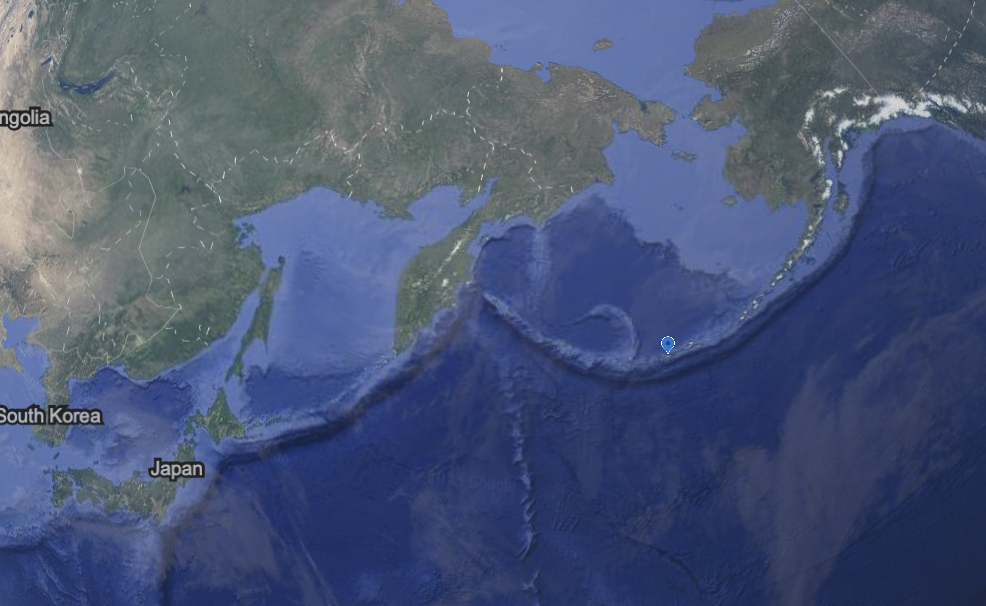
Adak, one of the Aleutian Islands, approximately 877 nautical miles South of the Bering Strait. About 901 nmi from Kodiak, about 2075 imi from Vladivostok.

Why do we care?

For the Coast Guard, it is a potential forward operating base for fixed wing aircraft monitoring fishing in the Bering Sea, and a fueling/replenishment stop for cutters on Alaska Patrol.

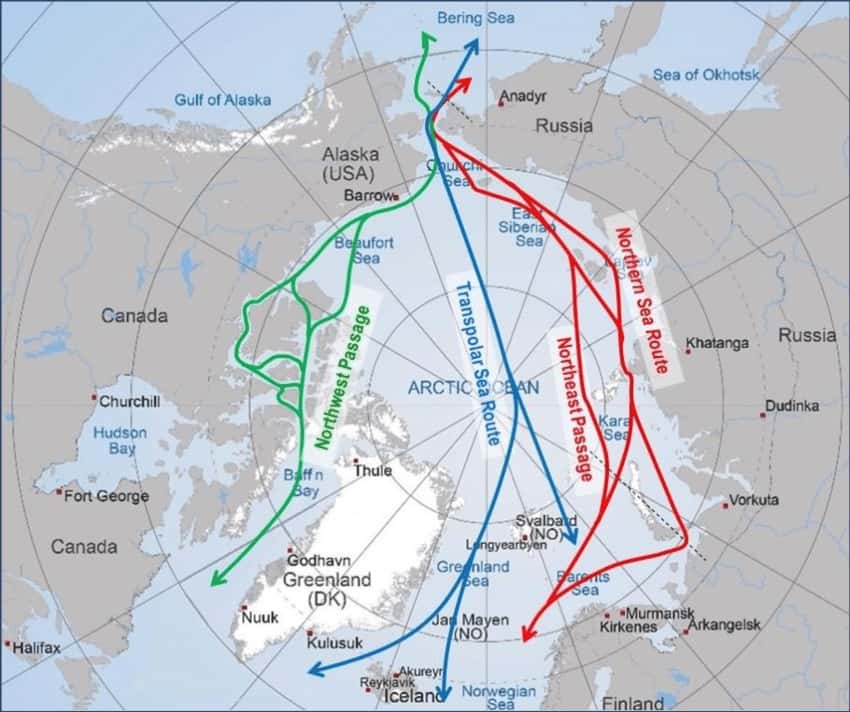
For Defense it puts assets in place to protect allied shipping and movements between the US and Asia and to prevent the passage of potentially enemy shipping and movements between the Russian Arctic and China, North Korea, and Russia ports in Asia via the Northern Sea Route and the Bering Strait.

The Coast Guard and DHS should add their voices in support of the idea. 

Ports along the Northern Sea Route have seen a quadrupling of cargo since 2003 from 26.4 million tons in 2003 to 104.8 million tons by 2019 (if slipping to 96 million tons last year (2020) due to Corona). They now handle as much cargo every year as the entire Baltics, which have stagnated for more than a decade.

“Trump Administration Opens Pacific Remote Islands Marine Monument to Commercial Fishing” –gCaptain

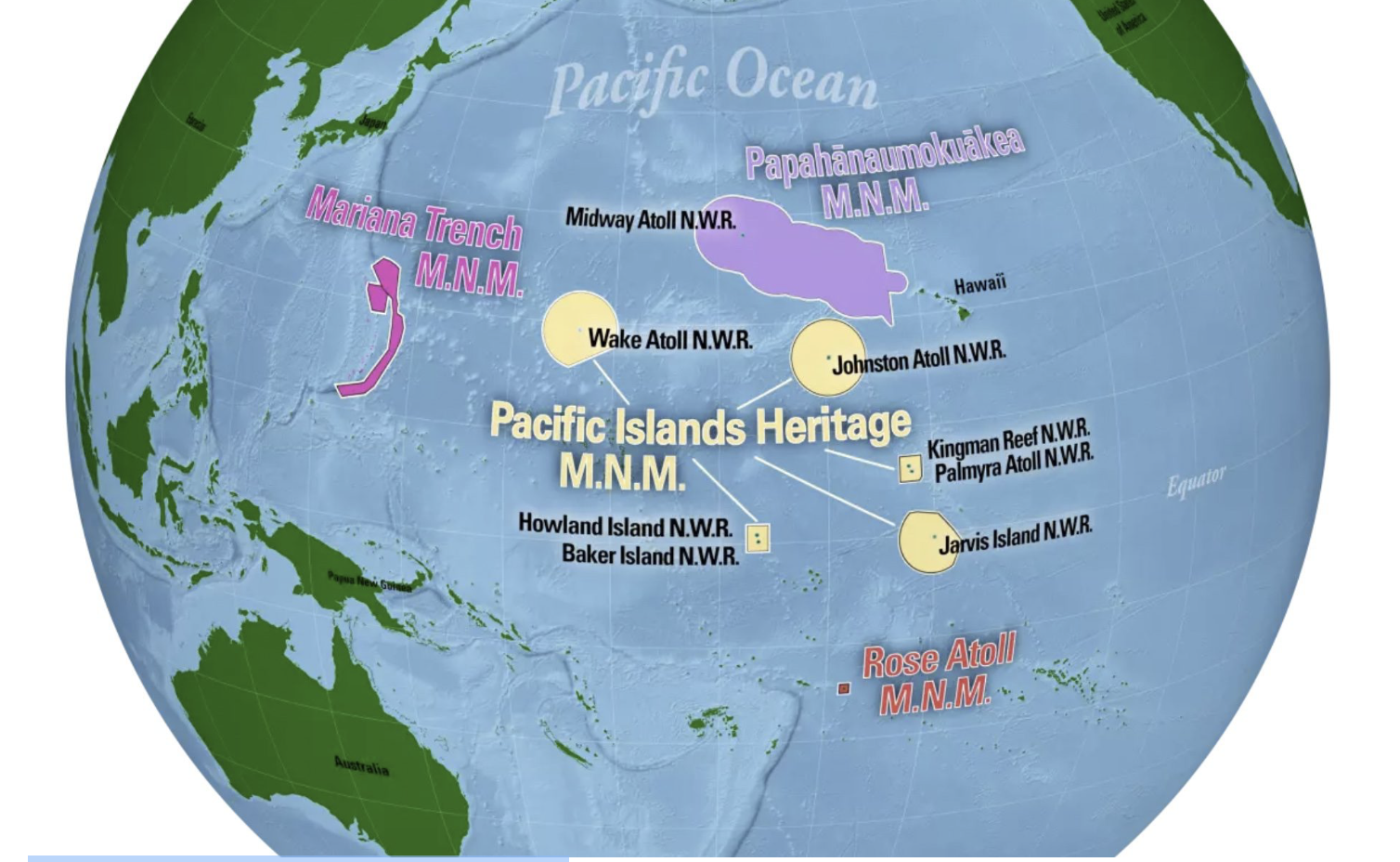
Pacific Remote Islands Marine Monument. Map courtesy U.S. Fish and Wildlife Service

gCaptain reports,

President Donald Trump signed a proclamation on Thursday opening the Pacific Remote Islands Marine National Monument (PRIMNM) to commercial fishing, marking a substantial change in U.S. fishing policy.

The proclamation specifically permits U.S.-flagged vessels to conduct commercial fishing operations within 50 to 200 nautical miles of the PRIMNM’s boundaries. This decision affects an expansive marine protected area spanning approximately 495,189 square miles in the central Pacific Ocean – a region nearly five times the size of all U.S. National Parks combined.

This would seem to provide additional justification for a Coast Guard base and cutters (presumably Webber class WPCs) in American Samoa to provide additional safety for US fishermen and to keep unwelcome foreign fishermen out.

“China’s bullying won’t deter Philippines’ South China Sea sovereignty, Coast Guard says” –Indo-Pacific Defense Forum

I haven’t published much about China’s bullying of the Philippines lately. That doesn’t mean it has stopped. Rather it has become routine.

This report from the Indo-Pacific Defense Forum may serve as an update.

The video above does suggest why having a reinforced hull or at least an extra turn of speed might be desirable.

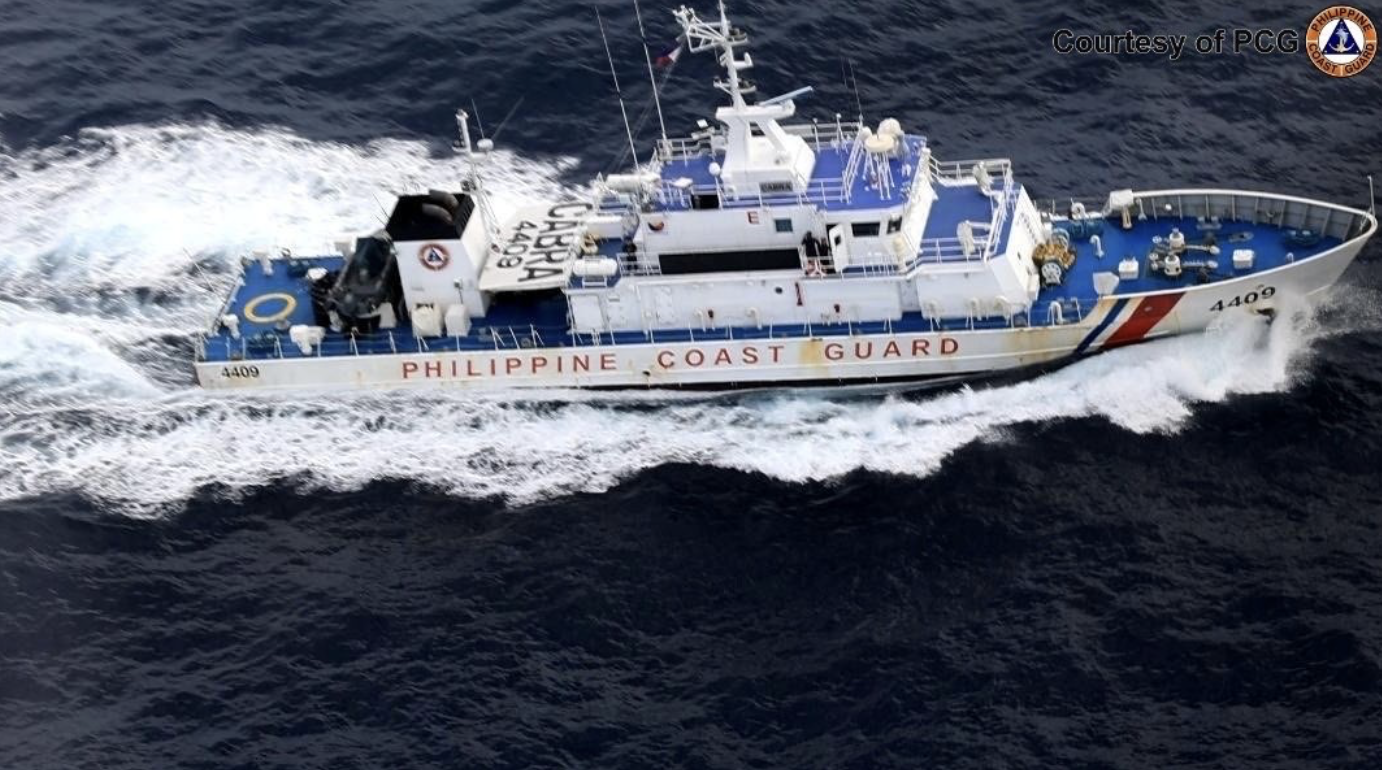
BRP Cabra (Philippine Coast Guard photo)

BRP Cabra is one ten 44.5 m (146 ft), 25 knot Japanese built Parola-class cutters commissioned 2016-2018.

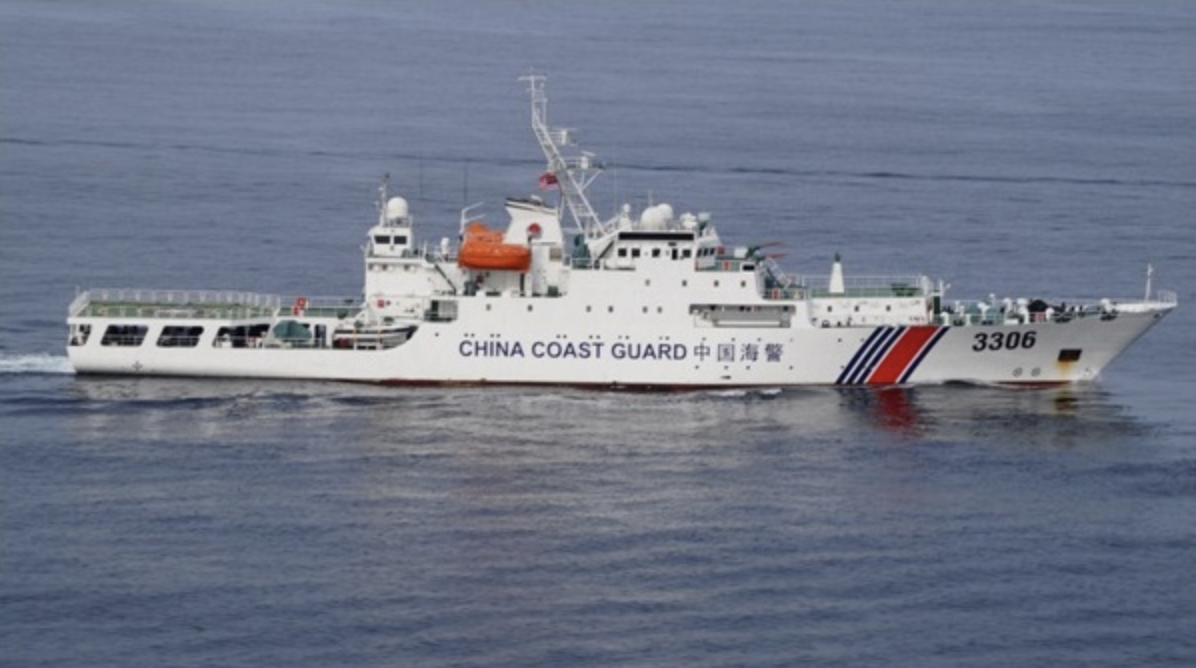
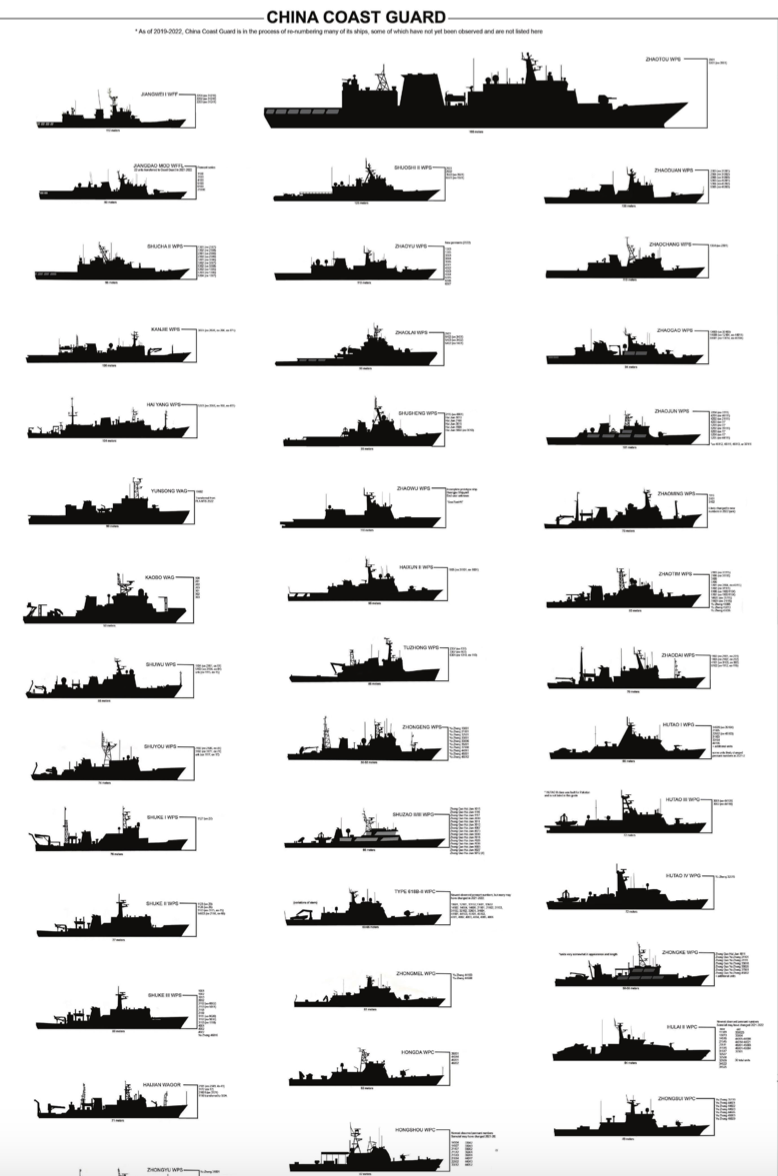
The China CG vessel in pursuit is a 98 meter Shucha II class OPV.

China Coast Guard Shucha II-class cutter Haijing 3306 (renamed to Haijing 3301). A sister ship of the China CG vessel in the video.

Just a partial listing of China Coast Guard from “Office of Naval Intelligence’s Chinese People’s Liberation Army Navy, Coast Guard, Ship Identification Guide