“Last Cyclone Patrol Ships Leave U.S. Navy, Many Will Serve in Foreign Forces” –USNI

USS thundebolt (PC-12) Seen here in 1998 in both Coast Guard and Navy markings. U.S. Coast Guard photo by David Schuffholz

The US Naval Institute News Service reports the decommissioning and transfer of the last of the Cyclone class US Navy patrol craft. Seven of the class (PCs 1, 2,4, 8, 12, 13, and 14) were loaned to the Coast Guard at various times.

Their departure will leave the six Coast Guard Patrol Force SW Asia Webber class WPCs the only US patrol craft in the 5th Fleet.

Of the 14:

  • Two, Zephyr (PC-8) and Shamal (PC-13), are to be scrapped.
  • Five, Tempest (PC-2), Typhoon (PC-5), Squall (PC-7), Firebolt (PC-10), and Whirlwind (PC-11), have been transferred to the Royal Bahrain Naval Forces.
  • Three, Hurricane (PC-3), Sirocco (PC-6), and Thunderbolt (PC-12), have been transferred to the Egyptian Navy.
  • Two more, Monsoon (PC-4) and Chinook (PC-9), will join the former Cyclone (PC-1) in the Philippine Navy.
  • One, Tornado (PC-14) is expected to be sold, but is awaiting disposition.

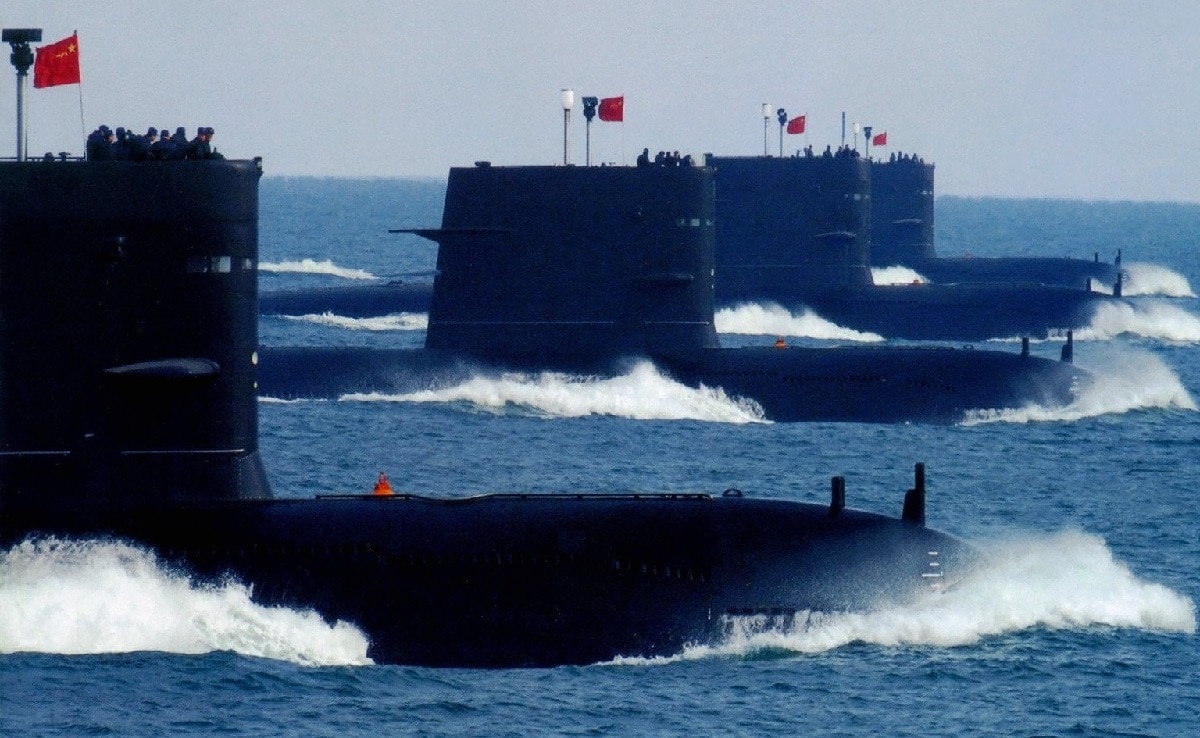
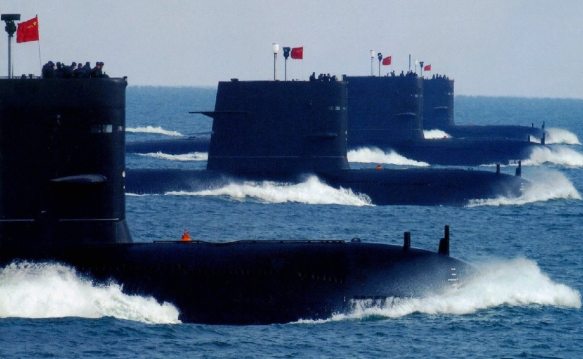
Chinese Navy Submarine and Major Surface Ship Order of Battle

Image: Creative Commons.

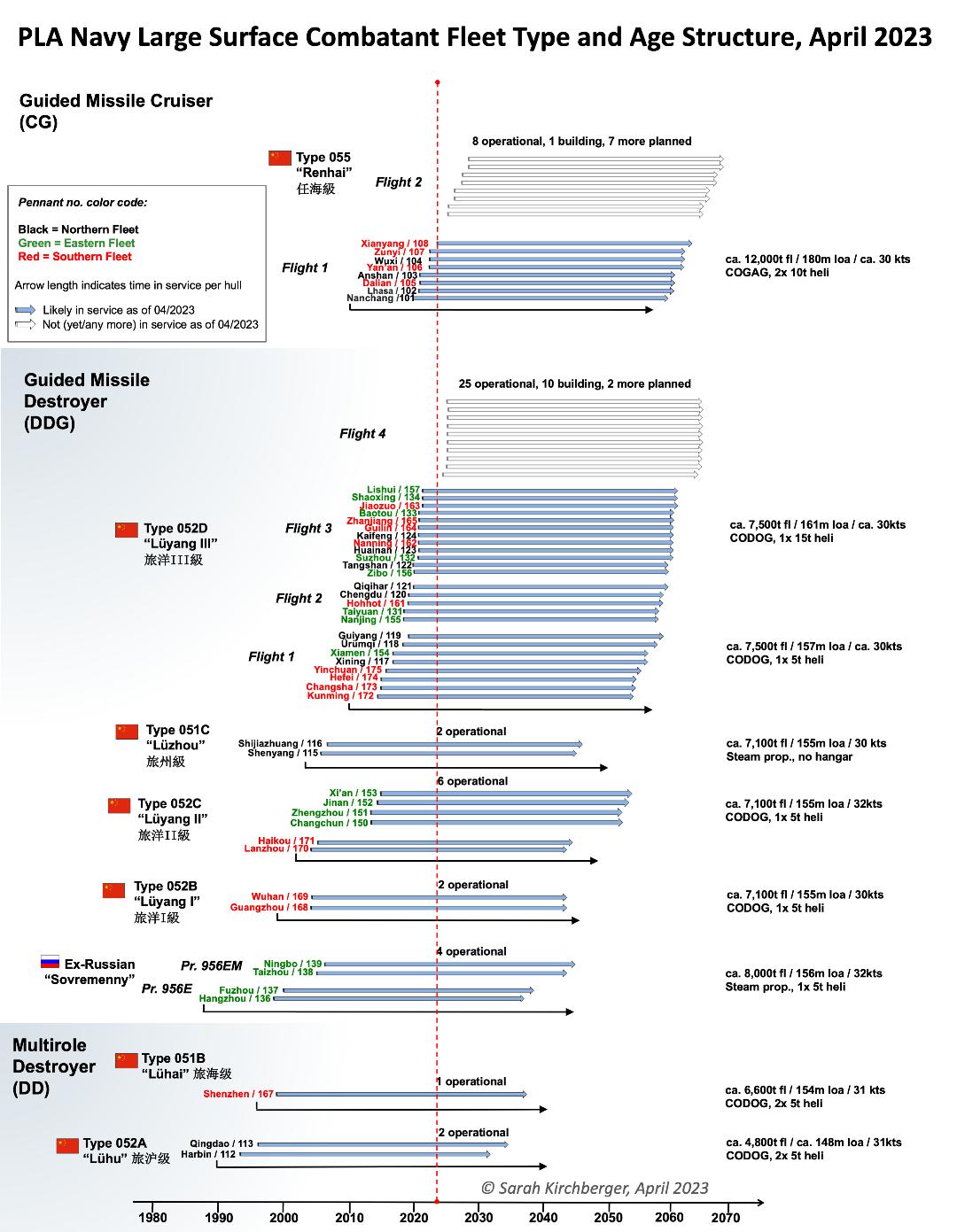
Below are some info-graphics provided by Sarah Kirchberger on the CIMSEC Internal Discussions Facebook page. I wanted to share them with you. (Not included in the listings are Chinese aircraft carriers, amphibs, and numerous frigates, corvettes, and other small combatants.) I have also provided her notes included with the three Facebook posts, but first some observations.

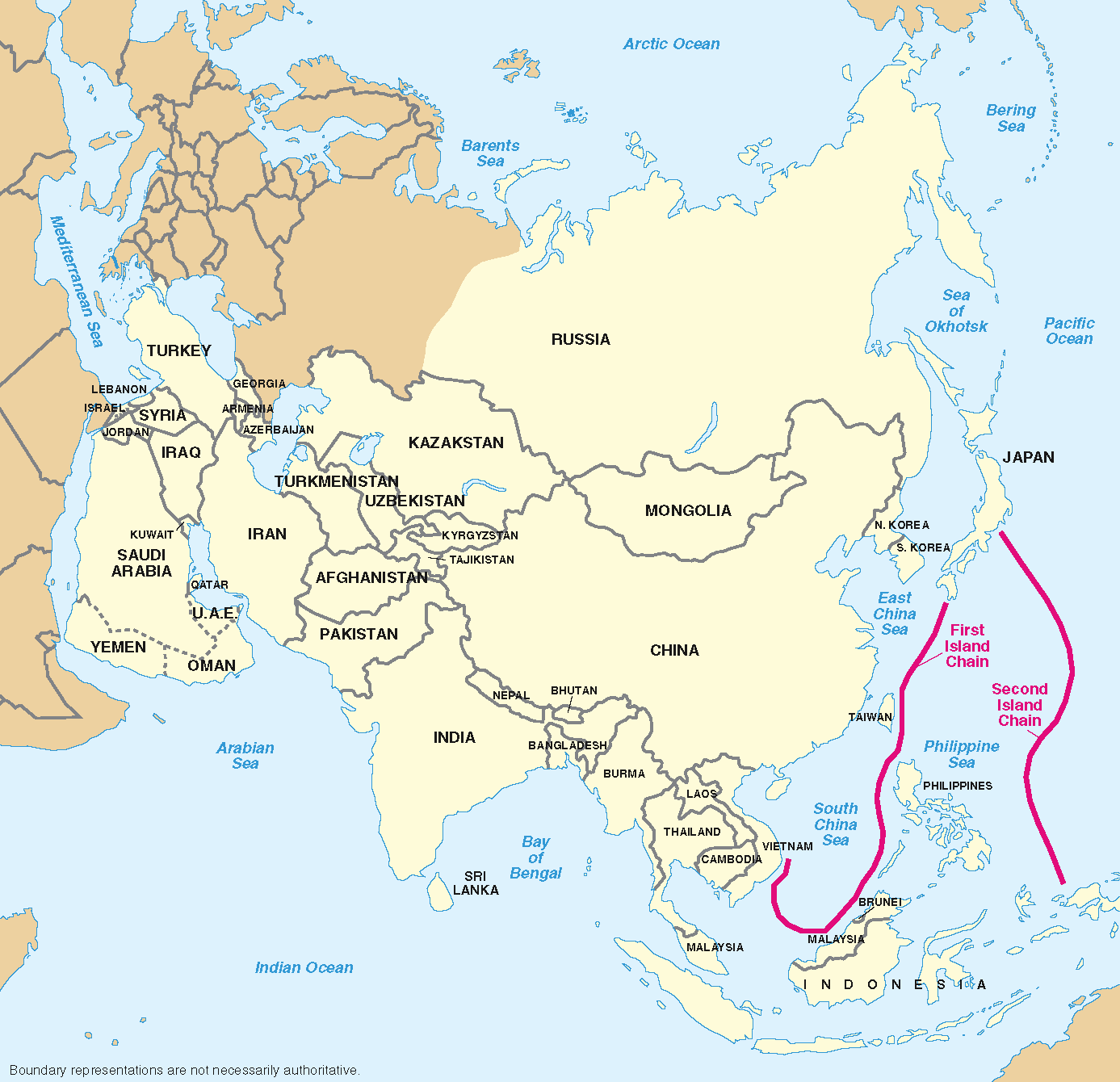
Geographic Boundaries of the First and Second Island Chains. Image:China Report 2006.pdf. DOD.

What does this have to do with the Coast Guard?

My expectation is that, if there is a major prolonged conflict with the Chinese, that the primary theater of operations will be inside and around the “First Island Chain” with Taiwan the critical center (Think Malta in the Mediterranean during WWII). The Chinese surface fleet is not likely to make significant operations outside this area. Chinese conventional submarines will also concentrate in this area but will also operate in the Straits that access the South and East China Seas.

The Chinese will make air and missile attack out to at least the “Second Island Chain,” including Guam.

The Chinese will want to attack US logistics and underway replenishment ships outside the Second Island Chain, both for the direct effect of reducing logistics available and for the secondary effect of drawing off units from the primary theater of action.

In the initial phase, the Chinese merchant and fishing fleets might be used to lay mines or even directly attack unarmed logistics and underway replenishment ships using containerized weapon systems supported by satellite targeting. (They might also launch cruise missiles into US ports as an opening salvo.) The Coast Guard Maritime Domain Awareness systems and cargo tracking programs will have a role in neutralizing the Chinese Merchant and distant fishing fleets.

The Chinese will operate at least some of their nuclear submarines (SSNs) (which would have difficulty dealing with USN SSNs) outside the Second Island Chain, perhaps as far East as the US West Coast. While MSC has been told not to expect escorts, the benefits of cutters with embarked Navy (probably Navy Reserve) ASW helicopters (and ultimately towed array systems) within effective helicopter range of a dispersed group of logistics ships to provide at least minimal ASW protection and rescue for the crews of the ships that are inevitably sunk, will quickly become evident. The cutters would hopefully be aided by Navy P-8 maritime patrol aircraft and any combatants making the transit trans-Pacific.

(None of the above reflects anything official, it is just the logic of the geography and the capability of the participants.)

Incidentally the format use below would be a good way for the Coast Guard to present its plans for major cutters.

Now to the Kirchberger posts:


After a long pause in making these info graphics, here is an overview of the *approximate* type and age structure of Chinese nuclear-powered submarines. I am decidedly less confident than with the surface fleet graphs about the accuracy of the information, which is why it took so long. Basically, I have decided to just visualize the data given in Manfred Meyer’s book ‘Modern Chinese Maritime Forces’ (March 2023 update) with some minor adjustments based on cross-checking with own research in Chinese newspaper reports. Despite the caveat, the graph might be useful to some, therefore posting it. I will periodically update as more information becomes available.

Blue arrow means boat is (most likely) in service as of April 2023, white means not yet or not any more in service, but may already be launched. Striped means: status unknown.

Feel free to use and republish (unaltered) with attribution. In case you find mistakes, I’d appreciate a note so I can make corrections during the next round!

Here is now also a visual overview of the PLA Navy’s conventionally powered submarine fleet. Blue arrow means boat is most likely in service as of April 2023, white arrow means not yet, or not any more, but may already be launched. The teal color indicates boats equipped with a (Stirling) AIP. Does not include test submarines (such as the Type 032), the unknown type sailless submarine, nor midget submarines.

Feel free to use and republish (unaltered) with attribution. In case you find mistakes, I’d appreciate a note so I can make corrections during the next round!

The speed of naval shipbuilding in China is such that it is easy to overlook that China has earlier this year commissioned the eighth and last of Flight 1 of its new cruiser, the Type 055 (never mind that the PLAN refers to it as a destroyer – at >12,000t full load, 180m length, and given its armament, it looks like a cruiser more than a destroyer).

Since the lead ship entered service in early 2020, China has commissioned altogether 8 of these Type 055 cruisers within a timespan of just 3 years! Further, 8 more are apparently already in the works, for a class of at least 16.
Here is an updated graphic overview of the type and age structure of China’s large surface combatants. Arrows indicate maximum time in service from commissioning until decommissioning – program start and build start is therefore not shown. 40 years per hull may be a bit long (30 years is common practice in most advanced navies), but in practice some navies have operated their surface combatants that long, so I choose to give the maximum conceivable length.
It is interesting to see how the arms embargo since 1989 initially disrupted naval shipbuilding, leading to multiple classes of just one or two hulls being built next to a Russian import, and how mass production finally took off from the Type 052D onward.
The Chinese official newspaper Global Times commented on the completion of the Type 055 class here: https://www.globaltimes.cn/page/202304/1289571.shtml
Feel free to use and reproduce this graph for non-commercial purposes (with attribution) and please let me know in case of mistakes so I can make corrections during the next iteration!

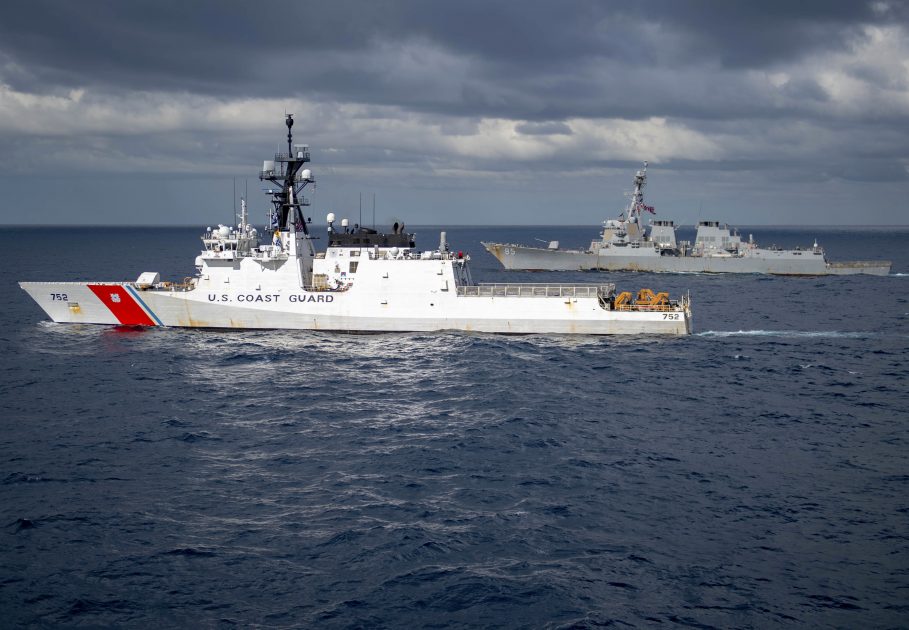
USCGC Stratton Headed for the Western Pacific

USCGC Stratton (WMSL-752), left, and the U.S. Navy Arleigh Burke-class guided-missile destroyer USS McCampbell (DDG-85) maneuver in formation during Talisman Sabre 2019 on July 11, 2019. US Navy Photo

American Military News reports, “Coast Guard cutter changes command in Honolulu en route to South China Sea.”

I don’t think there is anything unexpected or surprising here, but it does provide a good overview and perspective on what the five Pacific Area cutters of this class have been doing.

It also notes another ship of this class, USCGC “Kimball is currently dry-docked at Pacific Shipyards International in Honolulu Harbor for its first maintenance period since it first arrived in Hawaii in 2018.”

“HMS Tamar Makes Rare Port Call to Diego Garcia” –SeaWaves Magazine

HMS Tamar arriving into Diego Garcia

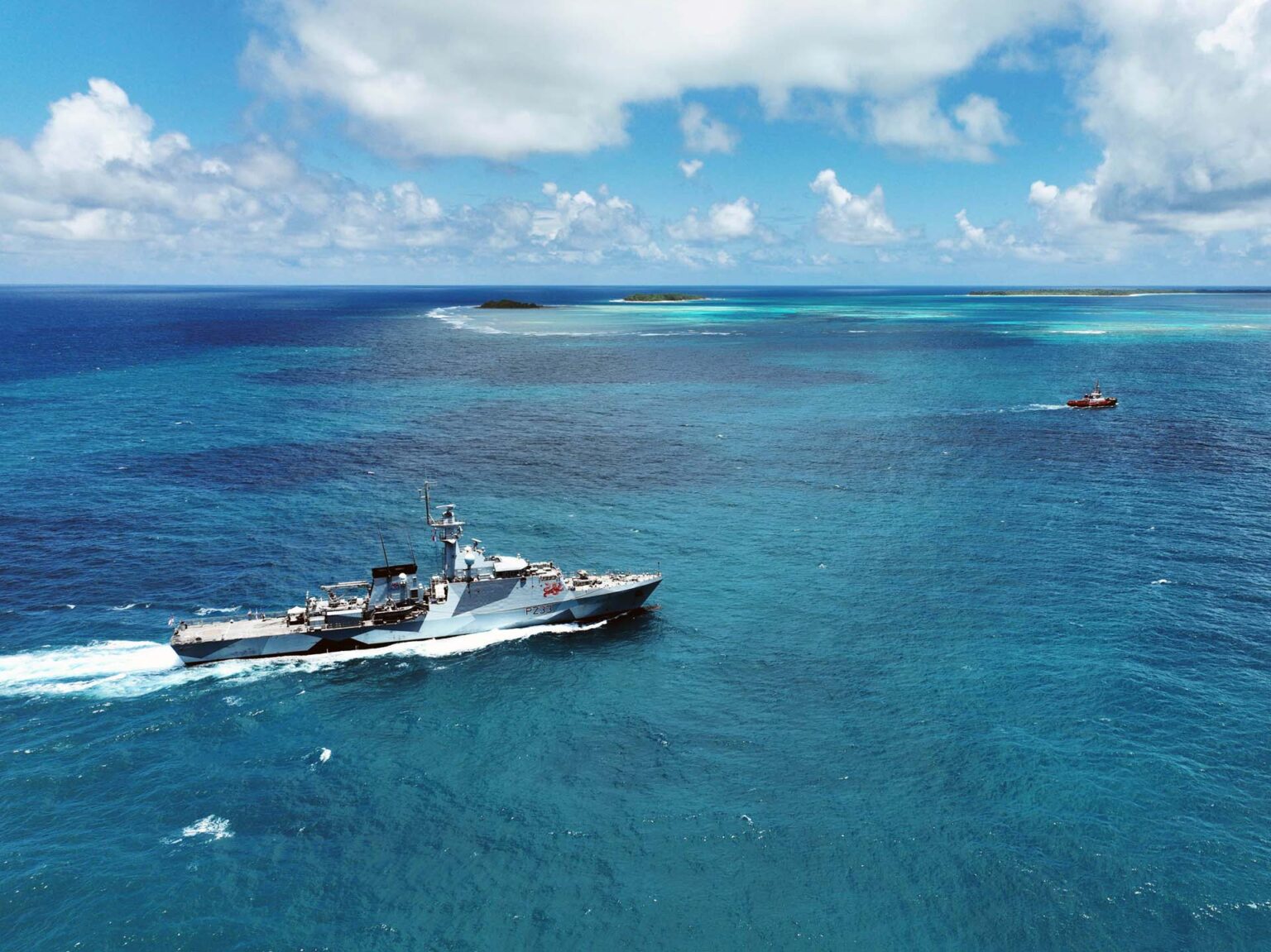
SeaWaves Magazine reports on a visit by Royal Navy Offshore Patrol Vessel Tamar to the Island of Diego Garcia, an important US and Allied base in the Indian Ocean.

“Crew of the patrol ship concentrated on safeguarding the environment in the British Indian Ocean Territory, ensuring the remote island chain’s rare wildlife was not disturbed by the illegal actions of humanity.

“They found its shores littered with tonnes of rubbish and fishermen flouting international law, trawling the territory’s expansive, protected waters – roughly the size of Texas – for its rich stocks of rare fish.”

I would note two things, first this visit is much too rare and second that while HMS Tamar has a flight deck, it virtually never has an embarked helicopter or capable UAS.

The UK has a vast overseas EEZ. They have never had a large number of OPVs. Generally, they have kept one ship in the Western North Atlantic/Bermuda/Caribbean and one ship in the South Atlantic/Falklands/New Georgia regions, not always an OPV. Their overseas territories in the Indian, Pacific, and Mid Atlantic Oceans seldom, if ever, see a patrol vessel. It does seem the British are starting to recognize the utility of these little ships, but I don’t expect them to build any more.

When operating in these overseas EEZs, patrol vessels are generally not supported by land based maritime patrol aircraft.

The River class Batch 2 are large enough to support a helicopter but have no hangar. A helicopter can help search over the horizon, but they are not as helpful as might be thought, because it is difficult to get more than four hours a day search time (two, two hour sorites). While on WHEC-726 I once calculated the embarked helicopter was increasing our effective area searched by about 40%.

Though it would lack some of the operational flexibility of an embarked helicopter, a robust UAS detachment could provide an even better search capability at a relatively low cost.

“AN ALLIED COAST GUARD APPROACH TO COUNTERING CCP MARITIME GRAY ZONE COERCION” –CIMSEC

U.S. Coast Guard Cutter Munro and Japan Coast Guard Patrol Vessel Large Aso, transit together in formation during a maritime engagement in the East China Sea Aug. 25, 2021. U.S. Coast Guard members aboard the Munro deployed to the Western Pacific Ocean to strengthen alliances and partnerships and improve maritime governance and security in the region. (Photo courtesy of Japan Coast Guard)

CIMSEC has an interesting post discussing US and Japan Coast Guards response to China’s Gray Zone activities in the South and East China Seas.

The information on changes to the Japan Coast Guard is valuable, but the author does not seem to be aware of the existing close relationship between the US Navy and Coast Guard.

She advocates that the US Coast Guard follow the Japan Coast Guard model when really it is more a case of Japan Coast Guard organization becoming more like that of US Coast Guard’s organization.

The Japan Coast Guard is not a military service. I have even heard that JCG ships do not use the same fuel as the Japanese Maritime Defense Force. There was a bright line separating the two services.

Her lack of understanding of the USN/USCG relationship is clear. For instance, she states, “RIMPAC has hosted USCG participation on the rare occasion” when in fact Coast Guard participation is the norm. I believe the Coast Guard has participated in every RIMPAC. She also does not seem to be aware of the Coast Guard’s participation in the national intelligence system, that Coast Guard units are frequently trained and inspected by Navy personnel, or that much of the US Coast Guard’s equipment is US Navy standard supplied by the Navy.

There are some interesting bits in post.

“Last year, the Japan-U.S. ACSA (Acquisition and Cross-Servicing Agreement) was applied to the USCG for the first time to enable a JMSDF supply shop to replenish a USCG patrol vessel.”

Clearly the Japan Coast Guard, which has more cutters than the US Coast Guard (but far fewer aircraft), is getting a lot of attention.

Since 2012, the JCG budget and personnel have seen annual increases and the Kishida administration intends to more than double the budget by 2027.

The Indian Coast Guard when through a similar period of rapid growth after the Mumbai terrorist attack.

Finally, with the Kishida administration’s plan to raise defense spending to 2 percent of GDP by FY27, budgetary calculations will now include expenditures on Japan’s Coast Guard as a defense budget line item. Unlike NATO countries, Japan has historically not classified JCG spending as a defense expenditure. While this reform may seem entirely bureaucratic in nature, Japan is the textbook example of how seemingly esoteric organizational reforms can have remarkable impacts on foreign and security policy. By including JCG spending in the defense budget, the government is opening itself up to criticism and pressure to strengthen the coast guard’s role in Japan’s national security and national defense strategies.

Making the Japan Coast Guard’s budget part of the Defense budget may ultimately tie it more closely to the Japanese Maritime Self Defense Force (Navy) than the US Coast Guard is tied to the US Navy, though they have a very long way to go to reach even that degree of cooperation.

Japan has been a remarkable partner in maintaining the rules based order in Asia. They have helped equip the coast guards of the Philippines and Vietnam. They are also committed to helping the smaller island nations of Oceania.

Last WHEC 378, Mellon, Finds a New Home

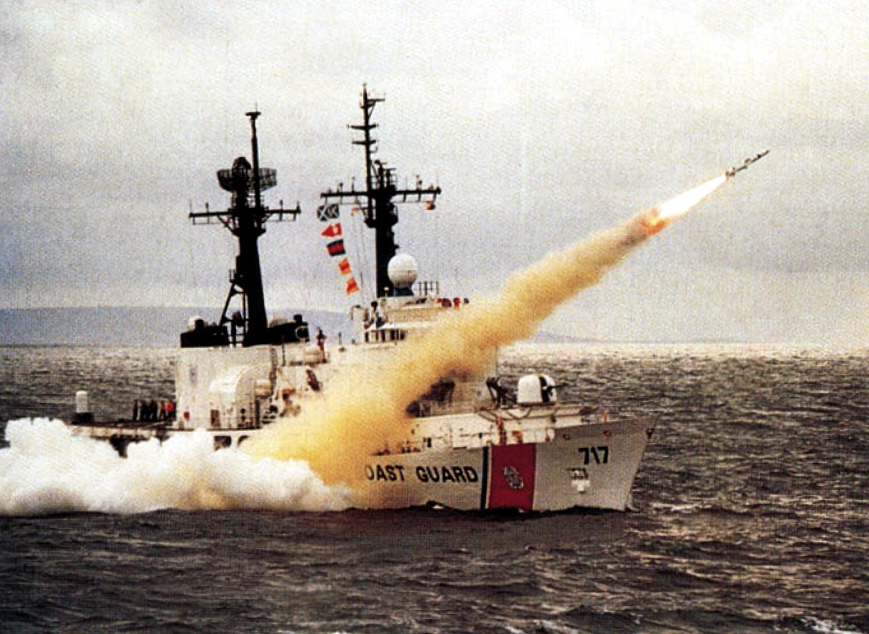
USCGC Mellon seen here launching a Harpoon anti-ship cruise missile in 1990.

After a long period in which she was expected to be transferred to Bahrain, the former USCGC Mellon is now expected to join two of her sisters in service with the Vietnam Coast Guard.

To recap, the twelve Hamilton class cutters, all over 51 years old, are now in service with five nations.

  • The Philippine Navy has three, former USCGC Hamilton (WHEC-715), Dallas (716), and Boutwell (719).
  • The Vietnamese Coast Guard has two, Morgenthau (722) and Midgett (726) and will get Mellon (717).
  • The Nigerian Navy has two, Chase (718) and Gallatin (721).
  • The Sri Lanka Navy has two, Sherman (720) and Munro (724).
  • The Bangladesh Navy has two, Rush (723) and Jarvis (725).

More info including new names here.

Thanks to Mark R. C. for bringing this to my attention.

“Coast Guard to Send Additional Cutter to Hawaii” –Military.com

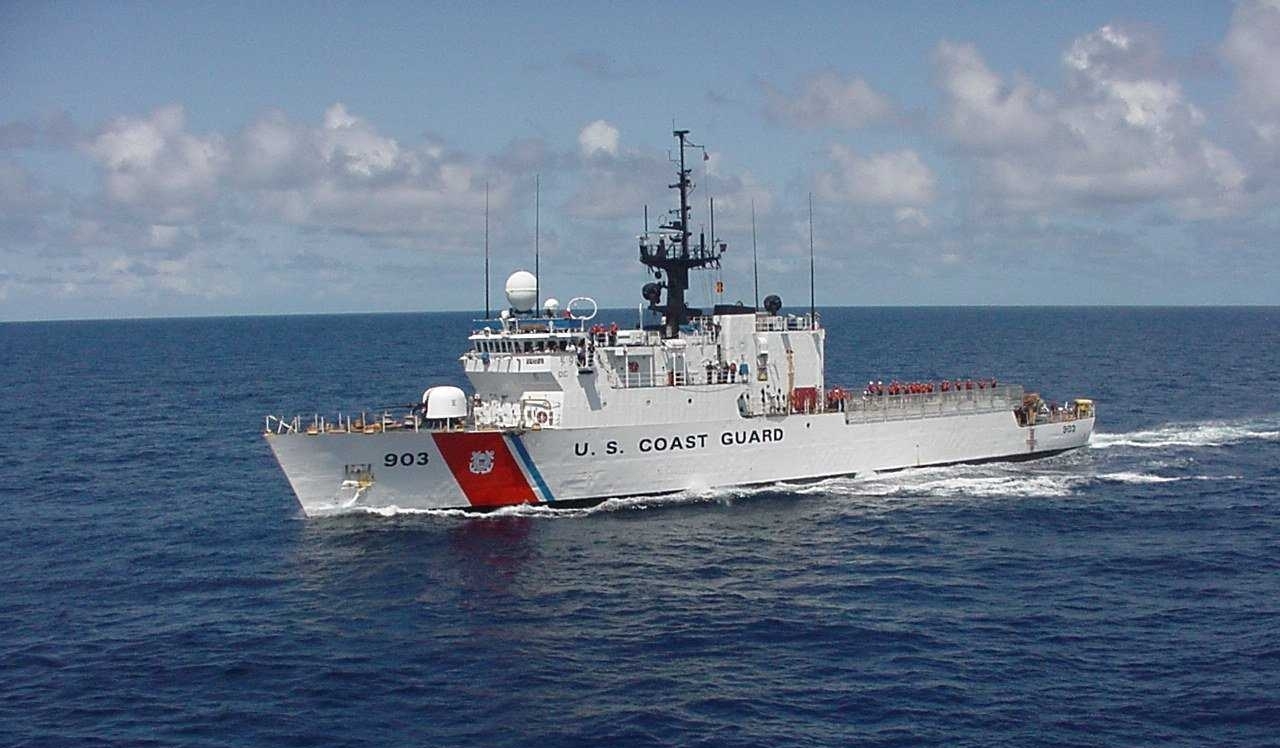
USCGC Harriet Lane (WMEC-903), March 17, 2009. US Coast Guard photo. She may look a little different now having gone through the Service Life Extension Program.

Military.com reports USCGC Harriet Lane is to be the new “Indo-Pacific Support Cutter,” and that she will be based in Honolulu beginning early FY2024. This is a change of homeport from Portsmouth, VA.

We knew this was coming, and Harriet Lane was the likely candidate. She will be the only WMEC 270 in the Pacific and will be used to counter Illegal, Unregulated, Unreported (IUU) fishing in the US EEZ and that of our friends and allies. They will also probably do a lot of training with friendly maritime law enforcement agencies. Her capabilities are a good match for the role. WMEC270s have been doing similar tasks off West Africa for years.

Thanks to Walter, a former dirt dart, for bringing this to my attention.

“China Coast Guard’s New ‘Monster’ Ship Completes Maiden Patrol in South China Sea” –The Diplomat

Photo credit: China Defense Blog

The Diplomat reports the maiden patrol of China Coast Guard’s second monster 12,000 ton cutter.

The patrol was only 19 days, but no telling how quickly they will come out again.

When you want to play bumper boats, size really does matter and the Chinese have raised the stakes considerably. Meanwhile the Japan Coast Guard (and here) and South Korean Coast Guard also have some very large cutters.

“Coast Guard Cutter Kimball returns home following Western Pacific patrol” –CG News

Following is from the Coast Guard News Page. Not only does this show the increasing cooperation between the US and Japan coast guards, it also explains how a Barbers Point H-65 made it to Guam. (“U.S. Coast Guard, Guam Fire Department conduct rescue hoist training in Guam” –Forces Micronesia / Sector Guam)

March 14, 2023

Coast Guard Cutter Kimball returns home following Western Pacific patrol

HONOLULU — The Coast Guard Cutter Kimball (WMSL 756) and crew returned to their Honolulu homeport, Friday, following a 42-day, 10,000 nautical mile Western Pacific patrol.

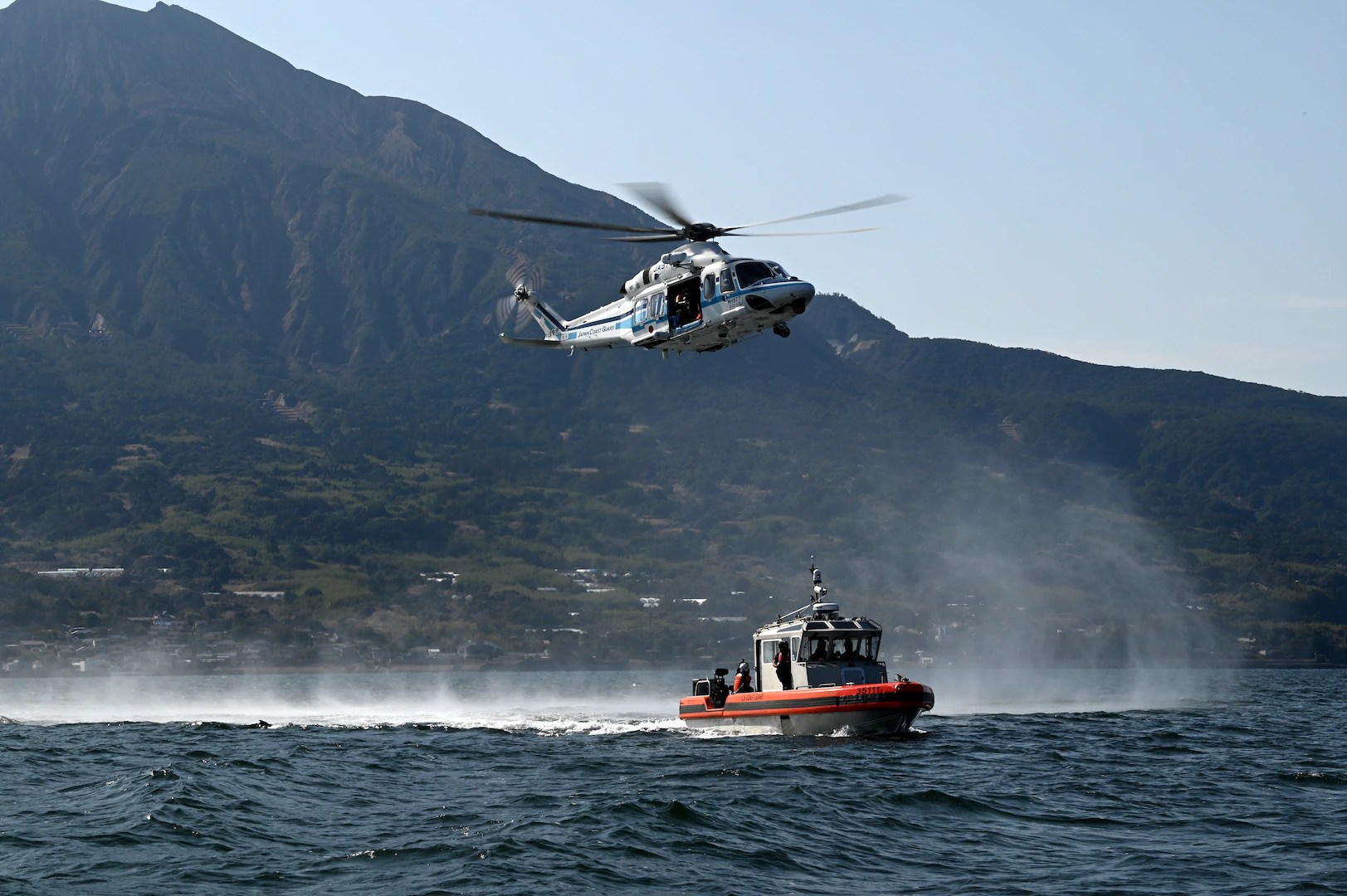
Kimball was the first U.S. military ship in recent history to visit the port city of Kagoshima, Japan, where the crew partnered with servicemembers from Japan Coast Guard’s 10th District to plan and conduct combined operations and search-and-rescue exercises.

Kimball’s crew met with Japan Coast Guard senior leadership and hosted Japan Coast Guard servicemembers, U.S. Consulate Fukuoka staff, community leaders and local media aboard the cutter during the port visit in support of Operation SAPPHIRE.

Operation SAPPHIRE is a joint agreement between the U.S. and Japan Coast Guards signed in 2022 for enhancing cooperation between the two sea services. SAPPHIRE is an acronym for the ‘Solid Alliance for Peace and Prosperity with Humanity and Integrity on the Rule of law-based Engagement.’

“By collaborating with Japan Coast Guard members and conducting evolutions that enhanced communication and inter-operability during the patrol, the crew continued to strengthen a solid foundation for the positive and productive relationship with the maritime service of a like-minded nation,” said Captain Tom D’Arcy, Kimball’s commanding officer.

Kimball’s crew demonstrated proficiency in the ship’s aviation program by working with an air operations inspection team to conduct a biennial Shipboard-Aviation Standardization Inspection (AVSTAN). By achieving their AVSTAN certification, Kimball can continue deploying with aviation detachments during future patrols.

Kimball also supported U.S. Coast Guard efforts to increase its presence in the Indo-Pacific. Kimball’s crew delivered a MH-65 Dolphin helicopter from Air Station Barber’s Point to Santa Rita, Guam, to enable forward operations that extend the service’s air coverage in the region.

During the patrol, the cutter’s engineering department was presented with the Rear Admiral R. S. Lucas Plaque Award for their outstanding contributions to the Coast Guard’s naval engineering program. Members from Kimball’s engineering department were cited for excellence and ingenuity during recent patrols and for completing three extensive industrial periods encompassing significant maintenance, contractual repair projects, and casualty repairs valued at over $4.4 million.

“I am extremely proud of our crew’s accomplishments,” said D’Arcy. “Kimball continues to remain on the front lines of the Coast Guard’s strategic plan. Our engagements in Japan strengthened our existing relationships with international partners who uphold good maritime governance. Kimball’s patrol re-affirmed the U.S. Coast Guard’s commitment to facilitating a free and open Indo-Pacific.”

Commissioned in 2019, Kimball is the Coast Guard’s seventh national security cutter and one of two homeported in Honolulu. National security cutters are 418-feet-long, 54-feet-wide and have a displacement of 4,500 long-tons. With a range of 12,000 nautical miles, the advanced technologies of Legend-class national security cutters are designed to support the national objective to maintain the security of America’s maritime boundaries and provide long range search-and-rescue capabilities.

“U.S. Coast Guard Is Helping Southeast Asians Protect Their Seas” –Foreign Policy

U.S. Coast Guard Forces Micronesia Sector Guam Commander Capt. Nicholas R. Simmons and the Honorable Joses R. Gallen, Secretary of Justice, Federated States of Micronesia, signed an expanded shiprider agreement allowing remote coordination of authorities, the first of its kind aboard the USCGC Myrtle Hazard (WPC 1139) in Guam, on Oct. 13, 2022. The agreement will enable to U.S to act on behalf of the FSM to combat illicit maritime activity and to strengthen international security operations. (U.S. Coast Guard photo by Chief Warrant Officer Sara Muir)

Foreign Policy reports,

 “…the United States has increasingly looked to its Coast Guard as an option to assist regional states with their maritime challenges, advance security partnerships, and serve as a potent soft-power tool. As agencies focused primarily on law enforcement and safety, coast guards are perceived as an increasingly useful regional tool because they can assert national interests without being overtly militaristic and escalatory.”

The post is an excellent look at what the Coast Guard has been doing in the Western Pacific as well as the challenges of dealing with the tyranny of distance. There is not a lot here we have not heard, but there are several links to earlier documentation. This one is interesting, and we did not discuss it earlier, “Rebalance U.S. Coast Guard Cutters to Help Advance a ‘Free and Open’ Indo-Pacific.”

There is reference to the Medium Endurance Cutter to be deployed to the Western Pacific that may clarify its mission.

“The narratives surrounding these commitments have strongly focused on the deployment of Coast Guard cutters. One of the key announcements regarding the Coast Guard at the U.S.-ASEAN summit, for example, was that a Coast Guard vessel would be assigned to the region to operate as a “training platform,” providing multinational crewing opportunities and participating in cooperative maritime engagements.”