“Coast Guard repatriates 99 aliens to Haiti” –D7

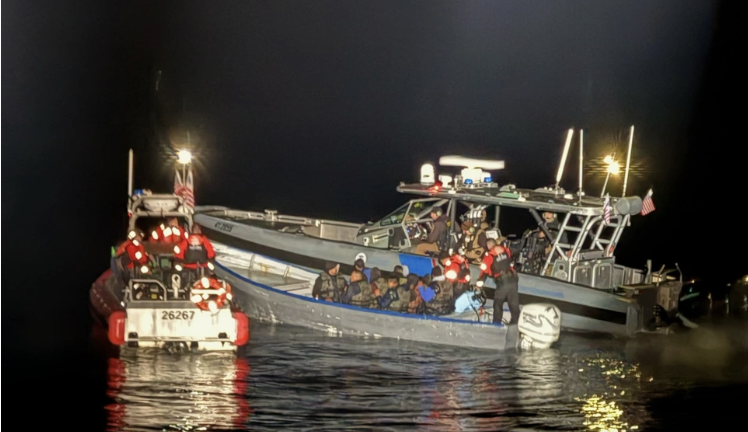
Mar. 27, 2025, a law enforcement boat crew from Coast Guard Cutter Seneca (WMEC 906) intercepts an overloaded vessel with Haitian aliens approximately 35 miles north of Cap-Haitien, Haiti, about 500 kM from the nearest US territory. The aliens were repatriated back to Cap-Haitien, Haiti, April 1, 2025 following the interdiction. (U.S. Coast Guard photo)

Below is a District 7 news release. This looks like a routine report of a routine interdiction, but I found this statement interesting.

Since the beginning of fiscal year Oct. 1, 2025, Coast Guard crews have repatriated a total of 412 aliens to Haiti, compared to 857 aliens repatriated to Haiti in FY24.

412 repatriated over six months vs 857 over twelve month, it appears that intercepts are being made at about the same rate, or perhaps a bit lower rate, than in FY24. The Coast Guard was on the job then, as it is now,


April 1, 2025

A law enforcement boat crew from Coast Guard Cutter Seneca (WMEC 906) intercepts an overloaded vessel with Haitian aliens approximately 35 miles north of Cap-Haitien, Haiti, Mar. 27, 2025. The aliens were repatriated back to Cap-Haitien, Haiti, April 1, 2025 following the interdiction. (U.S. Coast Guard photo)

MIAMI – Coast Guard Cutter Seneca’s crew repatriated 99 aliens to Haiti, Tuesday, following a maritime interdiction approximately 35 miles north of Cap-Haitien, Haiti.

A Customs and Border Protection Air and Marine Operations aircrew notified Coast Guard District Seven watchstanders, Thursday, of an approximate 35-foot overloaded vessel transiting north toward the Turks and Caicos Islands.

“The Coast Guard remains steadfast in our defense of the U.S. maritime borders and approaches with patrols in the Florida Straits, Windward and Mona Passages to interdict unlawful maritime migration attempts before they reach our shores,” said Lt. Cmdr. Brent Pearson, Coast Guard liaison officer to U.S. Embassy Port-au-Prince. “Attempting illegal migration in overloaded, unsafe vessels with no safety equipment is extremely dangerous and puts you and your loved one’s lives at risk. Don’t take to the sea just to be sent back.”

Once aboard a Coast Guard cutter, aliens are processed to determine their identity and are provided food, water, shelter, and basic medical attention before repatriation to their country of origin or return to the country of their departure.

The Coast Guard, along with its Homeland Security Task Force – Southeast partners, maintains a continual presence with air, land, and sea assets in the Florida Straits, the Windward Passage, the Mona Passage, and the Caribbean Sea in support of Operation Vigilant Sentry. The HSTF-SE combined, multi-layered approach is designed to protect the safety of life at sea while preventing unlawful maritime entry to the United States and its territories.

Anyone attempting to enter the United States illegally by sea will be interdicted and repatriated, consistent with U.S. law and policy.

Since the beginning of fiscal year Oct. 1, 2025, Coast Guard crews have repatriated a total of 412 aliens to Haiti, compared to 857 aliens repatriated to Haiti in FY24.

To learn more about the Coast Guard’s border security and territorial integrity mission in the Seventh Coast Guard District, watch the videos linked below:

For breaking news, follow us on X (formerly Twitter). For additional information, find us on Facebook and follow us on Instagram.

USCGC Midgett Visits Australia

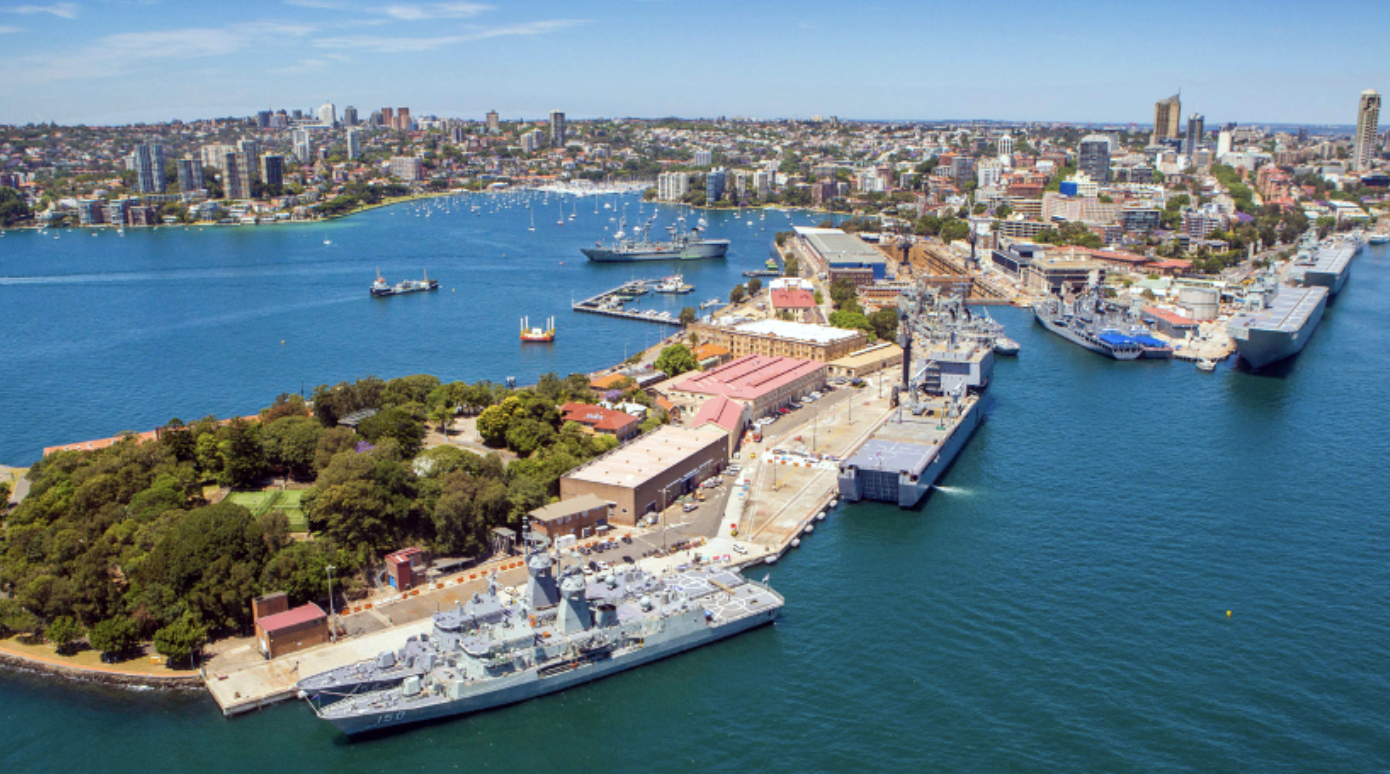
Aerial view of His Majesty’s Australian Station, HMAS Kuttabul. Note the very large dry dock between the island and the city. I was not able to identify all the Australian Navy ships in the photo, but there appear to be eleven Visible in the photo are both Canberra class helicopter dock landing ships (LHD, uppep right); two ANZAC class frigates (FFG, foreground), HMAS Choules (L100, center fight). The photo was probably taken between 2015 and 2018–the ship anchored in the center appears to be HMAS Tobruk which was scuttled in 2018.

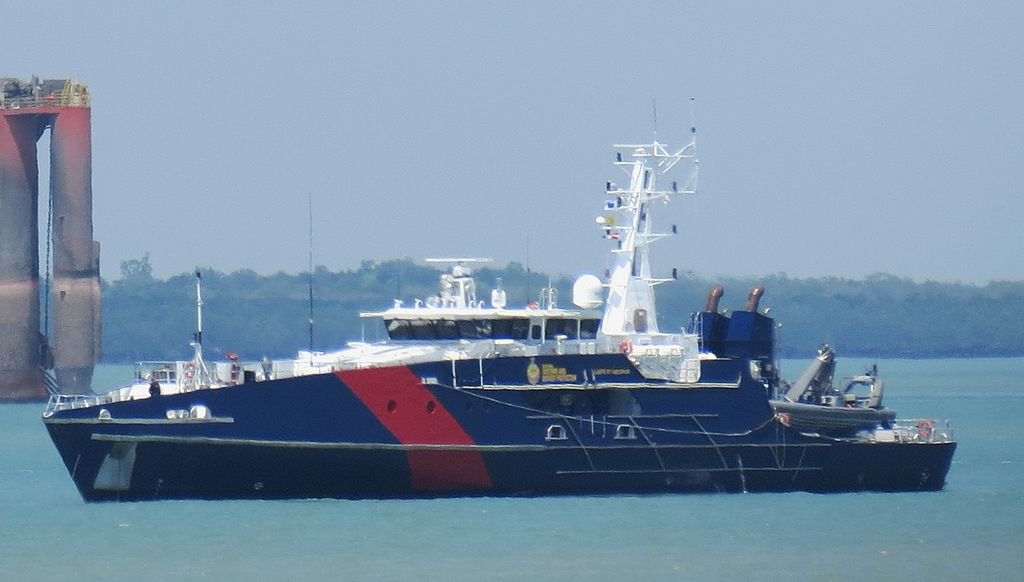
The Australian Customs patrol boat ACV Cape St George on Darwin Harbour in 2014, Photo by Ken Hodge

Below is a news release. The linked news release includes several photos of the people involved. Midgett was hosted by the Australian Navy but also interacted with the Marine Unit of the Australian Border Force, which performs some Coast Guard type missions. The Border Force was formed in 2015, the Marine Unit having come from their Customs service. Currently the Marine Unit includes one large former Offshore Support Vessel and eleven patrol craft.

There are suggestions that they may be given the Arafura class OPVs being built for the Australian Navy.

The Australian Border Force also has an aviation Coast Guard component operating a fleet of ten privately contracted Dash 8 aircraft which operate alongside the Royal Australian Air Force (RAAF) in the Maritime Border Command (a joint Border Force, Navy, and Air Force command under a Navy flag officer–Chuck).

Notably the Marine Unit of the Australian Border Force is not a SAR agency, but given the nature of their assets and patrols, they will be doing some SAR, just as the Revenue Cutter service did.

It seems probable the Marine Unit of The Australian Border Force will evolve in the direction of the USCG model.


March 4, 2025

U.S. Coast Guard cutter visits Australia, furthers collaboration and maritime security

SYDNEY – The U.S. Coast Guard Cutter Midgett (WMSL 757) recently completed a port call in Sydney, Feb. 25, 2025, conducting several engagements with Australian partners that strengthened ties and furthered collaborative maritime security throughout Oceania. Reflecting the spirit of the Pacific Quadrilateral Defense Coordinating Group (Australia, India, Japan, and the US–Chuck), the U.S. Coast Guard continues its vital collaboration with Australian law enforcement to identify maritime vulnerabilities and cooperate on solutions that reduce risks to safety, health, and security throughout the region.

While in Sydney, Midgett hosted a law enforcement partnership event with Australian and United States stakeholders. Participants, including U.S. Consul General in Sydney Christine Elder, U.S. Coast Guard Attaché Capt. Amanda Ramassini, representatives from U.S. Homeland Security Investigations, U.S. Secret Service, and Australian law enforcement and maritime security partners, joined the crew for breakfast and roundtable discussions in the wardroom, followed by a tour of the cutter. Law enforcement partners received a briefing on Midgett’s capabilities and its current mission in the Pacific. Highlighting the close bond between the two nations and their agencies, Midgett’s Lt. Jake Behne recently deployed to the Torres Strait as an observer with the Australian Border Force (ABF) Fast Response Boat unit, and now an ABF Officer in Charge is set to sail aboard Midgett as an observer.

Separately, Sydney media outlets were invited aboard with the assistance of U.S. Consulate Sydney; the subsequent reporting on partnerships reached more than a million Australians.

Beyond official engagements, the crew of Midgett embraced the opportunity to experience Australian culture and history during a visit to the Australian National Maritime Museum.

“This visit to Sydney was more than just a port call; it was a chance to reinforce the vital link between the U.S. Coast Guard and our Australian counterparts,” said Capt. Matthew Rooney, Midgett’s commanding officer. “The support we received from HMAS Kuttabul was first rate and the warm welcome from our Royal Australian Navy shipmates made our time here truly memorable.”

The United States’ alliance with Australia remains a cornerstone of peace and stability in the Indo-Pacific region. The U.S. Coast Guard looks forward to continuing partnerships with Australia’s maritime and border forces to ensure a connected, prosperous, secure, and resilient Pacific.

Midgett, commissioned in 2019 and homeported in Honolulu, is the eighth Legend-class national security cutter. These 418-foot vessels are equipped with advanced technology, making them ideally suited to support a wide range of missions, including maritime security, law enforcement, and search and rescue operations.

West Coast Migrant Interdiction

The Coast Guard Cutter Active and U.S. Customs and Border Protection interdict an alien vessel, approximately 15 miles off the coast of Mission Bay, California, Feb. 2, 2025. The crew of Active and CBP members worked together to interdict this alien panga-style vessel, which had 16 aliens aboard. (U.S. Coast Guard courtesy photo)

I don’t have any hard figures, but it seems West Coast migrant interdictions are becoming more common, perhaps even more frequent than in the Caribbean, though the number of migrants in each attempt seems smaller than in LANTAREA interdictions.

Feb. 2, 2025

Coast Guard interdicts 16 aliens near Mission Bay

SAN DIEGO — Coast Guard interdicted a vessel with 16 aliens aboard approximately 15 miles off the coast of Mission Bay, Sunday morning.

At approximately 12 a.m., U.S. Coast Guard Cutter Active notified Joint Harbor Operations Center of a 25-foot panga-style with around 15-20 people aboard approximately 1 mile south of their position.

The cutter Active and a U.S. Customs and Border Protection Air and Marine Operations boatcrew then launched boarding teams to assess.

The Coast Guard boarding team discovered 16 aliens aboard the panga. Initial interviews revealed that all the aliens claimed Mexican nationality.

The aliens were safely transferred to U.S. Border Patrol custody.

The Coast Guard remains committed to protecting lives at sea while working alongside our federal partners to combat illicit maritime activities. These operations highlight the coordinated efforts between agencies to secure our maritime borders.

Coast Guard Cutter Terrell Horne and partnership agencies intercept smuggler operated alien vessel, approximately 20 miles off the coast of Point Loma, California, Jan. 28, 2025. The crew of Guard Cutter Terrell Horne and U.S. Customs and Border Protection members worked together to interdict this illegal alien operation, which had 14 individuals aboard. (U.S. Coast Guard courtesy video)

SAN DIEGO — Coast Guard interdicted a panga with 14 aliens aboard approximately 20 miles off the coast of Point Loma, Tuesday night.

At approximately 4:45 p.m., U.S. Customs and Border Protection notified Coast Guard personnel at the Joint Harbor Operations Center of a panga-style vessel traveling north toward the maritime boundary line.

The Coast Guard Cutter Terrell Horne was diverted to the scene. The cutter launched a boarding team, and with CBP’s assistance, successfully interdicted the vessel.

The boarding teams discovered 14 individuals aboard the panga. Initial interviews revealed that all individuals claimed Mexican nationality.

The aliens were safely transferred to U.S. Border Patrol custody.

The Alien Migrant Interdiction Operations (AMIO) mission provides effective law enforcement presence at-sea and achieves three main objectives: deter undocumented migrants and transnational smugglers from using maritime routes to enter the U.S.; detect and interdict undocumented migrants and smugglers far from the U.S. border; and expand Coast Guard participation in multi-agency and bi-national border security initiatives. Strong partnerships and information sharing with other agencies, such as Customs and Border Protection (CBP), are critical to mission success. While the Coast Guard leads the interdiction mission on the high seas, partnerships with CBP and Immigration and Customs Enforcement are critical for successful shore-side interdiction operations.

Jan. 28, 2025

Coast Guard interdicts 21 migrants near Point Loma

U.S. Coast Guard District Eleven

SAN DIEGO — Coast Guard interdicted a panga with 21 individuals aboard approximately 20 miles off the coast of Point Loma, Monday evening.

At approximately 10:45 p.m., U.S. Customs and Border Protection notified Coast Guard personnel at the Joint Harbor Operations Center of a 40-foot panga-style vessel traveling north approximately 40 miles south of the maritime boundary line.

The Coast Guard Cutter Active and the Coast Guard Cutter Terrell Horne were diverted to the scene. Both cutters launched boarding teams and, with CBP’s assistance, successfully interdicted the vessel.

The boarding teams discovered 21 individuals aboard the panga. Initial interviews revealed that all individuals claimed Mexican nationality, although subsequent checks identified two passengers as Guatemalan and Salvadoran nationals.

The individuals were safely transferred to U.S. Border Patrol custody.

The Coast Guard remains committed to protecting lives at sea while working alongside our federal partners to combat illicit maritime activities. These operations highlight the coordinated efforts between agencies to secure our maritime borders.

Jan. 21, 2025

Coast Guard interdicts 26 migrants near Oceanside Harbor

U.S. Coast Guard District Eleven

OCEANSIDE, Calif. — Coast Guard crews interdicted a panga-style vessel carrying 26 individuals approximately one mile offshore from Oceanside Harbor, Monday morning.

At around 10:30 a.m., Oceanside lifeguards reported a disabled vessel with multiple people aboard that had run out of fuel. Assessing no immediate safety concerns, lifeguards notified Coast Guard personnel at the Joint Harbor Operations Center and remained on scene.

The Coast Guard Cutter Terrell Horne was diverted to assist. Terrell Horne’s crew deployed a boarding team and safely embarked the 26 individuals, who represented multiple nationalities, including those from Mexico, China, and Vietnam. The individuals were later transferred to U.S. Border Patrol custody.

The Coast Guard works closely with partner agencies to deter and respond to dangerous smuggling operations that endanger lives.

Jan. 17, 2025

The U.S. Coast Guard and partnership agencies interdicted a 25-foot panga-style vessel carrying 15 individuals approximately 25 miles off Point Loma, Thursday.

The boat crew arrived on scene and issued commands for the vessel to stop. The operator abandoned the steering console, which caused the vessel to drift erratically. Coast Guard gained control of the vessel and turned off the engine. During this process, the panga collided with the Coast Guard small boat, resulting in minor damage to the starboard railing.

The 15 individuals aboard the vessel were determined to represent multiple nationalities, including China, Uzbekistan, Mexico, Ecuador, Vietnam, and El Salvador.

One individual was observed experiencing hypothermia-like symptoms and was transported by emergency medical services to UCSD Hillcrest for medical evaluation, accompanied by Border Patrol agents.

All 15 individuals were safely transferred to U.S. Border Patrol custody.

The Coast Guard continues to work closely with partner agencies to deter and respond to dangerous smuggling operations that put lives at risk.


“Coast Guard announces immediate action in support of Presidential Executive Orders” –News Release/What Will the CG Do Differently?

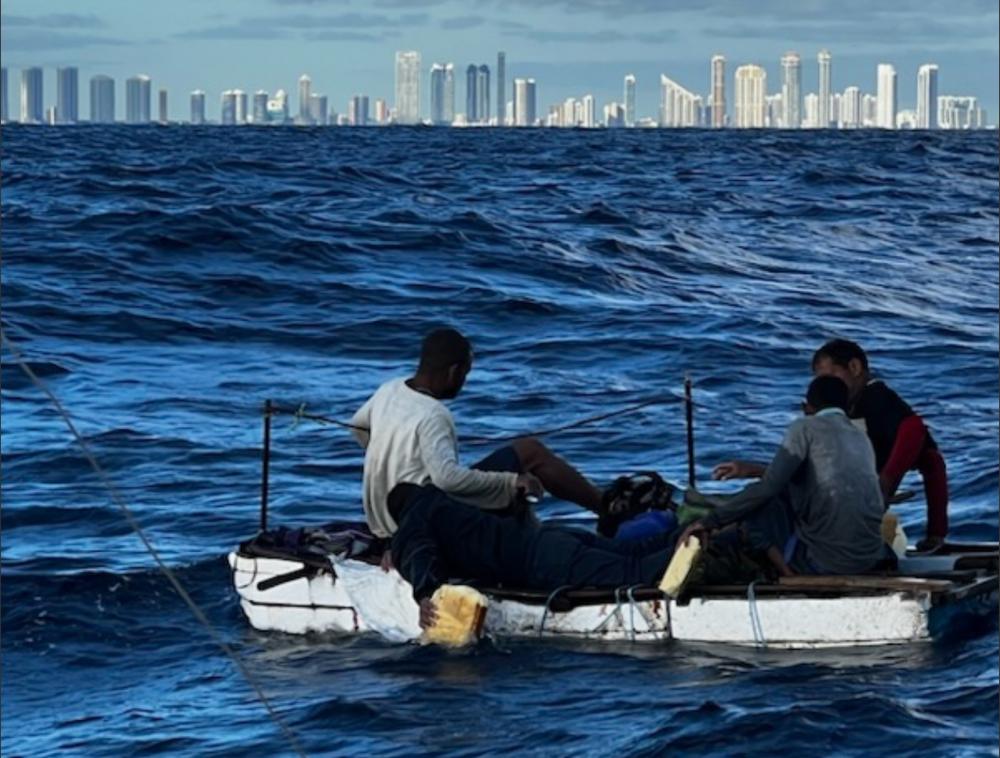
A good Samaritan notified Sector Miami watchstanders of a migrant vessel about 10 miles east of Sunny Isles, Florida, Jan. 8, 2023. The people were repatriated to Cuba on Jan. 16, 2023. (U.S. Coast Guard photo)

Below is a CG news release.

The Coast Guard is a military organization. It does as it is told. That is the way it is supposed to be. But these are not new missions. Units are already positioned to carry out these missions. If we devote more assets to these missions, until, if or when, the Coast Guard gets more assets, they will have to come from other missions.

Frankly it seemed Immigration interdiction on the water routes was going well, doing much better than we are doing on the land borders. The New York Post, apparently reporting on this news release was headlined, “After Trump’s orders, US Coast Guard surges near Haiti, Cuba to block ‘mass migration’, but there have been no reports I’ve seen of a large increase in immigration attempts. The New York Post article also includes a video that indicates an avenue of legal immigration, that has been used as an incentive to not attempt illegal immigration, is being closed off.

So, what will be done differently?

NE fisheries might get less attention. Generally, the East coast has had a disproportionate percentage of the fleet, considering that something like 84% of the US EEZ is under PACAREA. It appeared new construction FRCs were already programmed to go to the Pacific and that there might be a new base in American Samoa.

It had appeared that another WMEC270 transfer to the Pacific was in the works, but they could probably use more than one more.

Will Coast Guard Aircraft be moved from the NE to the SE or the Pacific?

The President might choose to stop fisheries patrols with the Compact of Free Association States, but that would leave a vacuum the Chinese might exploit.

I would really love to see the Coast Guard start a program to provide a ship class around 2-3000 tons, with better potential as a warship, to build in greater numbers, in lieu of the as yet uncontracted last 10 OPCs. But that could provide no near-term help.

I would love to see cutters better prepared for a terrorist attack, which would also provide them better potential for use as a naval auxiliary. We could start doing that relatively quickly, but it would not have any effect on immigration.

There is no indication what the Coast Guard will do to interdict fentanyl which was one of the criticisms of Admiral Fagan’s term as Commandant. I don’t see what the Coast Guard could do since, I believe, it primarily comes across the land border or in containers.

If the President wants more assets to interdict drugs in the Eastern Pacific Drug Transit Zone, he could task the Navy to provide more ships to 4th Fleet. The Coast Guard could probably provide more law enforcement detachments relatively quickly if needed.

{I wonder if Customs and Border Protection are doing anything differently?)

Will the Coast Guard get additional billets it would need to operate now very old deactivated WMEC210s and WPB87s?

Or will the Coast Guard once again try to do more with less?


Jan. 22, 2025

Coast Guard announces immediate action in support of Presidential Executive Orders

By Press Release

The Coast Guard announced immediate action on executive orders issued by the White House Tuesday, Jan 21, 2025.

“The U.S. Coast Guard is the world’s premiere maritime law enforcement agency, vital to protecting America’s maritime borders, territorial integrity and sovereignty,” said Adm. Kevin Lunday, the Coast Guard’s acting commandant. “Per the President’s Executive Orders, I have directed my operational commanders to immediately surge assets — cutters, aircraft, boats and deployable specialized forces — to increase Coast Guard presence and focus starting with the following key areas:

  • The southeast U.S. border approaching Florida to deter and prevent a maritime mass migration from Haiti and/or Cuba;
  • The maritime border around Alaska, Hawai’i, the U.S. territories of Guam, the Commonwealth of the Northern Mariana Islands, American Samoa, Puerto Rico and the U.S. Virgin Islands;
  • The maritime border between the Bahamas and south Florida;
  • The southwest maritime border between the U.S. and Mexico in the Pacific;
  • The maritime border between Texas and Mexico in the Gulf of America; and
  • Support to Customs and Border Protection on maritime portions of the southwest U.S. border.

Together, in coordination with our Department of Homeland Security and Department of Defense teammates, we will detect, deter and interdict illegal migration, drug smuggling and other terrorist or hostile activity before it reaches our border.”

“US Coast Guard Cutter Seneca returns home after a two-month patrol in the Windward Passage and Florida Straits” –News Release

U.S. Coast Guard Cutter Seneca (WMEC 906) patrols off the coast of Haiti, April 13, 2024, during a deployment to the Windward Passage. The crew of Seneca completed a 58-day patrol in the Windward Passage and Florida Straits to deter illegal migration while supporting Homeland Security Task Force – Southeast (HSTF-SE) and Operation Vigilant Sentry (OVS). (U.S. Coast Guard photo)

Below is a District 7 news release. The unstated news here is that in spite of being almost two months in the area where migrants are expected to attempt to sail to the US, Seneca apparently made no intercepts. That is good news. The patrols, along with changes in immigration policy, are in fact discouraging attempts to migrate illegally by sea, at least in this area.

The ship also got to participate in Miami’s Fleet Week and was visited by the Secretary of the Navy. All good.


May 31, 2024

US Coast Guard Cutter Seneca returns home after a two-month patrol in the Windward Passage and Florida Straits

PORTSMOUTH, Va. — The crew of U.S. Coast Guard Cutter Seneca (WMEC 906) returned to their home port in Portsmouth, May 21, 2024, following a 58-day migrant interdiction patrol in the Windward Passage and Florida Straits.

Seneca’s crew deployed in support of Homeland Security Task Force – Southeast (HSTF-SE) and Operation Vigilant Sentry (OVS) while at sea in the Coast Guard Seventh District’s area of operations.

Patrolling off the coast of Haiti and southern Florida Straits, Seneca’s presence helped deter migrants from taking to the sea in unsafe vessels to ensure the safety of life at sea and protect the maritime borders of the United States.

While at sea, Seneca worked with a Coast Guard Air Station Miami HC-144 Ocean Sentry airplane crew and responded to an international search and rescue case involving an overboard passenger who fell from a cruise ship.

During the deployment, Seneca’s crew had the opportunity to attend the inaugural Fleet Week 2024 in Miami, Florida in early May. Crew members conducted nearly 1,000 public tours over a six-day period, showcasing the U.S. Coast Guard, cutter Seneca, and the service’s missions. Seneca hosted numerous VIPs aboard to include Secretary of the Navy Carlos Del Toro, local and state politicians.

“It’s been an honor leading Seneca and her crew, serving alongside the best and brightest women and men in the service,” said Capt. James F. McCormack, commanding officer of Seneca. “Seneca and her crew provided stability in the maritime environment of the South Florida Straits and represented the Coast Guard with distinction amongst the other U.S. maritime services at Fleet Week Miami. Seneca lived up to our motto, “Tradition of Honor, A Legacy of Action.””

While deployed, Seneca’s crew transited over 9,000 nautical miles.

Established in 2003, HSTF-SE is the Department of Homeland Security-led interagency task force charged with directing operational and tactical planning, command and control, and functions as a standing organization to deter, mitigate, and respond to maritime mass migration in the Caribbean Sea and Florida Straits.

OVS is the 2004 DHS plan that provides the structure for deploying joint air and surface assets and personnel to respond to irregular maritime migration in the Caribbean corridor of the United States. Its primary objectives are to protect life at sea while deterring and dissuading mass maritime migration alongside our federal, state, and local partners.

Seneca is a 270-foot, Famous-class medium endurance cutter. The cutter’s primary missions are counter drug operations, migrant interdiction, enforcement of laws and treaties, and search and rescue in support of U.S. Coast Guard operations throughout the Western Hemisphere.

For information on how to join the U.S. Coast Guard, visit www.GoCoastGuard.com to learn more about active duty and reserve, officer and enlisted opportunities. Information on how to apply to the U.S. Coast Guard Academy can be found here.

“US Coast Guard Cutter Dauntless returns home to Florida after 61-day Operation Vigilant Sentry patrol” –News Release

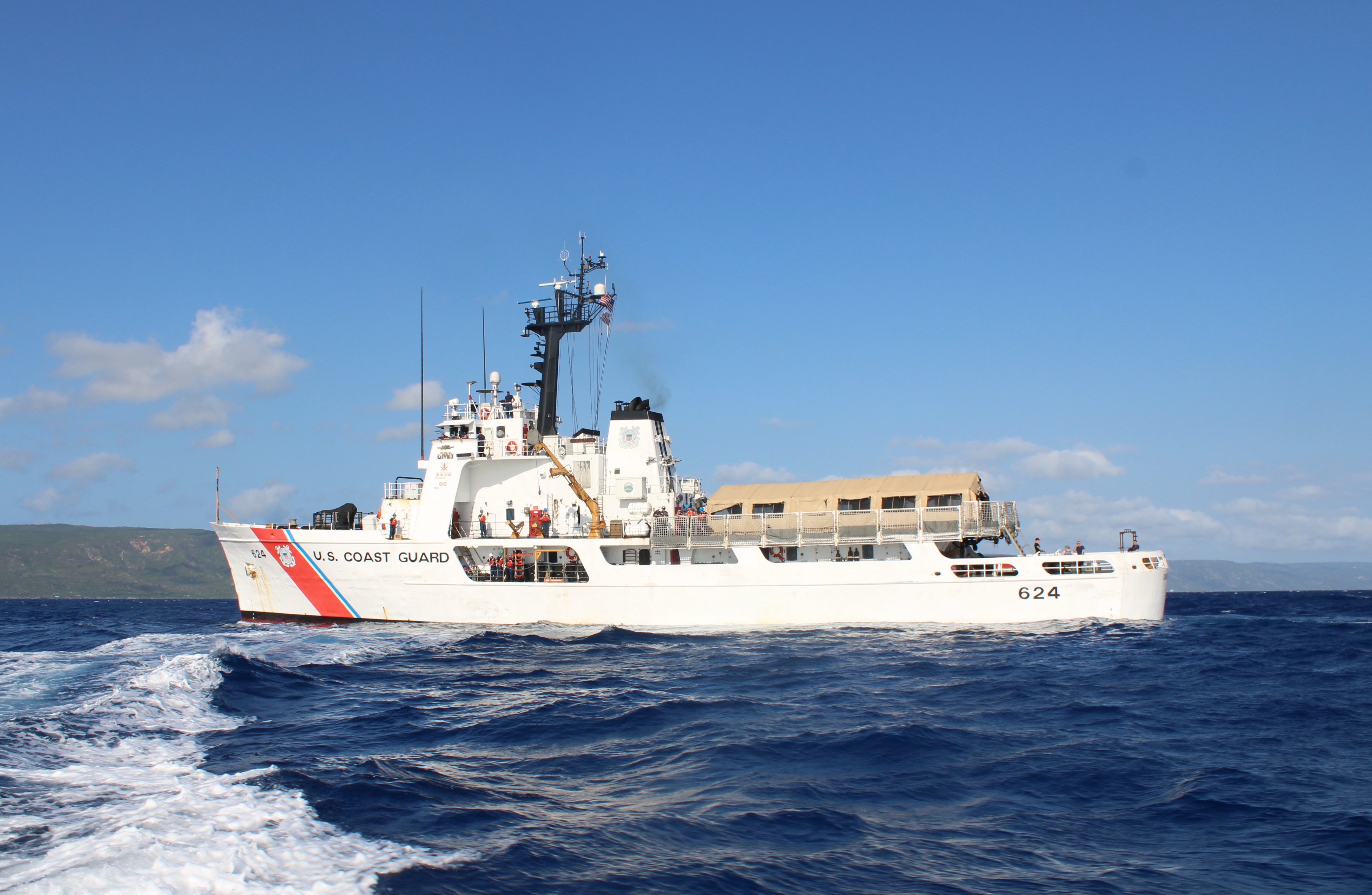
U.S. Coast Guard Cutter Dauntless (WMEC 624) and crew patrol, March 4, 2024, off the coast of Haiti. Dauntless deployed for two months to support Operation Vigilant Sentry while conducting maritime safety and security missions. (U.S. Coast Guard photo by Lt.j.g. Olivia Gonzalez) Note the shelter on the flight deck.

Below is a news release from Coast Guard News. Dauntless’s migrant interdiction patrol was fairly typical, but I wanted to call attention to the shelter, visible on her flight deck, in the photo above. Sheltering large numbers of migrants, 65 in this case, is always a challenge, and this is the first time I have seen this solution.

Of course, this shelter would preclude helicopter operations, but these operations are conducted in areas where fixed wing support is readily available.


 April 24, 2024

US Coast Guard Cutter Dauntless returns home to Florida after 61-day Operation Vigilant Sentry patrol

PENSACOLA, Fla. —  The crew of U.S. Coast Guard Cutter Dauntless (WMEC 624) returned to their home port in Pensacola, Wednesday, following a 61-day patrol in the Windward Passage and Florida Straits. While underway, crew members conducted maritime safety and security missions to protect life at sea and deter illegal migrant voyages bound for the United States.

Dauntless deployed in support of Homeland Security Task Force – Southeast (HSTF-SE) and Operation Vigilant Sentry (OVS) while patrolling in the Coast Guard Seventh District’s area of responsibility. While underway, Dauntless worked alongside other Coast Guard assets and units to dissuade unsafe maritime migration and enforce U.S. law on the high seas.

During the patrol, a good Samaritan on a sailboat reported a disabled vessel using VHF-FM channel 16. Dauntless’ crew received notification and conducted a search and rescue mission over several hours on a moonless night while searching for the unlit boat. Eventually, the crew located the overloaded and disabled sail freighter with 65 Haitian migrants aboard, including several children. All 65 migrants were safely evacuated and transferred aboard Dauntless, where they received food, water and basic medical care. Dauntless worked with multiple surface and air assets to successfully carryout the search, rescue and repatriation of the migrants.

Migrants attempting to reach the United States through nonlegal channels, or who land on U.S. shores without authorization, are subject to removal and repatriation to their country of origin or departure. Consistent with U.S. policy, those who bypass or attempt to circumvent lawful immigration pathways face consequences including the potential of being barred from future lawful entry in addition to risking their lives unnecessarily.

“This case was a prime example of the humanitarian lifesaving mission we remain always ready for,” said Cmdr. Aaron Kowalczk, commanding officer of Dauntless. “The crew’s ability to find the vessel and then safely complete the rescue in the dark of night is just another example of the utmost professionalism and skill they show every day and is indicative of 56 years of exemplary service by cutter Dauntless and her crews.”

Established in 2003, HSTF-SE is the Department of Homeland Security-led interagency task force charged with directing operational and tactical planning, command and control, and functions as a standing organization to deter, mitigate, and respond to maritime mass migration in the Caribbean Sea and Florida Straits.

OVS is the 2004 DHS plan that provides the structure for deploying joint air and surface assets and personnel to respond to irregular maritime migration in the Caribbean corridor of the United States. Its primary objectives are to protect life at sea while deterring and dissuading mass maritime migration alongside our federal, state, and local partners.

Dauntless is a 210-foot, Reliance-class medium endurance cutter originally built in 1967 and commissioned in 1968. The cutter’s primary missions are counter narcotics operations, migrant interdiction, living marine resources protection, and search and rescue in support of U.S. Coast Guard operations throughout the Western Hemisphere.

For information on how to join the U.S. Coast Guard, visit GoCoastGuard.com to learn about active duty, reserve, officer and enlisted opportunities. Information on how to apply to the U.S. Coast Guard Academy can be found here.

For more, follow us on Facebook, Instagram and Twitter.

” U.S., CARICOM reaffirm cooperation on guns, drugs and youth violence” –The Watch

Map of the Caribbean Sea and its islands. Photo credit: Wikipedia Commons, author–Kmusser, all data from Vector Map.

Below is a post from the NORTHCOM on-line magazine “The Watch.” This seems to suggest we will be getting better Caribbean Maritime Domain Awareness.


THE WATCH STAFF, Jan. 17, 2024

The U.S. and the Caribbean Community (CARICOM, an intergovernmental organization linking 15 member states), along with the Dominican Republic, have reaffirmed their efforts to combat illegal activities in the Caribbean that threaten their national security interests.

The signatory nations released a diplomatic note on November 22, 2023, outlining steps to achieve three goals: substantially reduce illicit trafficking, advance public safety and security, and prevent youth crime and violence in the Caribbean.

The agreement reiterates goals set out in a 2010 agreement, the note states, and promises new efforts to tackle regional issues.

CARICOM, the Dominican Republic and the U.S. also “welcome” a U.N. mission to restore safety and security in Haiti, according to the statement.

The agreement authorizes work to strengthen maritime prosecutions and encourage regional cooperation on maritime law enforcement, implementing the Caribbean Maritime Security Strategy to improve defense and law enforcement cooperation, as well as operational capacity and security.

Maritime domain awareness technology will be employed to disrupt criminal networks and deter narcotics, firearms, human trafficking, and illegal fishing. To do that, the agreement states, CARICOM countries will need to complete a memorandum of understanding to access and share information via live feeds from sensors, radars and identification systems.

The U.S., CARICOM and the Dominican Republic pledged to create two working groups on maritime issues and border and port security in 2024.

The agreement also bolsters efforts to stem youth violence, tighten efforts to bring transnational criminal organizations to justice, and promises help to improve Caribbean judicial and law enforcement capabilities.

The goals echo homeland defense objectives articulated by the commander of U.S. Northern Command and the North American Aerospace Defense Command, Gen. Glen D. VanHerck, who singled out the Bahamas, a key Caribbean ally, as crucial to the defense of the southeastern approaches to the homeland.

VanHerck praised the Bahamas for its cooperation in increasing domain awareness in the region and enhancing Caribbean security.

“Our partners in the Royal Bahamian Defence Force (RBDF) continue to punch above their weight as they continue to provide important contributions to regional security. USNORTHCOM and the RBDF operate maritime surveillance systems at Great Inagua and Coral Harbour, and plans are on track to add a third site in the coming years. That shared capability has significant benefits for domain awareness in the southern approaches to North America,” VanHerck told Congress in March 2023 testimony.

The agreement also promises to increase cooperation with France, the Netherlands and U.K. to improve regional security in their Caribbean overseas territories.

Shiprider Agreements Go Third Party, “THE CARIBBEAN Bahamas, Turks and Caicos Islands, and U.S. detain Haitian migrants in joint operation” –The Watch

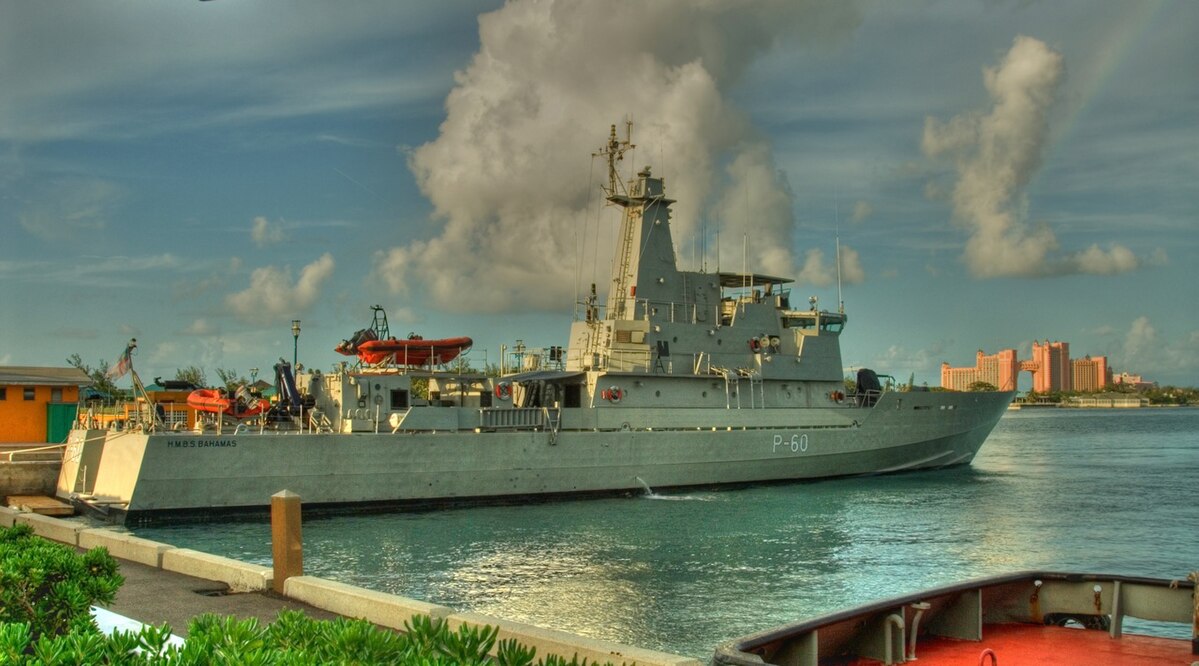
HMBS Bahamas (P 60). Photo credit: “FotoDawg”

USNORTHCOM’s online magazine, “The Watch” reports,

“The Royal Bahamas Defence Force (RBDF), operating jointly with the U.S. Coast Guard and Turks and Caicos Islands personnel, intercepted a ship with 145 Haitian migrants on August 13, 2023.”

What I found surprising here was this,

“The interdiction was the second since the Bahamas and the Turks and Caicos, a British Overseas Territory, signed a ship rider agreement in 2022. The pact allows law enforcement officials from one country to conduct operations on board the vessels of another for specific law enforcement purposes, according to an RBDF Facebook post.”

The Coast Guard, off course, has lots of these bilateral agreements, but this is the first I have heard about where the USCG was not one of the parties. Perhaps the model is spreading to other partnerships.

“Homeland Security Task Force – Southeast sustains enhanced migration enforcement posture”

A good Samaritan notified Sector Miami watchstanders of a migrant vessel about 10 miles east of Sunny Isles, Florida, Jan. 8, 2023. The people were repatriated to Cuba on Jan. 16, 2023. (U.S. Coast Guard photo)

We have noted a surge in alien migrant interdiction.

Below is a news release regarding changing procedures to deal with the problem and discourage illegal immigration.

April 28, 2023

Homeland Security Task Force – Southeast sustains enhanced migration enforcement posture

MIAMI— Yesterday, the U.S. Department of Homeland Security and the U.S. Department of State announced sweeping new measures to further reduce irregular migration, including irregular maritime migration, and to significantly expand lawful pathways to facilitate the safe, orderly and humane processing of migrants. The measures announced Thursday draw on the success of recent processes that have significantly reduced unlawful migration through a combination of expanded lawful pathways and swift returns and removal of those who fail to use those lawful pathways.

The announcement made clear that the United States, in coordination with our regional partners, have dramatically scaled up the number of removal flights per week. That includes flights to Cuba, which resumed this week following a pause due to COVID-19. The number of weekly flights will double or triple for some countries. With this increase in removal flights, migrants who cross the U.S. border without documents sufficient for lawful admission, which includes migrants who attempt to make landfall by sea, and who fail to qualify for relief or protection should expect to be swiftly returned.

DHS also made Cubans and Haitians who attempt to migrate irregularly to the U.S. via maritime means after April 27, 2023, ineligible for the parole processes announced in January, including those interdicted at sea.

“This announcement provides important clarity for at-sea interdictions. Anyone interdicted at sea while trying to enter the United States irregularly will be ineligible for the Cuban and Haitian parole processes announced in January,” said Rear Adm. Brendan C. McPherson, director of HSTF-SE and commander of U.S. Coast Guard Seventh District. “Taking to the sea in unsafe and unseaworthy vessels is inherently dangerous and is often deadly. Our Task Force will continue to rescue and repatriate, in accordance with governing policies and guidance, anyone attempting to enter the U.S. irregularly through maritime routes. We encourage everyone planning to come to the U.S. to do so through safe and lawful pathways.”

Since August 21, 2022, HSTF-SE partners have repatriated more than 11,747 migrants. Migrants rescued at sea or interdicted ashore are provided food, water, shelter, basic medical attention, and are processed to determine if they have a legal basis to enter or remain in the U.S.

The sustained surge of DHS personnel, interagency coordination and surge of air and sea assets to save lives and prevent unlawful entry into the United States is the largest federally-led response to irregular maritime migration in the region since 2010.

HSTF-SE serves as the DHS lead for operational and tactical planning, command and control, and as a standing organization to deter, mitigate and respond to maritime mass migration in the Caribbean Sea and the Straits of Florida. HSTF-SE is the supported DHS entity for Caribbean maritime migration operations, and HSTF-SE partners include federal, state and local agencies. HSTF-SE continues enhanced enforcement efforts in support of Operation Vigilant Sentry (OVS), the 2004 DHS plan to respond to irregular maritime migration in the Caribbean Sea and the Straits of Florida. The Task Force provides the organizational framework to plan for and execute a scalable operational plan under OVS, detect maritime migration indicators, monitor maritime migration trends, and conduct joint training, exercises and planning. The following federal, state and local law enforcement and emergency management components work together as part of the task force: DHS, USCG, USBP, CBP-AMO, CBP-OFO, HSI, ICE-ERO, USCIS, FEMA, HHS, FDEM, FDLE, Miami-Dade County and Monroe County.

For updates on HSTF-SE enforcement efforts, follow us on Twitter @HSTF_Southeast.

For more information about newly announced immigration programs:  

Fact Sheet: U.S. Government announces sweeping new actions to manage regional migration

Secretary Antony J. Blinken and Secretary of Homeland Security Alejandro Mayorkas at a Joint Press Availability

Implementation of a Change to the Parole Process for Haitians 

Implementation of a Change to the Parole Process for Cubans

“Coast Guard Migrant Interdiction Operations Are in a State of Emergency” –USNI

A Coast Guard Cutter Campbell law enforcement crew stopped a grossly overloaded, unsafe vessel near Turks and Caicos, May 9, 2022. Coast Guard Cutter Campbell is homeported in Kittery, Maine. (U.S. Coast Guard photo by Petty Officer 3rd Class Erik Villa-Rodriguez)

The February issue of US Naval Institute Proceedings has a rather grim description of Alien Migrant Interdiction Operations in the 7th District. The number of Cubans and Haitians putting out to sea has increased dramatically.

We have talked about this growing problem before,

but this is by far the clearest description of the challenges of these operations.