“AN ALLIED COAST GUARD APPROACH TO COUNTERING CCP MARITIME GRAY ZONE COERCION” –CIMSEC

U.S. Coast Guard Cutter Munro and Japan Coast Guard Patrol Vessel Large Aso, transit together in formation during a maritime engagement in the East China Sea Aug. 25, 2021. U.S. Coast Guard members aboard the Munro deployed to the Western Pacific Ocean to strengthen alliances and partnerships and improve maritime governance and security in the region. (Photo courtesy of Japan Coast Guard)

CIMSEC has an interesting post discussing US and Japan Coast Guards response to China’s Gray Zone activities in the South and East China Seas.

The information on changes to the Japan Coast Guard is valuable, but the author does not seem to be aware of the existing close relationship between the US Navy and Coast Guard.

She advocates that the US Coast Guard follow the Japan Coast Guard model when really it is more a case of Japan Coast Guard organization becoming more like that of US Coast Guard’s organization.

The Japan Coast Guard is not a military service. I have even heard that JCG ships do not use the same fuel as the Japanese Maritime Defense Force. There was a bright line separating the two services.

Her lack of understanding of the USN/USCG relationship is clear. For instance, she states, “RIMPAC has hosted USCG participation on the rare occasion” when in fact Coast Guard participation is the norm. I believe the Coast Guard has participated in every RIMPAC. She also does not seem to be aware of the Coast Guard’s participation in the national intelligence system, that Coast Guard units are frequently trained and inspected by Navy personnel, or that much of the US Coast Guard’s equipment is US Navy standard supplied by the Navy.

There are some interesting bits in post.

“Last year, the Japan-U.S. ACSA (Acquisition and Cross-Servicing Agreement) was applied to the USCG for the first time to enable a JMSDF supply shop to replenish a USCG patrol vessel.”

Clearly the Japan Coast Guard, which has more cutters than the US Coast Guard (but far fewer aircraft), is getting a lot of attention.

Since 2012, the JCG budget and personnel have seen annual increases and the Kishida administration intends to more than double the budget by 2027.

The Indian Coast Guard when through a similar period of rapid growth after the Mumbai terrorist attack.

Finally, with the Kishida administration’s plan to raise defense spending to 2 percent of GDP by FY27, budgetary calculations will now include expenditures on Japan’s Coast Guard as a defense budget line item. Unlike NATO countries, Japan has historically not classified JCG spending as a defense expenditure. While this reform may seem entirely bureaucratic in nature, Japan is the textbook example of how seemingly esoteric organizational reforms can have remarkable impacts on foreign and security policy. By including JCG spending in the defense budget, the government is opening itself up to criticism and pressure to strengthen the coast guard’s role in Japan’s national security and national defense strategies.

Making the Japan Coast Guard’s budget part of the Defense budget may ultimately tie it more closely to the Japanese Maritime Self Defense Force (Navy) than the US Coast Guard is tied to the US Navy, though they have a very long way to go to reach even that degree of cooperation.

Japan has been a remarkable partner in maintaining the rules based order in Asia. They have helped equip the coast guards of the Philippines and Vietnam. They are also committed to helping the smaller island nations of Oceania.

“China Coast Guard’s New ‘Monster’ Ship Completes Maiden Patrol in South China Sea” –The Diplomat

Photo credit: China Defense Blog

The Diplomat reports the maiden patrol of China Coast Guard’s second monster 12,000 ton cutter.

The patrol was only 19 days, but no telling how quickly they will come out again.

When you want to play bumper boats, size really does matter and the Chinese have raised the stakes considerably. Meanwhile the Japan Coast Guard (and here) and South Korean Coast Guard also have some very large cutters.

“Philippine Coast Guard Set For Personnel Boost” –Naval News

BRP Teresa Magbanua during sea trials off Japan (Photo: Philippine Coast Guard)

Naval News reports,

“The Philippine Coast Guard (PCG) is set to receive an additional 4,000 personnel this year, in order to reach a total of 30,000 by year-end.”

Some things to note:

That is almost 75% the size of the US Coast Guard, while the Philippine EEZ is less than 20% of the US.

The Philippine Coast Guard will be considerably larger than the Philippine Navy which has 24,500 active-duty members including 8,300 Marines.

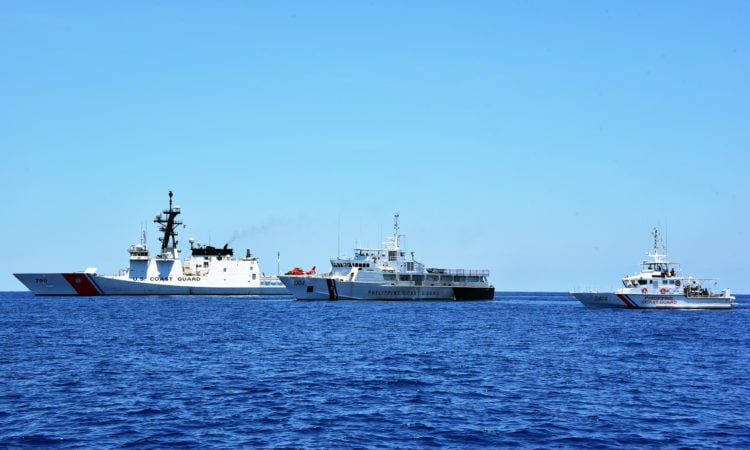
BRP Batangas (SARV-004) in between USCGC Bertholf (WMSL 750) and BRP Kalanggaman (FPB-2404) in an Exericse held in 2019. For many years, the Australian San Juan and Ilocos Norte vessels were the only major patrol assets in PCG service.
(U.S. Coast Guard photo by Chief Petty Officer John Masson)

Until 2020 the Philippine Coast Guard had no large patrol cutters. Their largest ships were two buoy tenders including the former USCGC Redbud, first commissioned in 1944. In fact, they mark the founding of their Coast Guard Fleet only as of 2007.

Beginning in 2020 the Philippine Coast Guard has obtained their first large patrol cutter, the 83 meter BRP Gabriela Silang. In 2022 they obtained two Japanese built 97 meter cutters of the Teresa Magbanua-class (see lead photo). They hope to get many more.

This build-up is obviously in response to Chinese intrusions into the Philippines’ Exclusive Economic Zone.

It appears the Philippine Coast Guard still has no weapons larger than .50 caliber machine guns. It will be interesting to see if this changes.

“Philippines Says China Ship Used Laser Against Coast Guard” –Real Clear Defense

RealClearDefense reports,

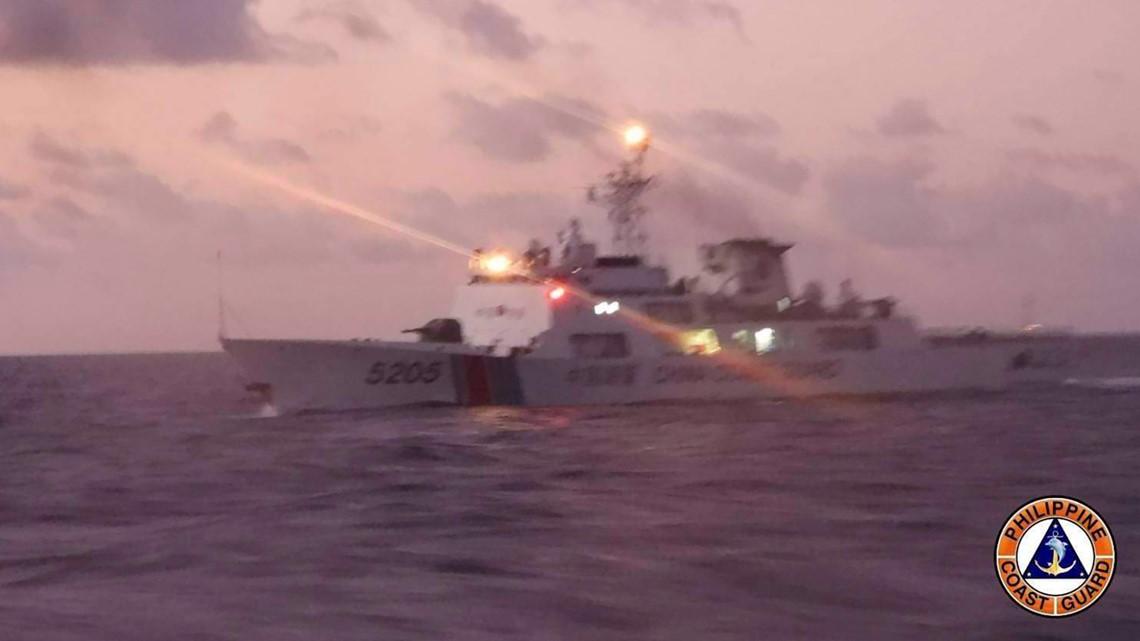
 “The Philippines on Monday accused a Chinese coast guard ship of hitting a Philippine coast guard vessel with a military-grade laser and temporarily blinding some of its crew in the disputed South China Sea, calling it a “blatant” violation of Manila’s sovereign rights.”

The incident occurred near Second Thomas Shoal, as the Philippine cutter BRP Malapascua was escorting a resupply mission to the BRP Sierra Madre, a Philippine LST deliberately, permanently grounded on Second Thomas Shoal. (Video here). Apparently the resupply effort was turned back.

Philippine CG statement on the incident here.

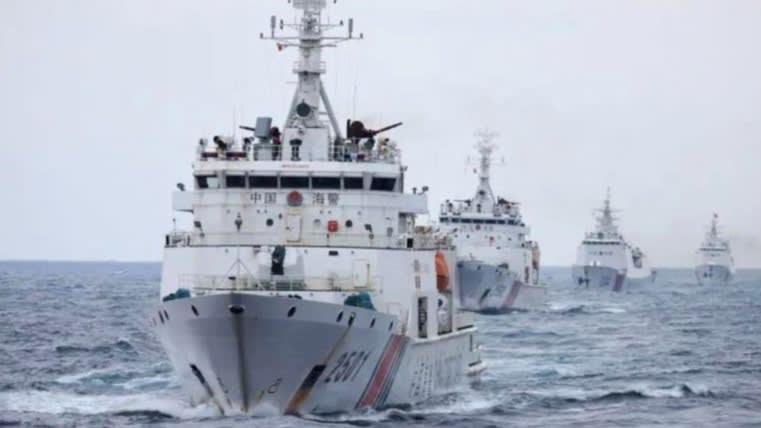
None of the Philippine Coast Guard cutters seem to be armed with anything larger than a .50 cal. machine gun, so they are at a disadvantage in facing down a large China CG cutter armed with a 76 mm gun, like the one in the photo above.

Philippines Standing Up to China? Joint Patrols?

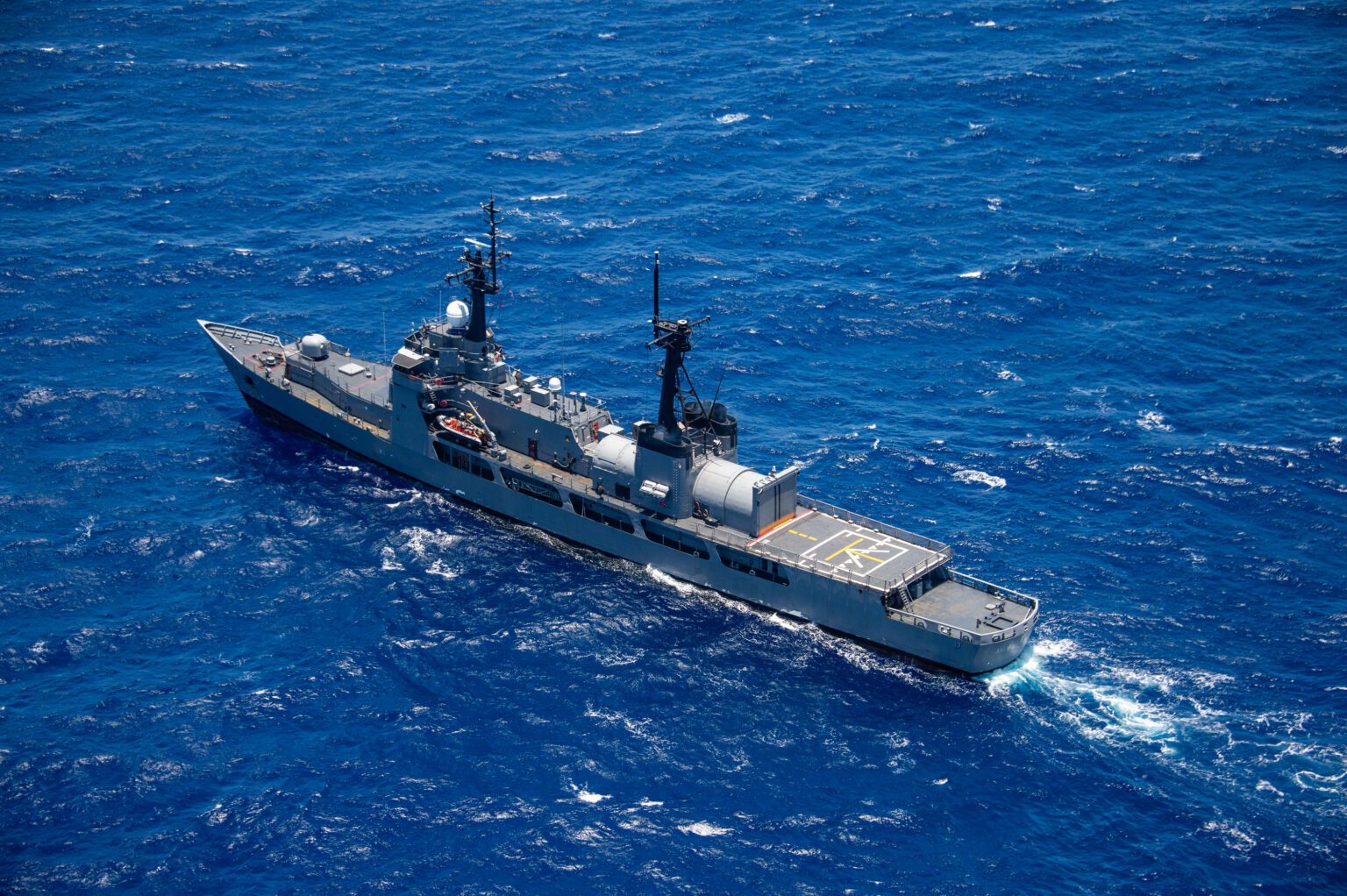
Philippine Navy frigate BRP Andrés Bonifacio (FF 17), the former USCGC Boutwell, participates in a group sail during the Rim of the Pacific (RIMPAC) exercise off the coast of Hawaii, July 26, 2018. (U.S. Navy photo by Arthurgwain Marquez)

A couple of recent reports seem to indicate the Philippines is becoming more aggressive in the protection of their EEZ.

Marine Link reports, “Philippines Coast Guard Boosts South China Sea Presence.”

“The Philippine Coast Guard has stepped up its presence in the disputed South China Sea by deploying additional vessels and conducting more sorties and overflights to protect maritime territory and the country’s fishermen, its chief said on Monday.”

gCaptain reports, “Philippine Navy Says China Tailed Its Warship.”

“The navy’s BRP Andres Bonifacio was conducting a patrol and search mission on Feb. 1 when it was monitored and tailed by the Chinese vessels near the reef, which is within the Philippines’ 200-nautical mile exclusive economic zone, said Armand Balilo, a spokesman for the coast guard. The militia boats “even conducted an intercept course,” he added.”

That the Philippine Navy is sending one of its largest ships (painted gray), the former USCGC  Boutwell, to confront Chinese trespassing is, I believe, a change from their previous policy.

Since the US and the Philippines have agreed to resume joint patrols, I would not be surprised to see a US Coast Guard cutter backstopping a Philippine CG cutter as it boards and perhaps seizes a Chinese fishing vessel. There are certainly plenty of them that are violating Philippine law.

“FLOODING THE ZONE: CHINA COAST GUARD PATROLS IN 2022” –CSIS

The Asia Maritime Transparency Initiative of Center for Strategic and International Studies provides a report showing the extent of China Coast Guard patrols of five features of the South China Sea, Second Thomas Shoal, Luconia Shoals, Scarborough Shoal, Vanguard Bank, and Thitu Island, in 2022 and comparing that to 2020. (There was no explanation for why no information regarding 2021 was included.)

The report also indicated that China Coast Guard is using automatic identification system (AIS) in a deceptive manner.

Thanks to Paul for bringing this to my attention.

“China Accused of Building on Unoccupied Reefs in South China Sea” –gCaptain

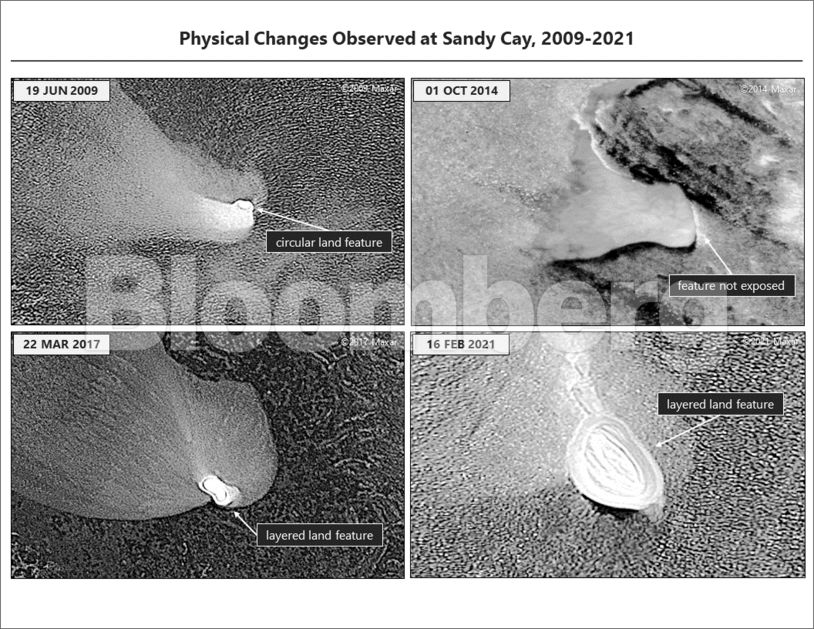
Satellite images obtained by Bloomberg News depict physical changes to a layered land feature at Sandy Cay between 2009 and 2021. Credit: Bloomberg

gCaptain reports,

China is building up several unoccupied land features in the South China Sea, according to Western officials, which they said was part of Beijing’s long-running effort to strengthen claims to disputed territory and potentially bolster its military presence in a region critical to global trade.

Apparently, China is not satisfied with the military outposts they have created in the South China Sea and are in the process of creating more. These actions may be taken by the Chinese both in support their systematic theft of EEZ resources from other nations and as support for a future blockade of Taiwan.

Certainly, these will be upgraded to military installations just as has been done with other artificial islands.

The nations whose EEZs are being violated by these activities have an opportunity to put a stop to it, while they are being done by fishing vessels, before there is a Chinese military presence, if they act quickly and aggressively to stop this illegal activity.

“Document: Office of Naval Intelligence’s Chinese People’s Liberation Army Navy, Coast Guard, Ship Identification Guide” –USNI

This Chinese Coast Guard ship is equipped with weapons believed to be 76-millimeter guns. © Kyodo

The US Naval Institute’s News Service reports the availability of a new document, “Office of Naval Intelligence’s Chinese People’s Liberation Army Navy, Coast Guard. and Government Maritime Forces 2022-2023 Recognition and Identification Guide.

You cannot actually read much of it on the USNI site, but you can download a copy here. You’ll need to expand it to read much of the information.

From a Coast Guard perspective, there are a couple things to note.

First is the sheer number of China Coast Guard cutters. China’s internationally recognized EEZ is less than 8.5% that of the US. Even if their expansive unrecognized claims were included, their total EEZ would be less than 20% that of the US. But according to the guide, they have over 200 cutters of 60 meters (197 feet) in length or greater (225 by my quick count). The US Coast Guard by comparison has 57: 37 patrol cutters, three icebreakers, 16 buoy tenders, and the barque Eagle.

Second, China has other agencies that apparently do coast guard work, that also have their own ships including the Sansha City Patrol, China, and the Maritime Safety Agency which, alone, has over 40 ships 60 meters or greater in length.

Chinese F/V Attempts to Ram USCGC James –AP

In this photo made available by the U.S. Coast Guard, guardsmen from the cutter James, seen at background right, conduct a boarding of a fishing vessel in the eastern Pacific Ocean, on Aug. 4, 2022. During the 10-day patrol for illegal, unreported or unregulated fishing, three vessels steamed away. Another turned aggressively 90 degrees toward the James, forcing the American vessel to maneuver to avoid being rammed. (Petty Officer 3rd Class Hunter Schnabel/U.S. Coast Guard via AP)

The Associated Press is reporting,

“…a heavily-armed U.S. Coast Guard cutter sailed up to a fleet of a few hundred Chinese squid-fishing boats not far from Ecuador’s Galapagos Islands. Its mission: inspect the vessels for any signs of illegal, unreported or unregulated fishing…But in this case, the Chinese captains of several fishing boats did something unexpected. Three vessels sped away, one turning aggressively 90 degrees toward the Coast Guard cutter James, forcing the American vessel to take evasive action to avoid being rammed.”

Of course there is much more to the story.

Coast Guard Cutter Kimball encounters Russia and People’s Republic of China military naval presence in Bering Sea” –D17

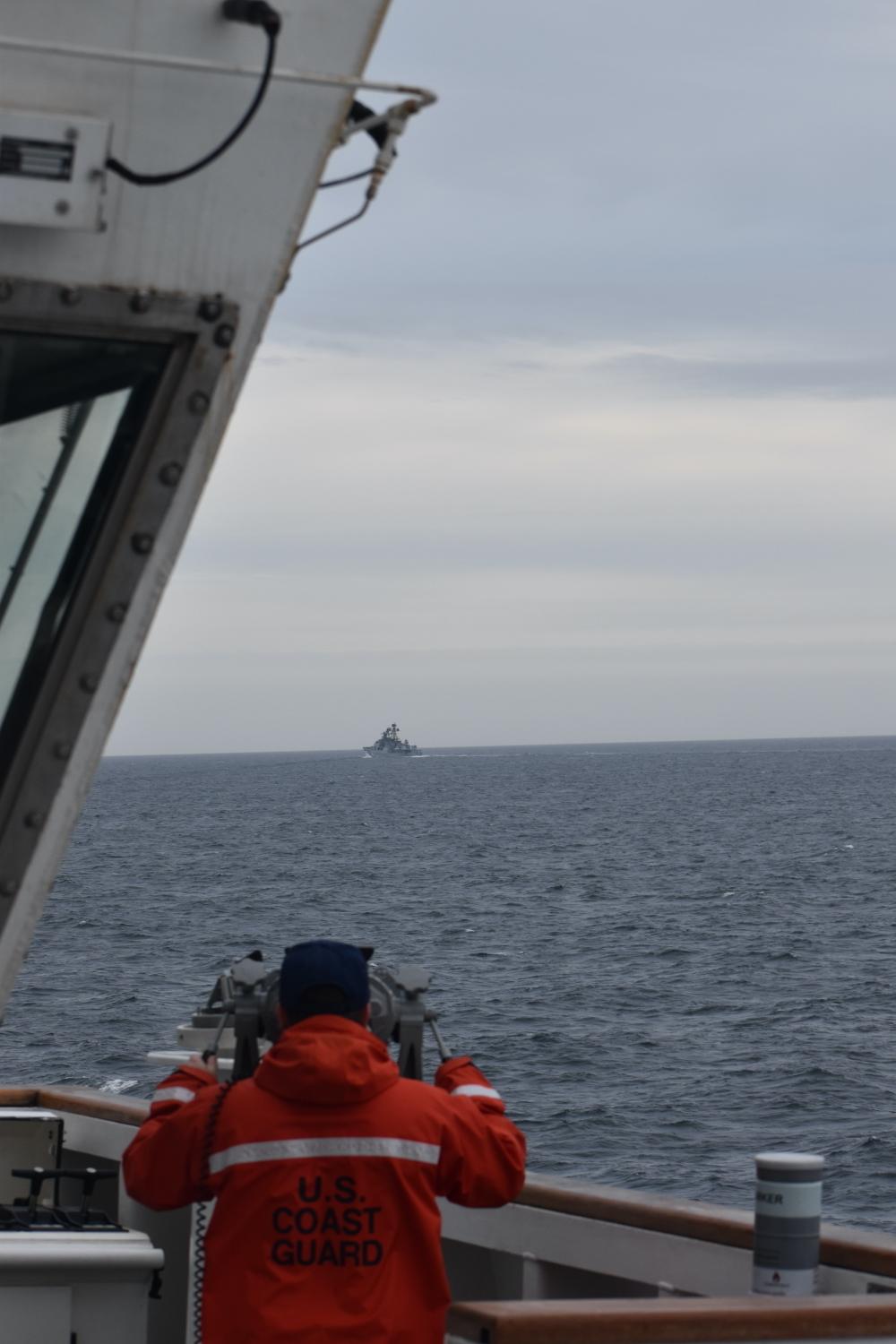
A Coast Guard Cutter Kimball crewmember observing a foreign vessel in the Bering Sea, September 19, 2022. (I believe it is a Russian Udaloy class destroyer–Chuck)
The Coast Guard Cutter Kimball crew on a routine patrol in the Bering Sea encountered a People’s Republic of China Guided Missile Cruiser, Renhai CG 101, sailing approximately 75 nautical miles north of Kiska Island, Alaska.

Below is a District 17 news release (HQ Juneau). The Chinese cruiser referred to is a Type 055, NATO designation Renhai class. The USN considers it a cruiser, but it is considered by many a large destroyer.

News Release

U.S. Coast Guard 17th District Alaska

Coast Guard Cutter Kimball encounters Russia and People’s Republic of China military naval presence in Bering Sea

Editors’ Note: Click on images to download high resolution version.

JUNEAU, Alaska – The Coast Guard Cutter Kimball crew on a routine patrol in the Bering Sea encountered a People’s Republic of China Guided Missile Cruiser, Renhai CG 101, sailing approximately 75 nautical miles north of Kiska Island, Alaska, September 19, 2022.

The Kimball crew later identified two more Chinese naval vessels and four Russian naval vessels, including a Russian Federation Navy destroyer, all in a single formation with the Renhai as a combined surface action group operating in the U.S. Exclusive Economic Zone (EEZ). 

As a result, the Kimball crew is now operating under Operation Frontier Sentinel, a Seventeenth Coast Guard District operation designed to meet presence with presence when strategic competitors operate in and around U.S. waters. The U.S Coast Guard’s presence strengthens the international rules-based order and promotes the conduct of operations in a manner that follows international norms. While the surface action group was temporary in nature, and Kimball observed it disperse, the Kimball will continue to monitor activities in the U.S. EEZ to ensure the safety of U.S. vessels and international commerce in the area. A Coast Guard Air Station Kodiak C-130 Hercules air crew provided support to the Kimball’s Operation Frontier Sentinel activities.    

In September 2021, Coast Guard cutters deployed to the Bering Sea and North Pacific Ocean also encountered Chinese naval vessels, including a surface action group transiting approximately 50 miles off the Aleutian Island chain. 

 “While the formation has operated in accordance with international rules and norms,” said Rear Adm. Nathan Moore, Seventeenth Coast Guard District commander, “we will meet presence-with-presence to ensure there are no disruptions to U.S. interests in the maritime environment around Alaska.”

 Kimball is a 418-foot legend-class national security cutter homeported in Honolulu, Hawaii.