“Elomatic awarded Polarstern 2 icebreaker design contract” –Marine Log / A Little Late for the Polar Security Cutter

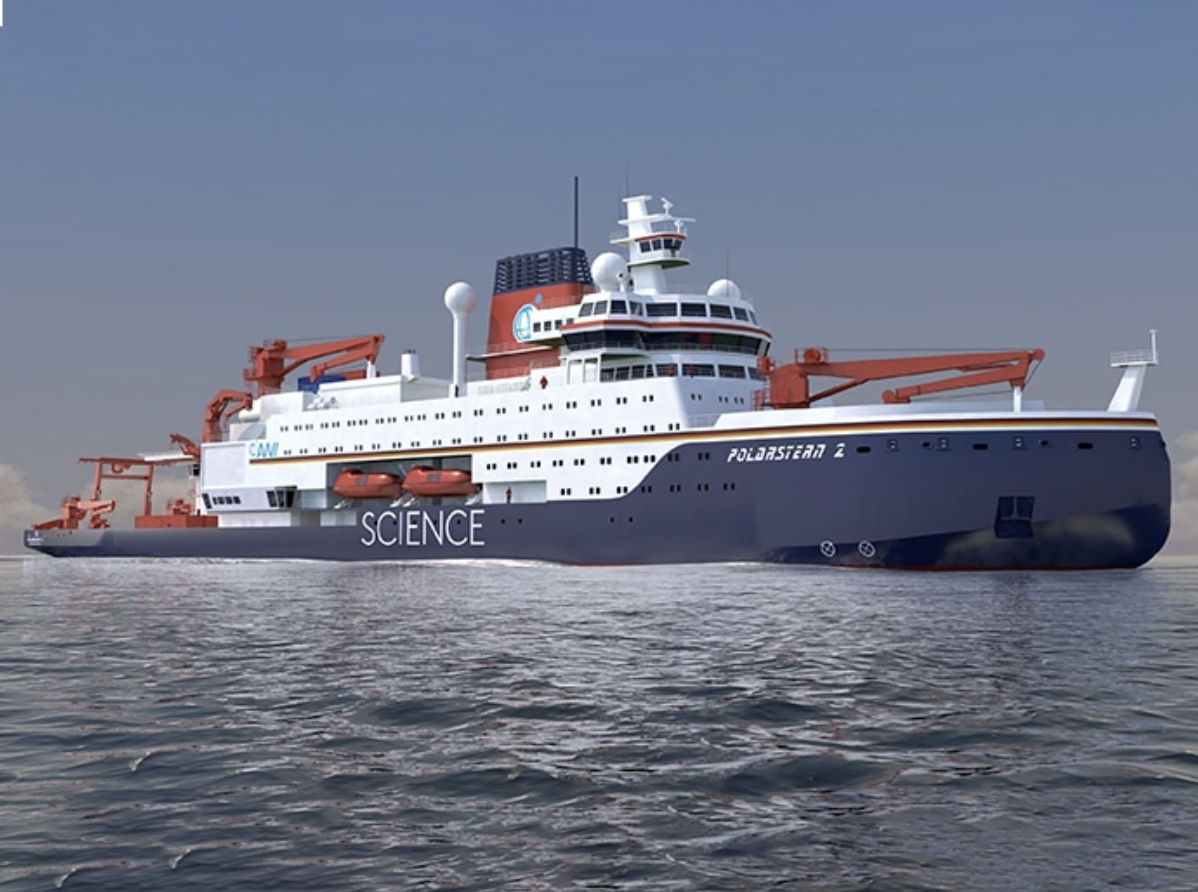
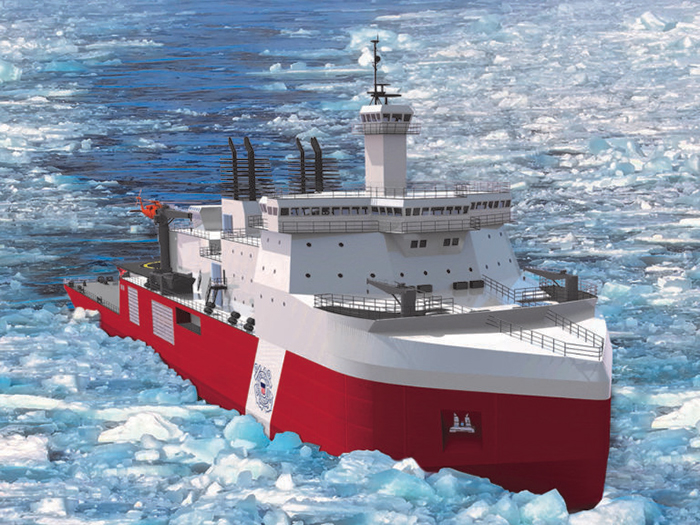
Polarstern 2 rendering: Ocean Architects and Elomatic. This does not look much like the Polar Security Cutter.

As you may recall ,the Polar Security Cutter was supposed to have been based on a proven design. VT Halter Marine Inc. won the contract based on the design of the Polarstern 2, but really Polarstern 2 was, at that point, vaporware rather than a proven design. Its design contract has just been signed almost six years after the award of the contract for the Polar Security Cutter, April 23, 2019.

Marine Log reports,

“Thyssenkrupp Marine Systems (TKMS) has awarded Elomatic Maritime Technologies GmbH a design and engineering contract to support the construction of Germany’s new Polarstern 2 icebreaker.

How did this happen?

“This Icebreaker Has Design Problems and a History of Failure. It’s America’s Latest Military Vessel” –Military.Com / Was Halter Marine Ever Really Qualified to Build the PSC?

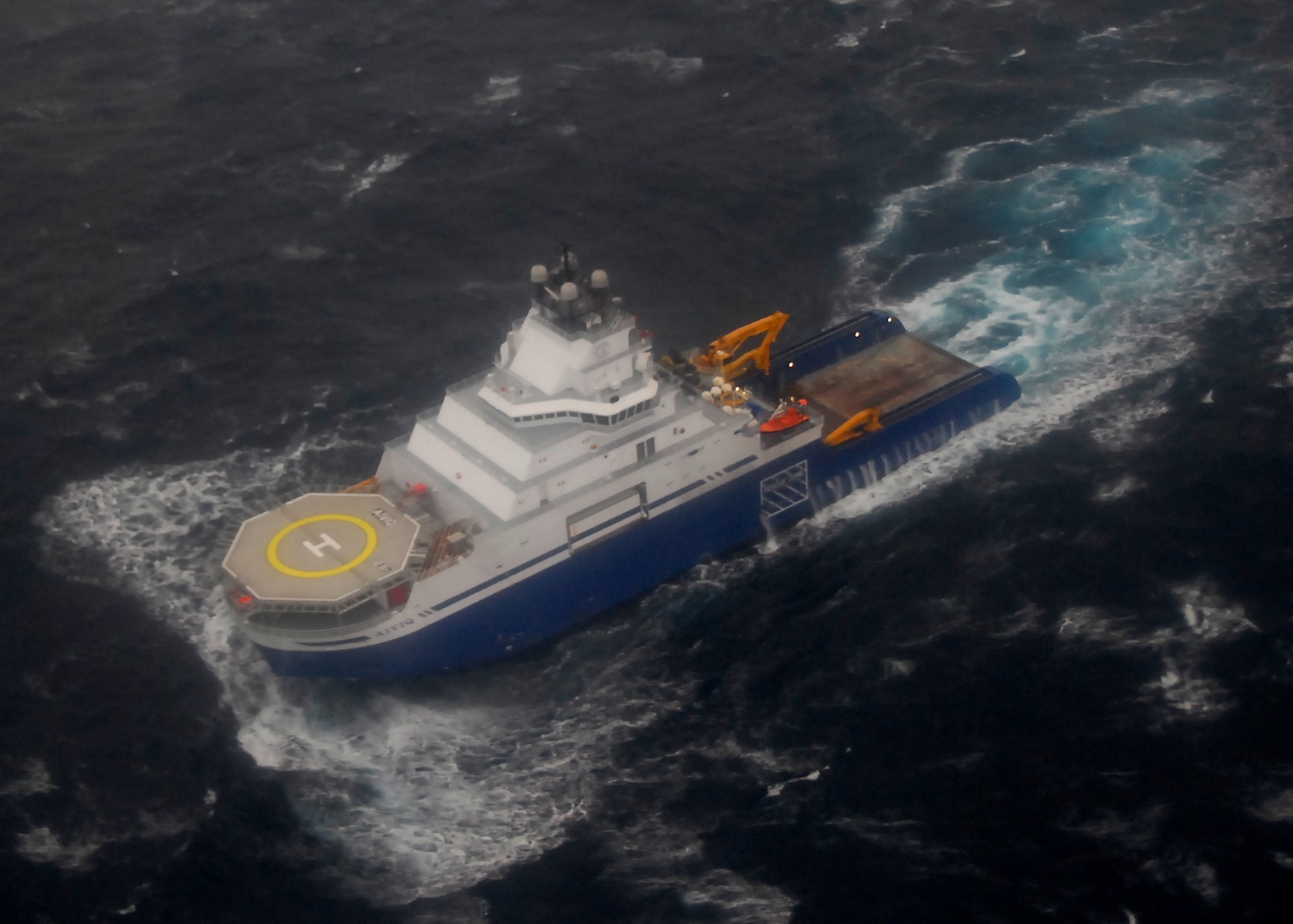
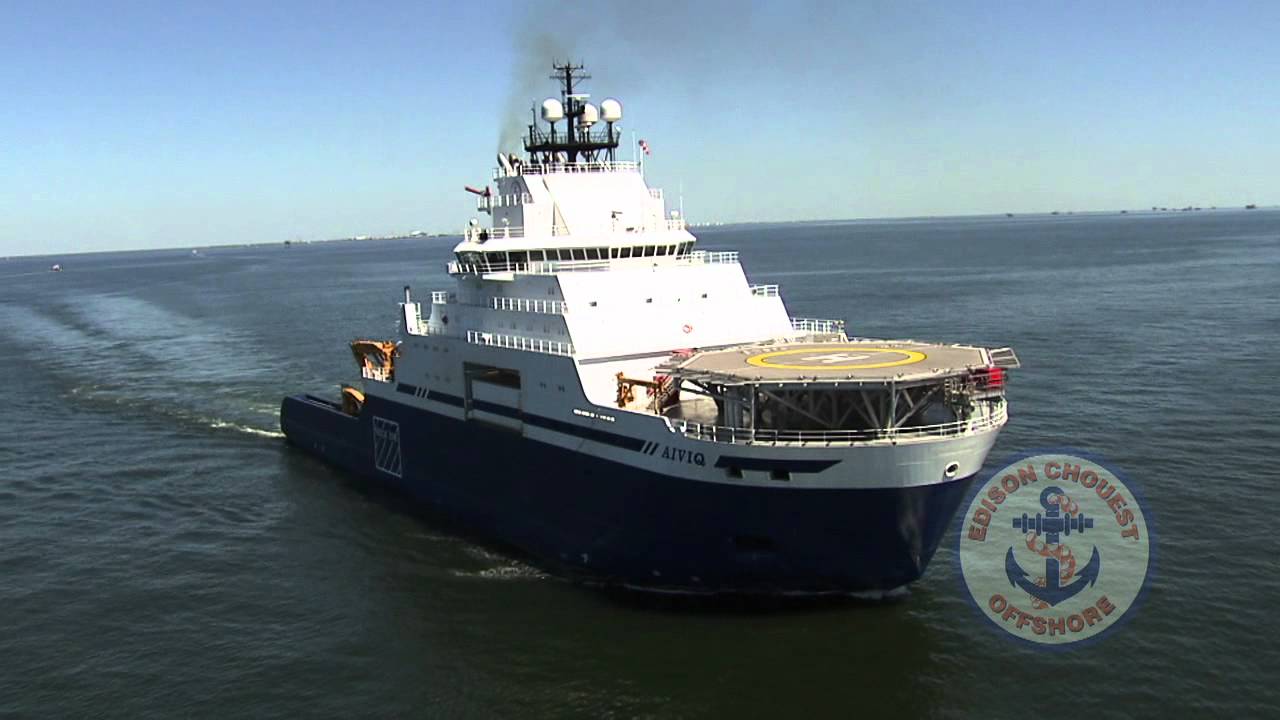
The tug Aiviq traveling with the mobile drilling unit Kulluk in tow 116 miles southwest of Kodiak City, Alaska, in 2012. Credit: U.S. Coast Guard | Petty Officer 2nd Class Chris Usher

Military.com provides an article, originally published by ProPublica, that questions the acquisition of the new USCGC Storis, formerly M/V Aiviq., suggesting undue influence in the decisions to procure the vessel and to homeport it in Anchorage.

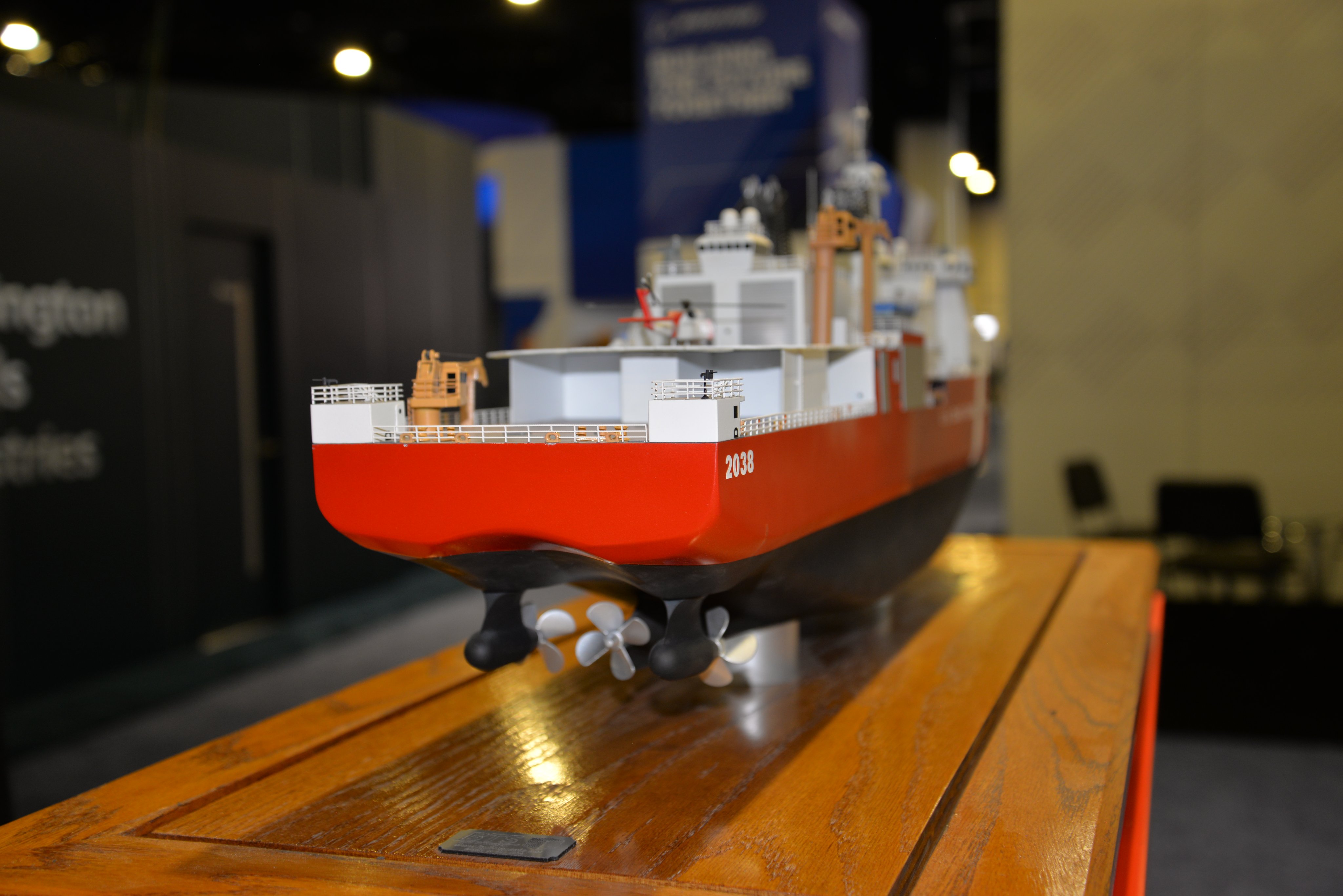
Photo of a model of Halter Marine’s Polar Security Cutter seen at Navy League’s Sea-Air-Space Exhibition have surfaced. Photo credit Chris Cavas.

We would like to think that the Coast Guard has free reign in its award of contracts, but that is, of course, not entirely true.

With this and with the long history of difficulties with the Polar Security Cutter (PSC) program, I have to wonder about the decision to award the contract to award the decision to relatively inexperienced Halter Marine for a design that did not meet the RFP requirement that the design be based on a proven design.

In February 2017, the USCG awarded five fixed-price contracts for heavy polar icebreaker design studies to Bollinger ShipyardsItaly’s Fincantieri Marine GroupNational Steel and Shipbuilding CompanyHuntington Ingalls Industries, and Singapore’s Halter Marine Inc .

On 23 April 2019 Halter Marine was awarded a $745.9M contract for detailed design and construction of the lead ship. This was probably the low bid, but it has proven an unrealistically low bid.

Of the five contenders, Halter Marine was the least experienced and the least familiar to the Navy and Coast Guard.

Halter Marine had changed hands in 1983, 1996, 1999, 2003, and 2022, not a picture of stable management, and it was not partnered in this offer with any experienced builder of icebreakers.

At the time of the award, Halter Marine had built two ships for the US Navy, none for the Coast Guard. The two ships for the Navy were USNS Howard O. Lorenzen (T-AGM-25), 12,642 tons, a Missile Range Instrumentation Ship and USNS Maury (T-AGS-66), 5000 tons, an oceanographic survey ship.

The Navy’s experience with the construction of USNS Howard O. Lorenzen might have raised red flags. Defense News’ Chris Cavas reported,

“The new ship, built under an initial $199 million contract awarded in 2006, has been under construction at VT Halter’s yard since August 2008, when delivery was scheduled for June 2010. The design is based on a pair of Navy survey ships built in the mid-1980s.
“The Navy’s Board of Inspection and Survey, known as INSURV, conducted the Lorenzen’s acceptance trials in the Gulf of Mexico during the week of May 9, …”
“The trial “was reported as unsatisfactory” by INSURV…The failed grade was due to three major discrepancies – thrust bearing temperature, and steering and anchor demonstrations. Three of 15 graded areas – electrical, damage control and aviation – were also graded unsatisfactory.
“INSURV recommended that acceptance not take place until the systems “can be fully re-demonstrated.”
“…In recent years, problems have emerged with several ships under construction at the Moss Point yard for U.S. government customers.
“Last fall, the National Oceanographic and Atmospheric Administration (NOAA), for which VT Halter built a number of fisheries research ships, abruptly canceled completion of a new research ship when it was nearly finished, claiming it was overweight and unable to carry out its coastal mapping mission. The ship was seized by NOAA and moved elsewhere for completion and modifications.
“In 2005, contract disputes led the U.S. Army to cancel completion of a logistics vessel and delay delivery of two others.

The Coast Guard might also have looked at their safety record.

 “…in 2009, unsafe working conditions led to an explosion that killed two employees and injured five others. The company was fined $1.32 million by the United States Department of Labor for 17 willful and 11 serious violations, including willfully exposing workers to toxic fumes in a confined space. According to Secretary of Labor Hilda L. Solis, the explosion “was a horrific and preventable situation. VT Halter Marine was aware of the hazards and knowingly and willfully sent workers into a confined space with an explosive and toxic atmosphere.”

The use of a never completed design should have disqualified Halter Marine. With this as background, could the Coast Guard have missed the warning signs, or might they have been overruled in the selection of the yard? Could this have been a case of undue influence? Who made the final decision, the Coast Guard/Navy acquisition team, the Commandant, the Department of Homeland Security, or someone else? and why?

“Coast Guard adds first polar icebreaker to its fleet in 25 years” –MyCG

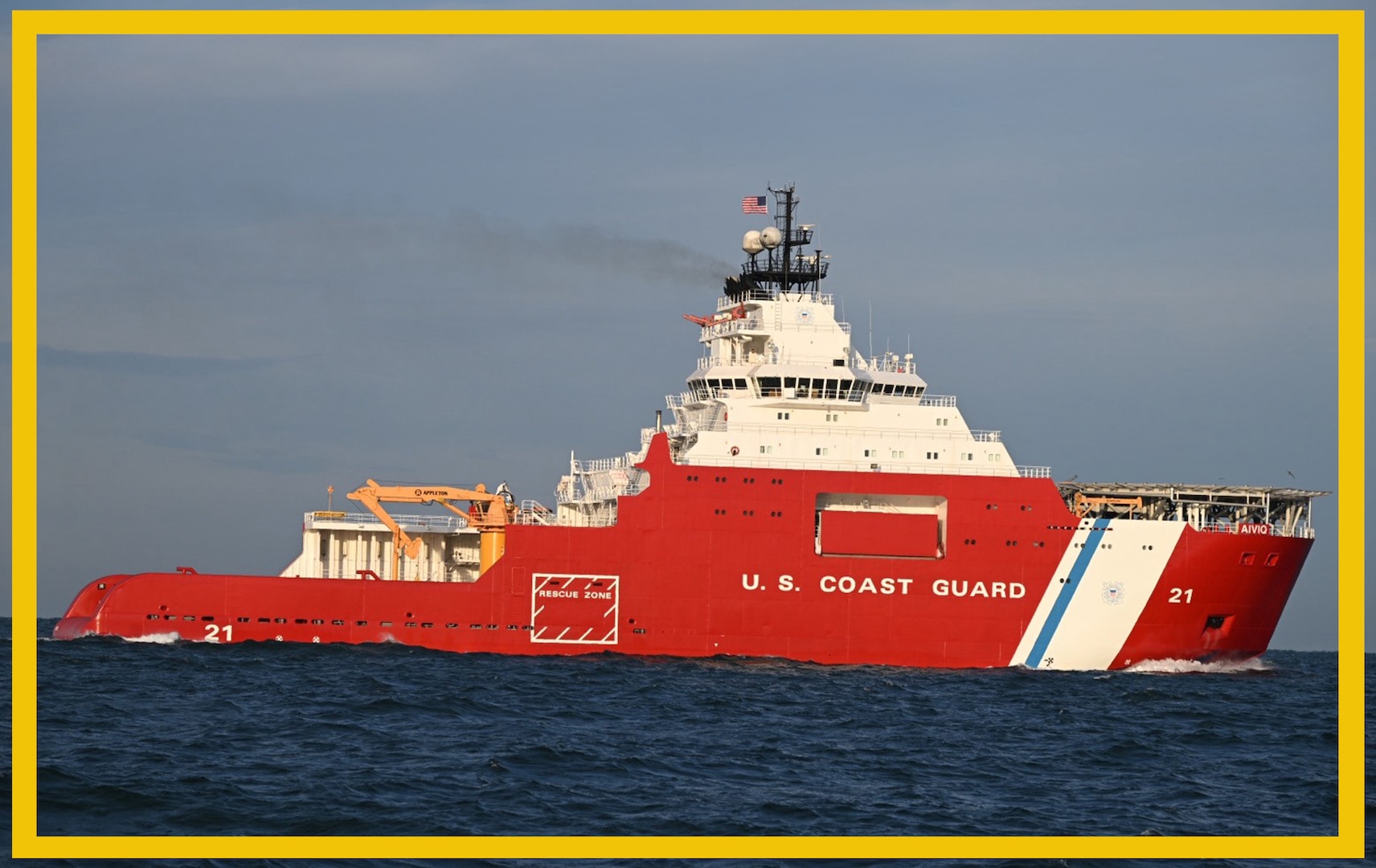
The future Coast Guard Cutter (CGC) Storis, the Service’s newest icebreaker, near Tampa, FL on December 10, 2024. The Coast Guard purchased the M/V Aiviq in November 2024 to bolster U.S. presence in the Arctic. The vessel will be renamed CGC Storis (WAGB 21) upon commissioning.

Passing along this report from MyCG.

There is still much work to be done before the ship is ready for its first patrol as a cutter. I expect the helo deck forward will be removed, and a deck and hangar will be installed aft. Hopefully they will also enclose some additional space to increase the freeboard aft, currently about three feet. The low freeboard caused problems in the past.

This seems to indicate that it will be some time before she is homeported in Juneau which suggests Seattle, or less likely Kodiak in the interim.

Interesting that they expect to man it with a crew smaller than that of a 210 (60 vs 75).


Dec. 23, 2024

Coast Guard adds first polar icebreaker to its fleet in 25 years

By Kathy Murray, Senior Writer, MyCG

The Coast Guard has officially welcomed its first polar icebreaker in more than 25 years – the recently acquired Aiviq, a commercial vessel that will be renamed CGC Storis.

Storis means “great ice” in Scandinavian. The name is also a nod to the original CGC Storis, a legendary light icebreaker and medium endurance cutter commissioned in 1942 that patrolled for submarines and ran convoys during World War II and led the first American transit of the Northwest Passage. In 1948, Storis was moved to Alaska where it conducted law enforcement, search and rescue, and humanitarian relief for 59 years until its decommissioning in 2007.

The new CGC Storis has undergone limited changes since its acquisition last month. These included painting the hull red and labeling the ship as WAGB-21. The vessel will be permanently homeported in Juneau, Alaska once the shoreside infrastructure is ready. The design and construction work for the homeporting project will take several years.

“The Coast Guard is thrilled to acquire this icebreaker,” said Commandant Adm. Linda Fagan. “Like its namesake, this cutter highlights the Coast Guard’s long history of operating in the Arctic and demonstrates our commitment to assert and protect U.S. sovereignty in the region.”

How it came about 

The Coast Guard received appropriation for a commercially available polar icebreaker in 2024 to supplement mission readiness and capability in the polar regions while Polar Security Cutters (PSC) are built. At a time of heightened activity in the area – including the first joint Russian/Chinese patrol passing near Alaska this summer – the Service only has two operational polar icebreakers. Our medium polar icebreaker, CGC Healy, was temporarily sidelined after experiencing an electrical fire in July. Meanwhile, the CGC Polar Star, a heavy polar icebreaker, is nearly 50 years old.

On Nov. 20, the Coast Guard purchased the M/V Aiviq, a 360-foot U.S.-built polar class 3-equivalent icebreaker for $125 million in a deal with Offshore Surface Vessels LLC. The vessel, which was constructed in 2012, has supported oil exploration in the Chukchi Sea off the coast of Alaska in the Arctic Ocean, and has deployed twice to the Antarctic. As a polar class 3-equivalent icebreaker, the future CGC Storis is expected to be capable of operating in waters that are otherwise inaccessible to most Coast Guard cutters.

What this means for future icebreakers 

Buying the future CGC Storis won’t affect the acquisition of the PSCs. The Coast Guard still needs a mix of eight to nine polar icebreakers to meet its operational requirements. In a congressional hearing last month, Vice Adm. Peter Gautier, the Deputy Commandant for Operations, noted the challenges in the region were mounting. “I acknowledge we have a national security threat now from the increased threat of competitors who are working together in ways we have not seen,” he said, adding that the U.S. would be at risk without these new icebreakers.

The Coast Guard is authorizing the shipbuilder, Bollinger Mississippi Shipbuilding, to build the first 16 modules that will be incorporated in the first PSC, CGC Polar Sentinel, with estimated delivery in 2030.

In the interim, the future CGC Storis is expected to help bridge the gap and provide additional capability in support of national security in the region.

How was the new icebreaker named? 

Before the future CGC Storis was acquired, a working group generated a list five potential names that were submitted to an official naming committee composed of senior officers and enlisted personnel. This group ranked their top three choices.

“Storis” was an early favorite given the long history and accomplishments of its namesake. In addition to its previously mentioned activities, the original CGC Storis:

  • was first to arrive to the scene of the sinking CGC Escanaba in 1943, which was believed to have been torpedoed or hit a mine
  • became the first U.S. registered vessel to circumnavigate North America
  • was on scene for the largest U.S. earthquake (magnitude 9.2) in Alaska in 1964
  • was the oldest commissioned cutter in the Coast Guard during its tenure, earning the title “Queen of the Fleet”
  • participated in the 1990 rescue of the M/V Alaskan Monarch off of St. Paul Island, which was immortalized in the movie, “The Guardian”

How big will the crew be on this new icebreaker? 

The initial commissioning crew of the future CGC Storis will consist of approximately 60 officers and enlisted personnel. They will be assigned in the summer of 2025.

“Coast Guard building nation’s first Polar Security Cutter” –Coast Guard News

USCG Polar Security Cutter [Image courtesy Halter Marine / Technology Associates, Inc.]

Some good news. Below is a news release from Coast Guard News.

The design for the Polar Security Cutter (heavy icebreaker) is sufficiently mature to allow construction, and the shipyard has shown that it can do this type of construction.

Even so, delivery is not expected until 2030.


Dec. 23, 2024

Coast Guard building nation’s first Polar Security Cutter

The U.S. Coast Guard and U.S. Navy Integrated Program Office received approval Dec. 19 to begin building the first Polar Security Cutter (PSC).

The PSC marks the first heavy polar icebreaker to be built in the United States in more than five decades.

The work is being performed by Bollinger Mississippi Shipbuilding in Pascagoula, Mississippi, the prime contractor for design and construction of the future PSC fleet. This decision continues work that has been underway since the summer of 2023 as part of an innovative approach to shorten the delivery timeline of these critical national assets.

The approval incorporates eight prototype fabrication assessment units (PFAUs) currently being built or planned. The PFAU effort was structured as a progressive crawl-walk-run approach to help the shipbuilder strengthen skills across the workforce and refine construction methods before moving into a full-rate production. The PFA has prepared the government and the shipbuilder to begin construction of the PSC class, resulting in more precise, cost-effective and reliable construction processes.

The Coast Guard’s operational polar icebreaking fleet currently includes one heavy icebreaker, the 399-foot Coast Guard Cutter Polar Star, commissioned in 1976, and one medium icebreaker, the 420-foot Coast Guard Cutter Healy, commissioned in 1999.

The service recently acquired a commercially available polar icebreaker to provide additional presence and mission capability in the Arctic.

For more information on the PSC class visit the Polar Security Cutter website.

“U.S. Coast Guard Icebreaker ‘Aiviq’ to be Renamed ‘Storis’ Photos Reveal” –gCaptain

gCaptain reports,

A week after Aiviq arrived at Tampa Ship LLC in Florida a new set of photos shows the vessel fully repainted in U.S. Coast Guard icebreaker red. The transom at the stern of the ship reveals the vessel’s likely new name: Storis.

It goes on to observe that while the hull number, 21, is in sequence with that of USCGC Healy (WAGB-20).

There are some parallels between this ship and HMS Protector. Like on Protector, I expect the helicopter deck will be relocated.

Thanks to our icebreaker expert Tups for bringing this to my attention.

Polar Star on the Way to Antarctica, Stop in Hawaii

USCGC Polar Star (WAGB-10) transits across Elliott Bay after departing Coast Guard Base Seattle, Washington, Nov. 22, 2024. US Coast Guard

The “USNI News Fleet and Marine Tracker: Dec. 2, 2024” reports Polar Star had arrived in Pearl Harbor (November 30).

Below is the news release that announced her departure from Seattle, November 22.


 Nov. 26, 2024

Coast Guard heavy icebreaker departs Seattle for months-long deployment bound for Antarctica

USCG Pacific Area

SEATTLE – The U.S. Coast Guard Cutter Polar Star (WAGB 10) and crew departed Seattle, Friday, beginning their deployment to Antarctica in support of Operation Deep Freeze.

Operation Deep Freeze (ODF) is an annual joint military mission to resupply the United States Antarctic stations in support of the National Science Foundation (NSF), the lead agency for the United States Antarctic Program (USAP). This marks the 28th year that the Polar Star has supported ODF.

Each year, the Polar Star breaks a navigable channel through the ice, allowing fuel and supply ships to reach McMurdo Station, which is the largest Antarctic station and the logistics hub of the USAP.

“I am thrilled to lead Polar Star back to Antarctica for ODF 25. After months of pre-deployment preparation and working together through various challenges, the cutter and crew are ready to embark on this enduring and critical mission,” said Capt. Jeff Rasnake, Polar Star’s commanding officer. “I couldn’t be prouder of this crew’s tremendous dedication and teamwork. They have met or exceeded all my expectations in the maintenance and training phases and continue to push themselves to build upon those successes as we now shift into the cutter’s operations phase.”

The U.S. Coast Guard is recapitalizing its polar icebreaker fleet to ensure continued access to the polar regions and to protect the country’s economic, environmental, and national security interests in the high latitudes. Each year, the Polar Star’s crew commits significant time and effort preparing the 48-year-old cutter for the annual deployment in support of ODF. This year the Polar Star completed the fourth of five planned phases of the service life extension project (SLEP).

The U.S. Coast Guard provides direct logistical support to the NSF and maintains a regional presence that preserves Antarctica as a scientific refuge working under Joint Task Force-Support Forces Antarctica (JTF-SFA). JTF-SFA provides Department of Defense support to the NSF and the USAP through ODF. Every year, a joint and total force team works together to complete a successful ODF season. Active, Guard, Reserve service members from the U.S. Air Force, Army, Coast Guard, and Navy work together to forge a strong JTF-SFA that continues the proud tradition of U.S. military support to the USAP.

“Icebreaker ‘Aiviq’ to Join U.S. Coast Guard Before End of Year to Bolster Arctic Presence” –gCaptain

Icebreaking Anchor Handling Vessel Aiviq

gCaptain reports, 

Commercial Polar icebreaker Aiviq will join the U.S Coast Guard inventory before the end of the calendar year, officials announced during a Congressional hearing on Capitol Hill…“We are making tremendous strides. It’s painted about a quarter of the way in Coast Guard icebreaker red and it’s underway today with a team from the owners doing an evaluation and we’ll get on the vessel in the coming weeks,” confirmed VADM Thomas Allan, in front of the House Subcommittee on Transportation and Infrastructure…“It will be in the Coast Guard inventory before the end of this calendar year and we will be sailing that up into the Arctic in 2026,” expanded VADM Allan.

An earlier post recounts “The Icebreaker Aiviq Saga.”

In October 2015 we learned that Shell had abandoned its ambitions to drill in the Arctic and that Aiviq was up for sale and that construction had been suspended on a second icebreaking AHTS, meaning it might also be available. I suggested, “This might be an opportunity for the Coast Guard to obtain one or two reasonably capable medium icebreaker in the near term on favorable terms.” Icebreaker Bargain?

DOD Arctic Strategy, 2024, a Critique

Screen grab from page 2 of the DOD Arctic Strategy, 2024

Here is a link to the new DOD Arctic Strategy here. I found it disappointing. There isn’t much strategy here. I would sum it up as–we are going to keep doing what we are doing, but we are going to do it better. (See critique below.)

“This strategy will strengthen the ability of the United States to build integrated deterrence and effectively manage risk to U.S. interests in the Arctic region by enhancing our domain awareness and Arctic capabilities; engaging with Allies, partners, and key stakeholders; and exercising tailored presence.”

About the US Coast Guard:

The US Coast Guard or USCG was mentioned in three places, once in a caption of a picture of USCGC Healy and these two paragraphs.

DoD will partner with the Department of Homeland Security (DHS), including through the U.S. Coast Guard (USCG), which plays a vital role in maintaining U.S. presence in the Arctic region and supporting domain awareness. The USCG is responsible for operating and maintaining the United States’ icebreaking capability, and DoD will continue to support the USCG’s long-term acquisition of at least eight polar icebreakers that will provide needed icebreaking capability for both military and civilian purposes, including PR/SAR. While disaster response is not a force sizing or shaping requirement, DoD remains ready to support DHS and the Federal Emergency Management Agency in the event of disaster, terrorist attack, or other mass-casualty incident in the Arctic when directed by the President or when requested by a lead Federal department or agency and approved by the Secretary of Defense.

Service-specific, Joint, Interagency, and Combined Exercises. Security and stability in the Arctic depend, in  part, on the Joint Force’s ability to respond rapidly and   effectively to threats in the region. Exercises increase interoperability with Allies and partners, validate plans, train our ability to rapidly deploy to all parts of the Arctic region, and provide an opportunity to test equipment in Arctic conditions. As such, the Joint Force will continue to exercise frequently in the Arctic through Service specific training, joint exercises —to include with USCG— and
combined exercises with our Allies and partners. DoD will
ensure CCMDs with Arctic equities work toward global integration through joint exercises and ensure key exercise lessons inform capability requirements and strategic planning.

That’s it.

About Icebreakers: Icebreakers are mentioned twice, it the paragraph above and here,

The PRC seeks to bolster its operational expertise in the Arctic, where its presence, while limited, is increasing. The PRC operates three icebreakers—the Xue Long, Xue Long 2, and Zhong Shan Da Xue Ji Di—which enable the PRC’s dual civil-military research efforts in the Arctic. Over the course of the PRC’s 13 Arctic research expeditions to date, the vessels have tested unmanned underwater vehicles and polar-capable fixed-wing aircraft, among other activities. People’s Liberation Army Navy (PLAN) vessels have also  demonstrated the capability and intent to operate in and around the Arctic region through exercises alongside the Russian Navy over the past several years.

Critique:

“DoD will reach this end state through a monitor-and-respond approach.”

In other words, we will be reactive rather than proactive. 

The threat to Europe in the Polar regions is just part of the long running NATO defense problem. No real change there, except the formal extension of NATO into Sweden and Finland.

The Air Threat over the Pole to North America is looked after by NORAD. Apparently, NORAD does not look after Greenland, but that does not seem to be a central problem.

Ground operations in the Arctic are always going to be difficult. There may be small unit operations but no need to worry about an invasion of North America coming over the pole. NORTHCOM is exercising both land and air assets that would be needed to deal with realistic threats.

The North Slope oil fields and the associated pipeline are probably a target if we become engaged in a long-term conflict that involves combat in or over the arctic. The oil fields are not mentioned in the strategy,

What has changed?

The opening of the Arctic Ocean to maritime commerce has made it a possible avenue for logistics between Russia and China with the potential for militarily valuable shipments moving both ways between the Russian Arctic coast on one end and the Russian Pacific Coast, North Korea, or China on the other. The weakness of Russian transcontinental land transportation systems makes the Northern Sea Route particularly important.

The door to be shut or left open is the Bering Strait.
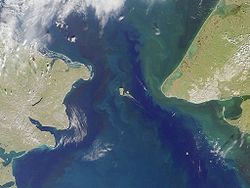
Bering Strait. 44 Nautical miles (82km) wide, with the Diomede Islands in the center.

The “strategy” mentions the Bering Straits only as a choke point,

The Arctic includes multiple strategically significant maritime chokepoints. Reduction in sea ice
due to climate change means chokepoints such as the Bering Strait between Alaska and Russia and the Barents Sea north of Norway, are becoming more navigable and more economically and militarily significant.

We would certainly want to deny use of the Strait by our enemies and ensure that we and our allies have the option to transit through the Strait.

The planned deep-water port in Nome (currently on hold) will be essential to forces that might be used to control access to the Bering Strait. We would also want to make sure St Lawrence Island and Little Diomede remain in US hands. The US might also want to seize Big Diomede. None of these strategic locations are mentioned in the plan.
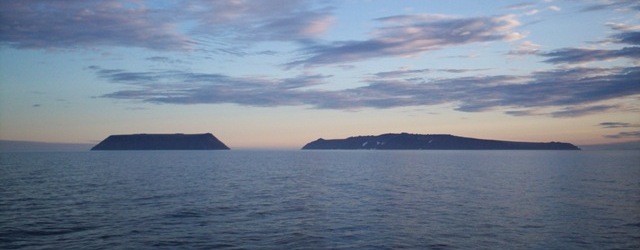
Diomede Islands: Little Diomede Island or Kruzenstern Island (left) and Big Diomede Island or Ratmanov Island in the Bering Sea. Photo is from the north. Photo by Dave Cohoe.

But who is in charge?

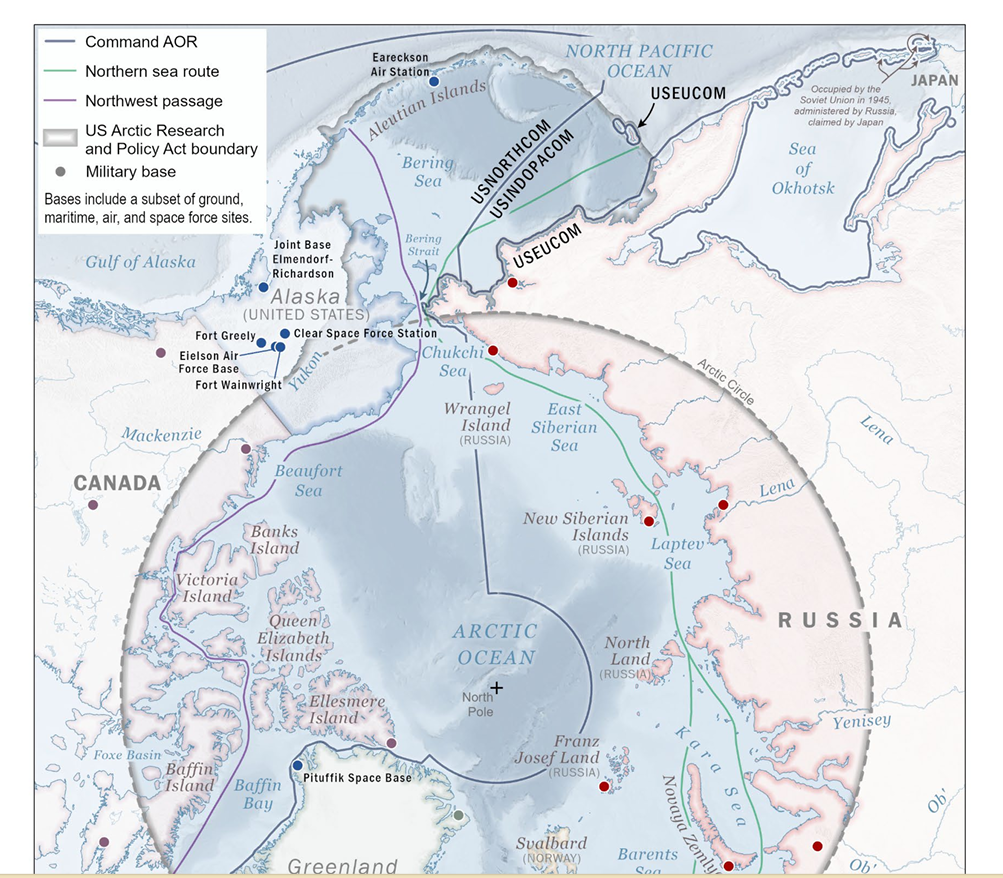
First look at the map at the head of this post. They have divided the Arctic so that operations there are under three different Unified Combatant Commands, USEUCOM, USINDOPACOM, and USNORTHCOM. In other words, no one below the President is in charge over the whole area.

These are the Unified Combatant Commander’s Areas of Responsibility. What is not made clear in this graphic is that all of Russia including the larger Asian part is under USEUCOM.

Perhaps most critically, the Pacific interface with the Arctic is under all three COCOMs.

  • USEUCOM is responsible for the Russian land areas in spite of the fact that the Bering Strait is 4521 statute miles from the COCOM’s headquarters in Stuttgart, Germany, and that is the shorter distance West from Stuttgart across the Atlantic and over the US, rather than over Russia. –This has got to be wrong.
  • USNORTHCOM has the Bering Strait and the Eastern half of the Bering Sea but normally they have no significant naval force. Their primary responsibility is the air defense of the US and Canada.
  • USINDOPACOM, which has the naval assets in the Pacific that might be used to attack Russian assets in Asia has responsibility for only the Western half of the Bering Sea below the Bering Strait.

This division of responsibility, placing Russian Asia under USEUCOM, also means that if the US should be at war with both China and Russia, then at least officially, conducting the war in the Pacific would be under two or perhaps three different COCOMs. I doubt this would actually work this way.

This Day in Coast Guard History, October 25

Based on the Coast Guard Historian’s timeline, https://www.history.uscg.mil/research/chronology/
With inspiration from Mike Kelso

Appearing very different from its last Greenland visit in 1884, the USS Bear returned in 1944. Unlike in 1884, the Bear relied on a Coast Guard crew during World War II. As part of the Greenland Patrol, it cruised Greenland’s waters and, in October 1941, brought home the German trawler Buskø, the first enemy vessel captured by the U.S. in WWII. (Coast Guard photo)

1941  The Navy formally established the Greenland Patrol by combining the South Greenland Patrol with the three cutters of the Northeast Greenland Patrol.

USCGC Polar Sea

1985  CGC Polar Sea arrived home to Seattle after a voyage through the Northwest Passage by way of the Panama Canal, the east coast, and then Greenland, sparking an international incident with Canada.  She completed the first solo circumnavigation of the North American continent by a U.S. vessel and the first trip by a Polar-Class icebreaker.  She also captured the record for the fastest transit of the historic northern route.  She had departed Seattle to begin the voyage on June 6, 1985.

“Russia Selects India Over China To Construct Its ‘Cutting-Edge’ Icebreaker Ships; But Why Delhi Over Beijing?” –Eurasian Times

Russian Icebreaker Viktor Chernomyrdin, the largest diesel-electric icebreaker ever built by a Russian shipyard

The Eurasian Times reports,

Russia has chosen India over China for its non-nuclear icebreaker construction program. This decision comes as Russia seeks to develop its Northern Sea Route (NSR) and navigate the challenges posed by Western sanctions…In a significant move towards strengthening maritime cooperation, the Indian government is in talks with two shipbuilders—one state-owned and the other private—to construct four non-nuclear icebreaker ships valued at over Rs 6,000 crores ($750 million).

Does this really signify a preference for India over China? Not really, “…shipyards in China, South Korea, and Japan are fully booked until at least 2028.” India is probably eager for the business. Relations between Russia and India have been good for decades. While India has moved closer to the US in response to Chinese aggressiveness, India has maintained ties with Russia.

India has been developing their ship building industry, and logically they have the cheap labor that could make them very competitive, but they still lag far behind China, S. Korea, and Japan. That Russia is not building these ships in Russia is an indication of the weakness of their own shipbuilding industry.

I don’t think India has ever built an icebreaker. There is no indication of how large or powerful these icebreakers would be other than the price, four for $750M. (That is four icebreakers for about half the price of a Polar Security Cutter.) If this happens, it will be worth watching.