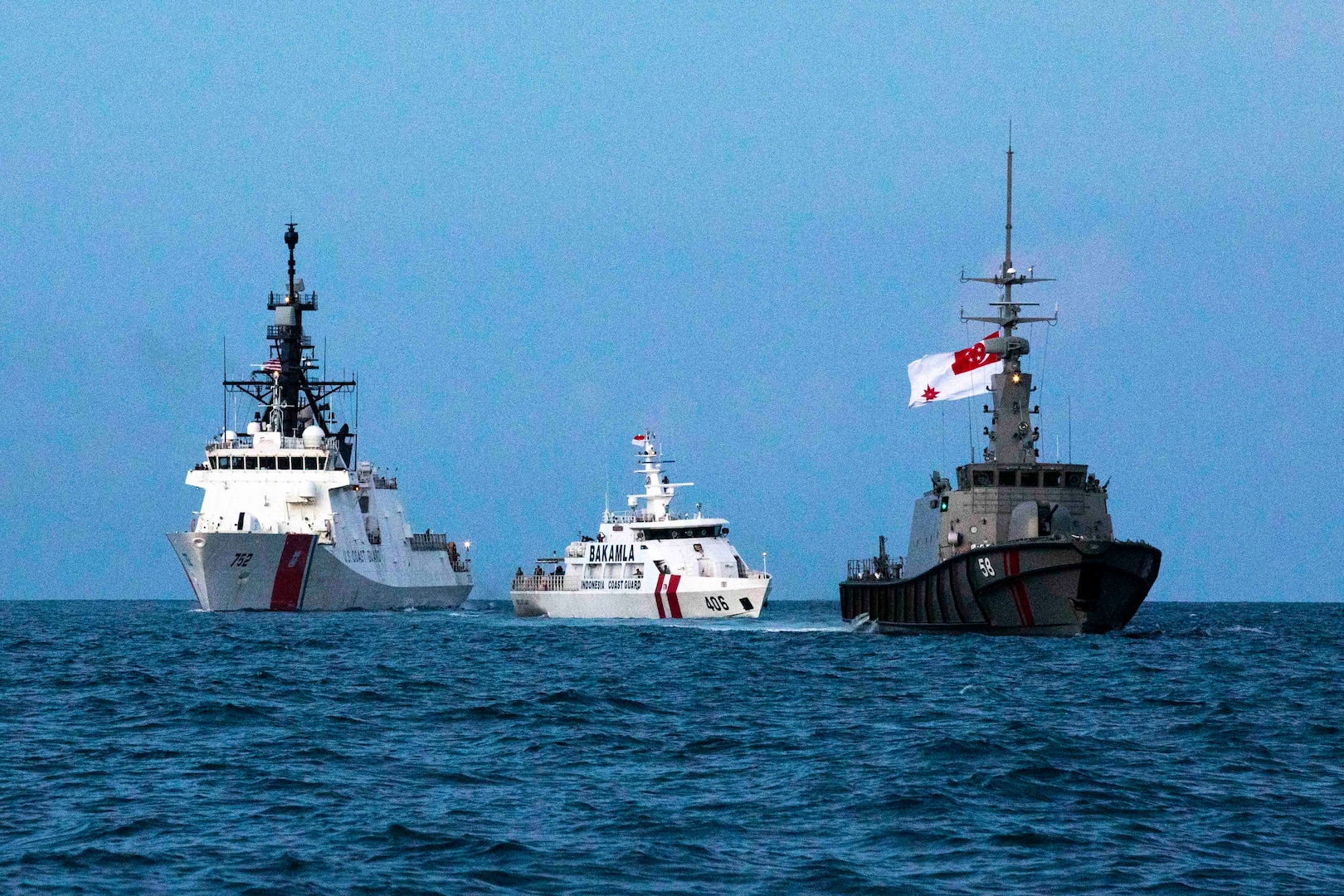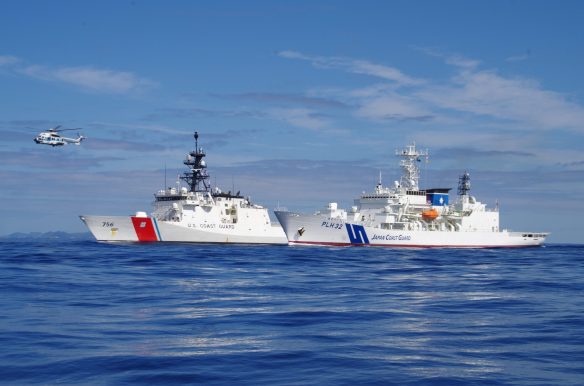
GlobalSecurity.Org has a report on a tri-lateral Counter-Terrorism exercise conducted by the US, Japan, and Philippine Coast Guards. This was part of an exercise discussed earlier. The USCGC Stratton was the USCG contingent. The photo above was taken a bit earlier and shows Stratton exercising with vessels from Indonesia and Singapore.
Category Archives: Japan
“Philippine Coast Guard Will Hold First-Ever Trilateral Exercise with U.S., Japan” –USNI

BRP Teresa Magbanua, sister ship of BRP Melchora Aquino (MRRV-9702), during sea trials off Japan (Photo: Philippine Coast Guard)
https://news.usni.org/2023/05/29/philippine-coast-guard-will-hold-first-ever-trilateral-exercise-with-u-s-japanThe US Naval Institute News Service reports, beginning 1 June,
“BRP Melchora Aquino (MRRV-9702), BRP Gabriela Silang (OPV-8301), BRP Boracay (FPB-2401) and one 44-meter multi-role response vessel will conduct the exercise with National Security Cutter USGCC Stratton (WMSL-752) and Japanese patrol vessel Akitsushima (PLH-32).”
I will just provide some photos with links to the Wikipedia description of the vessels. Note none of the Philippine Coast Guard vessels have any permanently mounted weapons.

JCG_Akitsushima(PLH-32), 9,300 tons (full load), Port of Kobe, July 9, 2017. Photo credit: Hunini, via Wikipedia.

USCGC Stratton moored in San Diego, California. Photo by BryanGoff

BRP Gabriela Silang (OPV-8301) as it sails home to the Philippines. 3 May 2021. Photo: Philippine CG.

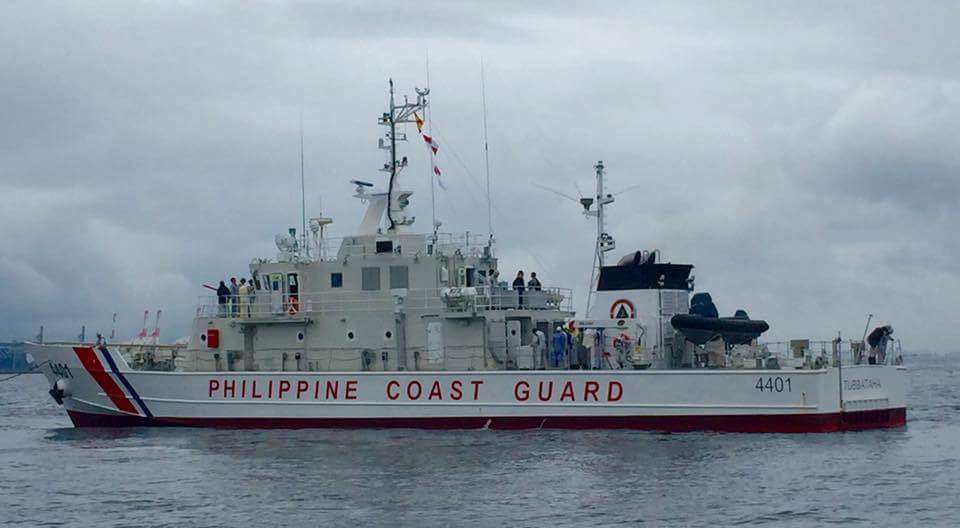
44-meter multi-role response vessel BRP Tubbataha during its delivery to the Philippine Coast Guard, Philippine CG PAO photo

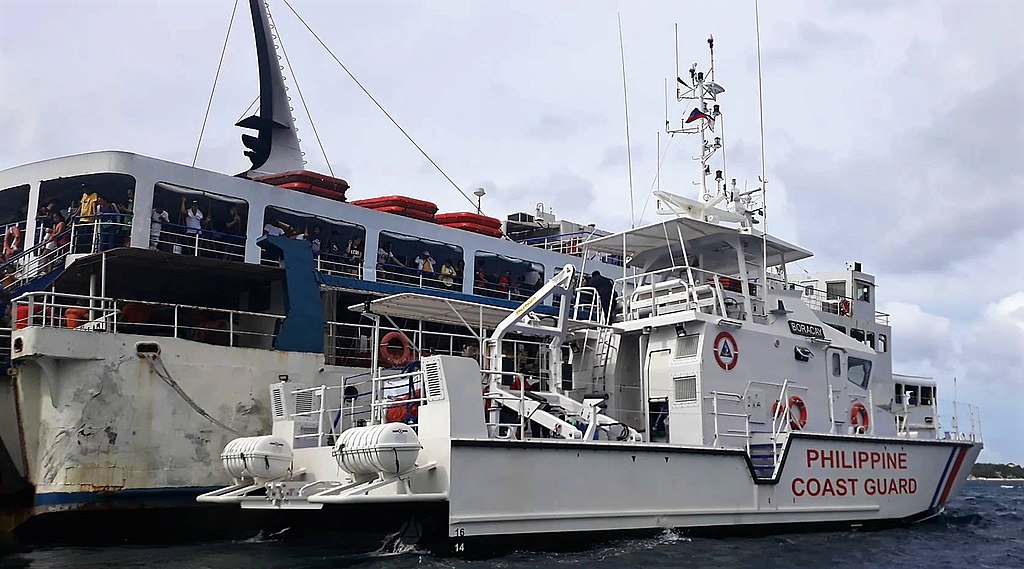
BRP Boracay (FPB-2401), 23 October 2018, Philippine CG photo.
“AN ALLIED COAST GUARD APPROACH TO COUNTERING CCP MARITIME GRAY ZONE COERCION” –CIMSEC

U.S. Coast Guard Cutter Munro and Japan Coast Guard Patrol Vessel Large Aso, transit together in formation during a maritime engagement in the East China Sea Aug. 25, 2021. U.S. Coast Guard members aboard the Munro deployed to the Western Pacific Ocean to strengthen alliances and partnerships and improve maritime governance and security in the region. (Photo courtesy of Japan Coast Guard)
CIMSEC has an interesting post discussing US and Japan Coast Guards response to China’s Gray Zone activities in the South and East China Seas.
The information on changes to the Japan Coast Guard is valuable, but the author does not seem to be aware of the existing close relationship between the US Navy and Coast Guard.
She advocates that the US Coast Guard follow the Japan Coast Guard model when really it is more a case of Japan Coast Guard organization becoming more like that of US Coast Guard’s organization.
The Japan Coast Guard is not a military service. I have even heard that JCG ships do not use the same fuel as the Japanese Maritime Defense Force. There was a bright line separating the two services.
Her lack of understanding of the USN/USCG relationship is clear. For instance, she states, “RIMPAC has hosted USCG participation on the rare occasion” when in fact Coast Guard participation is the norm. I believe the Coast Guard has participated in every RIMPAC. She also does not seem to be aware of the Coast Guard’s participation in the national intelligence system, that Coast Guard units are frequently trained and inspected by Navy personnel, or that much of the US Coast Guard’s equipment is US Navy standard supplied by the Navy.
There are some interesting bits in post.
“Last year, the Japan-U.S. ACSA (Acquisition and Cross-Servicing Agreement) was applied to the USCG for the first time to enable a JMSDF supply shop to replenish a USCG patrol vessel.”
Clearly the Japan Coast Guard, which has more cutters than the US Coast Guard (but far fewer aircraft), is getting a lot of attention.
Since 2012, the JCG budget and personnel have seen annual increases and the Kishida administration intends to more than double the budget by 2027.
The Indian Coast Guard when through a similar period of rapid growth after the Mumbai terrorist attack.
Finally, with the Kishida administration’s plan to raise defense spending to 2 percent of GDP by FY27, budgetary calculations will now include expenditures on Japan’s Coast Guard as a defense budget line item. Unlike NATO countries, Japan has historically not classified JCG spending as a defense expenditure. While this reform may seem entirely bureaucratic in nature, Japan is the textbook example of how seemingly esoteric organizational reforms can have remarkable impacts on foreign and security policy. By including JCG spending in the defense budget, the government is opening itself up to criticism and pressure to strengthen the coast guard’s role in Japan’s national security and national defense strategies.
Making the Japan Coast Guard’s budget part of the Defense budget may ultimately tie it more closely to the Japanese Maritime Self Defense Force (Navy) than the US Coast Guard is tied to the US Navy, though they have a very long way to go to reach even that degree of cooperation.
Japan has been a remarkable partner in maintaining the rules based order in Asia. They have helped equip the coast guards of the Philippines and Vietnam. They are also committed to helping the smaller island nations of Oceania.
“China Coast Guard’s New ‘Monster’ Ship Completes Maiden Patrol in South China Sea” –The Diplomat
The Diplomat reports the maiden patrol of China Coast Guard’s second monster 12,000 ton cutter.
The patrol was only 19 days, but no telling how quickly they will come out again.
When you want to play bumper boats, size really does matter and the Chinese have raised the stakes considerably. Meanwhile the Japan Coast Guard (and here) and South Korean Coast Guard also have some very large cutters.
“Japanese, Malaysian coast guards hold South China Sea security drill” –Indo-Pacific Defense Forum

This photo released by Malaysian Maritime Enforcement Agency shows the Japan Coast Guard ship Tsugaru (PLH02) and helicopters of the Malaysian Maritime Enforcement Agency during a joint exercise between the both agencies off Kuantan, Malaysia, Monday, Jan. 29, 2018. (Malaysian Maritime Enforcement Agency via AP)
Indo-Pacific Defense Forum reports on efforts by the Japan Coast Guard to assist the Malaysia Coast Guard, including, in this case, with Long Range Acoustic Devices that are being provided by Japan.
The Malaysia Coast Guard is a relatively young organization, having become operational in 2005. Two of the largest vessels in the Malaysia CG have been provided by Japan.
Japan has been helping to strengthen other coast guards in SE Asia as well, including those of Vietnam and the Philippines
NATIONAL 5-YEAR STRATEGY FOR COMBATING ILLEGAL, UNREPORTED, AND UNREGULATED FISHING (2022-2026) / and the Missing Air Element

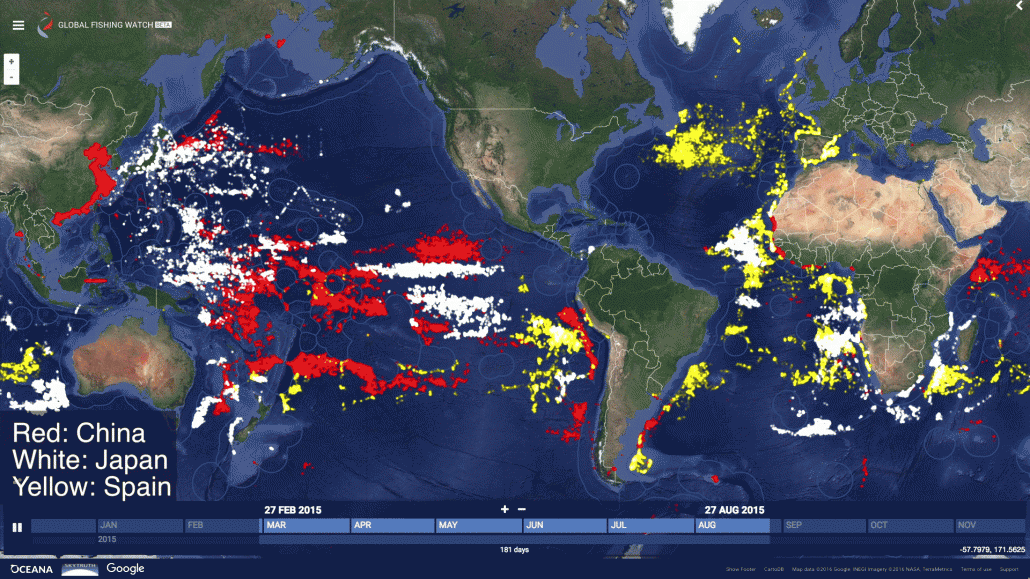
SkyTruth Fishing Watch. https://www.skytruth.org/mapping-global-fishing/
Under NOAA auspices, the U. S. Interagency Working Group on IUU Fishing has issued a five year strategy to address IUU fishing.
There are three identified objectives:
- Promote Sustainable Fisheries Management and Governance
- Enhance the Monitoring, Control, and Surveillance of Marine Fishing Operations
- Ensure Only Legal, Sustainable, and Responsibly Harvested Seafood Enters
Trade
Five nations have been identified as priorities for development of self sufficiency in the prevention of IUU fishing: Ecuador, Panama, Senegal, Taiwan, and Vietnam. These “Priority States” were selected because their “…vessels: “actively engage in, knowingly profit from, or are complicit in IUU fishing” and, at the same time, the priority flag state “is willing, but lacks the capacity, to monitor or take effective enforcement action against its fleet.”

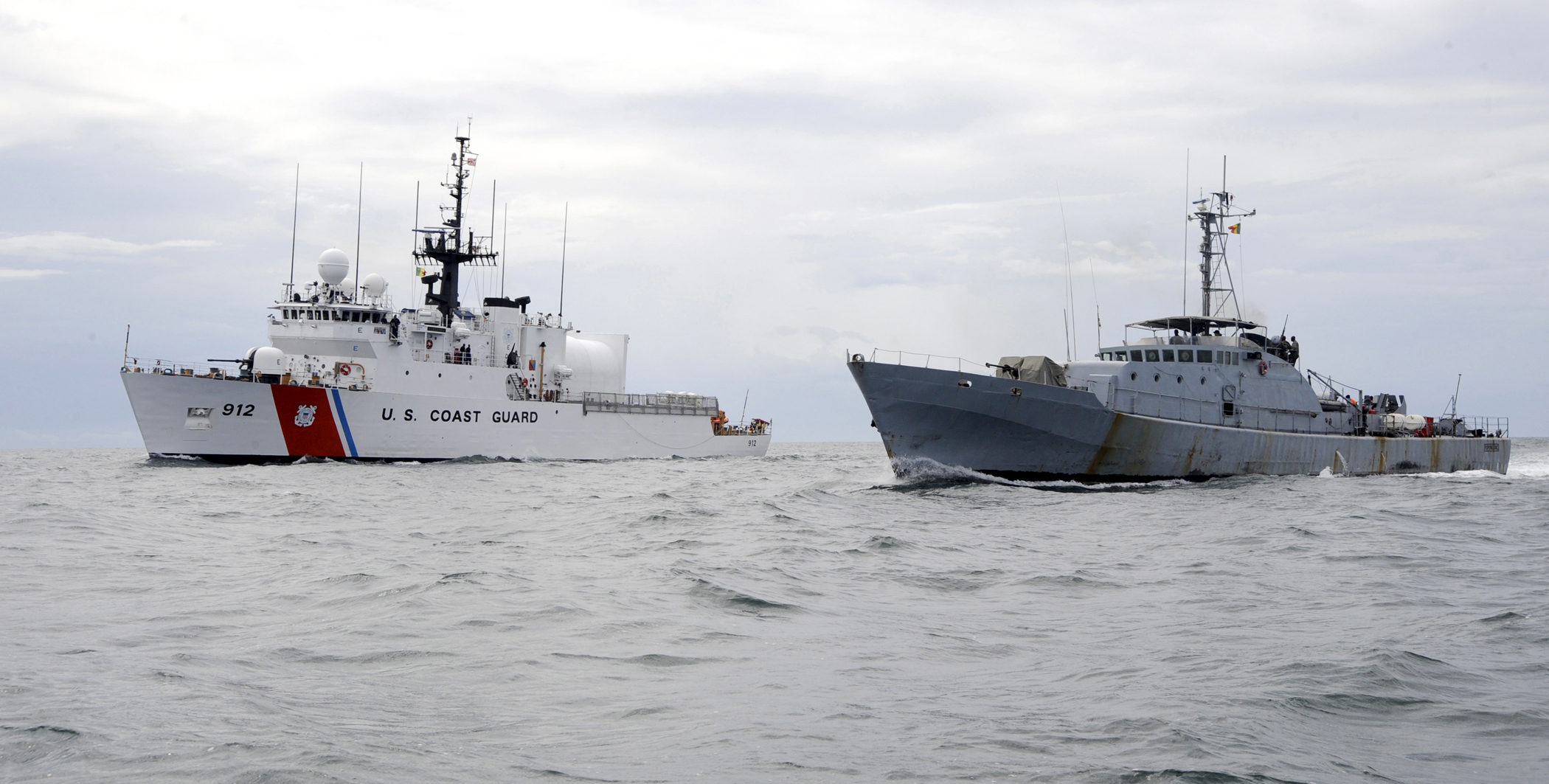
090808-G-3885B-136
ATLANTIC OCEAN (Aug. 8, 2009) The U.S. Coast Guard Cutter Legare (WMEC 912), left, patrols along side the Senegalese Navy vessel, Poponquine, during joint operations as part of the Africa Partnership Station. The Legare is deployed off the west and central coast of Africa for the six-day joint U.S/Senegalese operation, during which several Senegalese naval vessel boarding team members embarked aboard the Legare and participated in joint boarding and training exercises. (U.S. Coast Guard photo by Petty Officer 2nd Class Thomas M. Blue/ Released)
It is likely the Coast Guard will be spending time helping these states build capacity in their navies, coast guards, or maritime police.
The Missing Air Element
One of the great strengths of the US Coast Guard is its fleet of fixed wing aircraft. They provide an essential detection capability. An air search capability allows the patrol vessels to do less searching and more boardings. Most smaller nations’ maritime law enforcement agencies have only limited, or in many cases, no comparable organic air search capability. Frequently, if they are to have an air search, they require cooperation of another service.
What I have seen of our capacity building efforts, seem to have been focused on surface operations and boarding team work.
Recognizing fishing vessels is not in the skill set of most air force crews. Frequently communications between surface vessels and air units are not compatible. In many air forces their aircraft virtually never go out over blue water.
The US Coast Guard could certainly help build capacity on the air side, as well as the surface side of the IUU fishing problem.
Land based Unmanned Air Systems now appear to be a way maritime law enforcement agencies might have an organic fixed wing air search capability at a lower cost. Unfortunately the US Coast Guard still is not particularly experienced in this area. The Japanese Coast Guard might be able to provide valuable advice to at least Taiwan and Vietnam in the use of UAS, as they gain experience with their newly acquired MQ-9Bs.
“Japan Awards Contract to Shipbuilder JMU for 12 New Offshore Patrol Vessels” –The Diplomat

A concept image of a next-generation offshore patrol vessel (OPV) for the Japan Maritime Self-Defense Force (JMSDF) made by JMU. Image courtesy of Japan’s Acquisition, Technology, and Logistics Agency.
The Japanese Ministry of Defense announced on June 30 that it has awarded a contract to shipbuilding company Japan Marine United (JMU) Corporation to build a next-generation offshore patrol vessel (OPV) for the Japan Maritime Self-Defense Force (JMSDF).
We had an earlier report about this project.
The project is for 12 Offshore Patrol Vessels of 1920 tons standard displacement. Their full load displacement will be higher, probably in the neighborhood of 2,200 to 2,400 tons.
- Length: 95 meters (312 feet)
- Beam: 12 meters (39’4″)
- Speed: 20 knots (slower than the 25+ knots reported earlier)
- Crew: 30
- Average Cost: $66.6M
The design is said to offer modular adaptability.
Combined diesel-electric and diesel (CODLAD) propulsion promises very economical slow cruising.
Presumably these will be used to shaddow the movements of potentially hostile vessels transiting in or near Japanese waters.
They might also be used to provide counter piracy protection off the Horn of Africa. This would free more capable (and much more expensive) warships to be in position to deal with more significant threats.
The design looks to be almost ideal for export as part of Japan’s on going program to strengthen the maritime law enforcement capabilities of friendly Asian nations.
It does appear there might be some overlap between the missions of this class and those of the Japan Coast Guard.
This combination of sea worthy hull, simple systems, and small crew sounds a lot like my Cutter X proposal to put the machinery, equipment, and crew of the Webber class cutters in a larger, more seaworthy, and longer range hull.
“Japanese PM Kishida Lays Out Indo-Pacific Strategy in Shangri-La Speech” –USNI

Japanese built Philippine CG cutter BRP Teresa Magbanua during sea trials off Japan (Photo: Philippine Coast Guard)
The US Naval Institute News Service reports on a speech by Japan’s Prime Minister Fumio Kishida before the Strategic Studies Shangri-La Dialogue forum in Singapore.
During his speech, Kishida also spoke about Japan’s planned efforts to strengthen nations in the Indo-Pacific both in security and economic aspects. The security side will include transferring patrol boats in the region, strengthening regional maritime law enforcement capabilities (emphasis applied–Chuck) and providing defense equipment and technology transfers. Singapore is one of the countries that will sign a defense equipment and technology transfer agreement with Japan.
As China has become more agressive in its behavior, Japan has been a lot more active in reaching out to help friendly nations. It appears they have decided to provide an Asian nation alternative to Chinese hegemony. One of the ways they have done this is transfer of vessels to conduct coast guard functions on favorable terms. We have already seen this with the Philippines (and here), Indonesia, Malaysia, and Vietnam.
We have also seen increased interaction between the Japan Coast Guard and the USCG here, here, here, and here. Japan seems to be promoting coast guards as a way to maintain rules based international norms and may be looking to create an international consensus on coast guard behavior to promote cooperation and interoperability. They are looking at their own Coast Guard’s role as well. They seem to be looking to the USCG as an allied, internationally recognized example of proper coast guard functions to help achieve this consensus.
“U.S., Japan Coast Guards conduct joint counter-narcotics exercise in the Pacific” –D14

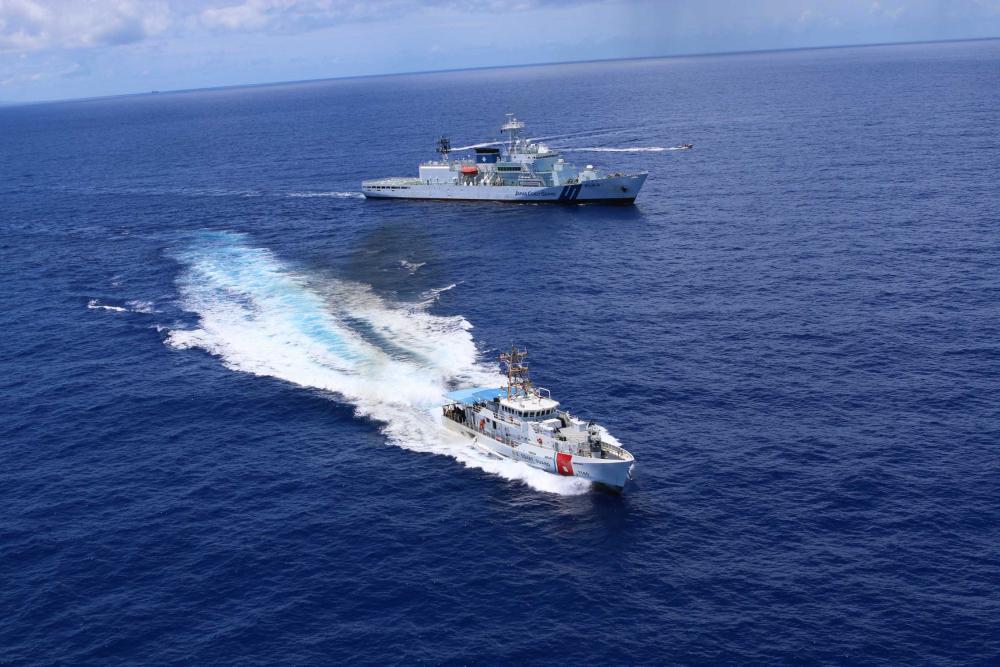
The U.S. Coast Guard Cutter Oliver Henry sails alongside the Japan Coast Guard patrol vessel Mizuho during an exercise off Guam, June 7, 2022. The U.S. Coast Guard and Japan Coast Guard completed the joint counter-narcotics exercise SAPPHIRE which stands for Solid Alliance for Peace and Prosperity with Humanity and Integrity on the Rule-of-Law Based Engagement 2022. (U.S. Coast Guard photo courtesy of U.S. Coast Guard Forces Micronesia/Sector Guam)
An interesting development in US and Japanese Coast Guard cooperation. This is apparently the first implementation of Operation SAPPHIRE announced in May.
This exercise does not seem to be an end in itself. It seems more like a tune-up for follow-on operations.
| News Release |
U.S. Coast Guard 14th District Hawaii and the Pacific |
U.S., Japan Coast Guards conduct joint counter-narcotics exercise in the Pacific
Editors’ Note: Click on images to download a high-resolution version.
SANTA RITA, Guam — The U.S. Coast Guard and Japan Coast Guard completed a joint counter-narcotics exercise off Guam, Tuesday.
The exercise was the first operational exchange between U.S. Coast Guard Forces Micronesia/Sector Guam and the Japan Coast Guard and was designed to promote cooperation between the partners in areas of mutual interest including maritime security and counter-smuggling operations.
“What an incredible opportunity to conduct joint training with the Japan Coast Guard and be able to share law enforcement capabilities which will enhance future joint mission planning,” said Capt. Nicholas Simmons, commander of Coast Guard Forces Micronesia/Sector Guam. “These exercises further solidify our great maritime relationship and will prove to be invaluable during future missions.”
The exercise was conducted between the crews of the Japan Coast Guard patrol vessel Mizuho, U.S. Coast Guard Cutter Oliver Henry, and U.S. Coast Guard Forces Micronesia/Sector Guam.
On Monday, the participants met at Coast Guard Forces Micronesia/Sector Guam for tours of the participating vessels and tabletop discussions to plan the at-sea exercise the next day.
“Conducting exercises based off of real-world scenarios will boost opportunities to respond more effectively,” said Lt. Jack Hamel, the commanding officer of the Oliver Henry. “The cohesion and teamwork on display showcased that both Coast Guards have mutual interest in keeping the maritime commons safe and secure.”
On Tuesday, the crews deployed for the at-sea exercise consisting of two counter-narcotics drills where the crews simulated locating and boarding a target of interest fishing vessel suspected of drug smuggling.
The drills focused on methods of information sharing, vessel tracking, stopping measures, and inspection procedures for greater interoperability between the partners in the future.
The two crews also conducted a personnel exchange and rendered passing honors between the vessels.
The exercise was a part of the Japan Coast Guard and U.S. Coast Guard Operation SAPPHIRE 2022, which stands for Solid Alliance for Peace and Prosperity with Humanity and Integrity on the Rule-of-Law Based Engagement 2022, and was the second such operation held between the U.S. Coast Guard and the Japan Coast Guard, the first being held in San Francisco in May.
SAPPHIRE was created during a joint document signing ceremony and celebration at Japan Coast Guard Headquarters earlier this year and was an annex to a memorandum of cooperation between the sea services which has existed since 2010.
The purpose of Operation SAPPHIRE is to standardize operating procedures for combined operations, training and capacity building, and information sharing between the partners.
The U.S. Coast Guard and Japan Coast Guard have been bolstering each other’s capabilities and effectiveness since the founding of the Japan Coast Guard in 1948. The agencies work together to counter illegal maritime activity and assist foreign maritime agencies in the Indo-Pacific region in improving their own capabilities necessary for maritime law enforcement.
“US, Japan coast guards formally expand cooperation” –PAC AREA News Release / “Royal Navy and US Coast Guard to Forge Closer Bonds”

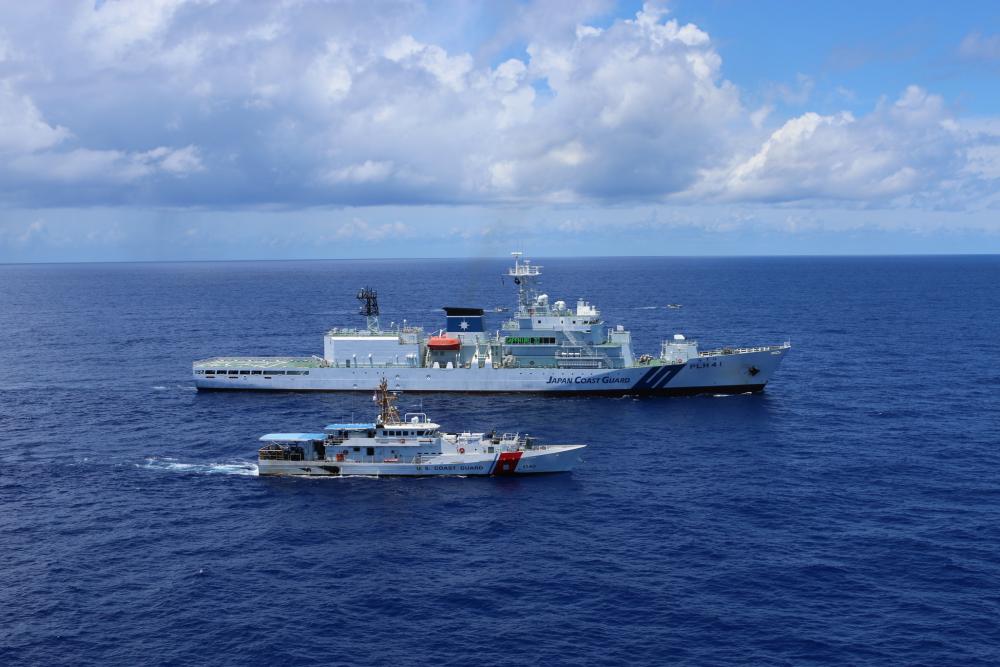
Ships from the U.S. Coast Guard and Japan Coast Guard conducted exercises near the Ogasawara Islands of Japan, Feb. 21, 2021. The U.S. Coast Guard Cutter Kimball and Japan Coast Guard Ship Akitsushima, two of the respective services’ newest and most capable vessels, operated alongside helicopters and unmanned aerial vehicles to practice interdicting foreign vessels operating illegally inside Japanese waters. (U.S. Coast Guard photo courtesy of the Coast Guard Cutter Kimball/Released)
The Coast Guard has been busy increasing its international visibility. Below is a news release concerning increased cooperation with the Japanese Coast Guard that came out yesterday. Today, I see a SeaWaves report, also dated yesterday that,
“The Royal Navy and US Coast Guard have vowed to work more closely to fight crime and protect the planet. The two services already combine to stop drugs traffickers in the Caribbean and Middle East, assist each other with operations in the polar regions, run exchange programs for sailors and frequently work and train side-by-side around the globe.”
The new relationship with the Royal Navy includes expanded personnel postings that began back in 2014.
There are also plans to build on already successful exchange programs, which allows USCG engineers to work with the Royal Navy but will soon also allow pilots and aircrew to do the same. (emphasis applied–Chuck)
Perhaps we are not too far from exercising something like my proposed “Combined Maritime Security Task Force Pacific” with a US Coast Guard Cutter, a Japanese Coast Guard Cutter, and a Royal Navy River Class OPV working with navies and coast guards of SE Asia to protect their EEZ. Perhaps the Indian Coast Guard will join as well.
| News Release |
May 19, 2022 |
US, Japan coast guards formally expand cooperation
![]() |
![]() |
Editors’ Note: Click on images to download high resolution version.
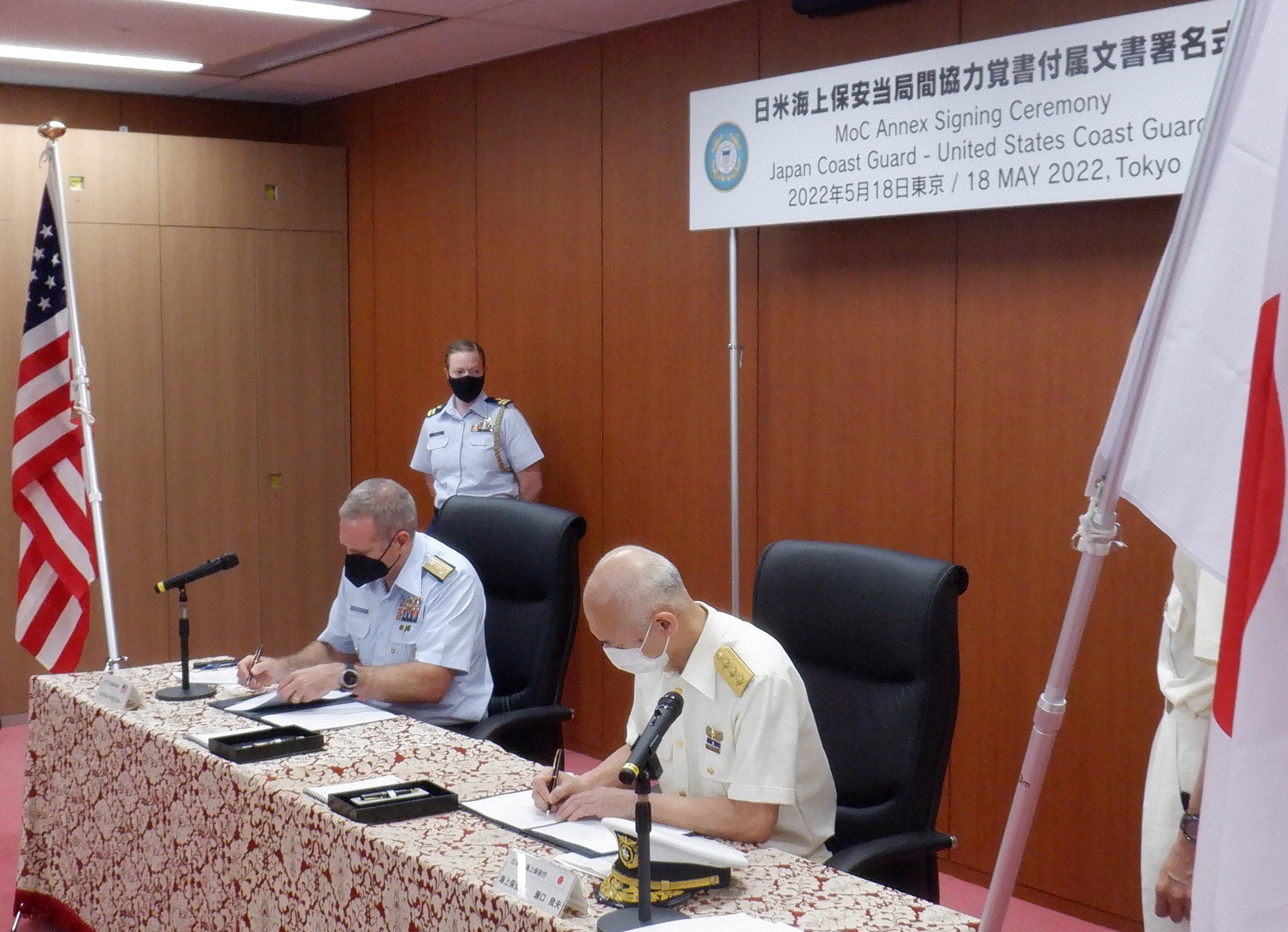
TOKYO — The United States and Japan coast guards formally expanded cooperative agreements and established a new perpetual operation during a ceremony Wednesday in Tokyo.
Vice Adm. Michael McAllister, commander of U.S. Coast Guard Pacific Area, and Vice Adm. Yoshio Seguchi, Japan Coast Guard vice commandant for operations, represented their respective services during the historic document signing ceremony and celebration at Japan Coast Guard Headquarters.
Although a memorandum of cooperation between the sea services has existed since 2010, strengthened relationships, increasing bilateral engagements and continued focus on maintaining a free and open Indo-Pacific necessitated expansion of the memorandum.
The new operation’s name, SAPPHIRE, is an acronym for Solid Alliance for Peace and Prosperity with Humanity and Integrity on the Rule of law based Engagement, and it honors the gem regarded as an emblem of integrity and affection found throughout the Indo-Pacific.
Operation Sapphire encompasses all the annual interactions between the Japan and U.S. coast guards, with the goal of increasing interactions over time.
To formalize the expanded cooperation, annexes were added to the existing memorandum of cooperation outlining Operation Sapphire to include standard operating procedures for combined operations, training and capacity building, and information sharing.
“We rely on our partners, allies, and like-minded nations to achieve our shared missions,” said McAllister. “As evidenced by this agreement, our relationship with the Japan Coast Guard is stronger than ever, and I am looking forward to many more decades of partnership and collaborative operations in the Indo-Pacific.”
“We will conduct smooth cooperation in the fields of joint operation, capacity building and information sharing by this agreement” said Seguchi. “Sapphire embodies the rule-of-law based engagement between the coast guards, and we will expand the principle of Free and Open Indo-Pacific to other nations.”