“USS ST. LOUIS (LCS 19) COMPLETES MAIDEN DEPLOYMENT TO FOURTH FLEET” –SURFLANT / Freedom Class LCS Missions

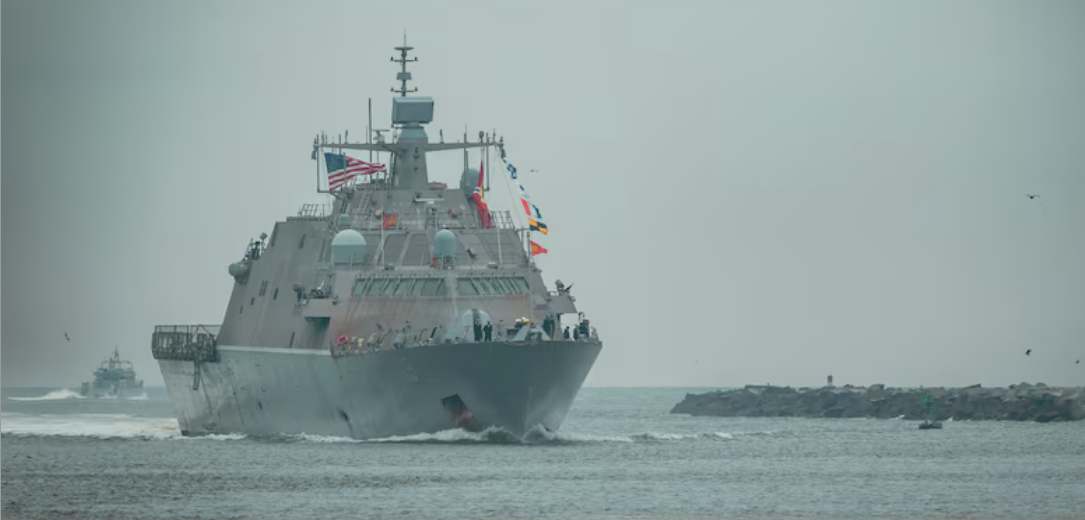
NAVAL STATION MAYPORT, Fla. (Feb. 24, 2025) – The Freedom-variant Littoral Combat Ship USS St. Louis (LCS 19) makes her way back into the basin at Naval Station Mayport, Feb. 24, 2025. LCS 19 deployed in June of 2024 operating primarily in the Caribbean Sea and Eastern Pacific Ocean. (U.S. Navy photo by Mass Communication Specialist 1st Class Brandon J. Vinson)

Below is a US Navy Surface Forces Atlantic (SURFLANT) news release. The length of her eight month deployment is remarkable particular considering it is with the 4th Fleet (Latin America and the Caribbean). That she apparently made 8 months without a catastrophic breakdown seems to bode well for the health of this class after a history of mechanical problems.

Apparently she was employed in drug interdiction. She “embarked…U.S. Coast Guard Law Enforcement Detachments (LEDET) 105 and 407, disrupted and confiscated over $100 million worth of illicit contraband in five different operations…”

Undoubtably at least one of the LEDETs was embarked during exercise UNITAS 2024. We knew this included “U.S. Coast Guard (USCG) Tactical Law Enforcement Team (TACLET) Pacific Law Enforcement Detachment (LEDET); and USCG Maritime Security Response Team East (MSRTE) Direct Action Section.”

Ever since the Navy decommissioned the last of their Oliver Hazard Perry (FFG-7) class frigates in 2015, there has been speculation and anticipation that Littoral Combat Ships would be regularly employed to do the Drug Interdiction mission that the FFG had been doing. It seemed to make a lot of sense, particularly with regard to the Freedom Class ships, all of which are based in Mayport, Florida, near drug transit zones, but right now it still seems to be treated as an irregular filler mission rather than a primary.

By the end of 2025, the last two LCS, one Freedom class and one Independence class,  should be commissioned. The projected fleet is ten Freedom class, all based in Mayport, FL, and 15 Independence class, all based in San Diego. The Independence class (all of which have even hull numbers) have essentially taken on the Navy’s mine countermeasures mission. The Freedom class, with odd hull numbers, are now nominally devoted to anti-surface missions. What they are doing does not get a lot of visibility.

In 2018, ten years after the first LCS was commissioned, the question was, Will We Start Seeing LCS in SOUTHCOM?

In 2022 it seemed that four to six LCS might be assigned to 4th Fleet, “Could the LCS fleet be getting a new mission?” –Navy Times.

It’s not that the Navy is not doing anything, but commitments seem half hearted. Is this changing? With the new administration’s changed priorities, will they and Fourth Fleet start doing alien migrant interdiction?


24 February 2025–USS St. Louis (LCS 19), a Freedom-variant Littoral Combat Ship (LCS), returned to Naval Station Mayport this week, concluding its maiden deployment to the U.S. Fourth Fleet Area of Responsibility (AOR). The eight-month deployment, which lasted from June 15, 2024 to February 24, 2025, marked a series of groundbreaking achievements that underscore the capabilities of the LCS platform and its growing contributions to naval operations.

While assigned to TASK FORCE 45/Destroyer Squadron 40, operating primarily in the Caribbean Sea and Eastern Pacific Ocean, St. Louis, embarked Helicopter Maritime Strike Squadron (HSM) 50 Detachment 4, and U.S. Coast Guard Law Enforcement Detachments (LEDET) 105 and 407, disrupted and confiscated over $100 million worth of illicit contraband in five different operations, significantly hampering the activities of transnational criminal organizations.

“From our first week in theater, the crew demonstrated its tactical acumen in locating and intercepting illicit traffickers. Most of these interdictions were conducted at night, requiring long days and late hours but the crew stayed immensely resilient. I am very proud of what the team accomplished,” said Cmdr. T.J. Orth, USS St. Louis’ Commanding Officer.

In August, St. Louis transited the Panama Canal and operated in the Pacific Ocean for the first time, making history as the first FRE-variant LCS to travel as far south as Valparaíso, Chile when she participated in the 65th iteration of UNITAS, the world’s longest-running multinational maritime exercise. Alongside naval forces from 44 countries, the ship showcased its capabilities in maritime interoperability, enhancing ties with partner nations and furthering regional stability.

After returning through the Panama Canal, St. Louis received new tasking to support U.S. Southern Command’s Joint Task Force-Bravo as that command responded to the deteriorating security situation in Haiti. St. Louis served as a fueling station and Search and Rescue force for 1st Battalion, 228th Aviation Regiment (AVN REGT) UH-60 Blackhawks conducting evacuations out of Haiti. To prepare, St. Louis and 1-228th AVN REGT conducted more than 50 deck landings. This successful integration expanded the ship’s operational versatility, paved the way for future joint missions, and underscored the potential for cross-branch collaboration in dynamic environments.

To wrap up USS St. Louis’ maiden deployment, St. Louis Sailors showed their flexibility and capacity to rapidly deploy in support of Joint Task Force Operation Southern Guard onboard U.S. Naval Station Guantanamo Bay, Cuba. Sailors supported the expansion of the Maritime Operations Center (MOC) in preparing the MOC to receive up to 2,000 illegal aliens, erecting 50 tents and setting up several hundred cots in several days. Operation Southern Guard is highlighting effective interagency collaboration, as the Department of Homeland Security (DHS) oversees the operation.

“We saw a lot of ‘firsts’ on this ship’s first deployment and it was amazing to see what this ship and crew was capable of. Looking back, this deployment demonstrated the growing potential for Freedom class LCS and the support they can provide not just in the Caribbean, but in the entire Fourth Fleet AOR,” said Cmdr. Lee Shewmake, USS St. Louis’ executive officer. “There were many lessons learned that the crew took to heart and put in practice as deployment went on, and I believe that is what enabled our success over the past seven months.”

“St. Louis demonstrated the great potential of the LCS Freedom class, not only in executing its assigned missions but also in breaking new ground for the community. The professionalism and dedication of this crew have laid a strong foundation for the future of LCS operations,” said Master Chief Roderick Bolton, St. Louis’ Command Master Chief. “USS St. Louis returns home with its crew proud of their achievements and eager to share lessons learned from this historic deployment. As the U.S. Navy continues to evolve, St. Louis has proven itself a capable and innovative platform, ready to meet the challenges of tomorrow.”

USS St. Louis’ maiden deployment to Fourth Fleet was a resounding success, marked by numerous milestones and contributions to naval strategy. The ship’s accomplishments highlight the flexibility and utility of the Littoral Combat Ship platform in tackling modern challenges.
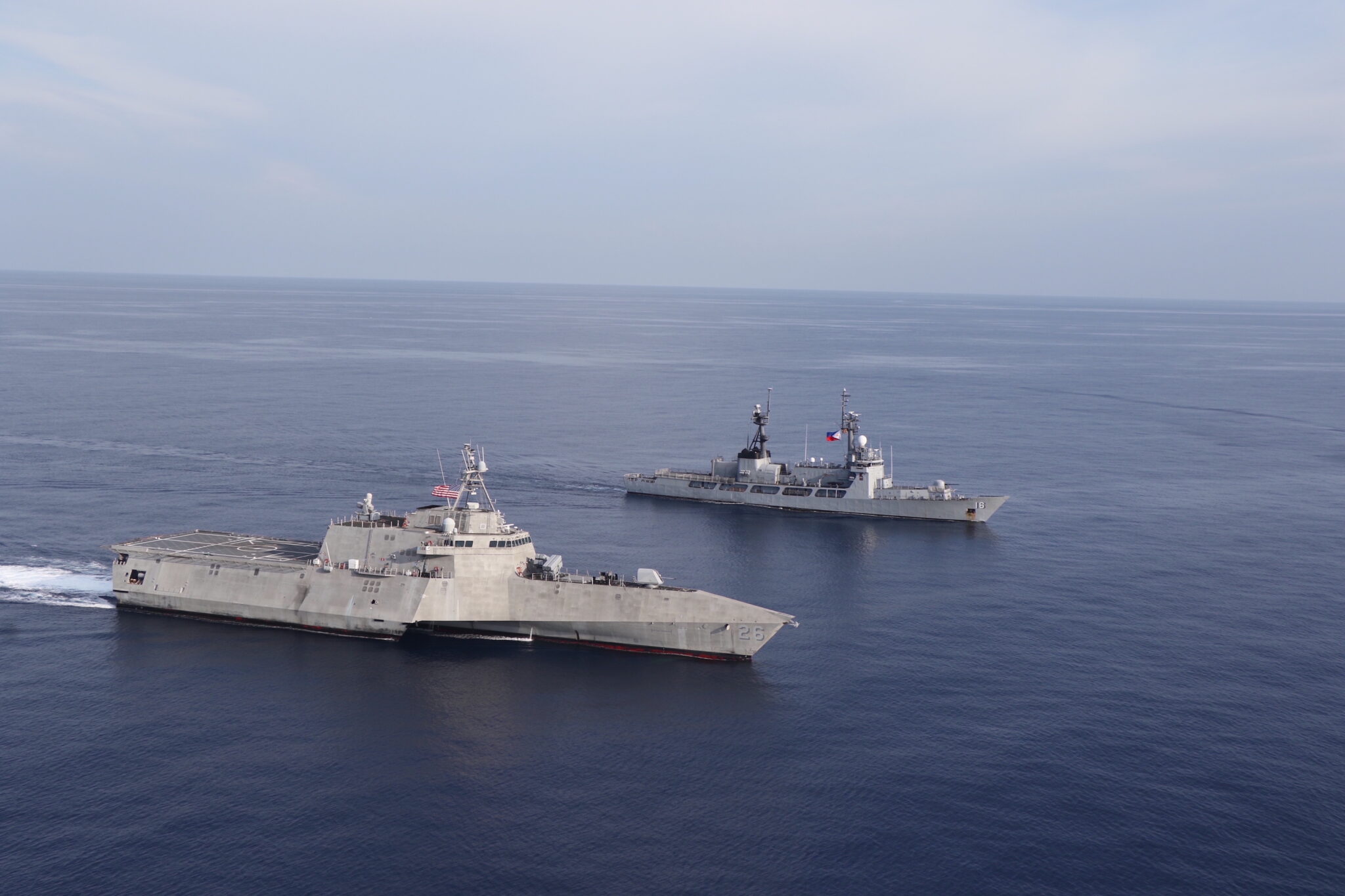
What a Former WHEC is Doing Now

SOUTH CHINA SEA (July 31, 2024) – Independence-class littoral combat ship USS Mobile (LCS 26) conducts a Maritime Cooperative Activity with Philippine Navy’s Gregorio del Pilar-class patrol ship, BRP Ramon Alcaraz (PS 16), (former USCGC Dallas), in the South China Sea, July 31, 2024. Mobile, part of Destroyer Squadron 7, is on a rotational deployment operating in the U.S. 7th Fleet area of operations to enhance interoperability with allies and partners and serve as a ready-response force in support of a free and open Indo-Pacific region. (U.S. Navy photo by Naval Aircrewman Tactical Helicopter 2nd Class Diego Chavez)

US Naval Institute News reports,

U.S. and Philippine warships rendezvoused near a disputed South China Sea feature to conduct a joint maritime patrol on Wednesday.

USS Mobile (LCS-26) and BRP Ramon Alcaraz (PS-16) met off Leslie Bank, a maritime feature within Manila’s exclusive economic zone and Beijing’s 10-dash line claim. The littoral combat ship and ex-Coast Guard Hamilton-class cutter drilled in bilateral surface operations and communication, with a video released by the Armed Forces of the Philippines claiming that the two vessels took up a patrol formation.

Nice to see the LCS is apparently armed with Naval Strike Missiles.

“Navy Wants Independence LCS in Bahrain for Mine Countermeasure Mission” –USNI / “Navy considers non-LCS option for mine countermeasures in 5th Fleet” –Defense News

191227-N-PY805-1005
SOUTH CHINA SEA (Dec. 27, 2019) The Independence-variant littoral combat ship USS Gabrielle Giffords (LCS 10) receives fuel from the Henry J. Kaiser-class fleet replenishment oiler USNS Pecos (T-AO 197) during a replenishment-at-sea. Gabrielle Giffords is on a rotational deployment to INDOPACOM, conducting operations, exercises and port visits throughout the region and working hull-to-hull with allied and partner navies to provide maritime security and stability, key pillars of a free and open Indo-Pacific. (U.S. Navy photo by Nicholas J. Beihl/Released)

Two reports, one from US Naval Institute and one from Defense News. They appear to disagree, but they both were based on the same presentation. Really it is good news that both 5th and 7th Fleet want Independence class LCS. Trouble is, they don’t think they have enough to go around, if they are all based in San Diego, as they currently are. So, the Navy is looking at alternatives including forward basing or using other assets to provide the required Mine Counter Measures capability to 5th Fleet.

Their decision has potential consequences for Coast Guard forces’ efforts in the Eastern Pacific drug transit zone, Western Pacific IUU fisheries enforcement, and Southwest Asia.

The US Naval Institute report basically says the current plan is to supply 5th Fleet’s MCM requirement by using Independence class LCS operating from their base in San Diego, but they are looking at alternatives including forward basing or perhaps letting Freedom class LCS fill in.

The Defense News report tells us why the Navy wants an alternative solution.

The U.S. Navy is considering alternatives to deploying littoral combat ships to the Middle East for a mandatory mine countermeasures mission, hoping to instead maintain LCS deployments to the Western Pacific. (2)

“We’re trying to leverage that as much as we can and see how that fits into the mix,” he said. “There’s several different things going on, but right now I think the plan of record as it stands would be an Independence-variant MCM capability out there — but … we are working on several other options to see how we can fill that, and I personally think the answer is going to be something that is forward-deployed to Bahrain.” (Emphasis applied–Chuck)(2)

The Independence class (trimaran) LCSs in the Western Pacific are, or at least could be, helping to counter Illegal, Unreported, and Unregulated (IUU) fishing.

Once expected to go to the 5th Fleet/CENTCOM, the remaining Freedom class (mono-hull) LCSs are now expected to support 4th Fleet/SOUTHCOM including drug interdiction with embarked Coast Guard Law Enforcement Teams. If they are diverted to 5th Fleet to fill in, it could potentially hurt the drug interdiction effort.

An Alternative: As MCM can now be modularized, there appears to be less reason to have dedicated MCM ships or that all the elements have to be collocated on a single ship.

The service plans to buy 24 packages to equip 15 of the Independence-class LCS. That leaves nine mine countermeasure packages for potential use on “vessels of opportunity,” as Capt. Mike Egan, branch head for mine warfare in the Office of the Chief of Naval Operations, said last May at the 2022 International Mine Warfare Technology Symposium of the Mine Warfare Association. (3)

The aviation components and the Uncrewed Surface Vessel and its mine hunting sonar could be operated from shore or from an Expedition Base Ship. The Lionfish Unmanned Underwater Vehicle is the Remos 300. It is relatively small.

Part of the Navy’s planned family of systems, Lionfish’s main role will be intelligence gathering with the Navy’s expeditionary mine countermeasures company. As its name suggests, the SUUV is only 150 pounds and requires just a few sailors to deploy it. It will be based on HII’s Remus 300, a “man-portable UUV” that is “designed for modularity… [and] can be reconfigured with a range of sensors and payloads to meet mission requirements,” according to a statement the company published last year when announcing the government of New Zealand had ordered four UUVs. (4)

It could be operated from shore, from Expeditionary MCM Company RHIBs, or from Webber class WPBs.

More Reading: Good article on the state of US Navy Mine Warfare here.

Naval Strike Missile: Incidentally, there is affirmation that the Freedom class LCS, in addition to the Independence class LCS, will be equipped with Naval Strike Missile. From the USNI post,

“As of right now, the Navy still plans to put the Naval Strike Missile on the remaining Freedom-class hulls, Rear Adm. Fred Pyle, the director of surface warfare on the chief of naval operations’ staff (OPNAV N96), told reporters.” (1)

Sources: 

  1. Navy Wants Independence LCS in Bahrain for Mine Countermeasure Mission
  2. Navy considers non-LCS option for mine countermeasures in 5th Fleet
  3. Navy Mine Warfare Teeters Between Present, Future
  4. Navy moving ahead with HII for small UUV program

“Coast Guard offloads more than $475 million in illegal narcotics in Miami” –LANTAREA

HNLMS Groningen’s crew interdicts a suspected drug boat in the Caribbean Sea, Sept. 27, 2020. HNLMS Groningen is a Holland-class offshore patrol vessel operated by the Royal Netherlands Navy. (Royal Netherlands Navy photo)

Below is a news release from USCG Atlantic Area. What I found notable was the participation of a Netherlands OPV and a USN Freedom class LCS. (No not the first time ships of these classes have been used for drug interdiction.)

The Holland class OPVs are very similar, in general terms, to the Offshore Patrol Cutters.

I expect Dutch participation to continue, but if the Navy gets their way, there will be a lot fewer LCSs.

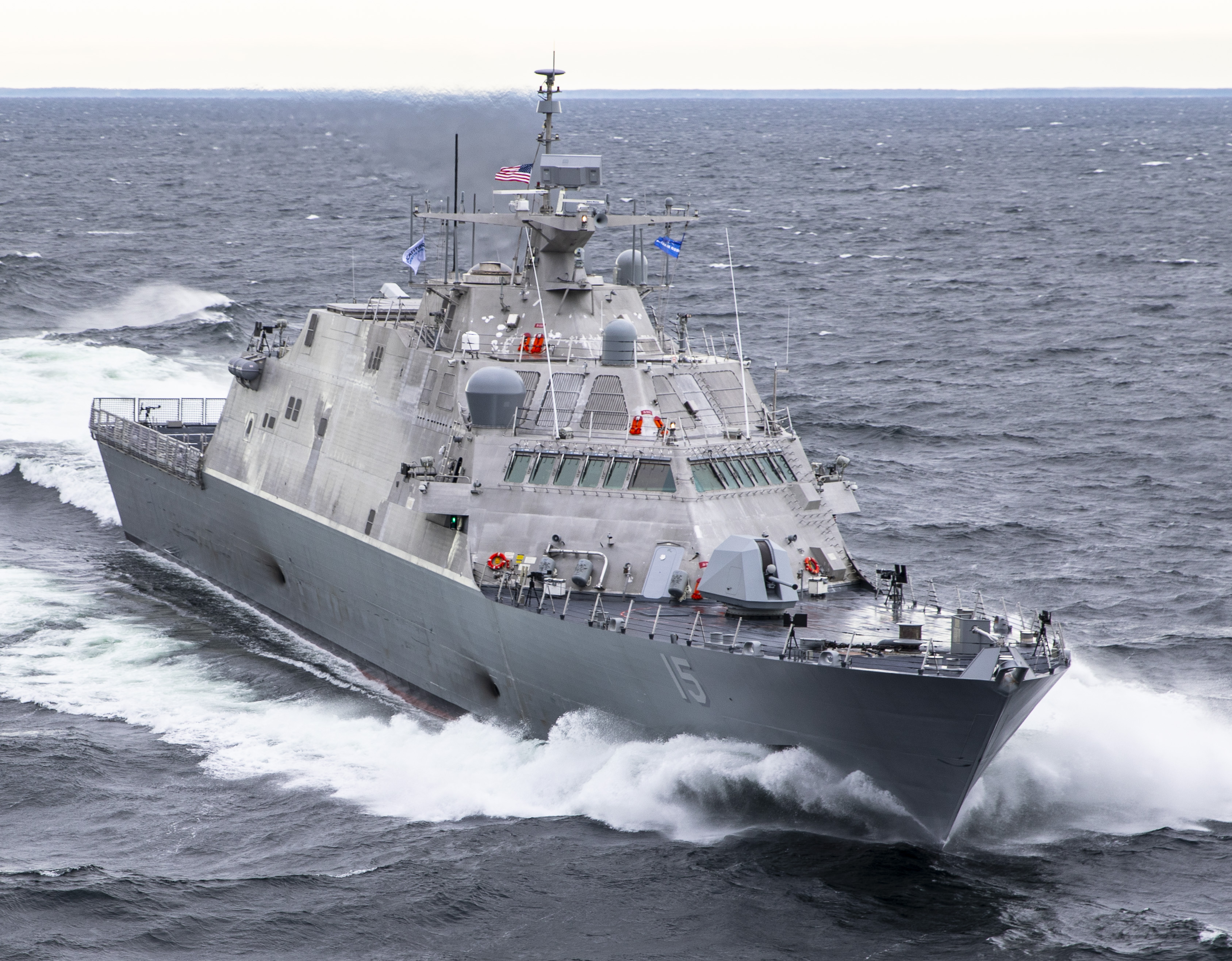
181206-N-N0101-028, MARINETTE, Wis. (Dec. 6, 2018) The future littoral combat ship USS Billings (LCS 15) conducts acceptance trials on Lake Michigan, Dec. 6, 2018. (U.S. Navy photo courtesy of Marinette Marine/Released)

News Release

U.S. Coast Guard Atlantic Area

Coast Guard offloads more than $475 million in illegal narcotics in Miami

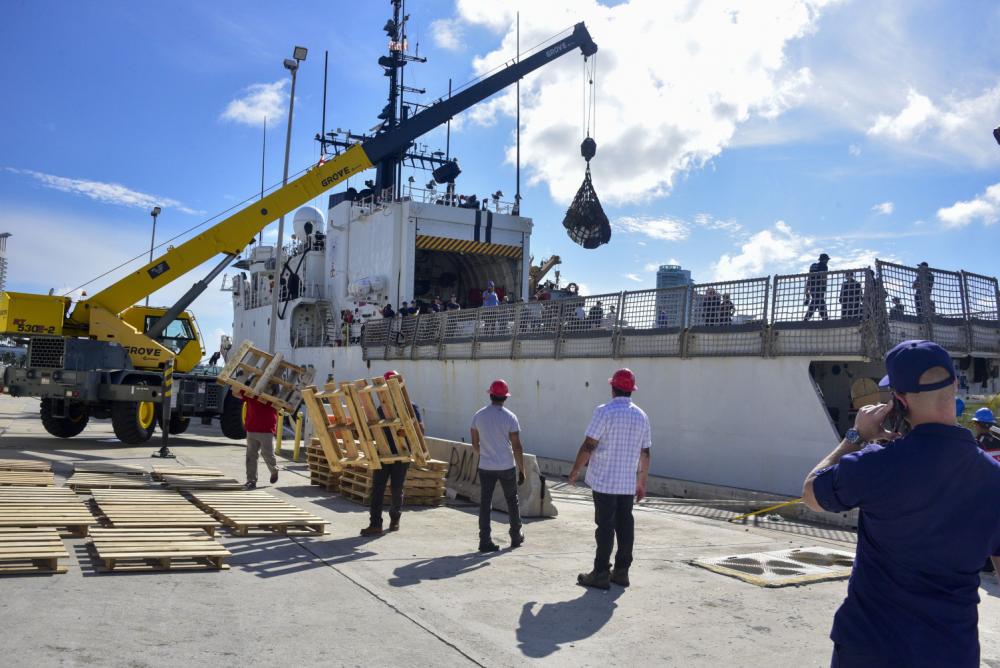
A U.S. Coast Guard member offloads suspected narcotics from USCGC Legare in Miami, FloridaSuspected narcotics are removed via crane from USCGC Legare in Miami, Florida

Editors’ Note: To view more or download high-resolution imagery, click on the photos above.

MIAMI — The crew of the USCGC Legare (WMEC 912) offloaded approximately 24,700 pounds of cocaine and 3,892 pounds of marijuana, worth an estimated $475 million, Thursday at Base Miami Beach.

The drugs were interdicted in the international waters of the Caribbean Sea and the Eastern Pacific Ocean by crews from:

“I am proud of the crew’s continued devotion to duty that made this offload possible,” said Cdr. Jeremy M. Greenwood, commanding officer of Legare. “Through the coordinated efforts of the Legare, the LEDETs, HNLMS Groningen, CGC James, and the USS Billings crews, we significantly contributed to the counter-drug mission and the dismantling of transnational criminal organizations. The drugs seized through this coordinated effort will result in significantly fewer drug-related overdoses.”

The fight against drug cartels in the Caribbean Sea and Eastern Pacific Ocean, and the transnational criminal organizations they are associated with, requires a unity of effort in all phases; from detection and monitoring to interdiction and apprehension, and on to criminal prosecutions by international partners and U.S. Attorneys’ Offices in districts across the nation.

Detecting and interdicting illegal drug traffickers on the high seas involves significant interagency and international coordination. The Joint Interagency Task Force South in Key West, Florida conducts detection and monitoring of aerial and maritime transit of illegal drugs. Maritime interdiction of illicit smuggling activity in the Caribbean Sea is coordinated by the Seventh Coast Guard District, headquartered in Miami. The Dutch Caribbean Coast Guard also coordinates maritime interdiction of illicit smuggling activity with deployed Royal Netherlands Navy ships and their embarked Dutch Fleet Marine Corps squadrons and U.S. Coast Guard LEDETs in the Eastern Caribbean Sea near the Netherlands Antilles and Aruba. Maritime interdiction of illicit smuggling activity in the Eastern Pacific Ocean is coordinated by the Eleventh Coast Guard District, headquartered in Alameda, California. The U.S. Navy and allied foreign ships conduct law enforcement missions under the authority of embarked Coast Guard LEDETs from Tactical Law Enforcement Teams based in Miami and San Diego.

The Legare is a 270-foot Famous-class medium endurance cutter stationed in Portsmouth, Virginia. Legare’s missions include Law Enforcement, Search and Rescue, Protection of Living Marine Resources, Homeland Security and Defense Operations, international training, and humanitarian operations. Legare patrols the offshore waters from Maine to Florida, the Gulf of Mexico, the Eastern Pacific, and the Caribbean.

For information on how to join the U.S. Coast Guard, visit www.GoCoastGuard.com to learn more about active duty and reserve officer and enlisted opportunities. Information on how to apply to the U.S. Coast Guard Academy can be found at www.uscga.edu.

“Littoral combat ships in Mayport make the most of a year of restricted operations” –Defense News

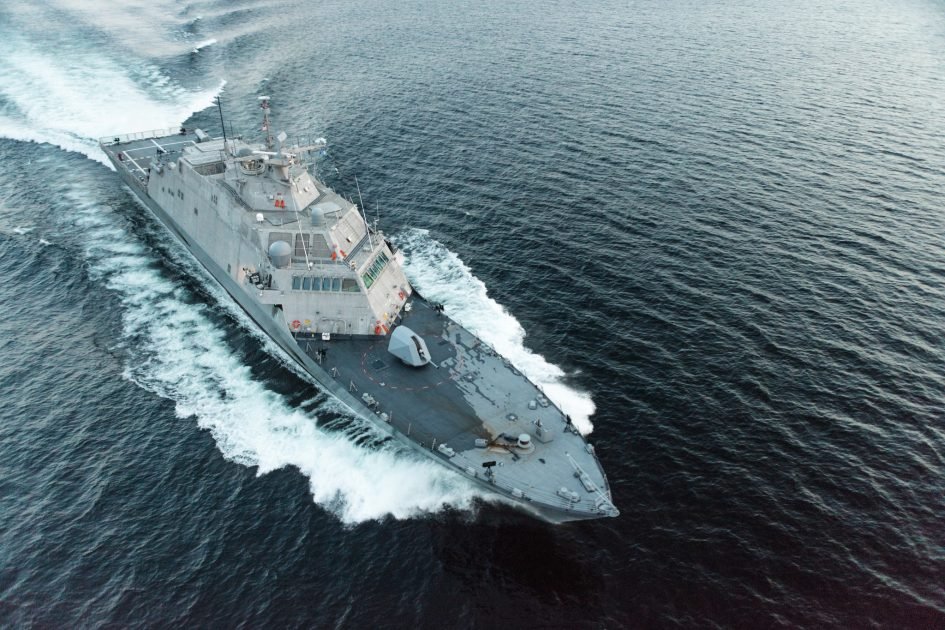
Littoral combat ship Little Rock (LCS 9) is underway during a high-speed run in Lake Michigan during acceptance trials. Lockheed Martin Photo

Defense News reports on the activities of the eight Freedom class Littoral Combat Ships based in Mayport during the year since recognition of their combining gear problem. (LCS-5, 7, 9, 11, 13, 15, 17, and 19. LCS-1 and 3 are in San Diego.)

All their deployments have been with Forth Fleet, primarily doing drug interdiction with a Coast Guard LEDET aboard.

“But, the squadron commodore said, the formation also has seen its greatest operational achievements during that same time, conducting seven successful deployments to U.S. 4th Fleet that took hundreds of millions of dollars’ worth of drugs off the market, interrupted trafficking networks across SOUTHCOM, supported partners throughout Central and South America and pushed back against excessive maritime claims.”

The report provides some insights in the nature of the class problems. The problems were not limited to when both turbines and diesels were operating together, to achieve maximum speed.

they are forbidden from operating in two modes to achieve top speeds — operating both the gas turbine and the diesel engine for full power, and using the diesel engine in “boost mode”

It appears the clutches for the diesel engines were not up to the torque those engines provided and this has meant that the ships are using turbines for cruise speeds that the diesels would have been expected to provide.

What we found out then later after that was, when Detroit had the failure, is that it was more than just that combined mode; it was actually the torque on that clutch when the diesel engine was operating under the higher loads, causing the same degradation and failure,”

This has impacted their already short range.

“…diesel engine is your most economical mode, so you just have to watch the operational employment of the ship more to make sure that you’re managing your fuel consumption” as the ships relied less on the diesel engine and more on the gas turbine.”

These ships continue to have reliability problems.

Defense News reported in June the LCS Strike Team, alongside the newly established LCS Task Force, had identified 32 reliability problems and were focused on five for the Freedom-variant ships. In addition to the combining gear, that list included issues related to the diesel generator rigid mount, fuel lines, water jets and boat davits.

That means they are being kept on a short leash. That is to some extent good news for 4th Fleet and the drug enforcement effort, since they are still not ready to be deployed to Bahrain.

On the other hand, that means PATFORSWA is to some extent covering missions that the LCSs should be doing.

I am not sure it’s true, but it seems the LCS are not as effective as cutters in drug enforcement. It would be interesting to do a study of that. To determine if it is true, and if so, why.

Another impression is that while we have deployed HITRON helicopters on foreign vessels engaged in drug enforcement, the LCSs use only Navy helicopters.