“Eastern Shipbuilding protesting Austal’s cutter win, cites ‘unfair competitive advantage’” –Breaking Defense

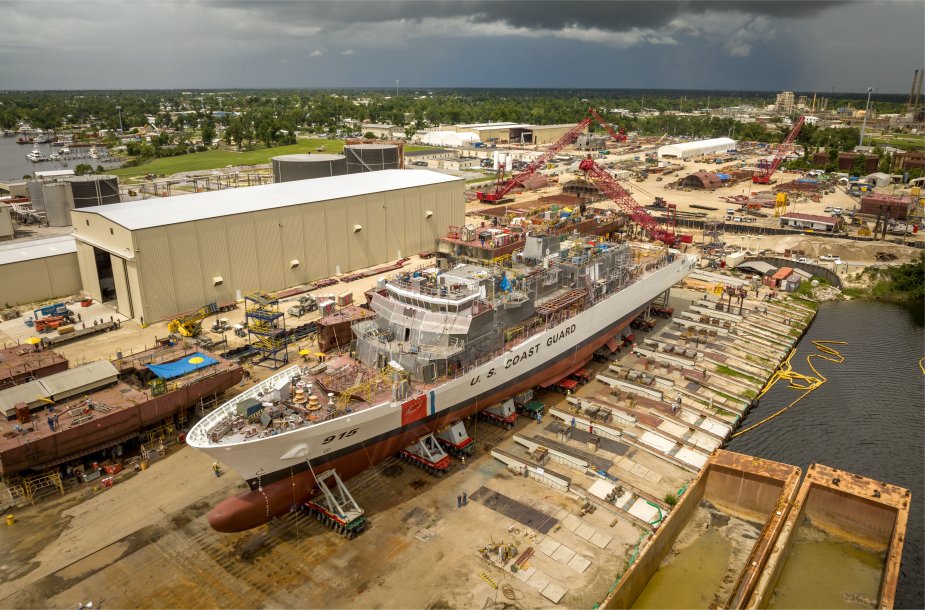
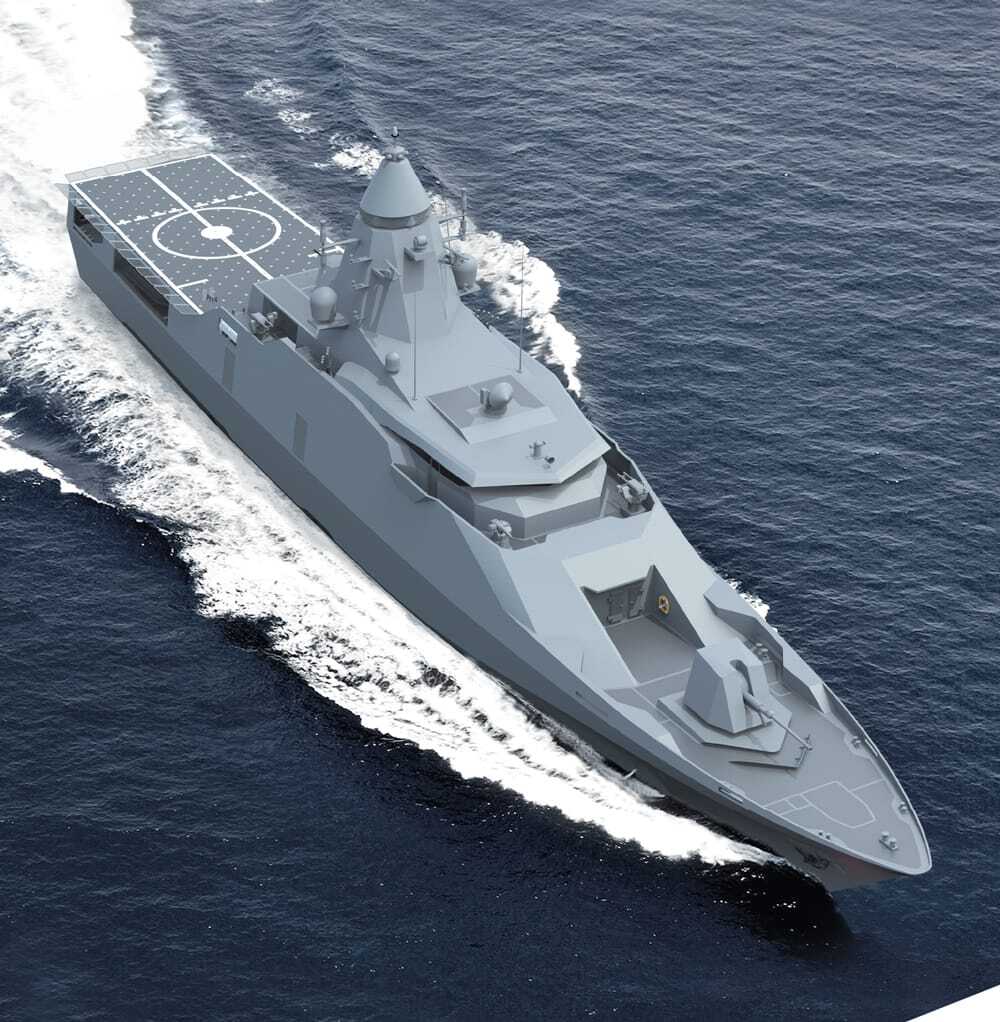
Future US Coast Guard’s Heritage class cutter Argus (Picture source: Eastern Shipbuilding Group)

Breaking Defense reports,

WASHINGTON: Eastern Shipbuilding Group is formally protesting a Coast Guard shipbuilding contract potentially worth billions that was awarded late last month to Austal USA, in part due to what ESG claims was an “unfair competitive advantage and conflict” among other issues.

This may further delay this much delayed program. Can’t help but wonder if OPC #1, the future USCGC Argus, will be delivered before the end of FY2022 as it had been scheduled. If not, it is going to undermine Eastern’s case as to their own competence.

Thanks to Lee for bringing this to my attention. 

“EASTERN SHIPBUILDING GROUP ANNOUNCES KEEL AUTHENTICATION FOR THIRD UNITED STATES COAST GUARD OFFSHORE PATROL CUTTER INGHAM (WMSM-917)” –News Release

Eastern Shipbuilding Group, Inc. photo

Below is a news release from Eastern Shipbuilding, quoted in full.

FOR IMMEDIATE RELEASE

         July 15, 2022

EASTERN SHIPBUILDING GROUP ANNOUNCES KEEL AUTHENTICATION FOR THIRD UNITED STATES COAST GUARD OFFSHORE PATROL CUTTER INGHAM (WMSM-917)

PANAMA CITY, FL – Today, Eastern Shipbuilding Group, Inc. (ESG) hosted the keel authentication ceremony for the U.S. Coast Guard’s future Offshore Patrol Cutter (OPC), USCGC INGHAM (WMSM-917), the third vessel in the new Heritage Class built at the Nelson Street facility. The presiding official for the U.S. Coast Guard was Rear Admiral Chad L. Jacoby, Director of Acquisition Programs & Program Executive Officer (CG-93). Congressman Neal Dunn (FL – 2nd District) was the senior official in attendance.

“Today marks another pivotal milestone in the legacy of the Heritage Class Offshore Patrol Cutters constructed here in Panama City as we now have three OPCs in full production on time and on budget. I’m proud of our workforce for delivering shipbuilding excellence to the men and women of the USCG,” said ESG President Joey D’Isernia.

The ship’s sponsor is Alaskan Senator Lisa Murkowski, a member of the Senate Appropriations Committee, and strong advocate for the national defense and coastal priorities in the Pacific and Arctic regions. USCGC INGHAM will be homeported in Kodiak, Alaska with Senator Murkowski’s signature welded on the keel. She has worked to ensure that those stationed there will have new housing, an updated Child Development Center, and a new fuel pier.

“Thank you to the U.S. Coast Guard and Eastern Shipbuilding Group for inviting me to join a maritime honored tradition—by serving as the ship’s sponsor to the newest Coast Guard Cutter Ingham. I commend the hundreds of skilled professionals at Eastern Shipbuilding Group there in Panama City, Florida building this vessel. You are experts at your craft and have shown true resilience through the pandemic, supply chain challenges, and a category 5 hurricane. The Offshore Patrol Cutter Ingham will have tremendous capabilities and will be protecting our interests in the Pacific Ocean for decades to come,” said Senator Murkowski.

Each of the new Heritage Class Offshore Patrol Cutters aptly represent a naval tradition of naming ships for previous vessels. Three U.S. Revenue Service Cutters and one highly distinguished U.S. Coast Guard Cutter bearing the name Ingham are etched in United States history. The first Ingham was named in honor of U.S. Secretary of the Treasury Samuel D. Ingham and was bestowed with the axiom “semper paratus” in 1836, nearly 60 years before the U.S. Coast Guard adopted this motto in 1896. The most recent, USCGC Ingham (WHEC 35), served for over 50 years from 1936 to 1988 in the North Atlantic, Pacific and Caribbean during World War II, executing vessel escorts, weather patrols and anti-submarine missions. It assisted weather stations and performed search and rescue during peacetime, and it conducted dozens of naval gunfire support missions during the Vietnam War. At her decommissioning, she was the oldest cutter in commission, the most decorated vessel in the U.S. Coast Guard fleet, the last active warship to sink a WWII U-boat, and was the only cutter to be awarded two Presidential Unit Citations. The future USCGC INGHAM (WMSM-917) will carry that legacy for the next forty years.

“Over the course of the life of the USCG there have been four vessels to proudly carry the name INGHAM. Those vessels were crewed by sailors that were hardened by the sea and strove to accomplish their missions to the best of their ability, often at their own peril. These feats were accomplished using knowledge, skill, and a desire to do the best in all situations. Excellence is the direct outcome of their culture and a legacy we pass to the newest vessel to bear the great name INGHAM; WMSM-917. Semper Paratus,” said Bruce “Beemer” Yokely,  President  of Ingham Association.

Joey D’Isernia was accompanied on the podium by Rear Admiral Jacoby and Karlier Robinson, the expert welder charged with welding the sponsor’s initials onto the ceremonial keel authentication plate.

The keel authentication, also known as keel laying, represents the ceremonial start of a ship’s life by commemorating the assembly of the initial modular construction units. Historically, to attest that the keel was properly laid and of excellent quality, the shipbuilder would carve their initials into the keel. This practice is commemorated by welding the ship’s sponsor’s initials into the keel authentication plate.

About Eastern Shipbuilding Group, Inc.

Eastern Shipbuilding Group, Inc. (ESG) is a leading shipbuilder with operations on the Florida Gulf Coast. ESG is the largest private sector employer in Bay County and is a 2017 recipient of the U.S. Department of Homeland Security Small Business of the Year award. They build world class vessels for national defense and commercial clients, including the U.S. Coast Guard’s Heritage Class Offshore Patrol Cutters. With three shipyards and a portfolio of over 350 vessels, ESG is known as one of the most diverse vessel construction companies. www.easternshipbuilding.com

To download photos (credit Eastern Shipbuilding Group, Inc.): https://www.dropbox.com/t/IQ45S8jy2FPw8pDQ

“Eastern Shipbuilding Group takes next step for first Heritage class cutter Argus” –Navy Recognition

Future US Coast Guard’s Heritage class cutter Argus (Picture source: Eastern Shipbuilding Group)

Navy Recognition reports,

According to a tweet published by Eastern Shipbuilding Group on July 12, 2022, the company successfully transferred Offshore Patrol Cutter (Heritage class cutter) Argus Hull 1 to launch position and shifted Hull 2 for the next phase of production at Berard Transportation.

This is a routine report of progress, though it has been a long time coming, but one thing caught my eye,

“She is able to reach a top speed of 24.5 knots (45.4 km/h)…”

I had been disappointed when the request for proposal specs identified 22 knots as the acceptable threshold for speed. 25 knots was identified as the goal and I always felt it should have been the threshold. Even a couple of knots makes a big difference in their potential use as escort vessels. What we have seen repeatedly is 22.5 knots from official sources. Official sources do tend to be very conservative. Looking at the combination of length, displacement, horsepower, it has always seemed to me, they should make 24 to 25 knots max, at least in most circumstances. (Some WWI light cruisers were closely analogous.)  The Wikipedia entry for the Heritage class cutters has reported a maximum speed of 24.5 for some time. Hopefully the Navy Recognition report is based on an Eastern Shipbuilding news release and represents their best estimate of maximum speed. I am hoping we get some reports of actual maximum speed from the sea trials.

Austal Awarded Contract for Offshore Patrol Cutter Stage 2

Below is the announcement from Coast Guard headquarters. Some comments first.

The contract award, $208.26 million, does not actually include construction of the first cutter, presumably that will be included in the FY2023 budget. The potential value of up to “$3.33 billion if all options are exercised” equates to an average cost for 11 ships of $303M each. Keep in mind, that does not include government furnished equipment and other cost that go along with building new ships, including the precommissioning crew and its support and infrastructure improvements that may be required to accommodate these substantially larger ships. 

Given that Eastern, builder of the first four OPCs, did not win the contract, and the contract allows “flexibility to propose and implement new design elements that benefit lifecycle cost, production and operational efficiency and performance” then we can expect to have A-class and B-class OPCs. 

Considering that the Independence class LCS program is ending, this is an extremely important win for Austal and vendicates their decision to invest in steel shipbuilding.


 News Release

U.S. Coast Guard Headquarters

Coast Guard awards contract for Stage 2 of the Offshore Patrol Cutter Acquisition

WASHINGTON – The Coast Guard awarded a fixed-price incentive (firm target) contract to Austal USA of Mobile, Ala. to produce up to 11 offshore patrol cutters (OPCs). The initial award is valued at $208.26 million and supports detail design and long lead-time material for the fifth OPC, with options for production of up to 11 OPCs in total. The contract has a potential value of up to $3.33 billion if all options are exercised.

In 2019, the Coast Guard revised the OPC acquisition strategy to mitigate emergent cost and schedule risk by establishing a new, full and open competition for OPCs five and through 15, designated as Stage 2 of the overall program. Informed by industry feedback received through a robust engagement strategy, the Coast Guard released a request for proposal Jan. 29, 2021, for OPC Stage 2 detail design and production. The Coast Guard’s requirements for OPC Stage 2 detail design and production were developed to maintain commonality with earlier OPCs in critical areas such as the hull and propulsion systems, but provide flexibility to propose and implement new design elements that benefit lifecycle cost, production and operational efficiency and performance.

“The offshore patrol cutter is absolutely vital to Coast Guard mission excellence as we recapitalize our legacy medium endurance cutters, some of which are more than 50 years old,” said Adm. Linda Fagan, commandant of the Coast Guard. “The OPCs are the ships our crews need to protect our national security, maritime safety and economic prosperity. I look forward to the new cutters joining our fleet.”

The 25-ship OPC program of record complements the capabilities of the service’s national security cutters, fast response cutters and polar security cutters as an essential element of the Department of Homeland Security’s layered maritime security strategy. The OPC will meet the service’s long-term need for cutters capable of deploying independently or as part of task groups and is essential to stopping smugglers at sea, interdicting undocumented non-citizens, rescuing mariners, enforcing fisheries laws, responding to disasters and protecting ports.

More information about the award can be found here.

“HHI To Build Six New OPVs For The Philippine Navy” –Naval News

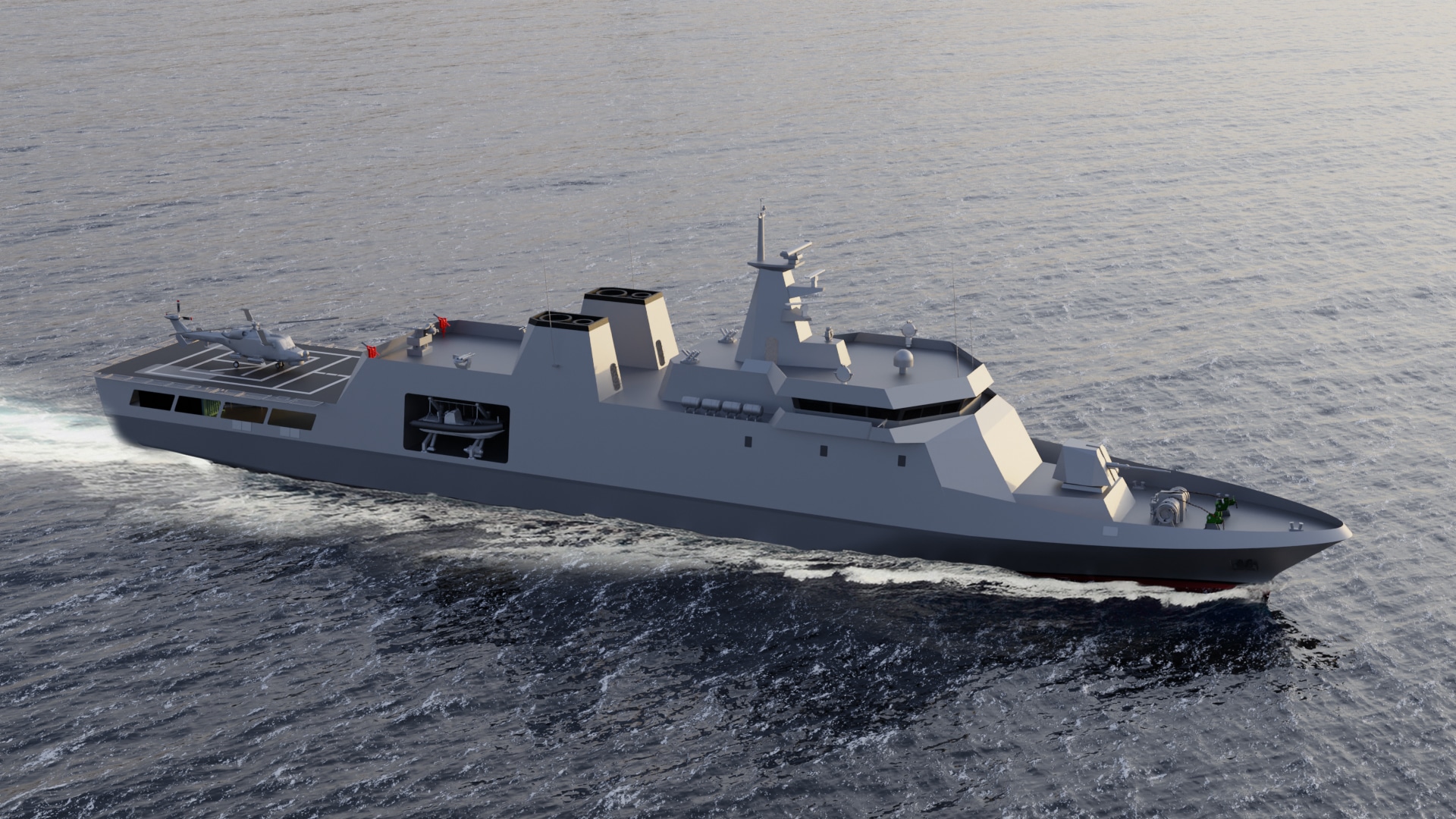
Philippine Navy OPV to be built by HHI in S. Korea. HHI image.

Naval News reports,

Hyundai Heavy Industries (HHI) signed a contract with the Philippine Department of National Defense on June 27th to construct six units of new build 2,400 ton Offshore Patrol Vessels (OPV) worth USD 573 million.

They provide this description,

The Philippine Navy OPV has a displacement of 2,400 tons, a length of 94.4 meters, a width of 14.3 meters, a maximum speed of 22 knots, a cruising speed of 15 knots, a range of 5,500 nautical miles and will be built at HHI’s Ulsan shipyard until 2028. The vessel is to be equipped with a 76mm main gun, two 30mm secondary guns, a helideck capable of operating a helicopter and unmanned aerial vehicles.

That is 310 ft in length, 47 ft beam. In terms of displacement they will be a third larger than the Bear class 270 foot WMECs.

Looking at the artist concept, I see only one 30mm, but I also see fire monitors on the corners fo the hangar roof and decoy launchers between the bridge and funnels. There seems to be considerable open space under the flight deck. There may be provision for a stern launch ramp.

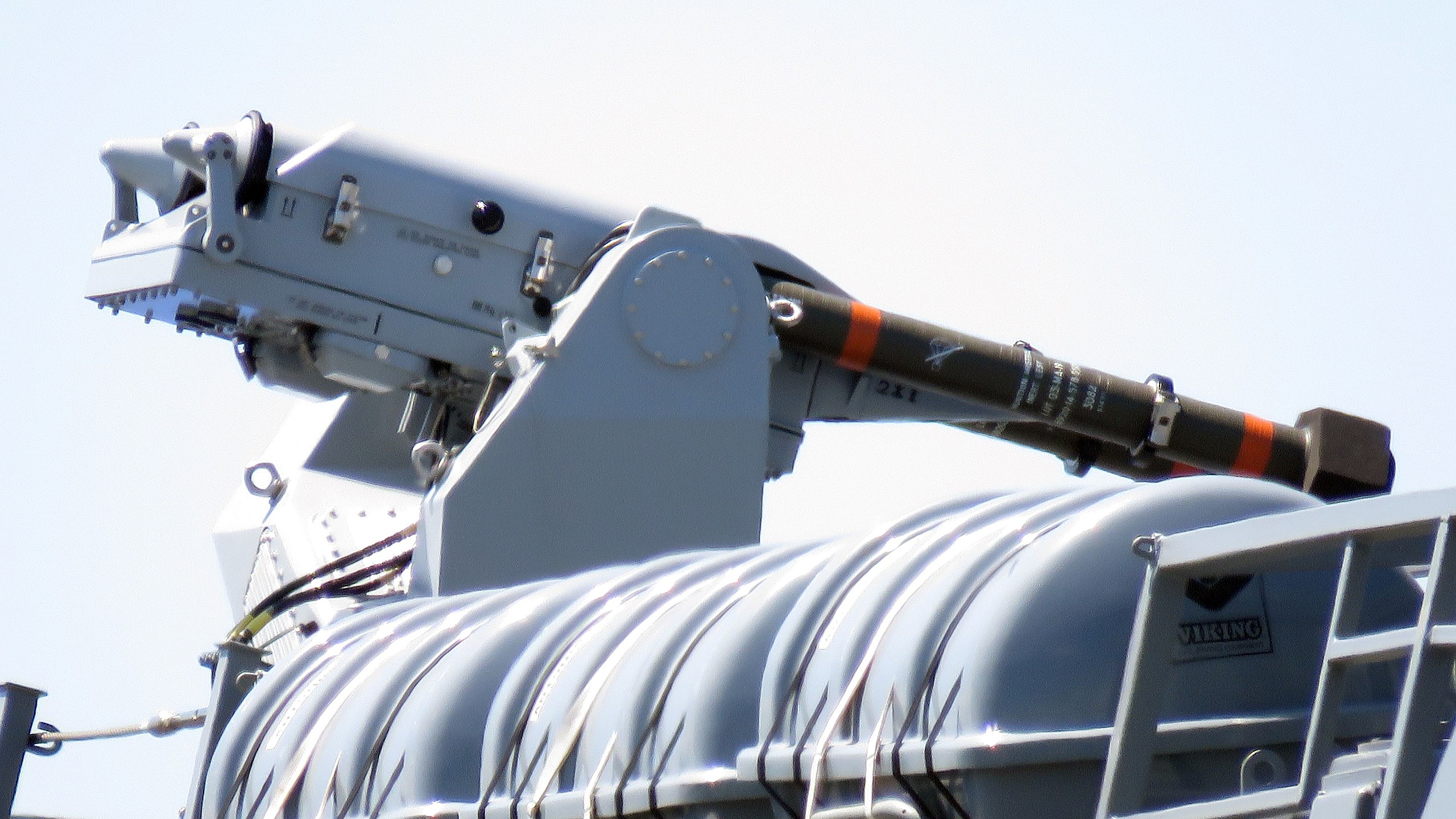
Also, the illustration shows the ships equipped with a pair of Simbad-RC for short range Mistral fire-and-forget, IR homing Missiles, mounted on either side of the hangar roof between the funnels and the 30mm. Inclusion on this class appears likely and logical because the system was also included on the BRPJose Rizal class frigates built for the Philippine Navy by HHI. This system is also reported to be effective against small high speed surface craft.

A Simbad-RC with Mistral Missiles on the BRP Antonio Luna (FF-151) Frigate of the Philippine Navy (PN)

The helicopter depicted in the illustration is a Westland Wildcat AW159. The Philippine Navy recently aquired two of these and will presumably add more to their fleet as more flight decks join the Navy. With a max take off weight of 13,228 lb it is larger than an MH-65 but considerably smaller than an MH-60. This aircraft can have both an Anti-Submarine and an Anti-Surface capability. It appears unlikely the ships themselves will have either a ASW mission or capability as built. The Wildcat can launch light weight torpedoes and reportedly the S. Korean and Philippine aircraft can launch Spike NLOS. This is a 70 kg (150 lb) anti-surface missile with man-in-the-loop guidance and a claimed maximum range of 25 km (16 mi). The range may actually be considerably greater. From Wikipedia,

“In 2020 the US Army announced its intention to procure Spike NLOS missiles to be mounted on Apache helicopters. A test was conducted in March 2021 where an AH-64E fired a Spike NLOS at a target 32 km (20 mi) away and scored a direct hit.

“In June 2022, Rafael unveiled the Spike NLOS 6th generation with range increased to 50 km (31 mi), a salvo feature which can launch up to four missiles at a time, and the ability to hand over control after firing to another platform. It also has a Target Image Acquisition capability that can prioritize important targets for strike…”

These ships could considerally strengthen the Philippines’ hand in dealing with Chinese gray zone operations, if the Philippines could get over their apparenent reticence in using their Navy to police their EEZ. Maybe they could just paint them white and add law enforcement stripes while still labeling them Philippine Navy and let embarked Philippine Coast Guard ride-alongs do actual law enforcement.

RSV NUYINA – AUSTRALIA’S ANTARCTIC ICEBREAKER

Bairdmaritime provides a review of Australia’s new icebreaking research and supply vessel.

Looking for more information, I found a very extensive description here (click on the menu tab on the upper right). This is a big, powerful, very versitile ship, but I wonder about the choice of propulsion and hope our resident icebreaker expert, Tups, will comment.

First, at 25,500 tons, it is much larger than either Healy (16,000) or Polar Star (13,623 tons). It is way longer as well at 160.3 m (526 ft), compared to Healy (420 ft / 128 meters) and Polar Star (399 ft / 122 meters). She is even larger than the Polar Security Cutter PSC (22,900 tons and 460 ft / 140 meters in length).

A good part of the ship’s size is due to the fact that this ship is more than an icebreaker. While a typical US support mission to Antarctic would envolve three ships, an icebreaker, a supply ship, and a tanker, this ship is a combined icebreaker, dry cargo ship, tanker, and research vessel. The crew is small, 32, but there are accommodations for an additional 117 expeditioners plus 1200 tonnes of cargo and 1.9 million litres of fuel.

Aviation facilities are generous. The hangar can accommodate four small AS350 B3 helicopters or two Sikorsky S-92 that are larger than the H-60s.

It has a large number of boats including a pair of barges. Each barge has two 448 kilowatt (600 horsepower) engines and a water jet propulsion system that provides greater manoeuvrability than propellers. The barges carry general cargo from ship to shore in Antarctica.

On the cargo hatch covers near the bow of RSV Nuyina are two 16.3 metre-long, 6.2 metre-wide barges, each capable of carrying more than 45 tonnes of cargo.

The aluminium barges can operate in calm seas and up to 50 knots of wind, at a speed of eight knots.

Propulsion: 

What I found most surprising was the choice of propulsion systems. This is a seriously powerful icebreaker, but unlike most modern icebreakers, it does not use steerable podded diesel electric systems (such as Azipods). Instead all power goes through two shafts to controlable pitch propellers. Both the sources reported power comes from two V16 diesel engines (19,200 kW each) geared diesels and 4 diesel generators (7,400 kW each) powered by diesel generators. From the https://www.antarctica.gov.au/ site which Bairdmaritime seems to have copied.

RSV Nuyina can cruise efficiently in open water, operate silently (in ‘Silent R’ mode) during scientific operations, or continuously break ice up to 1.65 metres thick.

RSV Nuyina has a diesel-electric propulsion system that provides different levels of power depending on the task.

In icebreaking mode RSV Nuyina uses its full propulsion system – two V16 diesel engines (19,200 kW each), and 4 electric motors (7,400 kW each) powered by diesel generators.

In its 12–14 knot cruising mode, the ship relies on the electric motors.

There are two engine rooms to provide an enhanced level of safety and redundancy. Each room houses a V16 diesel engine and two diesel generators.

That seemed like an awful lot of power for the modest maximum and cruising speed reported. The descrtiption sounded like a total of 68,000 KW total (about 92,000 HP) but that seemed unlikely.

Wikipedia indicates they max total power is a still very respectable 26,600 KW or 35,657 HP (confirmed here). This would make her slightly more powerful than Healy (2 × 11.2 MW (15,000 hp).

Something did not sound right.

Looking up the MAN 16V32/44CR engines reportely installed I found that they were rated at 9600 KW not 19,200 each, rather that would be the total for the two. Given a total output in the icebreaking mode, of 26,600 KW, 19,200 of which comes from the two main diesels, that means the electric motors would provide an additional 7400 KW total, or probably 3700 KW each which be enough for a 12 knot cruise. That makes sense.

“Coast Guard accepts delivery of 49th Fast Response Cutter Douglas Denman” –D17 Press Release

The Coast Guard accepts delivery of 49th Fast Response Cutter Douglas Denman, in Key West, Florida, May 26, 2022. The cutter will be homeported in Ketchikan, Alaska. (U.S. Coast Guard photo)

Below is a press release reporting the acceptance of the 49th Webber class Fast Response Cutter. (There is an error in that this is reported to be the “24th Fast Response Cutter built by Bollinger Shipyards” while all 49 have been built by Bollinger)

This will be the third FRC based in Ketchikan. Normally I would simply add this news as a comment on a previous post, but there is news here that I had not picked up on previously.

Earlier this year, President Joe Biden signed the Consolidated Appropriations Act for Fiscal Year 2022, which included a $130 million increase for two additional FRCs, continuing the program beyond its 64-vessel program of record. This is the second time Congress has added FRCs beyond the original 58 vessel program of record.

Bollinger typically delivers five FRCs a year, so we can expect the 17 additional FRCs to be delivered for over the next three and a half years.

The additional cutters now make it almost certain we will see FRCs based in America Samoa. Additionally we may see them in a second additional new Western Pacific base.

Photo Release

U.S. Coast Guard 17th District Alaska

Coast Guard accepts delivery of 49th Fast Response Cutter Douglas Denman
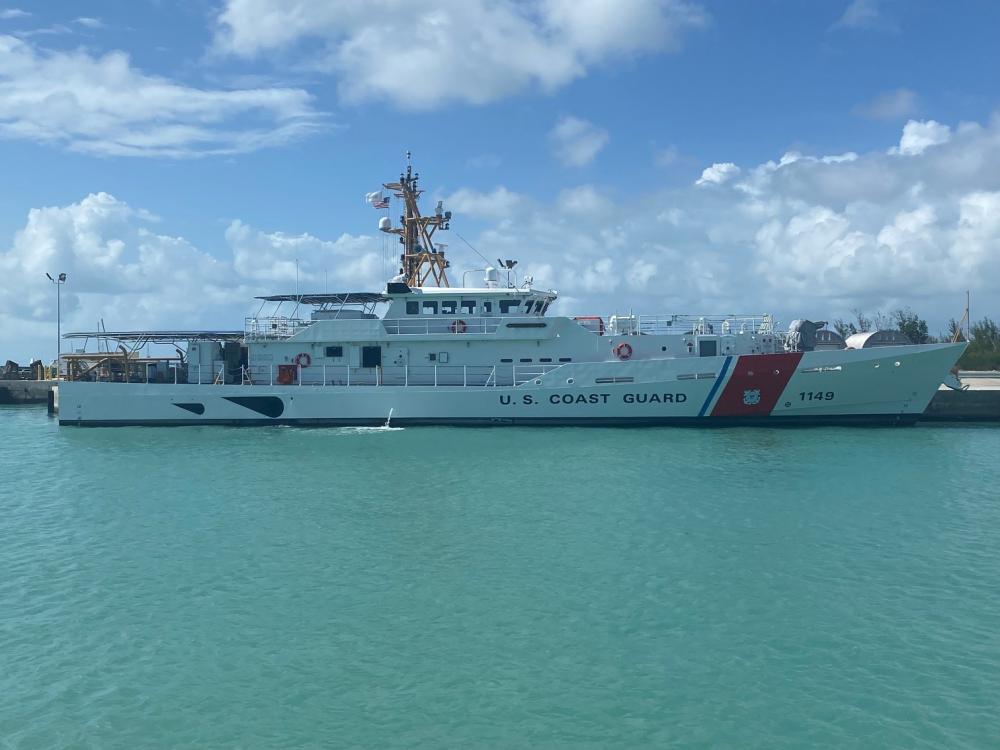
The Coast Guard accepts delivery of 49th Fast Response Cutter Douglas Denman, in Key West, Florida, May 26, 2022. The cutter will be homeported in Ketchikan, Alaska. (U.S. Coast Guard photo)

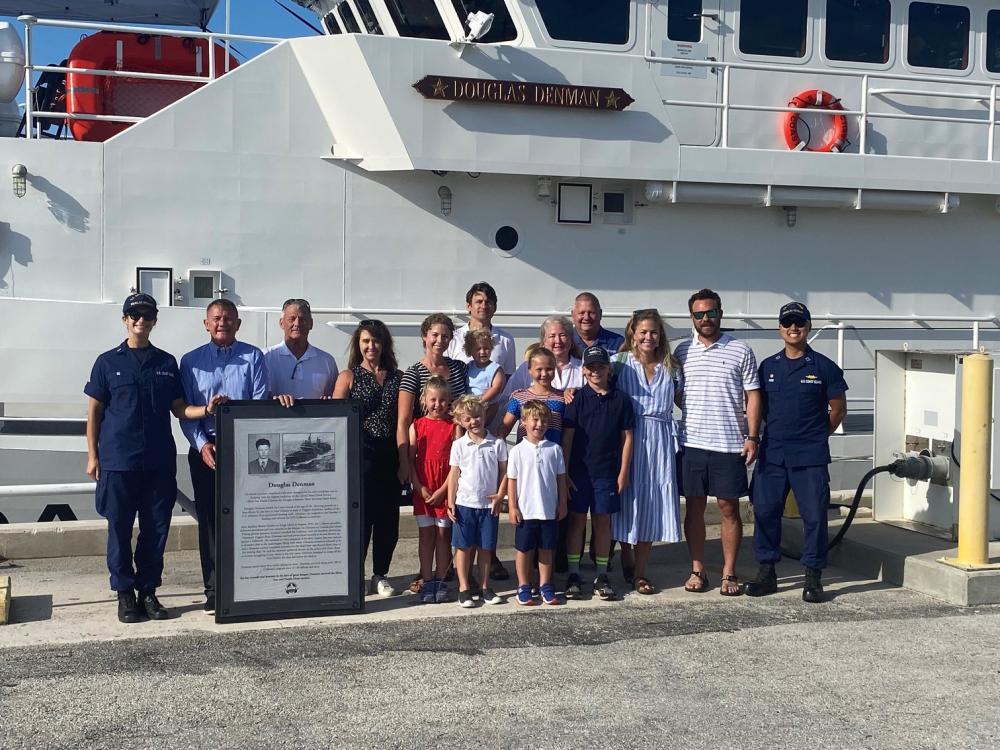
The Coast Guard accepts delivery of the 49th Fast Response Cutter Douglas Denman, in Key West, Florida, May 26, 2022, alongside the Denman family. The cutter will be homeported in Ketchikan, Alaska. (U.S. Coast Guard photo)

Editors’ Note: Click on images to download high resolution version.

 KEY WEST, Fla. — The Coast Guard accepted the Coast Guard Cutter Douglas Denman (WPC 1149), the 24th Fast Response Cutter built by Bollinger Shipyards, during a May 26 ceremony at Coast Guard Sector Key West.

“We were honored to have Douglas Denman’s son, Doug Jr. and daughter, Karen there for the momentous occasion,” said Lt. Paul Kang, commanding officer of the cutter. “In addition to that, two of Douglas Denman’s granddaughters drove down from Georgia with their families.”

The cutter, which is 154-feet long and has a crew complement of 24, will be homeported in Ketchikan, Alaska.

The Douglas Denman is scheduled for commissioning in September in Ketchikan. It is the third Fast Response Cutter to be stationed in the Coast Guard’s 17th Coast Guard District, which covers the state of Alaska and the North Pacific. The Denman will join the John McCormick (WPC 1121) and the Bailey Barco (WPC 1122), which arrived in Alaska in 2016 and 2017.

Born in Tallapoosa, Georgia, the cutter’s namesake joined the U.S. Coast Guard in 1940 and was eventually assigned as a coxswain to the USS Colhoun (DD-85), a Wickes-class destroyer in the U.S. Navy during World War I and later re-designated APD-2 in World War II. On Aug. 30, 1942, the Colhoun was positioned off the coast of Guadalcanal when it was attacked by hostile aircraft. Denman was seriously wounded during the attack but remained at his duty station. When the order was given to abandon ship, Denman and another crew member helped evacuate the crew and get life jackets to those already in the water. Because of Denman’s selfless actions, 100 of the 150 officers and staff survived the attack and sinking of Colhoun. Denman received the Silver Star and Purple Heart medals for his heroic efforts. He served for 20 years in the Coast Guard, retiring as a senior chief petty officer in 1961.

The Fast Response Cutter is replacing the aging Island-class 110-foot patrol boats and features advanced command, control, communications, computers, intelligence, surveillance, reconnaissance equipment, and an over-the-horizon cutter boat. The cutter features advanced seakeeping capabilities and can achieve more than 32 mph (28 knots). The cutter has an endurance of five days. The Coast Guard is in the middle of the FRC acquisition program.

Earlier this year, President Joe Biden signed the Consolidated Appropriations Act for Fiscal Year 2022, which included a $130 million increase for two additional FRCs, continuing the program beyond its 64-vessel program of record. This is the second time Congress has added FRCs beyond the original 58 vessel program of record.

Douglas Denman is designed for multiple missions, including law enforcement, fisheries enforcement, waterways and coastal security, search and rescue, and national defense.

For more information about this cutter, please contact 17th District Public Affairs at D17-DG-PublicAffairs@uscg.mil or Douglas Denman’s executive officer at Alicen.T.Re@uscg.mil.

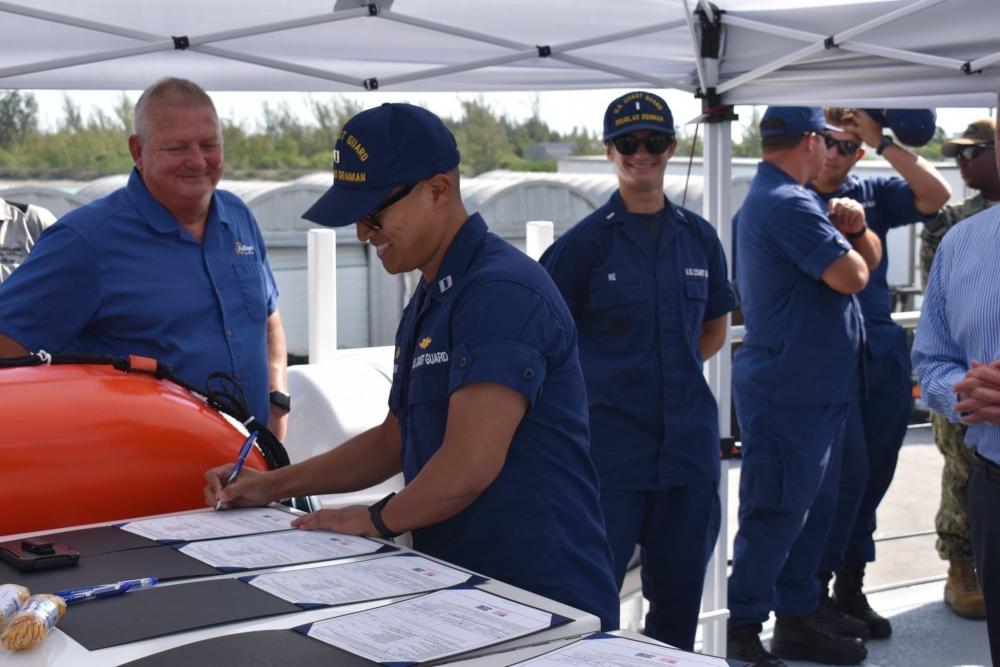
Coast Guard Lt. Paul Kang, commanding officer of Cutter Douglas Denman, accepts delivery of the 49th Fast Response Cutter Douglas Denman, in Key West, Florida, May 26, 2022. The cutter will be homeported in Ketchikan, Alaska. (U.S. Coast Guard photo)

Turkish Built OPVs

After a long history of importing warships, about three decades ago, Turkey began to develop their indigenous defense industry, first with European assistance but now increasingly they handle all phases from design to fitting out. They are currently building corvettes and frigates and an LHD with assistance from Spain’s Navantia. They plan to build destroyers in the near future.

Turkey has begun exporting defense products. Their armed drones have become famous in the conflict in Ukraine. They are exporting corvettes to Pakistan.

Naval News reports Turkey has begun a program to build ten offshore patrol vessels (OPVs) for the Turkish Navy (video above). While the illustrations show a heavily armed vessel, the actual armament is not reported and these ships will reportedly be fitted for but not with some of these systems. Key data:

  • Overall length: 99,56 meters (327 feet).
  • Beam: 14,42 meters (47.3 feet).
  • Draft: 3,77 meters (12.4 feet).
  • Maximum speed: 24 knots.
  • Displacement: 2300 tons.

Naval News reports that Turkey is expected to build six 283 foot, 2,000 ton Offshore Patrol Vessels for the Philippines. (video above)

The Offshore Patrol Vessel (OPV) 76 / From the official website of Dearsan Shipyard

In November 2021, Overt Defense reported, this contract with Nigeria.

According to a statement released by the Nigerian Navy on November 3, a contract was struck with the Turkish Dearsan Shipyard for the purchase of two OPV 76 Class Offshore Patrol Vessels to meet the Nigerian Navy’s needs…The Offshore Patrol Ship 76 has a length of 76.80m (252′–Chuck), a width of 11m and a draft of 2.9m. The OPV is equipped with a 76mm Leonardo Super Rapid Gun, a 40mm Leonardo Light Marine Gun, two 12.7mm Stabilized Automatic Machine Guns, two 12.7mm Manual Operation Machine Guns, and two SAM SIMBAD RC short-range, anti-air self defence systems, and has a top speed of 28 knots and a range of 3,000 nautical miles.

“ROYAL AUSTRALIAN NAVY RETIRES PATROL BOAT MAITLAND” –Baird Maritime

HMAS Maitland conducts a passage exercise with USCGC Kimball during Operation Solania. Photo: Seaman Isaiah Appleton

Baird Maritime reports, the Australian Navy is retiring one of their Amidale class patrol boats, HMAS Maitland. The vessel is relatively young by USCG standards, having been commissioned in 2006. It seems the class was stressed by high tempo, long distance, alien migrant interdiction deployments. This is the third of the original 14 vessels of the class to be decommissioned. One was as a result of a fire in 2014. The second was decommissioned March 2021.

These vessels are to be replaced by a class of 12 much larger OPVs, but in the meantime, the Australian Navy is also procuring, in many ways similar, 190 foot Cape Class patrol boats. The decommissioning follows closely on the delivery of the first of these “evolved” Cape class.

Contract Award for the Fourth Offshore Patrol Cutter

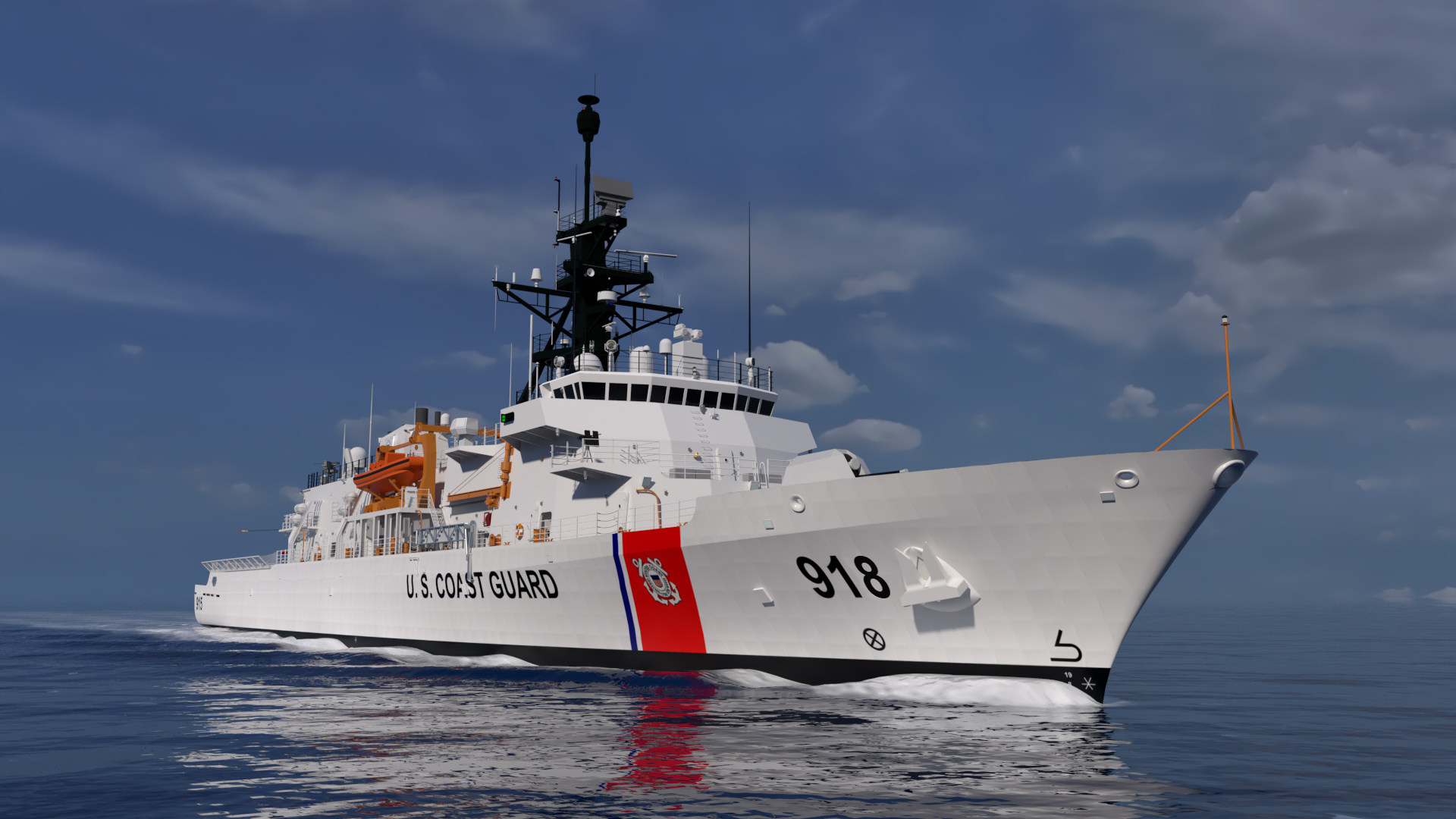
Photo: Rendering of the future USCGC RUSH (WMSM 918) provided by Eastern Shipbuilding Group, Inc. Click on the photo for a better view. 

Below is a press release from Eastern Shipbuilding Group. To review the situation, the Coast Guard is expected to make a decision in the near future regarding the award of the next batch of Offshore Patrol Cutters. Eastern is one of the competitors.

FOR IMMEDIATE RELEASE

         April 26, 2022

Eastern Shipbuilding Group, Inc. Announces Construction of the U.S. Coast Guard’s Fourth Offshore Patrol Cutter

PANAMA CITY, FL – Today, Eastern Shipbuilding Group, Inc. (ESG) announced the U.S. Coast Guard has awarded a contract to begin construction of the fourth Heritage Class offshore patrol cutter (OPC), the future USCGC RUSH (WMSM 918).

The OPC will form the backbone of the service’s future fleet around the globe. ESG has worked hard to earn this opportunity and is honored to be chosen to perform this important work for the United States. ESG, in collaboration with its partners, produced the winning design of the OPC and was awarded detail design and construction of the first hulls in 2016. The new OPC designs reflect cutting-edge technology and will replace the service’s 270-foot and 210-foot medium endurance cutters, which are becoming increasingly expensive to maintain and operate.

“This follow-on award signifies the OPC team and our partners continue to provide quality craftsmanship and unparalleled service. We have a focused vision to support the OPC Program with shipbuilding excellence and provide the country with a long-term industrial capability that can produce exceptional vessels that support national security interests,” said Joey D’Isernia, President of Eastern Shipbuilding Group, Inc.

As prime contractor, ESG has successfully achieved program goals and mitigated the impacts of COVID-19 and current supply chain challenges. It expects to christen the first vessel this year, is nearly halfway through completion of the second vessel, and will host the keel authentication of the third OPC in a few weeks. The pace of production accelerates with each vessel that comes online.

“We utilized state of the market technology, design, and construction methodologies to offer a more capable vessel than legacy assets currently in service. The innovations built into the OPCs were designed for sustainability and endurance and come from the ingenuity of the best engineers and manufacturers in the world. We thank the hundreds of partners and employees in the thirty-four states supporting us in this effort,” continued D’Isernia.

Construction is taking place at ESG’s Nelson Street Shipyard in Panama City, Florida, a facility that is optimized for multi-hull construction of the Offshore Patrol Cutter and dedicated to supporting the U.S. Coast Guard.

ESG survived the third largest U.S. hurricane in 2018 and has fully rebuilt its operational facilities. The company made many infrastructure investments from $50 million in state appropriations and economic development grants that benefit the OPC project with enhanced manufacturing capabilities and efficiencies that reduce cost and schedule risk. These infrastructure investments include an aluminum fabrication facility specifically designed to support full construction of the OPC aluminum superstructure in a covered and controlled environment. ESG has also completed launch way upgrades, upland bulkhead upgrades, construction platen expansions, and waterway deepening projects to further enhance ESG’s capability to launch and deliver two OPC sized vessels per year.

At its Allanton Shipyard, ESG has constructed a state-of-the-art C5ISR Production Facility to conduct testing and integration of navigation, communication, and command and control, equipment, and simulators on premises prior to final installation on the vessel.