“Russian Warships Sailed ‘Right Through’ Alaska Fishing Fleet: Sailors” –Newsweek

Northeast Russia and Alaska are in close proximity and the U.S. Coast Guard will interact more and more as Russian maritime activity in the Arctic grows. Photo: Shutterstock

There is a Newsweek report of Russian vessels engaged in exercises disrupting fishing in the US EEZ.

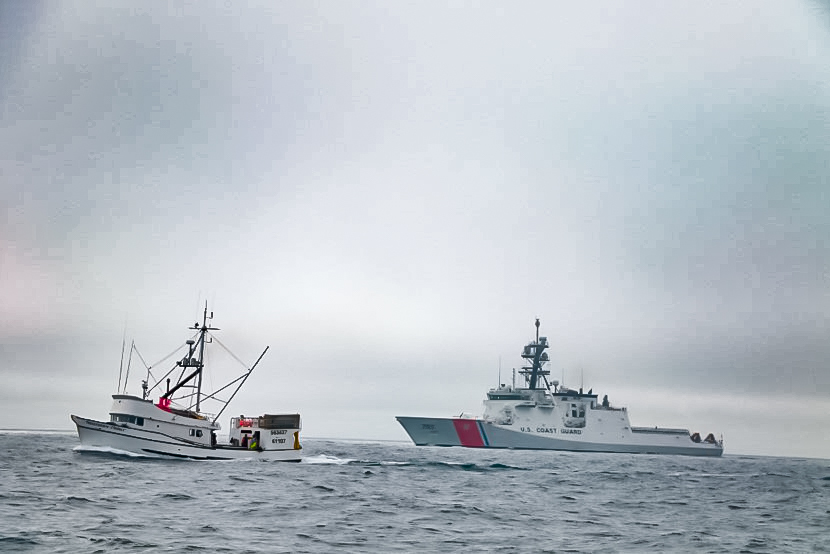
“Three warships and two support vessels of theirs were coming and would not turn,” Elliott said from aboard the Vesteraalen. “And they came marching right through the fleet.”

This was in International Waters so it is not that the Russian vessels were violating international law by their presence. They may have violated the “nautical rules of the road”, but that is not clear. Certainly there was no reason to choose the waters for the exercise that they did, other than muscle flexing. It is not a choice a good neighbor would have made.

The fishermen also seemed to feel they had not been informed the Russians were going to be there. “We were caught by surprise” Perhaps we might have done more about that.

A Reevaluation, Ruminating on Homeports While Playing the Red Cell, Part 1

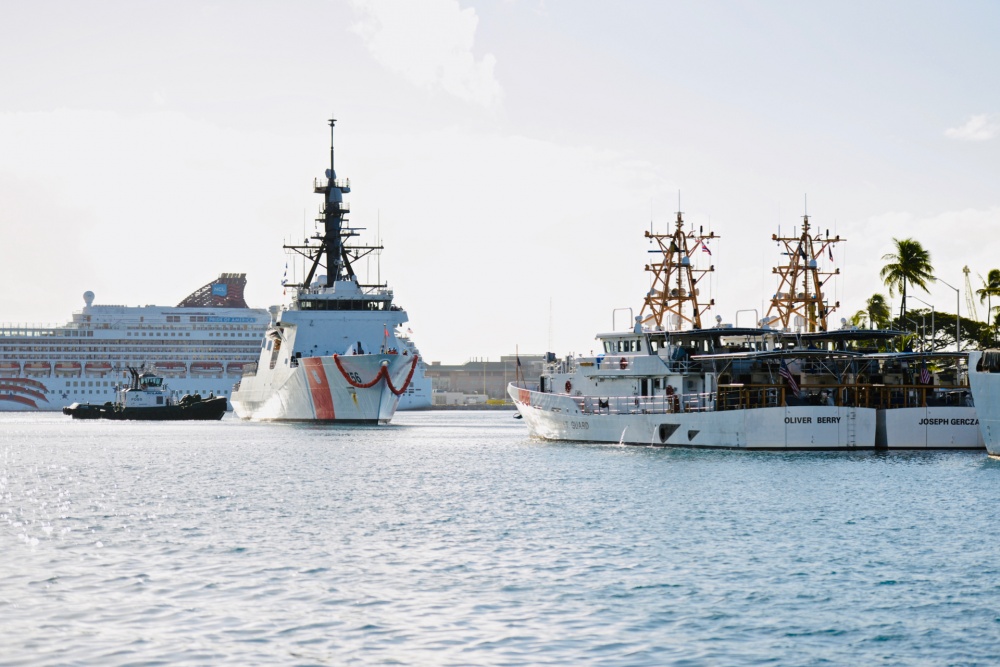
The crew of USCGC Kimball (WMSL 756) arrive in Honolulu for the first time Dec. 22, 2018. Known as the Legend-class, NSCs are designed to be the flagships of the Coast Guard’s fleet, capable of executing the most challenging national security missions, including support to U.S. combatant commanders. (U.S. Coast Guard photo by Chief Petty Officer Sara Muir/Released)

This is going to be an update of a post published 22 Nov. 2015. “Ruminating on Homeports While Playing the Red Cell.” A recently published “National Fleet Plan” prompted that examination. Unfortunately there has apparently been no later edition of this plan. I am going to publish in two parts because was getting a bit long. Part 1 will get us to where we are now. Part 2 will speculate on the future.

Again I will try to identify those ports most at risk of attack, and where the cutters that might protect them are or should be. Much of the organization, logic and even wording of the earlier post will be recycled here. Unfortunately truly current information was not available for each type of port. In some cases the information predated the previous post. I have tried to label the sources and include the year of its publication in parenthesis.

Once again, I looked at this from the point of view of hopefully making an intercept off shore, rather than inside the port, so rather than look at specific ports, in some cases, I clustered ports that had a common approach, e.g. Portsmouth, Norfolk, and Newport News all share a common approach so I grouped them together in what I will refer to as the Chesapeake Bay Complex. Other groups were ports along the Mississippi River, Sabine Pass, Galveston Bay, San Francisco Bay, and Puget Sound. I also disregarded Inland and Great Lakes ports as being protected by the long approach required.

In the original post I was looking to the larger cutters, (NSCs, OPCs, WHECs, WMECs) as the primary protectors of ports, because that was the way the Coast Guard looked at the problem. I have come to believe strongly that Webber class WPCs and perhaps the replacement for the 87 foot WPBs will be much more likely to be in the right place at the right time to counter an attack. The larger ships simply spend very little time underway in the vicinity of their homeports. They spend no significant time on standby (although that could change), and once in port, they usually enter maintenance status, making it difficult, if not impossible, to get them underway promptly in an emergency. That is not to say we will not also look at where the larger ships are based.,

Unlike the previous post, we will look at where Webber class FRCs are homeported. That means this could also be considered a reexamination of a March 2018 post, Homeports 2035.

The larger ships could become significant players in protecting ports if they were equipped with long range Anti-Ship Cruise Missiles (ASCMs) (and here) that could reach from the ships’ patrol areas back to the approaches to the ports.

The Threats: 

Terrorists or even state actors could use any size vessel from personal watercraft to 1000 foot long ships.

  • It could be similar to the 2008 Mumbai attack when a fishing boat was used to put ten terrorist ashore with automatic weapons and explosives. As a result, at least 174 people died, including 9 attackers, and more than 300 were wounded. An attack on the US might include many more than ten individuals.
  • The vessel itself might be weaponize as a delivery system for explosives or for  weapons of mass destruction.
  • Mines might be laid off one or more port to disrupt the the economy or to delay response to acts of aggression.
  • The war in Yemen has shown that terrorist groups are capable of launching attacks using cruise missile and long range weaponized drones. State actors have even greater similar capabilities (and here).

Thinking about response time:

The Coast Guard would certainly like a comprehensive Maritime Domain Awareness system, but so far we still seem a long way from having one. We still have not gotten the land based Unmanned Air Systems that were supposed to have been part of the Deepwater Program.

Even in best cases, unless we have prior intelligence, we are unlikely to recognize a clandestine threat before it enters the EEZ. Even then it is unlikely to be recognized immediately. At 20 knots that puts the adversary ten hours from his target. It could be more. It could be much less.

In some places Geography works against us. An adversary can get very close to some targets by approaching through Mexican or Canadian waters, before entering the US EEZ.

Right of innocent passage means ships can transit close to the US without the need for a Notice of Arrival.

After initial detection, it is going to take some time to determine that an intercept is needed, and more time to communicated the decision. We cannot expect a cutter to make long transits to affect an intercept, so if the cutter is in or near the port to be protected, we are more likely to be able to make a successful  intercept. Probably if the cutter is not able to get underway and intercept the threat in the approaches in less than five hours, it is probably too far away. I would feel a lot better if it were within two hours.

Ports that may need protection:

Lets look at what ports need to be protected, based on characteristics that might make a port a potential target. Look at it both from the point of view of a terrorist, “How can I hurt the United States and make the biggest impact?” and from the point of view of a hostile state, “Where can I best intimidate and dull response to my aggressive actions?”

Cultural Targets: Since the terrorists targets are more about psychological impact than economic or military significance, attacking certain cities may be more important than the actual damage done. Cities that likely figure large in their psyches are:

  • New York City–symbol of American capitalism
  • Washington, DC–seat of Government and the Pentagon
  • Los Angeles (Hollywood)–exporter of American culture
  • San Francisco–as symbol of “alternate lifestyles” that many terrorist groups find abhorrent.

Military Targets: Symbols of American military power, that terrorist groups would like to show are not invulnerable. Also important military targets.

Plus, if they could also at least raise the possibility of a spill of radioactive material, so much the better. So nuclear powered ships of any kind are likely targets.

  • Aircraft Carriers are homeported in three ports: Norfolk, VA; San Diego, CA; Naval Base Kitsap, WA
  • Ballistic Missile Submarines in two: Kings Bay, GA, Bangor, WA
  • SSNs in six ports: Groton, CT; Norfolk, VA, San Diego, CA; Bremerton, WA; Pearl Harbor; Guam

The USN homeports surface combatants in only five distinct geographic areas,

  • Chesapeake Bay (Norfolk and Little Creek, VA);
  • Mayport, FL,
  • San Diego, CA;
  • Puget Sound; and
  • Pearl Harbor, HI.

The Navy is increasingly concentrated geographically. Navy ships generally are in maintenance, in training, deployed far from the US. or are in transit. They no longer routinely patrol US waters. This may not be a problem if you can handle a problem with aircraft, but reaction to a vessel that we suspect may be attempting a terrorist attack will almost certainly require investigation, including, most probably, an attempt to board.

The Navy has no surface combatants in the Atlantic Fleet homeported North of Virginia. We cannot rely on the Navy to provide platforms for intercepts, with the possible exception of off San Diego and Chesapeake Bay.

Attacks on Shipyards that build USN ships might also provide an opportunity to strike at US symbols of power. Notable shipyards are BIW in Bath, Me; Electric Boat in Groton, CT; Newport News in the Chesapeake Bay complex, VA; Austal USA in Mobile, AL; HII in Pascagoula, MS; and NASSCO in San Diego, CA.

Cruise Ships: Another likely target for a terrorist is a cruise ship. The Top Cruise Ship Ports (2011) (arranged geographically):

  • New York, NY, #4
  • Cape Liberty, NJ, #13
  • Baltimore, MD, #12
  • Charleston, SC, #15
  • Jacksonville, FL, #14
  • Port Canaveral, FL, #3
  • Fort Lauderdale, FL, #2
  • Miami, FL, #1
  • Tampa, FL, #7
  • San Juan, PR, #5
  • New Orleans, LA, #10
  • Galveston, TX, #6
  • Long Beach, CA, #9
  • Los Angeles, CA, #11
  • Seattle, WA, #8

Two ports not listed above, that figure prominently as cruise ship ports mentioned by other sources were the US Virgin Islands and Boston.

Container Ports: Attacking a large container ports might also be seen as a good way to disrupt the economy. Top Container Ports (2009, “updated May 20, 2017”) arranged geographically.

  • New York, NY/NJ, #3
  • Baltimore, MD, #13
  • Norfolk, VA, #5
  • Charleston, SC, #7
  • Savannah, GA, #4
  • Port Everglades, FL, #11
  • Miami, FL, #12
  • San Juan, PR, #15
  • New Orleans, LA, #14
  • Houston, TX, #8
  • Los Angeles, CA, #1
  • Long Beach, CA, #2
  • Oakland, CA, #6
  • Seattle, WA, #9
  • Tacoma, WA, #10

Top Ports by Tonnage: More generally, Top US waterports by tonnage (2018) arranged geographically:

  • New York, NY and NJ, #3
  • Baltimore, MD, # 14
  • Port of Virginia, VA, #9
  • Mobile, AL, #11
  • Port of South Louisiana, LA #1
  • New Orleans, LA, #6
  • Baton Rouge, LA, #8
  • Lake Charles, LA, #12
  • Port of Plaquemines, LA, #13
  • Beaumont, TX, #4
  • Houston, TX, #2
  • Texas City, TX, #15
  • Corpus Christi, TX, #5
  • Long Beach, CA, #7
  • Los Angeles, CA, #10

Bureau of Transportation Statistics: I also used the Bureau of Transportation Statistic “List of Top 25 Tonnage, Container, and Dry Bulk Ports” as a check. It made me look at three additional ports:

  • Wilmington, DE part of the Delaware Bay Complex along with Philadelphia.
  • Kahului, Maui, HI, a small container port.
  • Valdez, AK, near the head of a deep fjord in the Prince William Sound

I decided they did not need to be added to the list of ports.

Strategic Ports: Aside from the naval targets listed above MARAD has designated 17 ports for outload of military equipment. These are referred to as Strategic Seaports” (2020):

  • Philadelphia, PA
  • Hampton Roads, VA
  • Morehead City, NC
  • Wilmington, NC
  • Charleston, SC
  • Savannah, GA
  • Jacksonville, FL
  • Gulfport, MS
  • Beaumont, TX
  • Port Arthur, TX
  • Corpus Christi, TX
  • San Diego, CA
  • Long Beach, CA
  • Oakland, CA
  • Tacoma, WA
  • Guam
  • Anchorage, AK

Consolidated Target and Homeport List:

Obviously there is some overlap from list to list. Putting them all together and grouping them by district we get 31 potential target ports in bold. Also included are the location 23 current or planned cutter homeports with the cutters in bold.

CCGD1:

  • Bath, Me–Major Naval shipbuilder
  • Kittery, ME/Portsmouth, NH –Naval Shipyard: 2×270(908, 909)
  • Boston, MA: 3×270 (905, 906, 907)
  • Newport, RI Plan to add 2xOPC (919, 920)
  • Groton, CT–Submarine base
  • Hudson River complex, New York, NY/Elizabeth and Bayonne, NJ–a major cultural target, #3 US Port by tonnage, #3 Container port, #4 Cruise ship port (NYC) and #13 cruise ship port (Cape Liberty, NJ)

CCGD5:

  • Delaware Bay/River Complex–Strategic Seaport (Philadelphia), Wilmington DE/Cape May, NJ: 3xFRC (1119, 1120, 1135)
  • Chesapeake Bay Complex, VA–Base for aircraft carriers and submarines, Major naval shipbuilder, Strategic Port, #9 port by tonnage, #5 container port; plus water route to Washington, DC (major cultural target) and Baltimore, MD–#14 port by tonnage, #13 container port, #12 cruise ship port/6×270 (Portsmouth 901, 902, 903,904, 911, 912), 2×210 (Little Creek 626, 627)
  • Morehead City, NC–Strategic Seaport/Atlantic Beach, NC: 2xFRC (1127, 1128)
  • Cape Fear River–Strategic Seaport, Wilmington, NC

CCGD7:

  • Charleston, SC–#7 container port, #15 cruise ship port, Strategic Seaport/ 2xNSC (753, 754) Plan to add 3xNSC (758, 759, 760)
  • Savannah, GA–#4 container port, Strategic Seaport
  • Jacksonville complex, FL (including Kings Bay, GA)–SSBNs, Navy Base Mayport, #14 cruise ship port, Strategic Seaport/ Mayport, FL: 1×210 (617)
  • Port Canaveral, FL–#3 Cruise Ship port/ Cape Canaveral, FL: 2×210 (619, 621)
  • Port Everglades/Fort Lauderdale, FL–#11 container port, #2 Cruise Ship port
  • Miami, FL–#12 container port, #1 Cruise Ship port/ 6xFRC (1101 to 1106)
  • Key West, FL: 2×270 (910, 913), 6xFRC (1107 to 1112)
  • San Juan, PR–#5 Cruise Ship port, #15 container port/ 7xFRC (1113 to 1118, 1133)
  • Tampa, FL–#7 Cruise Ship port/
  • St. Petersburg, FL: 2×210 (620, 625)

CCGD8

  • Pensacola, FL–4×210 (615, 616, 624, 629),
  • Mobile, AL–major naval shipbuilder, #11 port by tonnage
  • Pascagoula, MS–major naval shipbuilder/2xFRC (1123,  1125)
  • Gulfport, MS–Strategic Seaport
  • Mississippi River Complex, LA–New Orleans #6 port by tonnage, #14 container port, +#10 Cruise Ship port; South Louisiana #1 port by tonnage; Baton Rouge #8 port by tonnage; Port of Plaquemines #13 port by tonnage.
  • Lake Charles, LA–#12 port by tonnage
  • Sabine Pass complex (Beaumont/Port Author/Orange, TX)–#4 port by tonnage (Beaumont), Strategic Seaport (both Beaumont and Port Author), It also has an LNG exporting terminal
  • Houston/Galveston/Texas City, TX–#2 port by tonnage (Houston),  #13 port by tonnage (Texas City), #5 container port (Houston), #6 Cruise ship port (Galveston)/Galveston, TX: 3xFRC (1136, 1137, 1138)
  • Corpus Christi, TX–#7 port by tonnage, Strategic Seaport

CCGD11:

  • San Diego, CA–Base for aircraft carriers and submarines, major naval shipbuilder (NASSCO), Strategic Seaport
  • Los Angeles/Long Beach/Port Hueneme, CA–A major cultural target, #5 port by tonnage (Long Beach), #9 port by tonnage (Los Angeles), #1 container port (Los Angeles), #3 container port (Long Beach), #9 cruise Ship port (Long Beach), #11 cruise ship port (Los Angeles), Strategic Seaport (Long Beach and Port Hueneme)/San Pedro: 4xFRC (1129 to 1132) Plan to add 2xOPC (915, 916)
  • San Francisco Bay complex,, CA–A major cultural target, #6 container port (Oakland), Strategic Seaport (Oakland and Concord)/Alameda, CA: 4xNSC (750, 751, 752, 755)

CCGD13:

  • Warrenton, OR: 2×210 Plan to add two FRCs (Longview, WA is a significant port, but it is 66 miles up the Columbia River, so unlikely to be a target)
  • Puget Sound Complex, Seattle/Tacoma, WA–Base for aircraft carriers (Bremerton), SSBNs (Bangor), and submarines, major naval bases, #8 container port (Seattle), #10 container port (Tacoma), #8 Cruise ship port (Seattle), Strategic Seaport (Indian Island and Tacoma, WA)/Seattle, WA: 1xWHEC, Port Angeles, WA: 1×210

CCGD14:

  • Honolulu/Pearl Harbor, HI–Major Naval base, including submarines/2xNSC (756, 757), 3xFRC (1124, 1126, 1134)
  • Apra, Guam–Submarine Base, Strategic Seaport/Plan to add 3xFRC (1139, 1140, 1143)

CCGD17:

  • Ketchikan, AK: 2xFRC (1121, 1122)
  • Kodiak, AK: 1xWHEC, 1×282 WMEC Plan to add 2xOPC (917, 918)
  • Planned to be based in Alaska, ports have not been identified 4xFRC
  • Anchorage, AK–Strategic Seaport

Coast Guard conducts overflight, port assessments along the Western Gulf Coast region affected by Hurricane Laura” –CGD8

Below is a news release from Eighth District.

united states coast guard


Multimedia Release

U.S. Coast Guard 8th District Heartland
Contact: 8th District Public Affairs
Office: 504-253-4857
After Hours: (618) 225-9008
Eighth District online newsroom

Coast Guard conducts overflight, port assessments along the Western Gulf Coast region affected by Hurricane Laura

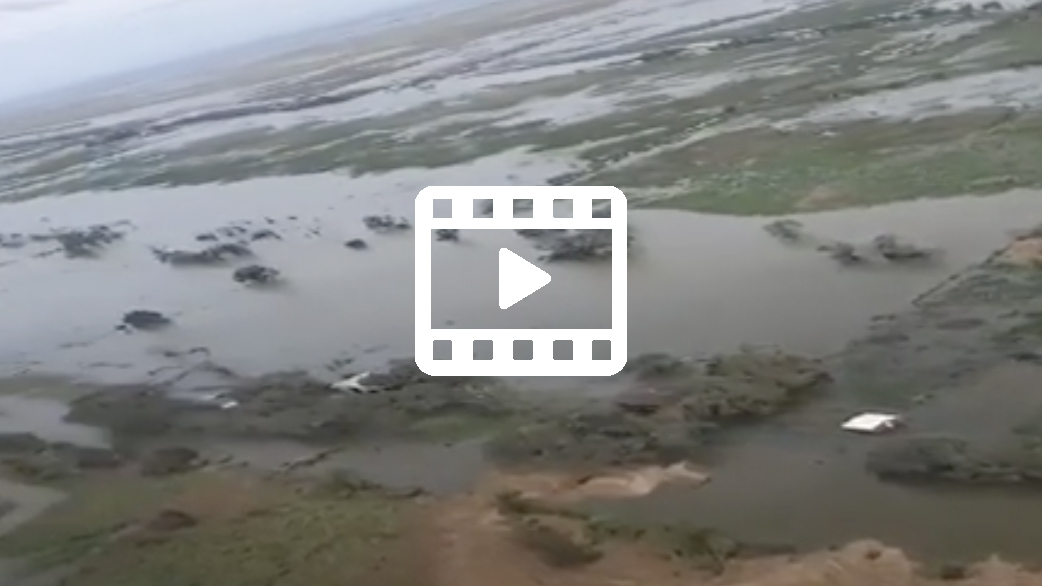
A Coast Guard Air Station New Orleans MH-65 Dolphin helicopter crew conducts an overflight along Hwy 82 between White Lake and Cameron, Louisiana, Aug. 27, 2020, where there was flooding caused by Hurricane Laura.

Rear Adm. John Nadeau, Coast Guard Eighth District commander, conducts a post-storm overflight, along with other members of the district, aboard an HC-144 Ocean Sentry airplane over Lake Charles, Louisiana after Hurricane Laura, August 27, 2020.  Coast Guard Station New Orleans’ shallow water response boat team walks a flooded road in Erath, Louisiana, during the aftermath of Hurricane Laura, August 27, 2020.  Rear Adm. John Nadeau, Coast Guard Eighth District commander, conducts a post-storm overflight, along with other members of the district, aboard an HC-144 Ocean Sentry airplane over Lake Charles, Louisiana after Hurricane Laura, August 27, 2020.  A rescue crew joined by U.S. Sen. Ted Cruz, prepare to conduct an overflight following Hurricane Laura near Orange, Texas, Aug. 27, 2020. Coast Guard Station New Orleans’ shallow water response boat team checks on a flooded residence in Erath, Louisiana, during the aftermath of Hurricane Laura, August 27, 2020.  U.S. Coast Guard Air Station Clearwater, Florida conducts an overflight to survey post Hurricane Laura damage near Orange, Texas, Aug. 27, 2020.  

Editors’ Note: Click on images to download high-resolution version.

NEW ORLEANS — The Coast Guard assesses damage along the Louisiana and Texas border Thursday after Hurricane Laura made landfall, which caused flooding and other damage.

The Coast Guard is working closely with all local and state emergency operation centers to manage Coast Guard storm operations.

“The Coast Guard will continue to provide search and rescue capabilities, assess the damage done by Hurricane Laura ensuring we can assist those in need of rescuing, as well as ensuring the ports along the Western Gulf Coast can be safely reopened for the flow of maritime commerce,” said Capt. Jason Smith, Unified Commander for the Houston-Galveston response area. “In the midst of this catastrophic event, the teamwork between all federal, state and local agencies has been amazing and the resilience is inspirational.”

The Coast Guard has deployed more than 3,000 servicemembers, 32 aircraft crews and nearly 40 boat crews to respond to flooded and damaged areas that were affected by Hurricane Laura along the Louisiana and Texas border.

Port conditions change based on weather forecasts, and current port conditions can be viewed on the following Coast Guard homeport webpages:

For more information follow us on Facebook and Twitter.

“Congressmen object to “crude” mnemonic in USCG training material” Marine Log

Marine Log reports that Congress has taken exception to the use of a Mnemonic in Coast Guard furnished training material.

DeFazio and Maloney wrote: “Within the USCG accredited captain’s license course offered by ‘Mariners Learning System,’ students are encouraged to use the mnemonic device ‘true virgins make dull company—just add whiskey’ to remember how to calculate compass error. We are sure you will agree that the use of this crude phrase in certification materials approved by the Coast Guard is unacceptable.”

They may have a point, but don’t we have more urgent issues?

“Coast Guard Cutter Healy suffers fire, propulsion failure en route to Arctic” –News Release

Below is a news release reproduced in its entirety.

united states coast guard

News Release

U.S. Coast Guard Pacific Area
Aug. 24, 2020
Contact: Coast Guard Pacific Area Public Affairs
Office: (510) 437-3375
After Hours: (510) 816-1700
D11-DG-M-PACAREA-PA@uscg.mil
Pacific Area online newsroom

Coast Guard Cutter Healy suffers fire, propulsion failure en route to Arctic

ARCTIC OCEAN – The U.S. Coast Guard Cutter Healy (WAGB-20) is in the ice Wednesday, Oct. 3, 2018, about 715 miles north of Barrow, Alaska, in the Arctic. The Healy is in the Arctic with a team of about 30 scientists and engineers aboard deploying sensors and autonomous submarines to study stratified ocean dynamics and how environmental factors affect the water below the ice surface for the Office of Naval Research. The Healy, which is homeported in Seattle, is one of two ice breakers in U.S. service and is the only military ship dedicated to conducting research in the Arctic. (NyxoLyno Cangemi/U.S. Coast Guard)


ALAMEDA, Calif. — The U.S. Coast Guard Cutter Healy (WAGB-20) suffered a fire in one of the ship’s main propulsion motors Aug. 18 while underway for operations in the Arctic.

No injuries were reported.

The Healy was 60 nautical miles off of Seward, Alaska, en route to the Arctic when an electrical fire was reported at 9:30 p.m.  A fire team disconnected the affected motor, and the fire was confirmed extinguished by 9:56 p.m.  The cause of the fire is currently unknown.

The propulsion motors are critical equipment that use the power generated by the ship’s main diesel engines to spin the shaft and propeller. This design protects the engines from variations in shaft speeds inherent to ice operations. 

Due to the fire, Healy’s starboard propulsion motor and shaft are no longer operational, and the ship is transiting back to its homeport in Seattle for further inspection and repairs.

Prior to the fire, the Healy completed a 26-day patrol in support of Operation Arctic Shield, demonstrating U.S. presence and influence in the Bering Sea, along the U.S.-Russian Maritime Boundary Line, and in the Arctic.

On Aug. 15, the Healy was in Seward and embarked 11 scientists before departing on Aug. 18 to ensure national security and conduct science operations in the Arctic.  As a result of the fire, all Arctic operations have been cancelled.

“I commend the crew of the Healy for their quick actions to safely combat the fire,” said Vice Adm. Linda Fagan, the Pacific Area commander.  “This casualty, however, means that the United States is limited in icebreaking capability until the Healy can be repaired, and it highlights the nation’s critical need for Polar Security Cutters.”

In April 2019, the Navy and Coast Guard awarded a contract to VT Halter Marine, of Pascagoula, Mississippi, for the detail design and construction of the Polar Security Cutter. The initial award includes non-recurring engineering, detail design and construction of the first Polar Security Cutter and has options for the construction of two additional hulls. Construction of the first Polar Security Cutter is scheduled to begin in early 2021 with delivery in 2024. The fiscal year 2021 President’s Budget requests full funding for the construction of the second Polar Security Cutter.

“The Nationalized Fleet? Is there any hope for the Navy–Coast Guard ‘National Fleet’ concept?” USNI

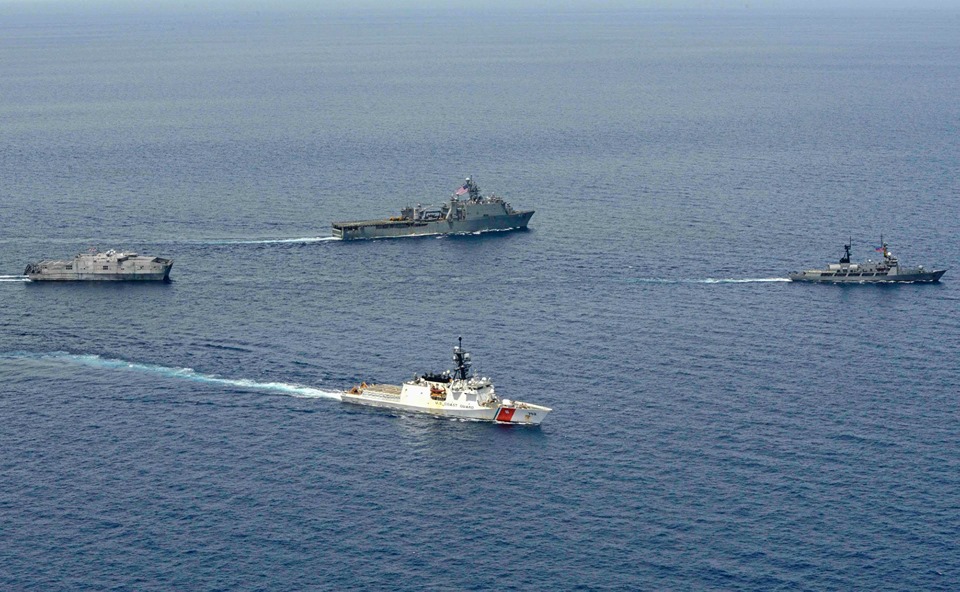
The Philippine Navy’s BRP Andres Bonifacio (PS 17), USS Germantown (LSD-42), USCGC Stratton (WMSL 752) and USNS Millinocket (T-EPF 3) break formation after steaming together this week in the Sulu Sea as part of Maritime Training Activity Sama Sama.

The US Naval Institute Proceedings has a short article about the history of a concept that originated in the Coast Guard more than 20 years ago.

Seemed like a good idea at the time. Still does, but not a lot has come of it. A good idea that has languished due to various parts laziness, inertia, fear, jealousy, and arrogance.

If this is ever going to happen, it will require Congress to push the idea.

An important first step would be to include Coast Guard ships in annual count of “Battle Force” ships that the Navy puts out. It currently includes unarmed MSC ships, including ocean going tugs, so National Security Cutters and Offshore Patrol Cutters would not be out of place.

Navy Helo Operates from Munro, RIMPAC 2020

Seems like a lot of significant news releases today. Another one below.

We already know Munro is participating in RIMPAC 2020. What I found most interesting here is this paragraph.

Embarked aboard Munro is a detachment from U.S. Navy Helicopter Sea Combat Squadron 21, who completed over 40 hours of training on board prior to their integration in RIMPAC.

From Wikipedia: 

Helicopter Sea Combat Squadron 21 (HSC-21), nicknamed “Blackjacks”, is an aviation unit of the United States Navy based at Naval Air Station North Island. HSC-21 is made up of five expeditionary detachments that deploy aboard ships including Combat Logistics Force support ships, Hospital Ships and Amphibious Assault ships, among others. HSC-21 flies the Sikorsky MH-60S Seahawk helicopter.

Missions include:

Search and Rescue (SAR)
Logistical Support
Naval Special Warfare (NSW)
Anti-Surface Warfare (ASUW)
Vertical Replenishment (VERTREP)
Medical Evacuation (MEDEVAC)

The MH-60S can be armed with Hellfire, rockets, and forward firing weapons in addition to the door gun and is also expected to conduct mine countermeasures operations.

I am curious both, when and where the helicopter training was conducted and what role the cutter/helo combination will play in the exercise.

(In the previous post, you might have also noticed a photo of USCGC Tahoma doing flight ops with a Danish MH-60R ASW helicopter.)

united states coast guard

News Release

U.S. Coast Guard Pacific Area
Aug. 21, 2020
Contact: Coast Guard Pacific Area Public Affairs
Office: (510) 437-3375
After Hours: (510) 816-1700
D11-DG-M-PACAREA-PA@uscg.mil
Pacific Area online newsroom

Coast Guard Cutter Munro Joins RIMPAC Following 37-day Alaska Patrol

USCGC Munro Alaska Patrol (1) USCGC Munro Alaska Patrol (2)
The crew of the U.S. Coast Guard Cutter Munro conducts a boarding of a fishing vessel off the coast of Alaska.  Prior to their participation in RIMPAC, the Munro crew patrolled the maritime boundary line to prevent foreign fishing vessel incursions into U.S. waters.

Coast Guard Cutter Munro (WMSL-755) began participation Monday, August 17, in this year’s exercise Rim of the Pacific (RIMPAC) following a 37-day Alaska patrol.

Ten nations are participating in this year’s RIMPAC, the world’s largest international maritime exercise held biennially in the waters surrounding Hawaii. This marks the 27th iteration hosted by the United States in the series that began in 1971.

Twenty-two surface ships, one submarine, multiple aircraft and approximately 5,300 personnel from Australia, Brunei, Canada, France, Japan, New Zealand, Republic of Korea, Republic of the Philippines, Singapore, and the United States join forces from August 17 to August 31.

This year’s exercise includes multinational anti-submarine warfare, maritime intercept operations, and live-fire training events, among other cooperative training opportunities.

Prior to arriving in Hawaii for RIMPAC, the Munro crew deployed to the waters off Alaska, patrolling the maritime boundary line to prevent foreign fishing vessel incursions into U.S. waters. The crew conducted 11 living marine resource boardings, and oversaw the first Coast Guard operational deployment of an unmanned aerial system in the Bering Sea since 2018.

“I am incredibly proud of Munro’s crew and the work we accomplished in Alaskan waters,” said Capt. Blake Novak, Munro’s commanding officer. “We provided a Coast Guard presence, securing our border and protecting vital natural resources in the Bering Sea. We boarded fishing vessels as far north as the Arctic Circle and along the Aleutian Islands to ensure the U.S. fishing fleets continue to operate safely. Munro has transitioned and prepared to leverage our joint and combined capabilities in the Rim of the Pacific exercise.”

Embarked aboard Munro is a detachment from U.S. Navy Helicopter Sea Combat Squadron 21, who completed over 40 hours of training on board prior to their integration in RIMPAC.

The at-sea-only construct for RIMPAC 2020 was developed to ensure the safety of all military forces participating, and Hawaii’s population, by minimizing shore-based contingents, while striking a balance between combating future adversaries and the COVID-19 threat. RIMPAC provides a unique training opportunity designed to foster and sustain cooperative relationships that are critical to ensuring the safety of sea lanes and security on the world’s interconnected oceans.

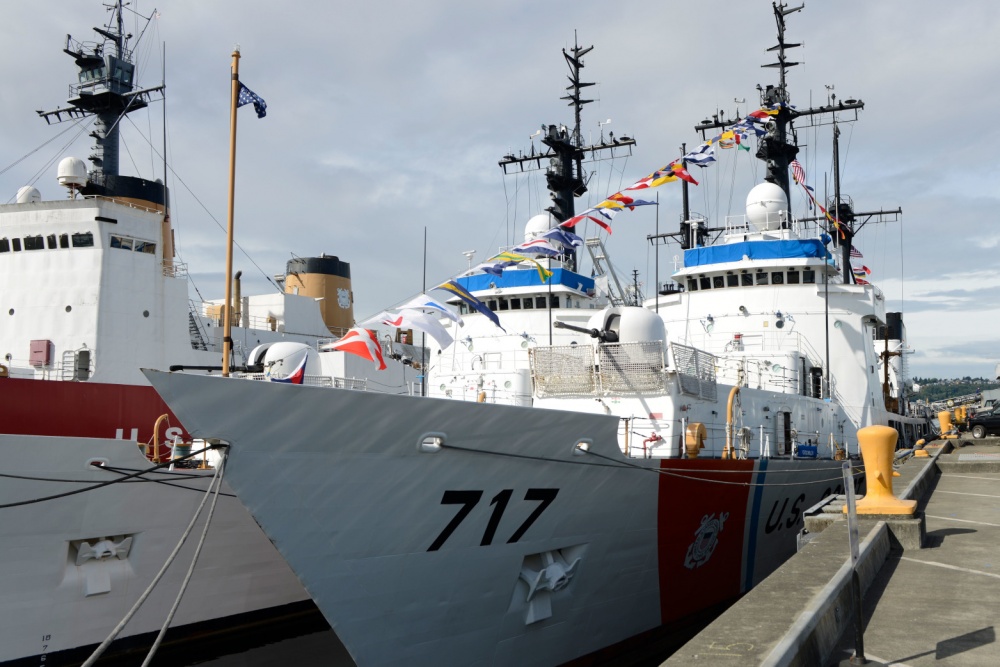
USCGC Mellon Decommissioned

USCGC Mellon [WHEC 717] sits in full dress at the pier before a decommissioning ceremony in Seattle on Aug. 20, 2020. USCGC Mellon was a High Endurance Cutter homeported in Seattle and served as an asset in completing Coast Guard missions around the world for 52 years. (U.S. Coast Guard photo by Petty Officer 3rd Class Michael Clark)

The following is a news release reproduced in its entirety. One less cutter in PACAREA. Only one operational 378 remaining in the Coast Guard. 

united states coast guard

News Release

Aug. 21, 2020
U.S. Coast Guard Pacific Area
Contact: Coast Guard Pacific Area Public Affairs
D11-DG-M-PACAREA-PA@uscg.mil
Pacific Area online newsroom

Coast Guard decommissions cutter after 52 years of service

Coast Guard Cutter Mellon (WHEC 717) completes final patrol Coast Guard high endurance cutter decommissioned after 52 years of distinguished service
Coast Guard Cutter Mellon Decommissioning Ceremony Coast Guard Cutter Mellon Decommissioning Ceremony Coast Guard Cutter Mellon Decommissioning Ceremony

Editors’ Note: Click on images above to download full-resolution photos and videos.

SEATTLE — The Coast Guard decommissioned the Coast Guard Cutter Mellon (WHEC 717) during a ceremony Thursday held at Coast Guard Base Seattle and presided over by Rear Adm. Peter Gautier, the deputy commander of the Coast Guard Pacific Area.

Mellon was one of the Coast Guard’s two remaining 378-foot Hamilton-class high endurance cutters. The fleet of high endurance cutters is being replaced by 418-foot Legend-class national security cutters, which serve as the Coast Guard’s primary long-range asset.

Commissioned in 1968, the Mellon was the third of twelve high endurance cutters built for long-range, high-endurance missions, including maritime security roles, drug interdiction, illegal immigrant interception and fisheries patrols.

“While Mellon’s service to the U.S. Coast Guard now ends, the ship will continue its legacy of good maritime governance after transfer to the Kingdom of Bahrain’s Royal Naval Force,” said Gautier. “I am incredibly confident in the Coast Guard’s future, because in Coast Guard Cutter Mellon’s crew and proud history, I see the attributes that have made our Coast Guard ‘Always Ready’ for more than two centuries.”

Mellon’s keel was laid July 25, 1966, at Avondale Shipyards in New Orleans. Mellon was launched Feb. 11, 1967, and commissioned Jan. 9, 1968. The cutter was named after Andrew W. Mellon, the 49th Secretary of the Treasury from 1921-1932.

Over the past 52 years of service, Mellon’s crews conducted a wide range of diverse operations in all parts of the world. From 1969 through 1972, Mellon’s crews participated in the Vietnam War, performing several naval gunfire support missions and patrolling Southeast Asian waters to prevent the smuggling of weapons into Vietnam. Mellon’s participation in the Vietnam War earned the ship the Navy Meritorious Unit Commendation.

In the late-1970s and 1980s, the Mellon responded to numerous major search and rescue operations, including their assistance in the rescue of 510 passengers and crew members from the burning luxury liner Prinsendam in 1980.

In 1985, the Mellon entered the Fleet Renovation and Modernization program, a dry dock program designed to prolong high endurance cutters’ service life. Mellon was recommissioned March 3, 1989.

Living up to the Mellon’s motto “Primus Inter Pares,” meaning first among equals, the cutter established several Coast Guard firsts, including the first of five Hamilton-class high endurance cutters to have a Harpoon anti-ship missile system installed. Mellon was also the first, and only, Coast Guard cutter to test fire a Harpoon missile.

During Bering Sea patrols, Mellon conducted search and rescue operations and enforced laws and regulations that preserved vital Alaskan fisheries. In the Eastern Pacific, the Mellon’s boarding teams interdicted illegal narcotics trafficked over the high seas.

During the cutter’s last year of service, 20 officers and 160 enlisted crew members patrolled the Bering Sea and the Northern Pacific Ocean near Japan for more than a combined 230 days, collectively conducting 100 safety and fisheries boardings of U.S.-, Chinese-, Korean-, Japanese- and Russian-flagged fishing vessels and participating in five search-and-rescue cases.

“It has truly been an honor to serve as the final commanding officer for Coast Guard Cutter Mellon,” said Capt. Jonathan Musman. “The officers, chiefs and crew for this final year have been truly remarkable and can hold their heads high as they operated Mellon with distinction across the North Pacific on three deployments serving our nation. The reliability of the cutter is a product of years and years of properly taking care of this beloved cutter. The legacy of Mellon has been those fantastic memories that have been made and the knowledge that has passed from one shipmate to another. The future generations of cuttermen were here this last deployment learning, teaching and making their shipboard memories, and they are ready to carry on and continue the Coast Guard’s seagoing heritage.”

Looking for the Next Generation Cutter Boat

Petty Officer 2nd Class Dale Veverka, a boatswains mate, Seaman George Degener, and Petty Officer 2nd Class Joshua Post, a machinery technician, conduct maneuvers on the Coast Guard Cutter Northland’s “over-the-horizon” small boat during transit to Rio De Janeiro, Brazil, April 9, 2008. UNITAS exercise, a multinational naval exercise the helps tests the interoperability of U.S. and foreign naval forces. U.S. Coast Guard photo by PA2 Nathan Henise.

Below is a press release from the Acquisitions Directorate (CG-9):

The Coast Guard released a request for proposal (RFP) Aug. 13, 2020, for the next generation of over-the-horizon capable cutter boats (OTH-V). The RFP is available here.

Proposals are due by noon (EDT) Oct. 12, 2020.

Following on the success of the OTH-IV program, the OTH-V is viewed as an evolutionary step in providing capability for the Coast Guard’s major cutter fleet. The program is designed to expand the service’s mission readiness and meet the Coast Guard’s cutter-based surface prosecution needs for the next decade. With an estimated production of close to 200 boats, the OTH-V will be the primary cutter boat for the Coast Guard’s major cutters.

The acquisition is being conducted in two phases. In the first phase, evaluation of the submitted proposals will result in up to four individual awards. Each awardee will produce a single boat that will be used to demonstrate the boat’s capabilities in selected scenarios. The second phase will update the initial evaluations based on the demonstration, leading to selection of a single best-value boat to move into production.

OTH-V notional characteristics include a top speed of 38 to 42 knots powered by a diesel engine with waterjet and a range of 150 to 200 nautical miles. The boat will carry up to 13 people, with dimensions limited to 26 feet long by 8.5 feet wide, and a performance weight of approximately 8,700 pounds.

The OTH-V will continue to consolidate boat classes, generating efficiencies in training and supportability. The delivery schedule calls for production and deliveries of 12 to 24 OTH-Vs per year starting in 2023.

Cutter boats deployed aboard cutters facilitate mission accomplishment in almost all mission areas, with emphasis on search and rescue, drug interdiction, alien migrant interdiction operations, living marine resources, defense readiness, and ports, waterways and coastal security.

For more information: Boat Acquisition program page. Previous industry engagement materials can be found under the resources tab at the bottom of the page.

“Turkish Coastguard Orders 122 Patrol Boats” –Marine Link

ARES 35, Turkish CG patrol boat. Photo: ARES shipyard

MarineLink reports,

“ARES Shipyard in Antalya, Turkey has been awarded a contract to build 122 patrol boats for the Turkish Coastguard.”

These will be 12-meter Fiberglass Reinforced Plastic [FRP] and carbon composite.

Deliveries are expected over a five year period at a rate of 36 boats per year.

440 kW (590 HP) is routed though water jets provided by HamiltonJet.

“Access to HamiltonJet is unrestricted with the global headquarters and factory in New Zealand complemented by Regional Offices in the USA, UK and Singapore, and our distribution network in over 55 countries worldwide.”

The Turks have a history of making some very fast patrol boats.