“Colombian Navy takes delivery of lead ship of new patrol vessel class” –Baird

Baird reports,

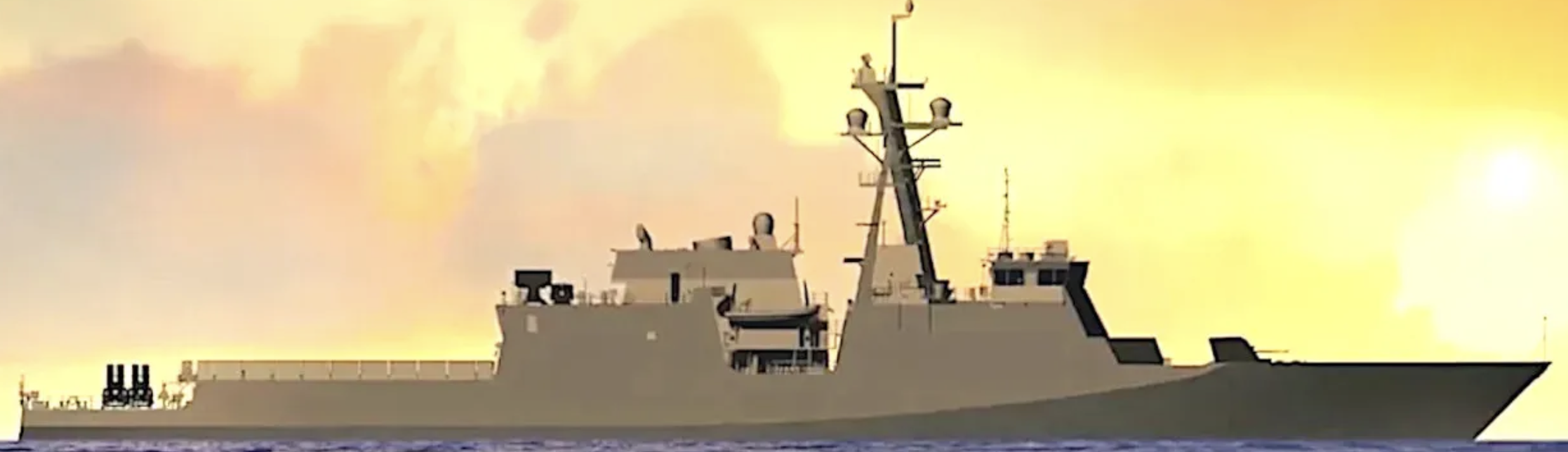
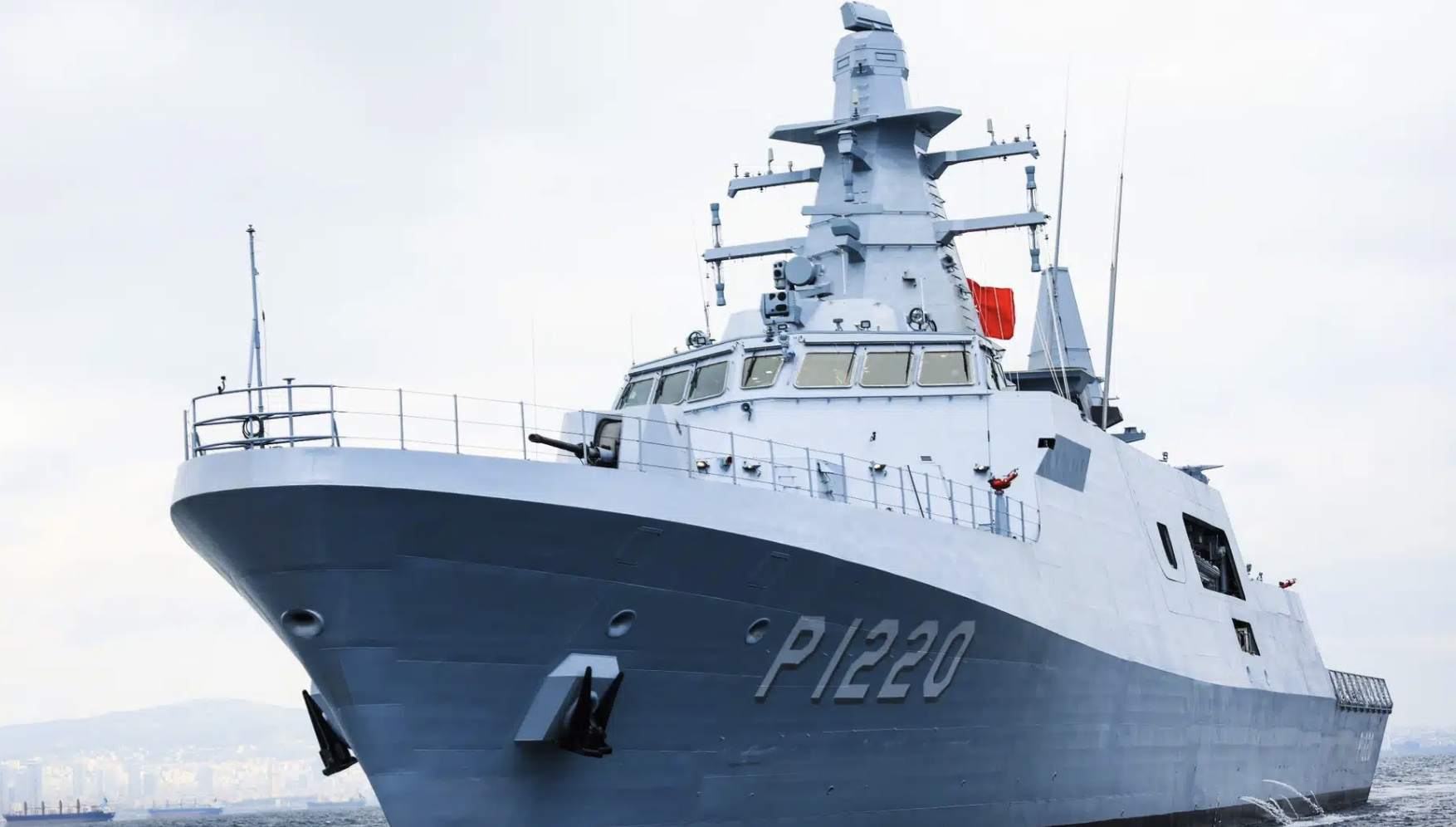
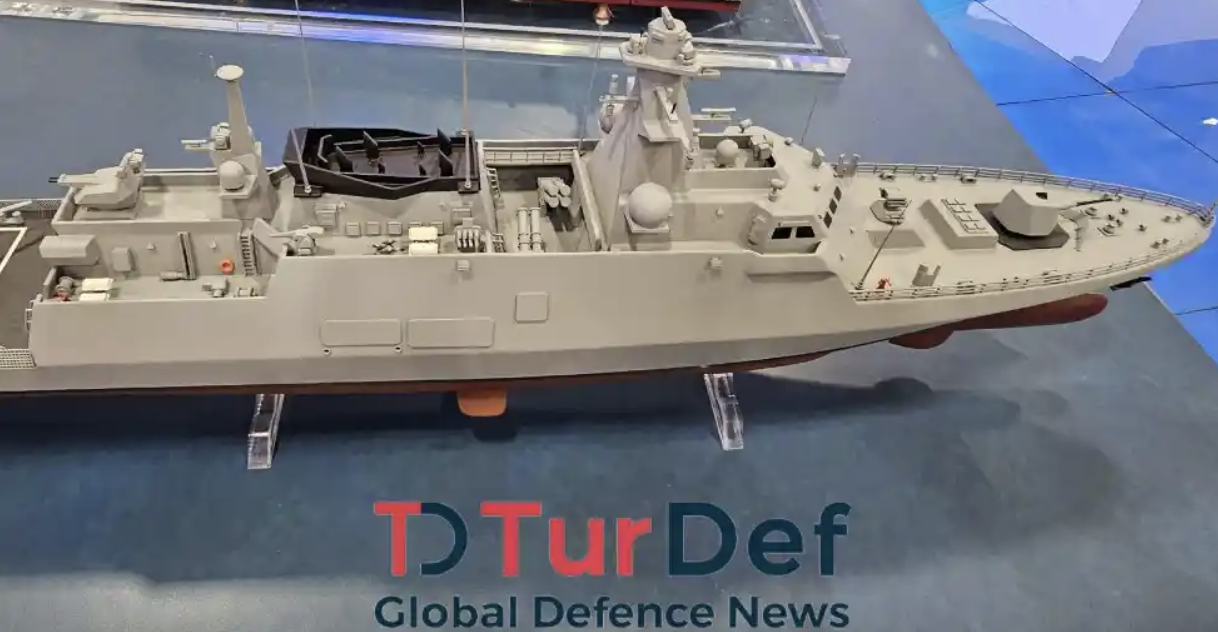
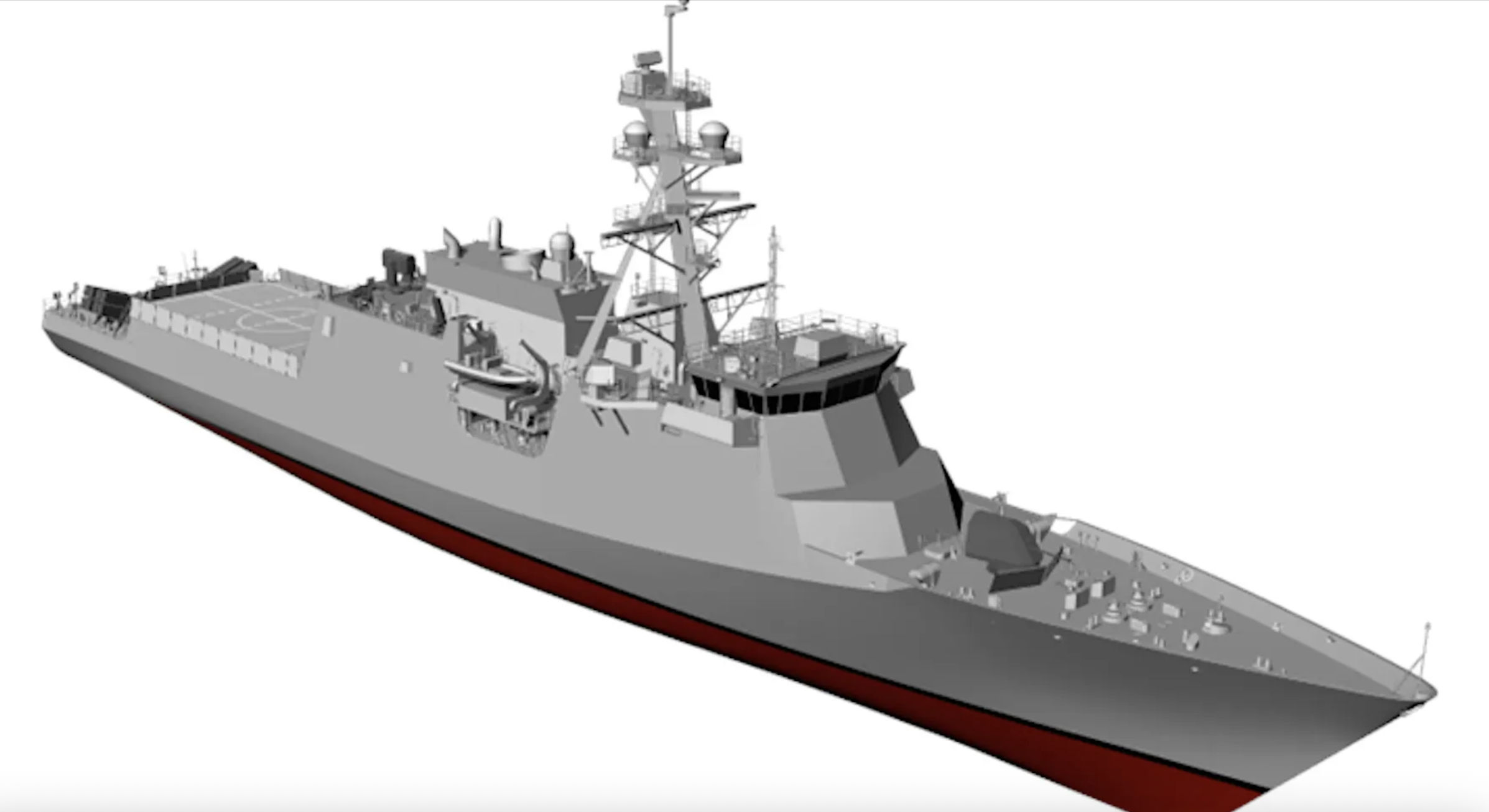
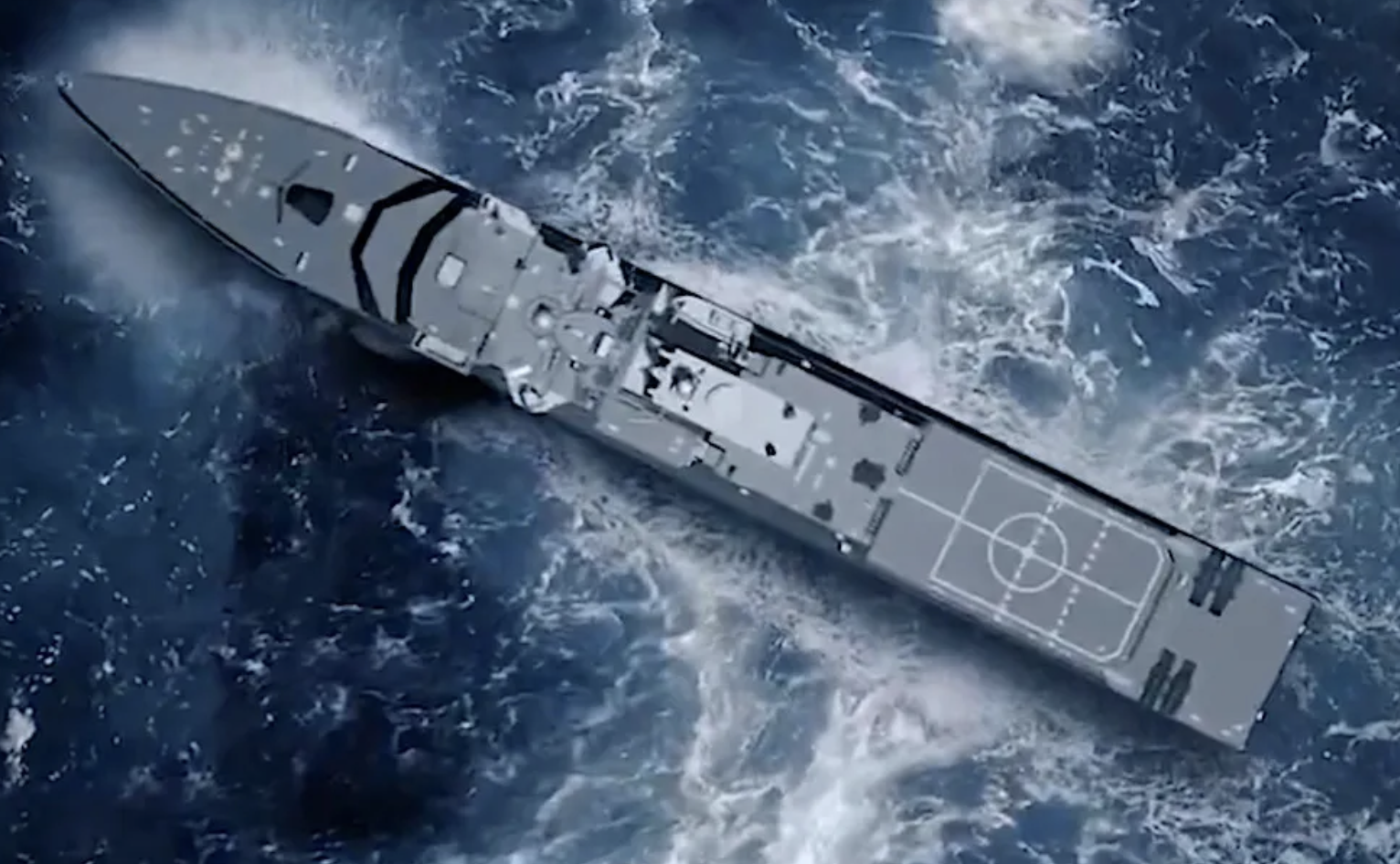
The Colombian Navy took delivery of a new offshore patrol vessel (OPV) on Saturday, January 31.

The future ARC 24 de Julio is the lead ship of a new class of OPVs to be built by Colombian shipyard Cotecmar.

It is a pretty typical OPV, a bit larger than a WMEC270:

  • Length: 93 meters (305 ft)
  • Beam: 14 meters (46 ft)
  • Draft: 3.9 meters (12.8 ft)

“5 out of 6 military branches have elevated GenAI.mil as their go-to enterprise AI platform” –Defense Scoop

A poster at the Pentagon, Dec. 12, 2025, lets employees know that a new artificial intelligence tool is available to use at the War Department, and that employees are highly encouraged to use it. (Credit: C. Todd Lopez, DOW)

Defense Scoop reports,

“Almost two months after the Pentagon deployed GenAI.mil on government desktops across its sprawling workforce, all but one of the military services have formally declared the asset to be their teams’ AI platform of choice.

“In response to questions from DefenseScoop on Monday, a Pentagon official said that there have been “1.1 million unique users” on GenAI.mil to date.”

Guess which armed service is not using this particular AI tool?

Not sure I would want a subordinate to rely too much on AI, but it is sure to be used. My limited experience is that AI tells me something I would have found by googling the question but it doesn’t give me the source of the information so I have less confidence.

Of course I have no experience with GenAI.mil, maybe it is better.

I am also uncomfortable with having Secretary Hegseth standing in for Uncle Sam. Are they going to take down the posters when we get a new Secretary? The poster would be inappropriate for use by the Coast Guard.


B-52s and a Coast Guard Cutter

U.S. Coast Guard Cutter Kimball (WMSL 756) conducts a passing exercise with the Royal Canadian Navy ship HMCS Regina while Kimball patrols the Bering Sea, July 18, 2024. During Kimball’s 122-day patrol, the crew also interacted with strategic partners in Victoria, Canada, strengthening relationships by focusing on shared interests in the Bering Sea and the expanding Artic region. U.S. Coast Guard photo by Ensign James Bongard.

The Indo-Pacific Defense Forum has a report on an exercise that indicates some degree of cooperation between the Coast Guard and the Air Force.

A key drill involved two B-52s simulating a long-range maritime strike. In a display of joint force precision, the bombers received targeting data from the U.S. Coast Guard cutter Kimball and U.S. Navy assets, allowing their crews to acquire targets from a significant distance and simulate a weapons engagement.

“Replacing the Polar Research Vessel Nathaniel B. Palmer” –SixtyDegreesNorth / With CG Icebreakers?

From SixtyDegreesNorth

SixtyDegreesNorth reviews the prospects for replacing the National Science Foundation’s leased Antarctic Research Ship, Nathaniel B. Palmer. Along the way, they suggest that the MPPS100 version of the Arctic Security Cutter appears to be a good candidate to fill this role.

USCGC Healy is already hosting scientific research in the Arctic, so such a role would not be unexpected.

The program name, “Arctic Security Cutter,” suggests these ships would not be used in Antarctica, but I doubt that will be the case.

The article also notes that while Healy is expected to receive a service life extension, it is only expected to add five years to the life of the ship. Having been commissioned in 2000, I presume that means she is expected to be decommissioned in 2035, so if the Coast Guard plans to retain an icebreaker configured for scientific research, it will likely have to  use one of the fourteen currently planned (three Polar Security Cutters, five Davie/Helsinki MPPS 100, and six Bollinger/RMC Multi-Purpose Icebreakers).

The report does seem to indicate that Davie and Helsinki have been awarded contracts for five ships, but while that is anticipated, I don’t think it has happened yet. It may have been pending acquisition of the shipyard in Texas where Davie is expected to build these ships. That deal only closed January 9, 2026.

Davie’s proposal for the USCG Arctic Security Cutter.

“Great Lakes Icebreaking Update” –Sixty Degrees North

Canadian Coast Guard Multi-Purpose Icebreaker (MPI). Source: Seaspan
Note: The MPI image does not show the right propulsors; it will use Steerprop’s contra-rotating propulsors (CRP). Additionally according to Seaspan, the design could easily be upgraded to PC3. Confirmation from Seaspan and Aker Arctic.

Sixty Degrees North provides an excellent overview of what happened in the Great Lakes and St Lawrence Seaway including both the US and Canadian Coast Guards.

There is a particularly interesting paragraph,

“As I reported in the December U.S. Coast Guard Roundup, the U.S. Coast Guard is looking to expand its domestic (i.e. Great Lakes) icebreaking fleet by adding 18 new icebreaker— ten Homeland Security Cutter-Mediums (HSC-Ms) to replace the Bay-class, and seven Homeland Security Cutter-Light (HSC-Ls) to replace its aging 65-foot light icebreaking tugs (WYTLs) and 49-foot buoy utility stern loading boats (BUSLs). There is also a U.S. Coast Guard web page for a Homeland Security Cutter-Heavy (HSC-H), a vessel designed to augment the Great Lakes heavy icebreaker Mackinaw , although there is (as of today) no official Request for Information (RFI).”

The author also speculates,

Interestingly, the Canadian Coast Guard plans on replacing its older light icebreakers with the Multi-Purpose Icebreaker (previously called the Multi-Purpose Vessel). According to the Canada’s National Shipbuilding Strategy, the missions of the MPIs include:

  • icebreaking in the Arctic in moderate ice conditions
  • assisting with shipping and springtime flood control in the St. Lawrence waterway and Great Lakes regions
  • conducting missions involving search and rescue, emergency response, and security and protection
  • maintaining Canada’s marine navigation system, composed of approximately 17,000 aids to navigation

The U.S. Coast Guard is acquiring six Arctic Security Cutters that use the MPI design. It will be interesting to see if any of those vessels end up operating in the Great Lakes. (emphasis applied–Chuck)

These ships (pictured above) are larger and more powerful than USCGC Mackinaw, but are small enough to transit the St Lawrence lock system. Like many Canadian icebreakers, they also include a buoy tending capability.


Norway’s Standard Class Ships

Kongsberg proposal for Norway’s Standard class.

Norway has begun a program to replace “smaller patrol craft, minehunters, light corvettes, and other auxiliaries, spread out over twelve different classes” with two “Standard” classes for both their Navy and Coast Guard.  My guess is that five of the 18 “medium” size and five of the ten “offshore” vessels will go to the Norwegian Coast Guard which is a branch of the Norwegian Navy.

“The standardised vessels dedicated for Coastguard work will have certain modifications, but will also be capable of embarking the modular systems used by the Navy.”

We have two reports from Naval News, apparently news releases from two of the shipbuilders competing for the contract(s). The Ulstein report is much more detailed and is quoted above.

Artist impressions of ULSTEIN’ standard-class designs proposal to the Royal Norwegian Navy. Ulstein image.

Artist impressions of ULSTEIN’ standard-class design proposal to the Royal Norwegian Navy. Ulstein image.

This project is interesting as a joint navy/coast guard project, as a modular systems project, and as a exploitation of what looks to be designs based on offshore industry support ships.

If you were reading this blog back in 2012, you might remember that a Ulstein design offered by Vigor was one of the contenders for the OPC contract.

Vigor’s Ulstein OPC proposal.

We May Be Headed For a Shutdown

US Capital West Side, by Martin Falbisoner

Because the Coast Guard budget is part of the DHS budget, and a lot of people are not happy with what a DHS agency has been doing, there is a good possibility the Coast Guards will not have a budget beginning in February.

This is yet another reason I believe the Coast Guard should be an independent agency. There are already more than 40 independent agencies including the postal service, NASA, and the CIA.

Six of the Coast Guard’s eleven missions, including SAR are not even considered DHS missions.

The Coast Guard has not benefited from being a part of any Secretary level organization. Our budget request was never presented to the Congress without it being balanced first against other department priorities.

Every year it seems the Coast Guard budget has been increased by bipartisan support in Congress. We don’t need a Secretary of the Coast Guard. Coast Guard leaders can represent the Coast Guard without adding another level of bureaucracy.

“U.S. Coast Guard’s cyber defenses have golden opportunity for massive overhaul” –The Watch

Army National Guardsmen and Coast Guardsmen participate in a 2022 U.S. Cyber Command drill in Arkansas. With historic funding, the Coast Guard has an opportunity to bolster its cybersecurity mission. U.S. ARMY NATIONAL GUARD

The NORTHCOM on line magazine, “The Watch” reports,

“The United States Coast Guard has a rare opportunity to make wholesale upgrades to its cybersecurity defenses, a fellow at the Center for Strategic and International Studies (CSIS) proposed in an October 2025 opinion article for the nonprofit think tank in Washington, D.C. Joel Coito, a CSIS defense fellow and U.S. Coast Guard commander, said the window of opportunity has been boosted by $25 billion in congressional funding, the result of rare political consensus among federal lawmakers on the importance of cybersecurity at the nation’s ports and maritime approaches. That consensus should be seized by policymakers to strengthen cyber defenses through bolstering the Coast Guard’s cybersecurity, Coito wrote.”

The post does not provide a link to the CSIS report it quotes but I believe this is it.

The U.S. Coast Guard and the Future of Maritime Cybersecurity

There is a lot of good information on the state of Coast Guard Cyber and the future path it might take including career opportunities.

“Regulatory, legislative, and policy developments have provided the U.S. Coast Guard (USCG) with new cybersecurity tools and expanded authorities to secure the marine transportation system (MTS) from cyber threats. At the same time, budgetary headwinds that historically plagued the service have shifted. With nearly $25 billion of funding in the One Big Beautiful Bill Act, the USCG finds itself in the favorable—if unfamiliar—position of having resource winds at its back. The result? A chance for generational change in safeguarding the maritime cyber domain and bolstering the USCG cyber workforce. This commentary prescribes a path to capitalize on these legislative, policy, and funding wins: confirmation of key USCG senior leaders, enhanced cyber talent management, passage of pending USCG cyber legislation, broader interagency integration of USCG cyber capabilities, and rapid integration of private sector tools.”

Polar Star spends 50th Birthday rescuing a Cruise Ship in Antarctica

USCGC Polar Star (WAGB 10) responds to a request for assistance from an Australian-owned cruise ship, Scenic Eclipse II, stuck in the Ross Sea amid Operation Deep Freeze 2026 on the cutter’s 50th birthday, Jan. 17, 2026. Operation Deep Freeze is one of the more challenging U.S. military peacetime missions due to the harsh environment in which it is conducted and this year also commemorates the Polar Star’s 50th year of service. (U.S. Coast Guard video by Petty Officer 2nd Class Christopher Bokum)

Seems likely this sort of thing will become more common.