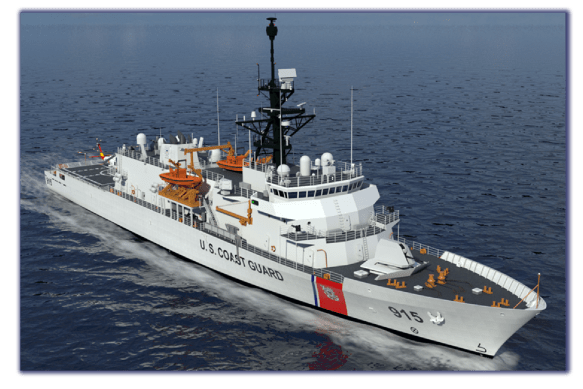
“Report: Additional Actions Needed to Improve Coast Guard’s Commercial Fishing Vessel Safety Efforts” –GAO, Report by gCaptain

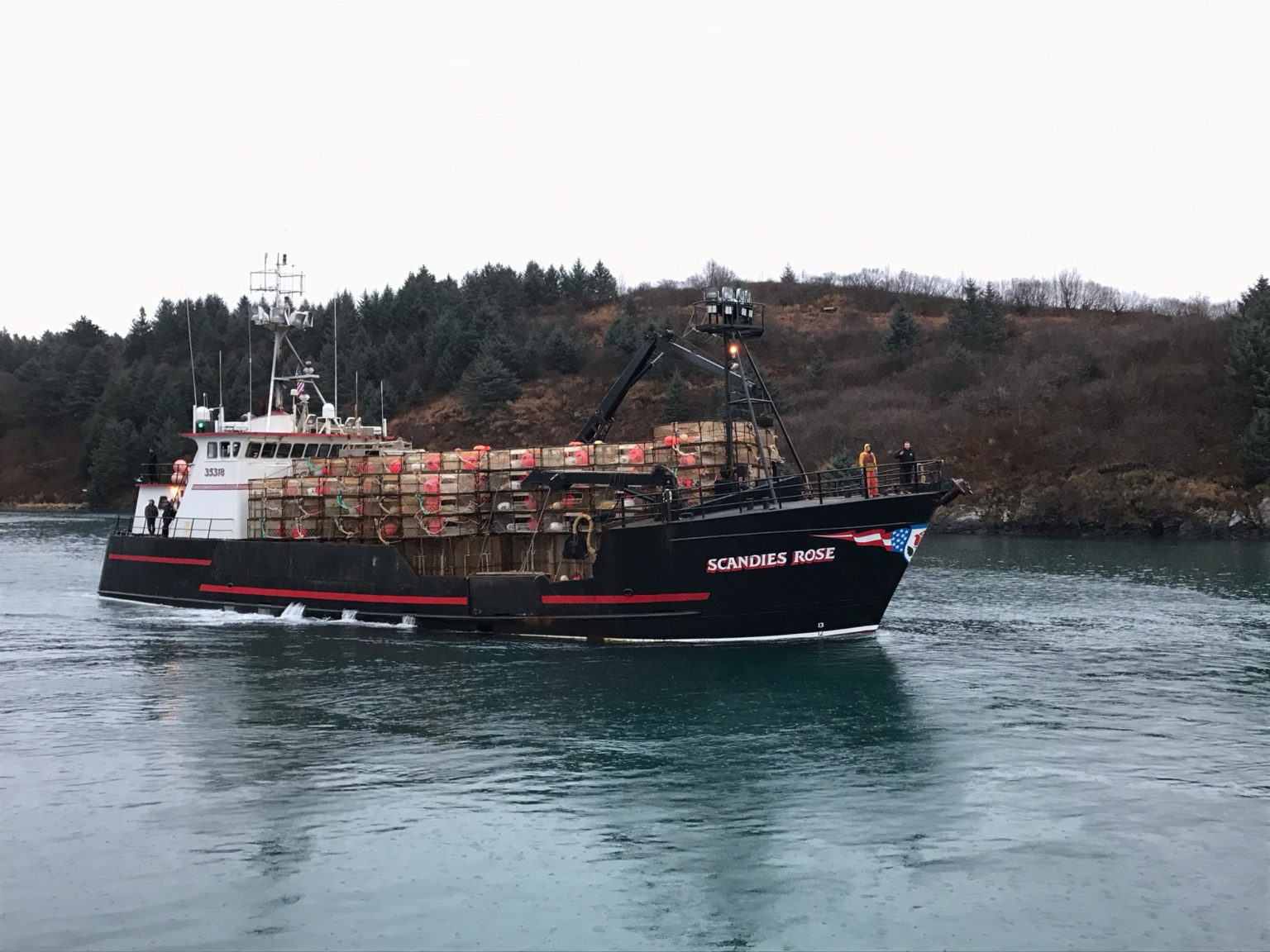
The FV Scandies Rose arriving in Kodiak, Alaska, in an undated photo. The fishing vessel sank off Alaska’s Sutwik Island in 2019, with the loss of five of seven crew members. Source: Gerry Cobban Knagin via NTSB

gCaptain reports,

The GAO report concluded that the while the Coast Guard does make efforts to promote commercial fishing vessel safety, including through conducting dockside exams, engaging with industry, and collaborating with other federal agencies, it has yet to fully implement 17 of 22 statutory requirements enacted over the 10-year timeframe.

Plus there is a lot more.

How Hard Is It to Sink a Ship With Gunfire?

I have made a point of trying to illustrate how hard it is to sink a ship, even a small ship, with gunfire. My most popular post, “What Does It Take to Sink a Ship?,” takes a statistical look at the USN WWII combat losses, and I have published other posts that have looked at this question.

This was to show how inadequate the armament of Coast Guard cutters is, if they are ever called upon to forcibly stop a mediium or large vessel with a determined crew.

What we have, in the video above, is an illustration of the damage that was done to a very tough, but relatively small US Navy destroyer, with a determined crew, that fought agressively against Japanese destroyers, cruisers, and battleships including the Yamato with its 18″ guns which hit the little ship three times.

In this battle, despite very long odds, actually more than half of the small ships survived. Of the six escort carriers (CVEs), three destroyers (DDs), and four destroyer escorts (DEs), five CVEs, one DD, and three DEs survived the assault by four battleships, six heavy cruisers, two light cruisers, and eleven destroyers.

For comparison, Fletcher class destroyers like USS Johnston typically had a full load displacement of 2,924 tons, less than two thirds the size of the NSCs and OPCs or about 50% larger than a 270.


Just Established–Base Astoria, Warrenton, OR

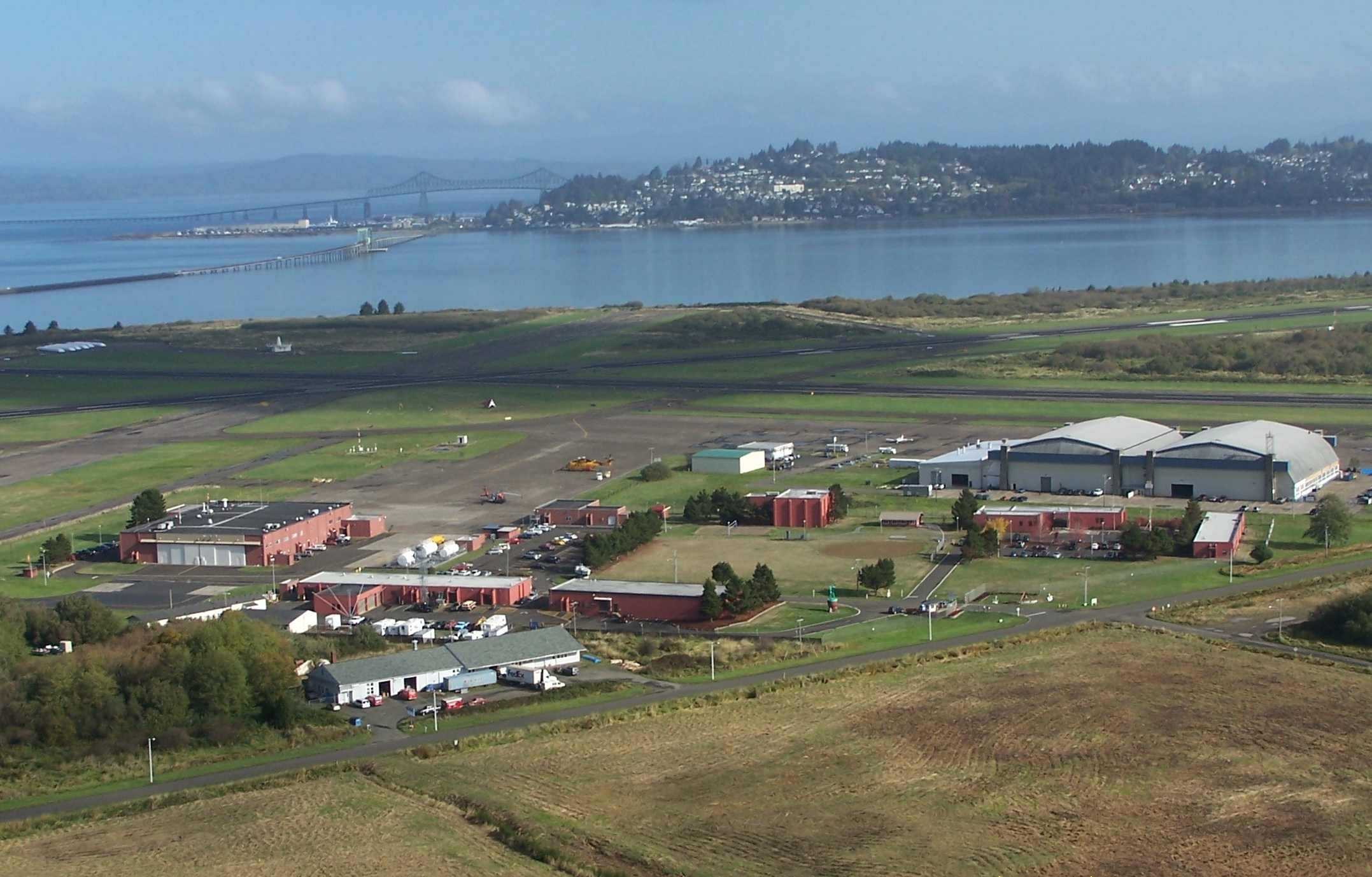
Coast Guard Air Station Astoria

District 13 is getting a new base in Warrenton, Oregon, on the NorthWest corner of Oregon. Warrenton is also the location of CG Air Station Astoria.  A couple of WMECs are (or at least have been) based there. It has been reported at least two Webber class WPCs will be based there in 2024. I suspect, ultimatedly, it will be at least three. Presumably the 210s will leave when the first two OPCs are stationed in Long Beach.

News Release

U.S. Coast Guard 13th District PA Detachment Astori

Coast Guard establishes new unit in Warrenton, OR

Editors’ Note: Click on images to download high resolution version.

ASTORIA, Ore. – The Coast Guard held an establishment ceremony Wednesday in Warrenton to formally establish Coast Guard Base Astoria.

During the ceremony, Cmdr. Todd Wimmer assumed command of the new unit.

Rear Adm. Jon Hickey, the Director of Operational Logistics, presided over the ceremony.

Wimmer previously served as Chief of Facilities at Coast Guard Training Center Petaluma, California, from 2019-2022.

Base Astoria is located in Warrenton and will provide operational logistics support for Coast Guard units across the Thirteenth Coast Guard District’s Oregon and southern Washington regions. 

EURONAVAL 2022

Below is video coverage of the EURONAVAL 2022 trade show, done by Naval News. Below each video is text that accomanied the video on its Youtube page. The highlight for me, was the new 95 meter (312 foot) S. Korean Hundai OPV design, six of which are to be built for the Philippine Navy, discussed in the fourth video.

  • 01:09 – Interview with Admiral Vandier, Chief of Staff of the French Navy
  • 02:48 – PANG next generation aircraft carrier
  • 05:25 – OCEA OSV 315 seabed warfare vessel
  • 06:59 – BAE Systems Adaptable Strike Frigate
  • 10:00 – BAE Systems XLUUV
  • 10:36 – EPC European Patrol Corvette
  • – Nexter new Narwhal RWS fitted with 2 Akeron MP missiles
  • – BAE Systems Kingfisher Stand Off ASW shell
  • – MBDA Exocet MM40 Block 3c and Teseo Mk 2/E
  • – Lacroix new SEAMOSC decoy launcher
  • – Rohde & Schwarz new electronic warfare mast
  • – Thales CAPTAS-4 VDS for the U.S. Navy Constellation-class Frigate
  • 01:04 – General Atomcis’ EMALS and AAG for France’s future aircraft carrier (PANG)
  • 03:18 – General Atomics MQ-9B SeaGuardian for the French Navy’s AVSIMAR Phase 2 MALE UAV requirement
  • 06:54 – Schiebel’s new S-300 CAMCOPTER VTOL UAV
  • 07:24 – TKMS MEKO A-200 EN
  • 08:21 – TKMS MEKO A-300
  • 09:50 – TKMS MEKO A-100 10:15 – TKMS Type 212CD
  • 10:36 – TKMS Advanced Submarine Fuel Cell (ASFC) and Li-Ion battery for submarines
  • 11:20 – Alseamar’s Seaexplorer glider with new ASW payload

K. S. Woo, Senior Vice President of marketing, Naval & Sepcial Ship Business Unit, introduced HHI as the #1 shipbuilder in the world. We then focused on two ongoing programs for the Philippine Navy:

  • – HDP-2200 OPV
  • – HDF-3100 Corvette

Hyundai Heavy Industries signed a contract with the Philippine Department of National Defense on June 27, 2022 for six new 2,400 ton Offshore Patrol Vessels (OPV). In December 2021, HHI announced it won an order to build two 3,200 ton class corvettes for the Philippine Navy.

“Japan starts operations with SeaGuardian drone…” –Defense News

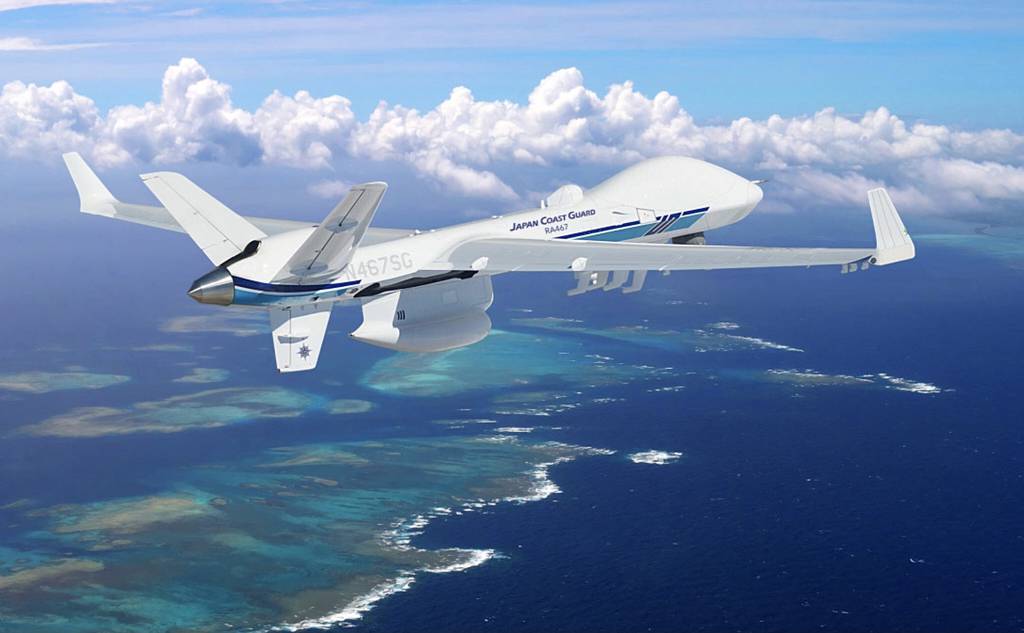
An artist’s rendering shows the Japan Coast Guard’s SeaGuardian drone. (General Atomics Aeronautical Systems)

Defense News reports that the Japanese Coast Guard has begun operational use of the MQ-9B Sea Guardian UAS.

The SeaGuardian features a multimode maritime surface-search radar with an inverse synthetic-aperture radar imaging mode, and an automatic identification system receiver. It is fully compliant with STANAG-4671, which is NATO’s airworthiness standard for unmanned aircraft, and it features a collision-avoidance radar to enable operations in civil airspace.

Combined Maritime Forces

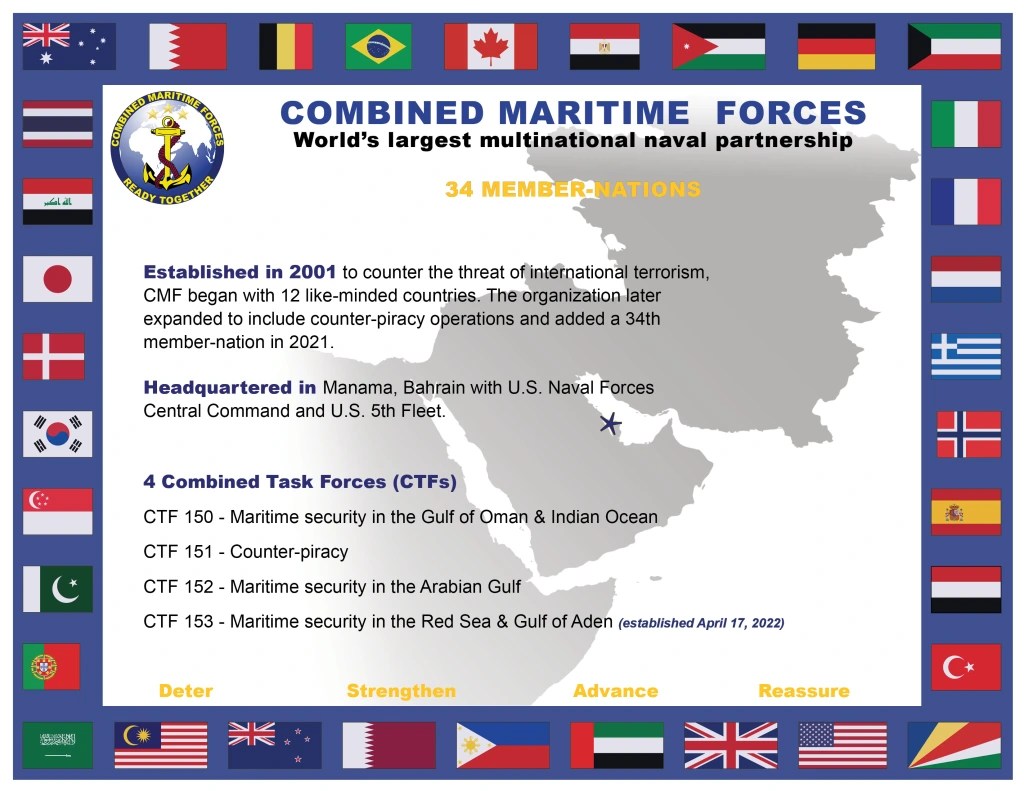
Thought it would be worthwhile to take a look at the Combined Maritime Forces (CMF) website, not just because of what they have been doing, but also because of what they could be, a model for multilateral maritime law enforcement organizations in other areas as well.

Recently we have had reports of Webber class FRCs doing drug interdiction under CTF150.

The CMF News portion of their website has even more USCG stories. These are from only the last six months.

Earlier I proposed a “Combined Maritime Security Task Force Pacific.” CMF could provide a model for creation of similar maritime law enforcemernt task forces in several locations.

CMF is a creation of Fifth Fleet. It has different task forces for different geographic areas. Potentially other geograph fleets could form similar organizations.

  • 7th Fleet might sponsor one CMF task force for the South China Sea and another for Oceania
  • 4th Fleet might sponsor a task force for the Eastern Pacific drug transit zone and another for the Caribbean
  • 6th Fleet one for the Gulf of Guinea

These would be law enforcement alliances which should be more welcomed than military alliances. They might be extended to include SAR, disaster response, and Marine Environmental Protection.

“Eastern Shipbuilding Group Cuts Steel for Fourth U.S. Coast Guard Offshore Patrol Cutter” –Eastern Shipbuilding Group

Below is a news release from Eastern Shipbuilding group.

FOR IMMEDIATE RELEASE, October 18, 2022

Eastern Shipbuilding Group Cuts Steel for Fourth U.S. Coast Guard Offshore Patrol Cutter

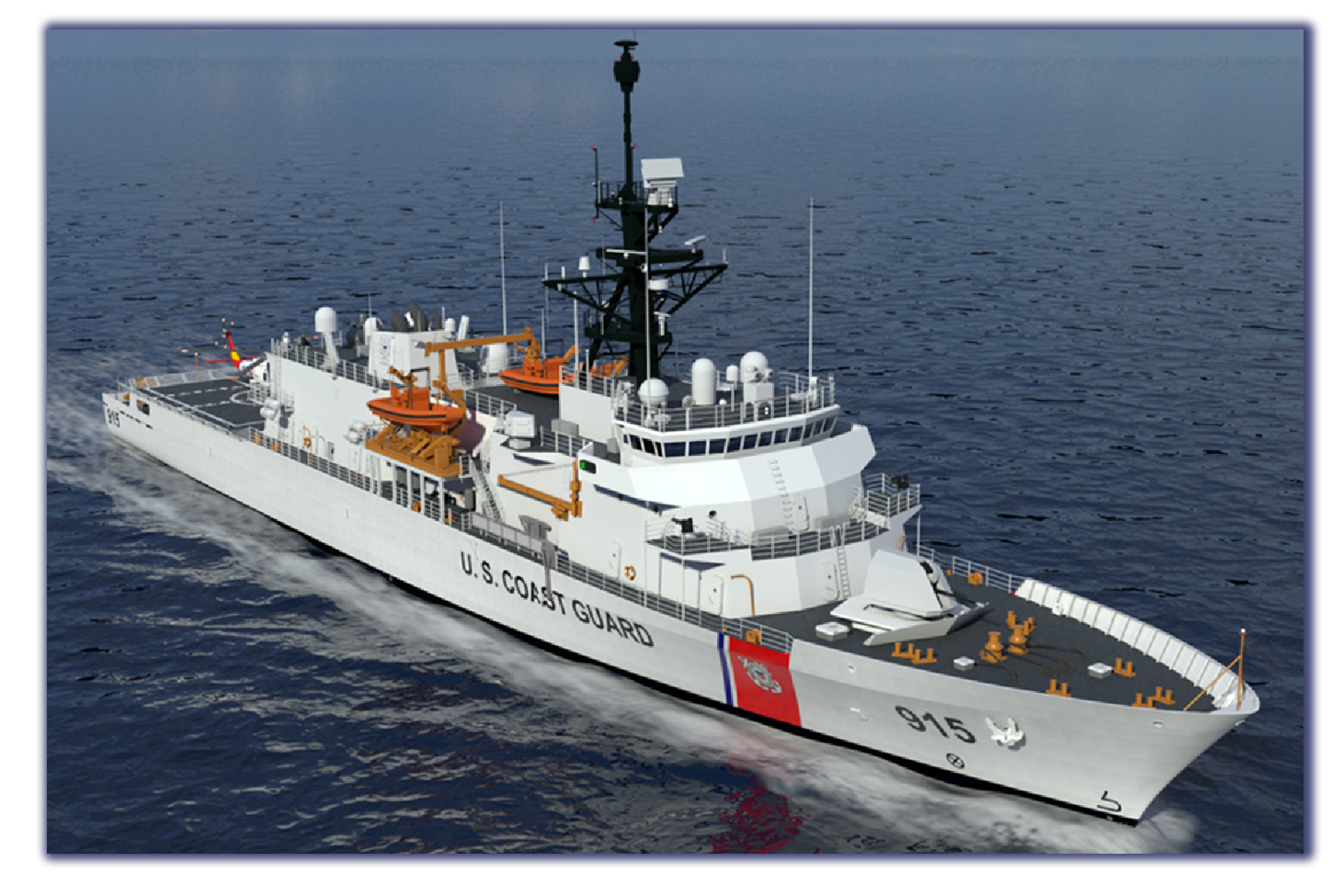
PANAMA CITY, FL – On Monday, October 17, 2022, Eastern Shipbuilding Group, Inc. (ESG) commenced construction of United States Coast Guard Cutter (USCGC) RUSH (WMSM-918) – Hull 4 of the Heritage Class Offshore Patrol Cutter (OPC) program. The occasion was observed by leaders of the United States Coast Guard Project Resident Office at ESG’s Allanton Shipyard where the first steel plates were cut by ESG personnel in the state-of-the-art 103,000 sq ft steel and aluminum processing facility.

“The first four offshore patrol cutters are fully under production for the U.S. Coast Guard thanks to the steadfast commitment of our skilled professionals and partners,” said Joey D’Isernia, President of Eastern Shipbuilding Group. “USCGC RUSH is part of a class of ships that boast multi-mission capabilities and the endurance to carry the men and women of the USCG for more than half a century. With more than 45 years of steel shipbuilding experience we promise the highest quality control, and we look forward to delivering the lead vessel of the class next year.”

In addition, the U.S. Coast Guard modified the contract “with Eastern Shipbuilding Group (ESG) on May 20 so installation of the Athena combat weapons system and multi-mode radar system will be completed during the production phase of the OPC. The Athena system, radar and armament of the OPC are provided to the Coast Guard as Navy type-Navy owned government furnished equipment.

“Prior to this modification, installation of both systems was to occur after contract delivery while each cutter was in its homeport. The Navy has completed development, integration and testing of the Athena and radar systems, enabling the Coast Guard to shift to production-phase installation. Performing this work prior to delivery reduces the technical risks associated with post-delivery installation and delivers mission-ready OPCs to the fleet as soon as possible.”

By implementing these modifications now, ESG expects that it will deliver capability years ahead of a post-delivery integration strategy which is a massive benefit to taxpayers and national security. This additional scope of work results in a new delivery date in 2023 for the lead cutter Argus which is 75% complete. The second OPC is approximately 50% complete, and the third is 25% complete. The fourth OPC is scheduled for delivery in 2026.

USCGC Healy Propulsion Motor Replacement

On Aug. 18, 2020, the U.S. Coast Guard Cutter Healy (WAGB-20) suffered a fire in the ship’s main propulsion motor while on a deployment to the Arctic. The Healy was taken to a dry dock in Vallejo, California, for repair. A replacement motor was stored at the Coast Guard Yard in Baltimore. The spare motor was removed from its storage facility, craned onto a barge and sent through the Panama Canal to the dry dock. Installation of the propulsion motor took approximately a month and required removal of the ship’s dual hulls to complete. U.S. Coast Guard video by Petty Officer 2nd Class Jordan Akiyama and Senior Chief Petty Officer NyxoLyno Cangemi

An interesting video if you have not seen it before. Shows replacement of one of Healy’s main propulsion motors after a fire. Fortunately the Coast Guard had bought a spare when the ship was built. Work was done in Vallejo, CA, in the same yard that has been working on Polar Star.

Thanks to Bill for bringing this to my attention. 


U.S. Coast Guard Ethos

A Coast Guard air crew member helps transport a critically injured child from the helicopter to awaiting emergency medical services at Port au Prince, Haiti, Aug. 15. (Lt. David Steele/Coast Guard)

I don’t remember having an ethos when I was in the Coast Guard. We just tried to do our jobs as best we could, and we were proud to be a part of the service. I am not sure having one published, changes the way we act, but the new Coast Guard Strategy includes a new ethos, which prompted me to compare the old with the new. Have to say, I like the new one better.

The Old Version:

I am a Coast Guardsman.
I serve the people of the United States.
I will protect them.
I will defend them.
I will save them.
I am their shield.
For them I am Semper Paratus.
I live the Coast Guard Core Values.
I am proud to be a Coast Guardsman.
We are the United States Coast Guard.

Ten lines, “I” nine times, “We” once, 57 words.

The New Version:

In Service to our Nation 
With Honor, Respect, and Devotion to Duty 
We protect 
We defend 
We save 
We are Semper Paratus 
We are the United States Coast Guard  

Seven Lines, no “I”, “We” five times, 29 words.

Short and to the point is always better, and I like the shift from “I” to “we.”