“U.S. Coast Guard supports Pacific Partnership 2022 in Solomon Islands” –D14

A D14 news release.

News Release

U.S. Coast Guard 14th District Hawaii and the Pacific

U.S. Coast Guard supports Pacific Partnership 2022 in Solomon Islands

123

Editors’ Note: Click on images to download a high-resolution version.

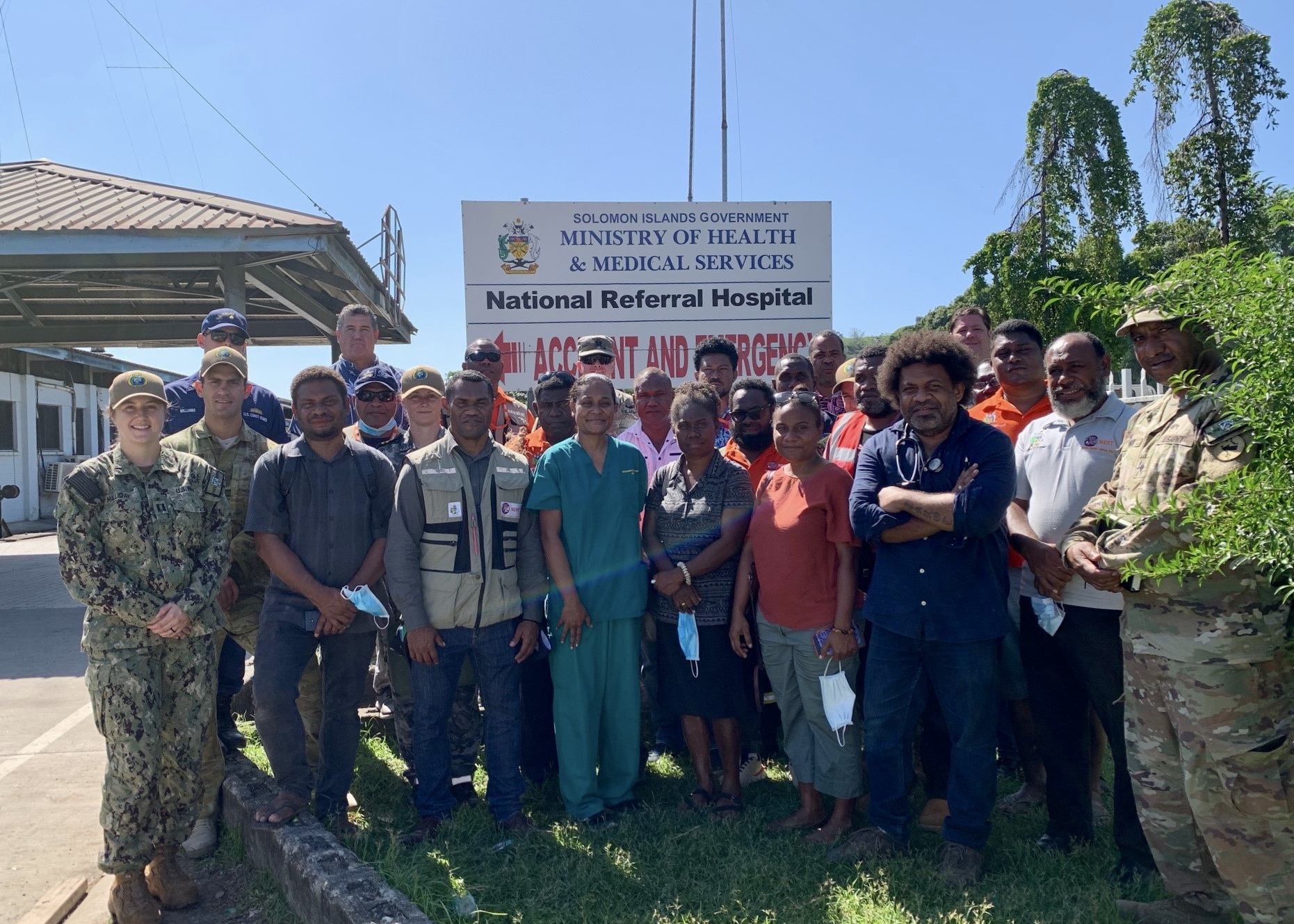
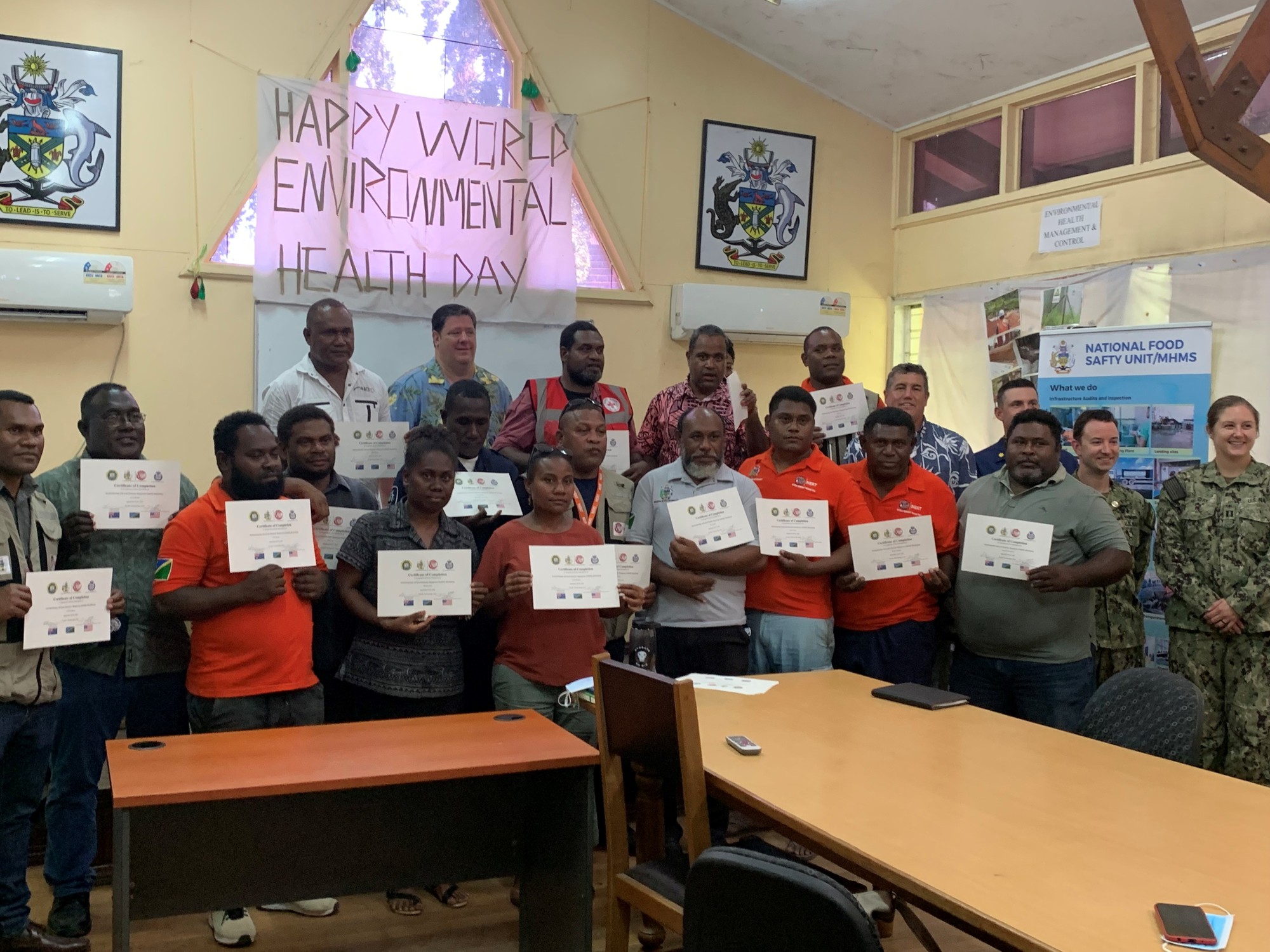
HONIARA, Solomon Islands The Solomon Islands hosted the Pacific Partnership’s Humanitarian Assistance Response Training (HART), a multi-day international humanitarian aid and disaster relief workshop and exercise, in early September.

Coast Guard District Fourteen emergency management response experts partnered with Indo-Pacific Command (INDOPACOM) Center of Excellence in Disaster Management (CFE-DM), USNS Mercy, Solomon Island’s National Disaster Management Office (NDMO), Royal Solomon Islands Police and Fire, and the Solomon Islands National Emergency Response Team (NERT) to corroborate efficient response and coordination for natural disasters, oils spills, and search and rescue (SAR) situations.

The Pacific Partnership originated after the 2004 tsunami in the Indian Ocean and the unprecedented multi-national relief efforts that followed. This incident identified the need for international partnership to prepare for and respond to all traditional natural and man-made disasters as well as non-traditional security threats such as scarcity of critical resources and environmental degradation.

“Pacific Partnership ’22 mission was critical in working with the Solomon Islands National Disaster Management Office to build knowledge, strength and resiliency,” said James Garland, the Coast Guard District Fourteen emergency management expert. “This crucial mission helps each country to strengthen their capabilities and capacity for disaster response and management.” 

Coast Guard District Fourteen subject matter experts shared their technical knowledge on incident command system fundamentals including the command structure utilized to guide and prepare nations and government agencies for efficient incident responses. Coast Guard members also provided an international and joint rescue coordination brief regarding search and rescue (SAR) capabilities in Oceania. The workshop also included discussions on foreign military aid in disaster response, coordination mechanisms to maximize inclusivity, and multi-national roles in humanitarian assistance.

Pacific Partnership is a U.S. Pacific Fleet led mission furthering regional resiliency, interoperability, and security with various partner nations in SE Asia and Oceania. The U.S. Coast Guard looks forward to a continued working relationship and future engagement opportunities with Solomon Island agency partners.

For more U.S. Coast Guard Hawaii Pacific news, visit us on DVIDS or subscribe. You can also follow us on Facebook at @USCGHawaiiPacific, Instagram at @uscghawaiipacific, and Twitter @USCGHawaiiPac.

“Coast Guard ready for Hurricane Ian” –D7

Yahoo News

News Release from District 7 (HQ Miami).

Coast Guard ready for Hurricane Ian

News Release

U.S. Coast Guard 7th District Southeast

Coast Guard ready for Hurricane Ian

Editor’s Note: Click on images to download high-resolution version.

MIAMI — Crews across the Seventh Coast Guard District are prepared to support the State of Florida’s rescue, response and recovery needs following Hurricane Ian’s anticipated arrival, Tuesday.

Hurricane Ian is projected to make landfall as a Category 4 storm with winds estimated to reach between 130 and 156 miles per hour. Additional severe weather risks include storm surge, heavy seas, and rain leading to flooding, and high winds which can cause tornadoes.

Since the start of hurricane season in June, Coast Guard units from South Carolina to the Florida Panhandle, Puerto Rico and the U.S. Virgin Islands have been training and preparing to face any storms this season. Incident Management Teams are stood up at District Seven in Miami, Sector St. Petersburg and Sector Key West, with additional Incident Command System elements activated for Sector Miami and Sector Jacksonville.

This past weekend, Rear Adm. Brendan C. McPherson, commander of the Seventh Coast Guard District and director of Homeland Security Task Force – Southeast, visited the islands of Puerto Rico, St. Thomas and St. Croix in the wake of Hurricane Fiona to ensure the local government and Coast Guard units were supported in storm recovery. Today, McPherson conducted a joint press conference with the State of Florida Governor’s Office in Tallahassee to express the Coast Guard is prepared to support Floridians in facing Hurricane Ian.

“The Coast Guard is here and ready to fully support the State of Florida in our shared response to Hurricane Ian,” said Capt. Nicolette Vaughan, chief of prevention for the Seventh Coast Guard District and IMT Area Commander for the Hurricane Ian incident response team. “Our primary focus is to rescue those in distress. Our next focus will be to reopen the ports affected as soon as possible to ensure vital resources and supplies are delivered where they are most needed.”

At the same time, HSTF-SE units are maintaining an active presence in the Caribbean and Florida Straits to prevent and deter irregular, illegal maritime migration, which can prove even more dangerous and deadly during hurricane season. 

To date, District Seven has repositioned and prepositioned hurricane response units across the State of Florida, pre-staged to surge into impacted areas for lifesaving search and rescue resources, port reconstitution teams and any other maritime infrastructure and emergency respond needs the Coast Guard can provide. These include the following:  

  • Aircraft: 21 rotary wing and 9 fixed wing aircraft able to locate and rescue persons in distress.
  • Cutters: 31 multi-mission search and rescue ships, 4 buoy tenders and 3 construction tenders to service aids to navigation.
  • Flood Response Teams: 40 shallow water response teams able to access those stranded by the storm surge and heavy rain.
  • Personnel: Surging in additional support from across the United States to provide resiliency for continuous operations.

Additional coordination with the Coast Guard Atlantic Area Command, the Eighth Coast Guard District, the Department of Homeland Security and the Federal Emergency Management system, along with other federal, state and local departments like the National Oceanic and Atmospheric Association and the Army Corps of Engineers, will ensure continuous hurricane response support to the State of Florida and other impact areas following the storm. Post storm, crews will take to the water, assessing port conditions, identifying safety concerns to protect mariners and restore the maritime commerce and tourism industries that Florida depends upon.

Residents of Georgia and South Carolina are reminded to remain vigilant as Hurricane Ian’s track may cross the Florida Peninsula and continue up the eastern sea

Up-to-date weather information can be found at https://www.weather.gov/.  If you are in an evacuation or flood zone, follow the instructions from local emergency managers, who work closely with federal, state, local, tribal and territorial agencies and partners. They will provide the latest recommendations based on the threat to your community and appropriate safety measures. Visit https://www.ready.gov/hurricanes for more information on how to prepare for hurricane season. 

Para mantenerse actualizado sobre la Huracán Ian en Españoloprima aquí

Updated port conditions for hurricanes and tropical storms can be found at https://homeport.uscg.mil/. For more information about hurricanes and hurricane preparedness, visit NOAA’s and FEMA’s websites where you can find widgets that provide hurricane tracks and other updates. These can be found at www.ready.gov/hurricaneswww.nhc.noaa.gov, and www.fema.gov.  

As a reminder, people in distress should use 911 to request assistance whenever possible, or VHF radio channel 16 for mariners. Social media should not be used to report distress. 

The Air Force’s New Ship Killer (QuickSink) with Torpedo Like Effects

The first Air Force Research Lab video above talks about a new weapon, but it is also recognition of a new threat.

Let’s talk about what is wrong with the scenario in the video, how the Coast Guard could use this new weapon, along with the “Rapid Dragon” delivery system, and why the Coast Guard not only could, but should be the agency to use this weapon against this particular threat.

The Scenario:

NORTHCOM is worried about the cruise missile threat to the continental US, including the possibility of large numbers of missiles launched against priority targets.

“Conventional cruise missiles or hypersonic cruise missiles, low-radar cross-section cruise missiles, cruise missiles from Russia, cruise missiles from China, potentially other countries. Cruise missiles that can be launched from undersea, from 100 miles-plus off the coast. Cruise missiles from on the sea. … Cruise missiles from the air. Cruise missiles from commercial vehicles launched out of a container that can be masked as part of the commercial ship. (emphasis applied–Chuck)

The video shows a ballistic missile being preped for launch from a container. That is possible, but cruise missiles are more likely. In any case, potential actions to stop the launch would be the same.

In the video we see a Navy P-8 Maritime Patrol Aircraft monitoring the activities of a suspicious container ship. Presumably the war has not started since they don’t call for an Air Force fighter to bring in the weapon until the P-8 sees a launcher being elevated for missile launch. This is really too late to call the Air Force. Before the Air Force can get a fighter on scene, the missiles will have been launched. The aircraft monitoring the ship’s activity should be able to immediately initiate countermeasure. The P-8 Poseidon is capable of carrying Anti-Ship Cruise missiles of 725 kg (1,598 lb). It might be able to deploy the QUICKSINK weapon seen in the video which is based on a 2,000 pound bomb. It could certainly deploy a similar weapon based on the 1000 pound bomb. The problem is that, at this stage in the run-up to war, P-8s should be looking for submarines that might also launch cruise missiles, and fighter aircraft don’t have the endurance to loiter on scene waiting for something to happen. They would also be needed to intercept any cruise missiles that are launched.

The Weapon:

In the actual sinking, this was a big bomb used against a small ship, but the key to its effectiveness what where it exploded.

The weapon is discussed here, “Air Force destroys target vessel with ship-killing JDAM.” It clearly is intended to exploit the non-compressibility of water to allow a weapon that would not normally immediately sink a ship, if it hit above the waterline, to break the ship in half.

“In a September 2021 interview with Military.com, Meeks said one of the bomb’s modifications was a redesigned nose plug. This is intended to keep the bomb from veering off in an unintended direction if it hits the water before the target, which Meeks likened to skipping a stone across the surface of a pond.”

There is additional information about the seeker here, including how it works (GPS to get to the general area, then radar, and imaging IR), expected cost (substantially less than $1M for the all up rounds bought in quantity), and range (15 miles, potentially more with range extending wing kits).

As I have pointed out numerous times, no other non-nuclear weapon equals a modern torpedo’s ability to sink a ship. Apparently the Air Force agreed and decided to develop a weapon that would kill a ship in the same way a modern torpedo does, by detonating under water, preferably below the keel, rather than by directly hitting the target above the waterline. Looking at the videos, it appears the bomb enters the water, almost vertically, close to the port side. We see the familiar lift of the center section as we have seen many times when a Mk48 torpedo is used against a surface target, after which the ship breaks in half. For comparison, here is a destroyer hit by a Mk48, and a Mk48 torpedo’s warhead contains far less explosive than a 2000 pound bomb.

The Launch Platforms:

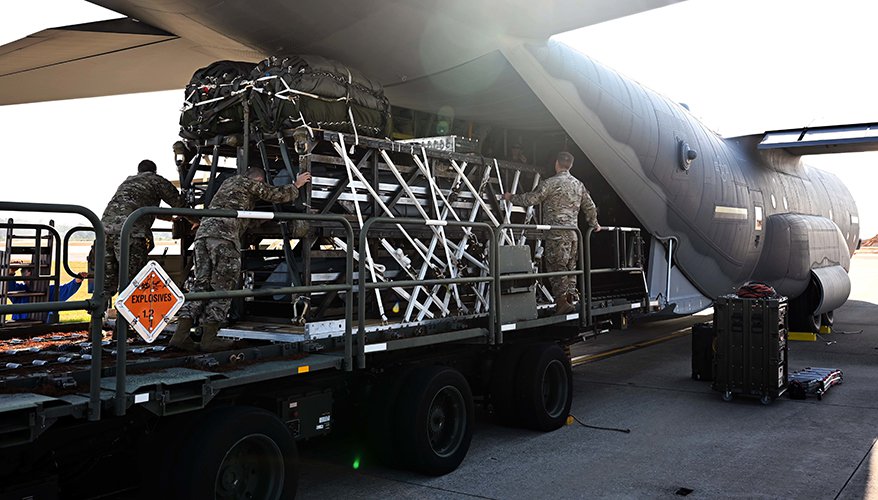
The weapon can be used on a wide variety combat aircraft. The video shows and F-35 and the actual test was done with an F-15, but there is no reason this could not In fact be dropped from a Coast Guard fixed wing using the “Rapid Dragon” concept.

Rapid Dragon hardware being loaded on a C-130. USAF photo.

Why Coast Guard?:

It is not that the Coast Guard will necessarily be the only ones doing this mission, but the Coast Guard does seem to be particularly well suited for the purpose.

If we are to keep watch on vessels off the US coast in the run up to war, you want aircraft with long endurance. You want excellent communications. You want good electro optics so that you can watch what is happening on a ship from outside the range of shoulder launched air defense systems (MANPAD). You get all that with Coast Guard fixed wing aircraft equipped with the Minotaur system. Using Air Force’s QUICKSINK modified JDAM from the Rapid Dragon launcher means we can have a single unit that can remain on station for an extended period, observe the actions of target of interest, communicate effectively, and if necessary promptly eliminate a threat while freeing other assets like the P-8 and fighters to do jobs only they can do.

It would not be necessary for the Coast Guard to store the weapons or arm the aircraft if a agreement could be reached allowing DOD facilities to load the Rapid Dragon and weapons. Actually targeting would be done by DOD assets anyway. It appears this mission could be performed, even to our smallest fixed wing, the HC-144.

Is it doable?:

A recent report suggests that it is. Lt. Gen. James Slife, who leads Air Force Special Operations Command said, “It doesn’t require any aircraft modifications, it doesn’t require any special aircrew training.”

Might be of interest to compare the amount of ordanance used in this SINKEX. It should be recognized that this retired USN frigate was probably a larger, more resilient target than the one used in the “QUICKSINK” demonstration, but I suspect, if QUICKSINK had been used agains the frigate, the results would have been the same, though it probably would have taken the two halves of the ship longer to sink.

“Coast Guard arrests boater near Venice, Louisiana” After Firing on CG Helicopter –D8

Fortunately this sort of thing does not happen very often. 

News Release

U.S. Coast Guard 8th District Heartland

Coast Guard arrests boater near Venice, Louisiana

NEW ORLEANS— Coast Guard Investigative Service arrested a boater near Venice, Louisiana, Friday who allegedly fired a weapon at a Coast Guard rescue helicopter.

Coast Guard Eighth District watchstanders initially received a distress signal early Thursday morning from an activated emergency position indicating radio beacon (EPIRB) belonging to a 40-foot sailing vessel approximately 75 miles south of Southwest Pass, Louisiana. Watchstanders coordinated the launch of a Coast Guard Air Station New Orleans MH-60 aircrew to respond.

Upon arriving on scene, the aircraft attempted to lower a radio down to the vessel and observed one person and two dogs aboard the vessel. The person then pointed what appeared to be a firearm at the helicopter. The aircrew heard objects striking the aircraft and immediately departed the scene due to aircraft and crew safety concerns. Upon  returning to Air Station New Orleans, the aircrew observed impacts to the helicopter rotors consistent with projectiles from a firearm.

The Coast Guard then dispatched a fixed-wing aircraft, a cutter with Coast Guard Investigative Service (CGIS) and Federal Bureau of Investigation agents aboard, and a 45-foot Response Boat- Medium (RB-M) boatcrew to track the vessel’s movement. Additionally, Coast Guard units remained in the vicinity of the vessel to ensure the protection of nearby mariners.

On Friday morning, the Coast Guard took the person into custody without incident. The person was successfully transported to Venice, Louisiana, and transferred to CGIS.

“Safety of life was our number one priority during this challenging incident,” said Lt. Phillip VanderWeit, spokesperson for the Eighth Coast Guard District. “Through the professional and skillful work of our crews and interagency partners, we were able to bring this incident to a peaceful resolution. The Coast Guard will continue to work across multiple levels of government to thoroughly investigate this incident.”

The incident remains under investigation.

“HITRON received recognition at 2021 U.S. Interdiction Coordinator Awards” –MyCG

My CG reports on national recognition for a particularly difficult interdiction of two go-fast boats. Good story.

HITRON received recognition at 2021 U.S. Interdiction Coordinator Awards

By Annie Sheehan, MyCG Staff Writer  

The Coast Guard Helicopter Interdiction Tactical Squadron (HITRON) — the world’s premier counter-drug Airborne Use of Force (AUF) Unit — received recognition from White House Office of National Drug Control Policy (ONDCP) Director Dr. Rahul Gupta at a United States Interdiction Committee (USIC) Awards Ceremony in the Maritime Award category as a result of a major interdiction last August.

“It was probably the most challenging interdiction out of the 15 total that I have been involved with,” said Cmdr. Matthew Van Ginkel, who has served with HITRON Jacksonville, Florida, for about a decade.

Just before dawn on Aug. 30, a MH-65D helicopter — also known as “Endgame-59”— launched from the Coast Guard Cutter Tampa to locate a reported vessel of interest underway in the Caribbean Sea. After a difficult nighttime search, Van Ginkel and his crew detected two suspicious vessels traveling in tandem as he piloted the helicopter.

As the aircraft intercepted both vessels in complete darkness, the two suspected smuggling vessels split off in different directions.

The first vessel sprinted toward the Dominican Republic territorial seas, and a suspect aboard began to throw contraband into the water before attempting to evade interception.

For 20 minutes, Van Ginkel and his aircrew pushed the MH-65 helicopter to its limits as they tried to match the vessel’s rapid maneuvering in complete darkness. On two occasions, the aircrew recognized the early onset of aerodynamic factors that severely affected control of the helicopter and recovered at less than 50 feet above the water.

“This crew of three had 22 total combined deployments,” said Cmdr. Charlie Wilson, HITRON’s executive officer. “This was undoubtedly one of our most experienced aircrews out there conducting this interdiction, and it was even at their limits.”

During a brief moment where the helicopter aligned with the evasive vessel, Petty Officer 2nd Class James Peragine prepared for disabling fire. However, he disengaged when he noticed the suspect move into his view.

After quick deliberation, the aircrew determined the only way to force the vessel to stop before reaching territorial seas was to deliver disabling fire to a very small portion of the vessel’s outboard engines.

As Van Ginkel stabilized the helicopter, Peragine effected disabling fire, which caused the vessel to stop. The aircrew did the same to stop the second vessel.

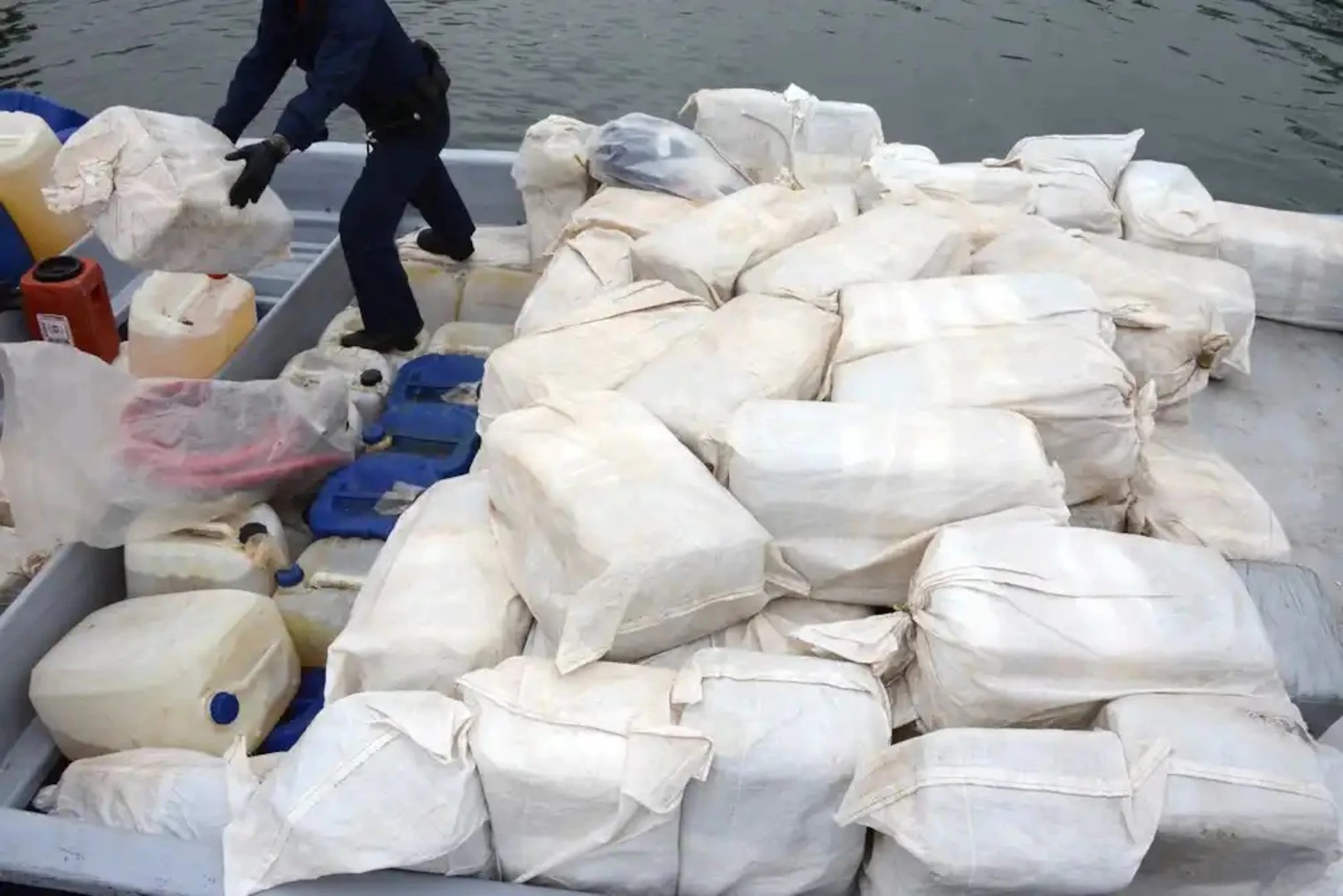
The crew recovered the jettisoned bales of contraband, netting over 1,500 kilograms of cocaine, and detaining seven suspected narco-traffickers between the two vessels.

“The challenging nature of this interdiction is a testament to how well HITRON and the Coast Guard have advanced this mission set to interdict non-complaint vessels in the most difficult environmental conditions,” said Wilson.

This crew was one of more than 100 that the White House Office of National Drug Control Policy panel received from across the counterdrug law enforcement community. The Coast Guard was the only military branch who received recognition at the 2021 USIC Award ceremony for Maritime Interdiction.

“It was a true honor to be recognized for that award,” said Van Ginkel. “And it was also an honor to be recognized on the White House grounds in the White House.”

Since 1999, HITRON has successfully conducted 825 interdictions and detained 2,687 suspected smugglers. The unit’s sole mission is to interdict vessels suspected of illicit smuggling throughout the transit zones across the Caribbean Sea and throughout the eastern Pacific Ocean. HITRON’s drug interdiction last summer is just one of many examples of their achievements to keep our waters safe and the nation secure.

“U.S. Coast Guard presents USS Hershel “Woody” Williams crew with the Coast Guard Special Operations Service Ribbon” –LANTAREA/ESBs and the Coast Guard

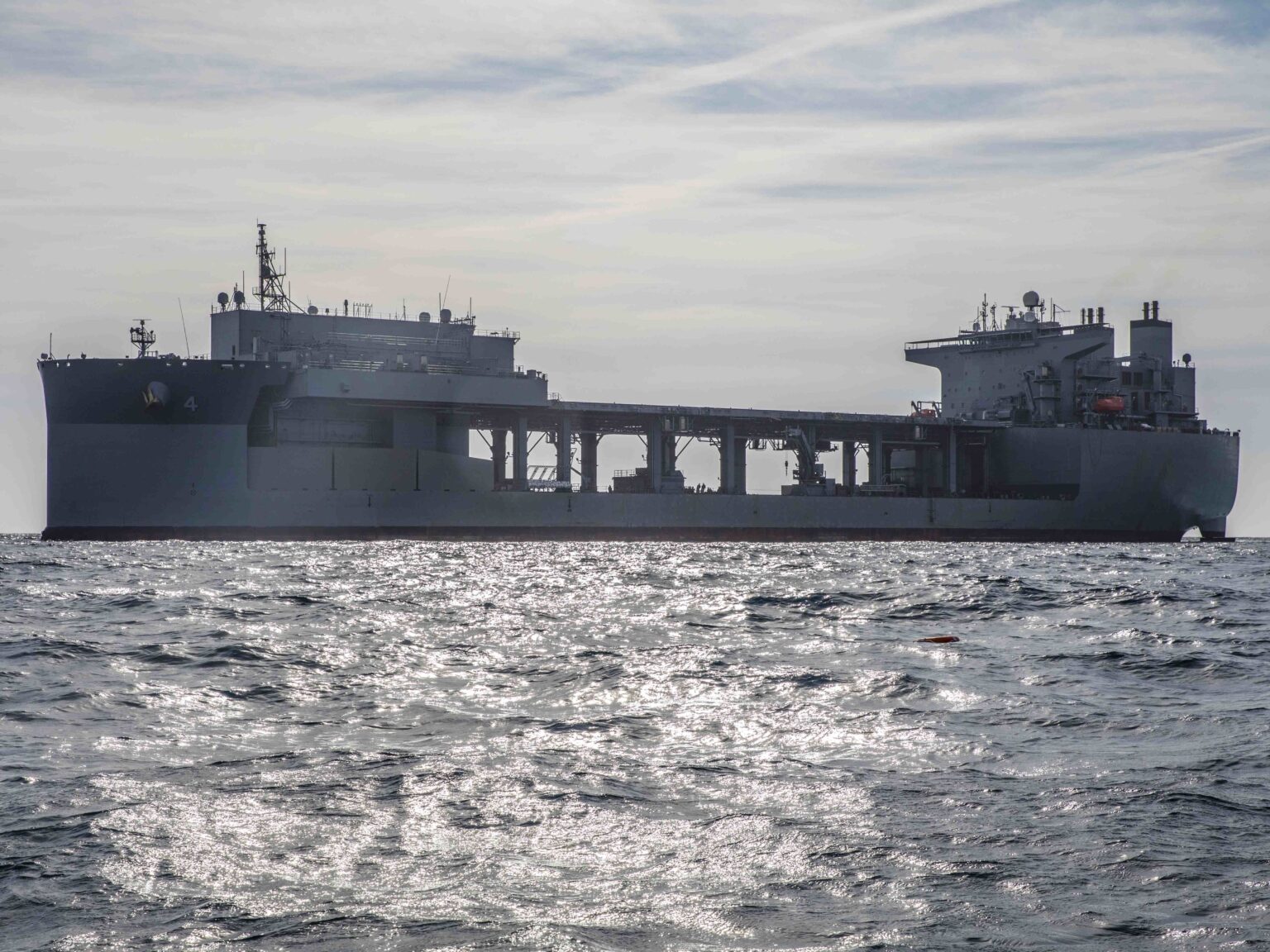
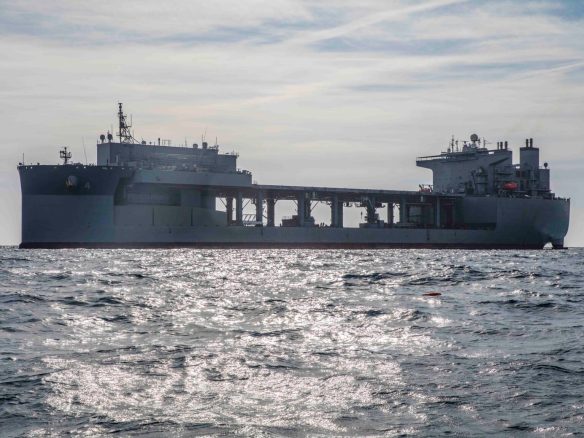
ADRIATIC SEA – (Feb. 19, 2022) The Expeditionary Sea Base USS Hershel “Woody” Williams (ESB 4) sails the Adriatic Sea, Feb. 19, 2022. Hershel “Woody” Williams is on a scheduled deployment in the U.S. Sixth Fleet area of operations in support of U.S. national interests and security in Europe and Africa. (U.S. Navy photo by Mass Communication Specialist 1st Class Fred Gray IV/Released)

Below is a news release from Atlantic Area. This is more evidence of the Coast Guard’s interest in helping the nations of West Aftrica, particularly those around the Gulf of Guinea. The unit used for the mission is a bit unusual. USS Hershel “Woody” Williams (ESB 4) is a Lewis B. Puller-class expeditionary sea base. 

These ships are unusual in that they have small hybrid civilian/regular Navy crews. They are commissioned Navy ships, not MSC. They might be thought of as large mobile warehouses. They have a lot of space and equipment for moving things around. They are doing a lot of work with unmanned systems and mine countermeasures. They are also expected to be useful in disaster response. They have a large flight deck and hangar. You could probably base four Coast Guard MH-60s on one of them. In wartime, they might provide air cover for convoys, much like the escort carriers of WWII (not that the Navy has floated this idea). How they ultimately get used, is still open to imaginative thinking.
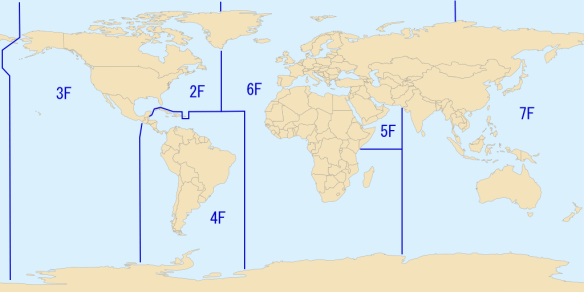
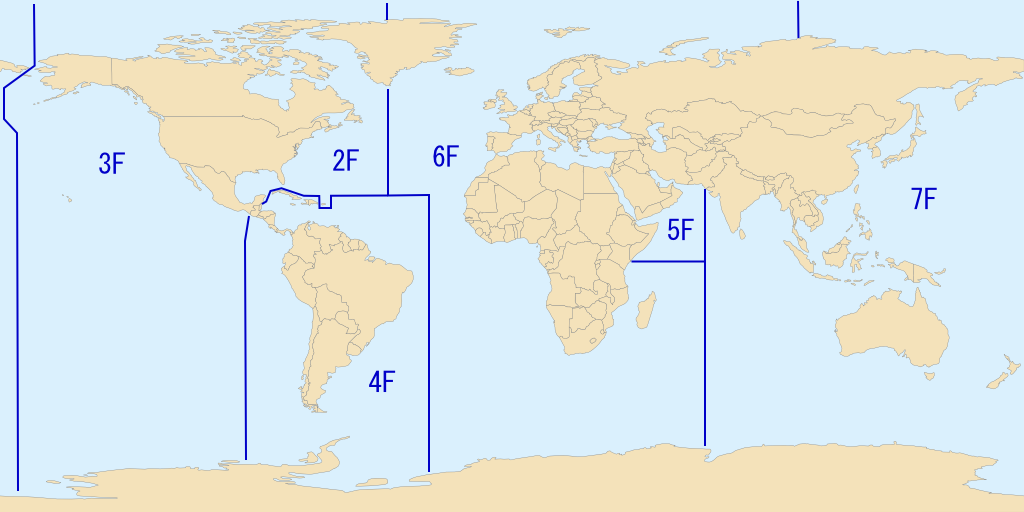
US Navy Fleet Organization

The observed pattern suggests, one ESB will be assigned to each of the six active numbered Fleet Commands with specific geographic responsibilties, with the probable exception of 2nd Fleet (Western North Atlantic Ocean). Currently five Expeditionary Sea Bases (ESB) are planned. Three have been delivered and two are on the way.

  • USS Lewis B. Puller (ESB-3) is assigned to 5th Fleet
  • USS Hershel “Woody” Williams (ESB 4) is assigned to 6th Fleet
  • USS Miguel Keith (ESB-5) is assigned to 7th Fleet

The Coast Guard’s Patrol Forces SW Asia (PATFORSWA) is almost certainly already working with USS Lewis B. Puller (ESB-3), based in Bahrain.

USS Miguel Keith (ESB-5) is based in Saipan, very near the three Webber class FRCs and buoy tender based in Guam. She may be helpful in Coast Guard efforts in the Western Pacific.

The two yet to be delivered ESBs may also be working with the Coast Guard. An ESB assigned to 4th Fleet could assist the Coast Guard’s drug interdiction efforts in the Eastern Pacific and a 3rd Fleet ESB could help IUU and other law enforcement and capacity building efforts in the South Central Pacific. They might serve as mother ships for patrol craft or as bases for UAVs.

News Release

U.S. Coast Guard Atlantic Area

U.S. Coast Guard presents USS Hershel “Woody” Williams crew with the Coast Guard Special Operations Service Ribbon
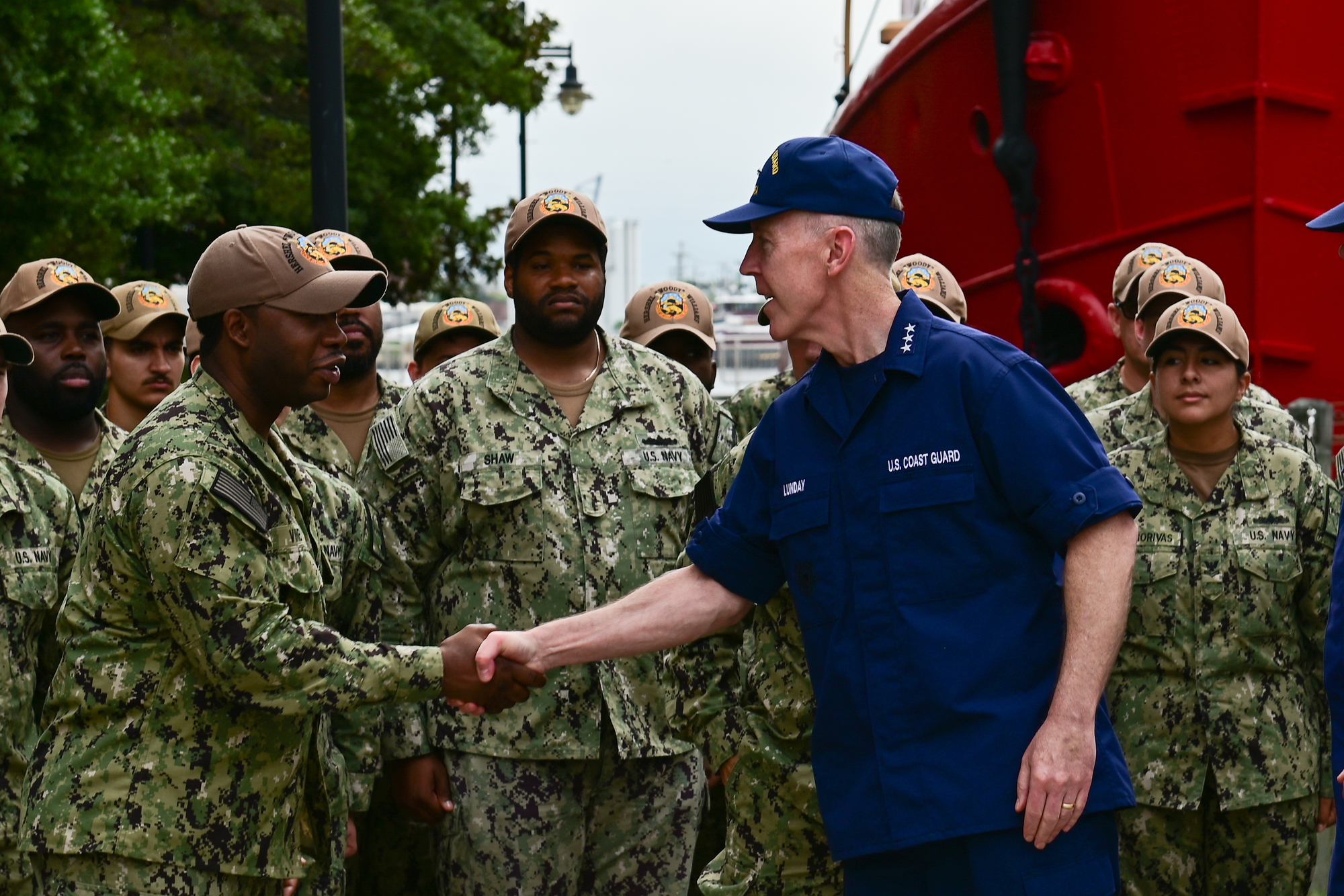
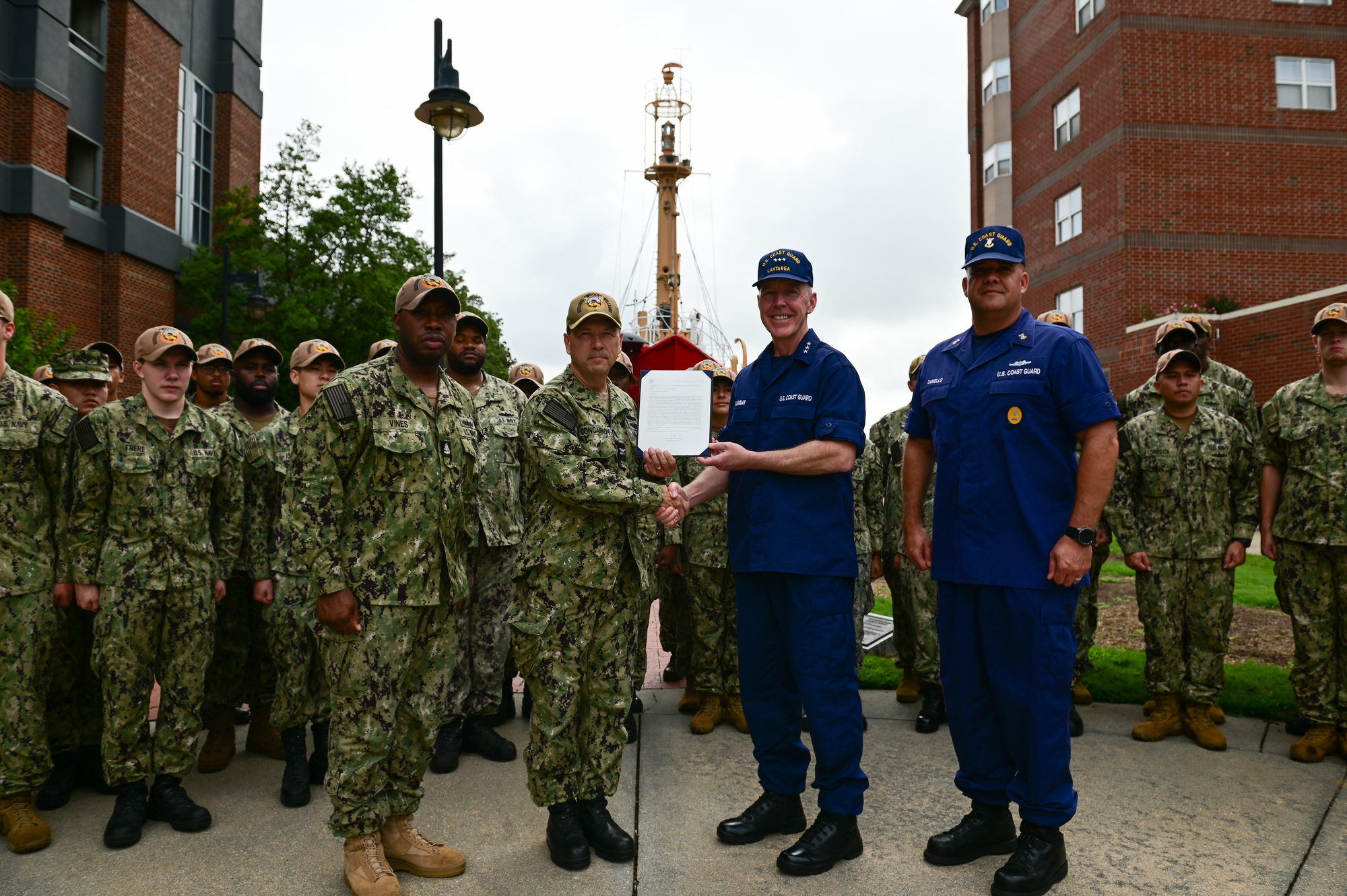
Vice Adm. Kevin Lunday, commander, U.S. Coast Guard Atlantic Area, meets with the crew of USS Hershel Vice Adm. Kevin Lunday presents the Coast Guard Special Operations Service Ribbon to the crew of USS Hershel

Editors’ Note: To view more or download high-resolution imagery, click on the photos above.

PORTSMOUTH, Va. — Vice Adm. Kevin E. Lunday, commander of U.S. Coast Guard Atlantic Area, presented the Coast Guard Special Operations Service Ribbon to the crew of USS Hershel “Woody” Williams (ESB 4) during a ceremony at the Portsmouth Lightship, Monday, Aug. 22, 2022.

The Coast Guard Special Operations Service Ribbon is awarded to personnel of the U.S. Armed Forces who participated in Coast Guard operations of a special nature, not involving combat.

Capt. Michael Concannon, gold crew commanding officer of Hershel “Woody” Williams, accepted the award on behalf of the crew.

In April, Hershel “Woody” Williams completed a deployment in support of U.S. Naval Forces Africa, conducting a wide range of operations including counter-narcotics and combatting illegal, unreported, and unregulated fishing in the waters off of Africa’s Atlantic coast.

During the deployment, Hershel “Woody” Williams operated with an embarked Coast Guard law enforcement detachment as well as maritime forces from Cabo Verde and Sierra Leone. With the support of the embarked partner forces, U.S. personnel were able to assist with law enforcement operations within each partner’s respective territorial waters.

The joint and combined U.S.-African team conducted a counter-narcotics boarding of a fishing vessel, which resulted in the seizure of approximately 6,000 kilograms of suspected cocaine and transferred seven suspects to Cabo Verde officials.

Additionally, Hershel “Woody” Williams and the embarked Coast Guard law enforcement detachment supported the interdiction of a fishing vessel illegally operating within the exclusive economic zone of Sierra Leone. The vessel and its crew were escorted into port and transferred to Sierra Leonean authorities.

“I’m proud of the superior operations and mission outcomes by the crew of USS Hershel “Woody” Williams,” said Lunday. “This collaboration between the U.S. Coast Guard, U.S. Navy, and our African partners highlights the capabilities of America’s maritime services and our ability to aid partner nations as they seek to build their maritime security and economic prosperity.”

Coast Guard tactical law enforcement teams are made up of deployable law enforcement detachments, which provide specialized law enforcement and maritime security capabilities to enforce U.S. laws across the full spectrum of maritime response situations, as well as maritime security augmentation to designated elements of other U.S. government agencies in support of Coast Guard, national security, and law enforcement operations in the maritime environment.

The U.S. shares a common interest with African partner nations in ensuring security, safety, and freedom of navigation on the waters surrounding the continent, because these waters are critical for Africa’s prosperity and access to global markets.

Deployment of Hershel “Woody” Williams by U.S. Naval Forces Africa to Africa’s Atlantic coast demonstrates a commitment to helping our African partners improve security. The ship is an expeditionary sea base, which is capable of conducting counter-piracy, maritime security, and humanitarian and disaster relief operations, as well as supporting a variety of rotary wing aircraft. Acting as a mobile sea base, Hershel “Woody” Williams is a part of the critical access infrastructure that supports the deployment of forces and supplies to support global missions.

For over 80 years, U.S. Naval Forces Europe-U.S. Naval Forces Africa has forged strategic relationships with allies and partners, leveraging a foundation of shared values to preserve security and stability.

U.S. Coast Guard Atlantic Area, headquartered in Portsmouth, Virginia, oversees all Coast Guard operations east of the Rocky Mountains to the Arabian Gulf, spanning across five Coast Guard districts and 40 states.

For information on how to join the U.S. Coast Guard, visit www.GoCoastGuard.com to learn more about active duty and reserve officer and enlisted opportunities. Information on how to apply to the U.S. Coast Guard Academy can be found at www.uscga.edu.

“Coast Guard releases a request for proposal for long range interceptor III cutter boats” –CG-9

Long Range Interceptor, Length: 35 feet
Maximum Speed: 40 knots
Range: 240 nautical miles
MEDITERRANEAN SEA (April 23, 2021) Crew prepare to depart from the U.S. Coast Guard Legend-class national security cutter Hamilton (WMSL 753)… (U.S. Coast Guard courtesy photo)

The Acquistions Directorate (CG-9) has issued a Request for Proposal (RFP) for a new, third generation of Long Range Interceptors. This is an 11 meter (35 foot) boat, unique to the National Security Cutters. For convinence, I have reproduced the CG-9 announcement below.

If you want to look more closely at the specs, go here and select Attachment 1. A couple of interesting items you will find among the specs are references to removable ballistic protection panels (p.66) and “OVER-THE-HORIZON SATELLITE BLUE FORCE TRACKING (SBFT) SYSTEM” (p.97).


Coast Guard releases a request for proposal for long range interceptor III cutter boats

The Coast Guard released a request for proposal (RFP) today to acquire the third generation of long range interceptor boats (LRI III). The Coast Guard plans to acquire up to 17 LRI IIIs. The RFP is available here.

The acquisition is being conducted as a total small business set-aside under Federal Acquisition Regulation Subpart 19.5.

Proposals are due by Nov. 1.

The LRI cutter boat platform is designed to augment Coast Guard national security cutter mission effectiveness by providing over-the-horizon capability in search and rescue, drug and migrant interdiction, living marine resources, defense readiness, and ports, waterway and coastal security missions.

For more information: Boat Acquisition Program page.

“U.S. Coast Guard Cutter James’ commanding officer temporarily relieved” –LANTAREA

Hate to see this sort of thing. Just passing it along. No comment.

News Release

U.S. Coast Guard Atlantic Area

U.S. Coast Guard Cutter James’ commanding officer temporarily relieved

PORTSMOUTH, Va. — The commanding officer of USCGC James (WMSL 754), Capt. Marc Brandt, was temporarily relieved of duties Friday, Aug. 26, 2022.

Vice Adm. Kevin Lunday, commander of Coast Guard Atlantic Area, effected the relief due to a loss of confidence in Brandt’s ability to command the cutter. The circumstances leading to a loss of confidence involved a mishap aboard the cutter. No personnel were injured.

Lunday appointed Capt. John Driscoll to assume temporary command of the cutter pending the results of an investigation into the mishap. 

Brandt has been temporarily assigned to Coast Guard Atlantic Area.

James is a Legend-class national security cutter (NSC) homeported in Charleston, South Carolina, with a crew of 148 officers and enlisted personnel. NSCs are the Coast Guard’s most technologically-advanced cutters in the fleet.

USCGC Campbell and USCGC Tahoma Change Homeport

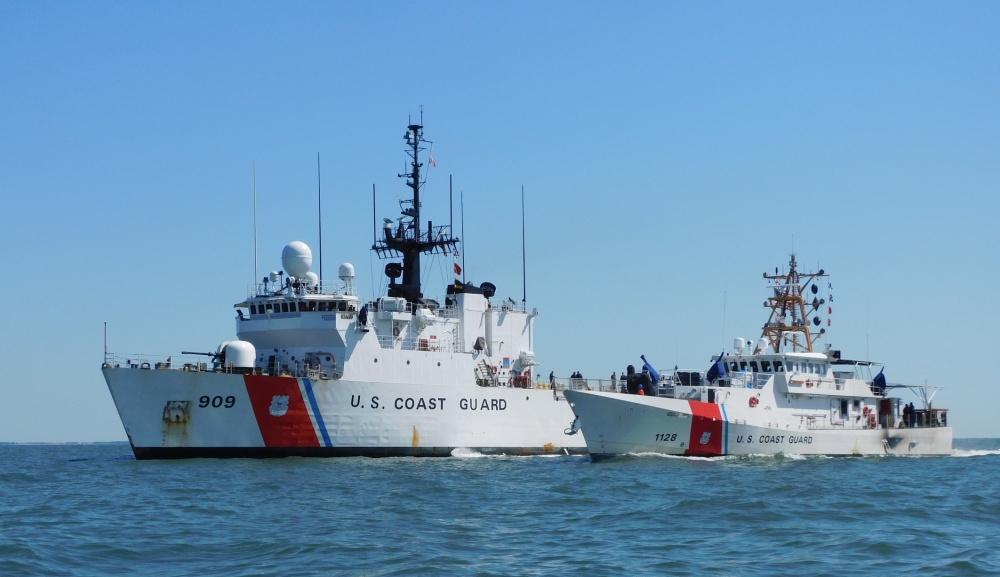
The crew of the Coast Guard Cutter Bruckenthal participates in a fueling exercise with the Coast Guard Cutter Campbell on the Chesapeake Bay, April 11, 2020. The Coast Guard acquired the first Sentinel Class cutter in 2012, with the namesake of each cutter being one of the service’s many enlisted heroes. (U.S. Coast Guard photo by Petty Officer 3rd Class Isaac Cross)

Below is a press release from the First District, announcing a homeport change for 270 foot WMECs Cambell and Tahoma from Portsmouth Naval Shipyard, Kittery, Maine to Naval Station Newport, RI. 

The reason given is, The relocation of these two cutters will allow the U.S. Navy to conduct infrastructure upgrades as part of a Shipyard Infrastructure Optimization Program at the Portsmouth Naval Shipyard,” but I think there is more to it than that. 

Naval Station Newport, RI is the planned homeport for two Offshore Patrol Cutters, #5 and #6. These will be the first two OPCs of the Stage 2 contract recently awarded to Austal. OPC#5 is expected to be completed in FY2026 and #6 in FY2027. Campbell and Tahoma are likely placeholders for the future OPCs and are unlikely to ever return to Kittery. No other major cutters remain at Portsmouth Naval Shipyard.

This updates an April 15, 2022 post, “Major Cutter Homeports.”

Media Advisory

U.S. Coast Guard 1st District Northeast

Coast Guard to hold welcome ceremony for USCGC Campbell and USCGC Tahoma in Newport, Rhode Island 

Editors’ Note: Click on images to download high resolution version.

Media interested in attending must RSVP no later than 4 p.m. Friday, August. 12, with the Coast Guard First District Public Affairs office at D1PublicAffairs@uscg.mil. Access to the event will only be granted to credentialed media. Directions will be provided following receipt of the RSVP.

WHO: Adm. Linda Fagan, commandant, U.S. Coast Guard, and team

WHAT: Welcome Ceremony for USCGC Campbell and USCGC Tahoma

WHEN: 10 a.m. Friday, Aug. 19, 2022

WHERE: Naval Station Newport, R.I., Pier 2

Security: Be prepared to show government-issued photo identification, such as a driver’s license or passport, and media credentials at the security checkpoint. We ask participating media to arrive no later than 9:30 a.m. for check-in.

BOSTON — The U.S. Coast Guard will hold a ceremony welcoming USCGC Tahoma (WMEC 908) and USCGC Campbell (WMEC 909) to their new homeport at Naval Station Newport, Rhode Island on Friday, August 19, 2022.

Due to COVID mitigation, in-person attendance is limited, and the event is not open to the public. Adm. Linda Fagan, commandant of the U.S. Coast Guard, will preside over the ceremony.

Campbell and Tahoma are relocating their homeport from the Portsmouth Naval Shipyard in Kittery, Maine to Naval Station Newport, Rhode Island. The relocation of these two cutters will allow the U.S. Navy to conduct infrastructure upgrades as part of a Shipyard Infrastructure Optimization Program at the Portsmouth Naval Shipyard.