“Coast Guard awards River Buoy, Inland Construction Tender detail design and construction contract” –CG HQ News Release

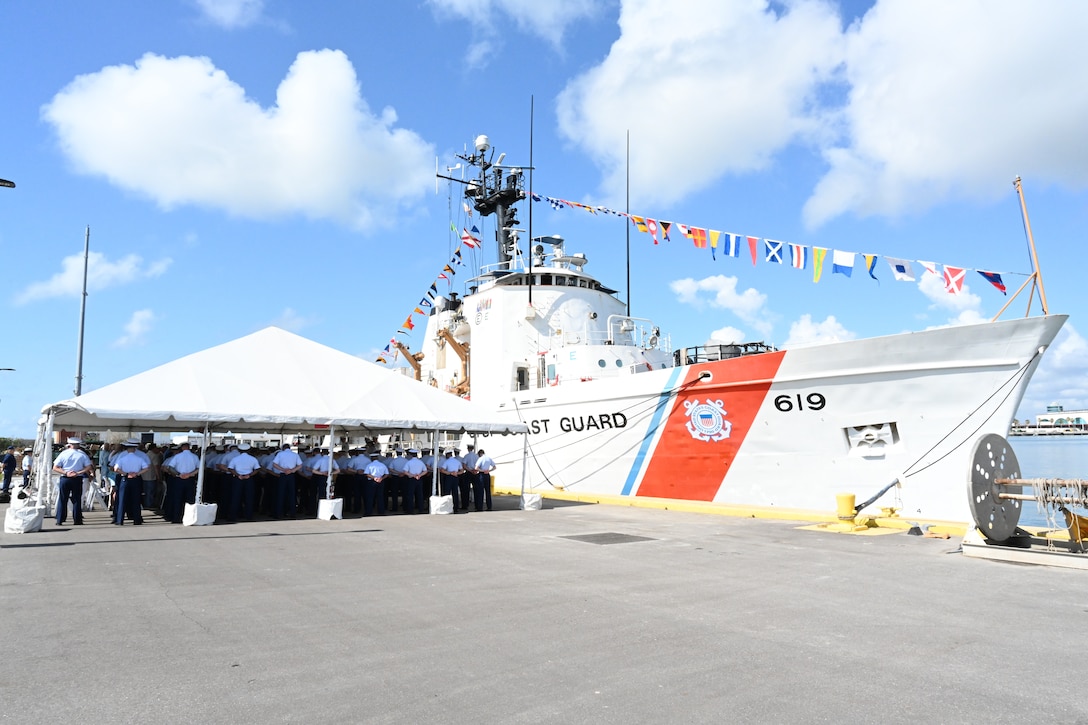
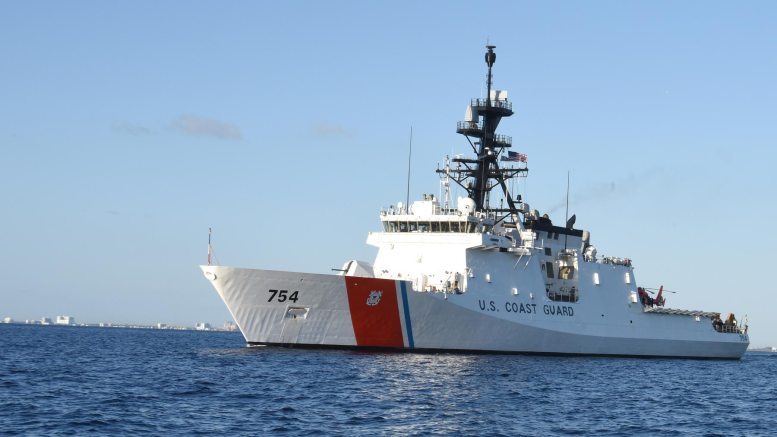
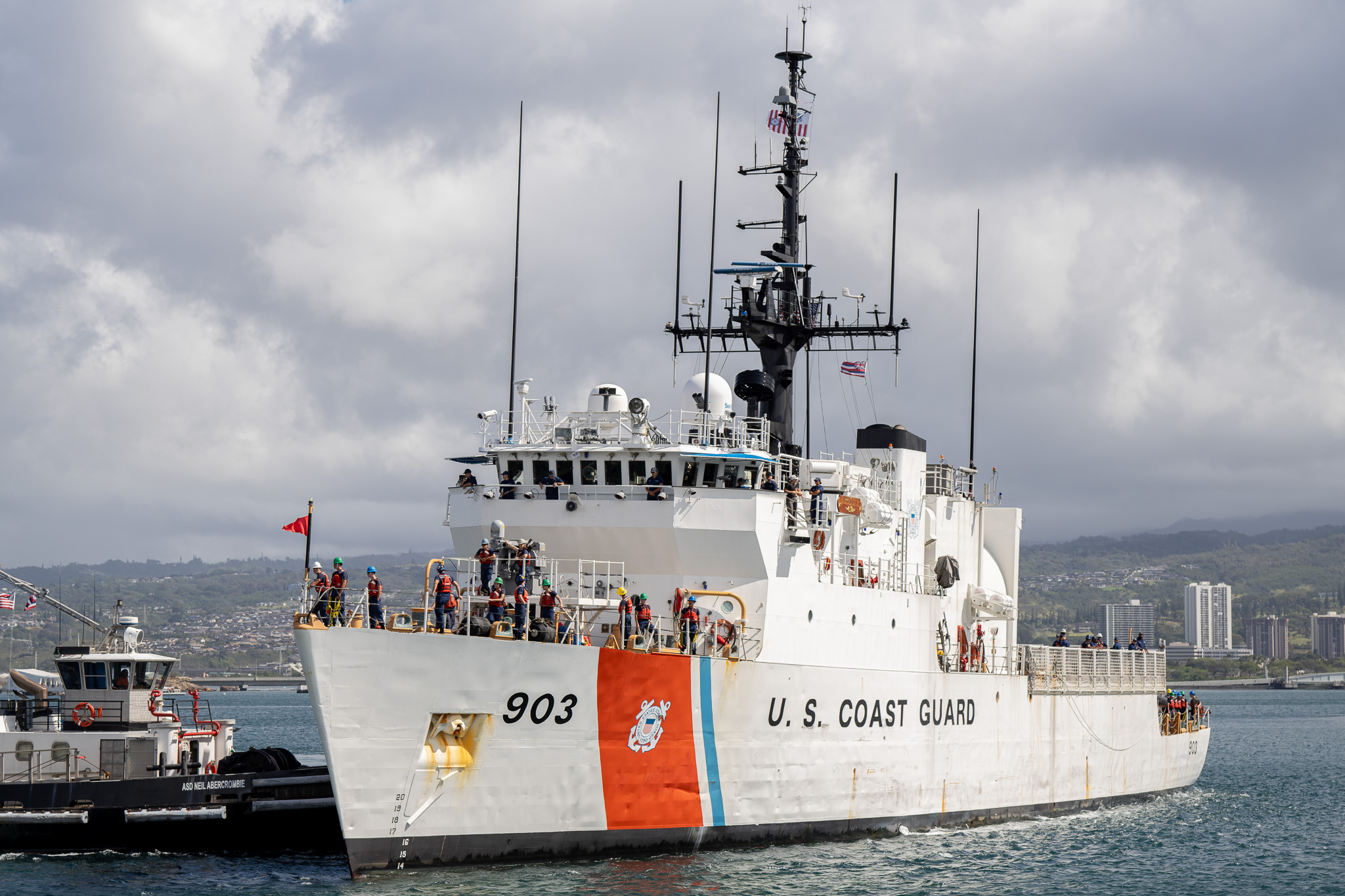
Shown above are Coast Guard indicative designs of a river buoy tender, inland construction tender and inland buoy tender.

The news release is below.

Congressional Research Service has an Aug. 30, 2022, two page explanation of the program.

For background, my most recent previous related posts:

“Ohio River Bomb Spree Shows Need For New Coast Guard Waterways Commerce Cutters” –Forbes Nov. 2021

“Coast Guard releases request for information for boats to support waterways commerce cutters” –CG-9 Oct. 2021

“Waterways Commerce Cutter: It’s Time for an Upgrade” MarineLink June 2021

Update, “Coast Guard Waterways Commerce Cutter (WCC) Program: Background and Issues for Congress” –CRS Feb. 2021

There are others: https://chuckhillscgblog.net/?s=waterways+commerce+cutter&submit=Search

 News Release

U.S. Coast Guard Headquarters


Coast Guard awards River Buoy, Inland Construction Tender detail design and construction contract

WASHINGTON – On Oct. 5, 2022, the Coast Guard Waterways Commerce Cutter (WCC) Program awarded Birdon America, Inc. of Denver, Colo., an indefinite-delivery, indefinite-quantity firm fixed price contract with economic price adjustments for the detail design and construction of its river buoy and inland construction tenders.

The initial award is worth $28.49 million. The contract includes options for the construction of a total of 16 river buoy tenders and 11 inland construction tenders.

If all contract line items are exercised, the total contract value is estimated at $1.19 billion.

River buoy tenders service short-range aids to navigation (ATON) on the western rivers. They set, relocate and recover buoys to mark the navigable channel in the rivers as the water level changes and also establish and maintain fixed aids, lights and day beacons.

Inland construction tenders construct, repair and maintain fixed ATON within inland waterways along the Eastern Seaboard and Gulf of Mexico. They are the only Coast Guard platform with the capability to drive and remove piles, erect towers and effect major structural changes. 

The Coast Guard has a statutory mission to develop, establish and maintain maritime ATON.  WCCs will perform a critical part of this mission on the inland waterways and western rivers. The WCCs will replace the legacy inland tender fleet, which has an average vessel age of over 57 years and includes ships still in service at 78 years old. This contract award ensures the Coast Guard will continue to meet its vital missions throughout the Marine Transportation System.

“This contract award is an important milestone for the new inland fleet that will improve our operational capability on the Western Rivers, and Inland Waterways” said Adm. Linda Fagan, Commandant, U.S. Coast Guard.

The new WCCs will have greater endurance, speed and deck load capacity than their predecessors. The ships will also feature improved habitability and will accommodate mixed-gender crews.

More information on the WCC: Waterways Commerce Cutter program page

Former USCGC MUNRO is in the hands of New Owners

SeaWaves reports,

Sri Lanka Navy officially took delivery of the EX-United States Coast Guard Cutter, USCGC Douglas Munro, provided by the United States, on 26th October 2021. Subsequently, she was designated with the Pennant Number P 627 in SLN Fleet and underwent certain modernization equipped to suit the operational needs of the Sri Lanka Navy. The ship departed for Sri Lanka from the Port of Seattle, United States on 03rd September 2022.

Sri Lanka now has three former US Coast Guard cutters, two 378s, Sherman and Douglas Munro, and a 210, the former USCGC Courageous.

Wikipedia has a listing of where the 378s are now.

“Coast Guard PSU Returning Home Following 9-Month Deployment” –Seapower

Coast Guardsmen from Port Security Unit 307 conduct seaward security for Department of Defense assets and personnel at Naval Station Guantanamo Bay, Cuba, April 25, 2022. During the nine-month deployment, unit operations focused on maritime defense, providing more than 30,000 hours of around-the-clock waterside and shore side anti-terrorism and force protection. U.S. Coast Guard by photo by Lt. Cmdr. Glenn Sanchez.

The Navy League’s on-line magazine, Seapower, reports,

CLEARWATER, Fla. — Members from Coast Guard Port Security Unit (PSU) 307 returned home to Clearwater Oct. 3 following a nine-month deployment to Guantanamo Bay, Cuba, the Coast Guard 7th District said in a release.

During the deployment, unit operations focused on seaward security, providing more than 30,000 hours of around-the-clock waterside and shore side anti-terrorism and force protection defense security to Department of Defense assets and personnel at Naval Station Guantanamo Bay.

Thinking about the drenching Clearwater got during Hurricane Ian, these people may be coming home to a real mess. But welcome home. I am sure you have been missed.

“U.S. Coast Guard Cutter Healy reaches the North Pole” –PacArea News Release

The U.S. Coast Guard Cutter Healy (WAGB 20) cuts a channel through the multi-year pack ice and snow as Healy transits the Arctic Ocean to the North Pole, September 27, 2022. This is the third time the icebreaker has traveled to the North Pole since its commissioning in 1999. U.S. Coast Guard photo by Deborah Heldt Cordone, Auxiliary Public Affairs Specialist 1.

News Release

Oct. 4, 2022
U.S. Coast Guard Pacific Area

U.S. Coast Guard Cutter Healy reaches the North Pole

U.S. Coast Guard Cutter Healy reaches the North Pole U.S. Coast Guard Cutter Healy reaches the North Pole U.S. Coast Guard Cutter Healy reaches the North Pole

Editor’s note: Click on images to download high resolution version.

NORTH POLE — The U.S. Coast Guard Cutter Healy (WAGB 20) reached the North Pole Friday after traversing the frozen Arctic Ocean, marking only the second time a U.S. ship has reached the location unaccompanied, the first being Healy in 2015.

Healy, a medium icebreaker, and crew departed Dutch Harbor, Alaska, Sept. 4, beginning their journey to reach latitude 90 degrees north. The cutter and crew supported oceanographic research in collaboration with National Science Foundation-funded scientists throughout their transit to the North Pole.

This is the third time Healy’s traveled to the North Pole since its commissioning in 1999.

“The crew of Healy is proud to reach the North Pole,” said Capt. Kenneth Boda, commanding officer of the Healy. “This rare opportunity is a highlight of our Coast Guard careers. We are honored to demonstrate Arctic operational capability and facilitate the study of this strategically important and rapidly changing region.”

Healy is currently on a months-long, multi-mission deployment to conduct oceanographic research at the furthest reaches of the northern latitudes. The 420-foot icebreaker is the largest ship in the Coast Guard and is capable of breaking through four-and-half feet of ice at a continuous speed of three knots.

Healy, which departed its Seattle homeport on July 11, currently has thirty-four scientists and technicians from multiple universities and institutions aboard, and nearly 100 active duty crew members.

During the cutter’s first Arctic leg of the patrol throughout July and August, Healy traveled into the Beaufort and Chukchi Seas, going as far north as 78 degrees. As a part of the Office of Naval Research’s Arctic Mobile Observing System program, Healy deployed underwater sensors, sea gliders and acoustic buoys to study Arctic hydrodynamics in the marginal and pack ice zones.

In addition to enabling Arctic science, Healy also supported U.S. national security objectives for the Arctic region by projecting a persistent ice-capable U.S. presence in U.S. Arctic waters, and patrolling our maritime border with Russia.

On their second Arctic mission of the summer, while transiting to the North Pole, Healy embarked a team of researchers as a part of the Synoptic Arctic Survey (SAS). SAS is an international collaborative research program focused on using specially equipped research vessels from around the world to gather data throughout the Arctic across multiple scientific disciplines. Dr. Carin Ashjian, from the Woods Hole Oceanographic Institution in Massachusetts, is currently serving alongside Dr. Jackie Grebmeier as co-chief Scientists onboard Healy with support from the National Science Foundation.

“We are excited to reach the Pole!” said Ashjian speaking on behalf of the embarked science party. “We have little information from the ocean and seafloor at the top of the world so what we collect here is very valuable. It also fills in data from a region, the western Central Arctic, which was not sampled by other ships in the SAS. Our joint efforts with the Healy crew are producing important science results.”

After deploying a series of scientific equipment to collect valuable data at the North Pole, crew members and the science team were granted ice liberty. During this time, they enjoyed taking pictures and posing with a “North Pole” that had been erected on the ice. Healy also used the unique setting to advance two crewmembers and conduct a cutterman ceremony for three crewmembers who each recently achieved the career milestone of five years of sea service.

“Media Advisory: U.S. Coast Guard Academy to commission the Maritime Center of Excellence”

Coast Guard Academy during the 141st Commencement Exercises May 18, 2022. The Coast Guard Academy graduated 252 new officers along with nine international students. (U.S. Coast Guard photo courtesy of Mr. David Lau)

Below is a press release. For some reason it did not come with the usual header identifying point of origin, just the email address, U.S. Coast Guard  uscoastguard@service.govdelivery.com. Nice to see some emphasis on professional development.

It talks about LEED (Leadership in Energy and Environmental Design) certification but does not say what that is. There is an explanation here


Media Advisory: U.S. Coast Guard Academy to commission the Maritime Center of Excellence

Who: U.S. Coast Guard Academy and Coast Guard Academy Alumni Association

Speakers available for comment:

  • Rear Adm. Bill Kelly, 42nd Superintendent of USCGA
  • Andrea Marcille, President of USCGA Alumni Association
  • Greg Mella, Vice President, Corporate Director of Sustainability and Principal Architect, SmithGroup
  • Tilak Subrahmanian, Vice President of Energy Efficiency and Electric Mobility, Eversource
  • Bob Laurence, Manager, Energy Efficiency, Eversource

What: A behind the scenes look at the Maritime Center of Excellence (MCOE), prior to the official opening ceremony at 4 p.m.

Why: The MCOE is the first LEED-certified major construction project to update the Academy’s 90-year old campus. Its presence will transform the landscape of the waterfront campus, and help young women and men from across the country develop a liking for the sea and its lore.

Where: USCGA waterfront 31 Mohegan Ave., New London, CT 06320

When: Wednesday, Oct. 12, 2022 at 1p.m.

How: All interested media should contact USCGA Public Affairs at cga-public-affairs@uscga.edu or (860) 857-5544 by Tuesday, Oct. 11 at noon.

A valid ID will be required for entry onto campus.

The Offshore Patrol Cutter’s Multi-Mode Radar

SeaGiraffe AMB radar. AN/SPS-77

The showed up on the DOD “Contracts For Sept. 30, 2022.” It is in reference to the Sea Giraffe AMB radar, which has the U.S. designation AN/SPS-77

Saab, Inc., Syracuse, New York, is awarded a $15,002,000 firm-fixed-price undefinitized contract for Multi-Mode Radar production for the United States Coast Guard Offshore Patrol Cutter. Work will be performed in Syracuse, New York (60%), and Gothenburg, Sweden (40%) and is expected to be completed by April 2025. Fiscal 2022 other procurement (Navy) funds in the amount of $11,101,480 will be obligated at time of award and will not expire at the end of the current fiscal year. This contract was not competitively procured in accordance with 10 U.S.C 2304(c)(1) — only one responsible source and no other supplies or services will satisfy the needs of the agency. The Naval Sea Systems Command, Washington, District of Columbia, is the contracting activity (N00024-22-C-5530).

I found previous reports of procurement of this system for the OPC program in 20217, 2018, and 2019, but none for 2020 or 2021. This is probably for the fourth OPC. The April 2025 delivery date sounds about right, since the fourth OPC will probably not be delivered until 2026. 

This radar also equips all Independence class Littoral Combat Ships and at least some of the Expeditionary Sea Base shps.

An air control variant is expected to equip Nimitz class aircraft carriers and America- (LHA) and Wasp- (LHD) class amphibious assault ships.

This type radar also now equips two of the former USCG Hamilton class 378 foot cutters. All three Philippine 378s are expected to be so equipped.

“Sea Serpent ASW system successfully used by US Navy” –Navy Recognition

Sea Serpent system deployed from a boat (MIND photo)

Navy Recognition reports,

“On September 27, 2022, MIND Technologies Inc., a Texas/U.S.-based company providing underwater research solutions, announced the successful demonstration of its Sea Serpent ASW system during the U.S. Navy’s Coastal Trident 2022 exercise.”

The Sea Serpent system is described by Mind Technologies as,

  • “…based on COTS Seismic Arrays, applicable for Anti-Submarine Warfare (ASW), Maritime Domain Awareness (MDA), and Waterside Security (WSS) applications.
  • “…designed for rapid deployment from USV platforms or as a ‘clip-on’ capability to existing light- and medium-weight Coast Guard (emphasis appkied–Chuck) or Naval vessels
  • “…modular and scalable, with lengths from 50 m to over 12,000 m acoustic aperture available
  • “Processing uses a scalable, app-based architecture and includes multiple beamforming options,  as well as broadband, narrowband/LOFAR, and DEMON processing
  • “Other apps will include Automatic Detection and Tracking (ADT) and Target Motion Analysis (TMA)
  • “The architecture is fully open to allow third-party/government processing and supports private cloud operation for distributed tracking, multi-static processing, and data fusion.”

All the reports I have seen were based on the company’s news release so we don’t have an independent evaluation of its success.

An exercise with the United States Coast Guard’s Maritime Security Response Team-West was leveraged to conduct Advanced Naval Technology Exercise experiments with wearable sensors and remote physiological monitoring.

Coastal Trident is a series of annual exercises conducted by Naval Surface Warfare Center’s Port Hueneme Division. Apparently the Coast Guard has participated in the exercise in the past. It certainly seems to be something the CG should be interested in.


“U.S. Coast Guard supports Pacific Partnership 2022 in Solomon Islands” –D14

A D14 news release.

News Release

U.S. Coast Guard 14th District Hawaii and the Pacific

U.S. Coast Guard supports Pacific Partnership 2022 in Solomon Islands

123

Editors’ Note: Click on images to download a high-resolution version.

HONIARA, Solomon Islands The Solomon Islands hosted the Pacific Partnership’s Humanitarian Assistance Response Training (HART), a multi-day international humanitarian aid and disaster relief workshop and exercise, in early September.

Coast Guard District Fourteen emergency management response experts partnered with Indo-Pacific Command (INDOPACOM) Center of Excellence in Disaster Management (CFE-DM), USNS Mercy, Solomon Island’s National Disaster Management Office (NDMO), Royal Solomon Islands Police and Fire, and the Solomon Islands National Emergency Response Team (NERT) to corroborate efficient response and coordination for natural disasters, oils spills, and search and rescue (SAR) situations.

The Pacific Partnership originated after the 2004 tsunami in the Indian Ocean and the unprecedented multi-national relief efforts that followed. This incident identified the need for international partnership to prepare for and respond to all traditional natural and man-made disasters as well as non-traditional security threats such as scarcity of critical resources and environmental degradation.

“Pacific Partnership ’22 mission was critical in working with the Solomon Islands National Disaster Management Office to build knowledge, strength and resiliency,” said James Garland, the Coast Guard District Fourteen emergency management expert. “This crucial mission helps each country to strengthen their capabilities and capacity for disaster response and management.” 

Coast Guard District Fourteen subject matter experts shared their technical knowledge on incident command system fundamentals including the command structure utilized to guide and prepare nations and government agencies for efficient incident responses. Coast Guard members also provided an international and joint rescue coordination brief regarding search and rescue (SAR) capabilities in Oceania. The workshop also included discussions on foreign military aid in disaster response, coordination mechanisms to maximize inclusivity, and multi-national roles in humanitarian assistance.

Pacific Partnership is a U.S. Pacific Fleet led mission furthering regional resiliency, interoperability, and security with various partner nations in SE Asia and Oceania. The U.S. Coast Guard looks forward to a continued working relationship and future engagement opportunities with Solomon Island agency partners.

For more U.S. Coast Guard Hawaii Pacific news, visit us on DVIDS or subscribe. You can also follow us on Facebook at @USCGHawaiiPacific, Instagram at @uscghawaiipacific, and Twitter @USCGHawaiiPac.

“Coast Guard ready for Hurricane Ian” –D7

Yahoo News

News Release from District 7 (HQ Miami).

Coast Guard ready for Hurricane Ian

News Release

U.S. Coast Guard 7th District Southeast

Coast Guard ready for Hurricane Ian

Editor’s Note: Click on images to download high-resolution version.

MIAMI — Crews across the Seventh Coast Guard District are prepared to support the State of Florida’s rescue, response and recovery needs following Hurricane Ian’s anticipated arrival, Tuesday.

Hurricane Ian is projected to make landfall as a Category 4 storm with winds estimated to reach between 130 and 156 miles per hour. Additional severe weather risks include storm surge, heavy seas, and rain leading to flooding, and high winds which can cause tornadoes.

Since the start of hurricane season in June, Coast Guard units from South Carolina to the Florida Panhandle, Puerto Rico and the U.S. Virgin Islands have been training and preparing to face any storms this season. Incident Management Teams are stood up at District Seven in Miami, Sector St. Petersburg and Sector Key West, with additional Incident Command System elements activated for Sector Miami and Sector Jacksonville.

This past weekend, Rear Adm. Brendan C. McPherson, commander of the Seventh Coast Guard District and director of Homeland Security Task Force – Southeast, visited the islands of Puerto Rico, St. Thomas and St. Croix in the wake of Hurricane Fiona to ensure the local government and Coast Guard units were supported in storm recovery. Today, McPherson conducted a joint press conference with the State of Florida Governor’s Office in Tallahassee to express the Coast Guard is prepared to support Floridians in facing Hurricane Ian.

“The Coast Guard is here and ready to fully support the State of Florida in our shared response to Hurricane Ian,” said Capt. Nicolette Vaughan, chief of prevention for the Seventh Coast Guard District and IMT Area Commander for the Hurricane Ian incident response team. “Our primary focus is to rescue those in distress. Our next focus will be to reopen the ports affected as soon as possible to ensure vital resources and supplies are delivered where they are most needed.”

At the same time, HSTF-SE units are maintaining an active presence in the Caribbean and Florida Straits to prevent and deter irregular, illegal maritime migration, which can prove even more dangerous and deadly during hurricane season. 

To date, District Seven has repositioned and prepositioned hurricane response units across the State of Florida, pre-staged to surge into impacted areas for lifesaving search and rescue resources, port reconstitution teams and any other maritime infrastructure and emergency respond needs the Coast Guard can provide. These include the following:  

  • Aircraft: 21 rotary wing and 9 fixed wing aircraft able to locate and rescue persons in distress.
  • Cutters: 31 multi-mission search and rescue ships, 4 buoy tenders and 3 construction tenders to service aids to navigation.
  • Flood Response Teams: 40 shallow water response teams able to access those stranded by the storm surge and heavy rain.
  • Personnel: Surging in additional support from across the United States to provide resiliency for continuous operations.

Additional coordination with the Coast Guard Atlantic Area Command, the Eighth Coast Guard District, the Department of Homeland Security and the Federal Emergency Management system, along with other federal, state and local departments like the National Oceanic and Atmospheric Association and the Army Corps of Engineers, will ensure continuous hurricane response support to the State of Florida and other impact areas following the storm. Post storm, crews will take to the water, assessing port conditions, identifying safety concerns to protect mariners and restore the maritime commerce and tourism industries that Florida depends upon.

Residents of Georgia and South Carolina are reminded to remain vigilant as Hurricane Ian’s track may cross the Florida Peninsula and continue up the eastern sea

Up-to-date weather information can be found at https://www.weather.gov/.  If you are in an evacuation or flood zone, follow the instructions from local emergency managers, who work closely with federal, state, local, tribal and territorial agencies and partners. They will provide the latest recommendations based on the threat to your community and appropriate safety measures. Visit https://www.ready.gov/hurricanes for more information on how to prepare for hurricane season. 

Para mantenerse actualizado sobre la Huracán Ian en Españoloprima aquí

Updated port conditions for hurricanes and tropical storms can be found at https://homeport.uscg.mil/. For more information about hurricanes and hurricane preparedness, visit NOAA’s and FEMA’s websites where you can find widgets that provide hurricane tracks and other updates. These can be found at www.ready.gov/hurricaneswww.nhc.noaa.gov, and www.fema.gov.  

As a reminder, people in distress should use 911 to request assistance whenever possible, or VHF radio channel 16 for mariners. Social media should not be used to report distress. 

The Air Force’s New Ship Killer (QuickSink) with Torpedo Like Effects

The first Air Force Research Lab video above talks about a new weapon, but it is also recognition of a new threat.

Let’s talk about what is wrong with the scenario in the video, how the Coast Guard could use this new weapon, along with the “Rapid Dragon” delivery system, and why the Coast Guard not only could, but should be the agency to use this weapon against this particular threat.

The Scenario:

NORTHCOM is worried about the cruise missile threat to the continental US, including the possibility of large numbers of missiles launched against priority targets.

“Conventional cruise missiles or hypersonic cruise missiles, low-radar cross-section cruise missiles, cruise missiles from Russia, cruise missiles from China, potentially other countries. Cruise missiles that can be launched from undersea, from 100 miles-plus off the coast. Cruise missiles from on the sea. … Cruise missiles from the air. Cruise missiles from commercial vehicles launched out of a container that can be masked as part of the commercial ship. (emphasis applied–Chuck)

The video shows a ballistic missile being preped for launch from a container. That is possible, but cruise missiles are more likely. In any case, potential actions to stop the launch would be the same.

In the video we see a Navy P-8 Maritime Patrol Aircraft monitoring the activities of a suspicious container ship. Presumably the war has not started since they don’t call for an Air Force fighter to bring in the weapon until the P-8 sees a launcher being elevated for missile launch. This is really too late to call the Air Force. Before the Air Force can get a fighter on scene, the missiles will have been launched. The aircraft monitoring the ship’s activity should be able to immediately initiate countermeasure. The P-8 Poseidon is capable of carrying Anti-Ship Cruise missiles of 725 kg (1,598 lb). It might be able to deploy the QUICKSINK weapon seen in the video which is based on a 2,000 pound bomb. It could certainly deploy a similar weapon based on the 1000 pound bomb. The problem is that, at this stage in the run-up to war, P-8s should be looking for submarines that might also launch cruise missiles, and fighter aircraft don’t have the endurance to loiter on scene waiting for something to happen. They would also be needed to intercept any cruise missiles that are launched.

The Weapon:

In the actual sinking, this was a big bomb used against a small ship, but the key to its effectiveness what where it exploded.

The weapon is discussed here, “Air Force destroys target vessel with ship-killing JDAM.” It clearly is intended to exploit the non-compressibility of water to allow a weapon that would not normally immediately sink a ship, if it hit above the waterline, to break the ship in half.

“In a September 2021 interview with Military.com, Meeks said one of the bomb’s modifications was a redesigned nose plug. This is intended to keep the bomb from veering off in an unintended direction if it hits the water before the target, which Meeks likened to skipping a stone across the surface of a pond.”

There is additional information about the seeker here, including how it works (GPS to get to the general area, then radar, and imaging IR), expected cost (substantially less than $1M for the all up rounds bought in quantity), and range (15 miles, potentially more with range extending wing kits).

As I have pointed out numerous times, no other non-nuclear weapon equals a modern torpedo’s ability to sink a ship. Apparently the Air Force agreed and decided to develop a weapon that would kill a ship in the same way a modern torpedo does, by detonating under water, preferably below the keel, rather than by directly hitting the target above the waterline. Looking at the videos, it appears the bomb enters the water, almost vertically, close to the port side. We see the familiar lift of the center section as we have seen many times when a Mk48 torpedo is used against a surface target, after which the ship breaks in half. For comparison, here is a destroyer hit by a Mk48, and a Mk48 torpedo’s warhead contains far less explosive than a 2000 pound bomb.

The Launch Platforms:

The weapon can be used on a wide variety combat aircraft. The video shows and F-35 and the actual test was done with an F-15, but there is no reason this could not In fact be dropped from a Coast Guard fixed wing using the “Rapid Dragon” concept.

Rapid Dragon hardware being loaded on a C-130. USAF photo.

Why Coast Guard?:

It is not that the Coast Guard will necessarily be the only ones doing this mission, but the Coast Guard does seem to be particularly well suited for the purpose.

If we are to keep watch on vessels off the US coast in the run up to war, you want aircraft with long endurance. You want excellent communications. You want good electro optics so that you can watch what is happening on a ship from outside the range of shoulder launched air defense systems (MANPAD). You get all that with Coast Guard fixed wing aircraft equipped with the Minotaur system. Using Air Force’s QUICKSINK modified JDAM from the Rapid Dragon launcher means we can have a single unit that can remain on station for an extended period, observe the actions of target of interest, communicate effectively, and if necessary promptly eliminate a threat while freeing other assets like the P-8 and fighters to do jobs only they can do.

It would not be necessary for the Coast Guard to store the weapons or arm the aircraft if a agreement could be reached allowing DOD facilities to load the Rapid Dragon and weapons. Actually targeting would be done by DOD assets anyway. It appears this mission could be performed, even to our smallest fixed wing, the HC-144.

Is it doable?:

A recent report suggests that it is. Lt. Gen. James Slife, who leads Air Force Special Operations Command said, “It doesn’t require any aircraft modifications, it doesn’t require any special aircrew training.”

Might be of interest to compare the amount of ordanance used in this SINKEX. It should be recognized that this retired USN frigate was probably a larger, more resilient target than the one used in the “QUICKSINK” demonstration, but I suspect, if QUICKSINK had been used agains the frigate, the results would have been the same, though it probably would have taken the two halves of the ship longer to sink.