Chuck Hill's CG Blog

Chuck Hill's CG Blog

Cruiser Moskva, Flagship of Black Sea Fleet, Severely Damaged, Afire, Abandoned, Possibly Sunk

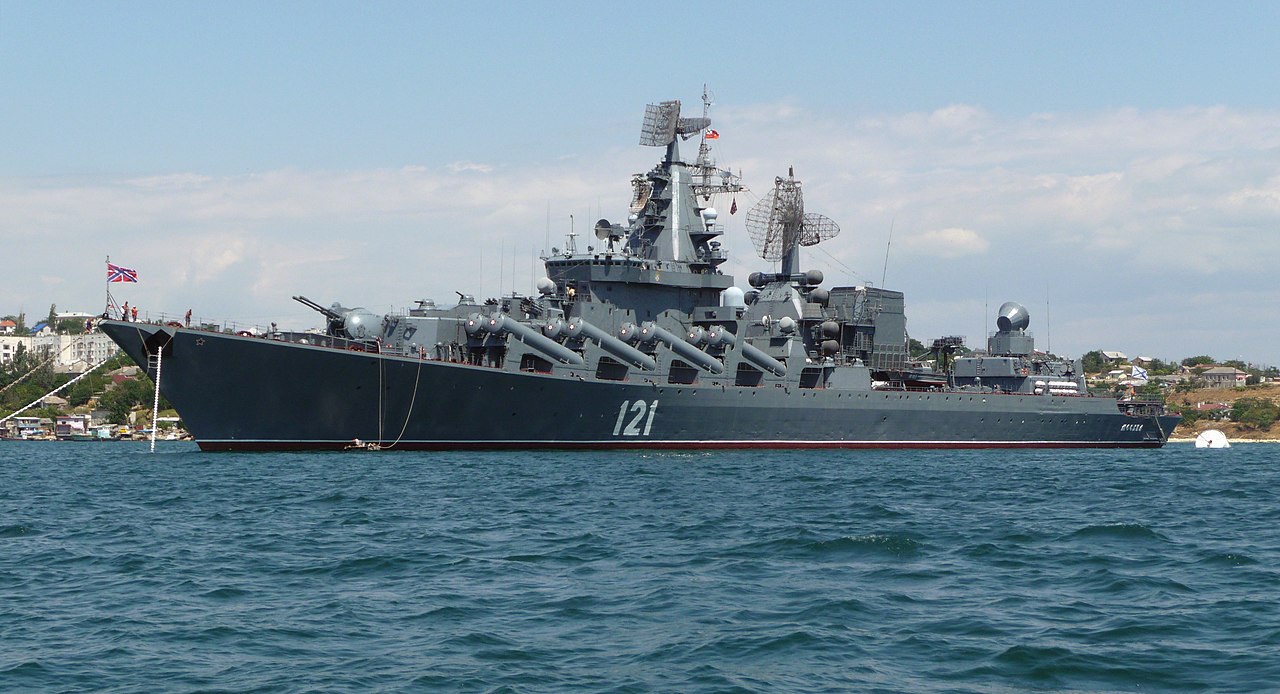
“Moskva” (“Moscow”) (ex-“Slava”, which means “Glory”) is the lead ship of the Project 1164 Atlant class of guided missile cruisers in the Russian Navy. The Project 1164 Atlant class was developed as “Aircraft carriers killer”. This warship was used in the 2008 Russia-Georgia War. The Black Sea. Sevastopol bay. This photo was taken from a boat. Photo by George Chernilevsky

I have seen several reports that the flagship of the Russian Black Sea Fleet, the 39 year old cruiser Moskva, was so severely damaged that the crew had abandoned ship. This was reportedly confirmed by the Russians according to a report from the US Naval Institute News Service.

There are also reports the ship capsized. Confirmation should come quickly. Ukraine claims they targeted the ship and struck it with two anti-ship cruise missiles. Secondary explosions followed.

“Nation’s sole heavy icebreaker returns to the U.S. after a 147-day Antarctic deployment” –PAC AREA

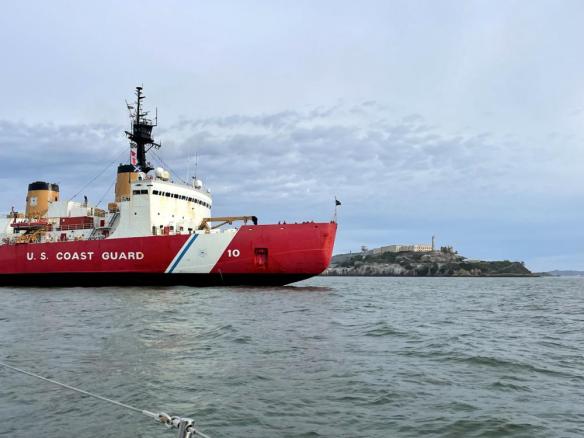
The U.S. Coast Guard Cutter Polar Star (WAGB 10) passes Alcatraz as the cutter transits the San Francisco Bay, April 4, 2022. Following their 147-day Antarctic deployment, the cutter will undergo annual maintenance in a Vallejo, California, dry dock. Photo by Sachiko Itagaki.

Below is a PACAREA news release. Once again, Polar Star will spend the majority of their inport period in Vallejo instead of their homeport, Seattle, to immediately start work on the second phase of a five-year, $75 million Service Life Extension Program.”

News Release

April 8, 2022
U.S. Coast Guard Pacific Area

Nation’s sole heavy icebreaker returns to the U.S. after a 147-day Antarctic deployment

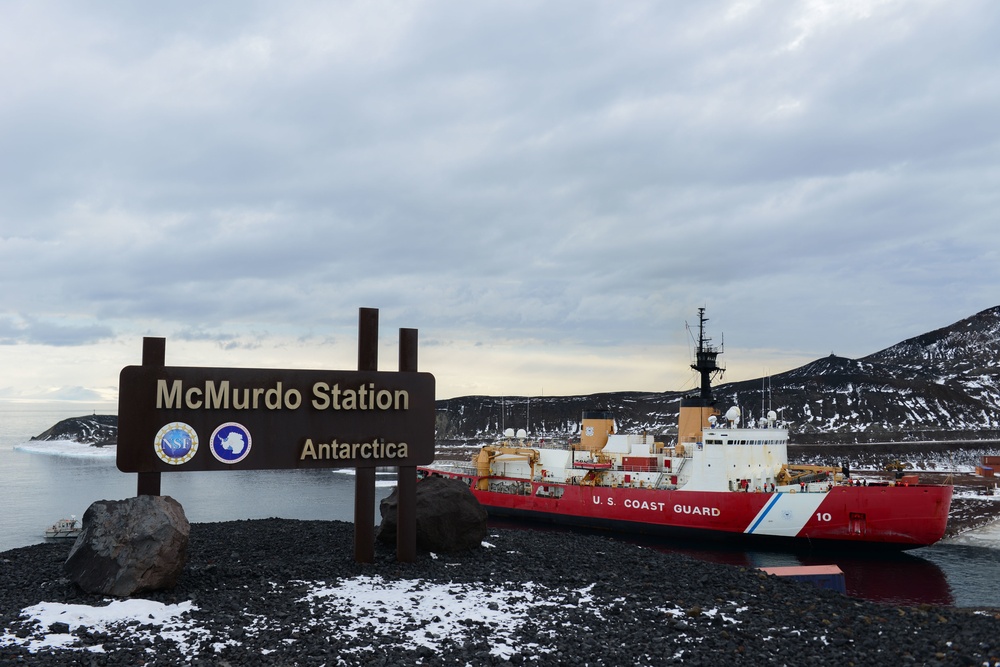
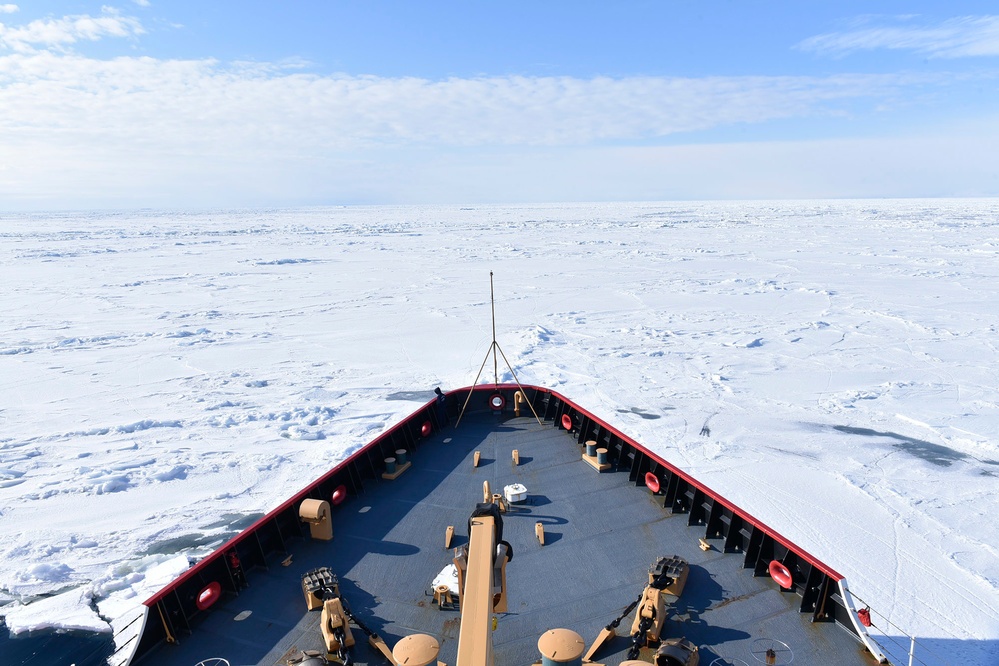
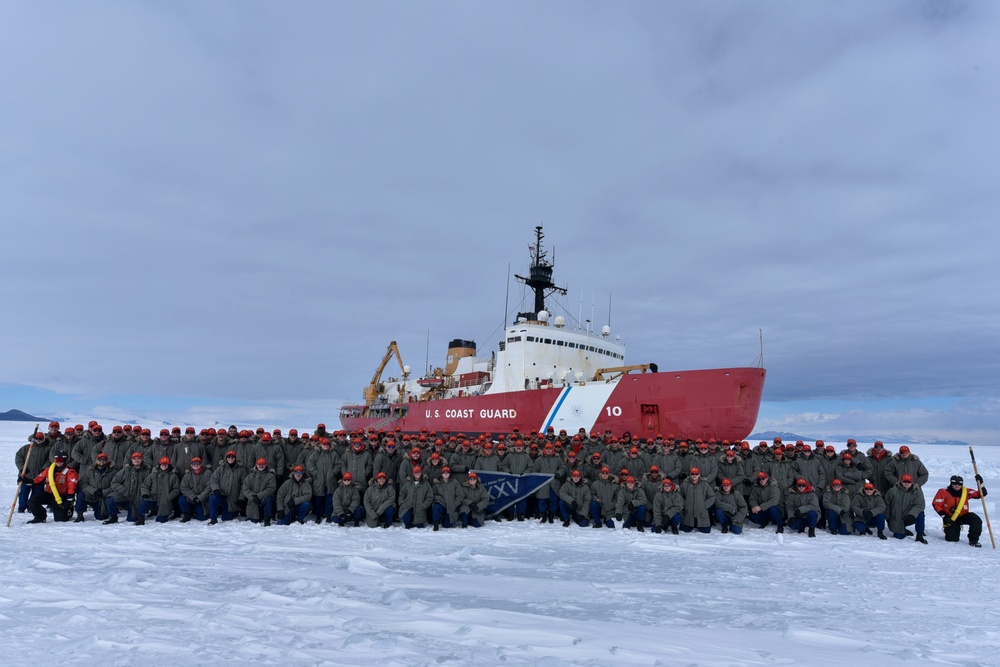
Coast Guard Cutter Polar Star moors at McMurdo Station The Coast Guard Cutter Polar Star enters the ice during transit toward Antarctica Coast Guard Cutter Polar Star (WAGB 10) crew members experience ice liberty near Antarctica

Editors’ Note: Click on images to download high resolution version.

ALAMEDA, Calif. — The 140-member crew of U.S. Coast Guard Cutter Polar Star (WAGB 10) returned to the United States and entered dry dock Friday after completing a 147-day deployment in support of the U.S. Antarctic Program and national interests in Antarctica and the Southern Hemisphere.

The Polar Star’s crew departed their Seattle homeport on Nov. 13, 2021 for the cutter’s 25th Operation Deep Freeze deployment and traveled 24,300 nautical miles to Antarctica and back.

This year marks the 66th iteration of Operation Deep Freeze, an annual joint military service mission in support of the National Science Foundation, the lead agency for the United States Antarctic Program. Since 1955, the U.S. Department of Defense and the Coast Guard have provided air and maritime support across and around the Antarctic continent.

The cutter made several international port calls including stops in Wellington and Lyttelton, New Zealand, and Hobart, Tasmania, Australia. Polar Star’s crew hosted the U.S. Ambassador to New Zealand and members of the Royal New Zealand Navy while in New Zealand.

While in Antarctica, Polar Star transited through more than 450 miles of pack ice and broke a 37-mile channel through seven-foot thick fast ice to McMurdo Station to allow the safe transit and offload of supply vessels Ocean Giant and Maersk Peary.

Polar Star also partnered with the Royal New Zealand Navy to escort the ice-capable logistics ship HMNZS Aotearoa for its first trip to McMurdo Station.

Polar Star transited to the Bay of Whales Feb. 17, setting a record for the furthest south any vessel has navigated, reaching 78 degrees 44 minutes 1.32 seconds south latitude, keeping about 500 yards from the ever shifting Ross Ice Shelf. The cutter also surveyed 396 nautical miles of the ice shelf for future navigational use.

Polar Star spent a total of 65 days in Antarctica, making it the longest Operation Deep Freeze deployment completed by a Coast Guard polar icebreaker in 18 years.

After completing operations in Antarctica, Polar Star moored in Hobart and hosted the Governor of Tasmania, Barbara Baker, and U.S. Consul General Kathleen Lively, along with several other government and military officials that are dedicated to supporting scientific efforts in Antarctica.

“I am so proud of this crew and their accomplishments,” said Capt. William Woityra, commanding officer of the Polar Star. “They overcame constant challenges to complete the mission and set records along the way. They epitomize the values on the Antarctica Service Medal: courage, sacrifice, and devotion. I can think of no better team to lead future expeditions and new icebreakers as the Coast Guard invests in Polar Security Cutters.”

Polar Star did not return to its homeport of Seattle, instead the crew proceeded directly to dry dock in Vallejo, California, to immediately start work on the second phase of a five-year, $75 million Service Life Extension Program. The Coast Guard will replace antiquated technology to ensure the longevity of the nation’s only operational heavy icebreaker while in dry dock this year, supporting the Coast Guard’s enduring commitment to Antarctic operations.

The Coast Guard has been the sole provider of the nation’s polar-icebreaking capability since 1965. Commissioned in 1976, the Polar Star is the United States’ only operational heavy icebreaker. The Coast Guard is increasing its icebreaking fleet with construction of three new Polar Security Cutters (PSC) to ensure persistent national presence and reliable access to the Polar Regions. Coast Guard Commandant Adm. Karl L. Schultz revealed the name of the first PSC – Coast Guard Cutter Polar Sentinel during his 2022 State of the Coast Guard Address.

“EXERCISE TRADEWINDS 2022: MEXICO’S AND BELIZE’S TIME TO SHINE” –CIMSEC

Mexican OPV ARM Revolucion (P-164)

Word of an upcoming SOUTHCOM exercise in the Caribbean. The US Coast Guard will undoubtably participate. Mexico is coordinating the Naval portion of the exercise which will include law enforcement and humanitarian assistance/disaster response (HA/DR).

In many ways the Mexican Navy parallels the US Coast Guard. If you would like to check out some of their resources, these previous posts may be of interest.


Admiral Linda L. Fagan Nominated to be First Woman to Serve as Commandant of the Coast Guard; Vice Adm. Steven D. Poulin as Vice Commandant

Admiral Linda L. Fagan

Below is a news release reporting the nominations for Commandant and Vice Commandant. Below that I have reproduced their official biographies. You may note their career paths. They are respectively a marine inspector and a lawyer. I am a bit surprised neither is either a cutterman or an aviator. I was impressed with Admiral Fagan’s innovative pairing of buoy tender and fast response cutter to do long range law enforcement in the Western Pacific. Both served as 1st District Commander. Both served in Joint Commands, Adm Fagan as Deputy Director of Operations for Northern Command, and VAdm. Poulin as Southern Command’s Director of Operations

News Release

U.S. Coast Guard Headquarter

MULTIMEDIA RELEASE: Admiral Linda L. Fagan Nominated to be First Woman to Serve as
Commandant of the Coast Guard

WASHINGTON, D.C. — President Joe Biden nominated Adm. Linda L. Fagan to serve as the 27th Commandant of the U.S. Coast Guard. Upon confirmation, Adm. Fagan will be the first woman to serve as Commandant of the Coast Guard.

Adm. Fagan currently serves as the 32nd Vice Commandant, having assumed the duties on June 18, 2021. The Vice Commandant is the Vice Service Chief and Chief Operating Officer, responsible for executing the Commandant’s Strategic Intent, managing internal organizational governance, and serving as the Component Acquisition Executive.

Previously, Adm. Fagan served as Commander of the Coast Guard Pacific Area overseeing operations from the Rocky Mountains to the waters off the East Coast of Africa. The Pacific Area Commander concurrently serves as Commander, Defense Force West providing Coast Guard mission support to the Department of Defense and Combatant Commanders. Adm. Fagan is the Coast Guard’s first-ever Gold Ancient Trident, as the officer with the longest service record in the Marine Safety field.

Pending confirmation, Adm. Fagan is expected to relieve the current Commandant of the Coast Guard, Adm. Karl L. Schultz, during a change of command ceremony planned for June 1, 2022 in Washington, D.C. Adm. Schultz will retire following the change of command this summer.

“Admiral Fagan is an exceptional senior Coast Guard officer and nominee, possessing the keen intellect, the depth of operational experience, and the well-honed leadership and managerial acumen to serve with distinction as our Service’s 27th Commandant,” said Adm. Schultz.

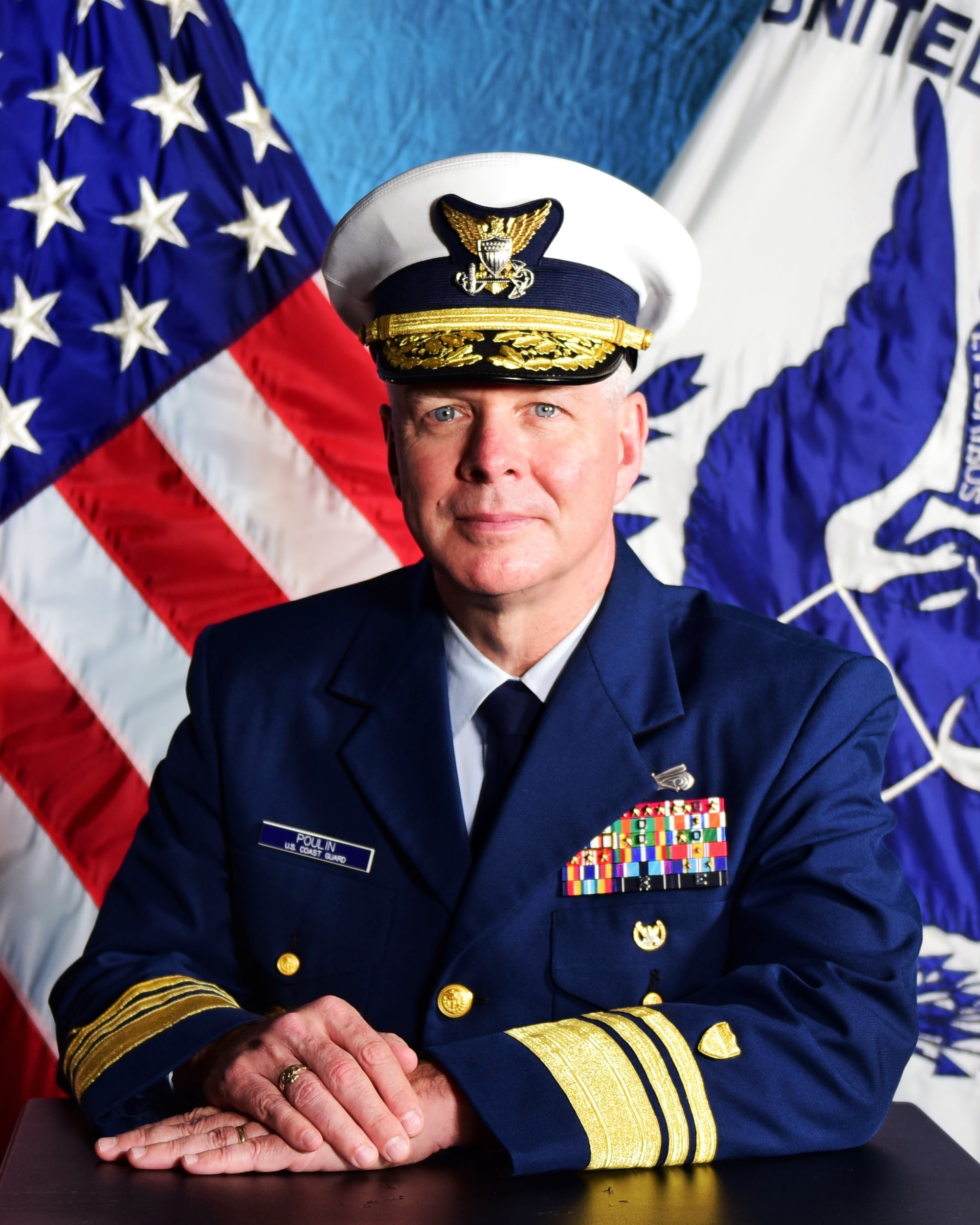
Adm. Fagan has selected and the president has nominated Vice Adm. Steven D. Poulin as the Coast Guard’s 33rd Vice Commandant. Vice Adm. Poulin currently serves as the Commander of the Coast Guard Atlantic Area and is responsible for all Coast Guard Missions from the Rocky Mountains to the Arabian Gulf. The Atlantic Area Commander concurrently serves as Commander, Coast Guard Defense Force East providing Coast Guard mission support to the Department of Defense and Combatant Commanders.

Pending confirmation, Vice Adm. Poulin is expected to relieve Adm. Fagan as Vice Commandant of the Coast Guard during a change of watch ceremony planned for May 24, 2022 in Washington, D.C.


Admiral Linda L. Fagan, Vice Commandant

She reports to Coast Guard Headquarters from a tour as the Commander, Pacific Area, and Commander, Coast Guard Defense Force West.  Prior flag assignments include Deputy Commandant for Operations, Policy, and Capability; Commander, First Coast Guard District; and a joint assignment as Deputy Director of Operations for Headquarters, United States Northern Command.

Admiral Fagan has served on all seven continents, from the snows of Ross Island, Antarctica to the heart of Africa, from Tokyo to Geneva, and in many ports along the way. Operational tours include Commander, Sector New York, more than 15 years as a Marine Inspector, and sea duty in USCGC POLAR STAR, a 399ft heavy polar icebreaker.  Staff assignments include Executive Assistant to the Commandant and Vice Commandant, and Division Chief of the Foreign and Offshore Compliance Office.

Possessing extensive interagency as well as intergovernmental experience, Admiral Fagan has worked with both the International Maritime Organization and International Labor Organization on flag state and port state issues. This work includes the development of the International Ship and Port Security Code (ISPS), and the Consolidated Maritime Labor Convention.

Admiral Fagan holds a Bachelor of Science in Marine Science degree from the U.S. Coast Guard Academy, a Master of Science in Marine Affairs degree from the University of Washington, and a Master in National Resource Strategy degree from the Industrial College of the Armed Forces. She has earned numerous personal and team awards during her 36 years of Coast Guard service.  Admiral Fagan is the longest serving active duty Marine Safety Officer, which has earned her the distinction of being the Coast Guard’s first-ever Gold Ancient Trident.


Vice Admiral Steven D. Poulin, Atlantic Area Commander

Vice Admiral Poulin assumed the duties as the Atlantic Area Commander in June 2020. He serves as the operational commander for all Coast Guard missions from the Rocky Mountains to the Arabian Gulf, spanning across five Coast Guard Districts and 40 states. In addition to his duties at Atlantic Area, he serves as Commander, Coast Guard Defense Force East, which provides Coast Guard mission support to the Department of Defense and Combatant Commanders. He also has been appointed as Director, Department of Homeland Security Joint Task Force – East, responsible for achieving the objectives of the DHS Southern Border and Approaches Campaign Plan, along with, coordination and synchronization of cross-component operations and investigations in the joint operating area.

Vice Admiral Poulin previously served as U.S. Southern Command’s Director of Operations, directing U.S. military operations across the Caribbean Basin plus Central and South America. Previously, he was Commander of the First Coast Guard District where he directed all Coast Guard missions across eight states in the Northeast, including over 2,000 miles of coastline from the U.S. – Canadian border to northern New Jersey and 1,300nm offshore.

Vice Admiral Poulin’s other flag assignments include the Judge Advocate General and Chief Counsel of the Coast Guard, where he was responsible for the delivery of all legal services in support of the Coast Guard’s missions, its units and its people. From June 2012 to April 2014, Vice Admiral Poulin served as the Director of Governmental and Public Affairs, where he was responsible for external engagement with Congress, the media and other intergovernmental entities.

From October 2010 to June 2012, Vice Admiral Poulin served as the Chief, Office of Maritime and International Law. From April 2009 to July 2010, he was the Commander of Coast Guard Sector Mobile, where he directed Coast Guard operations in Mississippi, Alabama, and the Florida panhandle. He further served as the Incident Commander for the Deepwater Horizon oil spill response operations in that same geographic area from April to October 2010. His previous operational tours include Deputy Commander, Coast Guard Sector Mobile; Deputy Commander, Coast Guard Group Galveston, TX; and Law Enforcement Officer and Assistant Operations Officer at Coast Guard Group Mobile, AL. He was assigned as a Deck Watch Officer on USCG DAUNTLESS (WMEC-624) from 1984 to 1985. Vice Admiral Poulin was also a Special Advisor for Border and Transportation Security in the Office of Vice President Cheney from 2005 to 2007. From 2003 to 2004, he was the Coast Guard’s liaison to the State Department’s Office of Ocean Affairs, where he served on U.S. delegations to myriad committees of the International Maritime Organization (IMO). He was the Legal Counsel for the Coast Guard’s Port Security Director from 2002-2003, where he helped negotiate, draft, and implement new port and maritime security requirements. From 1999-2001, he served as the Legislative Counsel in the Coast Guard’s Office of Congressional Affairs. He also served on the U.S. delegation to the Legal Committee of the IMO, from 1994-1996. From 1992-1994, he was assigned to the Coast Guard’s General Law Division.

He graduated from the U.S. Coast Guard Academy in 1984 with a Bachelor of Science in Management. He was awarded his Juris Doctor, magna cum laude, from the University of Miami School of Law in 1992. Other degrees include: Master of Law (Environmental Law), with highest honors, from the George Washington University Law School in 2002; Master of Strategic Studies from the U.S. Army War College in 2005; and Master of Public Administration from the University of South Alabama in 1989. His military decorations include the Defense Superior Service Medal (two awards), Legion of Merit (five awards), Meritorious Service Medal (four awards), Coast Guard Commendation Medal (three awards), and Coast Guard Achievement Medal.

USCG and Philippine CG Host International Maritime Law Enforcement Forum in Guam

Indonesian Maritime Security Agency vessel KN Tanjung Datu, left, sails alongside U.S. Coast Guard Cutter Stratton during joint exercises in the Singapore Strait in August 2019. IMAGE CREDIT: PO1 LEVI READ/USCG

Announcement by Pacific Area regarding a significant international conference.

News Release

April 5, 2022

 MEDIA ADVISORY: US, Philippine Coast Guard representatives available for media interviews about maritime law enforcement forum in Guam

  • Who: Rear Adm. Peter W. Gautier, deputy commander, U.S. Coast Guard Pacific Area, and Rear Adm. Ronnie Gil L. Gavan, commander, Philippine Coast Guard Maritime Security and Law Enforcement Command 
  • What: Available for interviews regarding ongoing Southeast Asia Maritime Law Enforcement Forum 
  • When: 10 a.m. Wednesday, Apr 6 
  • Where: Dusit Thani Guam Resort, 1227 Pale San Vitores Road, Tumon, Guam 96913 

Editor’s note: Media planning to attend must RSVP by emailing lauren.l.jorgensen@uscg.mil no later than 1 p.m. Monday, April 4. The availability is limited to in-person interviews. Arrival instructions will be provided upon RSVP.  

TUMON, Guam – Senior leaders and policy makers from Indonesia, Malaysia, Philippines, Thailand, the United States and Vietnam are gathering virtually and in person in Tumon, Guam, this week to collaborate and expand maritime law enforcement partnerships. 

Together, the U.S. Coast Guard and Philippine Coast Guard are co-hosting the Southeast Asia Maritime Law Enforcement Initiative Commanders’ Forum Tuesday through Thursday.  

Rear Adm. Peter W. Gautier and Rear Adm. Ronnie Gil L. Gavan, representing the U.S. and Philippine Coast Guards respectively, will be available at 10 a.m. Wednesday morning for interviews about the forum with interested media. 

The intent of the annual forum is to enhance regional stability by promoting maritime safety, security cooperation, coordination and information sharing. This year, the forum is focused on counter drug trafficking; Illegal, Unreported and Unregulated Fisheries; and the strategic use of maritime domain awareness tools to counter these and other transnational security threats.  

“Video: Couach’s New Concept Of ASW Patrol Boat” –Naval News

Naval News reports on a concept that could easily be adapted to Coast Guard patrol craft.

The report refers to this as a novel concept, but in fact, the concept of surface craft employing sprint and drift tactics with dipping sonars and ASW torpedoes was widely employed by the Soviet Union. See the, Mirka, Petya, Grisha, Pauk, and Poti class corvettes, and Turya class. These classes amounted to about 300 vessels, so the practice of employing dipping sonars on surface vessels is not a new or unique idea.

The Soviet era ships used high or medium frequency dipping sonars. The new low frequency capable technology applied to dipping sonars like the AN/AQS-22 advanced airborne low-frequency sonar (ALFS) used on the USN MH-60R ASW helicopter, has made the concept much more viable.

Basically the idea is to employ the tactics of ASW helicopters using relatively fast surface craft. Because of the range and seakeeping of the craft, this not a trans-oceanic escort strategy, but it can be effective at sanitizing choke points, harbor entrances, or other fixed areas of interest. The vessels work in teams with one or two vessels stopped, drifting and holding contact while other vessels sprint to a new position to hold contact or attack.

“Mexican Army finds 3 million rounds of ammo in raids” –The Watch

IMAGE CREDIT: AFP/GETTY IMAGES

A report from NORTHCOM’s on-line magazine, “The Watch” reveals just how heavily armed some criminal organizations may be.

The total amount of material seized in the Sonora raids was 2.83 million rounds, 14,722 magazines and 128 rifles of different calibers, authorities said. There were also six .50-caliber sniper rifles and 19 machine guns, of which at least 16 appeared to be belt-fed, they said.

“Ukrainians claim to have destroyed large Russian warship in Berdyansk” –CNN

A screen grab of a video shared on social media of the Berdyansk port fire. via CNN

CNN reports Ukrainian claims to have destroyed the Russian Alligator class LST Orsk.  Two other Russian landing ships were damaged. My contact in Ukraine tells me the hit was by a Soviet era Tochka U missile, NATO reporting name SS-21 Scarab (no confirmation of course).

“Biden to Tap Colombia As Next Major Non-NATO Ally” –Defense One

The crews of U.S. Coast Guard Legend-class national security cutter USCGC Stone (WMSL 758) and the Colombian navy OPV-80 offshore patrol vessel ARC Victoria (PZE-48) conduct passing exercises in the Eastern Pacific Ocean, Dec. 4, 2021. The U.S. and Columbia have signed agreements on trade, environmental protection, asset sharing, chemical control, ship-boardings, renewable and clean energy, science and technology, and civil aviation. (U.S. Coast Guard photo by Petty Officer 2nd Class Shannon Kearney)

Defense One reports that it appears Colombia will soon become the US’s third “major non-NATO ally” in South America (after Argentina and Brazil).

“Colombia will bring the total to 19 countries that get access to increased collaboration on the development of defense technologies; privileged access to the U.S. defense industry; increased joint military exchanges, exercises, and training; special access to military equipment financing; and more.

The other major non-NATO allies are Afghanistan, Argentina, Australia, Bahrain, Brazil, Egypt, Israel, Japan, Jordan, Korea, Kuwait, Morocco, New Zealand, Pakistan, the Philippines, Thailand, and Tunisia.”

What major non-NATO ally means is explained here.

I am a bit surprised Chile and Mexico are not on the list. Maybe time to remove Afghanistan from the list.

“Omnibus Bill Will Add To Coast Guard’s Fast Response Cutter Program” –Defense Daily

Coast Guard Cutters Emlen Tunnell and Glen Harris are moored pierside in Beirut, Lebanon, Jan. 31, 2022. The two fast response cutters are deployed to the U.S. 5th Fleet area of operations to help ensure maritime security and stability in the Middle East region. U.S. Army photo by Cpl. DeAndre Dawkins.

Defense Daily reports,

“An omnibus spending bill to fund the federal government for fiscal year 2022 would add $130 million for two Coast Guard fast response cutters (FRCs), continuing the program beyond its planned buy of 64 vessels…”

This is not too surprising considering the frequently sighted need for additional Coast Guard resources in the Western Pacific. This will probably allow the Coast Guard to place two of the cutters in American Samoa. These two additional vessels are part of a option for up to twelve vessels that will expire May 2023. I am a bit surprised Congress did not choose to buy more than two. Presumably that option will still be open for a bit more than a year.

Thanks to Lee for bringing this to my attention.