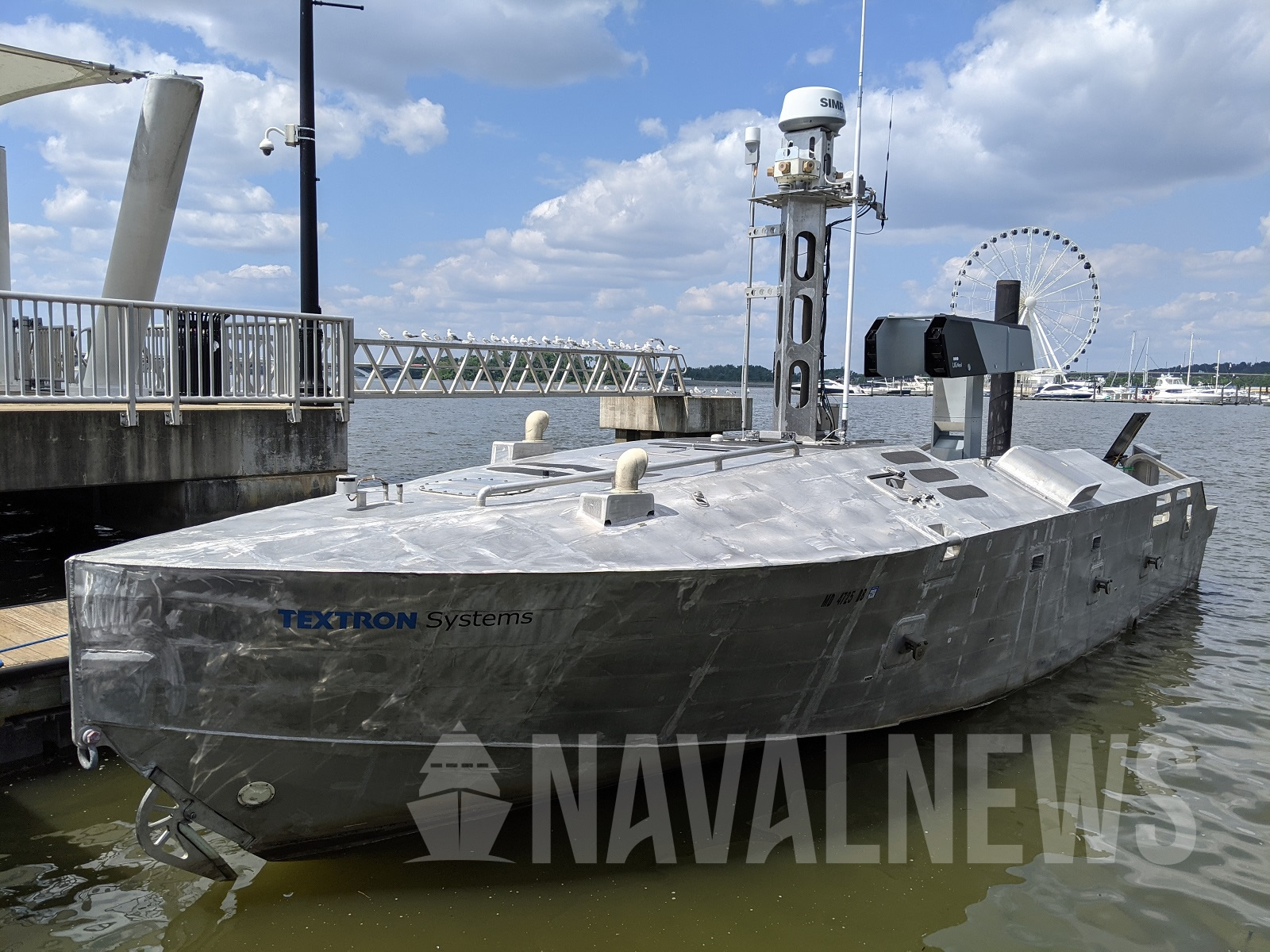
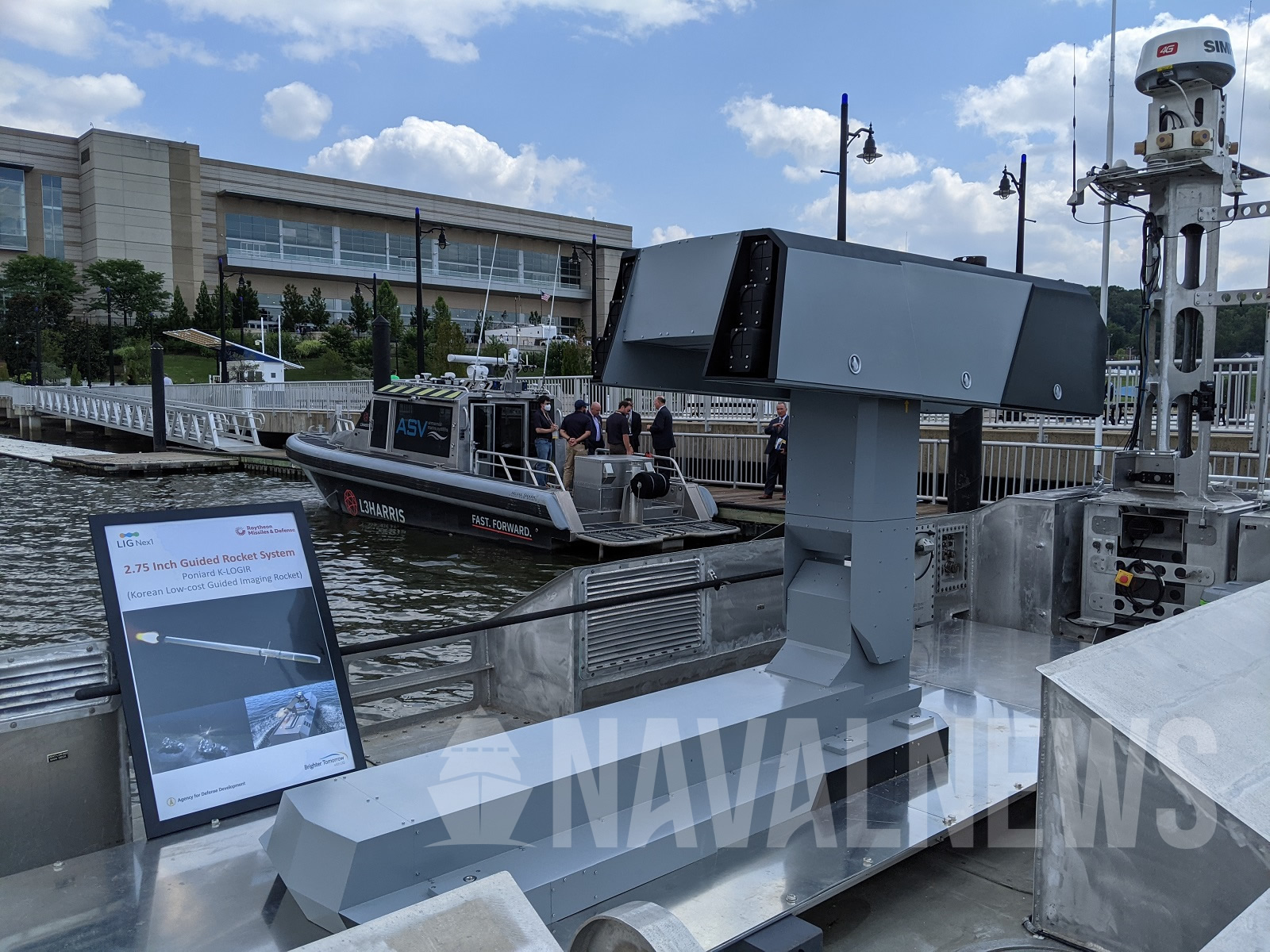
“Coast Guard releases a request for proposal for long range interceptor III cutter boats” –CG-9

Long Range Interceptor, Length: 35 feet
Maximum Speed: 40 knots
Range: 240 nautical miles
MEDITERRANEAN SEA (April 23, 2021) Crew prepare to depart from the U.S. Coast Guard Legend-class national security cutter Hamilton (WMSL 753)… (U.S. Coast Guard courtesy photo)

The Acquistions Directorate (CG-9) has issued a Request for Proposal (RFP) for a new, third generation of Long Range Interceptors. This is an 11 meter (35 foot) boat, unique to the National Security Cutters. For convinence, I have reproduced the CG-9 announcement below.

If you want to look more closely at the specs, go here and select Attachment 1. A couple of interesting items you will find among the specs are references to removable ballistic protection panels (p.66) and “OVER-THE-HORIZON SATELLITE BLUE FORCE TRACKING (SBFT) SYSTEM” (p.97).


Coast Guard releases a request for proposal for long range interceptor III cutter boats

The Coast Guard released a request for proposal (RFP) today to acquire the third generation of long range interceptor boats (LRI III). The Coast Guard plans to acquire up to 17 LRI IIIs. The RFP is available here.

The acquisition is being conducted as a total small business set-aside under Federal Acquisition Regulation Subpart 19.5.

Proposals are due by Nov. 1.

The LRI cutter boat platform is designed to augment Coast Guard national security cutter mission effectiveness by providing over-the-horizon capability in search and rescue, drug and migrant interdiction, living marine resources, defense readiness, and ports, waterway and coastal security missions.

For more information: Boat Acquisition Program page.

“U.S. Coast Guard Cutter James’ commanding officer temporarily relieved” –LANTAREA

Hate to see this sort of thing. Just passing it along. No comment.

News Release

U.S. Coast Guard Atlantic Area

U.S. Coast Guard Cutter James’ commanding officer temporarily relieved

PORTSMOUTH, Va. — The commanding officer of USCGC James (WMSL 754), Capt. Marc Brandt, was temporarily relieved of duties Friday, Aug. 26, 2022.

Vice Adm. Kevin Lunday, commander of Coast Guard Atlantic Area, effected the relief due to a loss of confidence in Brandt’s ability to command the cutter. The circumstances leading to a loss of confidence involved a mishap aboard the cutter. No personnel were injured.

Lunday appointed Capt. John Driscoll to assume temporary command of the cutter pending the results of an investigation into the mishap. 

Brandt has been temporarily assigned to Coast Guard Atlantic Area.

James is a Legend-class national security cutter (NSC) homeported in Charleston, South Carolina, with a crew of 148 officers and enlisted personnel. NSCs are the Coast Guard’s most technologically-advanced cutters in the fleet.

USCGC Campbell and USCGC Tahoma Change Homeport

The crew of the Coast Guard Cutter Bruckenthal participates in a fueling exercise with the Coast Guard Cutter Campbell on the Chesapeake Bay, April 11, 2020. The Coast Guard acquired the first Sentinel Class cutter in 2012, with the namesake of each cutter being one of the service’s many enlisted heroes. (U.S. Coast Guard photo by Petty Officer 3rd Class Isaac Cross)

Below is a press release from the First District, announcing a homeport change for 270 foot WMECs Cambell and Tahoma from Portsmouth Naval Shipyard, Kittery, Maine to Naval Station Newport, RI. 

The reason given is, The relocation of these two cutters will allow the U.S. Navy to conduct infrastructure upgrades as part of a Shipyard Infrastructure Optimization Program at the Portsmouth Naval Shipyard,” but I think there is more to it than that. 

Naval Station Newport, RI is the planned homeport for two Offshore Patrol Cutters, #5 and #6. These will be the first two OPCs of the Stage 2 contract recently awarded to Austal. OPC#5 is expected to be completed in FY2026 and #6 in FY2027. Campbell and Tahoma are likely placeholders for the future OPCs and are unlikely to ever return to Kittery. No other major cutters remain at Portsmouth Naval Shipyard.

This updates an April 15, 2022 post, “Major Cutter Homeports.”

Media Advisory

U.S. Coast Guard 1st District Northeast

Coast Guard to hold welcome ceremony for USCGC Campbell and USCGC Tahoma in Newport, Rhode Island 

Editors’ Note: Click on images to download high resolution version.

Media interested in attending must RSVP no later than 4 p.m. Friday, August. 12, with the Coast Guard First District Public Affairs office at D1PublicAffairs@uscg.mil. Access to the event will only be granted to credentialed media. Directions will be provided following receipt of the RSVP.

WHO: Adm. Linda Fagan, commandant, U.S. Coast Guard, and team

WHAT: Welcome Ceremony for USCGC Campbell and USCGC Tahoma

WHEN: 10 a.m. Friday, Aug. 19, 2022

WHERE: Naval Station Newport, R.I., Pier 2

Security: Be prepared to show government-issued photo identification, such as a driver’s license or passport, and media credentials at the security checkpoint. We ask participating media to arrive no later than 9:30 a.m. for check-in.

BOSTON — The U.S. Coast Guard will hold a ceremony welcoming USCGC Tahoma (WMEC 908) and USCGC Campbell (WMEC 909) to their new homeport at Naval Station Newport, Rhode Island on Friday, August 19, 2022.

Due to COVID mitigation, in-person attendance is limited, and the event is not open to the public. Adm. Linda Fagan, commandant of the U.S. Coast Guard, will preside over the ceremony.

Campbell and Tahoma are relocating their homeport from the Portsmouth Naval Shipyard in Kittery, Maine to Naval Station Newport, Rhode Island. The relocation of these two cutters will allow the U.S. Navy to conduct infrastructure upgrades as part of a Shipyard Infrastructure Optimization Program at the Portsmouth Naval Shipyard.

“Coast Guard cutter Winslow Griesser, 23-foot fishing vessel collide north of Dorado, Puerto Rico” –D7

Below is a News Release from D7.

News Release

U.S. Coast Guard 7th District Puerto Rico and U.S. Virgin Islands

Coast Guard cutter Winslow Griesser, 23-foot fishing vessel collide north of Dorado, Puerto Rico

SAN JUAN, Puerto Rico — The U.S. Coast Guard Cutter Winslow Griesser and the 23-foot commercial fishing vessel Desakata were involved in a collision Monday afternoon, approximately four nautical miles north of Dorado, Puerto Rico.

Following the collision, the crew of the cutter Winslow Griesser recovered the two fishermen aboard Desakata, identified as Carlos Rosario, who was fatally injured, and his brother Samuel Rosario Beltrán, who sustained injuries but survived the collision.

“We sincerely mourn the passing of Carlos Rosario following the collision between a Coast Guard cutter and the fishing vessel Desakata this afternoon,” said Capt. José E. Díaz, commander of Coast Guard Sector San Juan. “We send our most heartfelt condolences to his family, friends and loved ones, and pray they find strength during this most difficult time. A thorough investigation will be completed to determine the causal factors that led to this collision so that we can prevent this type of incident from occurring in the future.”

Coast Guard watchstanders at Sector San Juan were notified of the incident by the cutter Winslow Griesser crew at approximately 2:19 p.m. Monday. Coast Guard watchstanders directed the launch of a 45-foot response boat crew from Station San Juan who arrived on-scene and located the damaged fishing vessel.

The cutter Winslow Griesser transported both of the recovered fishermen to Coast Guard Base San Juan for transfer to awaiting Emergency Medical Services. EMS delivered Samuel Rosario Beltrán to the Centro Medico hospital in San Juan. The remains of Carlos Rosario will be transferred to Forensics Science Institute in San Juan.

Cutter Winslow Griesser is a 154-foot Sentinel Class fast response cutter homeported in San Juan, Puerto Rico.

The National Transportation Safety Board (NTSB) is leading the investigation into what caused the collision.

Media inquiries for the Coast Guard should contact the Coast Guard Seventh District public affairs office in Miami, FL at (305) 415-6680 or d7publicaffairs@gmail.com. Media inquiries about the investigation should contact the NTSB at (202) 314-6100 or ntsbmediarelations@ntsb.gov.

For more breaking news follow us on Twitter and Facebook.

-USCG-

Happy Coast Guard Day

U.S. Coast Guard Barque Eagle (WIX 327), arrives in New York City, N.Y., Aug. 15, 2019. (U.S. Air Force photo by Staff Sgt. Cory D. Payne)

USCGC Mohawk (WMEC-913), Clarence Sutphin Jr. (WPC-1147), and John Scheuerman (WPC-1146)

Feco and his handler Petty Officer 1st Class Cory Sumner, members of Maritime Safety and Security Team San Francisco, are being hoisted to an Air Station San Francisco MH-65 Dolphin Helicopter during training in San Francisco Bay, April 13, 2021. Hoist training allows the canine and their handler to get comfortable working in and around aircraft. (U.S. Coast Guard photo by Petty Officer 3rd Class Taylor Bacon)

Coast Guard canine Kelly and her handler Petty Officer 2nd Class Jacob Brasker, members of Maritime Safety and Security Team Los Angeles/Long Beach, await a hoisting line from an Air Station San Francisco MH-65 Dolphin Helicopter during training in San Francisco Bay, April 13, 2021. Hoist training allows the canine and their handler to get comfortable working in and around aircraft. (U.S. Coast Guard photo by Petty Officer 3rd Class Taylor Bacon)

USCGC Cushing sails past the Statue of Liberty

The U.S. Coast Guard Cutter James arrives at its new homeport of Charleston, S.C. Aug. 28, 2015. The James is the fifth of eight planned National Security Cutters – the largest and most technologically advanced class of cutters in the Coast Guard’s fleet. (U.S. Coast Guard photo by Petty Officer 1st Class Melissa Leake)

USCGC Munro (WMSL 755) crewmember Petty Officer 2nd Class Kurt Chlebek, a boatswains mate, is greeted by his dog after Munro returned to their homeport in Alameda, California, Oct. 20, 2021, following a 102-day, 22,000 nautical mile multi-mission deployment. Munro’s crew departed Alameda in July for a Western Pacific patrol and operated in support of United States Indo-Pacific Command, which oversees military operations in the region.
U.S. Coast Guard photo by Chief Petty Officer Matt Masaschi.

A Coast Guard air crew member helps transport a critically injured child from the helicopter to awaiting emergency medical services at Port au Prince, Haiti, Aug. 15. (Lt. David Steele/Coast Guard)

USCGC Gallatin WHEC -721 (378), USCGC Rockaway WHEC-377 (311), and USCGC Spencer WHEC-36 (327)

The Coast Guard Cutter Bridle breaks ice on the Penobscot River in Maine March 17, 2015. Operation renewable energy for Northeast Winters. (U.S. Coast Guard photo by Chief Petty Officer Marc Moore)

U.S. Coast Guard Ensign Morgan Garrett, 24 years old, from Weddington, N.C., died in an Oct. 23, 2020, crash of a Navy T-6B Texan II trainer aircraft in Foley, Ala. US Navy photo.


Five 311 foot WHECs en route Vietnam

A convoy of Landing Craft Infantry (Large) sails across the English Channel toward the Normandy Invasion beaches on D-Day, 6 June 1944. Each of these landing craft is towing a barrage balloon for protection against low-flying German aircraft. Among the LCI(L)s present are: LCI(L)-56, at far left; LCI(L)-325; and LCI(L)-4. Photograph from the U.S. Coast Guard Collection in the U.S. National Archives.

North Vietnamese 100′ Trawler
burns on a South Vietnamese beach after being forced ashore by USCGC POINT LEAGUE, on 20 June 1966. It was carrying an estimated 250 tons of supplies for the Viet Cong. USN 1116663

USS Pride (DE-323), Coast Guard manned destroyer escort

USCGC Campbell (WPG-32) heading to port at Norfolk Navy Yard. 26 July 1943. US National Archives, photo 80-G-76569

USCGC Thetis (WPC-115)

The crew of the Coast Guard Cutter Bruckenthal participates in a fueling exercise with the Coast Guard Cutter Campbell on the Chesapeake Bay, April 11, 2020. The Coast Guard acquired the first Sentinel Class cutter in 2012, with the namesake of each cutter being one of the service’s many enlisted heroes. (U.S. Coast Guard photo by Petty Officer 3rd Class Isaac Cross)

USCGC Spencer (WPG-36) in 1942 or 1943. Spencer sank U-175 with assistance of USCGC Duane, on April 17, 1943.

A U.S. Coast Guard Boeing PB-1G Fortress carrying a lifeboat in 1948. The USCG used the PB-1G from 1945 to 1959. US Coast Guard photo 5261

Photograph of Ellsworth P. Bertholf, Commandant of the U.S. Revenue Cutter Service from 1911 to 1915 and Commandant of the U.S. Coast Guard from 1915 to 1919. Coast Guard photo.

“Convoy WS-12: A Vought SB2U Vindicator scout bomber from USS Ranger (CV-4) flies anti-submarine patrol over the convoy, while it was en route to Cape Town, South Africa, 27 November 1941. The convoy appears to be making a formation turn from column to line abreast. Two-stack transports in the first row are USS West Point (AP-23) — left –; USS Mount Vernon (AP-22) and USS Wakefield (AP-21). Heavy cruisers, on the right side of the first row and middle of the second, are USS Vincennes (CA-44) and USS Quincy (CA-39). Single-stack transports in the second row are USS Leonard Wood (AP-25) and USS Joseph T. Dickman (AP-26).”

Coast Guard Lieutenant Junior Grade Shane Gunderson and Investigative Service agent Bobby Brisby deliver relief supplies to victims of Hurricane Maria in Puerto Rico. (U.S. Coast Guard photo)

LOS ANGELES – Lt. j.g. Lashanda Holmes stands in front of an MH-65 Dolphin helicopter at Air Station Los Angeles, Aug. 17, 2010. Holmes, from Fayetteville, N.C., is the first female African-American helicopter pilot in the Coast Guard. U.S. Coast Guard photograph by Petty Officer 1st Class Adam Eggers

Miami-class cutter USCGC Tampa photographed in harbour, prior to the First World War. Completed in 1912 as the U.S. Revenue Cutter Miami, this ship was renamed Tampa in February 1916. On 26 September 1918, while operating in the English Channel, she was torpedoed and sunk by the German Submarine UB-91. All 131 persons on board Tampa were lost with her, the largest loss of life on any U.S. combat vessel during the First World War. Official U.S. Navy photo NH 1226 from the U.S. Navy Naval History and Heritage Command

USCG Cmdr Harold S. Berdine of cutter Spencer talking with US Navy Capt Paul Heineman of the Escort Group A-3 after sinking German submarine U-175, North Atlantic, 500 nautical miles WSW of Ireland, 17 Apr 1943. US Coast Guard photo by Jack January

A LCVP (Landing Craft, Vehicle, Personnel) from the U.S. Coast Guard-manned USS Samuel Chase disembarks troops of Company E, 16th Infantry, 1st Infantry Division (the Big Red One) wading onto the Fox Green section of Omaha Beach (Calvados, Basse-Normandie, France) on the morning of June 6, 1944. American soldiers encountered the newly formed German 352nd Division when landing. During the initial landing two-thirds of Company E became casualties.

Lt. Crotty, captured in the Philippines and died in a Japanese POW camp.

USCGC Duane on North Atlantic Convoy Duty

Coast Guard manned Destroyer Escort USS Menges, victim of a German Acoustic Homing Torpedo, May, 1944

USCGC Mellon seen here launching a Harpoon anti-ship cruise missile in 1990.

Escanaba rescuing survivors from USAT Dorchester. USCG Image.

The 83-foot Coast Guard cutter USCG 1 off Omaha Beach on the morning of D-Day, tied up to an LCT and the Samuel Chase

“Crew of CG-16 pointing to the tally board of 126 rescued soldiers.”
Photo courtesy of Terry Hannigan.
(NOT AN OFFICIAL USCG PHOTOGRAPH)

“Coast Guard Cutter Eagle to offer news media embark, public tours, during visit to New York City” –D1

U.S. Coast Guard Barque Eagle (WIX 327), arrives in New York City, N.Y., Aug. 15, 2019. (U.S. Air Force photo by Staff Sgt. Cory D. Payne)

Just passing this along.

Media Advisory U.S. Coast Guard 1st District

Coast Guard Cutter Eagle to offer news media embark, public tours, during visit to New York City

Due to limited space, media interested in attending the availability aboard the Eagle must RSVP with Daniel.L.Henry@USCG.mil no later than Wednesday\, Aug. 3, at 12 p.m. Government-issued identification and media credentials are required. Details on the specific embarking location will be available upon RSVP inquiry to Daniel.L.Henry@USCG.mil. Due to space constraints, media pooling may be required.

Editors’ Note: Click on images to download high resolution version.

WHO: Coast Guard Cutter Eagle crew

WHAT: News media availability aboard the Eagle while anchored near Statue of Liberty.

WHEN: Thursday, 5:30 p.m. to 7:30 p.m.

NEW YORK — The U.S. Coast Guard Cutter Eagle, “America’s Tall Ship,” is scheduled to arrive in New York, Friday.

The Eagle will moor at Pier 86 in Manhattan, adjacent to the Intrepid Air & Space Museum Aug. 5-7, and will be open for free public tours.

Tours will be available the following date and times:

  • Friday (3 p.m. to 6 p.m.)
  • Saturday (11a.m. to 6 p.m.)
  • Sunday (11a.m. to 6 p.m.)

Note: Tours for military and first responders (with valid I.D.) begin one hour prior to posted tour times on Saturday and Sunday.

At 295 feet in length, Eagle is the largest tall ship flying the stars and stripes and the only active square-rigger in United States government service. Eagle has served as a classroom at sea to future Coast Guard officers since 1946, offering an at-sea leadership and professional development experience as part of the U.S. Coast Guard Academy curriculum. This summer, Coast Guard Academy Cadets completed a transatlantic voyage and experienced port calls in Azores, Iceland, and Bermuda.

Eagle is a three-masted barque with more than 22,300 square feet of sail and 6 miles of rigging. The cutter was constructed in 1936 by the Blohm and Voss Shipyard in Hamburg, Germany. Originally commissioned as the Horst Wessel by the German navy, Eagle was a war reparation for the United States following World War II.

Additional information about the Eagle can be found here. The Eagle’s design dimensions can be found here.

For more information about Eagle, including port cities, tour schedules, and current events, follow the “United States Coast Guard Barque EAGLE” Facebook page or on Instagram @barqueeagle. All U.S. Coast Guard imagery is in the public domain and is encouraged to be shared widely.

“Eastern Shipbuilding Protests US Coast Guard Award to Austal USA” –What’s Going On With Shipping Video

The commentator here, Salvatore Mercogliano, has a regular podcast. Usually he talks about the merchant marine, but he has chosen to take a look at the history of the Offshore Patrol Cutter program and the two shipyards that have been contracted to build them. His views are well balanced and informative. It is a worthwhile 15 minutes. 

Thanks to Lee for bringing this to my attention. 


“Report to Congress on Coast Guard Cutter Procurement, Updated July 22, 2022″ –CRS

The Congressional Research Service has again updated their “Report to Congress on Coast Guard Cutter Procurement”. (This link will always take you to the most recent edition of the report.) My last post on this evolving document was in reference to an October, 19, 2021 update. I have reproduced the one page summary in full below.

This is not new information, but I thought it worth repeating:

Notional Construction Schedule and Resulting Ages of Ships Being Replaced

The posting for the RFP for the Stage 2 industry studies included an attached notional timeline for building the 25 OPCs. Under the timeline, OPCs 1 through 7 (i.e., OPCs 1-4, to be built by ESG, plus OPCs 5-7, which are the first three OPCs to be built by the winner of the Stage 2 competition) are to be built at a rate of one per year, with OPC-1 completing construction in FY2022 and OPC-7 completing construction in FY2028. The remaining 18 OPCs (i.e., OPCs 8 through 25) are to be built at a rate of two per year, with OPC-8 completing construction in FY2029 and OPC-25 completing construction in FY2038.

Using these dates—which are generally 10 months to about two years later than they would have been under the Coast Guard’s previous (i.e., pre-October 11, 2019) timeline for the OPC program37—the Coast Guard’s 14 Reliance-class 210-foot medium-endurance cutters would be replaced when they would be (if still in service) about 54 to 67 years old, and the Coast Guard’s 13 Famous-class 270-foot medium-endurance cutters would be replaced when they would be (if still in service) about 42 to 52 years old.

It would be gratifying is OPC#1 is in fact delivered in FY2022, which is less than ten weeks away.

The Congressional request for a new Fleet Mix Study still has not been answered. (pp 17-19) This may be tied up in DHS. I would note that the latest Navy Force Structure Study apparently bypassed DOD.

“The requirement in the bill was designed to have the report bypass the Office of the Secretary of Defense and go directly to Congress, several legislative sources have told USNI News. OSD took a more active role in crafting the Navy’s force structure under former Secretary of Defense Mark Esper and senior leadership has continued to be involved in the force structure process.”

I would think that DHS should be allowed to comment on the next USCG Force Structure Study they should not be allowed to withhold it from Congress. The Fleet Mix Study was intended to report how effective in meeting the Coast Guard’s stutory missions various force levels would be. It does not advocate for any particular force level. A new Fleet Mix would probably be the best information available to make rational decisions about force levels.

Despite two additional FRCs (#65 & 66) being added and funded in the FY2022 budget. It seems uncertain if they will actually be built. (p. 20)

The question of building a twelth NSC is apparently still an open question, though I find it hard to believe that will happen, but building another would get us more new ships faster and it could be justified by reducing the OPC fleet from 25 to 24. (p. 20)

The impact of inflation is discussed on p. 21.

May 2022 Coast Guard Testimony

At a May 12, 2022, hearing before the Homeland Security subcommittee of the House Appropriations Committee on the Coast Guard’s proposed FY2023 budget, Coast Guard Commandant Karl Schultz testified (emphasis added)

“I appreciate the significant investments for surface, aviation, and shore maintenance included in the FY 2022 Appropriation; however, the desired impacts of these investments are greatly diminished by the historic inflation we experience today. In recent years, the Coast Guard has been hamstrung by increasing maintenance backlogs resulting in hundreds of lost patrol days for cutters and thousands of lost flight hours for aircraft. This means that cutters, boats, and aircraft are unable to deploy for planned operations, our people are unable to complete their mission, and our partners are left without full Coast Guard support. Rising inflation and supply chain issues continue to increase costs throughout the life cycle for our assets.

“For example, in the past year the price for steel to build our ships has increased 48%, fuel costs have increased 20% with an additional adjustment on the horizon, and the price for select critical parts to maintain our Medium Endurance Cutters have increased 37%. These increasing costs for operating and sustaining our fleet negatively impact our ability to perform our missions and our combined efforts to restore service readiness.”

Action on Appropriations FY2023 Procurement Funding Request

Since my October 19, 2022 commentary, the administration’s FY2023 budget has been published, and the House Appropriations Committee (HAC) has acted on the FY2023 DHS Appropriations Act (H.R. 8257) making a start on what will be the FY2023 appropriation (pp 25/26). Here is how we stand for each of the three cutter programs, figures in millions of dollars, rounded to nearest tenth.

  • NSC: Requested,   60.0; HAC, 147.0
  • OPC: Requested, 650.0; HAC, 650.0
  • FRC: Requested,   16.0; HAC, 131.0

National Security Cutter (NSC).—The Committee provides $147,000,000, which is $87,000,000 above the request, for the NSC program. This funding will support postdelivery activities to missionize and operationalize NSCs 10 and 11.

Fast Response Cutter (FRC).—The recommendation provides $131,000,000 for the FRC program, an increase of $115,000,000 above the request for FRCs funded in prior years to cover class-wide activities, including economic price adjustments related to the rise in material and labor costs and for post-delivery missionization costs.

So neither bump in funding, for the NSC or FRC, would provide addtional hulls.

Coast Guard Authorization Act of 2022 (H.R. 6865) 

The report also notes House Action on the Coast Guard Authorization Act of 2022. This is what it says

House

Section 104(a) and (b) of H.R. 6865 as passed by the House on March 29, 2022, states SEC. 104.

AVAILABILITY OF AMOUNTS FOR ACQUISITION OF ADDITIONAL CUTTERS.

(a) In General.—Of the amounts authorized to be appropriated under—

(1) section 4902(2)(A)(i) of title 14, United States Code, as amended by section 101 of this title, for fiscal year 2022;

(A) $300,000,000 shall be authorized for the acquisition of a twelfth National Security Cutter; and

(B) $210,000,000 shall be authorized for the acquisition of 3 Fast Response Cutters; and

(2) section 4902(2)(A)(ii) of title 14, United States Code, as amended by section 101 of this title, for fiscal year 2023;

(A) $300,000,000 shall be authorized for the acquisition of a twelfth National Security Cutter; and

(B) $210,000,000 shall be authorized for the acquisition of 3 Fast Response Cutters.

(b) Treatment Of Acquired Cutter.—Any cutter acquired using amounts authorized under subsection (a) shall be in addition to the National Security Cutters and Fast Response Cutters approved under the existing acquisition baseline in the program of record for the National Security Cutter and Fast Response Cutter.

Section 212 states

SEC. 212. STUDY ON LAYDOWN OF COAST GUARD CUTTERS.

Not later than 120 days after the date of enactment of this Act, the Secretary of Homeland Security, in consultation with the Secretary of Transportation, shall conduct a study on the laydown of Coast Guard Fast Response Cutters to assess Coast Guard mission readiness and to identify areas of need for asset coverage.


I have a hard time understanding why a Authorization Bill even exists particularly in regard to specifying amounts of money, since it provides not money. Nominally it provides guidance on spending, but the real guidance is in the appropriation.

This passed the House on March 29, but the Department of Homeland Security FY2022 appropriation, which included the Coast Guard budget, had been signed into law two weeks earlier, on March 15, 2022.

Anyway, the “Summary” is quoted below and it provides a good picture of where we are in the recapitalization process.


Summary

The Coast Guard’s program of record (POR), which dates to 2004, calls for procuring 8 National Security Cutters (NSCs), 25 Offshore Patrol Cutters (OPCs), and 64 Fast Response Cutters (FRCs) as replacements for 90 aging Coast Guard high-endurance cutters, medium-endurance cutters, and patrol craft. The total of 64 FRCs includes 58 for domestic use and 6 for use by the Coast Guard in the Persian Gulf.

NSCs are the Coast Guard’s largest and most capable general-purpose cutters; they are replacing the Coast Guard’s 12 Hamilton-class high-endurance cutters. NSCs have an estimated average procurement cost of about $670 million per ship. Congress has fully funded the procurement of 11 NSCs—three more than the 8 in the Coast Guard’s POR—including the 10th and 11th in FY2018, which (like the 9th NSC) were not requested by the Coast Guard. In FY2020, Congress provided $100.5 million for procurement of long lead time materials (LLTM) for a 12th NSC, so as to preserve the option of procuring a 12th NSC while the Coast Guard evaluates its future needs. The Coast Guard’s proposed FY2023 budget requests $60.0 million in procurement funding for the NSC program. This request does not include further funding for a 12th NSC; it does include funding for closing out NSC procurement activities and transitioning to sustainment of in-service NSCs. Nine NSCs have entered service; the ninth was commissioned into service on March 19, 2021. The 10th is scheduled for delivery in 2023.

OPCs are to be less expensive and in some respects less capable than NSCs; they are intended to replace the Coast Guard’s 29 aged medium-endurance cutters. Coast Guard officials describe the OPC program and the Polar Security Cutter (PSC) program as the service’s highest acquisition priorities. (The PSC program is covered in another CRS report.) The Coast Guard’s FY2020 budget submission estimated the total acquisition cost of the 25 ships at $10.270 billion, or an average of about $411 million per ship. The first OPC was funded in FY2018. The first four OPCs are being built by Eastern Shipbuilding Group (ESG) of Panama City, FL. The Coast Guard held a full and open competition for a new contract to build the next 11 OPCs (numbers 5 through 15). On June 30, 2022, the Coast Guard announced that it had awarded a fixed-price incentive (firm target) contract to Austal USA of Mobile, AL, to produce up to 11 offshore patrol cutters (OPCs). The initial award is valued at $208.3 million and supports detail design and procurement of LLTM for the fifth OPC, with options for production of up to 11 OPCs in total. The contract has a potential value of up to $3.33 billion if all options are exercised. The Coast Guard’s proposed FY2023 budget requests $650.0 million in procurement funding for the 5th OPC, LLTM for the 6th, and other program costs.

FRCs are considerably smaller and less expensive than OPCs; they are intended to replace the Coast Guard’s 49 aging Island-class patrol boats. The Coast Guard’s FY2020 budget submission estimated the total acquisition cost of the 58 cutters intended for domestic use at $3.748.1 billion, or an average of about $65 million per cutter. A total of 64 FRCs were funded through FY2021. The Coast Guard’s proposed FY2022 budget did not request funding for the procurement of additional FRCs. In acting on the Coast Guard’s proposed FY2022 budget, Congress added $130 million in FRC procurement funding for the construction of up to two additional FRCs and associated class-wide activities. If built, the two additional FRCs would be the 65th and 66th FRCs. As of July 12, 2022, 48 FRCs have been commissioned into service. The Coast Guard’s proposed FY2023 budget requests $16.0 million in procurement funding for the FRC program; this request does not include funding for any additional FRCs.

“Coast Guard Cutter Eagle to offer news media ride-along, public tours, during visit to Boston” –D1

The Coast Guard Cutter Eagle moored behind the USS Constitution July 22, 2011. The Eagle’s crew participated in several events in Boston during the port call. U.S. Coast Guard photo by Petty Officer 2nd Class Rob Simpson.

Below is a First District news release. Had to share this, if only for the photo above that accompanied it.


Media Advisory

U.S. Coast Guard 1st District Northeast
Contact: 1st District Public Affairs
D1PublicAffairs@uscg.mil
1st District online newsroom

Coast Guard Cutter Eagle to offer news media ride-along, public tours, during visit to Boston

Due to limited space, media interested in riding along during the Eagle’s inbound transit to Boston must RSVP  D1PublicAffairs@uscg.mil no later than Thursday, July 28, at 4 p.m. Government-issued identification and media credentials are required. Media are asked to arrive at the Coast Guard Base Boston no later than 6:30 a.m. Friday. Due to space constraints, media pooling may be required.

WHO: Coast Guard Capt. Jessica Rozzi-Ochs, Eagle’s commanding officer, and first woman to command the ship, and Navy Cmdr. Billie Farrell, USS Constitution’s command officer, also the first woman to command the ship

WHAT: Media is invited to ride aboard Eagle as it arrives in Boston

WHEN: Friday, July 29, at 6:30 a.m.

WHERE: Coast Guard Base Boston, 427 Commercial Street, Boston, MA 02109

BOSTON — The U.S. Coast Guard Cutter Eagle, “America’s Tall Ship,” is scheduled to arrive in Boston, Friday.

News media members are invited to ride into port aboard the Eagle. Crewmembers will be available for interviews underway and once the cutter moors.

The Eagle will moor in Charlestown, behind the USS Constitution July 29-Aug.1, and will be open for free public tours.

Tours will be available the following date and times:

  • Friday (12 p.m. to 4 p.m.)
  • Saturday (11a.m. to 7 p.m.)
  • Sunday (11a.m. to 7 p.m.)

Note: Tours for military and first responders begin one hour prior to posted tour times on Saturday and Sunday.

At 295 feet in length, Eagle is the largest tall ship flying the stars and stripes and the only active square-rigger in United States government service. Eagle has served as a classroom at sea to future Coast Guard officers since 1946, offering an at-sea leadership and professional development experience as part of the U.S. Coast Guard Academy curriculum. This summer, Coast Guard Academy Cadets completed a transatlantic voyage and experienced port calls in Azores, Iceland, and Bermuda.

Eagle is a three-masted barque with more than 22,300 square feet of sail and 6 miles of rigging. The cutter was constructed in 1936 by the Blohm and Voss Shipyard in Hamburg, Germany. Originally commissioned as the Horst Wessel by the German navy, Eagle was a war reparation for the United States following World War II.

Additional information about the Eagle can be found here. The Eagle’s design dimensions can be found here.

For more information about Eagle, including port cities, tour schedules, and current events, follow the “United States Coast Guard Barque EAGLE” Facebook page or on Instagram @barqueeagle. All U.S. Coast Guard imagery is in the public domain and is encouraged to be shared widely.

-USCG-

“THE CASE FOR U.S. COAST GUARD CUTTERS IN AMERICAN SAMOA” –CIMSEC

Location of American Somoa in the Pacific (Graphic via Wikimedia Commons)

CIMSEC has a post advocating stationing Webber class WPCs in America Samoa.

We did talk about this earlier and I came to the same conclusion, but this article talks about something I did not.

President Biden is considering expanding the Pacific Remote Islands Marine Monument (PRIMNM). A major concern of the initiative (besides that it harshly impedes indigenous fishers), is it may allow foreign illegal fishing to take stronger hold inside U.S. Exclusive Economic Zones. Hawai’i Council member Matt Ramsey warns, “we need to consider that the whole monument boundary is surrounded by more than 3,000 foreign vessels that fish in the Western and Central Pacific Ocean.” If President Biden expands the PRIMNM, the region would require a significant increase in maritime security forces to ensure illegal fishing does not imperil U.S. resources and render the PRIMNM impotent.

The Pacific Remote Islands Marinte Monument was enlarged in 2014, making it six times larger than it had been previously. It is already as large as the entire US Atlantic Coast EEZ (considering the Gulf Coast separate). I noted at the time, that it would require additional forces to police the area, as a reserve without enforcement will only keep the honest people out.

The current threat of IUU fishing in the Western Pacific was not a significant consideration when the Program of Record (POR) was determined in 2004. That suggest that we may need more than the planned 64 Fast Response Cutters (58 in the original POR plus six more for PATFORSWA).

Three Webber class in Pago Pago, American Samoa is a good start, but it may not be enough. If we don’t add any more Bertolf class National Security Cutters in the Western Pacific, it seems likely we may need to add OPCs to mix.