Heavy Weight Torpedoes on Surface Ships

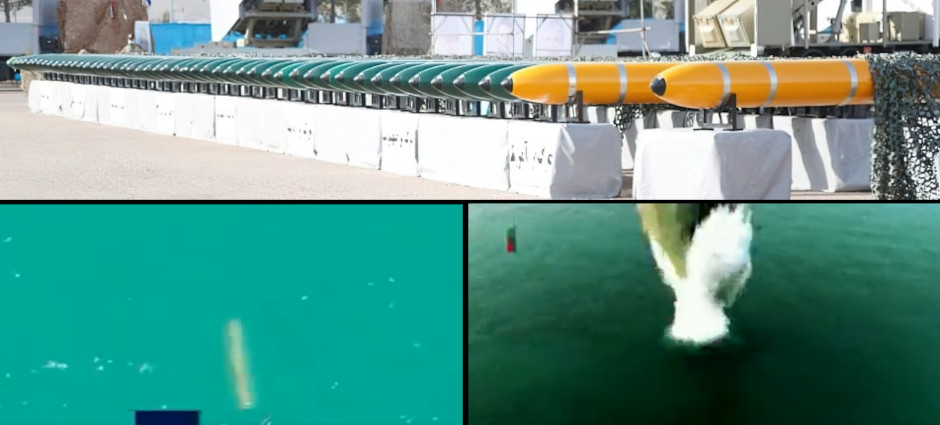
The Mk 48 torpedo was intended for use in both submarines and surface ships, in the latter for the ASW role. Twin Mk 25 tubes for Mk 48 torpedoes were fitted in guided missile frigates (DLG/DLGN) in their after deckhouse and in escort ships (DE/DEG) in their stern counters. This photo shows a Mk 48 being launched from the USS Talbot (DEG-4). Lockheed Shipbuilding; US Navy

Looking back a couple of years, The War Zone had a post that argued that Heavy Weight Torpedoes (HWT) should be installed as anti-submarine weapons on surface ships.

Cold War U.S. Navy Nearly Armed Its Frigates With Mk 48 Heavyweight Torpedoes

The argument is based on misgivings about the effectiveness of the Mk54 light weight torpedo (LWT)) and about reliance on only one weapon in general.

He specifically talks about problems with the Mk54 and the possibility of mounting at least one torpedo tube with reloads on the Constellation class guided missile frigates.
He also advocates adding a bow mounted active sonar to provide targeting for the HWT. From what I hear, the CAPTAS 4 sonar really does make the bow mounted sonar unnecessary.
His argument seems sound, but there are perhaps additional reasons for putting one or two heavy weight torpedo tubes on large Cutters, even if they don’t come with the very expensive Mk48 torpedoes.
There are indications the Navy may be producing an alternative heavy weight torpedo tentatively named the RAPTOR (Rapid Acquisition Procurable Torpedo) and we have Anduril offering an unmanned underwater vehicle that serve as a heavy weight torpedo.
Given the implicit requirement in the Coast Guard mission set that cutters should be able to forcibly stop any vessel regardless of size, a heavy weight torpedo could be a very effective ship stopper with relatively long range.
For Mobilization:
In case of a major conflict I would anticipate large cutters would be used to enforce blockades and/or escort logistics support ships.
The new generation of large cutters are armed adequately to enforce a blockade against clandestine shipments in small vessels for operations like Market Time, but to forcibly stop larger vessels we need something more than the 57mm. Since in most cases the desire would be to stop rather than to sink vessels like large tankers, we need something that can reliably disable propulsion, most probably a smart torpedo.
To escort logistics ships against either China or Russia, the minimum requirement would be a towed array like CAPTAS 4 (selected to equip FFG-62 class) or one of that family, an ASW helicopter, space for torpedoes and sonobuoys, and additional personnel (probably Navy Reserves) to operate and maintain them.
It would not be too difficult to add light weight torpedoes to large cutters, but unless there is major surgery, cutters will not have the vertical launch systems that allow Navy escort vessels to also have an organic longer ranged ASW weapon in the form of vertical launched ASROC for times when an ASW helicopter is not available. A heavy weight ASW torpedo could provide such a long range capability.

“A New Weapon Of War: Killer Underwater Drones” –Video

Wanted to pass this along. A little less than a half hour, but a good way to get up to speed on an emerging weapons technology. It also includes a lot of background on torpedoes.

I would only add that these are likely to be used as terrorist weapons as well as weapons of war.

H. I. Sutton is probably the leading unclassified source for information on unconventional naval warfare systems and has also been a great source on maritime drug smuggling technology. He has a website, “Covert Shores,” that is included on my “Recommended Blogs” page. He is also widely published in the popular press including by the US Naval Institute and in Naval News. He has also published several books.

USCGC Clarence Sutphin Jr. May Have Intercepted Kamikaze Underwater Drone Parts Bound for Houthi

“US Coast Guard / CENTCOM released photo of weapons seized aboard an Iranian dhow…The seizure included UUV and USV components. The annotations, highlighting possible UUV parts, have been added.”

As reported earlier, on January 28,2023, USCGC Clarence Sutphin Jr. intercepted an arms shipment bound for Houthi controlled areas of Yemen. Somehow, I skipped over an aspect of the report.

 The boarding team discovered over 200 packages that contained medium-range ballistic missile components, explosives, unmanned underwater/surface vehicle (UUV/USV) components, military-grade communication and network equipment, anti-tank guided missile launcher assemblies, and other military components. (emphasis added–Chuck

H. I Sutton at “Covert Shores” amplifies on the story, identifying the likely UUV as a one-way attack system. An earlier post provides a bit more detail about the likely weapon.

It appears this weapon is slow, so it is more likely to be used against vessels that are anchored or moored. It might also be used against port infrastructure. It could be launched and/or controlled from any number of innocuous looking craft. Because the effects of an underwater explosion are amplified by the non-compressible nature of water, this weapon could cause very serious damage.

In addition to the Houthi, Iran and any of its client organizations may use this weapon.

“Research and Development Center projects continue to enhance Coast Guard mission success” –CG-9

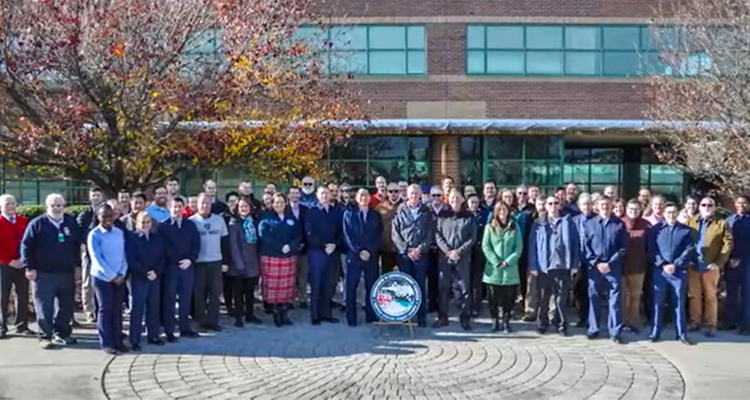
The Coast Guard Research and Development Center workforce is based in New London, Connecticut. U.S. Coast Guard photo.

Below is a news release from the Acquisitions Directorate (CG-9). If you follow the links there is a huge amount of information.

There is a lot of ongoing work, including cooperation with 4th Fleet in their efforts to operationalize unmanned systems. I had hoped the Coast Guard was doing that, and it’s gratifying to see they in fact are.

The projects listed are wide ranging and may potentially impact every mission area.

Perhaps the biggest surprise was that they are working on detect and avoid systems for small UAS. It appears they are looking at beyond visual line of sight UAS that could be used by the Fast Response Cutters and other vessels that do not have a flight deck. Apparently, they are also looking at using Unmanned Surface Vessels (USVs) to fire warning shots, presumably to stop drug runners. Would that mean they would also use USVs for disabling fire?

They are also looking at counter UAS alternatives, at ways to operate more effectively in polar regions, maritime domain awareness, and a lot more. It’s very impressive, especially when you consider how little the Coast Guard spends on R&D.


In fiscal year 2023, the Coast Guard Research and Development Center in New London, Connecticut, supported a research portfolio of 54 projects, covering the full scope of the Coast Guard’s missions. This video highlights a few of those projects, including beyond visual line of sight unmanned aircraft system detect and avoid technology, cutter-based unmanned systems integration with the Ship Control and Navigation Training System, International Maritime Organization polar code validation through advanced simulation modeling, and laser corrosion removal.

View video here.

Related: FY24 RDT&E Project Portfolio

For more information: Research and Development Center page and Research, Development, Test & Evaluation and Innovation Program page


“Analysis: Royal Navy deploys seven ships on underwater infrastructure patrols” –Navy Lookout

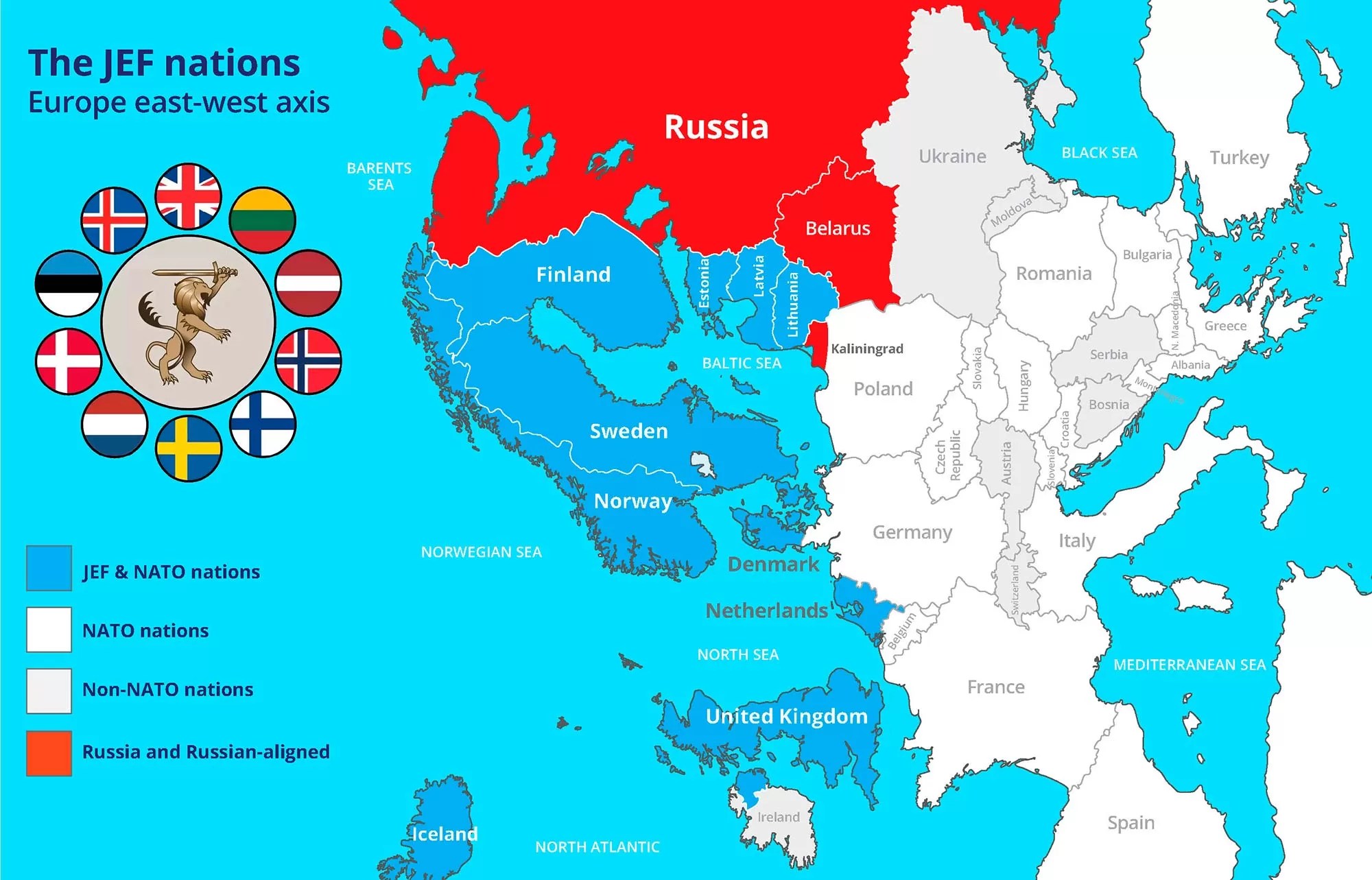
Joint Expeditionary Force nations.

Ever since the Nord Stream pipelines were damaged, in September 2022, there has been a lot of talk about the need to protect Critical Undersea Infrastructure (UCI) including concern about the possibility of damaging or surreptitiously tapping into undersea cables.

Some US agency is likely to get this job. Frankly I don’t see this as a job for the Coast Guard since we have very little underwater surveillance capability, but I may be wrong. The Coast Guard would probably at least be asked to report suspicious activity that might be recognized by Maritime Domain Awareness systems and if there is damage to a pipeline, the Coast Guard would certainly be called in to deal with the pollution.

Still, it may be interesting to see what the Europeans are doing. Navy Lookout reports,

“On 28th November Defence Ministers from the Joint Expeditionary (JEF) nations agreed to activate a ‘Response Option’. This will take the form of a Royal Navy-led effort to bolster the security of undersea infrastructure and deter hybrid threats. Since the destruction of the NordStream pipeline in September 2022 and the attack on the Baltic Connector pipeline in October 2023, there has been increasing concern about underwater Russian activity. The Defence Secretary described this as “This historic and unprecedented agreement”. It has certainly been a long time since the UK conducted multi-lateral military activity in the European area that was not done under the auspices of NATO.”

Interestingly, the effort will include two Royal Navy River class Batch One Offshore Patrol Vessels, HMS Severn and HMS Tyne, that are the British equivalent of US Coast Guard Medium Endurance Cutters, except that they do not include flight decks. There was no mention of whether they might be equipped with Unmanned Undersea Vehicles.

Thanks to Lee for bringing this to my attention. 

“Inside the U.S. Navy’s Cutting-Edge Drone Boat Tech”–WSJ

A reader brought the video above to my attention, recognizing the significant Coast Guard participation in the program. 

Below I have reproduced the text that accompanied the video on YouTube. 


Drone boats appear to be on the cusp of a revolution. The U.S. Navy’s Task Force 59 has been pairing cutting-edge unmanned surface vehicles with artificial intelligence to expand the military’s eyes and ears in the Middle East. Now, similar efforts will be rolled out in the Pacific and Central and South America. The military’s objective is to leverage machine learning to detect and anticipate threats before they occur. Experts say the U.S. is currently the leader in this field, but competitors like China and Russia are racing to catch up. I traveled to Manama, Bahrain to see the high-tech drones in action and speak to officials about how they’re preparing for a future with robots in the world’s waters. 0:00 A rare look at the U.S. Navy’s drone boat operation 0:30 Meet the Navy’s Task Force 59 2:14 Drone boat capabilities 4:05 How artificial intelligence is layered with the drone boats 5:11 The global race to advance unmanned marine vehicles 7:23 What’s next for the U.S. military? Check out more from my exclusive interview with Vice Admiral Brad Cooper, commander of U.S. Naval forces in the Middle East, about unmanned vessels and the Navy’s future fleet:    • Drone Boats, AI and the Future of Mar…   I’m Shelby Holliday, a reporter for WSJ. Subscribe to join me as I explain some of today’s most pressing geopolitical events, from superpower showdowns and conflicts to supply chain snarls and natural resource struggles.


The link embedded above was to this video. 

Thanks to David for bringing this to my attention.

“US Coast Guard Cutter Forward returns home following 78-day deployment in the high northern latitudes” –News Release + Second Look at Harriet Lane

Below is a news release reporting an unusual 270 foot East Coast WMEC deployment including a high latitude multi-national exercise, deployment of a Navy Unmanned Underwater Vessel (UUV), enforcing fisheries on behalf of an international organization, hosting 40 international guests at the 2023 U.S.-Pacific Island Country Summit, and helping U.S. Navy’s Afloat Training Group Atlantic develop their Arctic training program. (Note–more photos at the link above.)

In the photo above and particularly at the end of this video of the homecoming, you can also see USCGC Harriet Lane (WMEC-903), second from the left in the photo, fresh from its Service Life Extension Program (SLEP) refit, with its Mk92 firecontrol removed and her 76mm Mk75 replaced by a 25mm Mk38 (presume she did not get the newer 30mm). I think I was mistaken earlier, in thinking her AN/SLQ-32 electronic warfare system had been removed. I believe I see it still installed on the video. Harriet Lane is expected to assume duties as a dedicated Central and Western Pacific asset in the near future.

Sept. 26, 2023

US Coast Guard Cutter Forward returns home following 78-day deployment in the high northern latitudes

PORTSMOUTH, Va. – The crew of the U.S. Coast Guard Cutter Forward (WMEC 911) returned to their homeport in Portsmouth, Tuesday, following a 78-day deployment in the North Atlantic Ocean.

Throughout the deployment, Forward supported the U.S. Coast Guard’s Arctic Strategy and partnered with allied nations and agencies during Operation Nanook 2023, an annual Canadian-led military exercise to strengthen maritime objectives in the high northern latitudes.

Alongside Canadian and French forces navigating the waters of the North Atlantic Ocean, Forward’s crew performed training evolutions including towing and formation steaming, replenishment at sea, visual communications tactical signaling, and cross-deck exercises. In addition, an attached team from Coast Guard Tactical Law Enforcement Team Pacific conducted a boarding exercise with French Navy vessel BSAM Garonne to demonstrate at-sea capabilities and assist in enhancing partner training curriculums.

During the deployment, Forward also completed two living marine resources enforcement patrols. The first was carried out in support of the First Coast Guard District’s living marine resources mission. The second, conducted alongside international partners, was focused on commercial fishing vessels inspections as part of the Northwest Atlantic Fisheries Organization. The NAFO fisheries patrol ensured compliance with international fishing norms while safeguarding natural resources and preserving fish stocks, all reinforcing U.S. dedication to combatting illegal, unregulated, and unreported fishing.

Forward collaborated with embarked U.S. Navy personnel from the Unmanned Undersea Vehicle Flotilla-1 team to launch their Razorback UUV. The undersea vehicle, equipped with mapping and sonar capabilities, deployed deeper than any U.S. Navy submersible and traveled to a depth of nearly 2,000 feet (600 meters).

Members from the U.S. Navy’s Afloat Training Group Atlantic were also embarked aboard Forward to help build their service’s Arctic Vision Initiative, which will serve to inform U.S. Navy training entities of seamanship, navigation, engineering, and medical considerations necessary for operating naval vessels in the polar regions.

Forward sailed more than 10,500 nautical miles while the crew liaised with international partners through a series of port calls. Forward visited Halifax, Nova Scotia, Canada, during their Natal Day celebration to observe the province’s birthday. Crew members then traveled to Nuuk, Greenland, and completed a short visit to St. John’s, Newfoundland, Canada, before transiting back to the United States.

Forward ended the deployment by hosting several Indo-Pacific heads of state who were participating in the 2023 U.S.-Pacific Island Country Summit in Baltimore, Maryland. Approximately 40 international guests joined Forward for a tour and reception ahead of the transfer of U.S. Coast Guard Cutter Harriet Lane (WMEC 903) to a Pacific Ocean homeport.

“We had the opportunity to advance objectives of the Arctic Strategy and support the IUU Fishing Strategic Outlook,” said Cmdr. Staci Rutsch, commanding officer of Forward. “Acting as true ambassadors, we represented the nation in diplomatic engagements with NATO partners, reinforcing U.S. interests and solidifying the USCG as being the partner of choice. This crew’s ability to shift to perform highly in our non-standard missions leaves me impressed and motivated every day.”

For information on how to join the U.S. Coast Guard, visit www.GoCoastGuard.com to learn more about active duty and reserve officer and enlisted opportunities. Information on how to apply to the U.S. Coast Guard Academy can be found here.

For more, follow us on FacebookInstagram and Twitter.

“U.S. Coast Guard Cutter Healy, National Science Foundation embark on Arctic Ocean mission”

News Release from Coast Guard News. There is a second video on the link showing the preparation and launching of an Unmanned Underwater Vehicle (UUV).


Aug. 26, 2023

U.S. Coast Guard Cutter Healy, National Science Foundation embark on Arctic Ocean mission

KODIAK, Alaska – U.S. Coast Guard Cutter Healy (WAGB 20) crew and embarked researchers departed Kodiak, Saturday, for the cutter’s second mission this year in the high latitudes of the Arctic Ocean.

Healy’s next mission takes the cutter west, where the crew and a new team of researchers will support work of the National Science Foundation and International Arctic Research Center by servicing the Nansen and Amundsen Basins Observational System (NABOS).  The month-long mission’s objective is to recover, service, and deploy nine long-term subsurface mooring arrays, stretching from the Eurasian Basin to the East Siberian Sea.

These moorings will give insight into the how water from the Atlantic Ocean is being introduced into the Arctic at the shelf water level, deep basin interior, and the upper ocean; as well as help develop an understanding of water circulation in the region. Another key capability Healy will provide is the ability to execute Conductivity, Temperature, and Depth (CTD) casts, sampling the water column in areas normally inaccessible due to pack ice.

“The Siberian Arctic, one of the regions of the Arctic where changes in sea ice and ocean are currently most noticeable, will be the area of this high-latitude mission onboard the Healy,” said Igor Polyakov, NABOS project lead. “However, this region is also one of the least observed, making this cruise crucial if we want to create a trustworthy observing and forecasting system.”

The NABOS project’s foundational goal since beginning in 2002 is to gain understanding of the circulation and the transformation of Atlantic waters into the Arctic Ocean. Missions from 2021 to 2025 are directed at quantifying the freshwater introductions and their impact on the transportation of heat from Atlantic waters into the region.

With these observations, NABOS looks to inform the scientific community and public on the potential impacts to Arctic sea-ice coverage and marine ecosystems, and the expanding effect on the mid-latitudes. The success of NABOS since its earliest days has always been reliant on international partnerships, researchers of diverse backgrounds, and assets like Healy achieving the results for which the project is known.

During July and August, the Healy’s mission supported and collaborated with the Office of Naval Research (ONR) experts from across a broad spectrum of disciplines, deploying and servicing instruments for ONR’s Arctic Mobile Observing System (AMOS) in the Beaufort Sea.

Under the leadership of U.S. Coast Guard Capt. Michele Schallip, Healy’s commanding officer and mission chief scientist, Dr. Craig Lee, Healy’s crew and research teams completed an array of science stations, including mooring very low frequency acoustic devices to the sea floor, deploying subsurface gliders, and conducting science equipment installations on ice floes.

The naturally hazardous environment of the Arctic required Healy to remain on-scene for lengthy periods to ensure proper function of instrumentation. In one instance, the ship was forced to send a repair part to the ice after a polar bear damaged equipment overnight. Healy’s unique capabilities are essential to the AMOS program, being the only U.S. platform able to provide researchers with access to the most remote reaches of the Arctic Ocean.

In addition to the NABOS and AMOS missions, the U.S. Coast Guard Research and Development Center is running and coordinating numerous scientific research efforts for the U.S. Coast Guard and partner research organizations. These projects will focus on several key areas pertaining to Arctic operations, including search and rescue, communications, crew performance, and atmospheric monitoring and characterization. The expanded knowledge base this research will provide will help the U.S. Coast Guard and partners improve Arctic operations and systems.

Healy is the Coast Guard’s only icebreaker specifically designed for Arctic research, as well as the nation’s sole surface presence routinely operating in the Arctic Ocean. The platform is ideally specialized for projects like NABOS; providing access to the most remote reaches of the Arctic Ocean; areas barricaded by pack ice and insurmountable by most research vessels.

The Healy deploys annually to the Arctic to support multiple science missions and Operation Arctic Shield, the service’s annual operation to execute U.S. Coast Guard missions, enhance maritime domain awareness, strengthen partnerships, and build preparedness, prevention, and response capabilities across the Arctic domain.

Commissioned in 1999, and homeported in Seattle, Healy is the largest ship in the U.S. Coast Guard at 420-feet with a displacement of over 16,000 tons. The crew compliment of 84 supports the ship’s primary mission of scientific support. It is one of two active polar icebreakers in the Coast Guard’s fleet. The Seattle-based Coast Guard Cutter Polar Star (WAGB 10) is a Polar icebreaker commissioned in 1976.

The Coast Guard is recapitalizing its Polar icebreaker fleet to ensure continued access to both Polar regions and support the country’s economic, commercial, maritime, and national security needs.

“UNITAS LXIV to begin in Colombia” –USNAVSOUTH/4TH FLEET PUBLIC AFFAIRS

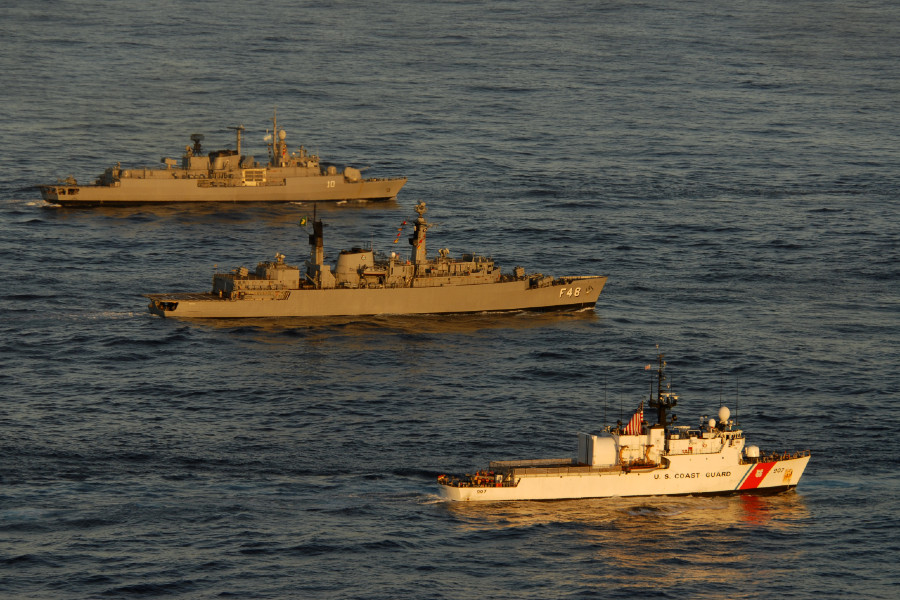
The US Coast Guard cutter USCGC Escanaba (WMEC 907), Brazlian Navy ship BNS Bosisio (F 48) and Argentinian navy ship ARA Almirante Brown (D-10) move into formation for a photo exercise during the Atlantic phase of UNITAS 52 on May 4, 2011. The formation included a total of ten ships from the US, Brazil, Mexico and Argentina. (Photo: US Navy/Mass Communication Specialist 1st Class Steve Smith)

Below is a news release announcing the start of exercise UNITAS LXIV (64 if you are not up on your Roman numerals). There is no mention of Coast Guard participation, but maybe they “simply forgot us.” Think we can bet there are some Coasties involved.

Britain’s Royal Navy also sent one of their highly regarded destroyers, HMS Dauntless.

With 26 surface vessels and three submarines participating, I think this is larger than most of the recent UNITAS exercises. In 2022 it was 19 ships, one submarine, 21 aircraft, accounting for approximately 5,500 total military personnel.

This year will see an attempt at large scale integration of unmanned systems into the exercise by 4th Fleet.


July 11, 2023

UNITAS LXIV to begin in Colombia

By USNAVSOUTH/4TH FLEET PUBLIC AFFAIRS

– U.S. Navy and Marine forces are set to arrive in Cartagena in support of UNITAS LXIV, the world’s longest-running multinational maritime exercise in the world, scheduled to start July 11, 2023.

The Colombian navy will host this year’s UNITAS, which will feature 26 warships/vessels, three submarines, 25 aircraft (fixed wing/helicopter), and approximately 7,000 people from 20 partner nations. Forces will conduct training operations off the coast of Cartagena, Colombia, and ashore in Covenas and Barranquilla, Colombia, through July 21. This year marks the 64th iteration of the exercise. Additionally, this year Colombia will celebrate the bicentennial of its navy, a historical milestone commemorating 200 years of the country’s maritime forces.

“UNITAS is so much more than a two week exercise. All participating nations have given much time, energy and effort into the months of planning leading up to what will be one of the most complex UNITAS to date,” said Rear Admiral Jim Aiken, commander U.S. Naval Forces Southern Command/U.S. 4th Fleet. “Utilizing air, surface, sub-surface, and unmanned assets, and land units, UNITAS will provide the multinational force a challenging environment in which to conduct training across the full spectrum of maritime operations. UNITAS strengthens maritime partnerships, enhances proficiency and improves interoperability of the participating forces, which is why so many partner nations are taking part this year.”

As part of the U.S. Navy’s future hybrid fleet, the Chief of Naval Operations has tasked U.S. 4th Fleet to scale unmanned platforms to the fleet level. An addition to this year’s UNITAS will include the integrated operations of unmanned air, surface, and subsurface systems into the exercise. UNITAS’ challenging training address key aspects of multinational and combined operations such as technology standardization and common operating procedures.

“This is our first opportunity to integrate unmanned systems into our operations at sea,” said Rear Adm. Aiken. “UNITAS has often served as a test bed for technology, so it is appropriate that we begin our unmanned integration campaign to operationalize the hybrid fleet here in UNITAS.”

In addition to the United States, UNITAS LXIV will bring together 19 nations from all over the world to train forces in joint maritime operations that enhance tactical proficiency and increase interoperability. Participating nations include Belize, Brazil, Canada, Chile, Colombia, Dominican Republic, Ecuador, France, Germany, Honduras, Jamaica, Mexico, Panama, Peru, Paraguay, Spain, South Korea, United Kingdom, United States, and Uruguay.

Following the UNITAS LXIV Opening Ceremony on July 12, the in port phase of the exercise will feature subject matter expert exchanges, professional symposia, ship rider exchanges, and operations meetings. During this time, Marines and Sailors will conduct expeditionary training events in Covenas to include riverine operations and diving and salvage operations.

During the UNITAS LXIV Underway Phase, forces will participate in events testing all warfare operations, to include live-fire exercises such as a SINKEX and an amphibious ship-to-shore landing and force retraction.

“Marines and Sailors from across the United States will travel to Colombia to not only train alongside our partner nations’ militaries, but to hone the skills required to operate as part of a larger maritime force focused on sea control and sea denial,” said Lt. Gen. David G. Bellon, commander, U.S. Marine Corps Forces, South, and U.S. Marine Corps Forces, Reserve. “We will be exercising command and control from a forward position as Marines set up and employ Expeditionary Advanced Base Operations to enhance naval capabilities as part of UNITAS.”

U.S. forces participating in UNITAS LXIV include USS New York (LPD 21), USS Cole (DDG 67), USS Little Rock (LCS 9), USS Pasadena (SSN 752), and USNS Burlington (T-EPF 10). Other U.S. participants include Patrol Squadron Five (VP 5), Mobile Diving and Salvage Unit (MDSU) 2, Explosive Ordnance Disposal Mobile Unit (EOD) 612, Mine Countermeasures Group 3, (MCMGRU 3), Expeditionary Mine Countermeasures EOD Company 61 (EODMU 61), East-coast based Naval Special Warfare units, Helicopter Sea Combat Squadron 22 (HSC 22), Helicopter Maritime Strike Squadron 70 Detachment 2 (HSM 70 Det 2), Joint Communications Support Element (JCSE), Fleet Surgical Team (FST) Eight, and the Meteorological Environmental Team (MET). U.S. Marine forces include 3rd Battalion, 23rd Marine Regiment (3/23), 4th Amphibious Assault Battalion (4th AABn), 8th Combat Logistic Battalion (CLB 8), 4th Combat Engineer Battalion (4th CEB), Marine Medium Tiltrotor Squadron 774 (VMM 774), Marine Light Helicopter Attack Squadron 775 (HMLA 775), Marine Aerial Refueler Transport Squadron 234 (VMGR-234), Marine Aircraft Control Group – 48 (MACG-48), and Marine Fighter Attack Squadron 112 (VMFA-112). Finally, Commander, Destroyer Squadron 40, (COMDESRON 40), Commander, Amphibious Squadron Four (COMPHIBRON FOUR), U.S Marine Corps Forces South (MARFORSOUTH), Special Operations Command South (SOCSOUTH), USNAVSOUTH/FOURTHFLT, and U.S. Southern Command (USSOUTHCOM) are participating in UNITAS LXIV.

UNITAS, which is Latin for unity, united, or oneness, was conceived in 1959 during a previous era of strategic competition when representatives at the first Inter-American Naval Conference in Panama agreed to conduct an annual maritime exercise with one another. Prior to UNITAS I in 1960, U.S. Chief of Naval Operations Adm. Arleigh Burke reviewed preparations for the multinational exercise. He commended planners for their progress, especially in building compatible communication systems among navies, and predicted that UNITAS would build strong relationships among Sailors of the Western Hemisphere.

U.S. Naval Forces Southern Command/U.S. 4th Fleet supports U.S. Southern Command’s joint and combined military operations by employing maritime forces in cooperative maritime security operations to maintain access, enhance interoperability, and build enduring partnerships in order to enhance regional security and promote peace, stability and prosperity in the Caribbean, Central and South American region.

U.S. Marine Corps Forces, South is the Marine Corps component to U.S. Southern Command, is responsible for planning exercises, operations, and overall Marine Corps support for the SOUTHCOM assigned area of responsibility.

“Coast Guard signs strategic plan for unmanned systems” –MyCG

MyCG reports the completion of a Coast Guard UxS Strategic Plan,

“,,,the Coast Guard will find ways to use unmanned systems to improve our mission execution. Second, the Coast Guard will prepare to defend against threats from unlawful use of unmanned systems. Finally, the Coast Guard must establish and enforce a regulatory framework for the safe and lawful use of unmanned systems and automation in the Marine Transportation System.”

Using Unmanned air systems (UAS) and surface systems (USV) for increased Maritime Domain awareness is a no brainer.

Unmanned systems will certainly impact crewing requirements for the marine transportation system, with things like remote watch standers, market forces will make that happen.

The most challenging part of this will be “to defend against threats from unlawful use of unmanned systems.” This should include criminals, terrorists, and malevolent state actors.

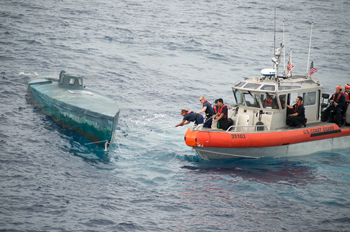
A team aboard Coast Guard Cutter Stratton’s long range interceptor-II cutter boat participates in the interdiction of a self-propelled semi-submersible vessel in the Eastern Pacific Ocean July 18, 2015. U.S. Coast Guard photo by Petty Officer 2nd Class LaNola Stone.

For criminals, shipping drugs without using crewmembers that might provide intelligence on their operations if captured, has to seem like a good idea.

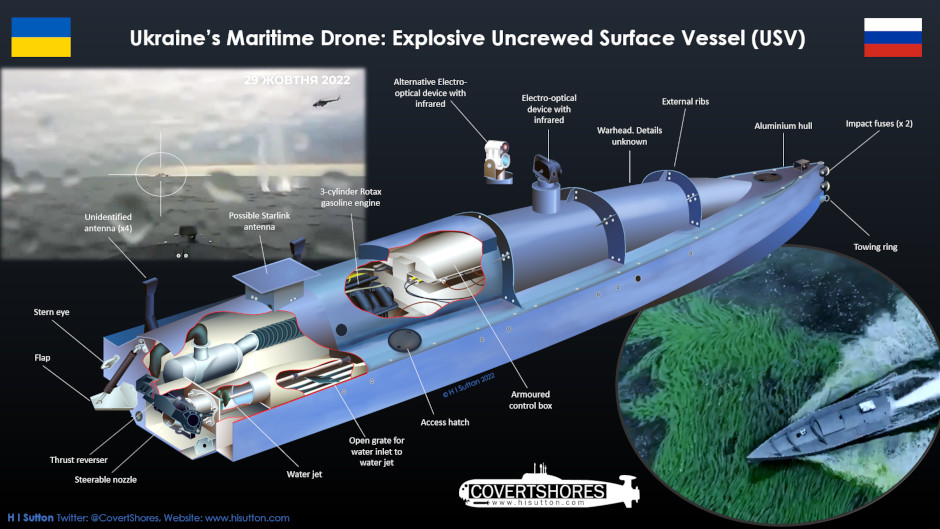
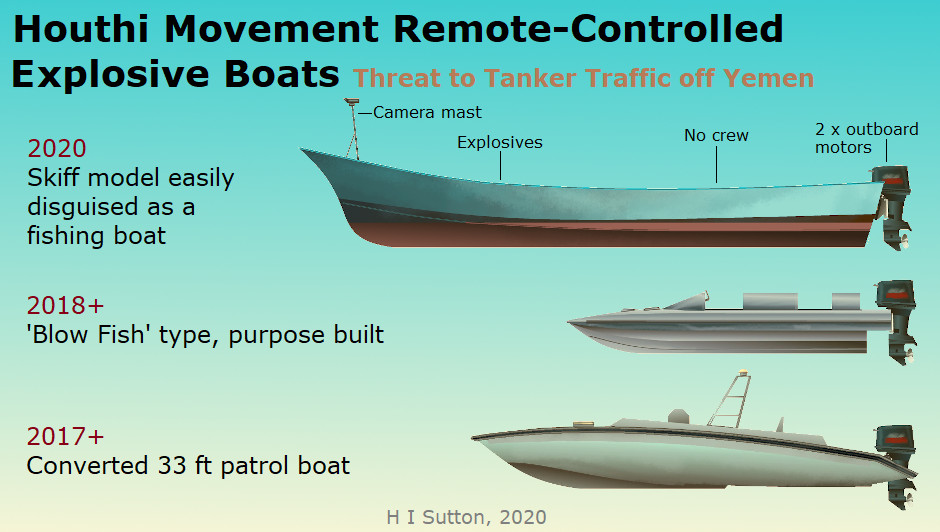
The wars in Yemen and Ukraine have already shown us what terrorists or a nation state might do with unmanned surface vessels.

The US Navy and many others are working on unmanned undersea vehicles (UUVs) as weapons platforms.

Snakehead Large Displacement Unmanned Undersea Vehicle (LDUUV)

Will the Coast Guard include countering UUVs as part of its mission?

Will this prompt a return of the Coast Guard’s ASW mission?

It’s likely unmanned surface vessels will be required to counter unmanned undersea vessels.