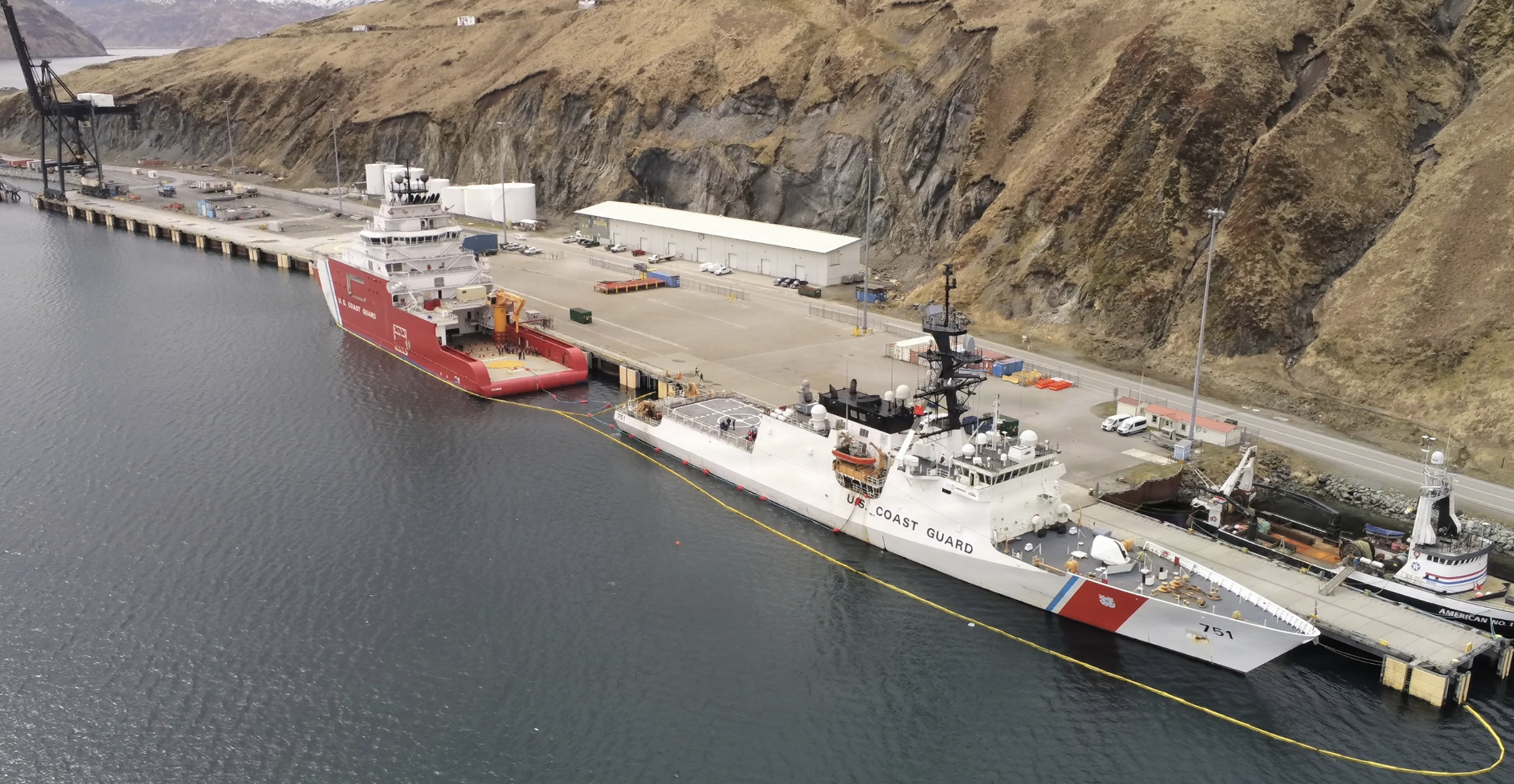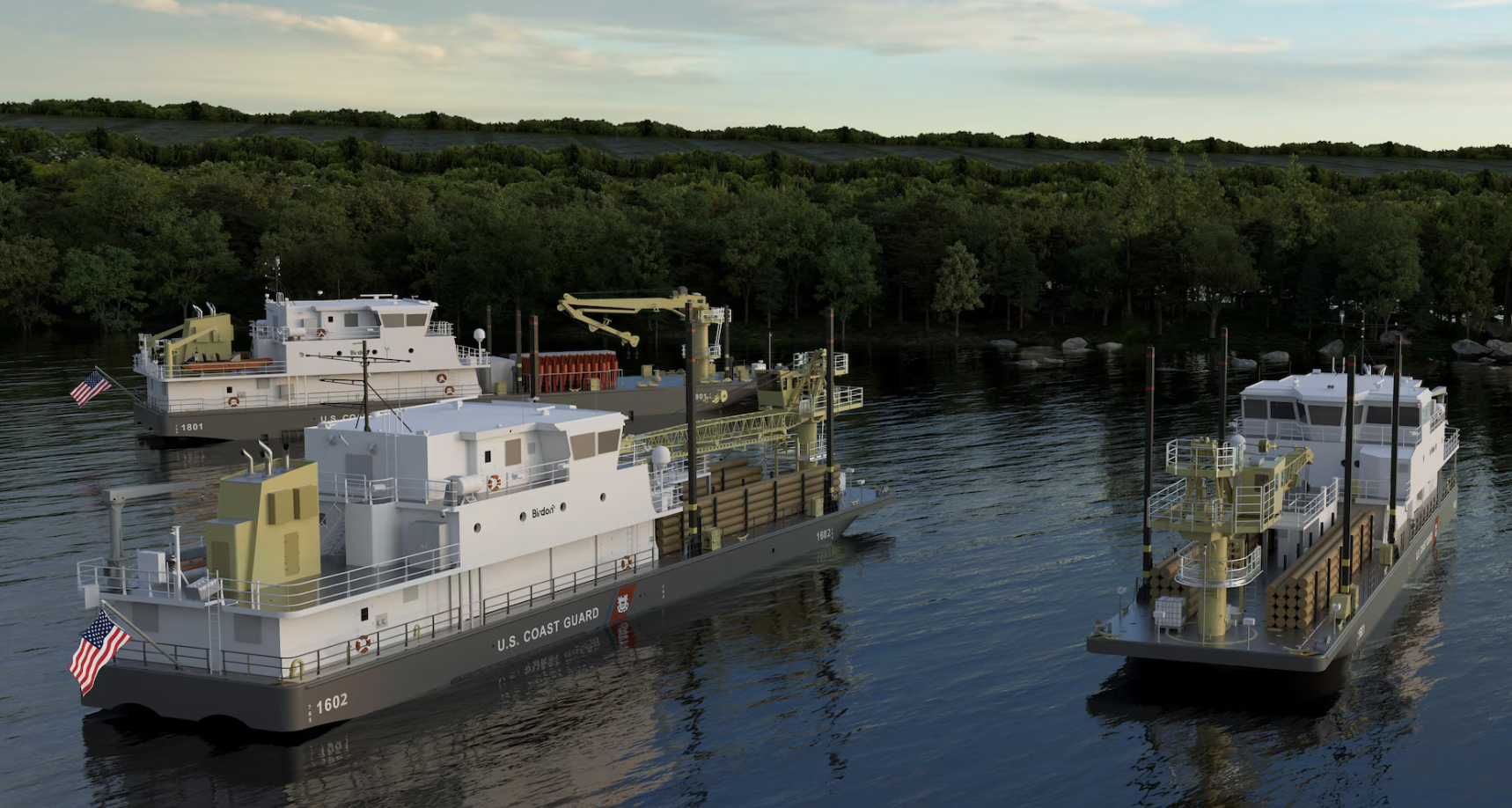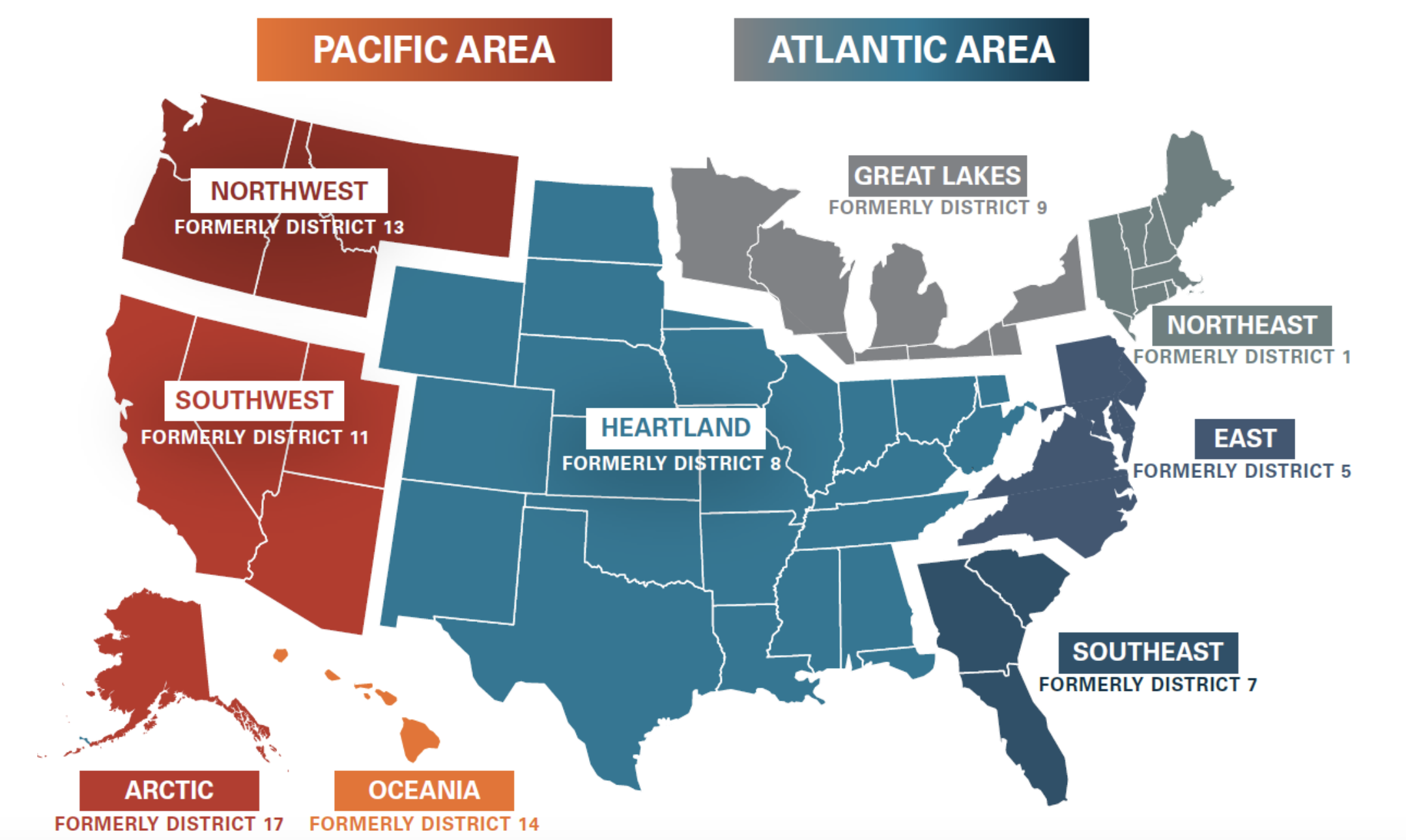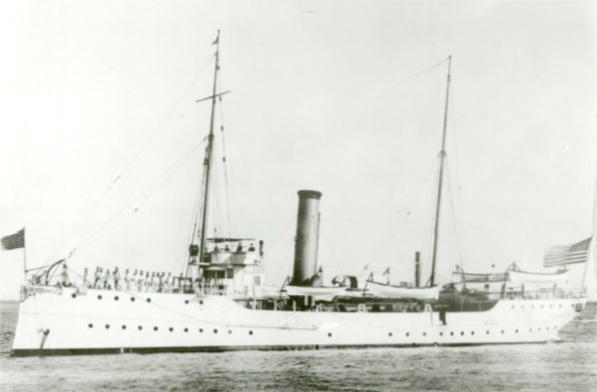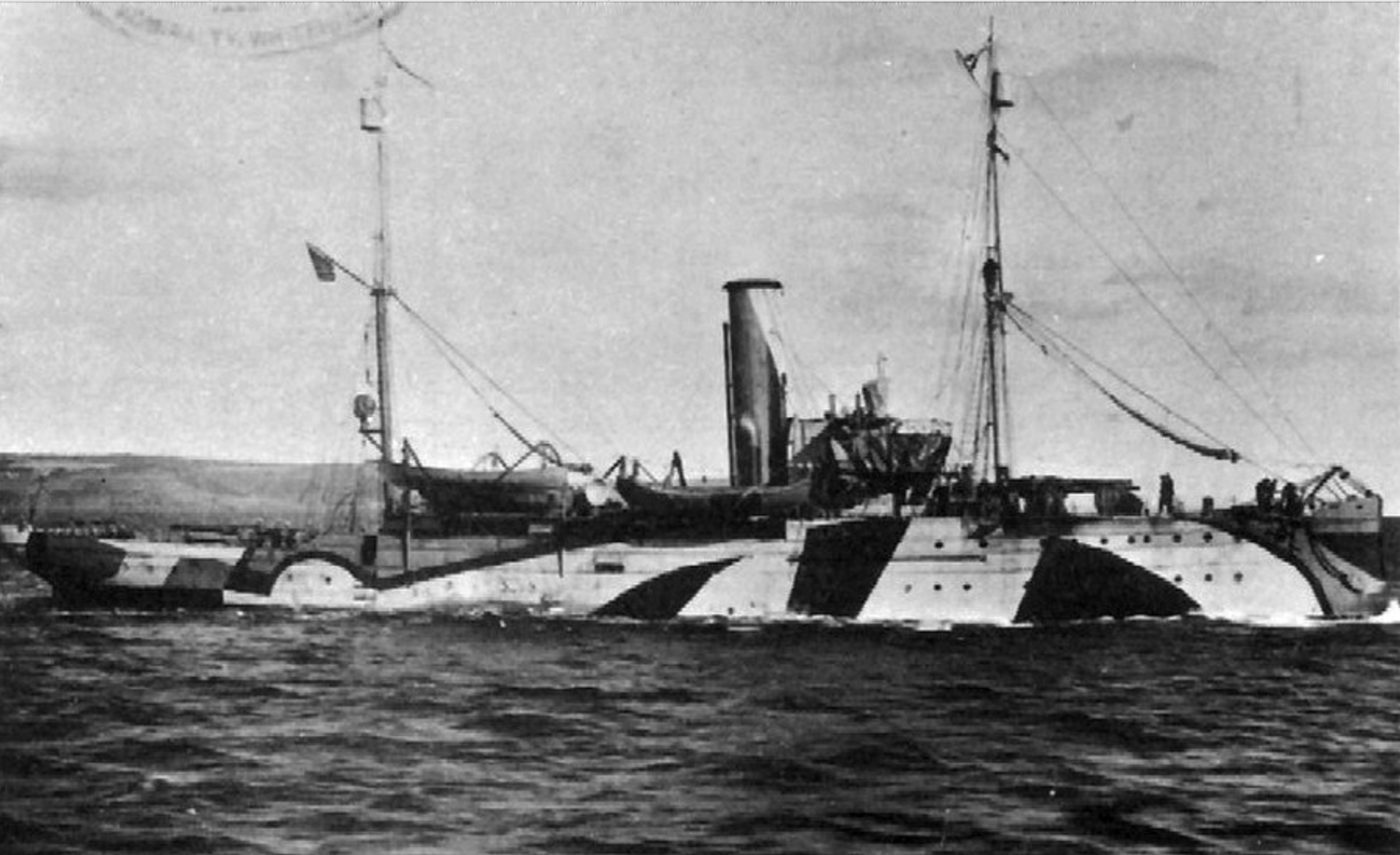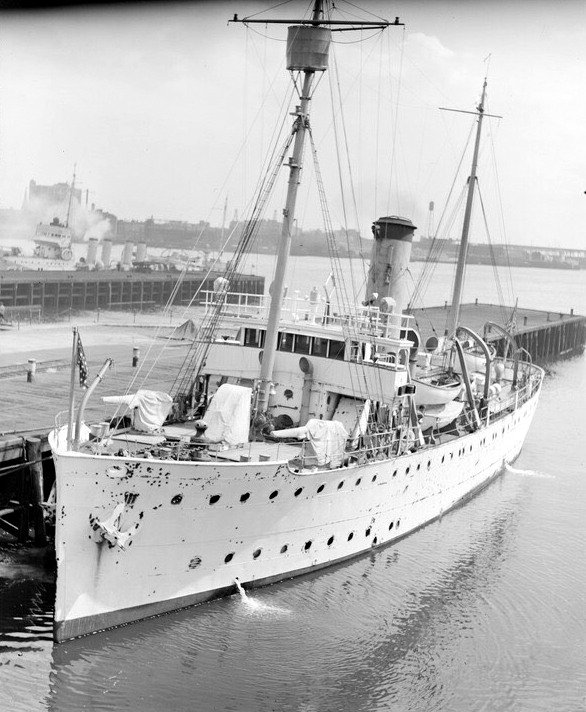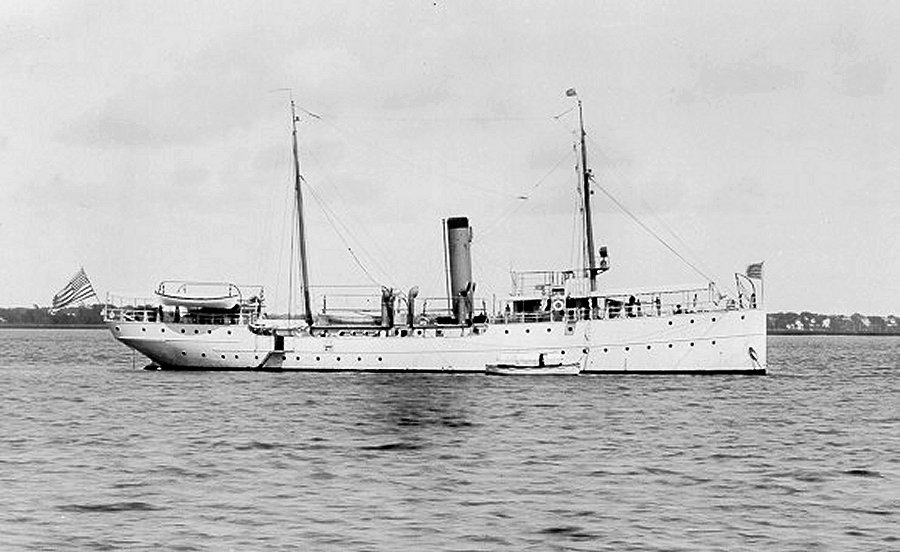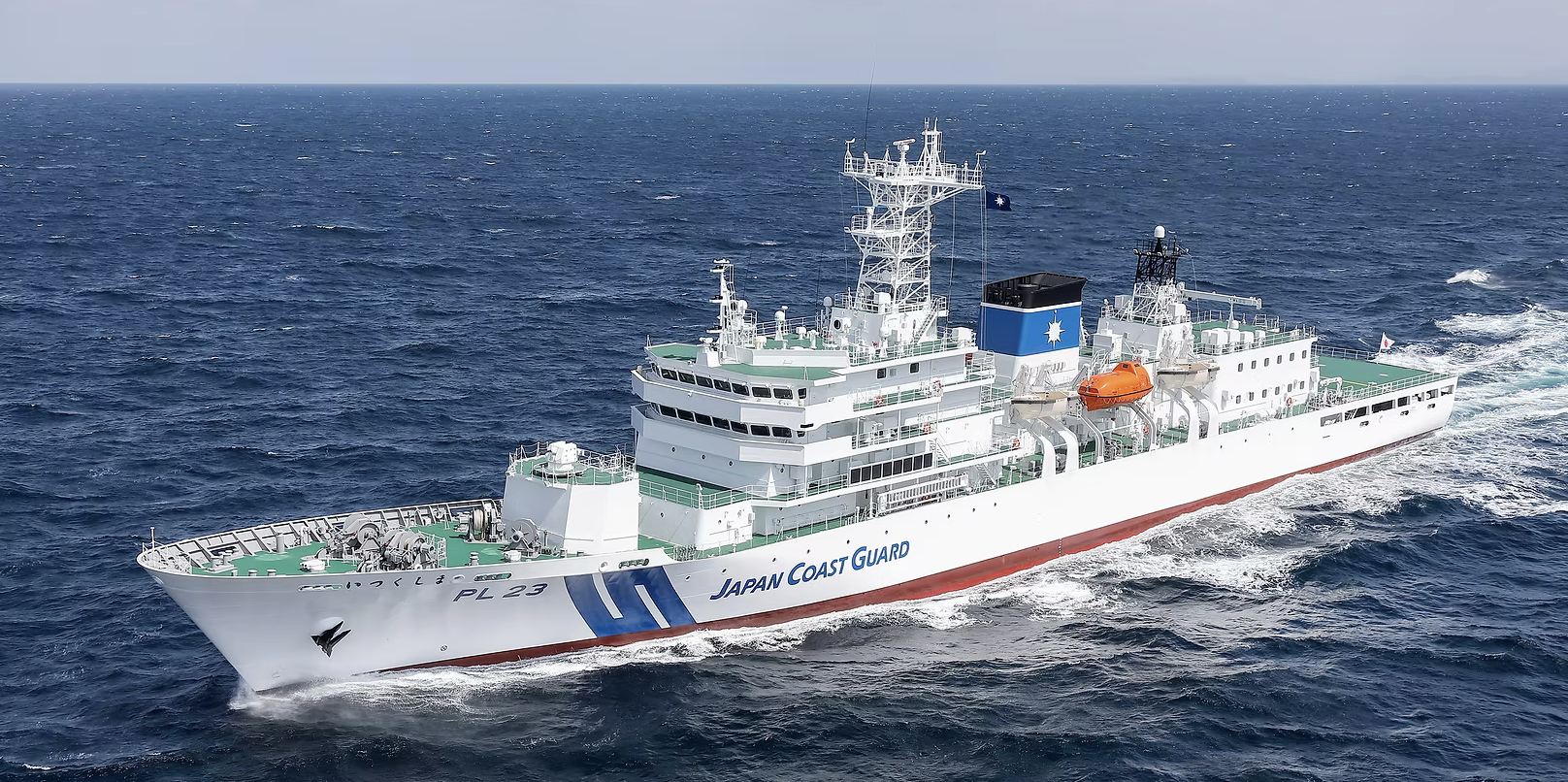
When the program of record began, it was to replace 12 WHECs, 32 WMECs, and 49 WPBs, a total of 93 vessels with 8 NSCs, 25 OPCs, and 58 FRCs, a total of 91 vessels.
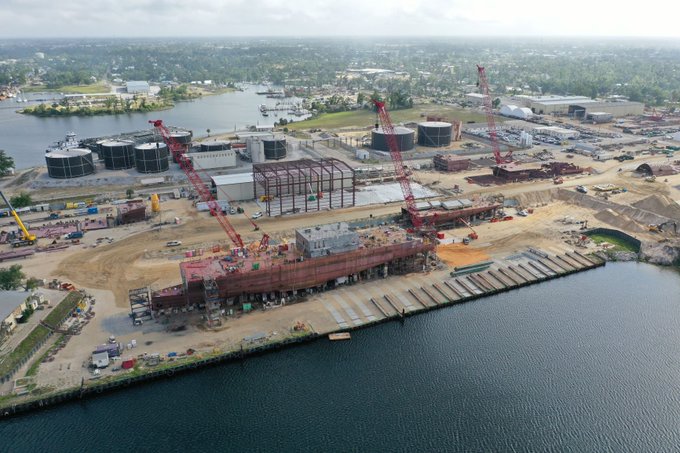
“Eastern Shipbuilding Suspends Work on Offshore Patrol Cutter Program” –Maritime Executive
“Florida-based Eastern Shipbuilding Group (ESG) has finally made the tough decision of suspending work on the troubled Offshore Patrol Cutters (OPCs) program, a development that comes six months after the Trump administration announced partial termination of the contract owing to delays and cost overruns.
“ESG CEO Joey D’Isernia announced that owing to the significant financial strains caused by the program’s structure and conditions, the company has opted to suspend work on its in-construction Heritage-class OPCs, resulting in layoffs.”
Can’t say this is a surprise. May 28, 2025 the Department issued a Request for Information for towing and a technical assessment for what could only have been an Offshore Patrol Cutter. OPCs #3 and #4 were cancelled in July.
Now, what will happen to OPC#1, Argus, and is there anything we can salvage from OPC #2, Chase?
This does leave the Coast Guard short of large patrol cutters, particularly in the Pacific. By now, there were supposed to be two OPCs home-ported in San Pedro and two home-ported in Kodiak. This is another reason LANT AREA’s should assume full responsibility for policing the Eastern Pacific drug transit zone.
There really should be an investigation of how this happened.
Thanks to Pat for bringing this to my attention.

Keel Laying for OPC#3 hull number 917. Presumably future 915 is to the right and future 916 to the left. July 2022.
“USS St. Louis Returns from Deployment in Support of Southern Border Operations” –Seapower

NAVAL STATION MAYPORT, Fla. (Nov. 10, 2025) — The Freedom-variant littoral combat ship USS St. Louis (LCS 19), operating under U.S. Northern Command (USNORTHCOM), returns to Naval Station Mayport, Fla., after completing a surge deployment, Nov. 10, 2025. (U.S. Navy photo by MC3 Jasmin L. Aquino)
The Navy League on-line magazine, Seapower reports,
The Freedom-variant littoral combat ship USS St. Louis (LCS 19), operating under U.S. Northern Command (USNORTHCOM) in the Gulf of America, returned to Naval Station Mayport ), along with the “Valkyries” of Helicopter Maritime Strike Squadron (HSM) 50 Detachment 5 and embarked U.S. Coast Guard Law Enforcement Detachment (LEDET) 408 after completing a surge deployment on November 10, 2025.
This deployment is a bit unusual in that apparently the patrol was in the Gulf under the direction of NORTHCOM and Second Fleet, rather than in the Caribbean and or Eastern Pacific under SOUTHCOM and Forth Fleet like her last patrol.
Neither NORTHCOM nor 2nd Fleet included the news release on their website, 2nd Fleet apparently sending it directly to the Navy League. (In fact 2nd Fleet has not had a news release on their website since 10 August.) We don’t know how long this deployment was since their departure date was not included in the release.
There was no report of a successful interdiction, which is not surprising since historically we do not find much maritime drug smuggling in the Gulf.
USS St. Louis’ previous patrol was more successful, spending eight months operating under 4th Fleet, where she, “disrupted and confiscated over $100 million worth of illicit contraband in five different operations” in addition to participating in exercise UNITAS 2024.
Offshore Patrol Vessels for the Japanese Maritime Self Defense Force Launched

The first and second ships of the Japan Maritime Self-Defense Force’s new patrol vessel class, Sakura and Tachibana, were launched by Japan Marine United (JMU) on November 13, 2025 (photo by Kosuke Takahashi).
Naval News reports the launch of the first two of twelve Offshore Patrol Vessels (OPV) for the Japanese Navy.
“The new patrol vessels measure 95 meters (312 ft) in length, with a standard displacement of 1,900 tons (about 2300 tons full load–Chuck), a depth of 7.7 meters, a draft of 4.2 meters, and a top speed of 25 knots (28.8 mph)…automation technologies have been implemented to reduce crew requirements, limiting the necessary personnel to just 30.”
These ships are particularly interesting because they will operate a relatively large ship with a small crew.
This low crew count is achieved through high levels of automation, including systems like the “Automatic Berthing and Unberthing Function” and an “Integrated Monitoring and Control System” that allows for remote firefighting.
To keep costs down, the ships are relatively simple but include Combined Diesel-eLectric And Diesel (CODLAD) propulsion. The design incorporates space for containerized mission modules below the flight deck.
We have been following this program since its inception.
- Japanese Navy Building a Cutter X, April, 2025
- Japan’s New Offshore Patrol Vessel–July, 2021
- “MAST Asia: Mitsui Unveils OPV Design Proposal for JMSDF OPV Requirement” –Naval News –June, 2019
Over the course of its development, the gun has gotten smaller; the length seems to have been reduced from 100 meters to 95; and the boat and unmanned systems handling facilities have been enclosed as the flight deck was extended to the stern.
Two features I was not aware of is that they will use the V-Bat UAS, also used by the USCG and a Mine Counter Measures role has been proposed.
Construction has been very rapid. These two ships were laid down on February 14, 2025. The first four ships are expected to be delivered in 2027.
These will be the first OPVs in Japanese Navy. It is not unusual for navies to include OPVs if they do not have a sea-going Coast Guard, as is the case with the UK, France, and the Netherlands, but Japan has one of the largest Coast Guards in the world, with more large patrol cutters than the USCG. India also has a large Coast Guard and operates OPVs in both its Navy and Coast Guard.
“Op-Ed: Is it time to replace pyrotechnic flares with eFlares?” –Marine Log
A Marine Log op-ed asks, “Is it not time for regulators to embrace the alternatives and make electronic flares permissible?”
Marine Inspection is definitely not in my wheel house, but if there are safer alternatives to pyrotechnical flares, it does seem they should be acceptable alternatives.
If we don’t have them on our own units already, maybe we should.
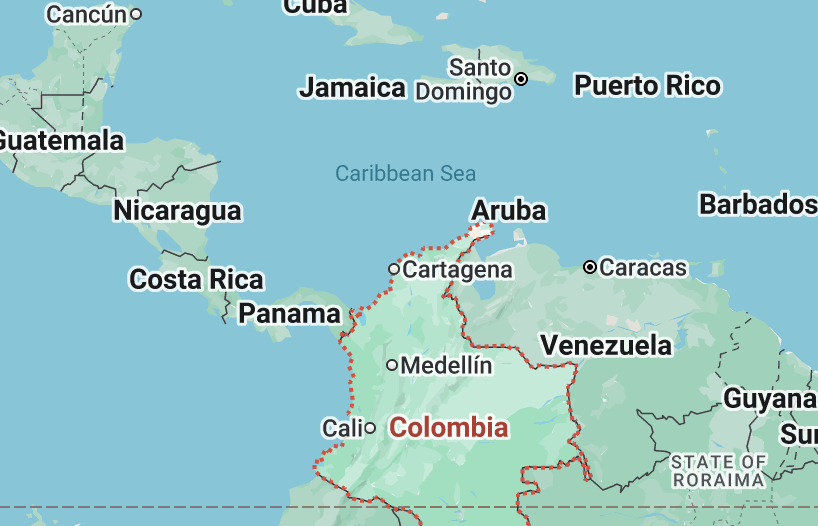
“Colombia to suspend intelligence sharing with US over boat strikes” –Defense News

U.S. Coast Guard Cutters Naushon (WPB 1311), Mustang (WPB 1310), Liberty (WPB 1334) transit through Seymour Narrows in British Columbia, Canada, May 2025. Through the Excess Defense Articles program, these boats will find a second life with the Colombian navy. (U.S. Coast Guard photo courtesy of USCGC Mustang)
“Colombian President Gustavo Petro ordered his nation’s security forces Tuesday to stop sharing intelligence with the United States, until the Trump administration stops its strikes on suspected drug traffickers in the Caribbean, as relations deteriorate between the nations that were once close partners in the fight against drug trafficking.”
“UK pauses intelligence-sharing with US on suspected drug vessels in Caribbean” –The Guardian

Crew members form U.S. Coast Guard Tactical Law Enforcement Detachment (LEDET) 111 and British Royal Navy team embarked aboard HMS Trent (P244) interdicts a semi-submersible drug smuggling vessel in the international waters of the Caribbean Sea, Aug. 26, 2024. Three suspected smugglers and 1,239 pounds of illegal narcotics from this interdiction were transferred to federal custody for prosecution by the U.S. Department of Justice. (Courtesy image from United Kingdom Royal Navy)
“Britain has suspended the sharing of intelligence with the US on suspected drug trafficking vessels in the Caribbean amid concerns information supplied may be used to engage in lethal military strikes by American forces…The UK, which retains oversight on several island territories in the Caribbean, has long shared intelligence with the US about the movements of suspect vessels traveling from Latin America, so they can be seized by the US Coast Guard.”
“U.S. Coast Guard announces new Robotics Mission Specialist Rating”
The Coast Guard has announced a new Robotics Mission Specialist Rating.
U.S. Coast Guard Adm. Kevin Lunday, Acting Commandant of the Coast Guard, and Master Chief Petty Officer of the Coast Guard Phillip Waldron announce the new Robotics Mission Specialist (RMS) rating at Coast Guard Headquarters in Washington, D.C., Nov. 12, 2025. The RMS rate will comprise enlisted robotics and autonomous system (RAS) operators, maintainers and innovators. Coast Guard RAS encompasses, but is not limited to, aerial and submersible drones, as well as unmanned surface and ground vehicles. (U.S. Coast Guard video by Petty Officer 2nd Class Gabriel Wisdom)
Below is a news release that outlines intended acquisition of robotic systems. I have added links to the news release so you can see what these systems are.
Coast Guard to invest $350 million in robotics and autonomous systems
WASHINGTON — The Coast Guard announced Wednesday it will invest nearly $350 million to expand robotics and autonomous systems, strengthening mission execution and operational capabilities.
The funding, provided under the One Big Beautiful Bill Act (OBBBA), includes $11 million in fiscal year 2025 for immediate upgrades to critical autonomous systems.
Initial investments include:
- $4.8 million to procure 16 VideoRay Defender remotely operated vehicles (ROVs) to replace Deployable Specialized Forces’ aging fleet.
- $2 million to procure six Qinetiq Squad Packable Utility Robot (SPUR) and 12 mini-SPUR robots to replace outdated unmanned ground vehicles (UGVs) at Strike Teams.
- $4.3 million to purchase 125 SkyDio X10D short-range unmanned aircraft systems (SR-UAS).
These investments are the first in a series of robotics and autonomous systems projects the Coast Guard will pursue using OBBBA funding. The technologies will meet immediate mission needs, improve personnel safety and strengthen the Coast Guard’s capabilities to control, secure, and defend U.S. borders and maritime approaches.
“These unmanned systems provide increased domain awareness, mitigating risk and enhancing mission success as the Coast Guard continues to operate in hazardous environments,” said Anthony Antognoli, the Coast Guard’s first RAS program executive officer. “The Coast Guard’s mission demands agility, awareness and adaptability. Robotics and autonomous systems deliver all three, enabling us to respond faster, operate smarter and extend our reach where it matters most. We are not waiting for the future to arrive. We are delivering it to the fleet today.”
The Coast Guard’s Deployable Specialized Forces will use the new ROVs for waterfront and pier inspections, hull assessments, subsurface infrastructure surveys, disaster response and search and rescue missions. Their use will reduce reliance on Coast Guard divers, improving efficiency and safety.
Coast Guard Strike Teams, which respond to hazardous materials spills, major marine casualties, groundings, natural disasters, chemical, biological, radiological or nuclear (CBRN) incidents and national special security events, will use the new UGVs to access and sample air in confined spaces aboard commercial vessels.
The SR-UAS will support operations including infrastructure inspections, environmental observation, pollution response, post-storm surveys, ice surveys and communications.
The Program Executive Office for Robotics and Autonomous Systems is part of the Coast Guard’s Force Design 2028 plan, which aims to fully integrate capabilities across the service. Focused on four campaigns – people, organization, contracting and acquisition and technology – Force Design 2028 is an accelerated effort to establish a blueprint for change and transform the Coast Guard into a more agile, capable, and responsive force.
“Coast Guard solicits potential locations for additional training center ” –News Release
Below is a news release. It announces a Request for Information (RFI).
Seems to have a very short fuse. They are accepting responses to this RFI only until Dec. 8, 2025.
Occurs to me, Base Alameda was once used to be a Boot Camp. It might not be too difficult to make it one again and I believe it has some of the facilities referred to already. There is space for construction and it might be possible to get additional land if required from Oakland.
Coast Guard solicits potential locations for additional training center
WASHINGTON — The United States Coast Guard, in coordination with the Department of Homeland Security, announced a Request for Information (RFI) and market research to identify prospective locations for an additional training center Monday.
The Coast Guard is conducting market research to identify facilities across the country that can be used to support projected service growth of up to 15,000 personnel. To address existing training space deficits and secure infrastructure to support increased throughput for recruit training, minimum requirements for a potential training center are defined as follows:
- Lodging for 1,200 recruits
- A dining facility capable of seating 400 personnel
- A medical facility to support 1,000 personnel (minimum 200 medical encounters and 200 dental encounters per day)
- 14 classrooms sized to accommodate 30-60 students
- An auditorium with a capacity of 500+ students
- A pool with 6 lanes, 25 yards in length, and a minimum depth of 4 feet
- A multipurpose gymnasium/athletic/sports facility suitable for sitting 1,200 personnel
- Office space for 400 staff members
- A land area of 150-250 acres
- Proximity to a small commercial service or larger airport within 30 miles
Through the RFI, the Coast Guard released screening and evaluation criteria to evaluate those locations eligible for consideration. The Coast Guard is providing communities meeting the screening criteria an opportunity to submit potential candidate locations by responding to the RFI at SAM.gov. The Coast Guard is accepting responses to this RFI until Dec. 8, 2025. Additional information regarding the RFI and market research, including location criteria, is available at the Coast Guard’s Force Design 2028 website. Potential candidates will receive additional information from the Coast Guard as part of the assessment process, based on the approved requirements and evaluation criteria.
Earlier this year, Secretary of Homeland Security, Kristi Noem, announced Force Design 2028 the Coast Guard’s bold blueprint for change to ensure the service is ready for the challenges of the future. By focusing on four campaigns – people, organization, contracting and acquisition, and technology – Force Design 2028 is transforming how the Coast Guard operates and shaping a more agile, capable and responsive fighting force. Growing Coast Guard end strength by up to 15,000 is a cornerstone of this transformation.
For media inquiries, contact mediarelations@uscg.mil.
About the U.S. Coast Guard
With more than 95,000 miles of shoreline, 25,000 miles of navigable rivers and 4.5 million square miles of U.S. exclusive economic zone, the U.S. Coast Guard defends the Nation, protects the marine transportation system, regulates and safeguards ports and waterways, leads the Nation in maritime drug interdiction and secures the maritime border. As a member of the joint force, a law enforcement organization, a regulatory agency and a member of the U.S. intelligence community, the Coast Guard employs a unique mix of authorities to ensure the safety and integrity of the maritime domain to protect the economic and national security of the nation. The more than 76,000 members of the Coast Guard operate a multi-mission, interoperable fleet of more than 220 cutters, 185 fixed and rotary-wing aircraft, 1,300 boats and its own dedicated cyber command to protect critical maritime infrastructure.
More information about the U.S. Coast Guard can be found at www.uscg.mil Follow @USCG on X and Instagram, like us on Facebook, subscribe on YouTube and follow LinkedIn – connect with us.
Make a difference on land, at sea or in the air with the Coast Guard. Visit GoCoastGuard.com to find out how to be part of our team.
Photos from Coast Guard Yard
Just wanted to pass along some photos from Coast Guard Yard to illustrate the work they are doing in preserving, renovating, and passing along retired Coast Guard Cutters.
Consider this and addendum to my earlier post in which I talked about the work being done at the Yard to prepare retired cutters for transfer to friendly nations.