“Preserving Alaska’s living marine resources” –D17

USCGC Bertolf class National Security Cutter off Unimak Island, Aleutians, Alaska

Below is a summary of District 17’s Living Marine Resources conservation and management efforts. There is also information about the Magnuson-Stevens Fishery Conservation and Management Act (MSFCMA), 1976, that resulted in the expulsion of foreign fishing vessels from a 200 mile Exclusive Economic Zone even before the United Nations Convention on Law of the Sea and about the North Pacific Regional Fisheries Training Center (NPRFTC) (one of five such centers) that “teaches the enforcement of Conservation and Management Measures on behalf of four international fisheries commissions and 62 signatory nations across North and South America, Asia, Oceania, Europe, and Africa, covering over 80 percent of the Pacific Ocean​.”


April 20, 2023

Preserving Alaska’s living marine resources

ANCHORAGE, Alaska — Alaska supports some of the most abundant and diverse marine ecosystems in the world. With more than 46,000 miles of shoreline – more than all of the lower 48 U.S. states combined – the ocean is an integral part of Alaska’s ecosystems, economy, history and culture. According to National Marine Fisheries Service’s (NMFS) Fisheries of the United States 2020 report, U.S. commercial fisheries landed 8.4 billion pounds of seafood valued at 4.7 billion dollars, 199-million saltwater recreational fishing trips were taken, and recreational anglers caught one billion fish with 65 percent released alive. According to the 2019 report, commercial and recreational saltwater fishing supported 1.8 million. Alaska produces more than half the fish caught in waters off the U.S. coast, provides jobs and a stable food supply for the nation, and supports a traditional way of life for Alaska Natives and local fishing communities. Protection of the state’s 5.7-billion-dollar domestic fishery has never been more crucial.  

The living marine resources (LMR) mission is one of two missions focused on protecting fisheries in and outside U.S. waters. The Coast Guard is responsible for enforcing LMR regulations on domestic, commercial, recreational, and charter fishing vessels. Tasked with enforcing applicable fisheries laws in partnership with the NMFS, the Coast Guard’s goal is to provide the at-sea law enforcement presence necessary to reach national goals for LMR conservation and management. Vessel boardings are a critical component to accomplishing this mission providing an opportunity for teams to inspect a vessel’s catch, gear, and other items to ensure regulatory compliance as well as safety.

“The 17th Coast Guard District’s LMR mission is to promote a level playing field in Alaska’s extremely valuable commercial fisheries, protect resources, and ensure safety of life at sea,” said Lt. Cmdr. Jedediah Raskie, D17’s domestic fisheries enforcement chief. “The LMR enforcement mission is a complex operation requiring in-depth planning, multilateral partnerships and inter-agency collaboration. A continued at-sea presence is crucial, and this is only accomplished through dedication and teamwork with our enforcement partners.”

Those partners include:

Coast Guard – Coast Guard Cutters from Alaska, Washington, Hawaii, and California, Sector Anchorage, Sector Juneau, North Pacific Regional Fisheries Training Center, Maritime Safety and Security Teams (MSSTs)

State – Alaska State Troopers, Alaska Department of Fish and Game (ADF&G), local law enforcement

Other Federal – NOAA’s Office of Law Enforcement (OLE), Department of State, U. S. Drug Enforcement Administration, Customs and Border Protection (CBP)

Collectively in 2022, D17 patrolled 10,723 NMs, conducted 654 federal LMR enforcement boardings (11 on foreign-flagged vessels), detecting 30 violations on 26 vessels, and seizing catch on three fishing vessels. The top five fisheries violations include logbook discrepancies, no Individual Fishing Quota (IFQ) permit onboard, expired or no federal fisheries permit (FFP) onboard, sea-bird avoidance gear not onboard or improperly constructed, and improperly marked buoys on fishing gear.

“Right now, our teams are heavily involved with enforcement surrounding the opening of Pacific halibut and sablefish season,” said Lt. Cmdr. Jedediah Raskie. “The Pacific halibut and sablefish Individual Fishing Quota (IFQ) program is the largest catch share program in the U.S. and comprises 90 percent of D17’s total fisheries boardings.”

With the IFQ program, each fisherman has a catch quota that can be used during the open season from March to November. The North Pacific Fishery Management Council developed this program to address issues associated with the race-for-fish that had resulted from the open-access and effort control management of the halibut and sablefish fisheries. Top IFQ violations include: not having an official logbook onboard, no IFQ permit and/or FFP onboard, illegally retaining and/or mutilating halibut, and failure to retain and/or log retaining Pacific cod and rockfish.

Background

The Magnuson-Stevens Fishery Conservation and Management Act (MSFCMA) is the primary law governing mariner fisheries management in U.S. federal waters. The act’s keys objectives are to prevent overfishing, rebuild overfished stocks, increase long-term social and economic benefits, and ensure a safe and sustainable supply of seafood. Prior to the MSFCMA, waters beyond 12 NM were international waters and fished by fleets from other countries.

This 1976 law created eight regional fishery management councils responsible for the fisheries that require conservation and management in their region. The councils are charged with conserving and managing fishery resources from 3 to 200 miles off the coast while the State of Alaska manages fisheries that occur within 3 NM from shore. To learn more, visit  About the MSA — U.S. Regional Fishery Management Councils (fisherycouncils.org)).

The North Pacific Fishery Management Council (NPFMC) is one of the regional councils established to oversee fisheries in the 200-mile Exclusive Economic Zone (EEZ). With a jurisdiction of approximately 1,025,000 NM, the council manages more than 140 species within 47 stocks and stock complexes, primarily groundfish in the Gulf of Alaska, Bering Sea, and Aleutian Islands, targeting cod, pollock, flatfish, mackerel, sablefish, and rockfish species harvested by trawl, longline, jig, and pot gear. The council also makes allocation decisions for halibut in concert with the International Pacific Halibut Commission that biologically manages the resource for U.S.-Canada waters. Other large Alaska fisheries for salmon, crab, and scallops are managed jointly with the State of Alaska. More at North Pacific Fishery Management Council – Managing Our Nation’s Fisheries Off The Coast Of Alaska (menlosecurity.com).

To better enforce the fishery council’s management plans, the Coast Guard determined that region specific training was necessary to ensure boarding officers received adequate instruction in enforcing the increasingly complex laws that govern our nation’s living marine resources. The Coast Guard’s five fisheries training centers are dedicated to providing training in LMR and protected marine species law enforcement to eliminate natural resource degradation associated with recreational boating, recreational fishing, commercial fishing, and illegal incursions by foreign fishing vessels into our EEZ.

The North Pacific Regional Fisheries Training Center (NPRFTC) in Kodiak trains students operating across the vast and harsh environments of the Seventeenth Coast Guard District, to include the Arctic Ocean, Bering Sea, Aleutian Islands archipelago, Gulf of Alaska, and the Inside Passage, an area that encompasses 3,853,500 SQ NM of sea and more than 47,300 miles of coastline. NPRFTC also teaches the enforcement of Conservation and Management Measures on behalf of four international fisheries commissions and 62 signatory nations across North and South America, Asia, Oceania, Europe, and Africa, covering over 80 percent of the Pacific Ocean​. NPRFTC personnel provide instruction to surface and aviation law enforcement crews, command personnel and supporting staff, and deployable specialized forces units. Upon completion of the training, boarding officers are then charged with carrying out the LMR by performing at-sea boardings to ensure compliance.

The nation’s waterways and their ecosystems are vital to the country’s economy and health. The Coast Guard’s LMR mission is to assist in preventing the decline of marine proteced species populations, promote the recovery of marine protective species and their habitats, partner with other agencies and organizations to enhance stewardship of marine ecosystems and ensure internal compliance with appropriate legislation, regulations, and management practices.

“US First OTH V cutter boat delivered to Coast Guard for operational test and evaluation” –CG-9

A Coast Guard crew tests a newly delivered over the horizon V cutter boat near Cape May, New Jersey. U.S. Coast Guard photo.

The Acquisitions Directorate (CG-9) reports


The Coast Guard on April 18 accepted delivery of its first fifth generation over the horizon (OTH V) cutter boat, which will support fast response cutter Angela McShan, based in Cape May, New Jersey. This is the first of four OTH Vs ordered for operational test and evaluation under a 10-year contract awarded to Inventech Marine Solutions of Bremerton, Washington, in August 2022. The contract supports delivery of up to 194 boats and has a total value of almost $100 million.

The OTH V will be deployed across the Coast Guard fleet of national security cutters, fast response cutters, offshore patrol cutters, polar security cutters and legacy medium endurance cutters. Outfitted with an onboard navigation and communications system, the OTH V will provide a high-speed capability to extend parent cutter capabilities when deployed in support of multiple Coast Guard missions.

OTH Vs will support mission accomplishment in almost all mission areas, with emphasis on search and rescue, drug and migrant interdiction, living marine resources, defense readiness, and ports, waterways and coastal security operations.

For more information: Boat Acquisition Program page

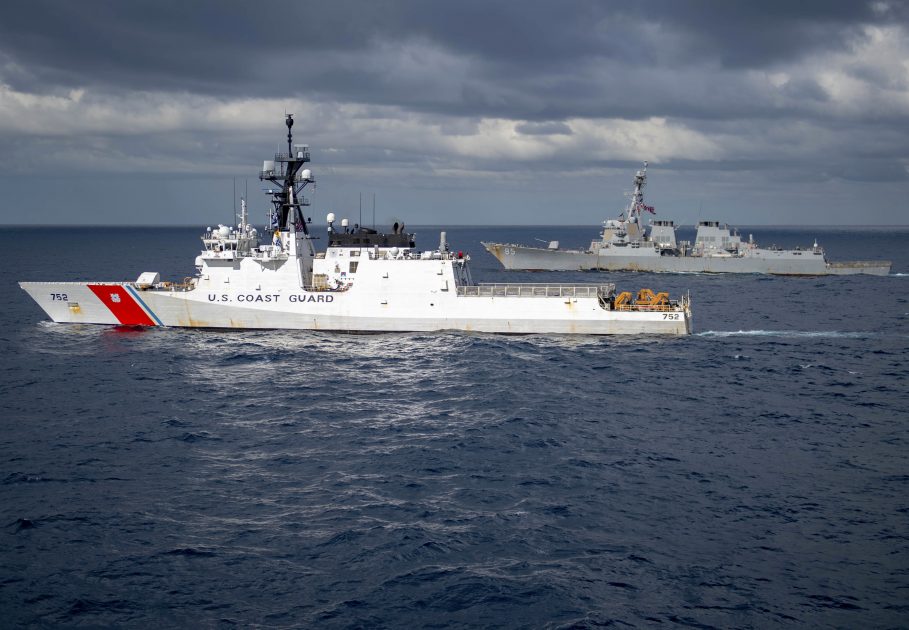
USCGC Stratton Headed for the Western Pacific

USCGC Stratton (WMSL-752), left, and the U.S. Navy Arleigh Burke-class guided-missile destroyer USS McCampbell (DDG-85) maneuver in formation during Talisman Sabre 2019 on July 11, 2019. US Navy Photo

American Military News reports, “Coast Guard cutter changes command in Honolulu en route to South China Sea.”

I don’t think there is anything unexpected or surprising here, but it does provide a good overview and perspective on what the five Pacific Area cutters of this class have been doing.

It also notes another ship of this class, USCGC “Kimball is currently dry-docked at Pacific Shipyards International in Honolulu Harbor for its first maintenance period since it first arrived in Hawaii in 2018.”

“Russian ‘spy ships’ threaten to sabotage UK energy supply” –The Telegraph

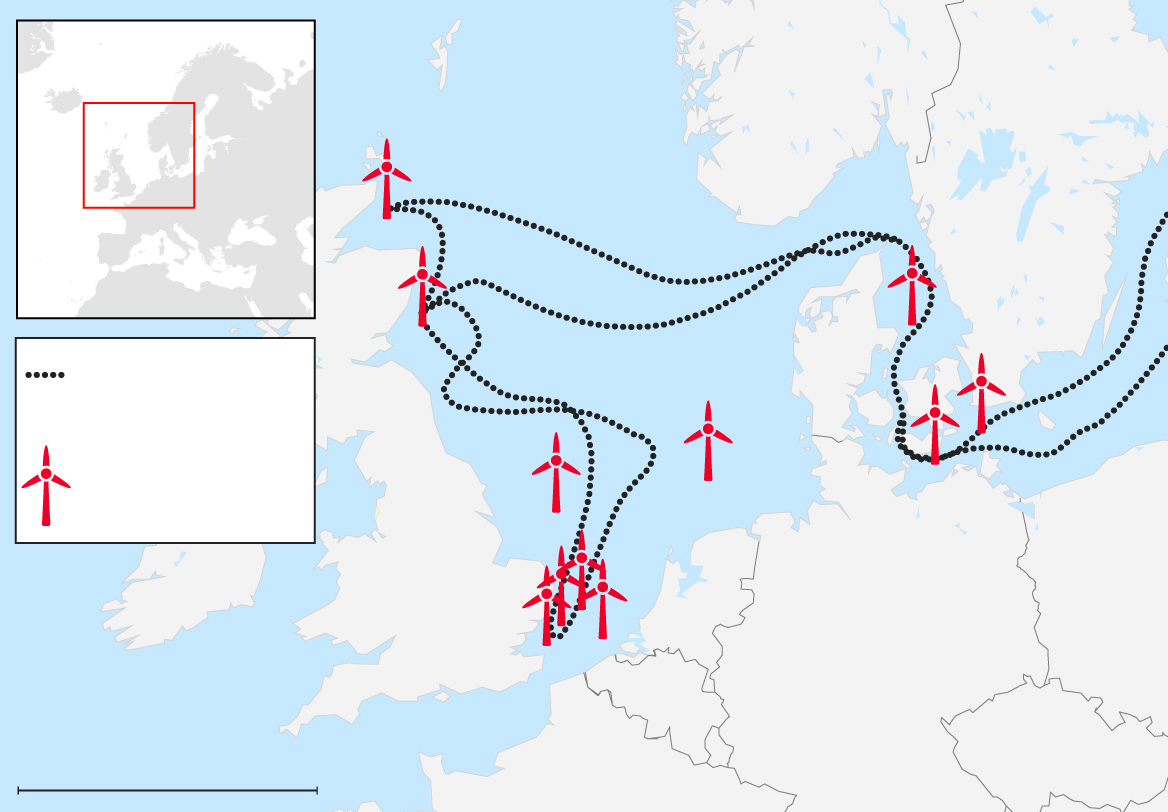
THE ADMIRAL VLADIMIRSKY PASSED SEVERAL OFFSHORE WIND FARMS.  Source: Putin’s Shadow War

The Telegraph reports Russia is believed to be mapping NATO offshore energy industry and communications cables as possible targets should there be a wider war between Russia and NATO.

“A fleet of Russian boats, often disguised as fishing trawlers or research vessels but with armed guards, have been observed by European intelligence agencies conducting mass reconnaissance close to British coastal energy and communications networks.”

The same report notes a surge in hacker attacks on NATO infrastructure.

“Coast Guard signs strategic plan for unmanned systems” –MyCG

MyCG reports the completion of a Coast Guard UxS Strategic Plan,

“,,,the Coast Guard will find ways to use unmanned systems to improve our mission execution. Second, the Coast Guard will prepare to defend against threats from unlawful use of unmanned systems. Finally, the Coast Guard must establish and enforce a regulatory framework for the safe and lawful use of unmanned systems and automation in the Marine Transportation System.”

Using Unmanned air systems (UAS) and surface systems (USV) for increased Maritime Domain awareness is a no brainer.

Unmanned systems will certainly impact crewing requirements for the marine transportation system, with things like remote watch standers, market forces will make that happen.

The most challenging part of this will be “to defend against threats from unlawful use of unmanned systems.” This should include criminals, terrorists, and malevolent state actors.

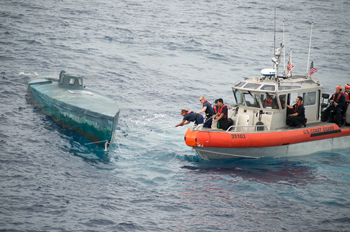
A team aboard Coast Guard Cutter Stratton’s long range interceptor-II cutter boat participates in the interdiction of a self-propelled semi-submersible vessel in the Eastern Pacific Ocean July 18, 2015. U.S. Coast Guard photo by Petty Officer 2nd Class LaNola Stone.

For criminals, shipping drugs without using crewmembers that might provide intelligence on their operations if captured, has to seem like a good idea.

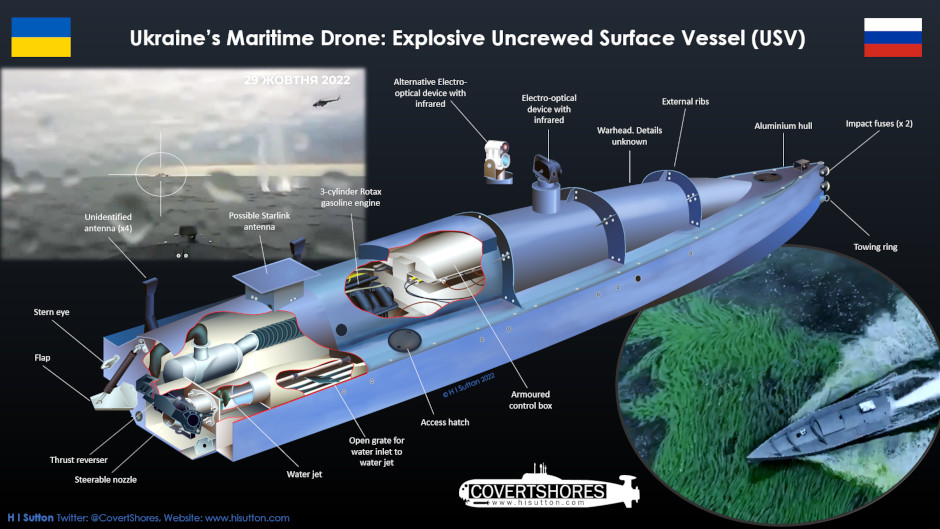
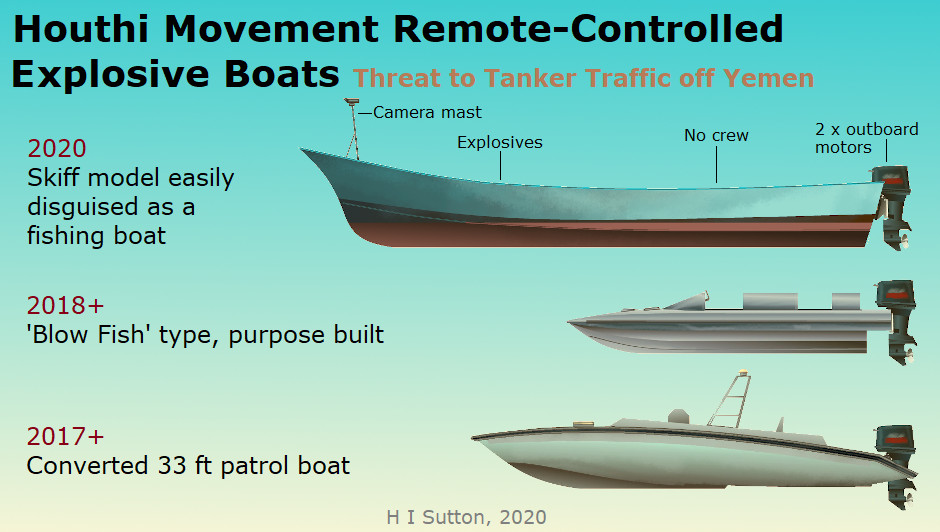
The wars in Yemen and Ukraine have already shown us what terrorists or a nation state might do with unmanned surface vessels.

The US Navy and many others are working on unmanned undersea vehicles (UUVs) as weapons platforms.

Snakehead Large Displacement Unmanned Undersea Vehicle (LDUUV)

Will the Coast Guard include countering UUVs as part of its mission?

Will this prompt a return of the Coast Guard’s ASW mission?

It’s likely unmanned surface vessels will be required to counter unmanned undersea vessels.

“Unmanned Surface Vessel Transits Strait of Hormuz with U.S. Coast Guard” –NAVCENT

A U.S. Navy L3 Harris Arabian Fox MAST-13 drone boat and the U.S. Coast Guard cutters USCGC John Scheuerman and USCGC Charles Moulthrope transit the Strait of Hormuz on Wednesday, April 19, 2023. (Information Systems Technician 1st Class Vincent Aguirre/U.S. Coast Guard)

Below is a NAVCENT news release. It is quite apparent that the PATFORSWA Webber class WPCs have become the go-to resource for operation with the US Navy’s Task Force 59 unmanned surface vessels. Will we see something similar emerge when UAS start operating under 4th Fleet in the near future?

Unmanned Surface Vessel Transits Strait of Hormuz with U.S. Coast Guard

19 April 2023

From U.S. Naval Forces Central Command Public Affairs

MANAMA, Bahrain – An unmanned surface vessel from U.S. 5th Fleet transited the Strait of Hormuz with two U.S. Coast Guard cutters, April 19, demonstrating the continued operational integration of unmanned and artificial intelligence systems by U.S. maritime forces in the Middle East.

A U.S. Navy L3 Harris Arabian Fox MAST-13 drone boat and the U.S. Coast Guard cutter USCGC John Scheuerman transit the Strait of Hormuz on April 19, 2023. (Information Systems Technician 1st Class Vincent Aguirre/U.S. Coast Guard)

USCGC Charles Moulthrope (WPC 1141) and USCGC John Scheuerman (WPC 1146) transited one of the world’s most strategically important straits with an L3 Harris Arabian Fox MAST-13 unmanned surface vessel. The three vessels sailed south from the Arabian Gulf and through the narrow Strait of Hormuz before entering the Gulf of Oman.

“I am proud to be a part of this great partnership between the U.S. Coast Guard and Navy in the Middle East. We often work side-by-side as one team with a common mission to provide security and safeguard the seas,” said Lt. Trent Moon, John Scheuerman’s commanding officer.

U.S. 5th Fleet established a unit called Task Force 59 in September 2021 to integrate unmanned systems and artificial intelligence into regional maritime operations. Since its launch, the task force has deployed a suite of new unmanned systems from operational hubs in Jordan and Bahrain.

In December, Task Force 59 launched an Aerovel Flexrotor unmanned aerial vehicle from USCGC Emlen Tunnell (WPC 1145) while operating in the Arabian Gulf. The launch marked Task Force 59’s first from a U.S. Coast Guard vessel at the time.

“We are on the cutting-edge of integrating advanced unmanned technology into our maritime patrols. Our crews are excited to help lead these efforts with our Navy counterparts,” said Lt. Stephen Hills, Charles Moulthrope’s commanding officer.

U.S. 5th Fleet is leading regional efforts to increase vigilance in surrounding waters that include more than 5,000 miles of coastline from the Suez Canal, around the Arabian Peninsula, through the Strait of Hormuz and into the Arabian Gulf. The integration of unmanned platforms and sensors alongside crewed ships from the United States and regional partners enhances this capability.

The two Coast Guard cutters and Arabian Fox transited the Strait of Hormuz while operating in support of the International Maritime Security Construct, an 11-nation coalition led by the United States that focuses on maritime operations near key waterways in the Middle East.

“US Navy Promises To Strengthen Merchant Marine And Coast Guard Partnerships” –gCaptain

The U.S. Coast Guard Cutter Waesche (WMSL 751) conducts a replenishment-at-sea with the fleet replenishment oiler USNS Laramie (T-AO 203) while patrolling the Eastern Pacific Ocean, April 20, 2020. Waesche was deployed to the U.S. Southern Command area of responsibility to support Joint Interagency Task Force South’s mission, which included counter illicit drug trafficking in the Caribbean and Eastern Pacific. U.S. Coast Guard photo by Chief Petty Officer Dave Horning.

gCaptain reports,

“U.S. Navy Undersecretary Erik Raven spoke today at the opening ceremony of the US Navy League’s Sea Air Space conference in Maryland, emphasizing the importance of the United States Coast Guard (USCG) and the United States Maritime Administration (MARAD) in naval planning and strategy.”

It’s always nice to be appreciated.

There is more of course. The Navy sees the Coast Guard as doing much of the peacetime housekeeping that Royal Navy gunboats did prior to WWI. If you want a rules-based international order, you have to have someone enforce the rules.

I get the feeling the Navy is glad they don’t have to do much IUU fisheries or Alien Migrant Interdiction. They only do enough drug interdiction to say they are doing something.

I am a bit perplexed by the degree of naval warfare equipment provided for the NSCs and OPCs by the Navy. They have spent a great deal of money equipping Coast Guard ships with sensors, communications and electronic warfare equipment, and defensive systems like Phalanx and the 57mm Mk 110. They take us 80 to 90% of the way to being useful warships. Cutters are adequately equipped to do something like the Market Time operation the Coast Guard participated in during the Vietnam war, but other than perhaps boarding merchant ships to help enforce a blockade, I don’t see that we have a mission in the most likely near peer conflict, a fight with China. We have defensive equipment, but the Chinese really would not have any reason to shoot at us, because we are not a threat.

Is there a classified plan to up arm Coast Guard cutters to turn them into viable and useful warships? The fact that NSCs have hosted Navy helicopters during the last two RIMPACs, an MH-60S in 2020 and an MH-60R in 2022, suggest they may be thinking about the question, but I don’t see any evidence there is such a plan.

From the end of WWII until the breakup of the Soviet Union, the most capable Coast Guard cutters had a recognized wartime role. They would escort the reinforcement convoys that would provide logistics support for US and Allied forces resisting a Soviet invasion. They were not the only escort vessels or the best equipped, but they had role.

That role was practiced and exercised.

There is a lot we could do to improve coordination with the Navy Reserve to provide a mobilization potential.

Perhaps equally importantly, the weapons the Coast Guard does have, do not allow our cutters to fully execute their peacetime duties.

Where are the weapons to quickly and reliably stop small fast highly maneuverable craft? The big cutters are not likely to be around. A 7.62mm machine gun on a Response Boat Medium or a .50 cal. on a WPB are inadequate. We might even be out-gunned. Even a 25mm on a FRC doesn’t provide much reassurance because it is a short-range weapon with limited penetrating power on a platform that can be outrun by many potential threats. Using any of the three weapons inside a US port presents a danger of collateral damage.

How is the Coast Guard supposed to forcibly stop a medium to large ship, with a crew that refuses to be stopped? Even the 57mm and 76mm guns are inadequate in the unlikely event a large cutter is in the area. In the more likely event only a WPB or WPC is in the area we are essentially helpless.


“HMS Tamar Makes Rare Port Call to Diego Garcia” –SeaWaves Magazine

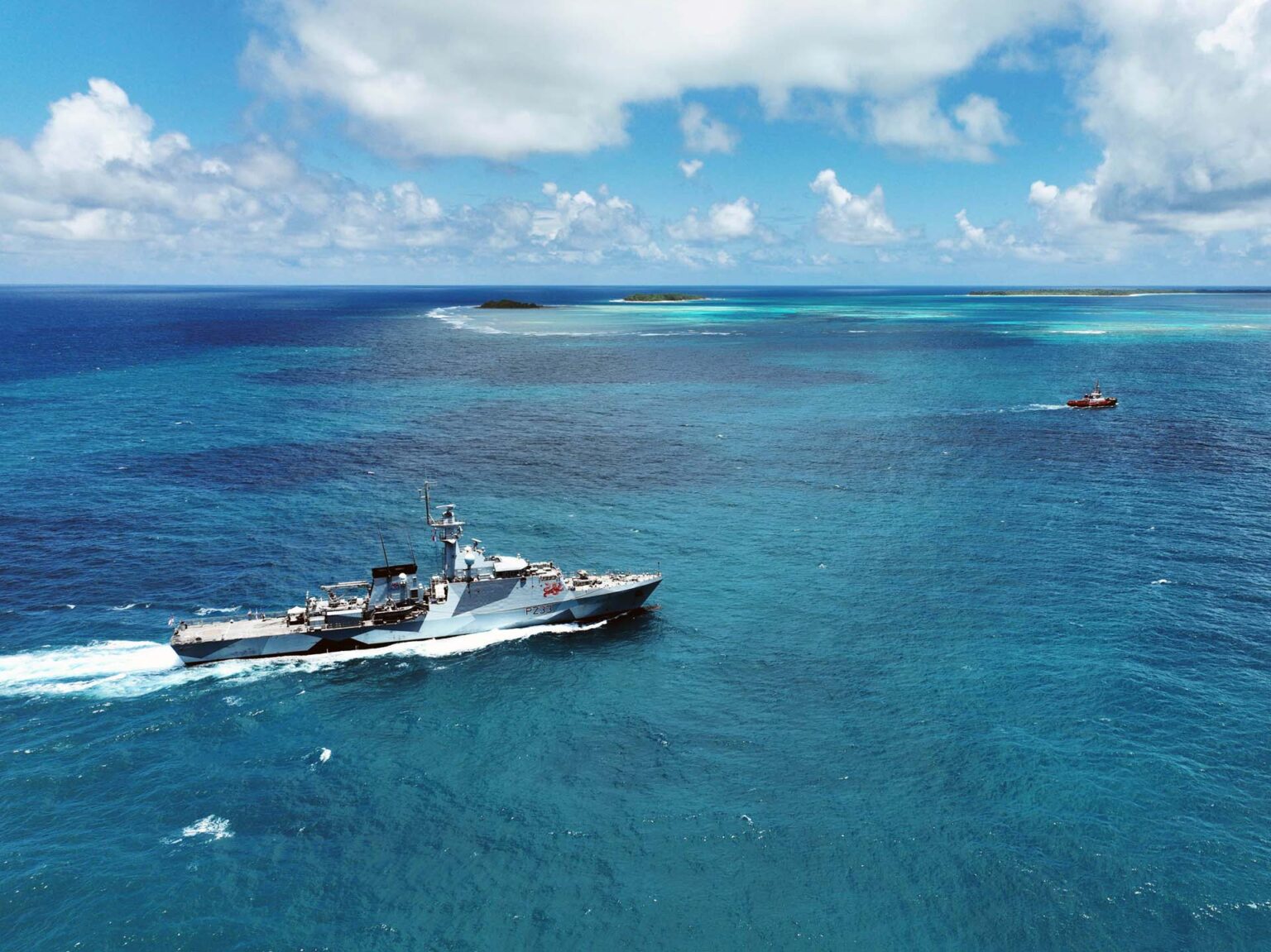
HMS Tamar arriving into Diego Garcia

SeaWaves Magazine reports on a visit by Royal Navy Offshore Patrol Vessel Tamar to the Island of Diego Garcia, an important US and Allied base in the Indian Ocean.

“Crew of the patrol ship concentrated on safeguarding the environment in the British Indian Ocean Territory, ensuring the remote island chain’s rare wildlife was not disturbed by the illegal actions of humanity.

“They found its shores littered with tonnes of rubbish and fishermen flouting international law, trawling the territory’s expansive, protected waters – roughly the size of Texas – for its rich stocks of rare fish.”

I would note two things, first this visit is much too rare and second that while HMS Tamar has a flight deck, it virtually never has an embarked helicopter or capable UAS.

The UK has a vast overseas EEZ. They have never had a large number of OPVs. Generally, they have kept one ship in the Western North Atlantic/Bermuda/Caribbean and one ship in the South Atlantic/Falklands/New Georgia regions, not always an OPV. Their overseas territories in the Indian, Pacific, and Mid Atlantic Oceans seldom, if ever, see a patrol vessel. It does seem the British are starting to recognize the utility of these little ships, but I don’t expect them to build any more.

When operating in these overseas EEZs, patrol vessels are generally not supported by land based maritime patrol aircraft.

The River class Batch 2 are large enough to support a helicopter but have no hangar. A helicopter can help search over the horizon, but they are not as helpful as might be thought, because it is difficult to get more than four hours a day search time (two, two hour sorites). While on WHEC-726 I once calculated the embarked helicopter was increasing our effective area searched by about 40%.

Though it would lack some of the operational flexibility of an embarked helicopter, a robust UAS detachment could provide an even better search capability at a relatively low cost.

“FACT SHEET: The Biden Administration Launches New Efforts to Counter Transnational Criminal Organizations and Illicit Drugs” –Expect Changes In Drug Interdiction

The administration has issued a new fact sheet reflecting the growing problem of street use of synthetic opioids, particularly Fentanyl. This is in conjunction with a larger effort against the supply chains for synthetic opioids and the international criminal enterprises that control and use them.

Inevitably the emergence a different “drug of choice” is going to affect the Coast Guard. It probably means a greater role for marine inspection and greater competition from other DHS agencies for drug interdiction dollars.

While the Coast Guard has been the primary agency for interception of cocaine shipments, the importation pathways for synthetic opioids are likely to be different and more diverse.

Interception of precursors will get more attention. Intelligence targets will change.

The system the Coast Guard has developed to track what cargoes are loaded and where, will take on additional importance and may require more detail.

I can only speculate on the changes we will see, but changes are coming.

“AN ALLIED COAST GUARD APPROACH TO COUNTERING CCP MARITIME GRAY ZONE COERCION” –CIMSEC

U.S. Coast Guard Cutter Munro and Japan Coast Guard Patrol Vessel Large Aso, transit together in formation during a maritime engagement in the East China Sea Aug. 25, 2021. U.S. Coast Guard members aboard the Munro deployed to the Western Pacific Ocean to strengthen alliances and partnerships and improve maritime governance and security in the region. (Photo courtesy of Japan Coast Guard)

CIMSEC has an interesting post discussing US and Japan Coast Guards response to China’s Gray Zone activities in the South and East China Seas.

The information on changes to the Japan Coast Guard is valuable, but the author does not seem to be aware of the existing close relationship between the US Navy and Coast Guard.

She advocates that the US Coast Guard follow the Japan Coast Guard model when really it is more a case of Japan Coast Guard organization becoming more like that of US Coast Guard’s organization.

The Japan Coast Guard is not a military service. I have even heard that JCG ships do not use the same fuel as the Japanese Maritime Defense Force. There was a bright line separating the two services.

Her lack of understanding of the USN/USCG relationship is clear. For instance, she states, “RIMPAC has hosted USCG participation on the rare occasion” when in fact Coast Guard participation is the norm. I believe the Coast Guard has participated in every RIMPAC. She also does not seem to be aware of the Coast Guard’s participation in the national intelligence system, that Coast Guard units are frequently trained and inspected by Navy personnel, or that much of the US Coast Guard’s equipment is US Navy standard supplied by the Navy.

There are some interesting bits in post.

“Last year, the Japan-U.S. ACSA (Acquisition and Cross-Servicing Agreement) was applied to the USCG for the first time to enable a JMSDF supply shop to replenish a USCG patrol vessel.”

Clearly the Japan Coast Guard, which has more cutters than the US Coast Guard (but far fewer aircraft), is getting a lot of attention.

Since 2012, the JCG budget and personnel have seen annual increases and the Kishida administration intends to more than double the budget by 2027.

The Indian Coast Guard when through a similar period of rapid growth after the Mumbai terrorist attack.

Finally, with the Kishida administration’s plan to raise defense spending to 2 percent of GDP by FY27, budgetary calculations will now include expenditures on Japan’s Coast Guard as a defense budget line item. Unlike NATO countries, Japan has historically not classified JCG spending as a defense expenditure. While this reform may seem entirely bureaucratic in nature, Japan is the textbook example of how seemingly esoteric organizational reforms can have remarkable impacts on foreign and security policy. By including JCG spending in the defense budget, the government is opening itself up to criticism and pressure to strengthen the coast guard’s role in Japan’s national security and national defense strategies.

Making the Japan Coast Guard’s budget part of the Defense budget may ultimately tie it more closely to the Japanese Maritime Self Defense Force (Navy) than the US Coast Guard is tied to the US Navy, though they have a very long way to go to reach even that degree of cooperation.

Japan has been a remarkable partner in maintaining the rules based order in Asia. They have helped equip the coast guards of the Philippines and Vietnam. They are also committed to helping the smaller island nations of Oceania.