Coast Guard Cutter Stratton crew visits Kaktovik, Alaska during Arctic patrol
The Coast Guard Cutter Stratton passes underneath San Francisco’s Bay Bridge as Stratton and the crew depart on a months-long deployment to the Western Pacific in support of the U.S. Indo-Pacific Command, June 12, 2019. Operating under the tactical control of the U.S. 7th Fleet commander, Stratton and crew are scheduled to engage in professional exchanges and capacity-building exercises with partner nations in the Western Pacific and to patrol and operate as directed. U.S. Coast Guard photo by Petty Officer 1st Class Matthew S. Masaschi.

Below is a District 17 news release. This is a bit unusual, that a cutter–not an icebreaker, would be that far into the Arctic. This is about the time of minimum ice coverage in the Arctic. Read about Kaktovik, Alaska here.

News Release

U.S. Coast Guard 17th District Alaska
Contact: alexander.j.mastel@uscg.mil

Coast Guard Cutter Stratton crew visits Kaktovik, Alaska during Arctic patrol

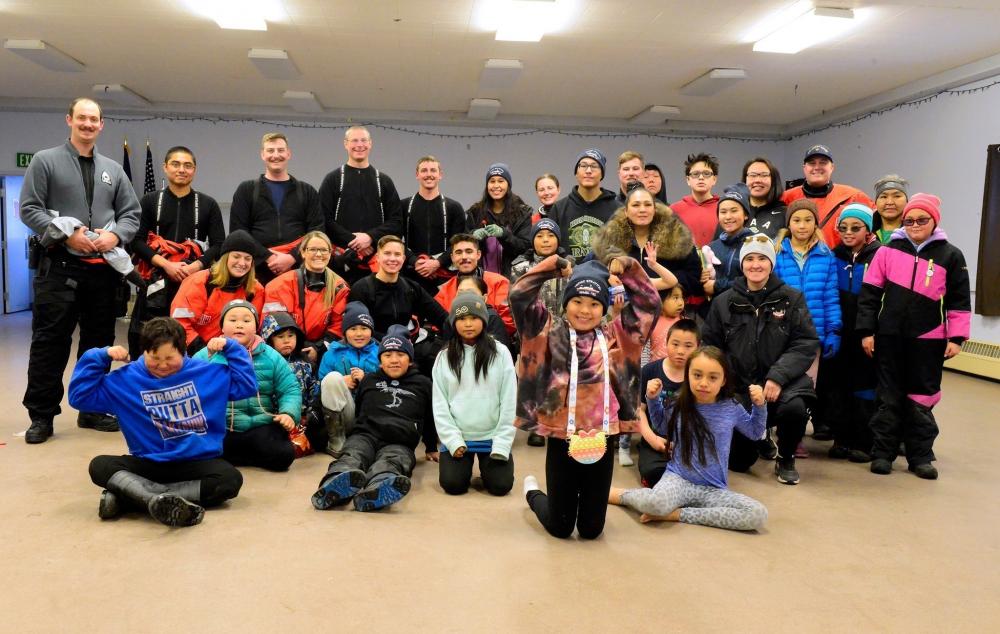
Members from Coast Guard Cutter Stratton visit Kaktovik, Alaska, Oct. 1, 2022, and participate in a question-and-answer session with approximately 45 community members, including roughly 30 children. Discussion centered on life in the Coast Guard, job opportunities within the organization, motivations for joining, as well as the Coast Guard’s role in the Arctic region. (U.S. Coast Guard photo courtesy of Coast Guard Cutter Stratton)

Editors’ Note: Click on images to download high resolution version.

KAKTOVIK, Alaska — Crew members from Coast Guard Cutter Stratton (WMSL 752) met with key leaders October 1 in Alaska’s most northeastern tribal community, while on a patrol in the Arctic Ocean.

Members from Stratton visited Kaktovik, where they met with Mayor Flora Rexford. Stratton members also participated in a question-and-answer session with approximately 45 community members, including roughly 30 children. Discussion centered on life in the Coast Guard, job opportunities within the organization, motivations for joining, and the Coast Guard’s role in the Arctic region.

Community members offered samplings of muktuk and expressed interest in more Coast Guard engagement in the community, most notably in their schools.

“We are so fortunate to have had this opportunity,” said Lt. Augustus Manzi, combat systems officer aboard Stratton. “We were met with overwhelming generosity from the community. Tribal members spent time getting to know us better and educated us on their customs and way of life. It was an incredible experience.”

The Stratton team presented a plaque to the mayor, delivered hand-knitted blankets gifted by the Alameda Navy League, and offered personalized etched glasses, knit hats and ship memorabilia to community members and their children.

Kaktovik is on the northern edge of the Arctic National Wildlife refuge and home to approximately 300 year-round residents.

CGC Stratton is a 418-foot national security cutter (NSC) capable of extended, worldwide deployment in support of homeland security and defense missions. NSCs routinely conduct operations from South America to the Arctic, where their unmatched combination of range, speed, and ability to operate in extreme weather provides the mission flexibility necessary to conduct vital strategic missions.

“FACT SHEET: U.S.-ASEAN Special Summit in Washington, DC” –The White House, May 12, 2022

Indonesian Maritime Security Agency vessel KN Tanjung Datu, left, sails alongside U.S. Coast Guard Cutter Stratton during joint exercises in the Singapore Strait in August 2019. IMAGE CREDIT: PO1 LEVI READ/USCG

Below is an excerpt from a May 12, 2022 White House Fact Sheet. Notably there is some significant new tasking for the Coast Guard here.

Here is a link to the “ASEAN Outlook on the Indo-Pacific’s Maritime Pillar” referred to in the excerpt. See particularly V. Areas of Cooperation, Maritime Cooperation, paragraphs 14 and 15 on page 3.

Presumably, this is being implemented, at least in part, as a result of NOAA’s “National Five Year Strategy for Combating Illegal, Unreported, and Unregulated Fishing (2022-2026) which designated Vietnam as one of five “Priority States.”

EXPANDING MARITIME COOPERATION

The United States is committed to supporting implementation of the ASEAN Outlook on the Indo-Pacific’s Maritime Pillar. Today we are announcing $60 million in new regional maritime initiatives, most of which will be led by the U.S. Coast Guard (USCG).

  • Personnel and Presence: The USCG will deploy assets and assign additional personnel to the Indo-Pacific to help meet partners’ requests for maritime training and capacity-building, to include a USCG attaché at the U.S. Mission to ASEAN.
  • Countering Illegal, Unreported, and Unregulated Fishing: The Department of State, Department of Labor, and USCG will launch new initiatives to help ASEAN counties counter illegal, unreported, and unregulated fishing and strengthen the capacity of ASEAN sectoral bodies to prevent forced labor in the fishing industry.
  • Indo-Pacific Support Platform: The USCG will deploy a cutter to Southeast Asia and Oceania for security cooperation and to operate as a training platform. This cutter will deploy throughout the region providing multinational crewing opportunities, conduct training missions, and participate in cooperative maritime engagements.
  • Excess Defense Articles: As USCG decommissions cutters, the service will prioritize the transfer of ships to Southeast Asian countries to increase the coastal nations’ maritime law enforcement capacity and promote a free and open Pacific.
  • Southeast Asia Training Team: The Department of State and USCG will expand USCG support to maritime law enforcement agencies in Southeast Asia by placing a training team in the region for the first time with additional dedicated support from U.S.-based trainers. These technical experts will provide capacity-building for the regional partners’ maritime law enforcement agencies in the areas of institutional development, readiness, sustainment of equipment, and workforce professionalization.
  • Emergency Training: The USCG and the Department of State will provide new trainings on energy safeguards, protection of critical maritime infrastructure, and all-hazards response.

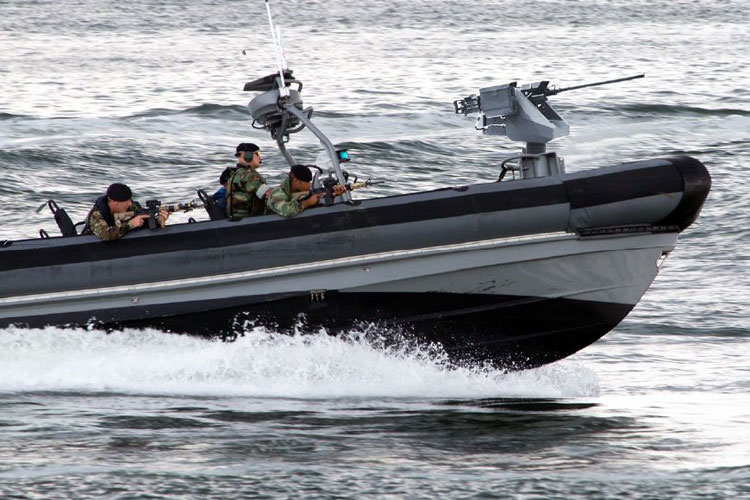
“SHARK SMART WEAPON STATION FOR LIGHT BOATS” –Joint Forces / Counter UAS

Joint-Forces reports,

General Robotics of Israel, an advanced systems developer, has unveiled the SHARK Naval RCWS smart weapon station for light boats.

Not only is it light (85 kg without weapon and ammunition), but it also has a unique fire control system,

When the operator presses the trigger, the AI-driven fire control runs a target prediction algorithm to align the projectile’s path and the target’s expected location and points the weapon in that direction. Only then is a burst fired. This technique has demonstrated hit accuracy of about 70 percent. This unique capability enables SHARK to be used as a naval Counter-UAS weapon.

Looks like something the Coast Guard might be interested in.

A pair of these mounted on opposite corners of the PATFORSWA Webber class, replacing two of the crew served .50 cal., might come in handy.

OPC #1 and #2 May Be Delayed

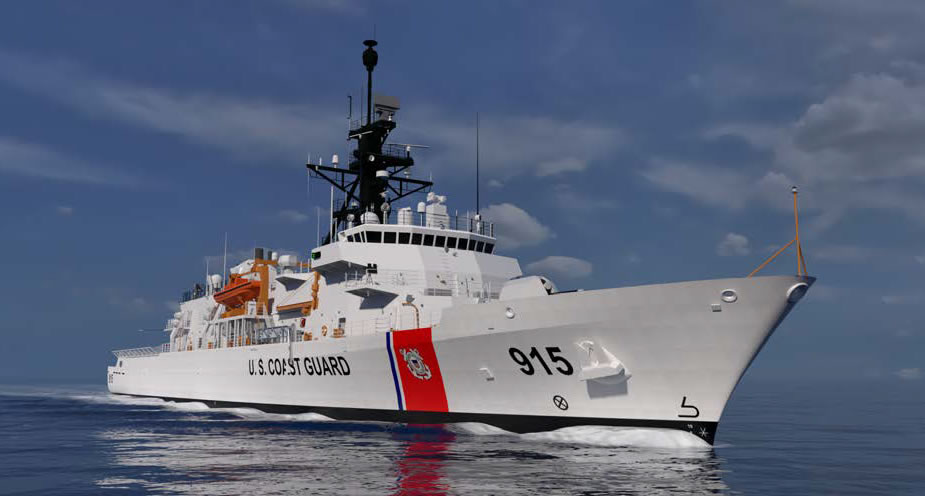
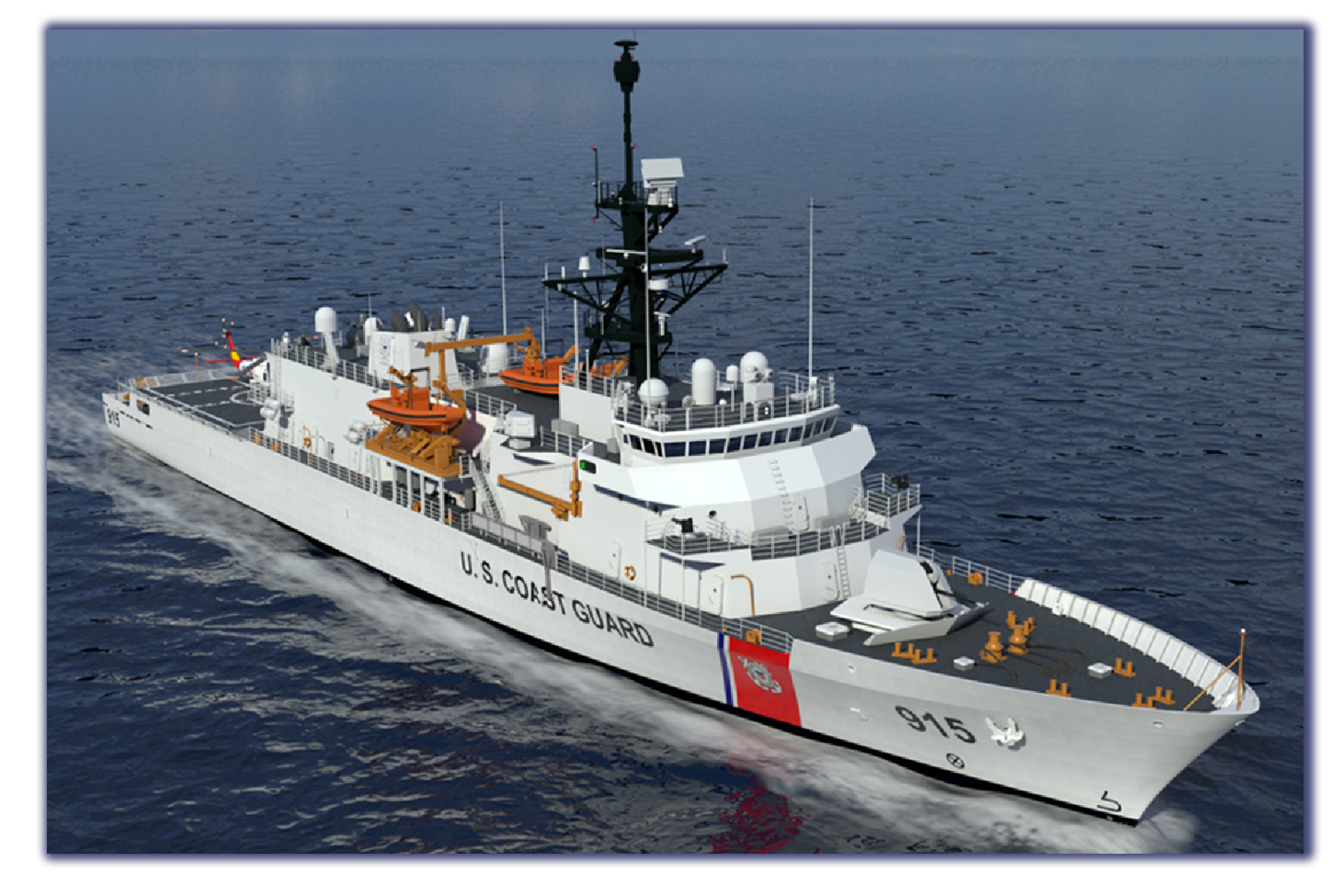
Artists rendering from Eastern Shipbuilding Group

Two articles report that additional delays to both the future USCGC Argus and USCGC Chase appear likely.

The Marine Log article refers to the Forbes article but appears focused on drive shaft irregularities,

“We received shafting for OPC Hulls 1 and 2 that were not in compliance with the NAVSEA requirements called for in the OPC vessel specifications. These two sets of shafting were delivered to our facility with signed and stamped certificates of approval from the American Bureau of Shipping (ABS), the U.S. Government-mandated certification authority for the OPC Program, certifying that they were in physical compliance with the ABS approved design artifacts,” said Eastern Shipbuilding Group President Joey D’Isernia. “We later discovered that both shipsets of shafting were non-compliant due to having out of tolerance physical dimensions. This issue was discovered during shaft installation on OPC Hull 1. The Coast Guard, Rolls-Royce [the supplier of the shafts] , and ABS were made aware of the problem immediately and they each had on-site representatives overseeing shaft installation. We are working closely with ABS, Rolls-Royce, and the USCG to resolve this issue as soon as possible. In the meantime, we are coordinating with the Coast Guard to advance post launch production and test activities to be completed prior to launch, in order to mitigate delivery schedule impacts and launch the ship at an even greater level of completion.”

The Forbes article is a more comprehensive look at Eastern progress, or lack there of,  on the project. Its worth reading both.

NATIONAL 5-YEAR STRATEGY FOR COMBATING ILLEGAL, UNREPORTED, AND UNREGULATED FISHING (2022-2026) / and the Missing Air Element

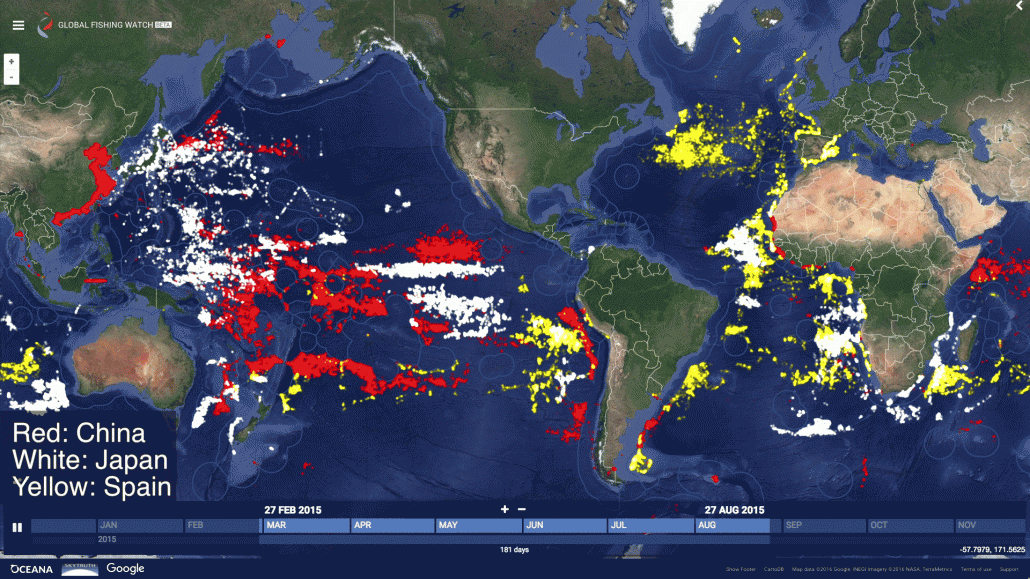
Under NOAA auspices, the U. S. Interagency Working Group on IUU Fishing has issued a five year strategy to address IUU fishing.

There are three identified objectives:

  • Promote Sustainable Fisheries Management and Governance
  • Enhance the Monitoring, Control, and Surveillance of Marine Fishing Operations
  • Ensure Only Legal, Sustainable, and Responsibly Harvested Seafood Enters
    Trade

Five nations have been identified as priorities for development of self sufficiency in the prevention of IUU fishing: Ecuador, Panama, Senegal, Taiwan, and Vietnam. These “Priority States” were selected because their “…vessels: “actively engage in, knowingly profit from, or are complicit in IUU fishing” and, at the same time, the priority flag state “is willing, but lacks the capacity, to monitor or take effective enforcement action against its fleet.”

090808-G-3885B-136
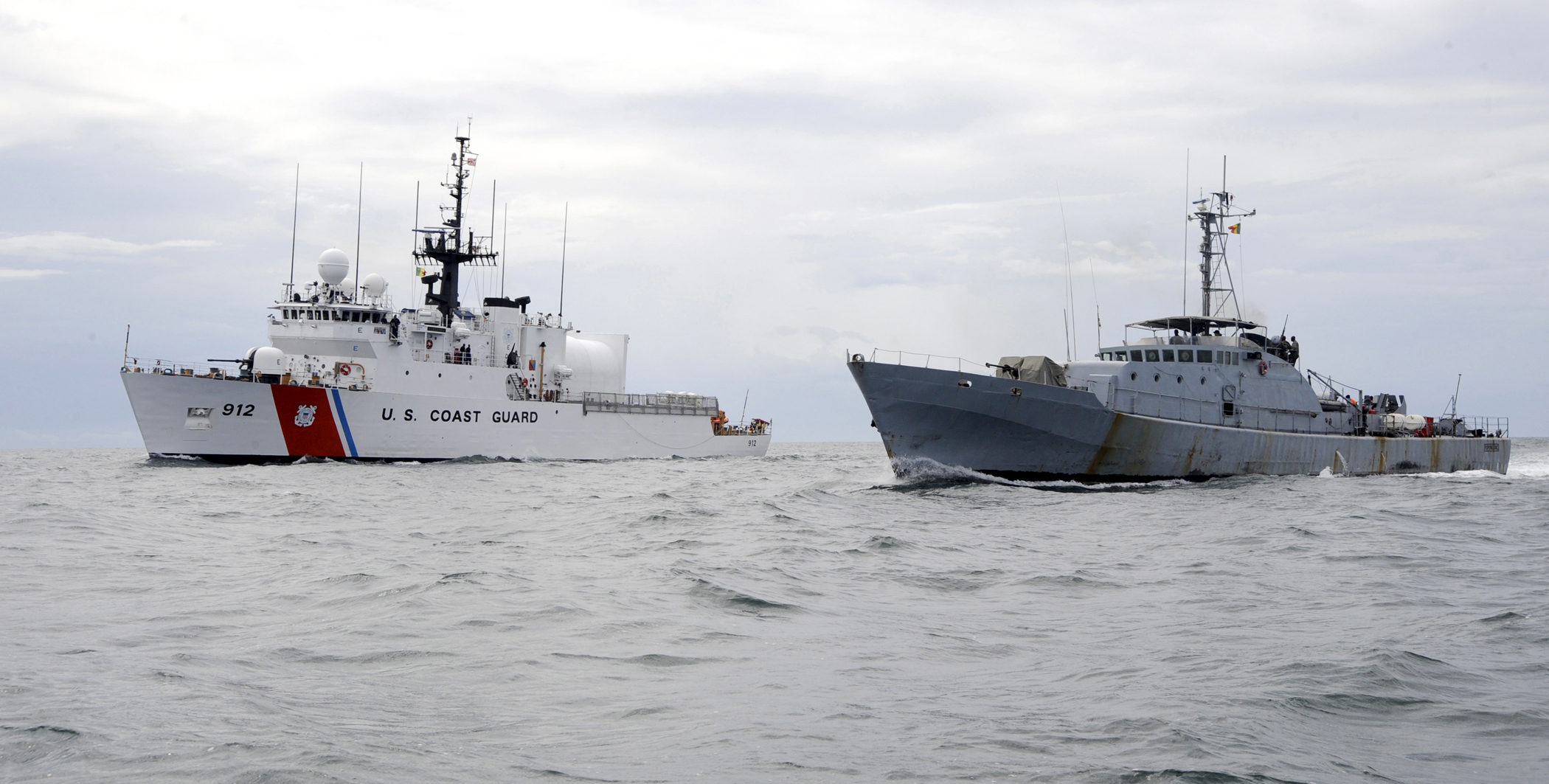
ATLANTIC OCEAN (Aug. 8, 2009) The U.S. Coast Guard Cutter Legare (WMEC 912), left, patrols along side the Senegalese Navy vessel, Poponquine, during joint operations as part of the Africa Partnership Station. The Legare is deployed off the west and central coast of Africa for the six-day joint U.S/Senegalese operation, during which several Senegalese naval vessel boarding team members embarked aboard the Legare and participated in joint boarding and training exercises. (U.S. Coast Guard photo by Petty Officer 2nd Class Thomas M. Blue/ Released)

It is likely the Coast Guard will be spending time helping these states build capacity in their navies, coast guards, or maritime police.

The Missing Air Element  

One of the great strengths of the US Coast Guard is its fleet of fixed wing aircraft. They provide an essential detection capability. An air search capability allows the patrol vessels to do less searching and more boardings. Most smaller nations’ maritime law enforcement agencies have only limited, or in many cases, no comparable organic air search capability. Frequently, if they are to have an air search, they require cooperation of another service.

What I have seen of our capacity building efforts, seem to have been focused on surface operations and boarding team work.

Recognizing fishing vessels is not in the skill set of most air force crews. Frequently communications between surface vessels and air units are not compatible. In many air forces their aircraft virtually never go out over blue water.

The US Coast Guard could certainly help build capacity on the air side, as well as the surface side of the IUU fishing problem.

Land based Unmanned Air Systems now appear to be a way maritime law enforcement agencies might have an organic fixed wing air search capability at a lower cost. Unfortunately the US Coast Guard still is not particularly experienced in this area. The Japanese Coast Guard might be able to provide valuable advice to at least Taiwan and Vietnam in the use of UAS, as they gain experience with their newly acquired MQ-9Bs.

“Schiebel Teases New Camcopter S-300 UAV At Euronaval” –Naval News

Camcopter S-300 compared to the S-100 (image from company brochure).

Naval News reports Austrian company Schiebel is building a larger version of their widely used Camcopter S-100 to provide greater endurance and payload.

Regarding the technical specifications, according to Schiebel, the UAS is 4.8 meters long, 1.9 meter high and 0.9 meter wide. It can fly at a maximum speed of 120 knots (cruising speed 55 knots). Size apart, the true difference compared to the S-100 system is the payload capacity. Indeed the S-300 is able to carry up to 340 Kg (fuel including) and its maximum take-off weight can reach 660 Kg. This is basically three times more compared the S-100 can carry. With a 50 Kg payload, the S-300 can fly up to 24 hours (4 hours with 250 Kg).

The 660 kg max takeoff weight (TOW) compares to a 3,150 lb (1,430 kg) Max TOW for the MQ-8B Fire Scout and 6,000 lb (2,721 kg) for the larger MQ-8C Fire Scout.

The French Navy’s VSR 700 UAV mentioned in the last paragraph as a competitor for the S-300 was discussed here.


“Beware the Explosive Vessels” –Real Clear Defense

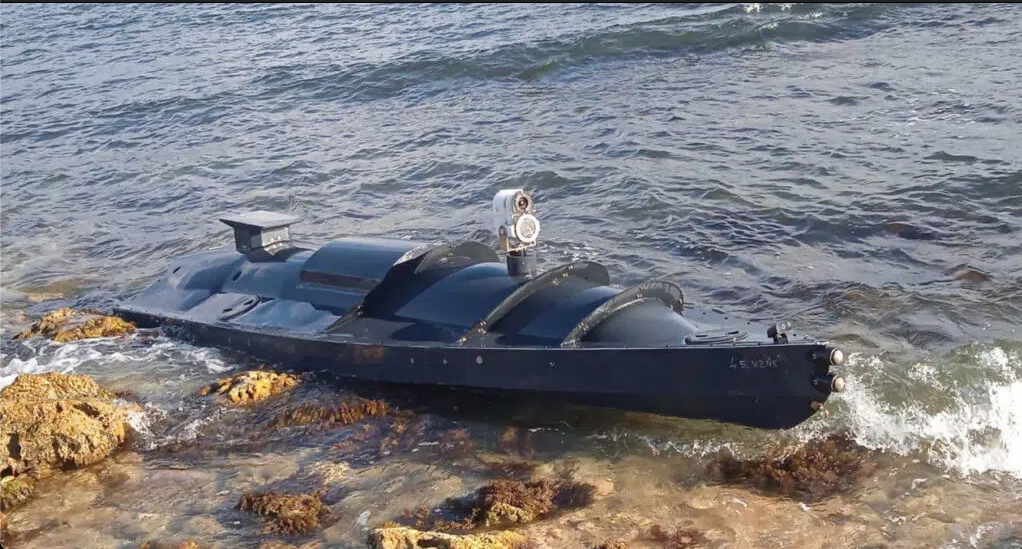
Image of the suspected Ukrainian USV circulating on Russian social media. Image via Naval News

Real Clear Defense suggests that the damage to the Kerch bridge connecting Crimea to Russia may have been done by an Unmanned Surface Vessel (USV) like the one reportedly found aground earlier.

They go on to talk about explosive laden surface vessels of all sizes, both as potential weapons and potential threats, and how hard they can be to counter.

We have talked about this threat several times, but this post offered an example I had not previously mentioned.

“…when a ship filled with explosives bound for Europe during World War I collided with another vessel in Halifax Harbor in 1917 and caught fire, the resulting explosion obliterated everything within a half-mile radius, inflicted copious damage at greater distances, and created a 60-foot tsunami that wiped out whole communities. That vessel had about 2% of the cargo capacity of today’s largest cargo ships.”

“Japan starts operations with SeaGuardian drone…” –Defense News

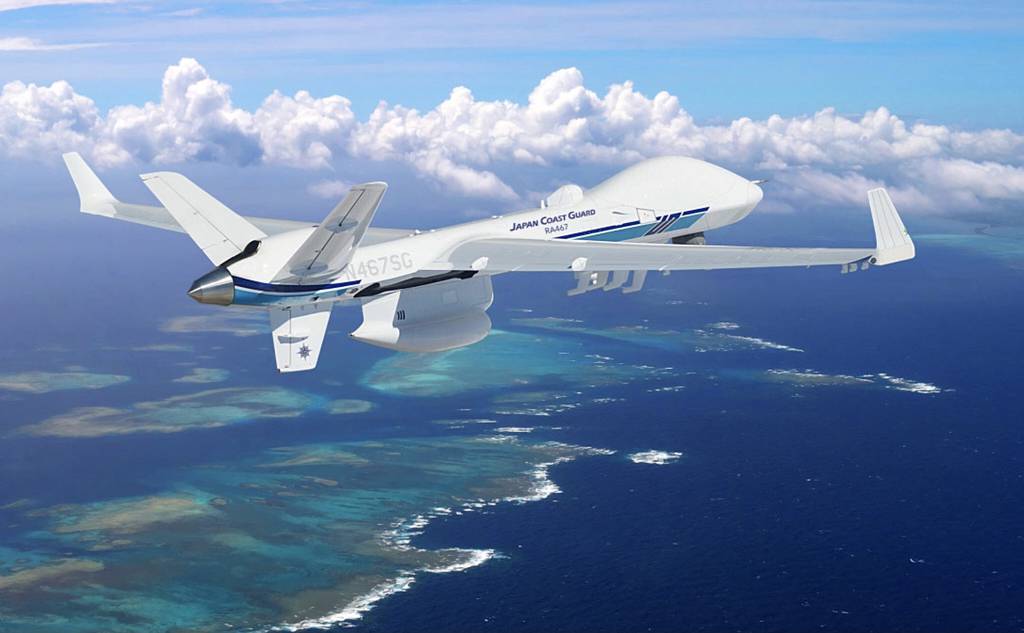
An artist’s rendering shows the Japan Coast Guard’s SeaGuardian drone. (General Atomics Aeronautical Systems)

Defense News reports that the Japanese Coast Guard has begun operational use of the MQ-9B Sea Guardian UAS.

The SeaGuardian features a multimode maritime surface-search radar with an inverse synthetic-aperture radar imaging mode, and an automatic identification system receiver. It is fully compliant with STANAG-4671, which is NATO’s airworthiness standard for unmanned aircraft, and it features a collision-avoidance radar to enable operations in civil airspace.

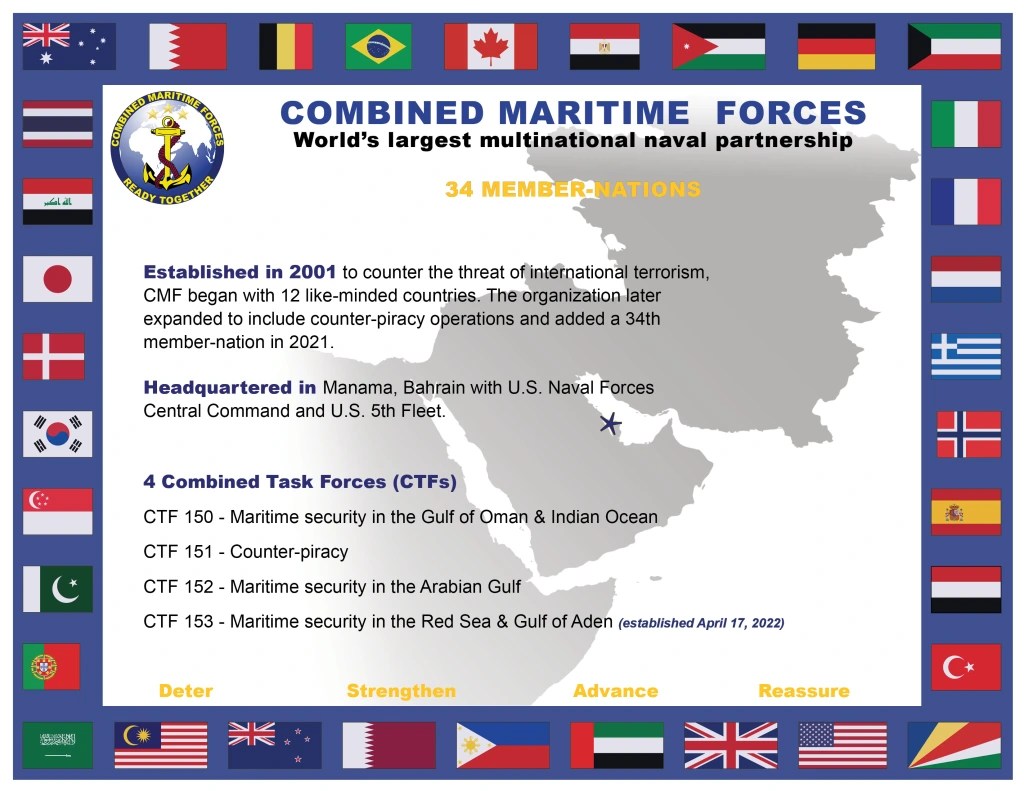
Combined Maritime Forces

Thought it would be worthwhile to take a look at the Combined Maritime Forces (CMF) website, not just because of what they have been doing, but also because of what they could be, a model for multilateral maritime law enforcement organizations in other areas as well.

Recently we have had reports of Webber class FRCs doing drug interdiction under CTF150.

The CMF News portion of their website has even more USCG stories. These are from only the last six months.

Earlier I proposed a “Combined Maritime Security Task Force Pacific.” CMF could provide a model for creation of similar maritime law enforcemernt task forces in several locations.

CMF is a creation of Fifth Fleet. It has different task forces for different geographic areas. Potentially other geograph fleets could form similar organizations.

  • 7th Fleet might sponsor one CMF task force for the South China Sea and another for Oceania
  • 4th Fleet might sponsor a task force for the Eastern Pacific drug transit zone and another for the Caribbean
  • 6th Fleet one for the Gulf of Guinea

These would be law enforcement alliances which should be more welcomed than military alliances. They might be extended to include SAR, disaster response, and Marine Environmental Protection.

“Eastern Shipbuilding Group Cuts Steel for Fourth U.S. Coast Guard Offshore Patrol Cutter” –Eastern Shipbuilding Group

Below is a news release from Eastern Shipbuilding group.

FOR IMMEDIATE RELEASE, October 18, 2022

Eastern Shipbuilding Group Cuts Steel for Fourth U.S. Coast Guard Offshore Patrol Cutter

PANAMA CITY, FL – On Monday, October 17, 2022, Eastern Shipbuilding Group, Inc. (ESG) commenced construction of United States Coast Guard Cutter (USCGC) RUSH (WMSM-918) – Hull 4 of the Heritage Class Offshore Patrol Cutter (OPC) program. The occasion was observed by leaders of the United States Coast Guard Project Resident Office at ESG’s Allanton Shipyard where the first steel plates were cut by ESG personnel in the state-of-the-art 103,000 sq ft steel and aluminum processing facility.

“The first four offshore patrol cutters are fully under production for the U.S. Coast Guard thanks to the steadfast commitment of our skilled professionals and partners,” said Joey D’Isernia, President of Eastern Shipbuilding Group. “USCGC RUSH is part of a class of ships that boast multi-mission capabilities and the endurance to carry the men and women of the USCG for more than half a century. With more than 45 years of steel shipbuilding experience we promise the highest quality control, and we look forward to delivering the lead vessel of the class next year.”

In addition, the U.S. Coast Guard modified the contract “with Eastern Shipbuilding Group (ESG) on May 20 so installation of the Athena combat weapons system and multi-mode radar system will be completed during the production phase of the OPC. The Athena system, radar and armament of the OPC are provided to the Coast Guard as Navy type-Navy owned government furnished equipment.

“Prior to this modification, installation of both systems was to occur after contract delivery while each cutter was in its homeport. The Navy has completed development, integration and testing of the Athena and radar systems, enabling the Coast Guard to shift to production-phase installation. Performing this work prior to delivery reduces the technical risks associated with post-delivery installation and delivers mission-ready OPCs to the fleet as soon as possible.”

By implementing these modifications now, ESG expects that it will deliver capability years ahead of a post-delivery integration strategy which is a massive benefit to taxpayers and national security. This additional scope of work results in a new delivery date in 2023 for the lead cutter Argus which is 75% complete. The second OPC is approximately 50% complete, and the third is 25% complete. The fourth OPC is scheduled for delivery in 2026.