Japan’s Shunkou Class Cutters

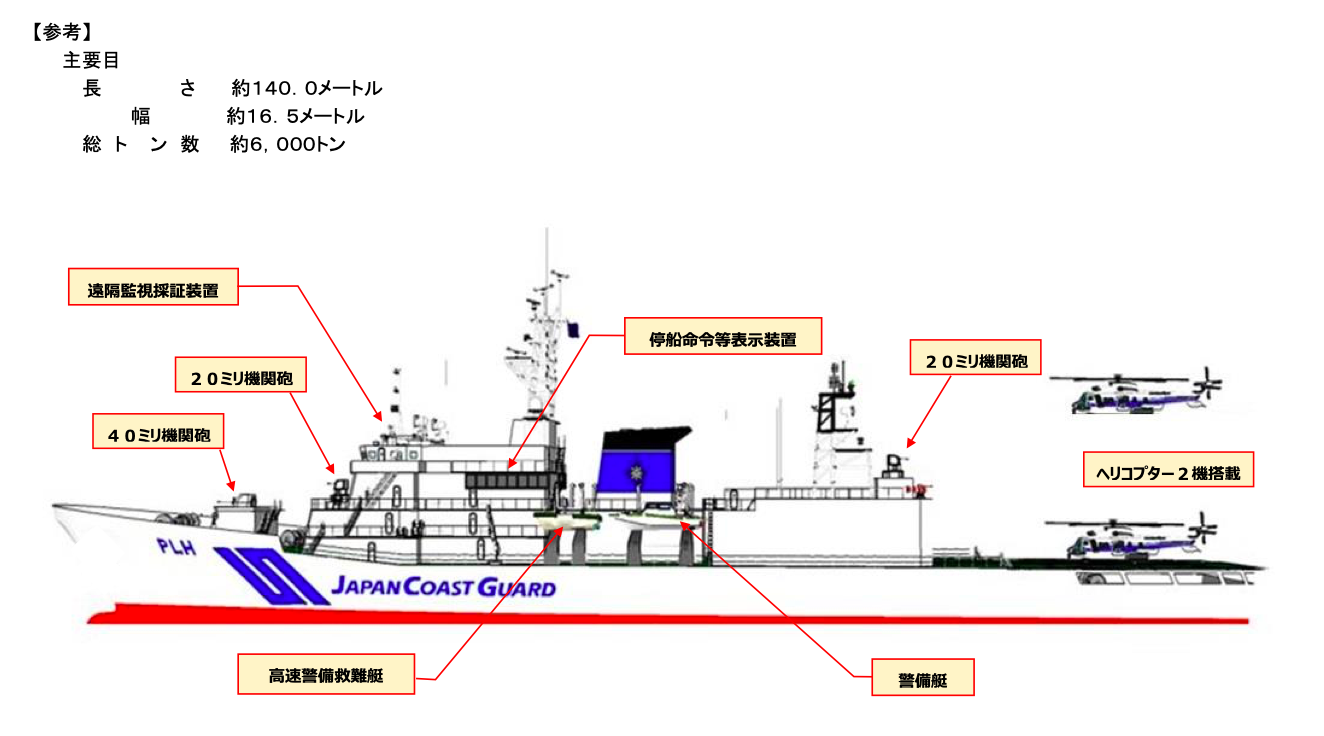
Technical drawing of the Shunkou-class patrol vessel (Credit : JCG)

A couple of posts from Naval News gives us a look at the latest cutters being delivered to the Japan Coast Guard. They typlify an apparent trend to larger, faster cutters with more extensive aviation facilities.

Speed is a respectable 25 knots. The reported displacement of 6,700 tons may be deceptive. Asian navies and coast guards tend to minimize the size of their ships. These ships are about 9,000 tons full load, making them about twice the size of the Bertholf class NSCs and Argus class OPCs.

Dimensions are:

  • Length: 140 meters (459.2 feet–100 feet more than the Offshore Patrol Cutter)
  • Beam: 16.5 meters (54.12 feet–20 inches more than the OPC)

The reported range is a phenominal 20,000 nautical miles.

Their hangar and flight deck can accommodate two helicopters larger than H-60s.

The Japan Coast Guard, unlike the USCG, is not a military service. They have not followed China Coast Guard in becoming more heavily armed. Several China Coast Guard cutters are armed with guns up to 76mm. The 40mm guns that arm these ships are the largest caliber in the Japan Coast Guard. They are backed up by two 20mm Gatling Guns, one forward and one aft. This armament reflects the lessons of their difficulties in stopping a small North Korean spy ship with only 20mm Gatling guns. It is still clearly inadequate for forcibly stopping larger vessels.

I would like to point out a paragraph from the first of the two linked reports, dated 5 Feb., 2020.

In 2012, the JCG had 51 patrol vessels displacing more than 1,000 tons. The service has now 63 large vessels, and the goal is to operate 12 more ships by the end of FY 2023 to deal with new threats.

That the Japanese see a need for 75 large cutters, even though their EEZ is only 39.5% that of the US, and that their cutter fleet is far younger that ours, may say something about the adequacy of the USCG’s large cutter fleet, even when the currently planned fleet of 36 NSCs and OPCs is complete. (Keep in mind that if we proceed as planned, when the last OPCs is completed, the first NSC, Bertholf, will be 30 years old.)

I like the way the Japan Coast Guard designates their cutter types. These are PLH, e.g. Patrol, Large, Helicopter, that is simple, descriptive, truthful, and in accordance with the US Navy type designation system.
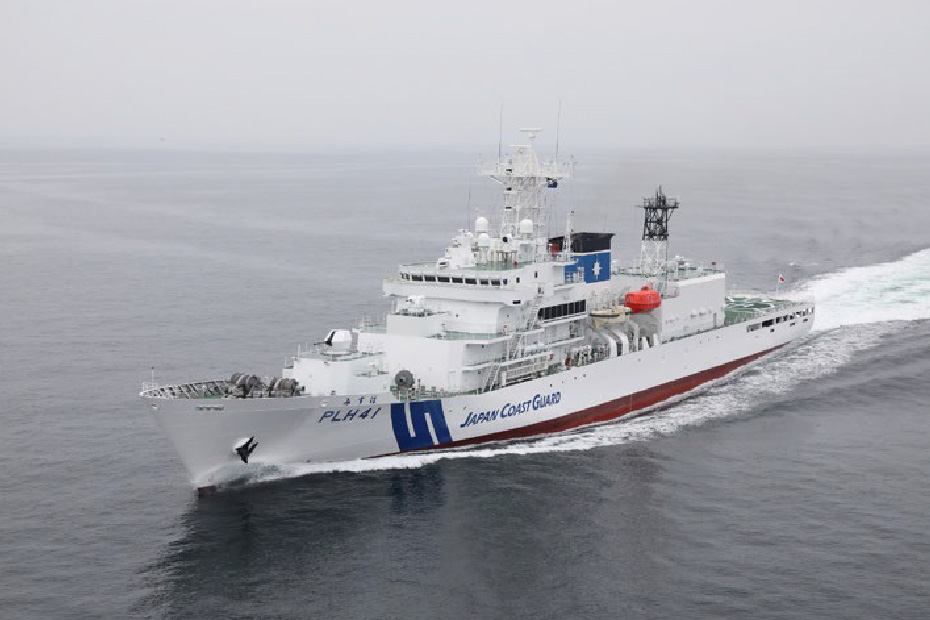
The similar, but 10 meter shorter PLH-41

Japan CG cutter Shunkō PLH-42

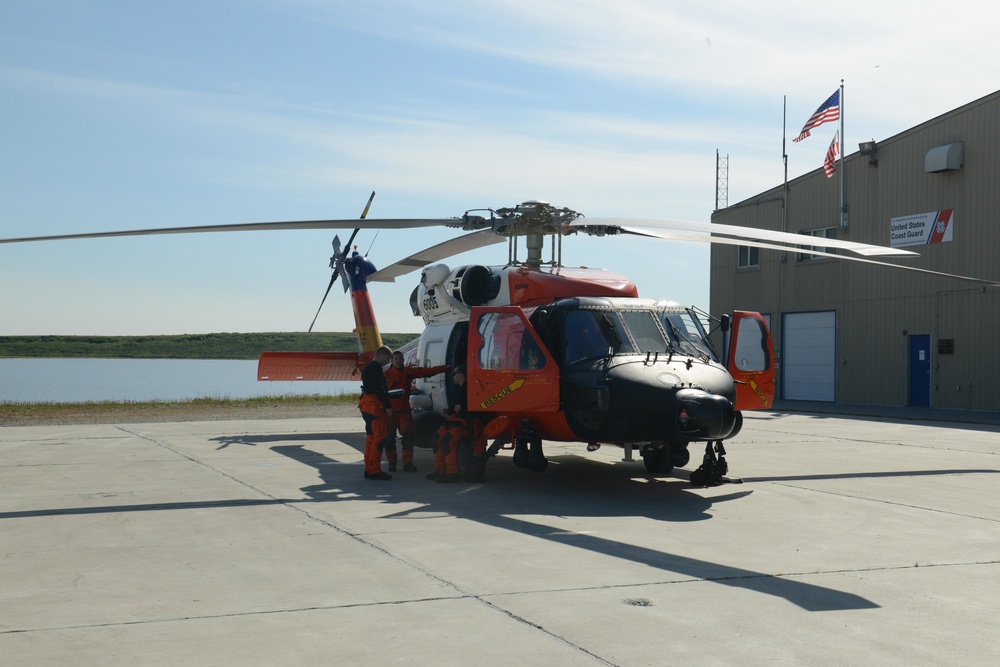
“Coast Guard teams to deploy for summer operations in Kotzebue, Alaska” –D17

Northwest Arctic Borough Alaska incorporated and unincorporated areas Kotzebue highlighted. From Wikipedia by Rcsprinter123

Below is a D17 news release reporting deployments to Kotzebue, AK. Thought you might want to know where that is.

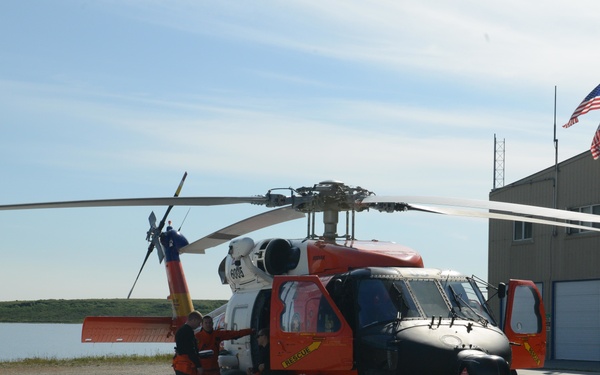
A Coast Guard Air Station Kodiak MH-60 Jayhawk aircrew, deployed to forward operating location Kotzebue, Alaska, conducts a pre-flight brief before flying a mission to Point Lay, July 13, 2017. FOL Kotzebue houses two Air Station Kodiak MH-60 Jayhawk helicopters and crews in support of Operation Arctic Shield. U.S. Coast Guard photo by Lt. Brian Dykens.

This is not the first time helicopters have heen deployed to Kotzebue, here and here. If this follows the previous pattern, the deployment will last until about the end of October.

News Release

U.S. Coast Guard 17th District Alaska

Coast Guard teams to deploy for summer operations in Kotzebue, Alaska

Coast Guard Marine Safety Task Force conducts inspections during 2021 season  Coast Guard FOL Kotzebue Operations

Editors’ Note: Click on images to download high resolution version.

ANCHORAGE, Alaska — Coast Guard teams to deploy to Kotzebue, Alaska, in support of 2022 summer operations. 

Members of Sector Anchorage’s Marine Safety Task Force (MSTF) will be in the region July 6-16, 2022, for a multi-mission deployment focused primarily on facility inspections. 

“Facility inspections help mitigate the potential for oil pollution in the region,” said Petty Officer 1st Class Christopher Houvener, a marine science technician and team lead. “These facilities are crucial for providing oil to warm homes during winter months. Alaska experiences harsh environmental conditions, so it’s important to inspect the safety and integrity of such waterside facilities to decrease the risk of an oil spill.”

Coast Guard Air Station Kodiak crews are also scheduled to open a seasonal forward-operating location for aircraft mid-July in Kotzebue to reduce response time to the Bering Strait and Northern Slope regions in anticipation of historically increased maritime activity there. 

The use of forward operating locations in Alaska helps the service make the best strategic use of limited resources.

Austal Awarded Contract for Offshore Patrol Cutter Stage 2

Below is the announcement from Coast Guard headquarters. Some comments first.

The contract award, $208.26 million, does not actually include construction of the first cutter, presumably that will be included in the FY2023 budget. The potential value of up to “$3.33 billion if all options are exercised” equates to an average cost for 11 ships of $303M each. Keep in mind, that does not include government furnished equipment and other cost that go along with building new ships, including the precommissioning crew and its support and infrastructure improvements that may be required to accommodate these substantially larger ships. 

Given that Eastern, builder of the first four OPCs, did not win the contract, and the contract allows “flexibility to propose and implement new design elements that benefit lifecycle cost, production and operational efficiency and performance” then we can expect to have A-class and B-class OPCs. 

Considering that the Independence class LCS program is ending, this is an extremely important win for Austal and vendicates their decision to invest in steel shipbuilding.


 News Release

U.S. Coast Guard Headquarters

Coast Guard awards contract for Stage 2 of the Offshore Patrol Cutter Acquisition

WASHINGTON – The Coast Guard awarded a fixed-price incentive (firm target) contract to Austal USA of Mobile, Ala. to produce up to 11 offshore patrol cutters (OPCs). The initial award is valued at $208.26 million and supports detail design and long lead-time material for the fifth OPC, with options for production of up to 11 OPCs in total. The contract has a potential value of up to $3.33 billion if all options are exercised.

In 2019, the Coast Guard revised the OPC acquisition strategy to mitigate emergent cost and schedule risk by establishing a new, full and open competition for OPCs five and through 15, designated as Stage 2 of the overall program. Informed by industry feedback received through a robust engagement strategy, the Coast Guard released a request for proposal Jan. 29, 2021, for OPC Stage 2 detail design and production. The Coast Guard’s requirements for OPC Stage 2 detail design and production were developed to maintain commonality with earlier OPCs in critical areas such as the hull and propulsion systems, but provide flexibility to propose and implement new design elements that benefit lifecycle cost, production and operational efficiency and performance.

“The offshore patrol cutter is absolutely vital to Coast Guard mission excellence as we recapitalize our legacy medium endurance cutters, some of which are more than 50 years old,” said Adm. Linda Fagan, commandant of the Coast Guard. “The OPCs are the ships our crews need to protect our national security, maritime safety and economic prosperity. I look forward to the new cutters joining our fleet.”

The 25-ship OPC program of record complements the capabilities of the service’s national security cutters, fast response cutters and polar security cutters as an essential element of the Department of Homeland Security’s layered maritime security strategy. The OPC will meet the service’s long-term need for cutters capable of deploying independently or as part of task groups and is essential to stopping smugglers at sea, interdicting undocumented non-citizens, rescuing mariners, enforcing fisheries laws, responding to disasters and protecting ports.

More information about the award can be found here.

U.S. Coast Guard releases 2021 recreational boating statistics–14% Drop in Fatalities

Just passing this along. 

News Release

U.S. Coast Guard Headquarters


U.S. Coast Guard releases 2021 recreational boating statistics

 U.S. Coast Guard records drop in fatalities

The U.S. Coast Guard released statistics on calendar year 2021 recreational boating incidents, revealing that there were 658 boating fatalities nationwide in 2021, a 14 percent decrease from the 767 deaths in 2020.

From 2020 to 2021, the total number of accidents decreased 16 percent (5,265 to 4,439), and the number of non-fatal injured victims decreased 17 percent (3,191 to 2,641).

Alcohol continued to be the leading known contributing factor in fatal boating accidents in 2021, accounting for 86 deaths, or 16 percent of total fatalities.

The data also shows that in 2021:

  • The fatality rate was 5.5 deaths per 100,000 registered recreational vessels.  This rate represents a 15 percent decrease from last year’s fatality rate of 6.5 deaths per 100,000 registered recreational vessels.
  • In 1971, when the Safe Boating Act was first passed, the fatality rate was 20.6 deaths per 100,000 registered recreational vessels.
  • Property damage totaled $67.5 million, which is an all-time high.
  • Operator inattention, operator inexperience, improper lookout, machinery failure and excessive speed ranked as the top five primary contributing factors in accidents.

Capt. Troy Glendye, chief of the Office of Auxiliary and Boating Safety at Coast Guard Headquarters, remarked that most incidents occurred during benign weather conditions: calm waters, no or light wind, and good visibility.

Where the cause of death was known, 81 percent of fatal boating accident victims drowned.  Of those drowning victims with reported life jacket usage, 83 percent were not wearing a life jacket.

“A life jacket is one of the most important safety items on your boat,” said Glendye. “It is critical to wear one when underway as it may be difficult to don in an emergency. The Coast Guard reminds boaters to ensure life jackets are serviceable, properly sized, correctly fastened, and suitable for your activity.”

Where boating instruction was known, 75 percent of deaths occurred on vessels where the operator had not received boating safety instruction.  The Coast Guard encourages all boaters to take a boating safety course that meets the National Boating Education Standards before hitting the water.

The most common vessel types involved in reported accidents were open motorboats, personal watercraft, and cabin motorboats.  Where vessel type was known, the vessel types with the highest percentage of deaths were open motorboats (44 percent), kayaks (15 percent), and pontoons (10 percent).  This is the second time that pontoon vessels ranked in the top three.

The data are from incidents that resulted in at least one of the following criteria:  death, disappearance, injury that required medical treatment beyond first aid, damages to the vessel(s) or other property that equaled or exceeded $2,000, or a loss of vessel.

In addition to wearing a life jacket and taking a boating safety course, the Coast Guard recommends all boaters to attach the engine cut-off switch, get a free vessel safety check, and boat sober.

“We praise the work of our boating safety partners who have resolved to reduce casualties through educational outreach and enforcement,” said Glendye.

To view the 2021 Recreational Boating Statistics report and additional information on boating responsibly, visit http://www.uscgboating.org.  The report is found under the “Statistics” menu selection and the “Accident Statistics” submenu selection.

“US Supplying Ukraine with 23 Metal Shark Military Vessels” –Seapower

Metal Shark “36 Fearless”

The Navy League’s on-line magazine, Seapower, reports that a plan to equip the Ukraine military with boats from Louisiana boat builder Metal Shark has been accelerated. The Program for 23 boats includes six “40 Defiant” force protection patrol boats that are included in the latest aid package. These are to followed by ten 38-foot Defiant pilothouse patrol vessels, four 38-foot Defiant center console patrol vessels, and three 36-foot Fearless high-performance military interceptor vessels.

Part of a 38 Defiant patrol boat fleet deployed in Asia. Metal Shark photo.

Metal Shark 40 Defiant

Metal Shark’s press release is quoted below.
JUNE 28TH, 2022: UNITED STATES SUPPLYING UKRAINE WITH OVER 20 METAL SHARK MILITARY VESSELS

Jeanerette, LA – June 28th, 2022In an effort to help Ukraine to better protect its coastline, waterways, and ports, the United States is providing the country with a range of defense articles, including 23 welded-aluminum military vessels built by Louisiana-based Metal Shark.

Last week it was announced that six US Navy Metal Shark maritime combat vessels would be sent to Ukraine as part of a $450 million security assistance package. Meanwhile, at Metal Shark’s Franklin and Jeanerette, Louisiana production facilities, production is well underway on 17 additional vessels for Ukraine, including ten 38-foot Defiant pilothouse patrol vessels, four 38-foot Defiant center console patrol vessels, and three 36-foot Fearless high-performance military interceptor vessels. Each of these vessels are proven military platforms optimized for the Ukraine mission.

The boats are being built and delivered as part of a long range foreign policy strategy years in the making, but recent events in Ukraine have caused an acceleration of the timelines. As a result, vessels will begin shipping immediately.

“Metal Shark has been working closely with the US Embassy in Kiev since 2019 to develop the strategy now being implemented to support Ukraine’s maritime capabilities, so it is fulfilling to see that the vessels will arrive when they are most needed,” said Henry Irizarry, Metal Shark’s Vice President of International Business Development. “Metal Shark provides next-generation, proven platforms to partner nations, but most importantly, we create long term partnerships with end users to train boat crews and provide seamless technical support to assure 24/7 operational readiness.”

“We have built an efficient production machine capable of delivering high quality, next-generation military vessels, faster, and at higher volume, than anyone else in the business,” said Metal Shark’s CEO Chris Allard. “Metal Shark stands ready and able to support our warfighters with game-changing lethality, delivered via conventional or unmanned platforms, anywhere in the world, whenever needed.”

Metal Shark is a diversified shipbuilder specializing in the design and construction of welded aluminum and steel vessels from 16’ to over 300’ for defense, law enforcement, and commercial operators. Key customers include the United States Navy, Marine Corps, Coast Guard, Air Force, Army, foreign militaries, law enforcement agencies, fire departments, passenger vessel operators, pilot associations, towboat operators, and other clients worldwide. With three fully self-contained shipbuilding facilities in Alabama and Louisiana USA plus a dedicated engineering facility in Croatia, Metal Shark’s 500+ employees produce over 200 vessels per year with a proud and proven track record of high quality, on-time deliveries. www.metalsharkboats.com

NAVCEN website upgrade streamlines access to navigation information

The announcement below showed up on the MyCG website. I’m passing it along because hopefully some of my readers are active mariners and might find it useful. 

June 28, 2022

NAVCEN website upgrade streamlines access to navigation information

The U.S. Coast Guard Navigation Center (NAVCEN) completed a major upgrade to our website, June 5, modernizing the look and feel of the site. The upgrade also streamlines access to products available to assist our afloat members in their day-to-day operations.

NAVCEN products are now optimized for all of your devices including laptops, phones, and tablets. There is also no login or CAC authentication needed to access the contents. This means that whether you are on-duty underway or enjoying liberty out on the water, NAVCEN can help you stay safe and stay informed.

You can find an easily accessible “one-stop-shop” for many of the products a mariner would need on the website. These include marine safety information, such as the weekly local notice to mariners for each Coast Guard district, as well as a real-time database of broadcast notice to mariners for participating sectors. Here you can also find the annual and weekly Light Lists. This is an easy way to make sure you and your unit you are up to date on hazards to navigation in your area before you get underway.

When navigating into a waterway with a vessel traffic service (VTS), you can check our website for information about the VTS you will be entering. Using the interactive map, you can click on a VTS location to find a description of its operating area and links to its user manual and homepage (if available). We also feature a VTS quick reference guide for many of these areas.

If you need a refresher on the Navigation Rules, the NAVCEN website hosts a digital copy of the rules that includes contextual links and imagery. When studying for a new or renewal exam you can use the available digital flashcards tool to quiz yourself and enhance your learning.

The NAVCEN website offers many more features than those listed here, including information about GPS, Automatic Identification System (AIS), waterways safety analyses, and maritime telecommunications. You can also use the contact us links in the site to reach out with questions concerning many of these topics.

We encourage you to visit us at navcen.uscg.gov to get more information and see how we can assist you.

“HHI To Build Six New OPVs For The Philippine Navy” –Naval News

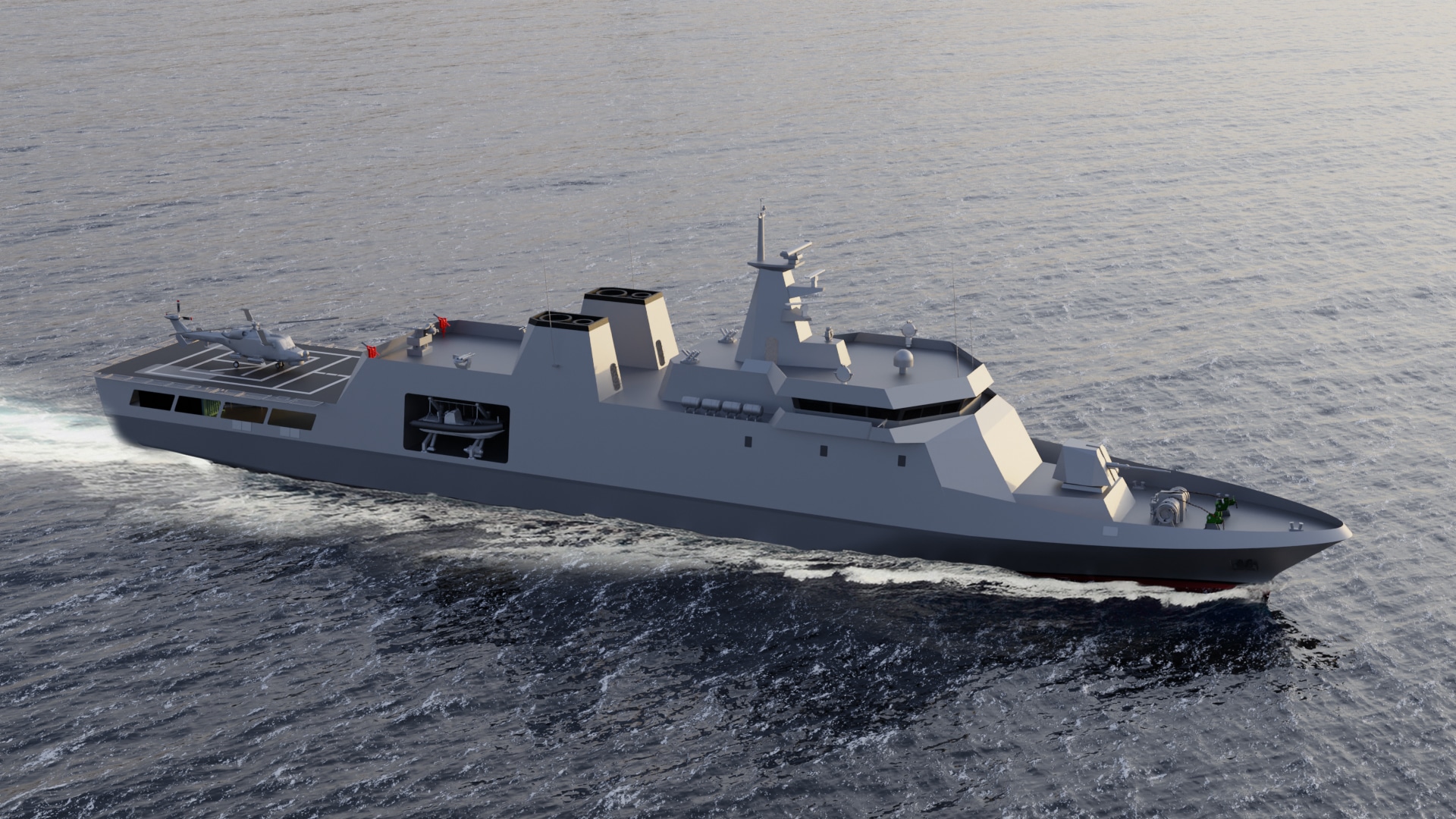
Philippine Navy OPV to be built by HHI in S. Korea. HHI image.

Naval News reports,

Hyundai Heavy Industries (HHI) signed a contract with the Philippine Department of National Defense on June 27th to construct six units of new build 2,400 ton Offshore Patrol Vessels (OPV) worth USD 573 million.

They provide this description,

The Philippine Navy OPV has a displacement of 2,400 tons, a length of 94.4 meters, a width of 14.3 meters, a maximum speed of 22 knots, a cruising speed of 15 knots, a range of 5,500 nautical miles and will be built at HHI’s Ulsan shipyard until 2028. The vessel is to be equipped with a 76mm main gun, two 30mm secondary guns, a helideck capable of operating a helicopter and unmanned aerial vehicles.

That is 310 ft in length, 47 ft beam. In terms of displacement they will be a third larger than the Bear class 270 foot WMECs.

Looking at the artist concept, I see only one 30mm, but I also see fire monitors on the corners fo the hangar roof and decoy launchers between the bridge and funnels. There seems to be considerable open space under the flight deck. There may be provision for a stern launch ramp.

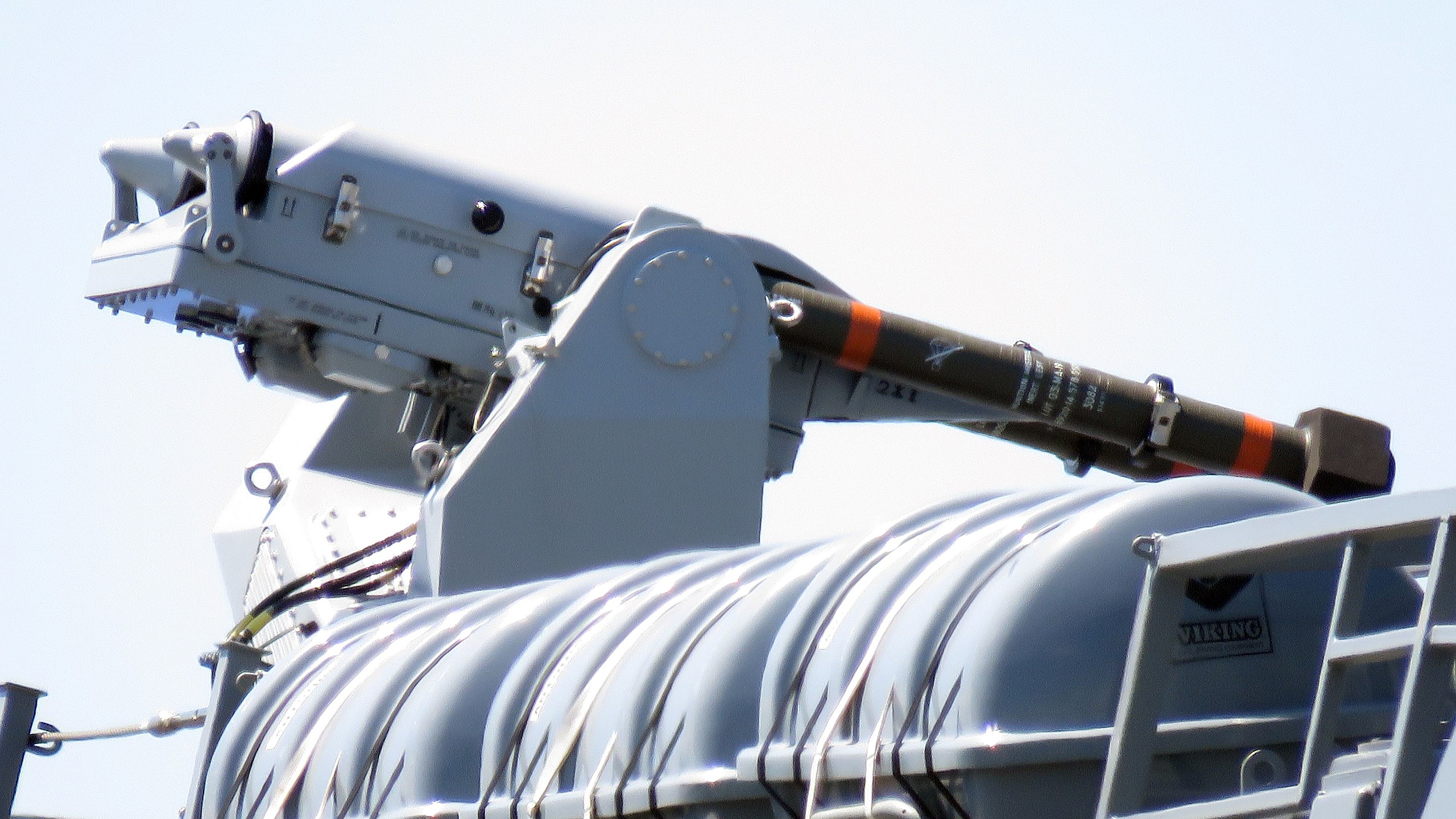
Also, the illustration shows the ships equipped with a pair of Simbad-RC for short range Mistral fire-and-forget, IR homing Missiles, mounted on either side of the hangar roof between the funnels and the 30mm. Inclusion on this class appears likely and logical because the system was also included on the BRPJose Rizal class frigates built for the Philippine Navy by HHI. This system is also reported to be effective against small high speed surface craft.

A Simbad-RC with Mistral Missiles on the BRP Antonio Luna (FF-151) Frigate of the Philippine Navy (PN)

The helicopter depicted in the illustration is a Westland Wildcat AW159. The Philippine Navy recently aquired two of these and will presumably add more to their fleet as more flight decks join the Navy. With a max take off weight of 13,228 lb it is larger than an MH-65 but considerably smaller than an MH-60. This aircraft can have both an Anti-Submarine and an Anti-Surface capability. It appears unlikely the ships themselves will have either a ASW mission or capability as built. The Wildcat can launch light weight torpedoes and reportedly the S. Korean and Philippine aircraft can launch Spike NLOS. This is a 70 kg (150 lb) anti-surface missile with man-in-the-loop guidance and a claimed maximum range of 25 km (16 mi). The range may actually be considerably greater. From Wikipedia,

“In 2020 the US Army announced its intention to procure Spike NLOS missiles to be mounted on Apache helicopters. A test was conducted in March 2021 where an AH-64E fired a Spike NLOS at a target 32 km (20 mi) away and scored a direct hit.

“In June 2022, Rafael unveiled the Spike NLOS 6th generation with range increased to 50 km (31 mi), a salvo feature which can launch up to four missiles at a time, and the ability to hand over control after firing to another platform. It also has a Target Image Acquisition capability that can prioritize important targets for strike…”

These ships could considerally strengthen the Philippines’ hand in dealing with Chinese gray zone operations, if the Philippines could get over their apparenent reticence in using their Navy to police their EEZ. Maybe they could just paint them white and add law enforcement stripes while still labeling them Philippine Navy and let embarked Philippine Coast Guard ride-alongs do actual law enforcement.

“These Are The Riverine Patrol Boats Ukraine Is Getting From The U.S.” –The Drive

Riverines attached to Riverine Squadron 2 in a SURC at Haditha Dam Forward Operating Base conduct a patrol in Haditha, Iraq, December 20, 2007. Members of RIVRON 2 patrol Haditha’s dam and surrounding waterways, denying their use by insurgents, which in turn provides security to local fisherman. Location: Haditha Dam FOB, Anbar Province Iraq. (United States Navy, MC2 Kirk Worley) The package includes two of these.

The Drive/The War Zone has the best expanation I have seen so far as to the 18 boats that are to be transferred to Ukraine as part of the latest aid package.

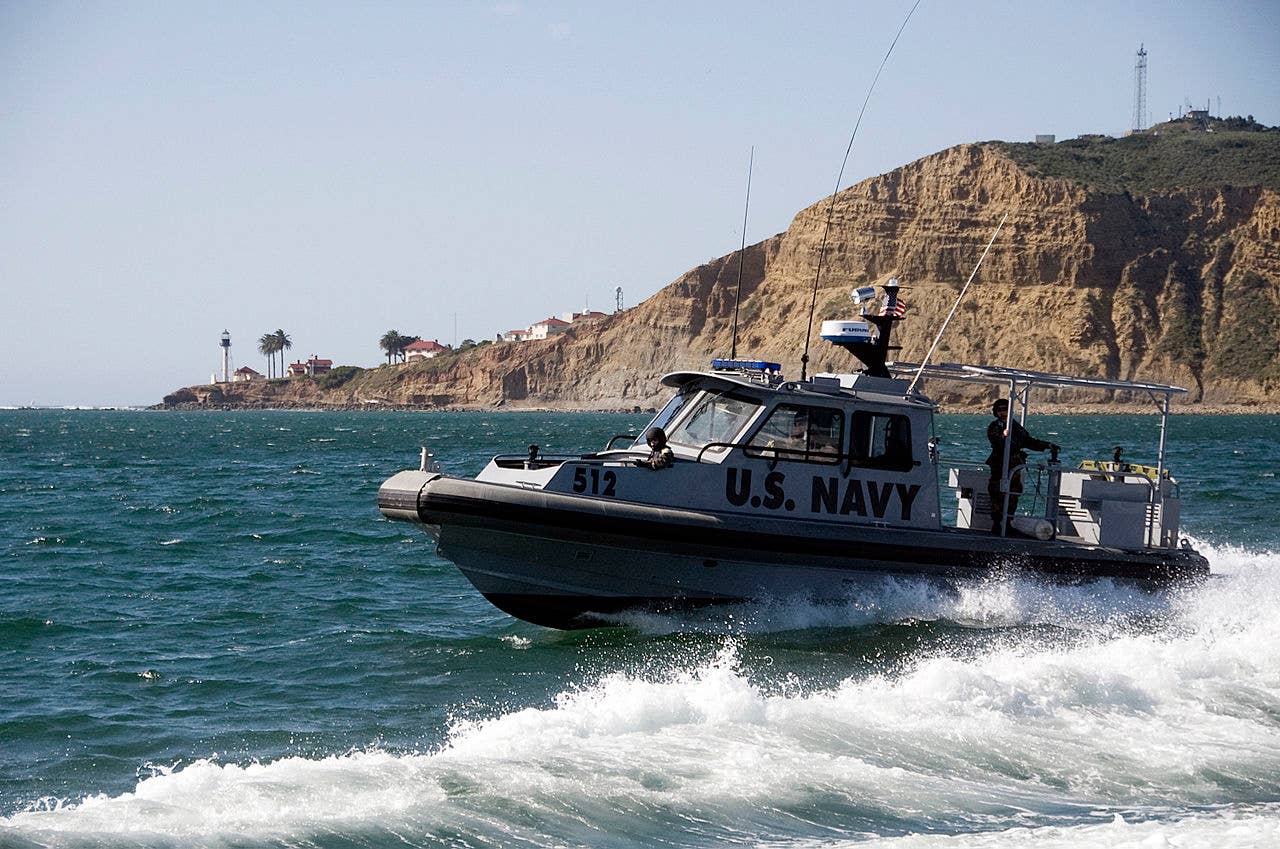
A Sea Ark Dauntless patrol boat operating in San Diego. The type has been a very common sight at locales where U.S. Navy ships operate from for years now. U.S. Navy photo by Mass Communication Specialist 1st Class Michael Moriatis/Released. Ten of these 34 foot boat are included in the aid package. 

While the 35 and 34 foot boats have been identified as to type, the six 40 foot boat have not. The post speculates that these may be of a type exported under Foreign Military Sales in 2020. I think, it is not unlikely these may be the new Navy 40 foot force protection patrol boats. They are an improvement on the 34 foot Sea Ark boats. They can be armored. They have an electro-optic system on the mast. They would be particularly useful if they had the remote weapon system on the bow they were designed to carry.

“U.S. Navy’s New 40-Foot Defiant Patrol Boat” –Naval News, Plus FMS Patrol Boat

The 40PB shows its speed in this photo and is armed with a .50cal M2 heavy machine gun at the bow, 7.62mm miniguns and acoustic devices amidships, and a M240B at the stern. The radar, electro-optical camera, and FLIR are visible on the short mast above the cabin. Metal Shark photo.

Naval News brings us a bit more informaton about the Navy’s new 40 foot force protection patrol boat. Most significantly,

NAVSEA: A total of 56 [40-foot Patrol] boats have been awarded to Metal Shark Boats and as of 9 May 2022, 20 boats have been delivered to the U.S. Navy.

In 2017 we discussed the program here and revisited it in 2019 here. The last indicated boats were being delivered at a rate of one every four weeks, meaning Metal Shark will likely be building these boats through early 2025.

Metal Shark calls this model the “40 Defiant” although it is actually 44 foot. Their description is here.

The 85-foot Defiant-class Near Coastal Patrol Vessel (NCPV) is being acquired by NAVSEA for Foreign Military Sales. Metal Shark photo.

There is also a some discussion of the Metal Shark “85 Defiant” patrol boat that is being produced for Foreign Military Sales. This is an evolution of the same design that gave the US Coast Guard its 87 foot “Marine Protector” WPBs (it too is actually 87 foot loa). The Navy calls this class Near Coastal Patrol Vessels or NCPV. We discussed this class in 2017. We noted at the time that Metal Shark had been award a contract,

“…potentially worth upwards of $54 million, Metal Shark will build up to thirteen 85-foot Defiant-class welded aluminum cutters for the Dominican Republic, El Salvador, Honduras, Costa Rica, Guatemala, and other United States partner nations. Additionally, Metal Shark will supply electro-optical infrared sensors, diagnostic equipment, in-country reactivation, crew familiarization, and test support to NCPV operators.

Metal Shark’s website has a description of the vessel here.

“Southeast Asian partners enhancing trilateral maritime patrols” –Indo-Pacific Defense Forum

Law Breakers frequently attempt to exploit divisions of jurisdiction. How to deal with this? The Indo-Pacific Defense Forum contributor Gusty Da Costa reports from Indonesia (reproduced in full below),

IMAGE CREDIT: INDONESIAN DEFENSE MINISTRY

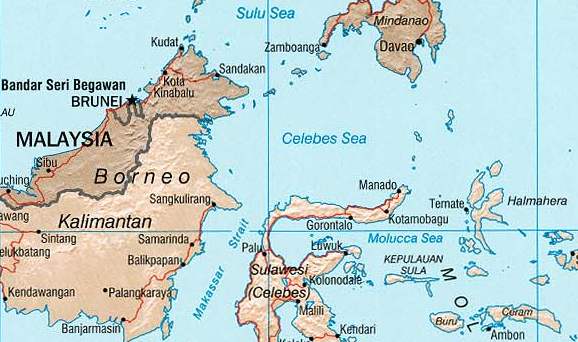
The launch about five years ago of maritime patrols in the Sulu and Celebes seas involving the armed forces of Indonesia, Malaysia and the Philippines have corresponded with a sharp drop in piracy and terrorism, officials and analysts said. The three nations plan to enhance the patrols with improved surveillance, intelligence and communication to boost security and economic stability.

The INDOMALPHI patrols, a moniker that combines the names of the partner nations, began in 2017 as a result of the Trilateral Cooperative Arrangement (TCA) signed a year earlier by the three governments. Security challenges are “especially daunting” in the seas, where the three nations’ maritime borders converge in an area “with a complex political history and a long legacy of illicit maritime activity,” according to Stable Seas, a nonprofit research initiative.

“The main objective is to enhance security in the Sulu and Sulawesi [Celebes] seas,” Indonesian Army Col. Kurniawan Firmizi, a senior official at the Indonesian Defense Ministry, told FORUM. “A high level of protection with all parties can be beneficial. It can increase the economy, facilitate traffic flows between countries adjacent to the Sulu Sea area, and improve border security and international cooperation. The goal is to secure the Sulu Sea and maritime border waters for all three countries.”

Since their launch, the INDOMALPHI patrols have deterred and defended against attacks on vessels at sea by pirates and violent extremist organizations such as the Abu Sayyaf Group, Kurniawan said. According to Indonesia’s Defense Ministry, known as Kemhan, there were no reports of piracy for ransom in the patrolled waters in 2021. As recently as 2017, there were 99 reports of piracy and armed robbery in the area, according to the Regional Cooperation Agreement on Combating Piracy and Armed Robbery against Ships in Asia.

Four categories of patrol enhancements were announced at the TCA Ministerial Meeting in Kuala Lumpur, Malaysia, in late March 2022, Kemhan reported. They are: optimizing communication by deploying a liaison officer from each partner nation to each country’s maritime command center; conducting trilateral maritime exercises; adopting an intelligence-led approach to surveillance operations; and improving the TCA structure, communication and coordination to increase partners’ participation and commitment. (Pictured, from left: Indonesian Defense Minister Prabowo Subianto, Malaysian Senior Defence Minister Hishammuddin Tun Hussein and Philippine National Defense Secretary Delfin Lorenzana attend the Trilateral Cooperative Arrangement Ministerial Meeting in Kuala Lumpur, Malaysia, in March 2022.)

“There has been an increase in surveillance technology, including drones and satellite systems,” Kurniawan said.

The INDOMALPHI patrols demonstrate the expansive benefits of multilateralism, Connie Rahakundini Bakrie, a defense analyst and the author of “Defending Indonesia,” told FORUM.

“These countries will undoubtedly increase their cooperation with other regions, such as Europe, by securing their maritime areas,” she said. “The reason is that trading traffic will be smoother since it is safe, so the risk-cost will be lower.”

She recommended two additional improvements: increase patrol frequency in the Sulu Sea; and supplement patrols with “additional aircraft such as reconnaissance aircraft, close air support or attack aircraft, commandos from helicopters, etc.”