“Coast Guard Cutter Cypress arrives in Kodiak, replaces SPAR”

Progress on the WLB In Service Vessel Sustainment Program.
united states coast guard

News Release  U.S. Coast Guard 17th District Alaska


Coast Guard Cutter Cypress arrives in Kodiak, replaces SPAR

A view of the Coast Guard Cutter Cypress is pictured as the vessel's crew transits from Los Angeles, California, to the ship's new homeport in Kodiak, Alaska, Nov. 12, 2021. The Cypress crew transited over 7,600 nautical miles south along the east coast of the United States through the Caribbean and Panama Canal, and North along the west coast of the United States through the Alaskan Inside Passage and to the vessel's new homeport. U.S. Coast Guard photo by Petty Officer 1st Class Amanda Harris.
A view of the Coast Guard Cutter Cypress is pictured as the vessel’s crew transits from Los Angeles, California, to the ship’s new homeport in Kodiak, Alaska, Nov. 12, 2021. U.S. Coast Guard photo by Petty Officer 1st Class Amanda Harris.
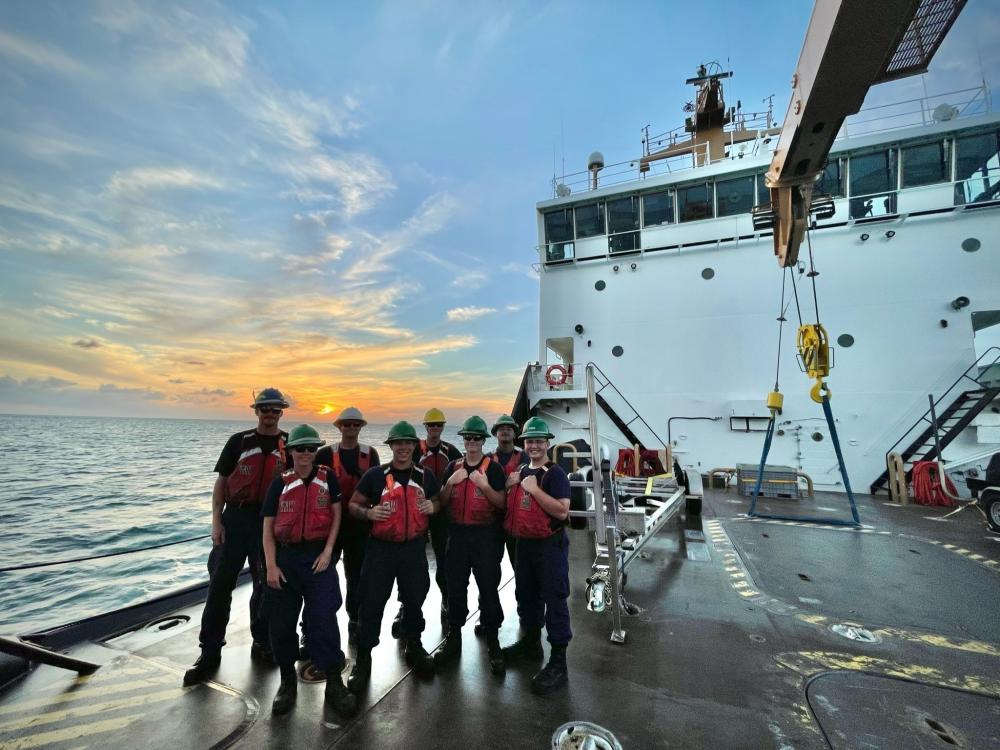
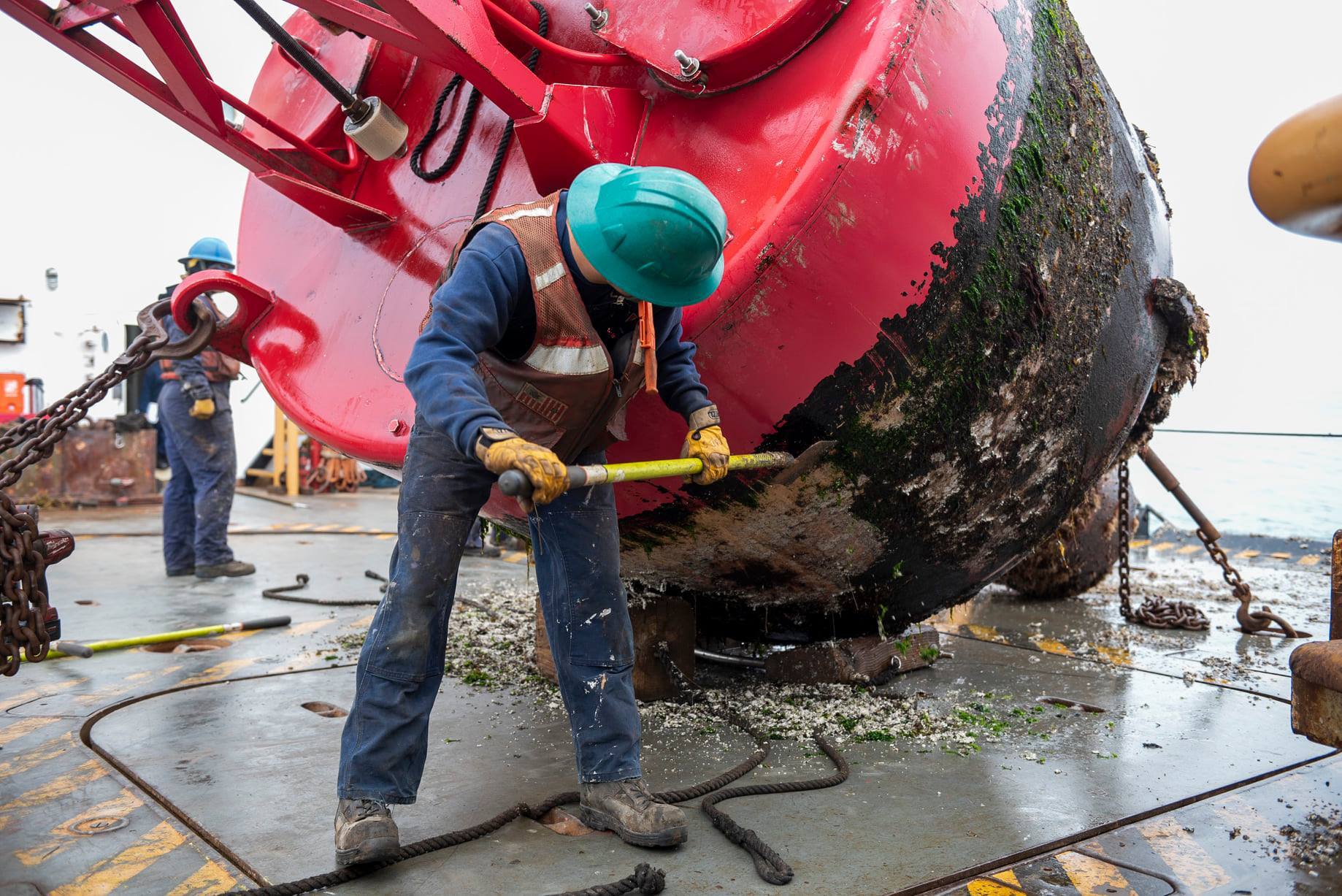
The Coast Guard Cutter Cypress deck department stands on the buoy deck while the vessel transits from Los Angeles, California, to the ship's new homeport in Kodiak, Alaska, Oct. 19, 2021. The Cypress will be filling the role of the “Aleutian Keeper,” replacing the Coast Guard Cutter SPAR as the 225-foot Juniper Class Buoy Tender and will be responsible for servicing aids throughout Kodiak Island and the Aleutian chain. U.S. Coast Guard photo by Petty Officer 1st Class Amanda Harris.
The Coast Guard Cutter Cypress deck department stands on the buoy deck while the vessel transits from Los Angeles, California, to the ship’s new homeport in Kodiak, Alaska, Oct. 19, 2021. U.S. Coast Guard photo by Petty Officer 1st Class Amanda Harris.

KODIAK, Alaska — The U.S. Coast Guard Cutter Cypress crew arrived in Kodiak, Sunday, after transiting from the Coast Guard Yard in Baltimore, Maryland, upon completion of the ship’s Major Maintenance Availability (MMA).

The Cypress crew transited over 7,600 nautical miles south along the east coast of the United States through the Caribbean and Panama Canal, and North along the west coast of the United States through the Alaskan Inside Passage to their new homeport at Coast Guard Base Kodiak.

The crew began preparing the Cypress for her maiden voyage to Alaska in August and will be returning to Kodiak after four months away from home.

The Cypress will be filling the role of the “Aleutian Keeper,” replacing the Coast Guard Cutter SPAR as the 225-foot Juniper Class Buoy Tender, and will be responsible for servicing aids throughout Kodiak Island and the Aleutian chain. SPAR departed Kodiak in January 2021, entered MMA in February 2021, and will be re-homeported in Duluth, Minnesota at the completion of the MMA.

Commissioned in 2001, the Cypress was stationed in Mobile, Alabama, and subsequently re-homeported to Pensacola, Florida, as the “Strong Arm of the Gulf,” servicing aids to navigation along 900 miles of coastline, stretching from Apalachicola, Florida, to the border of Mexico. The Cypress crew aided in hurricane recovery operations after Ivan, Katrina, and Rita, recovering and re-establishing buoys that hurricanes had moved up to 24 miles off station.

In 2004, the Cypress crew successfully recovered a sunken 38,000 lb. “Blue Angels” F/A-18A Hornet from 40 feet of water in the Gulf of Mexico after a training accident. The Cypress crew had served thereafter as the center point for the annual Blue Angels’ air show at Pensacola Beach until her arrival at the Coast Guard Yard for MMA in August of 2020. In 2010, the Cypress crew responded to the Deepwater Horizon oil spill impacting the Gulf of Mexico, conducting oil recovery operations with specialized oil recovery equipment alongside sister ships Juniper, Walnut, Sycamore, Aspen, Oak and Elm, together recovering over 500,000 gallons of spilled oil and coordinating environmental cleanup activities between numerous federal, state, local, and private entities.

During her 34-day-long transit, the Cypress crew made port calls in Mayport, Florida, Key West, Florida, Long Beach, California, and Ketchikan, Alaska. The Cypress crew took full advantage of the long transit time to conduct damage control training, small boat training, engineering and navigation drills, and worked to build watch proficiency leading to 63 individual qualifications.

The Cypress crew looks forward to returning home to their families, serving their local Alaska community, and returning to the important work of servicing aids to navigation that support the Maritime Transportation System vital to Alaska’s robust maritime economy.

“Coast Guard conducts 78 lancha interdictions in fiscal year 2021 along Texas coast” –News Release

A launch crew is interdicted by Coast Guard law enforcement crews for engaging in illegal fishing in federal waters off the coast of southern Texas April 6, 2020. Coast Guard crews consisting of air support, a small boat crew, and a cutter stopped three lanchas approximately 50 miles north of the Maritime Boundary Line, with a total of thirteen lanchamen were engaged in illegal fishing. Twelve miles of longline gear, illegal fishing equipment, as well as 2,020 lbs of illegally-caught Red Snapper were seized. (U.S. Coast Guard photo)

Below is a news release. Thought it was significant because it provides a summary of an operation that does not get a lot of attention.

The videos that accompanied the release did not transfer over when I cut and pasted the news release. You can see them here. 

I would note that while the news release mentions lanchas “…entering the United States Exclusive Economic Zone near the U.S.-Mexico border in the Gulf of Mexico with the intent to smuggle people, drugs, or poach the United State’s natural resources.” There is no information about any people smuggled or drugs seized. 

Coast Guard conducts 78 lancha interdictions in fiscal year 2021 along Texas coast

CORPUS CHRISTI, Texas — Coast Guard law enforcement crews interdicted 78 lanchas, seized 15,484 lbs of catch, and detained 208 fishermen during fiscal year 2021 along the Texas coast.

Since the first recorded lancha interdiction in the late 1980s, the Coast Guard has seen a significant uptick in the detection of the vessels, recording close to 300 lancha interdictions in the past three fiscal years combined.

A noteworthy case from this year was on Aug. 4, 2021, when Coast Guard Station South Padre Island worked with Coast Guard Sector/Air Station Corpus Christi, Texas Parks and Wildlife and the Coast Guard Cutter Pelican to interdict four lanchas with a total of 320 lbs of red snapper and 1,160 lbs of shark in one day.

In cooperation with other law enforcement agencies, the Coast Guard utilizes a layered approach to combat illegal, unreported, and unregulated fishing through aircraft, small boats, and cutters, as well as improved technology on those assets, resulting in the drastic increase in lancha interdictions.

“The crew at Station South Padre Island takes their role of protecting our natural resources from poaching along the Maritime Boundary Line very seriously,” said Lt. Cmdr. Daniel Ippolito, commanding officer of Coast Guard Station South Padre Island. “The last few years of record-breaking lancha interdictions speak to the steadfast commitment, professionalism, and teamwork of the Coast Guard crews and our partners at Texas Parks and Wildlife to this mission. We ask that the public continue to stay vigilant and report any instances of illegal fishing to the Coast Guard or Texas Parks and Wildlife.”

A lancha is a fishing boat used by Mexican fishermen that is approximately 20-30 feet long with a slender profile. They typically have one outboard motor and are capable of traveling at speeds exceeding 30 mph. Lanchas pose a major threat, usually entering the United States Exclusive Economic Zone near the U.S.-Mexico border in the Gulf of Mexico with the intent to smuggle people, drugs, or poach the United State’s natural resources.

If you witness suspicious activity or illegal fishing in state waters (out to 9 miles offshore), please contact the Texas Parks and Wildlife Department’s “Operation Game Thief” at 1-800-792-GAME (4263). For all suspicious activity or illegal fishing occurring in federal waters (out to 200 miles offshore), please contact the U.S. Coast Guard at 361-939-0450.

“Delivery Of The U.S. Coast Guard’s New Heavy Icebreaker Has Been Delayed Yet Again” –The Drive

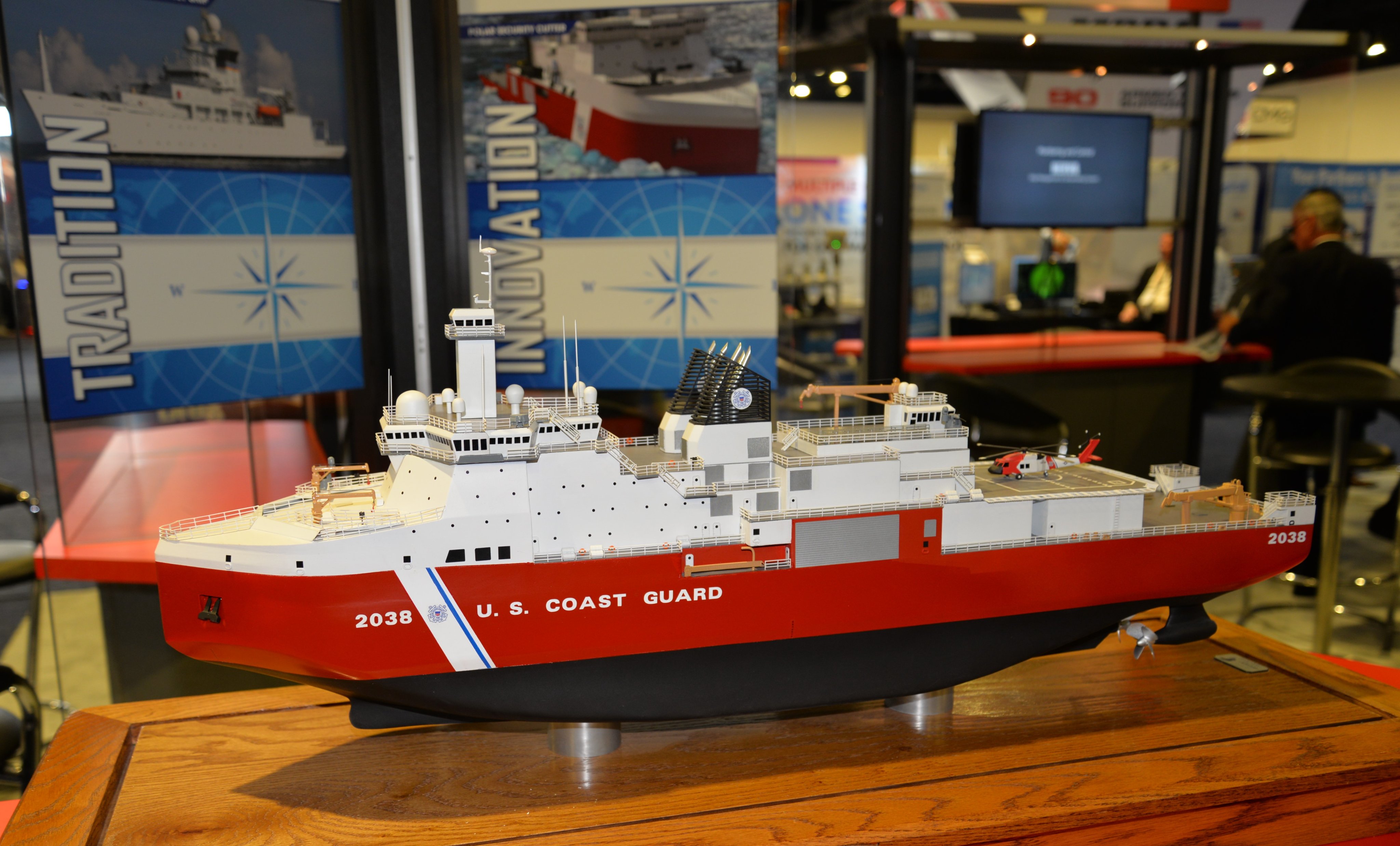
Photo of a model of Halter Marine’s Polar Security Cutter seen at Navy League’s Sea-Air-Space Exhibition have surfaced. Photo credit Chris Cavas.

The Drive/The Warzone reports that the delivery of the first Polar Security Cutter (PSC) has been pushed back to 2025. As recently as October, delivery was expected in 2024. This raises questions about why this is happening, and will Polar Star be able to continue to meet at least our minimum icebreaker requirements? In fact, the plan was to retain Polar Star until the second PSC was completed.

The article points to the decision to use the proposed Polarstern II as a basis for the design, when that ship was in fact never completed and the maturity of its design remains unclear.

More to the point, for whatever reason, the Coast Guard once more, waited too long to start a complex replacement program, and as a result, has risked creation of a capability gap.

The OPC program, poster child for this tendency, was repeatedly delayed. From the CRS report on cutter procurement,

“The posting for the RFP for the Stage 2 industry studies included an attached notional timeline for building the 25 OPCs. Under the timeline, OPCs 1 through 7 (i.e., OPCs 1-4, to be built by ESG, plus OPCs 5-7, which are the first three OPCs to be built by the winner of the Stage 2 competition) are to be built at a rate of one per year, with OPC-1 completing construction in FY2022 and OPC-7 completing construction in FY2028. The remaining 18 OPCs (i.e., OPCs 8 through 25) are to be built at a rate of two per year, with OPC-8 completing construction in FY2029 and OPC-25 completing construction in FY2038.
“Using these dates—which are generally 10 months to about two years later than they would have been under the Coast Guard’s previous (i.e., pre-October 11, 2019) timeline for the OPC program—the Coast Guard’s 14 Reliance-class 210-foot medium-endurance cutters would be replaced when they would be (if still in service) about 54 to 67 years old, and the Coast Guard’s 13 Famous-class 270-foot medium-endurance cutters would be replaced when they would be (if still in service) about 42 to 52 years old.

We know, from recent experience, that our ships may be able to continue functioning effectively, if perhaps not economically or reliably, when over 40 years old, but to base plans on an assumption that replacement can be delayed until they well passed 40 years old is irresponsible–and we are still doing it, by not advocating acceleration of the OPC build rate.

To Lee and Walter who pestered me about this after I initially failed to recognize the significance of the post, Thanks.

“Time to Revise the Japan Coast Guard Act?” –The Diplomat

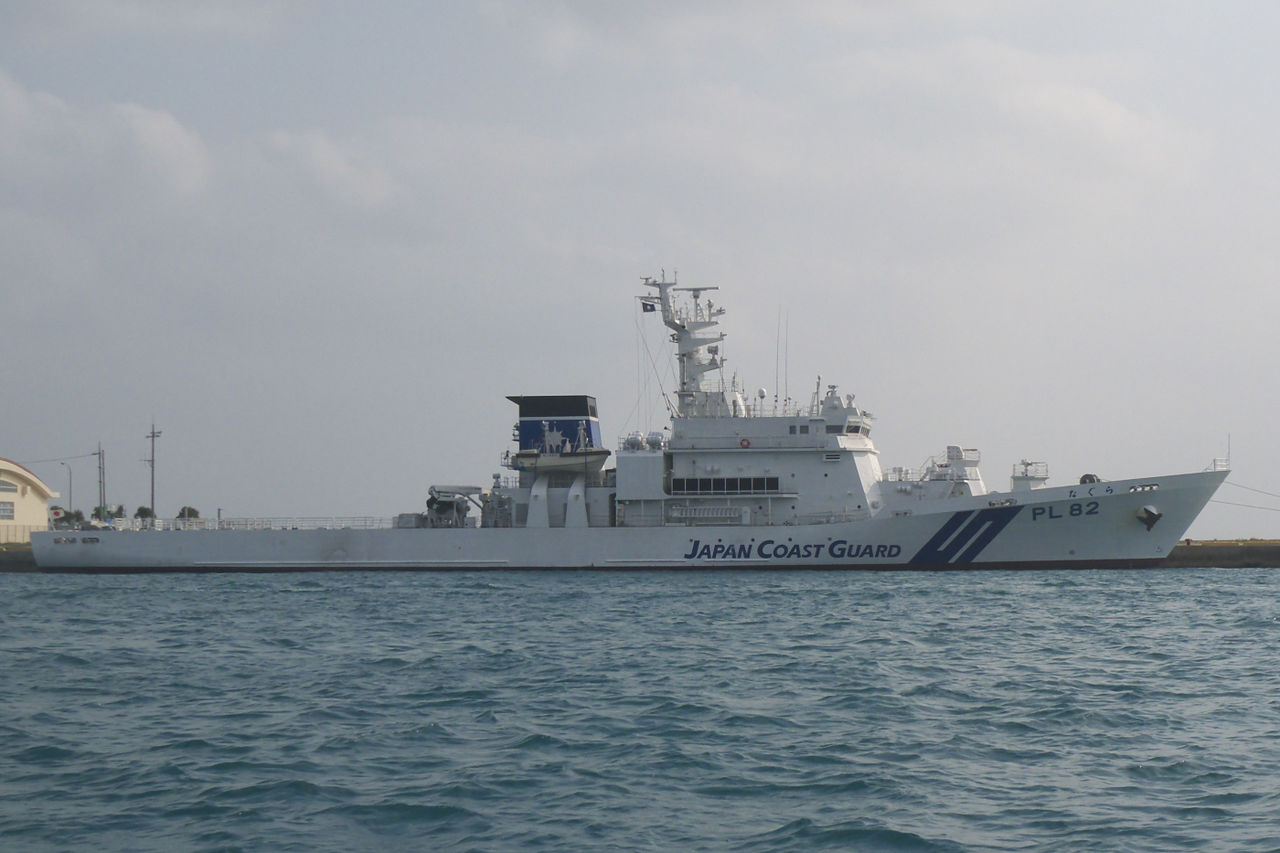
Japan Coast Guard patrol vessel PL82 Nagura at the Port of Ishigaki. Photo from Wikipedia Commons, by Yasu

The Diplomat reports that Japan is considering changes to their laws governing the Japan Coast Guard.

One proposal seeks to add “maintenance of  territorial sea integrity” and “security of territorial sea” to the Act’s mission, while another seeks to moderate the prerequisites allowing harm through use of weapons by Coast Guard officers. All of these proposals seek to give the JCG more muscle.

I don’t have a feel for what the actual proposed changes are, but I do know the Japan Coast Guard does not have the same close relationships with the Japanese Navy (Maritime Defense Force) that the USCG enjoys with the USN. It is not a military service. They don’t share equip or even use the same fuel. You can bet they don’t share the same communications systems. This means that the organization is not as useful as it might be in wartime, and, of more immediate concern, it means coordination in crisis is far more difficult.

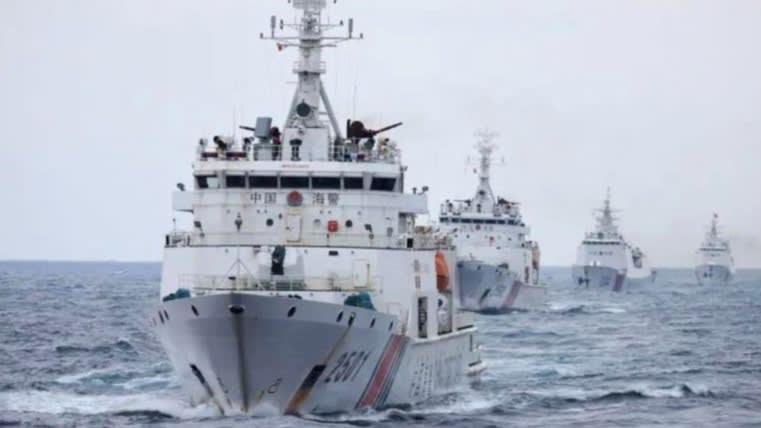
Currently none of the Japan Coast Guard vessels have weapons larger than 40mm, and very few have an air search radar or any kind of AAW firecontrol system. If Japanese Self Defense Forces are not immediately available as backup, it might be hard not to feel intimidated by better armed China Coast Guard vessels, particularly if supported by aircraft.

This Chinese coast guard ship is equipped with weapons believed to be 76-millimeter guns. © Kyodo

“VESSEL REVIEW | JB41 – MARINE RESCUE NSW’S NEW HIGH-SPEED, ALL-WEATHER RIB” –Baird Maritime

Australian rescue organization Marine Rescue New South Wales (MRNSW) inflatable boat (RIB) by local builder Harwood Marine.

Baird Maritime reports delivery of a new 45 foot, 30 knot boat to Marine Rescue New South Wales (MRNSW), a volunteer organization. This boat, which is comparable to the Coast Guard Response Boat, Medium, has some interesting features.

Most immediately obvious is provision for a secondary conning position in the flying bridge. There is “…a specially designed hydraulic heavy lift platform that drops below the waterline to assist in evacuating people and in the recovery of heavy equipment from the water.” The boat also uses the Swedish Zipwake ride control system, which is claimed to outperform trim tabs.

A Coast Guard Christmas Greeting

Paul sent me this story from the Nantucket Current. Hopefully they will forgive me for republishing it here.

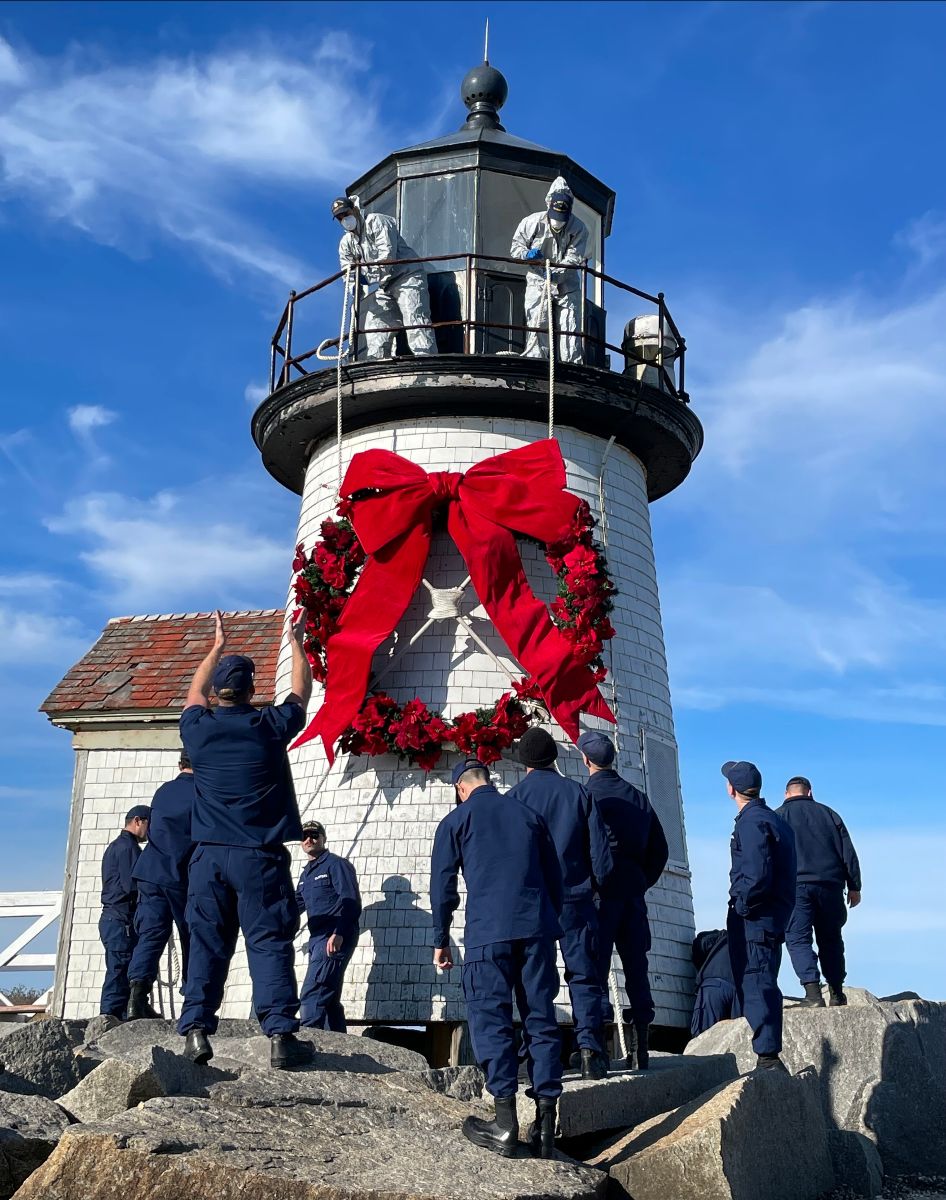
GOOD MORNING NANTUCKET: Christmas Stroll weekend is here. On Wednesday, members of Coast Guard Station Brant Point renewed the tradition of hanging a wreath from the Brant Point Lighthouse. The 2021 holiday wreath was designed and donated by Hafsa Lewis, local floral designer and owner of Hafsa & Co. The wreath tradition was started in 1993 by Station Brant Point Master Chief Jack Downey. The base of this year’s wreath is grapevine foraged from the Coast Guard’s Sconset Station. The red bow includes 50-plus poinsettias that are individually zip-tied to the base of the wreath. The Coast Guard members who are hanging the wreath from the top of the lighthouse are in full gear due to the lead and asbestos inside the lighthouse, which requires them to wear precautionary gear to avoid exposure.

“Chinese Amphibious Forces Eye A Great Leap Past The Second Island Chain” –Forbes

Craig Hooper, writing for Forbes, points out the very real possibility that China, using the pretext of a rescue mission, might seize a permanent presence in Oceania well East of the First Island Chain.

The idea of coming to the aid of Chinese diaspora is very popular with the people of China. There was a very popular movie, Operation Red Sea (2018), that depicted such an expedition (trailer above), very loosely based on the evacuation of Chinese citizens from Yemen in 2015 with considerable fictionalization of the actual events. As we know, nothing goes public in China unless it serves the goals of the party.

Hooper suggests the Coast Guard is part of the solution.

“Coast Guard buoy tender departs Bay Area for last time as San Francisco-based cutter” –News Release

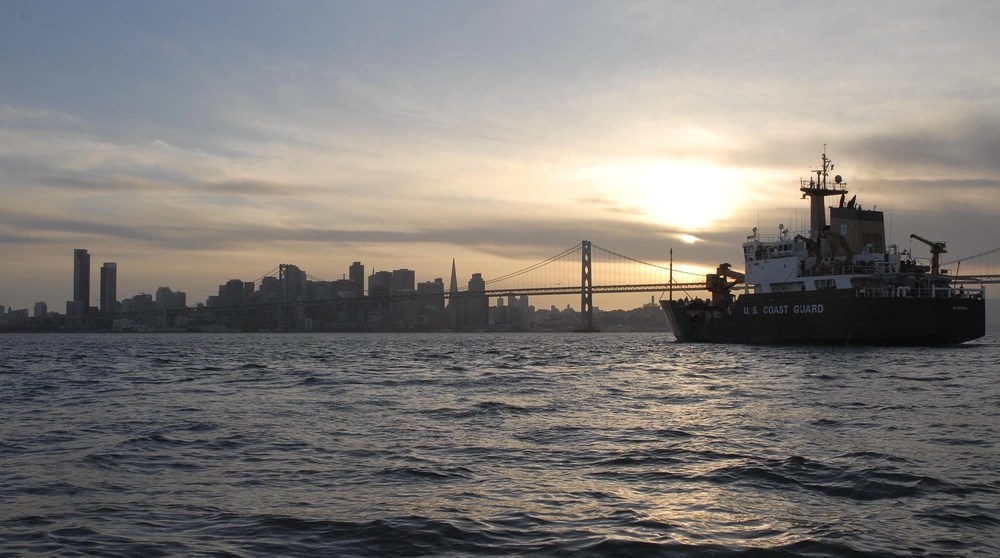
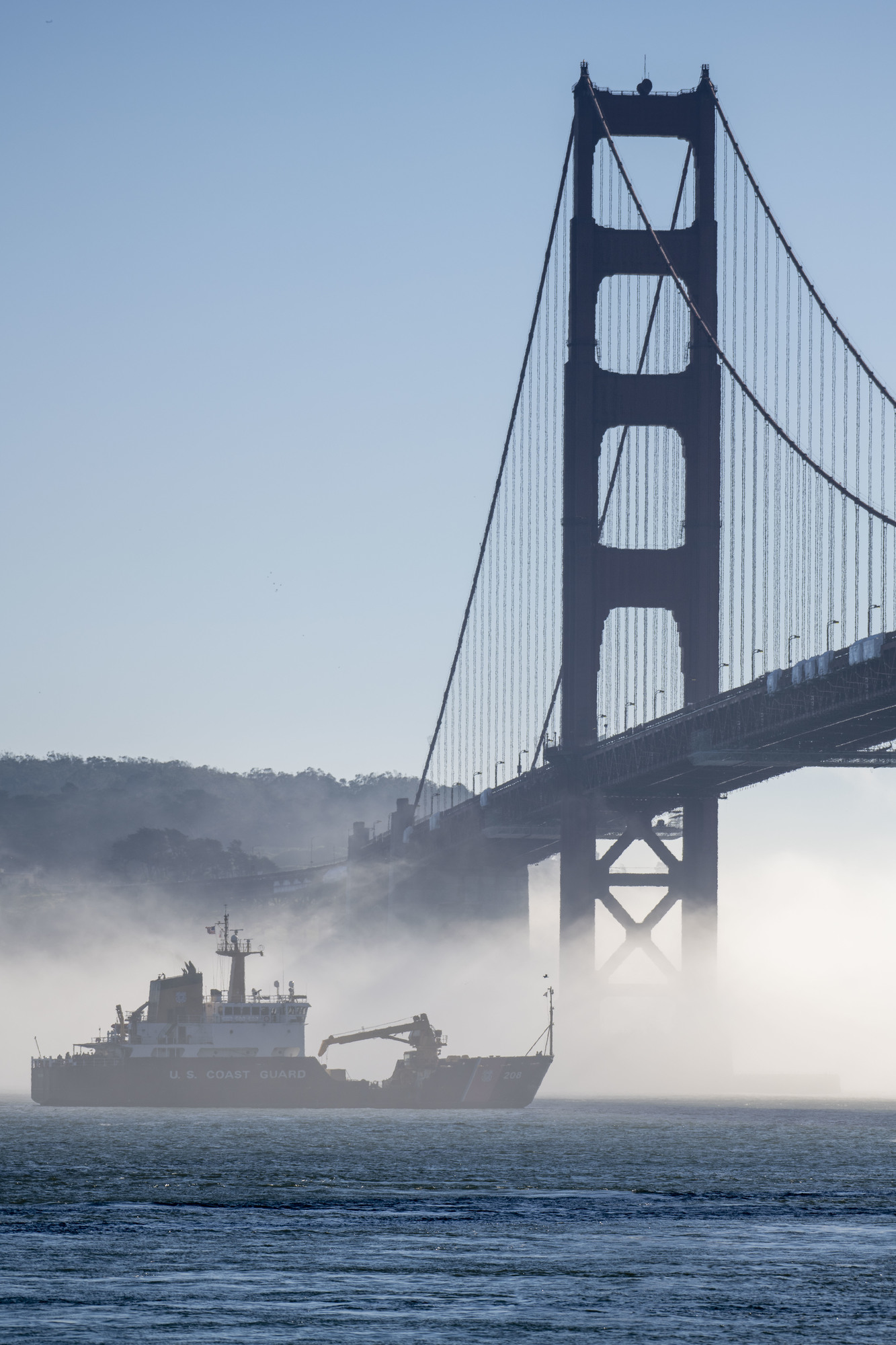
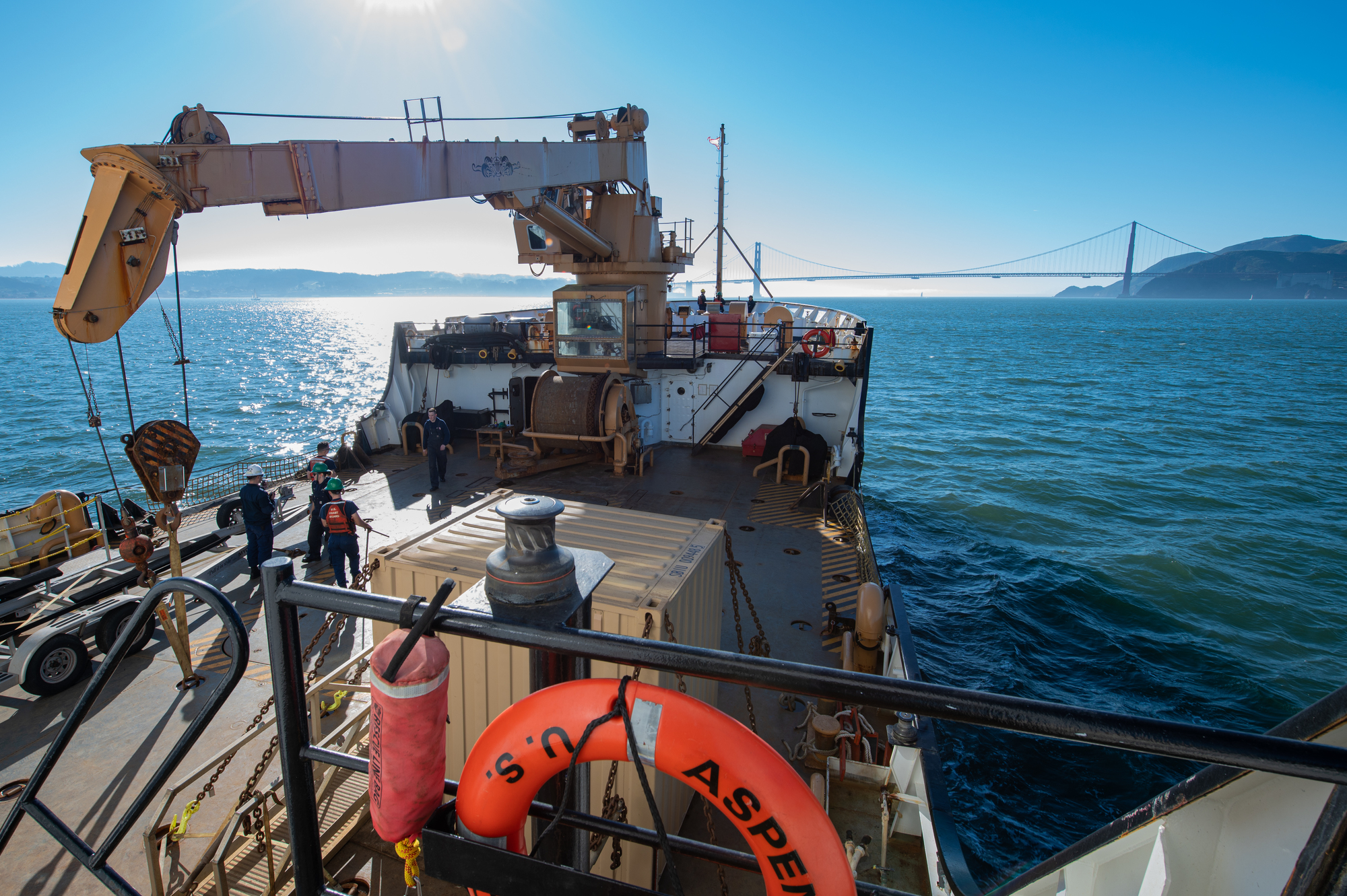
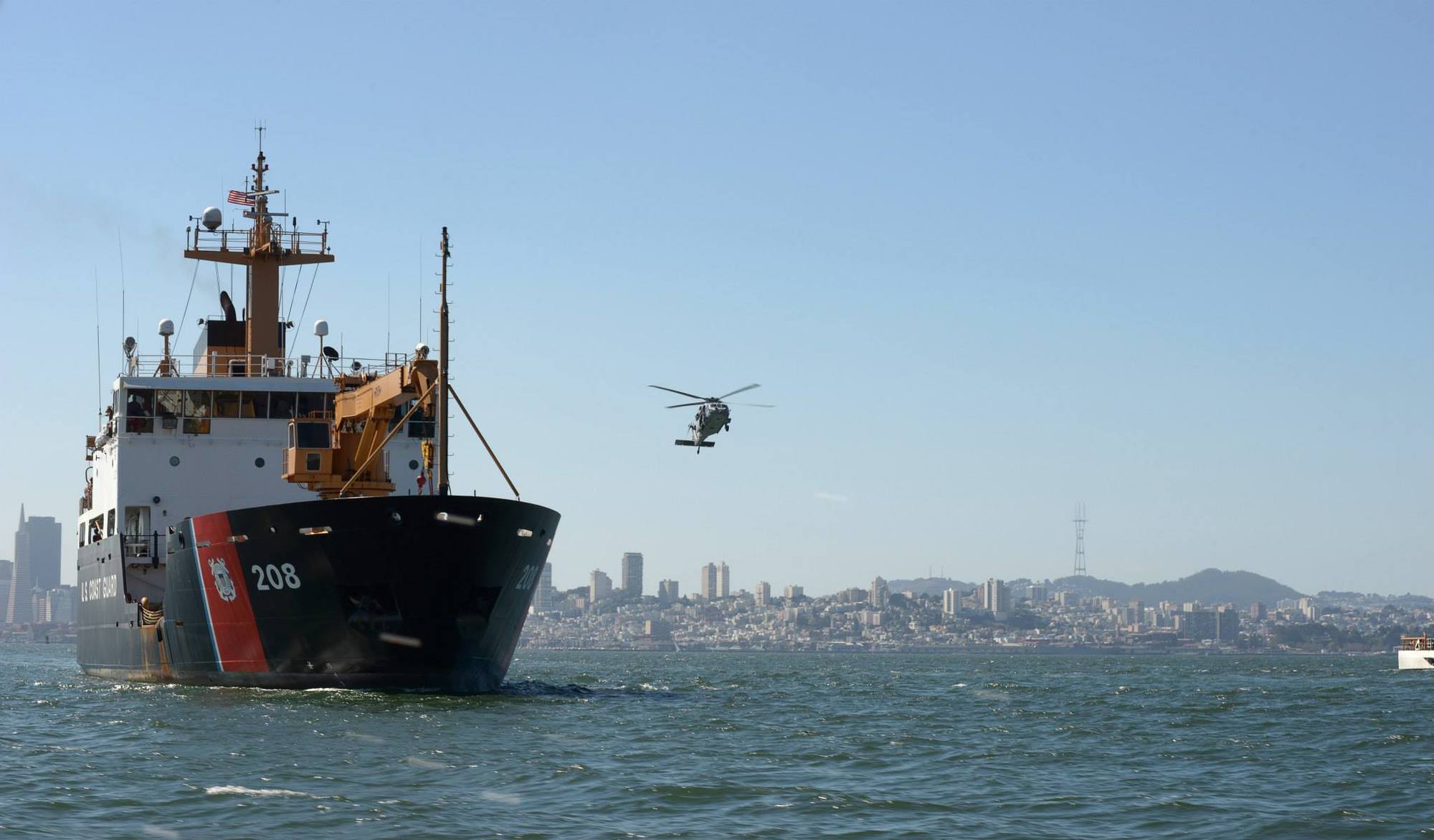
USCGC Aspen (WLB 208) transits through the San Francisco Bay, Wednesday, May 7, 2014. (U.S. Coast Guard photo by Petty Officer 3rd Class Loumania Stewart)

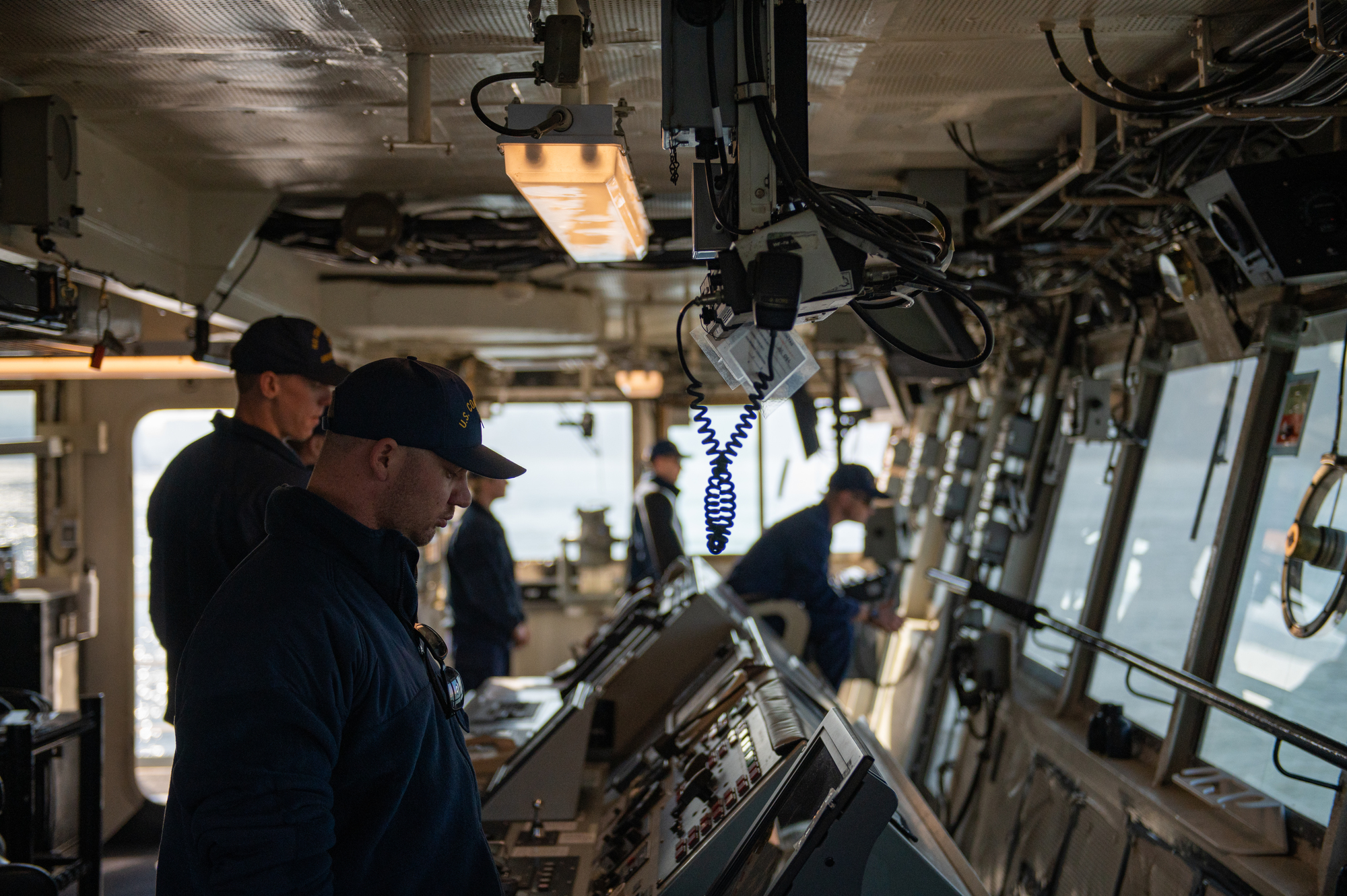
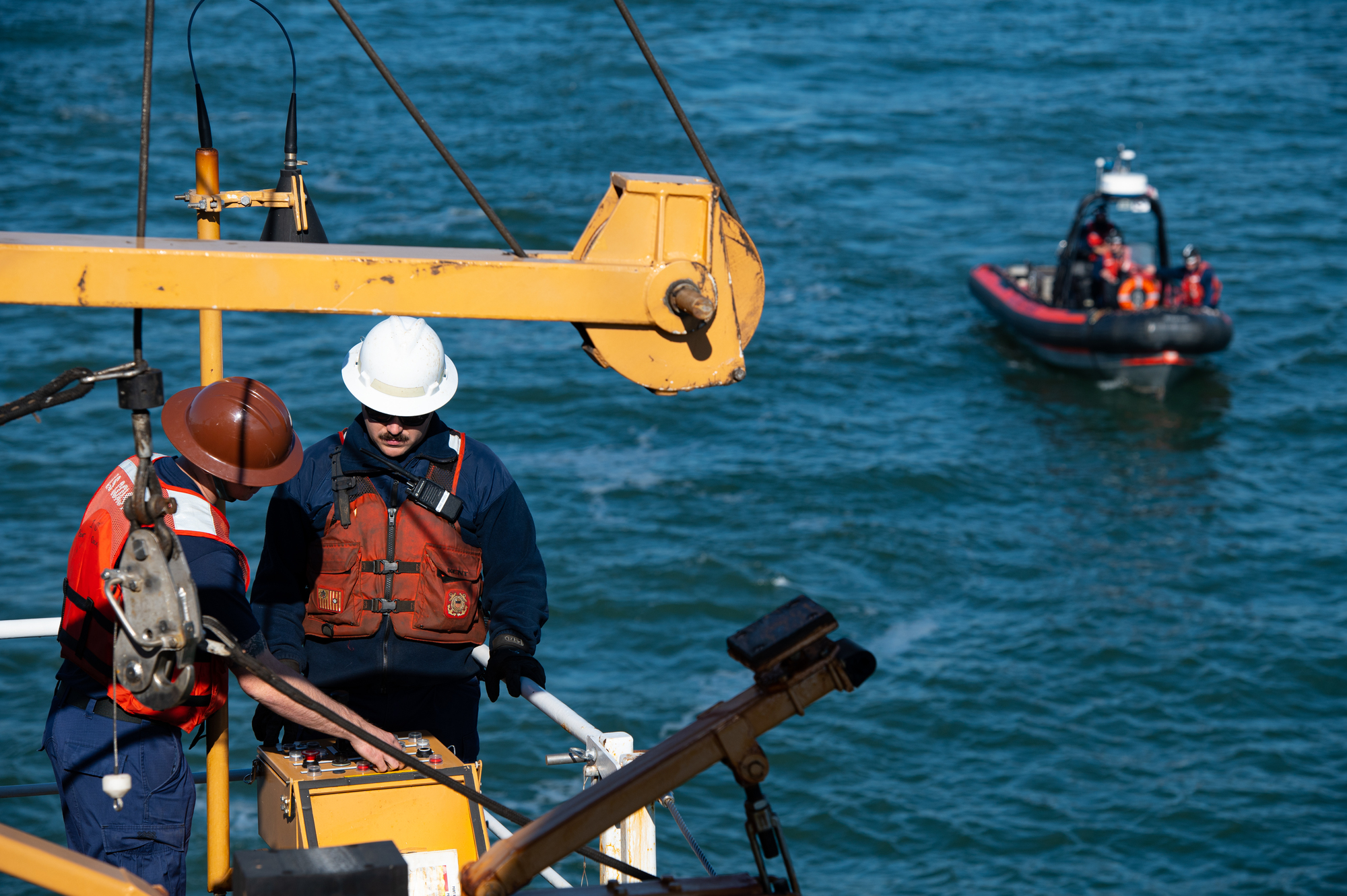
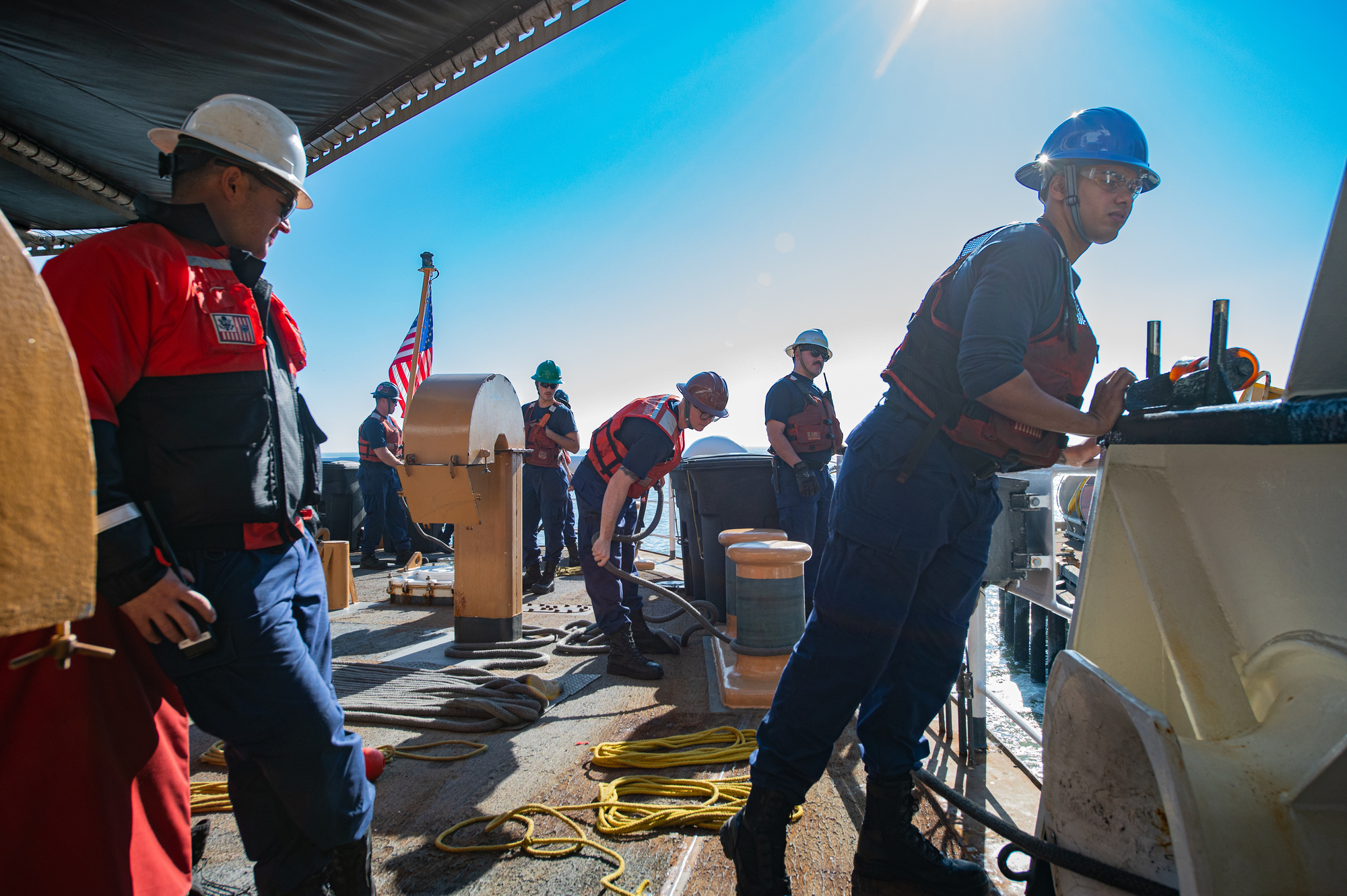
Continued progress on the WLB In Service Vessel Sustainment program. Very nice photoessay.

united states coast guard

News Release

U.S. Coast Guard 11th District Pacific Southwest

Coast Guard buoy tender departs Bay Area for last time as San Francisco-based cutter 

aspen aspen1 001
003 004 002

Editor’s Note: Click on images above to download full-resolution version.

ALAMEDA, Calif. — The Coast Guard Cutter Aspen (WLB 208) and crew departed the Bay Area Monday for the last time as a San Francisco-based cutter and are en route to the Coast Guard Yard in Baltimore to under-go major maintenance and overhaul.

This marks the end of two decades of service along the California Coastline for the Aspen as one of 16 of the nation’s Juniper class sea-going buoy tenders. The 225-foot ship and its 48-person crew have been stationed at Yerba Buena Island since Sep. 28, 2001.

Aspen’s area of responsibility encompassed the coastal areas from the Oregon-California border down to San Diego. In addition to its primary buoy tender operations, the cutter also has a long history in search and rescue, drug and migrant interdiction and marine pollution prevention and response missions. Since 2005, the cutter has worked with U.S. partners in Mexico to interdict tens of millions of dollars in illicit narcotics in support of SOUTHCOM and Joint Interagency Task Force South objectives, most recently interdicting $3.2 million worth of cocaine in 2017.  In 2007, Aspen responded to the Cosco Busan oil spill in San Francisco and the Deepwater Horizon oil spill in the Gulf of Mexico in 2010 to assist in oil spill cleanup efforts.

The crew is slated to travel approximately 6,000 miles over the course of 40 days and pass from the Pacific Ocean to the Atlantic Ocean by way of the Panama Canal. The Aspen is scheduled to undergo a $20 million, 12-month Major Maintenance Availability (MMA) overhaul.

The MMA is a planned dry dock event at the Coast Guard Yard, the first such major availability in the life of this class of ship. The availability will re-capitalize many of the ship’s critical systems, to include complete crane replacement, topside preservation work and technology modernization. The availability is designed to ensure that the cutter can reach its designed 30-year service life. Aspen will be the 11th 225-foot Juniper Class buoy tender to begin the MMA period.

This availability comes at a time when the Coast Guard is embarking on an unprecedented recapitalization of the cutter fleet. Major shipbuilding efforts throughout the county are underway, to include the National Security Cutter, Fast Response Cutter, Offshore Patrol Cutter, Polar Security Cutter and Waterways Commerce Cutter shipbuilding programs. The four 418-foot national security cutters, Bertholf, Waesche, Stratton and Munro stationed in Alameda, are the most visible local signs of these extensive programs.

The Coast Guard Cutter Alder (WLB 216) formerly homeported in Duluth, Minnesota, is slated to be brought back into service in summer of 2022 by the former Aspen crew and re-homeported in San Francisco. The Aspen’s scheduled final destination will be Homer, Alaska in early 2023. 

“It has been a privilege to serve along California’s rugged, oftentimes austere coastline; the beauty is without parallel, and the Pacific Ocean’s winds, current, fog and constant swells offshore continue to mold us as the stern teachers they are, said Lt. Cmdr. Paul Ledbetter, the Aspen’s commanding officer. “The U.S. is and always has been a maritime nation, and my crew relishes the challenges of keeping the maritime transportation system up and running in our capacity as a WLB. We look forward to continuing to serve this great country when we return to San Francisco aboard the Coast Guard Cutter Alder next year.”

Coast Guard Aids to Navigation Team San Francisco will be standing by to perform routine maintenance on the Aspen’s buoys throughout the Bay Area. Additionally, the Coast Guard Cutter George Cobb, a 175-foot buoy tender homeported in San Pedro, is slated to maintain all aids to navigation south of San Francisco and the Coast Guard Cutter Elm, a 225-foot buoy tender homeported in Astoria, Oregon, is also slated to assist throughout Northern California in spring of 2022.

Historical photos of the Aspen are included below:

CGC Aspen transits under Bay Bridge CGC Aspen crew cleans buoy
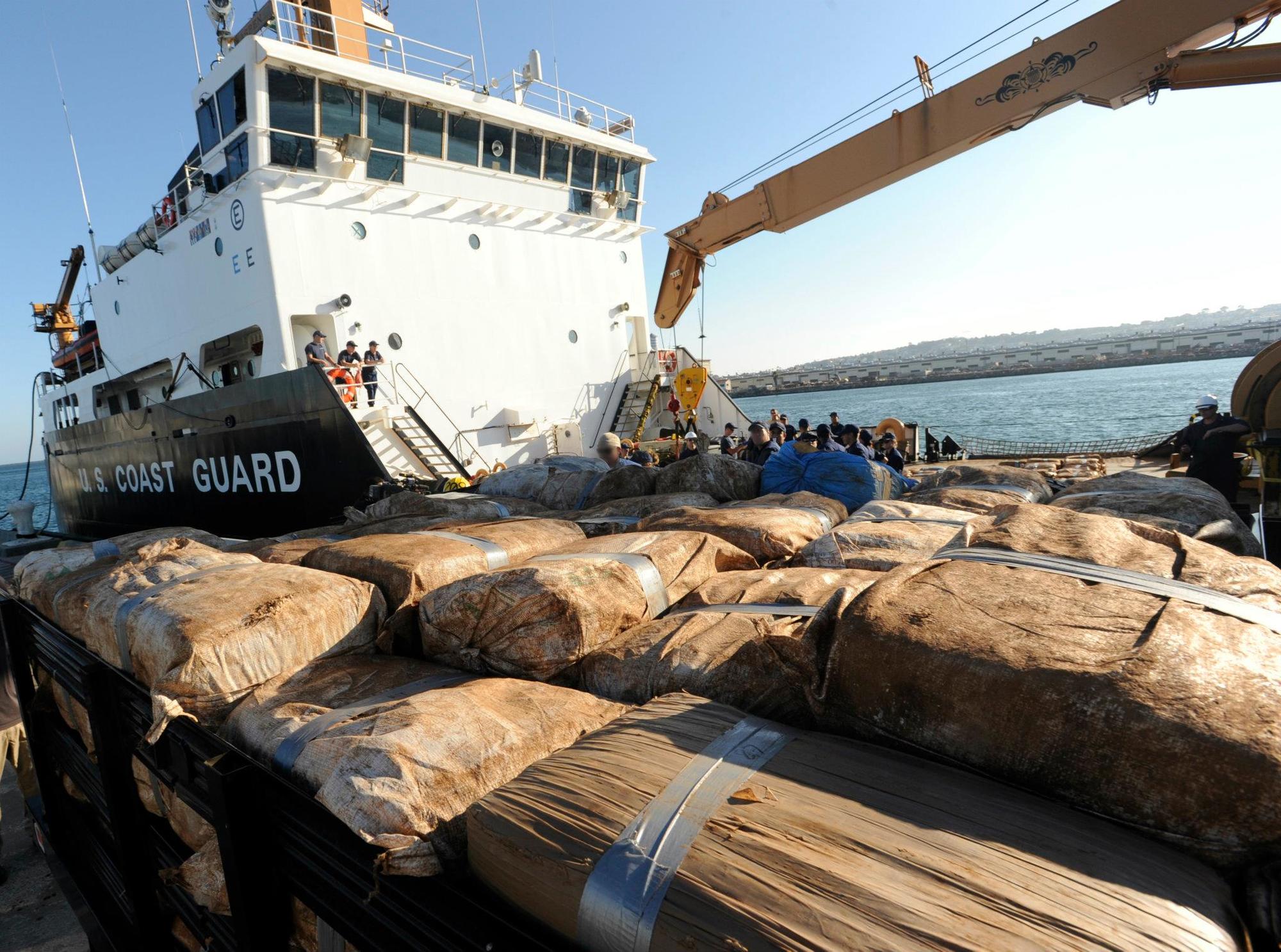
CGC Aspen marijuana interdiction
Aspen with helicopter photo

“Two Oregon-based Coast Guardsmen receive high honors for heroism” –News Release

A couple of good stories, about good people. 

united states coast guard

News Release

U.S. Coast Guard 13th District PA Detachment Astori

Two Oregon-based Coast Guardsmen receive high honors for heroism

ASTORIA, Ore. — Two Coast Guard Sector North Bend service members were recently recognized with high honors for heroic actions taken in 2021 to save lives while serving along Oregon’s coast.

Petty Officer 1st Class Trevor Salt, an aviation survival technician at Coast Guard Sector North Bend, received the 2021 Angels of the Battlefield Award from the Armed Services YMCA, which pays tribute to military medical personnel for providing life-saving medical treatment and trauma care to service members or civilians in distress.

Petty Officer 1st Class Wallace Qual, a boatswain’s mate serving at Coast Guard Station Yaquina Bay, received the Association for Rescue at Sea Gold Medal Award, the highest search and rescue award presented to a Coast Guard member by a civilian organization.

Salt was awarded the Angels of the Battlefield Award for helping save the lives of two hikers on Oregon’s snow-covered Grayback Mountain in January 2021 by spending more than 12 hours tending to a severely injured hiker, and another hiker, until the pair could be rescued by the National Guard.

Watch AST1 Salt’s award presentation here: https://www.youtube.com/watch?v=K0uVQyEHlmI (Video above, Chuck)

Qual received the AFRAS Gold Medal Award for leading an early-morning September rescue for the master of the 44-foot fishing vessel Legend after the boat aground near the Yaquina Bay channel entrance near Newport, Oregon.

Realizing that no rescue helicopters or boats were available due to on-scene conditions of 60 to 70-knot winds and less than 200 yards visibility, Qual dressed in full search and rescue gear, including an additional 20 pounds of rescue equipment, and led a Coast Guard beach rescue team in running approximately two miles down the beach to help the fisherman in distress.

Battling high surf, wind-driven sand and hurricane force wind gusts, Qual finally succeeded in reaching the master. The beach rescue team was then able to pull Qual, with the master in tow, to shore using the swimmer tending line.

The AFRAS Gold Medal Award was established in 1982 and is presented annually to a Coast Guard enlisted person for an act of extraordinary bravery during a rescue at sea.

Original media release for the rescue may be viewed here: Station Yaquina Bay crew rescues fisherman from surf near South Beach State Park (govdelivery.com)  (Attached below–Chuck)

Below is the earlier news release about the Station Yaquina Bay rescue:


Station Yaquina Bay crew rescues fisherman from surf near South Beach State Park

News Release

U.S. Coast Guard 13th District PA Detachment Astoria

Station Yaquina Bay crew rescues fisherman from surf
near South Beach State Park

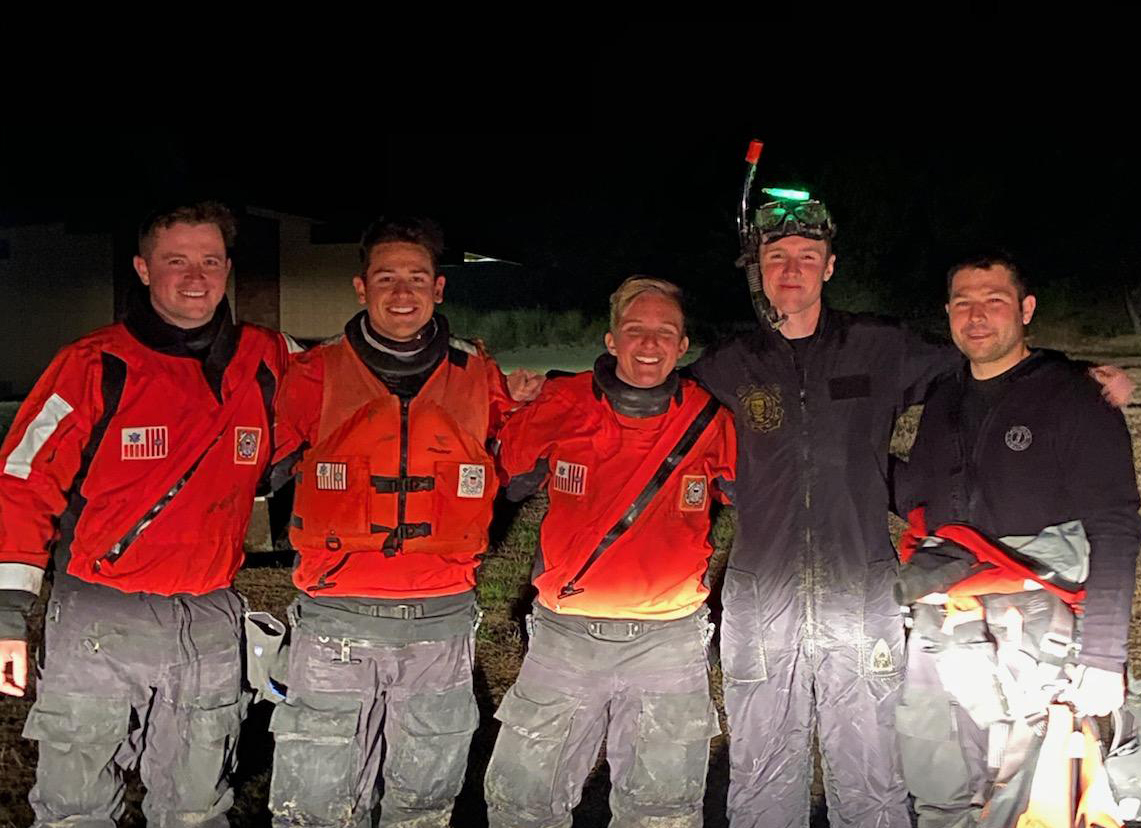
Station Yaquina Bay crew member swims to rescue fisherman in the surf near South Beach State Park

Editors’ Note: Click on images to download high resolution version.

YAQUINA BAY, Ore. — A Coast Guardsman swam from shore to rescue a fisherman from the surf near South Beach State Park early Tuesday morning after his vessel ran aground and began taking on water.

The fisherman was forced to abandon ship after the vessel began breaking apart in 10-foot surf.

At approximately 11:40 p.m., Coast Guard Sector North Bend watchstanders received the initial mayday call from a fisherman over VHF-FM radio. The lone mariner aboard a 44-foot commercial fishing vessel requested assistance reporting he was on the south jetty at Newport. Coast Guard crews deployed to respond after Sector North Bend issued an urgent marine information broadcast.

Crews aboard a 47-foot Motor Lifeboat, the 52-foot Motor Lifeboat Victory, and a ground party were dispatched from Station Yaquina Bay.

An Air Facility Newport aircrew aboard an MH-65 Dolphin rescue helicopter also responded but returned to base due to restricted visibility and hazardous weather conditions.

The weather on scene was reported to be 34.5-mph winds, 10-foot breaking surf, near zero visibility and 56-degree Fahrenheit water temperature.

Station Yaquina Bay crew members communicated with the distressed mariner via radio and instructed him to use flares to signal his location. The flares were sighted approximately 1.15 miles south of the Yaquina Bay jetties. The crew aboard the 47-foot Motor Lifeboat arrived on scene at approximately 1:20 a.m, but was unable to approach due to shoaling.

At this time, the ground party arrived on scene after running more than 1.5 miles from the South Beach State Park access area, carrying 500 feet of rescue line and other equipment.

At approximately 1:35 a.m., the mariner entered the water and Petty Officer 1st Class Wallace Qual made a first attempt to swim to his position. As the mariner was quickly being swept south by surf and currents, Qual returned to shore. With a second attempt, Qual successfully reached the mariner. The crew ashore pulled the two from the surf using the rescue line.

The mariner was transported to awaiting emergency medical personnel. No injuries were reported.

“The overall teamwork that went into locating the mariner, and the communication between our crews, was huge”, said Qual. “When I got to him, he was wearing his survival suit and had an EPIRB (emergency position indicating radio beacon) and strobe light in hand. That preparedness probably saved his life.”

The Coast Guard urges all mariners to be equipped with the proper equipment and have a reliable means of communication in case of emergency.