“Coast Guard exercises contract option for FRCs 61-64” –CG-9

The last of 64 planned Webber class Fast Response Cutters have been funded and contracted. The Acquisitions Directorate (CG-9) reports

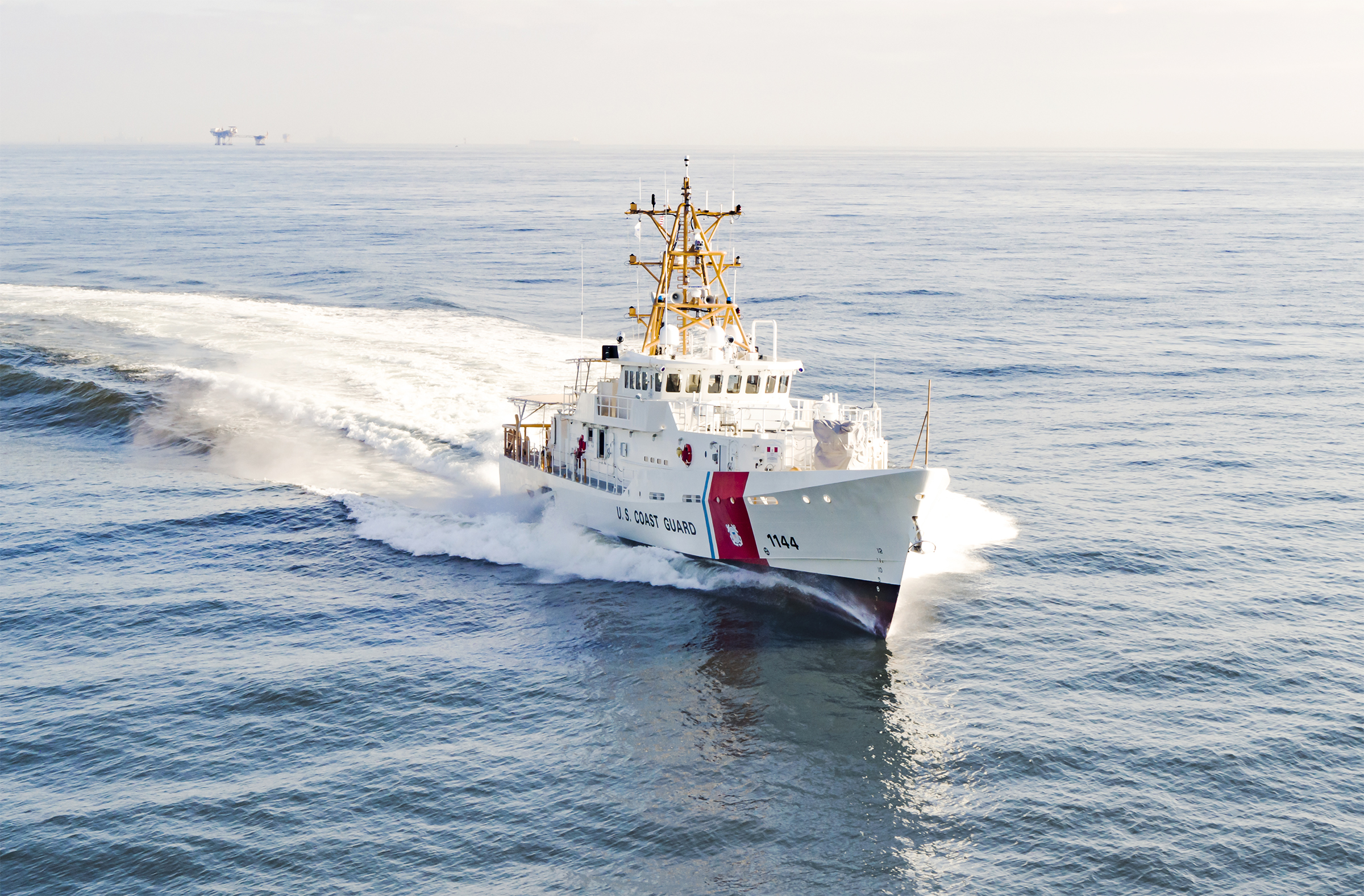
The Coast Guard exercised a contract option Aug. 4 for production of four more Sentinel-class fast response cutters (FRCs) and associated deliverables worth about $212.9 million with Bollinger Shipyards of Lockport, Louisiana.

This option brings the total number of FRCs under contract with Bollinger to 64 and the total value of the Phase 2 contract to approximately $1.7 billion. The FRCs built under this option will be delivered between October 2024 and June 2025.

To date, there are 43 FRCs in operational service.

FRCs have a maximum speed of over 28 knots, a range of 2,500 nautical miles and an endurance of five days. The ships are designed for multiple missions, including drug and migrant interdiction; ports, waterways and coastal security; fishery patrols; search and rescue; and national defense. They feature advanced command, control, communications, computers, intelligence, surveillance and reconnaissance equipment; over-the-horizon cutter boat deployment to reach vessels of interest; and improved habitability and seakeeping.

For more information: Fast Response Cutter Program page

Brits To Keep Two OPVs In the Indo-Pacific

The Royal Navy is sending two of their River Class Batch II offshore patrol vessels to serve long term in the Indo-Pacific.

We have talked about the River Class Batch II ships and their close relatives several times, here, here, here, and here.

Interesting to see camouflage applied to these ships. I also note they are commanded by Lt. Commanders. The crews on these ships are about half what we would expect on a comparable Coast Guard Cutter. In all probability crews will be rotated as was done with the crew of the earlier River class OPV, HMS Clyde, stationed in the Falklands.

The video makes it sound like these will both be going to the Pacific, with no British bases in the area, but Indo-Pacific includes the Indian Ocean as well and the British have a base in Bahrain and while it is also a US base, Diego Garcia is a British possession. Still it sounds like they will be making the rounds showing the flag.

These ships will join Britain’s planned Indo-Pacific Littoral Response Group (LRG) when it is formed. Two such groups are planned, one in Northern Europe and a second to be based in Oman.

“Coast Guard Cutter James conducts largest illegal narcotic offload in Coast Guard history worth more than $1.4 billion at Port Everglades” –News Release

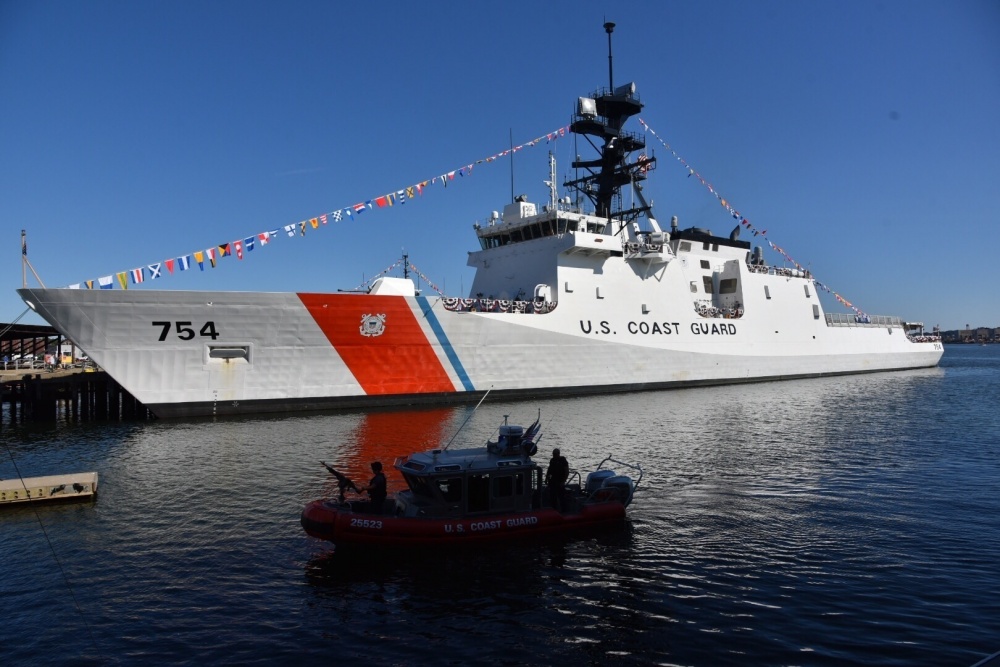
The Coast Guard Cutter Joshua James moored during its commissioning ceremony at Base Boston, Aug. 8, 2015. The Cutter Joshua James is a 418-foot National Security Cutter that will be homeported in Charleston, S.C. (Coast Guard photo by Petty Officer 2nd Class Patrick Kelley)

Below is a news release from District Seven. I don’t normally pass these along, but this one is a bit unusual, in the quantity of the offload and the ships involved in the 27 seizures or recoveries.

Almost 30 tons of Cocaine, plus a bit of Marijuana, and it came from the usual locations, “international waters of the Eastern Pacific Ocean off the coasts of Mexico, Central and South America, and the Caribbean Sea.

All the ships involved here came from the Atlantic side. All four WMECs and the three LCS involved were all based in Florida. This reminds us that, using the Panama Canal, the Eastern Pacific drug transit zones are actually closer to Florida than to California.

It may be significant that the three Navy ships are all Freedom class LCS, which up until now seem to have had more than their share of problems, yet they appear to have succeeded here. On the other hand it may be that this is the least demanding type of deployment they can do.

Nice to see recognition for our Dutch and Canadian friends as well. The Canadian ship is actually smaller than a 210. The Dutch ship is in many ways similar to the Offshore Patrol Cutter, only slightly smaller with a much smaller crew.

united states coast guard 
Multimedia Release U.S. Coast Guard 7th District Southeast

Coast Guard Cutter James conducts largest illegal narcotic offload in Coast Guard history worth more than $1.4 billion at Port Everglades
234      Editor’s Note: Due to Defense Visual Information Distribution Service experiencing technical difficulties, we are unable to provide a full-resolution link to our images.

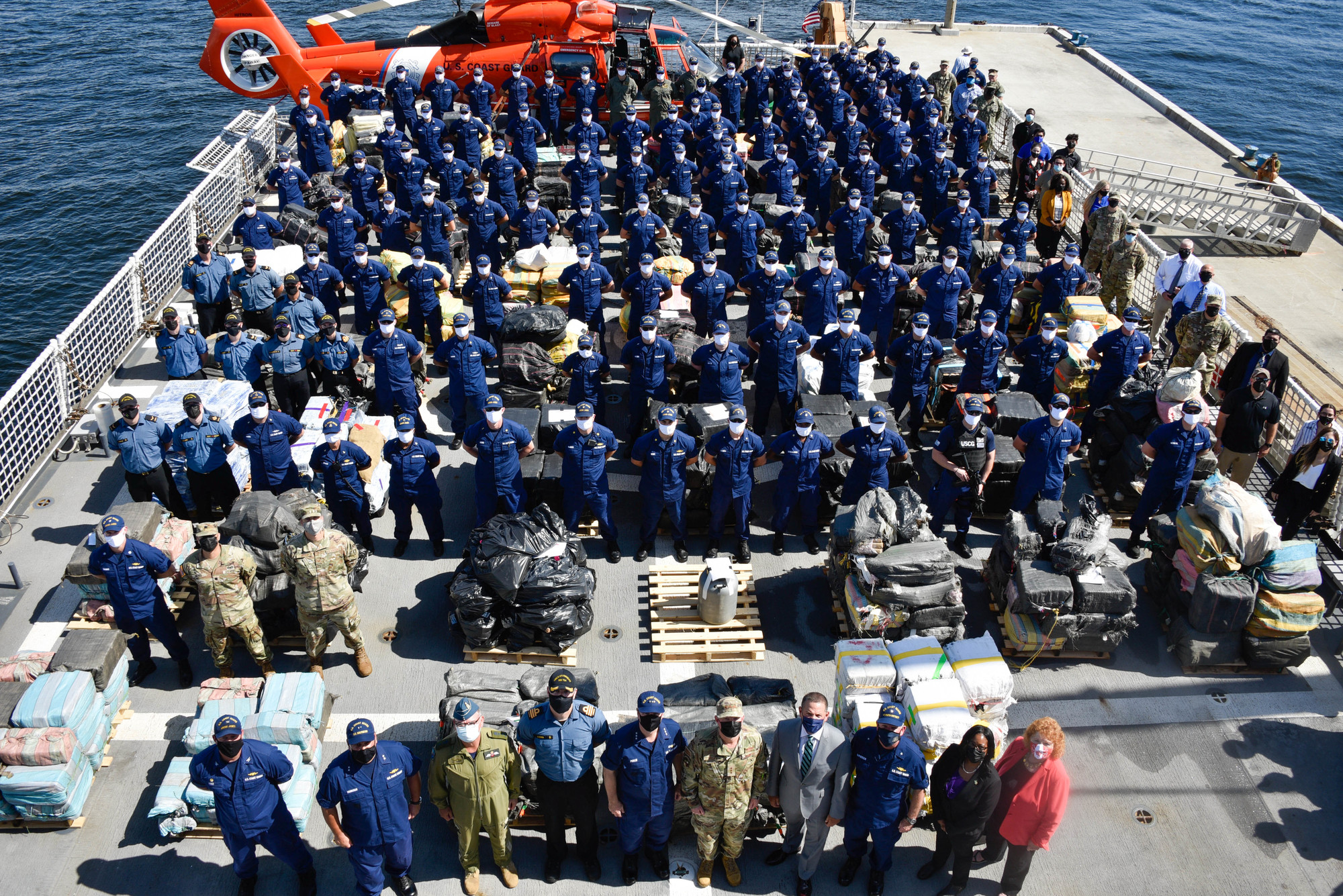
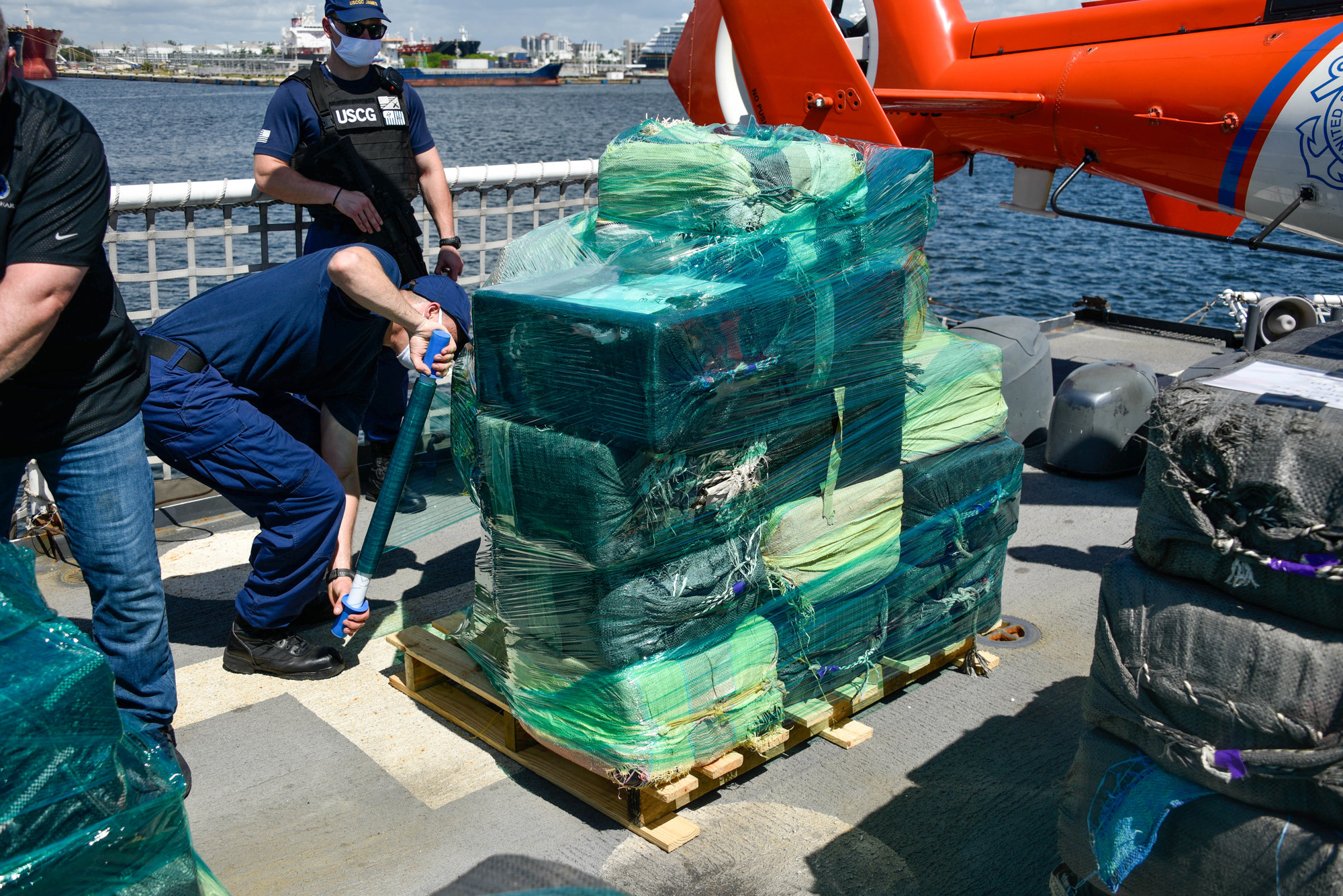
MIAMI — Coast Guard Cutter James’ crew offloaded approximately 59,700 pounds of cocaine and 1,430 pounds of marijuana worth more than $1.4 billion, Thursday, at Port Everglades, which is the largest offload in Coast Guard history.

The Coast Guard’s strong international relationships, with key partners like Canada and the Netherlands, along with our specialized capabilities and unmatched authorities, allow for a unity of effort to disrupt transnational crime organizations, which threaten America and our partner nations.

“Today’s offload is a result of our combined efforts of our inter-agency partners and a dedicated international coalition,” said Vice Adm. Steven Poulin, Commander Atlantic Area. “The Canadian government and Canadian Defence Forces brings an incredible capability in defeating transnational organized crime, and I’m grateful to HMCS Shawinigan to showcase Canada’s commitment. Together we will disrupt, defeat and degrade transnational organized crime. We will strengthen our efforts and continue to build collaboration and capability.”

“Canada and America are committed to expanding cooperation on defending North America against illicit trafficking and transnational crime and working together within our alliances,” said Maj. Gen. Paul Ormsby, Canadian Defence Attache. “We know that no nation can do it alone, and we know that we are stronger together. The kind of cooperation that we see on the pier today is one of the thousands of impressive examples of cooperation every day.

“The drugs were interdicted in international waters of the Eastern Pacific Ocean off the coasts of Mexico, Central and South America, and the Caribbean Sea including contraband seized and recovered during 27 interdictions of suspected drug smuggling vessels by 10 American, Dutch and Canadian ships:

Coast Guard Cutter James
Coast Guard Cutter Mohawk
Coast Guard Cutter Dauntless
Coast Guard Cutter Thetis
Coast Guard Cutter Confidence 
USS Wichita
USS Sioux City
USS Billings
HNLMS Holland (I added the link for this one–Chuck)
HMCS Shawinigan

Numerous U.S. agencies from the Departments of Defense, Justice and Homeland Security cooperated in the effort to combat transnational organized crime. The Coast Guard, Navy, Customs and Border Protection, FBI, Drug Enforcement Administration, and Immigration and Customs Enforcement, along with allied and international partner agencies, play a role in counter-drug operations. The fight against drug cartels in the Eastern Pacific Ocean requires unity of effort in all phases from detection, monitoring and interdictions, to criminal prosecutions by U.S. Attorneys in districts across the nation.

During at-sea interdictions, a suspect vessel is initially detected and monitored by allied, military or law enforcement personnel coordinated by Joint Interagency Task Force-South based in Key West, Florida. The law enforcement phase of counter-smuggling operations in the Eastern Pacific is conducted under the authority of the Coast Guard 11th District, headquartered in Alameda, California. The interdictions, including the actual boardings, are led and conducted by members of the U.S. Coast Guard.

The fight against drug cartels in the Eastern Pacific Ocean and the Caribbean Sea requires unity of effort in all phases from detection, monitoring and interdictions, to criminal prosecutions by international partners and U.S. Attorneys’ Offices in districts across the nation. The law enforcement phase of counter-smuggling operations in the Eastern Pacific Ocean is conducted under the authority of the Coast Guard 11th District, headquartered in Alameda, California, and the law enforcement phase of operations in the Caribbean is conducted under the authority of the Coast Guard 7th District, headquartered in Miami. The interdictions, including the actual boardings, are led and conducted by members of the U.S. Coast Guard. 

The cutter James is a 418-foot national security cutter home ported in Charleston, South Carolina. The cutter Mohawk is a 270-foot medium endurance cutter home ported in Key West, Florida. The cutter Dauntless is a 210-foot medium endurance cutter homeported in Pensacola, Florida. The cutter Thetis is a 270-foot medium endurance cutter homeported in Key West, Florida. The cutter Confidence is a 210-foot medium endurance cutter homeported in Port Canaveral, Florida. The USS Wichita is a 378-foot freedom-class littoral combat ship homeported in Naval Station Mayport, Florida. The USS Sioux City is a 378-foot Freedom-class littoral combat ship homeported in Naval Station Mayport, Florida. The USS Billings is a 378-foot Freedom-class littoral combat ship homeported in Naval Station Mayport, Florida. The Royal Netherlands Navy HNLMS Holland is a 356-foot Holland-class offshore patrol vessel homeported in Den Helder, Netherlands. The HMCS Shawinigan is a 181-foot Kingston-class coastal defence vessel homeported in Halifax, Canada. For more breaking news follow us on Twitter and Facebook.

“Volansi completes first-ever autonomous ship-to-ship drone delivery” –DroneDJ

DroneDJ reports the first successful cargo transfer by drone between ships at sea, using Volansi VTOL UAS.

“The cargo deliveries – there were three of them – took place July 18 off the coast of Key West, Florida. Both its VOLY 10 and VOLY 20 series of drones were involved, with two flights covering 15 nautical miles and one flight covering one nautical mile.”

The transferred were made between USNS Burlington and USCGC William Trump, a Webber class FRC.

Presumably the landing area on the cutter was in the board open area forward of the bridge intended for vertical replenishment. This does seem to indicate the FRCs could operate a UAS with minimal changes.

The Volansi VOLY 20 (or the V-Bat) looks like it could be very useful. VOLY 20 claimed performance:

  • Endurance: 6+hours
  • Range: 350 miles (I presume stature miles)
  • Average Speed: 65 knots
  • Payload: 30 pounds

Volansi already has a contract with the Air Force as part of their Skyborg Vangard program. My only reservation, from this brief review, is that it is gas powered rather than diesel.

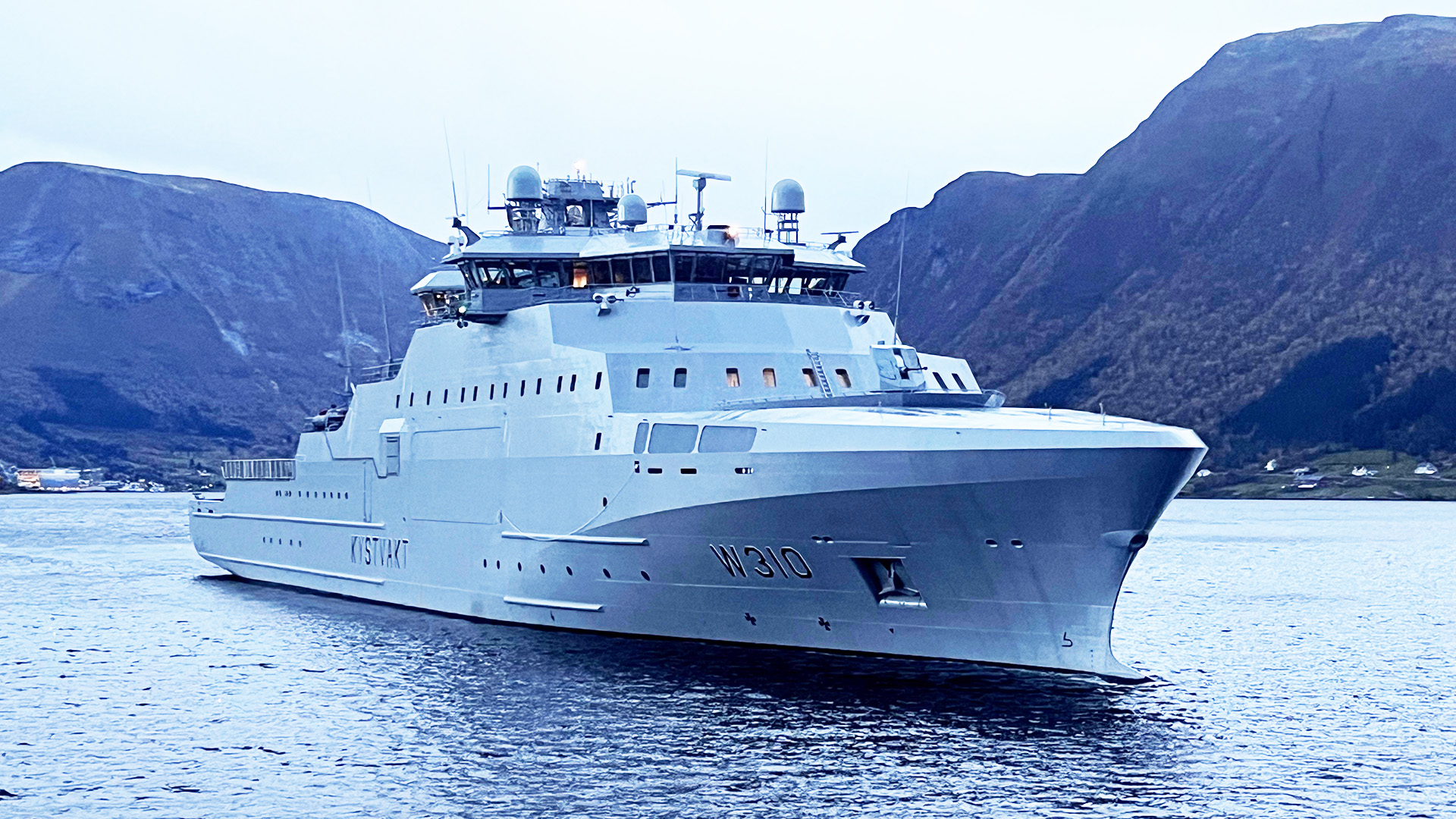
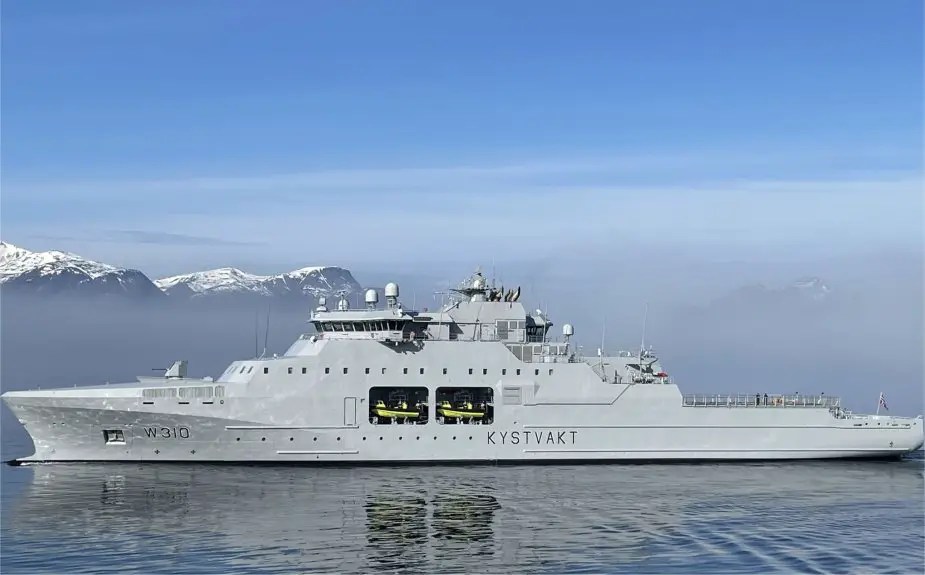
Photos: Norway’s Coast Guard Jan Mayen-class ice capable OPV

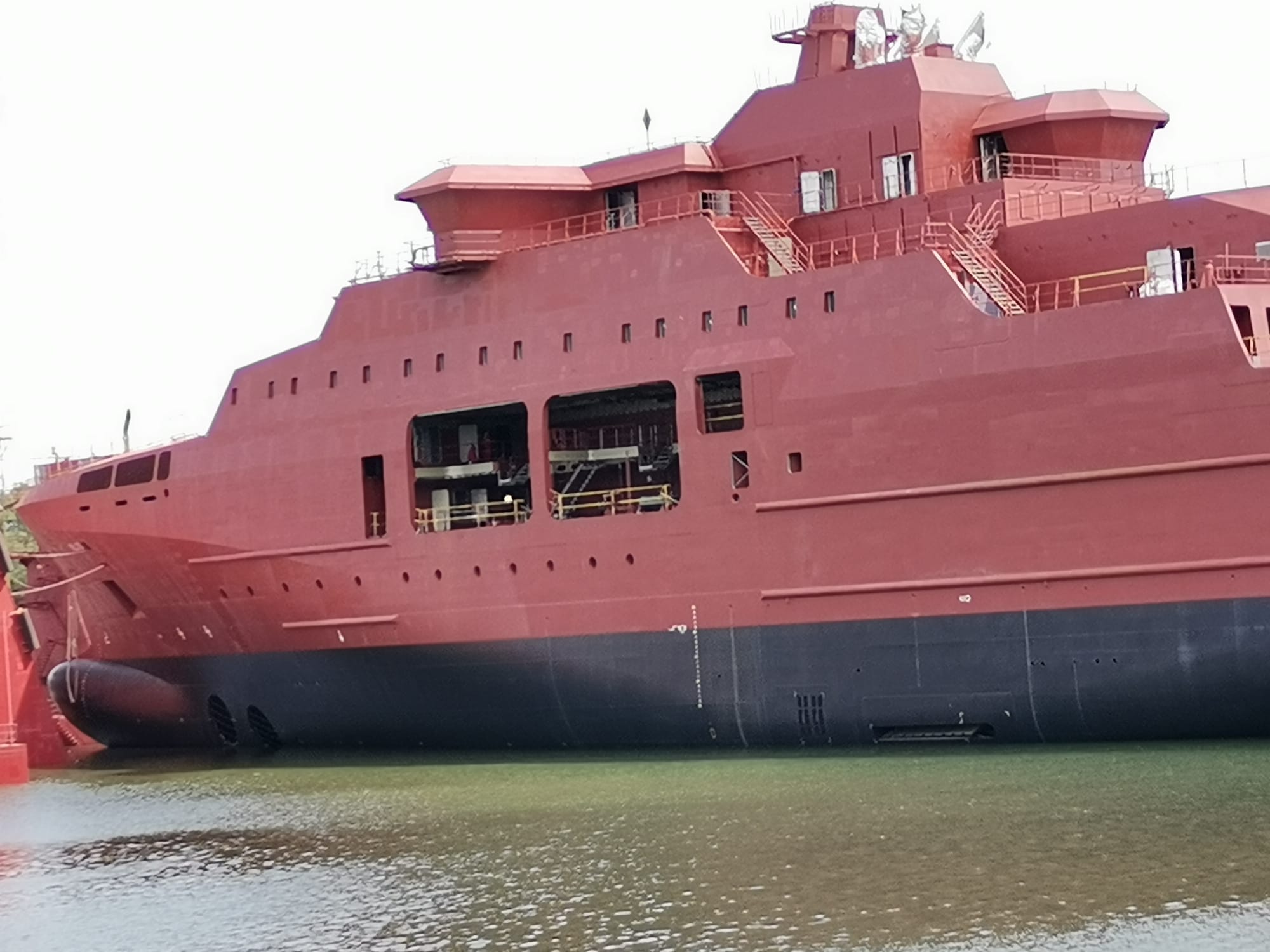
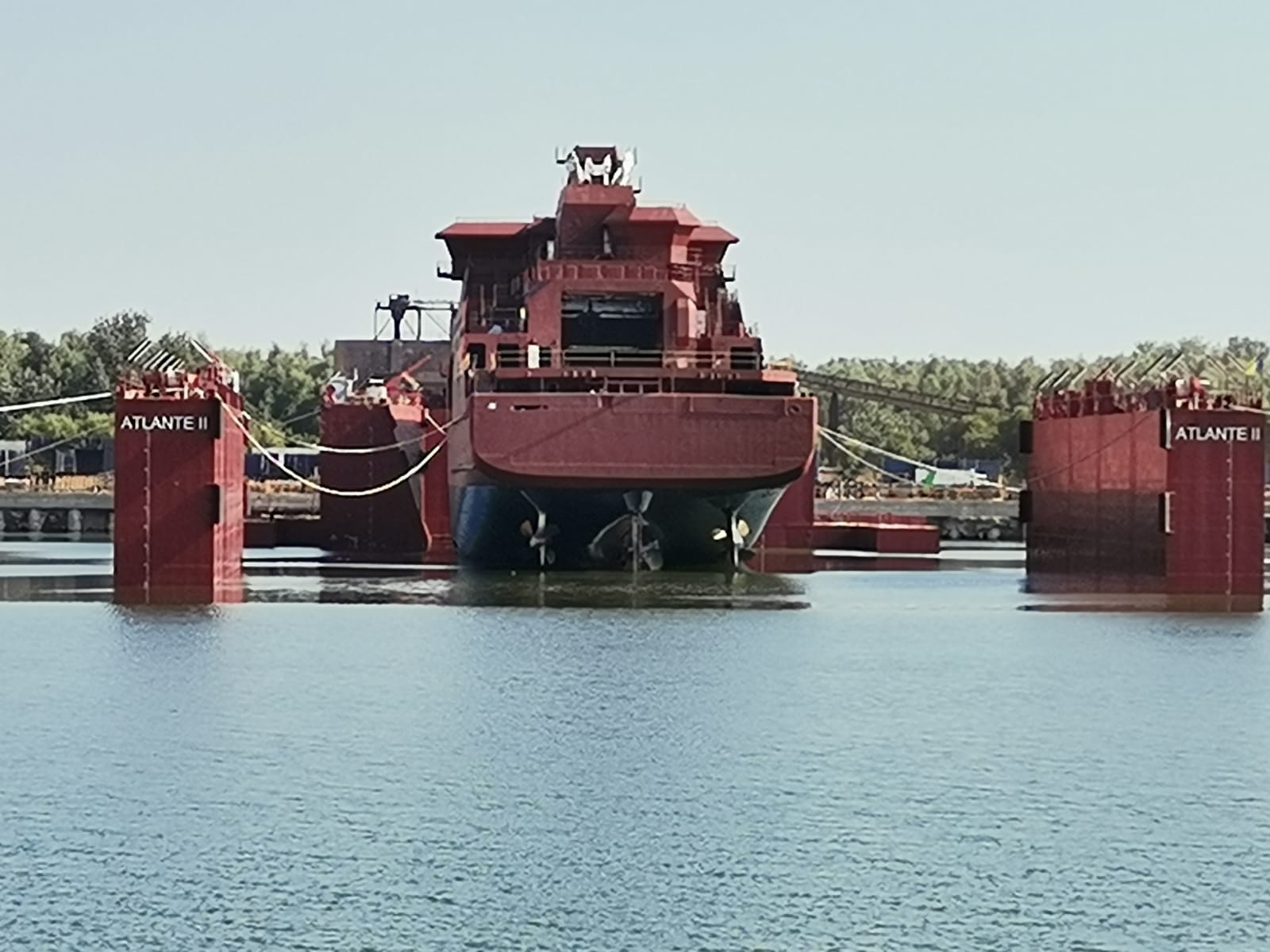
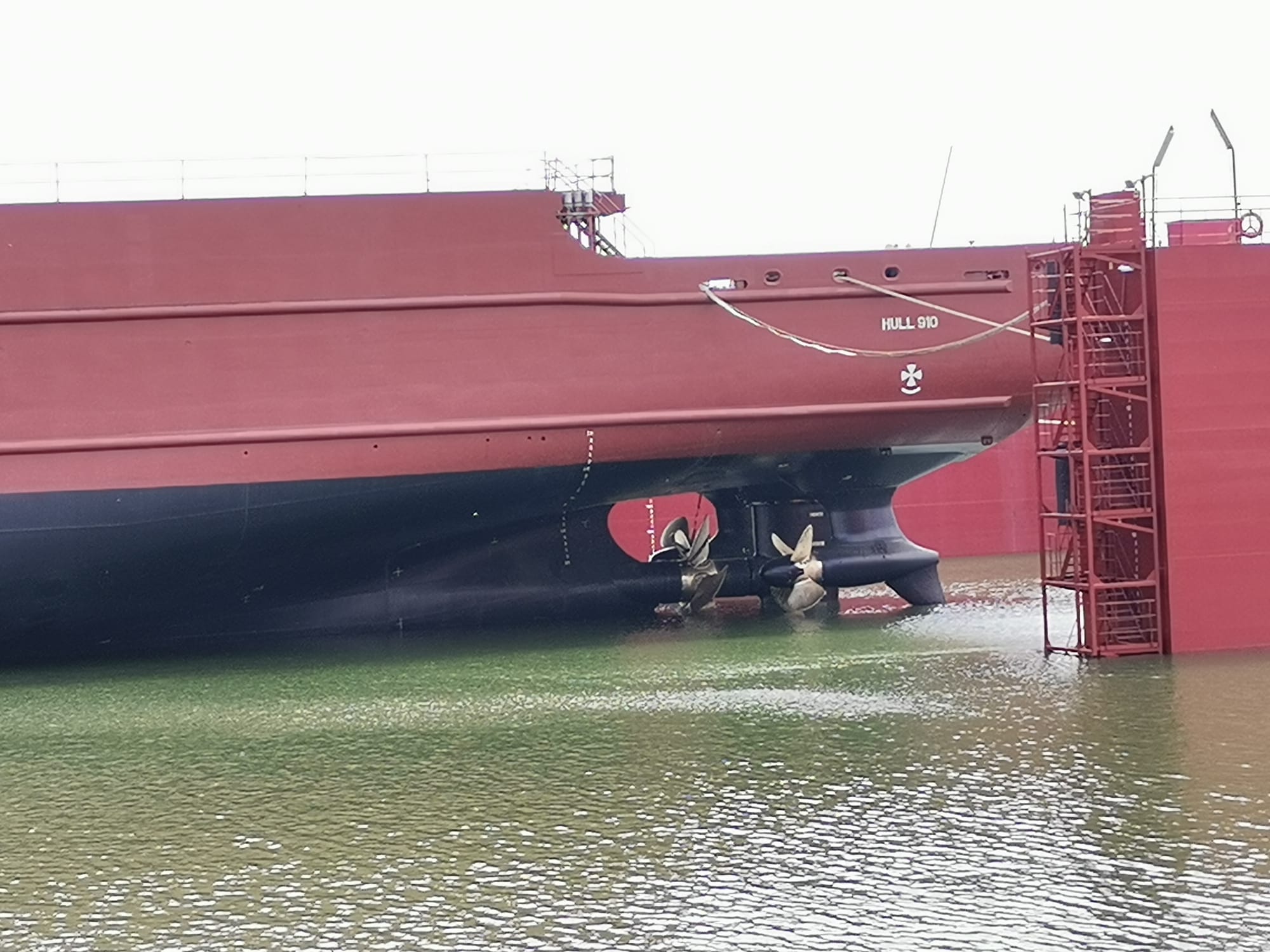
Photos of the nearly complete basic structure of the Norwegian ice capable OPV Jan Mayen, brought to us by frequent contributor, Tups, as a comment on a previous post about these massive almost 10,000 ton patrol vessels.

For convenience here are specifications provided previously:

  • Displacement: 9,800 tons
  • Length: 136.4 meters (447.4 ft) loa
  • Beam: 22 meters (72.16 ft)
  • Draft: 6.2 meter (20.3 ft)
  • Speed: 22 knots.

They are expected to hangar two NH90 helicopters (10,600 kg/23,370 lb max TO weight) with deck space to land an AW101 (14,600 kg/32,188 lb max TO weight). They are expected to have an endurance of eight weeks, accommodations for 100, collective CBRN protection, and space for containers on deck.

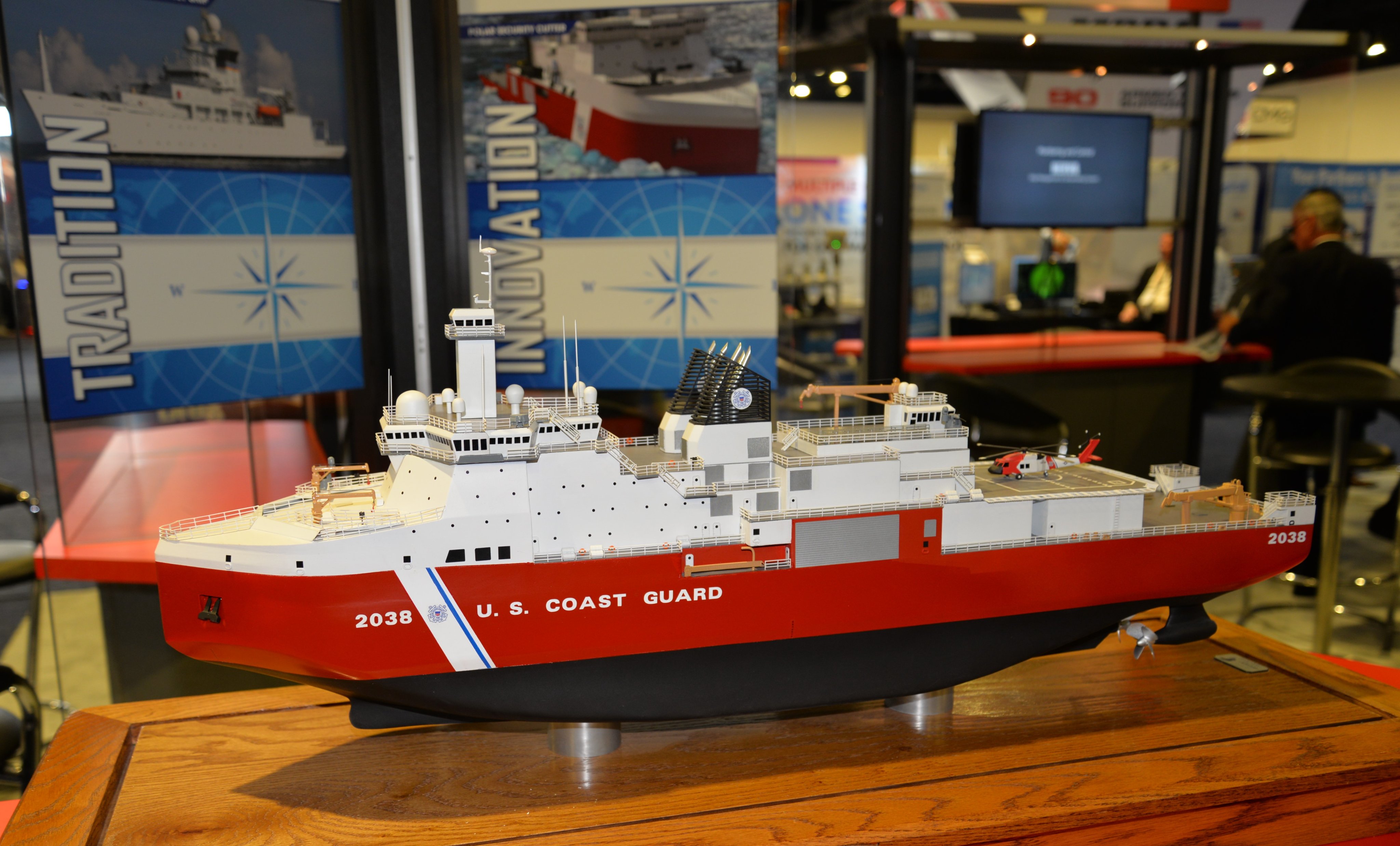
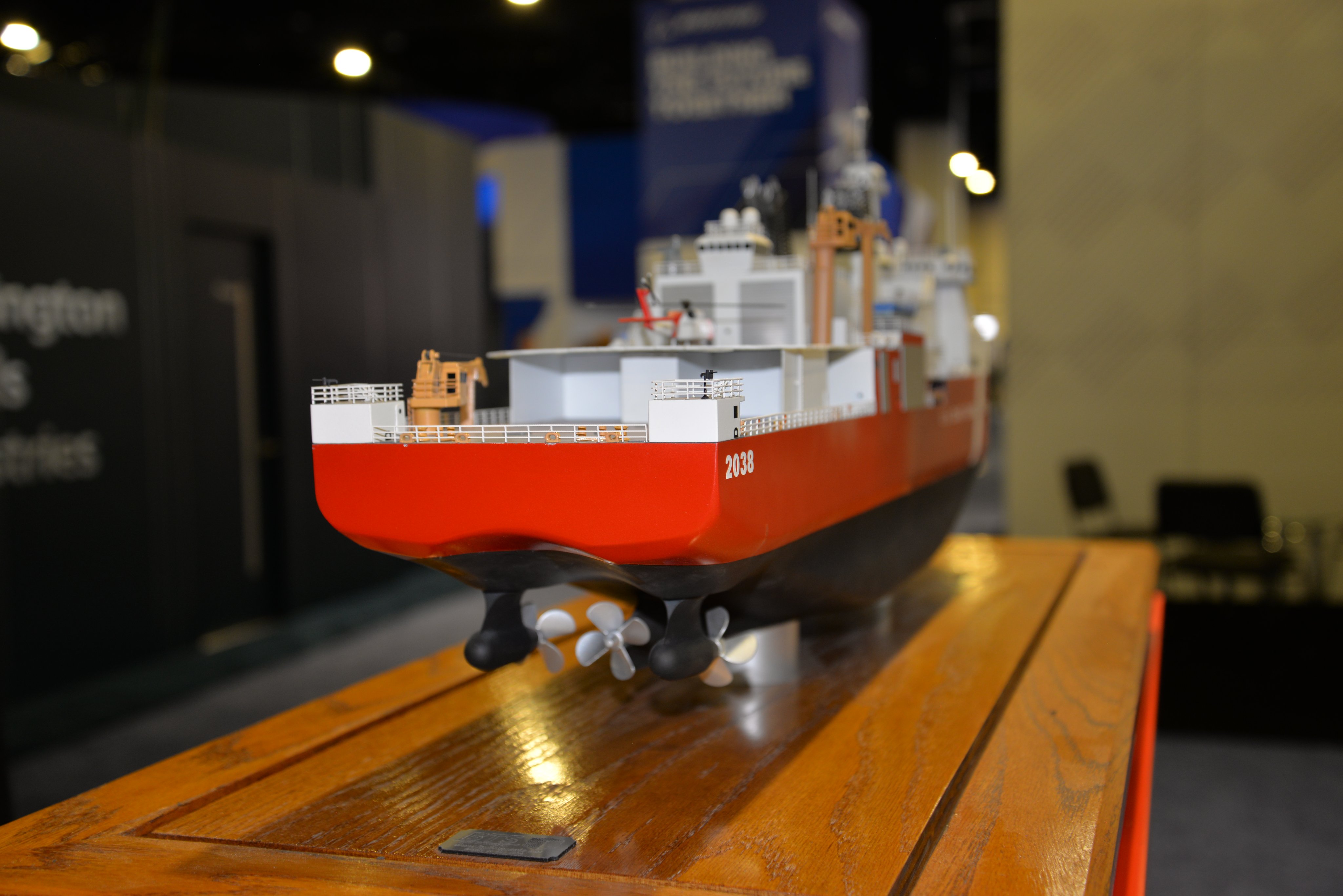
It appears the propulsion setup is similar to that of the Polar Security Cutters with three screws including a center shaft and what appear to be Azipods providing the outer propellers. The Norwegian ship does appear to include a rudder immediately behind the center shaft, unlike the PSC.

Late Addition, photo below.

Jan Mayen class Offshore patrol vessel Jan Mayen. (Picture source: Vard)

“RELEASE OF THE USCG CYBER STRATEGIC OUTLOOK”

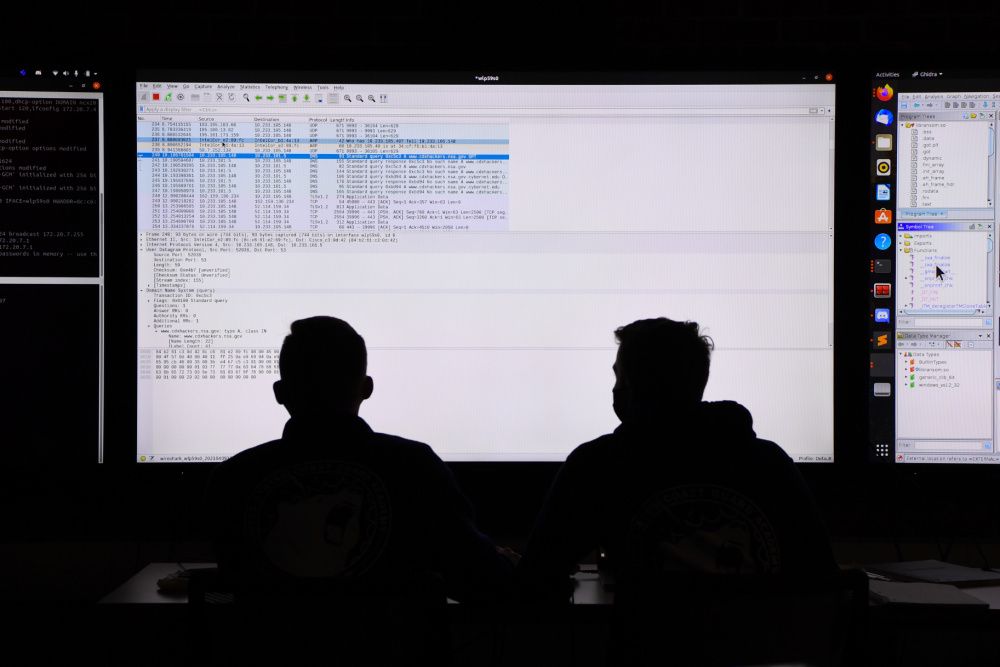
A team from the U.S. Coast Guard Academy participated in the National Security Agency’s 20th annual National Cyber Exercise (NCX), a three-day cyber competition that tests the offensive and defensive cybersecurity skills virtually, April 8-10, 2021. The Coast Guard Academy recently instituted a Cyber Systems degree to meet the needs of the services cyber security strategy of defending cyber space, enabling operations, and protecting infrastructure. (U.S. Coast Guard photo by Petty Officer 2nd Class Hunter Medley)

Passing this along.

united states coast guardR 041303Z AUG 21
FM COMDT COGARD WASHINGTON DC
TO ALCOAST
BT
UNCLAS
ALCOAST 280/21
SSIC 16600
SUBJ: RELEASE OF THE USCG CYBER STRATEGIC OUTLOOK
A. Cyber Strategic Outlook
1. The Commandant has promulgated the Coast Guard’s Cyber Strategic
Outlook, which updates our Cyber Strategy published in 2015.
Cyber attacks against the United States are one of the most
significant threats to our economic and military power since World
War II. The 2021 Cyber Strategic Outlook charts a path to meet the
challenges of a rapidly evolving cyber domain where threats to
information and operational technology systems outpace those from
the traditional physical domains of air, sea, land and space.
2. The events of the past five years, including the exploitation of
U.S. Coast Guard networks and information, attacks on maritime
critical infrastructure, and adversarial efforts to undermine our
democratic processes have reinforced that cyberspace is a contested
operational domain. In recognition of the Coast Guard’s role as the
nation’s lead federal agency for securing and safeguarding the
Marine Transportation System, this strategic outlook updates the
Service’s vision to ensure readiness to conduct all missions in a
contested cyberspace, secure the maritime transportation sector
through a rules based international order, and to identify and
thwart adversary activity in and through cyberspace through the
following lines of effort:
   a. LOE1: Defend and Protect the Enterprise Mission Platform
   b. LOE2: Protect the Marine Transportation System
   c. LOE3: Operate In and Through Cyberspace
The Coast Guard’s success across all three lines of effort depend
upon partnerships, intelligence, workforce, and innovation.
3. In order to meet all strategic and operational objectives, the
Coast Guard must maintain a robust and comprehensive cyber
capability. As such, I encourage every member of the U.S. Coast
Guard to become familiar with the Cyber Strategic Outlook.
4. The electronic version of the strategy can be viewed at:
(Copy and Paste URL Below into Browser)http://www.uscg.mil/cyber
5. POC: CAPT Alain V. Balmaceda, COMDT (CG-791), 202-372-2479 or
by global e-mail.
6. VADM Scott. A. Buschman, Deputy Commandant for Operations
(DCO), sends.
7. Internet release is authorized.

Commandant’s Coast Guard Day Message

Below is the Commandant’s Coast Guard Day message.

R 041230Z AUG 21
FM COMDT COGARD WASHINGTON DC
TO ALCOAST
BT
UNCLAS
ALCOAST 279/21
SSIC 5700

SUBJ: UNITED STATES COAST GUARD’S 231ST BIRTHDAY

1. Today, as we celebrate the Coast Guard’s 231st birthday,
I reflect on our rich history and heritage, as well as the
extraordinary level of service of our talented Coast Guard
workforce delivered throughout the past year. Across the globe,
our Service responded amidst the ongoing global pandemic,
adapting to constantly changing conditions and always
maintaining a taut watch. Every one of you—active duty, reserve,
civilian, and auxiliary—delivered mission excellence and remained
“Always Ready.”

2. The Coast Guard performs complex missions in the most
challenging maritime environments. Our multi-mission capabilities,
broad authorities, organizational agility and flexibility, and
incident response expertise position the Service for excellence
and leadership in the maritime domain; this year is no exception.
As Americans stepped-up to support their neighbors, and healthcare
and service workers faced uncertain risks in their devoted care of
others, our workforce faced each day with courage and skill.
Coast Guard Day presents a terrific opportunity to pause for a
moment and thank all those who have supported us through this
dynamic 231st year.

3. What a year it has been. Amidst the COVID-19 pandemic, our
operational units have been working incredibly hard, deployed
globally to enhance maritime security, partnerships, and vital
national interests. CGC POLAR STAR conducted a two-month winter
patrol in the Arctic, the first such patrol in 38 years, while
CGC HAMILTON completed a historic deployment to the Black Sea –
our first major cutter patrol there since 2008. And CGC MIDGETT
and CGC OLIVER BERRY recently participated in 3rd Fleet training
exercises with the Carl Vinson Strike Group off Hawaii, while
CGC MUNRO is currently enroute to support 7th Fleet and INDOPACOM
operations. Coast Guard Districts, Sectors, cutters, aircraft, and
other assets responded to 12 storms impacting our U.S. coastline
during the busiest Atlantic Basin hurricane season on record.
They also assisted in wildfires in Oregon and California, deployed
personnel in response to record flooding in the heartland, and
provided medical and logistical support to DHS partners operating
along the Southwest Border. Our inland cutters and Sectors responded
to over 1,100 marine incidents including casualties, oil discharges,
hazardous material releases, and myriad security threats. In May,
our Coast Guard Advanced Interdiction Team embarked aboard
USS Monterey, a Guided Missile Cruiser, boarded a dhow in the
Northern Arabian Sea and confiscated thousands of illicit weapons.
Of note, all of the aforementioned operational successes and
accomplishments were enabled by the professionalism and
responsiveness of our Mission Support workforce.

4. As we celebrate our 231st birthday, it is your perseverance and
dedication that make the United States Coast Guard the best in
the world. This year has truly accentuated a Coast Guard that is
Ready, Relevant, and Responsive! I thank each and every one of you
for your continued service, and your families for their perpetual
support in these most worthy endeavors.

5. ADM K. L. Schultz, Commandant (CCG), sends.

6. Internet release is authorized.

“Heroes of the Coast Guard” Virtual Event

Happy Coast Guard Day.

The Coast Guard foundation is hosting an hour long event you may be interested in.

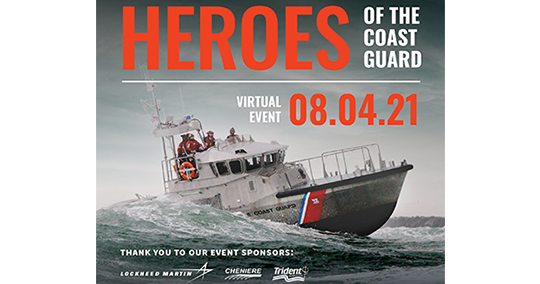
Meet the HEROES of the Coast Guard! Join actor Gary Sinise, Commandant Admiral Karl Schultz, Vice Commandant Admiral Linda Fagan, and more during the Heroes of the Coast Guard Event tonight at 7 PM ET.

We are gathering to celebrate the U.S. Coast Guard’s birthday and honor the brave men and women who protect our waterways and serve all Americans.

This 60-minute, behind-the-scenes program is streaming LIVE on Facebook and the Coast Guard Foundation’s website. This special, online virtual event, is free of charge — you don’t want to miss it!

More here:

US Naval Institute Proceedings “Coast Guard Edition”

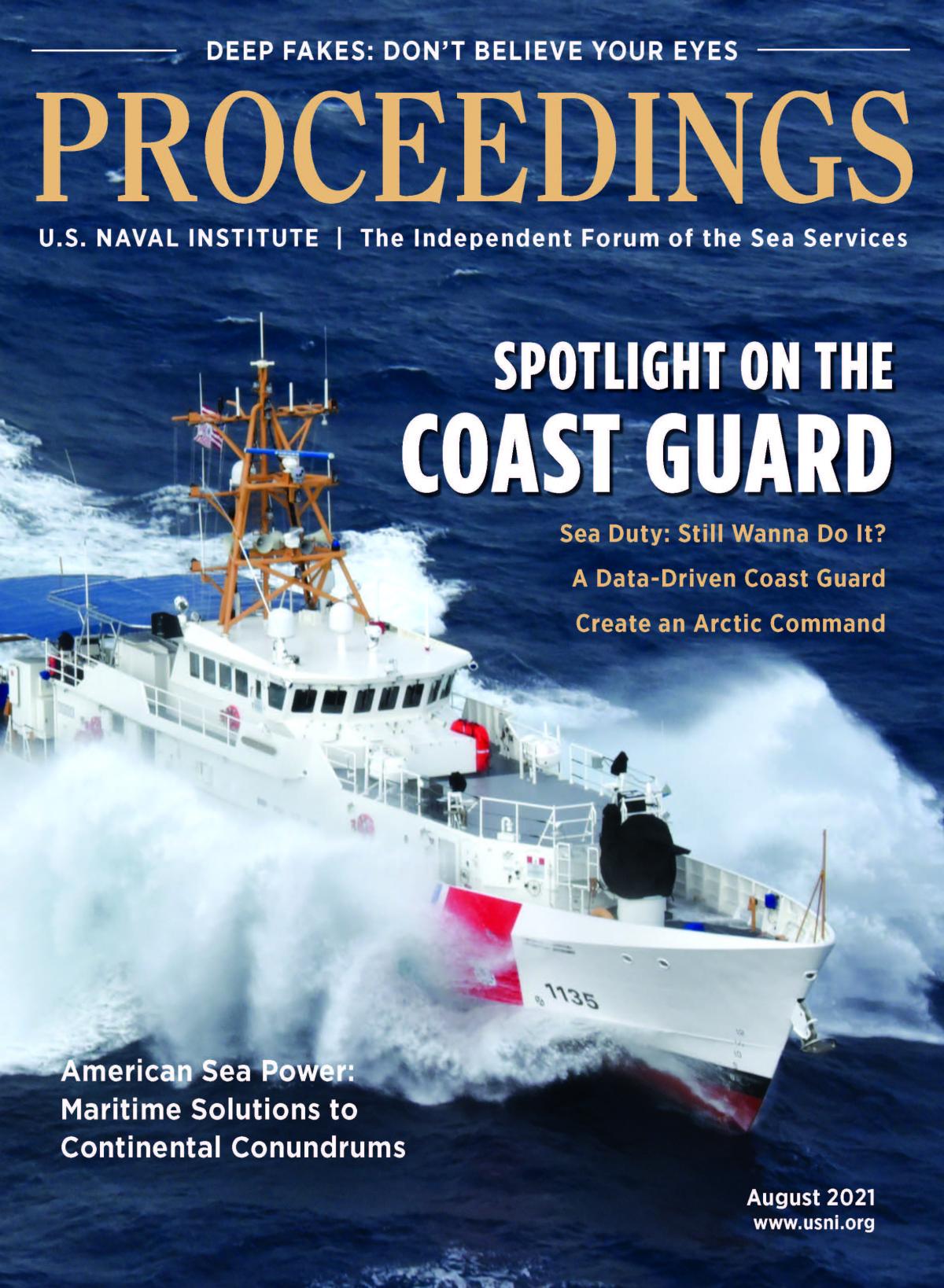
The US Naval Institute annually devotes a good portion of their August issue of Proceedings, to the Coast Guard, including publication of prize winning Essays. We will talk about some of the content later, but you can take a look at the latest issue here.

If you are not a member (shame on you), you will not be able to see all the content but some of it is available to non-members and you will be able to see at least the lead-ins.