“Coast Guard releases inland buoy tender top-level requirements” –CG-9

The Coast Guard Cutter Bluebell sits moored on the Willamette River waterfront in Portland, Ore., June 4, 2015. (U.S. Coast Guard photo by Chief Petty Officer David Mosley.)

The following is from the Acquisitions Directorate (CG-9). Note this refers only to the river buoy tender (WLR/WLI). Earlier, CG-9 indicated that the Inland Construction Tender (WLIC) is expected to share a common afterbody with the buoy tender, so I presume there will be many similarities.

—-

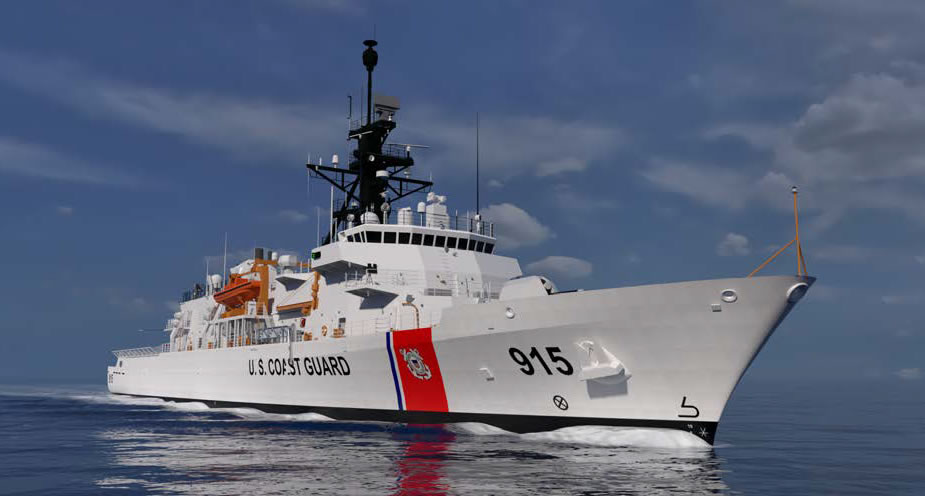
The Coast Guard released top-level requirements for the inland buoy tender waterways commerce cutter (WCC) variant in a special notice Nov. 6.

The WCC program plans to exhibit and present updates at the International WorkBoat Show in New Orleans Dec. 4-6, 2019. The program will have a booth (No. 347) and provide information about its mission needs, status, and desired fielding schedule during a presentation on Wednesday, Dec. 4 from 11 a.m. to 12 p.m. CST. A team of program members will be available to meet one-on-one on Dec. 4 with any shipbuilder that has built a ship that satisfies the inland buoy tender requirements or that could meet the requirements with minor modifications to the ship. The deadline to request a meeting regarding prospective inland buoy tenders is Nov. 18, 2019.

For more information: Waterways Commerce Cutter program page

“ALCGOFF 156/19 – OFFICER PERSONNEL MANAGEMENT VIRTUAL ROAD SHOWS”

I am posting this because, first I think it is important, and two, it extends over such a long period the information might get lost. So it will be here if you need to reference it.

s
united states coast guard

R 30 OCT 19

ALCGOFF 156/19
SUBJ: OFFICER PERSONNEL MANAGEMENT VIRTUAL ROAD SHOWS
1. The Boards, Promotions, and Separations Branch (OPM-1), Assignments Branch 
(OPM-2), Officer Evaluations Branch (OPM-3), and Career Management Branch 
(OPM-4) have scheduled several virtual road shows beginning 13 November 2019. 
Each virtual road show will be led by the Officer Career Management Branch 
and have a guest presenter to offer tailored advice to a specific audience 
and/or topic.
2. The virtual road show schedule and guest presenter is as follows:
  a. 12 November 2019, 1400ET: OPM-3 OSMS 2.0
  b. 11 December 2019, 1400ET: OPM-4 Career Management/CMD Screening Panels 
  c. 15 January 2020, 1400ET:  OPM-1 Promotion Boards 
  d. 12 February 2020, 1400ET: Post Graduate School Counseling Session 1
  e. 11 March 2020, 1400ET: Post Graduate School Counseling Session 2
  f. 15 April 2020, 1400ET: OPM-2 Afloat Assignment Officer
  g: 13 May 2020, 1400ET: OPM-2 Intel/DCMS Assignment Officer
  h. 27 May 2020, 1400ET: OPM-2 Prevention Assignment Officer
  i: 10 June 2020, 1400ET: OPM-2 Support/Special Assignments Assignment Officer
  j: 24 June 2020, 1400ET: OPM-2 Aviation Assignment Officer
  k: 15 July 2020, 1400ET: OPM-2 Chief Warrant Officer Assignment Officer
  l: 05 August 2020, 1400ET: OPM-2 Response Assignment Officer
3. The information we provide is meant to generate a discussion between OPM and 
the officer corps and assist officers in the field with becoming more aware of 
the most current trends and policies affecting their assignments, promotions, 
and evaluations.
4. In an effort to meet the volume of officers requesting Post Graduate counseling 
(mandatory for Junior Officers within their first two tours), OPM-4 will offer 
two virtual road shows as well as post a podcast recording of the presentation 
on the OPM-4 Portal Page in the spring of 2020. Mandatory counseling can be 
accomplished in one of three ways: attend the virtual roadshow, listen to the 
podcast, or thru completion of individual member counseling requests scheduled 
thru HQS-SMB-CGPSC-OPM-4@uscg.mil. Commanding Officers shall note the method by 
which mandatory counseling was attained in the Command endorsement section of 
the Post Graduate Panel Submission in Direct Access. Aviators within their first 
two tours applying to Aeronautical Engineer Officer Training and/or Flight Safety 
Officer are not required to complete counseling with OPM-4, but are still welcome 
to request counseling if desired.
5. To sign up for a virtual road show please email the OPM-4 inbox at 
HQS-SMB-CGPSC-OPM-4@uscg.mil with the subject “VIRTUAL ROAD SHOW” and the 
requested presentation date. We recommend commands encourage their 
officers attending virtual roadshows to do so from one consolidated location. 
This should generate robust wardroom conversation and maximize call in 
opportunities for others. 
6. Call in instructions and additional information will be posted prior to 
each virtual road show on the Career Management Branch (OPM-4) 
portal page: https://cg.portal.uscg.mil/units/psc/psc-opm/opm-4/SitePages/Home.aspx.
7. CAPT M. T. Brown, Chief, PSC-OPM, sends.
8. Internet release is authorized.

“Reorienting the Coast Guard: A Case for Patrol Forces Indo-Pacific” –War on the Rocks

An Air Station Barbers Point HC-130 Hercules aircrew flies over the Coast Guard Cutters Midgett (WMSL 757) and Kimball (WMSL 756) off Oahu, Hawaii, Aug. 16, 2019. The Midgett joined the Kimball as the second national security cutter homeported in Hawaii. (U.S. Coast Guard photo by Petty Officer 3rd Class Matthew West/Released)

War on the Rocks has a post suggesting that the Coast Guard, with Navy support, should establish a patrol squadron to support United States Indo-Pacific Command (USINDOPACOM), even if it means closing down the existing PATFORSWA.

The Coast Guard’s role as lead agency in multiple Indo-Pacific maritime security institutions, particularly the Southeast Asia Maritime Law Enforcement Initiative, provides opportunities to demonstrate America’s role as a key component of the Indo-Pacific security architecture. A larger, operational Coast Guard role in the region would reinforce this message, and contribute to regional security and sovereignty, in sharp contrast to the Chinese Communist Party’s degradation of both. With appropriate funding and manning, an operational U.S. Coast Guard unit in the Indo-Pacific would add credibility to U.S. institutional commitments at a time when American security guarantees are being challenged across the region.

He suggests that this new command needs to be larger than PATFORSWA.

The Coast Guard recently committed to basing three of these cutters in Guam within two to three years, indicating that U.S. Coast Guard leadership is already looking for ways to maintain forces forward in the near term. However, when considering the size and scope of the Indo-Pacific theater, and the fact that current requirements in the Arabian Gulf call for six boats, three cutters is only a good first step, not a complete solution. A robust force consisting of a mix of six fast response cutters, the Coast Guard’s new Heritage-class offshore patrol cutters, and perhaps a rotationally deployed national security cutter would be appropriately sized and ideally positioned to assume responsibility for security cooperation with Indo-Pacific coast guards and navies seeking increased “white hull” interaction with the United States.

He also sees a role for a Coast Guard Intelligence detachment.

In addition to supporting the proposed Patrol Forces Indo-Pacific, a Coast Guard intelligence unit could fulfill the 2020 National Defense Authorization Act requirement for a U.S. intelligence fusion center in the Indo-Pacific without creating an unnecessary parallel structure alongside those already in existence.

Surface Navy Association Symposium Jan. 14-16, 2020, Hyatt Regency, Crystal City

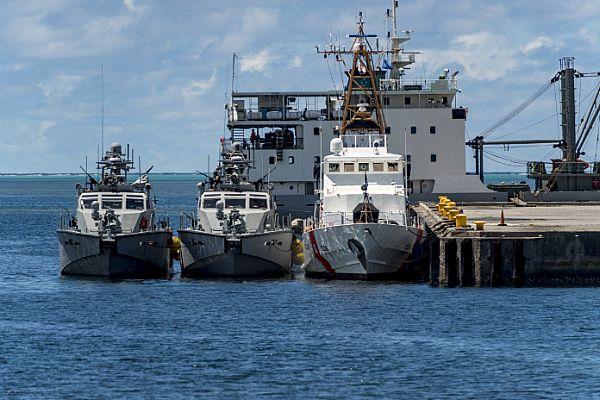
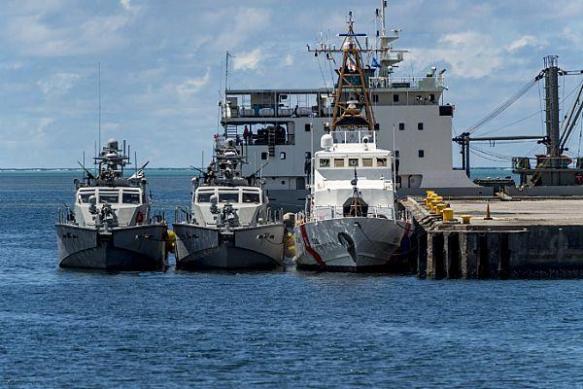
COLONIA, Yap (July 4, 2019) The U.S. Coast Guard Island-class patrol boat USCGC Kiska and Mark VI patrol boats assigned to Coastal Riverine Squadron (CRS) 2, Coastal Riverine Group 1, Detachment Guam, moored in the Micronesia port of Yap. CRG 1, Det. Guam’s visit to Yap, and engagement with the People of Federated States of Micronesia underscores the U.S. Navy’s commitment to partners in the region. The Mark VI patrol boat is an integral part of the expeditionary forces support to 7th Fleet, capability of supporting myriad of missions throughout the Indo-Pacific. (U.S. Navy photo by Mass Communication Specialist 2nd Class Jasen Moreno-Garcia/Released)

The Surface Navy Association (SNA) Symposium is scheduled for January 14-16, 2020 at the Hyatt Regency, Crystal City.

There is, of course, a National Cuttermen Chapter of the SNA so this may be of interest. There will be a Cuttermen’s call. No charge for Active Duty, Reservist in Uniform, and  Gov’t Civilians.

Details here.

Canada’s New Icebreaker, John G. Diefenbaker

Canadian Polar Icebreaker John G. Diefenbaker

Some information from Canadian ship design agency VARD, on the planned Canadian polar icebreaker John G. Diefenbaker. The project is long delayed and construction has not yet begun.

There is much more detail in the VARD brochure and Wikipedia entry linked above, but a few significant data points.

  • Displacement, full load: 23,500 tons
  • Length overall: 150.1 m 492’-6”
  • Length waterline: 137.6 m 451’-5”
  • Breadth moulded 28.0 m 91’-10”
  • Design draft: 10.5 m 34’-6”
  • Generators: 39,600 kW 53,100 hp
  • Propulsion: two 11 MW (14,751 hp) wing shafts and a 12 MW (16,092 hp) azimuth thruster. total 34 MW (45,595 hp),
  • Speed: 18 knots ice free, 3.0 kn, 2.5m ice 
  • Range:  26,000 NM @ 12 kn ice free 
  • 1,800 NM @ 3.0 kn 2.2 m of ice
  • 60 core crew + 40 program personnel
  • Endurance  270 days

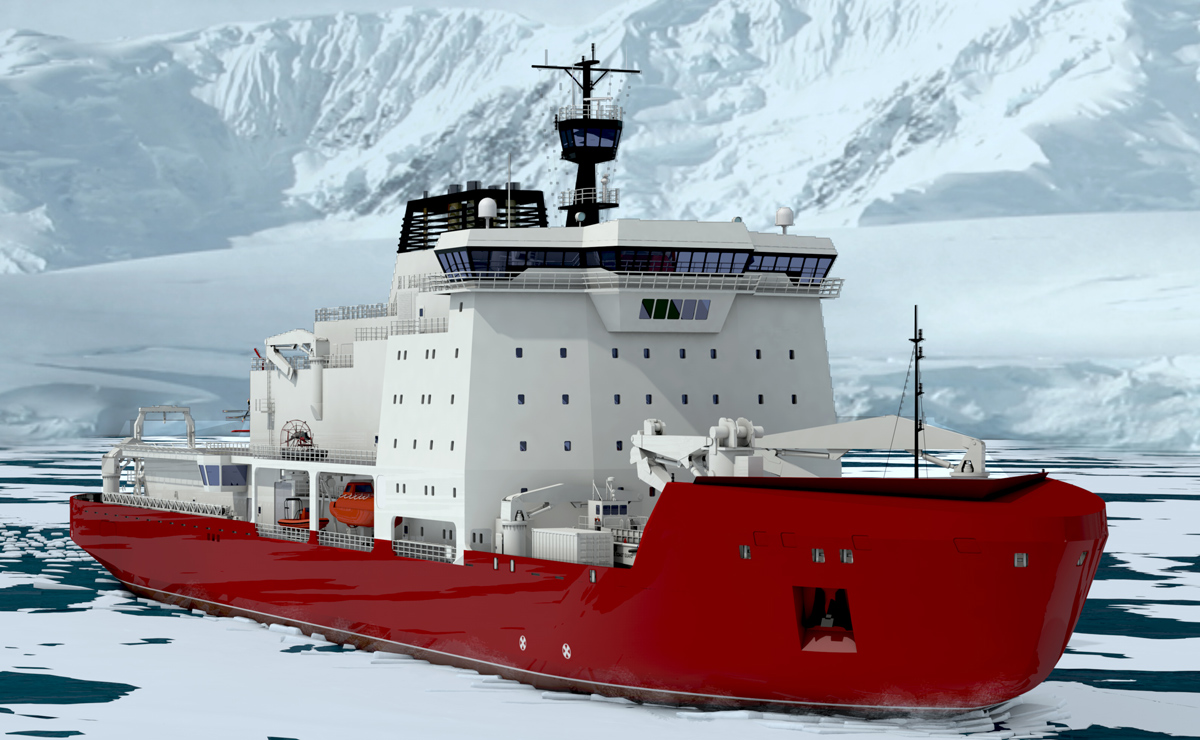
For comparison these are figures for the planned Polar Security Cutter. Projected delivery dates, 2024, 2025, 2027.

  • Displacement, Full Load: 22,900 tons
  • Length: 460 ft (140 meters)
  • Beam: 88 ft (26.8 meters)
  • HP: 45,200
  • Accommodations: 186
  • Endurance: 90 days

In many ways the designs are remarkably close. Looks like the Canadian breaker will be slightly larger than the PSC, but will have a much smaller crew.

Presumably there will be no provision for armament since the Canadian Coast Guard does not arm its vessels.

The Diefenbaker’s very long endurance is a bit of a surprise, in view of Canada’s lack of a requirement to go to Antarctica, a feature that has driven the design of the PSC.

Propulsion power is almost identical, a bit over 45,000 HP, and both designs include three propellers, but the way it is done is different. While the PSC has a conventional shaft on the centerline and rotatable drive units to port and starboard, the Canadian design has a single rotating drive unit on the centerline and conventional shaft driven props port and starboard. This may provide the PSC with a redundancy advantage in that it might allow steerage even if one unit is damaged. On the other hand the single Canadian unit may be less likely to be damaged because of its position.

Japan Fisheries Enforcement Vessel Encounters, Collides With, Sinks N. Korean F/V

Recently a drama played out between a Japanese fisheries agency ship and a North Korean fishing vessel and its crew. According to the text accompanying the YouTube,

“On October 7, a North Korean fishing boat sank after colliding with a Fisheries Agency patrol boat in the favorable fishing grounds near the Yamatotai area of Japan’s exclusive economic zone (EEZ) in the Sea of Japan.

“On October 18, the Fisheries Agency released the video recorded on the patrol boat, finally showing the sequence of events prior to and after the accident.

“The accident took place about 350 kilometers northwest of Ishikawa Prefecture’s Noto Peninsula in Japan’s EEZ. Judging the fishing boat to be operating illegally, the patrol boat began to issue warnings for the fishing vessel to leave the area at around 8:50 A.M. on October 7. When the vessel did not leave, the patrol boat started spraying the vessel with water cannons at 9:04 A.M.

“The vessel made a sudden sharp turn, and at 9:07 A.M. collided with the patrol boat. The patrol boat had taken up position on the left side of the fishing boat and had been issuing audio warnings from a distance of about 200 meters.”

The fishing vessel subsequently sank. The crew took to the water. The Japanese vessel had its boat tow liferafts over to the people in the water. Ultimately another North Korean came over and picked up the people in the water.

Since the Coast Guard is now operating in these waters, the actions of the N. Korean fishing vessel, that to our eyes are irrational, are of more than academic interest.

We can’t really know what was going through the mind of the master of the N. Korean vessel.

  • Has propaganda infused so much hate for the Japanese that the N. Koreans would strike out at them in any way they can?
  • Did they think the Japanese vessel would back down?
  • Do they even know about the concept of an Exclusive Economic Zone?
  • Or, did the helmsman just slip on the wet deck and spin the wheel left in an attempt to regain his balance?

The Japanese behavior also suggests they are wary of the N. Koreans.

  • They did not attempt to board
  • While they provided liferafts, they did not attempt to pick up survivors

“Coast Guard Cutter Procurement: Background and Issues for Congress” –CRS, October 21, 2019, A New Version Reflects RFI

Congressional Research Service has again updated their review of the Coast Guard’s Cutter acquisition programs. (Again only five days after the previous update) The changes reflect the Request for Information (RFI) issued Oct. 18, 2019. You can see the new CRS report here.

The significant changes begin on page 11, and continues through page 14 with quotes from the RFI, and in the “Issues for Congress” section, beginning on page 18 under “Follow-On Competition,” continuing through page 20.

It still seems strange to me that Eastern’s team is not being required to complete the detail design and that the Coast Guard would take the time to develop a second detail design.

As I understand, it the design team is Vard. They should not have been significantly  effected by the hurricane that struck Eastern. Have they been unable to complete a detail design? Shouldn’t they be able to complete one before the re-compete contracts for design studies, evaluates design studies, awards another contract, and completes a second detail design? That the Coast Guard is considering this course make be suspicious that that something is terribly wrong within the Eastern team. I hope I am wrong.

It is gratifying to note that two posts from this blog are referenced in the report:

Taiwan Building Four 4,000 ton Cutters

Photo: CSBC Corporation

BairdMaritime reports that Taiwan is building four 4,000 ton Coast Guard Cutters. Asian nations tend to use light displacement when reporting their ship size, so these may actually be larger than the Bertholf class National Security Cutters.

The first is expected to enter service in 2021 and all four to be delivered by 2027.

Taiwan has been beefing up their Coast Guard. A report on a previous class here. A report from 2011 here. An interesting note is that Taiwan actually has a pair of 270s built to a modified design.

Taiwanese cutters appear to be built to merchant standards and are lightly armed.

Bringing Jimmy Crotty Home

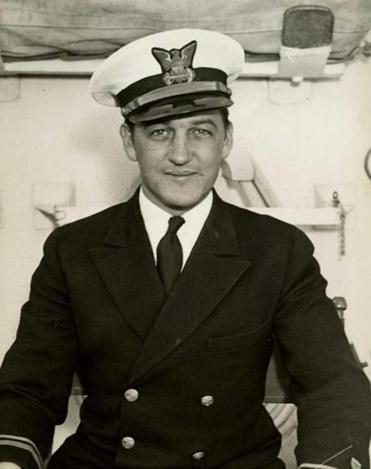
Lt. Crotty

Press Release, I have mentioned this earlier in comments, but this is a bit more detailed than earlier presss releases. 

united states coast guard

R 290809 OCT 19
FM COMDT COGARD WASHINGTON DC//CCG//
TO ALCOAST
UNCLAS //N05360//
ALCOAST 335/19
COMDTNOTE 5360
SUBJ:  THE RETURN HOME OF LT THOMAS JAMES EUGENE CROTTY, USCG
1. It is my honor to report that we will bring LT Thomas James Eugene “Jimmy”
Crotty, a Coast Guard and American hero, home.
2. LT Crotty was born on 18 March 1912, in Buffalo, New York. He graduated from the
United States Coast Guard Academy in 1934 after serving as Company Commander, class
president and captain of the Academy’s football team. He served his first seven years
after graduation on board cutters in New York City, Seattle, Sault Ste. Marie and San Diego.
3. In the days leading up to the attack on Pearl Harbor, he served with the U.S. Navy as
Executive Officer onboard USS QUAIL, part of the 16th Naval District-in-Shore Patrol
Headquarters, Cavite Navy Yard, Philippines. He aided in the defense of Corregidor during
the Japanese invasion in the early days of WWII, supervising the destruction of ammunition
and facilities at the Navy Yard and scuttling the fleet submarine USS SEA LION to prevent
its use by the Japanese. As the Japanese advanced on Corregidor, LT Crotty eagerly took
charge of cannibalized deck guns from the ship and led a team of brave enlisted Marines
and Army personnel fighting for an additional 30 days until the Japanese bombardment finally
silenced the defense of the island fortress.
4. Following the fall of Corregidor, LT Crotty was taken prisoner by the Japanese and
interned at the Cabanatuan Prisoner of War Camp. After his death on 19 July 1942 from
diphtheria, he was buried in a common grave along with all those who died that day. 
5. After World War II, the U.S. government moved remains from the common graves to the
Manila American Cemetery and Memorial in the Republic of the Philippines. On 10 September
2019, as part of an exhaustive effort by DoD to bring every service member home, LT Crotty
was positively identified from the remains exhumed from the cemetery in early 2018.
6. LT Crotty is the only known Coast Guardsman to serve in defense of the Philippines;
his service authorizes the Coast Guard to display the Philippine Defense Battle Streamer
on our Coast Guard Ensign. He was posthumously awarded the Bronze Star, Purple Heart,
and many other decorations. A full accounting of his service can be found in the blog at:
https://compass.coastguard.blog/2019/09/18/the-long-blue-line-lt-crotty-and-the-battle
-for-corregidor/.
7. On Friday, 01 November 2019, arrival honors will be held at Joint Reserve Base, Niagara
NY at 1000. Funeral services will be held on Saturday, 02 November 2019 at 1200 at St.
Thomas Aquinas Roman Catholic Church, Buffalo, NY followed by interment with full military
honors at Holy Cross Cemetery in Lackawanna, NY.
8. LT Crotty embodied our core values of Honor, Respect, and most especially Devotion
to Duty. As we celebrate his life and legacy, we also celebrate the lives of the more
than 600 Coast Guard members we were not able to bring home from WWII. He represents
the proud legacy of the Long Blue Line of Coast Guard men and women who place themselves
in harm’s way every day in the service to their country and fellow man. He is one of many
who made the ultimate sacrifice; we should never forget his efforts and the sacrifices of
the thousands of Coast Guard men and women who served so bravely in our service over the
last 229 years.
9. To honor LT Crotty, I ask every Coast Guard unit and member to observe a moment of silence
as he begins his journey home on Thursday, 31 October 2019 at 1900Z (1500 EDT/1200 PDT/0900 HST).
10. The Half-masting of the national ensign for all Coast Guard units will take place when
LT Crotty is honored at the U.S. Coast Guard Academy in the spring of 2020. Information will
be sent SEPCOR.
11. Admiral Karl L. Schultz, Commandant, sends.
12. Internet release is authorized.

More Coast Guard in the Western Pacific, “U.S. Coast Guard Mulling More Operations in Oceania” –USNI

COLONIA, Yap (July 4, 2019) The U.S. Coast Guard Island-class patrol boat USCGC Kiska and Mark VI patrol boats assigned to Coastal Riverine Squadron (CRS) 2, Coastal Riverine Group 1, Detachment Guam, moored in the Micronesia port of Yap. CRG 1, Det. Guam’s visit to Yap, and engagement with the People of Federated States of Micronesia underscores the U.S. Navy’s commitment to partners in the region. The Mark VI patrol boat is an integral part of the expeditionary forces support to 7th Fleet, capability of supporting myriad of missions throughout the Indo-Pacific. (U.S. Navy photo by Mass Communication Specialist 2nd Class Jasen Moreno-Garcia/Released)

The US Naval Institute News Service reports comments by the Commandant”

“KUALA LUMPUR — The U.S. Coast Guard is looking at longer deployments to the Western Pacific region following the successful execution of the Operation Aiga deployment to Samoa and American Samoa, commandant Adm. Karl Schultz told reporters on Monday.

This is in reference to an operations discussed in a previous post. Earlier USCGC Oliver F. Berry (WPC-1124) also supported by the USCGC Walnut (WLB-205) had completed a similar mission to the Republic of the Marshall Islands

The Commandant apparently sees this as a prototype for future operations.

“We are looking at taking that proof of concept 30-day operation and pushing that probably into a little longer duration in the future,” he said.

This is only the latest statement from Coast Guard officers at the highest levels indicating that the Coast Guard’s intent to put more emphasis on operations in the Western Pacific: the Commandant: July 23, 2019; Commander, Pacific Area: August 17, 2019.

Changes are coming that will make maintaining that presence a bit easier. Three Webber class Fast Response Cutters will replace two 110 foot WPBs in Guam, that will give CCGD14 six Webber class WPCs, three homeported in Honolulu in addition to the three in Guam. Two National Security Cutters were recently commissioned in Oahu. The switch to longer ranged J model C-130s equipped with Minotaur will make providing air reconnaissance easier and more effective.

I do have some concerns about the ability to exploit these additional Webber class. The long range WPC and WPB operations have been supported by 225 foot buoy tenders, but there are only two in the Fourteenth District, one each in Guam and Hawaii. They may have already reached their limit in the amount of support they can provide. Other large ships might be able to take on this role and aviation asset in support are certainly desirable.  A second WLB in Guam would be very useful. They are almost ideal for disaster response to small island communities, but there are no new ones being built and all are likely fully committed where they are. Some of these operations have been conducted in cooperation with assets from Australia and New Zealand. France also has interests in the region. They could provide both material support and an air element. An ultimate solution might be Offshore Patrol Cutters (OPC) based in Guam.

In order to continue NSC operations with the 7th Fleet similar to those undertake recently by Bertholf and Stratton, a third NSC in the Fourteenth district would be useful, either the potential NSC#12 or one of the five currently expected to be homeported in Charleston. The need for this, would of course, go away if we had two or three OPCs in Guam.