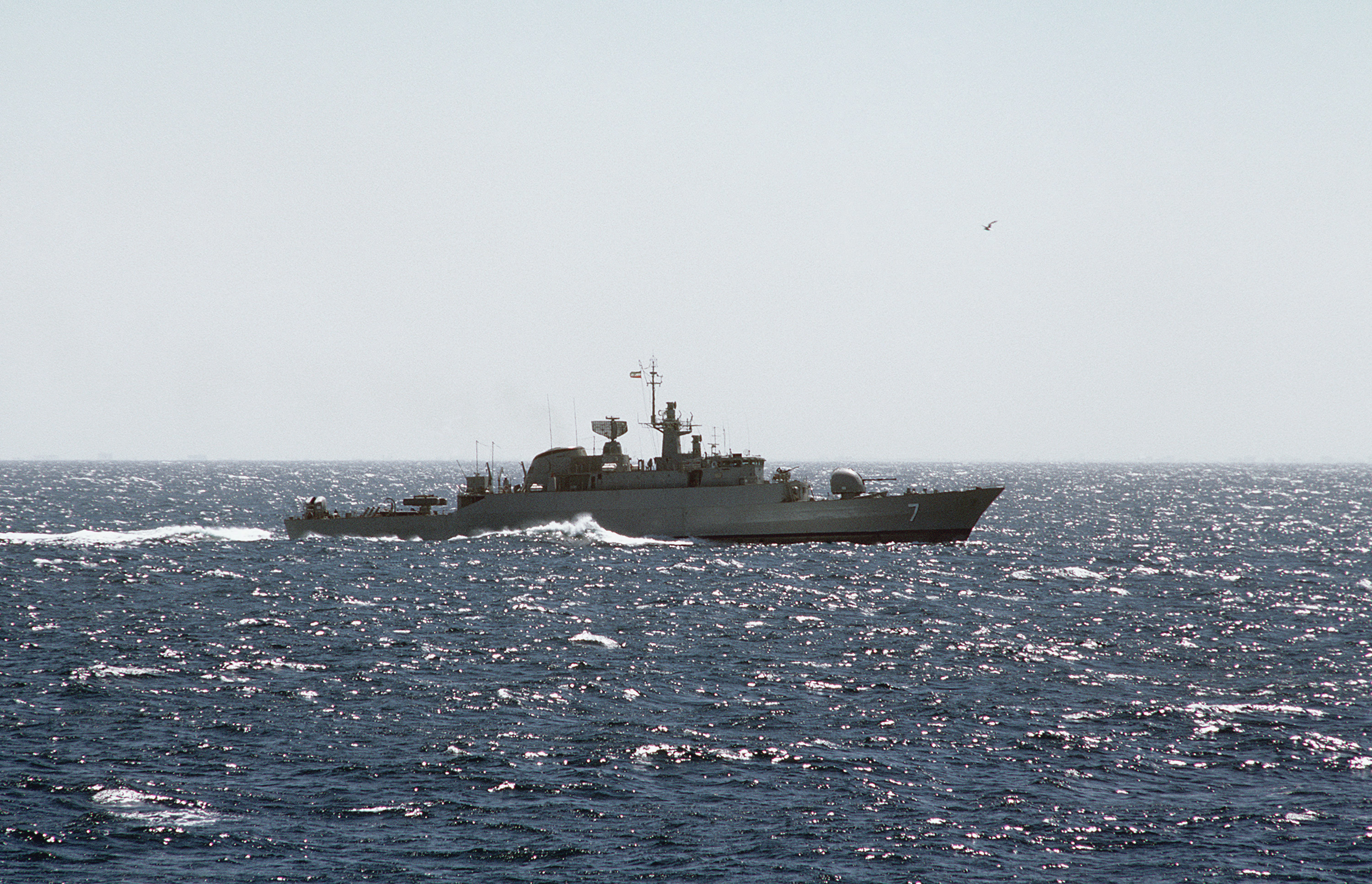
Many of the new generation cutters may be around for another 50 years so it is likely they will see some conflict as previous generations have. What might cutters be doing if we go to war? What sort of environments? What possible missions? What capabilities do they have? And what might we want to be added?
We need to start with the question, what limitations does the Navy have that might prompt them to call on the Coast Guard? Why would the US Navy, by far the most powerful in the world, need help from the Coast Guard? Let’s look at their missions and the forces available.
Navy Missions
“The mission of the Navy is to maintain, train and equip combat-ready Naval forces capable of winning wars, deterring aggression and maintaining freedom of the seas.”
Included in that might be:
Protecting the US and its allies from attack from the sea in any of a number of forms, overt or covert, by air, surface, sub-surface, or missiles (both cruise and ballistic).
Projecting power against hostile forces, by a similar diverse range of options.
Protecting US and friendly nations’ use of the oceans and the air above them for purposes including (but not limited to) both military and economic exploitation.
Denying that use to hostile powers.
Those objectives entail a huge range of subsidiary tasks. New missions, like defending population centers against ballistic missile attacks, have been added, but centuries old historic missions still must also be addressed.
Forces
The Navy currently has approximately 285 vessels, but not all these are combatant ships. The exact composition changes frequently but they have roughly:
- 2 Fleet command ships
- 11 aircraft carriers (there is talk that this may go down to 9. In the not to distant past 15 was the norm)
- 28 Amphipbious assault ships (LHA/LHD/LPD/LSD)
- 83 Guided missile Cruisers and Destroyers
- 26 Frigates (soon to be decommissioned)
- 2 Littoral Combat ships (LCS) (55 ships planned, expected to replace remaining frigates, the 14 mine countermeasures ships, and the 11 Cyclone class patrol craft)
- 57 SSN and SSGN submarines armed with torpedoes and tactical missiles
- 14 SSBN Strategic Defense Ballistic Missile submarines
- 14 Mine Counter Measures Ships (MCM) (soon to be decommissioned)
- 11 Cyclone Class Patrol Craft
- 37 Underway replenishment ships
This is the fewest ships in the US Navy in almost a hundred years. Additionally in view of current budget limitations the size of the fleet is likely to shrink further. Nine cruisers and three LSDs are expected to be decommissioned including some as young as 20 years old, and since the “super committee” has failed to act, the entire LCS program may be in jeopardy, and the fleet may be reduce to approximately 230 ships.
Even if its budget is not cut, if it only remains static, the fact that ship prices are going up faster than inflation, and the Navy is choosing to concentrate more and more technology in fewer and fewer ships means the number of ships will likely continue to fall.
Shortfalls
Most of these ships are individually superbly capable, but the US Navy has some known weakness.
- Inshore
- Mine Counter Measures (MCM)
- Anti-Submarine Warfare (ASW)
- Naval Surface Fire Support (NSFS)
- Sea Control
- Base Security
INSHORE: The Navy has very few shallow draft patrol craft of a type useful for boarding and inspecting coastwise traffic. This is why the Coast Guard has been in Iraq, and why 82s were sent to Vietnam. Fortunately recent requirements have been small because the Iraqi coast line is short. Almost anywhere else, controlling coastal traffic will be much more difficult.
MCM: Despite the fact that since WWII, mines have done more damage to US Navy ships than any other weapon, the US Navy’s MCM capability is modest and generally regarded as both more poorly equipped and less professional than their European counterparts. The LCS program has been expected to address this, but the mine countermeasures systems planned for the LCS are still a long way from maturity. Still the concept of add-on, portable, modular systems is appealing.
ASW: Anti-submarine Warfare capabilities were allowed to decline after the collapse of the Soviet Union. This was understandable under the circumstances, but now the ASW problem is reemerging. Historically ASW has been a “numbers” problem as well as a quality problem. Certainly the US Navy has the quality, but they no longer have large numbers. Not only is the number of escort vessels down dramatically including the impending total disappearance of specialized ASW escorts, carriers no longer have fixed wing ASW aircraft, and Maritime patrol aircraft numbers are way down. Reserve fleets have disappeared and additionally, allied fleets have also declined even more precipitously.
NSFS: Since the decommissioning of the Iowa Class battleships, there has been concern that there has not been enough Naval Surface Fire Support (NSFS) assets. This concern went as far as resulting in a Congressional mandate (Section 1011 of the National Defense Authorization Act for Fiscal Year 1996 (Public Law 104-106; 110 Stat. 421)). There have been several attempts to address this need including putting NLOS missiles on the LCS ships and a plan to build 32 “Land Attack” Zumwalt Class Destroyers with advanced gun systems. The NLOS missile has been canceled and the Zumwalt class has been truncated at only three ships. In a benign environment close air support can fill this void, but if there is an active air defense or air superiority is contested, NSFS may be essential.
SEA CONTROL: Julian Corbett was the disciple of Sea Control and as he would say, Battle force ships make sea control possible, but cannot be exercised by “battleships” alone. There is the question of simple numbers. At the end of WWII the Navy had 6,768 ships, including 1,600 ships of over 1,000 tons, and those ships were complimented by similarly large numbers of allied vessels. The number of ships in the Navy has been steadily declining and it appears they may decline even more. Numerically this is the smallest US Navy since World War I, almost 100 years. Salt water covers approximately 69% of the earth’s surface or about 352,103,700 km²–roughly 100 million square nautical miles (rounding down a bit). That is roughly 352,113 sq. miles/ship. If we look at only cruisers, destroyers, and the projected LCS force (less than 140 ships) then that is about 715,000 square miles per ship. Spread evenly across the ocean they would be more than 800 miles apart, but of course ships are not spread evenly across the ocean and they are not all underway all the time, and they have missions other than sea control. Our attempts to control the flow of Narcotics by sea and attempts to prevent piracy off Africa demonstrate how truly hard Sea Control can be. The US and its close allies no longer control the majority of merchant and fishing fleets. Potential enemies control substantial numbers of ships that could damage the US and its allies in a number of ways including landing agents, smuggling weapons, laying mines, or directly attacking assets. Russian attempts to market the “Club-K” cruise missile as a containerized system that can weaponize any vessel with space for a standard 40 foot container highlights the potential dangers of failure to control enemy shipping.
BASE SECURITY: Once the US Navy was present in virtually every American port and there were a host of small ships that provided security for these bases. Navy resources are increasingly concentrated and the flotillas of small craft are gone. The Chinese vision of how to counter the US includes attacks on vulnerable rear area and logistical support. In Adm. Liu’s vision. “In applying tactics to ‘active defense’ operations, we would act on the guiding principle that we advance if the enemy advances. That is, if the enemy attacked our coastal areas, we would attack the enemy’s rear.”…Liu recounts addressing a June 1984 forum. He was gratified that the navy had embraced “a unified guiding ideology for its combat operations. It had made clear the combat principle of ‘active defense, offshore battles’ and the combat forms of ‘positional warfare for firm coastal defense, mobile sea warfare, and sabotage guerrilla sea warfare.’”
——-
When you start with only 120 to 140 surface combatants, after assigning ships to escort eleven carriers and ten Amphibious ready groups, assigning ships for Ballistic Missile Defense, and factoring in maintenance requirements, there simply is very little left for other missions.