A Tale of Two Harbor Defense Organizations–Part Three

This is the third in a series comparing two incidents from World War II, in which ships tried to force entry into a hostile harbor, in an effort to draw some lessons from them. Part one looked at the bloody, but ultimately successful British assault on the fortified port of St Nazaire. The second was the unsuccessful attempt by heavy units of the German Navy to reach Oslo, Norway, thwarted by an obsolete and undermanned fixed fortification. What went wrong? And what went right? What can we learn?

St. Nazaire Raid

Continue reading

Contracts for New Response Boat (Small)

Response Boat-Small
Legacy 25’ Defender Class RB-S. USCG photo by PA2 Andy Kendrick

The Acquisition Directorate has announced, “On February 4, 2011, the U.S. Coast Guard awarded two fixed price Indefinite Delivery Indefinite Quantity (IDIQ) contracts to begin replacement of the current Response Boat-Small (RB-S) fleet, which is nearing the end of its ten-year service life.”

The two designs will compete for final selection of a winning design that is expected to lead to contracts for up to 500 boats totaling as much as $193.1M.

The latest iteration of the RB-S will have an approximate length of 25 feet, be capable of at least 40 knots, a minimum range of 150-nautical miles and a crew of four.  The new RB-S will also have a standardized communications and navigation suite as well as an increased emphasis on ergonomics and crew comfort.”

Indian Navy/CG Take Down Another Pirate Ship

More evidence the Indian Coast Guard and Navy is aggressively taking on pirates in the Eastern Indian Ocean. The cadet training ship INS Tir and the cutter CGS Samar have retaken a Thai fishing vessel, the Prantalay-11, being used as a mother-ship by Somali pirates, capturing 28 pirates and freeing 24 crewman.  This comes only a week after the Indian Navy and Coast Guard sank her sistership, the Prantalay-14. Three tuna fishing vessels Prantalay 11, Prantalay 12, Prantalay 14 were pirated on April 18 2010 in Indian ocean, some 1200 nm off Somali coast, with 77 crews on board, vessels were actively used by pirates as mother-ships after their owners refused to pay ransom.

Thanks to Eaglespeak for the heads up. He is still the go-to-guy for news on piracy. Continue reading

More Information on Narco Sub

There is a bit more public information on the narco sub found in Ecuador.

photo
Special to the Chronicle

Experts have studied the narco submarine, which sits in Guayaquil, Ecuador. Painted a camouflage pattern of blue, black and gray, it is believed to be able to submerge about 50 feet.

Details are still sketchy. I want to know if they had any ESM equipment, and if so, how sophisticated?

I’m really surprised that the smugglers chose an “Albacore” hull form that is optimized for performance under water. Surely it would spend most of its time on the surface and submerge only when it recognized there was a search unit in the area. A shape more like a WWII submarine would have made more sense in terms of covering long distances on the surface. And why the rudder above the hull, but none below? I’m impressed that they could build this in the jungle. I’m less impressed with their design choices, so I suspect the designers may not have been as expert as the DEA seems to think.

There is the possibility they intended to snorkel all the way? In that case the hull form would make more sense. Concern for snagging the rudder in the jungle where it was built might explain the rudder.

Some background here and here.

Shipbuilding–My Grand Plan–Navy and CG Work Together

One of the criticisms of the Navy and Coast Guard’s ship building programs has been that they were not coordinated; that they should have been able to come up with a common hull. I think there may still be an excellent opportunity to do that and get the benefit of large scale series production, by combining the 25 ship Offshore Patrol Cutter (OPC) with the last 31 ships of the Littoral Combat Ship (LCS) program.

Continue reading

A Tale of Two Harbor Defense Organizations–Part Two

This is the second in a series comparing two incidents from World War II in which ships tried to force entry into a hostile harbor. Part one looked at the bloody, but ultimately successful British assault on the fortified port of St Nazaire. This part will look a German attempt to force their way into Oslo, Battle of Drøbak Sound. Part three considers what these incidents can tell us about what it takes to stop a terrorist attack on an American port using a ship as a weapon.

————————————

Early in World War II, After the invasion of Poland, but before the invasion of France, the Germans invaded Norway to secure their access to Swedish steel and Iron ore and deny it to the British. (Denmark was also invaded on the same day, to secure airfields to support the Norway invasion.) Unlike their other invasions, there was no direct land route into Norway, so the invasion had to came by sea. With the Royal Navy and their French ally dominate at sea, the transit would be risky, but resistance from the Norwegians was expected to be light. Norway was at peace. They had only a small Navy and standing Army. Their defense depended primarily on mobilizing reservists. If they could be defeated before they mobilized, it would be a quick and relatively inexpensive campaign.

Six separate task forces would seize critical facilities all along the Norwegian coast. Rather than a Normandy style assault, the invasion of Norway looked like several simultaneous Special Forces operations. Troops would be landed from warships that could make the transit quickly. It would all be over before the Norwegian military could react–or so they thought.

The Target:

The particular operation we will examine was to seize the seat of power in Norway. It was intended to capture the capital, Oslo, and with it, the King, the Norwegian cabinet, the Storting (Norwegian Parliament) and the national gold reserve.

Continue reading

A Tale of Two Harbor Defense Organizations–Part One

This is the start of a three part series, the story of two harbor defense organizations, how one, already at war, well trained and well armed, failed to stop a small force, while another, ostensibly at peace, facing a vastly stronger force, and in many ways poorly prepared, managed to stop their enemy.

I’ll put both stories in context, but what I found most interesting and most relevant to current Coast Guard missions was the means employed and the relative success of each in stopping a hostile ship from reaching its objective inside a port. The third part will talk about implications for the Coast Guard.

File:Saint Nazaire Harbour 1942.png
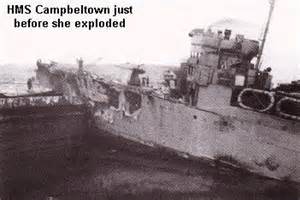
First, the St Nazaire raid. This is normally told from the prospective of the heroic British sailors and commandos who successfully ran a small ship (about the size of a 210) into the gates of the only dry dock on the Atlantic coast of occupied Europe where major German warships, including the Battleship Tirpitz, could be serviced. There the four and a half tons of explosive packed into the bow of the ship, exploded, wrecking the dry dock gates and disabling it for the remainder of the war. Continue reading

Piracy Update, 2/2/11

Three Indian vessels, two Navy and one Coast Guard sank a pirate mothership, killing some of the pirates, taking 15 prisoner, and freeing 20 hostages after a 12 hour “battle” here and here. The Indian Navy vessels were Car Nicobar class fast attack craft, about the size of the Webber class Fast Response Cutter, a bit faster, with much larger crews. Reportedly they have eleven machine guns on board. That may include the 30 mm main armament. The Coast Guard Ship, CGS Sankalp, sounds a lot like an OPC, 2,300 tons, helicopter deck and hanger, 25 knots and a crew of 106. Interestingly all three vessels were relatively new. All were delivered in the last three years. Continue reading