“UH-60 Black Hawk Begins Ground Tests With Far More Powerful T901 Engines”

The first MH-60T medium range recovery helicopter to operate out of new Air Station Ventura lands on the station’s ramp on June 8, 2024. U.S. Coast Guard photo.

A new more powerful engine is being developed for the H-60. The War Zone reports,

“Compared to the previous engine, the T901 offers 50 percent more power — which translates to a maximum of roughly 3,000 shaft horsepower — bringing a considerable advantage in terms of hot-and-high performance, which is otherwise a significant limiting factor for rotorcraft. The new engine is also intended to bring improved fuel efficiency. On top of this, more powerful engines should ensure that the Black Hawk and Apache can carry heavier loads over greater distances…

“Meanwhile, a simpler design and fewer parts should translate into reduced life-cycle costs. As well as traditionally manufactured components, the T901 also makes use of more exotic production techniques, including additive manufacturing and ceramic matrix composites.

This could mean a significant improvement in range both because of better fuel efficiency and greater max takeoff weight.

“Once installed in the UH-60 and AH-64, the T901 promises to provide these aircraft with increased range, longer loiter time, and reduced maintenance and sustainment costs.”

This Day in Coast Guard History, February 9

Based on the Coast Guard Historian’s timeline, https://www.history.uscg.mil/research/chronology/
With inspiration from Mike Kelso

February 9

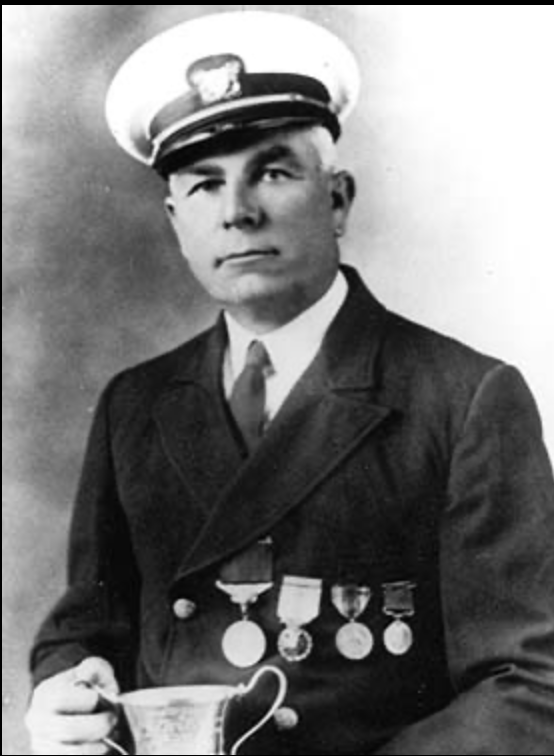
John Allen Midgett was recognized by the UK government for saving UK seamen in 1918. The Coast Guard later named the USCGC Midgett (WHEC-726) and USCGC Midgett (WMSL-757) after him.

1938  Chief Boatswain (L) John Allen Midgett, Commanding Officer of Station Chicamacomico, died in the U.S. Marine Hospital in Norfolk, VA, from injuries he sustained in an automobile accident on January 23, 1938.  Chief Midgett was the hero of the 1918 Mirlo rescue for which he was awarded a Gold Lifesaving Medal.

DC-7

1965  Eastern Air Lines, flight 663 DC-7B with 84 persons on board exploded in midair off Jones Beach, Long Island.  Despite an extensive search by seven Coast Guard cutters, six Coast Guard aircraft, and a U.S. Navy tug, no survivors were located.  Only nine bodies and various pieces of debris were located and recovered.

The 28-man crew from the abandoned fishing vessel Hou Chun 11 cling to life rafts 900 miles south of Honolulu, Feb. 9, 2010. Coast Guard crews from Hawaii and Alaska responded to the 28-member crew and provided medical assistance. U.S. Coast Guard video by Coast Guard Air Station Barbers Point.

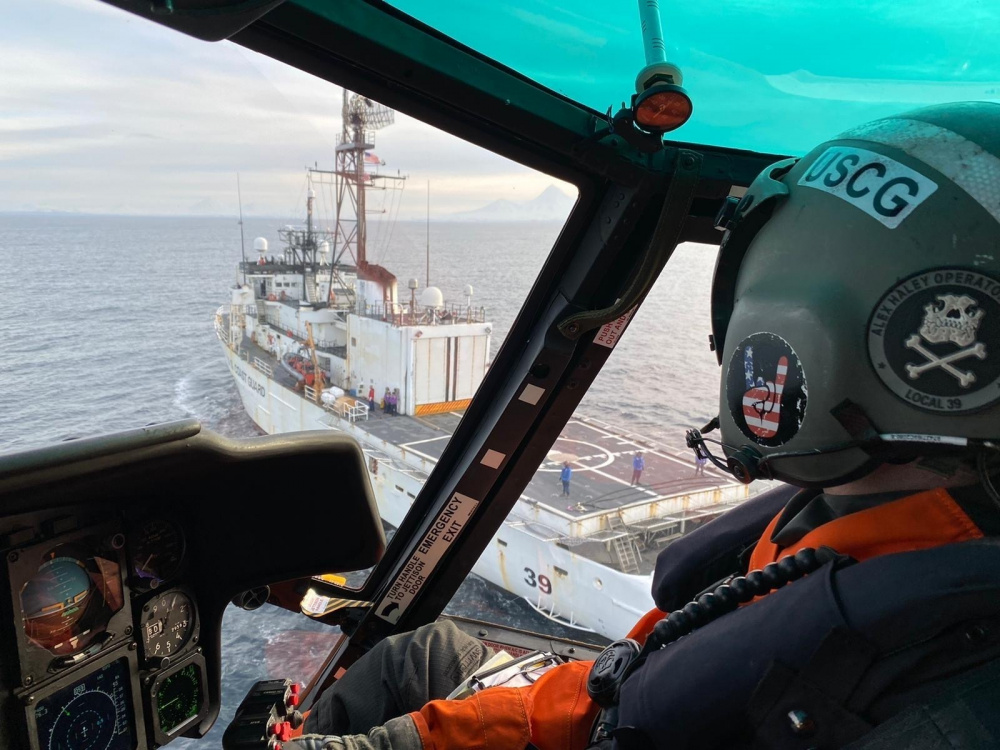
2010  CGC Alex Haley rescued a 28-member crew from the disabled fishing vessel Hou Chun 11 900 miles southwest of Honolulu.  Corpsmen aboard the cutter treated two of the crewmembers who suffered severe burns.  The crew of the cutter Alex Haley sailed to Christmas Island, Kiribati, where the two burn victims were medevaced by a Coast Guard HC-130 Hercules based out of AIRSTA Barbers Point.  The remaining 26 were transported ashore for transport to a vessel that returned them to Taiwan.

This Day in Coast Guard History, February 8

Based on the Coast Guard Historian’s timeline, https://www.history.uscg.mil/research/chronology/
With inspiration from Mike Kelso

February 8

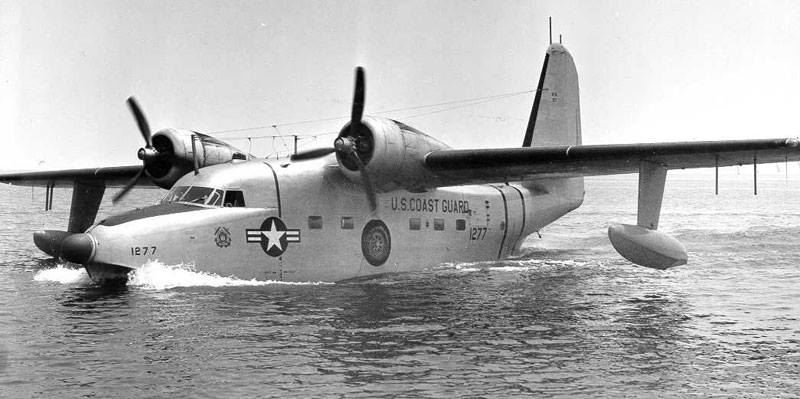
UF-1 Albatros

1958  A U.S. Navy P5M aircraft enroute from San Juan to Norfolk lost one engine and changed course to the island of San Salvador, British West Indies, to attempt a night ditching.  AIRSTA Miami sent up a Coast Guard UF amphibian plane, later reinforced by a second amphibian.  After contacting the disabled Navy plane, the pilot of the first amphibian talked the Navy pilot out of attempting to ditch without benefit of illumination and alerted the commanding officer of the Coast Guard LORAN station on San Salvador for assistance after ditching.  In true Coast Guard tradition, the LORAN station’s CO borrowed a truck and an 18-foot boat to assist.  The commanding officer managed to be on the scene 1-1/2 miles offshore, when the Navy P5M landed with two minutes of fuel remaining.  While one of the amphibians provided additional illumination, the Navy plane was guided through a dangerous reef to a mooring, using her operative port engine.  There were no casualties.

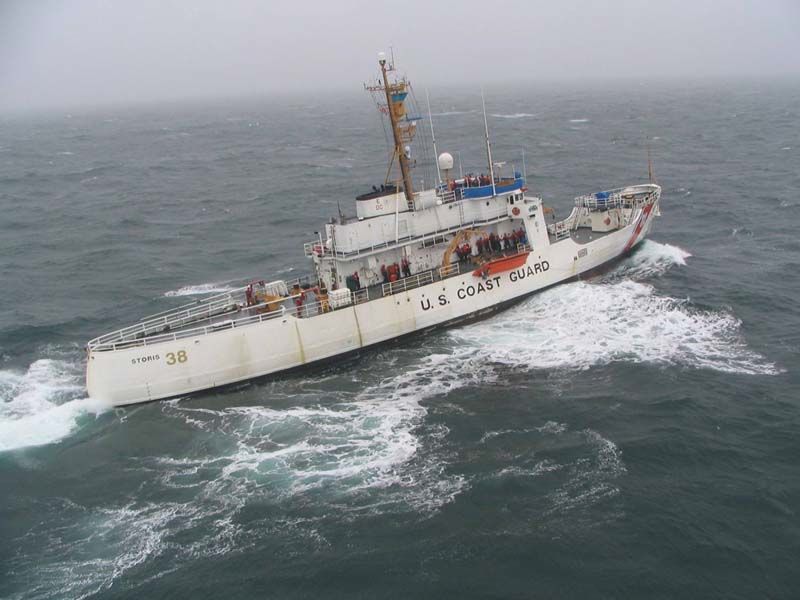
USCGC Storis, a Arctic Patrol Cutter.

2007  USCGC Storis was decommissioned after 64 years of service.

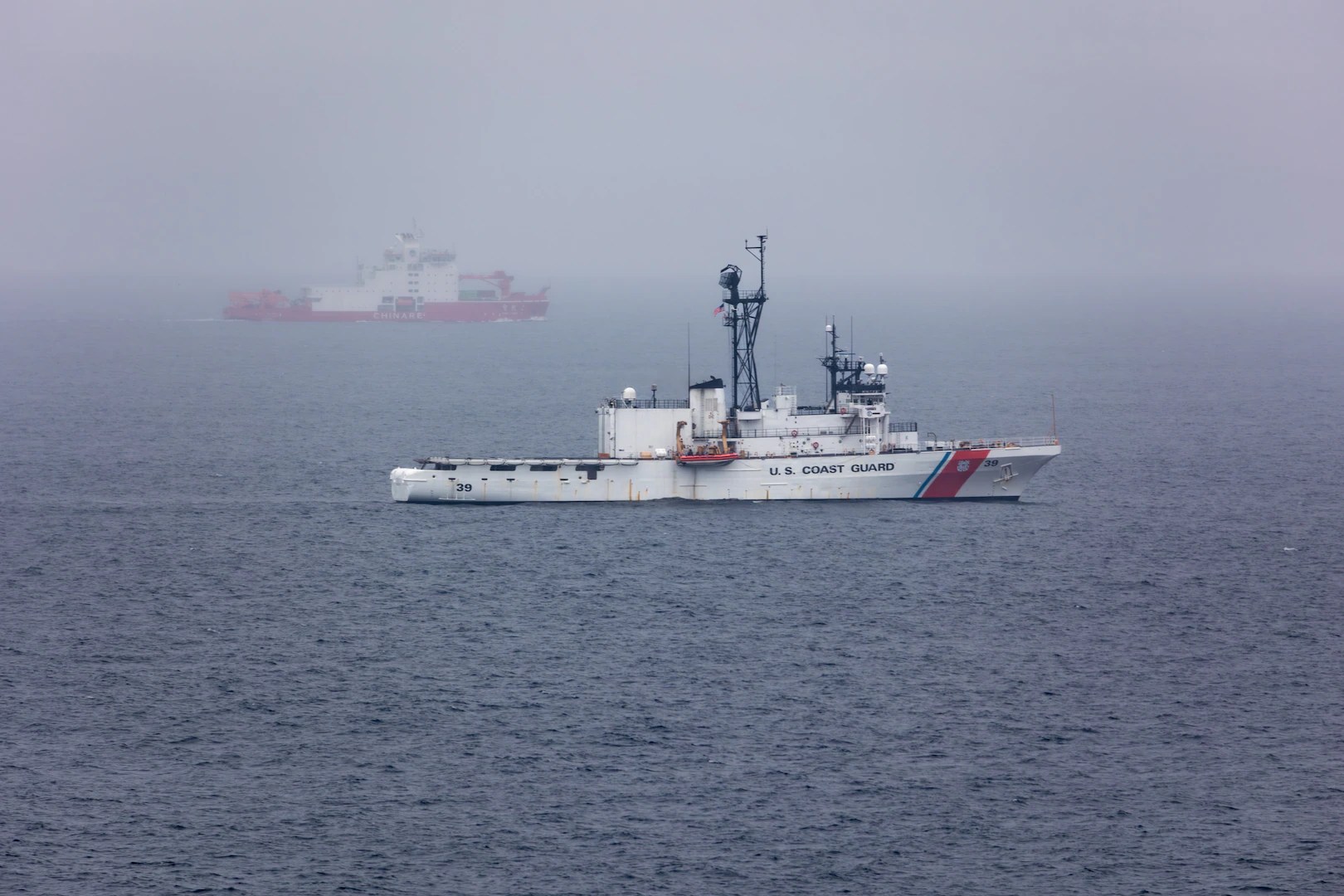
USCGC Alex Haley

2015  USCGC Alex Haley returned to Kodiak, Alaska, following a successful 70-day deployment patrolling more than 10,800 miles throughout the Bering Sea and Aleutian Islands.  Alex Haley, known as the “Bulldog of the Bering,” departed Kodiak on December 1, 2014 and spent 70 days conducting law enforcement and community outreach operations in the Bering Sea and Aleutian Islands.  During the deployment, Alex Haley’s crew performed 41 at sea domestic fisheries enforcement boardings and covered more than 5,000 square miles in search efforts for the sunken Korean fishing vessel 501 Oryong.

Singapore Navy is Operating Unmanned Patrol Boats in what may be the Busiest Waterway on Earth

The USV is equipped with navigation radar, collision detection systems, and a Rafael Toplite electro-optical camera with a laser rangefinder, remote weapon station, and stereovision sensors (Picture source: Singapore MoD)

Below is a Singapore Ministry of Defense News release.

This may be the first routine (as opposed to experimental) operational deployment of Unmanned Surface Vessels in this role.

If Toplite electro-optics sounds familiar, that is the sensor/firecontrol system used with the Coast Guard’s 25mm Mk38 Mod2/3 gun mounts.


The Republic of Singapore Navy’s Unmanned Surface Vessels Progressively Operationalised to Enhance Maritime Security

Singapore is a maritime nation that relies on the sea for survival and economic prosperity. The Republic of Singapore Navy (RSN) is responsible for ensuring the security of these vital waterways, where more than 1000 vessels traverse daily. The RSN constantly enhances its capabilities to counter the evolving maritime security threats.

Today, the RSN relies on a combination of shore sensors and ships at sea to ensure maritime security of the vital waterways, alongside our national maritime security partners. After a series of rigorous tests, the RSN’s Maritime Security Unmanned Surface Vessels (MARSEC USVs) have begun operational patrols since Jan 2025, operating alongside manned ships such as the RSN’s Littoral Mission Vessels (LMVs) to enhance the security of Singapore’s waters.

Enhance Operational Capabilities – Surveillance, Interdiction and Greater Persistence

The USVs will add another layer of surveillance and operational response to our maritime security system. They conduct patrols, and when required, will investigate and interdict suspicious vessels. Operating alongside other manned vessels, the USVs will enhance the RSN’s ability to monitor and respond to situations at sea.By providing more persistent coverage in the Singapore Strait, the USVs also allow other warships like the LMVs to be deployed for other more complex missions, and at the further ranges from Singapore. The MARSEC USVs also allow the RSN to remotely1 and safely conduct potentially risky missions at sea

Indigenously Designed for Autonomous Operations in the Busy Singapore Strait

Designed and developed in close partnership with the Defence Science & Technology Agency (DSTA) and DSO National Laboratories, the new USV harnesses the latest technologies to enable autonomous operations in congested maritime environment. The USVs are equipped with autonomous navigation systems, which includes an indigenously developed Collision Detection and Collision Avoidance (CDCA) algorithm that enables the vessel to navigate through the busy traffic in the Singapore Strait and cope with the constantly changing environmental conditions at sea.

The CDCA autonomous navigation system integrates the USV’s perception and navigation sensors, as well as collision detection equipment used for typical maritime navigation (such as navigation charts, Maritime Automatic Identification System and Differential Global Positioning System) with an algorithm designed for the RSN’s operations. This rules-based system automates the collision avoidance decision-making process while ensuring that the USVs exhibit avoidance behaviour that complies with the Convention on the International Regulations for Preventing Collisions at Sea. This means that the USV assesses and responds to maritime traffic situations in a predictable manner, similar to that of a manned vessel.

The USV and its CDCA algorithm was extensively tested through a comprehensive Verification and Validation (V&V) approach, which included simulated-based testing and at-sea trials. This V&V approach had also been benchmarked against industry best practices, together with our global defence partners and maritime experts. Following an extensive development and testing process, the CDCA algorithm successfully completed over 12 million km of simulated distance with zero collisions, equivalent to 26 years of real-world testing. The USVs have also clocked over 1000 hours of real-world autonomous operations, with zero need for human intervention. The RSN will continue progressive experimentation to enhance the MARSEC USVs for a wider range of maritime security operations in Singapore’s congested waters.

Resource Efficient by Design

The vessel can be operated by just a two-man crew2. In addition, the user-centric design of the Unmanned Systems Mission Control allows the operators to quickly plan and execute patrol profiles, track vessels of interest, and remotely warn, query and investigate vessels at sea.

Length 16.9 metres
Beam 5.2 metres
Displacement 30 tonnes
Speed In excess of 25 knots
Endurance In excess of 36 hours
Operators (when operating remotely) 2
Equipment Strobe Light & Siren
Search Light
Long Range Acoustics Device (LRAD)
12.7mm Stabilised Weapon System with Laser Dazzler
Navigation Radar
Global Positioning System


After China invades Taiwan

Real Clear Defense offers what I believe is an insightful article about the aftermath of a Chinese invasion of Taiwan, “China and Taiwan: Beware the Law of Unintended Consequences.

It also suggests that the invasion is likely in the near future.

For the Coast Guard, the one thing I want to point out is that there will be a blockade.

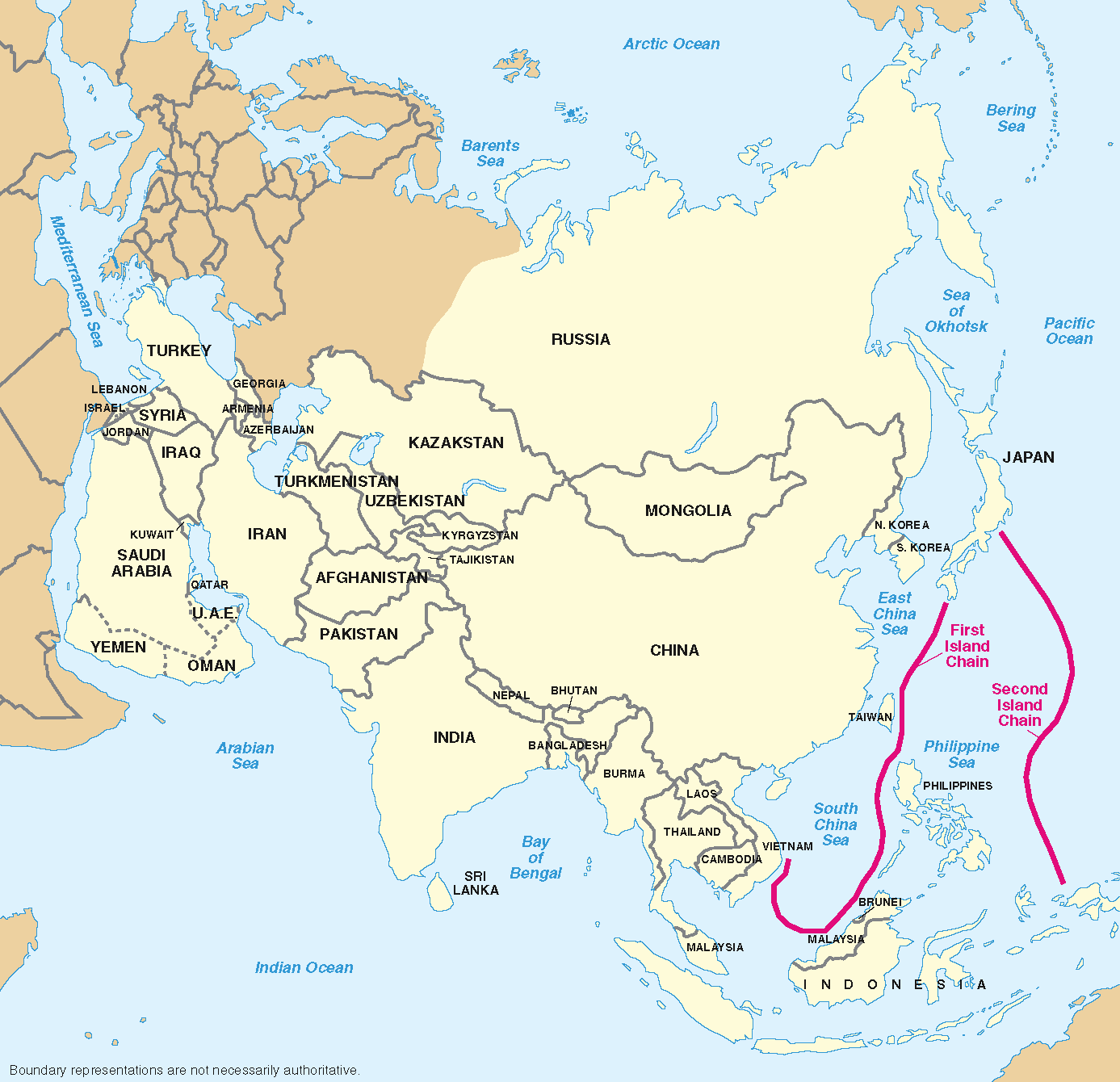
Geographic Boundaries of the First and Second Island Chains. Image:China Report 2006.pdf. DOD.

The blockade will not be a close one like Markettime, it will be executed in the Tsushima Strait between Japan and Korea and outside the “first island chain.”

It would need to be discriminating in that ships with cargos for China’s neighbors would have to be allowed through, if those cargos were not ultimately intended for China. The US could not simply use Air Power to sink anything that crosses into the East or South China Sea.

Undoubtably the Coast Guard will have a role; certainly with existing special teams and likely a need to form more and with FRCs and larger cutters to host and deploy boarding teams and custody crews. Even buoy tenders might be used in this role.

The CG forces will need to be able to forcibly stop even the largest ships, just as they need this capability to address the peacetime terrorist threat.

CG forces might be able to call in DOD assets to provide the necessary persuasion, but those resources might be in demand elsewhere. Larger cutters with their current armament of 57 and 76mm guns might be sufficient. Merchant ship crews are less likely to be willing to die to reach their objectives than a terrorist crew would be, but it would be best if cutters had organic weapons that were more convincing than the 25mm.

This Day in Coast Guard History, February 7

Based on the Coast Guard Historian’s timeline, https://www.history.uscg.mil/research/chronology/
With inspiration from Mike Kelso

February 7

The USCGC Champlain on the International Ice Patrol, circa mid-1930s. USCG photo.

1914  Pursuant to the Convention for Safety at Sea in London, President Woodrow Wilson directed that the Revenue Cutter Service undertake the task of manning the International Ice Patrol.  Henceforth, the Revenue Cutter Service and then the Coast Guard, with brief respites during both World Wars, served in this capacity, a traditional mission still undertaken to this day.

1942  Presidential order created the War Shipping Administration (WSA).  The WSA assumed control over all phases of merchant marine activities, including training, which the Coast Guard had been conducting since 1938.

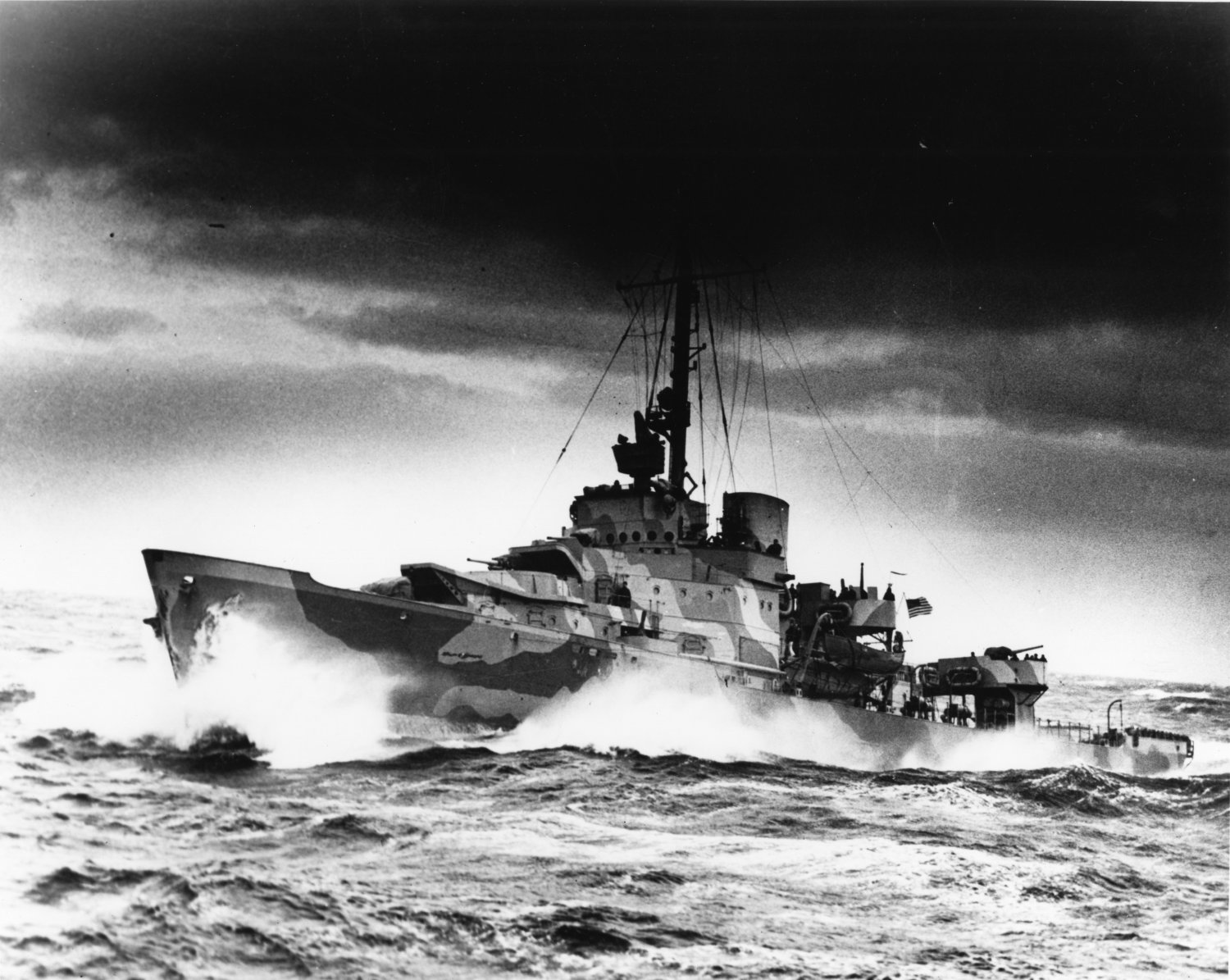
USCGC Ingham (WPG-35) underway in heavy seas, circa 1941-1944, location unknown.
US Coast Guard photo # 2000225945

1943  During a fierce convoy battle near Greenland, CGC Ingham rescued 33 survivors from the torpedoed troopship SS Henry Mallory, while CGC Bibb rescued 202.  Bibb then rescued 33 from the torpedoed SS Kalliopi.

1969  CGC Tern, commissioned on this date and stationed in New York, embodied an advanced concept in servicing aids to navigation.  Her over-the-stern gantry system of handling buoys was unique.  The automation and modernization of over-age, isolated lighthouses and light stations showed significant progress this year.  A new, more effective version of the LAMP (Lighthouse Automation and Modernization Project) plan was promulgated in this year as well.

USCGC Cape Cross (WPB-95321), a sistership of Cape Horn

1980  CGC Cape Horn saved all six crewmen of the F/V Hattie Rose in a dramatic night-time rescue.  The Hattie Rose, a Gloucester-based 75-foot stern trawler, began taking on water in 25-foot seas and 45-knot winds, 15 miles east of Provincetown.  Sea and wind conditions prevented a rescue by air and so the Cape Horn, under the command of LTJG William L. Ross, and 11 crewmen, diverted from one SAR case to go to the Hattie Rose’s assistance.  The F/V Paul and Dominic, standing nearby the stricken vessel, helped direct the cutter to the area.  The Cape Horn’s crew got a line to the men, now standing on the bow which was still afloat, and pulled four of the crew to safety aboard the cutter.  The line parted, however, and the two remaining fishermen began drifting away, but two of the Cape Horn’s crew, Duncan Grant and Thomas Jennings, leaped into the 35-degree water and secured a line around the two.  They were all then hauled safely aboard.

“Coast Guard Searching Eastern Pacific for Missing Service Member” –USNI

US Coast Guard cutter Waesche (WSML-751) and crew transit the San Francisco Bay en route to their Base Alameda, California, home port, Aug. 11, 2024. US Coast Guard Photo

US Naval Institute News Service reports,

The Coast Guard is searching for a missing member of the crew of USCGC Waesche (WMSL-751) off the Pacific coast of Mexico near the border of Guatemala…USCGC Stone (WMSL-758) is also operating in the region.

The missing coastguardsman has not yet been identified.

This Day in Coast Guard History, February 6

Based on the Coast Guard Historian’s timeline, https://www.history.uscg.mil/research/chronology/
With inspiration from Mike Kelso

February 6

1893  Secretary of Treasury was authorized to define and establish anchorage grounds for vessels in harbor of Chicago and adjacent waters of Lake Michigan.

USCGC Nike

1942  CGC Nike rescued 38 persons from SS China Arrow which had been torpedoed off Ocean City, Maryland.

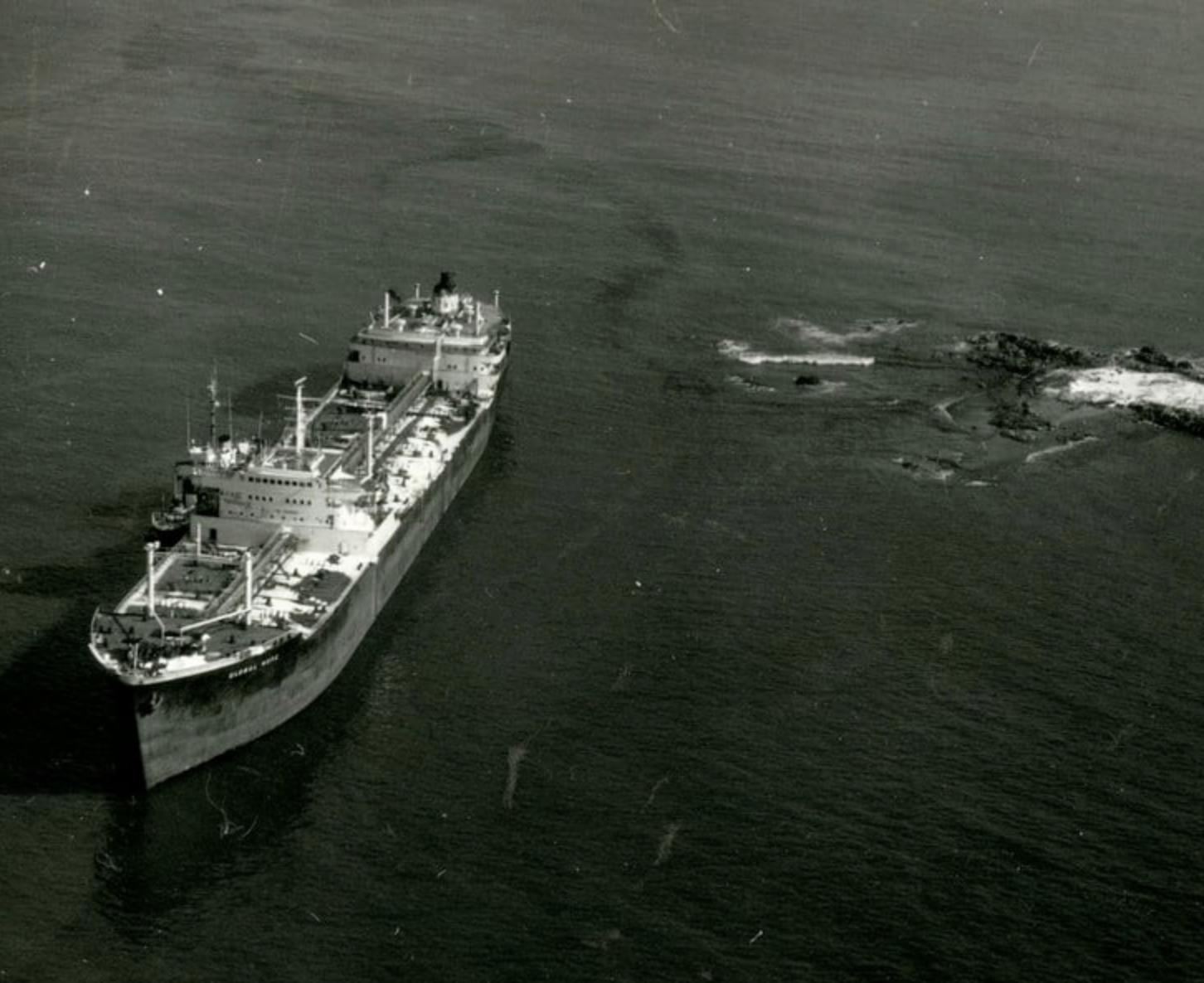
This photograph is looking easterly at the grounded tanker Global Hope near Salem Harbor. Coney Island is to the east of the entrance to the harbor. Marblehead lies to the south. There is an oil slick near the stern of the vessel. Historical Photographs

1978  Coast Guard units from the First and Third Districts responded to a severe winter storm in New England, including stations providing shelter to displaced families and Coast Guard four-wheel drive vehicles serving as ambulances while an amphibious vehicle was the only means of transportation from the mainland from Sandy Hook, New Jersey, transporting nine people to safety from flooded areas.  A 682-foot tanker Global Hope went aground in Salem Sound, Massachusetts, and an HH-3F from Air Station Cape Cod arrived on scene followed by CGC Decisive which removed 28 of the 32 persons on board, with four left aboard to assist in salvage and pollution control.

1990  Two Coast Guard Air Station Houston crews were the first to receive the Igor I. Sikorsky Award for Humanitarian Service.  The award was presented by the Helicopter Association International at their Dallas convention.  The crews were honored for their rescue of seven fishermen during Hurricane Chantal last year.  They flew through driving rain, winds in excess of 65 miles per hour, thunderstorms, and squalls to rescue the men from their capsized boat.

This is the ill-fated Boeing 757 that crashed after take off from Puerto Plata, Dominican Republic, on February 6, 1996… The Boeing 757 took its first flight on February 3, 1984… 26/02/1985 Eastern Airlines N516EA 20/05/1992 Nationair C-FNXN 01/05/1993 Aeronautics Leasing N7079S 14/07/1993 Birgenair TC-GEN 19/12/1994 International Caribbean Airways 8P-GUL 31/03/1995 Birgenair TC-GEN

1996  Alas Nacionales Airlines Flight 301 crashed off the Dominican Republic and Coast Guard units conducted search and rescue operations.

The Pacific Northwest was hit by an historic flood in February 1996. Corps dams were put to the test and held back as much of the flood waters as possible, but too much rain fell in the valley below the dam. As a result, many communities in western Oregon felt the impacts of the flood waters.

1996  Coast Guard units responded to calls of assistance due to severe flooding throughout the Pacific Northwest.

No Helicopters on Cutters in Alaska / More Helicopters Will Operate from Forward Bases

An MH-65 Dolphin helicopter crew based out of Air Station Kodiak and
deployed aboard Cutter Alex Haley, prepares for a helicopter in-flight refueling at sea evolution with the cutter crew during a search and rescue case near Dutch Harbor, Alaska, Wednesday, Dec. 30, 2020. The crew hoisted an injured fisherman from the vessel Magnus Martens and placed him in the care of awaiting Guardian Flight Alaska personnel for further transport to Anchorage. (U.S. Coast Guard photo by Lt. Benjamin DeGroot)

National Defense reports,

“With an aging aircraft fleet under scrutiny and the phase-out of an older airframe, the Coast Guard has stopped sending its cutters to sea in the Arctic with helicopters onboard.”

We are not just talking about icebreakers. When a US government entity says the “Arctic” they include the  Aleutians and Bering Sea, even though they are below the Arctic Circle so this really means no helicopters on any Coast Guard vessels in District 17 (Alaska).

http://www.state.gov/e/oes/ocns/opa/arc/uschair/258202.htm . This map of the Arctic was created by State Department geographers as part of the U.S. Chairmanship of the Arctic Council.

Cutters carried helicopters for two reasons, for reconnaissance and as a mobile SAR air station. All the National Security Cutters (NSC) now have unmanned air systems (drones) that are more effective search aircraft than helicopters. Hopefully USCGC Alex Haley (WMEC-39) (really a high endurance cutter) which is home-ported in Kodiak will also be so equipped if it is not already.

Rather than having helicopters on ships which are increasingly going North of the Bering Strait, far from most fishing vessels, the helicopters will be forward deployed.

“Coast Guard District 17 and Air Station Kodiak maximized aviation forward operating sites staffed by shipboard landing capable MH-60T crews in Kotzebue, Cold Bay and Prince William Sound, a model that streamlines search-and-rescue response and enables flexible movement of the helicopter crews in support of deployed Coast Guard cutters and seasonal mission demands,” officials said in a statement provided to National Defense.

This will keep the helicopters nearer the concentrations of population and fishing vessels. Because they are shipboard capable MH-60Ts, they will have longer range than the H-65s that had been deployed on ships, and will still be able to use cutters to extend their range by HIFR (Helicopter In Flight Refueling) or by transit on a cutter’s flight deck to get within range.

The announcement makes it sound like the Coast Guard will be less capable of responding than they were before, but really this seems to be a net improvement based on the incorporation of more capable assets–Unmanned Air Systems and more numerous longer ranged helicopters.

Officials with Coast Guard headquarters said the change was made in summer 2024 as Air Station Kodiak phased out four retiring MH-65 Dolphin helicopters and transitioned to the newer MH-60T Jayhawk. The base now operates six Jayhawks and will eventually have nine, officials said. (emphasis applied–Chuck)

The trade-off is that cutters will not have helicopters immediately available on board, but having a cutter with helicopter in the right place at the right time was always a matter of luck.

(I have to wonder why this information was not included in a Coast Guard news release. I looked for it as a CG news release and found nothing.)

Thanks to Peter for bringing this to my attention.