Hellfire the Drone Killer

Enlisted technicians from the Navy Munitions Command (NMC) Bahrain Detachment support the delivery of hardware and software upgrades aboard USS Indianapolis (LCS 17) in September 2024 while the ship was forward deployed to the U.S. 5th Fleet Area of Responsibility. USN

The War Zone reports, “Littoral Combat Ship Can Now Rapidly Shoot Down Aerial Drones with Hellfire Missile.”

The Coast Guard needs a counter drone capability if Coast Guard ships are going to do force protection and the “Ports, Waterways, and Coastal Security” and “Defense Readiness” missions.

Hellfire, and its form factor twin replacement JAGM, are emerging as primary candidates for this role. Compared to gun systems, they do not throw multiple rounds well beyond the target that might cause collateral damage. They also have the advantage of being useful in other roles as well, including as an anti-aircraft weapon against low flying sub-sonic threats and as an effective surface to surface weapon against a range of naval threats from small fast highly maneuverable threats like kamikaze USVs to ships.

Included in the report was the photo below that depicts a proposed deck mounted vertical launcher for Hellfire/JAGM. It probably weighs about the same as a 30mm Mk38 Mod4 and would not require the same deck foundation strength since there is no recoil.

A close-up of the Hellfire/JAGM launchers on the Arleigh Burke model on display at the 2025 Surface Navy Association symposium. Joseph Trevithick

I cropped the photo to get a better look at the launchers. It appears the mount is being loaded in the horizontal position and would return to the vertical for firing. This means reloading would be relatively easy and the location of the mount could be very flexible.

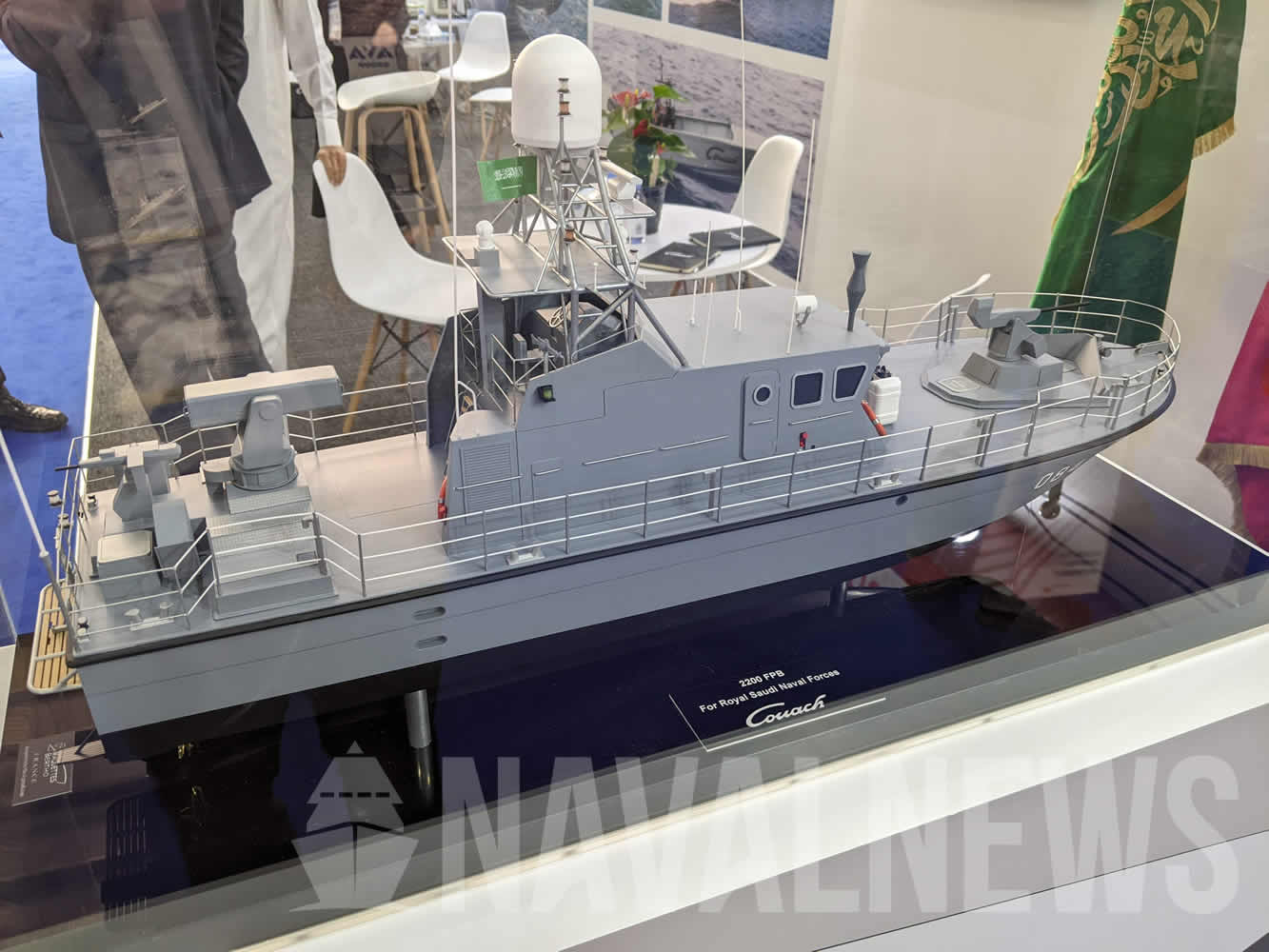
It appears that each of the three sets of tubes (above) are much the same as the “Patrol Boat Compatible” above deck launchers pictured below, which would mean each mount could house twelve missiles. A pair of these would provide up to 24 rounds ready to launch–same as the number in the LCS mission module.

For smaller cutters Hellfire has been adapted to USVs as small as 12 meters.


This Day in Coast Guard History, January 18

Based on the Coast Guard Historian’s timeline, https://www.history.uscg.mil/research/chronology/
With inspiration from Mike Kelso

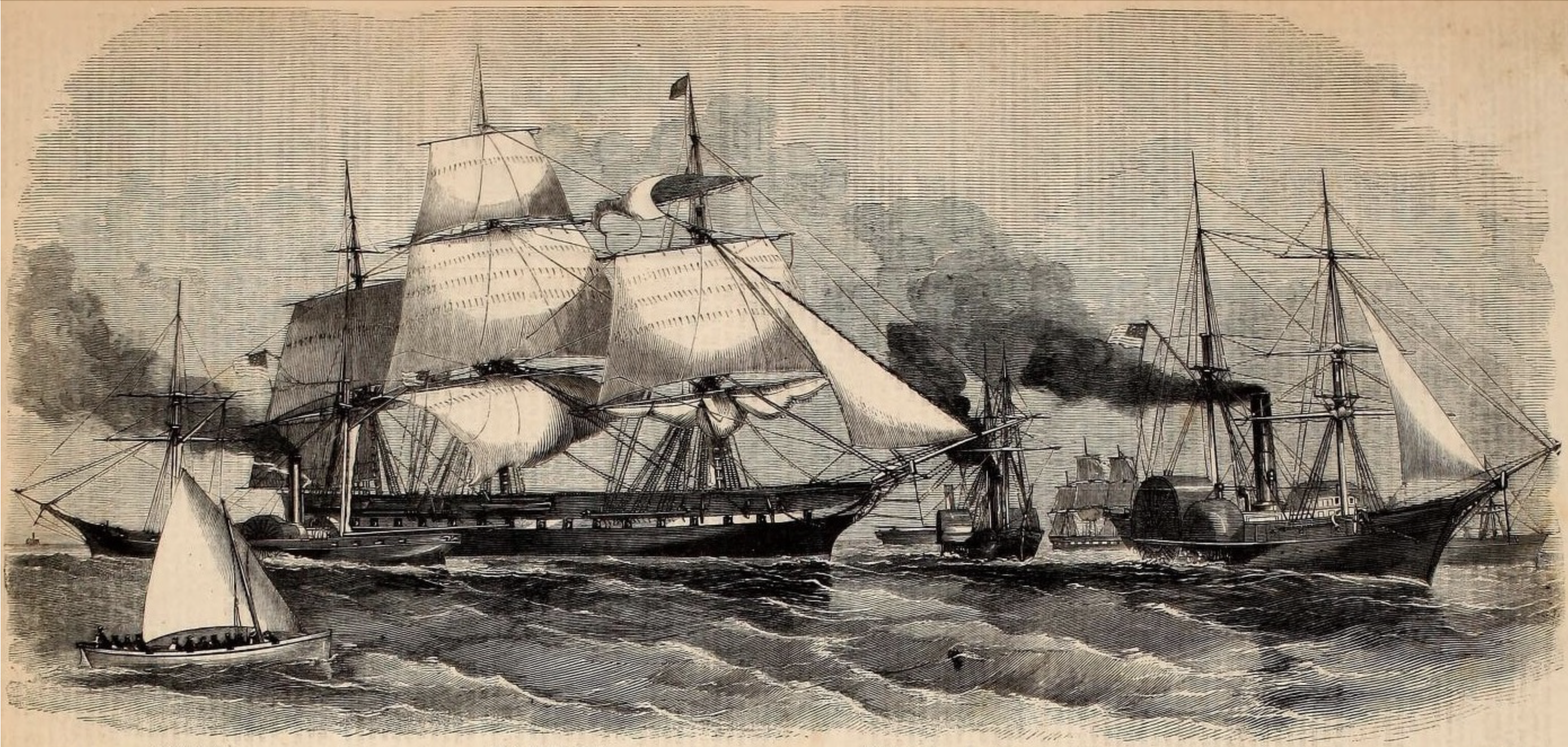
City of Columbus and Revenue Cutter Dexter. Drawn by: Schell and Hogan from a sketch by an officer of the United States Revenue Cutter Dexter 1884.

1884  USRC Dexter, under the command of CAPT Eric Gabrielson, came to the aid of the stricken steamer City of Columbus after it had grounded on the Devil’s Bridge rock outcropping off Martha’s Vineyard.  The cutter maneuvered around the wreckage and launched its small boats to effect rescues.  Second LT John U. Rhodes, First LT Warrington D. Roath, Third LT Charles D. Kennedy, and volunteers from the cutter’s crew distinguished themselves in their rescue efforts.  They worked in concert with lifeboats from the Massachusetts Humane Society’s Gay Head station.  All told 29 passengers and crew were saved out of 132 aboard City of Columbus.  A local newspaper reported that the Dexter’s “…officers and crew, from the captain to the cabin boy, acted the part of heroes, both at the scene of the wreck and afterwards in caring for the survivors.”

USCGC Bibb before WWII

1938  CGC Bibb returned to Norfolk after a 10-day post-trial run from Norfolk to the Virgin Islands and back again with the Commandant, RADM Russell R. Waesche, aboard.  During the run Bibb went to the aid of the four-masted schooner Albert F. Paul, which had lost its topsails and was leaking badly.  The Paul was taken in tow and Bibb proceeded under reduced speed.  CGC Sebago was contacted by radio and relieved Bibb of the tow.  During the cruise, “constant communication was maintained between Bibb and Radio Station Fort Hunt, Virginia (NMH).”

No caption/date/photo number; photographer unknown. On ramp in preparation for launch, crew is running to the PBM; view is forward quarter, port side. Note beaching gear and anchor with hoist.

1953  A Coast Guard PBM seaplane crashed off the Chinese coast near Swatow, China during takeoff after having rescued 11 survivors from a ditched U.S. Navy aircraft that had been shot down by Chinese anti-aircraft fire.  A total of nine servicemen lost their lives in this second crash, including five of the Coast Guard aircrew.  The survivors were later rescued by the USS Halsey Powell (DD-686).  The entire Coast Guard PBM aircrew were awarded the Gold Lifesaving Medal for their actions.

1974  Coast Guard units rescued 61 crewmembers from the 551-foot tanker Keytrader and the 657-foot Norwegian freighter Baune after the two vessels collided on the night of January 18, 1974 in dense fog.  Sixteen other crewmembers did not survive.  Keytrader was carrying 18,000 tons of fuel oil.  A 53-foot Coast Guard vessel assisted in fighting the ensuing fire.

2003  On January 18th, CGC Walnut departed from her homeport in Honolulu, Hawaii and began her 10,000 mile transit to the Persian Gulf in support of Operation Iraqi Freedom.  This 45-day transit was completed as quickly as possible with brief stops for fuel and food along the way in Guam, Singapore, and Kuwait.  The cutter deployed with an oil spill recovery system in the event the regime of Saddam Hussein committed any acts of environmental terrorism.  When those threats did not materialize, the cutter then conducted maritime interception operations enforcing U.N. Security Council resolutions, participated in the search for two downed United Kingdom helicopters, and patrolled and provided assistance to captured Iraqi offshore oil terminals being secured by Coast Guard port security personnel.   The cutter’s crew completely replaced 30 buoys and repaired an additional five along the 41-mile Khawr Abd Allah Waterway.  This ATON mission vastly improved the navigational safety of the waterway for humanitarian aid, commercial, and military vessels sailing to the port and was a critical step to economic recovery for the people of Iraq.

Case for the Five Inch Gun–Revisited

In 2012, in one of my first posts, I explained a “Case for the Five Inch Gun.” All the reasons I outlined at that time have only become more salient over the last twelve years, but if the Hypervelocity Projectile (HVP–video above) becomes a real option, we will have even more reason to choose the 5″.

We could get many of the same benefits, and perhaps even more capability, by adding missiles to the USCG’s vessels and in some cases, we could put the capability on much smaller platforms, but the Coast Guard seems to be allergic to the idea of adding missiles, however small and innocuous, to their ships. The rationale seems to be we don’t want to appear threatening. I would argue that sometimes you just want to look capable.

If the Coast Guard is going to persist down this single gun/no missiles path, then the gun should be the best available in the US Navy inventory, the 5″/62 Mk45 Mod4 HVP or no HVP, assuming it would not look out of place, and it would not. Originally the 5″ Mk45 was designed as a direct drop in replacement for the 5″/38 single mount.

A modern 5″ gun would not be a radical change from the way Coast Guard Cutters have been armed in the past. The first Coast Guard cutters armed with 5″ guns goes back to at least USCGC Haida commissioned in 1921, which was armed with not one but two five inch guns.

Five inch guns remained a standard fit on large cutters until completion of the WHEC378 FRAM program in 1992. Over the intervening 71 years, at least 64 US Coast Guard cutters have been armed with 5″ guns.

Several classes had multiple three and five inch guns.

An aerial port view of the U.S. Coast Guard high endurance cutter RUSH (WHEC-723) underway during Exercise Brim Frost ’85.

A modern 5″/62 MK45 Mod4 on an OPC would not much look different from the 5″/38 on a 378, but it would provide much greater capability than the 57mm Mk110 which alone is not enough to meet the needs of an increasingly hostile geopolitical environment.

“Sails on an OPV? Vessel Design, with French Flair” –MarineLink

3D rendering of the PAMNG. Image ©MAURIC

Marine Link reports a contract for construction of a small Offshore Patrol Vessel (OPV) for the French Directorate General for Maritime Affairs, Fisheries and Aquaculture (DGAMPA).

I have been seeing reports of sails of various sorts being added to merchant vessels in order to reduce fuel consumption, but this is the first time I have seen this applied to a modern OPV.

It is just part of their efforts to make the ships fuel efficient while minimizing emissions,

The wind-assisted propulsion solution, combined with diesel-electric hybrid propulsion and IMO TIER III compliant engines, are designed to position the vessel “at the forefront of maritime ecological transition,” wrote DGAMPA.

As with all vessel designs, there is not a silver-bullet solution to increased efficiency, and this vessel will also have a hull design optimized through computational fluid dynamics, enhanced insulation with optimized energy management, photovoltaic panels, and an active trim control system.

Based on some modest experience with sailing craft, the sail may also have the effect of steadying the ship, slowing the roll and making it more comfortable as well. In addition, with the mast apparently stepped a bit aft of amidships, and the sail aft of that, it appears that the ship would drift with its head into the wind and seas rather than broadside as most ships do.

Rendering of the PAMNG. Image ©MAURIC

54m OPV Main Particulars

  • Crew: 16 persons
  • Duration: 12 days, up to 200 days at sea per year
  • Length: 53.7 m
  • Construction: Steel hull, aluminum superstructure
  • Propulsion: Diesel-electric hybrid system with wind assisted propulsion
  • Maximum speed: 17 kts
  • Endurance: 3,600 nm at 12 kts
  • Nautical equipment: 2 semi-rigid boats of 6.50m (speed: 35 kts)

Main Missions

  • Protection of national interests
  • Maritime fisheries surveillance and control
  • Environmental regulations compliance
  • Pollution and navigation monitoring
  • Assistance to persons
  • Public service missions and representation of French Maritime Affairs Administration

Ageism? “Coast Guard veterans wrongly forced into retirement by service now fighting in court for backpay” – Stars and Stripes

Coast Guard Cutter James (WMSL 754) personnel pose for a photo with other law enforcement agency officials, July 19, at the White House in Washington, D.C. for the annual United States Interdiction Coordinator Awards. James’ crew was recognized with the top maritime interdiction during the awards ceremony. (Photo courtesy of the White House)

I don’t normally comment on personnel questions, but I found this story somewhat ironic after all the stories about the Coast Guard failing to meet recruiting goals.

The Commandant has taken some steps to remove barriers to service associated with “ageism,” but it is systemic in the military. Of all the military services the Coast Guard may be the one that can benefit the most from continuity and long-term experience.

I particularly remember our Chief of the Boat on Duane, an engineer. He was old, he was experienced, he loved that old ship. He knew every detail of its strengthens and weaknesses and because of his expertise. that 47-year-old ship was always ready to answer all bells.

You can’t afford to throw that kind of experience away.

This Day in Coast Guard History, January 17

Based on the Coast Guard Historian’s timeline, https://www.history.uscg.mil/research/chronology/
With inspiration from Mike Kelso

1832  Treasury Secretary Louis McLane discontinued the practice of hiring unemployed Navy officers as senior Revenue Cutter Service officers.  All vacancies from that point forward were to be filled by promotions from within the service.  Secretary McLane’s actions brought a tremendous boost to morale among Revenue cuttermen as they had long complained about the slow line of promotion caused by unemployed Navy officers “grabbing up” senior positions.

USCGC STORIS moored alongside LAMUT.

1972  USCGC Storis seized two Soviet fishing vessels, the 362-foot factory vessel Lamut and the 278-foot stern trawler Kolyvan, for fishing inside the 12-mile U.S. contiguous zone.

In one of her more dramatic law enforcement missions, on January 17, 1972, STORIS found two Soviet fishing vessels within the territorial waters of the United States. Radar picked up the two vessels inside the protective zone and upon further investigation, STORIS found the 278-foot fishing vessel, KOLJVAN offloading its catch to the 362-foot fish processor LAMUT in violation of U.S. laws. STORIS sent armed boarding parties aboard each of the Soviet ships and ordered them to the naval base in Adak, Alaska.

While the ships were in route to Adak, LAMUT attempted to flee with the Coast Guard boarding party still on board. After an intense one-hour chase, STORIS’ CO, Commander William P. Allen, received permission from the commandant to fire a shot across the bow of LAMUT. STORIS sent a message to LAMUT that she was prepared to open fire and the Soviet vessel stopped. STORIS arrested both Russian masters and took them into custody aboard the cutter. All three ships arrived in Adak and charges were assessed against the two Russian ships.

1977  DOT Secretary William T. Coleman, Jr., issued licenses to LOOP, Inc., and Seadock, Inc., to own, construct, and operate deepwater ports in the Gulf of Mexico.  Both ports were designed to “handle” supertankers.

1994  Coast Guard units and family members assisted those in need after an earthquake hit Los Angeles, California.

Who You Gonna Call?

I just ran across this interesting bit from Wikipedia. Sounds like a good idea.

“In May 2000, the Japan Coast Guard introduced a nationwide emergency number, 118, for reporting accidents at sea, oil spills, suspicious vessels, smuggling, and illegal immigration. It can be dialed from mobile phones, landline phones, public phones, and marine radiotelephones in Japan.

“Alaska homeported cutter earns cutter of the year award” –News Release

Below is a Coast Guard news release.

Jan. 15, 2025

JUNEAU, Alaska – Coast Guard Cutter Alex Haley (WMEC 39) was selected as the recipient of the 2024 Hopley Yeaton Cutter Excellence Award. 

For the second year in a row, Alex Haley earned the medium cutter of year award across the entire Coast Guard fleet. The Hopley Yeaton Cutter Excellence Award recognizes the ship that demonstrated exceptional performance across operations and mission accomplishment, commitment to crew and families, training and readiness, and engineering.

Spending nearly 200 days deployed in support of Coast Guard Pacific Area and District 17, Alex Haley embodied the proud tradition of the Bering Sea cutter, sailing from the Arctic Ocean to the furthest reaches of the Bering Sea and Aleutian Islands. Leading all cutters in Bering Sea and Aleutian Island living marine resource law enforcement boardings to protect and help sustain Alaska fisheries, the ship also supported strategic United States Government priorities including intercepting and escorting a Russian warship across the Aleutian Islands. Most notably, the cutter and crew earned a Letter of Commendation from the International Maritime Organization for bravery saving eight mariners in distress while towing a fishing vessel 32 hours to safe harbor during a winter gale. 

Additionally, Alex Haley earned the 2024 Large Afloat Dining Facility of the Year award for best galley and was runner up for the 2024 Morale Program of the Year Award. The Alex Haley crew was awarded the Arctic Service Medal and the Operational Excellence “E” Award.   

“As the only major cutter homeported in Alaska, the ‘Bulldog of the Bering’ lives and operates in unforgiving conditions across a vast area of responsibility,” said Cmdr. Steven Baldovsky, Alex Haley ‘s commanding officer. “Our crew displayed exceptional mission execution and resilience against a challenging work-life balance – always answering the call and providing an incredible return on investment to the American people. I could not be any prouder of the crew and our amazing family support for the work Alex Haley did to earn the back-to-back Hopley Yeaton Cutter Excellence Awards.”

Alex Haley is a 282-foot Medium Endurance Cutter that performs search and rescue, fisheries law enforcement and maritime security across Alaska and has been homeported in Kodiak since 1999.   

This Day in Coast Guard History, January 16

Based on the Coast Guard Historian’s timeline, https://www.history.uscg.mil/research/chronology/
With inspiration from Mike Kelso

January 16

1920  Prohibition, later called the “noble experiment” by President Herbert Hoover, became the law of the land on January 16, 1920, one year after the 36th state ratified the 18th Amendment to the Constitution.  Enforcement of the law fell to the Department of the Treasury and the Coast Guard was charged with interdicting the flow of “Demon Rum” at sea before it reached American shores.

Sikorsky HNS-1 “Hoverfly”

1944  LT Stewart R. Graham became the first person to make a helicopter take-off and landing aboard a ship underway at sea when he piloted a Sikorsky HNS-1 off of and back on the SS Daghestan in the North Atlantic.

1948  The list of nominations for appointments and promotions of Coast Guard officers transmitted to Congress by the President on this date represented the first permanent advancements of Coast Guard regular officers since the summer of 1942.

Coast Guard Cutter Northland (WMEC 904), Aug. 13, 2024, while underway in the Atlantic Ocean. (U.S. Coast Guard photo by Petty Officer 3rd Class Anthony Randisi)

1988  Coast Guard units responded to a report of a murder on board the container vessel Boxer Captain Cook.  The ship’s first officer reportedly murdered the captain and threw his body overboard.  A boarding party from CGC Northland, offloaded onto CGC Cape York, boarded the vessel while it was underway on the high seas and captured the suspected murderer and collected evidence of the crime.

U.S. Coast Guard units responded to a report of a murder on board the container vessel Boxer Captain Cook.
Crew members aboard the British-registered Boxer Captain Cook said that the First Officer, Remigio Hernando, went berserk and attacked the ship’s Captain, Alistair McKinnon. The slaying occurred about a week after McKinnon dismissed Hernando because of a piloting error that caused the ship to briefly run aground off Cuba. The first officer reportedly murdered the captain and threw his body overboard.
After the slaying, some crew members locked themselves in their cabins while others sealed the bridge, kept the ship under control and radioed the Coast Guard.
The U.S. Coast Guard Cutter Northland (WMEC-904), embarked a boarding party onto Cutter Cape York (WPB-95332), a 95-foot patrol boat, who came along side Boxer Captain Cook. The team boarded while the vessel was underway on the high seas. The boarding team captured the suspected murderer and collected evidence of the crime.
The Coast Guard searched unsuccessfully for Captain McKinnon’s body. The search was suspended on January 18th.
(Information courtesy of the Coast Guard Historian’s Office)–Foundation for Coast Guard History

Harpoon Missile Launch from USCGC Mellon

1990  CGC Mellon fired a Harpoon anti-ship missile in a live-fire test, becoming the first cutter to fire the missile.