This Day in Coast Guard History, September 23

September 23

1967 Coho Salmon Fishing Disaster: On this date a severe squall carried through the Frankfort River Platte area of northern Lake Michigan. Twenty-five-foot waves generated by the squall caught off guard an estimated 1,000 small boats fishing for Coho salmon.  Between 150 and 200 boats were beached and many more were either capsized or otherwise in distress.  During the next four days Coast Guard aircraft flew 33 sorties for a total of 55 hours.  State and Local police provided beach patrols and private individuals also aided in the operation.  One of the greatest problems faced by the Coast Guard was the confusion created by the hundreds of people unaccounted for after the storm, most of whom were not in trouble but had just not contacted their friends or family.  Each report of a missing person was carefully followed through so that within four days it was determined that seven had been recovered and only one person remained unaccounted for.  The Coho salmon which attracted the large number of boats to the area remained in season for another three weeks and during this time the Coast Guard maintained daily aircraft and small boat patrols of the area.

2014 CGC Key Largo collided with the 42-foot commercial fishing vessel Sea Shepherd, sinking the fishing vessel approximately nine nautical miles east northeast of Vieques, Puerto Rico. Key Largo was on a routine patrol when the collision happened. Sea Shepherd’s two crewmembers were safely recovered by the crew of Key Largo.


Russian and Chinese Coast Guards Exercise Together and Form Combined Task Force / The CCG Cutters

Recently the China Coast Guard and the Russian Coast Guard held joint exercises in the Peter the Great Gulf near Vladivostok. After the exercise, they formed a joint task force. 

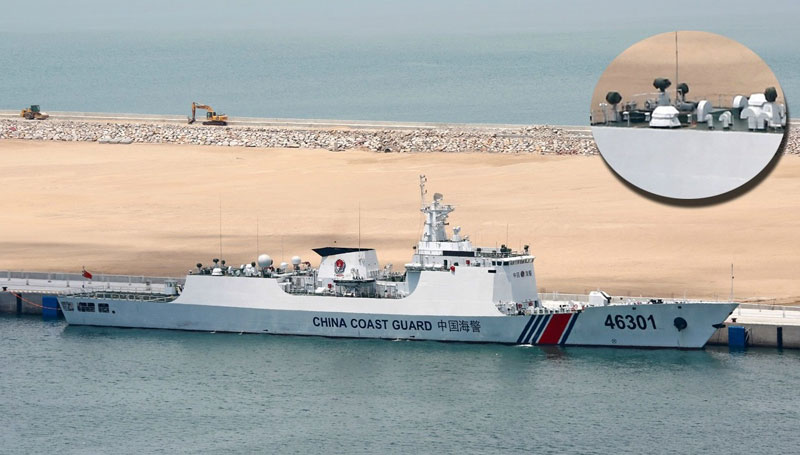
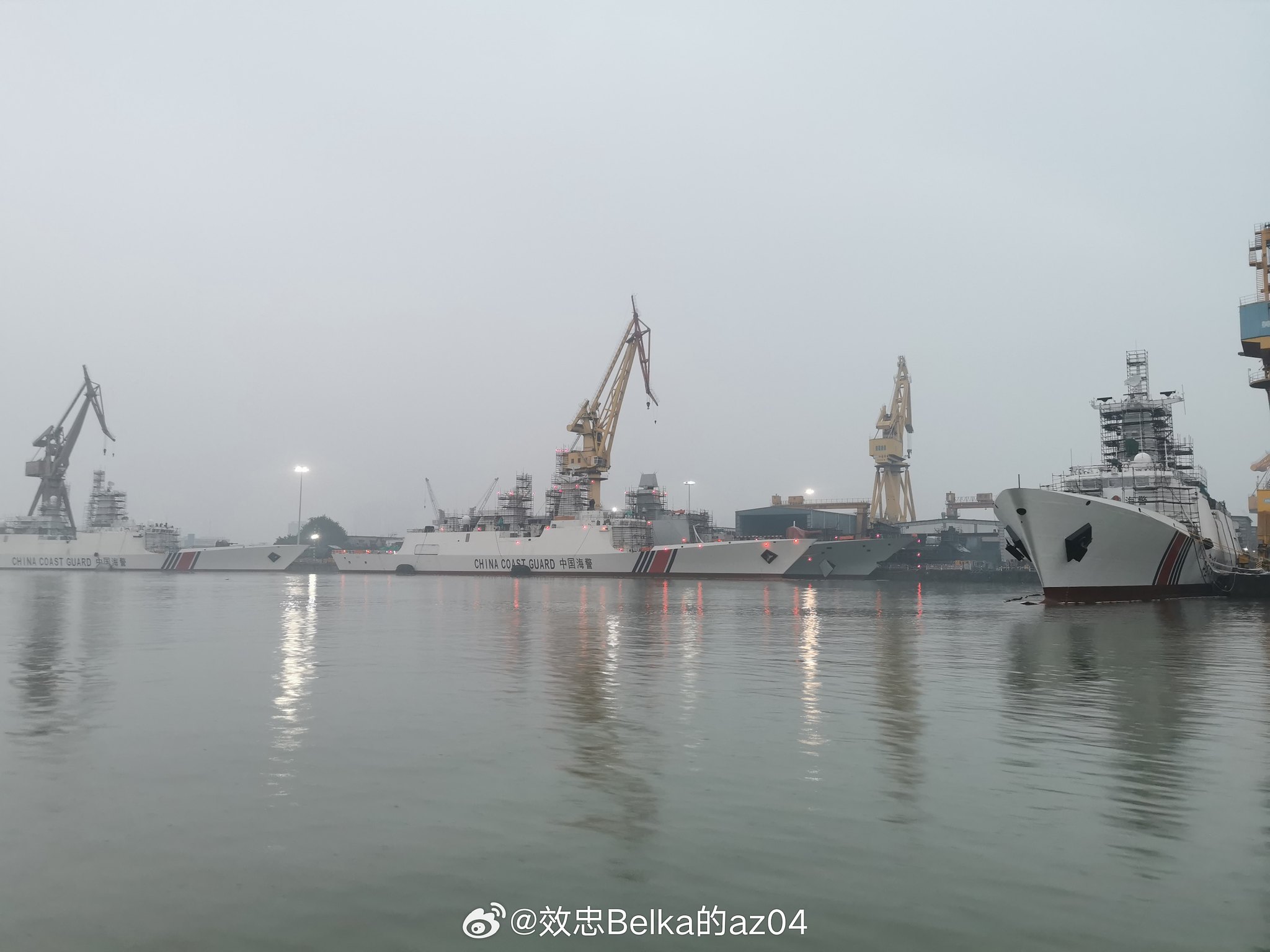
Also wanted to identify the China Coast Guard Cutters seen in the video.

They are Zhaoduan class Type 818, derived from the PLAN Type 054A frigates. According to the Office of Naval Intelligence, (lots of information at the link. The China Coast Guard has the largest coast guard fleet in the world) there are at least six of the class. They are almost as large as National Security Cutters (NSC), reportedly 4,000 tons full load, 134 meters (440′) in length, 16 meters (52.5′) of beam, speed 27 knots, range 8,000 miles.

In addition to the 76mm gun, they have a pair of 30mm Gatling guns. It is not clear if they have a fire control system that would make the 30mm guns effective as CIWS, but they could certainly do serious damage to surface targets at close range in a very short time.

This Day in Coast Guard History, September 22

September 22

1943 Coast Guardsmen participated in the invasion and liberation of Finschafen, New Guinea.  An Allied invasion fleet, including Coast Guard-manned landing ships, landed Australian troops.  Coast Guard-manned ships in the invasion fleet included USS LST-18, LST-67, LST-168, and LST-204.  There were no casualties among the Coast Guard vessels.

A United States Coast Guard (USCG) Port Security Unit (PSU) boat crew pictured while undergoing a tactical training exercise.

1990 PSU 301 became the second reserve Coast Guard port security unit deployed in support of Operation Desert Shield.  PSU 301 was staffed by reservists from Buffalo, New York.  They were stationed in Al-Jubayl, Saudi Arabia

This Day in Coast Guard History, September 21

Facebook Friend Mike Kelso has been posting information like you see below, from the Coast Guard Historian on Facebook on a daily basis. Mike helped me prepare this post. If I get positive feedback, I will try to make this a regular feature. 
I would note that Tahoma’s patrol in the Eastern Pacific, which was a novelty in 2015 subsequently became routine. 

September 21

1791 Secretary of the Treasury Alexander Hamilton authorized an allowance of nine cents for every ration that Revenue officers did not draw.
1922 Congress authorized officers of the Customs and of the Coast Guard to board and examine vessels, reaffirming their authority to seize and secure vessels for security of the revenue under the Act of March 2, 1799.
1938 A hurricane hit the northeast coast, wreaking havoc among the lighthouses and the light keepers there. First assistant keeper Walter B. Eberle of the Whale Rock light was killed when his lighthouse was swept into the sea. The wife of head keeper Arthur A. Small was killed when she was swept away from the Palmer Island Light Station. The keeper of the Prudence Island Light Station’s wife and son were drowned when that light station was swept into the sea. Many more stations and depots were severely damaged as well.

USCGC ABSECON 1965

1957 The German training barque Pamir with 90 persons on board, including 54 German naval cadets, foundered and sank in extremely rough seas 500 miles west of the Azores. The CGC Absecon, manning Ocean Station Delta, intercepted the SOS message and immediately proceeded to the scene. Three days later, the cutter and assisting vessels rescued six survivors, but the remaining 84 remained missing. The search continued for seven days, with Absecon directing on-scene operations of 60 merchant vessels from 13 nations, as well as American and Portuguese aircraft.
1977 CGC Acushnet (WAGO 167) deployed environmental buoy EB-07 at 39N 70W to assume part of the meteorological data collection duties of Ocean Station Hotel, which was decommissioned on September 30, 1977 when CGC Taney departed the ocean station for the final time. EB-07 was one of 10 environmental buoys in the Atlantic, six of which were north of Cape Hatteras. Coast Guard cutters provided continuing support of these buoys in accordance with an interagency agreement with NOAA.

USCGC CONIFER (WLB-301)

1987 Coast Guard units responded when two freighters, Pacbaroness and Atlantic Wing, collided in a dense fog off the coast of Santa Barbara. The Pacbaroness sank, causing a large oil spill. Coast Guard units that responded included:
CGCs Conifer & Point Judith; AIRSTAs Los Angeles, Sacramento, & San Francisco; MSO Los Angeles/Long Beach; Pacific Strike Team; MSD Santa Barbara; 11th District (m) and (dpa); Public Affairs Liaison Office; and the Public Information Assist Team from Headquarters.
1989 Coast Guard units from New York rescued 61 survivors of U.S. Air Flight 5050 after it skidded off a runway of LaGuardia Airport and into the Rikers Island Channel. Two persons were killed.
1989 Hurricane Hugo made landfall on the continental United States at Charleston, South Carolina. The Coast Guard’s emergency command post had to be abandoned when the roof almost blew off. Base Charleston suffered severe damage, as well. Coast Guard units immediately began relief operations. Aircraft were airborne at first light that morning. They conducted SAR, performed medical evacuations, provided emergency communications with stricken areas, and transported relief personnel and equipment. More aircraft were flown in from AIRSTAs Traverse City and Mobile. From their staging area at AIRSTA Savannah, they delivered food and water to hard-hit areas such as McClellanville, South Carolina, where 200 people were isolated and the entire town destroyed.

USCGC Tahoma (WMEC-908)

2015 CGC Tahoma returned to homeport at Portsmouth Naval Shipyard in Kittery, Maine, after a 66-day patrol in the Eastern Pacific Ocean and Caribbean Sea. During the patrol, on September 9, 2015, the Tahoma’s crew pursued a “Go-Fast Vessel” to verify the vessel’s nationality. With the assistance of a maritime patrol aircraft, the Tahoma’s pursuit team closed in on the Go-Fast and attempted to initiate radio contact. The vessel jettisoned bales of contraband into the ocean and refused to comply with instructions. Warning shots were used to signal the vessel to prepare for a boarding. The noncompliant Go-Fast then came to an abrupt halt and was boarded. Boarding team members recovered 27 bales of cocaine from the water, totaling 540 kilograms (worth an estimated $10.8 million) and detained the three suspected drug smugglers. The Tahoma’s crew participated in the transfer and custody of 50 detainees and 1,893 kilograms of contraband with several other Coast Guard cutters in both the Eastern Pacific and the Caribbean Sea. This patrol was particularly unique as it deployed the 270-foot medium endurance cutter from its homeport in Kittery, Maine down to the waters of Central America, requiring the cutter to make transit both ways through the Panama Canal. Not only did the Tahoma’s crew return home as Order of the Ditch recipients, but they also were afforded the opportunity to cross the equator while in the Eastern Pacific Ocean.

“2024 Military Pay Charts” –Military.com

Photo By Petty Officer 3rd Class Kate Kilroy | U.S. Coast Guard Chief Petty Officer Jenarius St. Louis, a crew member assigned to USCGC Legare (WMEC 912), holds his son at the unit’s return to home port, July 13, 2023, at Coast Guard Base Portsmouth. While underway, Legare’s crew conducted maritime safety and security missions while working to detect, deter and intercept unsafe and illegal maritime migration ventures bound for the United States. (U.S. Coast Guard photo by Petty Officer 3rd Class Kate Kilroy)

Military.com has published a post that includes pay charts along with supplemental information. You can find it here.

Japan is to Build World’s Largest Coast Guard Vessel

Conceptual rendering of an MMPV in JCG colors. Japan Coast Guard image.

Naval News reports, “Japan Coast Guard will build the biggest patrol vessel in its history.”

To call this ship a “patrol ship” is misleading. It is unarmed. I don’t expect it to do much patrolling. At 199 meters (673′) in length and displacing 30,000 gross tons, it would be very uneconomical.

It will be more like a mobile base for response to high profile incidents including war, natural disaster, or major public events.

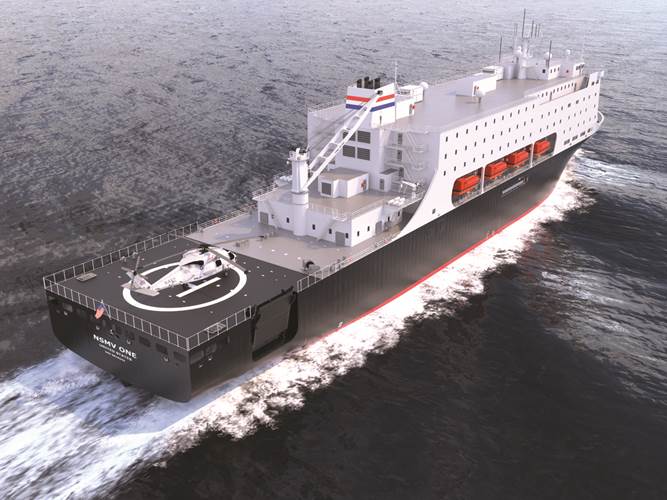
National Security Multi-Mission Vessel (NSMMV)

The US has no direct counterpart, but there are parallels in the National Security Multi-Mission Vessels (NSMMV) which will serve as training ships for the five State Maritime Academies (SMA) but are also expected to be available to respond to Natural Disasters. There are also similarities to the Expeditionary Sea Base program.

Does the US Coast Guard need a comparable capability? If so, we might look at adapting the NSMMV, small crew, part time training ship for the CG academy, part time mother ship for distant operations, ready for disaster response.

“Coast Guard completes final delivery of MH-65E helicopter” –CG-9

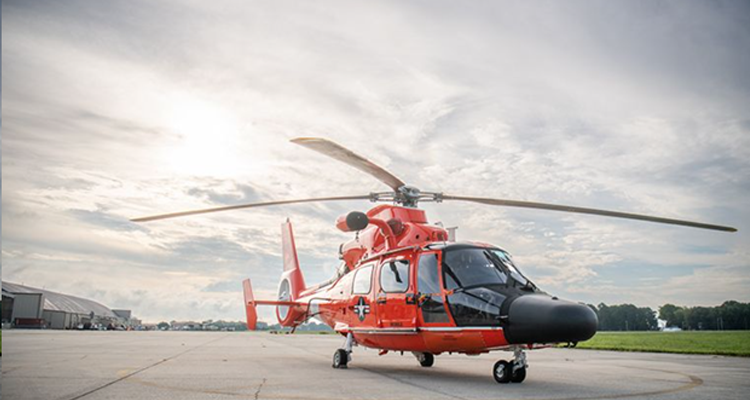
CGNR 6577 is readied for departure from the Aviation Logistics Center on Aug. 19. Its delivery to the Aviation Training Center in Mobile, Alabama, marks the 90th and final MH-65 helicopter to complete the service life extension program and upgrades resulting in the Echo configuration. U.S. Coast Guard photo

Below is a story from the Acquisitions Directorate (CG-9). This comes only days after they also reported that they had completed upgrades to the Fleet of 18 HC-144s.

Despite completion of these two programs, Aviation Logistics Center, Elizabeth City still has plenty of work to do. There is an on-going program to upgrade the C-27J fleet and newly acquired C-130Js with Minotaur Mission Systems and a Service Life Extension Program and additional procurement/remanufacture of MH-60Ts to ultimately allow conversion of eight air stations from MH-65 to MH-60T.


The H-65 Conversion/Sustainment Program reached an important milestone Aug. 19, sending off the 90th and final MH-65E to its operational unit at Aviation Training Center (ATC) in Mobile, Alabama. The transition from the MH-65D to the MH-65E (commonly referred to as the “Delta” and “Echo” configurations, respectively) has been in development for over a decade.

The Short Range Recovery (SRR) production line at the Aviation Logistics Center has been executing the Echo conversion since 2018 when the very first Echo was delivered to ATC Mobile to prepare for pilot training and course development in the new model. By happenstance, the final Echo was also delivered to ATC, an altogether fitting accomplishment as the program came full circle and achieved full operating capability.

A highlight of the program was SRR’s consistency and adherence to the delivery schedule as they produced an Echo aircraft every 22 days and achieved an 80% on-time delivery rate, a testament to the product line after factoring in the pace of early production activities and the negative impacts of COVID-19.

The avionics upgrade to the MH-65E configuration provides enhanced search and rescue capabilities including modern “glass cockpit” technology that increases pilot and aircrew situational awareness and provides commonality with the service’s MH-60T Jayhawk fleet. The upgrades also include reliability and capability improvements for the automatic flight control system, enhanced digital weather and surface radar, and multifunctional displays with more accurate fuel calculations.

The upgrades bring the fleet into compliance with the Federal Aviation Administration’s Next Generation Airspace Transportation System requirements and extend the aircraft service life through the Coast Guard’s transition to an all-MH-60T rotary wing fleet.

Since the first Echo delivery, the aircraft has surpassed 100,000 flight hours and has been involved in more than 8,000 search and rescue cases. The model is responsible for saving and assisting more than 1,200 lives, making a substantial contribution to the 26,000 lives rescued throughout the 40 years the Coast Guard has flown different variants of the H-65.

The MH-65E is a multi-mission helicopter, responsible for over 100 ship deployments across the world and participated in more than 15 hurricane response efforts. Air Station Atlantic City commenced its transition in October 2022 and has executed over 100 land-based deployments conducting rotary wing air intercept missions as part of national defense. The Helicopter Interdiction Squadron in Jacksonville, Florida, which commenced its transition to the MH-65E in July 2021, has conducted 62 deployments in the MH-65E, with 133 interdictions and seizing nearly 300,000 pounds of cocaine and over 60,000 pounds of marijuana totaling nearly $4 billion in illegal narcotics.

“U.S. Coast Guard encounters Russian naval vessels near Point Hope, Alaska” — CG News

“The crew of U.S. Coast Guard Cutter Stratton (WMSL 752) encountered and shadowed four Russian Federation Navy (RFN) vessels 57 miles northwest of Point Hope, Alaska, Sept. 15, 2024. The Russian Surface Action Group consisted of a Severodvinsk-class submarine, a Dolgorukiy-class submarine, a Steregushchiy– class Frigate, and a Seliva-class tug. Stratton patrolled under Operation Frontier Sentinel, a Coast Guard operation designed to meet presence with presence when strategic competitors operate in and around U.S. waters. (U.S. Coast Guard courtesy photo)”

Below is a news release from Coast Guard news.

Point Hope, Alaska is well North of the Bering Strait and the Arctic Circle, bordering the Chukchi Sea, 312 miles SW of Utqiagvik (formerly Pt. Barrow) and almost a thousand miles North of Dutch Harbor. None of my Alaska Patrols ever got that far North.

Russian Yasen class SSGN

The Severodvinsk or Yasen class submarine is a nuclear submarine equipped with eight missile silos for up to 32 cruise missiles and ten torpedo tubes.

Russian Borei class SSBN

The Dolgorukiy or Borei class submarine is a SSBN with 16 silos for ballistic missiles.
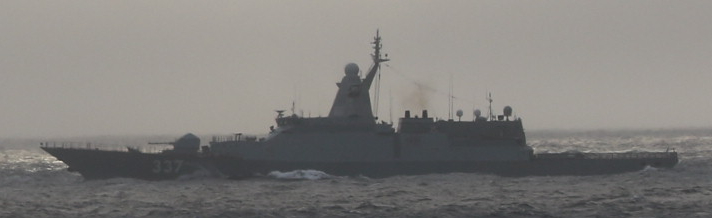
The surface combatant seems to have been miss identified. It is Gremyashchiy (337) lead ship of her class of 2,500 ton Project 20385 corvettes (NATO considers them frigates).

Note, USCGC Stratton is not an ice strengthened vessel.

This may have been a transfer of the SSGN and SSBN to the Russian Pacific Fleet.

The post story seems to indicate Stratton stumbled across this group. Shouldn’t we have known they were there?


Sept. 16, 2024

JUNEAU, Alaska — The U.S. Coast Guard located four Russian Federation Navy (RFN) vessels Sunday, 57 miles northwest of Point Hope, Alaska.

While on a routine patrol in the Chukchi Sea, the crew of U.S. Coast Guard Cutter Stratton (WMSL 752) observed the RFN vessels transiting southeast along the Russian side of the Maritime Boundary Line (MBL).

The crew of the Stratton witnessed the RFN vessels cross the MBL into the U.S. Arctic and moved to observe the vessels. The Russian vessels were assessed to be avoiding sea ice on the Russian side of the MBL and operated in accordance with international rules and customs as they transited approximately 30 miles into the U.S. Exclusive Economic Zone.

“We are actively patrolling our maritime border in the Bering Sea, Bering Strait, and Chukchi Sea, with our largest and most capable cutters and aircraft, to protect U.S. sovereign interests, U.S. fish stocks, and to promote international maritime norms,” said Rear Adm. Megan Dean, Commander of Coast Guard District Seventeen. “Coast Guard Cutter Stratton ensured there were no disruptions to U.S. interests.”

The Russian Surface Action Group consisted of a Severodvinsk-class submarine, Dolgorukiy-class submarine, Steregushchiy– class Frigate, and Seliva-class tug.

The Stratton is patrolling under Operation Frontier Sentinel, an operation designed to meet presence with presence when strategic competitors operate in and around U.S. waters. The Coast Guard’s presence strengthens the international rules-based order and promotes the conduct of operations in a manner that follows international law and norms.

Coast Guard Cutter Stratton is a 418-foot legend class national security cutter homeported in Alameda, Calif.

60 Minutes Report From the South China Sea

Reporters from CBS’s 60 Minutes got to see up close what the Philippines is dealing with in the South China Sea.

This is at least the second time a Philippine Coast Guard cutter has been intentionally rammed by the China Coast Guard.

The story also includes discussion with Philippine Military leaders and discussion of potential US involvement.