A Coast Guard Role in Mine Countermeasures

Two posts have recently appeared that make a case for Coast Guard involvement in Mine Counter-Measures (MCM) in peacetime. “Terror in the Water: Maritime Terrorism, Mines, and our Imperiled Harbors,” Second Place Mine Warfare Essay Contest, sponsored by the U.S. Naval Institute with the Mine Warfare Association. by Lieutenant (junior grade) Daniel Stefanus, U.S. Navy, advocates a stronger working relationship between the Navy and Coast Guard, mentioning the Coast Guard 13 times in a relatively short essay.

The January 2018 USNI Proceedings has a short post, “Coast Guard Needs Mine Countermeasures,” by Peter von Bleichert, suggesting that the Coast Guard has a mission implicit in its Ports, Waterways, and Coastal Security mission to deal with Naval mines and underwater improvised explosive devices (M/UWIED) and that the Coast Guard should be equipped and trained for the mission.

“Hardware for a Coast Guard mine countermeasures (MCM) capability could be harvested from the Navy’s Littoral Combat Ship MCM mission package, which existing or planned Coast Guard platforms could use in part or as a whole. These platforms could include hulls such as coastal and seagoing buoy tenders, the National Security and Offshore Patrol Cutters, and Coast Guard aircraft, both fixed- and rotary-wing. Training Coast Guardsmen for MCM operations could be concurrent with that of Navy sailors. As shown during the 2014 International Mine Countermeasures Exercise in the Arabian Gulf and the 2015 Field Training Exercise in homeland waters, the U.S. sea services already train and exercise together for such operations. Further combining MCM hardware acquisition and training will reduce duplication, generate economies of scale, encourage innovation, and increase preparation for joint operations.

“As the tripwire guarding against a conflict or terrorist incident in U.S. waters, and as a security component for naval bases and forces abroad, the U.S. Coast Guard must be given the expertise and tools to protect commercial and military vessels from the ever-growing threat of M/UWIEDs. At the very least, the service’s vessels must be able to detect such weapons. They should also be able to classify and localize them, and ideally to identify and neutralize them.”

Mining one or more US ports might not be that difficult, and while I don’t think the general population would be terrified by a ship sinking, the economic effect could be severe.

The Navy has never been very enthusiastic about the MCM mission, in spite of the fact that, since World War II, more of their ships have been damaged by mines than any other hostile agency.

As Lt(jg) Stefanus points out,

The United States’ mine countermeasures (MCM) triad consists of surface vessels (minesweepers), aircraft, and explosive ordinance disposal (EOD) teams. The surface vessels are the twelve ships of the worn-down Avenger class: homeported overseas with the exception of two in San Diego, and in poor readiness conditions due to repeated life-cycle extensions because of the slow development of the littoral combat ship’s (LCS) mine warfare module. There are no surface mine countermeasure forces available on the East Coast of the United States. (emphasis applied–Chuck)

The aerial leg of the triad is made up of the equally worn-down MH-53E Sea Dragons. Old and outdated, the 28 MH-53Es are only on the East Coast, (again, emphasis applied–Chuck) and suffer from notoriously serious readiness and material issues. While they are slated to remain in the fleet until the final operational capability (FOC) of the LCS mine warfare module in 2024, they are already struggling and will continue to degrade.

I doubt the Coast Guard has had a mine warfare expert since WWII, so I would certainly would not expect any massive shifts in that direction, but there probably is more we could be doing. Back in the Stone Age, when I was active duty, the Coast Guard through the Maritime Defense Zone organization participated in a Craft Of Opportunity Program using side scan sonars to map predesignated routes in and out of harbors to map mine like objects on the sea floor so they would not be mistaken for mines if it became necessary to clear the route–no idea if that still happens.
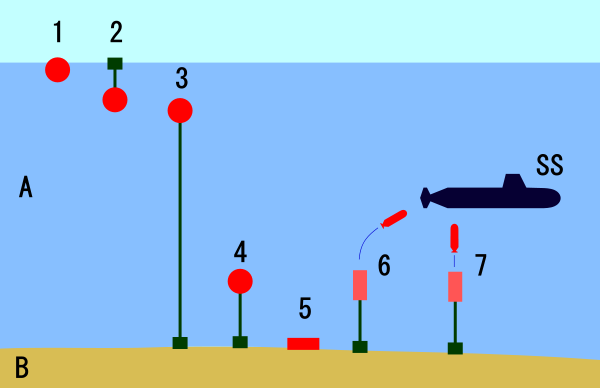
Types of Naval mine. A-underwater, B-bottom, SS-Submarine. 1-Drifting mine, 2-Drifting mine, 3-Moored Mine, 4-Moored Mine (short wire), 5-Bottom Mines, 6-Torpedo mine/CAPTOR mine  ,7-Rising mine–by Los688

Mine warfare does seem to be changing, particularly the surface ship methods. Instead of specialized ships with low acoustic and magnetic signatures actually entering the minefield, mine hunting, sweeping, and destruction is being done by unmanned systems. Several of our ships, including buoy tenders, might be useful in supporting MCM operations.
 

“Manual Health Records Put Coast Guard Personnel at Risk”–GAO

The Federal Times is reporting that a GAO study found that two years after a failed $59.9M effort to produce an Electronic Health Record system,

“…the service continues to rely on a paper management system. That poses serious risks for personnel, a new Government Accountability Office report argues.

“According to the report, Coast Guard regional managers and clinic and sick bay administrators warned the GAO they are “unable to adequately track vital information such as medications,” which puts personnel at risk of medical complications.”

I will just note that, I have Kaiser, and they already have an excellent Electronic Health Record system. Maybe we could use theirs.

Does DOD have a system, maybe we could use theirs.

OPC Design Evolving?

Below is a comment on an earlier post, “If They Ditch the LCS, Perhaps the OPC as Frigate,” but for some reason, it did not show up on the list of comments. I think it is interesting enough to warrant its own post.

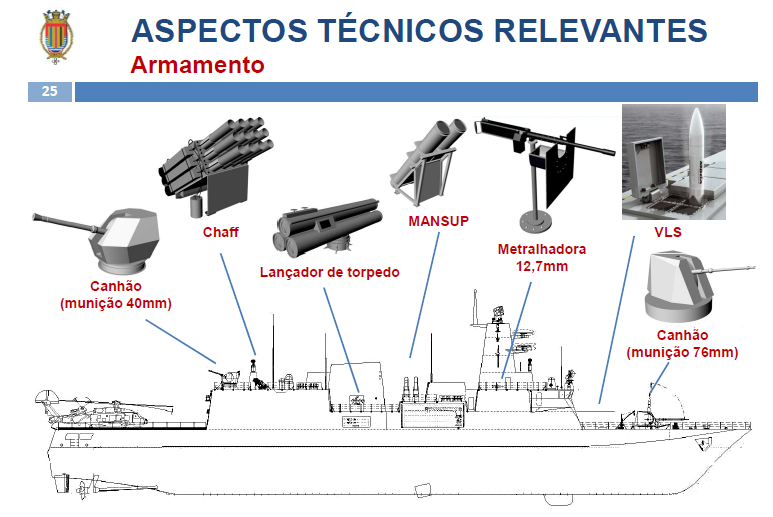
The Brazilian Navy has an on going project to develop and build the new Tamandaré-class corvettes/light frigates which could resemble the OPC derived frigate on this article. Interestingly Eastern Shipbuilding is one of the companies that answered the Request For Proposals. So they might have a conceptual design for an up-gunned OPC. The general requirements include a 25 kt speed, 3d radar, hull sonar, 76 mm gun, 4 deck-mounted anti-ship missiles, multiple torpedo tubes and VLS for Sea Ceptor/ CAMM AAW missiles (the render seems to point to 24 missiles in 2 x 3-cell ExLS).

http://www.janes.com/article/70498/brazil-attracts-multiple-firms-interest-for-ambitious-corvette-project

Quoting from the link, “The Brazilian Navy’s Naval Projects Center developed the corvette basic design project with assistance from Fincantieri’s VARD.” It appears the preliminary design is already done and that it was done with help from VARD, the designer of the Offshore Patrol Cutter (OPC).

This Naval Today post from Dec. 2017  reports, According to the Brazilian Navy’s Ships Projects Center (CPN), the corvettes should be measuring 103 meters in length and displacing up to 2,790 tons.” that is actually a little smaller than the OPC. Delivery of the first of the class of four is expected 2021/22, about the same time as the first OPC. Brazil would like to build the ships within country, but is seeking to partner with another shipbuilder.

Some information on the British developed “Sea Ceptor” missile system here. This missile is larger than the RAM but smaller than the Evolved Sea Sparrow Missiles (ESSM). Like the ESSM, it can be quad packed (that explains how you get “24 missiles in 2 x 3-cell ExLS“). It is currently deployed on British type 23 frigates. Unlike ESSM, Sea Ceptor uses a cold launch system. As explained in Wikipedia, ” …cold launch, where the missile is expelled by gas produced by a gas generator which is not part of the missile itself, and then the missile ignites. “Cold” means relatively cold compared with rocket engine exhaust. A hot launch system does not require an ejection mechanism, but does require some way of disposing of the missile’s exhaust and heat as it leaves the cell. If the missile ignites in a cell without an ejection mechanism, the cell must withstand the tremendous heat generated without igniting the missiles in the adjacent cells.”

“EDITORIAL: Conventional lifeboats are an expensive, complex, heavy and largely inadequate solution”–BairdMaritime

BairdMaritime has an interesting and possibly important editorial concerning passenger ship evacuation equipment. I think its worth the read.

“Lifeboats have undoubtedly saved many lives but mostly under favourable conditions. Launching them, particularly larger and heavier examples, in anything but benign conditions can be very dangerous. This is confirmed by the numerous examples of lifeboat drills gone wrong. Lifeboat drills have arguably killed more people than they have saved.

“I was reminded of this by a press release distributed recently by the British maritime union, Nautilus. The release called for “radical new thinking” about the concept of lifeboats and, “to examine the potential of alternative evacuation systems”.”

EU Charters Fisheries Enforcement Vessel

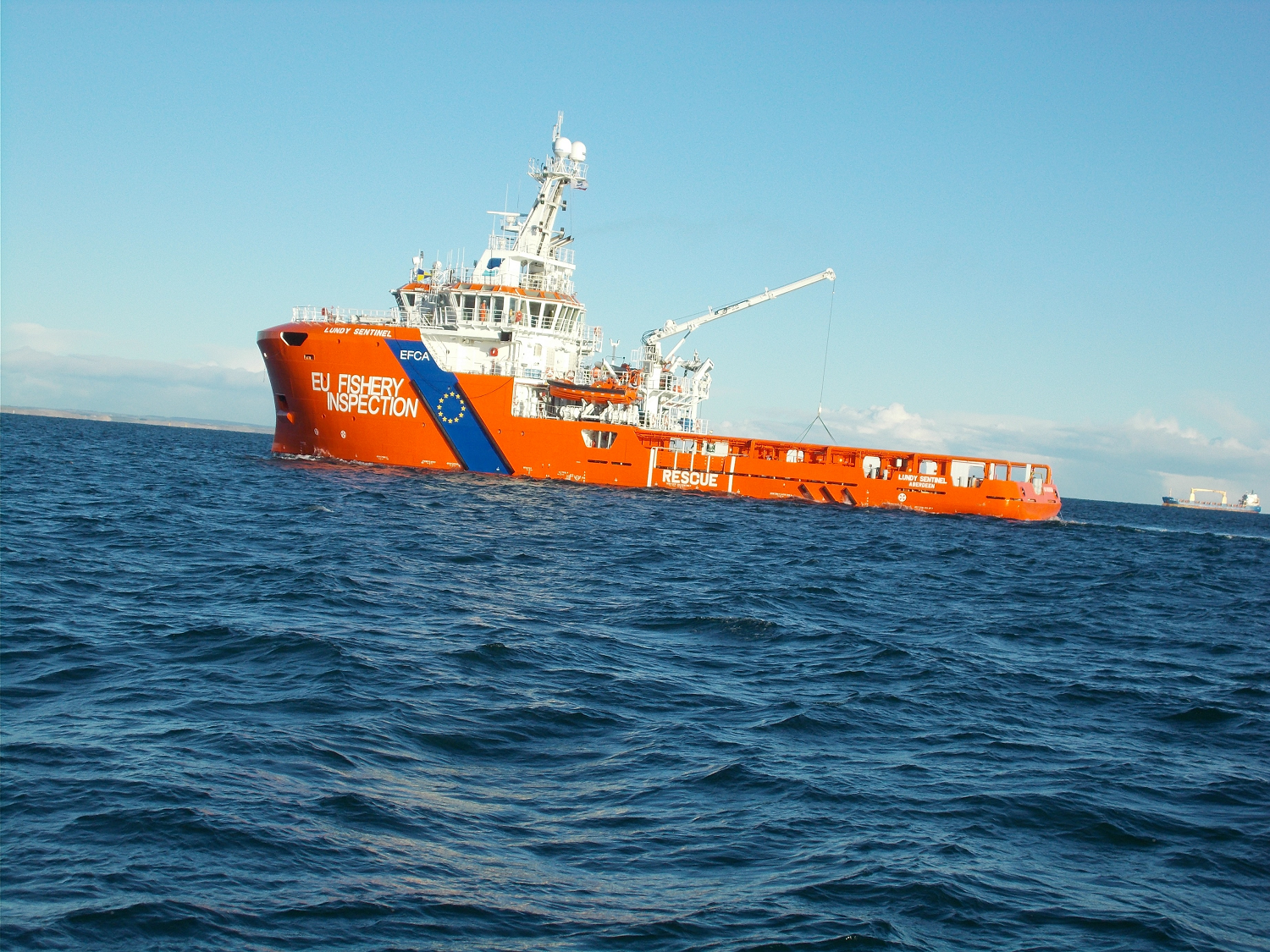
MarineLink reports the European Fisheries Control Agency (EFCA) has chartered a 61 meter (200 foot) multi-role emergency response and rescue vessel to perform fisheries enforcement.

“It is possible that Lundy Sentinel will also be used for other operations besides fisheries control, in the framework of the European coastguard cooperation, including search and rescue, border control, disruption of trafficking routes, detection of criminal activities and enforcement of EU and national legislations.”

China unveils vision for ‘Polar Silk Road’ across Arctic–Reuters

Chinese icebreaking research vessel Xue Long (Snow Dragon), Photo by Bahnfrend

Reuters has an interesting short article about China’s interest in the Arctic. Initially this will probably be primarily concerned with shipment of Russian LNG, but it appears we can expect other activities as well, including fishing. Certainly we should expect more traffic through the Bering Strait, bringing with it the possibility of SAR and Marine Environment Protection incidents.

“The white paper said China also eyes development of oil, gas, mineral resources and other non-fossil energies, fishing and tourism in the region. It said it would do so “jointly with Arctic States, while respecting traditions and cultures of the Arctic residents including the indigenous peoples and conserving natural environment”. “

“U.S. Coast Guard Hurricane Response 2017”–DefenseMediaNetwork

Houston rescues

Coast Guard Air Station Houston responds to search and rescue requests after Hurricane Harvey in Houston, Texas, Aug. 27, 2017. U.S. Coast Guard photo by Petty Officer 3rd Class Johanna Strickland.

DefenseMediaNetwork has a great article about the Coast Guard’s response to Hurricanes Harvey, Irma, and Maria.

“Remarkably, Harvey was merely the first major hurricane to strike the United States in what would become one of the most active Atlantic hurricane seasons in history, one of only six seasons on record to feature multiple Category 5 hurricanes. It was also the first season on record to feature three Atlantic hurricanes making landfall in U.S. territory at Category 4 intensity or stronger. Incredibly, these three hurricanes – Harvey, Irma, and Maria – all landed within a one-month window, from Aug. 25 to Sept. 20, making September 2017 the busiest month of U.S. hurricane activity on record. Before September, the U.S. mainland had never before endured two Category 4 hurricanes in the span of a year.”


Coast Guard Releases Request For Proposal For New Cutter Boats–CG-9

The Acquisitions Directorate has released the following:

Coast Guard Releases Request For Proposal For New Cutter Boats
Jan. 24, 2018

The Coast Guard released a request for proposal (RFP) Jan. 16 for design, construction and support of a new fleet of cutter boats-large (CB-L). The CB-Ls will replace the current fleet of 36 cutter boats that currently operate aboard the Service’s 210-foot medium endurance cutters, 225-foot seagoing buoy tenders, and Coast Guard cutters Alex Haley and Mackinaw.

The Coast Guard plans to award one firm fixed-price indefinite delivery, indefinite contract that includes a minimum initial delivery order of two CB-Ls and associated outfit, parts and logistics information. The contract allows for the acquisition of up to 46 boats over five years, including potential foreign military sales, and is worth a total maximum value of $20 million. The RFP is available here.

Proposals are due March 2 at noon Eastern time, with boat delivery required within one year from the date of the delivery order.

Prior to releasing the RFP, the Coast Guard conducted extensive market research, including inviting potential offerors to make presentations on their ability to compete for the CB-L award.  “The existing boats on these four classes of cutters are no longer sustainable, since the manufacturer went out of business. The new CB-L will meet this operational need,” said Cmdr. David Obermeier, deputy program manager for boats acquisition.

For more information: Cutter Boats program page


Whistle Blower Gets Lockheed to Fix NSC Radios

NSC 5 James on builders trials in the Gulf of Mexico March 30, 2015.

BreakingDefense reports, 

“WASHINGTON: A Lockheed Martin engineer risked much claiming his company knew the radio system it was building for the Coast Guard didn’t work as advertised. The company settled the suit, agreeing to pay $2.2 million in fines and to fix the radios on the National Security Cutters, which should cost another $2.2 million.

“The whistleblower, Stu Rabinowitz, may not be able to work for Lockheed anymore, but he is receiving a $990,000 payment. The statement by the US Attorney’s Office in Northern California says he’s a former employee.

The defect affected the cutters ability to communicate simultaneously on more than one frequency.


News Conference–San Diego, 25 Jan.

Following is a news release quoted in its entirety. 

———–

Media Advisory: U.S., Canadian officials to address emerging threat from drug traffickers (photos available)

united states coast guard

News Release

January 23, 2018

U.S. Coast Guard 11th District PA Detachment San Diego
Contact: Coast Guard PA Detachment San Diego
Office: (619) 278-7025
After Hours: (619) 252-1304
PA Detachment San Diego online newsroom

Media Advisory: U.S., Canadian officials to address emerging threat from drug traffickers (photos available) 

Coast Guard Cutter Steadfast boarding team members intercept a suspected Low Profile Vessel with approximately 3,203 pounds of cocaine onboard in the Eastern Pacific Ocean, Nov. 30, 2017. LPVs are designed to be low profile and colored to blend in with the ocean, making them difficult for law enforcement to detect. U.S. Coast Guard photo. Coast Guard Cutter Steadfast boarding team members intercept a suspected Low Profile Vessel with approximately 3,203 pounds of cocaine onboard in the Eastern Pacific Ocean, Nov. 30, 2017. Steadfast was patrolling the waterways supporting the Joint Interagency Task Force –South with the primary mission of detecting and interdicting illegal drug traffickers. U.S. Coast Guard photo.

To view and download photos, please click the above thumbnails

WHAT: U.S. forces and international partners continue to see new smuggling tactics by transnational organized crime networks in the eastern Pacific Ocean including vessels specifically constructed for purposes of smuggling narcotics and other illicit contraband.

WHO: Senior officials from the U.S. Coast Guard, U.S. Southern Command and the Canadian Armed Forces will be available to discuss the tactics of transnational crime networks and international efforts to combat the threat posed by these criminal organizations. These senior officials include:

  • U.S. Coast Guard Vice Adm. Fred Midgette, commander, Pacific Area
  • Royal Canadian Navy Rear Adm. Art McDonald, commander, Maritime Forces Pacific 
  • Mr. Adam Braverman, U.S. Attorney, Southern District California
  • U.S. Navy Rear Adm. Daniel B. Hendrickson, director, Network Engagement Team, U.S. Southern Command

WHEN: Jan. 25, 2018, at 9:30 a.m. Attending media is requested to arrive by 8:30 a.m. to gain access to the facility. Government-Issued ID and media credentials are required. To RSVP, please contact Public Affairs Detachment San Diego at 619-252-1304.

WHERE: B-Street Pier (Cruise Ship Terminal) in San Diego, 1140 N. Harbor Drive, San Diego, CA 92101.

WHY: On the heels of a record year of drug interdiction, the U.S. Coast Guard and its international partners are seeing historic drug flow from cocaine producing countries in South America coupled with new tactics and varying smuggling routes. Gangs vying over drug smuggling routes and influence have led to epidemic murder rates in Central America. The Centers for Disease Control reported another rise in drug overdose deaths in the U.S. with more than 64,000 people reportedly killed by drug overdose in 2017. Of those, over 10,000 were killed by cocaine overdose, an approximately 35 percent rise from 2016.

HOW: Transnational organized crime networks smuggle more than 97 percent of cocaine bound for the U.S. and Canada via some kind of illicit maritime conveyance in the first stage of movement from the source zone. The drugs are smuggled in large quantities from source countries in South America to transshipment points in Central America and southern Mexico. The cocaine is then broken down into smaller loads for secondary and tertiary transits to smuggle across the U.S. Southern Border.

U.S. and international forces have seen the emergence of a variety smuggling vessels specially designed and constructed by transnational organized crime groups like self-propelled semisubmersibles and, more recently, low profile go fast vessels, which are a variant design from traditional go fast vessels. These smuggling vessels are designed to elude authorities using a low profile radar signature, camouflage and, in the case of low profile go fast vessels, speed. These vessels also carry massive quantities of illicit cargo. For example, an SPSS can carry up to 16,000 pounds of cocaine. A network of international and interagency partners constantly patrol the approximately six million square mile drug transit zone used by smugglers using aircraft and vessels.