Change is Coming, “Coast Guard delivers first MH-60T to new Air Station Ventura” –News Release

The first MH-60T medium range recovery helicopter to operate out of new Air Station Ventura lands on the station’s ramp on June 8, 2024. U.S. Coast Guard photo.

Below is information from the Acquisitions Directorate (CG-9) website. The first new Coast Guard Air Station in 25 years, and a money saving approach that will organically produce 36 aircraft and transition eight air stations from MH-65 to MH-60T operations.

The new airstation replaces a Coast Guard Airstation San Francisco detachment that operated two H-65s out of a leased hangar at Point Mugu.


The Coast Guard on June 8 delivered an MH-60T medium range recovery helicopter to the service’s first new air station in 25 years, Air Station Ventura, located at Naval Base Ventura County in Point Mugu, California. CGNR 6055 is the first of three MH-60T Jayhawk helicopters that will be delivered to the air station; all will be derived from Navy hull conversions completed by the Aviation Logistics Center (ALC) in Elizabeth City, North Carolina.

This is the third delivery under the MH-60T Acquisition/Sustainment Program, which started as a service life extension program (SLEP) for the Coast Guard’s fleet of 45 Jayhawks. The program has since expanded to include increments for fleet growth as the service transitions to an all-MH-60T fleet.

Converted Navy hulls are one of the two hull sources being used in the program, along with newly manufactured hulls from the original equipment manufacturer, Sikorsky Aircraft Corp. Low-flight-hour Navy HH-60H and SH-60F Seahawk hulls are structurally converted into the MH-60T configuration. The program also includes replacement of critical dynamic components, such as main rotor blades, and new electrical wire harnesses. All aircraft production – the assembly and installation of dynamic components on the hulls – is completed at ALC.

The deliveries to Air Station Ventura are the first under Increment 2, the first fleet growth phase of the program, which will organically produce 36 aircraft and transition eight air stations from MH-65 to MH-60T operations. Converted Navy hulls will form the majority of the aircraft to be produced under Increment 2, according to Reid Adams, program manager for the MH-60T Acquisition/Sustainment Program. He noted that Navy conversion hulls are cost effective, saving the Coast Guard at least $5 million per aircraft compared to purchasing new hulls. ALC also has developed efficiencies that have shaved months off the Navy conversion process; each conversion can now be completed in under one year.

“We were able to utilize completed Navy hull conversions that were already in storage to facilitate the Ventura stand-up; this allowed the program to save one year on the ability to stand up Ventura,” Adams said.

Crew members inspect the folding rotors on CGNR 6055 at Air Station Ventura. U.S. Coast Guard photo.


The MH-60T delivered to Air Station Ventura includes main and tail rotor fold-capability, enabling the helicopter to be deployed and hangared aboard the national security cutter, as well as future offshore patrol cutters and polar security cutters. This is the first Jayhawk with this feature since the 1990s, when the smaller MH-65s were deployed. With the move to an all-MH-60T fleet, this capability is essential for aircraft that will be used to support cutter operations.

This is the third Navy conversion hull delivered to the fleet under the MH-60T Acquisition/Sustainment Program; the first went to Aviation Training Center Mobile in 2021 and the second to Air Station Clearwater in 2022, both in support of SLEP activities on the legacy fleet of 45 MH-60Ts and now incorporated as Increment 1 of the expanded acquisition/sustainment program. Thirteen additional Navy hulls are in various stages of work from structural conversion to completed and in storage.
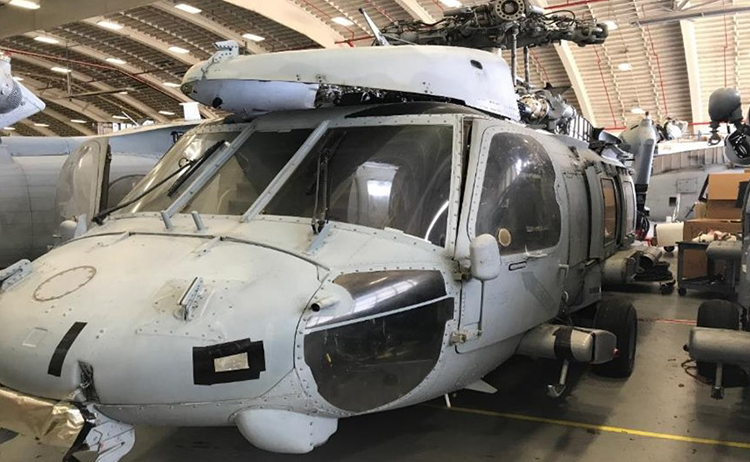
Each conversion of Navy HH-60H and SH-60F Seahawk hulls takes over 1,500 separate maintenance cards for mechanics to follow. U.S. Coast Guard photo.


“The next 13 hulls will be used to fulfill the SLEP or fleet growth demands, as required; with the new hulls now in the mix, the program anticipates the majority of the converted Navy hulls to be utilized for fleet growth purposes,” Adams said. Three new hulls have been delivered of the 45 currently on order with Sikorsky.

Ventura marks the Coast Guard’s first permanent air station in the region since 2016. Prior to breaking ground for Air Station Ventura in 2021, the service conducted aviation operations from a forward-operating base at Naval Base Ventura County supported by Coast Guard Air Station San Francisco.

Air Station Ventura features a $70 million state-of-the-art 43,000-square-foot hangar and a 12,000-square-foot administration and berthing facility. At full capacity it will house three MH-60T Jayhawk helicopters and approximately 100 personnel, significantly enhancing the Coast Guard’s capabilities in the region.
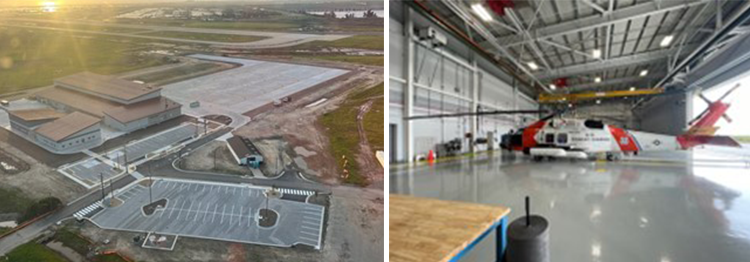
The new Coast Guard Air Station Ventura and its MH-60T hangar is located at Naval Base Ventura County in Point Mugu, California. U.S. Coast Guard photos.


For more information: MH-60T Acquisition/Sustainment Program page.

New Japan Coast Guard Base Ship?

Alex Luck
@AlexLuck9
“Japan intends to procure a very large coast guard hull suitable for supporting helicopter ops and extended EEZ deployments as a “mobile base”, to be commissioned towards 2030.
Reminder that size growth of coast guard assets is a general trend.”

Pulled from X, no idea of the source or validity.

Thanks to Sven for bringing this to my attention.

Air Operations in the Western Pacific–Operation NASSE / Island Chief

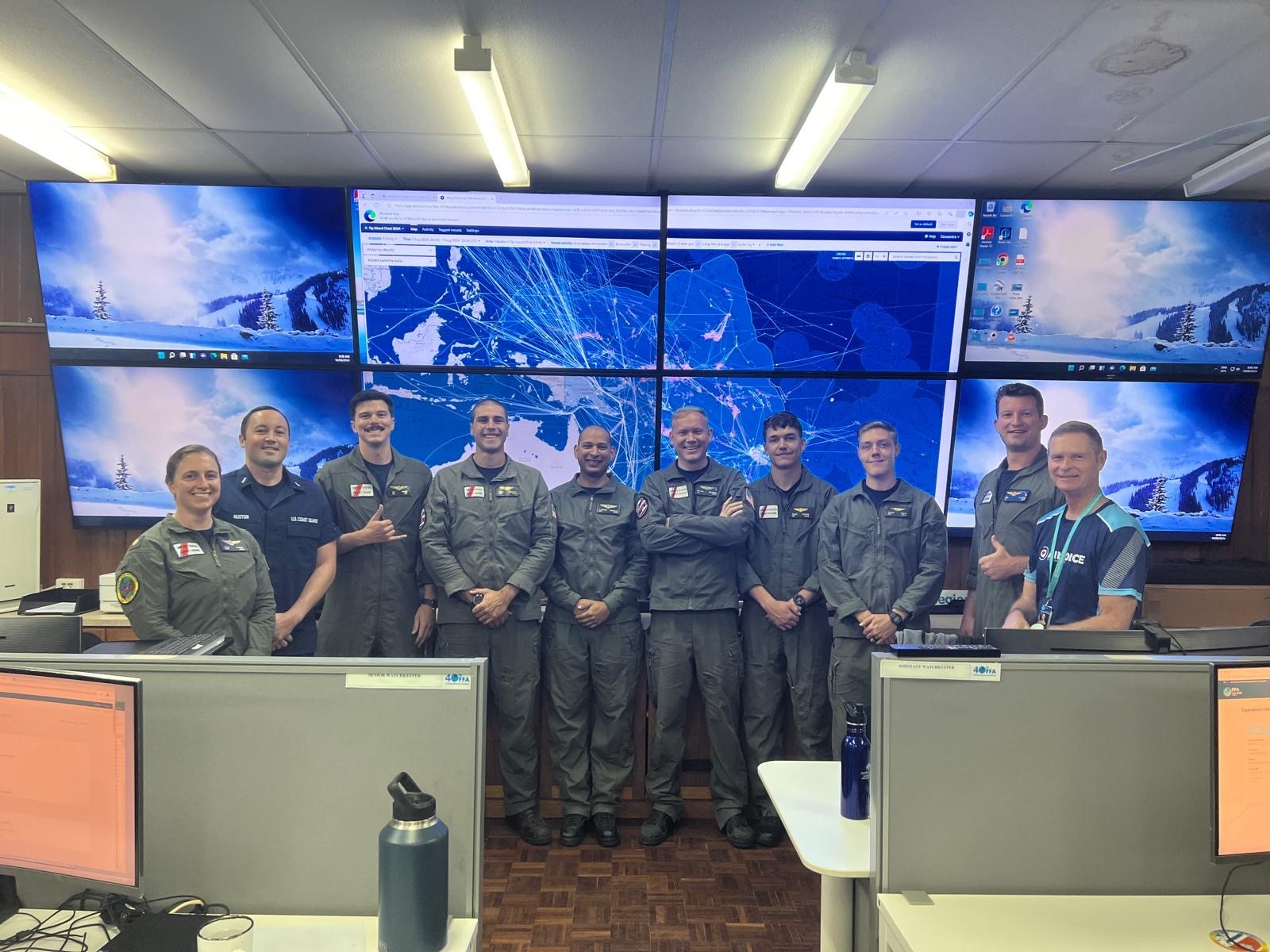
U.S. Coast Guard personnel from District Fourteen and Air Station Barbers Point pose for a photo with a member of the Royal New Zealand Air Force and Forum Fisheries Agency at the Regional Fisheries Surveillance Centre (RFSC) in Honiara, Solomon Islands, Aug. 13, 2024. An HC-130 Hercules airplane crew from Air Station Barbers Point toured the RFSC as part of their participation in Operation Island Chief, during which they searched over 232,100 square miles in the South Pacific to detect any illegal, unreported and unregulated fishing activity. (U.S. Coast Guard courtesy photo)

Below are two news releases reporting US Coast Guard participation in Operation NASSE, a joint Australia, France, New Zealand, and the U.S. effort in support of the Forum Fisheries Agency (FFA) in Honiara, Solomon Islands and the Western and Central Pacific Fisheries Commission.

Barbers Point HC-130Js flew in support of the mission July 1-12 and Aug. 5-16.

(While the second news release refers to an Operation Island Chief, the data reports, “Joint efforts for Operation Nasse covered over 7 million square miles, with the Coast Guard contributing…” so I may be a bit confused. Is Island Chief part of NASSE or entirely separate? At any rate, Coast Guard fixed wing aircraft have been operating out of New Zealand, Vanuatu, and Guadalcanal to counter Illegal, Unregulated, Unreported (IUU) fishing.)

This post from 2022 provides background on Operation NASSE.


HONOLULU – The U.S. Coast Guard completed participation in Operation Nasse, a three-month operation conducted by Australia, France, New Zealand, and the U.S. to safeguard the invaluable marine resources of Pacific Island nations and the Western Central Pacific Ocean, July 12.

From July 1-12, an HC-130J Hercules airplane crew from Coast Guard Air Station Barbers Point patrolled the South Pacific High Seas in and around the Exclusive Economic Zones of Australia, New Caledonia, Fiji, New Zealand, Tonga, Niue, and the Cook Islands to detect, investigate and report any illegal, unreported and unregulated (IUU) fishing activity.

During the operation, the Coast Guard collaborated with Pacific Quadrilateral Defense Coordinating Group (Pacific QUAD) partners to enhance their Monitoring, Control and Surveillance (MCS) tools and communications to support regional and national maritime surveillance efforts.

The wide-ranging operations were supported by the Pacific Islands Forum Fisheries Agency’s (FFA) Regional Fisheries Surveillance Center (RFSC) and several FFA members to reinforce the conservation work of the Western and Central Pacific Fisheries Commission (WCPFC) on the high seas. Alongside the P-QUAD partners, Fiji, Vanuatu, and the Cook Islands participated in the operation for the first time.

Coast Guard participation in Operation Nasse is part of Operation Blue Pacific, an overarching multi-mission Coast Guard endeavor promoting security, safety, sovereignty, and economic prosperity in the Pacific while strengthening relationships between partner nations.

“Oceania is vast, and the challenges of illegal fishing require a united front,” said Lt. Cmdr. Keith Arnold, HC-130J aircraft commander for U.S. Coast Guard Air Station Barbers Point. “Collaborating with the Pacific Quad and other regional partners to combine our resources and expertise to enhance monitoring tools is crucial to countering illegal fishing activities in Oceania. Sharing data, strengthening our communication networks, and coordinating patrols allows us to create a more comprehensive picture of what’s happening on the water in the region. This collaborative approach sends a strong message to those engaged in illegal fishing: we will work together to stop these activities and protect these vital resources.”

Joint efforts for Operation Nasse covered over 16,000 square miles, with the U.S. Coast Guard contributing:

  • Over 58 hours of flight time
  • 37 vessels sighted and analyzed
  • Four potential Conservation and Management Measures (CMM) violations reported
  • 240 hours of analyst-to-analyst collaboration and training

Located in Honolulu, U.S. Coast Guard District Fourteen covers more than 14 million square miles of land and sea, conducting operations over the Hawaiian Islands, American Samoa, Saipan, Guam, Singapore and Japan.

For more information follow us on FacebookX, and Instagram.


Aug. 19, 2024

U.S. Coast Guard completes Operation Island Chief in Pacific region

Coast Guard District 14 External Affairs – Office: (808) 535-3230 / After Hours: (808) 265-7748

HONOLULU – The U.S. Coast Guard completed Island Chief, a 13-day operation to safeguard the invaluable marine resources of Pacific Island nations and the Western Central Pacific Ocean.

From Aug. 5-16, an HC-130 Hercules airplane crew from Coast Guard Air Station Barbers Point patrolled the South Pacific High Seas in and around the exclusive economic zones of Fiji, Federated States of Micronesia, Kiribati, Palau, Papua New Guinea, Nauru, Republic of Marshall Islands, Solomon Islands, Tuvalu and Vanuatu to detect, investigate and report any illegal, unreported and unregulated (IUU) fishing activity.

The Hercules crew worked with the Regional Fisheries Surveillance Centre, a part of the Forum Fisheries Agency (FFA) in Honiara, Solomon Islands, to reinforce the conservation work of the Western and Central Pacific Fisheries Commission.

Coast Guard participation in Operation Island Chief is part of Operation Blue Pacific, an overarching multi-mission Coast Guard endeavor promoting security, safety, sovereignty and economic prosperity in the Pacific while strengthening relationships between partner nations.

The Coast Guard conducted Operation Island Chief alongside the Pacific Quadrilateral Defense Coordinating Group (Pacific QUAD), in support of the Pacific Islands FFA and its members.

FFA Director General Dr. Manu Tupou-Roosen highlighted the significance of the FFA-led Operation Island Chief 2024, coordinating surveillance efforts for participating Members.

“Operation Island Chief reinforces FFA’s commitment to sustainable fisheries management and maritime security in the Pacific,” said Dr. Tupou-Roosen. “This operation exemplifies the spirit of regional collaboration and determination among Pacific Island nations. The compliance checks of vessels and operators through a robust regional surveillance operation ensures effective management regime and preserving our marine resources, as well as securing the livelihoods and food security of our people.”

“Given the vastness of the Pacific region, close collaboration between U.S. Coast Guard personnel, patrol assets and regional partners is integral to sustained success in combatting IUU fishing across the region,” said Marc Stegman, IUU fishing strategic advisor, Coast Guard District Fourteen.

Joint efforts for Operation Nasse covered over 7 million square miles, with the Coast Guard contributing:

  • Over 37 hours of flight time
  • Over 10,500 miles flown
  • Over 232,100 square miles searched
  • Three missions flown from Vanuatu and four missions flown from Solomon Islands
  • 70 vessels sighted and analyzed

Located in Honolulu, U.S. Coast Guard District Fourteen covers more than 14 million square miles of land and sea, conducting operations over the Hawaiian Islands, American Samoa, Saipan, Guam, Singapore and Japan.

For more information follow us on FacebookX, and Instagram.

“USCG RDC: Vessels, Tech, Partnerships Help to Thwart Narcotics, Human Smugglers” –Marine Link

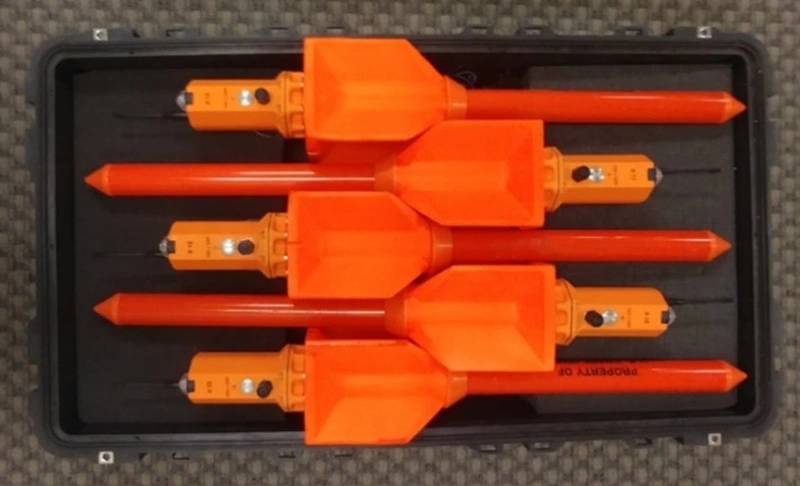
Maritime Object Tracking Technology or MOTT. Image courtesy US Coast Guard RDC

Marine Link has a story about the Coast Guard Research and Development Center (RDC), including the origin of the devices in the photo above. In addition to making the position of jettisoned contraband, I presume they might also be useful in the case of a man overboard.

They are also working on sense and avoid capabilities to allow over the horizon operation of small UAS that can be operated from units without a flight deck, and there is more.


“Broken Breakers” –What’s Going On With Shipping

Sal Mercogliano’s video, like the one above are generally about merchant shipping, but he occasionally touches on the Coast Guard, as he has done here. This video is a brief overview of where we are in terms of icebreakers. It avoids the usual temptation to compare the US icebreaker fleet with the number the Russians operate, but it still paints a pretty bleak picture of the current situation.

I am hoping we will start hearing some good news about the program in the near future, but we have an identified need for nine icebreakers. But there does not seem to be a sense of urgency. It seems the Coast Guard has done nothing to start procurement of the medium icebreakers we know we need. There is no reason we could not have the two programs running parallel. For instance, we could have a prototype Arctic Security Cutter built in Finland and outfitted in the US. I think we can honestly say that currently there is no US shipyard capable of taking on the project other than Bollinger, and they are already working at capacity. We can increase capacity over time, but we need some help.

I suspect the feeling is that the medium icebreaker (Arctic Security Cutter) procurement can’t begin until the heavy icebreaker (Polar Security Cutter) program is completed, but that is not necessarily the case. Sure, it would require a larger acquisitions budget, but you never know until you ask. Right now, we haven’t even done the low-cost research it would take to plan the acquisition. Particularly if the Polar Security Cutter Program is further delayed, it would be good to have medium icebreakers plans prepared so that we can accomplish something.

We have the new ICE Pact agreement with Canada and Finland. It is long past time to start the medium icebreaker procurement planning process. I’d begin by asking if we can’t do with something simpler like the Arctic Patrol Ships all the other Arctic nations are currently building.

Singapore’s Littoral Mission Ships, Another Look

Wanted to share the US Naval Institute video above. Clearly, they were impressed.

We have certainly talked about these ships before, beginning in 2014: here and here with numerous comments on these posts, particularly the first. I thought it might make a good Cutter X, a cutter sized between the OPC and the FRCs.

Reviewing information on this class, most surprising was the small crew size–23–fewer than the Coast Guard is using to man the Fast Response Cutters, but this may not include the boarding party or helicopter deck crew. In some services, these are only added when required rather than being part of the crew. There are additional accommodations for 30 additional personnel, but even the max crew, 53, is significantly fewer than the normal crew of a WMEC210 (75) and about half the crew of a WMEC270 (100). The crews of the OPCs will be even larger.

Two 11 meter RIBs can be launched from ramps in the stern very much like those seen on the similar sized L’Adroit (now Agentine Navy ARA Bouchard (P-51) class, which also manages to include a helicopter hangar).

Also unusual for OPVs are the four container size mission module positions and the twelve cell VL MICA-M vertical launch anti-air system. (VL MICA-M is currently also used by the navies of Egypt, India, Indonesia, Morocco, Oman, Qatar, Saudi Arabia, and United Arab Emirates. It has also been selected for the navies of Bulgaria, Malaysia, the Philippines, and Ukraine.)

Ship Specifications
Length 80 meters
Beam 12 meters
Draught 3 meters
Displacement 1,250 tons
Speed in excess of 27 knots
Endurance 3,500 nautical miles (up to 14 days)

These ships appear to have essentially the same engines as the Webber Class Fast Response Cutters, but they have four of them.

These are what I would consider the minimum size for a true Offshore Patrol Vessel.

I suspect the quoted displacement, 1,250 tons, may be a light displacement. Asian nations seem to prefer to prefer this measure. Certainly, it is considerably larger than a 210 (1,050 to 1127 tons) and only bit smaller than a 270 (1800 tons). For some missions, its small size and light draft might be advantages.

Navy Recognition (now Army Recognition, Navy News) had a very good virtual tour of one of the class. The accompanying text was very informative.

Interestingly, when Singapore decided to buy offshore patrol vessels, they went with a different design. I suspect because this Fassmer design is less complex while retaining a lot of flexibility and may be more seaworthy and have greater endurance.

If the Coast Guard (or Navy) were interested in a similar design, what would we want to keep and what would we want to change? 

Crew size: We would want to keep the automation that allowed a smaller crew.

Boats: The boat handling facilities appear adequate and could also be used for launching and recovering unmanned systems.

Aviation Facilities: The lack of a hangar may be a problem, but if unmanned air systems (UAS) are considered adequate, they can be supported.

Range/Endurance: The Coast Guard would probably want a cruising range of more than the 3500 nautical miles reported for these ships, even though this is 1000 nautical miles more than reported for the FRCs, but this figure is reportedly for a speed of 18 knots. At 14 knots the range should be over 5000 nautical miles. If a greater range was needed, a cutter might get by with two similar or slightly more powerful engines and still make 24 knots. Electric motors attached to the shafts and powered by ship’s service generators might provide improved range at modest speeds as well as provide redundant get home power. This would also avoid the necessity of running diesels at slower than designed operating speeds to gain greater range.

Mission Modules: The provision for container sized mission modules seems good idea. It might be desirable that at least some mission modules have clear air space above them, but modules below the flight deck can still be used for increased endurance, holding cells, additional berthing, medical facilities, disaster relief, support of unmanned systems, mine countermeasures, anti-submarine warfare, and other purposes we may not have anticipated.

Armaments: With an increasingly hostile world, how might they be armed, either as built or in terms of future possibilities. Inevitably the Coast Guard will use weapon systems and sensors in the US Navy inventory. There are direct replacements in the US Navy inventory for the gun systems, the 57mm Mk110, the new 30mm Mk38 Mod4, and .50 caliber remote weapon stations. The US Navy currently has nothing the size and capability of the VL MICA-M. The Rolling Airframe Missile (RAM) is smaller. It would not be a bad choice, but because it is not a vertical launcher and superstructure blocks its sensor, it will always have a blind sector. Evolved Sea Sparrow Missile (ESSM) is much heavier than MICA (620 lb (280 kg) vs 112 kg) but it is not a lot bulkier. ESSM could be fitted using the Mk56 VLS, but Mk 41 VLS would provide more flexibility. Looks like the 76mm and 12 VL-MICA could be traded for eight Mk41 VLS and a second Mk38 Mod4, if it were necessary to give up the medium caliber gun to make room for the missiles. ESSM’s anti-surface capability alone would more than make up for the loss of the 76 or 57mm gun. Two 30mm Mk38 Mod4 would provide good protection against kamikaze UAS. The load out might be up to 32 quad-packed ESSMs or a mix of ESSM, vertical launch ASROC and surface to surface missiles.

Peacetime Missions: These would be adequate to handle Atlantic Area Coast Guard Missions currently handled by medium endurance cutters. In the Pacific they would be a major improvement over FRCs for countering IUU in the Western Pacific and could be effective in the Eastern Pacific drug transit zones.

Wartime: Thinking about possible wartime roles, with modifications and augmentation, Coast Guard patrol cutters might be able to provide ASW escort across the wide expanses of the Pacific where submarines are likely to be the only threat. For that mission, a hangar for an H-60 sized helicopter and greater range would be desirable. A few ESSMs would probably be adequate because over most of the Pacific, the air threat would be limited to relatively small numbers of submarine launched anti-ship missiles.

“Coast Guard Cutter Kimball returns home following Bering Sea deployment” –CG News

U.S. Coast Guard Cutter Kimball (WMSL 756) conducts a passing exercise with the Royal Canadian Navy ship HMCS Regina while Kimball patrols the Bering Sea, July 18, 2024. During Kimball’s 122-day patrol, the crew also interacted with strategic partners in Victoria, Canada, strengthening relationships by focusing on shared interests in the Bering Sea and the expanding Artic region. U.S. Coast Guard photo by Ensign James Bongard.

Below is a Coast Guard News release. It wasn’t like the ALPATs I remember. For one thing it was four months long. There was the interaction with the Canadian Navy, shadowing Chinese warships, engagement and community outreach during a port visit in Nome, but this caught my attention.

Kimball’s crew was instrumental in conducting a proof of concept fueling at sea with the Coast Guard Cutter Bailey Barco (WPC-1122), a fast response cutter (FRC) homeported in Ketchikan, Alaska. This successful evolution extended the endurance of the Bailey Barco and resulted in Bailey Barco’s crew conducting over 10 vessel boardings in Bristol Bay, Alaska, an area not routinely accessed by FRCs due to logistical constraints.

Pacific Area has been pushing the envelope on employing the Fast Response Cutters, doing things never expected. A second set of eyes on patrol.


Aug. 7, 2024

Coast Guard Cutter Kimball returns home following Bering Sea deployment

HONOLULU — The crew of the Coast Guard Cutter Kimball (WMSL 756) returned to their home port at Base Honolulu, Thursday, after completing a 122-day patrol in the Northern Pacific, Bering Sea, and American Arctic.

Kimball’s crew patrolled in support of Operation Alaskan Groundfish Enforcer, Alaskan Sentinel and Bering Shield, promoting maritime governance by enforcing domestic fishery regulations while countering illicit maritime activity from foreign fleets along the maritime boundary line.

Kimball’s crew detected four Chinese surface combatants operating in vicinity of the Amchitka and Amukta Passage within the U.S. exclusive economic zone in early July. Under Operation Frontier Sentinel, Kimball monitored the Chinese vessels, meeting presence with presence to ensure there were no disruptions to U.S. interests in the maritime environment around Alaska.

Kimball’s crew interacted with strategic partners in Victoria, Canada, strengthening relationships by focusing on shared interests in the Bering Sea and the expanding Artic region. Kimball’s command cadre met with senior leadership from the Royal Canadian Navy at the Canadian Maritime Forces Pacific and Joint Task Force Pacific headquarters, participating in geopolitical analysis briefs and roundtable discussions on enhancing joint maritime domain awareness in the Arctic. The visit included tours of the HMCS Ottawa, HMCS Corner Brook and culminated later in the patrol with a passing exercise with HMCS Regina, promoting interoperability with the Royal Canadian Navy and simultaneously advancing the Tri-Service Maritime Strategy through U.S. sea-service engagements.

Showcasing law enforcement expertise, Kimball’s crew ensured fishing vessels in the Bering Sea were within compliance of all federal fishery conservation laws and safety requirements through the completion of twenty living marine resources boardings. Kimball’s boarding team identified one vessel operating in violation of U.S. fisheries regulations, resulting in a $4,500 violation from National Oceanic and Atmospheric Administration’s (NOAA) office of law enforcement.

Kimball’s crew protected U.S. economic interests monitoring foreign fishing vessels along the maritime boundary line, preventing U.S. economic exclusion zone incursions. Kimball’s law enforcement teams conducted a joint boarding with Customs and Border Protection and NOAA of a foreign flagged reefer vessel to inspect fish bait being imported into the United States strengthening federal partnerships in the region.

While operating in the Bering Sea, the crew demonstrated the multi-mission agility of the national security cutter’s advanced command-and-control capabilities by coordinating Alaskan based Coast Guard air and surface assets, forming dynamic force packages that dramatically enhanced the nation’s offshore search and rescue (SAR) abilities. Kimball operated with a forward deployed MH-60 Jayhawk helicopter and aircrew in Cold Bay, Alaska, and the District Seventeen command center to execute complex SAR exercises for improving, coordination, response times, and range of rotary Coast Guard assets to assist mariners in distress.

Additionally, Kimball’s crew was instrumental in conducting a proof of concept fueling at sea with the Coast Guard Cutter Bailey Barco (WPC-1122), a fast response cutter (FRC) homeported in Ketchikan, Alaska. This successful evolution extended the endurance of the Bailey Barco and resulted in Bailey Barco’s crew conducting over 10 vessel boardings in Bristol Bay, Alaska, an area not routinely accessed by FRCs due to logistical constraints.

During port visits in Alaska, Kimball’s crew engaged with local communities. In Nome, crewmembers engaged with the tribal leadership and conducted two community outreach events, including public training and engagements for “Kids Don’t Float,” a statewide initiative to prevent youth drowning incidents. Kimball crewmembers demonstrated the importance of proper life jacket use and cold immersion survival. While in Dutch Harbor, crewmembers volunteered for community events including staging tents and site facilities for summer cultural camps.

“This crew excelled at operating in one of the harshest maritime environments, rising to the challenge of meeting presence with presence when encountering strategic competitors, ensuring the safety and security of U.S. fishermen, engaging with local communities, and providing overarching SAR coverage throughout the Bering Sea” said Capt. Robert Kinsey, Kimball’s commanding officer. “The Coast Guard is a key domestic and international Arctic security leader, shaping the region to promote rule of law and prevent foreign malign influence. I couldn’t be more proud of the crew’s professionalism, dedication, and ability to work together with our partners, foreign and federal, to deliver mission excellence for the American people.”

Commissioned in 2019, Kimball is one of ten commissioned Coast Guard legend-class national security cutters and one of two homeported in Honolulu. National security cutters are 418-feet long, 54-feet wide, and have a 4,600 long-ton displacement. They have a top speed more than 28 knots, a range of 12,000 nautical miles, and can hold a crew of up to 170. National security cutters routinely conduct operations throughout the Pacific and Atlantic, where their combination of range, speed, and ability to operate in extreme weather provides the mission flexibility necessary to conduct vital strategic missions.

The namesake of U.S. Coast Guard Cutter Kimball is Sumner Increase Kimball, who was organizer of the United States Life-Saving Service and the General Superintendent of the Life-Saving Service from 1878–1915. The ship’s motto is “Wield the Paddles Together: Work Together.”

ICE Pact

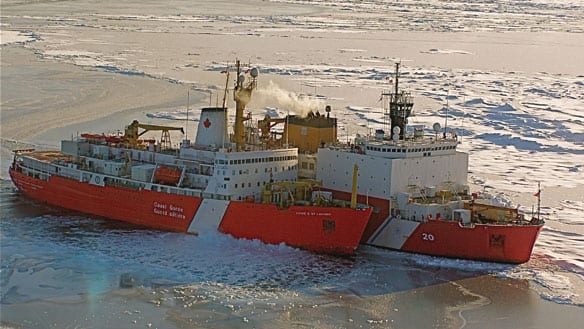
USCGC Healy and CCGS Louis S St.Laurent

BreakingDefense has an article reviewing the Geopolitical situation in the Arctic and the rationale behind the Icebreaker Collaboration Effort Pact, or ICE Pact.

Notably missing from the article was any suggestion of the greater aims of the PACT. Apparently, there is much more to this than the currently planned icebreakers for the US and Canadian Coast Guards.

Several of Finland’s icebreaker vessels moored in the South Harbour at the port of Helsinki in Helsinki, Finland, May 3, 2023. Finland is among the most active builders of icebreakers. (Andrey Rudakov/Bloomberg via Getty Images)

From an earlier The War Zone report,

In an ambitious effort to counter Chinese and Russian influence in the High North, the U.S., Canada and Finland have created a resource-pooling plan to help meet a projected demand for as many as 90 icebreakers among allied nations over the next decade. These vessels offer a critical capability in a region with increasing strategic significance.

:…if we look at Allied nations that are trying to purchase icebreakers over the next decade, it’s 70 to 90 vessels.”

I don’t really see a market for 90 icebreakers that only break ice for other ships to follow. Neither report talked about potential changes in Antarctica, but both poles may see more research followed by mineral extraction and possible over-fishing. The ships building now will still be relatively young when the Antarctic Treaty is up for renegotiations in 2048, if it lasts that long, and establishing a strong negotiating position requires commitment between now and then. Allies in South America, Australia, and New Zealand will certainly be concerned about developments in Antarctica.

There may be a market for large numbers of ships that can safely transit the margins of the Arctic Ocean either as a short cut between the Atlantic and Pacific or for access to minerals in the Arctic.

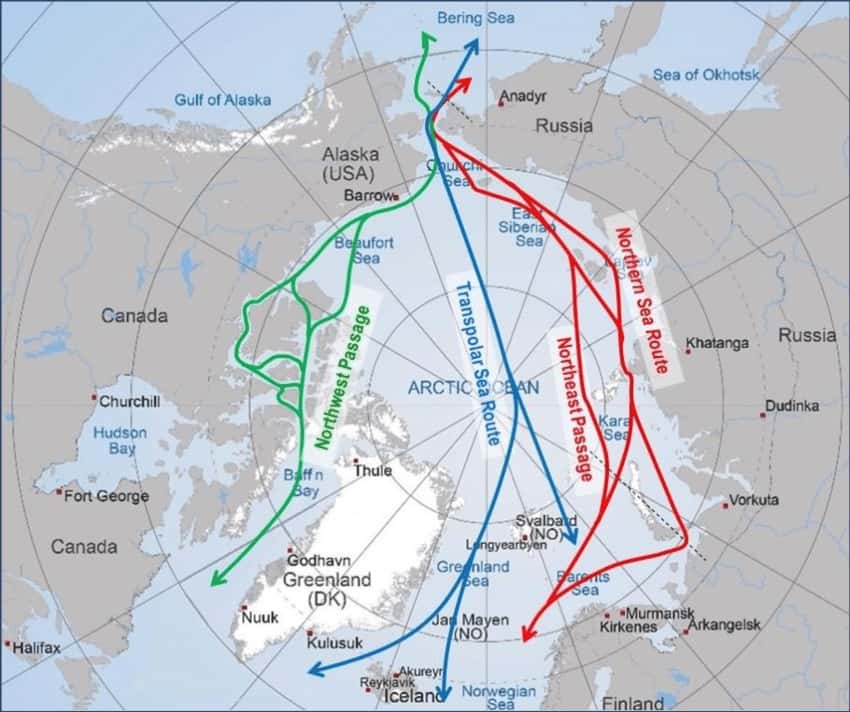
Theoretically there are three possible shipping routes through the Arctic. Only the Northern Sea Route is seeing significant commercial exploitation.

 “The distance from Shanghai to German ports is over 4,600km (about 2,900 miles) shorter via the Northern Route than via the Suez Canal.”

Russia sees the Northern Sea Route as a money maker charging fees for Russian pilots and Russian icebreaker support.

Naturally potential users may hope to avoid Russian fees by transiting areas just North of the Northern Sea Route. Icebreaking hulls might make that possible, but as long as they are transiting Russia’s EEZ, Russia is likely to demand use of their services and payment of the fees under the pretext of protecting the environment.

This is likely to result in raised tensions in the Arctic.

Other icebreakers might be warships, patrol vessels, tankers or container ships. They might be support vessels for mineral extraction industry. I doubt that many will be full-time heavy icebreakers.

Russia needs lots of icebreakers partly because they have ports serving a large mineral extraction industry in the Arctic. The US is already extracting oil from the North Slope but has not needed a lot of icebreakers to support that industry, because they built the pipeline to Valdez. Drilling for oil in the Arctic Ocean is going to be challenging for a very long time because of icefloes, but Canada has a lot of land area including many islands, in the Arctic where minerals might be found, so we might see development in the Canadian high north, similar to what we see in the Russian Arctic.

There is more here, Canadian Shipbuilder Davie Wants to Invest in the U.S.

“MQ-9B SeaGuardian Showcased at RIMPAC 2024” –News Release

An MQ-9 Sea Guardian unmanned maritime surveillance aircraft system flies over the Pacific Ocean during U.S. Pacific Fleet’s Unmanned Systems Integrated Battle Problem (UxS IBP) 21, April 21. UxS IBP 21 integrates manned and unmanned capabilities into challenging operational scenarios to generate warfighting advantages. US Navy Photo

The Coast Guard has an unfilled requirement for a shore based Uncrewed Air System (UAS) to provide Maritime Domain Awareness.

Below is a news release from General Atomics Aeronautical Systems, Inc.

Reading the news release, I see the system incorporated an “integrated Minotaur Mission System.” Minotaur is a system currently being installed on all Coast Guard fixed wing search aircraft as well as US Navy and Marine Corps platforms. It went on to say “For RIMPAC, the MQ-9B effectively passed ISR&T (Intelligence, surveillance, reconnaissance, and targeting–Chuck) information to various surface and air units, such as the Nimitz-class carrier USS Carl Vinson, Guided Missile Destroyers (DDGs), Littoral Combat Ships (LCS), frigates, patrol boats, P-8s, P-3s, and numerous other U.S. and foreign units that took part in the exercise.” Could that have included Midgett and her task force? The use of the MQ-9B to drop sonobuoys for the task force and their embarked ASW helicopters would have been an interesting experiment.


GA-ASI’s MQ-9B SeaGuardian® Showcased at RIMPAC 2024

Sonobuoy Dispensing System and LRASM Among the New Capabilities Featured

SAN DIEGO – 14 August 2024 – With the completion of the U.S. Navy’s Rim of the Pacific (RIMPAC) flight operations on July 28, 2024, the MQ-9B SeaGuardian® Unmanned Aircraft System (UAS) supplied by General Atomics Aeronautical Systems, Inc., self-deployed back to its home base in El Mirage, Calif., but only after introducing an array of new capabilities. The flight home followed close to 100 flight hours supporting RIMPAC 2024 over the four-week exercise in and around the Hawaiian Islands.

RIMPAC is the world’s largest international maritime exercise. RIMPAC 2024 featured 29 nations, 40 surface ships, three submarines, 14 national land forces, more than 150 aircraft, and 25,000 personnel.

SeaGuardian provided real-time Intelligence, Surveillance, and Reconnaissance (ISR) data feeds to the U.S. Pacific Fleet Command Center using Signals Intelligence (SIGINT) parametrics and full-motion video to the watch floor and intelligence centers for real-time dynamic tasking — just as it did for the RIMPAC 2022 exercise. This year, SeaGuardian delivered some new features and capabilities, including Long Range Anti-Ship Missile (LRASM) targeting and a new Sonobuoy Dispensing System (SDS) to support its Anti-Submarine Warfare capability. SeaGuardian was configured with a prototype SDS pod capable of deploying 10 A-size sonobuoys per pod (SeaGuardian can carry up to four SDS pods or up to 40 sonobuoys) and the SeaVue Multi-role radar from Raytheon, an RTX business. Upon dispensing, the sonobuoys were successfully monitored and controlled by the SeaGuardian’s onboard Sonobuoy Monitoring and Control System (SMCS).

SeaGuardian is a maritime derivative of the MQ-9B SkyGuardian® and remains the first UAS that offers multi-domain Intelligence, Surveillance, Reconnaissance, and Targeting (ISR&T) as an internal payload that can search the ocean’s surface and depths in support of Fleet Operations. At RIMPAC 2024, SeaGuardian showcased all operational payloads, which includes the SeaVue, SNC’s Electronic Support Measures (ESM) solution, an Automatic Identification System (AIS), and a self-contained Anti-Submarine Warfare (ASW) system.

SeaGuardian’s multi-domain capabilities allow it to flex from mission to mission and pass real-time sensor data directly to the Fleet. For RIMPAC 2024, SeaGuardian added Link 16 Joint Range Extension Application Protocol (JREAP) “C” (internet protocol) and an integrated Minotaur Mission System to provide real-time sensor data for the various Maritime Operations Centers, ships, and aircraft with Minotaur nodes.

“For RIMPAC, the MQ-9B effectively passed ISR&T information to various surface and air units, such as the Nimitz-class carrier USS Carl Vinson, Guided Missile Destroyers (DDGs), Littoral Combat Ships (LCS), frigates, patrol boats, P-8s, P-3s, and numerous other U.S. and foreign units that took part in the exercise,” said GA-ASI President David R. Alexander.

On July 31, 2024, SeaGuardian self-deployed back to GA-ASI’s Desert Horizon Flight Operations Facility in El Mirage, Calif.

About GA-ASI

General Atomics Aeronautical Systems, Inc. (GA-ASI), an affiliate of General Atomics, is a leading designer and manufacturer of proven, reliable RPA systems, radars, and electro-optic and related mission systems, including the Predator® RPA series and the Lynx® Multi-mode Radar. With more than eight million flight hours, GA-ASI provides long-endurance, mission-capable aircraft with integrated sensor and data link systems required to deliver persistent situational awareness. The company also produces a variety of sensor control/image analysis software, offers pilot training and support services, and develops meta-material antennas.

For more information, visit www.ga-asi.com     

Avenger, Lynx, Predator, SeaGuardian, and SkyGuardian are registered trademarks of General Atomics Aeronautical Systems, Inc.


“Japan Buys Two SeaGuardians from GA-ASI” –News Release

Below is a news release from General Atomics Aeronautical Systems, Inc.

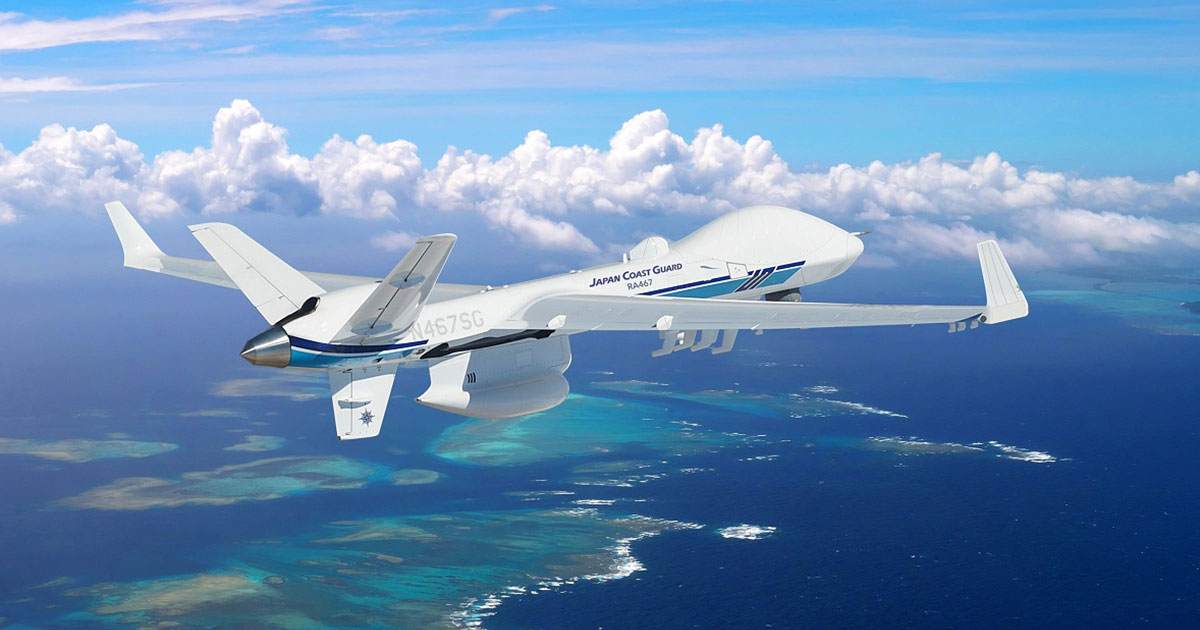
The SeaGuardian is a maritime variant of the MQ-9B that includes sense and avoid systems that allows it to operate safely in airspace with manned aircraft.

SeaGuardians are reportedly operated in a maritime role for Australia, Belgium, Canada, India, Italy, Japan, the Netherlands, and the UK.


Japan Buys Two SeaGuardians from GA-ASI

SAN DIEGO – 15 August 2024 – The Japan Coast Guard (JCG) has signed a contract for the purchase of two SeaGuardian® Remotely Piloted Aircraft (RPA) from General Atomics Aeronautical Systems, Inc. (GA-ASI), scheduled for delivery in 2025. This follows JCG’s ongoing Company-Owned, Contractor-Operated agreement with GA-ASI for operating SeaGuardian, which began in April 2022.

“Since JCG started operating SeaGuardians, they have been used for various JCG missions including supporting search and rescue and disaster response specifically during the 7.6 magnitude earthquake early this year near the Noto Peninsula of Ishikawa Prefecture and maritime surveillance during the 2023 G-7 Summit in Hiroshima, and the system has performed efficiently and effectively,” said GA-ASI CEO Linden Blue.

SeaGuardian is a medium-altitude, long-endurance RPA system that can fly for 24 hours or more, depending on the configuration.

GA-ASI has strengthened its Maritime Wide Area Surveillance (MWAS) for Japan with Optix+, which gathers information from the SeaGuardian sensors, as well as other data sources, displaying the full picture of surveillance information for its operator. This functionality makes it easy to task and direct its Intelligence, Surveillance and Reconnaissance (ISR) information in real time. GA-ASI’s Optix+ software suite rapidly correlates and exploits collected data into an easily shared common operational picture. Having multi-source correlated data enables automatic detection of anomalous behaviors over waters.

About GA-ASI

General Atomics Aeronautical Systems, Inc. (GA-ASI), an affiliate of General Atomics, is a leading designer and manufacturer of proven, reliable RPA systems, radars, and electro-optic and related mission systems, including the Predator® RPA series and the Lynx® Multi-mode Radar. With more than eight million flight hours, GA-ASI provides long-endurance, mission-capable aircraft with integrated sensor and data link systems required to deliver persistent situational awareness. The company also produces a variety of sensor control/image analysis software, offers pilot training and support services, and develops meta-material antennas.