I have long felt like the emergence of unmanned surface vessels as warships might lead to weapons and sensors that would also fit nicely on Coast Guard cutters including containerized systems.
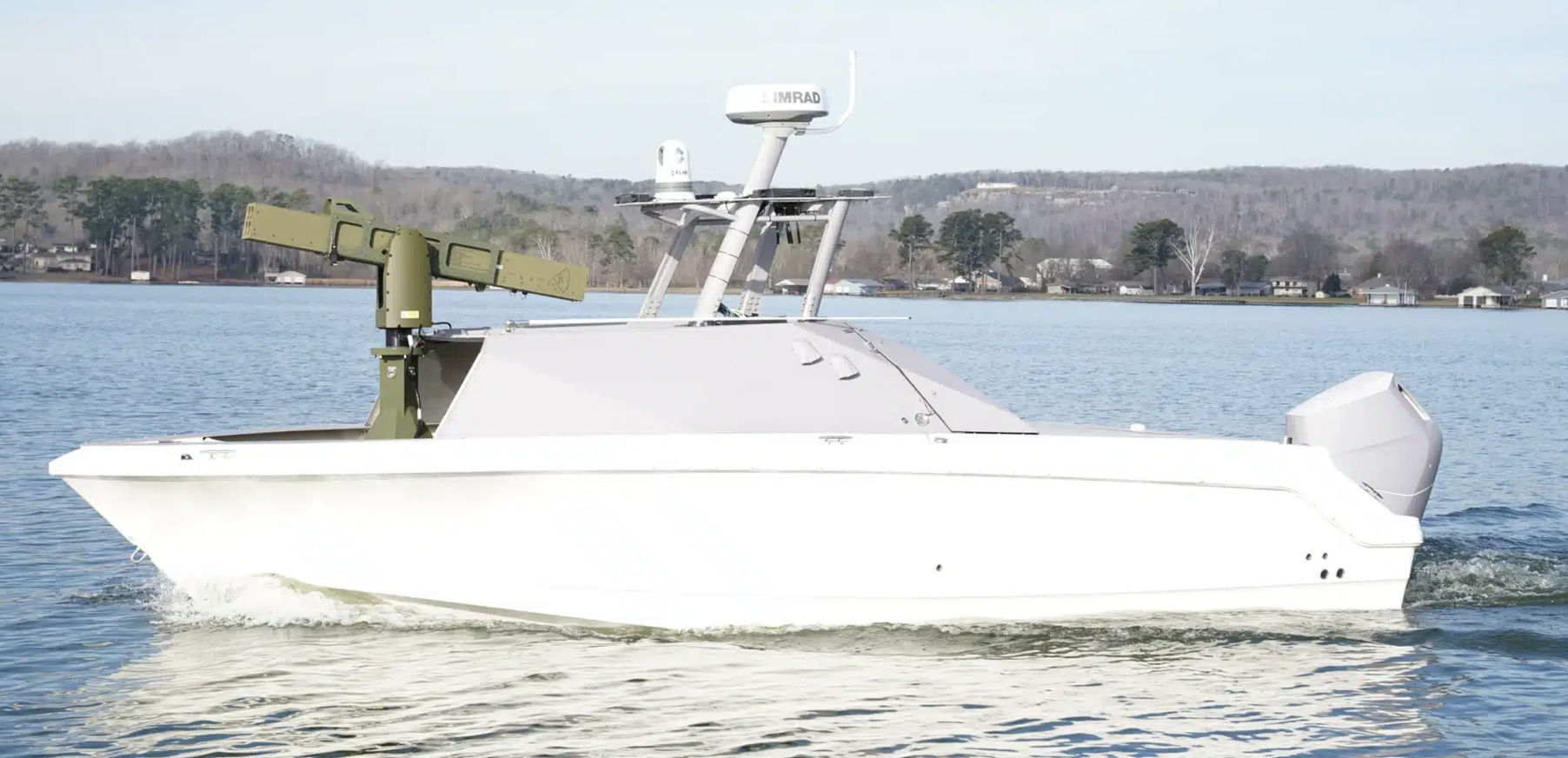
TSUNAMI USV fitted with STAKE (Invariant Technologies picture) The launcher is probably only a little longer than the APKWS guided rocket which is 73.8 in (1.87 m) in length so I would estimate this boat is about 24 feet in length. Textron TSUNAMI® USVs range in length from 21 to 38 feet in length.
So far the counters I have heard the Coast Guard is deploying seem to be primarily intended to interrupt the control link of small commercial drones. Other than machine guns, I haven’t seen any hard kill systems that can deal with larger UASs and USVs including those that might be autonomous.
Potential targets range from consumer drones with a few ounces of explosives to modified personal watercraft or even general aviation aircraft carrying hundreds of pounds.
Using something like a .50 caliber machine gun in a US port is problematic both in terms of accuracy and in the danger of potential collateral damage.
Below are two press releases from Invariant discussing their APKWS based cUAS system, similar to the Vampire system.
From the moment I first saw APKWS, in 2017, I considered it an almost perfect weapon for the Coast Guard because it is cheap enough for wide distribution; it is accurate enough to minimize the likelihood of collateral damage, it has adequate range so that cutters don’t have to be so close improvised armaments can pick off our weapons operators, it is light enough to fit on even the smallest cutters, training requirements appear minimal, and the warhead is large enough to do serious damage to larger targets particularly if multiple hits are made.
(HUNTSVILLE, Ala.) Invariant Corporation’s Surface-to-Air Kinetic Engagement (STAKE) system has once again demonstrated a significant advancement in autonomous maritime Counter Unmanned Systems (C-UxS) capabilities. Earlier this month, STAKE was integrated onto a Textron Systems’ TSUNAMIR Unmanned Surface Vessel (USV) and performed early integration testing at Lake Guntersville.
This milestone marks a significant step forward in the application of APKWS in the maritime domain. The success of the demonstration highlights the STAKE system’s versatility and performance in a highly dynamic, complex environment as well as Invariant’s C-UxS team’s commitment to advancing autonomous weapons development. STAKE, a modular system, can be integrated onto a variety of vehicles with minimal engineering.
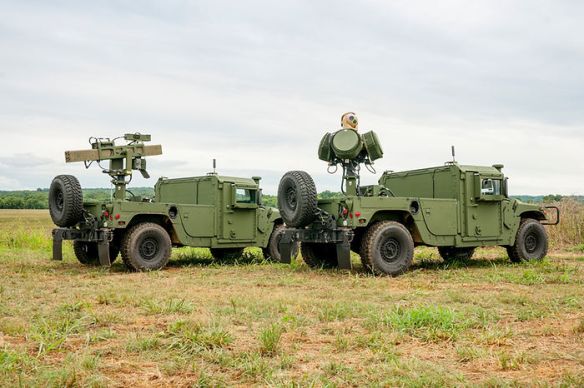
STAKE’s maritime payloads consist of two core subsystems: the Hunter, which houses the sensor and laser designation package responsible for acquiring and tracking targets, and the Killer, the precision engagement platform. Together, as previously shown, the Hunter and Killer subsystems operate seamlessly in the maritime setting, confirming the system’s readiness for shipboard C-UxS mission, no matter the size.
“This successful demonstration represents a significant development and reflects Invariant’s position at the forefront of C-UxS innovation as well as kinetic maritime autonomy,” says President Danny Levis. “We are committed to advancing adaptable, high-performance systems that align with the Department of War’s objective to enhance lethality, especially in the maritime domain”.
The TSUNAMI USV provides advanced battlefield connectivity and mission agility to maritime mission sets while keeping warfighters out of harm’s way. With a MOSA design, the system is adaptable to a variety of mission sets and payload integrations. The TSUNAMI family of USVs benefit from over four decades of Textron Systems’ autonomous technology development and integration.
With this milestone, the STAKE team shows that its technology goes beyond computer models. Invariant is committed to not only supporting the fight where it is today, but advancing technology to be where the fight is going.
The unmanned threat landscape is advancing at breakneck speed. For James Filley, Program Manager for Invariant’s STAKE system, this shift is about rethinking how we design, deploy, and adapt kinetic solutions to meet a battlefield that changes by the day.
With a career spanning in explosives, missile defense, and tactical ground systems, James made the deliberate choice to go deep, not wide. “I wanted to zero in on a single domain and become the expert,” he says. That domain? Counter-Unmanned Systems (C-UxS).
Why STAKE Matters Now
STAKE was born from the proven success of the Containerized Weapon System-APKWS (CWS-A,) but James sees its mobile platform as a major leap forward. “Every system has a use case,” he explains. “The container is great for fixed sites, but with STAKE, users get expeditionary capability. It goes where the fight is.”
Whether mounted on a Humvee or ship deck, STAKE offers battlefield-ready C-UxS capability at a fraction of the cost and without locking users into rigid architecture. “You can bring your own C2, radar, or vehicle. We’ll integrate with it.”
That flexibility was on full display during a recent shipboard demonstration, which James describes simply as proof of how modular and adaptable STAKE really is.
The Threat Has Changed, So Must We
According to James, today’s unmanned systems barely resemble what we saw eight years ago. “The change is like comparing the original telephone to a smartphone,” he says. “We’re no longer just dealing with off-the-shelf drones. Threat actors are now building custom, low-cost, high-lethality platforms at speed.”
Those platforms aren’t just harder to counter—they’re cheaper and faster to produce. That’s why James sees cost parity as mission-critical. “How do we continuously defeat $100,000 drones without launching $1 million missiles?”
It’s a real question with real consequences. “The defense side has always leaned toward exquisite systems,” he adds. “But the offense only needs to be good enough. That dynamic breaks our supply chains if we’re not smart.”
Agility Over Legacy
For James, the most dangerous assumption in modern defense planning is that yesterday’s acquisition timelines still apply. “We used to develop a system over five years and support it for 20. But when the fight changes daily, our tech has to change daily too.”
This is where STAKE shines. Its modular design, rapid fielding, and compatibility with cost-effective munitions like APKWS give it a major edge, not just in performance, but in sustainability.
“We’re not just building a product,” James says. “We’re building a process that evolves with the fight.”
C-UxS as a Forever Fight
Unmanned systems are the new norm. From land to sea, in peer and non-peer engagements alike, James sees the domain expanding rapidly. “The future fight is unmanned, and that means C-UxS isn’t going anywhere,” he says. “At Invariant, we’re focused on what warfighters actually need. Not five years from now. Now.”
What’s Next for STAKE
With interest growing across multiple services, James and his team continue to adapt STAKE to meet emerging demands. New capability insertions. Faster integration. Expanded CONOPS. STAKE represents our commitment to delivering battlefield-ready systems that are agile, adaptable, and built for the modern warfighter.
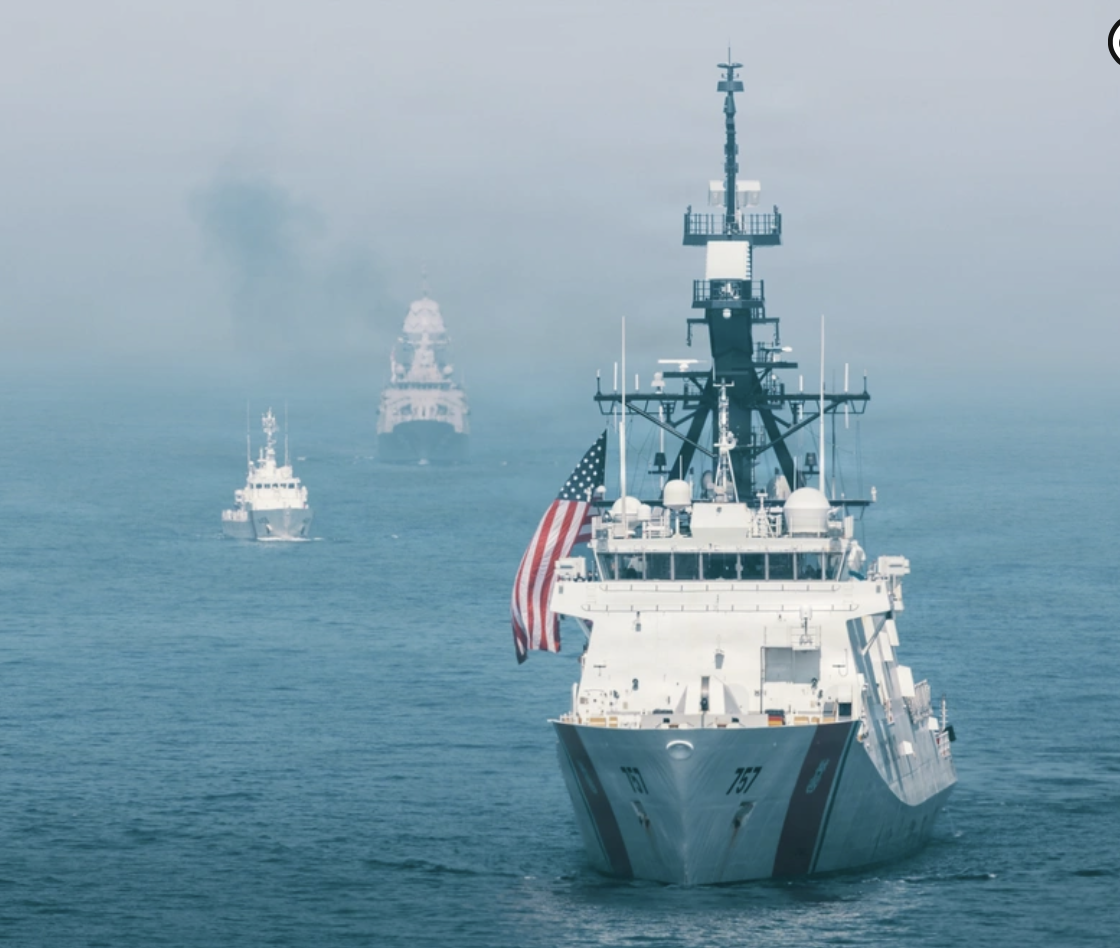
U.S. Coast Guard Legend-class cutter USC Midgett (WMSL 757), right, Philippine Coast Guard Teresa Magbanua-class patrol vessel BRP Teresa Magbanua (MRRV 9701), left, and Royal Australian Navy Anzac-class frigate HMAS Toowoomba (FFH 156) steam in formation during the group sail exercise for Exercise Balikatan 2026 in the South China Sea, April 24, 2026. Balikatan is a longstanding annual exercise between the Armed Forces of the Philippines and U.S. military that represents the strength of our alliance, improves our capable combined force, and demonstrates our commitment to regional peace and prosperity. (U.S. Marine Corps photo by Gunnery Sgt. Manuel
“Exercise Balikatan is the largest annual bilateral exercise conducted between the Philippines and the United States, and this year will include Australia, Japan, France, Canada, and New Zealand. The Tagalog phrase “Balikatan” means “shoulder-to-shoulder,” which captures the spirit of the exercise and the close friendship between the United States and the Philippines. Taking place April 20 to May 8, 2026, across the Philippine archipelago, Balikatan 2026 (BK26) marks the 41st iteration of the exercise that covers a range of scenarios – from conventional warfare to foreign disaster response – ensuring all participants remain prepared for a range of contingencies. The execution of BK26 enhances planning, command and control systems, logistics, and communication through realistic simulations and war-gaming. The exercise directly supports ongoing efforts to operationalize the 1951 U.S.-Philippine Mutual Defense Treaty (MDT) by ensuring tactical proficiency, interoperability, capability development, and improved military-to-military coordination between our forces. The exercise also demonstrates our long-term commitment to a free and open Indo-Pacific.” —https://www.dvidshub.net/feature/Balikatan
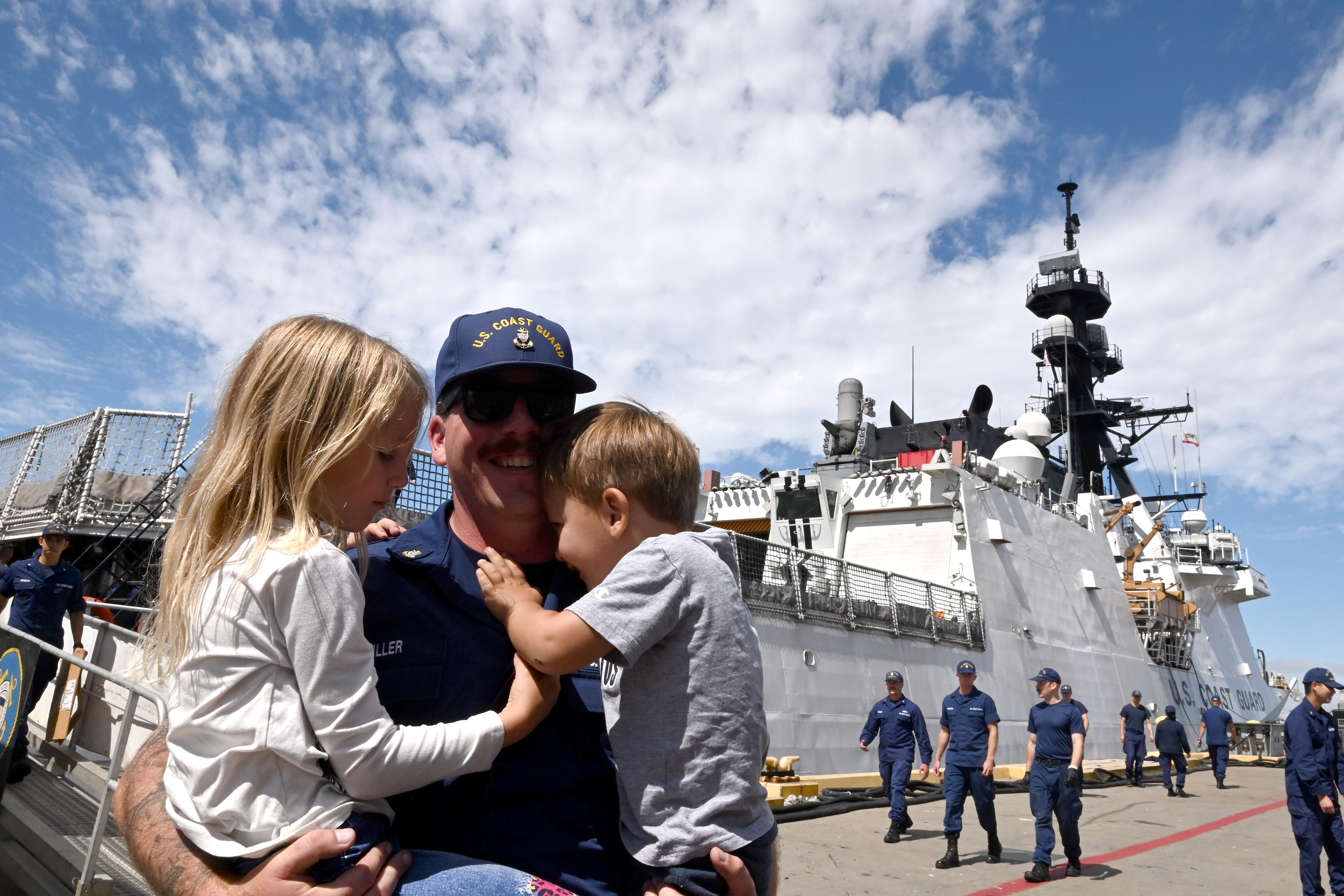
The U.S. Coast Guard Cutter Waesche (WSML 751) crew members reunite with family, friends and loved ones after returning to their Base Alameda, California, home port, Aug. 11, 2024, following a 120-day Indo-Pacific patrol. The Waesche participated in various engagements, exercises, and events throughout their deployment. U.S. Coast Guard photo by Chief Petty Officer Matthew Masaschi.
President Donald Trump signed a bill Thursday to fund the Department of Homeland Security, including the U.S. Coast Guard, after a 76-day partial government shutdown.
The signing came hours after the House passed Senate-approved legislation to fund the department. The bill funds DHS agencies that are not involved in Trump’s immigration crackdown through the end of the fiscal year on Sept. 30.
This could have happened months ago if Coast Guard funding had not been tied to non-Coast Guard programs.
The Coast Guard has broad bi-partisan support. The Coast Guard should be an independent agency since no single department covers all eleven Coast Guard missions. Department heads and members of Congress should not be allowed to leverage support for the Coast Guard to support non-Coast Guard programs.
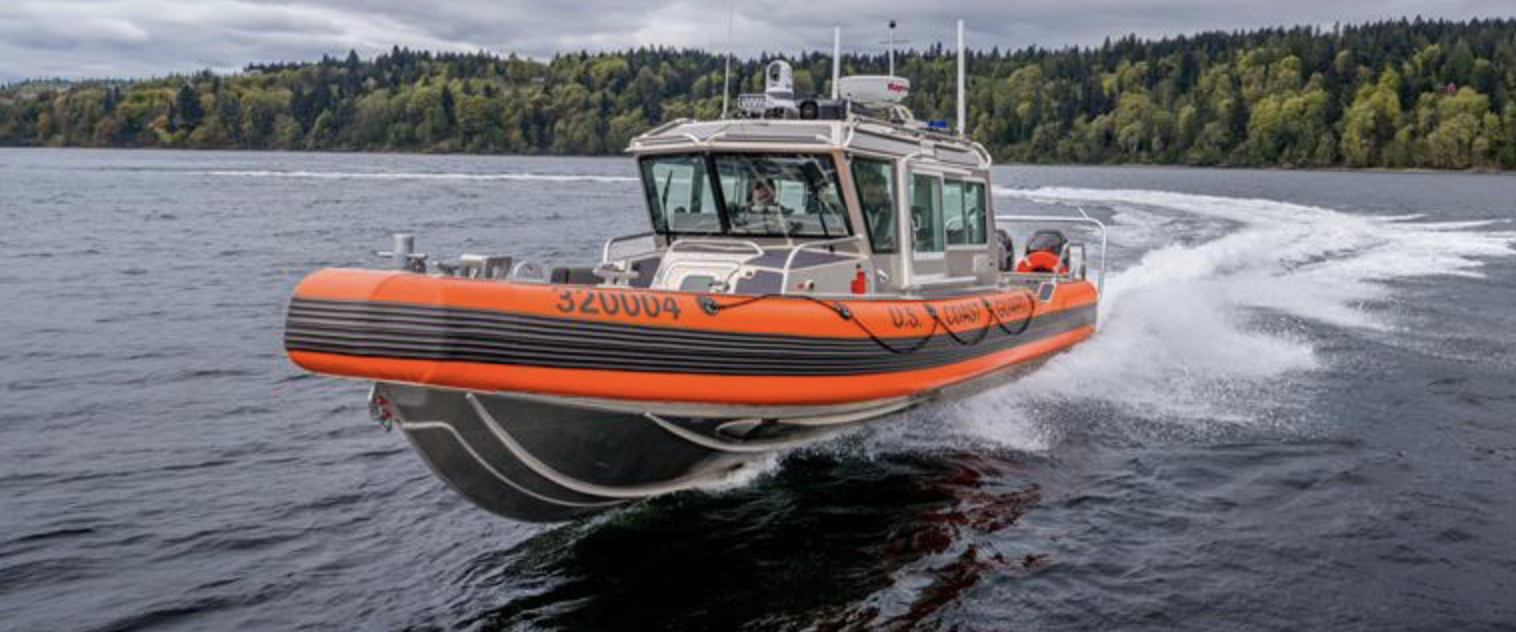
SAFE Boats International, a U.S. manufacturer of high-performance aluminum vessels, announced the successful delivery of its Response Boat–Small (RB-S) demonstrator unit to the U.S. Coast Guard in Charleston, South Carolina.
Dimensions/Speed:
Length: 32′ 4.5″ overall
Beam: 8′ 6″
Cruising speed: 28 knots
Maximum speed: 49 knots
The article goes on to describe the features of the boat. Very impressive.
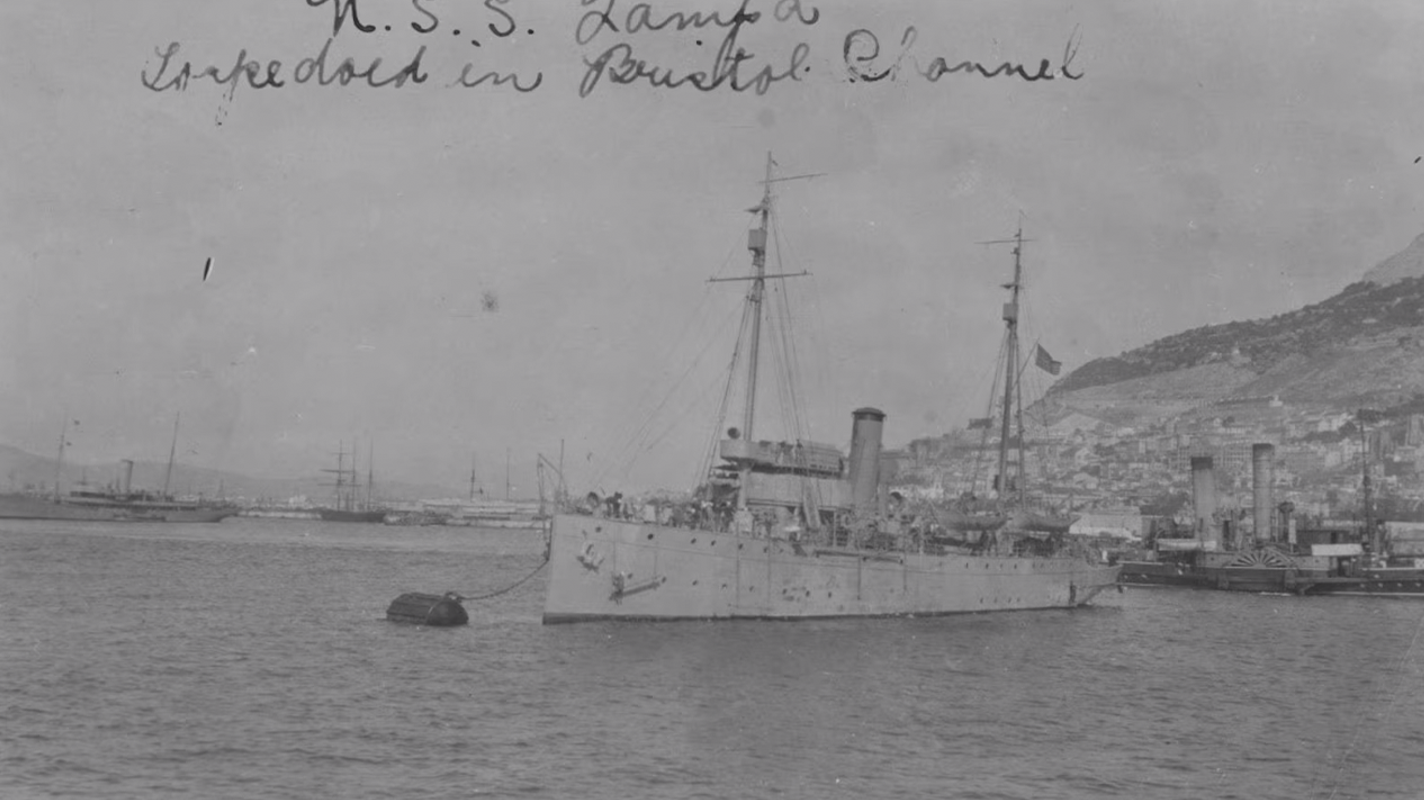
Wreckage of U.S. Coast Guard Cutter Tampa Discovered Off Cornwall, United Kingdom
WASHINGTON – The wreckage of the Coast Guard Cutter Tampa has been located and confirmed by the British technical-diving team Gasperados. The site lies approximately 50 miles off Newquay, Cornwall, United Kingdom, at a depth exceeding 300 feet deep in the Atlantic Ocean.
Tampa was lost in 1918 during World War I after being torpedoed by a German submarine in the Bristol Channel. The vessel sank in less than three minutes, resulting in the death of all 131 people aboard—111 Coast Guardsmen, four U.S. Navy personnel, and 16 British Navy personnel and civilians. This remains the largest single American naval combat loss of life in World War I.
“Since 1790, the Coast Guard has defended our nation during every armed conflict in American history, a legacy reflected in the courage and sacrifice of the crew of Coast Guard Cutter Tampa,” said Adm. Kevin Lunday, commandant of the Coast Guard. “When the Tampa was lost with all hands in 1918, it left an enduring grief in our service. Locating the wreck connects us to their sacrifice and reminds us that devotion to duty endures. We will always remember them. We are proud to carry their spirit forward in defense of the United States.”
In 2023, the Coast Guard Historians Office was contacted by the Gasperados Dive Team regarding the Tampa. Over the past three years, the all-volunteer team conducted an extensive search for the wreckage.
“We provided the dive team with historical records and technical data to assist in confirming the wreck site,” said Dr. William Thiesen, Coast Guard Atlantic Area Historian. “This included the archival images of the deck fittings, ship’s wheel, bell , weaponry, and archival images of the Tampa.”
The Coast Guard is now developing plans for underwater research and exploration in coordination with its offices of specialized capabilities, historians, cutter forces, robotics and autonomous systems, and dive locker.
Additional information about the Tampa’s legacy can be found here.
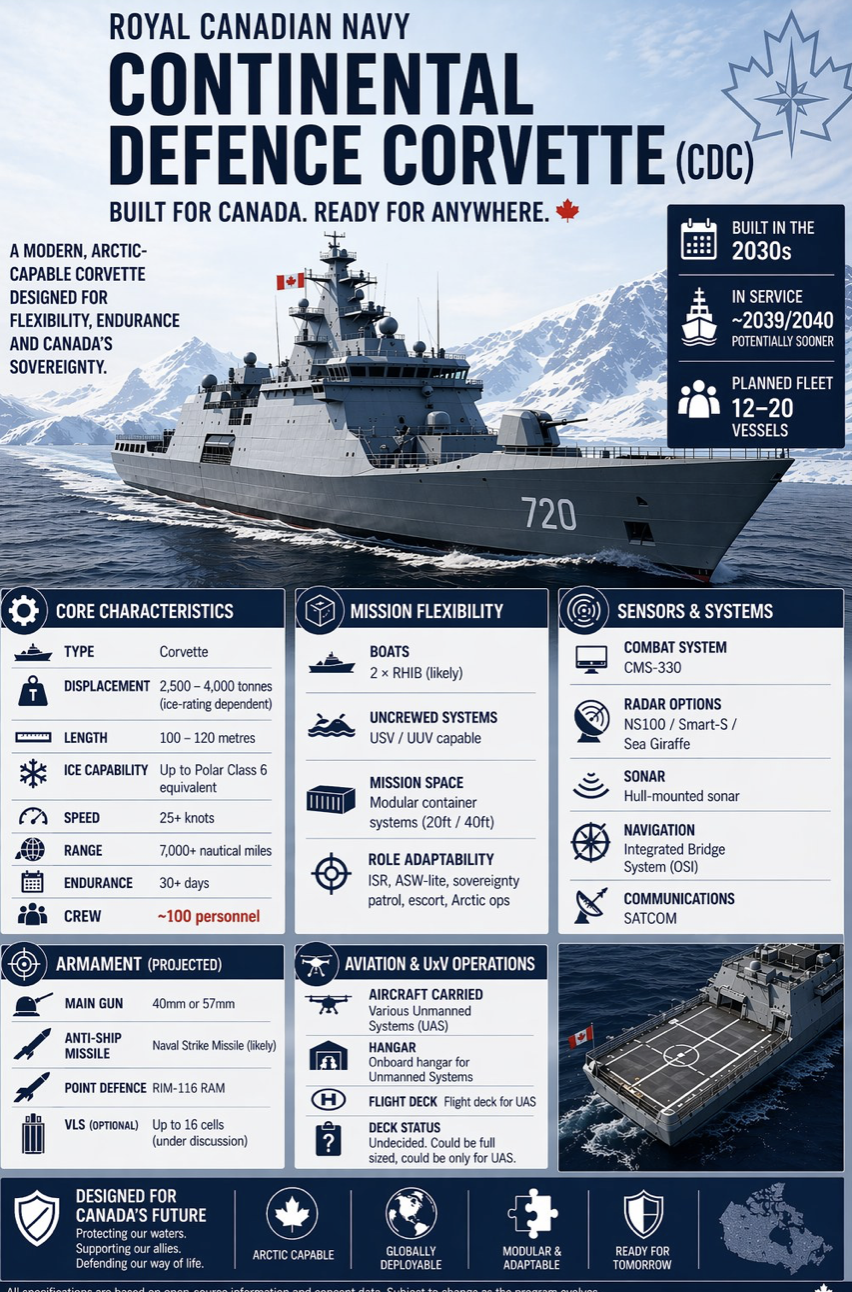
We talked about this project with a post May 31, 2023. As you can see reading the flyer above, these ships are still a long way from being finished, but I think Canada may be recognizing a need to speed things up. They have more than adequate shipbuilding capacity.
I think they are interesting ships with a design that might be useful as a Coast Guard cutter capable of operating in ice with a WMEC sized crew.
190729-N-AD499-1166 SEATTLE (July 29, 2019) The Royal Canadian Navy Kingston-class coastal defence vessel HMCS Edmonton (MM 703) participates in a parade of ships in Elliott Bay during the 70th annual Seattle Fleet Week. Seattle Fleet Week 2019 is a time-honored celebration of the sea services and provides an opportunity for the citizens of Washington to meet Sailors and Coast Guardsmen, as well as witness firsthand the latest capabilities of today’s maritime services. (U.S. Navy photo by Mass Communication Specialist 3rd Class Victoria Foley/Released)
Canadian Coast Guard cutters are not armed and they do not have large patrol ships. The Canadian Navy fills this role. These ships are to replace the 12 Kingston class Coastal Defence Vessels (Brits and Canadians spell defense with a c). We routinely saw Kingston class doing drug enforcement in the Caribbean. Eight of the class have already been decommissioned. To some extent these were replaced by the five ships of the Harry DeWolf class.
HMCS Margaret Brooke is finishing warm weather trials on the ships cooling systems. HMCS Harry DeWolf is finishing a Op Caribbe with the USCG.
The Kingston class are smaller and less capable than the WMEC 210. The Vigilance class began as a replacement but have grown into something that promises Halifax class like capabilities.
Manning Requirements:
The Canadian Navy is much smaller than the US Coast Guard and is having a much more serious recruitment problem.
The “effective strength” of the RCN is somewhat lower than official numbers would suggest due to serious personnel shortages. In late 2023, the commander of the RCN, Vice-Admiral Angus Topshee, reported that only 6,226 naval personnel could be considered part of the “effective strength” of the RCN, making numerous ships in the RCN inactive due to both crew shortages and broader operational readiness issues. In late 2025, Vice-Admiral Topshee stated that the Navy’s personnel problem had not been solved and remained dire, while the Auditor General of Canada reported deeper systemic problems with Canadian military recruitment. In early 2026, Rear Admiral David Patchell, the commander of Canadian naval forces in the Pacific, reported that the navy was short about 2,000 personnel, or about one-quarter of its authorized strength in early 2024 it was reported that 54 percent of the navy’s frigates, submarines, arctic and offshore patrol ships, and maritime coastal defence vessels were considered “unserviceable”
Canada probably does not want to build ships it may not be able to man.
Canada’s most numerous surface combatants are the 12 ships of the Halifax class each of which has a crew of 225 or 2700 total equalling 35% of the “Regular Force.” These ships are now 30 to 34 years old so they must be replaced.
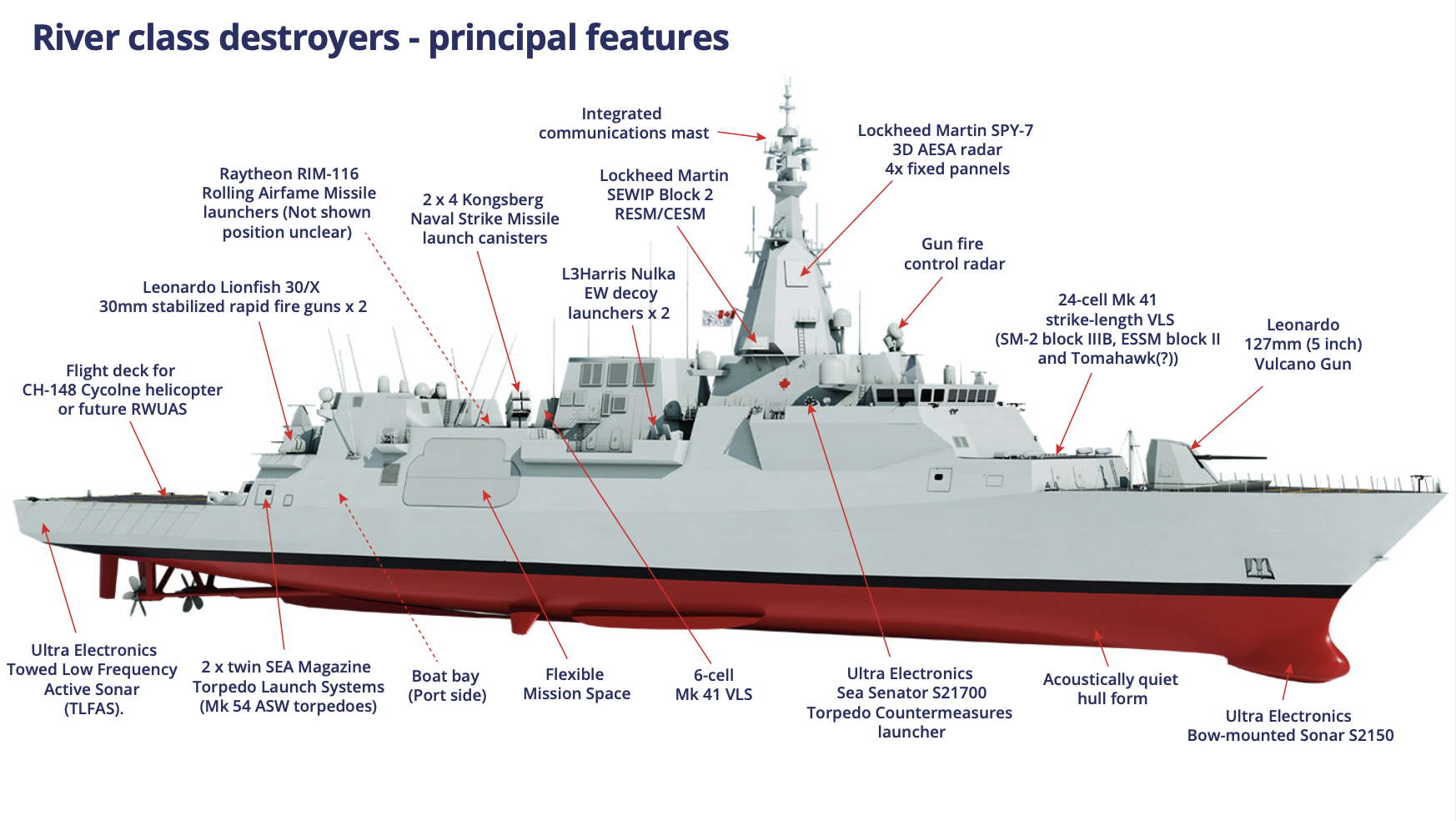
Canada plans to replace the Halifax class and the four already decommissioned Iroquois Class Destroyers (which had a crew of 280 each) with up to 15 River class but that would require a total complement of 3,150. The River Class are about twice the size of the Halifax class. Three were ordered 3 March 2025, but none are expected to be completed until 2030.
The River Class is the Canadian version of the Royal Navy’s type 26 frigate, a design also being used by Australia and most recently Norway. The Royal Navy had originally intended to build 13 but that has been cut to eight.
I would not be surprised to see Canada cut the number as well, in fact I would be surprised if the did in fact build 15 since that would require a total complement for the totaling 3150 billets.
A Fleet with the Same Manpower:
Canada is replacing a fleet that in 2000 included 28 patrol or escort ships, four Iroquois class, twelve Halifax class, and twelve Kingston class. That required manning to 4264 billets:
Iroquois class: 4 ships, 280 billets each: 1120 total
Halifax class: 12 ships, 225 billets each: 2700 total
Kingston class: 12 ships, 37 billets each: 444 total
As of now the Canadian Navy includes 21 patrol or escort ships, twelve Halifax class, five Harry DeWolf arctic offshore patrol ships, and four Kingston class. That fleet requires 3173 billets:
Halifax class: 12 ships, 225 billets each: 2700 total
Harry DeWolf class: five ships, 65 billets each: 325 total
Kingston class: four ships, 37 billets each: 148 total
How could they provide 28 ships with no essentially no more billets than they have right now? The new fleet could include:
River Class: 5 ships, 210 billets each: 1050 total
Vigilance Class: 18 ships, 100 billets each: 1800 total
Harry DeWolf Class: five ships, 65 billets each: 325 total
Grand Total 3175 billets.
This would provide a total of 23 combatants with up to 408 VLS. Of course this will stretch over many years and if recruitment improves and the Royal Canadian Navy increases in size, it would be possible to replace some of the Vigilance class with additional River class.
Alternatives:
I was surprised that the Canadians would build a combatant with a potential ASW mission that could not hangar a helicopter. Maybe they should look at the Finnish Pohjanmaa class, which has an even smaller complement.
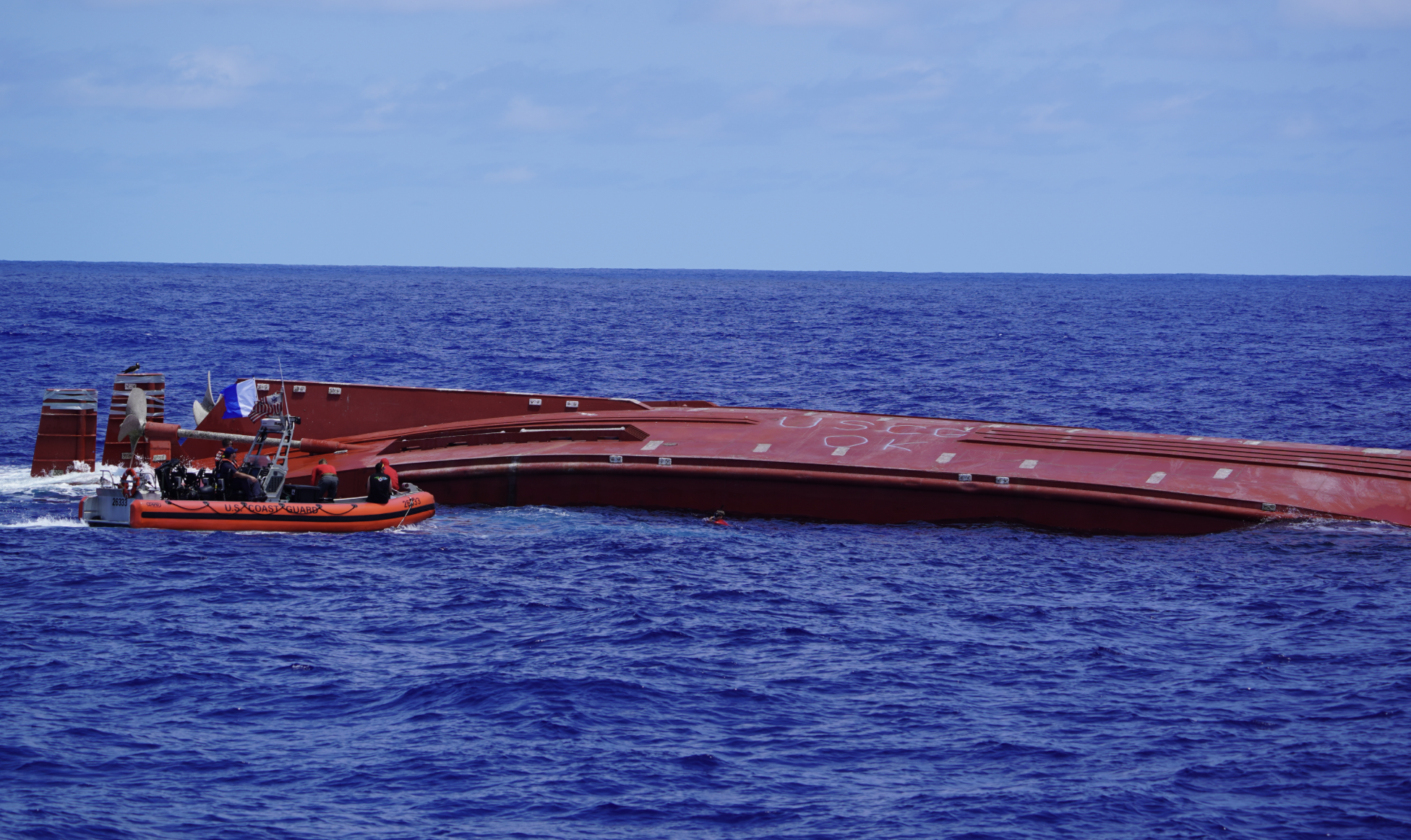
Parajumpers assigned to the U.S. Air Force 31st Rescue Squadron parachute down after deploying from an Air Force 36th Airlift Squadron C-130 Hercules airplane northeast of Pagan in the Commonwealth of the Northern Mariana Islands April 19, 2026. The parajumpers worked alongside the crew of fast response cutter USCGC Frederick Hatch (WPC 1143) and used an underwater remotely operated drone to search the interior of the capsized cargo vessel Mariana. (U.S. Coast Guard photo, courtesy Cutter Frederick Hatch)
Below is an update on an unusual SAR case. It is remarkable in its complexity and the number of agencies involved including units from the USAF, USN. New Zealand Air Force, and Japan Coast Guard (see the full list below).
U.S. Coast Guardsmen assigned to the fast response cutter USCGC Frederick Hatch (WPC 1143) provide support as a parajumper assigned to the U.S. Air Force 31st Rescue Squadron enters the water near a capsized cargo vessel northeast of Pagan in the Commonwealth of the Northern Mariana Islands April 19, 2026. Parajumpers met up with the crew of fast response cutter USCGC Frederick Hatch (WPC 1143) and searched the interior of the Mariana, which initially experienced a disabled engine about 125 nautical miles northwest of Saipan on April 15. (U.S. Coast Guard photo, courtesy Cutter Frederick Hatch)
April 23, 2026
UPDATE 5: U.S. Coast Guard, partners search for crew of capsized vessel offshore Saipan
Editor’s note: Days and times included in this press release are Hawaii Standard Time (HST) unless otherwise specified.
HONOLULU — The U.S. Coast Guard and partners continue to search Thursday for missing crew members of the cargo vessel Mariana.
Coast Guard aircrews and the crew of fast response cutter USCGC Oliver Henry (WPC 1140) are searching east of the Northern Mariana Islands. A Japan Coast Guard Gulfstream V jet crew is slated to conduct additional searches Thursday afternoon.
On Wednesday, Coast Guard HC-130 Hercules airplane crews conducted search patterns 44 nautical miles northeast of Agrihan, about 250 miles north of Saipan.
U.S. Air Force 31st Rescue Squadron divers recovered one deceased individual from the overturned cargo vessel Mariana during dive operations Monday. The divers conducted a comprehensive subsurface evaluation of the Mariana’s exterior and used an underwater remotely operated drone to search the interior of the vessel.
Crews continue to search for the five missing crewmen and an orange 12-person life raft in the vicinity of the Commonwealth of the Northern Mariana Islands. So far, Coast Guard crews and partners involved have searched for more than 71 hours, covering approximately 100,000 square nautical miles.
Anyone with information that may assist in search efforts should contact the Coast Guard on VHF-FM channel 16 or call the Joint Rescue Coordination Center Honolulu at 1-800-331-6176.
Below is a Central Command news release. The video above goes into much more detail and discusses some of the considerations that come into play when seizing a large container ship.
I was very impressed that the Destroyer was confident that they could target engine room from miles away. It was relatively short range, for a 5″/62, but having observed dozens of gun shoots, my observation was that even in a good exercise, only a minority of rounds were hits. This is a demonstrated capability to forcibly stop any vessel regardless of size, something cutters should be able to do.
U.S. Forces Disable Vessel Attempting to Enter Iranian Port, Violate Blockade
USCENTCOM
TAMPA, Fla. – U.S. forces operating in the Arabian Sea enforced naval blockade measures against an Iranian-flagged cargo vessel attempting to sail toward an Iranian port, April 19.
Guided-missile destroyer USS Spruance (DDG 111) intercepted M/V Touska as it transited the north Arabian Sea at 17 knots enroute to Bandar Abbas, Iran. American forces issued multiple warnings and informed the Iranian-flagged vessel it was in violation of the U.S. blockade.
After Touska’s crew failed to comply with repeated warnings over a six-hour period, Spruance directed the vessel to evacuate its engine room. Spruance disabled Touska’s propulsion by firing several rounds from the destroyer’s 5-inch MK 45 Gun into Touska’s engine room. U.S. Marines from the 31st Marine Expeditionary Unit later boarded the non-compliant vessel, which remains in U.S. custody.
American forces acted in a deliberate, professional, and proportional manner to ensure compliance. Since the blockade’s commencement, U.S. forces have directed 25 commercial vessels to turn around or return to an Iranian port.




 Chuck Hill's CG Blog