“Vard Unveils New ‘Vigilance’ OPV Design” for Canada –Naval News

Vigilance OPV design for Canada by VARD

Naval News reports,

Tailored to the needs of the Royal Canadian Navy’s future fleet, Vigilance strikes the balance between flexibility, adaptability, and size, while maintaining the life-cycle cost advantages VARD’s naval designs are known for.  The vessel has been conceived for high-tempo sovereignty missions and engineered for global deployment and forward basing abroad.

There is not really a lot of information here.

They are to replace the Kingston Class Maritime Coastal Defence Vessels, which have been used to do drug interdiction in the Caribbean with USCG Law Enforcement teams doing the boardings. It is a class of twelve ships so there may be that many replacements, but also possibly fewer.

USCGC Escanaba (WMEC 907) and USCGC Richard Snyder (WPC 1127) practice maneuvering with the Royal Canadian Navy’s Kingston Class Maritime Coastal Defence Vessel HMCS Goose Bay (MM 707) in the Davis Strait on Aug. 13, 2021.  (Photo courtesy Royal Canadian Navy)

There is no indication of size but there is a clue in the identification of the rendering that accompanied the post, “VARD-7-075-Vigilance-Offshore-Patrol-Vessel-770×410.jpg”. Using VARD’s naming convention this is a “7 series” ship meaning “Naval and Security” that is about 75 meters (246 feet) long. Given the intention to employ them “forward basing abroad,” particularly as a Pacific nation, limiting the size to only 75 meters may be unwisely parsimonious. A larger ship would be both more capable in adverse weather conditions and more adaptable to future requirements. The Kingston class are only 55.31 m (181 ft 6 in) overall, so 75 meters would be an upgrade, but it is still a very small OPV, particularly if it is to operate helicopters. It would be similar in size to Malta’s P71 or the Danish Knud Rasmussen class.
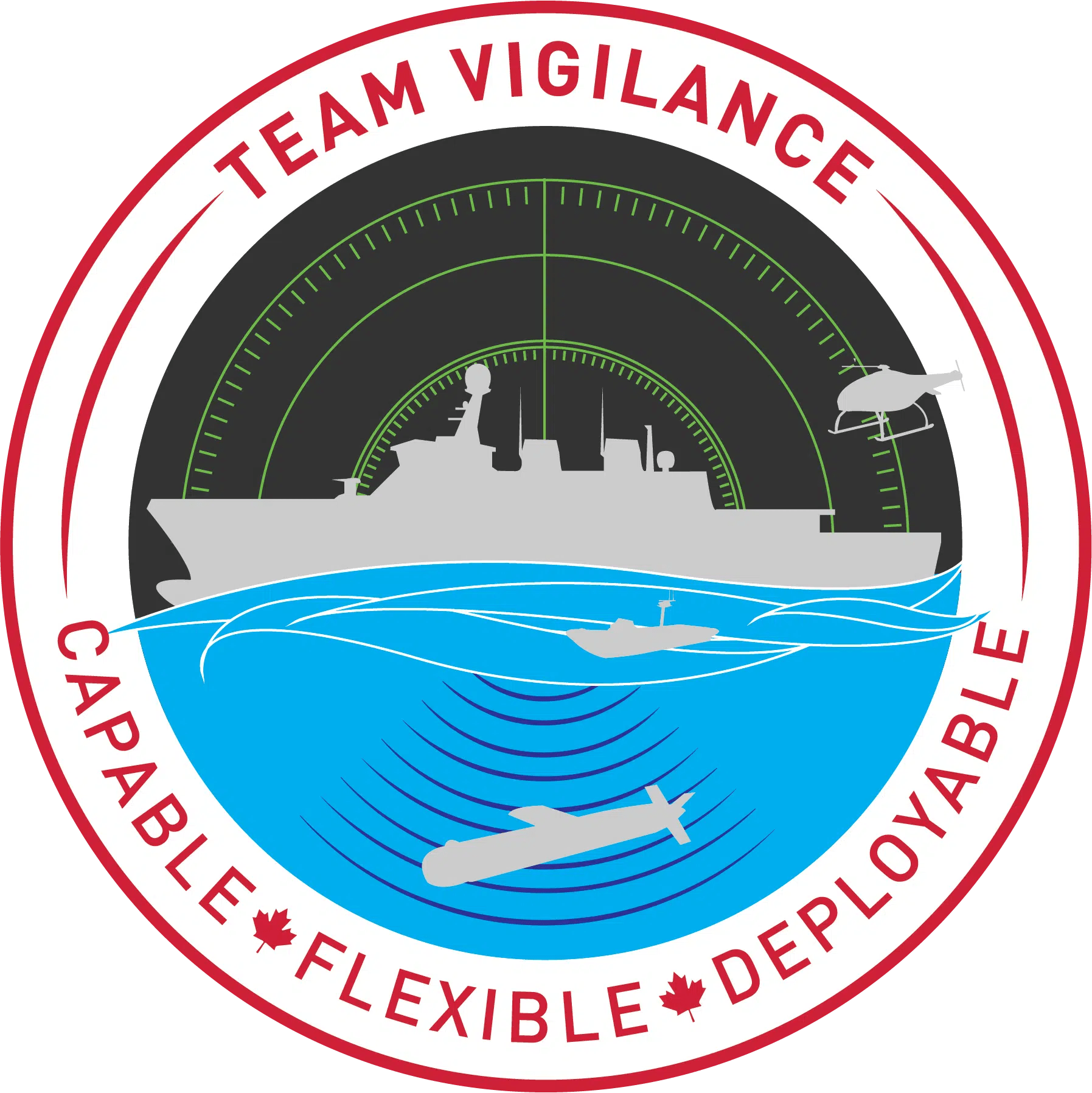
If the ship is in fact 75 meters in length, then the flight deck seen in the fendering does appear relatively short for landing a helicopter, especially since Canada’s Navy and Air Force do not operate any small helicopters that might be operated from the ships. The logo that accompanies the post may suggest that the flight deck is for unmanned air systems rather than helicopters. The UAS in the logo appears to be the Swedish built UMS Skeldar V-200known as CU-176 Gargoyle in Canadian Service. This UAS is also in service with the Belgian, German, Netherlands, and Spanish Navies.
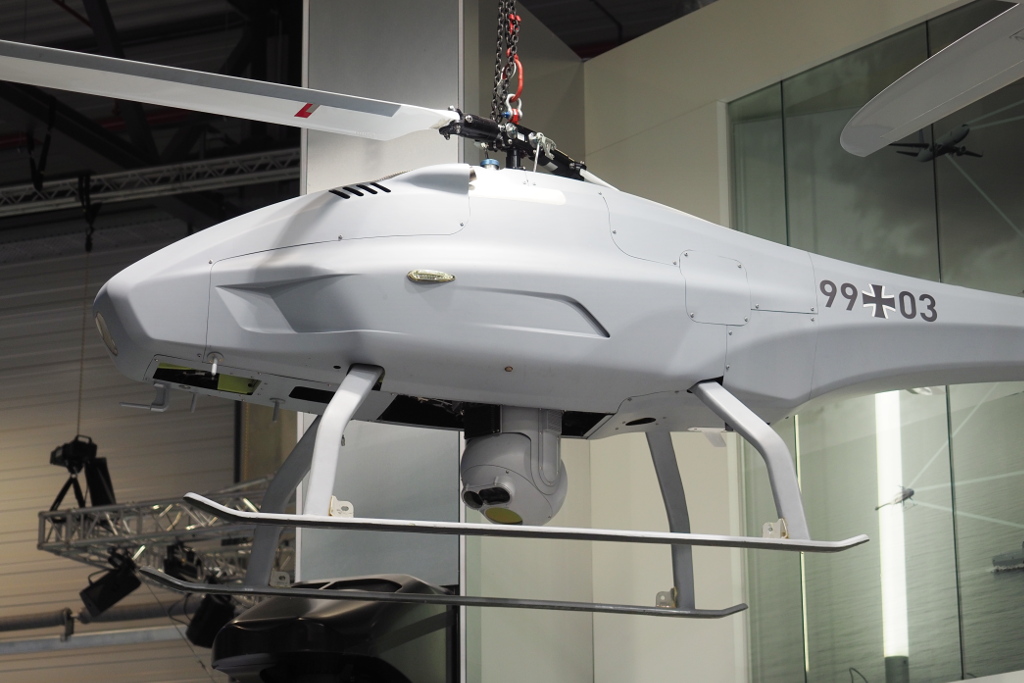
UAV SKELDAR V-200 in German service, tail marking 99+03, at ILA Berlin Airshow 2022. Photo credit: Boevaya mashina.

The gun seen in the rendering suggest a 30mm Mk38 Mod4. In view of the fact the Arctic Offshore Patrol Ship is armed only with a 25mm Mk38 Mod2/3 that would to conform to past policies. The same gun is expected to be on the new Canadian frigate.

Looking at VARD’s design catalog, I see some resemblance to their 72 meter and 85 meter designs.


Video below added as late addition, thanks to Dave. 

“US, PH, Japan coast guards hold maritime law enforcement training” –The Manila Times

More than 30 participants from the Philippines, Malaysia, Thailand and Vietnam joined the Multinational Vessel Boarding Officer Course funded by the US Department of State’s Bureau of International Narcotics and Law Enforcement Affairs in Puerto Princesa City, Palawan on May 15-26, 2023. CONTRIBUTED PHOTO

The Manila Times reports on a US sponsored, Philippines hosted, boarding officer course that was also extended to officers from other ASEAN partners.

“Through this course, 33 participants from the PCG, Philippine National Police Maritime Group, Malaysia’s Maritime Enforcement Agency, Thailand’s Maritime Enforcement Command Center, and Vietnam’s Department of Fisheries enhanced their knowledge of the law of the sea and policy on the use of force.”

Thanks to Paul for bring this to my attention. 

“Philippine Coast Guard Will Hold First-Ever Trilateral Exercise with U.S., Japan” –USNI

BRP Teresa Magbanua, sister ship of BRP Melchora Aquino (MRRV-9702), during sea trials off Japan (Photo: Philippine Coast Guard)

https://news.usni.org/2023/05/29/philippine-coast-guard-will-hold-first-ever-trilateral-exercise-with-u-s-japanThe US Naval Institute News Service reports, beginning 1 June,

“BRP Melchora Aquino (MRRV-9702), BRP Gabriela Silang (OPV-8301), BRP Boracay (FPB-2401) and one 44-meter multi-role response vessel will conduct the exercise with National Security Cutter USGCC Stratton (WMSL-752) and Japanese patrol vessel Akitsushima (PLH-32).”

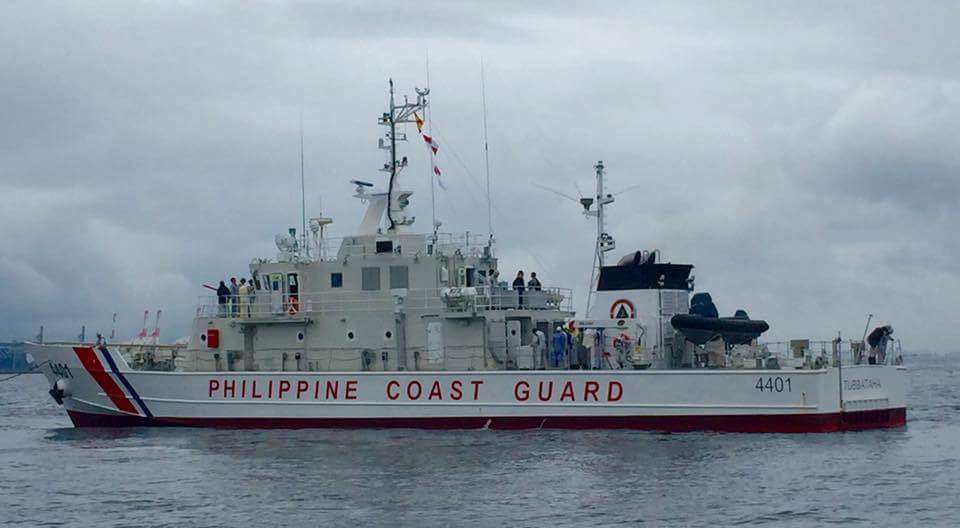
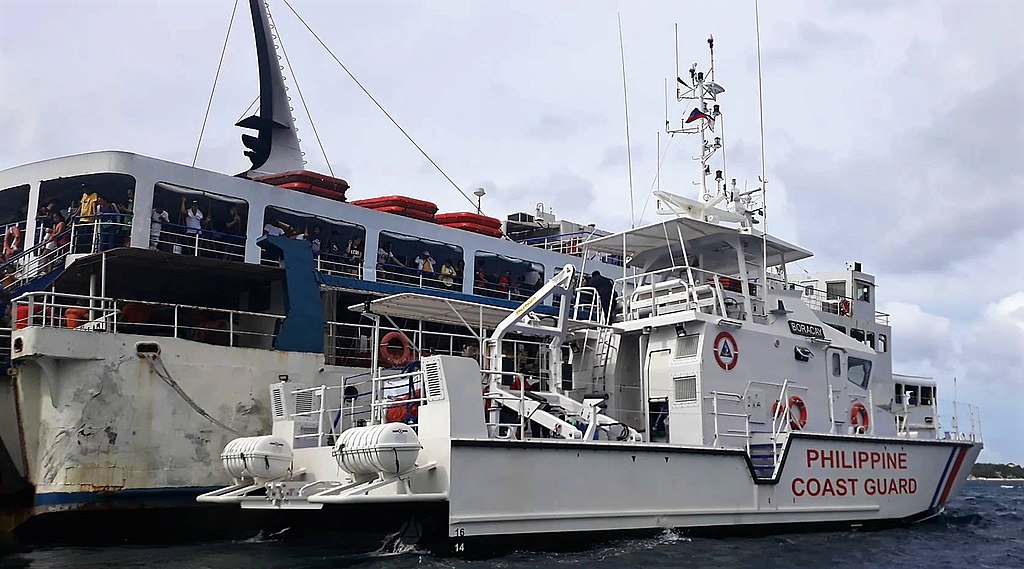
I will just provide some photos with links to the Wikipedia description of the vessels. Note none of the Philippine Coast Guard vessels have any permanently mounted weapons.

JCG_Akitsushima(PLH-32), 9,300 tons (full load), Port of Kobe, July 9, 2017. Photo credit: Hunini, via Wikipedia.

USCGC Stratton moored in San Diego, California. Photo by BryanGoff

BRP Gabriela Silang (OPV-8301) as it sails home to the Philippines. 3 May 2021. Photo: Philippine CG.

44-meter multi-role response vessel BRP Tubbataha during its delivery to the Philippine Coast Guard, Philippine CG PAO photo

BRP Boracay (FPB-2401), 23 October 2018, Philippine CG photo.

“Coast Guard awards contract for long range interceptor III cutter boats” –CG-9

Preliminary general arrangement drawing of the third generation of long range interceptor cutter boats to be made for the Coast Guard. Courtesy of MetalCraft Marine U.S. Inc.

Below is a May 30, 2023 Acquisitions Directorate (CG-9) news release. 


The Coast Guard awarded an indefinite-delivery, indefinite-quantity contract to MetalCraft Marine U.S. Inc. of Watertown, New York, May 23 for construction, testing, delivery and logistical support for the third generation of long range interceptor (LRI III) cutter boats. The contract has a total potential value of $31.3 million. The Coast Guard plans to acquire up to 17 LRI IIIs.

At just under 35 feet in length, the LRI is the larger of two types of cutter boats that are deployed from national security cutters (NSCs). The LRI III is a twin-engine, twin-waterjet driven boat, capable of speeds of 40 knots. The boats will be equipped with a robust navigation and communication system that allows each LRI III to deploy over the horizon, beyond the line of sight of the cutter. The LRI III has a semi-enclosed cabin for protection from weather with interior shock-mitigating seating for five and six additional shock-mitigating seats outside the cabin on the aft deck. The LRI III will replace the current fleet of LRI IIs as those boats approach the end of their service life.

The LRI cutter boat platform is designed to augment Coast Guard NSC mission effectiveness by projecting the parent cutter’s over-the-horizon capability in search and rescue, drug and migrant interdiction, living marine resources, defense readiness, and ports, waterway and coastal security missions.

For more information: Boat Acquisition Program page

“In focus: the 50 cal heavy machine gun in Royal Navy service” –Navy Lookout

British navy sailor fires burst using gun mounting system ASP (Agile, Small-deflection, Precision) armed with a .50 heavy machine gun. (Picture source British Royal Navy)

Navy Lookout has a post about .50 cal guns that goes into the history of the caliber in the Royal Navy, but the real news is that they have made the decision to completely replace the 7.62mm Mk44 (M134) mini gun, which as a rate of fire of 2,000 to 4,000 rounds per minute, with the .50 caliber effective March 2023.

The post makes reference to the 2021 tests of the “Agile, Small-deflection, Precision (ASP)” mounting on board HMS Argyll, but apparently there has been no decision regarding upgraded mounts for the gun.

USNI “Fleet and Marine Tracker: May 22, 2023” Includes Some Coast Guard. This a Good Thing?

The USCGC Oliver Henry (WPC-1140) crew gets underway from Guam on May 21, 2023, before Typhoon Mawar’s arrival. US Coast Guard Photo

For the first time in my memory, US Naval Institute’s weekly Fleet and Marine Tracker includes information about Coast Guard units. The post reports,

“USCGC’s Myrtle Hazard and USCGC Oliver Henry departed Guam to avoid Typhoon MAWAR, which continues to strengthen and head toward Guam. Storm conditions are expected to arrive near Guam sometime on Tuesday, May 23.

and includes the photo and caption above. It also reports,

“Six U.S. Coast Guard Sentinel Class Fast Response Cutters (FRCs) are forward-deployed to the region under Patrol Forces Southwest Asia (PATFORSWA). PATFORSWA deploys Coast Guard personnel and ships alongside U.S. and regional naval forces throughout the Middle East. Initially deployed in 2003 in support of Operation Iraqi Freedom, PATFORSWA is now a permanent presence based out of the Kingdom of Bahrain, providing capable littoral assets for maritime interdiction, theater security cooperation, and maritime domain awareness operations.”

and

“Coast Guard Cutter Eagle moored in Oslo, Norway on Friday as part of its summer training cruise for cadets from the United States Coast Guard Academy.”

along with the photo and caption below (I added the link).

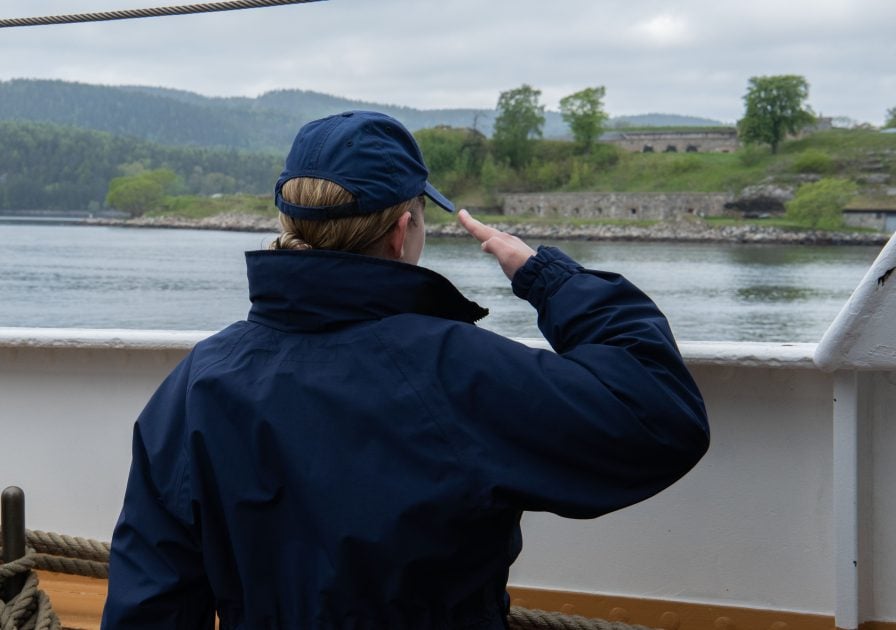
Cadets and crew members aboard USCGC Eagle (WIX-327) render honors to the Oscarsborg Fortress, May 19, 2023, during the transit into Oslo, Norway. US Coast Guard Photo

I was happy to see this. The Coast Guard needs to be generally recognized as part of the National Fleet. That status is officially recognized, but not by the general public or, more importantly, by large parts of the Navy and Coast Guard.

My initial reaction was that I wanted to see the Coast Guard included in this report regularly. But as I worked through what I thought should be done, I changed my mind.

Still, I believe that the US Naval Institute should want to publish something similar for Coast Guard units and that Coast Guard public affairs should want to support the effort by providing information in an agreed upon format essentially ready to publish.

What do we want to emulate and what do we want to do differently?

The Fleet and Marine Tracker consists of three parts:

  • A world map where normally only carrier strike Groups (CSGs) and Amphibious Ready Groups (ARGs) are plotted.
  • A statistical breakdown including the total number of battleforce ships, how many are deployed, how many are underway (Including some differentiation of USS vs USNS), and how many of those deployed are assigned to each numbered fleet.
  • A narrative of operations broken down geographically.

While I don’t think the world map plot is appropriate, at least not on a weekly basis, a statistical breakdown of ships underway or deployed out of area followed by a narrative section including short outlines of unusual or interesting operations broken down geographically would be useful.

The statistical break down might be by broad vessel types and by Atlantic and Pacific Areas. A listing of assignments to numbered fleets is probably not necessary. I don’t think we want to specify how many ships are assigned to 4th Fleet operational control since they would virtually all be involved in drug interdiction. The few assignments to other Combatant Commanders could be handled in the geographic narrative section.

“China Scales Down Rescue Effort as Hope Fades for Missing Crew of Capsized Fishing Vessel” –Marine Link

SLNS Vijayabahu (P627), the former USCGC Douglas Munro, on the scene of a capsized Chinese Fishing Vessel. Sri Lanka Navy photo.

Marine Link has the report. Tragic, but I would not normally posted concerning this case, but then I saw the accompanying photo and video which included the former USCGC Munro still doing SAR.

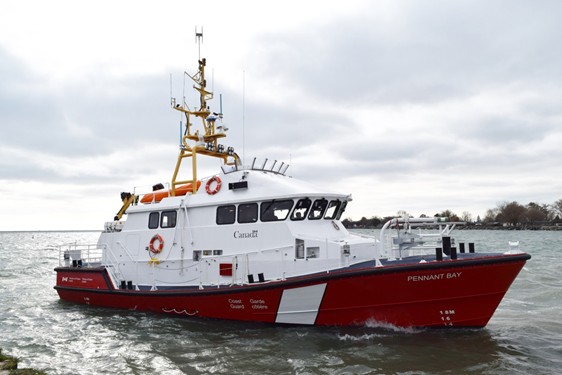
“Canadian Coast Guard Plans to Order Up to 61 Small Vessels” –Marine Link

Marine Link reports,

“…the Canadian Coast Guard, on Thursday announced $2.5 billion CAD (roughly $1.8 billion USD) for the construction of up to 61 new small vessels and the ongoing replacement of small craft, barges and workboats within the Canadian Coast guard fleet… These include six Mid-shore Multi-Mission Vessels; one Near-Shore Fishery Research Vessel; 34 Cape Class Search and Rescue Lifeboats; and 16 Specialty Vessels, including two Special NavAids Vessels, four Special Shallow Draft Buoy Tenders, four Inshore Science Vessels; four Special Enforcement Vessels, two Lake Class Vessels, and four Air Cushion Vehicles.”


French Warship Makes Four Indian Ocean Drug Seizures in 30 days

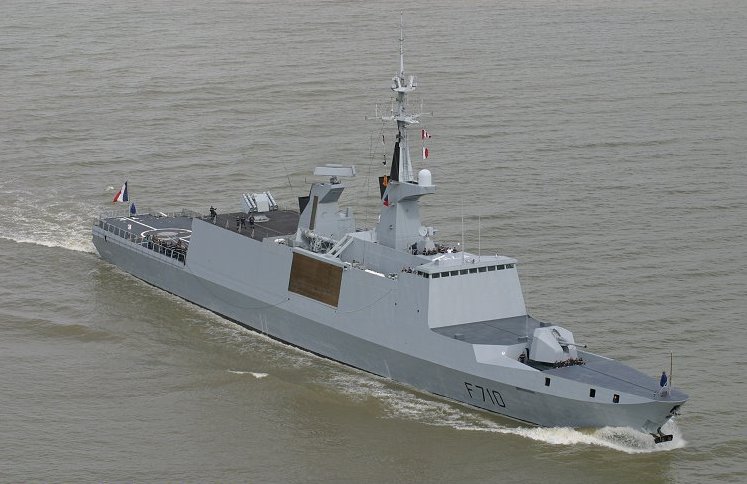
The frigate La Fayette going up the Seine river (2nd of July 2003, prior to its recent renovation). Photo credit: Guillaume Rueda

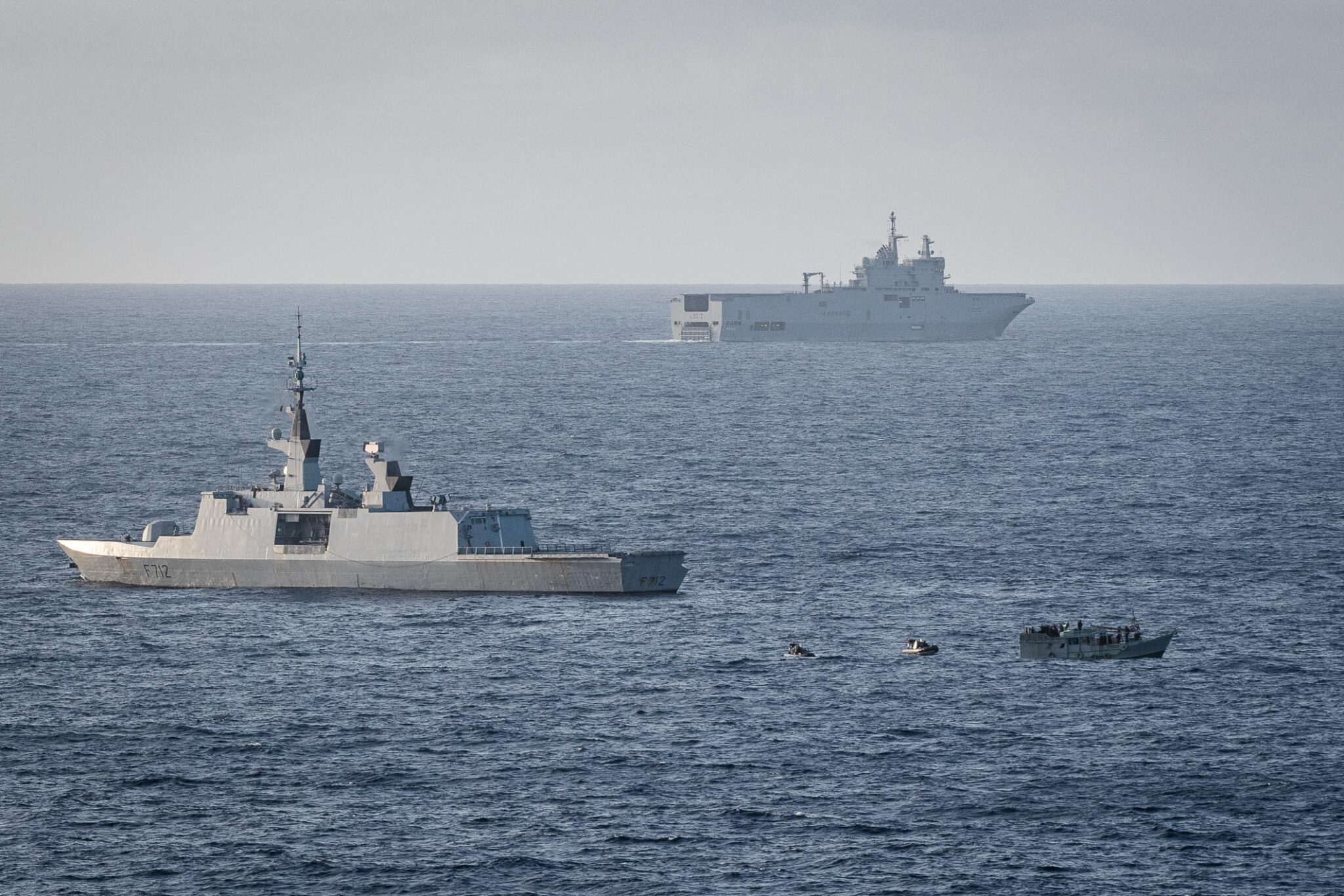
Below is a NAVCENT news release. I was a little surprised it did not include the name of the French ship. I have been unable to find the name of the ship, but it appears probable that this was done by the ships engaged in the French Navy’s annual training cruise, “MISSION JEANNE D’ARC 2023” including amphibious warship FS Dixmude (L9015) and frigate FS La Fayette (F710).

The French are not new at this, and their drug interdiction operations are frequently carried out by La Fayette class frigates. FS La Fayette probably made the interdictions, but FS Dixmude may have helped by flooding the area with search aircraft. Previous “MISSION JEANNE D’ARC” voyages have also resulted in drug interdictions. “MISSION JEANNE D’ARC 2021” resulted in a spate of five drug seizures by three French ships in six days in the same area. “MISSION JEANNE D’ARC 2022” resulted in at least one drug seizure in the Gulf of Guinea.

The crew of the frigate Courbet, supported by LHD Mistral, seized 1.7 tons of cocaine from a fishing vessel in the Gulf of Guinea, May 22, 2022. ©Marine Nationale/Défense

(US Coast Guard PATFORSWA cutters also frequently operate as part of Combined Task Force 150.)


May 24, 2023

French Warship Seizes $108 Million in Drugs during Indian Ocean Seizures

By U.S. Naval Forces Central Command Public Affairs

A French warship operating in support of Combined Task Force (CTF) 150 conducted four illegal drug seizures between April 19 and May 18 worth a total estimated U.S. street value of $108 million from fishing vessels transiting international waters in the Indian Ocean.

The warship seized 2,265 kilograms of heroin and 242 kilograms of methamphetamine from four different vessels while patrolling regional waters. CTF 150 is one of five task forces under Combined Maritime Forces, the largest multinational naval partnership in the world.

In 2023, maritime forces supporting CTF 150 have seized illegal drugs worth a combined estimated U.S. street value of $203 million, adding to record-breaking drug interdictions by U.S. and international naval units in 2021 and 2022 totaling more than $1 billion in value.

“It’s been a pleasure working with the French sailors to achieve our mission’s aims together,” said United Kingdom Royal Navy Lt. Francis Henry, a CTF 150 staff officer responsible for coordinating the task force’s counter-narcotics efforts.

CTF 150 conducts maritime security operations in the Gulf of Oman, Arabian Sea and Indian Ocean to disrupt destabilizing activity, promote international rules-based order and help ensure the free flow of commerce.

The task force is headquartered in Bahrain with Combined Maritime Forces, which is led by the commander of U.S. Naval Forces Central Command and U.S. 5th Fleet.

“Videos of Ukrainian drone boats swarming a Russian target end in explosion, mystery” –Task and Purpose

Task and Purpose brings us a report on an apparent drone attack on a Russian Electronic Intelligence ship, “Ivan Khurs,” including two videos, the second of which is reproduced above.

“Though there is no way to confirm the outcome of the attack — or even the legitimacy of either video — if the second boat triggered an explosion similar to the one seen in the first video, the Russian ship likely suffered serious damage.”