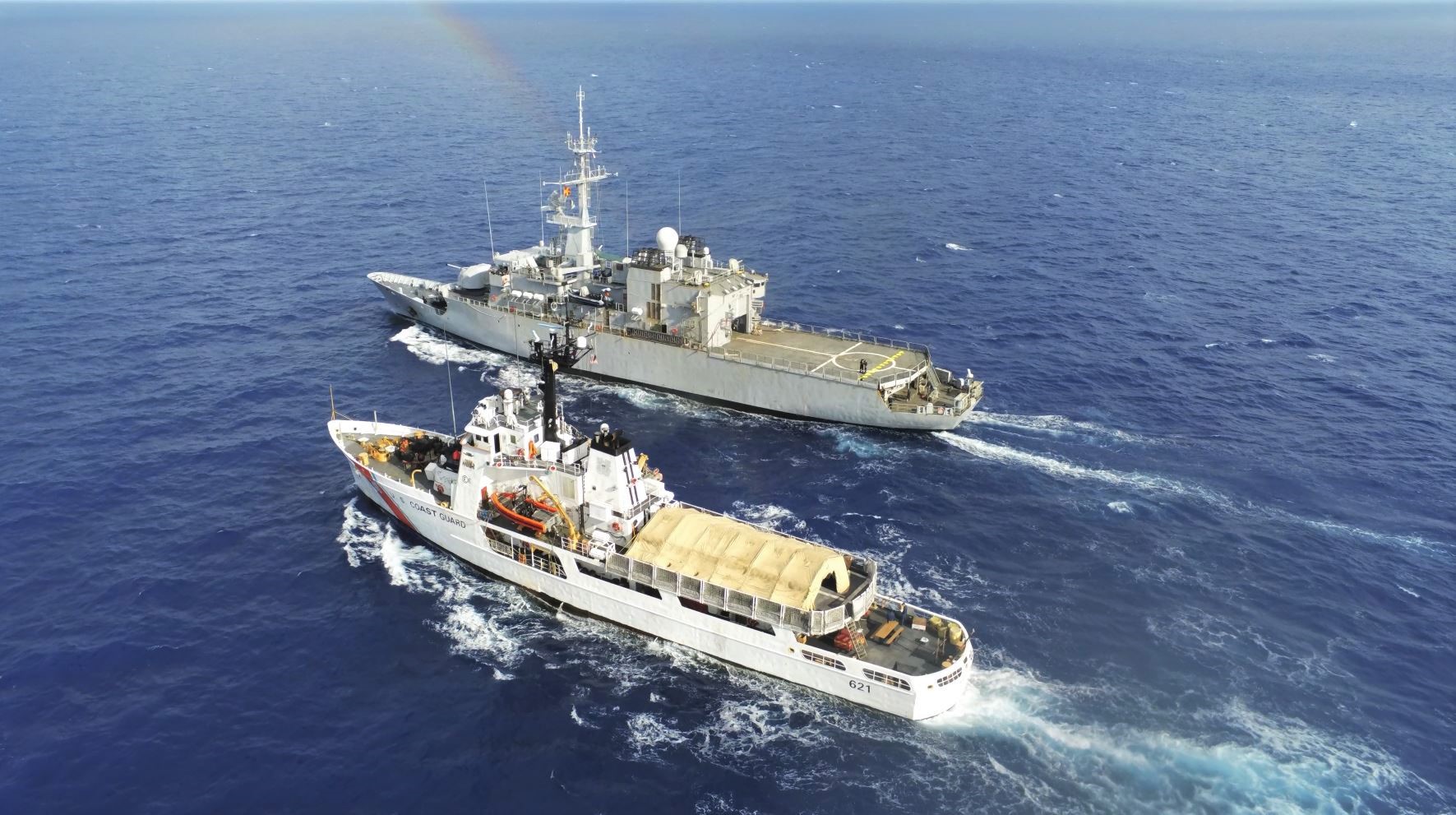
U.S. Coast Guard Cutter Valiant (WMEC 621) and French Navy Frigate FS Ventôse (F733) conduct joint exercises at sea, Sept. 29, 2024, while underway in the Windward Passage. The crew of Valiant conducted a 49-day migrant interdiction operations patrol in the region to protect life at sea and enforce U.S. maritime law. (Photo courtesy of FS Ventôse)
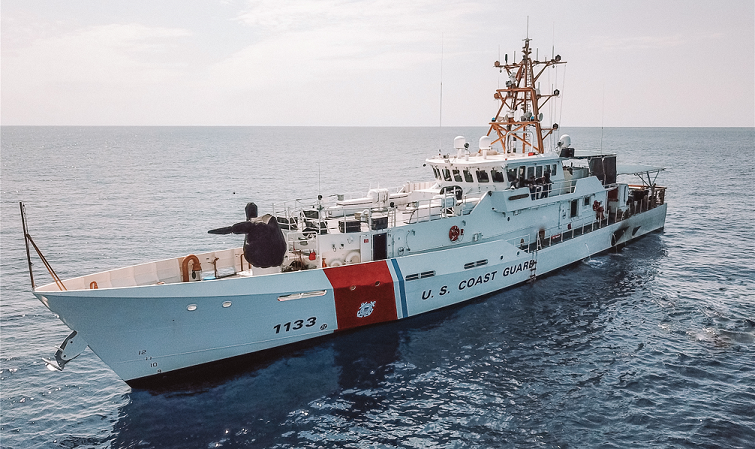
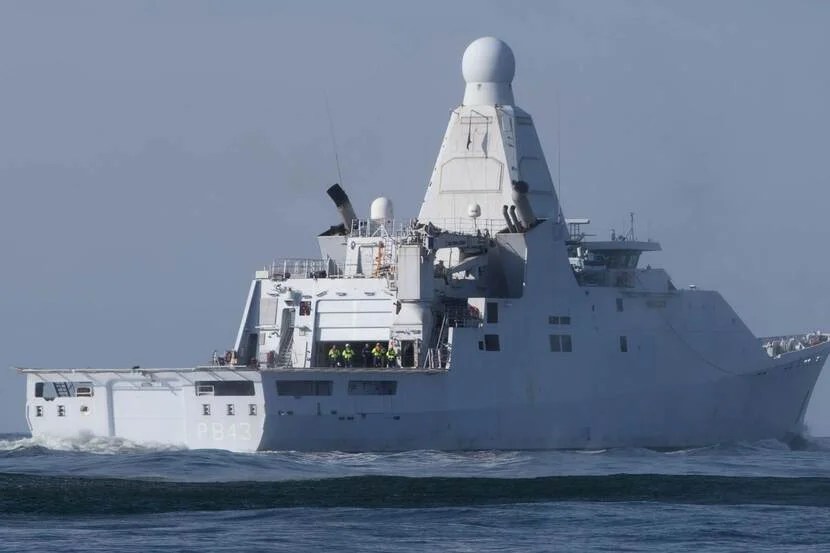
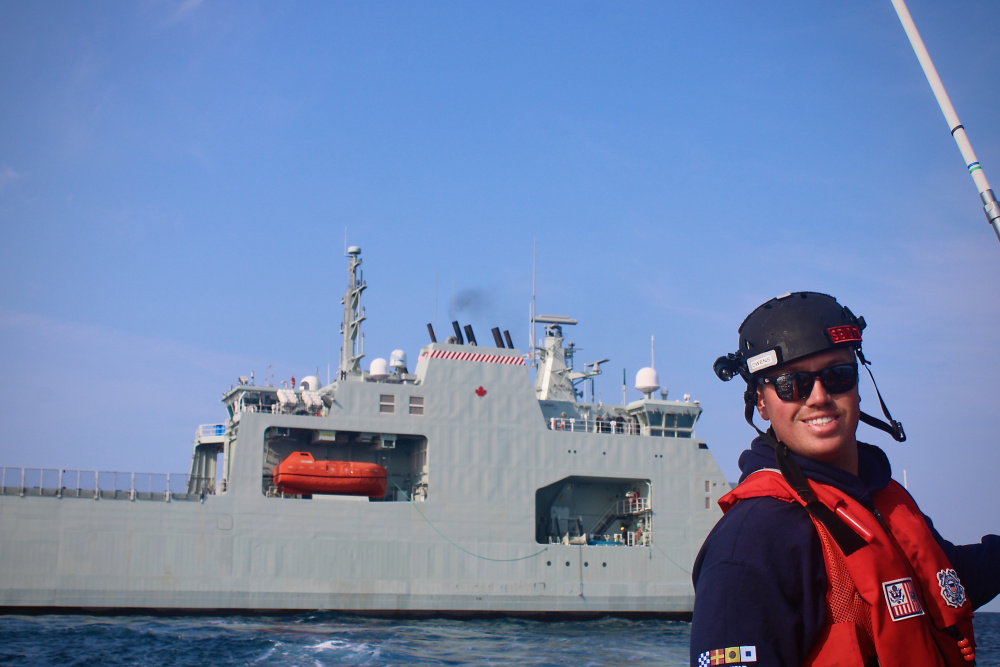
Below is a news release. It included no photos. I wanted to give some more credit to the other units and countries involved, so I have added photos of all four ships involved in the six interdictions. We get a lot of help from allies with territories in the Western Hemisphere–UK, France, and in this case Canada and the Netherlands.
USCGC Joseph Doyle (WPC-1133)
Netherlands OPV Groningen, 19 April 2017.
USCGC Richard Snyder (WPC 1127) participates in Operation Nanook in the Davis Strait on Aug. 4, 2021. Snyder worked alongside USCGC Escanaba (WMEC 907), the Royal Canadian Navy’s HMCS Harry Dewolf (AOPV 430), and HMCS Goose Bay (MM 707) in Operation Nanook to enhance collective abilities to respond to safety and security issues in the High North through air and maritime presence activities, maritime domain defense, and security exercises. (U.S. Coast Guard photo by USCGC Richard Snyder)
March 5, 2025
MEDIA ADVISORY: Coast Guard Cutter Valiant offloads $141 million in illicit drugs interdicted in the Caribbean Sea
MIAMI — Members of Coast Guard Cutter Valiant are scheduled to offload 12,471 pounds of illicit narcotics with a street value of more than $141 million.
WHO: Coast Guard Cutter Valiant, Seventh Coast Guard District
WHAT: The Coast Guard Cutter Valiant’s crew will offload 12,471 pounds of illicit narcotics with a street value of more than $141 million. Media are invited to interview a Coast Guard Cutter Valiant crew member in both Spanish and English.
WHEN: Thursday, March 6, at 9 a.m.
WHERE: Coast Guard Base Miami Beach, 100 MacArthur Cswy, Miami Beach, FL 33139
The offload is a culmination of six interdictions conducted by the crews of:
U.S. Coast Guard Valiant
U.S. Coast Guard Joseph Doyle
Royal Netherlands Navy HNLMS Groningen
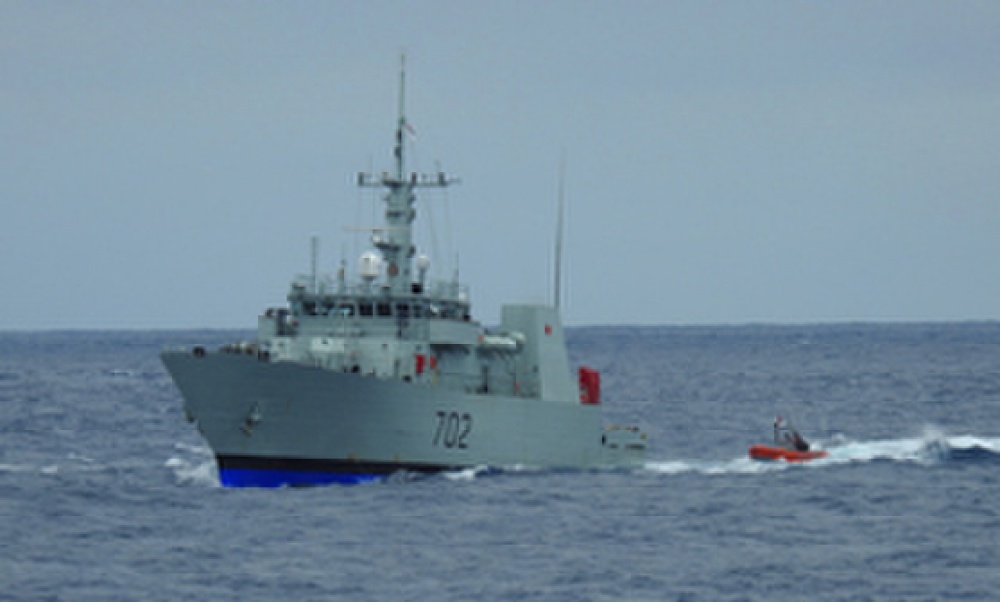
Royal Canadian Navy HMCS Harry DeWolf
U.S. Coast Guard Tactical Law Enforcement Team Pacific
U.S. Customs and Border Protection Air and Marine Operations
Media are required to bring media credentials to get on Base Miami Beach. Media who do not have official credentials or do not RSVP will not be allowed entry. It is recommended to carpool due to space constraints. Plan to arrive at the front gate no later than 8:30 a.m. for escort to the pier.
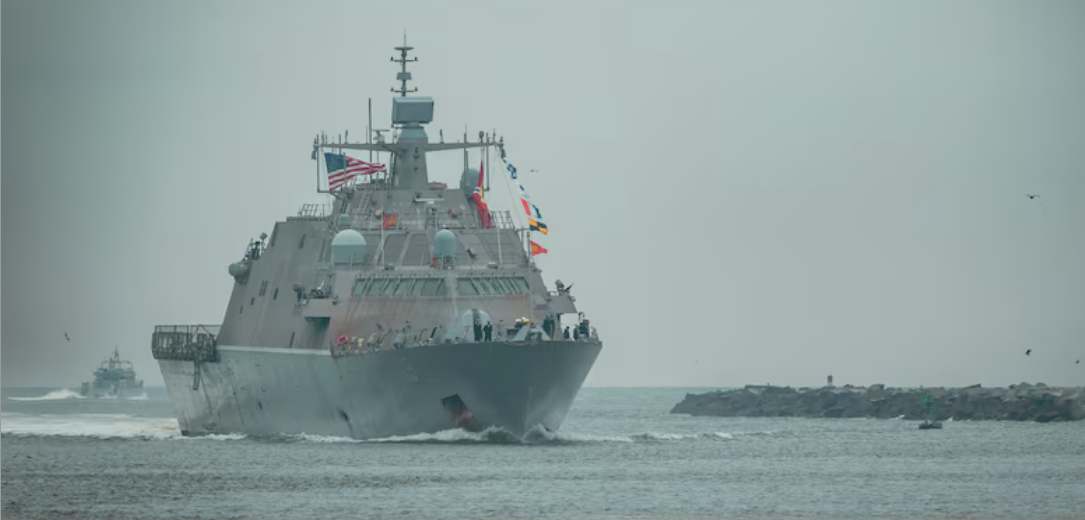
NAVAL STATION MAYPORT, Fla. (Feb. 24, 2025) – The Freedom-variant Littoral Combat Ship USS St. Louis (LCS 19) makes her way back into the basin at Naval Station Mayport, Feb. 24, 2025. LCS 19 deployed in June of 2024 operating primarily in the Caribbean Sea and Eastern Pacific Ocean. (U.S. Navy photo by Mass Communication Specialist 1st Class Brandon J. Vinson)
Below is a US Navy Surface Forces Atlantic (SURFLANT) news release. The length of her eight month deployment is remarkable particular considering it is with the 4th Fleet (Latin America and the Caribbean). That she apparently made 8 months without a catastrophic breakdown seems to bode well for the health of this class after a history of mechanical problems.
Apparently she was employed in drug interdiction. She “embarked…U.S. Coast Guard Law Enforcement Detachments (LEDET) 105 and 407, disrupted and confiscated over $100 million worth of illicit contraband in five different operations…”
Undoubtably at least one of the LEDETs was embarked during exercise UNITAS 2024. We knew this included“U.S. Coast Guard (USCG) Tactical Law Enforcement Team (TACLET) Pacific Law Enforcement Detachment (LEDET); and USCG Maritime Security Response Team East (MSRTE) Direct Action Section.”
Ever since the Navy decommissioned the last of their Oliver Hazard Perry (FFG-7) class frigates in 2015, there has been speculation and anticipation that Littoral Combat Ships would be regularly employed to do the Drug Interdiction mission that the FFG had been doing. It seemed to make a lot of sense, particularly with regard to the Freedom Class ships, all of which are based in Mayport, Florida, near drug transit zones, but right now it still seems to be treated as an irregular filler mission rather than a primary.
By the end of 2025, the last two LCS, one Freedom class and one Independence class, should be commissioned. The projected fleet is ten Freedom class, all based in Mayport, FL, and 15 Independence class, all based in San Diego. The Independence class (all of which have even hull numbers) have essentially taken on the Navy’s mine countermeasures mission. The Freedom class, with odd hull numbers, are now nominally devoted to anti-surface missions. What they are doing does not get a lot of visibility.
It’s not that the Navy is not doing anything, but commitments seem half hearted. Is this changing? With the new administration’s changed priorities, will they and Fourth Fleet start doing alien migrant interdiction?
24 February 2025–USS St. Louis (LCS 19), a Freedom-variant Littoral Combat Ship (LCS), returned to Naval Station Mayport this week, concluding its maiden deployment to the U.S. Fourth Fleet Area of Responsibility (AOR). The eight-month deployment, which lasted from June 15, 2024 to February 24, 2025, marked a series of groundbreaking achievements that underscore the capabilities of the LCS platform and its growing contributions to naval operations.
While assigned to TASK FORCE 45/Destroyer Squadron 40, operating primarily in the Caribbean Sea and Eastern Pacific Ocean, St. Louis, embarked Helicopter Maritime Strike Squadron (HSM) 50 Detachment 4, and U.S. Coast Guard Law Enforcement Detachments (LEDET) 105 and 407, disrupted and confiscated over $100 million worth of illicit contraband in five different operations, significantly hampering the activities of transnational criminal organizations.
“From our first week in theater, the crew demonstrated its tactical acumen in locating and intercepting illicit traffickers. Most of these interdictions were conducted at night, requiring long days and late hours but the crew stayed immensely resilient. I am very proud of what the team accomplished,” said Cmdr. T.J. Orth, USS St. Louis’ Commanding Officer.
In August, St. Louis transited the Panama Canal and operated in the Pacific Ocean for the first time, making history as the first FRE-variant LCS to travel as far south as Valparaíso, Chile when she participated in the 65th iteration of UNITAS, the world’s longest-running multinational maritime exercise. Alongside naval forces from 44 countries, the ship showcased its capabilities in maritime interoperability, enhancing ties with partner nations and furthering regional stability.
After returning through the Panama Canal, St. Louis received new tasking to support U.S. Southern Command’s Joint Task Force-Bravo as that command responded to the deteriorating security situation in Haiti. St. Louis served as a fueling station and Search and Rescue force for 1st Battalion, 228th Aviation Regiment (AVN REGT) UH-60 Blackhawks conducting evacuations out of Haiti. To prepare, St. Louis and 1-228th AVN REGT conducted more than 50 deck landings. This successful integration expanded the ship’s operational versatility, paved the way for future joint missions, and underscored the potential for cross-branch collaboration in dynamic environments.
To wrap up USS St. Louis’ maiden deployment, St. Louis Sailors showed their flexibility and capacity to rapidly deploy in support of Joint Task Force Operation Southern Guard onboard U.S. Naval Station Guantanamo Bay, Cuba. Sailors supported the expansion of the Maritime Operations Center (MOC) in preparing the MOC to receive up to 2,000 illegal aliens, erecting 50 tents and setting up several hundred cots in several days. Operation Southern Guard is highlighting effective interagency collaboration, as the Department of Homeland Security (DHS) oversees the operation.
“We saw a lot of ‘firsts’ on this ship’s first deployment and it was amazing to see what this ship and crew was capable of. Looking back, this deployment demonstrated the growing potential for Freedom class LCS and the support they can provide not just in the Caribbean, but in the entire Fourth Fleet AOR,” said Cmdr. Lee Shewmake, USS St. Louis’ executive officer. “There were many lessons learned that the crew took to heart and put in practice as deployment went on, and I believe that is what enabled our success over the past seven months.”
“St. Louis demonstrated the great potential of the LCS Freedom class, not only in executing its assigned missions but also in breaking new ground for the community. The professionalism and dedication of this crew have laid a strong foundation for the future of LCS operations,” said Master Chief Roderick Bolton, St. Louis’ Command Master Chief. “USS St. Louis returns home with its crew proud of their achievements and eager to share lessons learned from this historic deployment. As the U.S. Navy continues to evolve, St. Louis has proven itself a capable and innovative platform, ready to meet the challenges of tomorrow.”
USS St. Louis’ maiden deployment to Fourth Fleet was a resounding success, marked by numerous milestones and contributions to naval strategy. The ship’s accomplishments highlight the flexibility and utility of the Littoral Combat Ship platform in tackling modern challenges.
The Coast Guard Deputy Commandant for Operations has issued “United States Coast Guard Force Posture 2024.” Dated October 2024, it is reportedly the first of its kind and a new edition will be published annually. I have appended the Coast Guard News Release regarding the publication below.
“This posture statement informs all audiences about the U.S. Coast Guard’s operational priorities, initiatives, requirements and future challenges across its missions and geographic regions. It conveys how we are “Advancing Mission Excellence” in accordance with the 2022 Coast Guard Strategy and the Department of Homeland Security (DHS) Strategic Plan. This posture statement serves as a window into the breadth and depth of the Coast Guard’s commitments and how it is posturing our workforce, capabilities, and assets to deliver operational services that best serve the American people.
It is organized under four major topics rather than by the eleven statutory missions.
Operating Environment (p.3)
Guiding Principles (p.3/4)
Operating Posture (p.4-7)
Geographic Operating Areas (p.7-11)
I love it, but it does lack a clear summary of what we will do differently. I will try to interpret some of that. Below I provide a readers’ digest version with a few comments, looking first at the eleven Coast Guard missions as listed in 6 U.S. Code § 468, at select Geographic Operating Areas, and finally I will speculate on the long term implications. Given the increased use of the Coast Guard as a tool of foreign policy, I also suggest changes to the Area Commanders’ areas of responsibility (AOR) to make them fit more easily into the national command structure.
MISSIONS
Some of the missions are specifically addressed in the “Operating Posture” section, others are not. The Eleven missions are:
Non-homeland security missions:
Marine safety
Search and rescue
Aids to navigation
Living marine resources (fisheries law enforcement)
Marine environmental protection
Ice operations.
Homeland security missions:
Ports, waterways and coastal security
Drug interdiction
Migrant interdiction
Defense readiness
Other law enforcement.
I will just address them in alphabetical order:
Aids to Navigation:
Aids to Navigation is not called out under a separate heading.
“Our comprehensive approach (to the Marine Transportation System (MTS)) encompasses…Maintaining aids to navigation…” (p.4)
The Coast Guard is reinforcing actions to be “brilliant at the basics” that strengthen…aids to navigation.
The Coast Guard is in the early phase of recapitalizing an aging fleet of inland aids to navigation tenders with new Waterways Commerce Cutters, crucial to maritime commerce in our inland river system. These investments are central to maintaining service delivery in an increasingly complex MTS (Maritime Transportation System–Chuck).
Sounds like minimal changes in the near term but expect improving technology may reduce manpower requirements. Elsewhere there is indications buoy tenders may increasingly be used for non-AtoN missions. This suggests that the number of sea-going buoy tenders (WLBs) is unlikely to be significantly reduced, but their character may change–more on this below.
Defense Readiness
We are increasing attention on the Coast Guard’s defense readiness mission given the increasing threat posed by nation-state competitors. Through integration with Department of Defense efforts, refreshing defense-related plans, and preparedness exercises, we are sharpening readiness to support homeland defense requirements and force deployment commitments for major overseas contingencies. We continue to meet our commitments to North American Aerospace Defense Command (NORAD) for National Capital Region and deployable Rotary Wing Air Intercept and we are adjusting the structure of our Port Security Units (PSU) to address Reserve workforce shortages. We are also integrating PSU elements with DoD expeditionary units to increase their deployment readiness.
This is a welcome recognition of an increasingly hostile world and the emergence of non-state actors who, acting independently or as a proxy for hostile states, can impact national security.
Drug Interdiction is not called out as a separate topic. The only indication of a change is this statement under the section “Western Hemisphere,”
“We will maximize employment opportunities by conducting a mix of missions such as counter drug and combating illegal, unreported and unregulated fishing when appropriate.” (p.9)
Ice Operations:
Ice operations is not called out as a separate mission, but it is addressed in the “Polar Regions” section (p.8/9) of the Geographic Operating Areas section.
Arctic and Antarctic Ice operation will get a big boost as we go from 2 polar icebreakers to eight. In the Arctic there will be a continuing need for non-icebreaking large cutters and we can expect increased exploitation of fixed wing aircraft and particularly satellite for communications and information.
Living Marine Resources
“We will increasingly favor shore-based law enforcement teams and our patrol boat fleet, supported by maritime domain awareness sensors, to ensure we best match this mission.”
Webber class WPCs have proven capable of assuming much of the fisheries protection mission. They can go anywhere fishing vessels can go and stand up to any weather they might be fishing in. So FRCs are stepping up to missions WMECs have traditionally done. Not mentioned, but on the other hand, in Alaska and the distant Pacific there is still a role for larger ships.
Marine Environmental Protection:
There was no section devoted to Marine Environmental Protection as a specific mission. MEP was referred to briefly in the Mission execution section (p.5) Arctic (p.8)
But there was this under “Incident Management and Crisis Response” (p.6)
Management of large, complex incidents is a central Coast Guard competency. Employment of this capability enables success for the most consequential crises and events, builds trust, and supports DHS. However, the Coast Guard does not have a large contingency capacity “in garrison” for emergencies. We will continue to strengthen Coast Guard incident management capacity and proficiency to meet increasing demand, including in the Reserve workforce. The Coast Guard continues to respond to stakeholder requests for assistance for incident management while we prioritize incidents with a Coast Guard nexus and prevent overextending Coast Guard resources.
Marine Safety
There is a lot of activity here,
“The Coast Guard is reinforcing actions to be “brilliant at the basics” that strengthen marine inspection, investigation, Vessel Traffic Services, waterways management, and aids to navigation.”
Changes in the environment include autonomous vessels, offshore renewable energy installations, an emerging space launch and recovery industry, and alternative vessel fuels. All of which require determination of standards.
Migrant Interdiction
“The Coast Guard will deploy cutters and aircraft, and adaptive force packages where practical, sufficient to interdict migrant ventures, save lives, and deter maritime migration. We continue to prepare with partners to respond to a mass migration to mitigate a national crisis. We are also integrating new technology to better anticipate, detect, deter, and interdict migrant ventures.
No significant reprioritization here. This is an area where the Webber class WPCs (20 in D7 alone) have supplemented or replaced WMECs. It is an area where shore based Unmanned Air Systems and Unmanned surface vessels like saildrone could provide persistent initial detection and perhaps reduce demand for fixed wing search aircraft.
Other Law Enforcement
Not surprisingly there is no mention of this “mission” because the Coast Guard does it on an ad hoc incidental basis. The Coast Guard’s specific law enforcement missions, drug and migrant interdiction, marine environmental protection, and fisheries are addressed separately. It is a catchall for any illegal activities. So, no change.
Port, Waterways, and Coastal Security
The Coast Guard’s force posture for this mission was configured for the post 9/11 security environment and the Coast Guard is examining approaches to optimize our capabilities to meet emerging threats. For example, the proliferation of drones poses a growing risk to the MTS and we will continue to employ our counter-UxS technology in conjunction with DHS and other partners to prepare for this threat. We are also taking steps to ensure that our deployable specialized forces are configured for their role as threats and operational needs evolve.
Recognizing and preparing to counter the UxS threat is significant. I’ve already made several suggestions. I hope if we get a hard kill system, it will also improve effectiveness against other potential threats.
This was included under Defense Readiness,
“…we are adjusting the structure of our Port Security Units (PSU) to address Reserve workforce shortages. We are also integrating PSU elements with DoD expeditionary units to increase their deployment readiness.”
To me Ports, Waterways, and Coastal Security is a subset of Defense Readiness once you understand that Defense Readiness is a full time, 24/7 job that does not wait until war is declared or the Coast Guard is transferred to the Navy Department. Attacks like 9/11 or Pearl Harbor, will likely come as a surprise, there may be no time to mobilize before an attack, and our Maritime Transportation System is a likely target.
Search and Rescue:
“Search and Rescue is an enduring, no-fail mission that is deeply ingrained in the Coast Guard’s identity. As it remains a top priority, technical advances now allow us to perform the mission more effectively and with fewer resources.“
SAR success standards are not being lowered, but technology is increasingly taking the search out of search and rescue. Individual units have greater capability so fewer dedicated units may be required. Expect fewer personnel to be assigned to less demanding SAR missions that are also covered by local government first responders.
GEOGRAPHIC OPERATING AREAS
The Operational Posture goes on to discuss specific operating areas. Some of this has been addressed in the mission summaries above, so I will say no more about the Arctic, Western Hemisphere, Middle East and Europe, Caribbean, and Atlantic basin that are discussed individually in the Operational Posture, but I will talk about the Indo-Pacific, Eastern Pacific, and Antarctica.
Indo-Pacific
The Indo-Pacific is a top regional priority given its geostrategic importance, criticality to global trade, and the threat contesting a free, open, and rules-based maritime commons.
Yes, we are paying more attention to the Pacific, the Indian Ocean not so much. We expect to have six Webber class WPCs in Guam. Harriet Lane (WMEC-903) has been moved from Atlantic Area to Hawaii and it looks like a second WMEC may also be moved. Two OPCs each are expected to go to Long Beach and Kodiak. Assuming Alex Healy stays in Kodiak and the last Pacific Area 210 is decommissioned or transferred to Atlantic Area, that will give Pacific Area 13 large patrol cutters–still fewer than the 16 that were in PacArea in 2000 and only 39.4% of the 33 large cutter total I think we have now and will have for the foreseeable future.
Given the great distances involved, the fact that 84% of the US EEZ is in Pacific Area, and because we have an obligation to the Compact of Free Associated States–Federated States of Micronesia, the Republic of the Marshall Islands, and the Republic of Palau–that together have additional EEZ equal to about 50% of the entire US EEZ, it makes no sense for 60% of the large cutters to be in Atlantic Area. More than half of all large patrol cutters should be in Pacific Area.
Eastern Pacific:
“…with declining major cutter and maritime patrol aircraft availability, we will increasingly employ fast response cutters, ocean-going buoy tenders, and adaptive force packages supported by expeditionary logistics.” I am not surprised; this is something that was begun when Admiral Fagan was Pacific Area Commander.
“…we remain committed to supporting the Mexican Navy as they expand their Captain of the Port authorities through increased information sharing, joint training and exercises, and capacity building engagements. This expanded partnership will enhance maritime governance in the Western Hemisphere and contribute to the fight against illicit trafficking of fentanyl and precursor chemicals through Mexican ports into the U.S.”
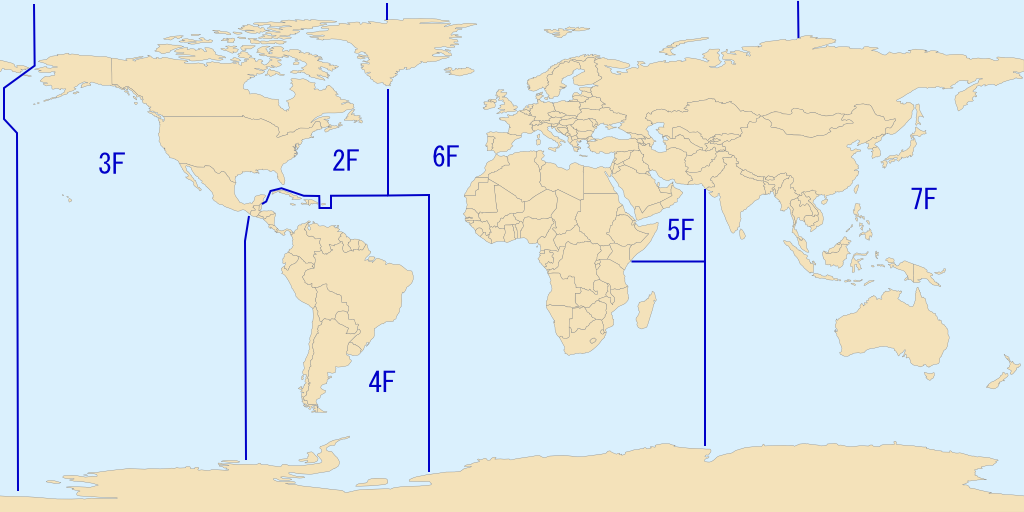
US navy fleets areas of responsibility. Source Wikipedia.
The only mitigating rationale I see for not transferring most of the large cutters to Pacific Area is that the Eastern Pacific drug transit zone is actually closer to Atlantic Area ports than to Pacific Area ports. This is why all of South America is under 4th Fleet, which is an Atlantic Fleet command. Probably an argument should be made for realigning the Coast Guard Area geographic descriptions to match those of the Atlantic and Pacific Fleets. A change of name to Eastern and Western Area might be appropriate and in fact a more accurate description.
Atlantic area includes not only the Atlantic coast but also the great lakes, inland areas, the Gulf of Mexico, Caribbean, and parts of the Arctic and Southern Oceans. Pacific Area also includes inland areas, the Indian Ocean (part of which is under Atlantic Fleet), and parts of the Arctic and Southern Oceans.
A realignment along Fleet dividing lines would also mean the dividing lines would more closely correspond to COCOM areas of responsibility and limit the number of cases where COCOMs would need to deal with both Coast Guard Areas to NORTHCOM. Currently there is also overlap in SOUTHCOM, AFRICOM, and CENTCOM. All three of those COCOMs would only need to deal with the Eastern (Atlantic) Area. That seems to be what is happening with AFRICOM and CENTCOM now anyway. PATFORSWA WPCs, Atlantic Area assets, operate routinely in the Indian Ocean, part of the PACAREA AOR.
Unified Combatant Commander’s Areas of Responsibility.
As Pacific Area assumes more responsibility in the Western Pacific and potentially the Indian Ocean passing off responsibility for all Coast Guard operations in 4th Fleet’s Area of Operations to Atlantic Area might make sense.
Antarctic:
The U.S. priority for Antarctica remains maintaining “a continent reserved for peace and science in accordance with the provisions of the Antarctic Treaty of 1959.”
No real change expected other than more and better icebreakers, but not everyone thinks like the US.
We should have the agility to react to a change from the present “continent reserved for peace and science.” We really have no reason for confidence that Antarctica will not become a zone of Conflict. Fortunately, actions to increase capabilities in the Arctic may also serve us well in Antarctica.
Implications for the Future
Cutter Design:
Patrol Cutters: Moving from “Patrol and Interdict” to “Target and Interdict” suggests that cruise speed endurance may become less important, and that higher max speed and an economical loiter speed may become more important. Greater emphasis on Defense Readiness would also suggest the desirability of greater speed. This suggest that we may want to build fewer than the currently planned 25 OPCs and shift investment to a new design based on a different set of priorities that we can build in greater number; ships with greater speed and increased modularity to accommodate an uncertain future.
Buoy Tenders: Improved aids to navigation may mean tenders will spend less time on routine AtoN maintenance. Still, they will need to be geographically distributed to respond to critical outages. It seems these ships will become more multi-mission by design. They should continue to be able to operate in ice. Their increased use for non-AtoN missions suggest that they may need overflow berthing and more fuel and stores capacity when supporting WPC deployments and to make them more effective in law enforcement roles–more speed, a flight deck and hangar for UAS and a deck gun such as the Mk38 Mod4.
Deployable Teams
Sounds like we will be getting more deployable Law Enforcement Detachments given the proliferation of capacity building objectives. Increased specialization and a desire for continuity in this area may someday result in a new rating.
Thanks to Paul for bringing the video to my attention.
Oct. 25, 2024
Coast Guard unveils first Operational Posture Statement
By Zach Shapiro, MyCG Writer
The Coast Guard just released its first Operational Posture Statement, which outlines the service’s operational priorities, including its plans to adapt to personnel and resource challenges. Vice Adm. Peter W. Gautier, Deputy Commandant for Operations (DCO), unveiled the document Friday during an event at the Center for Strategic and International Studies (CSIS) in Washington, D.C.
Think of the new annual Operational Posture Statement as a tactical annual document that supports the long-term Coast Guard Strategy by providing more specificity.
To improve operational efficiency and effectiveness, for example, the Coast Guard will increasingly use intelligence and data to shift its approach from “patrol and interdict” to “target and interdict.”
And to improve readiness, the Coast Guard will focus on three key elements: the workforce, capabilities, and assets. The Operational Posture recognizes the need to meet increasing demand while addressing workforce and resource shortages. The service will also continue to recapitalize cutters, boats, aircraft, and infrastructure.
The Operational Posture “is our effort to communicate with our stakeholders and be transparent with the American people on how we will confront all of these challenges, this increasing mission demand, and provide the kind of services that Americans deserve,” Gautier said.
Six guiding principles underpin the Operational Posture Statement:
Balance current operations with future readiness
Strengthen maritime governance
Counter strategic competitors while fulfilling our primary responsibility to secure and defend the homeland
Adjust force structure and posture to maximize operational effectiveness while maintaining a high level of support for our people, platforms, and infrastructure
Employ resources holistically to meet growing demands
Leverage intelligence, information, and improved maritime domain awareness to shift from a “patrol and interdict” to “target and interdict” model
These priorities reflect the increasing national and global demands for Coast Guard services. As 90 percent of global trade moves by sea, maritime security is the bedrock of national security and economic prosperity. In the face of rising global maritime tensions, the Coast Guard has a unique and critical role as a law enforcement entity and military agency.
Amidst this evolving environment, Gautier emphasized, the Coast Guard remains committed to its Search and Rescue (SAR) mission. That mission is “a sacred trust with the American people and a no-fail mission. It is our primary lifesaving mission. It defines us as a humanitarian service,” he said.
Moving forward, the Coast Guard intends to release a new Operational Posture Statement annually to outline the ways in which the service is adapting to new challenges and missions to best serve the American people.
To read the Operational Posture Statement in full, please click here.
U.S. Coast Guard Cutter Valiant (WMEC 621) and French Navy Frigate FS Ventôse (F733) conduct joint exercises at sea, Sept. 29, 2024, while underway in the Windward Passage. The crew of Valiant conducted a 49-day migrant interdiction operations patrol in the region to protect life at sea and enforce U.S. maritime law. (Photo courtesy of FS Ventôse)
I am posting the CG news release below, partly just because I liked the photo above that accompanied it. (Click to enlarge. There is even a hint of a rainbow.)
The two ships also make an interesting comparison.
Although it is a French Navy ship and classed as a surveillance frigate, FS Ventôse and her Floréal class sister ships along with the newer, larger Lafayette class are the French equivalent of large US Coast Guard patrol cutters.
It is not apparent from the photo, but the French ship is longer–93.5 m (306 ft 9 in)–almost three times Valiant’s displacement.
Ventôse is now 31 years old. The class is expected to be replaced by the European Patrol Corvette beginning in 2030.
Valiant is now 57 years old. Six of her class of 16 are no longer in US Coast Guard service and we are yet to see the first Offshore Patrol Cutter.
First of Floréal class was commissioned 28 years after the first of the Reliance class, only a couple of years before we should have started replacing the Reliance class.
Note the photo was taken from a French helicopter.
Cutters need reconfigurable space if they are to have mission flexibility without the need for greatly increased size. Valiant deployed without a helicopter. Effectively Valiant’s flight deck was used as reconfigurable space. You can see the temporary shelter for immigrants in the photo.
Operating as Valiant did, where they could be supported by land-based aircraft, they probably did not need organic aviation assets for search, but it did mean they probably had no overwatch when they made boardings and certainly no armed overwatch.
Nov. 22, 2024
Coast Guard Cutter Valiant returns home after 46-day patrol in the Windward Passage
NAVAL STATION MAYPORT, Fla. — The crew of Coast Guard Cutter Valiant (WMEC 621) returned to their home port at Naval Station Mayport, Nov. 7, following a 49-day migrant interdiction operations patrol in the Windward Passage.
Valiant’s crew deployed in support of Homeland Security Task Force – Southeast (HSTF-SE) and Operation Vigilant Sentry (OVS) while operating in the Seventh Coast Guard District’s area of responsibility. Throughout the patrol, the crew of Valiant conducted maritime safety and security missions to protect life at sea and enforce U.S. maritime law.
While at sea, Valiant rendezvoused with French Navy Frigate FS Ventôse (F733) during the vessels’ independent patrols off coastal Haiti, where the two crews conducted North Atlantic Treaty Organization (NATO) exercises. Valiant’s crew applied cutter refueling at sea techniques and exercised NATO code signaling with their French counterparts. Valiant’s small boat team received the unique opportunity to perform small-boat operations with a French warship. And Ventôse embarked a team from Valiant for a simulated boarding, where Coast Guard members shared techniques, procedures and best practices with their French counterparts.
International professional exchanges at sea such as these are vital for strengthening partnerships between nations, clearing the path for joint operations where shared missions, such as search and rescue and maritime drug interdiction, overlap.
Additionally, the crew of Valiant provided care for 363 Haitian migrants and conducted their safe repatriation home. Valiant’s crew also transferred nearly 1,000 pounds of illegal narcotics and 14 suspected drug traffickers to proper authorities.
HSTF-SE serves as the Department of Homeland Security lead for operational and tactical planning, command and control, and acts as a standing organization to interdict unlawful maritime migration attempts with federal, state and local partners. HSTF-SE continues to enhance enforcement efforts in support of OVS, which is the 2004 DHS plan to respond to mass maritime migration in the Caribbean Sea and the Florida Straits.
Valiant is a multi-mission, 210-foot, Reliance-class medium endurance cutter. Its primary missions include search and rescue, maritime law enforcement, marine environmental protection, homeland security and national defense operations.
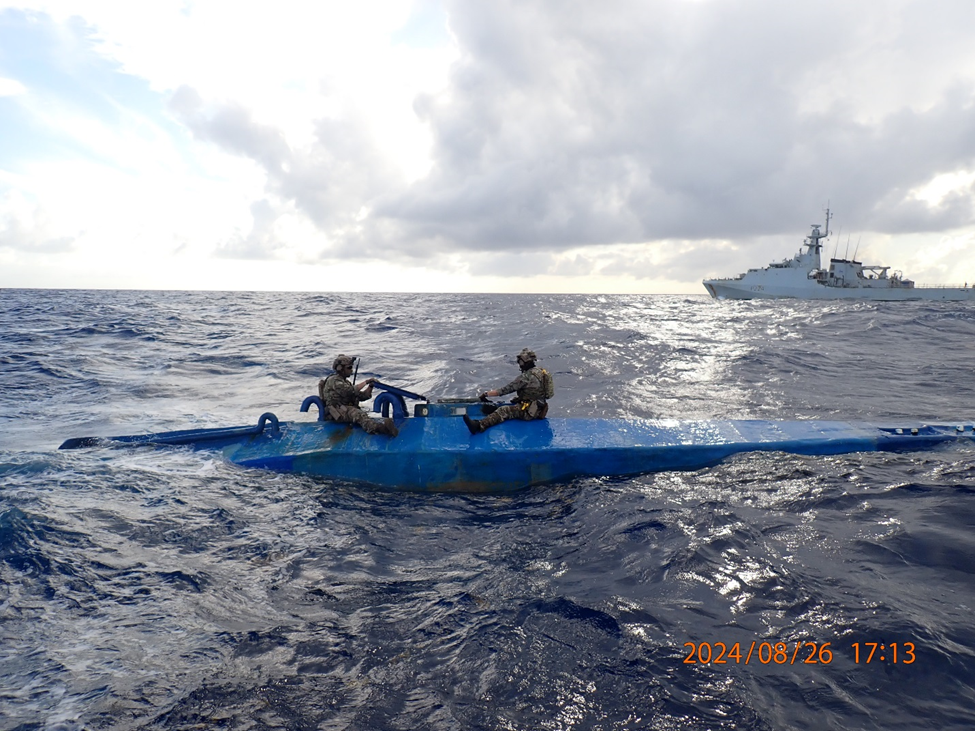
Crew members form U.S. Coast Guard Tactical Law Enforcement Detachment (LEDET) 111 and British Royal Navy team embarked aboard HMS Trent (P244) interdicts a semi-submersible drug smuggling vessel in the international waters of the Caribbean Sea, Aug. 26, 2024. Three suspected smugglers and 1,239 pounds of illegal narcotics from this interdiction were transferred to federal custody for prosecution by the U.S. Department of Justice. (Courtesy image from United Kingdom Royal Navy)
Below is a story from NORTHCOM’s online magazine, “The Watch.” HMS Trent is roughly equivalent to a Medium Endurance Cutter and was operating with a US Coast Guard LEDET on board. You may note that the incident in the photo above occurred after the incident noted in the Watch article. It was actually the eighth intercept by HMS Trent.
THE WATCH STAFF
A U.K. Royal Navy vessel conducted the sixth drug seizure in its 2024 deployment to the Caribbean, confiscating $729 million in illegal drugs. The HMS Trent, a River-class off-shore patrol vessel, has been deployed to the Caribbean to curtail illegal trafficking in migrants, drugs, guns and other contraband as the instability in Cuba, Haiti and Venezuela has worsened. The ship’s mission is to increase security in the region, including overseas territories such as the British Virgin Islands, the Cayman Islands, and the Turks and Caicos Islands.
“This recent operation highlights the Royal Navy’s vital role in maintaining maritime security and upholding international law in the region,” Armed Forces Minister Luke Pollard said in a Royal Navy news release. “We are sending a clear message to drug traffickers that nowhere is safe and we will disrupt and dismantle their operations wherever they are in the world.”
A recent bust occurred on August 8, 2024, after the Trent was alerted to suspected smugglers in a speedboat about 120 nautical miles south of the Dominican Republic. A U.S. maritime patrol aircraft assisted in tracking the fleeing boat until Royal Marines and U.S. Coast Guard personnel aboard the Trent subdued the craft. The smugglers threw 506 kilograms of cocaine overboard, but all the contraband was recovered along with three men who were turned over to U.S. authorities. “Every member of my team can be proud of another significant haul — the sixth this year,” said Tim Langford, HMS Trent commander.
The Trent’s 2024 deployment included seizures of 6,995 kilograms of drugs as part of a multinational cooperative effort with the Coast Guard and the Joint Interagency Task Force (South). “These successful interceptions disrupt Transnational Criminal Organisations and underscore the Royal Navy’s vital role in maintaining maritime security and upholding international law both at home and abroad,” the release stated. “The ship continues to patrol the Caribbean as a reassuring presence to British Overseas Territories during hurricane season (from June to November) and to stem the flow of illegal cargo through the region.”
The Trent replaced the HMS Dauntless, which seized more than $250 million of cocaine in the region in 2023. Last year, the Trent sailed to the Gulf of Guinea to train with African allies, aiding the fight against maritime crime, including piracy and armed robbery, according to Naval-Intelligence.com, a naval affairs news site. The African deployment included the exercise Grand Africa Nemo (GANO), a multinational exercise that includes nations within the Gulf of Guinea and West Africa and international countries such as the U.S. and France. The focus of GANO was to test and develop African nations’ responses to maritime security threats such as piracy and drug smuggling, according to the website.
Cutter Sherman returns home after a 52 day deployment
2014 CGC Sherman returned to its homeport of San Diego after completing a 52-day deployment to the Eastern Pacific Ocean participating in UNITAS 2014 and conducting counter maritime drug interdiction operations. At the beginning of their deployment, Sherman represented the United States, one of 14 partner nations that participated in UNITAS 2014 from September 12-26. Toward the conclusion of its deployment, Sherman interdicted two suspected smuggling boats that resulted in the seizure of approximately 120 pounds of cocaine with a wholesale value of nearly $2 million.
Below is a SOUTHCOM news release. Thought this might be of interest since just about all the ships in his fleet as well as much of his staff will be Coast Guard.
Oct. 15, 2024, MIAMI – U.S. Navy Vice Adm. Alvin Holsey is scheduled to assume duties as commander of U.S. Southern Command (SOUTHCOM) from U.S. Army Gen. Laura J. Richardson during a change-of command ceremony 1 p.m. Nov. 7, 2024, at the command’s headquarters.
Holsey, who previously served as the Military Deputy commander at SOUTHCOM, will be promoted to the rank of admiral before the ceremony.
Richardson will retire after more than four decades of military service as a decorated Army officer and distinguished aviator that included leadership roles in various assignments from the Company to the Theater level, as well as deployments to Iraq in support of Operation Iraqi Freedom and Afghanistan in support of Operation Enduring Freedom. Richardson’s career also included assignments as Military Aide to the Vice President at the White House, Chief of Army Legislative Liaison to the U.S. Congress in Washington, D.C., and as a U.S. Army campaign planner at the Pentagon.
Richardson assumed command of SOUTHCOM Oct. 29, 2021, during a history-making ceremony in which she became the first woman general to lead the U.S. combatant command. Under her leadership, SOUTHCOM conducted numerous operations directly supporting regional security, increased security cooperation with regional defense and security partners, and optimized its multinational exercise program to strengthen the region’s collective security capacity and bolster interoperability.
Richardson also led the command’s critical support to partner nation efforts aimed at disrupting the activities of transnational criminal organizations and malign state actors; including illicit trafficking; human smuggling; illegal, unregulated, and underreported fishing; and cyberattacks. SOUTHCOM is currently supporting the Multinational Security Support mission assisting Haitian-led efforts in and near Port-au-Prince to restore security in communities impacted by widespread gang violence.
Holsey will also make history when he assumes command duties November 7, becoming the first African American to lead SOUTHCOM since the organization assumed its mission more than six decades ago. The U.S. Senate confirmed Holsey’s presidential nomination September 24.
A Georgia native, Holsey was commissioned through the Naval Reserve Officers Training Corps (NROTC) program at Morehouse College in 1988, where he received a degree in Computer Science. In 1995, he earned a Master of Science in management from Troy State University, and in 2010, he attended the Joint Forces Staff college.
Holsey’s career includes numerous deployments aboard U.S. Navy frigates and cruisers, as well as missions flying the SH-2F Seasprite and SH-60B Seahawk helicopters. He commanded a helicopter anti-submarine squadron; the U.S. Navy’s first hybrid electric propulsion warship, USS Makin Island (LHD 8); and Carrier Strike Group One aboard the aircraft carrier USS Carl Vinson, (CVN 70).
Holsey previously made history as the inaugural commander of the International Maritime Security Construct / Coalition Task Force Sentinel, tasked with ensuring freedom of navigation, adherence to international law, free flow of commerce, and the stability of maritime commons in the Middle East. His career assignments include tours as deputy director for operations at the National Military Command Center for the Joint Chiefs of Staff, and deputy chief of naval personnel at Navy Personnel Command.
SOUTHCOM is one of the nation’s six geographically focused unified commands. The command is responsible for U.S. defense and security cooperation with partner nations in the Caribbean, Central America and South America, as well as U.S. military operations sin the region.
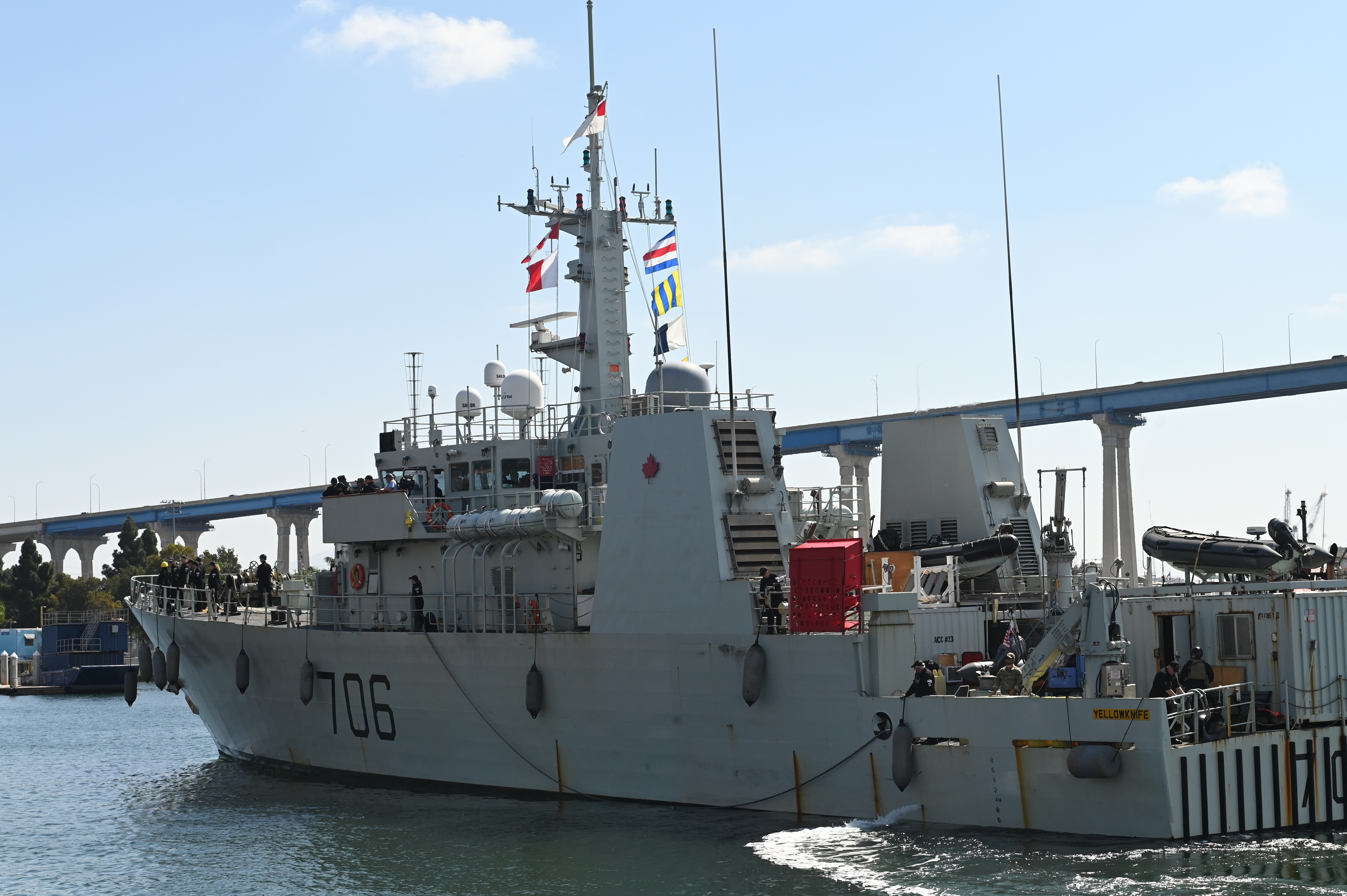
His Majesty’s Canadian Ship Yellowknife (HMCS-706) pulls into the Port of San Diego to offload $44.2 million worth of cocaine, Sept. 12, 2024. The Yellowknife’s crew interdicted a panga-style boat 430 miles southwest of Acapulco, Mexico, September 5 during an Eastern Pacific counter-narcotics patrol under the direction of U.S. Coast Guard District 11 and Joint Inter-Agency Task Force South. (U.S. Coast Guard photo by Chief Petty Officer Levi Read/Released)
HMCS Nanaimo, a Royal Canadian Navy maritime coastal defense vessel operating in support of Operation Martillo
The twelve 970 ton, 55.31 m (181 ft 6 in), Kingston class ships like Yellowknife are smaller and slower (15 knots) than the WMEC210s and has a smaller crew but are about 30 years younger, all having been commissioned 1996-99.
Courtesy Photo | USCGC Escanaba (WMEC 907) and USCGC Richard Snyder (WPC 1127) practice maneuvering with the Royal Canadian Navy’s HMCS Goose Bay (MM 707) in the Davis Strait on Aug. 13, 2021. In Operation Nanook, the U.S. Coast Guard seeks to work collaboratively with other international partners to enhance collective abilities to respond to safety and security issues in the High North through the air and maritime presence activities, maritime domain defense, and security exercises. (Photo courtesy Royal Canadian Navy)
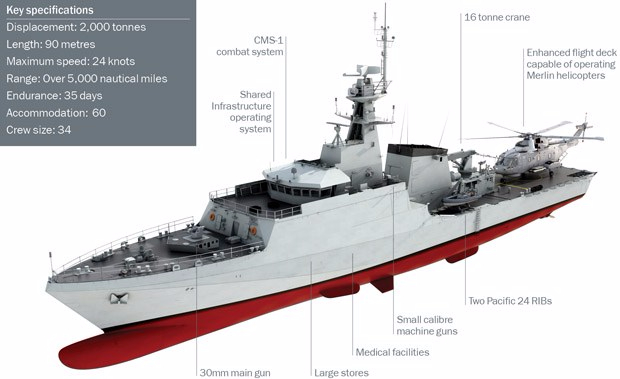
A larger, but still relatively small Offshore Patrol Vessel, has been proposed as a replacement for the class, the Vigilance project. No decision has been made as yet.
Sept. 12, 2024
Photo Release: Coast Guard, Royal Canadian Navy offload $44.2 million worth of drugs in San Diego
U.S. Coast Guard District 11
SAN DIEGO — The Coast Guard and the Royal Canadian Navy offloaded $44.2 million worth of cocaine in San Diego, Thursday morning.
The crew aboard His Majesty’s Canadian Ship Yellowknife (HMCS-706) and a U.S. Coast Guard Law Enforcement Detachment team interdicted more than 3,100 lbs. of cocaine approximately 430 miles southwest of Acapulco, Mexico, September 5.
“I congratulate the entire crew of the Yellowknife for their successful patrol in the Eastern Pacific, and I thank them for their dedicated service,” said Capt. Tim Lavier, Eleventh Coast Guard District chief of response. “Deploying a Coast Guard law enforcement team aboard a Canadian Navy ship in the Eastern Pacific is a significant showcase of the strong relationship we have built with our Canadian partners.”
Multiple U.S. agencies, including the Departments of Defense, Justice, and Homeland Security, collaborate in the effort to combat transnational organized crime. The Coast Guard, Navy, Customs and Border Protection, FBI, Drug Enforcement Administration, and Immigration and Customs Enforcement, along with allied and international partner agencies, all play a role in counter-narcotic operations.
“I would like to thank our crew onboard HMCS Yellowknife and our partners with the U.S. Coast Guard Law Enforcement Detachment team, who worked together to support the interdiction of 3,100 lbs. of cocaine,” said Lt. Cmdr. Tyson Babcock, commanding officer HMCS Yellowknife. “We are proud to contribute to the multinational efforts to address illegal trafficking through Operation CARIBBE, Canada’s contribution to U.S.-led enhanced counternarcotics operations under Joint Interagency Task Force South, to impede the flow of illicit drugs and improve the safety and security of North America, the Caribbean and South America.
The fight against drug cartels in the Eastern Pacific Ocean requires unity of effort in all phases, from detection, monitoring and interdictions to criminal prosecutions by international partners and U.S. Attorneys’ Offices in districts across the nation. The law enforcement phase of counter-smuggling operations in the Eastern Pacific Ocean is conducted under the authority of the Eleventh Coast Guard District, headquartered in Alameda, Calif. The interdictions, including the actual boardings, are led and conducted by members of the U.S. Coast Guard.
These interdictions relate to Organized Crime Drug Enforcement Task Forces (OCDETF) designated investigations. OCDETF identifies, disrupts, and dismantles the highest-level criminal organizations that threaten the United States using a prosecutor-led, intelligence-driven, multi-agency approach. Additional information about the OCDETF program can be found at https://www.justice.gov/OCDETF.
The HMCS Yellowknife (706) is a Kingston-class Coastal Defence Vessel and is one of 12 maritime coastal defence vessels, and is homeported in Esquimalt, British Columbia. It was accepted into the Royal Canadian Navy in 1997 and commissioned, January 30, 1998.
Crew members form U.S. Coast Guard Tactical Law Enforcement Detachment (LEDET) 111 and British Royal Navy team embarked aboard HMS Trent (P244) interdicts a semi-submersible drug smuggling vessel in the international waters of the Caribbean Sea, Aug. 26, 2024. Three suspected smugglers and 1,239 pounds of illegal narcotics from this interdiction were transferred to federal custody for prosecution by the U.S. Department of Justice. (Courtesy image from United Kingdom Royal Navy)
“HMS Trent has made eight drug seizures since deploying to the Caribbean in December 2023, setting a new record, the Royal Navy added.
“It said the patrol ship had seized more than 9,400kg (20,000lb) of drugs, making it the best hunter of smugglers in the Royal Navy this century.”
Below is the Coast Guard news release regarding the offload.
Sept. 10, 2024
Coast Guard offloads more than $54 million in illegal narcotics interdicted in Caribbean Sea
Coast Guard Seventh District – (305) 415-6683
MIAMI – The crew of Coast Guard Cutter Diligence offloaded more than 4,125 pounds of cocaine with an assessed street value of approximately $54 million in Port Everglades, Monday.
Coast Guard crews, working alongside interagency and international partners, seized the illegal drugs in the international waters of the Caribbean Sea during three separate interdictions.
The following assets and crews were involved in the interdictions:
Royal Navy ship HMS Trent (P 244)
U.S. Coast Guard Tactical Law Enforcement Team Pacific (PAC-TACLET)
U.S. Coast Guard Cutter Joseph Napier (WPC 1115)
U.S. Customs and Border Protection Air and Marine Operations (CBP-AMO)
Joint Interagency Task Force South (JIATF-South)
Along with the illicit narcotics, 11 suspected smugglers were apprehended and will face prosecution in federal courts by the U.S. Department of Justice.
“I am extremely proud of our crew’s tenacity and professionalism, coupled with outstanding coordination with Coast Guard aircrews, during this complex counter-drug mission,” said Lt. Matthew Carmine, Coast Guard Cutter Joseph Napier commanding officer. “Their steadfast efforts, along with those of foreign allies and partner agencies, continue to prove vital to countering drug trafficking organizations and safeguarding the people of Puerto Rico and the U.S. Virgin Islands.”
Detecting and interdicting illicit drug traffickers on the high seas involves significant interagency and international coordination. The Joint Interagency Task Force South in Key West, Florida conducts the detection and monitoring of aerial and maritime transit of illegal drugs. Once interdiction becomes imminent, the law enforcement phase of the operation begins, and control of the operation shifts to the U.S. Coast Guard throughout the interdiction and apprehension. Interdictions in the Caribbean Sea are performed by members of the U.S. Coast Guard under the authority and control of the Coast Guard’s Seventh District, headquartered in Miami.
These interdictions relate to Organized Crime Drug Enforcement Task Forces’ (OCDETF) Strike Force Initiatives and designated investigations. OCDETF identifies, disrupts, and dismantles the highest-level criminal organizations that threaten the United States using a prosecutor-led, intelligence-driven, multi-agency approach. Additional information about the OCDETF program can be found at https://www.justice.gov/OCDETF.
Visit GoCoastGuard.com to learn about active duty and reserve, officer and enlisted opportunities in the U.S. Coast Guard. Information on how to apply to the U.S. Coast Guard Academy can be found here.
Guest author Andres Tavolari sent me a link to the Armada de Chile Flickr account which currently has a reported 14,813 photos.
The most recent photos are from UNITAS 2024. There are some really excellent photographs. Presumably as additional photos are added, page numbers will change, but currently, at least the first seven pages, more than 600 photos, are all devoted to UNITAS 2024 and more may be added.
An earlier post provided identification of participants.






 Chuck Hill's CG Blog