“Coast Guard completes mission at Naval Base Guantanamo Bay” –MyCG

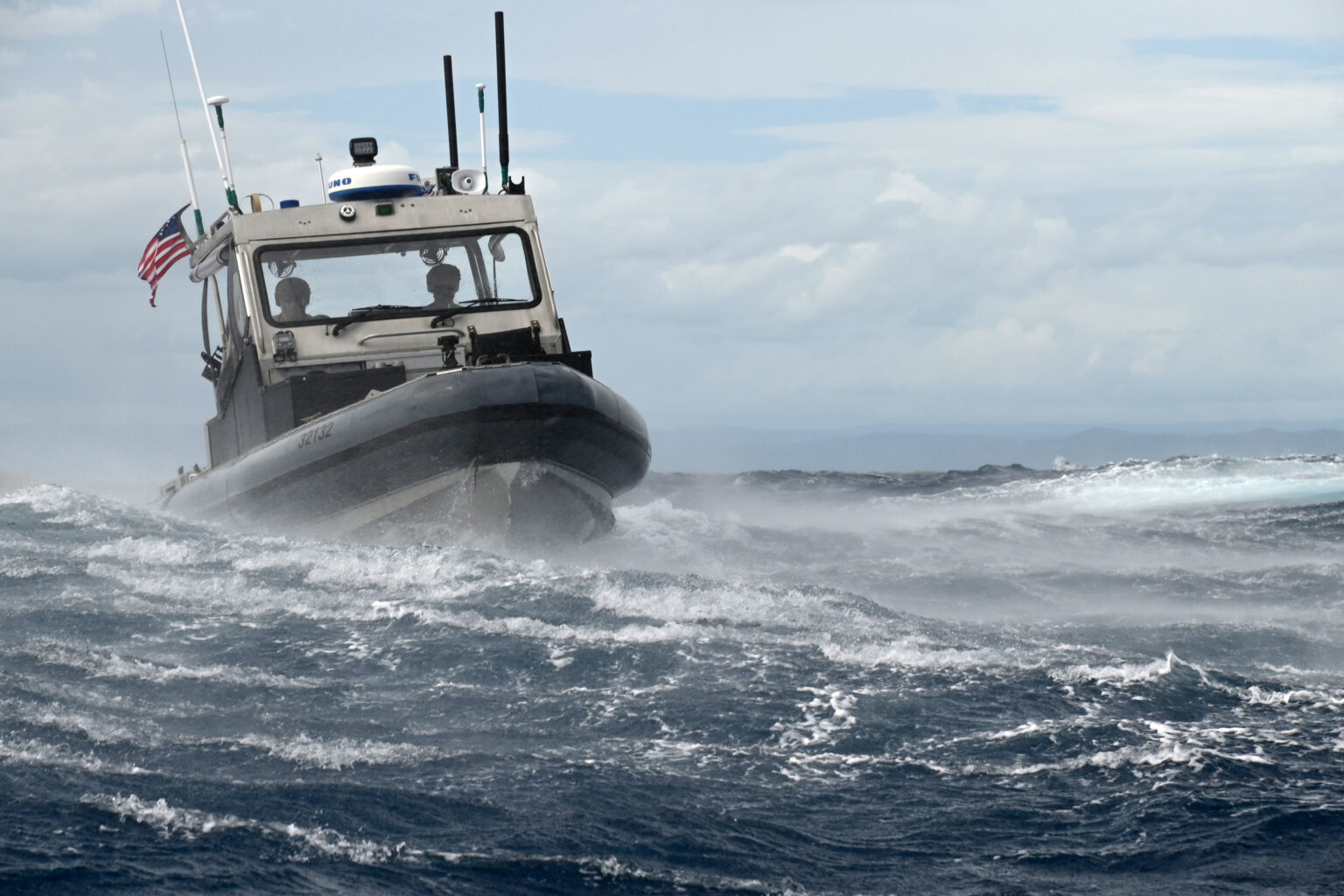
Coast Guardsmen from Port Security Unit 307 conduct seaward security for Department of Defense assets and personnel at Naval Station Guantanamo Bay, Cuba, April 25, 2022. During the nine-month deployment, unit operations focused on maritime defense, providing more than 30,000 hours of around-the-clock waterside and shore side anti-terrorism and force protection. U.S. Coast Guard by photo by Lt. Cmdr. Glenn Sanchez.

Just passing this along from MyCG.


June 16, 2023

Coast Guard completes mission at Naval Base Guantanamo Bay

By Lt. Cmdr. Jeannie Shaye, Coast Guard Public Affairs Officer

NAVAL BASE GUANTANAMO BAY, Cuba — U.S. Coast Guard Port Security Unit (PSU) 305 members conducted a casing of the colors ceremony at Naval Base Guantanamo Bay Tuesday, marking the end of the Coast Guard’s 21-year mission supporting Joint Task Force Guantanamo (JTF-GTMO).

Coast Guard Commandant Adm. Linda Fagan presided over the historical ceremony and presented a Coast Guard Unit Commendation award to the men and women of PSU 305.

Port Security Units are part of the Coast Guard’s deployable specialized forces and have served JTF-GTMO as the Maritime Security Detachment (MARSECDET) in support of Operation Enduring Freedom for over 21 years. The Virginia-based PSU 305 was the first PSU deployed to Guantanamo Bay in 2002 in support of Operation Enduring Freedom, and this tour completes their fifth unit deployment.

“Thanks to the quiet resolve and careful watch of our Port Security Units for the past 21 years, the work our Nation has conducted here has been done safely and securely,” said Fagan during the ceremony.

Coast Guard PSUs and Maritime Safety and Security Teams have provided maritime anti-terrorism force protection for JTF-GTMO since 2002 as a part of the Global War on Terror.

There have been 39 unit rotations to Guantanamo Bay since the Coast Guard began supporting the mission. The men and women assigned to the MARSECDET collectively provided over 200,000 underway hours conducting around-the-clock waterside patrols and over 50,000 hours of shoreside anti-terrorism and force protection defense security to Department of Defense assets and personnel at Naval Station Guantanamo Bay.

Upon the conclusion of the JTF-GTMO mission, PSUs will continue to remain an agile expeditionary force provider that play a critical role in protecting strategic maritime operations in an environment of increasing global competition. In addition, PSUs will participate in national-level joint and combined exercises to increase readiness and proficiency for the full spectrum of PSU capabilities.

“This is an exciting time for the PSU community,” said Capt. Matthew Michaelis, Pacific Area Deputy Chief of Operations. “As the focus shifts from a long-standing enduring mission, we look forward to supporting future missions that align with their diverse set of capabilities. Our PSUs recently completed three joint DoD exercises and are preparing for additional exercises overseas with DoD and some of our trusted partners.  The increased focus on interoperability will better prepare our PSUs to deploy in a joint or multi-lateral environment as they were designed, while also creating opportunities to evolve and uncover new and novel ways for their employment.”

PSUs are Coast Guard Reserve-staffed units that support our nation with well-equipped, trained, and organized expeditionary forces that can rapidly deploy worldwide for anti-terrorism and force protection operations or in defense of high-value assets. Eight PSUs are strategically positioned throughout the country and assigned to the Coast Guard Pacific Area commander in Alameda, Calif.

JTF-GTMO is a U.S. Southern Command task force responsible for the safe, humane, legal care and custody of law of armed conflict detainees; collection and dissemination of intelligence; and supporting military commissions, periodic review boards, and habeas review.

The MARSECDET responsibilities were turned over in May to servicemembers assigned to the Naval Station Guantanamo Bay’s Navy Harbor Patrol Unit and Marine Corps Security Forces.

Following the ceremony, PSU 305 members will return home to Joint Base Langley-Eustis, Va.

Exercises–RIMARCTIC? and Unmanned in UNITAS in July

National Defense has a short post, “JUST IN: Gilday Calls for Massive International Exercise in Arctic.” It talks about doing an exercise comparable to RIMPAC in the Arctic. Chief of Naval Operations, Adm. Michael Gilday is almost certainly talking about an exercise on the Atlantic side of the Arctic, in the Norwegian Sea, above the Greenland-Iceland-UK gap. If the Exercise were held as far North as the Barents Sea, the Russians would probably get very excited.

The Arctic Circle runs just North of Iceland and North of the upper end of the Baltic Sea. Credit: CIA

The Coast Guard would almost certainly participate. The Canadians already host an Arctic Exercise, Nanook, but it is very small scale. It takes place west of Greenland and the US Navy has not generally participated.

(I have serious doubts that this RIMARCTIC is ever going to happen, at least not as something on the scale of RIMPAC. Everyone wants to go to Hawaii.)

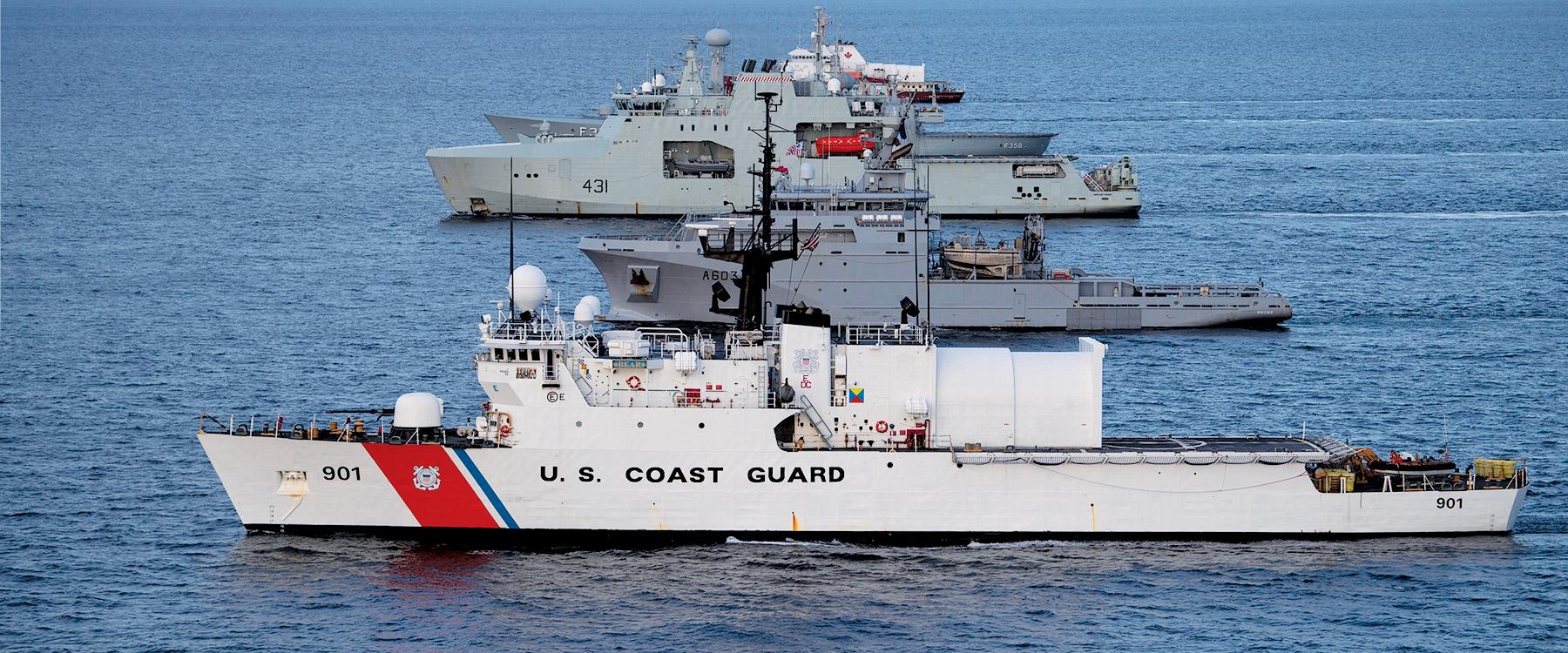
The USCGC Bear (WMEC-901) and allied ships from Canada, Norway, France, and Denmark steam in formation in the North Atlantic Ocean during Operation Nanook in August 2022. 

The post also talks about China’s massive investment in Oceanography and there is an interesting footnote. We have heard 4th Fleet would be start experimenting with Unmanned systems soon, paralleling what has been done in 5th Fleet with Task Force 59. Apparently, it will begin with UNITAS.

The Navy plans to introduce unmanned vessels to their South American partners as a part of the UNITAS naval exercise in July. Uncrewed surface and subsurface boats can monitor sea lanes and search for nefarious activities such as drug smuggling and illegal fishing, he said.

These “potentially unmanned [capabilities] give us, along with allies and partners —which is really key here — the ability to keep an unblinking eye on that kind of activity and collect data,” he said.

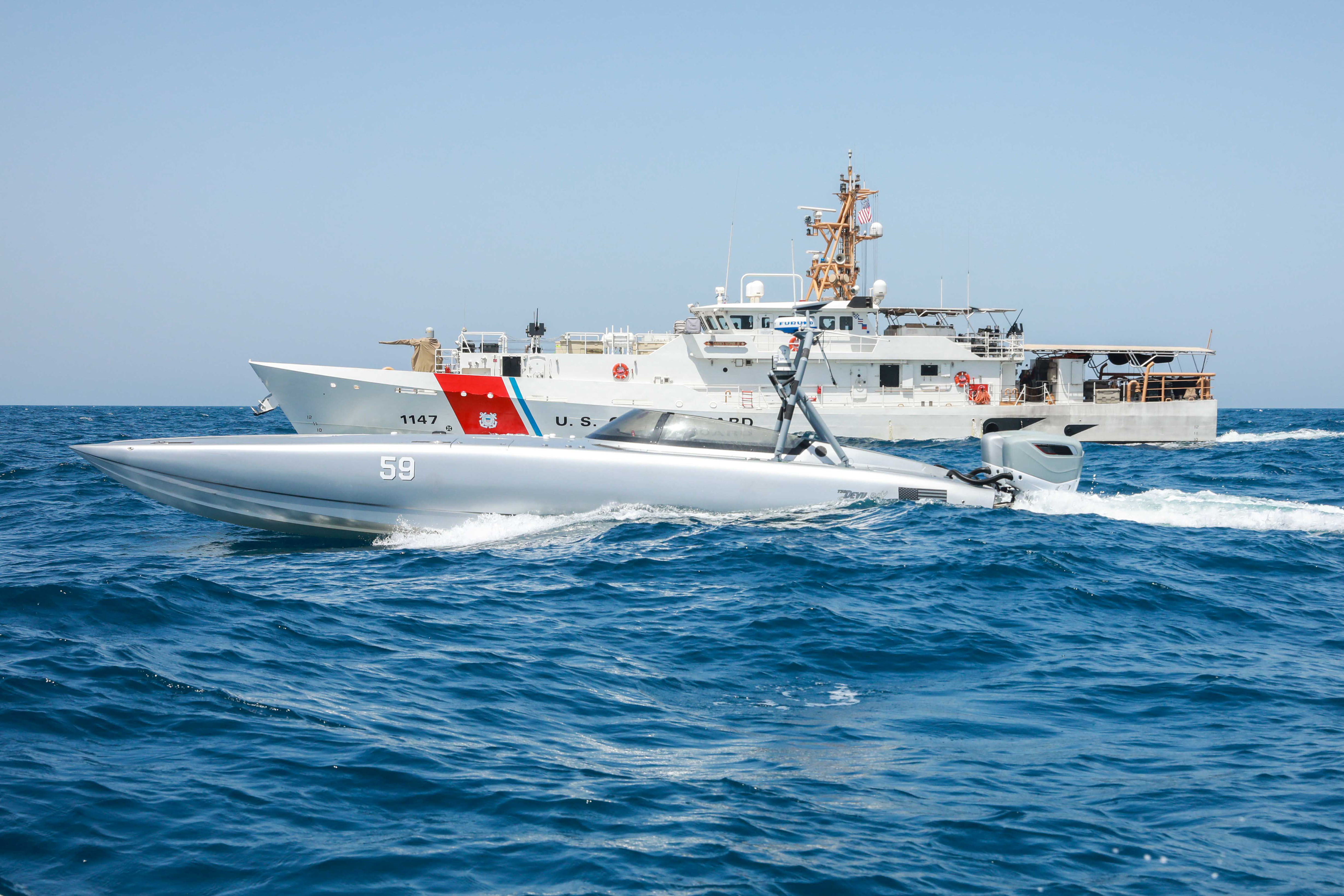
The Coast Guard fast response cutter Clarence Sutphin Jr. sails alongside an unmanned surface vessel in the Persian Gulf during exercise Eagle Resolve 23, June 1, 2023. Eagle Resolve is a combined joint all-domain exercise that improves interoperability with the U.S. military and partner nations, including Saudi Arabia.

Netherlands Navy Talks about Replacing OPVs with Light Amphibious Warfare Ships

A Naval News report, “RNLN Looks At Low-Manned Platform To Augment Frigate Fire Power” talks about the possibility of adding weapons and sensors to lightly manned small vessels to act as extensions of a large warship’s weapons and sensors. Cooperative Engagement Capability probably makes this possible. (Incidentally the vessel shown in the leading illustration is a Damen design 50 meter in length with a beam of 9 meters. More here.)

But the post also discussed another program, a new class of smaller amphibious warships, expected to enter service from the early 2030s, that will also fill the role of Offshore Patrol Vessels.

Captain Van der Kamp also outlined the RNLN’s evolving thinking on a replacement amphibious shipping capability, dubbed LPX…these new ships are also expected to assume the patrol and surveillance tasks currently performed by the navy’s four Holland class patrol vessels…“We would combine these amphibious ships with the function of a patrol vessel to do Coastguard patrols in the Caribbean and counter-drugs operations in the Caribbean.”

The four Holland class OPVs were commissioned 2012 to 2013, so in the early 2030s they will be at the most 23 years old. These ships are similar in size, speed, capabilities, and mission to the OPCs. They have frequently conducted drug interaction missions in the Caribbean with US Coast Guard Law Enforcement Detachments embarked and at least on one occasion using a USCG helicopter.

The other two ships being replaced, HNLMS Rotterdam and HNLMS Johan de Witt. are older, commissioned in 1998 and 2007. They have a combined capability to land about 1200 Marines. I presume the cumulative capability of the new ships will be similar. Each of them can also carry up to 32 tanks, but the Netherlands Marine Corps does not have any tanks, nor do they have organic heavy artillery. Their only armored vehicles are much smaller, so perhaps the replacement ships will not need the capability to handle tanks.

Why is the Netherlands Navy choosing to do this?

Going from six ships to perhaps only four is likely to decrease the total crew requirements.

It may be that the landing ships are considered better able to meet the disaster response component that has been one of the OPVs’ missions.

The Netherlands Navy may not see any wartime role for the OPVs, or at least no role the new LPX could not also do.

Nevertheless, it seems the changes is rooted in changes in the Marine Corps concept of operation.  “…leaner and smaller units that would unload further away from land.”

It may be significant that the new ships are referred to as LPX not LPDX. That may mean that they would not have a well deck. It might be thought they are paralleling US Marine Corp thinking that resulted in the Marines shedding their tanks and heavy artillery and the formation of a Littoral Regiment and a program to build relatively small Landing Ship, Mediums. On the other hand, given the way the Netherlands Marine Corps names their units, “Raiding Section,” “Raiding Troop,” and “Raiding Squadron,” they obviously see themselves as a raiding organization more akin to the British Royal Marine Commandos of WWII than to the US Marine Corps that seized and held islands in the Pacific. They do have a long and continuing association with the Royal Marines. In any case they are and probably will remain essentially light infantry.

If the new ships are to replace the four OPVs, then I would presume they would still need at least four ships. If they were following the USMC example, they may build a larger number of smaller ships, but I don’t think that will be the case. If they are to “…unload further away from land,” they are going to be very different from the beachable LSMs envisioned by the US Marines. The British developed LCVP Mk5c used by the Netherlands Marine Corps are big boats, 15.7 m (51 ft 6 in) in length and displacing 24 tons. If they are to be swung from davits, it will not be from a small ship.

I would not be surprised if the LPX program came out as four ships that look a lot like slightly larger Danish Absalon class (which can reportedly transport a company-sized landing force of some 200 soldiers with vehicles). Four ships that could each transport 300 Marines, each equipped with four LCVPs (or its replacement), a pair of “FRISC” (Fast Raiding, Interception and Special forces Craft) RHIB, with hangar space for a couple of helicopters, could replicate the transport capacity of the two LPDs in a more flexible, distributed, and perhaps more survivable force package. The resulting ships would effectively be modern high-speed transports (APD/LPR).

“VIDEO: Colombian Navy intercepts largest narco sub yet” –Marine Log

MarineLog reports,

“…On May 12, the Columbian Navy reported it had intercepted the largest narco sub seized since its first capture of one of the semi-submersible low profile vessels in 1993…the substances seized were cocaine hydrochloride and had a net weight of 3,058 kilograms.

“To put that in perspective, in one of the largest narco sub interdictions by U.S authorities, in April 2021 a U.S. Customs and Border Protection (CBP) Air and Marine Operations (AMO) aircraft assisted the U.S. Coast Guard seizure of approximately 2,500 kilograms of cocaine from a semi-submersible vessel.”

“USCGC Forward returns home following counterdrug patrol in the Caribbean Sea”

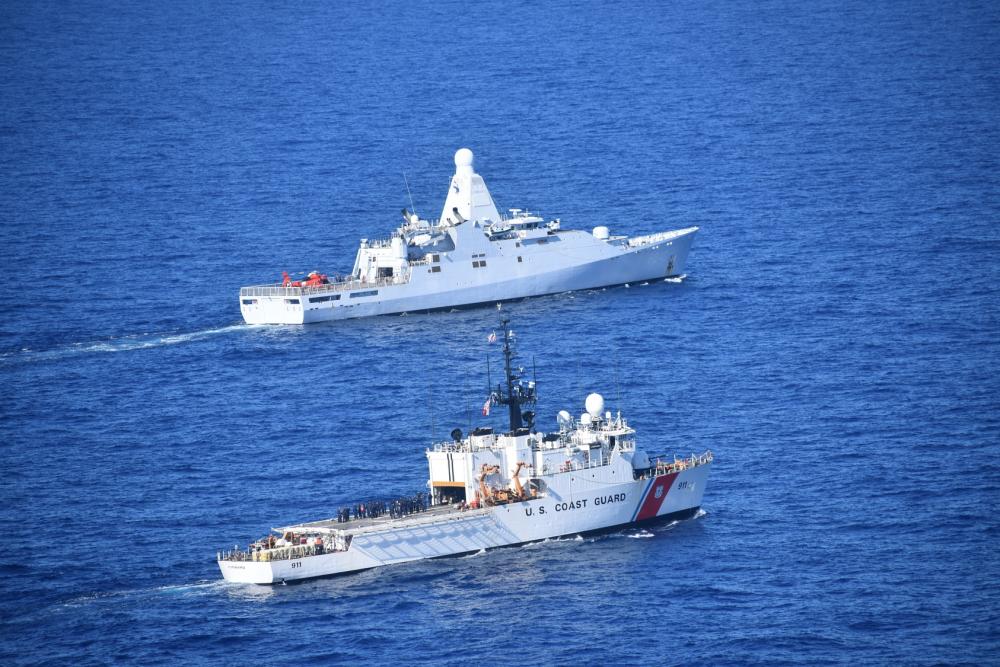
USCGC Forward (WMEC 911) and Royal Netherlands Navy ship HNLMS Holland (P840) steam in formation for a transfer of contraband cocaine in the Atlantic Ocean Nov. 4, 2022, presumably a previous patrol.  (U.S. Coast Guard photo by Petty Officer 3rd Class Amy Rodriguez)

Below is a news release found on United States Coast Guard News. Generally, it is pretty normal drug interdiction news release.

I did kind of question this.

Throughout the patrol, Forward held approximately 4,700 pounds of cocaine on deck worth an estimated $81 million. Forward intercepted three suspected narcotics smugglers earlier this month and held nine others throughout the patrol. On Tuesday, the crew conducted a further offload to partner agencies in Port Everglades, Florida.

Nowhere does it say how long the patrol was other than “multi-week,” kind of important and not something we can keep secret. Why would prisoners be transferred on board a cutter that has just arrived? The service has been criticized in the past for holding prisoners on board for long periods in conditions that are considered by many to be inhumane. I won’t get into that, but it does seem we would want to get them ashore as quickly as possible. Maintaining custody of prisoners is a strain on the ship that it is not designed or billeted for.

Also, there is an error in the news release I cannot let pass.

Part of this effort included international partnerships with the HNLMS Holland (P840) of the Royal Netherlands Navy and other U.S. military vessels, including USCGC Campbell (WMEC 909), USCGC Margaret Norvell (WPC 1105), and USS Little Rock (CL 92).

USS Little Rock (CL 92) is a museum ship moored in Buffalo, NY, a Cleveland class light cruiser first commissioned in 1945, converted to a guided missile cruiser, she was decommissioned in 1976. I am pretty sure they intended to reference USS Little Rock (LCS-9). We need to do better. If you don’t know the proper designation, just leave it off. Can’t imagine how they made this mistake, unless they just googled USS Little Rock and saw a designation without reading anything about the ship it was associated with.

 April 24, 2023

USCGC Forward returns home following counterdrug patrol in the Caribbean Sea

PORTSMOUTH, Va. — The crew of the USCGC Forward (WMEC 911) returned to their home port in Portsmouth, Saturday, following a multi-week training exercise and counterdrug deployment in the central Caribbean Sea.

While underway in the Seventh Coast Guard District’s area of responsibility and in support of Joint Interagency Task Force–South, Forward traveled more than 6,000 miles conducting counterdrug operations as part of a multi-faceted approach to combatting illicit narcotics trafficking across maritime borders.

Part of this effort included international partnerships with the HNLMS Holland (P840) of the Royal Netherlands Navy and other U.S. military vessels, including USCGC Campbell (WMEC 909), USCGC Margaret Norvell (WPC 1105), and USS Little Rock (CL 92).

Throughout the patrol, Forward held approximately 4,700 pounds of cocaine on deck worth an estimated $81 million. Forward intercepted three suspected narcotics smugglers earlier this month and held nine others throughout the patrol. On Tuesday, the crew conducted a further offload to partner agencies in Port Everglades, Florida.

“The crew lived up to our namesake ‘Ever the Sentinel’ and was ready to take on any mission,” said Cmdr. Staci Rutsch, Forward’s commanding officer. “Forward’s crew demonstrated the Coast Guard’s resiliency and adaptability by maintaining proficiency in interagency and international operations while upholding the ability to meet the nation’s maritime demands. I am truly impressed and thankful for their devotion to duty.”

Forward is a 270-foot, Famous-class medium endurance cutter. The cutter’s list of mission sets include law enforcement, search and rescue, protection of living marine resources, homeland security and defense operations, international training and humanitarian operations throughout the Western Hemisphere.

For information on how to join the U.S. Coast Guard, visit http://www.GoCoastGuard.com to learn more about active duty and reserve officer and enlisted opportunities. Information on how to apply to the U.S. Coast Guard Academy can be found at http://www.uscga.edu. For more, follow us on Facebook, Instagram and Twitter.

“Unmanned Surface Vessel Transits Strait of Hormuz with U.S. Coast Guard” –NAVCENT

A U.S. Navy L3 Harris Arabian Fox MAST-13 drone boat and the U.S. Coast Guard cutters USCGC John Scheuerman and USCGC Charles Moulthrope transit the Strait of Hormuz on Wednesday, April 19, 2023. (Information Systems Technician 1st Class Vincent Aguirre/U.S. Coast Guard)

Below is a NAVCENT news release. It is quite apparent that the PATFORSWA Webber class WPCs have become the go-to resource for operation with the US Navy’s Task Force 59 unmanned surface vessels. Will we see something similar emerge when UAS start operating under 4th Fleet in the near future?

Unmanned Surface Vessel Transits Strait of Hormuz with U.S. Coast Guard

19 April 2023

From U.S. Naval Forces Central Command Public Affairs

MANAMA, Bahrain – An unmanned surface vessel from U.S. 5th Fleet transited the Strait of Hormuz with two U.S. Coast Guard cutters, April 19, demonstrating the continued operational integration of unmanned and artificial intelligence systems by U.S. maritime forces in the Middle East.

A U.S. Navy L3 Harris Arabian Fox MAST-13 drone boat and the U.S. Coast Guard cutter USCGC John Scheuerman transit the Strait of Hormuz on April 19, 2023. (Information Systems Technician 1st Class Vincent Aguirre/U.S. Coast Guard)

USCGC Charles Moulthrope (WPC 1141) and USCGC John Scheuerman (WPC 1146) transited one of the world’s most strategically important straits with an L3 Harris Arabian Fox MAST-13 unmanned surface vessel. The three vessels sailed south from the Arabian Gulf and through the narrow Strait of Hormuz before entering the Gulf of Oman.

“I am proud to be a part of this great partnership between the U.S. Coast Guard and Navy in the Middle East. We often work side-by-side as one team with a common mission to provide security and safeguard the seas,” said Lt. Trent Moon, John Scheuerman’s commanding officer.

U.S. 5th Fleet established a unit called Task Force 59 in September 2021 to integrate unmanned systems and artificial intelligence into regional maritime operations. Since its launch, the task force has deployed a suite of new unmanned systems from operational hubs in Jordan and Bahrain.

In December, Task Force 59 launched an Aerovel Flexrotor unmanned aerial vehicle from USCGC Emlen Tunnell (WPC 1145) while operating in the Arabian Gulf. The launch marked Task Force 59’s first from a U.S. Coast Guard vessel at the time.

“We are on the cutting-edge of integrating advanced unmanned technology into our maritime patrols. Our crews are excited to help lead these efforts with our Navy counterparts,” said Lt. Stephen Hills, Charles Moulthrope’s commanding officer.

U.S. 5th Fleet is leading regional efforts to increase vigilance in surrounding waters that include more than 5,000 miles of coastline from the Suez Canal, around the Arabian Peninsula, through the Strait of Hormuz and into the Arabian Gulf. The integration of unmanned platforms and sensors alongside crewed ships from the United States and regional partners enhances this capability.

The two Coast Guard cutters and Arabian Fox transited the Strait of Hormuz while operating in support of the International Maritime Security Construct, an 11-nation coalition led by the United States that focuses on maritime operations near key waterways in the Middle East.

“FACT SHEET: The Biden Administration Launches New Efforts to Counter Transnational Criminal Organizations and Illicit Drugs” –Expect Changes In Drug Interdiction

The administration has issued a new fact sheet reflecting the growing problem of street use of synthetic opioids, particularly Fentanyl. This is in conjunction with a larger effort against the supply chains for synthetic opioids and the international criminal enterprises that control and use them.

Inevitably the emergence a different “drug of choice” is going to affect the Coast Guard. It probably means a greater role for marine inspection and greater competition from other DHS agencies for drug interdiction dollars.

While the Coast Guard has been the primary agency for interception of cocaine shipments, the importation pathways for synthetic opioids are likely to be different and more diverse.

Interception of precursors will get more attention. Intelligence targets will change.

The system the Coast Guard has developed to track what cargoes are loaded and where, will take on additional importance and may require more detail.

I can only speculate on the changes we will see, but changes are coming.

“U.S. Coast Guard, U.S. Navy, Mexican Navy and Royal Canadian Navy participate in North American Maritime Security Initiative” –D11

Illustration of a Mexican Navy Oaxaca class Offshore Patrol Vessel. ARM Hidalgo is a vessel of this class.

Below is a news release from District 11 you can also see on the Coast Guard News website. There are additional photos there. I have put together photos to illustrate the type vessels involved.

190729-N-AD499-1166 SEATTLE (July 29, 2019) The Royal Canadian Navy Kingston-class coastal defence vessel HMCS Edmonton (MM 703) participates in a parade of ships in Elliott Bay during the 70th annual Seattle Fleet Week. Seattle Fleet Week 2019 is a time-honored celebration of the sea services and provides an opportunity for the citizens of Washington to meet Sailors and Coast Guardsmen, as well as witness firsthand the latest capabilities of today’s maritime services. (U.S. Navy photo by Mass Communication Specialist 3rd Class Victoria Foley/Released)

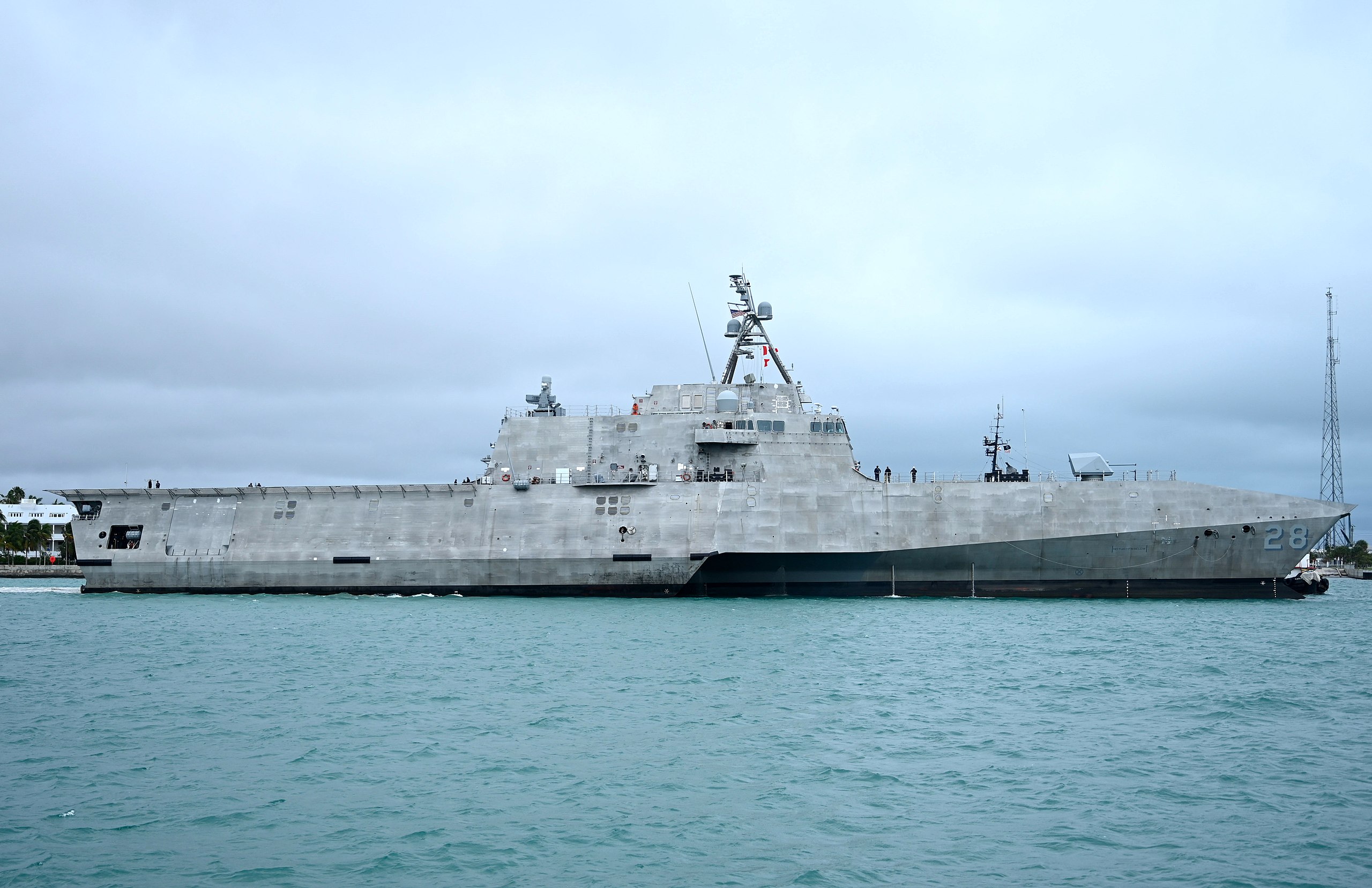
220209-N-IW125-1091 KEY WEST, Fla. (Feb. 9, 2022) The Navy’s 14th Independence-variant littoral combat ship, USS Savannah (LCS 28), pulls into Truman Harbor in Key West, Fla. Feb. 9, 2022. (U.S. Navy photo by Mass Communication Specialist 2nd Class Nicholas V. Huynh)

NEWPORT, OR, UNITED STATES
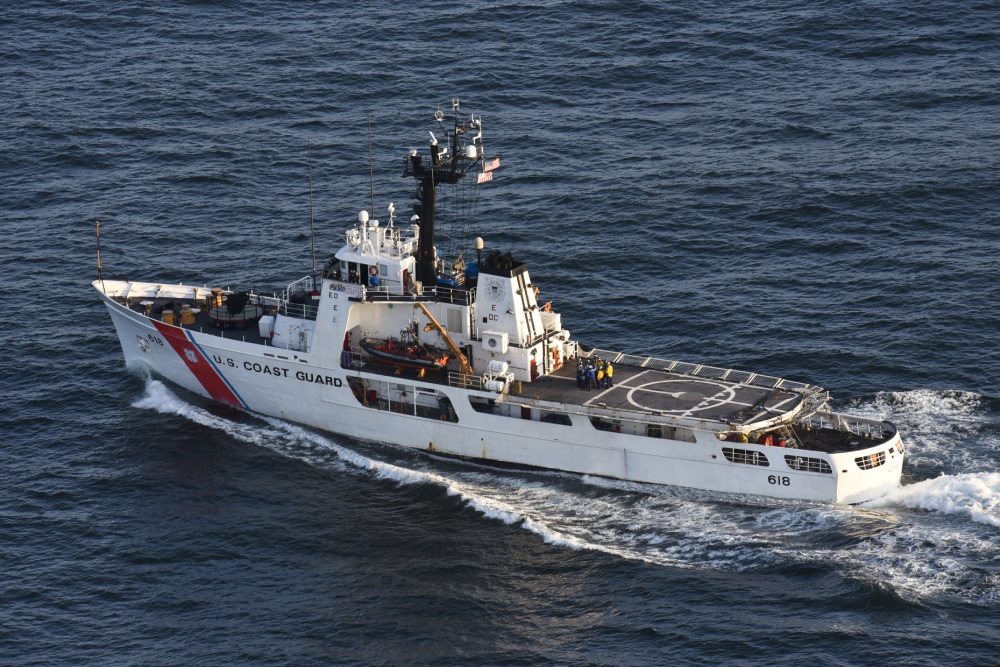
08.16.2019, Coast Guard Cutter Active (WMEC 618) transits across the Pacific Ocean near Newport, Ore., in support of Operation Pacific Fortune on Aug. 16, 2019. The Active is a 210-foot Medium Endurance based out of Port Angeles, Wash. (U.S. Coast Guard photo by Petty Officer 2nd Class Steve Strohmaier)

 April 6, 2023

U.S. Coast Guard, U.S. Navy, Mexican Navy and Royal Canadian Navy participate in North American Maritime Security Initiative

ALAMEDA, Calif. — The U.S. Coast Guard, along with the U.S. Navy, Mexican Navy (SEMAR) and the Royal Canadian Navy (RCN) participated in the North American Maritime Security Initiative (NAMSI) exercise off the coast of Manzanillo, Mexico March 27-31.

First instituted in 2008, NAMSI is an interagency and tri-lateral forum among U.S., Mexican and Canadian maritime commands intended to develop and refine maritime operations, as well as synchronize training and operational interoperability amongst forces of the three nations. The three participating nations actively seek opportunities to operate together and strengthen their cohesive approach to enhance regional maritime security in North America.

The U.S. Coast Guard District 11 and SEMAR collaborate extensively under NAMSI, conducting an average of four multinational passing exercises each year. The NAMSI Pacific Exercise (PACEX) 2023 is a full-scale Maritime Law Enforcement (MLE) based exercise that facilitates MLE operations with a SAR nexus built in. The exercise is intended to strengthen the crew’s knowledge in handling various situations and offers unique training scenarios like communication drills or maneuvering exercises.

“This exercise provides U.S., Mexico and Canada the opportunity to develop and refine our training and operations as partner nations,” said Rear Adm. Andrew Sugimoto, commander, U.S. Coast Guard District 11. “We take pride in our ability to strengthen partnerships and interoperability among the nations’ sea services.”

The U.S. Coast Guard Cutter Active and the U.S. Navy Independence-variant littoral combat ship USS Savannah (LCS 28), joined the SEMAR ship ARM Hidalgo and the RCN ship HMCS Edmonton, off the coast of Manzanillo in support of the NAMSI PACEX 2023. The operational units were supported by aviation assets from the U.S. Coast Guard and SEMAR, as well as the respective command centers in U.S. Coast Guard District 11, U.S. Navy 3rd fleet, SEMAR Tenth Naval Region and SEMAR headquarters.

The crews of Active and U.S. Coast Guard cutter Benjamin Bottoms also deployed in support of Operation GREEN FLASH (OGF). OGF is the operationalization of NAMSI procedures leveraging U.S., Canadian, and Mexican maritime forces, with the intent of disrupting transnational criminal organization activity that occurs in the shared maritime environment. U.S. Coast Guard District 11 organizes annual iterations of OGF which strengthens the relationship between the major stakeholders under NAMSI. Historically, there have been two iterations of OGF a year, averaging 30 days each.

“The cutter Active’s crew was excited to conduct this mission alongside our partners given its importance for the safety and security of the shared maritime environment,” said Cmdr. Brian Tesson, commanding officer, U.S. Coast Guard Cutter Active. “The partnerships between the U.S., Mexico and Canada strengthened our overall maritime security posture while reinforcing the mutual esprit de corps between our services.”

“USS Farragut, Coast Guard offloads more than $69 million in illegal narcotics” –D7

190914-N-KK394-029.MAYPORT, Fla. (Sept. 14, 2019) The Arleigh Burke-class guided-missile destroyer USS Farragut (DDG 99) departs Naval Station Mayport. (U.S. Navy photo by Mass Communication Specialist 2nd Class Anderson W. Branch/Released)

Below is a District Seven News Release. Just wanted to point out a couple of things.

Unlike most of these offloads, this one involved only drugs seized by a single ship. Second it is unusual that drugs are offloaded from a Navy ship. Probably a good idea to let them get the more visible credit that comes with the offload once in a while. 

This destroyer did four intercepts, so they certainly deserve a lot of credit, along with the HSM-60 helicopter and CG LE detachments.

Would have been nice to know how many days they were doing the drug interdiction mission.


 April 5, 2023

USS Farragut, Coast Guard offloads more than $69 million in illegal narcotics

Seventh Coast Guard District

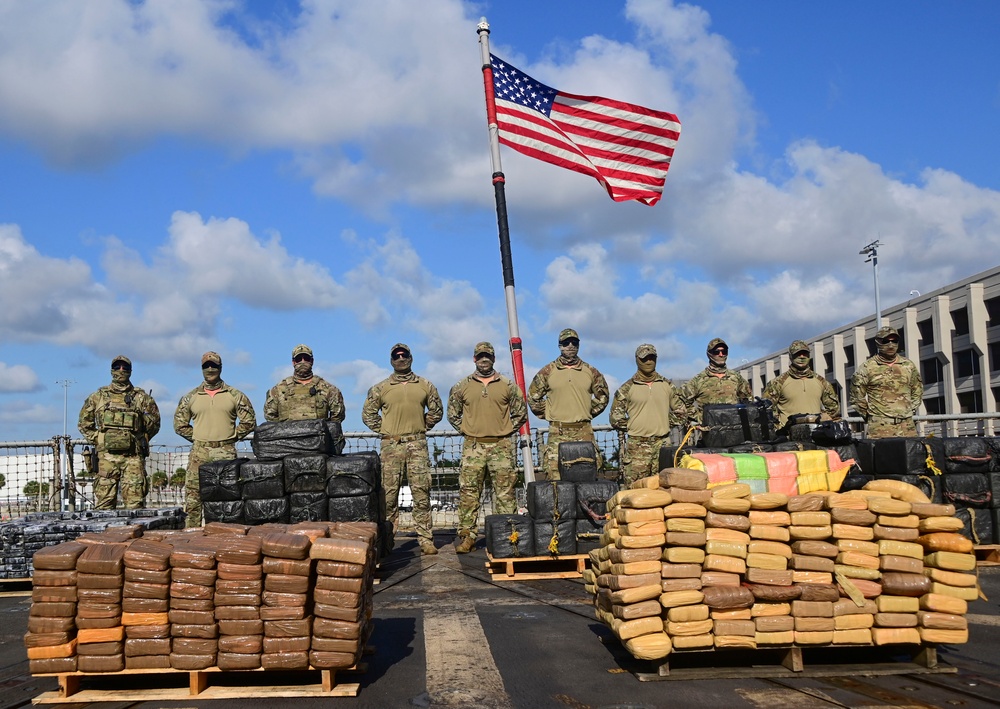
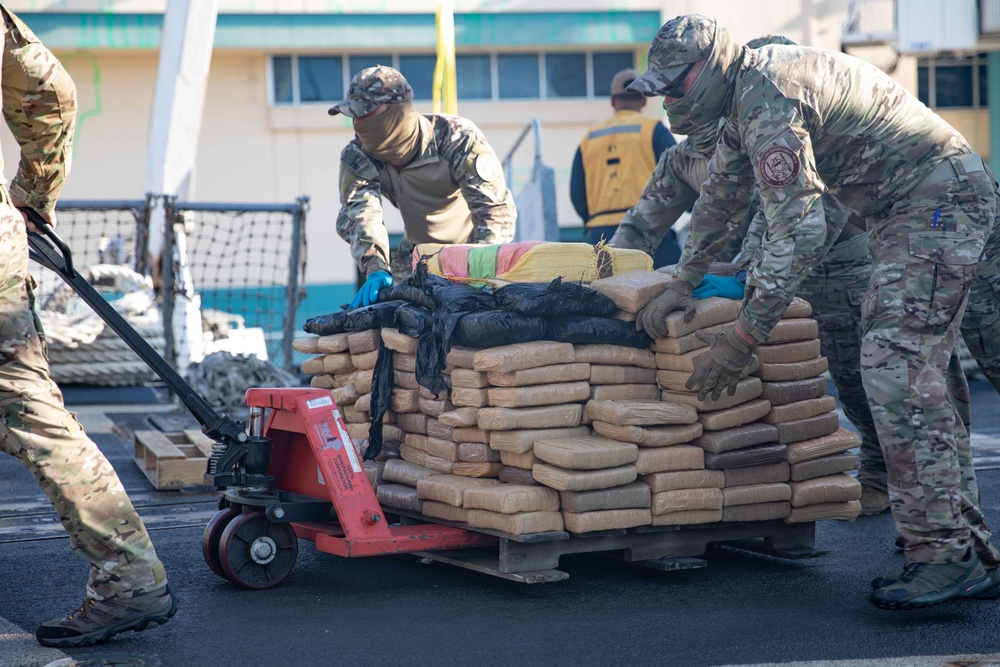
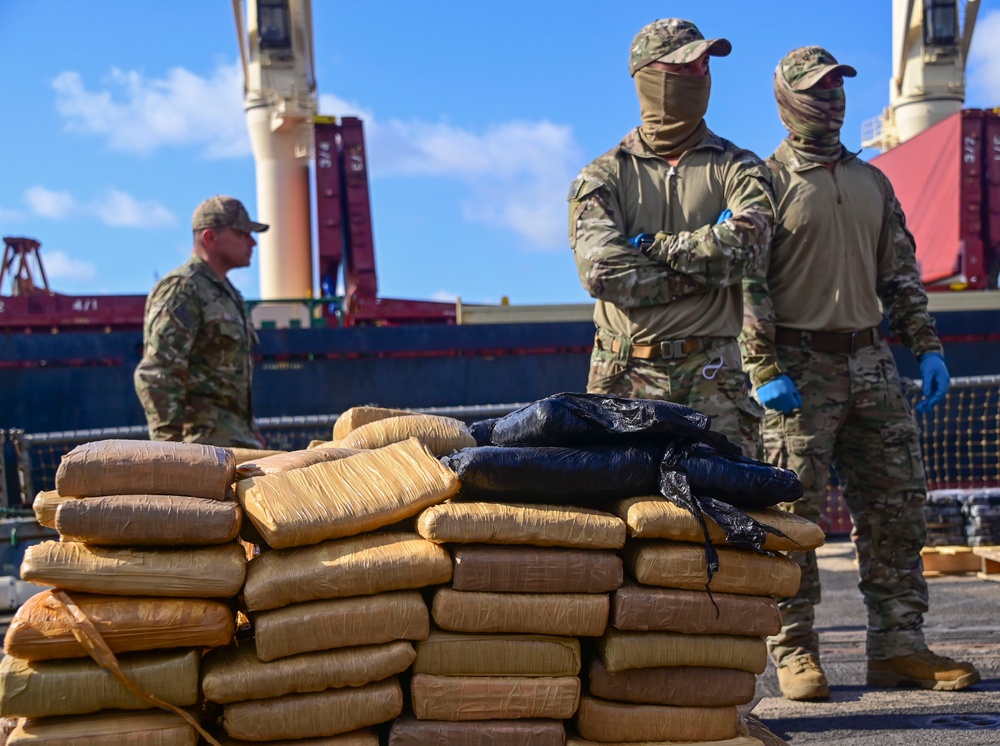
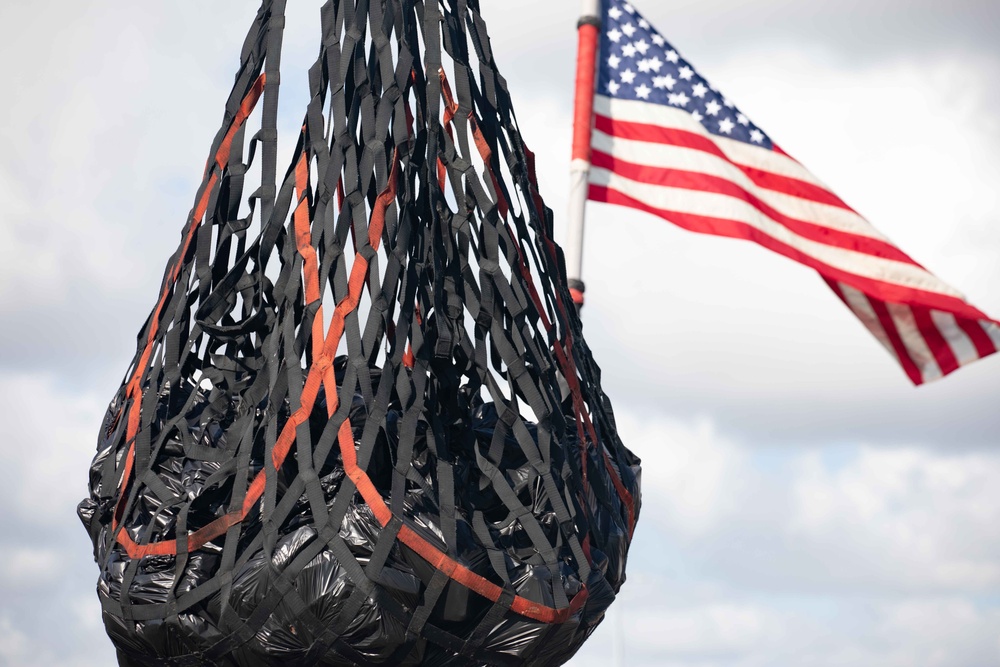
A member of U.S. Coast Guard Law Enforcement Detachment 406 offloads interdicted narcotics aboard USS Farragut (DDG 99) in Port Everglades, Florida, April 4, 2023. The offloaded drugs were seized from four go-fast smuggling interdictions by crew members of Coast Guard LEDET 406, Navy Combat Element (CEL) and Helicopter Maritime Strike Squadron Six Zero (HSM-60) in the Eastern Pacific Ocean. (U.S. Coast Guard photo by Petty Officer 2nd Class Laticia Sims)Members of U.S. Coast Guard Law Enforcement Detachment 406 pose for a photo with $69 million in illegal narcotics aboard USS Farragut (DDG 99) in Port Everglades, Florida, April 4, 2023. The offloaded drugs were seized from four go-fast smuggling interdictions by crew members of Coast Guard LEDET 406, Navy Combat Element (CEL) and Helicopter Maritime Strike Squadron Six Zero (HSM-60) in the Eastern Pacific Ocean. (U.S. Coast Guard photo by Petty Officer 3rd Class Eric Rodriguez) Members of U.S. Coast Guard Law Enforcement Detachment 406 push bales of illegal narcotics aboard USS Farragut (DDG 99) for a drug offload in Port Everglades, Florida, April 4, 2023. The offloaded drugs were seized from four go-fast smuggling interdictions by crew members of Coast Guard LEDET 406, Navy Combat Element (CEL) and Helicopter Maritime Strike Squadron Six Zero (HSM-60) in the Eastern Pacific Ocean. (U.S. Navy photo by Mass Communication Specialist 2nd Class Chelsea Palmer) https://d1ldvf68ux039x.cloudfront.net/thumbs/photos/2304/7724658/1000w_q95.jpg Bales of illegal drugs, worth an estimated $69 million, are offloaded off USS Farragut (DDG 99) in Port Everglades, Florida, April 4, 2023. The offloaded drugs were seized from four go-fast smuggling interdictions by crew members of Coast Guard LEDET 406, Navy Combat Element (CEL) and Helicopter Maritime Strike Squadron Six Zero (HSM-60) in the Eastern Pacific Ocean. (U.S. Navy photo by Mass Communication Specialist 2nd Class Chelsea Palmer)


MIAMI — The crew of USS Farragut (DDG 99) offloaded approximately 2,314 kilograms of cocaine and 1,986 pounds of marijuana worth a combined $69 million in Port Everglades, Florida Tuesday. The suspected smugglers will face prosecution in federal court by the Department of Justice.

The offloaded drugs were seized from four go-fast smuggling vessel interdictions by the Farragut crew with an embarked Coast Guard Law Enforcement Detachment (LEDET) 406 and Navy Combat Element (CEL) One from the “Jaguars” of Helicopter Maritime Strike Squadron Six Zero (HSM-60) in the Eastern Pacific Ocean.

“We were proud to work with the U.S. Coast Guard on the frontline of the threat that transnational drug trafficking presents to national security,” said Cmdr. Nicholas Gurley, commanding officer of USS Farragut. “Our experienced crew, HSM-60 CEL One and the members of our LEDET were essential to the success of this operation.”

Numerous U.S. agencies from the Departments of Defense, Justice, and Homeland Security, along with allied and international partners, cooperate in the effort to combat transnational organized crime. The fight against drug cartels in the Caribbean and Eastern Pacific Ocean is coordinated by Joint Interagency Task Force-South, based in Key West, and requires a unity of effort in all phases, from detection and monitoring to interdiction and apprehension and finally to criminal prosecution by international partners and U.S. Attorneys’ Offices. The law enforcement phase of counter-smuggling operations in the Eastern Pacific Ocean is conducted under the authority of the Eleventh Coast Guard District, headquartered in Alameda, California. The interdictions, including the actual boardings, are led and conducted by members of the U.S. Coast Guard.

The Coast Guard is both a military service and the nation’s primary maritime law enforcement agency. For information on how to join the U.S. Coast Guard, visit www.GoCoastGuard.com to learn about active duty and reserve officer and enlisted opportunities. Information on how to apply to the U.S. Coast Guard Academy can be found at http://www.uscga.edu. For breaking news, follow us on Twitter. For additional information, find us on Facebook and Instagram.

“Navy Expands Unmanned Operations to 4th Fleet” –Defense One

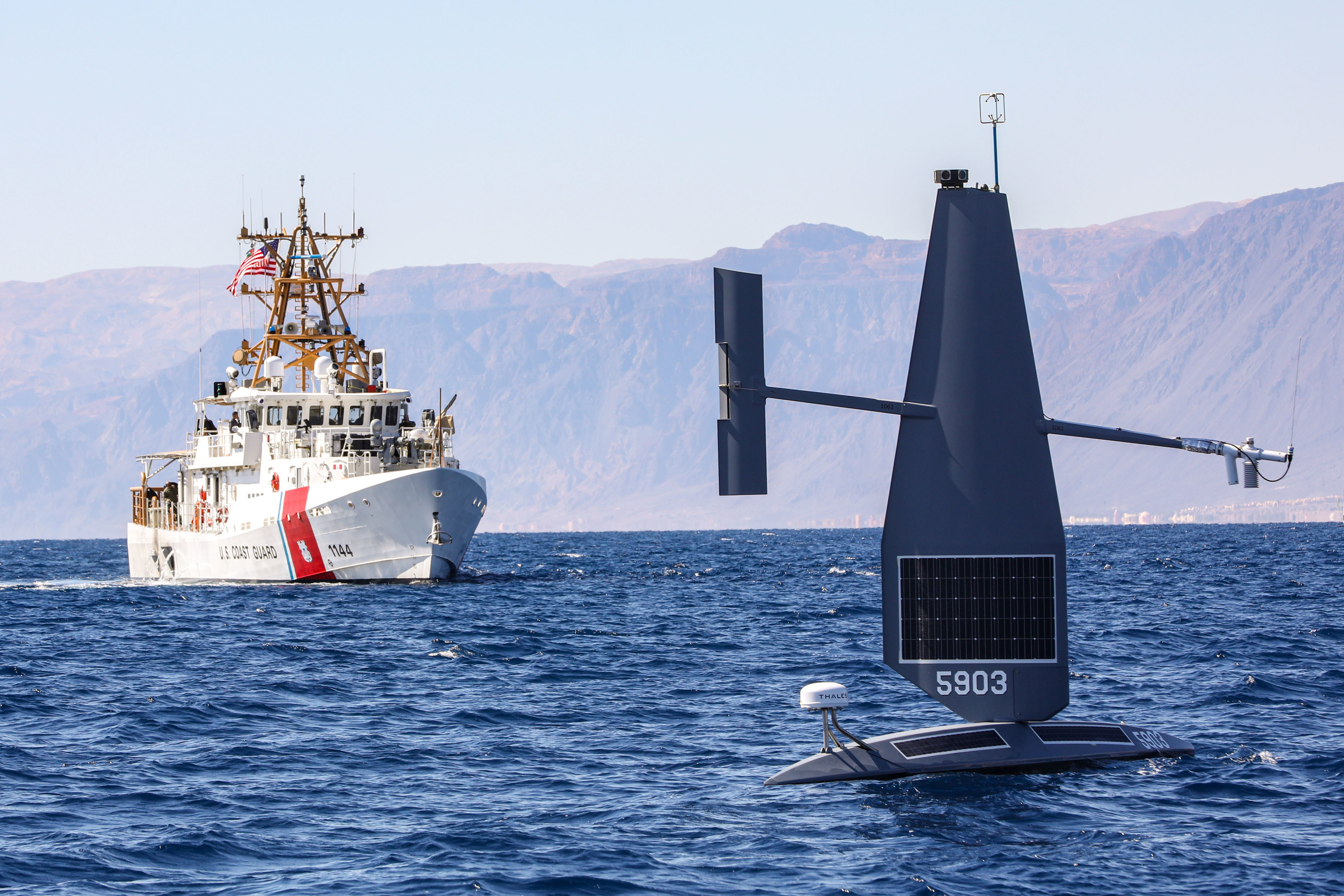
GULF OF AQABA (Feb. 13, 2022) The U.S. Coast Guard Sentinel-class cutter USCGC Glen Harris (WPC 1144) sails near a U.S sail drone explorer during the International Maritime Exercise/Cutlass Express (IMX) 2022, Feb. 13, 2022. IMX/CE 2022 is the largest multinational training event in the Middle East, involving more than 60 nations and international organizations committed to enhancing partnerships and interoperability to strengthen maritime security and stability. (U.S. Army photo by Cpl. DeAndre Dawkins)

Defense One reports,

“Drones are heading to the southern waters of 4th Fleet, which will follow 5th Fleet’s pioneering experiments with unmanned craft in the Middle East, Navy Secretary Carlos Del Toro announced Tuesday at the Navy League’s 2023 Sea-Air-Space Conference.”

This is great, and not unexpected, but I noted two things that concern me. First there was not mention of making this an international effort, as has been the case in 5th Fleet, and second, that they want to start in the Caribbean where we already have excellent maritime domain awareness, instead of the eastern Pacific drug transit zone where these are really needed.

Del Toro added, “it’s fair to say however, you want to start small and build upon it, obviously. And so you know, focus perhaps on the Caribbean Basin first, and then expand beyond that in the future.”

I can see that they would be more comfortable operating UxVs in the Caribbean, because it is closer to home, but in the Eastern Pacific we could look at Uncrewed Surface Vessels (USV) using acoustic sensors to help detect semisubmersibles. This is something that is not being done in 5th Fleet so it would provide a different sensor and target set and perhaps an opportunity to cross over some of the learning to ASW.

Of course, most of the 4th Fleet’s surface ships are Coast Guard Cutters.