Pacific NW WMEC-210s Doing Drug Interdiction

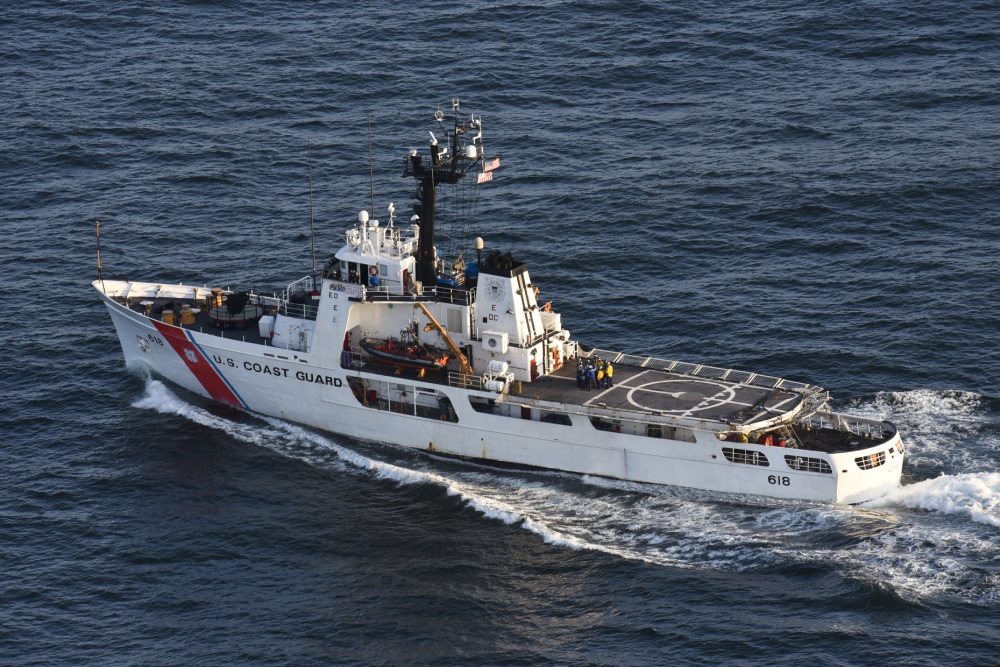
USCGC Active (WMEC 618) Aug. 16, 2019. Active is a 210-foot Medium Endurance based out of Port Angeles, Wash. (U.S. Coast Guard photo by Petty Officer 2nd Class Steve Strohmaier)

Below is a news release from the Coast Guard News website. What I would like to talk about is here:

  • The Waesche’s crew was responsible for two interdictions seizing approximately 881 pounds of cocaine and 9,500 pounds of marijuana. 
  • The crew of the Coast Guard Cutter Steadfast (WMEC 623) was responsible for one interdiction, seizing approximately 3,300 pounds of cocaine. 
  • The crew of the Coast Guard Cutter Active (WMEC 618) was responsible for two interdictions seizing approximately 2,116 pounds of cocaine and 3,716 pounds of marijuana.

The two WMECs, each over 50 years old, probably each seized drugs of higher street value than the 13-year-old National Security Cutter (NSC) that is about four times as large. No, they are not necessarily better at drug interdiction than the NSC. There is a lot of luck involved, but it does seem to suggest that, as the saying goes, “quantity has a quality all its own.”

There are simply not enough cutters (or Navy ships) to interdict all the known smugglers being tracked.

Earlier, when the current Commandant was Commander PACAREA, we saw some attempts to use Webber class Fast Response Cutters (FRC) in the Eastern Pacific drug transit zones. For some reason those efforts don’t seem to have been continued. Perhaps their endurance was a problem.

There can be little doubt the Coast Guard needs more cutters, yet the current program of record will supply 8 fewer large cutters than we had in the year 2000. We need more large cutters, but they don’t all have to be 4500 tons.

Frankly, I do think they should be bigger than 210s. You can make a very capable cutter of around 2,000 tons with a crew smaller than that of the 210s, but we don’t seem to have been doing the analysis that would clearly identify our needs.

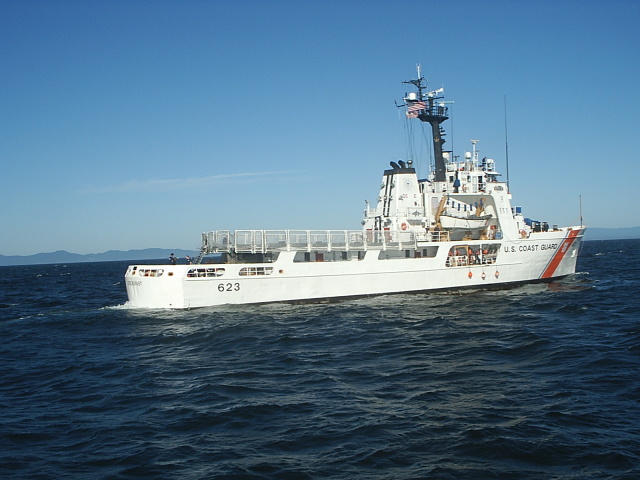
USCGC Steadfast (WMEC-623) (This is an old photo, given the hard sided boat and davits.)

 March 28, 2023

MEDIA ADVISORY: Coast Guard to offload approximately 6,325 pounds of cocaine and more than 13,000 pounds of marijuana in San Diego

WHO: Capt. Robert Mohr, commanding officer, Coast Guard Cutter Waesche, Alexandra (Sasha) Foster is the Criminal Chief in the Southern District of California U.S. Attorney’s Office

WHAT: The crew of the Coast Guard Cutter Waesche is scheduled to offload approximately 6,325 pounds of cocaine and more than 13,000 pounds of marijuana, worth more than $166 million, seized from the drug transit zones of the Eastern Pacific Ocean.

WHEN: Wednesday at 9:30 a.m.

WHERE: 10th Avenue Marine Terminal, 1150 Terminal St., San Diego, CA 92101

Editor’s Note: Media interested in attending should arrive no later than 9 a.m., and bring a government-issued photo ID, press credentials, proof of vehicle registration and insurance. Media will be escorted to the event location following security screening.

SAN DIEGO — The crew of the Coast Guard Cutter Waesche (WMSL 751) offloaded more than 6,325 pounds of cocaine and more than 13,000 pounds of marijuana estimating a value worth more than $166 million on Wednesday, in San Diego.

The interdictions were made late February and early March during four separate joint effort interdictions:

  • The Waesche’s crew was responsible for two interdictions seizing approximately 881 pounds of cocaine and 9,500 pounds of marijuana.
  • The crew of the Coast Guard Cutter Steadfast (WMEC 623) was responsible for one interdiction, seizing approximately 3,300 pounds of cocaine.
  • The crew of the Coast Guard Cutter Active (WMEC 618) was responsible for two interdictions seizing approximately 2,116 pounds of cocaine and 3,716 pounds of marijuana.

U.S. agencies from the Department of Defense, Department of Justice and Homeland Security coordinated in the effort to combat transnational organized crime. The U.S. Coast Guard, U.S. Navy, Customs and Border Protection, FBI, Drug Enforcement Administration, and Immigration and Customs Enforcement, along with allied and international partner agencies, served a vital role in counter-drug operations. The fight against drug cartels in the Eastern Pacific requires unity of effort in all phases from detection, monitoring and interdictions, to criminal prosecutions by U.S. Attorneys in districts across the nation

The U.S. Coast Guard Cutter Waesche (WMSL-751) is the second Legend-class cutter of the United States Coast Guard and is homeported at Coast Guard Island in Alameda, Calif. Waesche, the second of eight planned National Security Cutters, is 418 feet long with a top speed of 28 knots and a range of 12,000 nautical miles. The cutter is equipped with a flight deck and hangars capable of housing two multi-mission helicopters, and outfitted with the most advanced command, control, and communications equipment.

“Coast Guard Cutter Steadfast returns home following counternarcotics patrol” / Mexican Navy Assistance

Below is a CG News article. What makes this remarkable is the degree of cooperation with the Mexican Navy. It refers to a Mexican Navy MPA (maritime patrol aircraft). There is no indication of type, but the Mexican Navy acquired EADS CN-235 (C-144 in USCG) for use as MPA. The sale was coordinated through USCG Foreign Military Sales (see notes on the link). 

March 16, 2023

Coast Guard Cutter Steadfast returns home following counternarcotics patrol

ASTORIA, Ore. — The Coast Guard Cutter Steadfast (WMEC 623) and crew returned to their Astoria homeport, Tuesday, following a 69-day counternarcotics patrol in the Eastern Pacific Ocean.

Steadfast’s crew disrupted the flow of illegal narcotics on three separate occasions during their patrol preventing a combined total of more than 7,500 pounds of cocaine, valued at $85.6 million, from reaching the U.S. maritime borders.

The crew steamed more than 12,000 nautical miles conducting training, law enforcement missions, providing search-and-rescue coverage, and conducting helicopter operations while patrolling the waters from their Astoria homeport to international waters off the coast of Central America.

The Steadfast deployed with a Jacksonville, Florida, based Helicopter Interdiction Tactical Squadron MH-65 Dolphin helicopter and aircrew along with temporarily assigned crewmembers from the Coast Guard Cutter Harriet Lane (WMEC 903) (getting a SLEP–Chuck), and soon-to-be-commissioned Coast Guard Cutter Argus (WMSM 915).

During nighttime patrol operations, Steadfast personnel were notified by a Maritime Patrol Aircraft (MPA) of a suspected narcotics-smuggling vessel transiting international waters. Steadfast personnel launched an Over-the-Horizon (OTH) crew and boarding team who interdicted the vessel after a multi-hour pursuit. The suspected smugglers jettisoned contraband, resulting in the disruption of 2,260 pounds of cocaine, valued at $25.6 million.

Additionally, Steadfast’s crew tracked another suspected narcotics-smuggling vessel with the assistance of a Mexican Navy (SEMAR) surveillance aircraft and aircrew. Steadfast personnel launched an OTH boat crew and HITRON helicopter aircrew while the Mexican MPA tracked the vessel. Steadfast’s small boat and helicopter crews interdicted the suspected narcotics-smuggling vessel and seized 3,300 pounds of cocaine valued at $37.5 million.

“The successful coordination between a U.S. Coast Guard cutter and Mexican MPA was a significant step in advancing our strategic partnerships in combatting the flow of illicit narcotics in Eastern Pacific,” said Cmdr. Brock S. Eckel, Steadfast’s commanding officer.

The next day, Steadfast crew launched an OTH boat crew and HITRON aircrew to intercept another suspected smuggling vessel. The aircrew located the suspected smuggling vessel and worked with a nearby Mexican Naval vessel to vector in a Mexican Naval helicopter. This multi-national effort resulted in the seizure of 1,984 pounds of cocaine valued at $22.5 million.

“From battling heavy seas off the Oregon and California coasts, to overcoming equipment casualties, and multiple smuggling vessel interdictions in the darkest of nights, the determination, resilience, and professionalism of the Steadfast crew was simply exceptional,” said Eckel. “The crew’s operational success was matched only by the strengthening of international and inter-agency relationships along the way. Steadfast’s crew once again proved their proficiency in working with partner nations jointly executing the counternarcotics mission successfully.”

The fight against drug cartels in the Eastern Pacific Ocean requires unity of effort in all phases from detection, monitoring, and interdictions, to criminal prosecutions for these interdictions by United States Attorney’s Offices throughout the country.

Commissioned in 1968, Steadfast is one of two 210-foot medium endurance cutters homeported in Astoria. The cutter and crew deploy along the western seaboard of North and Central America enforcing living marine resource laws and regulations, detecting and interdicting narcotics and migrant smuggling, and conducting search-and-rescue operations.

“Brazil and the United States Partner to Combat Illegal Fishing as USCGC Stone arrives in Rio de Janeiro” –LANTAREA

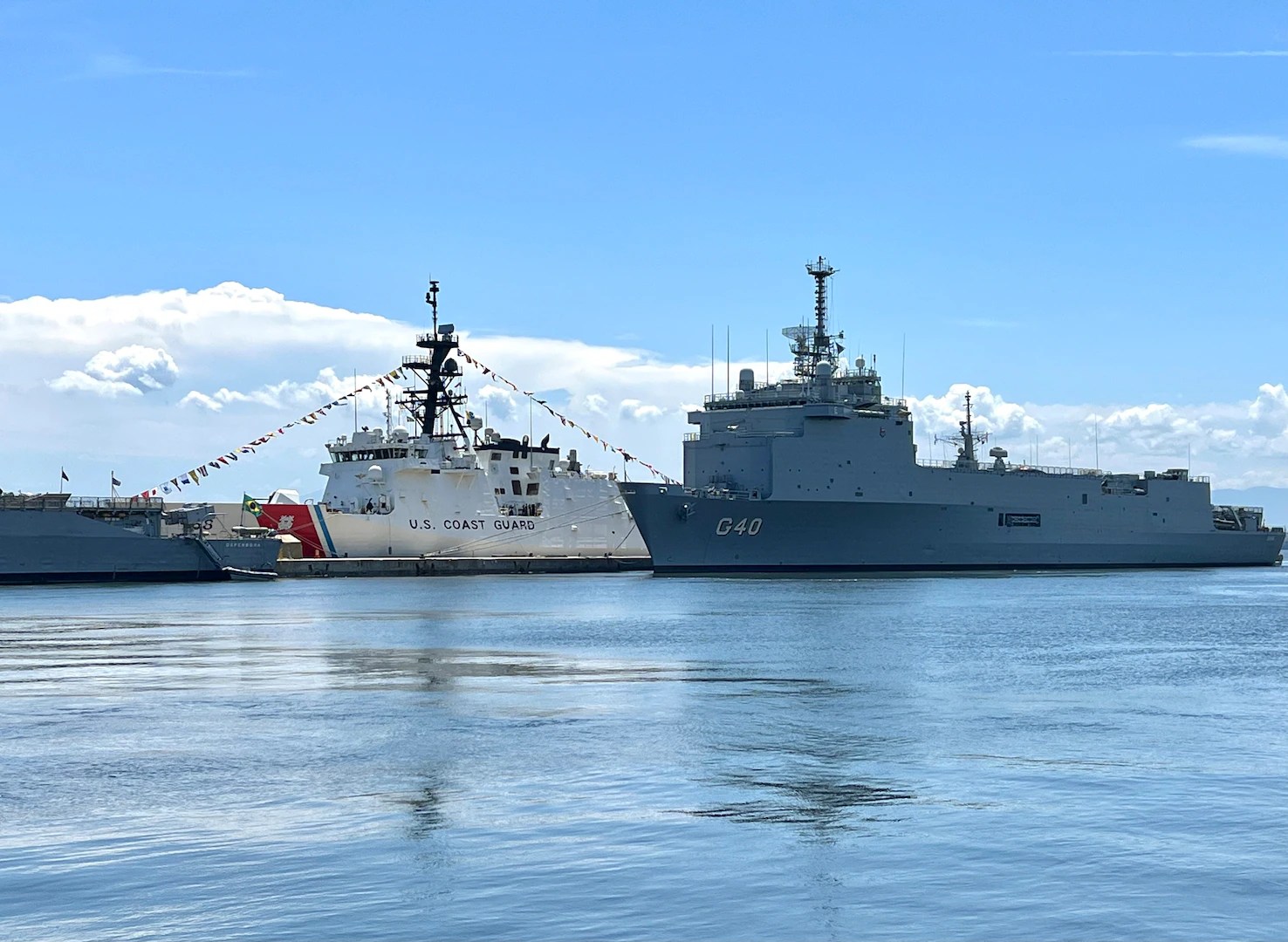
USCGC Stone in Rio de Janeiro

Below is a news release from Atlantic Area.

RIO DE JANEIRO — USCGC Stone (WMSL 758) arrived in the port of Rio de Janeiro, Brazil for a scheduled visit, Tuesday.

The visit is Stone’s second stop in Brazil as the cutter continues its multi-mission deployment in the South Atlantic Ocean, exhibiting the U.S. Coast Guard’s partnership with Brazil and strengthening the interoperability of the two nations’ maritime forces to counter illicit maritime activity and promote maritime sovereignty throughout the region.

“This deployment has already proven the effectiveness of our interagency and international partnerships,” said U.S. Coast Guard Capt. Clinton Carlson, Stone’s commanding officer. “On our first stop in Brazil in Recife in February 2023, we embarked representatives from the Brazilian Navy who have consistently provided invaluable insight and enhanced our capabilities, allowing us to more readily conduct maritime law enforcement to safeguard and protect international waters.”

Brazil and the United States’ naval services both use unmanned aerial systems to provide increased maritime domain awareness across a variety of mission sets.  The embarked Brazilian officers are part of Brazil’s first ship-based unmanned aerial systems squadron, and the embarkation of these officers aboard Stone highlights the robust partnership between the two nations and their shared commitment to upholding the rules-based international order at sea.

“While deployed with the Stone we have been working to counter illegal fishing,” said Brazil Navy Lt. Caio Cardinot. “It’s been a real pleasure to build this partnership, sharing knowledge and expertise with each other. With common UAS capabilities, a very robust communication center, and a hardworking crew, we have been very impressed during our time here.”

In recent years, the United States and Brazil have partnered to share and exchange maritime tactics, techniques, and procedures. Since 2009, the U.S. Coast Guard provided 34 mobile training team deployments and three resident training courses to Brazil in the areas of crisis management, mobile command systems, port security, maritime law enforcement, search and rescue, and disaster response. Additionally, Stone previously visited Rio de Janeiro in 2021 while conducting a South Atlantic Ocean deployment.

Both countries are dedicated to the responsible management of marine resources, demonstrating their shared commitment through the continued integration of their naval forces.

“This deployment is about partnerships,” Carlson said. “Not only have we embarked officers from the Brazilian Navy, but we’ve also embarked U.S. Navy and Marine Corps personnel augments as well. As we work with Brazil’s maritime forces, we’re strengthening our domestic partnerships as well, bringing both joint and combined capabilities to combat illegal, unreported, and unregulated fishing around the world. These partnerships create new opportunities for us to maintain free and sustainable access to maritime resources for all.”

Stone is the ninth Legend-class national security cutter in the Coast Guard fleet, homeported in Charleston, South Carolina. The national security cutters can execute the most challenging national security missions, including support to U.S. combatant commanders.

Stone is under the command of U.S. Coast Guard Atlantic Area. Based in Portsmouth, Virginia, U.S. Coast Guard Atlantic Area oversees all Coast Guard operations east of the Rocky Mountains to the Arabian Gulf. In addition to surge operations, they also allocate ships to work with partner commands and deploy to the Caribbean and Eastern Pacific to combat transnational organized crime and illicit maritime activity.

For information on how to join the U.S. Coast Guard, visit GoCoastGuard.com to learn about active duty and reserve, officer and enlisted opportunities. Information on how to apply to the U.S. Coast Guard Academy can be found here.

“USCGC Decisive decommissioned after 55 years of service” –LANTAREA

Let’s not forget that Decisive was one of the newest WMEC210s, 15th in the class of 16. We still have not seen the first OPC and unless they are decommissioned without replacement, we can expect to have 210s around for the next ten years.–Chuck

USCGC Decisive decommissioned after 55 years of service

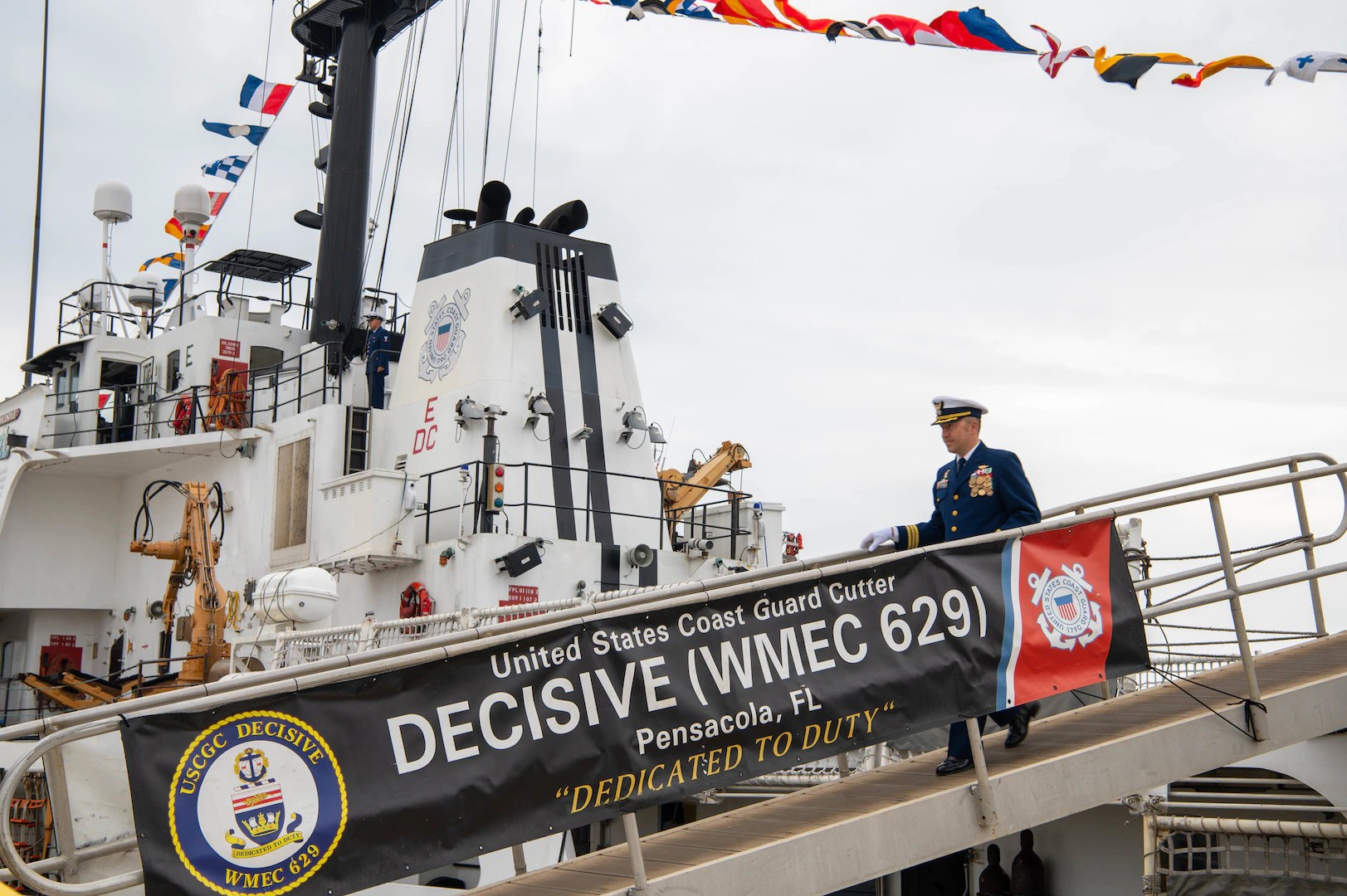
PENSACOLA, Fla. — The Coast Guard decommissioned USCGC Decisive (WMEC 629) during a ceremony at Naval Air Station Pensacola, Thursday.

Vice Adm. Kevin E. Lunday, commander of Coast Guard Atlantic Area, presided over the ceremony honoring the 55 years of service Decisive and its crews provided to the Coast Guard.

Commissioned in 1968, Decisive was the 15th of 16 Reliance-class medium endurance cutters built for search and rescue, drug and migrant interdiction. It is the first 210-foot cutter to be decommissioned since USCGC Courageous (WMEC 622) and USCGC Durable (WMEC 628) in 2001.

“Decisive is a special ship that has served many districts throughout its history,” said Cmdr. Aaron Delano-Johnson, commanding officer of Decisive. “With a variety of high-performing Coast Guard members with distinguished careers, Decisive boasted some of the finest crews throughout its tenure. Decisive has been a fixture in all four of its homeports, remaining durable and dependable throughout history. I personally want to thank the crew for their dedication and service to our great nation as they were instrumental to upholding the cutter’s motto of being dedicated to duty.”

Decisive’s keel was laid on May 12, 1967, at the Coast Guard Yard in Baltimore, Maryland. Decisive was launched Dec. 14, 1967, and commissioned Aug. 23, 1968. Following its commissioning in 1968, the ship was homeported in New Castle, New Hampshire. The cutter moved homeports several times during its tenure, including St. Petersburg, Florida and Pascagoula, Mississippi before its final assignment to Pensacola.

During the cutter’s last year of service, the sunset crew of 12 officers and 62 enlisted members conducted high profile operations including assistance in the repatriation of over 400 migrants in a week’s time while patrolling the South Florida Straits. Decisive’s crew assisted with a 200 person mass migrant transfer, the largest single repatriation effort at the time since the 1980 Mariel Boatlift.

“I am immensely honored being the final commanding officer of Decisive,” said Delano-Johnson. “As I pause and reflect, remembering the first time I saw the ship as a junior officer aboard a patrol boat in the Straits of Florida, the pride I feel commanding this ship is indescribable. To lead this sunset crew and watch them grow over the past year has been humbling and rewarding. I am grateful for their dedication and service and look forward to staying in touch and following their careers. While our business here is done, we will proudly carry on Decisive’s legacy of hard work and reliability.”

Decisive was one of the Coast Guard’s 14 remaining 210-foot, Reliance-class medium endurance cutters. As part of the Coast Guard’s acquisition program, the 360-foot Heritage-class offshore patrol cutters will replace the Coast Guard’s 270-foot and 210-foot medium endurance cutters. The offshore patrol cutters will provide the majority of offshore presence for the Coast Guard’s cutter fleet, bridging the capabilities of the 418-foot national security cutters, which patrol the open ocean, and the 154-foot fast response cutters, which serve closer to shore.

For information on how to join the U.S. Coast Guard, visit GoCoastGuard.com to learn about active duty and reserve, officer and enlisted opportunities. Information on how to apply to the U.S. Coast Guard Academy can be found here.

“Coast Guard to hold decommissioning ceremony for USCGC Decisive Thursday” –LANTAREA

The Reliance-class medium endurance cutter USCGC Decisive (WMEC 629) conduct at sea engagements with the navy of Guatemala in the territorial seas of Guatemala on Oct. 25 – 26, 2021. The U.S. Coast Guard conducts routine deployments in the Southern Command area of responsibility, works alongside partners, builds maritime domain awareness, and shares best practices with partner nation navies and coast guards. (U.S. Coast Guard photo)

Below is a news release from Atlantic Area. 

Feb. 27, 2023

Coast Guard to hold decommissioning ceremony for USCGC Decisive Thursday

PENSACOLA, Fla— The Coast Guard is scheduled to decommission USCGC Decisive (WMEC 629), a 210-foot, Reliance-class medium endurance cutter during a ceremony 10 a.m. Thursday, March 2, 2023, at Naval Air Station Pensacola.

WHO: Vice Adm. Kevin Lunday, commander, Coast Guard Atlantic Area; Cmdr. Aaron W. Delano-Johnson, commanding officer of Decisive; and the Decisive crew.

WHAT: A decommissioning ceremony to honor the legacy of Decisive and the Coast Guard members who served as part of its crew during its 55 years of service.

WHEN: Thursday, March 2, at 10 a.m. Media must arrive at the front gate no later than 9:00 a.m.

WHERE: Naval Air Station Pensacola, 211 South Ave, Pensacola, Florida 32508.

Media must RSVP no later than 12 p.m. Wednesday by calling (757) 202-3448 or emailing uscglantarea@gmail.com.

Decisive is the third Coast Guard 210-foot, Reliance-class medium endurance cutter to be decommissioned since 2001 as part of modernization efforts across the fleet. Decisive has primarily performed fishery patrols, search and rescue, law enforcement and migrant interdiction operations. Notably, the cutter assumed tactical command of Mississippi Coastal Recovery Base Gulfport after Hurricane Katrina and responded to the largest oil spill in American history— Deepwater Horizon.

“Operation Vigilant Sentry: Stopping illegal migration at sea” –CG HQ

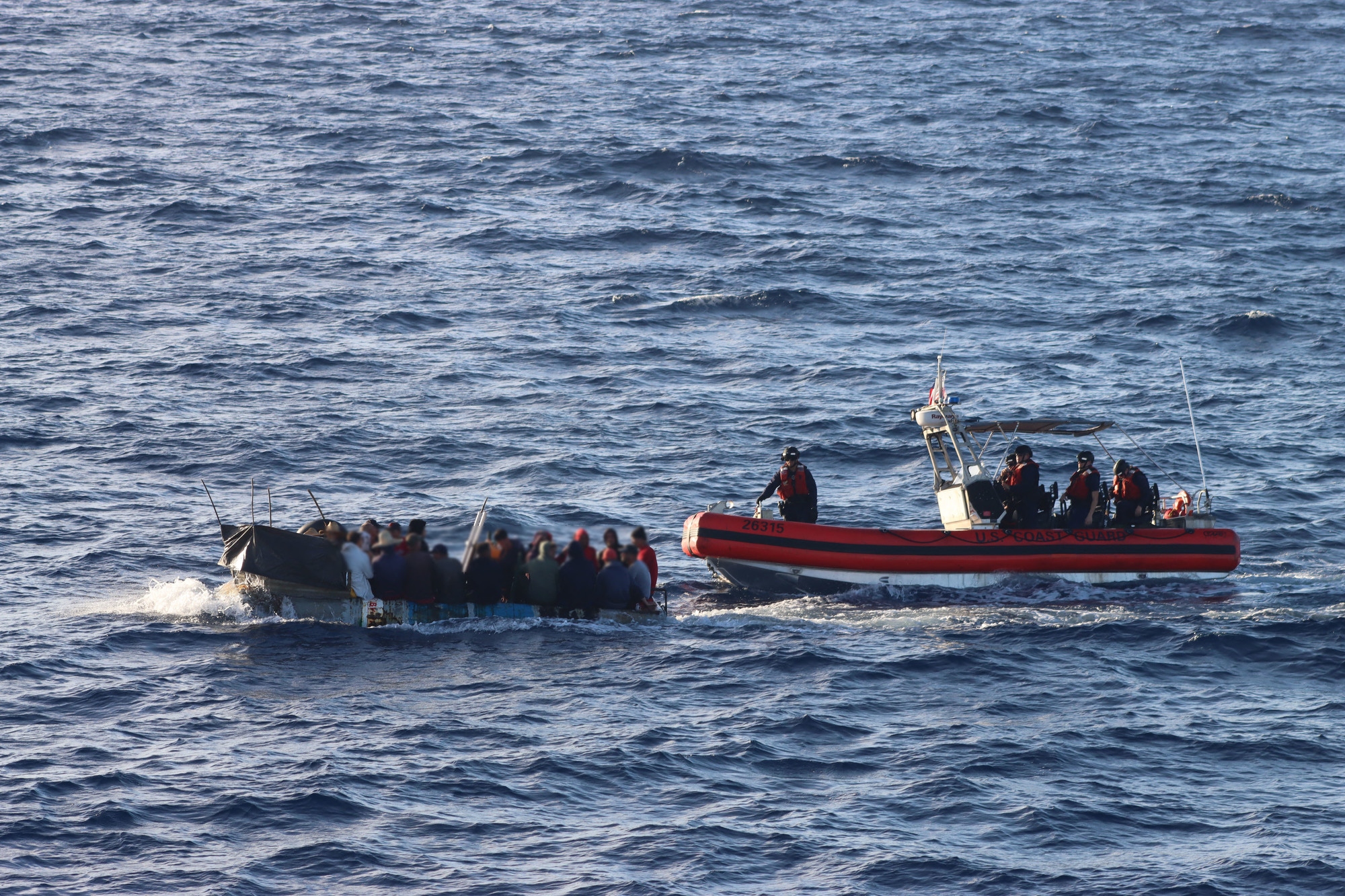
A Coast Guard Cutter Campbell law enforcement crew stopped a grossly overloaded, unsafe vessel near Turks and Caicos, May 9, 2022. (U.S. Coast Guard photo by Petty Officer 3rd Class Erik Villa-Rodriguez)

Below is a news release from Coast Guard Headquarters discussing the history and current situation of the Homeland Security Task Force – Southeast and of Operation Vigilant Sentry, a D7 lead Department wide Alien Migrant Interdiction Operation.

I have also included the text of the DHS Secretary’s remarks that were referenced in the release.

This release got wide distribution. I got it from HQ, LANTAREA, and PACAREA.


Jan. 27, 2023

Operation Vigilant Sentry: Stopping illegal migration at sea

By Petty Officer 1st Class Nicole J. Groll

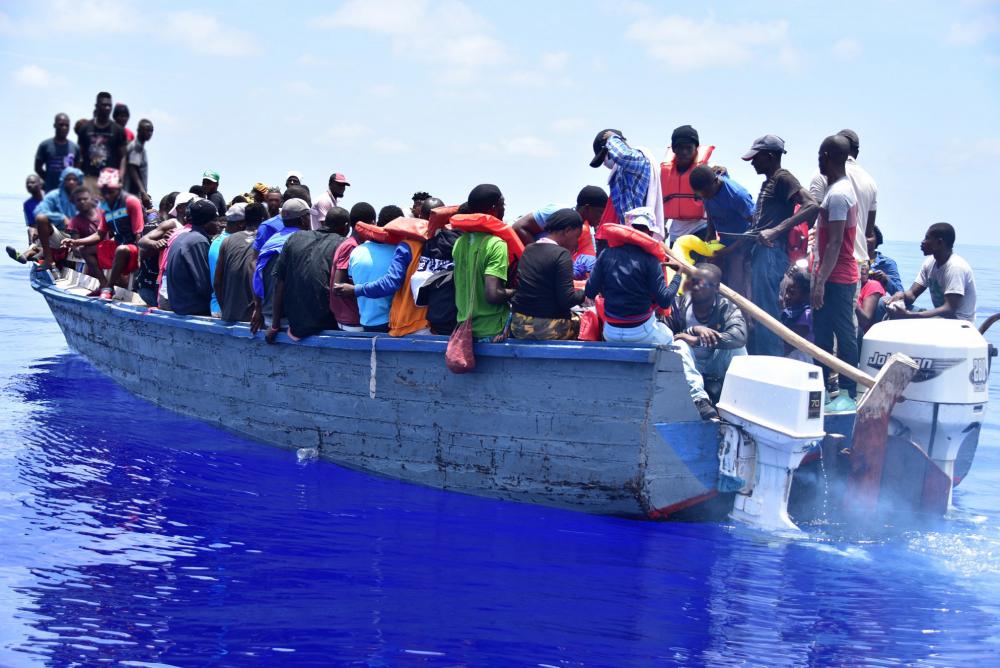
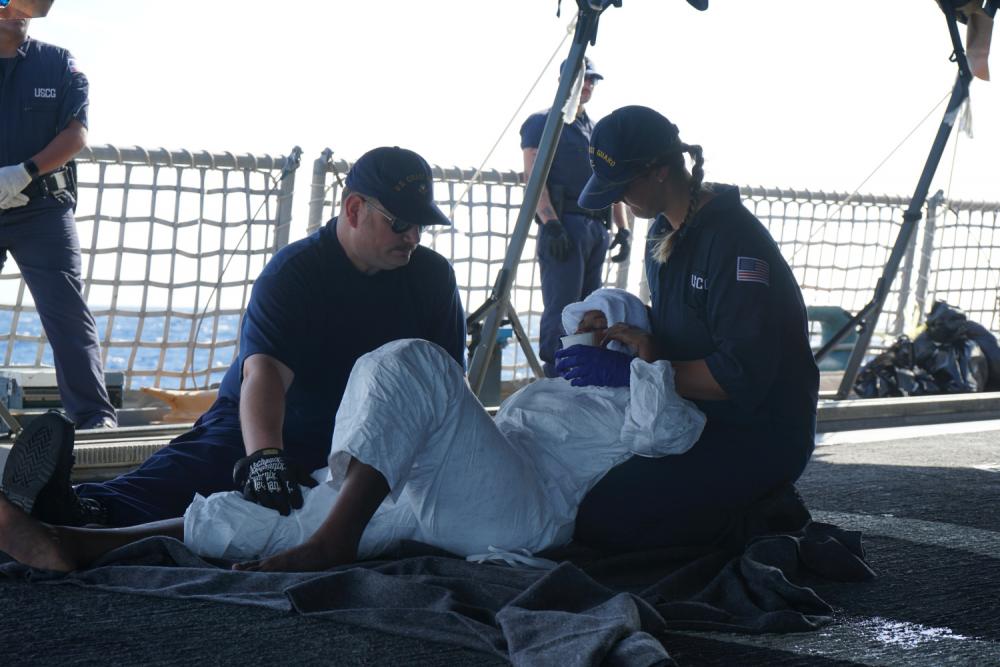
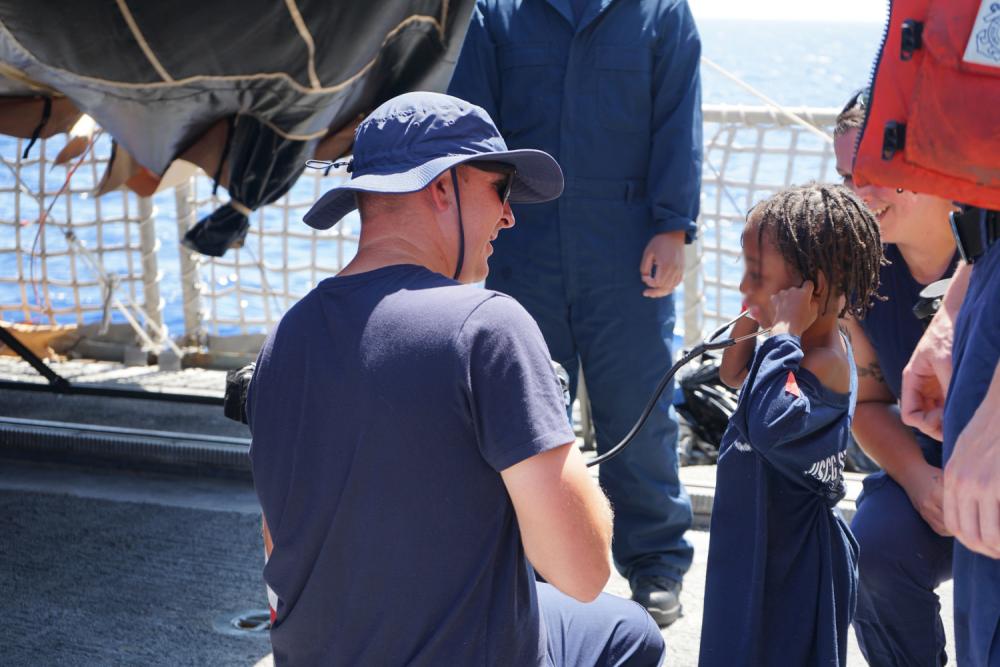
A Coast Guard Cutter Campbell law enforcement crew stopped a grossly overloaded, unsafe vessel near Turks and Caicos, May 9, 2022. Coast Guard Cutter Campbell is homeported in Kittery, Maine. (U.S. Coast Guard photo by Petty Officer 3rd Class Erik Villa-Rodriguez) Two Coast Guard Cutter Campbell crew members assist a person suffering dehydration symptoms in the Windward Passage, April 30, 2022. Coast Guard Cutter Campbell is homeported in Kittery, Maine. (U.S. Coast Guard photo by Campbell's crew) A Coast Guard Cutter Campbell medical crew member lets a child listen to his heart using a stethoscope in the Windward Passage, May 9, 2022. The people were repatriated to Haiti on May 11, 2022. (U.S. Coast Guard photo by Petty Officer 3rd Class Erik Villa-Rodriguez) 

A Coast Guard Air Station Clearwater C-130 aircrew alerted Sector Key West of a wooden vessel 25 miles south of Sugarloaf Key, Florida, Jan. 23, 2023. The people were repatriated on Jan. 25, 2023. (U.S. Coast Guard photo) A good Samaritan notified Coast Guard Sector Key West watchstanders of a rustic vessel about 13 miles south of Marquesas Key, Florida, June 12, 2022. The people were repatriated to Cuba on June 17, 2022. (U.S. Coast Guard photo) A Coast Guard Station Key West law enforcement crew alerted Sector Key West watchstanders of this migrant vessel about 3 miles south of Key West, Florida, July 6, 2022. The people were repatriated to Cuba on July 8, 2022. (U.S. Coast Guard photo by Station Key West) 

Editor’s note: Click on images to download high-resolution version.

Homeland Security Task Force – Southeast was established in 2003 by the Department of Homeland Security. This interagency task force is comprised of resources and assets from the U.S. Coast Guard, the departments of Homeland Security, State, Defense, Health and Human Services, as well as those from state and local agencies. These agencies provide the organizational framework to monitor migration trends to detect and respond to a maritime mass migration.

Operation Vigilant Sentry was first approved in 2004. It is the arm of the task force that deploys joint air and surface assets and personnel to address illegal maritime migration in the Caribbean corridor of the United States. The primary objective: to protect the safety of life at sea, and to deter and dissuade a maritime mass migration with our federal, state and local partners.

The director of Homeland Security Task Force – Southeast is the commander for the Seventh Coast Guard District. Migrant interdiction is one of the 11 statutory missions assigned to the Coast Guard by Congress, giving the military service the authority to take the lead role in the ongoing and historic migrant surge.

OVS is also not country specific, but it is a framework for any Caribbean country. The most common nationalities trying to illegally migrate to Florida by sea are Cuban and Haitian. Despite the unique challenges faced by each country, the rationale for illegal migration can occur for any number of various reasons.

“The risk migrants are willing to take are unfathomable to most Americans: escaping poverty, violence, human trafficking, and persecution are a few realities,” said Cmdr. Ray Caro, chief of intelligence for Operation Vigilant Sentry. “Although change is gradual across nations in the Western Hemisphere, the frequency at which these challenges present themselves is certainly increasing. Politics, migration policies and natural disasters amplify those realities and trigger migration. As a result, maritime migration has been a lifesaving priority for the Coast Guard for more than 40 years.”

The weather, the possibility of drowning, the general unpredictability of the maritime domain all stand as barriers not just to the goals of illegal migrants, but also as threats to their very lives.

“These individuals are ignoring real risks,” said Chief Warrant Officer Matthew James, Coast Guard Station Islamorada’s commanding officer. “Just about every vessel we encounter in these voyages were constructed haphazardly with improvised materials and were taking on water. The few vessels that appeared to be well built were dangerously overloaded and capsizing was imminent when we arrived on scene. It’s very dangerous to try and cross the Florida Straits this way.”

In 2022, the Coast Guard saw one of the deadliest years for illegal migration in recent history with approximately 65 people dying trying to make it to the U.S. In 2020, the Coast Guard recorded 17 deaths and five in 2021. Despite the increased numbers and risk, the service remains dedicated to the preservation of life, imploring those who would see illegal maritime migration as an option.

“The Coast Guard and our partners are working to stop senseless migration-related deaths at sea by rescuing people in rustic, unsafe vessels,” said Capt. Benjamin Golightly, incident commander, Operation Vigilant Sentry. “Help us by not paying smugglers and instead, encourage safe, legal migration.”

Historically, Florida is no stranger to illegal migration. According to the Department of Homeland Security and U.S. Citizen and Immigration Services, the Cuban Adjustment Act of 1966 was established to allow Cuban natives and citizens living in the U.S. at least two years to apply to become lawful permanent residents by getting a Green Card. This applied to the Cuban arrivals who were paroled into the U.S. fleeing communism. In 1995, the so-called Wet Foot/Dry Foot policy was adopted. This meant if illegal migrants were stopped at sea, they were returned to their country of origin or departure. If they were stopped on land, they would eventually be paroled and able to apply for the Cuban Adjustment Act. In 2017, former President Obama repealed the Wet Foot/Dry Foot policy.

After the repeal, illegal migration by sea declined for several years, but Coast Guard crews are seeing an increase once again.

Haitians started coming to the U.S. at the end of 1972 fleeing communism, according to the University of Texas’ history department. In 1998, the Haitian Refugee Immigration Fairness Act was enacted by Congress for eligible Haitian nationals in the U.S. to become legal permanent residents.

“As Haiti’s overall situation continues to erode, our crews have witnessed an alarming uptick in maritime migration; we see spikes in this dangerous activity following natural disasters or socio-economical events,” said Capt. Robert Kinsey, operations chief for Operation Vigilant Sentry. “These vessels are shockingly overloaded; when you see it firsthand, it’s almost unbelievable. Smugglers are coercing desperate people to endure unthinkable conditions for long periods of time. Many of our crews arrive just in time to rescue them from peril.”

The typical 40 to 50-foot Haitian sail freighter intercepted by Coast Guard assets have anywhere from 150 to 300 people aboard these overcrowded, unsafe vessels. A typical safe sailboat can safely hold about 30.

Back in July 2021, Department of Homeland Secretary Alejandro N. Mayorkas told Cubans and Haitians in a press conference not to come to the U.S. by sea, noting the clear threats posed by the maritime domain.

“The time is never right to attempt migration by sea,” said Alejandro N. Mayorkas, DHS Secretary. “To those who risk their lives doing so, this risk is not worth taking. Allow me to be clear: if you take to the Sea, you will not come to the United States.”

Cubans and Haitians who take to the sea and try to land in the U.S. may be ineligible for the parole process and will be placed in removal proceedings, he said.

People interdicted at sea will be repatriated to their country of origin or departure.

Illegal migration at sea is not only dangerous for the people attempting it, but it causes their family members unnecessary distress due to not knowing if their loved ones are alive or not.

“Family members call our command center all the time,” said Lt. Paul Benyovszky, a Sector Key West enforcement officer. “It can be a struggle to maintain our emotional balance when family members are crying and begging for information we don’t have.”

This isn’t an easy mission, and illegal migration isn’t going to go away, he said.

Since the new fiscal year started in October, crews interdicted 5,321 Cubans and 1,766 Haitians at sea. The service increased manpower and assets to the area to stop illegal migration at sea and rescue those in distress before the sea claims their lives. The Coast Guard continues to be the lead federal agency charged with this mission, and the crews and partner agencies are doing their very best to ensure people go home alive at the end of the day.


“USCGC Mohawk returns home following 46-day Caribbean Sea patrol” –LANT AREA-

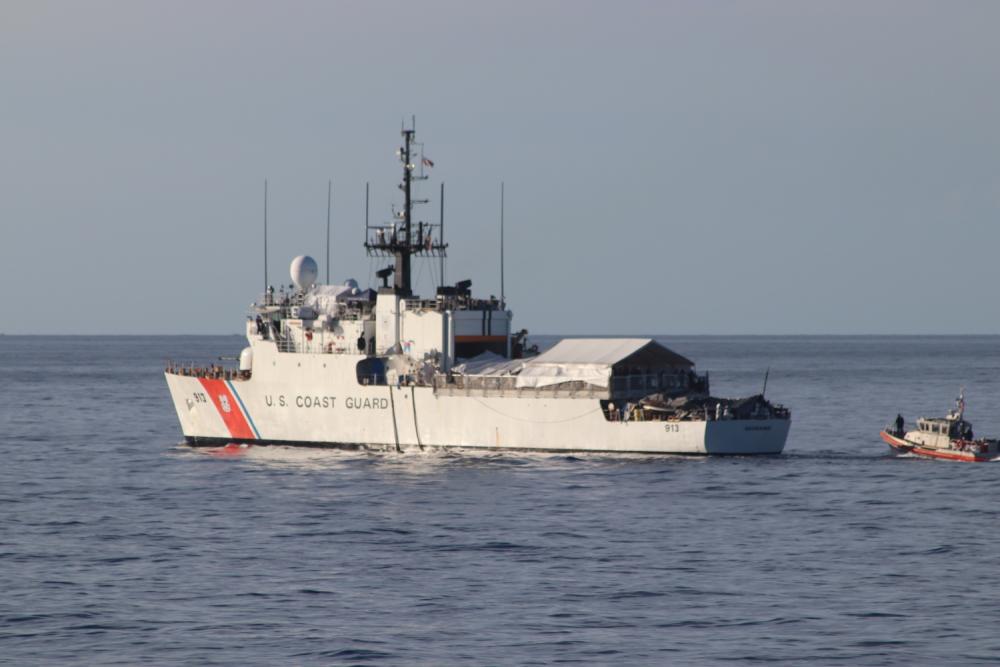
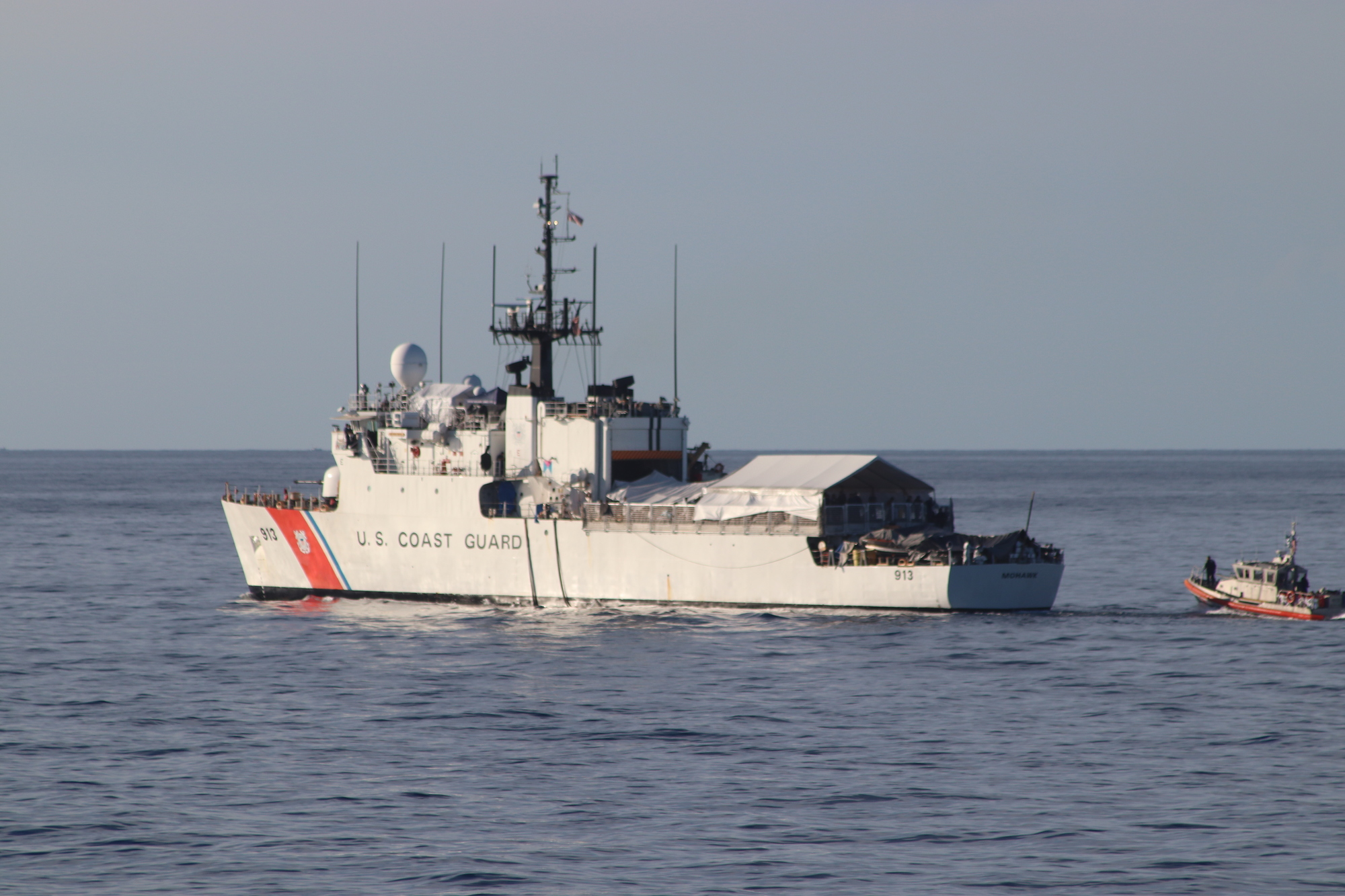
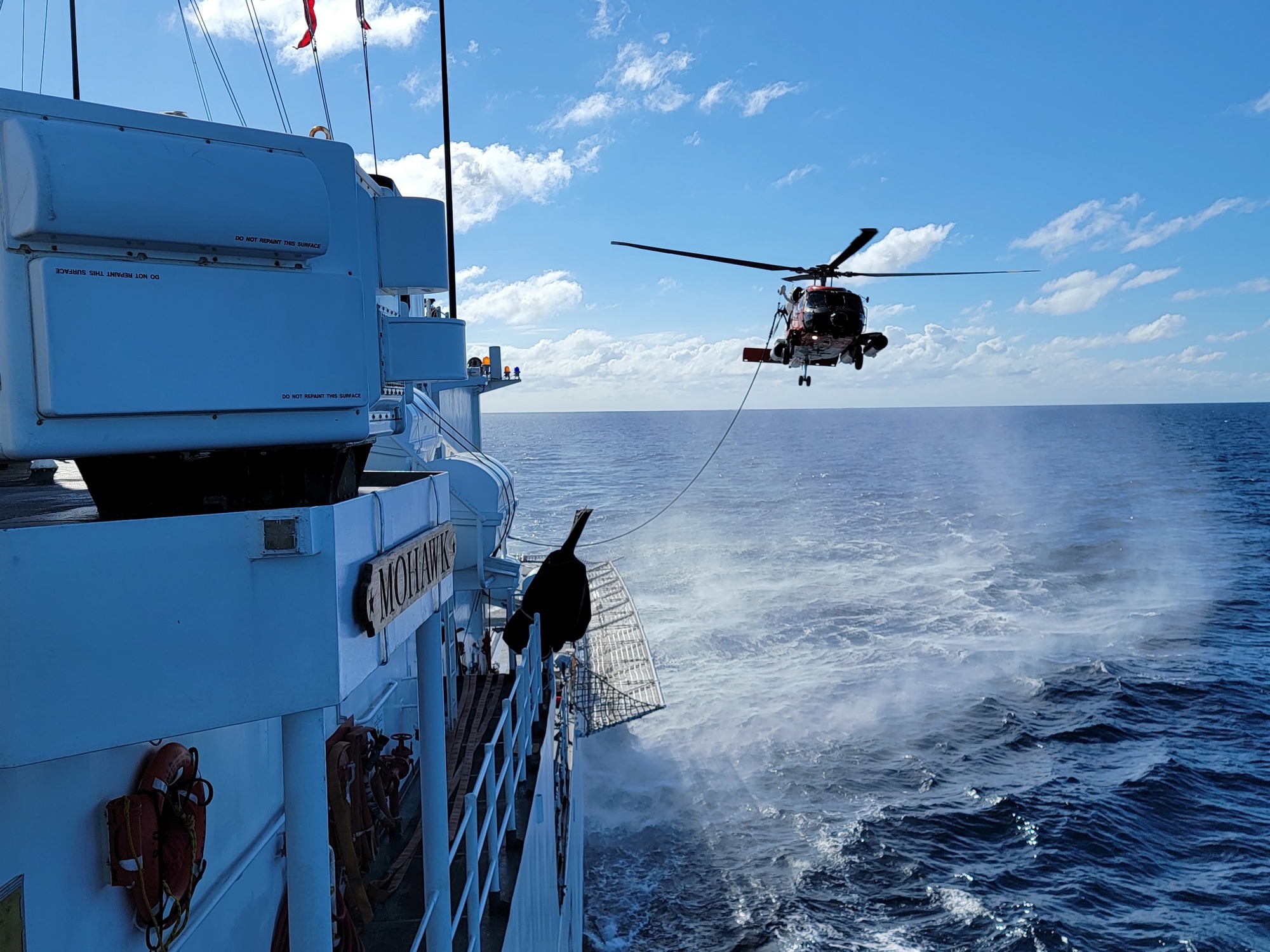
USCGC Mohawk’s (WMEC 913) crew patrols the South Florida Straits during Operation Vigilant Sentry, Jan. 5, 2023. Mohawk’s crew patrolled the Florida Straits and Caribbean Sea in support of Homeland Security Task Force—Southeast and Operation Vigilant Sentry in the Coast Guard Seventh District’s area of operations for a 46-day patrol. (U.S. Coast Guard photo by USCGC Legare (WMEC 912)

I don’t normally publish a news release like this, it is relatively routine, but I particularly wanted to highlight the photo above and provisions made to shelter migrants which have precluded helicopter operation. We have noted that the migrant traffic has increased substantially. The photo was taken by USCGC Legare, meaning that there were probably at least two 270 foot WMECs, that I would expect to be doing drug interdiction or fisheries, were engaged in Alien Migrant interdiction, in addition to the FRCs and 210 foot WMECs that are more commonly assigned to this mission. Note the large number of migrants interdicted and repatriated. I presume it means Mohawk had at least 273 migrants aboard at one time, out numbering the crew almost three to one.

News Release

U.S. Coast Guard Atlantic Area

Download Image Link Here Download Image Link  Download Image Link Here

Editor’s note: Click on images to download

KEY WEST, Fla.—The crew of the USCGC Mohawk (WMEC 913) returned to their home port in Key West, Monday, after a 46-day deployment in the Florida Straits and Caribbean Sea.

Mohawk patrolled the Florida Straits and Caribbean Sea in support of Homeland Security Task Force—Southeast and Operation Vigilant Sentry in the Coast Guard Seventh District’s area of operations. While underway, Mohawk’s crew conducted counter drug and maritime safety and security missions while working with other Coast Guard cutters and air assets to detect, deter and intercept unsafe and illegal migrant ventures bound for the United States.

During the patrol, Mohawk’s crew cared for 670 migrants interdicted at sea and rescued personnel from seven different unseaworthy vessels. Notably, Mohawk’s crew assisted with the repatriation of 110 Haitian migrants to Cap-Haitien, Haiti, and 273 Cuban migrants to Matanzas, Cuba.

Mohawk’s patrol efforts highlight the Coast Guard’s critical mission of maintaining safety at sea and preventing the potential for loss of life by deterring migrants from taking to the sea in dangerously overcrowded vessels while attempting to enter the United States through non-legal channels.

“It’s never easy being deployed over the holidays, away from family members,” said Cmdr. Andrew Pate, Mohawk’s commanding officer. “I am incredibly proud of the women and men aboard who continue to position Mohawk for success – their role in this historic effort, alongside our state and local partners as well as other Coast Guard units, is nothing short of heroic.”

Mohawk is a 270-foot, Famous-class medium endurance cutter with a crew of 100. The cutter’s primary missions are counter drug operations, migrant interdiction, enforcement of federal fishery laws and search and rescue in support of U.S. Coast Guard operations throughout the Western Hemisphere.

For information on how to join the U.S. Coast Guard, visit GoCoastGuard.com to learn about active duty and reserve, officer and enlisted opportunities. Information on how to apply to the U.S. Coast Guard Academy can be found here.

For more, follow us on Facebook, Instagram and Twitter.

“China Pressures Argentina to Build Naval Base” –dialogo-americas.com

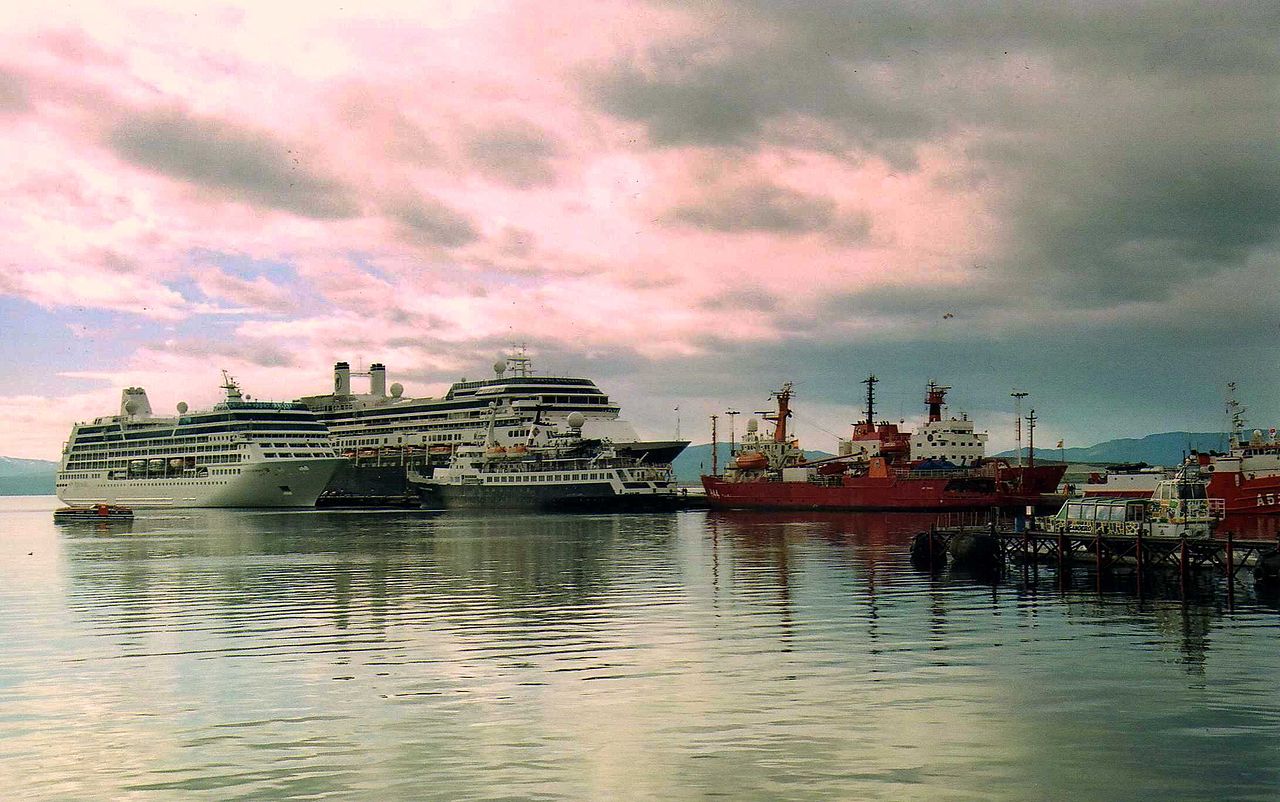
Cruise ships at dock, Ushuaia, Tierra del Fuego, Argentina. Photo Credit: Rodolfo Pace

Dialogo Americas reports China is once again pressuring Argentina to build a naval base in Ushuaia, Tierra del Fuego, at the Southern tip of South America.

There is no indication that Argentina is accepting the Chinese offer, but I can understand both why the Chinese are making the offer and why it would be attractive to Argentina.

The current Antarctic treaty is set to expire in 2048. It seems unlikely it will be renewed. Too many want to exploit mineral wealth that is believed to be there. There are already known conflicting claims on the continent, including overlapping claims by Argentina, Chile, and the UK. Even Japan has stated an intention to make a claim. 

Neither the US nor China has made a claim yet, but they are likely to. The US has a strong basis for claims, and China has been investing heavily in Antarctic exploration and research.

Argentina has few friends likely to support their claim. Relations with the UK and the US have never fully recovered since the Falklands War. Relations with Chile have always been strained. Argentina’s military is now much weaker relative to the UK than it was at the time of the Falklands War, but they still claim the Falkland (Malvinas) and South Georgia, both of which are under UK administration. Argentina might want to have China on their side.

Cuban Migrant Interdiction

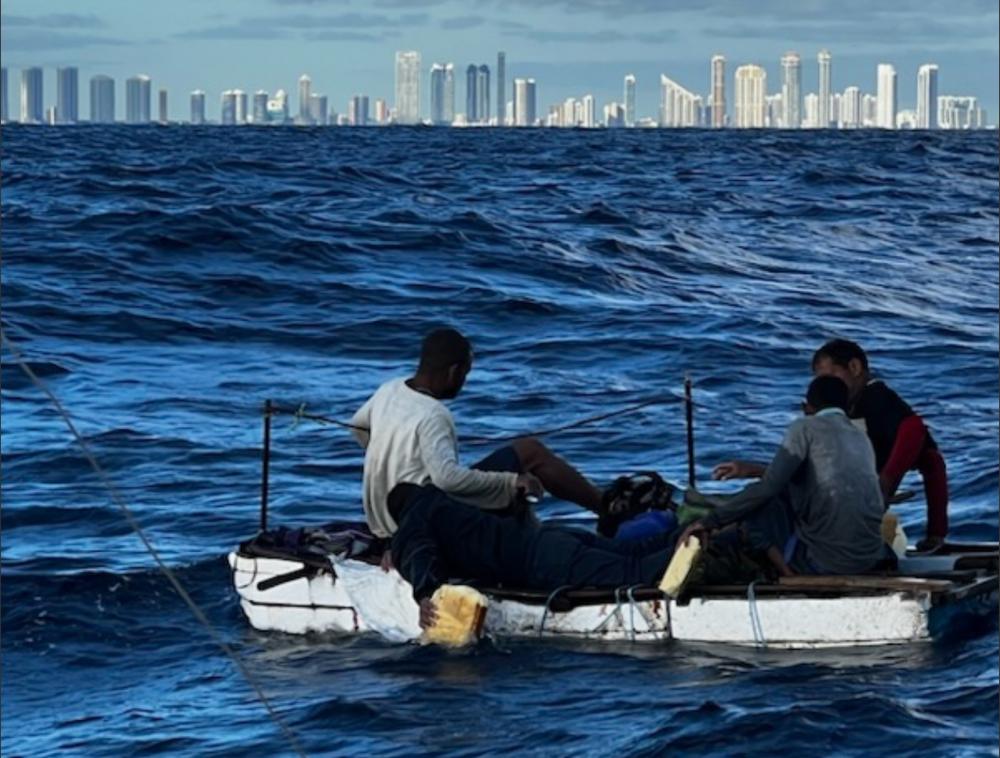
A good Samaritan notified Sector Miami watchstanders of a migrant vessel about 10 miles east of Sunny Isles, Florida, Jan. 8, 2023. The people were repatriated to Cuba on Jan. 16, 2023. (U.S. Coast Guard photo)

I don’t normally post press releases about migrant interdiction. It is a routine dirty job, with little reward, but something the Coast Guard does virtually every day. Just wanted to post the statistics below, that I lifted from a press release about a recent repatriation, to show the current trend to much higher frequency of interceptions.

Since Oct. 1, 2022, Coast Guard crews interdicted 4,962 Cubans compared to: 

  • 6,182 Cuban Migrants in Fiscal Year 2022
  • 838 Cuban Migrants in Fiscal Year 2021
  • 49 Cuban Migrants in Fiscal Year 2020
  • 313 Cuban Migrants in Fiscal Year 2019
  • 259 Cuban Migrants in Fiscal Year 2018
  • 1,468 Cuban Migrants in Fiscal Year 2017
  • 5,396 Cuban Migrants in Fiscal Year 2016

WMEC 210s and Webber class FRCs tend to be the workhorses of this effort, supported by aviation assets of both the Coast Guard and partner agencies.

For perspective, it is still nothing close to the Mariel Boatlift, 15 April and 31 October 1980, when 125,000 Cubans and 25,000 Haitians made it to the US.

“Global Piracy Incidents Fall to Lowest Level in Decades” –gCaptain

USCGC Mohawk sails alongside a Nigerian navy ship in the Atlantic Ocean, Aug. 22, 2022. Mohawk was on deployment in the U.S. Naval Forces Africa area of operations. (Jessica Fontenette/U.S. Coast Guard)

gCaptain reports,

“Incidents of maritime piracy and armed robbery attacks last year fell to the lowest recorded level in almost three decades…”

While incidents are up in Southeast Asia, there has been a notable drop in incidents in the Gulf of Guinea, where the Coast Guard has been actively engaged in capacity building.

“The Gulf of Guinea saw a continued and much needed reduction is attributed to an overall decrease of pirate activity, with the number of incidents falling from 35 in 2021 to 19 in 2022.”

Off Somalia there has been both a sustained counterpiracy effort and allied patrols to interdict arms bound for rebels in Yemen.

“For a fourth year in row, there were no incidents of piracy or armed robbery by Somali-based pirates…”