Saildrones Set Sail in Support of U.S. 4th Fleet’s Operation Windward Stack” –4th Fleet

Below is a 4th Fleet News Release. Ten Saildrones will be operating in the Caribbean.

NEWS | Sept. 13, 2023

Saildrones Set Sail in Support of U.S. 4th Fleet’s Operation Windward Stack

By U.S. Naval Forces Southern Command/U.S. 4th Fleet Public Affairs

Commercial operators began deploying 10 Saildrone Voyager Unmanned Surface Vessels (USVs) out to sea today, a critical first step in U.S. 4th Fleet’s Operation Windward Stack.

Launched from Naval Air Station Key West’s Mole Pier and Truman Harbor, the Saildrones’ mission once on station is to improve maritime domain awareness, or MDA, by detecting and quantifying targets that pass within range of the Saildrones’ sensors.

Operation Windward Stack is a long-term operation of unmanned and manned forces working together, also known as a hybrid fleet, as envisioned by the Secretary of the Navy and the Chief of Naval Operations. Windward Stack is part of 4th Fleet’s unmanned integration campaign, which provides the Navy a region to experiment with and operate unmanned systems in a permissive environment, develop Tactics, Techniques, and Procedures (TTPs) against near-peer competitors, and refine manned and unmanned Command and Control (C2) infrastructure, all designed to move the Navy to the hybrid fleet.

First, operators and watchstanders at U.S. 4th Fleet will conduct tests and coordinate information flow as the solar-powered Saildrones sail into the Caribbean. “Operation Windward Stack begins with testing as we integrate the information we receive from the Saildrones into our fleet command center to further increase maritime domain awareness in the U.S. Southern Command Area of Responsibility (AOR),” said Lt. Cmdr. John Clark, U.S. 4th Fleet’s Current Operations (COPS) Director. “We will eventually have the opportunity to work through the command and control of both manned and unmanned forces operating throughout our region.”

The 10 Saildrones will serve as the initial unmanned vessels in the operation. Plans are to add additional USVs, unmanned aerial vehicles (UAVs) and manned maritime forces over the next few months to further challenge C2 integration and to expand the MDA coverage.

“We were able to demonstrate coordinated operations of manned and unmanned forces during UNITAS LXIV, a multinational maritime exercise, but that was for a relatively short time,” said Capt. David Fowler, U.S. 4th Fleet Maritime Operations Center (MOC) Director. “With Windward Stack, we’re going to coordinate these operations for many months. That is how we will truly learn what these unmanned vessels can do for us on a day-to-day basis.”

U.S. Naval Forces Southern Command/U.S. 4th Fleet supports USSOUTHCOM’s joint and combined military operations by employing maritime forces in cooperative maritime security operations to maintain access, enhance interoperability, and build enduring partnerships in order to enhance regional security and promote peace, stability and prosperity in the Caribbean, Central and South American region.

Proceedings Podcast EP. 351: USCG Pacific Area Commander on Maritime Governance

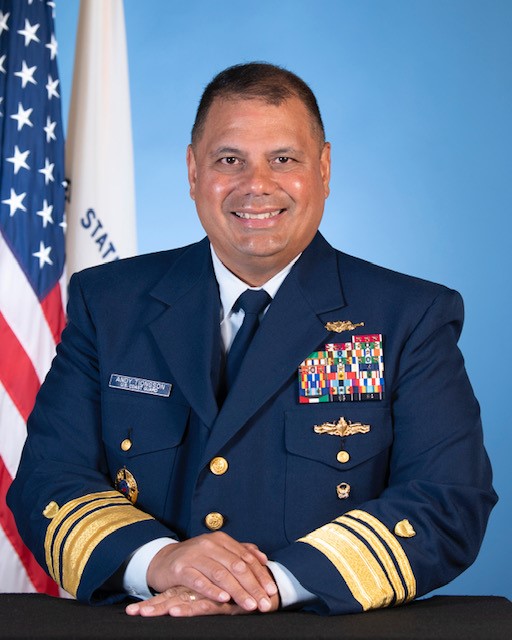
Vice Adm. Andrew J. Tiongson, Commander Coast Guard Pacific Area

The US Naval Institute has a pod cast interview of the PACAREA Commander.

Initially, there were questions about the Coast Guard’s response to the fires on Maui and Tropical Storm Hillary’s landfall in Southern California.

There was a lot of talk about the Coast Guard being a trusted partner, both internally and internationally, and the cooperative relationship the Coast Guard has developed with island nations in the Pacific, that have resulted in 13 bilateral agreements including some “enhanced” ship-rider agreements that permit the Coast Guard to act on behalf of island nations, even if there are none of their citizens aboard.

He said Harriet Lane should be in the Pacific before the end of the year.

He also talked about his potential role as Commander, Defense Force, West, under NorthCom.

There were some of surprises.

  • The Canadian Coast Guard has leased a commercial vessel and the USCG is providing a law enforcement detachment. I presume they are operating in the Western Pacific because there would be no reason to use a USCG LEDET in Canadian Waters.
  • That the House version of the budget includes four additional Webber class FRCs, three more for Guam and another for Honolulu.
  • The Coast Guard is opening a “Center for Excellence,” a regional activity center, in Hawaii, that will provide training in fisheries enforcement and environmental response for friendly nations. Should help form cooperative relationships across the Pacific.

I was also pleased to learn that VAdm. Tiongson had had a tour on USS NORMANDY (CG-60) as part of the U.S. Coast Guard – U.S. Navy exchange program. Apparently, it did not hurt his career.

The interviewer, Host Bill Hamblet, said he presumed PACAREA had the lion’s share of Coast Guard assets. VAdm. Tiongson did not answer that, but I can’t let it pass, because in my view the Coast Guard is still underrepresented in the Pacific.

About 84% of the US EEZ is in PACAREA, but LANTAREA will have 55% of the National Security Cutters. LANT has 81.5% of the WMECs (22 out of 27, counting Harriet Lane as in the Pacific), and 76% of the current 54 FRCs. Current plans are for PACAREA to have only 18 of the 65 FRC currently funded, less than 28%.

The situation may not be quite as bad as it looks, because LANTAREA assets are actually closer to the Eastern Pacific drug transit zones than PACAREA assets, so LANTAREA assets to operate frequently in the Eastern Pacific, but the asset distribution is still off, and PACAREA’s workload has been increasing with the emphasis on IUU fishing in the Pacific.

United States Exclusive Economic Zone – Pacific centered NOAA map

“USNI News Fleet and Marine Tracker: Aug. 21, 2023”

USCGC Munro (WMSL-755) escorts USNS Fisher (T-AKR-301) in the East China Sea on Aug. 12, 2023. US Navy Photo

Looking at the latest US Naval Institute “Fleet and Marine Tracker,” I am a bit surprised to see there are still 3 Navy ships operating under 4th Fleet, presumably doing drug interdiction. This is an uptick.

Again, they report on atypical Coast Guard operations:

  • Legend-class National Security Cutter USCGC Munro (WMSL-755) departed South Korea last week and is in the Korea Strait. (As I mentioned earlier, there is a possibility, cutters may encounter the new North Korean corvettes.)
  • Coast Guard Cutter USCGC Healy (WAGB-20) continues its work in the Beaufort Sea. Healy is on a five-month deployment in partnership with ONR and the National Science Foundation.
  • Coast Guard Cutter USCGC Forward (WMEC-911) is currently supporting Operation Nanook. Operation Nanook is an annual Canadian-led exercise that fosters international cooperation and shared responsibility in the Arctic and the northern Atlantic Regions. The cutter recently made a port call in Nuuk, Greenland.

You can use Control F “USCGC” if you want to quickly find the Coast Guard cutters mentioned in the USNI posts.

PATFORSWA is mentioned again.

The link in the Healy entry, “U.S., Canadian Icebreakers Conduct Operation, Rendezvous en Route to Arctic Ocean” is interesting, plus there is more in the USNI post including an “adorable” polar bear photo.

“Defending the Dutch Caribbean: An Assessment” –Geopolitical Monitor

Willemstad, Feb. 2022. The Netherlands the royal family was transported from Aruba to Curacao aboard the Holland-class offshore patrol vessel HNLMS Holland (P-84).

Geopolitical Monitor discusses the six islands of the Dutch Caribbean, part of the Kingdom of the Netherlands.

The Netherlands has been a good partner in drug interdiction operations in the Caribbean. The four ships of the Holland class are in many ways similar in size and characteristics to the Offshore Patrol Cutters. The Netherlands Navy tends to keep one of these ships in the Caribbean, and they frequently host US Coast Guard Law Enforcement teams. At least once they also hosted a Coast Guard H-65 airborne use of force helicopter.

The post talks about the Dutch Caribbean Coast Guard (DCCG, or Kustwacht Caribisch Gebied: KCG),

“…which has facilities in Aruba, Curaçao, and Sint Marteen. This agency carries out missions involving search and rescue, law enforcement, and maritime interdiction. The DCCG’s fleet includes three Damen Stan Patrol 4100 cutters (slightly smaller but similar to the Webber class–Chuck), Jaguar, Panther, and Puma, five Boston Whaler Justice 20 craft, and 12 Metal Shark Defiant interceptor vessels. In addition, in April 2022, the Dutch organization for defense equipment (Defensie Materieel Organisatie) announced that two helicopters were acquired from Bristow Helicopters and will be delivered in 2023. The DCCG currently operates two DHC-8 aircraft and two AgustaWestland AW139 helicopters.”

They even have had long range, medium altitude unmanned search aircraft assigned, something the US Coast Guard still does not have,

“The DCCG’s surveillance capabilities were expanded in late March 2022, with the arrival to Curaçao of three General Atomics MQ-9A Reaper unmanned aerial vehicles and two ground stations. The Reapers assist Dutch Caribbean military personnel in combating organized crime and illegal fishing, among other activities. They will remain in Curacao until 1 July 2023.”

The post alludes to Venezuelan’ threats to Dutch Caribbean islands that lay off the Venezuelan coast (Aruba, Curaçao, and Bonaire). While the Venezuelan military is far more powerful than the forces the Netherlands keeps in the Caribbean, it is hard to take these threats seriously since, an attack on even one of the islands, would be an attack on NATO.

On a personal note, really enjoyed a stopover in Aruba in the early 80s while it was snowing back in our Portland, Maine homeport–my wife will never let me forget.

Thanks to Lee for bringing this to my attention.

UNITAS 2023

I had expected that at least some Coast Guard units would participate in UNITAS 2023, July 11-21, given the Coast Guard’s prominent role in 4th Fleet, but I find no mention of CG participation.

Also bit disappointed we don’t have a listing of non-US units participating too.

Below is SOUTHCOM’s summary of the event. The incorporation of unmanned systems should have been very interesting.


Overview

UNITAS is an annual exercise conducted in Atlantic and Pacific waters around Central and South America. UNITAS LXIV included maritime and amphibious phases and, for the first time ever, included integrated operations of unmanned systems in the exercise. The exercise was held July 11-21, 2023, in Colombia.

The exercise develops and sustains relationships that increase the capacity of our emerging and enduring partners’ maritime forces to achieve common desired effects.

Training Scenarios

UNITAS’ challenging training addresses key aspects of multinational and combined operations such as technology standardization and common operating procedures. Training included scenarios addressing electronic warfare, anti-air warfare and air defense, anti-surface warfare, live fire, maritime interdiction, littoral operations, and amphibious operations.

UNITAS LXIV consisted of two concurrent phases: at sea and amphibious. The maritime domain included the littorals which incorporates not only the ocean, but also the area inland from the shore that can be supported and defended directly from the sea. The majority of the amphibious training took place along the coast where marines and naval infantry trained in support of greater naval operations. The amphibious phase consisted of riverine operations and culminated in a landing from naval vessels.

Unmanned Systems training: In April the Secretary of the Navy and the Chief of Naval Operations announced that the Navy will scale unmanned systems to the fleet level by operationalizing unmanned systems in the U.S. 4th Fleet area of operations. Specific to UNITAS LXIV, the Navy deployed and exercised several unmanned systems to enhance maritime domain awareness, conduct battle damage assessment in support of the UNITAS LXIV live-fire sink exercise, or SINKEX, and integrate unmanned system operations with partner nation navies. The deployment of multiple unmanned systems is new to UNITAS but will become the standard as NAVSOUTH/4th Fleet takes lessons learned to inform the Navy’s hybrid fleet coming in the next decade. Additionally, the U.S. Marine Corps employed unmanned systems in support of its Force Design 2030 concept and will refine tactics, techniques, and procedures (TTPs) to inform the service on operational employment.

Women, Peace and Security Symposium: UNITAS LXIV featured a forum on the topic of women, peace and security. The forum is part of a global effort to support the contributions of women in the defense and security sectors around the world. The program is a cornerstone to SOUTHCOM’s mission of promoting security partnerships across the Western Hemisphere.

Participating Countries

UNITAS LXIV featured 20 participating countries: Belize, Brazil, Canada, Chile, Colombia, Dominican Republic, Ecuador, France, Germany, Honduras, Jamaica, Mexico, Panama, Paraguay, Peru, Spain, South Korea, United Kingdom, Uruguay, and the United States.

Participating U.S. Forces

  • USS New York (LPD 21)
  • USS Cole (DDG 67)
  • USS Little Rock (LCS 9)
  • USS Pasadena (SSN 752)
  • USNS Burlington (T-EPF 10)
  • Patrol Squadron Five (VP 5)
  • Mobile Diving and Salvage Unit (MDSU) 2
  • Explosive Ordnance Disposal Mobile Unit (EOD) 612
  • Mine Countermeasures Group 3 (MCMGRU 3)
  • Expeditionary Mine Countermeasures EOD Company 61 (EODMU 61)
  • Helicopter Sea Combat Squadron 22 (HSC 22)
  • Helicopter Maritime Strike Squadron 70 Detachment 2 (HSM 70 Det 2)
  • Joint Communications Support Element (JCSE)
  • Fleet Surgical Team (FST) Eight
  • Meteorological Environmental Team (MET)
  • 3rd Battalion, 23rd Marine Regiment (3/23)
  • 4th Amphibious Assault Battalion (4th AABn)
  • 8th Combat Logistic Battalion (CLB 8)
  • 4th Combat Engineer Battalion (4th CEB)
  • Marine Medium Tiltrotor Squadron 774 (VMM 774)
  • Marine Light Helicopter Attack Squadron 775 (HMLA 775)
  • Marine Aerial Refueler Transport Squadron 234 (VMGR-234)
  • Marine Aircraft Control Group – 48 (MACG-48)
  • Marine Fighter Attack Squadron 112 (VMFA-112)
  • Commander, Destroyer Squadron 40 (COMDESRON 40)
  • Commander, Amphibious Squadron Four (COMPHIBRON FOUR)
  • U.S Marine Corps Forces South (MARFORSOUTH)
  • Special Operations Command South (SOCSOUTH)
  • U.S. Naval Forces Southern Command/U.S. 4th Fleet
  • U.S. Southern Command (USSOUTHCOM)

Background

UNITAS I took place in 1960 with forces from Argentina, Brazil, Chile, Colombia, Ecuador, Peru, Uruguay, the United States, and Venezuela. This year marks the 64th iteration of the world’s longest-running annual multinational maritime exercise. Additionally, this year Colombia celebrated the bicentennial of its navy, a historical milestone commemorating 200 years of the country’s maritime forces.

WMEC 210 Makes Three Drug Busts, Seizing 11,550 Pounds of Cocaine–Additional Observations on Eastern Pacific Drug Interdiction

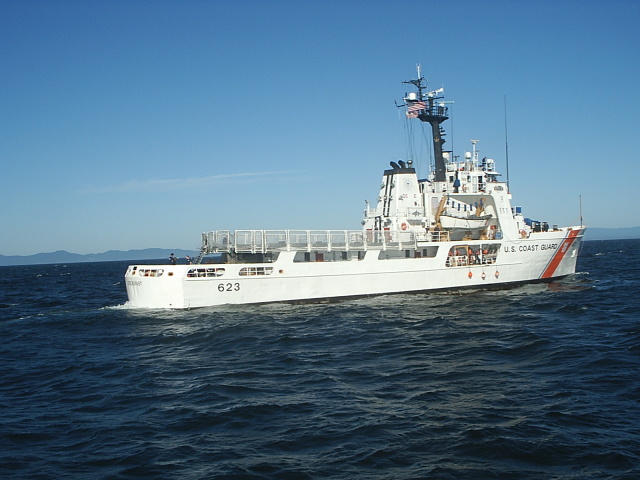
USCGC Steadfast (WMEC-623)

Below is a Coast Guard News Release. It is in fact a pretty typical news release. There are lots of these, and I usually don’t bother to publish them, but this one has prompted me to make some observations.

USCGC Steadfast had a very successful patrol. In fact, she did as well as any National Security cutter might have done despite the fact, she is less than a quarter the size of an NSC. Despite her age, size, and relatively slow speed, she has the critical assets necessary for success–good boats, an airborne use of force helicopter, and a crew that knew how to use them. Conclusion: It is a numbers game. Not every cutter needs to be 4500 tons, because we need numbers and smaller cutters can do the job. (I do like the fact that the newer cutters are faster.)

Looking back on six months’ worth of Coast Guard News reports (60 pages) it looks like a disproportionate part of the Eastern Pacific drug interdiction patrols are being done by PACAREA cutters. It is counter intuitive, but LANTAREA ships are actually much closer to the patrol areas and LANTAREA has many more large patrol cutters (NSCs and MECs: LANT 25 / PAC 9).

PACIFIC AREA CUTTERS: 

ATLANTIC AREA CUTTERS:

LANT Cutters do all the drug interdiction in the Caribbean and Migrant interdiction as well but, in addition to the 25 large ships, LANTAREA also has something like 35 Webber class cutters (in addition to the six in PATFORSWA), with 19 or 20 in the 7th District alone. By comparison, PAC AREA, with 84% of the entire US EEZ, has only 13 Webber class, four in the 11th District, six in the geographically huge 14th District that must also assist the nations of the Compacts of Free Association, and three in the 17th District (Alaska). The 13th District, where PACAREA’s three 210s, that are apparently doing most of the Eastern Pacific drug interdiction work are based, has not a single Webber class. Conclusion: PACAREA needs more ships than currently assigned or planned. The Webber class have probably made it possible to move more MECs to the Pacific. In the meantime, LANTAREA should be sending more ships to the Eastern Pacific drug transit zone.


July 23, 2023

U.S. Coast Guard Cutter Steadfast returns home after 70-day counternarcotics patrol in Eastern Pacific

ASTORIA, Ore. – The U.S. Coast Guard Cutter Steadfast (WMEC 623) and crew returned to homeport, Friday, after a 70-day counternarcotics patrol in the Eastern Pacific.

Steadfast’s crew disrupted the flow of illegal narcotics on three separate occasions during their patrol, preventing a combined total of more than 11,550 pounds of cocaine from reaching the U.S.

The crew steamed more than 16,000 nautical miles conducting training, law enforcement missions, providing search-and-rescue coverage, and conducting helicopter operations while patrolling the waters between their Astoria homeport and the international waters off the coasts of Central and South America.

While patrolling in the Eastern Pacific, June 9, Steadfast’s cutter boat crew detected a suspected narcotics-smuggling panga-style vessel. Coast Guard personnel conducted a boarding on the vessel, resulting in the interdiction of 2,200 pounds of cocaine.

On June 18, Steadfast was notified by a Customs and Border Protection Maritime Patrol Aircraft and crew (MPA) of another suspected narcotics-smuggling vessel. Steadfast personnel launched the helicopter, which was able to visually detect the target. Steadfast’s boarding team interdicted the 50-foot low profile vessel (LPV), a type of vessel specifically designed for avoiding radar detection, which make them difficult to detect. Steadfast personnel were able to interdict and seize 6,864 pounds of cocaine from the vessel.

During routine operations on July 9, Steadfast personnel were notified by MPA crew of a suspected narcotics-smuggling vessel transiting international waters. Steadfast launched a cutter boat with a boarding team and HITRON helicopter and aircrew to interdict the vessel. The target vessel attempted to evade the pursuit crew and began jettisoning suspected packaged narcotics overboard. The gunner aboard the HITRON helicopter used disabling fire to stop the engines of the smuggling vessel, ending the pursuit. Steadfast personnel recovered the jettisoned contraband, resulting in the seizure of another 2,464 pounds of cocaine.

The seized contraband was offloaded in San Diego during Steadfast’s transit home.

The ongoing battle against drug cartels in the Eastern Pacific theater demands united efforts on all fronts. Between initial detection, gathering intelligence, interdiction, and case prosecution, the Coast Guard works closely with partner nations and other U.S. agencies to interrupt the flow of illegal narcotics and chip away at the influence of cartels.

“This patrol marked another epic adventure for the crew of Steadfast,” said Cmdr. Brock Eckel, Steadfast’s commanding officer. “The crew’s teamwork and dedication were key to our operational success and their camaraderie made memories of a lifetime at sea and in exotic foreign ports. In keeping with the traditions of the sea services, I am also proud to have inducted 55 pollywogs into the glorious realm of Neptunus Rex’s Kingdom as Honorable Shellbacks.”

Notably, Steadfast became the second known U.S. military vessel to cross the equator on the 4th of July, earning 55 crew members the title of “Star-Spangled Shellbacks.” Steadfast’s crew was able to participate in a line crossing ceremony that solidified crew camaraderie and upheld the long-practiced traditions of seagoing services.

In addition to the ship’s successes in the counternarcotics arena, Steadfast and crew enjoyed several new and exciting experiences in other areas. During their port call in Panama City, Steadfast crew members spent time bolstering relationships with the Panamanian Navy, participating in a volleyball tournament and a barbeque. One of the ship’s small boat crews also rescued a sea turtle that had been entangled in fishing gear, cutting it free and releasing it back to the sea.

Commissioned in 1968, Steadfast is a 210-foot Reliance-class medium endurance cutter homeported on the Oregon coast. The cutter and crew deploy along the western seaboard from North America to South America conducting missions such as living marine resource law enforcement, counter-narcotics and migrant smuggling, and search-and-rescue operations.

“US Navy ‘operationalizes’ drones in 4th Fleet’s UNITAS event” –Defense News

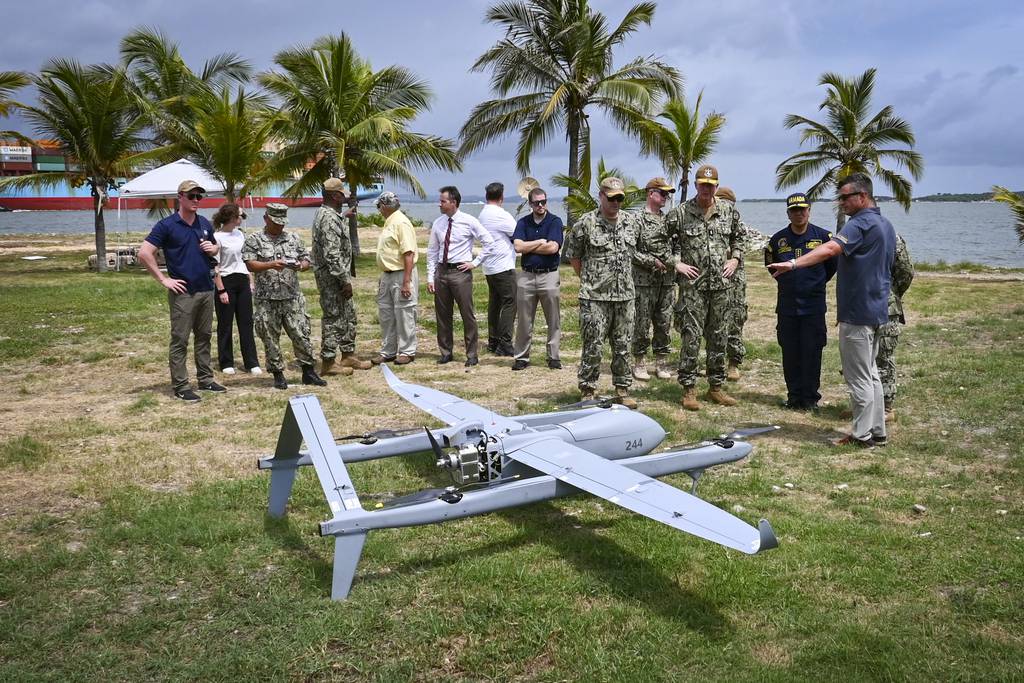
Personnel from the U.S. and Colombian navies attend a demonstration of Aerosonde MK4.7 Hybrid Quad drone during UNITAS on July 16, 2023. (MC1 Hunter Harwell/U.S. Navy)

Defense News reports,

“The U.S. Navy leveraged air and surface drones throughout its two-week UNITAS 2023 naval exercise near Latin America, the first major event since service leadership announced the region would host the sea service’s second unmanned operations hub.”

The Coast Guard certainly has an interest in 4th Fleet’s use of unmanned systems since their area of responsibility (AOR) includes the Eastern Pacific drug transit zones and the Caribbean.

Apparently, not all the systems are in place yet.

“Some of the same systems will return this fall for operations and exercises in the Caribbean and Eastern Pacific Ocean, he added.”

Importantly 4 Fleet is developing a “mesh network that compiles a detailed common operating picture of the region — then AI tools could help flag areas where potentially problematic activities are happening.”

Hopefully we will see video of the SINKEX as recorded by the UAS.

“UNITAS LXIV to begin in Colombia” –USNAVSOUTH/4TH FLEET PUBLIC AFFAIRS

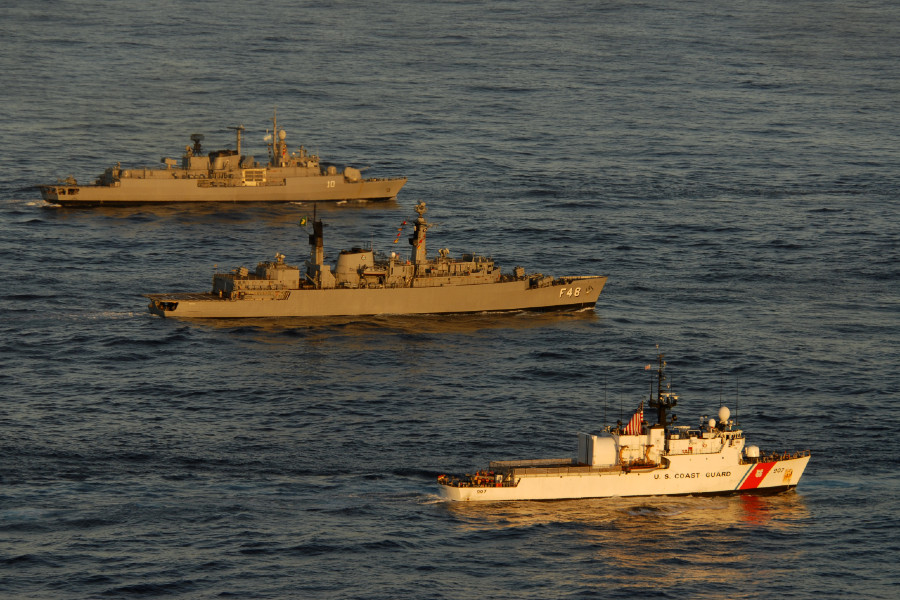
The US Coast Guard cutter USCGC Escanaba (WMEC 907), Brazlian Navy ship BNS Bosisio (F 48) and Argentinian navy ship ARA Almirante Brown (D-10) move into formation for a photo exercise during the Atlantic phase of UNITAS 52 on May 4, 2011. The formation included a total of ten ships from the US, Brazil, Mexico and Argentina. (Photo: US Navy/Mass Communication Specialist 1st Class Steve Smith)

Below is a news release announcing the start of exercise UNITAS LXIV (64 if you are not up on your Roman numerals). There is no mention of Coast Guard participation, but maybe they “simply forgot us.” Think we can bet there are some Coasties involved.

Britain’s Royal Navy also sent one of their highly regarded destroyers, HMS Dauntless.

With 26 surface vessels and three submarines participating, I think this is larger than most of the recent UNITAS exercises. In 2022 it was 19 ships, one submarine, 21 aircraft, accounting for approximately 5,500 total military personnel.

This year will see an attempt at large scale integration of unmanned systems into the exercise by 4th Fleet.


July 11, 2023

UNITAS LXIV to begin in Colombia

By USNAVSOUTH/4TH FLEET PUBLIC AFFAIRS

– U.S. Navy and Marine forces are set to arrive in Cartagena in support of UNITAS LXIV, the world’s longest-running multinational maritime exercise in the world, scheduled to start July 11, 2023.

The Colombian navy will host this year’s UNITAS, which will feature 26 warships/vessels, three submarines, 25 aircraft (fixed wing/helicopter), and approximately 7,000 people from 20 partner nations. Forces will conduct training operations off the coast of Cartagena, Colombia, and ashore in Covenas and Barranquilla, Colombia, through July 21. This year marks the 64th iteration of the exercise. Additionally, this year Colombia will celebrate the bicentennial of its navy, a historical milestone commemorating 200 years of the country’s maritime forces.

“UNITAS is so much more than a two week exercise. All participating nations have given much time, energy and effort into the months of planning leading up to what will be one of the most complex UNITAS to date,” said Rear Admiral Jim Aiken, commander U.S. Naval Forces Southern Command/U.S. 4th Fleet. “Utilizing air, surface, sub-surface, and unmanned assets, and land units, UNITAS will provide the multinational force a challenging environment in which to conduct training across the full spectrum of maritime operations. UNITAS strengthens maritime partnerships, enhances proficiency and improves interoperability of the participating forces, which is why so many partner nations are taking part this year.”

As part of the U.S. Navy’s future hybrid fleet, the Chief of Naval Operations has tasked U.S. 4th Fleet to scale unmanned platforms to the fleet level. An addition to this year’s UNITAS will include the integrated operations of unmanned air, surface, and subsurface systems into the exercise. UNITAS’ challenging training address key aspects of multinational and combined operations such as technology standardization and common operating procedures.

“This is our first opportunity to integrate unmanned systems into our operations at sea,” said Rear Adm. Aiken. “UNITAS has often served as a test bed for technology, so it is appropriate that we begin our unmanned integration campaign to operationalize the hybrid fleet here in UNITAS.”

In addition to the United States, UNITAS LXIV will bring together 19 nations from all over the world to train forces in joint maritime operations that enhance tactical proficiency and increase interoperability. Participating nations include Belize, Brazil, Canada, Chile, Colombia, Dominican Republic, Ecuador, France, Germany, Honduras, Jamaica, Mexico, Panama, Peru, Paraguay, Spain, South Korea, United Kingdom, United States, and Uruguay.

Following the UNITAS LXIV Opening Ceremony on July 12, the in port phase of the exercise will feature subject matter expert exchanges, professional symposia, ship rider exchanges, and operations meetings. During this time, Marines and Sailors will conduct expeditionary training events in Covenas to include riverine operations and diving and salvage operations.

During the UNITAS LXIV Underway Phase, forces will participate in events testing all warfare operations, to include live-fire exercises such as a SINKEX and an amphibious ship-to-shore landing and force retraction.

“Marines and Sailors from across the United States will travel to Colombia to not only train alongside our partner nations’ militaries, but to hone the skills required to operate as part of a larger maritime force focused on sea control and sea denial,” said Lt. Gen. David G. Bellon, commander, U.S. Marine Corps Forces, South, and U.S. Marine Corps Forces, Reserve. “We will be exercising command and control from a forward position as Marines set up and employ Expeditionary Advanced Base Operations to enhance naval capabilities as part of UNITAS.”

U.S. forces participating in UNITAS LXIV include USS New York (LPD 21), USS Cole (DDG 67), USS Little Rock (LCS 9), USS Pasadena (SSN 752), and USNS Burlington (T-EPF 10). Other U.S. participants include Patrol Squadron Five (VP 5), Mobile Diving and Salvage Unit (MDSU) 2, Explosive Ordnance Disposal Mobile Unit (EOD) 612, Mine Countermeasures Group 3, (MCMGRU 3), Expeditionary Mine Countermeasures EOD Company 61 (EODMU 61), East-coast based Naval Special Warfare units, Helicopter Sea Combat Squadron 22 (HSC 22), Helicopter Maritime Strike Squadron 70 Detachment 2 (HSM 70 Det 2), Joint Communications Support Element (JCSE), Fleet Surgical Team (FST) Eight, and the Meteorological Environmental Team (MET). U.S. Marine forces include 3rd Battalion, 23rd Marine Regiment (3/23), 4th Amphibious Assault Battalion (4th AABn), 8th Combat Logistic Battalion (CLB 8), 4th Combat Engineer Battalion (4th CEB), Marine Medium Tiltrotor Squadron 774 (VMM 774), Marine Light Helicopter Attack Squadron 775 (HMLA 775), Marine Aerial Refueler Transport Squadron 234 (VMGR-234), Marine Aircraft Control Group – 48 (MACG-48), and Marine Fighter Attack Squadron 112 (VMFA-112). Finally, Commander, Destroyer Squadron 40, (COMDESRON 40), Commander, Amphibious Squadron Four (COMPHIBRON FOUR), U.S Marine Corps Forces South (MARFORSOUTH), Special Operations Command South (SOCSOUTH), USNAVSOUTH/FOURTHFLT, and U.S. Southern Command (USSOUTHCOM) are participating in UNITAS LXIV.

UNITAS, which is Latin for unity, united, or oneness, was conceived in 1959 during a previous era of strategic competition when representatives at the first Inter-American Naval Conference in Panama agreed to conduct an annual maritime exercise with one another. Prior to UNITAS I in 1960, U.S. Chief of Naval Operations Adm. Arleigh Burke reviewed preparations for the multinational exercise. He commended planners for their progress, especially in building compatible communication systems among navies, and predicted that UNITAS would build strong relationships among Sailors of the Western Hemisphere.

U.S. Naval Forces Southern Command/U.S. 4th Fleet supports U.S. Southern Command’s joint and combined military operations by employing maritime forces in cooperative maritime security operations to maintain access, enhance interoperability, and build enduring partnerships in order to enhance regional security and promote peace, stability and prosperity in the Caribbean, Central and South American region.

U.S. Marine Corps Forces, South is the Marine Corps component to U.S. Southern Command, is responsible for planning exercises, operations, and overall Marine Corps support for the SOUTHCOM assigned area of responsibility.

CG in July 6 USNI Fleet and Marine Tracker, No Mention of UNITAS

The US Naval Institute News “Fleet and Marine Tracker” is continuing to plot the approximate locations of a few Coast Guard units. I first noticed this change in the May 22, 2023 edition.

The July 6 post reported.

U.S. Coast Guard Cutter Stratton (WMSL-752) is underway in the Western Pacific.

and

Coast Guard Cutter Eagle departed Funchal Madeira (Portugal) and is en route to Hamilton, Bermuda.

The post again acknowledged the existence of PATFORSWA. I guess this is going to be boiler plate for all future Fleet and Marine Tracker posts.

U.S. Coast Guard Sentinel-class Fast Response Cutters (FRCs) are forward-deployed to the region under Patrol Forces Southwest Asia (PATFORSWA). (Note this is a broken link–Chuck) PATFORSWA deploys Coast Guard personnel and ships alongside U.S. and regional naval forces throughout the Middle East. Initially deployed in 2003 to support Operation Iraqi Freedom, PATFORSWA is now a permanent presence based out of the Kingdom of Bahrain

What originally caught my eye, when I first saw this post, was the plotted position of USCGC Richard Snyder (WPC-1127), which placed her in the high Arctic, about 2000 miles North of where she was actually reported to be.

The U.S. Coast Guard Cutter Richard Snyder, a Sentinel Class cutter homeported at Atlantic Beach, N.C., teamed with Bermudian authorities this past week in patrols that included a focus on deterring maritime drug smugglers, according to local reports.

The report also reflects the start of the UNITAS 2023 Exercise (have not been able to find the official dates) with six Navy ships in 4th Fleet compared to a typical number of two. One or more Coast Guard cutters are probably involved in the exercise. The only participant I was able to identify was USS New York (LPD-21). Reportedly the exercise will include significant use of unmanned systems.

Coast Guard SAR units, particularly aviation units, get frequent recognition. I appreciate that they are giving Coast Guard surface units some recognition in these posts, but the few mentions don’t reflect the bulk of the work being done by Coast Guard ships.  Perhaps a simple statement of number of large cutters and number underway would be nice.

“As it helps combat unlawful fishing internationally, NGA is ‘posturing’ for an AI-driven future” –DefenseScoop

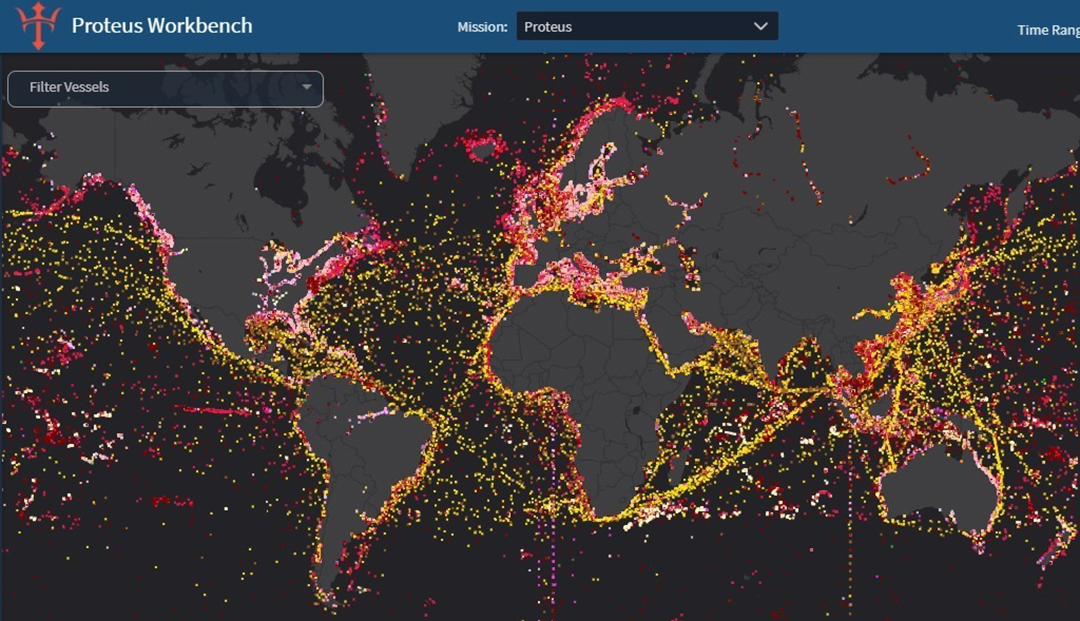
DefenseScoop reports that the National Geospatial-Intelligence Agency (NGA) is using AI to sort data for an application called Enhanced Domain Awareness (EDA) to provide maritime domain awareness information to US and partner countries to help them deal with Illegal, Unregulated, Unreported (IUU) fishing.

“Just to give you a sense of the scale and how much we’re talking about — there’s around 470 U.S. own space-based remote sensing systems that are available today. And that’s going to expand to around 1,400 by 2030, we expect. So globally, there’s about a seven-fold increase in those systems. So the limiting factor isn’t how much of the Earth we can observe or how often — it’s how quickly we can derive insights from that data. And so that’s where, of course, AI and automation comes in. It helps us increase the speed and our capability to react to military and human humanitarian response efforts,” he explained.

This grew out of a SOUTHCOM effort and isn’t limited to IUU.

“When you log into EDA, whether it is on the U.S. side or the partner-nation side, many of the projects that you’ll see in there revolve around different priority lines of effort,” Kurey explained. For Southcom, besides IUU “you’ll find other things like counter-narcotics missions, and things like that. But it’s all encompassing, and you’ll find information and data and projects that I mentioned before will support a tactical environment, operational environment, or strategic messaging,” he said.

The system is being extended to other users.

As the platform continues to mature and blossom, now other combatant commands — including U.S. Northern Command, European Command and Indo-Pacific Command — are beginning to explore how they can integrate it into their own initiatives for data organization and support.